• Skip to primary navigation
  • Skip to main content
  • Skip to primary sidebar
  • Home
  • About Us
    • Privacy Policy
    • Comment Policy
    • Disclosures & Disclaimers
  • Resources
    • Links, Essays & Articles
    • Fandomology!
    • CLAMP Directory
    • BlogRoll
  • Features & Columns
    • 3 Things Thursday
    • Adventures in the Key of Shoujo
    • Bit & Blips (game reviews)
    • BL BOOKRACK
    • Bookshelf Briefs
    • Bringing the Drama
    • Comic Conversion
    • Fanservice Friday
    • Going Digital
    • It Came From the Sinosphere
    • License This!
    • Magazine no Mori
    • My Week in Manga
    • OFF THE SHELF
    • Not By Manga Alone
    • PICK OF THE WEEK
    • Subtitles & Sensibility
    • Weekly Shonen Jump Recaps
  • Manga Moveable Feast
    • MMF Full Archive
    • Yun Kouga
    • CLAMP
    • Shojo Beat
    • Osamu Tezuka
    • Sailor Moon
    • Fruits Basket
    • Takehiko Inoue
    • Wild Adapter
    • One Piece
    • After School Nightmare
    • Karakuri Odette
    • Paradise Kiss
    • The Color Trilogy
    • To Terra…
    • Sexy Voice & Robo
  • Browse by Author
    • Sean Gaffney
    • Anna Neatrour
    • Michelle Smith
    • Katherine Dacey
    • MJ
    • Brigid Alverson
    • Travis Anderson
    • Phillip Anthony
    • Derek Bown
    • Jaci Dahlvang
    • Angela Eastman
    • Erica Friedman
    • Sara K.
    • Megan Purdy
    • Emily Snodgrass
    • Nancy Thistlethwaite
    • Eva Volin
    • David Welsh
  • MB Blogs
    • A Case Suitable For Treatment
    • Experiments in Manga
    • MangaBlog
    • The Manga Critic
    • Manga Report
    • Soliloquy in Blue
    • Manga Curmudgeon (archive)

Manga Bookshelf

Discussion, Resources, Roundtables, & Reviews

Archives for October 2014

NYCC 2014 – Day 4

October 12, 2014 by Sean Gaffney

The final day of New York Comic Con had the fewest amount of panels I was going to, as usual, but was not without interest, particularly after I did some more room camping and ended up seeing panels I would not otherwise have seen.

The first ended up being a Doctor Who panel – I got there an hour early, which was fortunate, as the line was so big many were turned away. This didn’t have any of the cast or crew, however. It was a panel with several SF and fantasy authors discussing how Doctor Who influenced their work and what it meant to them. As I expected, most of the discussion involved the new series, though a couple of the authors noted experience with Classic. When asked about what they took away from the series, they mentioned the character-driven stories, the philosophy the program has explored, the ethical questions it finds itself embroiled in, and how it prefers cleverness over brute force. One author, Mike Cole, seemed to be only a casual fan, and in fact discussed how his dislike of chaos and love of efficiency has led to him siding with the villains much of the time!

After this was a panel run by Kickstarter, discussing how to crowdfund your comic book, with several people on the panel who had done just that. Kickstarter was emphasized as a place to build communities, and as an added bonus you can get publicity that isn’t all self-generated. Kickstarter by its very nature lends itself to comics and small press publications – there are 4700 projects that are comics related on the site. It also helps gain an audience of pros and editors, who do pay attention to things like this – new talent is appreciated.

When asked about advice, one point was hammered down over everything else – think about your shipping costs. When you offer stretch goals, think about what weight is added that may put your calculations over what you assumed. For that matter, think about your stretch goals, period – they can make or break a project. Most Kickstarter projects get their money in either the first or last weeks of the funding period, when it’s either getting new eyes or when people on the fence make a decision to pay. All the panelists were clearly enthusiastic about this as a way of getting their work out there and noticed.

After that came a panel that was more in line with my actual coverage, Kodansha Comics. They had four new titles to announce, all of which are exciting. I may have had my issues with Tsubasa Reservoir Chronicle, but if CLAMP can get past the morass of plot kudzu it became and make it more like the start of the series, then Tsubasa World Chronicle, coming out next year, should be a treat. As for Fairy Tail: Blue Mistral, it was a fairly obvious pickup as well, being a shoujo spinoff focusing on cute young Wendy and her magical adventures. There’s also a brand new series by the creator of Gantz, called Inuyashiki. It’s so new Kodansha couldn’t tell us much about it, but it comes out in Fall 2015. I wasn’t the biggest Gantz fan, but it certainly sells well, and barring Kodansha licensing Hen or HEN – both highly unlikely – this is the next obvious choice.

The big surprise for me was the pickup of L♥DK. Not really because I didn’t think it fit the company – after Say “I Love You” and My Little Monster it’s an obvious choice. No, it’s more due to the fact that it’s 15+ volumes. The author has had several other series in various Kodansha magazines over the last few years, mostly in Betsufure, which is also where L♥DK comes from. But I believe this is her first title over here. It did have a live-action adaptation come out this past year. The plot is not really anything new – school prince ends up being forced to move in with our heroine, a fact they have to hide even as she falls for him. If you like any of the recent shoujo Kodansha has done, this will be right up your alley.

My last panel of the day was Crunchyroll Manga, though sadly they were unable to announce any new titles, although they said it should be ready to announce in a week or so. So we got to see some of the editor’s favorite titles, including ones she wish got more clicks such as Memoirs of Amorous Gentlemen. They’ve also recently updated both the web and mobile applications, making for a smoother reading experience. A relatively quiet final panel allowed me to duck out during questions (which tended to be of the “have you guys considered licensing title X’ variety) and head over to an amazingly packed Artist’s Alley before leaving.

NYCC has grown exponentially over the years, to the point where I think this year it passed 150,000. It’s not a con for the casual or the introverted. That said, it was gratifying to see they sorted out many of the tiny room issues (lines were still prohibitively long, but well-policed, and there were few arguments that I saw) from last year. The fans were enthusiastic as well – I had several long conversations about cartoons after the early panel Saturday, and spent Sunday talking with a 16-year old Doctor Who fan and a young woman babysitting her 13-year-old charge, a huge Attack on Titan fan, and had gone the extra mile for him by dressing up as a Survey Corp member herself. The con may have been packed, but everyone was having a lot of fun. And that’s really all that you can ask of a con this size.
Filed Under: NYCC/NYAF, UNSHELVED

NYCC 2014 – Day 3

October 11, 2014 by Sean Gaffney

Saturday was a day fairly light on manga, but that doesn’t mean there was not a great deal of things to experience at this third day of the con – and the busiest in terms of sheer bodies.

I began with Tom Cook, an animator who worked with Filmation in the 1980s, who was discussing both his career and the way Saturday morning cartoons worked back in the day. He’d grown up with early Hanna-Barbera TV titles – Top Cat was a favorite – and through luck and talent managed to get a job working for them as an animator, which was very much learn as you go. They started work at an airplane hangar in Burbank, as the regular building was still being built/renovated.

After a few years, he got wing of H-B threatening to move all their jobs overseas and switched over to Filmation, whose big selling point was they said they would never do that – it was all in the US. Of course, the drawback was they had to compete with larger budgets, and also do larger shows – 25% of each He-Man had to be recycled footage. Not because they were too lazy or had no budget – for the sheer number of shows they had to do, the budget did what it could.

After a discussion of how ACME came into being (it came from the peg boards used to hold down their drawings, made by a real-life ACME), he ended the panel by walking us through how a typical cartoon was made in those days. Mattel asked for He-Man to sell their toys, so a good script was essential. After that, they moved to voice recording, followed by storyboarding and the model sheets. From there the animation happened, followed by backgrounds, then the actual filming on a camera, then the editing, and finally adding the voice and sound to the film.

Next up I saw a panel discussing comics journalism, with several names familiar to the manga crowd, including Deb Aoki and Brigid Alverson. The panel discussed how each of them found themselves in the field, and what makes comics journalism so rewarding. Some of the topics discussed included misogyny and hate in the comments of blogs and message boards, and how moderating these has simply gotten too time-consuming and exhausting. Most sites have comments active as it fosters a sense of community, but you should never be afraid to ban jerks.

There was discussion of the recent debate about “is cosplay killing comics”, which the whole panel agreed was ridiculous. Comics journalism is also finding new competition these days, from sites like TMZ or Nerdist, and it can b e hard to make your own site known. Much like real life politics, the internet comics scene is dealing with polarization and fragmentation (Tumblr is a good example here), and you have to move with the times.

After a brief line wait, I ended up in the IDW artists panel. Much of this panel was used to plug the various artists’ titles, but each was given a good discussion and going over about why it was so popular and fun to read. Gabriel Rodriguez discussed Locke and Key, his co-created series, s well as titles based on old properties such as the new Little Nemo reboot, where all artists are nervous about following in the footsteps of Windsor McCay. He enjoys drawing licensed titles as well, and Sarah Gaydos, the editor and moderator, helpfully added with regards to what studios want: “They have to be realistic, but also hot.”

An artist who goes by Menton3 also does licensed work, and finds that the ‘original is better by default’ crowd gets too pretentious. He said the real danger was in being bland – both in licensed and original works. Menton3 also does a lot of oil painting and also meditates, which is likely how he’s able to get away with lines like “externalizing the internality”.

Derek Charm does Powerpuff Girls, and was also good enough to do the recent IDW crossover series, Super Secret Crisis Wars, which brought the PPG together with Samurai Jack, Ed, Edd and Eddy, and other CN creations. IDW also took the time to announce they would be doing anotehr of those soon.

Andy Price discussed My Little Pony: Friendship Is Magic, and how he had to argue to Hasbro to let him use his own, more ‘comics’ style rather than simply imitate the show. He enjoys making fun, experimental layouts, and says MLP is good for that as the show is already so fluid to begin with. He also had his range noted – we saw by some art of Hulk and Wonder Woman that he can draw more than just ponies.

Alan Robert got to talk about his Killogy title, which brings together characters from Goodfellas, Heroes and the Ramones in a horror comic title. He’s also done another popular series called The Shunned One, and said it was important for each title to have its own voice. After this, with minimal time for Q&A, the panel was asked to give comic advice. The best advice was Andy Price’s: draw everything. Don’t just stick with your favorites or what you’re good at.

Sailor Moon was in the same room in an hour, so I just stayed (which turned out to be a good idea – SM fans were getting turned away from the immense line). As a result, I saw Del Rey’s panel on the new Star Wars books. This really isn’t my fandom, so I didn’t get much of what they were talking about. The new book on Grand Moff Tarkin sounds interesting. And the Lords of the Sith cover was hilarious – the panel jokingly called it a “Darth Vader and Palpatine go on spring break” book.

As for the Sailor Moon panel itself, Viz played some dub clips for us – Stephanie Sheh makes a terrific Usagi, even to my dub-hating ears. We also got to hear the debut of Amanda Miller as Jupiter – this hasn’t been released yet. She sounded quite good. The other big news, which actually broke on Thursday, was the 2nd S1 box set, due out this February.

Lastly, Vertical played to a packed house, much to the surprise and pleasure of Ed Chavez. He went through some of their recent releases, then gave us the two big announcements, neither of which should surprise those who follow Vertical. They’re publishing Vols. 2 and 3 of Before the Fall as an omnibus together next fall, and this is the arc that was made into the manga Kodansha is releasing. They also have the brand new Harsh Mistress fo the City novel, which only has one volume in Japan, but will also be a 2-volume omnibus by the time it’s out here. It’s a good time to be a Titan fan.

The other big news was that they’re splitting the manga imprint into its own line, Vertical Comics, separate from Vertical Inc. which will continue to publish its non-fiction, crime novels, etc. Witchcraft Works and The Garden of Words are the first to bear that imprint, with more on the way. Ed is excited for this, as the separate focus will allow both Comics and Inc. to work harder at reaching out to their own distinct audiences.

This day wasn’t quite as involved as the previous two, so this writeup is smaller. Tomorrow will be smaller still, but both Kodansha Comcis and Crunchyroll manga should both have interesting things to say before everyone head home.

Filed Under: NYCC/NYAF, UNSHELVED

NYCC 2014 – Day 2

October 10, 2014 by Sean Gaffney

Friday was another busy, busy day. To be honest, there are no more light days anymore, now that this is an official Day 2. It began with the Crunchyroll anime panel (they have a manga one later). They rolled out cute chibi-art of the staff, along with the fan mascot, chosen from a contest. Then they plugged a few new announcements.

Future Diary and Switch Girl will both get J-drama simulcasts. Future Diary should be familiar to anime fans. Switch Girl is a manga title I’ve suggested before, with a premise similar to Kare Kano – a girl who is a princess at school but a slob at home gets caught one day. On the anime front, they had Bonjour Sweet Love Patisserie, an adaptation of an otome game with an all-star seiyuu cast; Ultraman Max, a new sentai incarnation of the beloved franchise; and Case Closed, the long running anime/manga series.

They reminded everyone they are still very much in startup mode, and they are hiring new employees – see their website. They also discussed the complications involved in licensing – there’s a lot of moving parts most folks don’t see or know about.

After this, I room camped again, and thus got to see the Image Comics panel. It was a lot of fun – Image has come a long way in the past 25 years or so. Much of the start was intros and plugging titles. There was Madam Frankenstein, sort of a pastiche between the classic novel and My Fair Lady. Ghost is dark and bleak, sometimes even more than the author really intended – he discussed a scene where he had added a few jokes into a dark scene and the editor asked him to get rid of them.

Umbral is a dark fantasy, with the interesting concept that the dialogue balloons for magical incantations are actually magic sigils/patterns. They wanted to convey the idea that it’s not something understood by normal people. The Fuse is a straight up police procedural, but with SF elements – “what if Homicide: Life on the Streets crossed over with Battlestar Galactica?”. Nailbiter is a series that was rejected by several other publishers before finding a home at creator-driven Image.

Rocket Girl was the title that interested me the most, a period SF piece which stars a teen, but is not really written for teens – the adults reading are to be reminded what the mindset was like back when they were that age. As for The Wicked and the Divine, it’s apparently quite popular, and the moderator discussed the idea of “pop comics” – like pop music, having a broad-based, non-genre appeal.

Question time. Many on the panel also did work for Marvel or DC, and the difference between work for hire and your own creations is considerable. With work for hire, it can be a job to find a way to make yourself care. With your own work, it’s inverted, needing to see it made broader and more accessible to others.

At this pointy, Chip Zdarsky walked in with his banner and joined the panel, naturally talking about his work Sex Criminals. Chip added many moments of levity to the proceedings, as both the panel and the audience felt free to mock him. Meanwhile, the panelists mused on what other title they would “cross over” with if they could – given my general lack of knowledge of Image titles, I missed the gist, but the crowd seemed pleased.

For manga fans, the most interesting question might have been talking about Print vs. Digital. Anthony Johnson noted that he feels the manga boom was a huge influence on the way people read comics, and that the manga readers looking for something else seem to turn to titles along Image’s lines rather than superheroes in spandex. The newer, younger readers are also more digital oriented, so naturally the market is adjusting. Though there can be issues – Chip noted his title was banned by Apple from the iPad for content reasons.

Other questions that sparked discussion included whether the time period you write in makes a difference (with a side discussion on the cliché of “I’ve got no signal” for cell phones in horror movies, now a hallmark of lazy writing), how to write humor into dark, serious works without having it come across as forced (make it come naturally from the characters you create), and finding time to write on a busy schedule (make time).

After that, Yen Press had its panel, and they had a slew of announcements, though for once none of them were light novels. They did have several LN adaptations, though. The manga of Is It Wrong To Try To Pick Up Girls In A Dungeon? runs in Square Enix’s Young Gangan, and just began last year. Index fans rejoice, the manga of A Certain Magical Index is finally coming to our shores. This is a Shonen Gangan title, and at 12+ volumes as much of an investment as the LN was – Yen is pushing Index hard.

Trinity Seven is a title from Fujimi Shobo’s Dragon Age, so expect a lot of fanservice. It also has a lot of fantasy tropes that may seem familiar to followers of the genre, but it got a huge crowd reaction. The artist is also known for Psycho Busters, an old Del Rey work. As for Chaika: The Coffin Princess, a Kadokawa title from Young Ace, I could not help but remark on its similarity to another Yen series – it was joked that they considered calling it Shoulder-a-Coffin Chaika. The author of this LN adaptation is best known for Scrapped Princess.

Kodansha’s Aria magazine has proven a fruitful shoujo breeding ground over the last year or so, and we have another new title coming from there, First Love Monster. A 15-year-old girl falls head over heels for the boy who saves her from death… only to find he’s still in 5th grade! The artist has also done adaptations of the Book Girl manga, though that has not yet been licensed by Yen.

The next license was the most surprising, as there was a lot of Twitter chat recently about how it wasnt going to be licensed anytime soon. Prison School is from the creator of Me and the Devil Blues, but goes in a very different direction – comedic fanservice galore, as it features five guys in a former girls’ school where they’re hideously outnumbered. At 14+ volumes, I was very surprised to see it myself. It runs in Kodansha’s Young Magazine.

Then there’s Kaoru Yuki’s latest, Alice in Murderland. It just began in Aria this year, but features plots very dear to North American buyers – Wonderland, survival games, etc. Lastly, and possibly the biggest news, they’ve license rescued Emma, the old Victorian Maid romance. It will be released in deluxe hardcover editions, and is an absolute must buy. (Oh yes, it ran in Enterbrain’s Comic Beam.)

One last title, an English-language one, is Svetlana Chmakova’s new work Awkward, which is about the titular awkwardness found in childhood friendships, and looks incredibly cute.

I missed a lot of Q&A due to having my own questions. I asked about the paucity of digital rights for the new light novels they’re putting out. They do try to get digital rights for everything they license, but it’s complicated – sometimes it’s the author blocking it. I also asked about End of the Golden Witch, the next Umineko arc. Still being discussed, so expect another break after Alliance finishes. And they have no comment about Durarara!! LNs or anything else they didn’t already discuss, of course.

My next two panels were more “casual” ones, with fewer notes. Bryan O’Malley was in fine form, and had a lot to say about Seconds, Scott Pilgrim, and being a famous Canadian. Also discussed was the commodification of hipsters, how to “turn dark thoughts fun”, when to visit Halifax (August – I have to agree there), the influence of shows like Sliders and Quantum Leap, and whether college is a necessary choice these days. Oh yes, and plugging the book Love: A History, complete with “ontological rootedness”.

I also caught half a panel discussing women in comics, from creators of new incarnations of Captain Marvel and Red Sonja. It was a very lively panel, with lots of good advice and quick wit.

Lastly was the Takeshi Obata panel, which did not have much overlap with the Jump panel from yesterday. He was asked about his start as a manga artist – like many, he began to submit works while still in high school, and won a Tezuka award, to his total shock and disbelief. His earlier series were also written by him, including his debut Cyborg Jii-chan G, a comedy manga starring an old man, unusual for Jump. This made him realize that he enjoyed writing with a partner much more, as he could concentrate on the art.

The editors were also asked how they got into the business – applying for a job and working your way through the ranks seems to be a good way, thought it was also noted that having no talent at being a manga artist might also nudge someone in that direction. One intriguing fact – Ohba and Obata rarely met in person for Death Note, as both are very reserved and preferred to give notes through the medium of their editor.

Obata’s art was discussed. His adaptability was praised, along with his arrangement of panels on the page. Obata is the sort who is a manga artist rather than an illustrator – and that’s definitely a compliment. The collaborative process was discussed – for Death Note, Ohba did a storyboard and sent it to Obata. Obata then did his own storyboard, got approval from Ohba, then spent 3-5 days inking it. He also brought out his materials, including the ever-popular G-Pen.

He designs characters after getting inspired by the writing. The initial image in his head, i.e. the instinctual one, is quite important, and he also likes to know what “color” they are – yellow for the star of Hikaru no Go, for example. Speaking of Hikaru no Go, it was mentioned that this was a more realistic series to him, but he said he was drawn to it by the supernatural aspects of the ghost. And yes, portraying Go that well involved an awful lot of research.

Death Note’s popularity stunned both him and his editor, as it wasn’t a “typical” Jump title. At the time, Jump was trying to reach out to older readers, but the title still had to be accessible to their normal kid readers. Amusingly, he’d had Light’s design in his head for years, waiting for a series he could use it in – he was delighted to finally break it out. L’s eyes were one of his best features, and in fact Obata calls L his favorite of all the characters he’s drawn.

Bakuman was a title that unnerved him a bit, as he was nervous about showing the “underbelly of the industry”. But it turned out quite well. He was also asked what in-series manga he would like to draw in real life – unsurprisingly, Otter 11 was his choice. They also briefly discussed All You Need Is Kill, and trying to adapt a novel by choosing which moments would best be shown off visually in a manga style.

After a brief question on what it was like being an assistant to Makoto Niwano (author of the infamous Bomber Girl), which he enthused about, the panel was called for time, and I got to make my trek back to the hotel to type up a very long day. Tomorrow gives us IDW, Sailor Moon, and Vertical, Inc. Halfway done!

Filed Under: NYCC/NYAF, UNSHELVED

Yen Press Rescues Emma

October 10, 2014 by Katherine Dacey

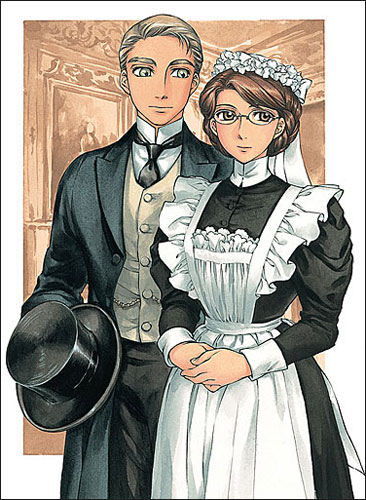
Volume 10 of Kaoru Mori's Emma.

Volume 10 of Kaoru Mori’s Emma.

Exciting news! Kurt Hassler announced that Yen Press will be re-issuing Kaoru Mori’s Emma, which was previously published by CMX Manga. The new edition will be released in five hardcover omnibus editions, making it perfect for libraries, collectors, and folks who missed this awesome Victorian melodrama the first time around. Yen also announced a number of new manga acquisitions, including Trinity Seven, A Certain Magical Index, Chaika: The Coffin Princess, and Prison School Manga, as well as a new project from Nightschool creator Svetlana Chmakova.

MangaBlog OG Brigid Alverson shows off some Takeshi Obata swag on the floor of NYCC.

Sean Gaffney files a report on Day One of New York Comic-Con.

Chinese newspapers have been critical of a traveling exhibit featuring Doraemon, arguing that the character represents a “soft” form of cultural imperialism.

How are Japanese fans reacting to the end of Naruto? Otaku USA has a report.

The Escapist profiles Laura Mehaffey, who runs the “South’s first traveling graphic novel and Japanese manga library.” Mehaffey, a professional librarian, visits conventions, book sales, and other events to promote literacy through comics.

At Heart of Manga, Laura shares a list of this month’s new shojo volumes.

Reviews: In her latest Right Turn Only! column, Rebecca Silverman looks at the latest volumes of D-Frag, Soul Eater Not!, and What Did You Eat Yesterday?

Ash Brown on vol. 4 of Bond of Dreams, Bond of Love (Experiments in Manga)
Ken H. on vols. 2-3 of Brave 10 (Sequential Ink)
Lesley Aeschliman on vol. 1 of Honey Blood (Lesley’s Musings on Anime & Manga)
Leroy Douresseaux on vol. 8 of Kamisama Kiss (Comic Book Bin)
Lesley Aeschliman on vol. 19 of Vampire Knight: Limited Edition (Lesley’s Musings on Anime & Manga)
Ken H. on vol. 4 of Vinland Saga (Sequential Ink)

Filed Under: MANGABLOG

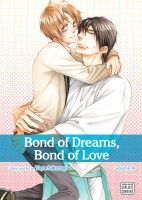
Bond of Dreams, Bond of Love, Vol. 4

October 10, 2014 by Ash Brown

Bond of Dreams, Bond of Love, Volume 4Creator: Yaya Sakuragi
U.S. publisher: Viz Media
ISBN: 9781421552354
Released: May 2013
Original release: 2011

Ever since reading and enjoying Yaya Sakuragi’s Hey, Sensei?, I’ve made a point to follow her work as it’s translated into English. Sakuragi’s boys’ love manga tends to make very heavy use of the genre’s tropes, but generally with a slight twist or unexpected approach that make them just a little bit different. I enjoy that aspect of Sakuragi’s manga, her somewhat quirky sense of humor, and the lanky designs of many of her characters. I also appreciate that she includes important female characters in her stories. Taking all of that into consideration, I was pretty happy when Sublime Manga, the boys’ love imprint associated with Viz Media, licensed one of Sakuragi’s more recent series Bond of Dreams, Bond of Love. The manga is tangentially related to another of Sakuragi’s series–Tea for Two released by Tokyopop’s Blu Manga imprint back in the day–and Sublime has also licensed Hide and Seek, which is a spinoff of Bond of Dreams, Bond of Love. The fourth and final volume of Bond of Dreams, Bond of Love was originally published in Japan in 2011 while the English-language edition was released in 2013.

After strong urging from his brother, mother, and grandmother, Ao has finally made up his mind to bury his own feelings about the matter and live with his mother and twin. He does have some regrets though, especially considering that the move will mean he won’t be able to see his beloved Ryomei very often anymore. But although Ao has made a decision, he is still torn and uncertain. To make the situation even more complicated, Ryomei has started to return Ao’s feelings and has even begun to express them physically. But thanks to some miscommunication on both of their parts, Ao believes that Ryomei is acting out of pity rather than genuine affection. Mostly because he finds it embarrassing, Ryomei has never been particularly forthcoming about his developing feelings for Ao, whereas Ao has never felt the need to hide his love for the older man and doesn’t hesitate to be very vocal about it. Now that Ryomei is showing his interest only after Ao has announced his decision to move, the younger man can’t help but feel confused.

Throughout Bond of Dreams, Bond of Love it has always been obvious that Ryomei cares very deeply for Ao. He looks out for him and his well-being and even goes out of his way to do things to make him happy–granted, more often than not Ryomei does so in secret. However, I was never entirely convinced that those feelings were of a romantic nature; even Ryomei seems to have to work to convince himself that they are. Ultimately he is able to show and declare his love, but it feels less like natural growth and more like a convenient plot development. It is kind of cute to see a grown man so completely flustered and embarrassed, though. And then there’s Ao, who I’m pretty sure is incapable of embarrassment and is completely lacking awareness of socially acceptable behavior and conversation, which can be pretty entertaining. He’s very much a horny teenager, so in the fourth volume of Bond of Dreams Bond, Bond of Love it’s nice to see him start to really become aware of the emotional aspects of his and Ryomei’s relationship in addition to his fixation on the physical ones.

After a fair amount of teasing on Sakuragi’s part, Bond of Dreams, Bond of Love reaches its climax with the fourth volume. Dreams–wet dreams, daydreams, and even the occasional nightmare–have been a part of the series from the beginning, but now those dreams (the better ones) are becoming a reality for Ao. This more or less means that he and Ryomei finally have sex. Actually, there’s quite a bit of sex in Bond of Dreams, Bond of Love, Volume 4. The series has been building up to it and the scenes, like the rest of the manga, have a somewhat ridiculous sense of humor to them. Bond of Dreams, Bond of Love is not at all a serious series. What it lacks in believability and realism it makes up for with its slightly absurd characters, their clashing personalities, and their amusing interactions and relationships. I admit it: the manga managed to make me laugh on a regular basis. Bond of Dreams, Bond of Love can be a bit uneven at times, and the series isn’t my favorite manga by Sakuragi, but for the most part I ended up enjoying its silliness. And I do still look forward to reading Hide and Seek.

Filed Under: REVIEWS Tagged With: Bond of Dreams Bond of Love, manga, Sublime Manga, viz media, Yaya Sakuragi

NYCC 2014 – Day 1

October 9, 2014 by Sean Gaffney

This is the first Thursday that’s been a real, honest-to-god full convention day, with all that is entailed. It’s traditionally the lightest day, but at NYCC that’s only a matter of degree. The place was jammed, from start to finish. This ended up being one of my busiest panel days, mostly as I was worried about the lines for the two big panels I needed to do, Viz and Shonen Jump. As a result, I did a lot of Room Camping, with the result that I saw many interesting panels I would not otherwise have gone near.

Therefore my first panel was a documentary on Superman Lives, the aborted Kevin Smith/Tim Burton movie that was to star Nicholas Cage. The reputation of the movie has been somewhat savage online, so it was fascinating hearing how it could have been tremendous. Holly Payne and John Schnepp are the filmmakers, and they were quite entertaining. John discussed how he had seen concept art online and began to get curious, hunting down more and more.

There was some discussion of how a small documentary project became larger and larger, with the addition of interviews with Smith and Burton. In fact, the documentary is still being edited, with an estimated release date in 2015. Burton has apparently said he didn’t want this movie to be what Batman was, and wanted a lighter tone. Also, at the time Nicholas Cage was still an A-list actor rather than the meme he is today.

We saw a 20-minute rough cut clip (which will be edited to about 5 in the film), mostly discussing the concept art and how they tried to make the suit look like real muscles and not a guy in a muscle suit. There was a lot of enthusiasm for the project all around, and it sounds like a great documentary for any Superman or Burton fan.

After this was the Mary Sue’s Fight What You Know panel, which had a few speakers who weren’t listed on the NYCC page. Susannah Polo was a good moderator. Brenden Fletcher writes Gotham Academy and Batgirl for DC. The big surprise for me was Amber Benson, who was there to discuss her new mythological fantasy novels. Wendy Xu writes books dealing with immigrant experiences, including the upcoming The Undertaking of Lily Chen. (There was a 5th writer whose name I did not get – Danica? Apologies.)

The panel discussed the oft-used “write what you know” cliche, and how it tends to be an excuse for white guys to write other white guys. It was pointed out that writers should write from empathy, and one of the first steps there is figuring out how to write what you don’t know. For once Google is your friend here – a lot of useful research can be gained by using not just the search engine, but also Images and Maps. Traveling to places you plan to write about was also discussed, and a Historical Society can be useful as well.

Then there’s just asking someone from another culture. This can be an issue for many writers, who might be introverts or nervous about someone taking it the wrong way. Email helps there, and Wendy also mentioned Tumblr as a good resource. A lot of the best info is simply getting anecdotes or stories about life in a culture not the writer’s own; even if it can’t be used in a story, the backstory possibilities help to enrich the character you write.

Admittedly, sometimes research can show you that the idea you thought of isn’t viable, but the beauty of it is that you get five more ideas along the way. You can either use this in your story later, or save it for the next one you write.

(At this point, the panel briefly detoured into a discussion of Victorian mummy pornography. Trying to describe this could not do it justice, but we did see Amber wrap her scarf around her face to stop herself saying naughty things several times.)

Critiques were discussed, and while they are valid and should be listened to, at the end of the day the writer has to write things they themselves like. Take the bad criticism equally with the good – don’t get a swelled head or get too depressed.

Questions asked included how to balance between representation and character – being diverse isn’t really impressive if it’s just tokenism. The character comes first, and hopefully diversity can build from there. Also discussed was the difference between the writer’s viewpoint and that of the lead character or narrator, and how to convey that without making it sound as if the writer believes everything that character says.

It was a terrific panel with a lot of active discussion, and Buffy wasn’t even brought up once. :)

Next up was the Viz panel, and they had bunch of free manga they were giving out around the room. They discussed new titles out in the next month or so, such as Kiss of the Rose Princess and All You Need Is Kill. (“If you want to see Tom Cruise die 100 times, go watch Edge of Tomorrow.”)

They also had two new licenses. So Cute It Hurts (aka Kobayashi ga Kawai Sugite Tsurai!!) is from Shoujo Comic, and is 7 volumes and counting. A gender-bender sort of title about twins who switch places (though not apparently bodies, for once) and get into all sorts of amusing and romantic scrapes. It sounds like a lot of fun. The author did a longer, 18-volume shoujo called Suki Desu Suzuki-kun I think I licensed recced back in the day.

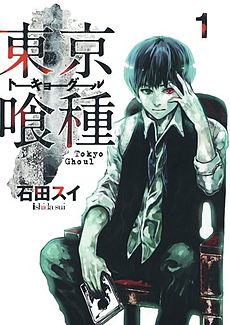
The more popular title with the audience was Tokyo Ghoul, which had an anime air recently. Complete at 14 volumes, it ran in Weekly Young Jump, and sounds like it will appeal to those who like titles such as Gantz. It’s about a boy bitten by a ghoul, who thanks to SCIENCE becomes a unique, half-ghoul entity. Definitely more in the horror genre.

The remainder of the manga portion was devoted to talking up Viz digital releases, as well as the Jump Start program (see below). On the anime end, in among a slew of discussion of simulcasts, new Naruto and Bleach DVD sets, and Blood Lad’s box, we got a new announcement: Sailor Moon Box Set 2, with the last half of the first season, will be out on February 10th. There are lots of extras on it, mostly original to Viz and discussing the dub release. Any anime fan worth their salt should be preordering this.

I left during question time, which involved the standard “have you considered licensing this?” “We can’t comment.” rigmarole. After doing a brief wander, I decided to room camp again, and walked in in the middle of the Hatsune Miku panel. The virtual idol had just appeared on Letterman this week, and her popularity has never been higher. I will admit, the new song played to us was quite catchy, and the concert clip simply stunning. I’d never really paid much attention to Vocaloid before, but might look into it after seeing this.

Next was a definite room camp choice, as I’d never really enjoyed the movie Revenge of the Nerds, and had no idea it had been turned into a reality TV show. That said, Curtis Armstrong and Robert Carradine were enthusiastic, and the audience ate it up. They also had a professional cosplayer, Yaya Han, who had appeared on the show before and was cheery and personable. I still have no desire to see the show, but it looks perfect for its target audience.

Next was the Jump panel. The major guest here was Takshi Obata, artist on Hikaru no Go, Death Note, and Bakuman, as well as the new All You Need Is Kill. We also had two of his editors from Japan, as well as the usual gamut of Viz employees. There weren’t any new print licenses, but they did discuss Jump Start, which gives readers three chapters of each new series Jump debuts, as well as Jump Back, featuring classic Jump titles such as Death Note. (Any chance of Gintama?)

They then presented some questions to Takeshi Obata. When he was first presented with Hikaru no Go, he boggled – he thought drawing shonen battle go would be impossible. But he was drawn to Sai, and discussed the movement of the go stones as becoming almost Naruto-esque. He was asked about Ohba, and said he first saw him as a “cool, mysterious adult” but found him quite easy to write with – they editor says they had good chemistry, and he paired them for Death Note due to Obata’s love of the gothic aesthetic. As for his newer editor, when he first met Obata his hands were shaking he was so excited, but he’s resolved to make his titles Number One in Jump.

Obata came up with the designs for Bakuman, wanting to make it a deliberate contrast to the Death Note style. Then there’s All You Need Is Kill, which being a seinen title allows Obata to try things that would not be allowed in Jump – unfettered, as it were. He was then asked about various character designs. He used the word ‘hen’ (strange) to describe L about 5 times – I suspect no one would disagree. As for Ryuk, his appeal is that he looks scary but can act quite cute.

The Viz folks also threw in his portrayal of Yoshida, a Jump editor featured in Bakuman. He cheerfully said it was based on the Yoshida sitting next to him, who praised Obata’s ability to remember small details and bring them back later – things like what kind of wristwatch someone was wearing. We then saw even more of his attention to detail, as he did live drawings of Ryuk and L – with a sharpie, no less!

There were a few questions. He was asked about his heroes as a boy, and mentioned Sherlock Holmes. He has very little free time, like most Jump mangaka, though notes he does karate – even if he’s the weakest student at the dojo. Lastly, the whole panel was asked what they thought the future of Shonen Jump was, both in Japan and North America. Responses included keeping the artists competitive among each other, more originality and parity, and, naturally, we the audience were also the future of Jump.

After this, I was frotzed, so skipped the LBGTQ panel, which I had seen last year, even if I was curious it they had an answer to last year’s asexuality discussion. Instead, it was back to the hotel for a long-awaited dinner and typing this up in my postage stamp of a hotel room. What will tomorrow bring? Crunchyroll’s anime panel, Yen Press, and more Obata!

Filed Under: NYCC/NYAF, UNSHELVED

Ghoulish Licensing News from VIZ

October 9, 2014 by Katherine Dacey

Tokyo Ghoul will debut in June 2015.

Tokyo Ghoul will debut in June 2015.

Breaking news from New York Comic-Con: VIZ Media has licensed two new series, both of which will debut in June 2015. The first, Tokyo Ghoul, focuses on a college student who unwittingly receives an organ transplant from a demon. The second, So Cute It Hurts!!, is pure shojo fodder: fraternal twins Mitsuru and Megumu swap identities to attend each others’ school. The twist? Mitsuru enrolls in an all-girls academy, while his sister enrolls in a high school for delinquent boys.

Pack your beret: ReedPOP, the company that organizes New York Comic-Con, just announced the first-ever Paris Comic-Con, which will be held from October 23-25, 2015.

The New York Times files a report on the business of comic conventions, noting that over 150,000 people will be attending this year’s NYCC. Not everyone is enthusiastic about conventions’ increasing emphasis on movies, television, and video games, however. Blogger Denise Dorman argues that comics — and their creators — are being marginalized at the very events they helped popularize.

Paging Julie Taymor! Shueisha and Masashi Kishimoto have approved a stage adaption of Naruto. No word if Bono and the Edge will be contributing musical numbers…

The final volume of Vampire Knight arrives in stores on Tuesday, October 14th.

Reviews: Ash Brown kicks the tires on manga adaptations of Pride and Prejudice and Les Miserables, while Jason Thompson dedicates his latest House of 1,000 Manga column to Attack on Titan.

Rebecca Silverman on Helter Skelter: Fashion Unfriendly (Anime News Network)
Kate O’Neil on vol. 3 of The Infernal Devices: Clockwork Princess (The Fandom Post)
Kate O’Neil on vol. 7 of Midnight Secretary (The Fandom Post)
L.B. Bryant on Time Killers (ICv2)
Marissa Lieberman on Wolf Children: Ame & Yuki (No Flying No Tights)
Kristin on vols. 1-2 of World Trigger (Comic Attack)

Filed Under: MANGABLOG

Manga the Week of 10/15

October 9, 2014 by Sean Gaffney, Ash Brown, Michelle Smith, MJ and Anna N Leave a Comment

SEAN: With only ten new volumes, this is the lightest week of the month. Let’s all enjoy it.

ww2

First off, one I missed from last week, mostly as Amazon just announced they were shipping it early a few days ago. The second Whispered Words omnibus, containing Vols. 4-6, is out this week. If you like a well-written yuri story with lots of fun and angst and romance, this is the book for you.

ASH: The story is great! And it has karate, too! (I just hope the copy editing has improved with this volume…)

MICHELLE: Me, too. It was seriously bad.

SEAN: Now for next week. We’ll start with Dark Horse, who have the 16th Bride of the Water God volume, which is on my list of “I always forget this exists” titles.

MICHELLE: I actually forgot Whispered Words existed, so don’t feel bad.

MJ: I’d almost forgotten both, and that makes me sad!

ANNA: I didn’t know anything about Whispered Words, but if more high quality yuri is being translated into English, that can only be a good thing.

SEAN: Kodansha releases the quotation mark challenged Say “I Love You”, so I will put them back in. This is Volume 4.

ANNA: I really enjoyed the first two volumes of this. Time to get caught up!

ASH: I’m enjoying this series as well.

SEAN: SubLime has a new Blue Morning volume, a series that I believe our Manga Bookshelf team has enjoyed in the past.

MICHELLE: I really enjoy both of these series, and will be reviewing both of these in brief form in the coming weeks.

MJ: Blue Morning is definitely on my list for the week.

ajin1

SEAN: Vertical has a new series debut with Volume 1 of Ajin. You can also see this on Crunchyroll’s manga site. It’s from Kodansha’s good! Afternoon magazine, and seems to be quite dark. I suspect this is more in the Wolfsmund vein than the Chi’s Sweet Home one. One of the creators also has High-Rise Invasion coming out via Manga Box.

MJ: Interesting!

ASH: I’m very curious about Ajin and am looking forward to giving it a try.

SEAN: And we also have the 11th and final Flowers of Evil, which proved to be a lot more popular than anyone had expected, I think, though never an easy, friendly read.

MJ: I fell out of this a while back, but I kind of miss it.

ASH: I’ve been saving up all of the volumes of the final arc to read all at once, and here it is, the series end. I’m preparing to be devastated in one way or another.

SEAN: With the 52nd volume of Case Closed, you now have one volume for each week of the year if you want to do a reread.

Deadman Wonderland has a 5th volume, and I suspect the plot has really begun to pick up by now. (Look, sometimes these are generic. I can’t read everything.)

I do read Magi though, and love it to bits. Buy Volume 8. If not for me, then for Viz, who needs another big Shonen Sunday title.

MICHELLE: Magi is excellent, with capable storytelling and character development. I think MJ, in particular, should read this one! :)

ANNA: I have a couple stray volumes of this sitting around my house, and need to fill in a bit before starting to read this series. I’ve only heard good things though, and I look forward to reading it!

SEAN: Lastly, we have another big series ending, as the 19th volume of Vampire Knight is so important that Viz released it apart from the other Shojo Beat titles. It also comes in regular and deluxe versions, with a mini-artbook for the latter. I enjoyed this a lot more than I expected to, but I’m glad it’s ending, as it was running out of plot.

MICHELLE: I think the last volume I read was 13, but I think I’ll make a push and finally finish this one up. For the sake of completeness, if nothing else.

ANNA: It might seem odd to people who are familiar with my love of vampire-based shoujo manga, but I haven’t read this complete series. I started reading it, got about 5 volumes in, stopped, and have been piling up sporadic volumes here and there with the intention of doing a big series read at some point. One day, this will happen!

SEAN: Anything strike your fancy here?

Filed Under: FEATURES, manga the week of

Adaptation Adventures: Udon Entertainment’s Manga Classics

October 8, 2014 by Ash Brown

One day long ago when I was still very small my parents brought home for me a box filled with Great Illustrated Classics–small, compact adaptations of classic literature with illustrations on almost every other page intended to introduce younger readers to some of the great, influential stories of the Western canon. I devoured them. It’s largely thanks to that series that I became so well versed in the classics. When I was older I would go on to read the originals of some of my favorites. And even those that I never got around to, I became familiar enough with their stories that I could hold my own in conversation and understand references made to them.

Literacy is something that I care very deeply about. Closely related to that, I also feel that exposure to the classic stories that have gone on to become such an integral and influential part of Western culture and world literature is important. However, I realize how intimidating those classics can be, especially for those who are reluctant readers to being with, or who simply don’t enjoy the authors’ styles of writing or find the length of some of the originals to be formidable. Because of that, I believe that efforts to adapt these stories in a way that is more approachable and appealing to a larger audience can be extremely valuable, which brings me to Manga Classics.

Manga Classics

Manga Classics is a line of graphic novel adaptations jointly released by Udon Entertainment and Morpheus Publishing. Their aim is to present faithful, high-quality adaptations of classic stories in a format intended to be especially appealing to young adults–that is, full-length, manga-style graphic novels. Udon isn’t the only publisher to attempt something similar to this. Recently I’ve seen other comics, graphic novel, and manga adaptations of classics released by publishers like Marvel and One Peace Books (to provide just two examples) with varying levels of success.

Strong adaptations can be notoriously difficult to achieve. Purists will often outright shun adaptations as they almost never carry the same nuance and complexity found in the source material or because they may stray too far from the original. Adaptations are especially challenging when trying to present a story in an entirely different medium, such as adapting prose into comics or film. For me, I consider an adaptation to be a great one if it is entertaining and engaging in its own right while at the same time inspiring readers (or viewers) to seek out the original stories. I feel that Manga Classics’ first two adaptations have accomplished this.

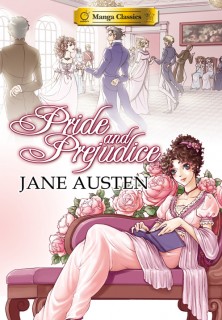
Pride & PrejudiceThe Manga Classics series debuted in 2014 with adaptations of Jane Austen’s Pride & Prejudice and Victor Hugo’s Les Misérables. Out of the two, I am most familiar with Pride & Prejudice. I’ve read the original, I’ve seen many of its film and television adaptations (if you’ve not already discovered the recent webseries The Lizzie Bennet Diaries, I highly recommend it), and back in high school I was actually even a main cast member in a Pride & Prejudice stage production.

The original Pride & Prejudice was first published in England in 1813. The story follows Elizabeth Bennet, the second-oldest daughter of an English family with a country estate outside of London. Elizabeth’s mother is determined to see her five daughters married, and married well, so when the wealthy (and young) bachelor Mr. Bingley moves into the neighborhood, her scheming immediately begins. Fortunately, Bingley and Jane, the eldest Bennet daughter, hit it off. Unfortunately, due to some misunderstandings and interference from Bingley’s best friend Mr. Darcy, their romance is cut short. And because of that, Elizabeth’s opinion of Darcy suffers greatly, not that she held him in very high regard to begin with. To add to the awkwardness, Darcy, to his dismay, seems to have developed feelings for Elizabeth. Things get even more complicated from there as manners, social standing, morals, and some very strong personalities come into play before the Bennet daughters find their way in life and love.

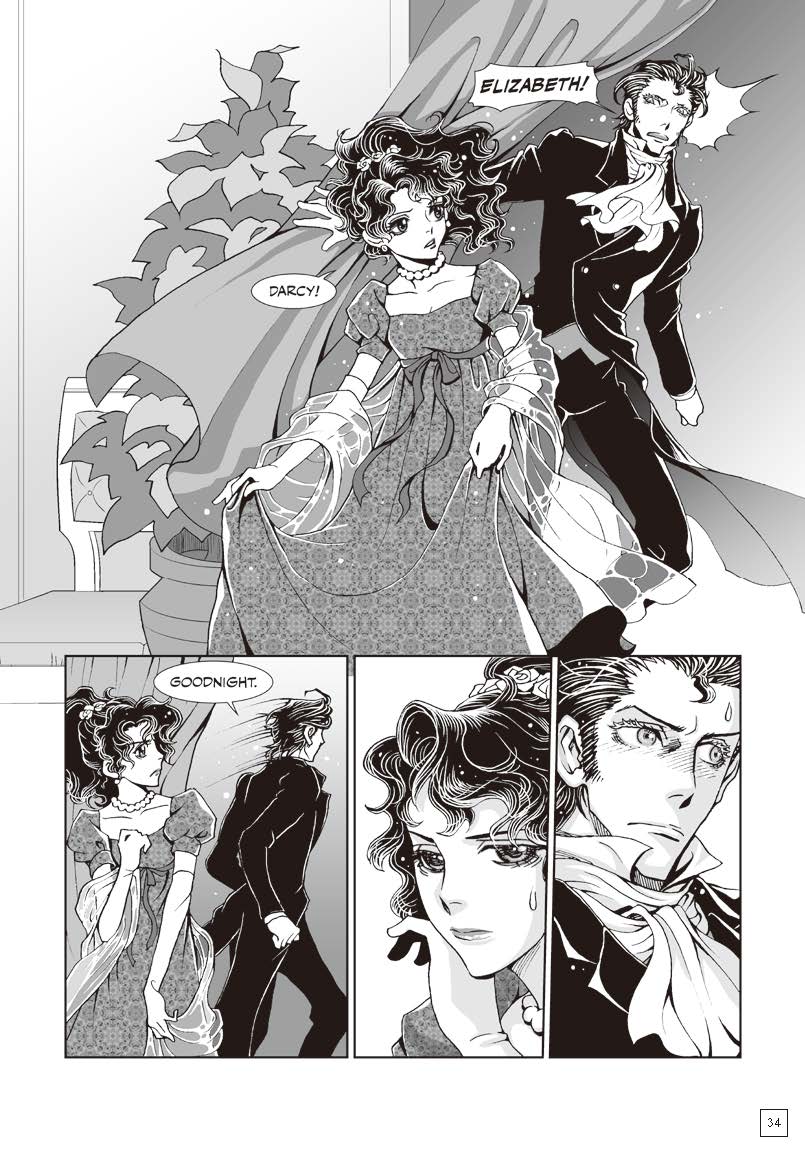
Elizabeth Bennet and (blushing!) Mr. Darcy

Elizabeth Bennet and (blushing!) Mr. Darcy

Reading the Manga Classics version of Pride & Prejudice reminded me how much I enjoy the original novel, its story, and its characters. I was also struck by how perfectly Austen’s work is suited for shoujo. The story has been adapted by Stacy King and illustrated by Po Tse. The narrative has been slimmed down and largely focuses on Elizabeth and the ups and downs of her delightfully antagonistic relationship with Darcy. All of the major plot points are still there although some of the other characters (such as Elizabeth’s younger sisters) aren’t as fully developed. But the story still works and works quite well. The only thing I didn’t really like about Manga Classics’ Pride & Prejudice was the portrayal of Mr. Collins, the heir to the Bennet estate. To some extent he serves as the story’s comic relief, but he comes across as too much of a caricature in the graphic novel (visually and narratively) which clashes in style from the rest of the comic. Generally though, Po Tse’s artwork is quite lovely and occasionally even stunning. Elizabeth and Jane’s hair is gorgeously drawn and particular attention has been given to Regency period clothing and architecture as well. (A preview of the first chapter is available here!)

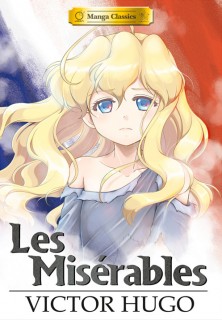
Les MisérablesI am much less familiar with Les Misérables. Although I know the basic story of the novel, I’ve never actually read the original. Nor have I seen any of its direct adaptations. However, I have listened to multiple sound recordings of the musical many, many times. I’ve seen the recent 2012 film adaptation of the musical as well, but that’s a couple steps removed from Hugo’s original.

Les Misérables was first published in France in 1862. The novel (one of the longest ever written) is an epic work of historical fiction set in the first half of the 19th-century, a rather tumultuous time in France. The novel begins in 1815 after the defeat of Napoleon Bonaparte and, following a large cast of characters, digressions, and subplots, climaxes with the June 1832 uprising in Paris. The most well-known story out of Les Misérables is that of the ex-convict Jean Valjean, the officer Javert whose goal is to recapture Valjean, and a young orphan girl named Cosette who becomes Valjean’s charge. Those three individuals and their relationships and connections to one another and the rest of the characters form the core of Les Misérables. Politics, religion, economic and social conditions, philosophy, morality, redemption, and love all have an important role to play in the novel as well.

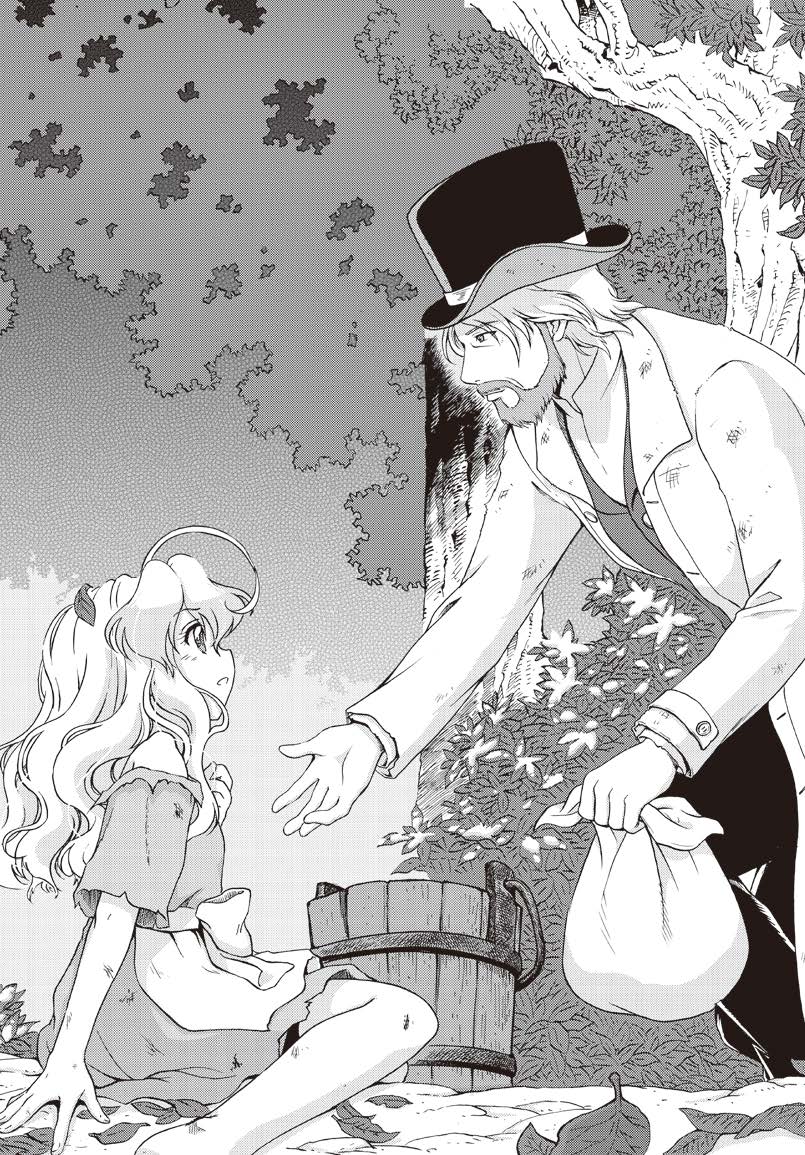
Cosette and Jean Valjean

Cosette and Jean Valjean

Because I’m not as familiar with the original Les Misérables it’s difficult for me definitively say how the Manga Classics’ adaptation directly compares. However, I can say that it reads very well. Most of the subplots have been dropped in favor of the main storyline following the Valjean and Cosette and those who are directly involved with them. The adapter, Crystal Silvermoon, has taken great care to consider other adaptations of Les Misérables in addition to the original in the creation of the graphic novel. Because Les Misérables is so lengthy and complex there would be no possible way to include everything, but the most iconic scenes are all present in the Manga Classics adaptation. Stacy King provided additional assistance with the scripting and SunNeko Lee served as the volume’s illustrator. Stylistically, the art is a little simpler than that found in the Pride & Prejudice adaptation. However, it is more even in tone which suits the story’s serious and dramatic nature. Once again, particular attention has been given to the setting. I found the Les Misérables graphic novel to be engaging and, perhaps more importantly, it’s the first adaptation that has really made me interested in picking up the original.

Because it is so easy to create an unsatisfying adaptation of any work, let alone a work that is well-loved or held in high esteem, and after seeing so many poor adaptations, I’ll admit that I approached Manga Classics with some apprehension. However, I was very happy to discover that the line’s first two adaptations were very well done. Though I might have a small nitpick here or there, I sincerely enjoyed both volumes. I could easily see Manga Classics being used in a classroom setting, but I think the graphic novels will appeal to readers outside of that context as well. I am very pleased that new audiences will have the opportunity to be introduced to some of the classic works of literature in such an approachable format. Hopefully, like Great Illustrated Classics did for me, Manga Classics will inspire new generations to seek out those original stories.

Spring 2015 will bring three more adaptations to the Manga Classics line, graphic novel versions of Jane Austen’s Emma, Charles Dickens’ Great Expectations, and Nathaniel Hawthorne’s The Scarlet Letter. So far, Manga Classics has approached the source material of its adaptations with care and respect; I can honestly say that I’m looking forward to seeing future Manga Classics releases.

Thank you to Udon Entertainment for providing copies of Pride & Prejudice and Les Misérables for review.

Filed Under: FEATURES Tagged With: comics, Crystal Silvermoon, Jane Austen, Manga Classics, Po Tse, Stacy King, SunNeko Lee, Udon Entertainment, Victor Hugo

The Manga Lover’s Guide to NYCC 2014

October 8, 2014 by Katherine Dacey

Whether you’re planning to attend New York Comic-Con or just want to stay abreast of licensing news, we’ve got you covered! We’ve compiled a master list of panels and exhibitors for those of you who are NYC-bound. Not headed to the Big Apple? We’ll be filing periodic updates throughout the show to let you know what new titles, products, and initiatives your favorite publishers have announced.

Here’s a quick look at the publisher’s panels:

  • Thursday @ 3:00 PM: Viz Media (1A14)
  • Thursday @ 6:00 PM: The Future of Shonen Jump (1A10)
  • Friday @ 11:00 AM: Crunchyroll Industry Panel (1A21)
  • Friday @ 1:15 PM. Yen Press (1A14)
  • Friday @ 5:00 PM: Takeshi Obata (1A10)
  • Saturday @ 5:15 PM: Vertical, Inc. (1A14)
  • Sunday @ 2:00 PM: Kodansha Comics (1A18)
  • Sunday @ 3:00 PM: Crunchyroll Manga (1A18)

Here’s a list of the major manga publishers who will be exhibiting at the show:

  • Dark Horse Comics (1636)
  • GEN Manga Entertainment (2058)
  • Hachette Book Group USA (2218)
  • Kodansha US Publishing (2109)
  • One Peace Books (1060)
  • Vertical, Inc. (2020)
  • VIZ Media (1944)

And here are some helpful links to help you plan your visit:

Sean Gaffney shares his top picks for most interesting panels.

Heidi MacDonald posts a complete list of all the panels at this year’s show. Click here for Thursday’s panels; click here for Friday’s; click here for Saturday’s; click here for Sunday’s.

VIZ Media has posted a complete schedule of events on its website. Highlights include a Sailor Moon anime panel and a special appearance by Death Note artist Takeshi Obata. Bring your dog-eared copy of Hikaru no Go: Obata will be at the VIZ booth on Thursday, October 9th from 7:30 to 8:30 pm for a manga signing.

Wondering what kind of goodies you’ll find at publishers’ booths? Many are offering sneak peeks on social media. Vertical, Inc., for example, will have advance copies of new series Witch Craft Works, while Kodansha will have the much-anticipated volume 14 of Attack on Titan.

Filed Under: MANGABLOG Tagged With: NYCC

Seven Seas New License Roundup

October 8, 2014 by Sean Gaffney

Seven Seas has had a busy week, announcing seven new titles in seven days. The titles ran the gamut from cute slice of life to award winning comedy to some ‘look, boobs!’ works that show their close relationship with Media Factory has not wavered. Let’s take a look at what’s coming out this summer 2015.

biyori1

The slice of life is Non Non Biyori, one of Comic Alive’s non-fanservice titles. It’s about a young girl who moves to the country and slowly makes new friends and has fun, relaxing times. It’s 7+ volumes, and still running, but sounds like it will be a fun read.

Mahō Tsukai no Yome is a Mag Garden title, as the company has been slowly working its way back into the North American market after Tokyopop’s demise removed their biggest customer. This is a Comic Garden series (the replacement for Comic Blade, which was rebranded last year (supposedly cancelled, but when a new magazine appears that’s exactly the same with a different name…)), seems to be pretty and filled with magic and supernatural stuff, and I suspect is an apology to female readers for the titles lower down on this list. :)

Probably the most intriguing title here is Kōkaku no Pandora – Ghost Urn, a collaboration between legendary “I start series but never quite finish them” author Masamune Shirow and Excel Saga creator Rikdo Koshi. Given it’s Shirow, you’ll be unsurprised to hear that it’s a near-future work with lots of amazing tech. Given it’s Rikdo, expect some ecchi art as well. This is a Newtype Ace series from Kadokawa, and I’ll be checking it out, although I will not be surprised if it gives me mixed feelings.

sakamoto1

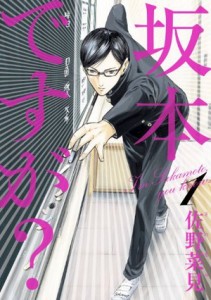
The title I’m most looking forward to, and have suggested as a license before, is Sakamoto desu ga?, an Enterbrain title from the magazine harta (small caps deliberate). Sakamoto is cool and awesome and amazing at everything, but still finds the time to be helpful and caring, if a tad stoic. This is a comedy along the lines of Cromartie or Gekkan Shoujo Nozaki-kun – if you like seeing weird stuff happening, with a dash of heart, this is a must read, and I cannot recommend it enough. It’s won awards!

When I heard that Mōretsu Pirates was getting a lciense, my nerd personality went over the moon. Not just because it’s a terrific franchise, but because the main manga runs in a magazine from Asahi Shimbun, who do very little business with North America. Sadly, my gushing was cut short – this is the manga adaptation of the movie, and it ran in Comic Alice. Still, Mōretsu Pirates: Abyss of Hyperspace -Akū no Shien- is still recommended, as the cast is awesome, and also, space pirates.

This next license was probably the most controversial. I had been tweeting various Media Factory titles I thought SS would license, but skipped this as the cover looked too pornographic. Silly me. Magika no Kenshi to Shōkan Maō is based on a light novel, has swords and fantasy battles, and no one really cares about that because near-naked girl on the cover. While these titles aren’t for me, there’s no denying they sell like hotcakes, and help pay for things like Sakamoto desu ga?.

Lastly, the biggest license was Freezing, a manga by two Korean creators that runs in Comic Valkyrie, which has not seen too many titles over here at all. It’s a big series, being over 20 volumes, and they plan to do omnibus releases. It’s also had two anime series based off of it. That said, if you’re looking for a description, it would not be too far away from the title before this, although I think Freezing is less ‘wacky near-naked fanservice’ and more ‘action-packed, blood-filled near-naked fanservice’. In any case, it’s always nice to see longer series get a shot over here.

They have a big announcement at the end of the month, but that’s it for now. Which Seven Seas license makes you the happiest?

Filed Under: NEWS, UNSHELVED

World Trigger, Vols 1 and 2

October 7, 2014 by Anna N

World Trigger Volumes 1 and 2 by Daisuke Ashihara

World Trigger starts out with a very Attack on Titanesque set-up, expressed simply in one page. Monsters from another dimension are invading the earth. A paramilitary force shows up to fight the monsters. Daily life for the rest of humanity is often interrupted by these “Neighbors” who look a bit like giant eels and the humans who fight back against the invasion.

Osamu is a bit of an unassuming student, but he finds his life complicated when a mysterious new transfer student named Yuma shows up. Yuma seems to not know very much about basic human behavior. When a Neighbor attacks outside of the usual boundaries, Osamu reveals that he’s actually a trainee for the Border Defense Agency, with a small amount of power that he’s determined to use to protect everyone in his city. Yuma turns out to have some extraordinary powers himself. He claims to also be a Neighbor, from the dimension where the monsters come from. He also has the ability to use a trigger, the weapon/body exchange protocol that allows users to fight off the monsters.

In the ensuing battle, Yuma fends off a powerful monster after Osamu proves not to have the level that he needs in order to destroy his enemy. Osamu turns to helping out however he can, by evacuating residents and helping everyone stay safe. Members of the Border Protection Agency turn up, suspicious of the recent events and determined to follow correct bureaucratic procedure. The cast of the book gradually expands beyond Osamu and Yuma to include many of the typical foils for a shonen protagonist. There’s a cool older male mentor, a type A overachiever warrior girl, and a host of bureaucrats in the Border Protection Agency that will surely make life difficult for Osamu.

The Border Protection Agency seems more chaotic than a force for either good or evil, as a squad starts to hunt down Yuma. Osamu tries to intercede, but Yuma’s level of power is such that he’s able to evade attack from multiple agents at once with only some slight injuries. One interesting aspect of the story is that Osamu keeps getting promoted within the Border Protection Agency simply because he is often in the right place at the right time and occasionally forced to take credit for some of Yuma’s actions in order to maintain his new friend’s cover. Osamu’s leveling up though being an unassuming nice guy who is incredibly lucky is a bit unexpected for a reader expecting a more typical brash shonen hero, and this was one aspect of the book that I found intriguing.

There’s a fair amount of world building as the characters go into details about the alien tech infused battle system, but I didn’t find this very interesting. The art is workmanlike and easy to follow, but it doesn’t have that extra bit of style or distinct quality that would make me want to pick up the manga just to see some fabulously paneled battle scenes. The story is solid, but there isn’t much that’s surprising about it so far. The anime for this series is starting to air, so I imagine that will fuel interest for this title. I didn’t find myself inspired to keep reading the series, simply because there are other titles out there that are much more entertaining. I can read One Punch Man if I want something funny, Attack on Titan if I want to read about a dystopian future where humanity is fighting off giant invaders, or Seraph of the End for more attractive art and interesting world building. Overall, this is a solid if not super compelling shonen title, and I imagine that someone less picky about shonen manga than me will enjoy it.

Filed Under: REVIEWS Tagged With: Shonen, Shonen Jump, viz media, world trigger

The End of Naruto is Nigh!

October 7, 2014 by Katherine Dacey

Say it isn’t so: Masashi Kishimoto’s phenomenally popular Naruto will conclude its fifteen-year run on November 10th.

In conjunction with his appearance at NYCC, Death Note artist Takeshi Obata will be signing books at two Manhattan bookstores: Kinokuniya (October 10th) and the Tribeca Barnes & Noble (October 11th).

Seven Seas unveiled three new fantasy and sci-fi licenses: Magika Swordsman, Summoner, and Bodacious Space Pirates: Abyss of Hyperspace.

Need some guidance in the manga aisle? The Manga Bookshelf team offers their picks for the week’s best new arrivals.

Ash Brown catalogs his September reading list, from the first volume of Alice in the Country of Hearts to the latest volume of What Did You Eat Yesterday?

Support a good cause! The Comic Book Legal Defense Fund will be throwing a party on October 11th in New York City. The event is open to fans and pros alike, and will raise money for the organization’s advocacy work. Need proof that censorship of manga is still an issue? As recently as two weeks ago, the town of Cleveland, Texas, was holding hearings on whether to remove Vampire Knight from its library for “Satanic content.”

Reviews: The Manga Bookshelf gang files another installment of Bookshelf Briefs, while Lesley Aeschliman runs down the contents of the latest issue of Weekly Shonen Jump.

Lesley Aeschliman on vol. 1 of Alice in the Country of Hearts (Lesley’s Musings… on Anime & Manga)
Matthew Warner on Battle Royale: Angel’s Border (The Fandom Post)
Leroy Douresseaux on vol. 8 of Happy Marriage?! (Comic Book Bin)
Sean Gaffney on vol. 1 of I Am Alice: Body Swap in Wonderland (A Case Suitable for Treatment)
Matthew Alexander on vol. 10 of Knights of Sidonia (The Fandom Post)
Lori Henderson on vols. 5-9 of Library Wars: Love and War (Good Comics for Kids)
Khursten Santos on Sanzoku Diary (Otaku Champloo)
Erica Friedman on vol. 4 of Torikaebaya (Okazu)
Rebecca Silverman on Uzumaki: 3-in-1 Deluxe Edition (Anime News Network)
Leroy Douresseaux on vol. 2 of World Trigger (Comic Book Bin)

Filed Under: MANGABLOG

I Am Alice: Body Swap in Wonderland, Vol. 1

October 7, 2014 by Sean Gaffney

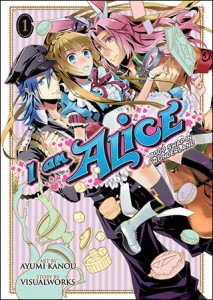
By Visualworks and Ayumi Kanou. Released in Japan by Media Factory, serialized in the magazine Comic Gene. Released in North America by Seven Seas.

I have noted in the past how this seems to be the age of the Alice in Wonderland manga, much as we have also had the age of vampire manga and ninja manga. This has its drawbacks, however. At least with vampire or ninja manga, there are a variety of different situations to put them in, and you can create your own characters. Alice in Wonderland kind of requires the Wonderland folks, and even if you make them bishonen, you still have a few series with many common elements. Thus I can perhaps be forgiven for constantly wondering, throughout this entire first volume, why the Hatter or the White Rabbit weren’t acting like their counterparts in the Country of Hearts Alice series, also based on an otome game.

alice1

The artist behind this actually is the one who was responsible for Dictatorial Grimoire, a series I enjoyed more than I thought I would, mostly as it was filled with snarky people being verbally abusive. There’s some of that here, and it’s where the storyline really comes into its own. The premise, which is glossed very swiftly in the first few pages, is that a boy grabbed the Alice in Wonderland book in the library and fell into the book – and has now swapped bodies (you knew that subtitle would be explained at some point) with Alice herself, who is trapped in his body. Alice is the loud tomboy type, and Makoto quite reserved, so it’s not as jarring as you’d expect. As they travel through Wonderland, meeting the White Rabbit, Mad Hatter, etc., all of whom are handsome young men, they realize that to get back to their world and bodies, they have to defeat the… King of Hearts.

So Alice isn’t the only genderswap we’re dealing with. I was sort of hoping to see a Queen of Hearts – in the Country of Hearts series, Vivaldi helps to be a big sister to Alice and not make the series entirely about one girl and her many men. This Alice doesn’t have that luxury – we do find out the March Hare was a woman, but we find this out right about the time she’s fridged to give motivation to the Dormouse. As for the Alice in Makoto’s body, she’s more of a hindrance than anything else, though her love of huge guns is at least mildly amusing.

For the otome manga fan, there’s not much that’s objectionable here. Makoto in Alice’s body is a nice person, and therefore makes it easy for all the other guys to fall for her. There are a couple of “but wait, she’s a boy!” characters, but most simply don’t care, which clearly is a tease to BL fans. And as I said, Kanou has a way with snarky dialogue, so I smiled a few times throughout. That said, I honestly only have room for one Alice series at the moment, and this one falls short next to Country of Hearts’ psychological deconstruction of Alice’s tragic backstory. It’s an OK book, but in the end I’d only read it if you’ve played the game it’s based on.

Filed Under: REVIEWS

My Week in Manga: September 29-October 5, 2014

October 6, 2014 by Ash Brown

My News and Reviews

Last week at Experiments in Manga there were three posts in addition to the usual My Week in Manga feature. To start with, the winner of the Triton of the Sea manga giveaway was announced. The post also includes a list of some of the manga available in English that feature mermaids and/or mermen. Next was my review of Ryo Suzukaze’s novel Attack on Titan: Before the Fall, which is a prequel to Hajime Isayama’s original Attack on Titan manga series. I liked the premise of the novel much more than I did its execution, but it should still be pretty interesting for Attack on Titan fans. And finally, over the weekend, September’s Bookshelf Overload was posted. As for other interesting things online…I’ve been so busy at work lately that I’ve not really been able to keep up with all that’s going on. However, I do know that Seven Seas is currently in the process of revealing seven new licenses via Twitter. I’m pretty sure that Sean will be doing a wrap-up at A Case Suitable for Treatment soon which I’ll link to, but in the meantime you can always check out Seven Seas’ Twitter timeline. (There have been some really interesting choices so far!)

Quick Takes

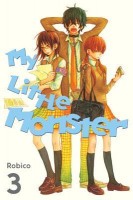
My Little Monster, Volume 3My Little Monster, Volume 3 by Robico. I have been thoroughly enjoying My Little Monster and its cast of rather quirky characters. However, the third volume doesn’t seem to really move the plot along much, nor does it really develop the characters further. If anything, the series has lost its forward momentum and undoes some of the progress that has been made. After the various confessions of love from the previous volumes, Haru and Shizuku spend most of the third going through it all again. Shizuku has once more decided that she doesn’t have time for friendships or romantic relationships and wants to focus on her studies. Haru is fitting in a little better at school and is actually able to put the fact that everyone except Shizuku is terrified of him to good use, although he’s still fairly volatile and his behavior and obliviousness of others occasionally causes some real problems. So overall, not much has really changed in My Little Monster except that a few more hints have been dropped about Haru’s brother, whom I’m very curious about. I’m still enjoying the series and find its deadpan humor amusing, but I do hope to see more plot and character development in future volumes.

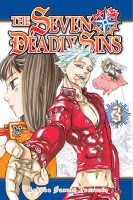
The Seven Deadly Sins, Volume 3The Seven Deadly Sins, Volume 3 by Nakaba Suzuki. As can be safely assumed from the cover, the third volume of The Seven Deadly Sins heavily features the newly introduced Ban, the Fox Sin of Greed. I’m okay with this because, well, I actually like Ban as a character. Despite being one of the Seven Deadly Sins and therefore being one of the series’ heroes (or at least one of its protagonists), Ban’s really not that nice of a guy. Frankly, he’s an unapologetic jerk (with a very nice set of abs and a fondness for alcohol, though he really can’t hold his drink). But, like the other Sins, Ban has a tragic past to go along with his arrogant personality. He’s also kind of a goofball. One of the things that I particularly enjoy about The Seven Deadly Sins is the ridiculously overpowered battles between the ridiculously overpowered characters. The action can sometimes be a little difficult to follow, but the resulting destruction is quite obvious. I’m also rather impressed by how well Suzuki visually handles Diane, the giantess of the Seven Deadly Sins. She’s huge, but her presence always seems very natural on the page and Suzuki does a nice job of incorporating her into the artwork.

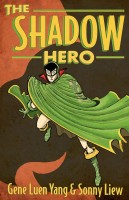
The Shadow HeroThe Shadow Hero written by Gene Luen Yang and illustrated by Sonny Liew. Initially I wasn’t planning on picking up The Shadow Hero, most likely because I’m generally not that interested in superheroes. Fortunately I realized that was a very silly reason not to read the comic, especially considering that Yang is a fantastic writer and I really like Liew’s artwork and use of color. Long story short, I absolutely loved The Shadow Hero. The story of The Shadow Hero was inspired by an obscure superhero from the 1940s called the Green Turtle which was created by Chu Hing, one of the first Asian Americans to work in American comics. (The volume also contains a reproduction of the first Green Turtle comic, which was a nice addition.) The Shadow Hero serves as the Green Turtle’s origin story. Hank Chu is the son of a Chinatown grocer who looks forward to taking over his father’s store. His mother, however, has much bigger plans for her son and has decided that he will become a superhero, despite the complete lack of any superpowers. With a great story and great art, and plenty of humor to balance the more serious aspects of the comic, The Shadow Hero is definitely recommended.

Sleeping Moon, Volume 1Sleeping Moon, Volumes 1-2 by Kano Miyamoto. I tend to really enjoy Miyamoto’s work, so I was pretty excited when SuBLime licensed her short boys’ love series Sleeping Moon. I was particularly looking forward to it due to its supernatural elements, but in the end I didn’t find it as compelling as some of her other manga which are more firmly based in reality. Part of that is probably because much of the romantic relationship between two of the leads felt as though it was tacked on simply because the series was supposed to be boys’ love. Still, there were parts of Sleeping Moon that I enjoyed, and Miyamoto’s artwork is as lovely as ever. Akihiko’s family is cursed–the male heirs all die young, never making it past their thirties. And since his thirtieth birthday is fast approaching, Akihiko has a vested interest in discovering the truth behind the curse in order to prevent his own death and the death of his cousin. And that’s when the time slips begin–Akihiko finds himself spontaneously traveling to the Meiji era where one of his distant relatives is trying to unravel the same mystery. The moody supernatural and horror elements work better than the manga’s romance and the time traveling is handled quite well, too.

Filed Under: FEATURES, My Week in Manga Tagged With: comics, Gene Luen Yang, Kano Miyamoto, manga, My Little Monster, Nakaba Suzuki, Robico, Seven Deadly Sins, sleeping moon, Sonny Liew

  • « Go to Previous Page
  • Page 1
  • Page 2
  • Page 3
  • Page 4
  • Page 5
  • Go to Next Page »
 | Log in
Copyright © 2010 Manga Bookshelf | Powered by WordPress & the Genesis Framework