• Skip to primary navigation
  • Skip to main content
  • Skip to primary sidebar
  • Home
  • About Us
    • Privacy Policy
    • Comment Policy
    • Disclosures & Disclaimers
  • Resources
    • Links, Essays & Articles
    • Fandomology!
    • CLAMP Directory
    • BlogRoll
  • Features & Columns
    • 3 Things Thursday
    • Adventures in the Key of Shoujo
    • Bit & Blips (game reviews)
    • BL BOOKRACK
    • Bookshelf Briefs
    • Bringing the Drama
    • Comic Conversion
    • Fanservice Friday
    • Going Digital
    • It Came From the Sinosphere
    • License This!
    • Magazine no Mori
    • My Week in Manga
    • OFF THE SHELF
    • Not By Manga Alone
    • PICK OF THE WEEK
    • Subtitles & Sensibility
    • Weekly Shonen Jump Recaps
  • Manga Moveable Feast
    • MMF Full Archive
    • Yun Kouga
    • CLAMP
    • Shojo Beat
    • Osamu Tezuka
    • Sailor Moon
    • Fruits Basket
    • Takehiko Inoue
    • Wild Adapter
    • One Piece
    • After School Nightmare
    • Karakuri Odette
    • Paradise Kiss
    • The Color Trilogy
    • To Terra…
    • Sexy Voice & Robo
  • Browse by Author
    • Sean Gaffney
    • Anna Neatrour
    • Michelle Smith
    • Katherine Dacey
    • MJ
    • Brigid Alverson
    • Travis Anderson
    • Phillip Anthony
    • Derek Bown
    • Jaci Dahlvang
    • Angela Eastman
    • Erica Friedman
    • Sara K.
    • Megan Purdy
    • Emily Snodgrass
    • Nancy Thistlethwaite
    • Eva Volin
    • David Welsh
  • MB Blogs
    • A Case Suitable For Treatment
    • Experiments in Manga
    • MangaBlog
    • The Manga Critic
    • Manga Report
    • Soliloquy in Blue
    • Manga Curmudgeon (archive)

Manga Bookshelf

Discussion, Resources, Roundtables, & Reviews

viz media

Kiss of the Rose Princess, Vol. 5

August 20, 2015 by Anna N

Kiss of the Rose Princess Volume 5 by Aya Shouto

I find myself enjoying this series more and more, mostly because with each new volume my suspension of disbelief grows, and I just kick back and enjoy the ridiculousness of this reverse harem fantasy manga. This volume did a good job balancing out which knights were featured, with a bit more attention given to Tenjo the White Rose Knight. As ever, Kaede the Red Rose Knight lurks around and smolders in a few panels for each chapter.

The first part of this volume picks up at an area that is fraught with terror in most shoujo manga – an amusement park. Meek classmate Mikage with her overwhelming crush on Kaede has been hiding an even worse secret. Even more fake Rose Knights appear, leading to an excess of flower avatar people everywhere! Anise powers up a bit, triggering an awakening in Tenjo the White Rose that allows him to deal with their enemies easily. This throws off the balance of power and changes the dynamics in the group a little bit.

The fake rose idols Rhodecia make a brief appearance again, and there’s an extended comedy bit when Anise, Kaede, and Seiran dress as servants in an attempt to infiltrate Tenjo’s mansion to check up on him. There are plenty of gags involving both maid costumes and the odd decorating habits of the rich. One of the things I enjoy about the series is the way it switches back and forth between more lighthearted scenes and hints of upcoming ominous events. Shouoto’s dramatic art has plenty of flourishes that suit the dramatic and silly situations the protagonists find themselves in. Even though evil fake roses keep popping up, the mystery around Anise’s diabolical father is still touched on briefly with each volume, hinting at larger issues Anise is going to confront eventually. With the Black Rose Mutsuki seeming to take center stage at the end of this volume and I’m assuming the start of the next, it looks like there’s going to be more grim vampirific backstory to look forward to.

Filed Under: REVIEWS Tagged With: kiss of the rose princess, shojo beat, shoujo, viz media

Maid-sama!, Omnibus 1

August 12, 2015 by Ash Brown

Maid-sama!, Omnibus 1Creator: Hiro Fujiwara
U.S. publisher: Viz Media
ISBN: 9781421581309
Released: August 2015
Original release: 2006-2007

Maid-sama! is an eighteen-volume manga series created by Hiro Fujiwara. The series was initially licensed for English translation by Tokyopop, which released the first eight volumes of the manga between 2009 and 2011. More recently, Maid-sama! was rescued by Viz Media. The manga is being released under the Shojo Beat imprint in an omnibus edition, each English-language omnibus collecting two volumes of the series’ original Japanese release. The first Maid-sama! omnibus was published in 2015 and includes the first and second volumes of the manga published in 2006 and 2007 respectively. (The first volume also contains Fujiwara’s earlier short manga “A Transparent World.”) Maid-sama! was Fujiwara’s first major success as a mangaka. However, it wasn’t until Viz’s release of Maid-sama! that the series came to my attention when I noted the enthusiastic response of fans surrounding its return. I was therefore very happy to have the chance to read a review copy of the first omnibus in order to see what the excitement was all about.

Seika High School, previously an all-boys’ school, has only been co-ed for a couple of years. The student population is still largely male—the boys outnumbering the girls four to one—and Seika High still has a bad reputation. And so Misaki Ayuzawa has decided to take things into her own hands, becoming Seika’s first female student council president in order to clean up the school’s act, improve it standing, and create a more welcoming environment for young women. Misaki rules over Seika with an iron fist, though not everyone appreciates her strength and intelligence or the changes she’s making. Because of that, she’s particularly careful to keep the fact that she works part-time at a maid cafe a secret; she doesn’t want to ruin her image or risk losing what little authority she has. But then her classmate Takumi Usui discovers how she’s spending her time after school. Misaki has caught his attention and interest, perhaps even romantically, though understandably she’s not very happy about the awkward turn of events.

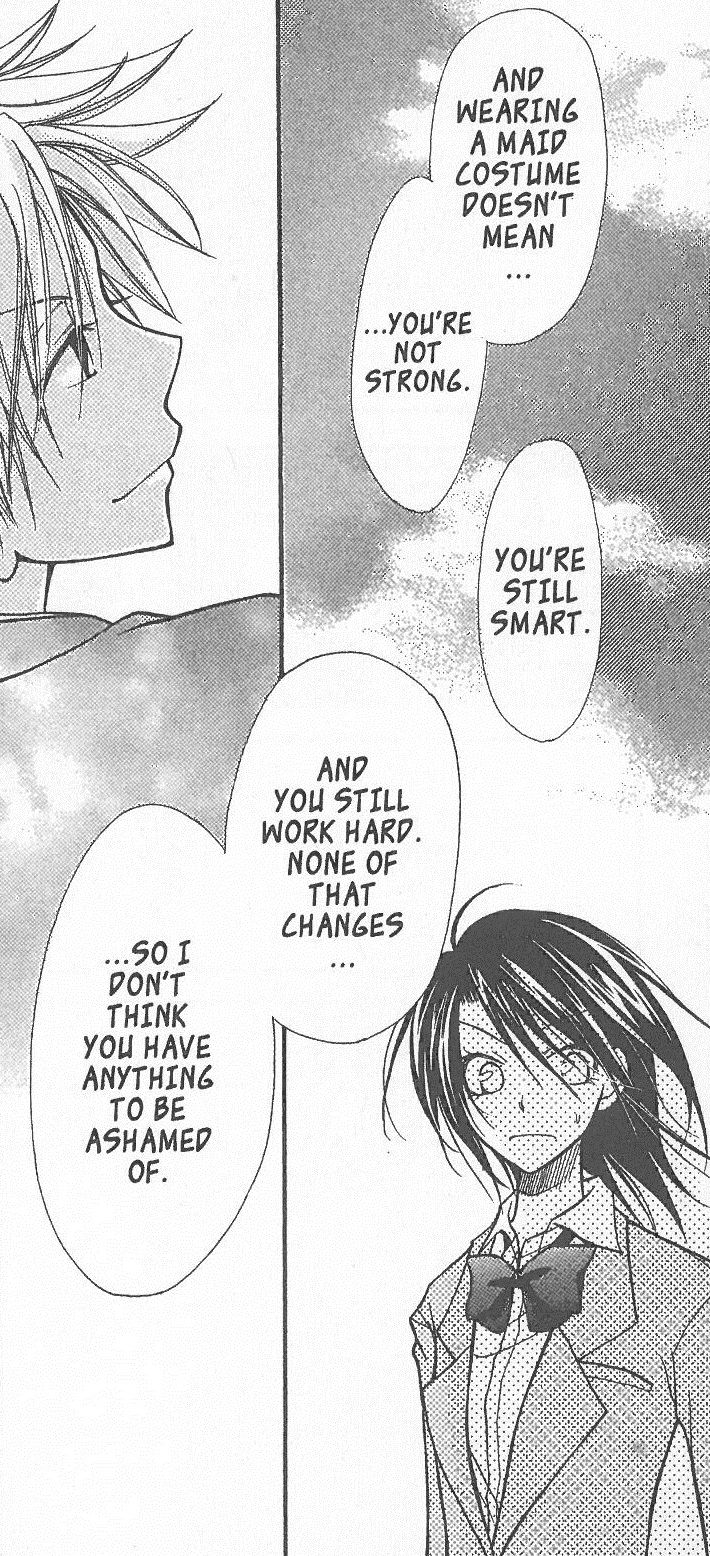
Maid-sama!, Omnibus 1, page 34I absolutely adore Misaki. She’s a smart, strong, motivated, hard-working, competent, capable, and highly accomplished individual. She’s not perfect though. Her drive to overachieve and handle everything by herself along with her reluctance to rely on the help of others means that she frequently overextends herself, wearing herself down. Misaki could stand to relax a little, but the believable combination of her strengths and weaknesses make her the most well-developed character in the series. While I love Misaki, I am significantly less enamored with Takumi. Sometimes he can be a great guy, but on occasion he can be an utter creep. His skills and talents match and even surpass those of Misaki, often in superbly ridiculous ways which are admittedly amusing, but he seems to frequently be emphasizing that she’s a girl as if that somehow makes her inferior. I want to see the Takumi who supports Misaki for who she is and who doesn’t feel the need to dominate her. Early on in Maid-sama! it seems this would be a possibility, but the more of the omnibus I read the less likely it appeared that the series would be going in that direction.

Although in part Maid-sama! is a romance, ultimately that particular plot line in the manga is the one that interests me the least. (If I actually liked Takumi more than I currently do, I would probably feel differently.) I enjoy the series most when it focuses on Misaki as she grows as a person. I like seeing her become less of a tyrant as the president as she learns to consider other people and their needs instead of completely overruling them without making an effort to hear their concerns. At first she is disliked by almost all of the students, but as time passes more and more of them, male and female alike, come to admire, trust, and appreciate her and where she is leading Seika High. Although there are certain things about Maid-sama! that bother me—most notably the distinct possibility of Takumi being idealized as a romantic lead—overall I did find the beginning of the series to be entertaining and a lot of fun. And since I do like Misaki so incredibly well, at this point I definitely plan on reading more of Maid-sama!.

Thank you to Viz Media for providing a copy of Maid-sama!, Omnibus 1 for review.

Filed Under: REVIEWS Tagged With: Hiro Fujiwara, maid sama!, manga, shojo beat, viz media

Spell of Desire Vol. 5

August 11, 2015 by Anna N

Spell of Desire Volume 5 by Tomu Ohmi

It is the final volume of Spell of Desire! What’s happening in the conclusion of this paranormal romance series?

Throughout Spell of Desire Kaoruko has been heading towards a confrontation with her mother, the mysterious Witch Queen. She finds out that her mother sealed herself away as part of a spell to balance out the positive and negative energy that was building up in the world. The Witch Queen emerges, and Kaname confesses that he’s no longer able to serve as the Witch Queen’s knight due to his love for Kaoruko. The Witch Queen promptly wins an award for worst mother of the year when she announces that she’s going to curse her daughter’s boyfriend by taking all of his senses away, followed by taking his memories of Kaoruko away too. Kaname is blinded, and he slowly becomes more and more debilitated.

This curse presents quite the conundrum, and Kaoruko is determined to harness her power for once and for all in order to save Kaname. She’s been slowly inching towards claiming her power, so it was great to see her finally take charge and do something. She’s aided by an elderly black witch who shows up and indulges in a great deal of exposition as the volume wraps up.

Overall, I thought the pacing of this series was a bit off. I enjoyed the world building and character introductions in the first couple volumes a great deal, but the rest of the series felt like it was just marking time until the big witch battle happened in the final volume. Kaoruko’s rise to self-assurance and command of her power felt a bit rushed, but I still appreciate that by the end of the series she was making her own decisions and acting heroically in order to create her own happy ending. While Spell of Desire wasn’t the best example of paranormal romance, Ohmi’s clear visual storytelling made it easy to read.

I see that this manga hasn’t sold as well as Ohmi’s other series to be translated into English, Midnight Secretary. This is a bit of a shame, because I was hoping that Viz would bring out her earlier series Kindan no Koi de Ikou, since there is such a dearth of werewolf manga romance being translated into English. We have all the vampires we need, what about some werewolves for a change? I’d still recommend Spell of Desire and Midnight Secretary to romance manga fans, and I hope more of Ohmi’s work gets translated here.

Filed Under: REVIEWS Tagged With: shojo beat, spell of desire, viz media

The Manga Revue: Back to School Special

August 7, 2015 by Katherine Dacey

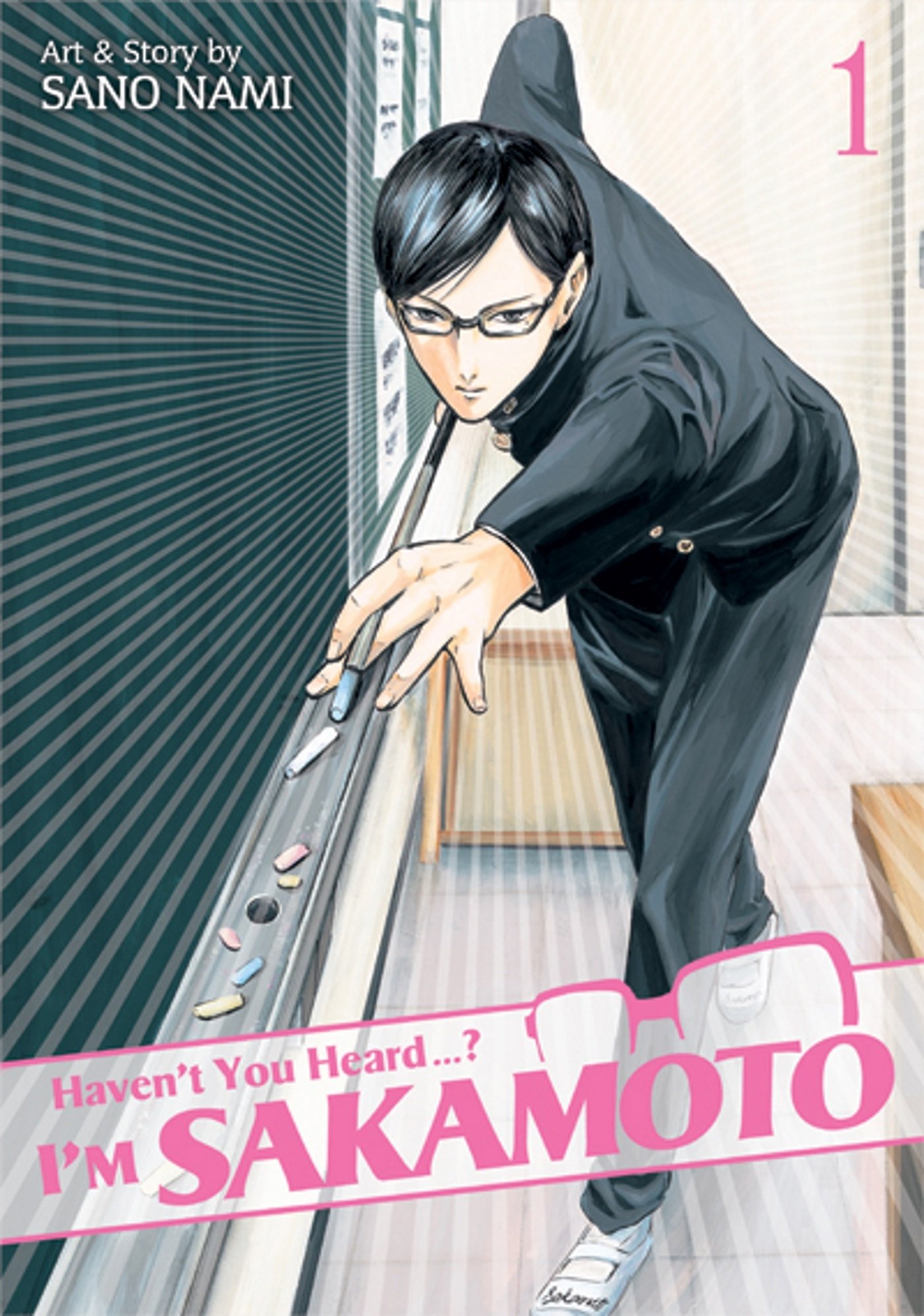
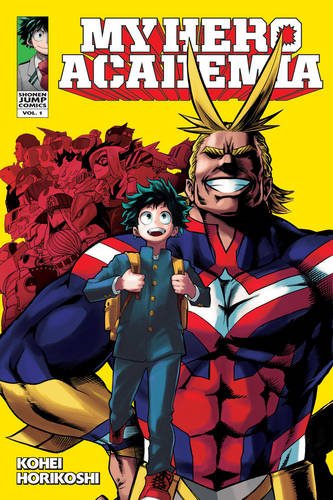
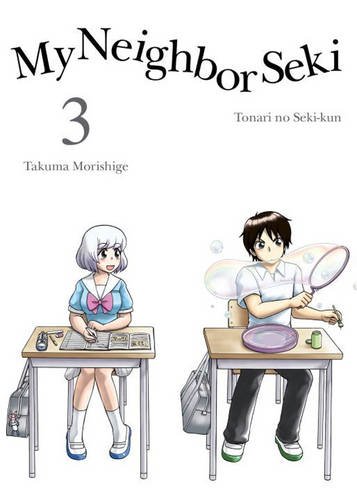
My inbox is overflowing with emails touting back-to-school deals on everything from sneakers to school supplies–a sure sign that the fall semester is right around the corner, and a nice reminder that Seven Seas, VIZ, and Vertical all have new (well, new-ish) school-themed comedies arriving in stores this month. Today, I take a look at Haven’t You Heard? I’m Sakamoto, a comedy about the World’s Most Fascinating High School Student; My Hero Academia, a shonen adventure about a teen who’s studying to become a superhero; and My Neighbor Seki, a gag series about a slacker who elevates procrastination to an art form.

sakamotoHaven’t You Heard? I’m Sakamoto, Vol. 1
By Miki Sano
Rated Teen
Seven Seas, $12.99

Haven’t You Heard? I’m Sakamoto is “The Aristocrats” of manga, a basic joke that yields endless variations, each more baroque than the last. The premise is simple: transfer student Sakamoto is handsome, brilliant, and athletic, making him a natural target for bullies and lovelorn girls. Any time a challenging situation arises–a bee in a classroom, a classmate injured by a softball–Sakamoto effortlessly meets that challenge, in the process revealing a previously undisclosed talent.

In the hands of a less imaginative storyteller, Sakamoto might be a wish-fulfillment character for every teenager who’s ever been tongue-tied or harassed by other students. Nami Sano puts a distinct spin on the material, however, portraying Sakamoto as so calculating and unflappable that he’s genuinely creepy; Sakamoto never smiles, laughs, or shows any discernible human emotion, even when confronted with other people’s tears or anger. (The real joke seems to be that everyone admires Sakamoto anyway.) I’m not sure that I LMAO, but Sakamoto’s odd persona and equally odd talents are a welcome rebuke to the school council presidents and earnest strivers who populate most teen-oriented manga; I’d much rather spend time with him than a standard-issue shonen prince.

The verdict: You’ll either find Sakamoto’s antics inspired or too weird to be amusing.

academiaMy Hero Academia, Vol. 1
By Kohei Horikoshi
Rated T, for teens
VIZ Media, $9.99

Meet Izuku Midoriya: he’s an ordinary teen living in a world where 80% of humanity possesses a super power. That doesn’t stop Izuku from aspiring to become a professional hero, however; since childhood, he’s dreamed about the day he might gain admission to prestigious U.A. High School, a training ground for future crime-fighters. A chance encounter with All Might, a celebrity superhero, gives Izuku a chance to prove his mettle and get the coaching he needs to pass the U.A. entrance exam.

Though the plot twists are unsurprising, and Izuku’s classmates familiar types (e.g. the Bully, the Spazzy Enthusiast), the breezy script propels My Hero Academia past its most hackneyed moments. The clean linework, playful superhero costumes, and artfully staged combat further enhance the series’ appeal; Kohei Horikoshi could give a master class on the reaction shot, especially when a supervillain is wrecking havoc on a downtown skyline. Most importantly, Horikoshi respects the sincerity of Izuku’s ambitions without letting the character’s earnest intensity cast a pall over the fun–in essence, it’s a Silver Age comic in modern shonen drag, with all the corny humor and fist-pumping action of Stan Lee and Steve Ditko’s best work on Spider-Man.

The verdict: My Hero Academia is as predictable as death and taxes, but a smart script and crisp artwork help distinguish it from other titles in the Shonen Jump catalog.

sekiMy Neighbor Seki, Vols. 1-3
By Takuma Morishige
Unrated
Vertical Comics, $10.95

Like Haven’t You Heard? I’m Sakamoto, My Neighbor Seki is a one-joke series: middle-school student Seki goofs off during class, much to the consternation of his seat mate Rumi. Seki isn’t just doodling in his notepad, however. He pets kittens, builds elaborate sculptures from shoji pieces, runs an intraschool mail service, and hosts a tea ceremony. To vary the rhythm of the joke-telling, artist Takuma Morishige occasionally transplants the action from the schoolroom to the playground, though the set-up remains the same; Seki does something outrageous and Rumi reacts, prompting the teacher to scold Rumi for not paying attention.

Given Seki‘s slender premise, it’s not surprising that each volume is a hit-and-miss affair. In volume one, for example, Seki knits a cactus plushie using a double-ended afghan hook. Rumi initially scoffs at his choice of tool; as she observes, “The hallmark of afghan knitting is its unique thickness and softness. It’s a texture best utilized when making sweaters,” not stuffed animals. When she sees the final results, however, she concedes that Seki has chosen the perfect technique and materials for his cactus, sending her into a rapturously funny meditation on yarn. Not all the gags are as successful: Seki’s penchant for staging elaborate scenes with action figures is moderately amusing at first, but grows more tiresome with each new and less imaginative iteration. Still, it’s impossible to deny the energy, creativity, and specificity with which Morishige brings Seki’s exploits to life, making this series more “win” than “fail.”

The verdict: My Neighbor Seki is best enjoyed in one or two chapter installments; when read in large bursts, some scenarios read like 4-koma strips stretched to epic and unfunny proportions.

Reviews: Over at Manga Connection, manjiorin reviews the first four volumes of Princess Jellyfish, which are currently available on Crunchyroll. TCJ columnist Joe McCulloch jumps in the WABAC machine for a nostalgic look at Even a Monkey Can Draw Manga. In honor of 801 Day, Megan R. reviews a title from the Tokyopop/BLU Manga catalog, Shout Out Loud.

Matthew Alexander on vol. 1 of Aoi House (The Fandom Post)
Michael Burns on vol. 5 of Assassination Classroom (AniTAY)
Nick Creamer on vol. 4 of A Bride’s Story (Anime News Network)
Rebecca Silverman on vol. 1 of First Love Monster (Anime News Network)
Michael Burns on vol. 7 of Food Wars! Shokugeki no Soma (AniTAY)
SKJAM! on Fragments of Horror (SKJAM! Reviews)
Connie on vol. 1 of Junjo Romantica (Slightly Biased Manga)
Sean Gaffney on vols. 1-2 of Maid-Sama! (A Case Suitable for Treatment)
Wolfen Moondaughter on vols. 1-2 of Maid-Sama! (Sequential Tart)
Lesley Aeschliman on vol. 1 of My Hero Academia (WatchPlayRead)
Adam Capps on vol. 3 of My Neighbor Seki (Bento Byte)
Connie on No Touching At All (Slightly Biased Manga)
Adam Capps on vol. 75 of One Piece (Bento Byte)
Ken H. on vols. 9-11 of Sankarea: Undying Love (Sequential Ink)
Matthew Warner on vol. 7 of Say I Love You (The Fandom Post)
ebooks girl on vol. 1 of Shiba Inuko-san (Geek Lit Etc.)
confusedmuse and Helen on Shugo Chara (Organization Anti-Social Geniuses)
Marissa Lieberman on vol. 1 of Spell of Desire (No Flying No Tights)
manjiorin on vol. 1 of Tokyo Ghoul (Manga Connection)
Ian Wolf on vol. 1 of Twin Star Exorcists (Anime UK News)
Connie on vol. 1 of Twittering Birds Never Fly (Slightly Biased Manga)
Connie on vol. 2 of Twittering Birds Never Fly (Slightly Biased Manga)
Lori Henderson on vols. 3-4 of Until Death Do Us Part (Manga Xanadu)
Sarah on vol. 9 of What Did You Eat Yesterday? (Anime UK News)
Connie on vol. 1 of World’s Greatest First Love (Slightly Biased Manga)
Alice Vernon on xxxHolic (Girls Like Comics)
SKJAM! on vol. 1 of Yamada-Kun and the Seven Witches (SKJAM! Reviews)
Ash Brown on vol. 2 of Your Lie in April (Experiments in Manga)

Filed Under: MANGABLOG, REVIEWS Tagged With: I'm Sakamoto, Manga Review, My Hero Academia, My Neighbor Seki, Seven Seas, Shonen Jump, Vertical Comics, viz media

The Manga Revue: The Demon Prince of Momochi House

July 31, 2015 by Katherine Dacey

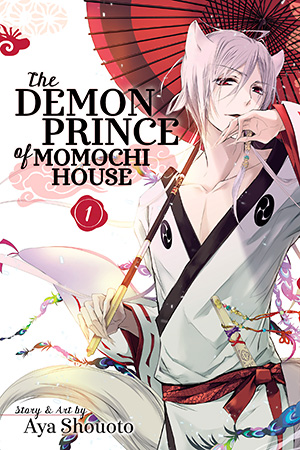
I’m hitting the road for a brief vacation this weekend, so this week’s column is more of a drive-by than a full-on review. On the menu: The Demon Prince of Momochi House, a supernatural rom-com that recently joined VIZ’s Shojo Beat line-up.

demon_princeThe Demon Prince of Momochi House, Vol. 1
By Aya Shouoto
Rated T, for teen
VIZ Media, $9.99

The Demon Prince of Momochi House follows a tried-and-true shojo formula: a plucky girl inherits a house–or a school, temple, or dojo–that’s already inhabited by a posse of good-looking boys. The wrinkle is that Himari–said plucky girl–has inherited a haunted house that sits atop a portal between the demon and human worlds. Her arrival triggers a flurry of supernatural activity, as ayakashi descend on Momochi House to investigate its new resident. Protecting her is Aoi, a seemingly ordinary seventeen-year-old who transforms into a fox-eared demon whenever an unruly spirit appears, and Yukari and Ise, a pair of shikigamis whose human form screams “boy band!”

The plot is as road-tested as the premise. In every chapter (1) Aoi warns Himari not to explore Momochi House on her own (2) Himari ignores him and is promptly attacked by a demon and (3) Aoi then rescues Himari, causing her to blush, stammer, and wonder why she feels flustered when he’s around. Must be heartburn…

If the story barely deviates from the Kamisama Kiss playbook, the brisk pacing and cheerful banter between Himari and her tenants prevents the story from devolving into pure formula. So, too, do Aya Shouoto’s sensual character designs and smart-looking yokai, both of which suggest the influence of CLAMP’s xxxHolic or Gate 7. I’m not sure that snazzy artwork and a spunky heroine are enough to sustain my interest for ten or fifteen volumes, but I’d certainly pick up the next installment to see if the story moves in an unexpected direction.

Reviews: Megan R. takes Full Metal Panic: Overload! for a spin at The Manga Test Drive, while Sean Gaffney posts an early review of Haven’t You Heard? I’m Sakamoto. Over at Otaku USA, Sean O’Mara posts a generously illustrated essay on Hayao Miyazaki’s manga.

Sheena McNeil on vol. 15 of 07-Ghost (Sequential Tart)
Adam Capps on vol. 5 of Ajin: Demi-Human (Bento Byte)
Leroy Douresseaux on vol. 55 of Case Closed (Comic Book Bin)
Kaylee Barton on vol. 1 of The Demon Prince of Momochi House (Bento Byte)
Matt on vol. 1 of Final Fantasy Type-0 Side Story: The Ice Reaper (AniTAY)
Amanda Vail on vols. 1-2 of Drug & Drop and Legal Drug (Women Write About Comics)
Sheena McNeil on vol. 6 of Food Wars! Shokugeki no Soma (Sequential Tart)
Patti Martinson on Fragments of Horror (Sequential Tart)
Allen Kesinger on vol. 1 of Is It Wrong to Try to Pick Up Girls in a Dungeon? (No Flying No Tights)
Majin Oni on Jaco the Galactic Patrolman (majinoni6)*
Matt on vol. 2 of Kagerou Daze (AniTAY)
Wolfen Moondaughter on vol. 1 of My Hero Academia (Sequential Tart)
Majin Oni on vol. 1 of Prison School (majinoni6)*
Matt on vol. 1 of Prison School (AniTAY)
Kane Bugeja on vol. 5 of Seraph of the End (Snap30)
Sarah on vol. 2 of Servamp (Anime UK News)
Lesley Aeschliman on vol. 7 of Tiger & Bunny (WatchPlayRead)
Adam Capps on vol. 1 of Twin Star Exorcists (Bento Byte)
Majin Oni on vol. 1 of Twin Star Exorcists (majinoni6)*
Joseph Luster on vol. 1 of Ultraman (Otaku USA)
Sheena McNeil on vol. 10 of Voice Over! Seiyu Academy (Sequential Tart)
Alberto Cadena on vol. 9 of What Did You Eat Yesterday? (Bento Byte)

* Denotes a video review.

Filed Under: MANGABLOG, REVIEWS Tagged With: Aya Shouoto, demon prince of momochi house, Manga Review, shojo beat, viz media

The Manga Revue: Prison School and Twin Star Exorcists

July 24, 2015 by Katherine Dacey

This week, I take a look at two new releases: Prison School, a hotly anticipated series about five boys trying to break out of an all-girls’ school, and Twin Star Exorcists, a shonen manga about two teenage onmyoji who hold the fate of the world in their hands. (Let’s hope they do their best–otherwise, we’re toast!)

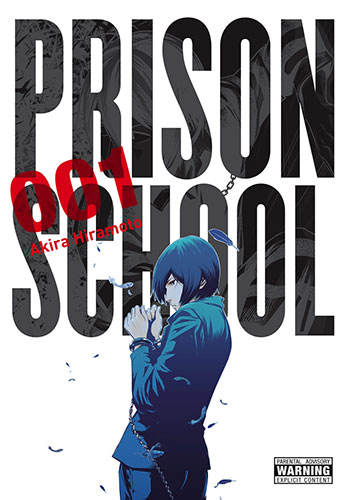
Hiramoto_PrisonSchoolV1Prison School, Vol. 1
By Akira Hiramoto
Rated M, for mature readers (18+)
Yen Press, $20.00

Paging Russ Meyer! Prison School is a veritable parade of big-bosomed, wasp-waisted women brandishing whips, kicking ass, and eschewing bras. The target of their scorn: Kiyoshi, Kingo, Gackt, Joe, and Andre, the first five men to enroll at the Hachimitsu Private Academy in its fifty-year history. These hapless souls want nothing more than to “catch glances of breasts and panties,” but their efforts to spy on their classmates incur the wrath of the school’s Shadow Student Council, a secret organization whose primary role is to “crack down on illicit sexual relationships.” After a dramatic show trial in the school’s courtyard, Kiyoshi and friends are sentenced to hard time in the school penitentiary.

I’d be the first to admit that the premise has potential: what woman or girl hasn’t fantasized about coolly administering a karate chop to a lecherous jerk on the subway or in the street? What prevents Prison School from rising above grindhouse fare is Akira Hiramoto’s complete dehumanization of his characters. The Student Council members are portrayed as ball-busting man-haters, intent on humiliating the boys for their sexual proclivities, while the prisoners are depicted as sniveling pervs. The only genuinely sympathetic pair are Kiyoshi and Chiyo, a cute girl who shares Kiyoshi’s passion for sumo wrestling. Kiyoshi’s desire to have a normal relationship with Chiyo provides the story’s few emotionally authentic moments; by contrast, most scenes revel in the lurid, psychosexual relationship between the boys and their jailers.

Though all of the characters are objectified, no one fares as poorly as Meiko Shiraki, the Shadow Council’s Vice President. Hiramoto always draws her from an extreme angle–upskirt is one of his favorites–that emphasizes her monstrously distended breasts and reveals her penchant for wearing thongs. Perhaps a fifteen-year-old boy would find her terrifyingly sexy, but an older reader who’s seen actual breasts would have a hard time viewing Meiko as anything but a fetishist fantasy.

All of which is to say: Prison School could have been a sly riff on Escape from Alcatraz, The Great Escape, or even Caged, but Hiramoto’s strenuously raunchy scenarios overwhelm the other elements of the story, stopping it dead in its tracks.

The verdict: Prison School is an all-or-nothing proposition: you’ll either love it or hate it.

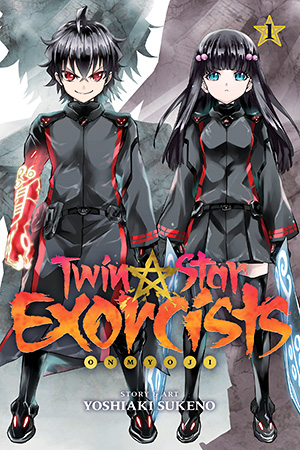
twin_starTwin Star Exorcists, Vol. 1
By Yoshiaki Sukeno
Rated T, for teens
VIZ Media, $9.99

Twin Star Exorcists is a love story dressed up as an action-packed supernatural adventure. At the beginning of volume one, the principal characters have a meet-cute that establishes their personalities in broad strokes: Rokuro is gifted but reluctant to use his exorcism skills, while Benio is gifted but trigger happy, nuking monsters at the slightest provocation. Making their Darcy-and-Elizabeth dynamic more complicated is that Rokuro and Benio are destined to marry and have a child who will save the world from the Kegare, a demonic race that lives in a parallel universe. (Rokuro and Benio are also fourteen, a point underscored by their endless bickering.)

Although the fight scenes are competently executed, the beats are so familiar that the combat feels superfluous. And therein lies Twin Star Exorcists‘ biggest problem: it’s boring. The plot lines, characters, and demon lore are so familiar that the story lacks a distinctive personality; even the setting is cliche. (Rokuro and Benio attend an exclusive academy for onmyoji in training.) Just two days after finishing the volume I couldn’t remember the principal characters’ names–a sure sign that the author treated each element of the story as something to be checked off a list, rather than an integral part of the narrative.

The verdict: Zzzzzz…..

Reviews: GC4K contributor Mike Pawuk praises Svetlana Chmakova’s Awkward, just out from Yen Press. Over at Heart of Manga, Laura posts brief reviews of He’s My Only Vampire, The Ancient Magus’ Bride, and Let’s Dance a Waltz. Joe McCulloch dedicates his latest TCJ column to CoroCoro magazine.

Lesley Aeschliman on vol. 17 of 07-Ghost (WatchPlayRead)
Connie on Alice in the Country of Clover: Nightmare (Slightly Biased Manga)
Alice Vernon on Awkward (Girls Like Comics)
Connie on vol. 29 of Blade of the Immortal (Slightly Biased Manga)
Sheena McNeil on vol. 7 of Deadman Wonderland (Sequential Tart)
Allen Kesinger on vol. 1 of The Devil is a Part-Timer! (No Flying No Tights)
Chris Randle on Fragments of Horror (The Guardian)
Frank Inglese on vol. 6 of Gangsta (Snap30)
Sarah on Kitaro (nagareboshi reviews)
Matthew Alexander on vol. 13 of Knights of Sidonia (The Fandom Post)
Leroy Douresseaux on vol. 1 of Love Stage!! (Comic Book Bin)
Johanna Draper Carlson on vol. 1 of Love Stage!! (Comics Worth Reading)
Marissa Lieberman on vol. 1 of Midnight Secretary (No Flying No Tights)
Thomas Maluck on vols. 1-3 of My Love Story!! (No Flying No Tights)
ebooksgirl on vol. 3 of My Neighbor Seki! (Geek Lit Etc.)
Helen and confused muse on Natsume’s Book of Friends (Organization Anti-Social Geniuses)
Sean Gaffney on vol. 2 of No Game No Life (A Case Suitable for Treatment)
Erica Friedman on Okujou no Yuri Yurei-san Side B – Nakayoshi Quiz (Okazu)
A.J. Adejare on vol. 2 of Oreimo: Kureneko (The Fandom Post)
Connie on vol. 1 of Paradise Kiss (Slightly Biased Manga)
Connie on vol. 3 of Phantom Thief Jeanne (Slight Biased Manga)
Sheena McNeil on vol. 3 of Pokemon X.Y (Sequential Tart)
Lostty on vols. 1-4 of Princess Jellyfish (Organization Anti-Social Geniuses)
Lesley Aeschliman on vol. 17 of Rin-ne (WatchPlayRead)
Ash Brown on vol. 2 of Sengoku Basara: Samurai Legends (Experiments in Manga)
Frank Inglese on vol. 6 of Terra Formars (Snap30)
Sheena McNeil on vol. 9 of Voice Over! Seiyu Academy (Sequential Tart)
Lesley Tomsu on vols. 1-2 of Witch Buster (No Flying No Tights)
Ken H. on vol. 2 of Your Lie in April (Sequential Ink)

Filed Under: MANGABLOG, REVIEWS Tagged With: Manga Review, Prison School, Seinen, Shonen, Twin star Exorcists, viz media, yen press

Jojo’s Bizarre Adventure, Part 1: Phantom Blood, Vol 2

July 19, 2015 by Anna N

JoJo’s Bizarre Adventure: Part 1, Phantom Blood, Volume 2 by Hirohiko Araki

I enjoyed the first volume of JoJo’s Bizarre Adventure, and I was looking forward to see if the second volume continued with the unrelenting manliness and general crazy action. I wasn’t disappointed.

The second volume continues with the battle between Jonathan Joestar and Dio, who has completely been taken over by the evil stone mask. Dio can suck the life force out of people to heal his wounds, and the corpses become zombies, which can certainly be a problem for anyone trying to take Dio down. Jonathan is determined to destroy the monster who killed his father, and fights back through impossible odds, burning down his own mansion and fighting through the pain as Dio breaks both his arms. I continue to be delighted by the character of Robert Edward O. Speedwagon, mostly because I find it amusing when Jonathan yells “Get out of the way Speedwagon!” during battle. Also, Speedwagon’s tendency to stay on the sidelines while injured allows him to provide running commentary on all the battles.

With the Joestar mansion being burned down, and Dio both impaled on a statue and crushed beneath a pillar, one might think that Jonathan’s battle was done, but this is not the case. He meets his long-lost love Erina again as she tends his wounds, and once he is somewhat healed he meets a strange mentor named Baron Zeppeli, who decides to teach Jonathan the ways of mastering Hamon energy to become even more powerful.

In the meantime, Dio has pulled himself out of the wreckage and continue to grow more and more powerful, aided by some additional evil allies. Jonathan and Zeppeli go to confront Dio, but will his vampirific power overcome their new martial arts discipline?

It is a bit unusual for me to be truly surprised by action scenes in a manga, but JoJo’s Bizarre Adventure really does deliver on this front, with surprising plot twists and innovative ways for everybody to power up. The stakes grow higher and the battles grow more impressive as both Jonathan and Dio gain power. The art is still a bit on the crude side, but undeniably energetic. Some of the fights take place against the backdrop of a low-hanging moon, which just makes everything look even more epic. What random character named after a rock band will appear next? I’m looking forward to the third volume to find out.

Filed Under: REVIEWS Tagged With: JoJo's Bizarre Adventure, viz media

The Manga Revue: Fragments of Horror

July 17, 2015 by Katherine Dacey

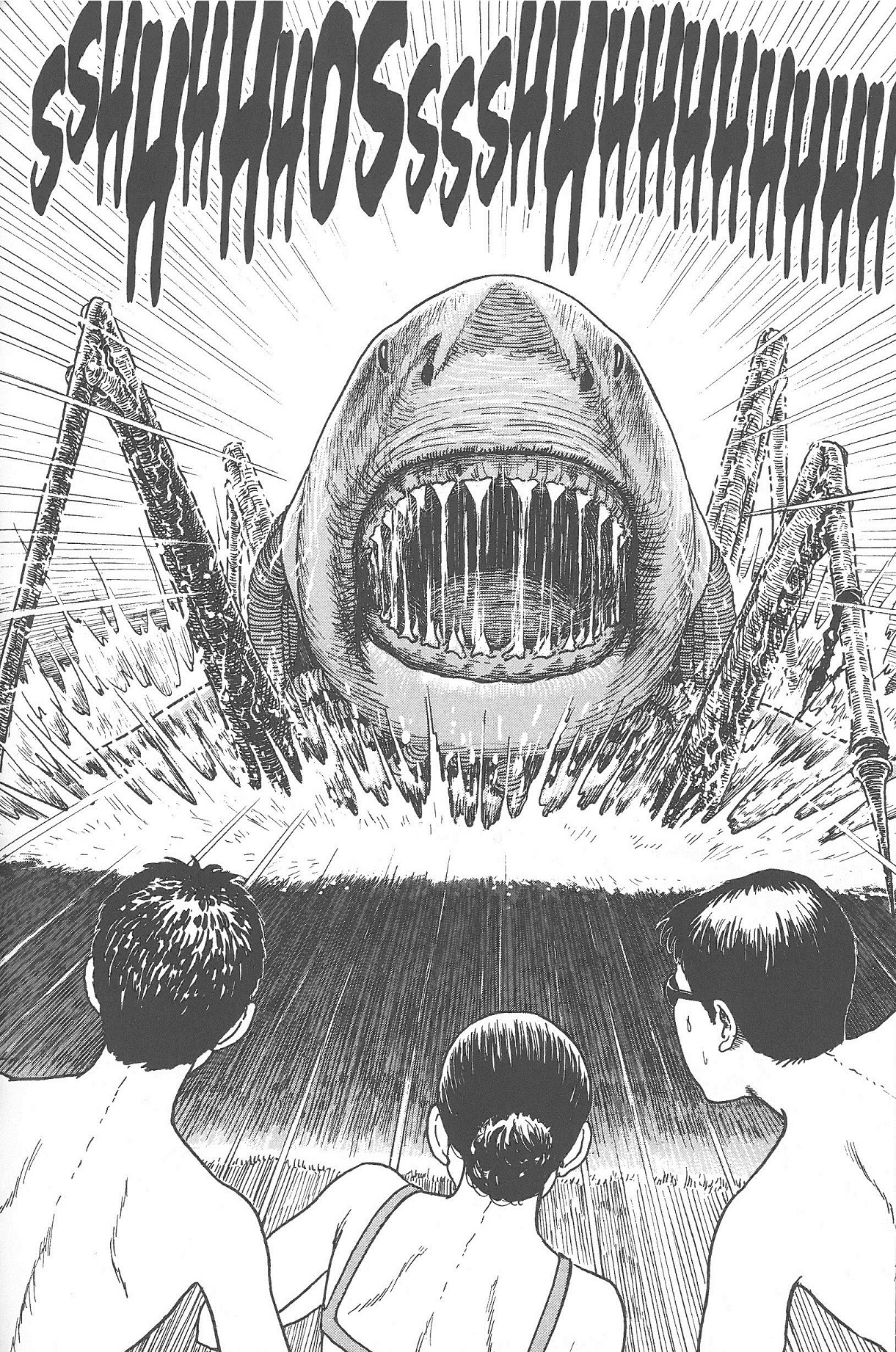
I’m too squeamish for horror movies–the blood alone is enough to send me screaming for the exits. But horror manga? That’s in my wheelhouse, as manga allows me to engage with the material as much–or as little–as I wish. Junji Ito’s work is largely responsible for showing me the possibilities of comic book horror; I don’t think I’ll ever forget the image of an enormous great white shark climbing a flight of stairs in pursuit of his next meal, or an entire village consumed by a voracious plague of… spirals. (It’s scarier than it sounds.) So when VIZ announced that they would be publishing a new collection of Ito stories, I knew I would buy it. But does Fragments of Horror deliver? Read on for the full scoop.

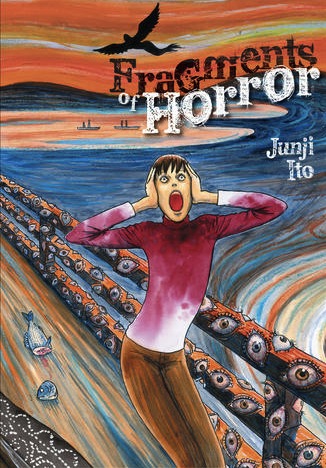
fragments_horror_vizFragments of Horror
By Junji Ito
Rated T+, for older teens
VIZ Media, $17.99

Uncanny–that’s the first word that comes to mind after reading Junji Ito’s Fragments of Horror, an anthology of nine stories that run the gamut from deeply unsettling to just plain gross. Ito is one of the few manga-ka who can transform something as ordinary as a mattress or a house into an instrument of terror, as the opening stories in Fragments of Horror demonstrate. Both “Futon” and “Wood Spirit” abound in vivid imagery: apartments infested with demons, floors covered in eyes, walls turned to flesh, rooves thatched in human hair. Watching these seemingly benign objects pulse with life is both funny and terrifying, a potent reminder of how thin the dividing line between animate and inanimate really is.

Taut–that’s another word I’d use to describe Fragments of Horror. Each story is a model of economy, packing 60 or 70 pages of narrative into just 20 or 30. “Dissection Chan,” for example, explores the forty-year relationship between Tatsuro, a surgeon, and Ruriko, a woman who’s obsessed with vivisection. In a brief flashback to Tatsuro’s childhood, Ito documents the unraveling of their friendship, capturing both Ruriko’s escalating desire to cut things open and Tatsuro’s profound shame for helping her procure the tools (and animals) necessary for her experiments. Three or four years have been packed into this seven-page vignette, but Ito never resorts to voice-overs or thought balloons to explain how Tatsuro feels; stark lighting, lifelike facial expressions, and evocative body language convey Tatsuro’s emotional journey from curious participant to disgusted critic.

Not all stories land with the same cat-like tread of “Dissection Chan.” “Magami Nanakuse,” a cautionary tale about the literary world, aims for satire but misses the mark. The central punchline–that authors mine other people’s suffering for their art–isn’t executed with enough oomph or ick to make much of an impression. “Tomio • Red Turtleneck”  is another misfire. Though it yields some of the most squirm-inducing images of the collection, it reads like a sixteen-year-old boy’s idea of what happens if your girlfriend discovers that you’ve been stepping out on her: first she’s angry at you, then she’s angry at the Other Woman, and finally she forgives you after you grovel and suffer. (In Tomio’s case, suffering involves grotesque humiliation with a cockroach–the less said about it, the better.)

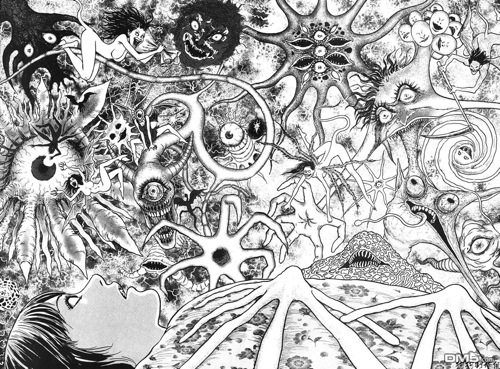
Taken as a whole, however, Fragments of Horror is testament to the fecundity of Ito’s imagination, and to his skill in translating those visions into sharp, unforgettable illustrations like this one:

ito_horror_interior

PS: I recommend pairing this week’s review with 13 Extremely Disturbing Junji Ito Panels, a listicle compiled by Steve Fox. (The title is a little misleading: the images are unsettling, but are generally SFW.)

Reviews: Sean Gaffney reads Pandora in the Crimson Shell and Magika: Swordsman and Summoner so that you don’t have to. At Women Write About Comics, Amanda Vail compares the light novel and manga versions of The Devil is a Part-Timer!

Connie on vol. 3 of Alice in the Country of Clover: Knight’s Knowledge (Slightly Biased Manga)
Jennifer Wharton on vols. 1-6 of The Betrayal Knows My Name (No Flying No Tights)
Lesley Aeschliman on vol. 55 of Case Closed (WatchPlayRead)
Kristin on vol. 1 of The Demon Prince of Momochi House (Comic Attack)
Sean Gaffney on vol. 1 of First Love Monster (A Case Suitable for Treatment)
Frank Inglese on vols. 3-4 of Food Wars! Shokugeki no Soma (Snap 30)
Megan R. on Fushigi Yugi: Genbu Kaiden (The Manga Test Drive)
Connie on vol. 6 of Gravitation (Slightly Biased Manga)
Dave Ferraro on The Legend of Zelda: A Link to the Past (Comics and More)
Wolfen Moondaughter on vol. 13 of Library Wars: Love and War (Sequential Tart)
Connie on vol. 6 of Love Pistols (Slightly Biased Manga)
Ash Brown on vol. 4 of Mushishi (Experiments in Manga)
Lesley Aeschliman on vol. 5 of My Love Story!! (WatchPlayRead)
Leroy Douresseaux on vol. 10 of Nisekoi: False Love (Comic Book Bin)
Joe McCulloch on Pandora in the Crimson Shell (The Comics Journal)
Sheena McNeil on vol. 28 of Pokemon Adventures: Emerald (Sequential Tart)
Wolfen Moondaughter on vol. 1 of Requiem of the Rose King (Sequential Tart)
Leroy Douresseaux on vol. 18 of Rin-ne (Comic Book Bin)
Matthew Alexander on vol. 10 of Sankarea: Undying Love (The Fandom Post)
confusedmuse on Skip Beat! (Organization Anti-Social Geniuses)
Kate O’Neil on vol. 4 of Soul Eater Not! (The Fandom Post)
Sheena McNeil on vol. 4 of Spell of Desire (Sequential Tart)
Courtney Sanders on vol. 1 of Twin Star Exorcists (Three If By Space)
Ken H. on vol. 5 of Witchcraft Works (Sequential Ink)
Matthew Alexander on vol. 6 of Wolfsmund (The Fandom Post)
Matthew Alexander on vol. 5 of World Trigger (The Fandom Post)
Lesley Aeschliman on vol. 3 of Yukarism (WatchPlayRead)


Filed Under: MANGABLOG, REVIEWS Tagged With: Fragments of Horror, Junji Ito, Manga Review, viz media

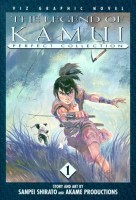
The Legend of Kamui, Vol. 1

July 10, 2015 by Ash Brown

The Legend of Kamui, Volume 1Creator: Sanpei Shirato
U.S. publisher: Viz Media
ISBN: 9781569313183
Released: August 1998
Original release: 1990

Sanpei Shirato’s The Legend of Kamui had its beginnings in 1964 as one of the first series to be published in the influential alternative manga magazine Garo. In the 1980s, Sanpei would continue the manga with a second series, Kamui Gaiden. It was Kamui Gaiden that became one of the earliest manga series to be translated into English and widely published in North America. Between 1987 and 1988, Viz and Eclipse Comics released thirty-seven issues of Kamui Gaiden under the title of The Legend of Kamui, serializing edited versions of two stories: “The Island of Sugaru” and “The Sword Wind.” “The Island of Sugaru,” which was later compiled by Viz into two volumes in 1998, is probably one of the most well-known Kamui stories, and not just because of the Kamui Gaiden live-action film adaptation from 2009. The Legend of Kamui, Volume 1 collects the first half of “The Island of Sugaru,” material from a volume of Kamui Gaiden that was originally published in Japan in 1990.

Kamui is an apostate ninja during Japan’s Edo period, on the run from the members of his clan who consider him to be a traitor when he tries to leave. While traveling through Yumigahama he encounters a woman who, like him, once belonged to a clan of ninja. Sugaru has been able to avoid capture and death long enough to establish a new life with a husband and three children who love her, but she is still being hunted and must be constantly vigilant. Sugaru has managed to survive because she doesn’t trust anyone, and that includes Kamui. Although he helped to save her life when she was attacked by Iga ninja, Sugaru can’t take a chance that Kamui might be trying to kill her as well. After an intense battle in which they are both injured, they part ways. But in a strange twist of fate, Kamui is later shipwrecked on the very island where Sugaru and her family reside. Kamui lives peacefully for a time in the small, remote fishing village and Sugaru’s family becomes very fond of him, but Sugaru would rather see him dead.

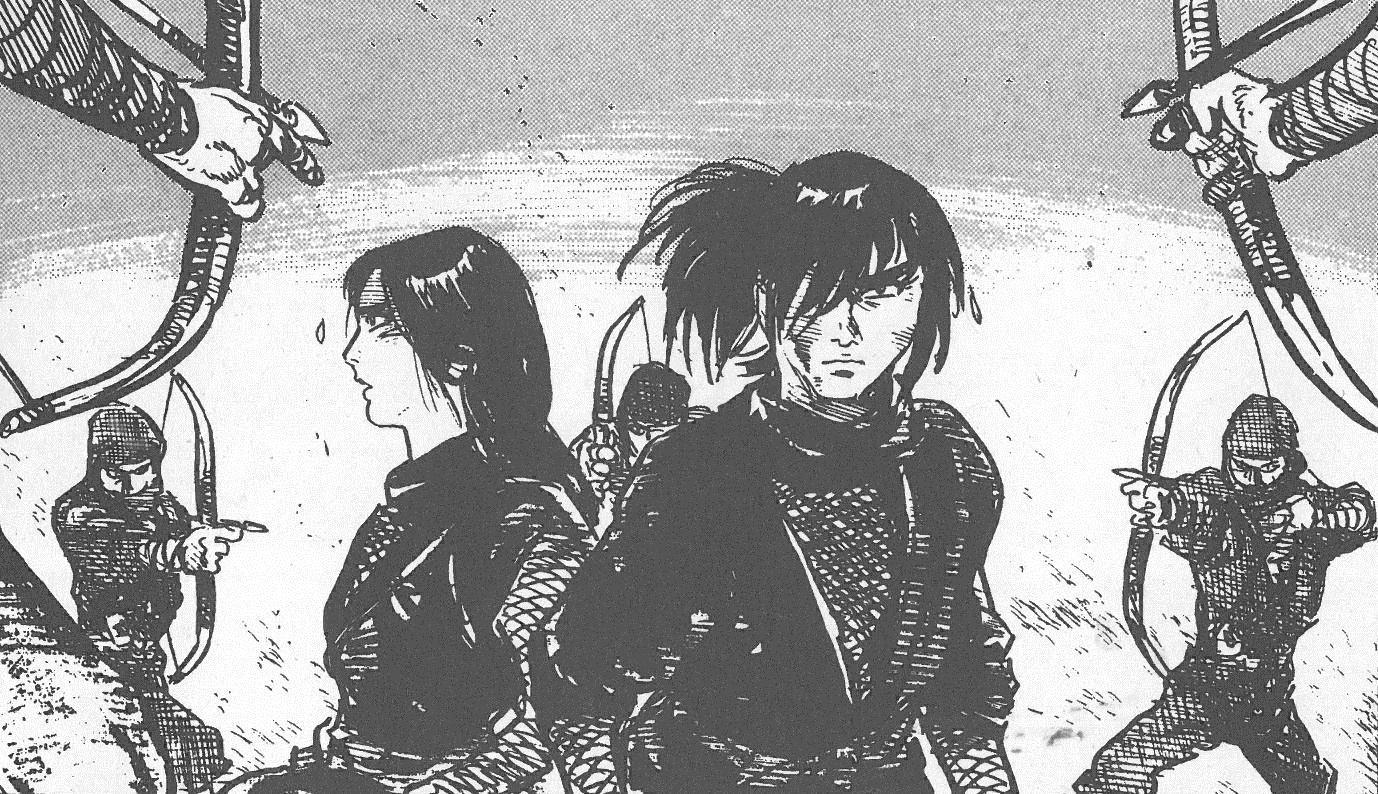
The Legend of Kamui, Volume 1, page 255From reading The Legend of Kamui, Volume 1 alone, not much is known about either Sugaru or Kamui’s past lives beyond the fact that they are trying to escape them. The hunted versus the hunter, whether the prey chooses to flee or to fight, is a theme that recurs throughout the manga, mirrored in both nature and human society. Kamui and Sugaru do have the advantage of being exceptionally adept fighters. Although Sugaru does strain under the burden of keeping both herself and her family safe, she is actually one of the strongest characters in The Legend of Kamui, Volume 1, exhibiting both great determination and martial prowess. Her skills rival and in some cases surpass those held by Kamui. Tragically, and understandably, due to her circumstances Sugaru has lost her ability to trust others; it’s simply no longer an option for her. Kamui, on the other hand, has so far managed to retain that part of his humanity, even though it has put his life in danger on multiple occasions.

I really wish more of The Legend of Kamui had been released in English because the series is excellent. The characters are complex, as are their personal struggles and their searches for freedom in an era that could be unforgiving, harsh, and violent. The action sequences are exciting and dynamic. Although a few ninja tricks are employed during the life-or-death battles—secret techniques, impressive acrobatics, illusions and transformations—there is a sense of realism that pervades The Legend of Kamui. In between the dramatic conflicts are the quieter moments of everyday life in a fishing village. Initially it appears as though Kamui, like Sugaru, will be able to outrun his fate and have a chance at a peaceful, happy existence. He learns to fish and becomes friendly with the villagers who are more than happy to welcome a strong young man into their midst. The Legend of Kamui, Volume 1 offers hope that such changes are possible, but ultimately taking charge of one’s own destiny is a difficult path to follow.

Filed Under: REVIEWS Tagged With: Legend of Kamui, manga, Sanpei Shirato, viz media

Dark Horse Reveals 2016 Publishing Plans

July 9, 2015 by Katherine Dacey

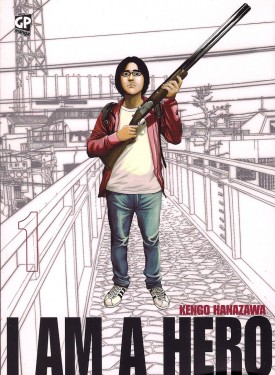
I_am_a_HeroDark Horse announced it will publish four new manga in 2016–Danganronpa: The Animation, I Am a Hero, Fate/Zero, and Giganto Maxia-–and reissue RG Veda, formerly a Tokyopop property. Dark Horse also revealed plans for spiffy omnibus editions of Astro Boy and Oh! My Goddess.*

At VIZ’s Shonen Jump panel, editors confirmed that Gakkyu Hotel: School Judgment will make the leap to print in February 2016, while Best Blue, a brand-new shonen sports manga, will appear simultaneously in the Japanese and American editions of Weekly Shonen Jump.

Jennifer de Guzman talks to creators Rikki Simmons, Tavisha Wolfgarth-Simons, and Sophie Campbell about their experiences publishing OEL manga with Tokyopop in the mid-2000s.

Do you love writing about shojo? Laura at Heart of Manga wants to hear from you; she’s currently looking for contributors.

News from Japan: After three years of sporadic updates, Kentaro Miura’s Beserk will resume regular serialization in Young Animal magazine on July 24th. The Attack on Titan: Lost Girls light novel is being adapted into a manga for Bessatsu Shonen Magazine; look for the first chapter in August. Fans of My Love Story!! should mark their calendars: the live-action film opens on October 31st.

Reviews: Michelle Smith, Anna N., and Sean Gaffney post short reviews of Assassination Classroom, Love at Fourteen, Say I Love You, and other recent releases. Over at The Comics Journal, Joe McCulloch tackles Junji Ito’s new anthology Fragments of Horror.

Joseph Luster on vol. 5 of Ajin: Demi-Human (Otaku USA)
Sean Gaffney on vol. 1 of Alice in Murderland (A Case Suitable for Treatment)
Carrie Hildebrand on vol. 64 of Bleach (Three If By Space)
Rebecca Silverman on vol. 1 of Chaika: The Coffin Princess (Anime News Network)
Joseph Luster on Dream Fossil: The Complete Stories of Satoshi Kon (Otaku USA)
Amanda Vail on Dream Fossil: The Complete Stories of Satoshi Kon (Women Write About Comics)
Alice Vernon on vol. 1 of Emma (Girls Like Comics)
Leroy Douresseaux on Fragments of Horror (Comic Book Bin)
Joseph Luster on Fragments of Horror (Otaku USA)
confused muse on Fruits Basket (Organization Anti-Social Geniuses)
Ash Brown on Gyo: The Death Stench Seeps (Experiments in Manga)
Matthew Warner on vol. 4 of High School DxD (The Fandom Post)
Lesley Aeschliman on vol. 5 of Kiss of the Rose Princess (WatchPlayRead)
Matthew Warner on vol. 5 of Little Battlers Experience (The Fandom Post)
Naru on vol. 1 of Love Stage!! (Organization Anti-Social Geniuses)
Joseph Luster on vol. 1 of My Hero Academia (Otaku USA)
Sakura Eries on vol. 8 of My Little Monster (The Fandom Post)
Sakura Eries on vol. 4 of My Love Story!! (The Fandom Post)
Lesley Aeschliman on vol. 10 of Nisekoi: False Love (WatchPlayRead)
Matthew Warner on Puella Magi Oriko Magica: Extra Story (The Fandom Post)

* Editorial note: As my colleague Brigid Alverson reported in May, Dark Horse originally announced many of these licenses at an unscheduled Anime Central panel. The title of the post has been updated to reflect the error.

Filed Under: MANGABLOG Tagged With: Dark Horse, Licensing News, SDCC, Shonen Jump, Tokyopop, viz media, Weekly Shonen Jump

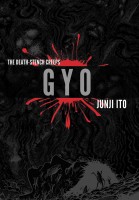
Gyo: The Death-Stench Creeps

July 8, 2015 by Ash Brown

Gyo: The Death-Stench CreepsCreator: Junji Ito
U.S. publisher: Viz Media
ISBN: 9781421579153
Released: April 2015
Original run: 2002

Gyo: The Death-Stench Creeps is a short, two-volume horror manga series created by Junji Ito. Originally published in Japan in 2002, Gyo has had several English-language releases by Viz Media. It was first translated between 2003 and 2004, a slightly updated second edition was released between 2007 and 2008, and most recently, published in 2015, was the deluxe hardcover omnibus. In addition to Gyo, the omnibus also collects two of Ito’s short horror manga: “The Sad Tale of the Principal Post” and “The Enigma of Amigara Fault.” The deluxe edition of Gyo is very similar in design to the recent omnibus of Ito’s manga Uzumaki; the two volumes look great on the shelf together. Uzumaki was actually my introduction to Ito’s work, and I consider it to be one of the best horror manga that I’ve read. Despite Gyo having been released in English three times, and despite the fact that I’ve been meaning to read more of Ito’s manga, the series’ deluxe omnibus is actually the first that I’ve read since Uzumaki.

While vacationing in Okinawa, Tadashi and his girlfriend Kaori witness the harbinger of what will eventually become a plague overrunning the entirety of Japan—a small, rotting fish walking on land with what appear to be mechanical legs. Accompanying it is an overwhelming and nauseating stench. Soon, countless fish and other sea creatures begin streaming out of the ocean. The only things that they have in common are the bizarre appendages and the sickening smell. Kaori and Tadashi cut their vacation short and return to Tokyo, but Kaori in particular is traumatized by the events in Okinawa and soon the creatures begin to be found in the city as well. No one knows where the walking fish originated or how they evolved; of much greater concern is the death and disease caused by their presence on land. And things are only getting worse with the passage of time.

Gyo: The Death-Stench Creeps, page 66The back cover of the omnibus describes Gyo as Ito’s “creepiest masterpiece of horror manga ever.” Admittedly, some of the artwork in Gyo is fantastically creepy, not to mention gruesome and grotesque. Ito is an extremely skilled illustrator, creating images that are horrifying and nightmare-inducing. And as a whole, Gyo can be exceptionally gross. However, the manga’s story ends up being so utterly ridiculous that I would be hard pressed to call it a masterpiece, especially when compared to his earlier work Uzumaki. Whereas Uzumaki is surreal and bizarre, Gyo is so absurd as to be ludicrous, and only increasingly so as the manga progresses. I simply can’t take Gyo seriously; I can only read the series as a comedy, whether or not it is actually intended as such. The manga is perhaps closer to being a cult classic, which I suppose might make it a masterpiece of a different sort, but that’s something that could be argued either way. If nothing else, though, Gyo is a brilliantly outrageous spectacle.

Gyo is certainly not a manga that will appeal to every reader, even those who are already fans of horror manga. Though disconcerting and disgusting, especially the illustrations, the plot of Gyo is too silly to be truly terrifying. Taken alone, the art is superb, but the ridiculous nature of the story creates a weird disconnect. However, I can’t deny that I was entertained by the progressively over-the-top, illogical, and random developments in the manga: sentient gas, a circus out of the middle of nowhere, characters who are oddly oblivious or overly accepting of what is going on around them, and so on. (Though, it is rather sweet how Tadashi sticks beside Kaori through to the very end.) Assuming that one can find it palatable to begin with, Gyo is a very strange manga that is difficult to look away from as Ito presses further and further into territory that is beyond believing. I kept turning the pages to see just how far he would be able to take things. Gyo may very well be one of those manga that’s so good simply because it’s so bad; whether that’s deliberate or not, I’m not sure.

Filed Under: REVIEWS Tagged With: Gyo, Junji Ito, manga, viz media

The Demon Prince of Momochi House Vol. 1

July 5, 2015 by Anna N

The Demon Prince of Momochi House Volume 1 by Aya Shouoto

I enjoy Shouoto’s other series, Kiss of the Rose Princess, so I was interested in trying out The Demon Prince of Momochi House. When I read the description and looked at the front cover, I was also curious to see how similar it might be to another Shojo Beat series featuring yokai, Kamisama Kiss.

Himari Momochi is a plucky orphan who inherits a house that has been in her family for years. She decides to journey to Momochi House and claim her inheritance, despite some dire warnings along the way that the house she’s traveling to is haunted. When she arrives at the house, the inside is trashed and shadowy figures keep brushing past her as she explores the interior. One of the shadowy figures ends up being a naked young man named Aoi, who is quickly admonished to put clothes on by a couple of other men. They accuse Himari of being a burglar, and she quickly produces the legal document that proclaims she’s the owner of the house. Himari is determined to stay, and the horrible cleaning jobs that await her and the mysterious implosion of her smartphone, and presence of male squatters do nothing to change her attachment to her new home. Mysterious animal yokai appear, and Himari is introduced to the supernatural elements that occupy her house. Aoi is serving as the guardian spirit, and the other young men are his helper spirits Yukari and Ise.

When Aoi switches from his human to Omamoiri form, he admonishes Himari not to look at him in his beguiling fox spirit guise. Himari thinks the relationship between Aoi and his helpers is very much like a family, which makes her wistful. She’s also pragmatic despite the new element of the supernatural in her life, deciding that she needs to charger her three freeloaders rent and thinking about investigating enrolling in a local school. Aoi and Himari are clearly attracted to each other, and Aoi seems to be operating under an imperative that he protect her at all costs from the haunted elements that still exist in her ancestral home.

Demon Prince of Momochi House is a much less silly series than Kiss of the Rose Princess. I think the art is stronger and a bit more distinctive than Rose Princess too. Sometimes drawing spirits brings out the best in a manga-ka! Some aspects of this series did remind me of Kamisama Kiss, but I also feel as though Kamisama Kiss is such a standout series in terms of quality that other manga are going to suffer in comparison automatically. I wish there had been a bit more character development, because so far the characters seem more like types than fully realized individuals. I found myself liking Kiss of the Rose Princess more as the series progressed, and I’m expecting that to happen with The Demon Prince of Momochi House too. It could be that I’m just a sucker for series featuring handsome spirits, but I enjoyed this first volume much more than the first volume of Kiss of the Rose Princess too. I’m hoping for more character development in the next volume.

Filed Under: Uncategorized Tagged With: demon prince of momochi house, shojo beat, viz media

The Manga Lover’s Guide to SDCC 2015

July 5, 2015 by Katherine Dacey

sdcc_logoAre you headed to San Diego this week? If so, this column is for you! We’ve compiled a handy list of the major manga events, from VIZ’s Ultraman spectacular to Tokyopop’s Don’t-Call-It-a-Comeback panel. Our own Brigid Alverson will be joining an all-star line-up of bloggers for the Best and Worst Manga of 2015 panel, which will be held on Saturday, July 11th at 7:00 pm. We’ll also be updating the blog throughout the week with the latest licensing announcements.

A final note about the programs listed below: our list focuses on manga, but there are also a wealth of anime programs including cosplay panels, voice acting workshops, and screenings of Spirited Away. A comprehensive schedule of anime events is now live on the SDCC website, and available through the Comic-Con app (iOS and Android).

THURSDAY, JULY 9th

Shonen Jump: Past, Present, and Future
10:00 – 11:00 am, Room 5AB
From the program: “Hang out with the English language editors of the world’s most popular manga, plus special surprise guests! Come hear some exciting news about the latest new series, all-time fan favorites, and everything in between. Plus a chance to win amazing prizes by showing off your SJ trivia skills.”

What Do Women Want? Female Gaze in Manga
3:00 – 4:00 pm, Room 29AB
From the program: “From shojo manga to boys love manga to reverse harem ‘otome’ video games and anime filled with delectable guys, these media have been catering to the tastes of female fans in Japan. These stories are reaching readers and inspiring comics creators worldwide more than ever. See what manga publishing pros Leyla Aker (senior vice president, publishing, VIZ Media), JuYoun Lee (editor-in-chief, Yen Press), Lillian Diaz-Pryzbyl (head of comics, Sparkler Monthly), and manga creator Jamie Lynn Lano (The Princess of Tennis, Denkiki) have to say about ‘female gaze’ in manga, why it sells, and why it matters. They’ll also share their picks for your next must-read manga that’ll make you swoon. Moderated by Deb Aoki (Publishers Weekly, Manga Comics Manga).”

VIZ Media
4:00 – 5:00 pm, Room 7AB
From the program: “Come party with VIZ Media! And by party, they mean sit in a chair and listen to thrilling tales of upcoming releases and other Earth-shattering announcements from North America’s largest distributor of manga and anime… Hosted by Urian Brown, Charlene Ingram and VIZ Media staff, with special guests.”

Making a Living in Manga: Japan Creators, Editors Talk
5:00 – 6:00 pm, Room 29AB
From the program: “What’s it like to work as a comics creator in Japan? What does it take to sell your self- published manga at Tokyo’s Comic Market (Comiket), the world’s largest comics show? How do Japanese manga editors work with creators to craft addictive stories that keep readers coming back for more? Hear what it’s really like to work in the motherland of manga from Japan- and U.S.-based pros who have done all of this and more. Akihide Yanagi (writer, agent), Kamome Shirahama (manga artist, Eniale & Dewiel), Philip S. Y. Tan (Heaven, Uncanny X-Men), Makoto Nishi (manga editor), and Philip Knall (translator, salaryman) offer a rare look behind the scenes of Japan’s manga biz, followed a Q&A session moderated by Deb Aoki (Publishers Weekly, Manga Comics Manga).”

Dark Horse Manga
6:00 – 7:00 pm, Room 9
From the program: “Dark Horse’s history with Japanese comics can be traced back to the company’s earliest years… Dark Horse continues to publish some of the industry’s bestselling titles… Be on hand for a look at the past, present, and future of manga at Dark Horse.”

Manga: Lost In Translation
7:00 – 8:00 pm, Room 9
From the program: “It seems that manga is charging back from its late ’00s slump, and anime simulcasts have become the norm. So what is it like to work in the industry? Here’s your chance to ask some of the top professionals in the manga and anime industry about their jobs and the titles they’ve worked on. Join William Flanagan (Fairy Tail), Jonathan “Jake” Tarbox (Fist of the North Star), Mari Morimoto (Naruto), Stephen Paul (One Piece), Ed Chavez (director, Vertical Comics), and Lillian Diaz-Przybyl (head of comics, Chromatic Press Inc.) for this panel.”

FRIDAY, JULY 10th

Get Your Comic Published in Japan: Silent Manga Audition
1:30 – 2:30 pm, Room 5AB
From the program: “Jonathan Tarbox (CEO, Arashi Productions) explains how manga artists from any nation can submit their work to a contest run by a major Japanese publisher. Winners will have their submission published in Japan and be considered for the opportunity to work in the manga industry…”

VIZ Media: Ultraman
3:00 – 4:00 pm, Room 23ABC
From the program: “For their first international appearance, Eiichi Shimizu and Tomohiro Shimoguchi, creators of the new VIZ Media manga series Ultraman, inspired by the original Japanese TV show, are joined onstage by special guests from Legendary Comics to discuss Japan’s quintessential superhero and the influence of kaiju in today’s pop culture…”

Manga Publishing Industry Roundtable
5:00 – 6:00 pm, Room 4
From the program: “Manga publishing in North America has definitely seen its shares of highs and low, from the manga boom in the early 2000s to the crash ten years later, caused by a perfect storm of the U.S. recession, Borders bookstores closures, and the growth of online piracy. So how are things now? Get a taste of what’s hot, what’s not, and what’s next for manga in North America and Japan, from top publishing pros including Leyla Aker (senior VP, publishing, VIZ Media), Kurt Hassler (VP, publishing director, Yen Press), Michael Gombos (director of licensing Asia, Dark Horse Comics), Ben Applegate (associate director, publishing services, Penguin Random House), and Erik Ko (chief of operations, Udon Entertainment). Moderated by Deb Aoki (Publishers Weekly, Manga Comics Manga).”

Showcasing the Best in Korean Comics
7:30 – 8:30 pm, Room 26AB
From the program: “A team of Korea’s prolific artists and animation studios, represented by Jongmin Shin (CEO of EGA Studios), showcases the latest and greatest trends in Korean comics and animation. They will also showcase their recent and upcoming productions on some of today’s hottest comics. Join Jongmin and crew for this Q&A session moderated by Austin Osueke (publisher of eigoMANGA).”

SATURDAY, JULY 11th

Kodansha Comics
11:30 am – 12:30 pm, Room 8
From the program: “The publisher of the manga megahit Attack on Titan… reveals exciting upcoming titles. General manager Kana Koide and senior editor Ben Applegate will answer your questions about Kodansha’s books and the manga industry.”

Spotlight on Yu-Gi-Oh! and Creator Kazuki Takahasi
2:00 – 3:00 pm, Room 7AB
From the program: “Get a rare, behind-the-scenes look at the Yu-Gi-Oh! phenomenon and a sneak peek at the third Yu-Gi-Oh! feature film through the eyes of world-renowned manga artist and Yu-Gi-Oh! creator Kazuki Takahashi, and other distinguished panelists…”

Tokyopop: The Robofish Rises
6:00 – 7:00 pm, Room 28DE
From the program: “Big News, TOKYOPOP is coming back! Meet Stu Levy (founder, CEO), Clay Bohle, and the TOKYOPOP team to get the scoop firsthand. Giveaways for all attendees. If you’re an artist, bring your portfolio for review, and if you’re a fan, bring all your questions.” [Editor’s note: for more information about Tokyopop’s past and future, check out Brigid’s recent article at Comic Book Resources. If you’re planning to bring your portfolio, be sure to read Alex De Campi’s blog post about her complicated–and sometimes exploitative–relationship with Tokyopop.]

Best and Worst Manga of 2015
7:00 – 8:00 pm, Room 23ABC
From the program: “A panel of opinionated bloggers, retailers, librarians, manga mavens, and comics curmudgeons spotlight the best new manga that hit the shelves in the past year. See them rave about their favorite continuing series. Watch them rant about the excruciatingly mediocre manga that they were forced to read. Find out what Brigid Alverson (Robot 6, Good Comics for Kids), David Brothers (4thletter!), Christopher Butcher (The Beguiling, Toronto Comic Arts Festival), Eva Volin (Alameda Free Library, No Flying No Tights), and Deb Aoki (Manga Comics Manga, Publishers Weekly) loved and loathed to read in the past year. Hear about their picks for the most anticipated upcoming releases for fall 2015 and beyond, and discover their favorite underappreciated manga gems that are worth picking up.”

Filed Under: MANGABLOG Tagged With: Dark Horse, Kodansha Comics, manhwa, SDCC, Tokyopop, Ultraman, viz media, Yu-Gi-Oh!

Meteor Prince Vol. 2

June 30, 2015 by Anna N

Meteor Prince Volume 2 by Meca Tanaka

I enjoyed the first volume of Meteor Prince very much, and after reading the second, I’ve found it to be a great, self-contained two volume series. Sometimes shorter series suffer a bit from having an unfinished feeling, with an abrupt final chapter, but Meteor Prince pulls off the trick of telling a short, self-contained story with a satisfying conclusion. After the perpetually enthusiastic alien prince Io and earth girl with bad luck Hako got together in the first volume, it is time for some additional obstacles to be thrown in their path.

Io’s intended alien fiancee abruptly appears on earth to claim her man, and she is not happy that Io has pledged himself to a human. Tania’s flowing hair and imperious attitude, combined with her tendencies to transform into a giant ape-like creature makes her a formidable opponent. Tania’s relentless approach to winning Io back doesn’t fare well when faced with the strength of the couple’s bond, and she ends up reduced to lurking in the background and plotting slightly more quietly.

The next trial for Io and Hako is when he meets her parents and her extremely protective younger brother. There’s plenty of cuteness and comedy when Io makes some over the top attempts to be extremely polite to his future wife’s parents. The family issues don’t stop there, as Io’s younger brother Yuro decides that the best way of getting his older brother back is to come to earth and disintegrate everything.

Tanaka’s facility with art portraying both wacky alien landscapes and blushing high school students in the first stages of romance ensures that Meteor Prince is whimsical without being overly wacky or too sweet. She balances heartwarming moments with humor, making this a great feel-good short series. I would have been happy to read several more volumes of Io and Hako’s adventures, but the last volume wrap up the storyline nicely. Highly recommended for people who enjoy their shoujo with a bit of humor.

Filed Under: REVIEWS Tagged With: meteor prince, shojo beat, shoujo, viz media

Gene Mapper

June 27, 2015 by Ash Brown

Gene MapperAuthor: Taiyo Fujii
Translator: Jim Hubbert
U.S. publisher: Viz Media
ISBN: 9781421580272
Released: June 2015
Original release: 2013

Gene Mapper is Taiyo Fujii’s debut work as an author. Originally, he was employed in design and software development, a background that to some extent informs Gene Mapper. In 2012, he self-published the novel as an ebook and it became a bestseller, catching the attention of Hayakawa Publishing, a major Japanese publisher of science fiction. Fujii subsequently expanded and revised Gene Mapper for release by Hayakawa in 2013. It was this edition of Gene Mapper that became the basis for Jim Hubbert’s English translation of the novel released by Viz Media’s speculative fiction imprint Haikasoru in 2015. In addition to being a bestseller, Gene Mapper has also been critically well-received. Although ultimately the novel didn’t win, Gene Mapper was nominated for both a Seiun Award and a Nihon SF Taisho Award (which Fujii would later earn for his second novel Orbital Cloud). I was thus very happy to have the opportunity to read an early review copy of Gene Mapper.

Mamoru Hayashida is a gene mapper specializing in style sheets for color expression and design. Although he works as a freelancer, many of his recent projects have been for L&B, one of the leaders in distilled crops, a science in which plants have been designed from their DNA up to produce bountiful harvests with high nutritional value that are resistant to disease and pests. The problem of world hunger has been solved because of distilled crops, but there continue to be people who are skeptical of these synthetic creations, believing them to be unnatural, unethical, and unsafe. When SR06, an advanced strain of Super Rice that Hayashida helped to design, begins to inexplicably mutate, it seems as though those criticisms may be justified. In order to investigate and hopefully put a stop to the impending crisis before the media and the rest of the world finds out about it, Hayashida is first sent to Ho Chi Minh City to hire Yagodo, an expert Internet salvager, and then to the SR06 fields in Cambodia along with his agent Kurokawa. It’s only after they are there that they discover just how dire, and dangerous, the situation really is.

Gene Mapper falls into the category of realistic near future science fiction and it is an excellent example of that subgenre. A few elements initially drew me to the novel, specifically the developments and applications of new agricultural and biotechnologies, but the more I read the more I found to capture my interest, such as the implications of the collapse of the Internet (an event that occurred before the beginning of the story proper) and the prevalent use of augmented realities of varying types. Some of those new technologies and systems are unnecessarily over-explained towards the beginning of the novel, bogging down the story, but soon the details become better integrated into the narrative and Gene Mapper begins moving along quite quickly. Although human society in Gene Mapper is still believably imperfect, Fujii’s vision of the future and the role of technology in it is largely a positive and optimistic one. While the potential for technological developments to be used for great harm is a recognized concern in the novel, those same advancements are also shown have the potential to be used to greatly benefit humanity. The tension between those two possibilities is one of the driving forces behind the novel.

What makes Gene Mapper such a thought-provoking and engaging work is the importance placed by Fujii on technology and science and how people interact with them. The novel’s exploration of the tremendous potential presented by new technologies as well as it’s examination of related concerns and fears is extremely relevant to issues being discussed even today. I grew up in a farming community and so am well aware of the debates and controversies surrounding the use of genetically modified crops and other advanced agricultural technologies. Gene Mapper presents one plausible future based on logical extensions of current genetic, agricultural, and information technologies without ignoring the dangers that they present or how they impact society in both positive and negative ways. Just as in reality, scientific advances in Gene Mapper don’t exist in a vacuum. There are personal and societal interests as well as business and commercial interests at work in the direction that the future will take. Missteps have been and will be made, but innovations will continue as long as humanity is able to survive them. Gene Mapper argues that in time solutions will be found to old problems and new challenges will arise as a result.

Thank you to Viz Media for providing a copy of Gene Mapper for review.

Filed Under: REVIEWS Tagged With: Haikasoru, Novels, Taiyo Fujii, viz media

  • « Go to Previous Page
  • Page 1
  • Interim pages omitted …
  • Page 12
  • Page 13
  • Page 14
  • Page 15
  • Page 16
  • Interim pages omitted …
  • Page 20
  • Go to Next Page »
 | Log in
Copyright © 2010 Manga Bookshelf | Powered by WordPress & the Genesis Framework