• Skip to primary navigation
  • Skip to main content
  • Skip to primary sidebar
  • Home
  • About Us
    • Privacy Policy
    • Comment Policy
    • Disclosures & Disclaimers
  • Resources
    • Links, Essays & Articles
    • Fandomology!
    • CLAMP Directory
    • BlogRoll
  • Features & Columns
    • 3 Things Thursday
    • Adventures in the Key of Shoujo
    • Bit & Blips (game reviews)
    • BL BOOKRACK
    • Bookshelf Briefs
    • Bringing the Drama
    • Comic Conversion
    • Fanservice Friday
    • Going Digital
    • It Came From the Sinosphere
    • License This!
    • Magazine no Mori
    • My Week in Manga
    • OFF THE SHELF
    • Not By Manga Alone
    • PICK OF THE WEEK
    • Subtitles & Sensibility
    • Weekly Shonen Jump Recaps
  • Manga Moveable Feast
    • MMF Full Archive
    • Yun Kouga
    • CLAMP
    • Shojo Beat
    • Osamu Tezuka
    • Sailor Moon
    • Fruits Basket
    • Takehiko Inoue
    • Wild Adapter
    • One Piece
    • After School Nightmare
    • Karakuri Odette
    • Paradise Kiss
    • The Color Trilogy
    • To Terra…
    • Sexy Voice & Robo
  • Browse by Author
    • Sean Gaffney
    • Anna Neatrour
    • Michelle Smith
    • Katherine Dacey
    • MJ
    • Brigid Alverson
    • Travis Anderson
    • Phillip Anthony
    • Derek Bown
    • Jaci Dahlvang
    • Angela Eastman
    • Erica Friedman
    • Sara K.
    • Megan Purdy
    • Emily Snodgrass
    • Nancy Thistlethwaite
    • Eva Volin
    • David Welsh
  • MB Blogs
    • A Case Suitable For Treatment
    • Experiments in Manga
    • MangaBlog
    • The Manga Critic
    • Manga Report
    • Soliloquy in Blue
    • Manga Curmudgeon (archive)

Manga Bookshelf

Discussion, Resources, Roundtables, & Reviews

viz media

VIZ Media Issues Statement Re: Manga Piracy

November 19, 2015 by Katherine Dacey

Last week, Japanese authorities arrested four men for posting chapters of One Piece to Manga Panda, a for-profit scanlation site. Friday’s arrest came on the heels of a similar bust in which two men were taken into custody for scanning another Weekly Shonen Jump title, The Seven Deadly Sins. In response to these arrests, VIZ Media issued a statement today affirming its support for international copyright enforcement:

On Friday, November 13th, four men in Japan were arrested by the Kyoto Prefectural Police on suspicion of illegally taking, digitizing and distributing manga content originally published in the Japanese edition of Weekly Shonen Jump. Weekly Shonen Jump is the world’s most-read weekly manga anthology and is published in Japan by VIZ Media’s parent company, Shueisha, Inc.

It is alleged that this content was illegally distributed internationally through the online scanlation site MangaPanda. The site is also alleged to be the supplier to additional perpetrators possibly involved in the cross-border violation of intellectual property rights and copyright law.

Digital piracy is a crime that steals what others have worked so hard to create. VIZ Media actively supports manga creators and manga fan culture, and is committed to making the highest possible quality content available to a global audience through licensed channels.

Predictably, some fans have used these breaking news stories to defend their interest in scanlations. At Anime News Network, for example, one user declared, “I feel bad for [Manga Panda]. They were doing good for the community. Luckily piracy isn’t killed so easily.” Other posters offered more specific justifications for their scanlation habit:

It’s all well and good if you can read Japanese, but if you can’t then limiting yourself to only licensed manga that is still readily available for purchase places a huge limitation on what you can read in a medium you supposedly enjoy.

Compared to Japan where you can check several series out in cheap magazines, I feel like I’d be the one getting cheated out of my money if I had to buy a full volume (again more expensive than in Japan) of every single series I wanted to check out. And what about licensed, incomplete series dead in the water? Tough luck, I guess.

Not all observers shared these sentiments; sprinkled throughout other ANN discussion threads were comments acknowledging the financial and legal consequences of scanning. “Manga isn’t made for free,” another user opined. “While I’m sure Oda is living his dream making One Piece it’s also his job, meaning he’s supposed to get paid for it and guess what?, it’s probably Shueisha who’s paying him.”

Speaking as someone whose academic research focuses on the American music industry, I admire pirates’ efficiency at delivering a desirable product to consumers quickly and cheaply. I understand why a student with limited financial means might justify reading scanlations instead of paying for legitimate copies. And I sympathize with the desire to “try before you buy”; in my seven years of manga reviewing, I’ve read hundreds of mediocre-to-terrible books, many of which I’ve bought myself. (FWIW, I don’t review scanlations. When I’ve received a review copy from a publisher, I’ve disclosed that information at the end of my critique.)

Yet none of these arguments acknowledge the cost of producing manga. Publishers have overhead–staff, computers, paper–that is built into the price of the books they sell. Creators devote hundreds of hours to producing a single chapter of a popular series, a process they repeat faithfully on a weekly or monthly schedule. (Creators also have overhead: assistants’ wages, supplies, software, cat toys.) Copyright is designed to protect both groups’ interests by giving them a specific window of time in which they can recoup their investment by controlling how and when a title like One Piece is distributed, both at home and abroad. When a pirate operation such as Manga Panda makes that property available for free, it deprives the copyright holders of royalty payments generated by the sale of authorized copies.

Not sure where you stand on this issue? I recommend reading this thread at Stack Exchange which provides a no-nonsense overview of how international law governs the reproduction of copyright-protected works.


Filed Under: MANGABLOG Tagged With: piracy, scanlations, viz media

Yukarism, Vol 4

November 10, 2015 by Anna N

Yukarism Volume 4 by Chika Shiomi

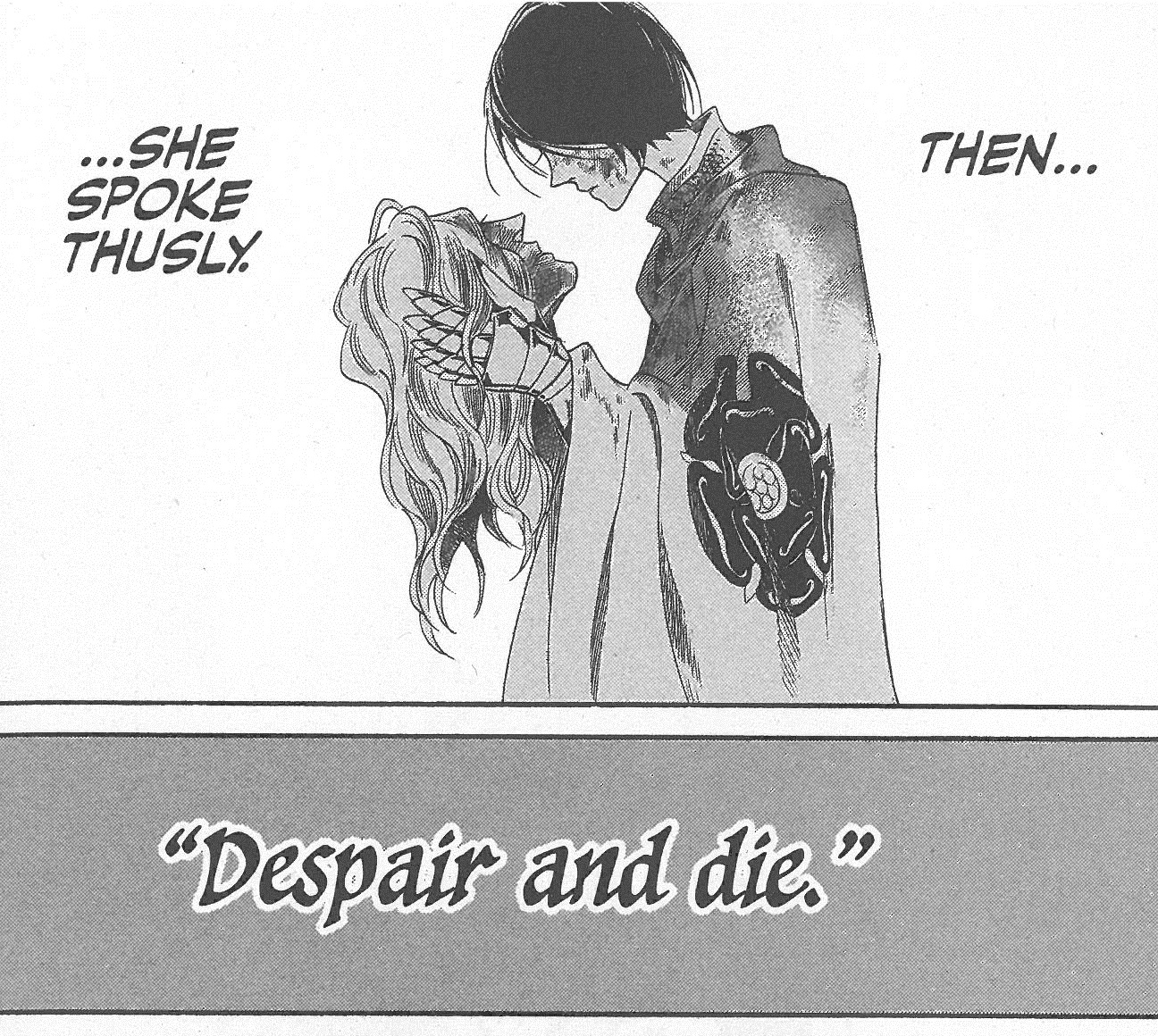
I’ve always liked manga by Chika Shiomi, and even though my favorite of her works is the older title Night of the Beasts, her art and storytelling skills have progressed greatly over the years. Yukarism’s final volume is a great way to wrap up the series, coming to a conclusion with a few nice plot twists that make it not at all like a standard supernatural shoujo manga.

As this series unfolded, we’ve seen the present day characters grow more and more affected by the past. Yukari is starting to show symptoms of illness that mirror the sickness of the courtesan Yumurasaki, while Mahoro is taking on the supernatural powers of Takamura. Edo bodyguard’s protectiveness is manifested in Satomi in the modern day. Not only are personality traits crossing over to the present day, as the volume progresses the past is physically manifesting in the present. While it seems like the present day trio is doomed to repeat the tragedy from the past, Shiomi manages to wrap things up in a much more satisfying and hopeful way.

I don’t want to give too much away of the resolution of the manga, but I thought it was very nice that the inevitable love triangle in most shouojo manga was sidestepped. Most of the problems of the past centered around the trio not communicating clearly with each other and making assumptions, and in the present day the high school students manage to work things out both in their own lives and for the spirits that possess them briefly. Even situations that seem very threatening get resolved, but not without enough of a struggle that the happy ending feels unearned.

Shiomi’s art is always clear and easy to follow, but the level of detail in the flashbacks to the Edo period, combined with the way the past is portrayed as bleeding into the present in this volume makes the illustrations stand out. In the hands of a lessor artist, the events could easily be a muddled mess, but both spirit possession and the physical struggles are portrayed with clear techniques that never confuse the reader. I honestly would have been happy if this series were stretched out over another volume or two, but by the end there is resolution for each character, both past and present. There’s a depth of emotion in this concluding volume that shows how Shiomi is able to be so precise in planning out her story, it never feels unearned. Yukarism is a series that I’m going to keep on the shelves for a long time, and I’m going to look forward to reading it again.

yukarism4

Filed Under: REVIEWS Tagged With: shojo beat, viz media, Yukarism

Idol Dreams, Vol 1

November 2, 2015 by Anna N

Idol Dreams Volume 1 by Arina Tanemura

I was curious to check out this manga, mostly due to the fact that it is a slightly older skewing shoujo title. Also, the premise, about a 31 year-old office lady going back in time to relive her youth seemed interesting.

The hapless office lady in question is Chikage Deguchi, who is bullied at work. She’s let her 20s pass her by while she’s stuck in a style rut, repressed, and unable to find a boyfriend. Her humiliation is complete when she goes to a high school reunion. She’s humiliated even more at a high school reunion. She manages to make incidental conversation with a classmate named Tokita who happens to be a pharmaceutical rep, but her encounter with her high school crush doesn’t go well at all. Chikage is depressed and determined to end her life, when Tokita rescues her and tells her all about an experimental medication that will allow her to replay her wasted teenage years.

Chikage clearly operates under different human subjects rules than most people in the pharmaceutical industry, as he supplies Chikage with pills that transform her into a 15 year old and then sends her on her way, with instructions to check in often so he can gather data. Of course, as soon as teenage Chikage steps foot on the street, she’s recruited to be a stand-in model opposite the most popular member of a boy band, and thus her career as a budding teen idol begins!

Teen idol Hibiki looks a lot like Chikage’s old crush from her high school days, and she finds herself getting swept up in the life of a teen idol. She’s determined to master the social skills that she didn’t pay attention to as a young teen. The situation of a 31 year old woman in a 15 year old’s body and a 15 year old boy being paired up has the potential for a great deal of creepiness. I wasn’t taking this romance very seriously though, because it is clear that Tokita has an unexpressed crush on Chikage, and he seems to be one of the few men her own age that she can actually talk to without becoming self-conscious. So, even though there might be a bit of a wacky love triangle developing (like the original Amethyst Princess of Gemworld with reverse aging) I’m fairly confident that the romantic resolution to this manga will be non-squicky. We’ll see what happens in the next volume though.

Tanemura is always at her best when drawing super cute people, and the contrast between older Chikage and young idol version Akari is pronounced. I enjoyed seeing the friendship develop between Akari and the other boy band members, but I thought that Chikage’s occasional encounters with Tokita were much more promising in terms of any romance developing. Overall, I thought that this was a promising start to a new series, with the potential for the romance plots to derail and become off-putting. I generally enjoy Tanemura’s manga, and a series set in the world of teen idols is the perfect excuse for her to break out all the stops with the flourishes and detailed costumes that she does so well.

idoldreams1

Filed Under: REVIEWS Tagged With: Arina Tanemura, idol dreams, shojo beat, shoujo, viz media

My Love Story!! Vol 6

October 24, 2015 by Anna N

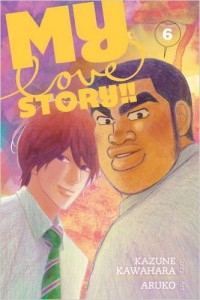
My Love Story Volume 6 by Kazune Kawahara and Aruko

It is nice to have a go-to manga series to read when one feels stressed out, and My Love Story!! never fails to make me happy.

This volume focuses more on the arrival of Takeo’s new sibling, and the reader gets the treat of seeing a little bit of his parents’ courtship. Takeo’s mom is portrayed as unflappingly capable in her younger years, and his dad exhibits the same ridiculous amount of enthusiasm that Takeo often channels. When something goes a little wrong with the pregnancy, Takeo starts exclaiming “I’ve got to be reliable!” as he tries to take care of everything for his family. He’s supported all the way by Suna and Yamato.

The old valentine’s day storyline has got to be one of the most overused cliches in shoujo manga, but My Love Story!! pulls off one of the most adorable examples of this storyline, as Takeo is so excited to be receiving “true love’s chocolate from his girlfriend, he finds himself striking random celebratory poses as he walks along and discusses his relationship with Suna. I was glad to see that there are hints Suna might actually become involved with a girl at last. He’s deliberately aloof, and shuns any girl who speaks badly of Takeo, so he hasn’t experienced romance yet either. I’m really looking forward to the next volume now, where more of the focus will be on him.

mylovestory6

Filed Under: REVIEWS Tagged With: My Love Story, shojo beat, viz media

Hide and Seek, Vol. 3

October 14, 2015 by Ash Brown

Hide and Seek, Volume 3Creator: Yaya Sakuragi
U.S. publisher: Viz Media
ISBN: 9781421579689
Released: March 2015
Original release: 2014

Yaya Sakuragi has had quite a few of her boys’ love manga translated and released in English: Tea for Two; Hey, Sensei?; Stay Close to Me; Bond of Dreams, Bond of Love; and, most recently, Hide and Seek. Hey, Sensei? was actually my introduction to boys’ love, and I tend to enjoy Sakuragi’s work, so I’ve made a point to read and collect it all. As for Hide and Seek, the third and final volume was originally published in Japan in 2014. The English-language edition was released in 2015 by Sublime Manga, the boys’ love imprint associated with Viz Media. Hide and Seek is technically a spinoff of Bond of Dreams, Bond of Love, but it stands completely on its own. However, readers familiar with Bond of Dreams, Bond of Love will likely appreciate the references made to the earlier series. Tea for Two is even more distantly related to Hide and Seek, the connection between the two being made indirectly through Bond of Dreams, Bond of Love. It’s not at all necessary to have read Tea for Two or Bond of Dreams, Bond of Love to enjoy Hide and Seek, but I do like how all three series are linked together.

It has been years since Shuji has been in a serious relationship. Although he’s still on good terms with his ex-wife, his marriage was a failure and he hasn’t done much more than casually play around since the divorce. But now, somewhat unexpectedly, Shuji finds himself in what may very well become something more long-term, and with another man no less. The relationship between Shuji and the young doctor Saji has had a few bumps along the way, and both of the men still occasionally feel insecure, but for the most part they’ve been able to move past the major drama. That doesn’t mean everything has been completely worked out, though. As grown adults, Shuji and Saji each have their own family responsibilities and careers to take into consideration. Shuji has his daughter Chii to look after and the business at his candy store isn’t as good as it once was while Saji is having a difficult time convincing his grandfather to allow him to take over the family’s local clinic. So, there are still a few matters that Shuji and Saji will need to address before their relationship can go much further.

Hide and Seek, Volume 3, page 68Although Hide and Seek tends to be more serious, mature, and realistic, especially when compared to its immediate predecessor Bond of Dreams, Bond of Love, at the same time there is still plenty of humor and lightheartedness to the series. For example, the major dilemma in the first chapter of Hide and Seek, Volume 3 revolves around Shuji “manning up” in order to cuddle, with delightful results. Shuji’s love of costume and roleplay comes up again, too, which has been something of a running joke in both Bond of Dreams, Bond of Love and Hide and Seek. I’ve really enjoyed seeing the relationship between Shuji and Saji develop as the series has progressed; they’re adorable and surprisingly sweet together, even considering (or perhaps even because of) their drastically different personalities. It’s obvious that they each care tremendously for other person. What makes their relationship work, and one of the things that I particularly love about Hide and Seek, is their willingness to push through their initial fear and embarrassment over expressing themselves and actually communicate with each other.

Seeing as I had enjoyed Sakuragi’s earlier works, I was fairly confident that I would like Hide and Seek, too. What I didn’t anticipate was just how much the series would end up appealing to me; I think it may now even be my favorite Sakuragi manga. I find this to be a little surprising because, although Saji is a type of character that I’m usually fond of, in general Shuji wasn’t. But over the course of Hide and Seek I came to really like and care about him. He has evolved from simply being supporting comic relief in Bond of Dreams, Bond of Love into a fully fledged, well-developed character in his own right. Much of Hide and Seek, Volume 3 is devoted to his family circumstances, which are revealed to be a little different than readers (and Saji, for that matter) were initially led to believe. Chii’s mother and her current boyfriend play a greater role, but the series implies and is open-ended enough that there is room for Saji, Shuji, and Chii to form a trio as well. Perhaps it’s optimism and wishful thinking on my part, but it makes me extremely happy that by the end of Hide and Seek, Chii may very well have gained two caring families.

Filed Under: REVIEWS Tagged With: Hide and Seek, manga, Sublime Manga, viz media, Yaya Sakuragi

QQ Sweeper Vol. 1

October 13, 2015 by Anna N

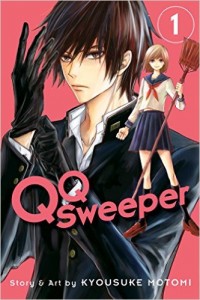
QQ Sweeper Volume 1 by Kyousuke Motomi

I’m generally excited for any debut series in the Shojo Beat line, but I was particularly interested in reading the first volume of QQ Sweeper because I enjoyed Dengeki Daisy so much. Motomi’s slightly offbeat and cynical sense of humor makes her series stand out, and I was curious to see how the paranormal and cleaning would come together in this title.

Motomi does cranky heroes well, so I thought the male lead of the series was quite promising. Kyutaro Horikita is a member of the beautification committee at his school, and he’s introduced in the first chapter as a bit of a loner who is obsessed with cleaning. He comes across a girl sleeping in an abandoned room in his school. Fumi Nishioka is a new transfer student who is homeless, trying to hide evidence of how poor she is, and on a mission to become a real life Cinderella by snagging a rich guy. This doesn’t sound like the most flattering character description, but Motomi also is able to easily create sympathetic yet quirky heroines. Motomi’s slightly offbeat humor is on display in the first few panels, when Kyutaro seems to rely on threatening people with cucumbers a bit too much, and Fumi enters into a dangerous fugue state when she’s assessing the material possessions of a male student/mark.

I don’t even find shoujo cliches all that annoying when Motomi is executing them. In very quick order, Fumi finds herself interviewing for and getting a position as housekeeper for her school principal, who just happens to be Kyutaro’s older brother. Fumi quickly discovers that Kyutaro’s obsession with cleaning extends to cleansing the spiritual plane, and she also has the ability to help him. Motomi packs a great deal of plot and character development into this single volume, setting up the relationships between the characters, and establishing the background for the supernatural aspects of the manga. This is a very solid addition to the Shojo Beat lineup, and I’m very much looking forward to Motomi’s slightly twisted take on the supernatural romance genre in future volumes.

qqsweeper1

Filed Under: REVIEWS Tagged With: QQ Sweeper, shojo beat, shoujo, viz media

Genocidal Organ

October 9, 2015 by Ash Brown

Genocidal OrganAuthor: Project Itoh
Translator: Edwin Hawkes
U.S. Publisher: Viz Media
ISBN: 9781421542720
Released: August 2012
Original release: 2007

Although Genocidal Organ was the third novel by Project Itoh to be translated and released in English, in Japan the book was actually his debut work as an author. My introduction to Itoh’s fiction was through the award-winning Harmony, his first novel to be translated into English, which I greatly enjoyed and found to be an intelligent, thought-provoking work of science fiction. I was also greatly impressed by his two short stories: “The Indifference Engine,” collected in The Future is Japanese, and “From Nothing, With Love,” found in Phantasm Japan. Thus, reading Genocidal Organ, released by Viz Media’s Haikasoru imprint in 2012 with a translation by Edwin Hawkes, was an obvious choice for me. The publication of Genocidal Organ in Japan in 2007 established Itoh as a talented author to watch out for. Sadly, he died two years later at the age of thirty-four from cancer. But Itoh and his work haven’t been forgotten. In 2014 it was announced that three of his novels, including Genocidal Organ, were to be adapted as feature-length animated films.

Ever since the attack on the World Trade Center on September 11, 2001, American citizens have more or less willingly given up their privacy and freedoms in order to feel safer from perceived terrorist threats. Much of the world has followed suit and there are very few places left where a person isn’t closely monitored and recorded, the immense amounts of data and metadata collected being saved indefinitely, waiting to be complied at a moments notice. In order to maintain this life of extreme hyper-surveillance there are people who must deal in death. Clavis Shepherd is one such man, an assassin who is a part of the Special Operations of the United States Military. He has killed countless people in service of his country—men, women, even children—but his recent missions have all had one target in common, an American linguist by the name of John Paul. Time and again the man seems to manage to slip away just before Shepherd’s unit arrives, leaving behind one developing country after another devastated by civil war and genocide.

Genocidal Organ is a novel that is absolutely saturated with death. It’s something that Clavis cannot escape in either his personal or professional life, whether he’s asleep or awake. Killing other people is his job and aided by modern science and medicine he is largely able to accept that, but his work is still tremendously damaging psychologically. But it’s not until Clavis had to make the decision whether or not to remove his mother from life support after she was in an accident that mortality really became personal to him. From there, his mental stability begins to steadily unravel as he is haunted by all of the death that he has seen and the death for which he has been responsible. Genocidal Organ can be horrific and tragic, gruesome and visceral. Clavis has been both a participant in and a witness to some truly terrible things—war and genocide that lay waste to entire countries and populations and all that accompanies that devastation. And, as an assassin for the government, he knows that he’s not an innocent bystander in how events unfold.

First and foremost, Genocidal Organ is Shepherd’s own personal narrative as he struggles to come to terms with his role as an assassin, but his story is couched in a much larger one dealing with global policy and international politics. Itoh has successfully incorporated many different genre styles in order to create a compelling and cohesive novel. In addition to all of the action and espionage, there are also the mysteries surrounding Paul as the “King of Genocide,” and an exceptionally strong philosophical and intellectual bent to the story as Genocidal Organ examines the worth of life and cost of freedom. Itoh presents an incredibly insightful perspective of the Untied States as a world power. Although it is perhaps more critical and frank than most American authors would likely attempt, the perspective is one that still feels surprisingly authentic. (It’s also very clear that Itoh was particularly well-versed in Western literature and popular culture.) Ultimately, though at times heavy-handed, Genocidal Organ is a fascinating and engaging novel of the near future; I remain convinced that Itoh was an author of exceptional talent.

Filed Under: REVIEWS Tagged With: Haikasoru, Novels, Project Itoh, viz media

So Cute it Hurts! Vol 3

October 5, 2015 by Anna N

So Cute it Hurts! Volume 3 by Go Ikeyamada

This is an excessively silly series, but I’ve been enjoying it, mostly because of the amount of plot twists that get resolved in each volume, so more goofy subplots can promptly develop. Also, I feel like Shojo Beat should always be publishing at least one title where the heroine cross dresses just on principle.

I feel like in many shoujo series, the fraternal twins’ cross dressing antics would fuel plot lines for 4-5 volumes, but in So Cute it Hurts! their true identities were unmasked at the end of the second volume. Aoi, the delinquent boy with a crippling physical aversion to female contact is surprised when the boy he’s been hanging out with is unmasked as Mitsuru’s sister Megumu. At the same time, Mitsuru’s masquerade is uncovered by mean girl Azuza. Aoi deals with the psychological impact of being around a girl unknowingly, and Azuza blurts out a confession of her crush to Mitsuru instead of revealing his secret. Meanwhile, Mitsuru is struggling with his feelings for Shino, but doesn’t want to ruin their friendship by telling her that he’s actually a boy. Oh, the tangled storylines of cross dressing shoujo romance!

When the week-long switch ends after Megumu has taken Mitsuru’s tests for him, there’s still plenty of emotional fall-out as Megumu pines for Aoi, and he begins to come to terms with his own feelings. Aoi’s allergy to girls causes some hilarious reactions when he and Megumu get closer, although they have to stay a certain distance apart to avoid triggering him. Their budding romance is indeed ridiculously cute, and while this manga in no way approaches both the hilarity and emotional depth of My Love Story!!, it is still entertaining. Ikeyamada ratchets up all the emotional reactions of her characters for added hilarity. While this volume focused a bit more on Megumu, I can see how the next volume is going to be focusing more with the love triangle Mitsuru is in since the object of his affections does not even know him as a boy while Azuza continues to have a violent crush on him. So Cute it Hurts! continues to be a fun read for those who enjoy romance with broad comedy.

socuteithurts3

Filed Under: REVIEWS Tagged With: shojo beat, shoujo, so cute it hurts!, viz media

Requiem of the Rose King, Vol. 2

September 25, 2015 by Ash Brown

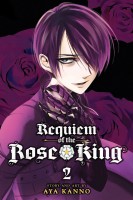
Requiem of the Rose King, Volume 2Creator: Aya Kanno
U.S. publisher: Viz Media
ISBN: 9781421580906
Released: September 2015
Original release: 2014

Aya Kanno has had several of her manga series released in English in the past—Soul Rescue, Blank Slate, and Otomen—all of which were quite different from one another. One of the things that I appreciate most about Kanno is the versatility apparent in the range of her work. I was especially looking forward to her most recent series Requiem of the Rose King and was thrilled when Viz Media licensed for an English-language release. The manga is loosely inspired by William Shakespeare’s historical plays Henry VI (in its various parts) and Richard III which are in turn a dramatization of England’s Wars of the Roses. As a fan of Shakespeare and as a fan of Kanno, I was very interested in seeing her interpretation. Although upon initial reading the first volume of Requiem of the Rose King could occasionally be somewhat confusing—visions, nightmares, and reality all bleeding into one another—I loved its dark atmosphere, theatrics, and dramatic nature. I was very glad when Requiem of the Rose King, Volume 2, initially published in Japan in 2014, was translated into English in 2015.

The bloody struggle for England’s throne continues. The Lancasters executed King Richard II for treason and has now ruled the country for three generations. However, there are many who still view the Lancasters as usurpers and who support the House of York’s claim to the throne. Richard, the Duke of York, is poised to become the next monarch after King Henry VI is captured and coerced into relinquishing the crown in order to end the bloodshed. But then Queen Margaret takes command of the King’s military forces, unwilling to let power to slip from her and her family’s hands. The resulting conflict does not go well for the Duke and with this turn of events the dynastic war escalates. During this time, both Henry and the Duke’s youngest son Richard are imprisoned in a tower, unaware of the battle’s progress and the changing tides of war. Richard is utterly devoted to his father and wants to see him crowned as England’s king. Thus, the Duke’s death on the battlefield will set into motion a tragic series of events for his son and for the entire kingdom as the darkness that resides within Richard is unleashed.

Requiem of the Rose King, Volume 2, page 96In part, the first two volumes of Requiem of the Rose King have been a prologue to the rest of the series. The stage, characters, and mood have now been fully set for the unfolding drama and tragedy. There is a huge psychological element to Requiem of the Rose King. Kanno draws parallels between Henry and Richard which emphasize that, especially in regards to their mental states. Both men are touched by madness, but it manifests in vastly different ways. Henry’s insanity seems to be fairly benign although it does cause significant political turmoil. It also provides a way for him to escape from his responsibilities as a ruler and to avoid a very violent reality. Richard’s madness, on the other hand, is the result of facing that same reality head on. He becomes utterly consumed by rage and a desire for vengeance. Compared to Henry’s passivity and what could be described as harmlessness, Richard takes on a much more active and venomous role. The contrast between Henry and Richard and light and dark extends beyond their characterizations and is captured visually as well; Richard’s black hair and clothing consistently set him apart from everything else.

Anno’s Richard is both a tragic and terrifying figure. The beginning of Requiem of the Rose King shows the creation of a monster—a young man who is forcefully taking ownership of his own destiny after being irrevocably scarred emotionally and psychologically. Since his birth, Richard has been labeled as a demon child and a harbinger of death. He initially struggles against this stigma, but has now begun to embrace his own darkness. His father, the one person he loved and admired the most is dead; his mother has abandoned him multiple times; Richard sees very little incentive to retain his humanity if everything he truly cares about will be torn from him and he is already viewed as an abomination. The second volume of Requiem of the Rose King is defining for Richard. Among the chaos, violence, and death of war, he loses what little innocence and hope that he might have had. Although many of the surrounding circumstances were beyond his control, ultimately the choice to become a villain is his own. He is driven by despair, madness, and rage, willing to do anything to ensure his own future and the downfall of the Lancasters and anyone else who would stand in his way.

Filed Under: REVIEWS Tagged With: Aya Kanno, manga, requiem of the rose king, viz media

The Manga Revue: Komomo Confiserie

September 18, 2015 by Katherine Dacey

Apologies for missing last week’s deadline – the first week of the semester is always chaotic, and manga reviewing took a back seat to lesson prep. Now that school is underway again, however, the Manga Revue will run weekly on Fridays, as it did this summer.

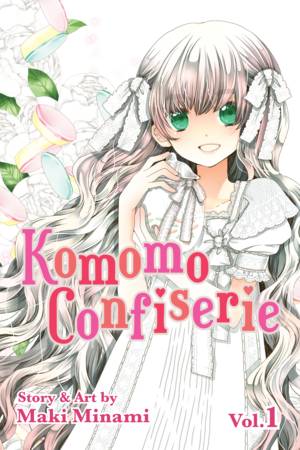
komomo_confiserieKomomo Confiserie, Vol. 1
By Maki Minami
Rated T, for teens
VIZ Manga, $6.99 (digital)

Flip through The Big Book of Shojo Plotlines, and there – between “I’m Having an Affair with My Homeroom Teacher” and “I’m a Spazz Who’s Inexplicably Irresistible” – you’ll find another time-honored trope: “I Was Mean to My Childhood Friend, and Now He’s Hot!” Komomo Confiserie embodies this plot to a tee: its wealthy heroine, Komomo, was spoiled rotten as a child, with an army of servants at her disposal. It was her special delight to order fellow six-year-old Natsu to make her sweets–he was the pastry’s chef son, after all–and terrorize him when he didn’t comply. When Komomo turns fifteen, however, her family loses everything, forcing her to get a job and attend public school. Natsu–now a successful baker in his own right–makes a seemingly chivalrous offer of employment to Komomo, who’s too guileless to realize that she’s walking into a trap.

You can guess the rest: Natsu revels in his new-found position of power, directing Komomo to perform menial tasks and scolding her for lacking the common sense to sweep floors or boil water. The fact that he’s cute only adds salt to the wound; Komomo vacillates between plotting her escape and speculating that Natsu bullies her out of love.

Whatever pleasure might come from witnessing Komomo’s comeuppance is undermined by the author’s frequent capitulations to shojo formula. Though Natsu frequently declares that bullying Komomo is his privilege – and his alone – he routinely helps her out of jams, bakes her sweets, and behaves a lot like someone who’s harboring a crush on her. Komomo, for her part, behaves like such a twit that it’s hard to root for her; even when she has an epiphany about friendship or hard work, her insights are as shallow as the proverbial cake pan.

The series’ redeeming strength is the artwork. Though Maki Minami frequently resorts to pre-fab backgrounds and Photoshopped elements, she does a fine job of representing the emotional rush that a sugary treat can elicit in even the most jaded adult. Komomo’s food reveries are a swirl of flowers, tears, and lacy doilies that neatly suggest the mixture of joy and sadness she experiences whenever a macaroon or a petit-four stirs up childhood memories. Too bad the rest of the story isn’t as sharply observed.

The verdict: Saccharine plotting and unsympathetic leads spoil this confection.

Reviews: Sean Gaffney and Michelle Smith post a fresh crop of Bookshelf Briefs, while Claire Napier kicks the tires on Ichigo Takano’s ReCollection and Kate O’Neil reminds us why a new installment of Kaze Hikaru is worth the wait. At Contemporary Japanese Literature, Kathryn Hermann posts a glowing review of Yurei: The Japanese Ghost, a collection of essays by manga scholar and translator Zack Davisson.

Erica Friedman on 2DK, G Pen, Mezamashidokei (Okazu)
Matthew Warner on vol. 5 of Ajin: Demi-Human (The Fandom Post)
Rebecca Silverman on vol. 1 of Alice in Murderland (Anime News Network)
Jordan Richards on vol. 1 of Attack on Titan: Colossal Edition (AiPT!)
Sean Gaffney on vol. 16 of Dorohedoro (A Case Suitable for Treatment)
Jordan Richards on vol. 1 of Inuyashiki (AiPT!)
Justin Stroman on vol. 1 of Inuyashiki (Organization Anti-Social Geniuses)
Megan R. on Here Is Greenwood (The Manga Test Drive)
Saeyoung Kim on K-On! High School (No Flying No Tights)
Sheena McNeil on vol. 2 of Love Stage!! (Sequential Tart)
Johanna Draper Carlson on vol. 3 of Love Stage!! (Comics Worth Reading)
Anna N. on vols. 1-2 of Maid-sama! (The Manga Report)
Ash Brown on Maria the Virgin Witch: Exhibition (Experiments in Manga)
Lesley Aeschliman on vol. 4 of Master Keaton (Watch Play Read)
Matthew Warner on vol. 3 of My Neighbor Seki (The Fandom Post)
Ash Brown on vol. 5 of Mushishi (Experiments in Manga)
Al Sparrow on vol. 1 of Nurse Hitomi’s Monster Infirmary (ComicSpectrum)
Joseph Luster on One-Punch Man (Otaku USA)
Sheena McNeil on vol. 4 of Pokemon X.Y. (Sequential Tart)
Sean Gaffney on vols. 19-20 of Ranma 1/2 (A Case Suitable for Treatment)
Matt on vol. 1 of Rose Guns Days: Season One (AniTAY)
Vernieda Vergara on The Science of Attack on Titan (Women Write About Comics)
Ken H. on vol. 2 of A Silent Voice (Sequential Ink)
Matt on vol. 3 of Sword Art Online Progressive (AniTAY)
Frank Inglese on vol. 7 of Terraformars (Snap30)
David Brooke on vol. 1 of Vinland Saga (AiPT!)
Frank Inglese on vol. 6 of World Trigger (Snap30)

Filed Under: MANGABLOG, REVIEWS Tagged With: komomo confiserie, Maki Minami, Manga Review, Pastry, shojo beat, viz media

Maid-sama! Vols 1 and 2

September 15, 2015 by Anna N

Maid-sama! Volumes 1 and 2 by Hiro Fujiwara

It has been some time since I’ve read this series. I think I read around 4 or 5 volumes or so of the Tokyopop release, so the new omnibus from Viz provided a good excuse to give the series a second try. I totally understand why Maid-sama! would be a strong title to re-release since it has an anime adaptation too. However, a tiny part of me will still hope in vain for some reissues of some of the other less commercial series that got cut off when Toykopop went under.

The maid in this title is Misaki Ayuzawa, a high achieving girl who has become president of a school that has only recently gone co-ed. She’s uncomfortable around boys and has made it her mission to clean up the school and abolish delinquent behaviors in order to protect the small female population. She’s super stern and has great physical prowess when it comes to beating up her fellow students. While she’s a perfect student at school, Misaki has to make ends meet by working as a waitress at a maid cafe as her part-time job. In the first few pages of the manga, Misaki’s secret is discovered by Takumi Usui, a popular and somewhat cynical boy who attends her school. He promptly decides to hold Misaki’s secret over her head and begins to pop up now and then whenever something might go wrong.

Misaki navigates issues with student-council relations, dealing with a rival school, and navigating random cross-dressing events at her part-time job. Aside from the relationship between Misaki and Usui, the manga is pretty entertaining, as Misaki’s outsize reactions to everything gradually begin to mellow out a bit as she begins to relate to all the students at her school as human beings, not just the girls. I had also totally forgotten about the idiot trio, a group of background characters that also discover Misaki’s secret identity as a maid and mostly function to gaze at her adoringly and act occasionally like a slapstick Greek chorus. Fujiwara’s art is clear and easy to follow, and very dynamic when Misaki is leaping into action to defend womanhood or juggling a ton of customers at her part-time job.

The part of this manga that bugs me and I think contributed to my decision to stop reading it before, is that Usui is utterly unappealing as a shoujo male lead to me. His general mode of interaction is to randomly show up, invade Misaki’s space, and make her feel confused and flustered. He also keeps forcing physical affection on Misaki when she’s not a willing participant, as some sort of power game. Also, Fujiwara goes to great length to demonstrate Misaki’s physical prowess when her being strong is funny or over the top, but Misaki suddenly becomes weak and incapable when it serves the purpose of the plot to have Usui rescue her from herself. He’s also constantly reminding Misaki that she’s a girl who needs help, and it only serves to make it appear like the main message of this manga is that a girl with strong type A tendencies needs a man to help her out. For folks who aren’t put off by this relationship dynamic, I do think that Maid-sama! is plenty entertaining. I just find series like Oresama Teacher or My Love Story! much more amusing if I’m looking for something fun to read in the shoujo comedy genre.

maidsama12

Filed Under: REVIEWS Tagged With: maid sama!, shojo beat, shoujo, viz media

JoJo’s Bizarre Adventure, Part 1: Phantom Blood, Volume 2

September 11, 2015 by Ash Brown

JoJo's Bizarre Adventure, Part 1: Phantom Blood, Volume 2Creator: Hirohiko Araki
U.S. publisher: Viz Media
ISBN: 9781421578804
Released: May 2015
Original release: 1988

For years the only part of Hirohiko Araki’s epic and fashionably strange shōnen manga series JoJo’s Bizarre Adventure that was available in English was the third story arc, Stardust Crusaders. A standalone side story, Rohan at the Louvre was released as well, but it wasn’t until 2015 that the very beginning of the series, Phantom Blood, was translated and released in print, and in a lovely hardcover edition, too. (I have a feeling that the popularity of the recent JoJo’s Bizarre Adventure anime adaptation probably had something to do with that.) Phantom Blood was originally published in five volumes in Japan between 1987 and 1988, but in 2002 the first story arc was re-released in three volumes. Viz Media’s English-language edition is based on that 2002 release. JoJo’s Bizarre Adventure, Part 1: Phantom Blood, Volume 2, published in 2015, collects part of the second volume, all of the third volume, and part of the fourth volume of the original Japanese release.

JoJo’s life isn’t exactly turning out the way that he would have hoped or expected. His father lays dying in his arms after having taken a fatal blow that was intended for him. Behind the knife that will end his father’s life is Dio, a man who was raised as his brother but who has turned against the Joestar family as was always his plan and intention. Not only that, Dio has gained untold powers from a mysterious and ancient stone mask. Now a vampire, Dio is nearly immortal and possesses great strength. Even he doesn’t know the full extent of his astonishing abilities, but he has already begun gathering followers who are drawn to his charisma and promises of power. With the help of a curious man named Baron Zeppeli, JoJo becomes one of the only people who might have a chance of defeating Dio. Zeppeli unlocks JoJo’s own latent talents, training him in Sendo and its use of Hamon energy, an impressive martial technique which when mastered may make it possible for JoJo to destroy Dio and save the world.

PhantomBlood2-72JoJo’s Bizarre Adventure is a very aptly named series. It is an exceedingly strange manga with nonstop, over-the-top action and drama. Nearly every phrase of narration and dialogue in Phantom Blood, Volume 2 is an exclamation. Even the few relatively quiet moments are fervently intense and the calm never lasts for very long. Most of the second volume of Phantom Blood consists of extended fight scenes and training sequences. Araki keeps Phantom Blood moving along at a breakneck pace which sometimes includes the actual breaking of necks. Blood, gore, dismembered body parts, splattered guts, eyeballs, and brain matter are all fairly common in the series. There is definitely a strong element of horror in the early part of JoJo’s Bizarre Adventure. While Araki’s artwork in Phantom Blood understandably doesn’t show the same refinement found in his later illustrations, it still has a sense of visceral dynamism and the occasional panel can actually be quite beautiful or striking.

JoJo’s Bizarre Adventure is a very odd manga. The story, artwork, and characters are all memorable if for no other reason than they are so over-the-top and strange. Additionally, Araki freely mixes historical events with historical fantasy in Phantom Blood. For example, Jack the Ripper becomes one of Dio’s earliest followers and England’s bloody dynastic struggles of the sixteenth century form a dramatic backstory for some of the other warriors that JoJo must face as he pursues his adoptive brother. Plenty of Phantom Blood is completely Araki’s own creation, though. And lest there be any confusion about all the weirdness, JoJo’s faithful and at times even useful companion Speedwagon is there to explain everything that’s going on, as well as to narrate the obvious. Speedwagon’s help isn’t needed to realize how much of a villain Dio is, though. Even before becoming a vampire Dio delighted in his own evil and the evil of others, but with his newfound powers he is in a better position than ever to make his malevolent schemes a reality. How successful he will actually be remains to be seen, but so far the results are marvelously terrifying and outrageous.

Filed Under: REVIEWS Tagged With: Hirohiko Araki, JoJo's Bizarre Adventure, manga, Shonen Jump, viz media

Komomo Confiserie Vol 1

September 7, 2015 by Anna N

Komomo Confiserie, Volume 1 by Maki Minami

So far, Maki Minami’s shoujo series haven’t totally connected with me as a reader. I didn’t care for Special A very much, and while I liked the first couple volumes of Voice Over!: Seiyu Academy, I haven’t gone on to read the entire series. Maybe Komomo Confiserie will finally be the Minami series that I actually finish!

The series starts out with a flashback, as the incredibly spoiled and rich little girl Komomo picks on a young boy named Natsu. He’s the son of her family’s chef, and Komomo only likes the sweets that Natsu prepares for her. Komomo is ungracious and bossy, but she has an emotional connection to Natsu’s food, it serving as a substitute for companionship as she lives in a huge mansion abandoned by her parents. In just a few panels, this rich yet emotionally empty life is overturned, as Komomo’s father announces that he’s lost their fortune, and Komomo has to work to support herself with a part time job. Life as a rich heiress hasn’t prepared Komomo with the social graces or work ethic to be able to handle any type of employment and she keeps getting fired over and over again.

It wouldn’t be a shoujo manga if Natsu wasn’t about to return to Japan a triumphant celebrity from studying pastry abroad, determined to seek out his old “friend” to exact revenge, only to find that their positions have been reversed in an ironic twist of fate! Natsu has an exceedingly charming pastry shop to run, and he runs in to Komomo just as she is tossed out into the street from her latest misadventure in employment.

If Komomo was absolutely unrepentant and spoiled, this manga wouldn’t work very well, but what I enjoyed most about this series were the cracks in the facades for both Natsu and Komomo. Komomo gradually begins to realize how superficial her previous life was, when none of her old friends come to her aid. While Natsu initially appears to be slightly psychotic in his pursuit of revenge, he is actually moved a few times when seeing Komomo eat his food and try to adjust to her new life. Komomo’s rich girl attitudes come in handy when she’s faced with a new high school. Mean girl bullying just slides off of her, and she sails through unaffected. Komomo is gradually learning to be a real human being, and as her personality changes, Natsu begins to find her more and more adorable.

Minami is a solid shoujo artist, and I particularly appreciated her being able to dramatize facial expressions that are a bit off, for example when Natsu’s kindness is a facade for his evil plans. I’m hoping that Komomo will become more and more adept with dealing with the real world, changing the power dynamic between her and Natsu more in the next few volumes.

Filed Under: REVIEWS Tagged With: komomo confiserie, shojo beat, shoujo, viz media

The Manga Revue: Inuyashiki, Kurosagi Corpse Delivery Service and Tokyo Ghoul

September 4, 2015 by Katherine Dacey

I’m fresh out of snappy intros, so I’ll cut to the chase: this week’s column looks at Inuyashiki, The Kurosagi Corpse Delivery Service Omnibus Edition, and Tokyo Ghoul.

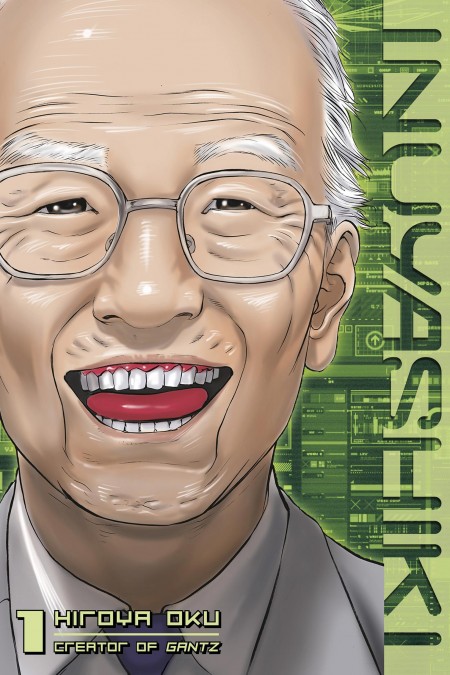
inuyashikiInuyashiki, Vol. 1
By Hiroya Oku
Rated OT, for older teens (16+)
Kodansha Comics, $12.99

Bette Davis famously declared that “Old age is no place for sissies,” a statement borne out by the first chapters of Hiroya Oku’s grimly compelling Inuyashiki. Its hero, a 58-year-old salaryman, is a picture of despair: his family loathes him, his co-workers ignore him, and his health is failing. In a blinding flash of light, however, his life changes. He wakes up to discover that his memories are intact but his body has changed; his once-frail limbs and failing eyes are now military-grade weapons, capable of withstanding lethal force. What to do with this gift? That question animates the final pages of volume one, as Ichiro tests his new body’s limits for the first time.

This final scene is a neat illustration of what’s good — and not so good — about Inuyashiki. Oku stages a suspenseful confrontation between Ichiro and a gang of teenage thugs; though we sense that Ichiro will prevail, how he gains the upper hand is a nifty surprise made more effective by Oku’s meticulously detailed illustrations. The incident that precipitates the showdown, however, is saddled with a heavy-handed script; Oku stokes the reader’s sense of righteous indignation by revealing that the thugs’ intended victim is a good but vulnerable man. By overemphasizing the victim’s inherent decency, Oku reduces him to a saintly caricature, a problem that also mars Ichiro’s early interactions with his family. (His kids are such ungrateful jerks you may root for Ichiro to use his powers on them.)

Even if Ichiro’s catharsis is less earned than contrived, watching him transform from terminal sad-sack to indestructible bad-ass is a deeply satisfying experience. He’s found his purpose and his spine, even if it’s taken him 58 years to do so. Now that’s a fantasy that any middle-aged reader can get behind.

The verdict: Pour yourself a scotch before reading; you’ll need the emotional fortification to navigate the early chapters.

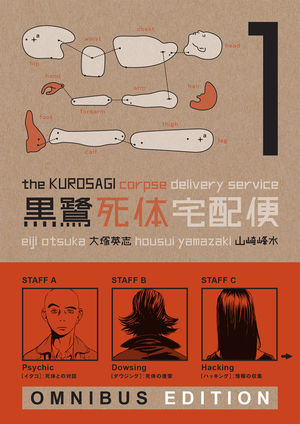
kurosagi_omnibus1The Kurosagi Corpse Delivery Service Omnibus Edition, Book One
By Eiji Ōtsuka and Housui Yamazaki
Rated OT, for older teens (16+)
Dark Horse, $19.99

Scooby Doo for grown-ups — that’s how I’d describe The Kurosagi Corpse Delivery Service, a macabre comedy about five cash-strapped college students who drive around in a van solving supernatural mysteries. The Kurosagi gang’s bread-and-butter are mysterious (and often violent) deaths. Through dowsing and channeling, they discover how and why their “clients” died, enabling the victims’ spirits to cross over to the other side.

The new omnibus edition — which collects the first three volumes of KCDS —  includes two of the series’ best stories: “Lonely People,” in which the gang stumbles across a portable altar with a mummy inside, and “Crossing Over,” in which the gang searches for the victim of an organ harvesting ring. Though the denouement of both “deliveries” include a few gruesome panels, the deadpan dialogue, expressive character designs, and snappy pacing prevent KCDS from sinking to the level of torture porn; the horrific imagery functions as a rim shot or an exclamation mark, not the main attraction. The self-contained nature of the stories is another plus: you can begin your KCDS odyssey almost anywhere in the series and still grasp what’s happening, though the crew’s origin story (“Less Than Happy,” the very first chapter) offers an interesting window into Buddhist university culture in Japan.

The verdict: If you haven’t tagged along on one of the Kurosagi crew’s “deliveries,” the omnibus edition gives you an economical way to do so.

Review copy provided by Dark Horse.

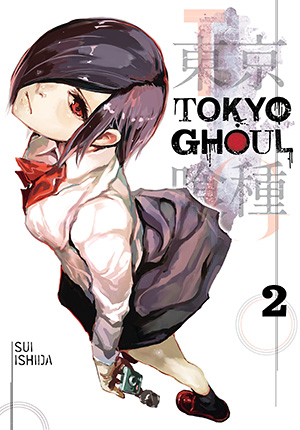
tokyo_ghoul2Tokyo Ghoul, Vol. 2
By Sui Ishida
Rated OT, for older teens (16+)
VIZ Media, $12.99

The first volume of Tokyo Ghoul reads like an urban legend: Ken Kaneki, earnest college student, goes out for dinner with a pretty girl, but wakes up in the hospital with a brand-new set of organs… that used to belong to his date. Within a few days of his release, Kaneki begins turning into a flesh-eating monster, a side effect of the transplant surgery. Volume two picks up where volume one left off: now caught between the human and demon worlds, Kaneki casts his lot with the demons of cafe Anteiku. They teach him tricks for passing as a human, and warn him about the deep divide between the ghouls who embrace their predator status and those who feel some kinship with humanity.

Although volume two introduces several new and potentially interesting characters, Kaneki’s wet-blanket personality continues to put a damper on the story: he whines and frets and refuses to do anything that might compromise the reader’s good opinion of him. As anyone who’s read Death Note knows, however, a charismatic, intelligent protagonist doesn’t have to be good or right to command the audience’s sympathy. Someone who’s flawed, misguided, or tempted to abuse a new-found power might actually invite more self-identification than a goody two-shoes lead.

The verdict: Tokyo Ghoul isn’t bad, just a little too obvious to sustain my interest.

Review copy provided by VIZ Media.

Reviews: Joe McCulloch looks at the new English-language version of Comics Zenon, Michelle Smith and Anna N. post a fresh set of Bookshelf Briefs, and Vernieda Vergara asks if Bleach has overstayed its welcome.

Connie on vol. 19 of Bakuman (Slightly Biased Manga)
Julie on The Desert Lord’s Bride (Manga Maniac Cafe)
Ash Brown on Dr. Makumakuran and Other Stories (Experiments in Manga)
Connie on vol. 3 of Earthian (Slightly Biased Manga)
Kory Cerjak on vol. 47 of Fairy Tail (The Fandom Post)
James Ristig on Full Metal Alchemist (How to Love Comics)
Matthew Alexander on vol. 1 of Hayate Cross Blade (The Fandom Post)
Connie on vol. 11 of Kamisama Kiss (Slightly Biased Manga)
Rebecca Silverman on vol. 23 of Kaze Hikaru (Anime News Network)
Lesley Aeschliman on vol. 1 of Komomo Confisere (WatchPlayRead)
Jordan Richards on vol. 1 of Komomo Confiserie (AiPT!)
Connie on vol. 14 of The Kurosagi Corpse Delivery Service (Slightly Biased Manga)
Angel Cruz on vols. 1-2 of Love at Fourteen (Women Write About Comics)
Lori Henderson on vols. 1-3 of Neon Genesis Evangelion (Manga Xanadu)
Ken H. on vol. 1 of Ninja Slayer Kills! (Sequential Ink)
Matthew Warner on vol. 10 of Nisekoi: False Love (The Fandom Post)
Connie on vol. 4 of No. 6 (Slightly Biased Manga)
Jocelyn Allen on Nobara (Brain vs. Book)
David Brooke on vol. 1 of Noragami: Stray God (AiPT!)
Lesley Aeschliman on vol. 1 of One-Punch Man (WatchPlayRead)
Kristin on vols. 1-2 of One-Punch Man (Comic Attack)
Jordan Richards on vol. 2 of One-Punch Man (AiPT!)
Matthew Warner on vol. 18 of Rin-ne (The Fandom Post)
Sarah on vol. 1 of The Royal Tutor (Anime UK News)
Al Sparrow on vol. 1 of So I Can’t Play H (Comic Spectrum)
Helen on Sweetness and Lightning (Organization Anti-Social Geniuses)
Dustin Cabeal on vol. 1 of Tokyo Ghoul (Comic Bastards)
Matthew Warner on vol. 1 of Tokyo Ghoul (The Fandom Post)
Connie on vol. 6 of Toradora! (Slightly Biased Manga)
Sheena McNeil on vol. 29 of Toriko (Sequential Tart)
Adam Capps on vol. 1 of Ultraman (BentoByte)
Michael Burns on vol. 3 of Yamada-Kun and the Seven Witches (AniTAY)

Filed Under: MANGABLOG, REVIEWS Tagged With: Dark Horse, Horror/Supernatural, Inuyashiki, Kodansha Comics, kurosagi corpse delivery service, Manga Review, Tokyo Ghoul, viz media

The Manga Revue: Ultraman

August 21, 2015 by Katherine Dacey

Ultraman made his television debut in 1966, defending Earth from the dual scourge of aliens and giant monsters. What began as a 39-episode series soon blossomed into one of Japan’s most prolific franchises, yielding dozens of sequels, spin-offs, movies, video games–and now a manga, which has been running in Monthly Hero’s magazine since 2011. Today’s column looks at this incarnation of the Ultraman story, which arrived in stores on Tuesday.

For extra insight into Ultraman‘s history, I encourage you to check out Brigid Alverson’s interview with Tomohiro Shimoguchi and Eiichi Shimizu, the creators of the latest Ultraman manga.

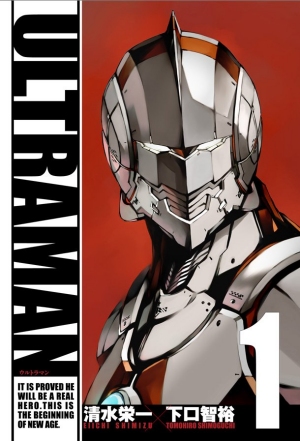
Ultraman_2011Ultraman, Vol. 1
By Eiichi Shimizu and Tomohiro Shimoguchi
Rated T, for teens
VIZ Media, $8.99 (digital edition)

Dusting off a beloved franchise and making it appeal to a new generation is a hazardous undertaking: stray too far from the source material and incur the wrath of purists, but hew too closely to the original and risk camp. Manga-ka Eiichi Shimizu and Tomohiro Shimoguchi have found an elegant strategy for introducing Ultraman to contemporary readers, using the original premise of the 1966 TV show as a starting point for a new chapter in the story.

The prelude to volume one neatly outlines Ultraman’s origins. Shin Hayata, member of the Science Special Search Party (a.k.a. the Science Patrol), unwittingly becomes the host for Ultraman, a powerful alien tasked with ridding Earth of dangerous monsters. Only a few members of the Science Patrol know Ultraman’s true identity–a secret they keep from Hayata, who is unaware that he is the vessel for Ultraman’s powers. The story then leaps forward thirty years: Ultraman has returned to his own world, Hayata has retired from the Science Patrol, and his son Shinjiro is beginning to manifest powers of his own.

In contrast to the introduction, which is a model of economy, the first chapter sags under the weight of too much expository dialogue. The characters relate their histories and concerns in such bald declarations that the entire chapter reads like a rejected Mystery Science Theater 3000 script.  (A sample exchange: “We certainly don’t see much of each other these days.” “Right, even though I work at the Ministry of Defense, too.”) The pace improves with the sudden appearance of Be Mular–one of Ultraman’s old adversaries–who lures the inexperienced Shinjiro into a rooftop battle. Although the script has a familiar rhythm–powerful attacks punctuated by snappy one-liners–the fight choreography is well executed; you can almost feel the force of Shinjiro’s punches. Equally important, the fight’s outcome is not a foregone conclusion: the chapter ends on a cliffhanger just as Shinjiro realizes that he isn’t strong enough to protect his family from Be Mular… yet.

If the 2.0 version of Ultraman sounds like a radical departure from the original series, rest assured that Shimizu and Shimoguchi haven’t strayed too far from the show’s roots. The proof lies in the character designs: they’ve done a nice job of bringing Ultraman and Be Mular’s appearance in line with contemporary seinen aesthetics while preserving the look and feel of the original characters. Ultraman and Be Mular don’t exactly resemble their rubber-suited predecessors, but a long-time fan will recognize them as spiritual descendants–a fair compromise for a series that’s toeing the line between 1960s kitsch and 2010s pop culture.

The verdict: The first chapter is a tough slog, but the combat is staged with enough panache that I’ll be checking out volume two.

Review copy provided by VIZ Media.

Reviews: Here at Manga Bookshelf, Sean Gaffney and Michelle Smith tackle the latest volumes of Black Rose Alice, Citrus, Evergreen, and Food Wars! Further afield, Megan R. takes a nostalgic look at Kare Kano: His and Her Circumstances; Aimee A. deconstructs shojo stereotypes in Skip Beat!!; Seth Hahne praises Ajin: Demi-Human for its “fantastic cat-and-mouse” plotting; and Erica Friedman reviews Manga de Tsuzuru Yurina Hibi, a “non-fiction comic essay” about the relationship between a businesswoman and her girlfriend.

Alice Vernon on Akame ga Kill! (Girls Like Comics)
Wolfen Moondaugter on vol. 22 of Arata: The Legend (Sequential Tart)
Austin Lanari on The Art of Satoshi Kon (Comic Bastards)
Sean Gaffney on vol. 5 of Assassination Classroom (A Case Suitable for Treatment)
Nick Smith on Awkward (ICv2)
Emma Weiler on vols. 1-5 of Crimson Spell (No Flying No Tights)
Lesley Aeschliman on vol. 10 of Deadman Wonderland (WatchPlayRead)
Lori Henderson on vol. 1 of The Demon Prince of Momochi House (Manga Xanadu)
Frank Inglese on vols. 5-6 of Food Wars! Shokugeki no Soma (Snap30)
Sheena McNeill on vol. 7 of Food Wars! Shokugeki no Soma (Sequential Tart)
Johanna Draper Carlson on vol. 10 of Happy Marriage?! (Comics Worth Reading)
Rebecca Silverman on vol. 1 of Haven’t You Heard? I’m Sakamoto (Anime News Network)
Erica Friedman on vol. 2 of Hayate x Blade (Okazu)
Allen Kesinger on vols. 4-5 of High School DxD (No Flying No Tights)
Matthew Alexander on vol. 6 of Judge (The Fandom Post)
Sarah on vol. 2 of Karneval (Anime UK News)
Anna N. on vol. 5 of Kiss of the Rose Princess (The Manga Report)
Austin Lanari on The Kurosagi Corpse Delivery Service Omnibus Edition: Book One (Comic Bastards)
Ian Wolf on vols. 1-2 of Maid-Sama! (Anime UK News)
Kristin on Manga Classics: Emma (Comic Attack)
Ken H. on vol. 1 of My Hero Academia (Sequential Ink)
Ash Brown on The Science of Attack on Titan (Experiments in Manga)
Frank Inglese on vol. 1 of Tokyo Ghoul (Snap30)
Michael Burns on vol. 1 of Tokyo Ghoul (Ani-TAY)
Michael Burns on vol. 2 of Tokyo Ghoul (Ani-TAY)
Julie on vol. 2 of Tokyo Ghoul (Manga Maniac Cafe)
Lesley Aeschliman on vol. 1 of Ultraman (WatchPlayRead)
Elizabeth Lotto on vol. 1 of Ultraman (The Outer Haven)
Nick Lyons on vol. 1 of Ultraman (DVD Corner)
Rebecca Silverman on vol. 9 of What Did You Eat Yesterday? (Anime News Network)
Wolfen Moondaugter on vol. 2 of The World’s Greatest First Love: The Case of Ritsu Onodera (Sequential Tart)

Filed Under: MANGABLOG, REVIEWS Tagged With: Manga Review, Ultraman, viz media

  • « Go to Previous Page
  • Page 1
  • Interim pages omitted …
  • Page 11
  • Page 12
  • Page 13
  • Page 14
  • Page 15
  • Interim pages omitted …
  • Page 20
  • Go to Next Page »
 | Log in
Copyright © 2010 Manga Bookshelf | Powered by WordPress & the Genesis Framework