• Skip to primary navigation
  • Skip to main content
  • Skip to primary sidebar
  • Home
  • About Us
    • Privacy Policy
    • Comment Policy
    • Disclosures & Disclaimers
  • Resources
    • Links, Essays & Articles
    • Fandomology!
    • CLAMP Directory
    • BlogRoll
  • Features & Columns
    • 3 Things Thursday
    • Adventures in the Key of Shoujo
    • Bit & Blips (game reviews)
    • BL BOOKRACK
    • Bookshelf Briefs
    • Bringing the Drama
    • Comic Conversion
    • Fanservice Friday
    • Going Digital
    • It Came From the Sinosphere
    • License This!
    • Magazine no Mori
    • My Week in Manga
    • OFF THE SHELF
    • Not By Manga Alone
    • PICK OF THE WEEK
    • Subtitles & Sensibility
    • Weekly Shonen Jump Recaps
  • Manga Moveable Feast
    • MMF Full Archive
    • Yun Kouga
    • CLAMP
    • Shojo Beat
    • Osamu Tezuka
    • Sailor Moon
    • Fruits Basket
    • Takehiko Inoue
    • Wild Adapter
    • One Piece
    • After School Nightmare
    • Karakuri Odette
    • Paradise Kiss
    • The Color Trilogy
    • To Terra…
    • Sexy Voice & Robo
  • Browse by Author
    • Sean Gaffney
    • Anna Neatrour
    • Michelle Smith
    • Katherine Dacey
    • MJ
    • Brigid Alverson
    • Travis Anderson
    • Phillip Anthony
    • Derek Bown
    • Jaci Dahlvang
    • Angela Eastman
    • Erica Friedman
    • Sara K.
    • Megan Purdy
    • Emily Snodgrass
    • Nancy Thistlethwaite
    • Eva Volin
    • David Welsh
  • MB Blogs
    • A Case Suitable For Treatment
    • Experiments in Manga
    • MangaBlog
    • The Manga Critic
    • Manga Report
    • Soliloquy in Blue
    • Manga Curmudgeon (archive)

Manga Bookshelf

Discussion, Resources, Roundtables, & Reviews

Tokyopop

Short Takes: Manga Hall of Shame Edition

August 9, 2010 by Katherine Dacey

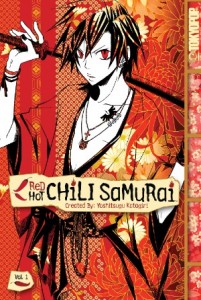
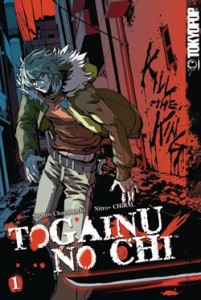
I have a special fascination with bad manga. And when I say “bad manga,” I’m not talking about stories that are merely cliche or derivative of other, better series — for better or worse, manga is a popular medium, and popular media survive, in part, by giving audiences what they want, even if that means more of the same — I’m talking about stories so ineptly drawn, so spectacularly dumb, or so offensive that they make Happy Cafe look like Phoenix by comparison. To judge from the coverage of this year’s San Diego Comic-Con, I’m not alone in my connoisseurship of wretched books; among the most widely reported panels was The Best and Worst Manga of 2010, in which a group of seasoned reviewers singled out titles for praise and punishment. To kick off my Bad Manga Week, therefore, I thought it would be a fun exercise to look at three of the titles that made the worst-of list to see if they were truly suited for inclusion in The Manga Hall of Shame. The candidates: Orange Planet (Del Rey), a shojo farce starring one clueless girl and three hot guys; Red Hot Chili Samurai (Tokyopop), a comedy about a hero who favors spicy peppers over PowerBars whenever he needs an energy boost; and Togainu no Chi (Tokyopop), an action-thriller that proudly boasts its origins as a “ground-breaking bishonen game.”

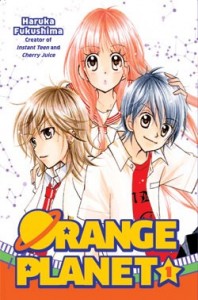
orangeplanet1ORANGE PLANET, VOL. 1

BY HARUKA FUKUSHIMA • DEL REY • 200 pp. • TEEN (13+)

Haruka Fukushima specializes in what I call “chastely dirty” manga for tween girls — that is, manga that places the heroine in compromising situations, teasing the audience with the prospect of a kiss or a grope that never quite materializes because the heroine is a good girl, thank you very much. In Orange Planet, Fukushima’s sex-phobic lead is Rui, a junior high student who lives by herself — she’s been an orphan since childhood — and pays for her apartment with a paper route. (That must be some paper route, considering she lives in a modern high-rise apartment and not, say, a cardboard box.) Rui is one corner of a highly contrived love square; the other three points are all standard shojo types, from the boy next door and the hot young teacher to the mystery man from the heroine’s past.

…
Read More

Filed Under: Manga Critic Tagged With: Bad Manga, del rey, Samurai, shojo, Shonen, Tokyopop

Short Takes: Manga Hall of Shame Edition

August 9, 2010 by Katherine Dacey

I have a special fascination with bad manga. And when I say “bad manga,” I’m not talking about stories that are merely cliche or derivative of other, better series — for better or worse, manga is a popular medium, and popular media survive, in part, by giving audiences what they want, even if that means more of the same — I’m talking about stories so ineptly drawn, so spectacularly dumb, or so offensive that they make Happy Cafe look like Phoenix by comparison. To judge from the coverage of this year’s San Diego Comic-Con, I’m not alone in my connoisseurship of wretched books; among the most widely reported panels was The Best and Worst Manga of 2010, in which a group of seasoned reviewers singled out titles for praise and punishment. To kick off my Bad Manga Week, therefore, I thought it would be a fun exercise to look at three of the titles that made the worst-of list to see if they were truly suited for inclusion in The Manga Hall of Shame. The candidates: Orange Planet (Del Rey), a shojo farce starring one clueless girl and three hot guys; Red Hot Chili Samurai (Tokyopop), a comedy about a hero who favors spicy peppers over PowerBars whenever he needs an energy boost; and Togainu no Chi (Tokyopop), an action-thriller that proudly boasts its origins as a “ground-breaking bishonen game.”

orangeplanet1Orange Planet, Vol. 1
By Haruka Fukushima • Del Ret • 200 pp. • Rated Teen (13+)
Haruka Fukushima specializes in what I call “chastely dirty” manga for tween girls — that is, manga that places the heroine in compromising situations, teasing the audience with the prospect of a kiss or a grope that never quite materializes because the heroine is a good girl, thank you very much. In Orange Planet, Fukushima’s sex-phobic lead is Rui, a junior high student who lives by herself — she’s been an orphan since childhood — and pays for her apartment with a paper route. (That must be some paper route, considering she lives in a modern high-rise apartment and not, say, a cardboard box.) Rui is one corner of a highly contrived love square; the other three points are all standard shojo types, from the boy next door and the hot young teacher to the mystery man from the heroine’s past.

Why any of them find her interesting is one of Orange Planet‘s great puzzles; Rui is ditzy, hysterical, and prudish, three qualities that men of all ages generally dislike in female companions. Why Rui would find any of them attractive is the series’ other, as all three boys behave like boors, popping into her bed unannounced (yes, you read that right) and offering her private “tutoring” sessions. The art is less offensive than the story, evocative of Natsumi Ando’s far better Kitchen Princess with its cast of pointy-chinned, doll-eyed characters and sparkling, rose-filled backdrops. The layouts are sloppily executed, careening from panels of awkwardly-posed bodies to extreme closeups of Rui looking terrified that one of the boys might actually lean in for a kiss. Maybe I would have found Orange Planet titillating when I was eleven or twelve, but I’d like to think that I was never quite that clueless about boys. Just sayin’.

Shameworthiness: Orange Planet earns a place in The Manga Hall of Shame for insulting girls’ intelligence with a wish-fulfillment story so slapdash it’s painful.

redhotchiliRed Hot Chili Samurai, Vol. 1
BY Yoshitsugu Katagiri • Tokyopop • 196 pp. • Rated Older Teen (16+)
If you crossed Popeye with Samurai Champloo, the results might look a lot like Red Hot Chili Samurai, a labored comedy about a hot-headed swordsman who snacks on peppers — the spicier, the better — to turbo-charge his combat skills. Like all good heroes, Kokaku has a posse of fellow butt-kickers that includes Ento, a sarcastic samurai in glasses; Ran, a feisty woman who vacillates between thinking Kokaku is cute and thinking he’s an ass; and Shou, a ninja who communicates exclusively through handwritten signs, a la Louis in The Trumpet of the Swan. The four tackle an assortment of stock villains, from a yakuza thug who runs a crooked gambling parlor to a pimp who preys on vulnerable young women. Each story follows the same basic template, serving up a predictable mixture of jokes about Shou’s reluctance to speak and Kokaku’s fixation with chili peppers (“Maybe you should give those things up,” one character tells him, “You’ll get hemorrhoids, you know.”), as well as anachronistic sight gags (one character invents a Polaroid-style camera) and scratching-the-fourth-wall observations about samurai manga conventions. Clumsy, speedline-heavy fight scenes and character designs that suggest Champloo doujinshi only reinforce the bad impression left by the script, which is filled with long, airless pauses that precede every joke or snappy comeback. Take my samurai — please!

Shameworthiness: Red Hot Chili Samurai is dull and repetitive to be sure, and poorly drawn to boot, but isn’t quite cringe-worthy enough to merit inclusion in The Manga Hall of Shame’s permanent collection.

togainuTogainu no Chi, Vol. 1 
By Suguro Chayamuchi and NITRO+ CHiRAL • Tokyopop • 200 pp. • Rating: Older Teen (16+)
Here are seven words that ought to strike fear into every manga reader’s heart: “Based on the ground-breaking bishonen game!” Not only is the tagline vague — what kind of game? how are bishonen involved? what makes it ground-breaking? — but it also suggests that the editorial staff couldn’t think of anything positive to say about a sci-fi adventure that ought, in theory, to appeal to folks who liked Battle Royale. Alas, Togainu no Chi plays like an ungainly mixture of slash fiction and Deadman Wonderland, depositing its pretty, vacant heroes into a future run by gangs who sponsor elaborate street-fighting tournaments. The post-apocalyptic setting is suggested primarily through dark, overly toned streetscapes filled with rubbish and crumbling pavement; one could be forgiven for thinking the story takes place somewhere under the Cross-Bronx Expressway and not a Japanese city circa “20XX A.D.” In fact, nothing about the setting really suggests the future, near or distant, save for a few cliche visual signifiers: sword-wielding characters in trenchcoats, bad guys with enormous tattoos and multiple piercings, the complete absence of daylight. The action sequences are as poorly executed as the backgrounds, a confusing mishmash of blood spatters and facial close-ups (usually as someone is yelling “Noooooo….”), while the dialogue see-saws between manly, expletive-laden exchanges and exposition-heavy speeches. Perhaps Togainu no Chi‘s biggest offense is the laziness of the storytelling; the author frequently interrupts the narrative to explain the rules of The Igura (the tournament at the heart of the story), yet it’s still not clear by the end of volume one how the game is actually played, though it does involve dog tags and playing cards. Or something like that.

About the best I can say for Togainu no Chi is that the menfolk are generically handsome, providing fanfic writers ample opportunity to pair the boys off for some manly adventures followed by some sweet, sweet lovin’.

Shameworthiness: Move that Picasso to the left — this one needs a space in the permanent Manga Hall of Shame gallery.

Filed Under: Manga, Manga Critic, REVIEWS Tagged With: del rey, Samurai, Tokyopop

5 Underrated Shojo Manga

July 10, 2010 by Katherine Dacey 7 Comments

Earlier in the week, I sang the praises of Kaze Hikaru, my all-time favorite shojo manga (and one of my all-time favorite manga, period). Today I shine the spotlight on five great titles that haven’t garnered as much favorable notice as they deserve. Sadly, all but one are officially out of print or will be soon, owing to publisher closings, lapsed licenses, and so-so sales. If you can’t find them through retailers such as Amazon, Buy.com, or Right Stuf!, you might wish to cast your net wider to include sites like Robert’s Anime Corner Store (a good source for older titles) and eBay, or try your local library for copies.

phoenix125. PHOENIX, VOL. 12: EARLY WORKS

OSAMU TEZUKA • VIZ • 1 VOLUME (complete)

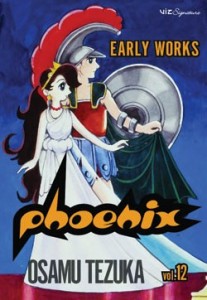
A better subtitle for volume twelve of Phoenix would be I Lost It At the Movies, as these four stories reveal just how passionately Osamu Tezuka loved American cinema. In a 1980 essay, Tezuka explained that “watching American big-screen spectacle movies such as Helen of Troy and Land of the Pharaohs made me want to create a similar sort of romantic epic for young girls’ comics.” Looking at this collection, the sword-and-sandal influence manifests itself in almost every aspect of Tezuka’s storytelling, from the costumes and settings to the dialogue, which the characters declaim as if it were of Biblical consequence. (Paging Charlton Heston!) What makes this Hollywood pomposity bearable — even charming — is the tempering influence of Walt Disney. The character designs owe an obvious debt to Snow White, while the supporting cast could easily belong to Cinderella or Sleeping Beauty’s entourage of chatty animal friends.

Anyone looking for the moral complexity of later Phoenix stories will be disappointed in volume twelve, as Tezuka’s villains are cartoonishly evil and his heroes (and heroine) chastely noble. If one approaches this collection in the spirit of, say, a musicologist flipping through Beethoven’s pre-Eroica manuscripts, however, the rewards are more palpable. In these early stories we see Tezuka developing his comedic chops with pop culture references and physical slapstick; we see him experimenting with layout, as he renders the battlefields of Troy and Rome in sweeping, full-page panels; and we see him creating his first cycle of interconnected stories, introducing some of the themes that would unify the entire Phoenix saga. In short, we see Tezuka’s first attempts to find his own voice as he pays tribute to the artists who influenced him, learning more about his exuberant, unique artistry in the process. (Originally reviewed at PopCultureShock on 3/19/08.)

xday14. X-DAY

SETONA MIZUSHIRO • TOKYOPOP • 2 VOLUMES (complete)

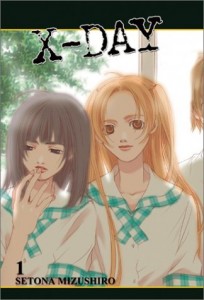
When star high jumper Rika injures her leg and loses her boyfriend to a teammate, she becomes profoundly depressed. She soon discovers an online community of similarly disaffected students, however, all of whom share her desire to “make the school disappear.” Their internet chats soon give way to in-person meetings, where Rika comes face-to-face with three very different people: “Polaris,” a shy teen who dresses like a Goth off campus, “Mr. Money,” a friendly underclassman, and “Janglarian,” a young biology teacher who wants to dynamite the school. Setona Mizushiro’s dark story could easily spiral into melodrama, but she does a fine job of showing us how the normal tribulations of being a teenager — fighting with parents, enduring harassment from peers, feeling overwhelmed by anxiety — have led these four fragile people to hatch such a radical plan for coping with their pain. The second volume lacks the dramatic urgency of the first, as the students’ plot begins to come unraveled, but X-Day remains persuasive until its final pages, thanks to Mizushiro’s vivid characterizations and nuanced artwork.

airevolution13. A.I. REVOLUTION

YUU ASAMI• GO! COMI • 5 VOLUMES (incomplete; 17 volumes in Japan)

A.I. Revolution starts from a premise familiar to legions of Isaac Asimov fans: a human builds a robot, only to discover his creation has a mind and feelings of its own. Sui, the story’s human protagonist, initially views robots as household appliances, not unlike toasters or vaccuum cleaners. When her father presents her with an android companion, however, Sui develops a strong bond with it, discovering that Vermillion has a capacity for emotion that far outstrips her expectations.

A.I. Revolution may sound like I, Robot Hottie, but Yuu Asami puts a thoughtful spin on the material, filtering familiar sci-fi themes through a shojo lens. Though she weaves evil scientists and corporate espionage into the narrative, the story is at its best when focusing on Vermillion’s interactions with his human family; Sui’s father, for example, has modeled Vermillion in the image of a colleague that he admired, leading to a few funny, awkward moments of human-robot flirtation, while Sui seesaws between sisterly protectiveness and romantic attachment to her handsome companion. (Really, is there any other kind of robot in shojo manga?) Asami’s art reminds me of Akimi Yoshida’s with its elongated character designs, delicate linework, and sparing use of screentone. It’s a little dated perhaps, but a welcome change of pace from the slicker, busier layouts characteristic of the titles licensed by Tokyopop and VIZ. Highly recommended for fans of old-school shojo. (Originally reviewed at PopCultureShock on 3/4/08.)

gals12. GALS!

MIHONA FUJI • CMX • 10 VOLUMES (complete)

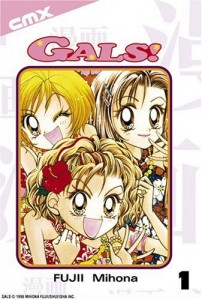
This wacky comedy is one of the better shojo licenses in the CMX catalog, a rude, raunchy, and oddly moral tale about a feisty kogal named Ran Kotobuki. Though Ran and her pals are primarily interested in shopping for outrageous outfits, visiting the tanning salon, and stealing book bags from students at rival schools, Ran’s upbringing in a household full of police officers (dad, mom, and big brother are all cops) has taught her to adhere to a strict code of conduct: no sex for favors, and no tolerance for anyone who disrespects her friends.

Ran is a terrific, memorable character — impetuous, loud, funny, and tough, the kind of person who would literally smack sense into another girl if she thought it would work. Better still, she’s not easily swayed by boys; her relationship with the sweet but dim Tatsuki is surprisingly chaste, limited primarily to hand-holding and awkward discussions about feelings. (Ran won’t deign to say, “I love you,” as it compromises her tough-girl image.) As befits a manga that was serialized in Ribon, all of the characters have enormous, doll-like eyes in the Arina Tanemura style, and fabulous outfits that shame the Gossip Girls. The backgrounds are surprisingly detailed, conveying the look and feel of the Shibuya district with a specificity that’s all too rare in shojo manga. In sum, Gals! is the kind of good-natured gang comedy that I hoped My Darling! Miss Bancho would be: full of humor and heart, but with fewer capitulations to shojo convention.

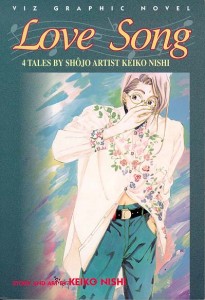
lovesong1. LOVE SONG

KEIKO NISHI • VIZ • 1 VOLUME (complete)

Back in the 1990s, Matt Thorn labored hard to make Keiko Nishi a household name among American manga readers, translating six of her stories for VIZ; two appeared in Four Shojo Stories alongside work by Moto Hagio and Shio Sato, and four appeared in a stand-alone volume called Love Song. Though Nishi didn’t catch on with Western shojo fans, it’s easy to see why Thorn championed her work: she’s a terrific, versatile storyteller, equally capable of writing light-hearted fantasies and character studies of deeply damaged people.

Of the four stories that appear in Love Song, two are standouts: “Jewels of the Seaside,” a black comedy about three sisters who compete for the same man’s affection, with disastrous results, and “The Skin of Her Heart,” a quiet sci-fi tale about a young woman torn between what she wants and what her mother wants for her. (Readers who enjoyed A, A’ or Twin Spica are a natural audience for “Skin of Her Heart,” though it works equally well for folks who aren’t big sci-fi buffs.) Nishi’s artwork is an acquired taste, at times precise, elegant, and naturalistic, and at times loose and sketchy, with the white of the page playing an important role in underscoring the emotional distance between her characters. Her minimalist approach won’t be to every shojo fan’s liking, but she demonstrates that it’s perfectly possible to convey the interior lives of her characters without resorting to the kind of visual shorthands — flowers, sweatdrops, nosebleeds — that have been overused in contemporary shojo manga. Love Song is out of print, but unlike Four Shojo Stories and A, A’, is still relatively easy to obtain through online retailers like Amazon. Highly recommended.

HONORABLE MENTIONS

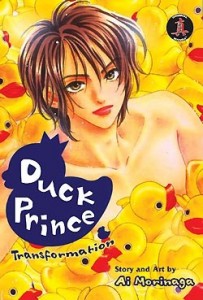
duckprince1DUCK PRINCE (Ai Morinaga • CMP • 3 volumes, suspended)
Morinaga’s battle-of-the-sexes comedy takes a standard shojo plot — homely gal gets makeover to win the guy of her dream — and turns it on its head, substituting a sweet, helmet-haired nerd for the customary plain Jane, and adding a novel twist: Reiichi appears to most girls as a smokin’ hottie, but in the presence of his beloved Yumiko, he reverts to his original form. As in all her work, Morinaga uses humor to make deeper points about gender roles and physical beauty, though Duck Prince is too rude and risque to be mistaken for an Afterschool Special. Central Park Media released three of the five volumes before suspending Duck Prince; of all the titles left homeless by CPM’s demise, it seems like one of the strongest candidates for a license rescue, though middling sales of Your & My Secret and My Heavenly Hockey Club may have scared American publishers away from Morinaga’s distinctive comedies.

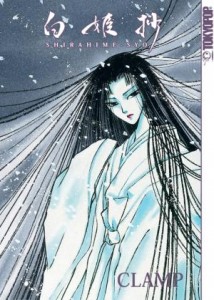
shirahimesyoSHIRAHIME-SYO: SNOW GODDESS TALES (CLAMP • Tokyopop • 1 volume)
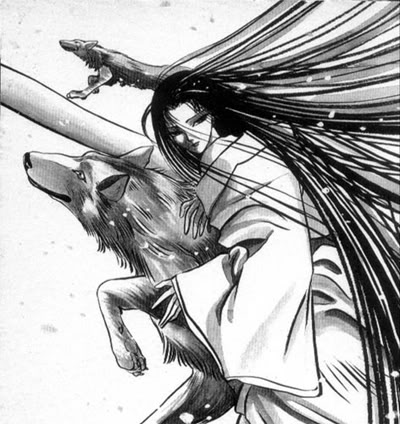
This lovely anthology is a radical departure for CLAMP. Gone are the super-detailed costumes and fussy character designs of their early, post-doujinshi work; in their place are spare, simply-drawn figures that seem consciously modeled on examples from eighteenth- and nineteenth-century scroll paintings. The stories themselves are told directly without embellishment, though CLAMP infuses each tale with genuine pathos, showing us how the characters’ anger and doubt lead to profound despair. As a result, the prevailing tone and spirit are reminiscent of Masaki Kobayashi’s 1964 film Kwaidan, both in the stories’ fidelity to the conventions of Japanese folklore and in their lyrical restraint. And if my description didn’t sell you on Shirahime-Syo, let this beautiful image, taken from the final story of the collection, persuade you to give this out-of-print gem a try:

snowgoddess2

* * * * *

So what titles top your list of underrated shojo manga? Inquiring minds want to know!

Filed Under: Manga Critic Tagged With: Ai Morinaga, clamp, Classic, cmx, Comedy, CPM, Drama, Go! Comi, Historical Drama, Osamu Tezuka, Sci-Fi, Setona Mizushiro, shojo, Tokyopop, VIZ

5 Underrated Shojo Manga

July 10, 2010 by Katherine Dacey

Earlier in the week, I sang the praises of Kaze Hikaru, my all-time favorite shojo manga (and one of my all-time favorite manga, period). Today I shine the spotlight on five great titles that haven’t garnered as much favorable notice as they deserve. Sadly, all but one are officially out of print or will be soon, owing to publisher closings, lapsed licenses, and so-so sales. If you can’t find them through retailers such as Amazon, Buy.com, or Right Stuf!, you might wish to cast your net wider to include sites like Robert’s Anime Corner Store (a good source for older titles) and eBay, or try your local library for copies.

phoenix125. Phoenix: Early Years, Vol. 12
By Osamu Tezuka • VIZ Media • 1 volume (complete)
A better subtitle for volume twelve of Phoenix would be I Lost It At the Movies, as these four stories reveal just how passionately Osamu Tezuka loved American cinema. In a 1980 essay, Tezuka explained that “watching American big-screen spectacle movies such as Helen of Troy and Land of the Pharaohs made me want to create a similar sort of romantic epic for young girls’ comics.” Looking at this collection, the sword-and-sandal influence manifests itself in almost every aspect of Tezuka’s storytelling, from the costumes and settings to the dialogue, which the characters declaim as if it were of Biblical consequence. (Paging Charlton Heston!) What makes this Hollywood pomposity bearable — even charming — is the tempering influence of Walt Disney. The character designs owe an obvious debt to Snow White, while the supporting cast could easily belong to Cinderella or Sleeping Beauty’s entourage of chatty animal friends.Anyone looking for the moral complexity of later Phoenix stories will be disappointed in volume twelve, as Tezuka’s villains are cartoonishly evil and his heroes (and heroine) chastely noble. If one approaches this collection in the spirit of, say, a musicologist flipping through Beethoven’s pre-Eroica manuscripts, however, the rewards are more palpable. In these early stories we see Tezuka developing his comedic chops with pop culture references and physical slapstick; we see him experimenting with layout, as he renders the battlefields of Troy and Rome in sweeping, full-page panels; and we see him creating his first cycle of interconnected stories, introducing some of the themes that would unify the entire Phoenix saga. In short, we see Tezuka’s first attempts to find his own voice as he pays tribute to the artists who influenced him, learning more about his exuberant, unique artistry in the process. (Originally reviewed at PopCultureShock on 3/19/08.)

xday14. X-Day
By Setona Mizushiro • Tokyopop • 2 volumes (complete)
When star high jumper Rika injures her leg and loses her boyfriend to a teammate, she becomes profoundly depressed. She soon discovers an online community of similarly disaffected students, however, all of whom share her desire to “make the school disappear.” Their internet chats soon give way to in-person meetings, where Rika comes face-to-face with three very different people: “Polaris,” a shy teen who dresses like a Goth off campus, “Mr. Money,” a friendly underclassman, and “Janglarian,” a young biology teacher who wants to dynamite the school. Setona Mizushiro’s dark story could easily spiral into melodrama, but she does a fine job of showing us how the normal tribulations of being a teenager — fighting with parents, enduring harassment from peers, feeling overwhelmed by anxiety — have led these four fragile people to hatch such a radical plan for coping with their pain. The second volume lacks the dramatic urgency of the first, as the students’ plot begins to come unraveled, but X-Day remains persuasive until its final pages, thanks to Mizushiro’s vivid characterizations and nuanced artwork.

airevolution13. A.I. Revolution
By Yuu Asami • Go! Comi • 5 volumes (incomplete; 17 volumes in Japan)
A.I. Revolution starts from a premise familiar to legions of Isaac Asimov fans: a human builds a robot, only to discover his creation has a mind and feelings of its own. Sui, the story’s human protagonist, initially views robots as household appliances, not unlike toasters or vaccuum cleaners. When her father presents her with an android companion, however, Sui develops a strong bond with it, discovering that Vermillion has a capacity for emotion that far outstrips her expectations.

A.I. Revolution may sound like I, Robot Hottie, but Yuu Asami puts a thoughtful spin on the material, filtering familiar sci-fi themes through a shojo lens. Though she weaves evil scientists and corporate espionage into the narrative, the story is at its best when focusing on Vermillion’s interactions with his human family; Sui’s father, for example, has modeled Vermillion in the image of a colleague that he admired, leading to a few funny, awkward moments of human-robot flirtation, while Sui seesaws between sisterly protectiveness and romantic attachment to her handsome companion. (Really, is there any other kind of robot in shojo manga?) Asami’s art reminds me of Akimi Yoshida’s with its elongated character designs, delicate linework, and sparing use of screentone. It’s a little dated perhaps, but a welcome change of pace from the slicker, busier layouts characteristic of the titles licensed by Tokyopop and VIZ. Highly recommended for fans of old-school shojo. (Originally reviewed at PopCultureShock on 3/4/08.)

gals12. GALS!
By Mihona Fuji • CMX Manga • 10 volumes (complete)
This wacky comedy is one of the better shojo licenses in the CMX catalog, a rude, raunchy, and oddly moral tale about a feisty kogal named Ran Kotobuki. Though Ran and her pals are primarily interested in shopping for outrageous outfits, visiting the tanning salon, and stealing book bags from students at rival schools, Ran’s upbringing in a household full of police officers (dad, mom, and big brother are all cops) has taught her to adhere to a strict code of conduct: no sex for favors, and no tolerance for anyone who disrespects her friends.

Ran is a terrific, memorable character — impetuous, loud, funny, and tough, the kind of person who would literally smack sense into another girl if she thought it would work. Better still, she’s not easily swayed by boys; her relationship with the sweet but dim Tatsuki is surprisingly chaste, limited primarily to hand-holding and awkward discussions about feelings. (Ran won’t deign to say, “I love you,” as it compromises her tough-girl image.) As befits a manga that was serialized in Ribon, all of the characters have enormous, doll-like eyes in the Arina Tanemura style, and fabulous outfits that shame the Gossip Girls. The backgrounds are surprisingly detailed, conveying the look and feel of the Shibuya district with a specificity that’s all too rare in shojo manga. In sum, Gals! is the kind of good-natured gang comedy that I hoped My Darling! Miss Bancho would be: full of humor and heart, but with fewer capitulations to shojo convention.

lovesong1. Love Song
Keiko Nishi • VIZ Media • 1 volume (complete)
Back in the 1990s, Matt Thorn labored hard to make Keiko Nishi a household name among American manga readers, translating six of her stories for VIZ; two appeared in Four Shojo Stories alongside work by Moto Hagio and Shio Sato, and four appeared in a stand-alone volume called Love Song. Though Nishi didn’t catch on with Western shojo fans, it’s easy to see why Thorn championed her work: she’s a terrific, versatile storyteller, equally capable of writing light-hearted fantasies and character studies of deeply damaged people.

Of the four stories that appear in Love Song, two are standouts: “Jewels of the Seaside,” a black comedy about three sisters who compete for the same man’s affection, with disastrous results, and “The Skin of Her Heart,” a quiet sci-fi tale about a young woman torn between what she wants and what her mother wants for her. (Readers who enjoyed A, A’ or Twin Spica are a natural audience for “Skin of Her Heart,” though it works equally well for folks who aren’t big sci-fi buffs.) Nishi’s artwork is an acquired taste, at times precise, elegant, and naturalistic, and at times loose and sketchy, with the white of the page playing an important role in underscoring the emotional distance between her characters. Her minimalist approach won’t be to every shojo fan’s liking, but she demonstrates that it’s perfectly possible to convey the interior lives of her characters without resorting to the kind of visual shorthands — flowers, sweatdrops, nosebleeds — that have been overused in contemporary shojo manga. Love Song is out of print, but unlike Four Shojo Stories and A, A’, is still relatively easy to obtain through online retailers like Amazon. Highly recommended.

HONORABLE MENTIONS

duckprince1Duck Prince
By Ai Morinaga • CMP • 3 volumes (suspended)

Morinaga’s battle-of-the-sexes comedy takes a standard shojo plot — homely gal gets makeover to win the guy of her dream — and turns it on its head, substituting a sweet, helmet-haired nerd for the customary plain Jane, and adding a novel twist: Reiichi appears to most girls as a smokin’ hottie, but in the presence of his beloved Yumiko, he reverts to his original form. As in all her work, Morinaga uses humor to make deeper points about gender roles and physical beauty, though Duck Prince is too rude and risque to be mistaken for an Afterschool Special. Central Park Media released three of the five volumes before suspending Duck Prince; of all the titles left homeless by CPM’s demise, it seems like one of the strongest candidates for a license rescue, though middling sales of Your & My Secret and My Heavenly Hockey Club may have scared American publishers away from Morinaga’s distinctive comedies.

shirahimesyoShirahime-Syo: Snow Goddess Tales
By CLAMP • Tokyopop • 1 volume

This lovely anthology is a radical departure for CLAMP. Gone are the super-detailed costumes and fussy character designs of their early, post-doujinshi work; in their place are spare, simply-drawn figures that seem consciously modeled on examples from eighteenth- and nineteenth-century scroll paintings. The stories themselves are told directly without embellishment, though CLAMP infuses each tale with genuine pathos, showing us how the characters’ anger and doubt lead to profound despair. As a result, the prevailing tone and spirit are reminiscent of Masaki Kobayashi’s 1964 film Kwaidan, both in the stories’ fidelity to the conventions of Japanese folklore and in their lyrical restraint. And if my description didn’t sell you on Shirahime-Syo, let this beautiful image, taken from the final story of the collection, persuade you to give this out-of-print gem a try:

snowgoddess2

* * * * *

So what titles top your list of underrated shojo manga? Inquiring minds want to know!

Filed Under: Manga, Manga Critic, Recommended Reading Tagged With: Ai Morinaga, clamp, Classic, cmx, Comedy, CPM, Drama, Go! Comi, Historical Drama, Osamu Tezuka, Sci-Fi, Setona Mizushiro, Tokyopop, VIZ

Portrait of M & N 1-2 by Tachibana Higuchi: B-

July 4, 2010 by Michelle Smith

Much as with Natsuki Takaya’s Tsubasa: Those with Wings, I had been looking forward to the English release of Portrait of M & N by Tachibana Higuchi only because I enjoy later work, Gakuen Alice. Aaaand, much as with Tsubasa: Those with Wings, I ended up somewhat disappointed.

Portrait of M & N is a love story starring a beautiful girl named Mitsuru Abe and a handsome boy named Natsuhiko Amakusa. Matters are complicated, however, because each character harbors an embarrassing secret: Mitsuru is a masochist (or M) and Natsuhiko is a narcissist (or N). Ostensibly, these conditions developed as a result of the way they were treated by their parents—the most attention Mitsuru received from her mother was when she was being punished, while sickly Natsuhiko was forbidden to go outside and play with other kids, and thus developed a fixation for his own reflection.

Both Mitsuru and Natsuhiko are hoping for a normal, peaceful high school life, and things seem to be off to a good start because their good looks have attracted positive notice from their classmates. That is, until Mitsuru’s masochistic tendencies are triggered in Natsuhiko’s presence. It’s almost as if she has a split personality: when she is hit in the face, she suddenly becomes aggressively submissive, offering anybody who happens to be nearby the chance to do whatever they want to her. Against his better judgment, Natsuhiko becomes friends with Mitsuru and attempts to protect her whenever she goes into M mode, and thus reveals his own secret to her, one that turns him into a tearful, blushing fool whenever he catches sight of himself in a mirror.

If you’re looking for an accurate, sensitive portrayal of masochism or narcissism, you’re not going to find it here. This is a comedy, after all, and Higuchi seemingly delights in inventing ridiculous situations for the characters to endure—like a mandatory game of dodgeball, for example. A third character, Hijiri, enters the mix in toward the end of the first volume and, realizing Mitsuru’s secret pretty quickly, uses it to extract her cooperation in protecting him from a particular dog (he has a secret phobia of his own) on his way to and from school. Mitsuru’s closeness with two of the hottest guys in school does not go over well with the other girls, who treat her very poorly. These are the most tiresome scenes in the series, by far.

Setting aside the ridiculous and the tiresome, however, there really are some things I genuinely like about Portrait of M and N. Most of the time, a shoujo romance is presented from the girl’s point of view. She falls in love with the boy and we’re privy to her emotions, but we rarely, if ever, get inside his head. That is not the case here and, in fact, I believe there has been more attention paid to Natsuhiko’s developing feelings than Mitsuru’s.

As one bit of text reads, “She swiftly fell in love in spring, he realized he was falling in love in summer.” For Mitsuru, it was easy to fall in love with Natsuhiko, who is kind and understands her, but for Natsuhiko, the realization that he is falling in love with someone else is doubly important because it means that he can. All of his life, relatives and classmates have been vocal in their doubts that such a thing would ever be possible, but he has proved them wrong, and his happiness is mixed with not a little relief.

While I find Hijiri generally annoying, he is useful in that his interactions with Mitsuru force Natsuhiko to confront how he feels about her, and they end volume two by sharing an awkwardly cute moment together. It’s for scenes like these that I’ll continue to read Portrait of M & N and hope that there’s less to irk me in volumes to come.

Portrait of M & N is published by TOKYOPOP. The series is complete in Japan with six volumes, and two have been released in English so far.

Review copies provided by the publisher.

Filed Under: REVIEWS Tagged With: Tachibana Higuchi, Tokyopop

Neko Ramen, Vol. 1: Hey! Order Up!

June 2, 2010 by Katherine Dacey

If you’ve ever lived with a cat or dog, you know that no meal is complete without a pet hair garnish. Now imagine that your beloved companion actually prepared your meals instead of watching you eat them: what sort of unimaginable horrors might you encounter beyond the stray hair? That’s the starting point for Neko Ramen, a 4-koma manga about a cat whose big dream is to run a noodle shop, but author Kenji Sonishi quickly moves past hair balls and litter box jokes to mine a richer vein of humor, poking fun at his cat cook’s delusions of entrepreneurial grandeur.

Taisho is forever dreaming up ways to expand his business, ideas that seem sound in the abstract, but prove disastrous in the execution: a dessert ramen consisting of noodles and milk, a delivery service that’s thwarted by feline territoriality, a playing card promotion featuring unappetizing pictures of soup. In fact, Taisho is so completely misguided that he doesn’t grasp what’s novel about Neko Ramen; when a competitor in a cat costume opens a shop, hoping to capitalize on Taisho’s appearance on “The World’s Most Amazing Animals,” Taisho thinks he, too, needs an animal costume in order to drum up business. His sole customer, the long-suffering Tanaka-san, tries hard to offer sensible advice, but Tanaka’s counsel falls on deaf ears. (Why Tanaka sticks around for ramen that he freely admits is “awful” is one the series’ great mysteries.)

Sonishi’s artwork is crude and sketchy; each character is rendered with just enough lines to give a general impression of who or what he’s supposed to be. The primitive quality of the art actually works in the series’ favor, conveying the low-rent nature of Taisho’s business. More effective still is Sonishi’s strategy for differentiating Taisho from the other cats who regularly appear in the series: Taisho resembles a maneki neko (beckoning cat statue) in an apron, while other felines are depicted as simple, rounded shapes with ears and tails.

None of this would work if the translation were stiff or colorless, but TOKYOPOP wisely employed the husband-and-wife team of Emily Gordon and Kumail Nanjiani to adapt the script for English-speaking audiences. Both are experienced writers and performers (she wrote for Bust and Jane, he does stand-up comedy), and their ear for language is evident throughout volume one; the dialogue is idiomatic and the punchlines are snappy. The other secret to the script’s success is the care with which the adaptors distinguish Taisho’s voice from Tanaka’s, infusing the characters’ owner-customer banter the feeling of a good manzai routine, with Taisho as the boke and Tanaka as the tsukkomi.

The biggest surprise about Neko Ramen is that Sonishi manages to wring so many laughs out of what could be a one-joke premise. Sonishi’s gags remain fresh throughout the first volume, thanks, in part, to several interludes in which he abandons the 4-koma format to relate stories of Taisho’s past: his ill-fated stint as a cat model, his rivalry with a noodle shop staffed by a dog, a monkey, and a bird. These interludes nicely set the table for volume two, providing Sonishi more avenues for his absurd humor without straying too far from the series’ basic idea. Highly recommended, whether or not you fancy cats.

NEKO RAMEN, VOL. 1: HEY! ORDER UP! • BY KENJI SONISHI • TOKYOPOP • 156 pp. • RATING: TEEN (13+)

Filed Under: Manga Critic Tagged With: 4-koma, Tokyopop

Neko Ramen, Vol. 1: Hey! Order Up!

June 2, 2010 by Katherine Dacey

If you’ve ever lived with a cat or dog, you know that no meal is complete without a pet hair garnish. Now imagine that your beloved companion actually prepared your meals instead of watching you eat them: what sort of unimaginable horrors might you encounter beyond the stray hair? That’s the starting point for Neko Ramen, a 4-koma manga about a cat whose big dream is to run a noodle shop, but author Kenji Sonishi quickly moves past hair balls and litter box jokes to mine a richer vein of humor, poking fun at his cat cook’s delusions of entrepreneurial grandeur.

Taisho is forever dreaming up ways to expand his business, ideas that seem sound in the abstract, but prove disastrous in the execution: a dessert ramen consisting of noodles and milk, a delivery service that’s thwarted by feline territoriality, a playing card promotion featuring unappetizing pictures of soup. In fact, Taisho is so completely misguided that he doesn’t grasp what’s novel about Neko Ramen; when a competitor in a cat costume opens a shop, hoping to capitalize on Taisho’s appearance on “The World’s Most Amazing Animals,” Taisho thinks he, too, needs an animal costume in order to drum up business. His sole customer, the long-suffering Tanaka-san, tries hard to offer sensible advice, but Tanaka’s counsel falls on deaf ears. (Why Tanaka sticks around for ramen that he freely admits is “awful” is one the series’ great mysteries.)

Sonishi’s artwork is crude and sketchy; each character is rendered with just enough lines to give a general impression of who or what he’s supposed to be. The primitive quality of the art actually works in the series’ favor, conveying the low-rent nature of Taisho’s business. More effective still is Sonishi’s strategy for differentiating Taisho from the other cats who regularly appear in the series: Taisho resembles a maneki neko (beckoning cat statue) in an apron, while other felines are depicted as simple, rounded shapes with ears and tails.

None of this would work if the translation were stiff or colorless, but TOKYOPOP wisely employed the husband-and-wife team of Emily Gordon and Kumail Nanjiani to adapt the script for English-speaking audiences. Both are experienced writers and performers (she wrote for Bust and Jane, he does stand-up comedy), and their ear for language is evident throughout volume one; the dialogue is idiomatic and the punchlines are snappy. The other secret to the script’s success is the care with which the adaptors distinguish Taisho’s voice from Tanaka’s, infusing the characters’ owner-customer banter the feeling of a good manzai routine, with Taisho as the boke and Tanaka as the tsukkomi.

The biggest surprise about Neko Ramen is that Sonishi manages to wring so many laughs out of what could be a one-joke premise. Sonishi’s gags remain fresh throughout the first volume, thanks, in part, to several interludes in which he abandons the 4-koma format to relate stories of Taisho’s past: his ill-fated stint as a cat model, his rivalry with a noodle shop staffed by a dog, a monkey, and a bird. These interludes nicely set the table for volume two, providing Sonishi more avenues for his absurd humor without straying too far from the series’ basic idea. Highly recommended, whether or not you fancy cats.

NEKO RAMEN, VOL. 1: HEY! ORDER UP! • BY KENJI SONISHI • TOKYOPOP • 156 pp. • RATING: TEEN (13+)

Filed Under: Manga, Manga Critic, REVIEWS Tagged With: 4-koma, Cats, Comedy, Cooking and Food, Tokyopop

Your & My Secret, Vols. 1-5

April 25, 2010 by Katherine Dacey

secret5If you ever wondered what Freaky Friday might have been like if Jodie Foster had switched bodies with Leif Garrett instead of Barbara Harris, well, Ai Morinaga’s Your & My Secret provides a pretty good idea of the gender-bending weirdness that would have ensued. The story focuses on Nanako, a swaggering tomboy who lives with her mad scientist grandfather, and Akira, an effeminate boy who adores her. Though Akira’s classmates find him “cute and delicate,” they declare him a timid bore — “a waste of a man,” one girl snipes — while Nanako’s peers call her “the beast” for her aggressive personality and uncouth behavior, even as the boys concede that Nanako is “hotter than anyone.” Akira becomes the unwitting test subject for the grandfather’s latest invention, a gizmo designed to transfer personalities from one body to another. With the flick of a switch, Akira finds himself trapped in Nanako’s body (and vice versa).

The joke, of course, is that Nanako and Akira have found the ideal vessels for their gender-atypical personalities. Nanako revels in her new-found freedom as a boy, enjoying sudden popularity among classmates, earning the respect of Akira’s contemptuous little sister, and discovering the physical strength to dunk a basketball. Akira, on the other hand, finds his situation a mixed bag: for the first time in his life, his sensitive personality endears him to both male and female peers, but many of the things his maleness had previously exempted him from — housework and cooking, menstrual cycles, unwanted advances from boys — turn out to be much worse than he’d imagined. He struggles to feel comfortable in Nanako’s skin, insulted by the grandfather’s refusal to do chores and bewildered by his old buddy Senbongi’s growing attraction to him.

…

Read More

Filed Under: Manga Critic Tagged With: Ai Morinaga, Gender-Bending, shojo, Tokyopop

Your & My Secret, Vols. 1-5

April 25, 2010 by Katherine Dacey

If you ever wondered what Freaky Friday might have been like if Jodie Foster had switched bodies with Leif Garrett instead of Barbara Harris, well, Ai Morinaga’s Your & My Secret provides a pretty good idea of the gender-bending weirdness that would have ensued. The story focuses on Nanako, a swaggering tomboy who lives with her mad scientist grandfather, and Akira, an effeminate boy who adores her. Though Akira’s classmates find him “cute and delicate,” they declare him a timid bore — “a waste of a man,” one girl snipes — while Nanako’s peers call her “the beast” for her aggressive personality and uncouth behavior, even as the boys concede that Nanako is “hotter than anyone.” Akira becomes the unwitting test subject for the grandfather’s latest invention, a gizmo designed to transfer personalities from one body to another. With the flick of a switch, Akira finds himself trapped in Nanako’s body (and vice versa).

The joke, of course, is that Nanako and Akira have found the ideal vessels for their gender-atypical personalities. Nanako revels in her new-found freedom as a boy, enjoying sudden popularity among classmates, earning the respect of Akira’s contemptuous little sister, and discovering the physical strength to dunk a basketball. Akira, on the other hand, finds his situation a mixed bag: for the first time in his life, his sensitive personality endears him to both male and female peers, but many of the things his maleness had previously exempted him from — housework and cooking, menstrual cycles, unwanted advances from boys — turn out to be much worse than he’d imagined. He struggles to feel comfortable in Nanako’s skin, insulted by the grandfather’s refusal to do chores and bewildered by his old buddy Senbongi’s growing attraction to him.

Much of the humor in Your & My Secret stems from the war between head and hormones. Akira still identifies as a boy, lusting after Nanako’s sweetly feminine friend Shiina and suffering volcanic nosebleeds in the girls’ locker room, yet his body is drawn to Senbongi; after Senbongi makes a pass at him, the flustered Akira wonders how Senbongi “got to be such a good kisser.” Nanako, who is quick to embrace her new male identity, struggles as well; though she asks Shiina out, she’s reluctant to consummate their relationship, and shows an all-too-prurient interest in Senbongi’s, um, equipment. Making things even more complicated for Akira is that he’s trapped in the body of the girl he adores. He’s both disgusted and aroused by the sight of himself, and filled with conflicting emotions about the growing relationship between Nanako and Shiina.

Perhaps the most interesting wrinkle in Your & My Secret is that Nanako’s experiences transform her into a sexist pig. She rebuffs Akira’s pleas to reverse the experiment, belittling his gentle, conciliatory personality and asserting her right to have fun in his body. At the same time, she insists that Akira refrain from dating, having sex, or exploring her body; she repeatedly describes her body as a sacred temple that must remain “unpolluted” before her wedding day, and threatens Akira with humiliation if he acts on his conflicted feelings for Senbongi — or Shiina. (Apparently, Nanako is a bit of a homophobe, too.)

While the gender-swapping hijinks provide most of the comedic fodder for Your & My Secret, Morinaga also has a ball poking fun at manga tropes from incestuous infatuation to cultural festivals. The best of these gags revolves around the school’s manga club: in a sly nod to Tezuka, the group is helmed by a beret-wearing artist who transforms Akira and Senbongi’s friendship into a steamy boys’ love comic in which Akira is the seme and Senbongi is the uke. (“It’s not that I like guys,” Akira’s avatar tells Senbongi’s. “The person I fell in love with just happened to be a guy.”) Morinaga also wrings laughs from her characters’ desperate behavior; the grandfather, for example, thinks nothing of blackmailing Akira to get closer to Shiina (he dreams of having a pretty teenage girl sit in his lap and clean his ears), while Senbongi hatches up a love-hotel scheme to drive a wedge between Akira and Nanako.

Yet for all the black comedy, Morinaga still allows her characters moments of vulnerability and decency, preventing the humor from curdling into pure meanness. She wisely avoids the trap of making her characters too dumb to notice the transformations in Akira and Nanako, allowing her to sustain the body-swapping premise without straining credulity or testing the reader’s patience. Morinaga avoids another trap as well: that of making her leads so repellent the reader wishes for their comeuppance. (Even Nanako — she of the karate chops and withering put-downs — demonstrates a capacity for kindness and selflessness when wooing Shiina.) The artwork supports Morinaga’s characterizations, showing us both their nastier and nicer sides. When Akira assumes ownership of Nanako’s body, for example, there’s a visible softening of Nanako’s features, her lips becoming moistly inviting, her chin turning ever-so-slightly upward, and her eyes shining like a proper shojo heroine’s. If provoked, however, Akira’s body language and gestures revert back to Nanako’s coarse, tomboy persona, right down to the maniacal gleam in his eye; the gap between the two personalities proves smaller than either would like the admit.

No, it isn’t Taming of the Shrew, but Your & My Secret manages to make some worthwhile points about gender roles (and gender norms) while serving up plenty of dopey slapstick and risque jokes. Frankly, I’d take a big helping of Morinaga’s un-PC humor over an earnest, socially responsible “girls’ comic” any day of the week. Highly recommended.

This is an expanded version of a review that originally appeared at PopCultureShock on 3/12/08. The original review can be read by clicking here.

Filed Under: Manga, Manga Critic, REVIEWS Tagged With: Ai Morinaga, Comedy, Tokyopop

10 Must-Read Manhwa

April 11, 2010 by Katherine Dacey 26 Comments

After visiting “Korean Comics: A Society Through Small Frames” last weekend, I was struck by the homogeneity of titles on the exhibit’s suggested reading list. The list isn’t bad by any means, but it places heavy emphasis on recent, teen-oriented titles such as The Antique Gift Shop, Chocolat, Click, Moon Boy, and Snow Drop while overlooking some less popular choices such as Buja’s Diary. As a supplement to my write-up of the “Korean Comics” show, therefore, I’ve compiled my own list of must-read manhwa. Though my goal is to direct readers to works in a variety of styles and genres, I freely admit that this list reflects my own tastes and biases. I’d love to hear from you about what you think belongs on a must-read manhwa list and why. And if you’d like a copy of the SFPL’s Korean Comics bibliography, let me know — I’d be happy to mail one to you.

dejavu10. DEJA-VU: SPRING, SUMMER, FALL, WINTER

YOUN IN-WAN • TOKYOPOP • 1 VOLUME

Déjà vu is a manhwa smorgasbord, pairing writer Youn In-Wan with six artists with distinctly different styles. The first four stories follow the same basic template: two lovers find themselves drawn together by mysterious forces, only to be separated by a moment of terrible violence. The settings and circumstances range from the vaguely folkloric — a warrior and a fox demon fall in love after he frees her from a hunter’s snare — to the contemporary — a blind Korean-American girl and an up-and-coming pop singer meet cute on the streets of San Francisco. The best stories, “Spring” and “Winter,” deftly interlace the fates of the warrior and the fox with the survivors of a twenty-third century apocalypse, bringing to mind Sun, the final installment of Osamu Tezuka’s Phoenix. Though the stories aren’t uniformly excellent, Deja-vu still makes a fine introduction to the contemporary Korean comics scene in general and the writing of Youn In-Wan in particular; look for his series March Story in October 2010. (Reviewed at PopCultureShock on 1/30/08.)

narration9. NARRATION OF LOVE AT 17

KYONGOK KANG • NETCOMICS • 4 VOLUMES

Seyoung, the heroine of Narration of Love at 17, is bright, but not exceptional; pretty, but not a head-turner; and talented, but not outstanding. For several years, Seyoung has been a member of the drama club, relegated to backstage roles while the beautiful Hyemi lands the plum parts. When Hyemi becomes involved with Hyunwoo, Seyoung’s friend and first crush, Seyoung faces a tough choice: will she wait for Hyunwoo to reciprocate her feelings, or will she move on? Backstage rivalries and first loves are standard manhwa fare, but Narration of Love at 17 proves deeper and more heartfelt than most coming-of-age stories in this vein, thanks to Kyongok Kang’s believable, appealing characters; their quicksilver moods, intense passions, deep insecurities, and ever-changing social allegiances make them seem like real teenagers and not an adult’s idea of what teenagers are like. Though the art is, at times, a little clumsy, Kang’s fondness for 1970s shojo is evident in her linework and character designs, and in her emotionally resilient protagonist. (Reviewed at PopCultureShock on 9/12/07. Click here to read a preview chapter at NETCOMICS.)

priest18. PRIEST

MIN-WOO HYUNG • TOKYOPOP • 16 VOLUMES

This sprawling, religio-horror epic comes saddled with enough convoluted backstory for a J.R.R. Tolkein trilogy or a George Lucas franchise, yet proves surprisingly fast-paced and fun. Skipping between the present, the Crusades, and the American West — or, more accurately, a manhwa artist’s cinematically influenced notion of the West — Priest tells the story of Ivan Isaacs, a man of the cloth who renounces his faith after evil researchers use his sister as a human sacrifice. Over the span of sixteen volumes, Ivan battles fallen angels and zombies in an effort to avenge Gena’s death, restore order, and redeem his sinner’s soul. The artwork is bold and stark, with spiky lines and attitude to spare; if you adored the over-the-top action sequences and pistol-packing clergymen of Hellsing, Min-woo Hyung’s elaborate shoot-em-up will be your cup of tea. (Click here to read the first volume at Tokyopop.)

bongsmallcov7. RUN, BONG-GU, RUN!

BYUN BYUNG-JUN • NBM/COMICS LIT • 1 VOLUME

Run, Bong-Gu, Run! tells a simple story: Bong-Gu and his mother leave their rural village to find Bong-Gu’s father, who has gone to Seoul in search of work. As they retrace his steps through the capital, a chance encounter with a beggar yields an important clue to the father’s whereabouts, offering hope that the family will be reunited. The author never explicitly states what prompted the father to leave, how long he’s been away, or why Bong-Gu’s mother waited so long to track him down. In leaving these characters’ personal histories mysterious, Byun Byung-Jun comes dangerously close to romanticizing them: Bongu-Gu’s parents and the old beggar often register as poor but dignified archetypes rather than flesh-and-blood people. But Byun’s spare, restrained artwork mitigates against the story’s sentimentality, offering readers a haunting cityscape that’s as much a character as Bong-Gu or his mother. Rendered in rough, energetic brushstrokes and muted watercolors, Byun’s street scenes are among the most beautiful images I’ve seen in any manhwa translated for English-speaking audiences. (Reviewed at PopCultureShock on 7/11/07. Click here to read a preview at NBM/Comics Lit.)

1020306. 10, 20, AND 30

MORIM KANG • NETCOMICS • 7 VOLUMES

The ten, twenty, and thirty of the title refer to Rok, a sixteen-year-old girl; Belle, her twenty-six-year old cousin; and Krumb, Rok’s mother, who at age thirty-two finds herself a widow. Through a series of interlocking vignettes, 10, 20, and 30 documents the trio’s fumbling efforts to find themselves — and Mr. Right. If the naive, cartoonish art is a take-it-or-leave-it affair, Kang’s heroines are winning, at once complex and sympathetic. They make mistakes; they overreact; they misjudge the men in their lives; they sometimes hurt loved ones with selfish behavior. To be sure, similar characters abound in Bridget Jones’ Diary and Sex and the City, but there’s a qualitative difference between Bridget and the ladies of 10, 20, and 30: Rok, Belle, and Krumb aren’t neurotic. Beneath their quirks and anxieties, all three women display genuine strength and self-determination, even if they don’t always make smart choices about the men in their lives.  (Reviewed at PopCultureShock on 5/10/07. Click here to read a preview chapter at NETCOMICS.)

goong75. GOONG: THE ROYAL PALACE

PARK SOO-HEE • ICE KUNION • 10+ VOLUMES (ongoing)

Goong: The Royal Palace focuses on commoner Chae-Kyung, a high school student who marries the next in line to the (fictional) Korean throne. Just as Diana Spence did in real life, Chae-Kyung discovers that being a princess isn’t glamorous, as her day-to-day life is filled with palace intrigue, onerous civic responsibilities, jealous classmates, and an indifferent husband who’s in love with someone else. Though the plot is an amalgam of familiar soap-opera conventions — romantic triangles! hot younger siblings! disapproving mother-in-laws! — the story has surprising depth, showing us the emotional toll that public life exacts on the young couple. Another plus is the artwork: it’s flat-out gorgeous, with considerable attention devoted to ancient ceremonial costumes and au-courant fashions. Pair those beautiful images with a compelling plot and boatloads of romantic tension, and you have a recipe for manhwa crack. (Reviewed at PopCultureShock on 8/29/08.)

forestgray24. FOREST OF GRAY CITY

JUNG-HYUN UHM • ICE KUNION/YEN PRESS • 2 VOLUMES

Struggling artist Yun-Ook and bartender Bum-Moo decide to room together after a series of drunken misunderstandings that wouldn’t be out of place in a Meg Ryan movie. Though Yun-Ook is horrified to discover their age difference — she’s in her twenties, he’s seventeen — Bum-Moo begins courting her in a confused, low-key fashion. The story would be pure Harlequin fodder if Jung-Hyun Uhm’s heroine wasn’t such a strong, appealing character. Yun-Ook is impetuous, insecure, and quick to take offense, but she’s also focused on her career, protective of Bum-Moo, and determined not to sacrifice her sense of self just to land a husband. There’s a level of emotional authenticity about her character that will resonate with female readers in their twenties and thirties, even if her story seems more firmly rooted in romance novel convention than reality. (Reviewed at The Manga Critic on 4/27/09.)

shaman33. SHAMAN WARRIOR

PARK JOONG-KI • DARK HORSE • 9 VOLUMES

Shaman Warrior serves up generous portions of pow! splat! thmp! and gyaaaa! with heaping sides of political intrigue and supernatural hoo-ha. The story is, at heart, an inter-generational revenge fantasy about a young woman who spends her childhood preparing to confront her father’s assassin and lay bare the double-crosses and unsavory alliances that led to his demise — in short, it’s a grrrl power theme-and-variation on the Epigoni. What it lacks in complexity Shaman Warrior makes up in beauty and bravado: Park Joong-Ki is a superb draftsman, populating his story with an astonishing variety of faces and body-types. His fight scenes are artfully choreographed, if a little heavy on the speedlines, immersing readers in the action in the manner of a contemporary wuxia film. (Reviewed at PopCultureShock on 1/24/07. Click here to read a preview at Dark Horse.)

dokebi22. DOKEBI BRIDE

MARLEY • NETCOMICS • 6 VOLUMES (on hiatus in Korea)

After losing her mother to mental illness and her grandmother to old age, Sunbi’s long-absent father returns to claim her. Their reunion proves an awkward and unhappy one, however: his new wife and daughter resent Sunbi’s presence, while Sunbi’s classmates shun her for her “freakish” behavior, none of them realizing that her aloof, abrasive demeanor helps protect her from demons and spirits. Familiar as Dokebi Bride‘s “I see demons!” premise may be, Marley uses Sunbi’s affliction as a jumping-off point for exploring issues such as fitting in, blending families, and answering that most basic of questions, who am I? Sunbi is an all-too-rare character in comics, a smart, resourceful girl who’s palpably — and justifiably, I might add — angry. Long after you’ve forgotten the basic storyline, the memory of Marley’s fierce, real heroine will stay with you. N.B. Dokebi Bride has been on hiatus for over a year; NETCOMICS has released the six volumes that were published in Korea. No word on when — or if — Dokebi Bride will resume. (Click here to read a preview chapter at NETCOMICS.)

bujacovsmall1. BUJA’S DIARY

SEYOUNG O • NBM/COMICS LIT • 1 VOLUME

Among the manhwa featured in “Korean Comics: A Society Through Small Frames” was “The Picture Diary of Puja,” a short, poignant story about a rural family’s efforts to make a home in Seoul. “Puja’s Diary” (translated by NBM as “Buja’s Diary”) juxtaposes wordless scenes, illustrated in a naturalistic style, with a young girl’s description of the same events: a robbery, a shakedown, a child being injured at a construction site. The effect is simple yet devastating, a Dickensian critique of industrialization and poverty in modern-day Korea. As the other stories in Buja’s Diary attest, displacement, change, and encroaching urbanization are important themes in Seyoung O’s work, though he proves equally adept at humor (“Observe,” which tracks a vain gum-chewer through the streets of Seoul) and surrealism (“Escape,” which depicts one bored man’s nightmarish daydream about his office mates). The artwork varies according to the tone of the story; some of the more somber tales are rendered in charcoal wash and ink, while others employ more exaggerated linework reminiscent of Daumier. One of the most thought-provoking and beautiful manhwa available in English. (Click here to read a preview at NBM/Comics Lit.)

Filed Under: Manga Critic Tagged With: Dark Horse, NBM/Comics Lit, netcomics, Tokyopop, yen press

Phantom Dream 5 by Natsuki Takaya: B

March 8, 2010 by Michelle Smith

In this, the final volume of Phantom Dream, the millennium-long battle between the Gekka and Otoya families comes to a close. Before this can happen, we learn all about the villain’s painful background and what really happened 1000 years ago. Unfortunately, the authorial sidebars spoil one major plot twist (it would’ve been nice if there had been a spoiler warning), but luckily fail to ruin the best revelation of all, one which was actually set up three volumes ago. Overall, the conclusion is a satisfying one and I surprised myself by sniffling a few times.

That said, a few things did bother me. As a child, Hira (the villain) was forced to endure many years of imprisonment because of his powers and demonic appearance (that’s him on the cover). At various points, the length of his incarceration is stated as ten years, fifteen years, and nearly ten years. I’m not sure whether this is the fault of the original material or the translation, but it’s a distracting inconsistency. Also, the motivations of an antagonist are unclear; I found it hard to reconcile their past actions with their present ones.

Phantom Dream certainly improved as it progressed; while it was initially hard to see how the same hand could have produced this and the lovely Fruits Basket, by the end the connection is clear. While I didn’t like Takaya’s other early series, Tsubasa: Those with Wings, enough to hang onto it after I’d finished, this one is a keeper.

Review copy provided by the publisher. Review originally published at Manga Recon.

Filed Under: REVIEWS Tagged With: natsuki takaya, Tokyopop

Phantom Dream 4 by Natsuki Takaya: B-

March 7, 2010 by Michelle Smith

From the back cover:
Eiji’s life hangs in the balance as factions once again shift and realign. Asahi struggles with her new powers and guilt over what happened in the past, while Tamaki strives to control the continuing outbreak of chaos in the present. And a mysterious new figure emerges to join the battle, but is he an ally or an enemy?!

Fruits Basket creator Natsuki Takaya delivers a story of love, loss and the redemptive power of forgiveness in this heartbreaking story of star-crossed lovers bound by a responsibility that may destroy them.

Review:
Say what you will about shounen manga, the fact remains that they know how to stage a battle. Even conflicts with minor foes tend to last a couple of chapters, allowing one to fully appreciate the scope of the event. Contrast this with Natsuki Takaya’s treatment of the showdown between our hero, Tamaki Otoya, and King Hira, the villain with a grudge against humanity for murdering his true love a thousand years ago. Here’s how the fight goes down:

1. Someone holds a glowing finger aloft.
2. King Hira falls down.
3. The end.

Despite the fact that this is entirely underwhelming, the series still could and should have ended here, as we get some nice scenes of Hira-induced chaos and decent resolution regarding Asahi’s motives for defecting to the other side. While not technically dead, Hira is left with only two attendants, one of whom is more devoted to her fellow servant than to the king himself.

Unfortunately, the story will continue for one more volume. It’ll probably be padded out with more of Takaya’s attempts to get us to care about the one-sided loves of the supporting characters, but events just move too swiftly in this series for any of these people to make much of an impression.

In the end, Phantom Dream is a decent story with occasionally compelling moments, but is overall more notable for what it could have been than for what it really is.

Review copy provided by the publisher.

Filed Under: REVIEWS Tagged With: natsuki takaya, Tokyopop

10 Great Global Manga

February 19, 2010 by Katherine Dacey 26 Comments

Among certain parts of manga fandom, global manga (or OEL manga) is viewed as the comic-book equivalent of New Coke: the packaging might be similar, but the taste is different and, as these fans would have it, not as good as the original. It’s a shame this attitude persists, because there’s a growing community of artists in Europe and the United States whose work isn’t just a slavish imitation of popular Japanese models, but a unique synthesis of Eastern and Western styles. Below, I’ve highlighted ten global manga that best embody this fusion, and throw in a few honorable mentions for good measure.

A few caveats about this list. First, I’ve focused primarily on American artists, as my readership is based in the United States. If there are Canadian, European, Australian, or South American artists who I’ve neglected, please feel free to educate me below. Second, my list does not include manhua or manhwa, as those traditions are more established, and draw on some of the same artistic and cultural traditions as manga. And third, my list does not include such YA franchises as Maximum Ride, Odd Thomas, or Warriors, as I wanted to focus on original works. Got some additional recommendations? Please share them in the comments!

dreaming10. THE DREAMING

QUEENIE CHAN • TOKYOPOP • 3 VOLUMES

Not long after identical twins Jeanie and Amber Malkin enroll at a boarding school in the Australian outback, one of their classmates disappears, triggering a series of eerie, unexplained events. Queenie Chan creates the perfect atmosphere for this Picnic at Hanging Rock meets The Orphanage ghost story; with its Gothic architecture and period furnishings, the school looks like something from a Hammer Studio film, filled with walled-off chambers, mysterious paintings, and apparitions in Victorian dress. The first two volumes are solid and smartly paced, but the third suffers from a bad case of compression; one wishes that Tokyopop had given Chan four volumes instead of three so that Chan could show more and tell less. Still, it’s impossible to deny this emerging artist’s considerable talent, and easy to see why Del Rey hired her to adapt Odd Thomas from novel to manga. (Originally reviewed at PopCultureShock on 12/6/06.)

offbeat19. OFF*BEAT

JEN LEE QUICK • TOKYOPOP • 2 VOLUMES (suspended)

Off*Beat, an ambitious mixture of science fiction, realism, and romance, focuses on Tory, a smart, lonely teen who lives with his mother in Queens. When a boy his own age moves in across the street, Tory becomes infatuated with Colin, observing and recording Colin’s behavior in a journal, and angling to become Colin’s math tutor. Midway through the story, Jen Lee Quick introduces a subplot that hints at Colin’s involvement with something called the Gaia Project — an organization that may be responsible for Colin’s mysterious blackouts. Unfortunately, Tokyopop pulled the plug on the third and final volume; we’ll never know if the Gaia conspiracy is real or a product of Tory’s vivid imagination. Either way, Off*Beat is an engrossing read that vividly evokes urban life and thoughtfully explores the boundaries between same-sex friendship and romance.

bluemonday18. BLUE MONDAY

CHYNNA CLUGSTON • ONI PRESS • 4 VOLUMES

Though Chynna Clugston’s artwork suggests a strong manga influence, her take-no-guff female characters are a welcome departure from the plain Janes and trembling wallflowers found throughout shojo mangadom. Blue Monday charts the ups and downs of Bleu Finnegan, a California teen whose enthusiasms are all over the map: Adam Ant albums, Buster Keaton flicks, vintage mod fashions. Bleu spends most of her time hanging out with a small posse of friends that include Clover, an Irish ex-pat; Alan, a sex-addled player; Victor, a reformed Goth; Erin, a scheming frenemy; and Monkeyboy, an underclassman who hides behind a curtain of hair. At times, the stories feel a little frenetic, but Clugston does a fine job of capturing this co-ed group’s dynamic, from the endless your-mama jokes to the earnest pop culture analysis. Too bad no one from Minx thought to commission a book from Clugston, as Blue Monday‘s frank, free-wheeling humor and girl-positive message would have been a welcome addition to their line.

japan_ai7. JAPAN AI: A TALL GIRL’S ADVENTURES IN JAPAN

AIMEE MAJOR STEINBERGER • GO! COMI • 1 VOLUME

In ten charmingly illustrated chapters, animator and avid cosplayer Aimee Major Steinberger documents her 2007 trip to Japan, where she visited otaku hotspots from the manga shops of Akihabara to the back door of the Takarazuka Revue. Steinberger’s simple but evocative art does a beautiful job conveying both the essential strangeness of being a tall American woman in Japan and the sheer joy of being a fangirl in the otaku motherland. The only drawback to Japan-Ai is the packaging: the sparkling pink cover and bubbly font — presumably derived from Steinberger’s handwriting — may deter male readers from purchasing a book that looks suspiciously like a SnoBall. That’s a pity, because Steinberger’s narrative is funny and informative, filled with the kind of interesting digressions on kogal fashions, Takarazuka fan culture, and onsen etiquette that any budding Japanophile would find enlightening. (Originally reviewed at PopCultureShock on 12/19/07.)

empowered16. EMPOWERED

ADAM WARREN • DARK HORSE • 6+ VOLUMES (ongoing)

Empowered is a unique crossover, a manga-influenced comic that parodies tights-and-capes conventions with raunchy gusto. Its heroine, Elissa Megan Powers, a.k.a. Empowered, is a superhero who struggles with self-esteem issues and social anxiety — two problems compounded by her utterly unreliable super-suit, which is prone to ripping and exposing her at inopportune moments. In less skillful hands, Empowered would be pure cheesecake, but Adam Warren manages the difficult trick of drawing a heroine whose costume failures do more than just titillate (if you’ll pardon the expression), they shed light on the objectification of female superheroes in mainstream American comics. Warren also has a ball satirizing manga, as Empowered’s best friend is a reformed villainess imaginatively named Ninjette. Rude, silly fun.

12days5. 12 DAYS

JUNE KIM • TOKYOPOP • 1 VOLUME

When Jackie’s ex-girlfriend Noah dies in a car accident, Jackie decides that the best strategy for coping with her grief is to consume Noah’s ashes in the form of a daily smoothie. Over the course of twelve days, Jackie punishes herself with this gruesome ritual while confronting painful memories of Noah and sparring with Noah’s brother Nick. Though the smoothie conceit is self-consciously literary — Jackie’s ash-drinking ritual has an analog in classical antiquity — June Kim’s book remains true to life, filled with lovely, quiet observations about the way we grieve, define family, express desire, and remember moments of hurt and betrayal. Kim dares to fill up pages with nothing more than realistically drawn close-ups of faces and hands, allowing us to experience the characters’ emptiness for ourselves. Some poor design choices on Tokyopop’s part — namely, a hideous font — mar, but don’t ruin, Kim’s carefully composed layouts. (Originally reviewed at PopCultureShock on 12/6/06.)

kingcity14. KING CITY

BRANDON GRAHAM • IMAGE COMICS/TOKYOPOP • 1+ VOLUME (first volume was reissued by Image Comics in shorter installments; series is ongoing)

King City was one of several titles stuck in limbo when Tokyopop restructured its global manga initiative, eventually finding a new home and a new (floppy) format at Image Comics. The larger trim size suits the material, giving Brandon Graham’s detailed cityscapes and characters a little more room to breathe. The story is an agreeable mess, chronicling the adventures of Joe, a twenty-something dude with a talent for picking locks and getting mixed up in dangerous (read: illegal) activities. Aiding him is Earthling J. J. Catterworth the Third, a cat capable of transforming into whatever tool Joe needs — a weapon, a periscope — and Joe’s geeky sidekick Pete. Though the story sometimes has a forced zaniness to it, Graham is an imaginative cartoonist capable of drawing anything from super-sexy Gothic girls to dinosaurs. His affection for manga is evident throughout the series, most notably in his use of evocative but silly sound effects, and in his fondness for extreme camera angles… just because.

yokaiden_cover23. YOKAIDEN

NINA MATSUMOTO • DEL REY • 2 VOLUMES (suspended)

Nina Matsumoto made a splash back in 2007 with a manga-fied rendition of the entire Simpsons cast. What could have been a passing moment of Internet notoriety helped open doors for her, however, leading to an offer from Del Rey to pitch an original story. The result is Yokaiden, a supernatural adventure about a young boy whose knowledge of and trust in yokai is put to the test when a vengeful kappa steals his grandmother’s soul.  Among the many pleasures of Matsumoto’s smartly paced series are the yokai themselves; her demons would be right at home in the Hokusai Manga or an eighteenth-century scroll painting. The script is a little tin-eared at times, but the humor and stylish artwork more than compensate for a few clunky passages.

nightschool-22. NIGHTSCHOOL: THE WEIRN BOOKS

SVETLANA CHMAKOVA • YEN PRESS • 4 VOLUMES

At first glance, Nightschool looks the product of a teen focus group, a mash-up of Twilight, Harry Potter, and a dozen other fantasy series starring vampires and wizards. A closer look, however, reveals that Svetlana Chmakova has fashioned an engrossing supernatural mystery from elements of domestic drama, horror, and humor: an eye-of-newt solution comes with a “may contain peanuts” warning, a beleaguered headmaster finds an ingenious solution for including vampires in the high school yearbook. (They don’t show up on film.) Chmakova doesn’t skimp on the action, either, staging scenes of nocturnal combat with great aplomb. Perhaps most exciting thing about Nightschool is seeing the degree to which her storytelling has evolved since she burst on the scene in 2005; though Chmakova’s trademark style is immediately recognizable, the layouts are looser and more dynamic than Dramacon‘s, playing a more integral role in advancing the plot.

scottpilgrim51. SCOTT PILGRIM

BRYAN LEE O’MALLEY • ONI PRESS • 6 VOLUMES

In case you’ve been living under a rock, here’s the deal with Scott Pilgrim: this goofy series documents the romantic misadventures of a twenty-three-year-old slacker who must defeat The League of Evil Ex-Boyfriends, a loose consortium of his new girlfriend’s previous lovers. Scott’s travails are an apt metaphor for the way most of us feel when we embark on a new relationship: we’d like to leave our baggage behind and make a fresh start of things, but it usually takes a whole lot of effort — and maybe some Mortal Kombat — to get there. Though the plot is fun and fast-paced, what really makes Scott Pilgrim work is the deft way Bryan Lee O’Malley pokes fun at hipster culture; everyone has something to knowingly laugh at, from classic video games to indie rock lyrics. (Originally reviewed at PopCultureShock on 11/14/07.)

HONORABLE MENTIONS

GOTHIC SPORTS (By Anike Hage • Tokyopop • 3 volumes, ongoing): This German import focuses on Anya, a transfer student desperate to join one of her new school’s top-ranked sports teams. Her efforts are frustrated both by her lack of skill and the school’s limited opportunities for female athletes. Anya refuses to be sidelined, however, and forms a co-ed soccer team notable for its inclusiveness and its stylin’ uniforms. The pacing is a little slow, and the backgrounds aren’t nearly as well rendered as the characters — or their elaborate outfits, for that matter — but Gothic Sports serves up a good mix of drama, humor, and game play. (Originally reviewed at PopCultureShock on 9/26/07.)

HOLLOW FIELDS (By Madeline Rosca • Seven Seas • 3 volumes): Nine-year-old Lucy Snow is bound for the genteel halls of Saint Galbat’s Academy for Young Ladies, but bad directions from a stranger lead her instead to Hollow Fields, a.k.a. Miss Weaver’s Academy for the Scientifically Gifted and Ethically Unfettered. Though Lucy’s gut instinct is to flee, she enrolls at Miss Weaver’s school—after all, the tuition is free and her private room has its own bath. What Lucy discovers is that Miss Weaver has been culling the student body, sending the slackers to a detention center from which no one has returned. Looking at Madeline Rosca’s crisp character designs and steampunk setting, it’s easy to see why Hollow Fields nabbed an International Manga Award in 2007: her art is the real deal. The story’s brisk pace and macabre sense of humor are pluses, too. (Originally reviewed at PopCultureShock, 7/12/07).

MANGA SHAKESPEARE: OTHELLO (By Ryuta Osada • Self-Made Hero • 1 volume): I’ll be honest: I’ve been unimpressed with many of Self-Made Hero’s Manga Shakespeare volumes, both for the unpolished artwork and for the editorial handling of the Bard’s best-known speeches. Ryuta Osada’s adaptation of Othello is a notable exception, with strong, arresting visuals, and an anthropomorphic approach to character design that puts a fresh spin on the material. Enjoyable whether you’re tackling Othello for sophomore English or revisiting it for the fifth time.

RE:PLAY (By C. Lijewski • Tokyopop • 3 volumes): Drawing on a variety of musical and manga influences — Linkin Park, Naked Ape, and Tite Kubo among them — Christy Lijewski tells the story of a struggling band whose fortunes change when they meet a stranger busking on the streets. The catch: mystery man Iszak may not be human. The supernatural element sometimes feels as if it’s been grafted onto a more conventional rock-n-roll drama, but the crisp dialogue and unique artwork more than offset a few moments of dramatic weakness. (Click here for my review of volume three at Good Comics for Kids; click here for my 2008 interview with Lijewski at PopCultureShock.)

SORCERERS & SECRETARIES (By Amy Kim Ganter • Tokyopop • 2 volumes) This two-volume romance explores the relationship between mousy Nicole Hayes, an aspiring fantasy writer, and flirtatious Josh Kim, an aspiring ladies’ man. Like many series in Tokyopop’s OEL line, Sorcerers & Secretaries feels pat, as the obstacles in the couple’s way — she wants to write, he wants to take her on a date — are really nothing more than speed bumps. Ganter pulls off the difficult balancing act between respecting her characters’ motivations and recognizing the youthful naivete of their beliefs, however, preventing this sweet, sincere story from becoming sappy. (Originally reviewed at PopCultureShock on 6/7/07.)

TALKING TO STRANGERS (Stories by Fehed Said, Art by Chloe Citrine, Sonia Leong, Nana Li, Win Yun Man, and Faye Yong • Sweatdrop Studios • 1 volume): This six-story collection runs the gamut, subject- and style-wise, from horror to comedy, making it a good introduction to the writers and artists of British manga publisher Sweatdrop Studios. (Click here for my review at The Manga Critic.)

Filed Under: Manga Critic Tagged With: Dark Horse, del rey, Go! Comi, Oni Press, Sweatdrop Studios, Tokyopop, yen press

Immortal Rain 1-2 by Kaori Ozaki: A-

January 20, 2010 by Michelle Smith

immortalrain1Machika Balfaltin’s grandfather, Zol, was a renowned bounty hunter/assassin, but there was one man he could never catch: Methuselah, an immortal with a price on his head. Machika, like your typical fourteen-year-old, is convinced that she can do anything and is determined to settle her grandfather’s unfinished business. Her attempt to capture Methuselah goes wrong, however, when a rival group of bounty hunters swoops in to take the credit. Methuselah allows himself to be hauled off to jail, whereupon Machika breaks him out because he’s her prey. Of course, now there’s a price on her head, too, so she’s got to leave town. From there, Machika and Methuselah, who reveals that his name is actually Rain Jewlitt, get into a series of adventures usually involving people trying to nab Rain and figure out the secret of immortality, which is portrayed as much more of a curse than a blessing.

While the adventures are interesting enough, it’s the bond between the two characters that’s really the most fascinating aspect of Immortal Rain. Machika still maintains that she’s going to kill Rain one day, but quickly grows frustrated with his passivity regarding his fate and soon nurtures a desire to help him, including finding a way to make him human again. Initially, Rain attempts to keep his distance. He likes people but, as he puts it, “eventually everyone must leave this earth at a speed I can’t keep up with.” When he tries to refuse Machika’s help, it hurts her, but he’s reluctant to keep her with him because her life is so vulnerable. “So… would you hold me like I’m glass? I won’t break,” she replies. It’s clear that he’s unaccustomed to someone showing such fierce concern for his present rather than the promise of an unlimited future that he represents, and by the end of volume two he seems to have finally accepted her as a companion.

immortalrain2In addition to creating this pair of likable characters, Ozaki also parcels out bits of Rain’s backstory with a sure hand. Obscure hints and scraps of information offered in volume one are already taking shape into something that makes more sense by volume two, suggesting that answers will continue to be furnished at a satisfying rate. It would seem that he was somehow involved in some scientific experiments 600 years ago—the remnants of which are being excavated by a company that employs Sharem, an intriguing villainess who is initially introduced as a high-kicking ice queen but is gradually revealed to have inner pain of her own—and is destined to meet someone from that time who’s on the verge of being reincarnated. Too, he was once in love with a dark-haired woman whose violin is his most treasured possession.

Missteps are few, but there are a couple of bothersome things in these first two volumes. First, while a lot of the humor is genuinely amusing (I especially adore anything having to do with Machika’s pet, Kiki), some of it falls flat, especially the inept Evans siblings who attempt to capture Rain with a thoroughly ill-conceived plan involving a train, a bridge, and a 12-year-old girl piloting a mecha. Also, while less of a problem in volume two, volume one contains some passages of narration that don’t make much sense. Here’s an example:

Look. Even if you open your ears you can’t hear… the sound of the heart… if only just once.

That sounds like the kind of poorly translated English you’d find on a t-shirt in Shinjuku!

Another great point in Immortal Rain’s favor is Ozaki’s incredibly appealing art. Although the series runs in the shoujo magazine Wings and Rain technically qualifies as a bishounen, the art fosters more of a shounen adventure feeling, creating an almost palpable sense of the wide world around the central characters. The nonverbal storytelling is also great, especially in Rain’s expressive reactions to some of the things Machika says and does. Somehow, his eyes manage to convey fondness, loneliness, regret, and puzzlement simultaneously; the effect is quite lovely.

I look forward to seeing how the story develops in subsequent volumes, although I do wonder whether TOKYOPOP intends to continue releasing the series. They’ve released eight volumes in English so far, and while new volumes in Japan appear at a rate of one per year there are still ten of them out now with no US solicitation of volume nine on the horizon. It may not be time to fret quite yet, but there’s definitely reason for concern.

Filed Under: UNSHELVED Tagged With: Kaori Ozaki, Tokyopop

Happy Cafe, Vol. 1

January 19, 2010 by Katherine Dacey

HappyCafe01_cvr.inddTwo Guys, a Girl, and a Pastry Shop might be a better title for this rom-com about a teen who waits tables at the neighborhood bakery, as the characters are so nondescript I had trouble remembering their names. The girl, Uru, is as generic as shojo heroines come: she’s a spunky, klutzy high school student who blushes and stammers around hot guys, bemoans her flat chest, and wins people over with her intense sincerity. The two guys — Shindo, a moody jerk whose boorishness masks a kind nature, and Ichiro, a cheerful slacker — are just as forgettable, despite the manga-ka’s efforts to assign them novel tics and traits. Shindo, for example, turns out to be a genius who finished high school at fifteen, while Ichiro suffers from hunger-induced narcolepsy, keeling over any time his blood sugar drops.

The plot, like the characters, has a similarly generic quality. At the beginning of volume one, Uru walks past Cafe Bonheur, overhearing a conversation between two giggling, satisfied customers. She then resolves to land a gig at the “Happy Cafe,” as she calls it, but is nearly defeated by the job interview: she accidentally breaks the front door, endures rude comments from Shindo about her youthful appearance (she looks ten), and nearly falls over Ichiro, who’s sprawled, unconscious, on the kitchen floor. (Shindo administers first aid in the form of a bun, reviving his co-worker.) Undeterred, Uru pleads with Shindo for a job, eventually persuading him to hire her on a trial basis. Broken dishes and spilled coffee notwithstanding, Uru quickly insinuates herself into Shindo and Ichiro’s lives.

…

Read More

Filed Under: Manga Critic Tagged With: shojo, Tokyopop

  • « Go to Previous Page
  • Page 1
  • Interim pages omitted …
  • Page 3
  • Page 4
  • Page 5
  • Page 6
  • Page 7
  • Go to Next Page »
 | Log in
Copyright © 2010 Manga Bookshelf | Powered by WordPress & the Genesis Framework