• Skip to primary navigation
  • Skip to main content
  • Skip to primary sidebar
  • Home
  • About Us
    • Privacy Policy
    • Comment Policy
    • Disclosures & Disclaimers
  • Resources
    • Links, Essays & Articles
    • Fandomology!
    • CLAMP Directory
    • BlogRoll
  • Features & Columns
    • 3 Things Thursday
    • Adventures in the Key of Shoujo
    • Bit & Blips (game reviews)
    • BL BOOKRACK
    • Bookshelf Briefs
    • Bringing the Drama
    • Comic Conversion
    • Fanservice Friday
    • Going Digital
    • It Came From the Sinosphere
    • License This!
    • Magazine no Mori
    • My Week in Manga
    • OFF THE SHELF
    • Not By Manga Alone
    • PICK OF THE WEEK
    • Subtitles & Sensibility
    • Weekly Shonen Jump Recaps
  • Manga Moveable Feast
    • MMF Full Archive
    • Yun Kouga
    • CLAMP
    • Shojo Beat
    • Osamu Tezuka
    • Sailor Moon
    • Fruits Basket
    • Takehiko Inoue
    • Wild Adapter
    • One Piece
    • After School Nightmare
    • Karakuri Odette
    • Paradise Kiss
    • The Color Trilogy
    • To Terra…
    • Sexy Voice & Robo
  • Browse by Author
    • Sean Gaffney
    • Anna Neatrour
    • Michelle Smith
    • Katherine Dacey
    • MJ
    • Brigid Alverson
    • Travis Anderson
    • Phillip Anthony
    • Derek Bown
    • Jaci Dahlvang
    • Angela Eastman
    • Erica Friedman
    • Sara K.
    • Megan Purdy
    • Emily Snodgrass
    • Nancy Thistlethwaite
    • Eva Volin
    • David Welsh
  • MB Blogs
    • A Case Suitable For Treatment
    • Experiments in Manga
    • MangaBlog
    • The Manga Critic
    • Manga Report
    • Soliloquy in Blue
    • Manga Curmudgeon (archive)

Manga Bookshelf

Discussion, Resources, Roundtables, & Reviews

Sci-Fi

My 10 Favorite TOKYOPOP Titles

April 19, 2011 by Katherine Dacey

Like many other readers who first discovered manga in the mid-2000s, TOKYOPOP played a major role in introducing me to to the medium. Tokyo Babylon was the first TOKYOPOP title I ever read, followed soon after by Legal Drug, The Legend of Chun-Hyang, and — God help me — Model, a manhwa about a Korean art student who lives in a crumbling mansion with two European vampires. (I should add that the vampires are male and the student is female, and both vampires appear to have bought their wardrobes at Hot Topic.) Though I’d be the first to admit that some of the manga I read were terrible, what I remember most about them was their romanticism: these were big, bold stories featuring impossibly beautiful characters in ridiculous situations, and I couldn’t get enough of them.

Over the years, my tastes have changed considerably, but I still feel a special allegiance to TOKYOPOP: its catalog is so large and diverse that I found plenty of other series to read when I outgrew my initial infatuation with overripe shojo. I had a hard time confining myself to just ten titles; I agonized about whether to include Mitsuhazu Mihara’s Doll, and Erica Sakakurazawa’s Between the Sheets, and Kenji Sonishi’s Neko Ramen, and Minetaro Mochizuki’s Dragon Head, all excellent series that still have pride of place in my manga library. In the end, however, I decided I had to put a cap on the number of titles to prevent my list from swelling to unmanageable proportions. Below are my ten favorite TOKYOPOP manga.
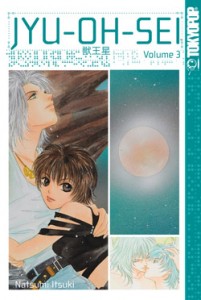
10. Jyu-Oh-Sei
By Natsumi Itsuki
After their parents are assassinated, twin brothers Rai and Thor are exiled to the penal colony of Kimaera, where they discover extreme weather, man-eating plants, and an elaborate tribal system in which women call the shots. Their only hope of escaping the planet’s inhospitable surface is for one of them to fight his way up the social ladder to become The Beast King, or supreme ruler of Kimaera. Like Invasion of the Body Snatchers and District 9, Jyu-Oh-Sei addresses social taboos and scientific issues while serving up generous portions of what audiences crave most: action, romance, monsters, and explosions. Best of all, Jyu-Oh-Sei comes in a neat, three-volume package that’s long enough to allow for world-building and character development but short enough to stay fresh and surprising until the end. —Reviewed at The Manga Critic on 8/14/09
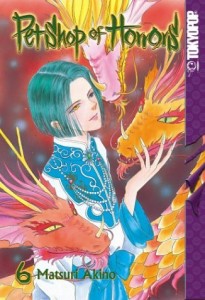
9. Petshop of Horrors
By Matsuri Akino
You won’t mistake Count D’s emporium for PETCO—the animals he sells are, in fact, demons, demi-gods, and shape-shifters who assume various guises. (One of the series’ running jokes is that some pets take human form, arousing the landlord’s suspicions that Count D actually runs a brothel.) Count D selects a pet for each customer that will help its owner realize a long-repressed dream. Of course, Count D’s services don’t come cheap; each character suffers an unexpected and often terrible consequence for seeking a magical solution to her problems. What sets Petshop apart from other examples of comeuppance theater is the writing. The characters’ plights elicit genuine sympathy from the reader; though we want these mothers and writers and lovesick twenty-something to find happiness, we can see that their own wishes are sometimes selfish, unwise, or genuinely harmful. —Reviewed at PopCultureShock on 2/13/08
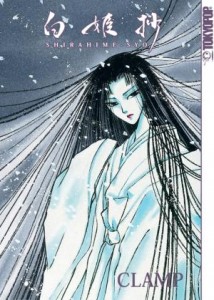
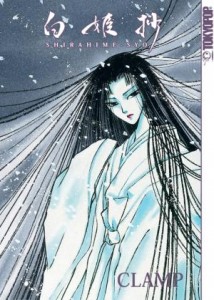
8. Shirahime-Syo: Snow Goddess Tales
By CLAMP
This lovely anthology is a radical departure for CLAMP. Gone are the super-detailed costumes and fussy character designs of their early, post-doujinshi work; in their place are spare, simply-drawn figures that seem consciously modeled on examples from eighteenth- and nineteenth-century scroll paintings. The stories themselves are told directly without embellishment, though CLAMP infuses each tale with genuine pathos, showing us how the characters’ anger and doubt lead to profound despair. As a result, the prevailing tone and spirit are reminiscent of Masaki Kobayashi’s 1964 film Kwaidan, both in the stories’ fidelity to the conventions of Japanese folklore and in their lyrical restraint. My favorite work by CLAMP.
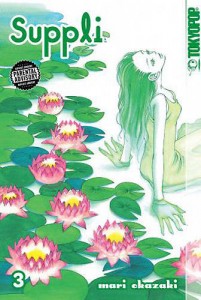
7. Suppli
By Mari Okazaki
After being dumped by a long-term boyfriend, twenty-seven-year-old ad executive Minami carves a new identity for herself, accepting more challenging work assignments, forging friendships with her office mates, and exploring her feelings for two very different men: Ishida, a blunt co-worker with bad-boy sex appeal, and Ogiwara, a Tokyo University grad who looks great on paper, but has some nasty romantic baggage of his own. Suppli vividly and humorously evokes office life, from the unproductive meetings and grueling all-nighters to the horseplay and flirtatious banter between co-workers. The denizens of Minami’s office are colorful, if one-dimensional, characters: a salty old maid, two flamboyant karaoke fiends, and a tart-tongued temp who offers sound relationship advice to her officemates while sleeping with a married man. Anyone who’s watched Ally McBeal, The Office, or Ugly Betty has encountered these types before, but Mari Okazaki breathes fresh life into her scenario with stylish artwork, sharp dialogue, and a heroine who occasionally doubts herself, but isn’t neurotic . —Reviewed at PopCultureShock on 12/5/07
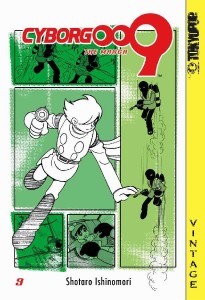
6. Cyborg 009
By Shotaro Ishimontori
Cyborg 009 was one of TOKYOPOP’s few forays into classic manga — a pity, because TOKYOPOP did a solid job translating and packaging Shotaro Ishimonori’s best-known work. For readers unfamiliar with this iconic series, the plot revolves around a group of people who have been kidnapped and brought to the lair of the Black Ghost organization, where surgeons transform them into robot-human fighting machines. The cyborgs soon turn on their creators and escape, intent on preventing armaggedon. I’d be the first to admit that Cyborg 009 is dated: the Black Ghost’s world-domination schemes have the same quaintly outdated ring as Dr. Evil’s, and several characters embody unfortunate gender and racial stereotypes. (As Shaenon Garrity dryly observes, “Cyborg 003 is a French girl with enhanced senses. Her duties are to hold the baby and occasionally hear things.”) Yet Ishimonori’s crisp cartooning, imaginatively staged battle scenes, and fundamental — if fumbling — humanism remain as arresting now as they did when the series first debuted in 1964.
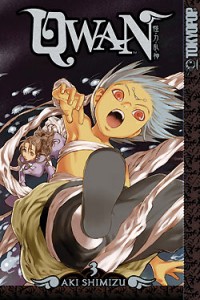
5. Qwan
By Aki Shimizu
Meet Qwan, a child-like figure who possesses super-human strength and speed. Though Qwan realizes he isn’t human, he’s never questioned his origins or abilities — that is, until he meets Shaga, a courtesan who urges him to seek the Essential Arts of Peace, a sutra that will reveal where Qwan came from and why he was sent to live among humans. Questing boys and magical scrolls are de rigeur in fantasy-adventure stories, but Qwan distinguishes itself in two crucial areas: terrific characters and gorgeous artwork. Aki Shimizu’s hero is far more quirky and interesting than the typical shonen lead — Qwan never promises to do his best, or to put friends before himself — while Shimizu’s fight scenes are among the most beautifully choreographed in any licensed manga. TOKYOPOP never finished this one-of-a-kind series, but it’s still worth seeking out, if only to get acquainted with a criminally under-appreciated artist. —Reviewed at The Manga Critic on 3/3/11
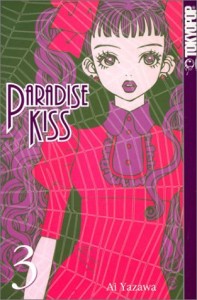
4. Paradise Kiss
By Ai Yazawa
Ai Yazawa knows how to have her cake and eat it, too: though she loves to write stories about such fantasy professions as runway model and rock star, she populates those stories with characters whose relationships and values are firmly rooted in everyday life. Consider Yukari (a.k.a. “Caroline”), the heroine of Paradise Kiss: Yukari becomes the muse for a group of aspiring fashion designers, modeling their clothing at a big design-school show and inspiring their most talented member, George, to new creative heights. In most manga, Yukari and George would bicker like teenage versions of Beatrice and Benedict until they finally admitted their mutual feelings of attraction; in Paradise Kiss, however, Yukari and George’s relationship unfolds in a more haphazard, organic way that reflects the fact that George is far more worldly and romantically experienced than Yukari. For my money, Paradise Kiss is Yazawa’s best work to date.
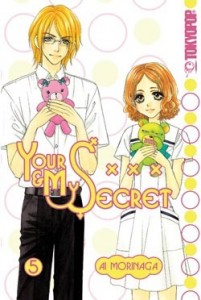
3. Your & My Secret
By Ai Morinaga
Your & My Secret focuses on Nanako, a swaggering tomboy who lives with her mad scientist grandfather, and Akira, an effeminate boy who adores her. With the flick of a switch, Akira becomes the unwitting test subject for the grandfather’s latest invention, a gizmo designed to transfer personalities from one body to another. Nanako revels in her new-found freedom as a boy, enjoying sudden popularity among classmates, earning the respect of Akira’s contemptuous little sister, and discovering the physical strength to dunk a basketball. Akira, on the other hand, finds his situation a mixed bag: for the first time in his life, his sensitive personality endears him to both male and female peers, but many of the things his maleness had previously exempted him from turn out to be much worse than he’d imagined. There are plenty of gender-bending hijinks — and the inevitable blackmail scene in which someone threatens to reveal Akira’s secret — but Morinaga still allows her characters moments of vulnerability and decency, preventing the humor from curdling into pure meanness. —Reviewed at The Manga Critic on 4/25/10

2. Tramps Like Us
By Yayoi Ogawa
Twenty-eight-year-old Sumire Iwaya is frustrated: though she’s a successful journalist with degrees from Tokyo U. and Harvard, she’s hit the glass ceiling at her job and has just been dumped by her fiance. When she discovers a cute but dissheveled young man sleeping in a box outside her apartment, Sumire “adopts” him, allowing Takeshi to stay in her apartment as her “pet.” You don’t need a PhD in manga to guess the outcome of their unusual arrangement, but romantic triangles and workplace intrigue prevent Tramps Like Us from spinning into complete silliness or offensive gender stereotyping. But what really stayed with me was the depiction of Sumire’s romance with her handsome senpai Hasumi; almost every woman I know has had a relationship like theirs — perfect on paper, but stressful and unhappy in practice — and Yayoi Ogawa captures Sumire and Hasumi’s awkward dynamic in pitch-perfect detail. Now that’s good writing.
1. Planetes
By Makoto Yukimura
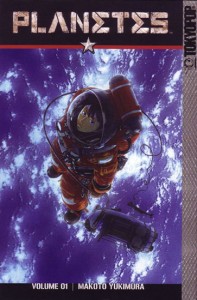
Planetes is that rarest of manga: a human interest story that just happens to have some sci-fi trappings.Planetes focuses on a motley crew of junk collectors that includes Hachimaki, a young astronaut who aspires to join a pioneering mission to Jupiter; Yuri, a Russian astronaut with a Tragic Past; Tanabe, a sensitive but emotionally resilient trainee; and Fee, the ship’s balls-to-the-wall captain. Makoto Yukimura skillfully uses of each of his principal characters’ personal histories to explore meaty issues such as eco-terrorism, space pollution, and good old-fashioned racism. I know, I know — I’m making Planetes sound like Star Trek: Deep Space Waste Removal Station, but Yukimura is a more graceful storyteller than Gene Rodenberry every was, allowing the characters’ actions to speak louder than their words. Vivid, detailed artwork brings the terrestrial and extra-terrestrial settings to life.

* * * * *

So I turn the floor over to you: which titles were your favorites? Which ones deserve to be rescued and finished by another publisher? Inquiring minds want to know!

POSTSCRIPT, 4/20/11: Readers seeking a list of titles published by TOKYOPOP may wish to consult the ANN database entry on TOKYOPOP, the Comic Book DB entry on TOKYOPOP, or Wikipedia’s list of titles published by TOKYOPOP. I can’t vouch for their accuracy, but a quick glance at all three website suggests that these lists are comprehensive. Special thanks to all the folks on Twitter who pointed me towards these resources: @skleefeld, @yuriboke, @Funkgun, and @andrecomics.

Filed Under: Manga, Manga Critic, Manhwa Tagged With: Ai Morinaga, Ai Yazawa, Aki Shimizu, clamp, Comedy, Matsuri Akino, Natsumi Itsuki, Sci-Fi, Shotaro Ishinomori, Tokyopop

7 Short Series Worth Adding to Your Manga Bookshelf

February 23, 2011 by Katherine Dacey

I like getting lost in a long, twisty story as much as the next person, but I often lose interest in a manga around the five- or ten-volume mark. As a service to other people afflicted with Manga ADHD, therefore, I’ve compiled a list of seven shorter series that enjoy pride of place on my shelves.

There were a few ground rules that guided my list-making. First, the series needed to be complete in five volumes or fewer. Second, every volume of the series needed to be readily available through a major retailer like Amazon. Third, the list needed to be diverse, covering a range of genres and demographics. Had I expanded the list to include out-of-print favorites — Antique Bakery, Apocalypse Meow, Club 9, Domu: A Child’s Dream, The Name of the Flower, Planetes — it would have been an unwieldy beast, and one sure to disappoint: why recommend a book that’s selling for $100 on eBay?

So without further ado… here are seven short series worth adding to your manga bookshelf.

A Distant Neighborhood
By Jiro Taniguchi • Fanfare/Ponent Mon • 2 volumes
A Distant Neighborhood is a wry, wistful take on a tried-and-true premise: a salaryman is transported back in time to his high school days, and must decide whether to act on his knowledge of the past or let events unfold as they did before. We’ve seen this story many times at the multiplex — Back to the Future, Peggy Sue Got Married — but Taniguchi doesn’t play the set-up for laughs; rather, he uses Hiroshi’s predicament to underscore the challenges of family life and the awkwardness of adolescence. (Hiroshi is the same chronological age as his parents, giving him special insight into the vicissitudes of marriage, as well as the confidence to cope with teenage tribulations.) Easily one of the most emotional, most intimate stories Taniguchi’s ever told. (A Distant Neighborhood was one of my picks for Best Manga of 2009; click here for the full list.)

Ichigenme: The First Class
By Fumi Yoshinaga • DMP • 2 volumes
One of the things that distinguishes Fumi Yoshinaga’s work from that of other yaoi artists is her love of dialogue. In works like Antique Bakery and Solfege, she reminds us that conversation can be an aphrodisiac, especially when two people are analyzing a favorite book or confessing a mutually-shared passion for art, cooking, or manga. True to form, the sexiest scenes in Ichigenme: The First Class Is Civil Law are conversations between law professors and their students. We feel the erotic charge of more experienced scholars engaging their proteges in intense debates over legal procedure and philosophy, even when the topics themselves are rather dry. Not that Yoshinaga skimps on the smut: there’s plenty of bedroom action as the carefree Tohdou helps his uptight, closeted classmate Tamiya explore his sexuality, but the series’ best moments are fully clothed. An entertaining manga that gets better with each reading. (Reviewed at PopCultureShock on 3/14/08.)

Ode to Kirihito
By Osamu Tezuka • Vertical, Inc. • 2 volumes
While investigating an outbreak of a mysterious disease, an earnest young doctor contracts it himself, becoming a hideous dog-man who craves raw meat. Kirihito’s search for the cause — and the cure — is the backbone of this globe-trotting adventure, but Kirihito’s quest to reclaim his humanity is its heart and soul; his travels bring him into contact with hustlers, racists, and superstitious villagers, each of whom greets him with a mixture of suspicion and fear. As its dog-man premise suggests, Ode to Kirihito is Tezuka at his bat-shit craziest: in one storyline, for example, Kirihito befriends a nymphomaniac circus performer who transforms herself into human tempura. But for all its over-the-top characters and plot developments (see “nympho human tempura,” above), Ode to Kirihito is one of Tezuka’s most moving stories, a thoughtful meditation on the the fluid boundaries between man and animal, sanity and insanity, good and evil. (Reviewed at The Manga Critic on 4/7/10.)

The Secret Notes of Lady Kanoko
By Ririko Tsujita • Tokyopop • 3 volumes
Kanoko, the sardonic heroine of The Secret Notes of Lady Kanoko, is a student of human behavior, gleefully filling her notebooks with detailed observations about her classmates. Though Kanoko would like nothing more than to remain on the sidelines, she frequently becomes embroiled in her peers’ problems; they value her independent perspective, as Kanoko isn’t the least bit interested in dating, running for student council, or currying favor with the alpha clique. Kanoko’s sharp tongue and cool demeanor might make her the mean-girl villain in another shojo manga, but Ririko Tsujita embraces her heroine’s prickly, opinionated nature and makes it fundamental to Kanoko’s appeal. It’s the perfect antidote to shojo stories about timid good girls and boy-crazy klutzes.

7 Billion Needles
By Nobuaki Tadano • Vertical, Inc. • 4 volumes
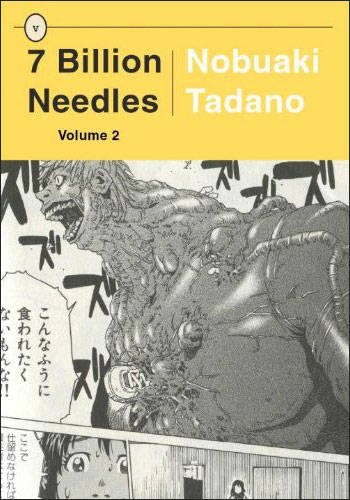
Nobuaki Tadano gives Hal Clement’s Needle a manga makeover, moving the action from a remote island in the South Seas to Japan, and replacing Clement’s wholesome, Hardy Boy protagonist with a sullen teenage girl who’s none too pleased to discover that an alien bounty hunter has taken control of her body. The decision to make Hikaru a troubled loner with a difficult past is a stroke of genius; her social isolation proves almost as formidable an obstacle for her to overcome as the monster that she and Horizon (as the bounty hunter is known) are pursuing. Her personal struggles also add a level of raw, emotional authenticity to the story — something that was largely absent from the fascinating, though clinically detached, original. Oh, and the monster? It’s a doozy. (Volumes one and two were reviewed at The Manga Critic on 11/21/10.)

To Terra
By Keiko Takemiya • Vertical, Inc. • 3 volumes
If Richard Wagner wrote space operas, he might have composed something like Keiko Takemiya’s To Terra, an inter-generational drama about a race of telepathic mutants who’ve been exiled from their home world. Under the leadership of the charismatic Jomy Marcus Shin, the Mu embark on a grueling voyage back to Terra to be reunited with their human creators. Their principle foe: an evil supercomputer named Mother. Takemiya’s richly detailed artwork makes To Terra an almost cinematic experience, suggestive of 2001: A Space Odyssey and Star Wars. But don’t be fooled by those blinking computers and blazing starships: To Terra is an unabashedly Romantic saga about two ubermensch locked in a struggle of cosmic proportions. No doubt Richard would approve. (To Terra was one of my picks for Best Manga of 2007; read the full list at PopCultureShock. For more information on To Terra‘s history, click here.)

Toto! The Wonderful Adventure
By Yuko Osada • Del Rey • 5 volumes
Shonen series often run to 10, 20, or 40 volumes, but Toto! The Wonderful Adventure proves that good stories come in shorter packages, too. Yuko Osada brazenly steals ideas from dozens of other sources — Castle in the Sky, One Piece, Last Exile, The Wizard of Oz — to produce a boisterous, fast-paced story about a tyro explorer who crosses paths with sky pirates, military warlords, and a high-kicking senjutsu expert named Dorothy. Though the jokes are hit-or-miss, Toto! boasts crisp artwork, strong female characters, and an infectious sense of bonhomie among the series’ protagonists; Kakashi and his traveling companions are impossible to dislike. (Reviewed at The Manga Critic on 9/16/10.)

HONORABLE MENTIONS

Cat-Eyed Boy (Kazuo Umezu • VIZ • 2 volumes): Readers looking for an introduction to Kazuo Umezu’s work could do a lot worse than this two-volume collection of stories about a strange little boy who’s half-human, half-demon. Umezu gives free reign to his imagination, conjuring some of the most bizarre monsters in the J-horror canon. The results aren’t always as shocking as they might be, but Cat-Eyed Boy is by turns funny, scary, and sad. (Reviewed at The Manga Critic on 10/3/10.)

Lady Snowblood (Kazuo Koike and Kazuo Kimimura • Dark Horse • 4 volumes): Now that everyone’s forgotten Kill Bill, the epic mess “inspired” by Kazuo Koike’s Lady Snowblood, it’s possible to read this series for what it is: a deliciously trashy story about a beautiful assassin who manipulates, cajoles, seduces, and stabs her way through Meiji-era Japan. Expect copious nudity, buckets of blood, and fight scenes so outrageous they have to be seen to be believed.

One Pound Gospel (Rumiko Takahashi • VIZ • 4 volumes): In this charming sports comedy, a struggling boxer is torn between his love for food and his love for a pretty young nun who wants him to lay down his fork, lose some weight, and win a few matches. The series is a little episodic (Takahashi published new chapters sporadically), but the dialogue and slapstick humor have a characteristically Takahashian zing.

For additional suggestions, see:

  • 5 Underrated Shojo Manga, which includes Setona Mizushiro’s X-Day;
  • My 10 Favorite CMX Titles, which includes such short series as Astral Project, Chikyu Misaki, Kiichi and the Magic Books, The Name of the Flower, and Presents. Note that many of these series are out of print and may be hard to find through retailers like Amazon;
  • My 10 Favorite Spooky Manga, which includes such short series as Dororo, Gyo, Mail, and School Zone.

Filed Under: Manga, Manga Critic, Recommended Reading Tagged With: Dark Horse, del rey, DMP, fumi yoshinaga, Historical Drama, Horror/Supernatural, Kazuo Koike, Kazuo Umezu, Keiko Takemiya, Osamu Tezuka, Romance/Romantic Comedy, Rumiko Takahashi, Sci-Fi, Tokyopop, Vertical Comics, VIZ

7 Short Series Worth Adding to Your Manga Bookshelf

February 23, 2011 by Katherine Dacey 37 Comments

I like getting lost in a long, twisty story as much as the next person, but I often lose interest in a manga around the five- or ten-volume mark. As a service to other people afflicted with Manga ADHD, therefore, I’ve compiled a list of seven shorter series that enjoy pride of place on my shelves.

There were a few ground rules that guided my list-making. First, the series needed to be complete in five volumes or fewer. Second, every volume of the series needed to be readily available through a major retailer like Amazon. Third, the list needed to be diverse, covering a range of genres and demographics. Had I expanded the list to include out-of-print favorites — Antique Bakery, Apocalypse Meow, Club 9, Domu: A Child’s Dream, The Name of the Flower, Planetes — it would have been an unwieldy beast, and one sure to disappoint: why recommend a book that’s selling for $100 on eBay?

So without further ado… here are seven short series worth adding to your manga bookshelf.

A DISTANT NEIGHBORHOOD

JIRO TANIGUCHI • FANFARE/PONENT MON • 2 VOLUMES

A Distant Neighborhood is a wry, wistful take on a tried-and-true premise: a salaryman is transported back in time to his high school days, and must decide whether to act on his knowledge of the past or let events unfold as they did before. We’ve seen this story many times at the multiplex — Back to the Future, Peggy Sue Got Married — but Taniguchi doesn’t play the set-up for laughs; rather, he uses Hiroshi’s predicament to underscore the challenges of family life and the awkwardness of adolescence. (Hiroshi is the same chronological age as his parents, giving him special insight into the vicissitudes of marriage, as well as the confidence to cope with teenage tribulations.) Easily one of the most emotional, most intimate stories Taniguchi’s ever told. (A Distant Neighborhood was one of my picks for Best Manga of 2009; click here for the full list.)

ICHIGENME… THE FIRST CLASS IS CIVIL LAW

FUMI YOSHINAGA • DMP • 2 VOLUMES

One of the things that distinguishes Fumi Yoshinaga’s work from that of other yaoi artists is her love of dialogue. In works like Antique Bakery and Solfege, she reminds us that conversation can be an aphrodisiac, especially when two people are analyzing a favorite book or confessing a mutually-shared passion for art, cooking, or manga. True to form, the sexiest scenes in Ichigenme: The First Class Is Civil Law are conversations between law professors and their students. We feel the erotic charge of more experienced scholars engaging their proteges in intense debates over legal procedure and philosophy, even when the topics themselves are rather dry. Not that Yoshinaga skimps on the smut: there’s plenty of bedroom action as the carefree Tohdou helps his uptight, closeted classmate Tamiya explore his sexuality, but the series’ best moments are fully clothed. An entertaining manga that gets better with each reading. (Reviewed at PopCultureShock on 3/14/08.)

ODE TO KIRIHITO

OSAMU TEZUKA • VERTICAL, INC. • 2 VOLUMES

While investigating an outbreak of a mysterious disease, an earnest young doctor contracts it himself, becoming a hideous dog-man who craves raw meat. Kirihito’s search for the cause — and the cure — is the backbone of this globe-trotting adventure, but Kirihito’s quest to reclaim his humanity is its heart and soul; his travels bring him into contact with hustlers, racists, and superstitious villagers, each of whom greets him with a mixture of suspicion and fear. As its dog-man premise suggests, Ode to Kirihito is Tezuka at his bat-shit craziest: in one storyline, for example, Kirihito befriends a nymphomaniac circus performer who transforms herself into human tempura. But for all its over-the-top characters and plot developments (see “nympho human tempura,” above), Ode to Kirihito is one of Tezuka’s most moving stories, a thoughtful meditation on the the fluid boundaries between man and animal, sanity and insanity, good and evil. (Reviewed at The Manga Critic on 4/7/10.)

THE SECRET NOTES OF LADY KANOKO

RIRIKO TSUJITA • TOKYOPOP • 3 VOLUMES

Kanoko, the sardonic heroine of The Secret Notes of Lady Kanoko, is a student of human behavior, gleefully filling her notebooks with detailed observations about her classmates. Though Kanoko would like nothing more than to remain on the sidelines, she frequently becomes embroiled in her peers’ problems; they value her independent perspective, as Kanoko isn’t the least bit interested in dating, running for student council, or currying favor with the alpha clique. Kanoko’s sharp tongue and cool demeanor might make her the mean-girl villain in another shojo manga, but Ririko Tsujita embraces her heroine’s prickly, opinionated nature and makes it fundamental to Kanoko’s appeal. The perfect antidote to shojo stories about timid good girls and boy-crazy spazzes. UPDATE 4/16/11: TOKYOPOP announced that it would be shutting down its US publishing operations on May 31, 2011. Unfortunately, that means that Lady Kanoko will likely remain incomplete at two volumes. The stories are largely self-contained, so it is still possible to enjoy Lady Kanoko without reading the last volume.

7 BILLION NEEDLES

NOBUAKI TADANO • VERTICAL, INC. • 4 VOLUMES

Nobuaki Tadano gives Hal Clement’s Needle a manga makeover, moving the action from a remote island in the South Seas to Japan, and replacing Clement’s wholesome, Hardy Boy protagonist with a sullen teenage girl who’s none too pleased to discover that an alien bounty hunter has taken control of her body. The decision to make Hikaru a troubled loner with a difficult past is a stroke of genius; her social isolation proves almost as formidable an obstacle for her to overcome as the monster that she and Horizon (as the bounty hunter is known) are pursuing. Her personal struggles also add a level of raw, emotional authenticity to the story — something that was largely absent from the fascinating, though clinically detached, original. Oh, and the monster? It’s a doozy. (7 Billion Needles was one of my picks for Best Teen-Friendly Comic of 2010; see Good Comics for Kids for the full list. Volumes one and two were reviewed at The Manga Critic on 11/21/10; volume three was reviewed on 2/17/11. The fourth and final volume will arrive in stores on April 26, 2011.)

TO TERRA

KEIKO TAKEMIYA • VERTICAL, INC. • 3 VOLUMES

If Richard Wagner wrote space operas, he might have composed something like Keiko Takemiya’s To Terra, an inter-generational drama about a race of telepathic mutants who’ve been exiled from their home world. Under the leadership of the charismatic Jomy Marcus Shin, the Mu embark on a grueling voyage back to Terra to be reunited with their human creators. Their principle foe: an evil supercomputer named Mother. Takemiya’s richly detailed artwork makes To Terra an almost cinematic experience, suggestive of 2001: A Space Odyssey and Star Wars. But don’t be fooled by those blinking computers and blazing starships: To Terra is an unabashedly Romantic saga about two ubermensch locked in a struggle of cosmic proportions. No doubt Richard would approve. (To Terra was one of my picks for Best Manga of 2007; read the full list at PopCultureShock. For more information on To Terra‘s history, click here.)

TOTO! THE WONDERFUL ADVENTURE

YUKO OSADA • DEL REY • 5 VOLUMES

Shonen series often run to 10, 20, or 40 volumes, but Toto! The Wonderful Adventure proves that good stories come in shorter packages, too. Yuko Osada brazenly steals ideas from dozens of other sources — Castle in the Sky, One Piece, Last Exile, The Wizard of Oz — to produce a boisterous, fast-paced story about a tyro explorer who crosses paths with sky pirates, military warlords, and a high-kicking senjutsu expert named Dorothy. Though the jokes are hit-or-miss, Toto! boasts crisp artwork, strong female characters, and an infectious sense of bonhomie among the series’ protagonists; Kakashi and his traveling companions are impossible to dislike. (Reviewed at The Manga Critic on 9/16/10.)

HONORABLE MENTIONS

CAT-EYED BOY (Kazuo Umezu • VIZ • 2 volumes): Readers looking for an introduction to Kazuo Umezu’s work could do a lot worse than this two-volume collection of stories about a strange little boy who’s half-human, half-demon. Umezu gives free reign to his imagination, conjuring some of the most bizarre monsters in the J-horror canon. The results aren’t always as shocking as they might be, but Cat-Eyed Boy is by turns funny, scary, and sad. (Reviewed at The Manga Critic on 10/3/10.)

LADY SNOWBLOOD (Kazuo Koike and Kazuo Kimimura • Dark Horse • 4 volumes): Now that everyone’s forgotten Kill Bill, the epic mess “inspired” by Kazuo Koike’s Lady Snowblood, it’s possible to read this series for what it is: a deliciously trashy story about a beautiful assassin who manipulates, cajoles, seduces, and stabs her way through Meiji-era Japan. Expect copious nudity, buckets of blood, and fight scenes so outrageous they have to be seen to be believed.

ONE POUND GOSPEL (Rumiko Takahashi • VIZ • 4 volumes): In this charming sports comedy, a struggling boxer is torn between his love for food and his love for a pretty young nun who wants him to lay down his fork, lose some weight, and win a few matches. The series is a little episodic (Takahashi published new chapters sporadically), but the dialogue and slapstick humor have a characteristically Takahashian zing.

For additional suggestions, see:

  • 5 Underrated Shojo Manga, which includes Setona Mizushiro’s X-Day;
  • My 10 Favorite CMX Titles, which includes such short series as Astral Project, Chikyu Misaki, Kiichi and the Magic Books, The Name of the Flower, and Presents. Note that many of these series are out of print and may be hard to find through retailers like Amazon;
  • My 10 Favorite Spooky Manga, which includes such short series as Dororo, Gyo, Mail, and School Zone.

Filed Under: Manga Critic Tagged With: Dark Horse, del rey, DMP, fumi yoshinaga, Historical Drama, Horror/Supernatural, Kazuo Koike, Kazuo Umezu, Keiko Takemiya, Osamu Tezuka, Romance/Romantic Comedy, Rumiko Takahashi, Sci-Fi, Seinen, shojo, Shonen, Tokyopop, vertical, VIZ, Yaoi

LIVES, Vol. 1

January 21, 2011 by Katherine Dacey

Everything you need to know about LIVES is summed up by the following category tags: “big breasts,” “meteor,” “stranded,” “strategically torn clothing,” and “survival.” (Kudos to the Baka-Updates moderator who felt the need to give “strategically torn clothing” its due as a category. But what, no “hungry predators”?)

Plot-wise, LIVES resembles Battle Royale, Gantz, and King of Thorn in using a catastrophic event — in this case, a meteor shower — to deposit normal people into a hostile environment — here, a dense jungle inhabited by carnivorous monsters. It doesn’t take long for the refugees to discover the particularly nasty secret behind these beasties: they were originally human beings as well, and some can still transform back into their bipedal selves, with no memory of terrorizing their fellow survivors.

Art-wise, Taguchi delivers the goods, with scene after scene of expertly staged carnage. His monsters are perhaps a little too neat, lightbox chimaeras that originated in the pages of National Geographic, but they’re agile and vicious enough to be convincing. His humans also offer balm for tired eyes: the hero, Shingo, has abs that would shame The Situation’s, and the harem of doe-eyed, big-bosomed ladies wear just enough clothing to prevent the story from shading into pornography. (In a hilarious touch, all of the women’s shoes are in immaculate condition, even though their tops and skirts have been reduced to scraps. Paging Imelda Marcos!)

What’s missing is subtext. LIVES is the umpteenth manga to suggest when man lives in a “state of nature” — no rulers, no rules of law — that a “war of all against all” prevails, creating an environment where lives are “solitary, poor, nasty, brutish, and short.” While other manga-ka have attempted to explore what happens to the human psyche when all social constraints disappear, Masayuki Taguchi focuses exclusively on those consequences that Thomas Hobbes forget to mention in The Leviathan: costume failures, near-rapes, faintly incestuous relationships, and hyper-violent showdowns between monsters and would-be meals. There’s nothing wrong with carnage and cheesecake; I’m all for brainless fun. But when the narrative falls into an all-too-predictable pattern of grope-chase-chomp-regroup in the very first volume, a little subtext goes a lot farther than a cool monster or a torn shirt in making things interesting.

Review copy provided by Tokyopop. Volume one will be released on February 1, 2011.

LIVES, VOL. 1 • BY MASAYUKI TAGUCHI • TOKYOPOP • 196 pp. • RATING: MATURE (18+)

Filed Under: Manga, Manga Critic, REVIEWS Tagged With: Horror/Supernatural, Sci-Fi, Tokyopop

7 Billion Needles, Vols. 1-2

November 21, 2010 by Katherine Dacey

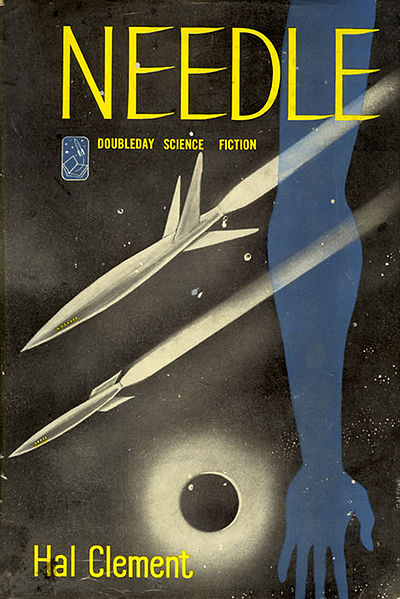
First published in 1950, Hal Clement’s Needle was a unique mixture of hard science fiction and police procedural. The story focused on an alien detective who crash-lands on Earth while chasing an intergalactic criminal. With his ship destroyed and his symbiant companion dead, The Hunter takes up residence inside a teenager’s body, eventually persuading his host to help him find the fugitive — no mean feat, as the fugitive can also hide, undetected, inside a human host.

The story was notable, in part, for Clement’s meticulous, detailed study of the alien’s physiology. Drawing on mid-century research on microorganisms, Clement imagined a highly intelligent, adaptable creature capable of manipulating its body to squeeze through tiny spaces and make use of its host’s sensory organs to learn more about its surroundings. Needle was also notable for the way in which Clement folded these speculative passages into an old-fashioned detective story; once The Hunter begins communicating directly with Bob, his host, the two retrace the fugitive’s steps, investigating everyone who might have come into contact with it and systematically ruling out suspects through careful observation of their behavior.

Nobuaki Tadano’s 7 Billion Needles (2008-10) draws inspiration from Clement’s novel, preserving the basic concept while tweaking the storyline to work in a graphic format. Gone are the long passages explaining how Horizon (as the alien detective is called in 7 Billion Needles) insinuates himself into his human host; in their place are more direct, dramatic scenes showing us how Horizon’s host, a sullen teenage girl named Hikaru, wrestles with the emotional and physical burden of helping him pursue Maelstrom, a shape-shifting creature so powerful he’s left a trail of dead planets in his wake.

As a result, 7 Billion Needles reads more like horror than hard science fiction, placing more emphasis on monster-hunting and raw adolescent emotion than the mechanics of Horizon and Hikaru’s symbiotic relationship. Tadano’s choices make good sense from the standpoint of pacing and visual drama; so much of the original novel took place inside Bob, it’s hard to imagine how an artist would have brought those passages to life in comic-book form. (That summary makes Needle sound impossibly dirty, but rest assured, it isn’t.) Tadano’s monster, too, is much better defined than Clement’s; Clement’s fugitive only appears in the final chapters of the book, the nature of his crime never fully explained, whereas Maelstrom, Tadano’s creation, is something out of a good B-movie, causing his host du jour to undergo grotesque transformations before going all-out alien.

The real genius of 7 Billion Needles, however, is the way Tadano uses teen angst as a key plot element. In the very first pages of volume one, we learn that Hikaru is an orphan, living with an aunt and uncle not much older than she is. As the story unfolds, Tadano seeds the conversation with nuggets of information about Hikaru’s past; in volume two, for example, we learn that Hikaru and her father had lived on a small island, where they became social pariahs, enduring threats, taunts, and vandalism from their neighbors. Not surprisingly, Hikaru is withdrawn at the beginning of 7 Billion Needles, openly defying teachers by wearing headphones in class and avoiding even the most basic interaction with her peers. Once she agrees to help Horizon, however, she must begin talking to other people — the only way Horizon can detect Malestrom’s presence is for Hikaru to interact with Maelstrom’s host. Her awkward attempts to connect with other students, and her fumbling efforts at friendship, add a raw emotional energy to 7 Billion Needles that is largely absent from Clement’s original story.

The series’ artwork is its only shortcoming. As Deb Aoki noted in her review of volume one, all the female characters have the same bland, plastic face, making them difficult to distinguish from one another. (Tadano’s rather weak efforts at creating a memorable supporting cast also contribute to the impression of sameness.) Some of the monster designs, too, lack inspiration — a key shortcoming in a genre known for its nightmarish, otherworldly imagery. When we first see Maelstrom in his true form, he looks like a tyrannosaurus rex; not until the second volume are we treated to a more terrifying and unsettling image of Malestrom as a grotesque composite of all the human beings he’s ingested. Perhaps most disappointing is Tadano’s over-reliance on the flash-boom, using big bursts of light and sound effects to indicate Horizon’s powers without really showing us what’s happening.

On the whole, however, 7 Billion Needles is an intelligent update on Needle, substituting the heat of adolescent angst and monster-slaying for the cool detachment of hard science and old-fashioned gumshoeing. Recommended.

Review copies provided by Vertical, Inc. Volume two will be released on November 23, 2010.

7 BILLION NEEDLES, VOLS. 1-2 • BY NOBUAKI TADANO • VERTICAL, INC. • RATING: 16+

Filed Under: Manga, Manga Critic, REVIEWS Tagged With: Hal Clement, Sci-Fi, Vertical Comics

Demon Sacred, Vols. 1-2

September 28, 2010 by Katherine Dacey

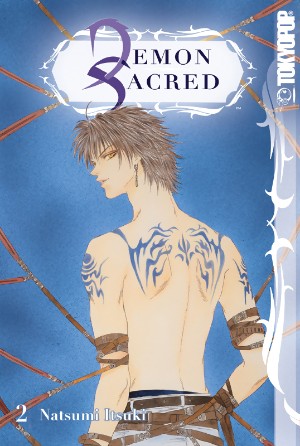
Demon Sacred is shojo manga’s answer to the everything bagel, substituting hot scientists, dragons, pop idols, twins, secret government research facilities, and time-traveling aliens for garlic chips and sesame seeds. That such an unlikely combination of ingredients proves complimentary is nothing sort of miraculous — it’s hard to imagine how rock stars and rifts in the space-time continuum could co-exist in the same manga without the whole enterprise descending into complete silliness, but Natsumi Itsuki walks the fine line between stupid and clever with the grace of a high-wire acrobat.

Consider the first three chapters of the series: in them, we’re introduced to Rena, the sole survivor of an incident involving unicorns; her fourteen-year-old daughters Rina and Mona, one of whom has developed a disease that causes her to age backwards; and the girls’ guardian Shinobu, a handsome, pony-tailed researcher who is toiling away on a cure for Return Syndrome and — natch — earned a PhD from Harvard before his eighteenth birthday. Those three storylines alone provide ample material for a good shojo fantasy, but Itsuki cranks up the narrative nuttiness to eleven in subsequent chapters, tossing in a handsome “demon” — in fact, a shape-shifting alien from another dimension — who knew the twins’ mother, and a second, more powerful demon who assumes the form of the girls’ favorite pop singer.

A cynic might dismiss these additional characters as pandering to teen girl taste, but Mika and K2 serve an important role in advancing the plot, shedding light on Rina and Mona’s past (Mom disappeared when they were four) and offering a potential cure for Rina’s condition. Ditto for some of the comic-relief episodes, in which K2 impersonates a real-life idol; if Itsuki always played it straight, the story would seem positively ludicrous instead of charmingly overstuffed. Remember, the opening pages of the series involve a stampede of unicorns emerging from the aurora borealis and trampling a group of tourists in the Finnish countryside. Even Madeline L’Engle didn’t have the guts to try that.

I’d be the first to admit that Demon Sacred isn’t as well constructed as Itsuki’s Jyu-Oh-Sei, a tight, logical exercise in hard science fiction; if anything, Demon Sacred feels freer and messier than her earlier work. That impression of spontaneity stems from the casual way in which Itsuki assembles plot elements, like a chef rummaging through the refrigerator and grabbing whatever looks appetizing. There’s no obvious rationale for inter-dimensional, time-traveling aliens to assume the form of mythical Earth-beasts, other than the fact it tickled Itsuki’s authorial fancy. Yet that kitchen-sink quality is a big part of Demon Sacred‘s appeal; I’d be lying if I denied my pleasure in seeing a character quote from the Book of Revelations, or imagining a universe in which griffins, unicorns, and fire-breathing dragons could assume the form of popular singers.

It’s hard to guess how Itsuki will resolve the myriad subplots introduced in the first two volumes, but the story unfolds in such a feverish, urgent fashion that it’s easy to forgive the occasional narrative shortcuts or capitulations to shojo convention. (See “hot young scientist” and “pop idols,” above.) Demon Sacred may not be the best new manga of 2010, but it’s a strong contender for most addictive.

Review copies provided by Tokyopop.

DEMON SACRED, VOLS. 1-2 • BY NATSUMI ITSUKI • TOKYOPOP • RATING: TEEN (13+)

Filed Under: Manga, Manga Critic, REVIEWS Tagged With: Natsumi Itsuki, Sci-Fi, Tokyopop

The Best Manga You’re Not Reading: ES: Eternal Sabbath

August 6, 2010 by Katherine Dacey

Back in June, Brigid Alverson, Robin Brenner, Martha Cornog and I gave a presentation at the American Library Association’s annual conference called “The Best Manga You’re Not Reading.” Our goal was to remind librarians that manga isn’t just for teens by highlighting fourteen titles that we thought would appeal to older patrons. Response to our presentation was terrific, so I decided to make “The Best Manga You’re Not Reading” a regular feature here at The Manga Critic. Some months I’ll shine the spotlight on something obscure or out-of-print; other months I’ll feature a title that you may have heard about (or even read) because I think it has the potential to appeal to readers who aren’t necessarily mangaphiles. This month’s title — ES: Eternal Sabbath (Del Rey) — was one of Brigid’s picks, a sci-fi manga that she felt had strong visuals and a suitably creepy atmosphere. I couldn’t agree more, so I decided to revise an old review from my PopCultureShock days to explain why you ought to read this trippy, thought-provoking story about the perils of cloning and extrasensory perception.

ES: ETERNAL SABBATH, VOLS. 1-8

BY FUYUMI SORYO • DEL REY • RATING: OLDER TEEN (16+)

The vivid images that haunt us when we sleep seem like perfect fodder for art, yet we often produce dream-inspired work that’s much goofier and far less potent than our nocturnal imaginings: think of Salvador Dali’s unabashedly Freudian dream sequence in Spellbound (the one false note in an otherwise great thriller), or John Fuseli’s heavy-handed symbolism in The Nightmare (in which a Rubenesque sleeper is tormented by a ghostly horse and an incubus, the ultimate Romantic two-fer). These images fail to shock because they seem too mannered, too staid — in short, too neat, failing to capture the subconscious mind’s ability to juxtapose the banal with the fantastic. In ES: Eternal Sabbath, however, manga-ka Fuyumi Soryo (best known to American readers for the shojo drama Mars) steers clear of the cliches and overripe imagery that reduce so many dreamy works to kitsch, producing a taut, spooky thriller that reminds us just how weird and terrifying a place the mind can be.

The first volume of ES introduces us to Shuro, a young man with the ability to read thoughts. Shuro uses the information he gathers from other people to impersonate their friends and family members, wiping their memories clean when he tires of the situation. His aimless routine is upended by a chance encounter with neuroscientist Mine Kujyou, who spots Shuro sauntering past a brutal crime scene in a state of utter indifference, as if he knew what was about to transpire. Her researcher’s instinct piqued, she begins to track Shuro’s movements, initiating a game of cat-and-mouse that quickly escalates into psychological warfare.
In a plot twist that would surely please Fox Mulder, a researcher from a clandestine government laboratory arrives on the scene, Smoking Man-style, to explain that Shuro is, in fact, a clone, created by scientists on the hunt for the “eternal sabbath,” a.k.a. eternal youth, gene. (The psychic powers powers are a happy by-product of the experiment.) Shuro escaped from his creators with fellow clone Isaac, an even more powerful, less scrupulous mind reader with a destructive agenda. Mine must then decide whether to assist Shuro and Isaac’s creator in re-capturing the wayward clones, or to allow Shuro to disappear back into the shadows and resume his impostor life of borrowed memories and feigned emotions.

To be sure, many of ES: Eternal Sabbath’s themes are science fiction staples: do scientists have an ethical obligation to treat engineered life forms with the same care as humans? Are there realms of knowledge and experience that cannot be quantified or explained through modern science? That such tried-and-true questions inform but never overwhelm the narrative is testament to Soryo’s storytelling skills. She creates a small, intimately linked cast whose conflicting desires, insecurities, fears, and friendships dramatize the series’ overarching theme, what does it mean to be human?, while underscoring the poignancy of the clones’ liminal status. (Isaac, as his name suggests, was intended as a sacrifice; his creators raised him for the sole purpose of studying and dissecting him.)

If her storytelling chops are strong, Soryo’s life drawing skills are not. Her character designs have a languid quality that makes them seem oddly placid in scenes fraught with conflict. Where Soryo shines are the dream sequences, which are visceral and unsettling. Some of the symbols she employs — horses, thorns — are familiar from television and movie dreams, yet the way in which she orchestrates these dreams is not, as she captures the peculiar rhythm and logic of a nightmare. One of the most effective sequences occurs right at the beginning of the series: a large insect emerges from a disturbingly organic mass that suddenly shatters into hundreds of living, moving pieces. The strangeness of the image, the abrupt shift in mood, the blurry line between inanimate and animate objects — these feel like an authentic product of the subconscious, and not a Freudian rebus to be decoded by the audience.

I could cavil about a few details (the translation is rather flat, as are Soryo’s pre-fab backgrounds), but on the whole, this eight-volume series has few wasted pages. The story moves at a brisk clip without sacrificing characterization or common sense; the art suggests the workings of the subconscious mind without silliness; and the ending is genuinely moving and surprising. Science fiction fanatics will find much to like here, as will horror buffs and readers who like the idea that women can kick butt in the sciences, Lawrence Summers and evil clones be damned.

This is an updated version of a review that appeared at PopCultureShock on 6/22/2008. The Best Manga You’re Not Reading is an occasional feature that highlights titles that aren’t getting the critical attention — or readership — they deserve. Click here for the inaugural column; click here for the series archive.

Filed Under: Manga, Manga Critic, Recommended Reading, REVIEWS Tagged With: del rey, Sci-Fi

5 Underrated Shojo Manga

July 10, 2010 by Katherine Dacey

Earlier in the week, I sang the praises of Kaze Hikaru, my all-time favorite shojo manga (and one of my all-time favorite manga, period). Today I shine the spotlight on five great titles that haven’t garnered as much favorable notice as they deserve. Sadly, all but one are officially out of print or will be soon, owing to publisher closings, lapsed licenses, and so-so sales. If you can’t find them through retailers such as Amazon, Buy.com, or Right Stuf!, you might wish to cast your net wider to include sites like Robert’s Anime Corner Store (a good source for older titles) and eBay, or try your local library for copies.

phoenix125. Phoenix: Early Years, Vol. 12
By Osamu Tezuka • VIZ Media • 1 volume (complete)
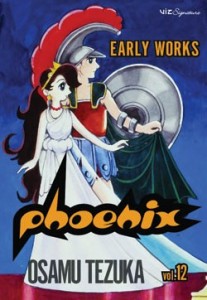
A better subtitle for volume twelve of Phoenix would be I Lost It At the Movies, as these four stories reveal just how passionately Osamu Tezuka loved American cinema. In a 1980 essay, Tezuka explained that “watching American big-screen spectacle movies such as Helen of Troy and Land of the Pharaohs made me want to create a similar sort of romantic epic for young girls’ comics.” Looking at this collection, the sword-and-sandal influence manifests itself in almost every aspect of Tezuka’s storytelling, from the costumes and settings to the dialogue, which the characters declaim as if it were of Biblical consequence. (Paging Charlton Heston!) What makes this Hollywood pomposity bearable — even charming — is the tempering influence of Walt Disney. The character designs owe an obvious debt to Snow White, while the supporting cast could easily belong to Cinderella or Sleeping Beauty’s entourage of chatty animal friends.Anyone looking for the moral complexity of later Phoenix stories will be disappointed in volume twelve, as Tezuka’s villains are cartoonishly evil and his heroes (and heroine) chastely noble. If one approaches this collection in the spirit of, say, a musicologist flipping through Beethoven’s pre-Eroica manuscripts, however, the rewards are more palpable. In these early stories we see Tezuka developing his comedic chops with pop culture references and physical slapstick; we see him experimenting with layout, as he renders the battlefields of Troy and Rome in sweeping, full-page panels; and we see him creating his first cycle of interconnected stories, introducing some of the themes that would unify the entire Phoenix saga. In short, we see Tezuka’s first attempts to find his own voice as he pays tribute to the artists who influenced him, learning more about his exuberant, unique artistry in the process. (Originally reviewed at PopCultureShock on 3/19/08.)

xday14. X-Day
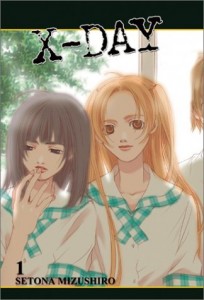
By Setona Mizushiro • Tokyopop • 2 volumes (complete)
When star high jumper Rika injures her leg and loses her boyfriend to a teammate, she becomes profoundly depressed. She soon discovers an online community of similarly disaffected students, however, all of whom share her desire to “make the school disappear.” Their internet chats soon give way to in-person meetings, where Rika comes face-to-face with three very different people: “Polaris,” a shy teen who dresses like a Goth off campus, “Mr. Money,” a friendly underclassman, and “Janglarian,” a young biology teacher who wants to dynamite the school. Setona Mizushiro’s dark story could easily spiral into melodrama, but she does a fine job of showing us how the normal tribulations of being a teenager — fighting with parents, enduring harassment from peers, feeling overwhelmed by anxiety — have led these four fragile people to hatch such a radical plan for coping with their pain. The second volume lacks the dramatic urgency of the first, as the students’ plot begins to come unraveled, but X-Day remains persuasive until its final pages, thanks to Mizushiro’s vivid characterizations and nuanced artwork.

airevolution13. A.I. Revolution
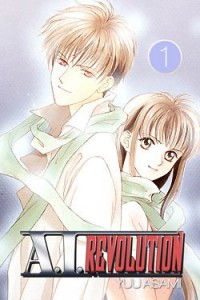
By Yuu Asami • Go! Comi • 5 volumes (incomplete; 17 volumes in Japan)
A.I. Revolution starts from a premise familiar to legions of Isaac Asimov fans: a human builds a robot, only to discover his creation has a mind and feelings of its own. Sui, the story’s human protagonist, initially views robots as household appliances, not unlike toasters or vaccuum cleaners. When her father presents her with an android companion, however, Sui develops a strong bond with it, discovering that Vermillion has a capacity for emotion that far outstrips her expectations.

A.I. Revolution may sound like I, Robot Hottie, but Yuu Asami puts a thoughtful spin on the material, filtering familiar sci-fi themes through a shojo lens. Though she weaves evil scientists and corporate espionage into the narrative, the story is at its best when focusing on Vermillion’s interactions with his human family; Sui’s father, for example, has modeled Vermillion in the image of a colleague that he admired, leading to a few funny, awkward moments of human-robot flirtation, while Sui seesaws between sisterly protectiveness and romantic attachment to her handsome companion. (Really, is there any other kind of robot in shojo manga?) Asami’s art reminds me of Akimi Yoshida’s with its elongated character designs, delicate linework, and sparing use of screentone. It’s a little dated perhaps, but a welcome change of pace from the slicker, busier layouts characteristic of the titles licensed by Tokyopop and VIZ. Highly recommended for fans of old-school shojo. (Originally reviewed at PopCultureShock on 3/4/08.)

gals12. GALS!
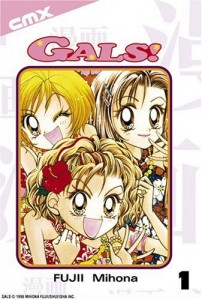
By Mihona Fuji • CMX Manga • 10 volumes (complete)
This wacky comedy is one of the better shojo licenses in the CMX catalog, a rude, raunchy, and oddly moral tale about a feisty kogal named Ran Kotobuki. Though Ran and her pals are primarily interested in shopping for outrageous outfits, visiting the tanning salon, and stealing book bags from students at rival schools, Ran’s upbringing in a household full of police officers (dad, mom, and big brother are all cops) has taught her to adhere to a strict code of conduct: no sex for favors, and no tolerance for anyone who disrespects her friends.

Ran is a terrific, memorable character — impetuous, loud, funny, and tough, the kind of person who would literally smack sense into another girl if she thought it would work. Better still, she’s not easily swayed by boys; her relationship with the sweet but dim Tatsuki is surprisingly chaste, limited primarily to hand-holding and awkward discussions about feelings. (Ran won’t deign to say, “I love you,” as it compromises her tough-girl image.) As befits a manga that was serialized in Ribon, all of the characters have enormous, doll-like eyes in the Arina Tanemura style, and fabulous outfits that shame the Gossip Girls. The backgrounds are surprisingly detailed, conveying the look and feel of the Shibuya district with a specificity that’s all too rare in shojo manga. In sum, Gals! is the kind of good-natured gang comedy that I hoped My Darling! Miss Bancho would be: full of humor and heart, but with fewer capitulations to shojo convention.

lovesong1. Love Song
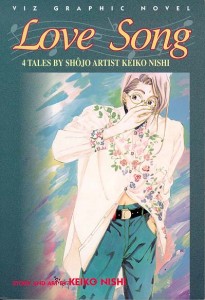
Keiko Nishi • VIZ Media • 1 volume (complete)
Back in the 1990s, Matt Thorn labored hard to make Keiko Nishi a household name among American manga readers, translating six of her stories for VIZ; two appeared in Four Shojo Stories alongside work by Moto Hagio and Shio Sato, and four appeared in a stand-alone volume called Love Song. Though Nishi didn’t catch on with Western shojo fans, it’s easy to see why Thorn championed her work: she’s a terrific, versatile storyteller, equally capable of writing light-hearted fantasies and character studies of deeply damaged people.

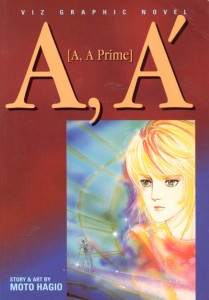
Of the four stories that appear in Love Song, two are standouts: “Jewels of the Seaside,” a black comedy about three sisters who compete for the same man’s affection, with disastrous results, and “The Skin of Her Heart,” a quiet sci-fi tale about a young woman torn between what she wants and what her mother wants for her. (Readers who enjoyed A, A’ or Twin Spica are a natural audience for “Skin of Her Heart,” though it works equally well for folks who aren’t big sci-fi buffs.) Nishi’s artwork is an acquired taste, at times precise, elegant, and naturalistic, and at times loose and sketchy, with the white of the page playing an important role in underscoring the emotional distance between her characters. Her minimalist approach won’t be to every shojo fan’s liking, but she demonstrates that it’s perfectly possible to convey the interior lives of her characters without resorting to the kind of visual shorthands — flowers, sweatdrops, nosebleeds — that have been overused in contemporary shojo manga. Love Song is out of print, but unlike Four Shojo Stories and A, A’, is still relatively easy to obtain through online retailers like Amazon. Highly recommended.

HONORABLE MENTIONS

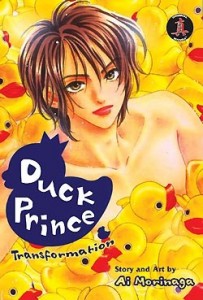
duckprince1Duck Prince
By Ai Morinaga • CMP • 3 volumes (suspended)

Morinaga’s battle-of-the-sexes comedy takes a standard shojo plot — homely gal gets makeover to win the guy of her dream — and turns it on its head, substituting a sweet, helmet-haired nerd for the customary plain Jane, and adding a novel twist: Reiichi appears to most girls as a smokin’ hottie, but in the presence of his beloved Yumiko, he reverts to his original form. As in all her work, Morinaga uses humor to make deeper points about gender roles and physical beauty, though Duck Prince is too rude and risque to be mistaken for an Afterschool Special. Central Park Media released three of the five volumes before suspending Duck Prince; of all the titles left homeless by CPM’s demise, it seems like one of the strongest candidates for a license rescue, though middling sales of Your & My Secret and My Heavenly Hockey Club may have scared American publishers away from Morinaga’s distinctive comedies.

shirahimesyoShirahime-Syo: Snow Goddess Tales
By CLAMP • Tokyopop • 1 volume

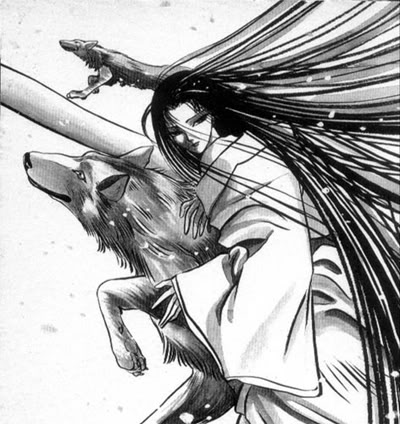
This lovely anthology is a radical departure for CLAMP. Gone are the super-detailed costumes and fussy character designs of their early, post-doujinshi work; in their place are spare, simply-drawn figures that seem consciously modeled on examples from eighteenth- and nineteenth-century scroll paintings. The stories themselves are told directly without embellishment, though CLAMP infuses each tale with genuine pathos, showing us how the characters’ anger and doubt lead to profound despair. As a result, the prevailing tone and spirit are reminiscent of Masaki Kobayashi’s 1964 film Kwaidan, both in the stories’ fidelity to the conventions of Japanese folklore and in their lyrical restraint. And if my description didn’t sell you on Shirahime-Syo, let this beautiful image, taken from the final story of the collection, persuade you to give this out-of-print gem a try:

snowgoddess2

* * * * *

So what titles top your list of underrated shojo manga? Inquiring minds want to know!

Filed Under: Manga, Manga Critic, Recommended Reading Tagged With: Ai Morinaga, clamp, Classic, cmx, Comedy, CPM, Drama, Go! Comi, Historical Drama, Osamu Tezuka, Sci-Fi, Setona Mizushiro, Tokyopop, VIZ

5 Underrated Shojo Manga

July 10, 2010 by Katherine Dacey 7 Comments

Earlier in the week, I sang the praises of Kaze Hikaru, my all-time favorite shojo manga (and one of my all-time favorite manga, period). Today I shine the spotlight on five great titles that haven’t garnered as much favorable notice as they deserve. Sadly, all but one are officially out of print or will be soon, owing to publisher closings, lapsed licenses, and so-so sales. If you can’t find them through retailers such as Amazon, Buy.com, or Right Stuf!, you might wish to cast your net wider to include sites like Robert’s Anime Corner Store (a good source for older titles) and eBay, or try your local library for copies.

phoenix125. PHOENIX, VOL. 12: EARLY WORKS

OSAMU TEZUKA • VIZ • 1 VOLUME (complete)

A better subtitle for volume twelve of Phoenix would be I Lost It At the Movies, as these four stories reveal just how passionately Osamu Tezuka loved American cinema. In a 1980 essay, Tezuka explained that “watching American big-screen spectacle movies such as Helen of Troy and Land of the Pharaohs made me want to create a similar sort of romantic epic for young girls’ comics.” Looking at this collection, the sword-and-sandal influence manifests itself in almost every aspect of Tezuka’s storytelling, from the costumes and settings to the dialogue, which the characters declaim as if it were of Biblical consequence. (Paging Charlton Heston!) What makes this Hollywood pomposity bearable — even charming — is the tempering influence of Walt Disney. The character designs owe an obvious debt to Snow White, while the supporting cast could easily belong to Cinderella or Sleeping Beauty’s entourage of chatty animal friends.

Anyone looking for the moral complexity of later Phoenix stories will be disappointed in volume twelve, as Tezuka’s villains are cartoonishly evil and his heroes (and heroine) chastely noble. If one approaches this collection in the spirit of, say, a musicologist flipping through Beethoven’s pre-Eroica manuscripts, however, the rewards are more palpable. In these early stories we see Tezuka developing his comedic chops with pop culture references and physical slapstick; we see him experimenting with layout, as he renders the battlefields of Troy and Rome in sweeping, full-page panels; and we see him creating his first cycle of interconnected stories, introducing some of the themes that would unify the entire Phoenix saga. In short, we see Tezuka’s first attempts to find his own voice as he pays tribute to the artists who influenced him, learning more about his exuberant, unique artistry in the process. (Originally reviewed at PopCultureShock on 3/19/08.)

xday14. X-DAY

SETONA MIZUSHIRO • TOKYOPOP • 2 VOLUMES (complete)

When star high jumper Rika injures her leg and loses her boyfriend to a teammate, she becomes profoundly depressed. She soon discovers an online community of similarly disaffected students, however, all of whom share her desire to “make the school disappear.” Their internet chats soon give way to in-person meetings, where Rika comes face-to-face with three very different people: “Polaris,” a shy teen who dresses like a Goth off campus, “Mr. Money,” a friendly underclassman, and “Janglarian,” a young biology teacher who wants to dynamite the school. Setona Mizushiro’s dark story could easily spiral into melodrama, but she does a fine job of showing us how the normal tribulations of being a teenager — fighting with parents, enduring harassment from peers, feeling overwhelmed by anxiety — have led these four fragile people to hatch such a radical plan for coping with their pain. The second volume lacks the dramatic urgency of the first, as the students’ plot begins to come unraveled, but X-Day remains persuasive until its final pages, thanks to Mizushiro’s vivid characterizations and nuanced artwork.

airevolution13. A.I. REVOLUTION

YUU ASAMI• GO! COMI • 5 VOLUMES (incomplete; 17 volumes in Japan)

A.I. Revolution starts from a premise familiar to legions of Isaac Asimov fans: a human builds a robot, only to discover his creation has a mind and feelings of its own. Sui, the story’s human protagonist, initially views robots as household appliances, not unlike toasters or vaccuum cleaners. When her father presents her with an android companion, however, Sui develops a strong bond with it, discovering that Vermillion has a capacity for emotion that far outstrips her expectations.

A.I. Revolution may sound like I, Robot Hottie, but Yuu Asami puts a thoughtful spin on the material, filtering familiar sci-fi themes through a shojo lens. Though she weaves evil scientists and corporate espionage into the narrative, the story is at its best when focusing on Vermillion’s interactions with his human family; Sui’s father, for example, has modeled Vermillion in the image of a colleague that he admired, leading to a few funny, awkward moments of human-robot flirtation, while Sui seesaws between sisterly protectiveness and romantic attachment to her handsome companion. (Really, is there any other kind of robot in shojo manga?) Asami’s art reminds me of Akimi Yoshida’s with its elongated character designs, delicate linework, and sparing use of screentone. It’s a little dated perhaps, but a welcome change of pace from the slicker, busier layouts characteristic of the titles licensed by Tokyopop and VIZ. Highly recommended for fans of old-school shojo. (Originally reviewed at PopCultureShock on 3/4/08.)

gals12. GALS!

MIHONA FUJI • CMX • 10 VOLUMES (complete)

This wacky comedy is one of the better shojo licenses in the CMX catalog, a rude, raunchy, and oddly moral tale about a feisty kogal named Ran Kotobuki. Though Ran and her pals are primarily interested in shopping for outrageous outfits, visiting the tanning salon, and stealing book bags from students at rival schools, Ran’s upbringing in a household full of police officers (dad, mom, and big brother are all cops) has taught her to adhere to a strict code of conduct: no sex for favors, and no tolerance for anyone who disrespects her friends.

Ran is a terrific, memorable character — impetuous, loud, funny, and tough, the kind of person who would literally smack sense into another girl if she thought it would work. Better still, she’s not easily swayed by boys; her relationship with the sweet but dim Tatsuki is surprisingly chaste, limited primarily to hand-holding and awkward discussions about feelings. (Ran won’t deign to say, “I love you,” as it compromises her tough-girl image.) As befits a manga that was serialized in Ribon, all of the characters have enormous, doll-like eyes in the Arina Tanemura style, and fabulous outfits that shame the Gossip Girls. The backgrounds are surprisingly detailed, conveying the look and feel of the Shibuya district with a specificity that’s all too rare in shojo manga. In sum, Gals! is the kind of good-natured gang comedy that I hoped My Darling! Miss Bancho would be: full of humor and heart, but with fewer capitulations to shojo convention.

lovesong1. LOVE SONG

KEIKO NISHI • VIZ • 1 VOLUME (complete)

Back in the 1990s, Matt Thorn labored hard to make Keiko Nishi a household name among American manga readers, translating six of her stories for VIZ; two appeared in Four Shojo Stories alongside work by Moto Hagio and Shio Sato, and four appeared in a stand-alone volume called Love Song. Though Nishi didn’t catch on with Western shojo fans, it’s easy to see why Thorn championed her work: she’s a terrific, versatile storyteller, equally capable of writing light-hearted fantasies and character studies of deeply damaged people.

Of the four stories that appear in Love Song, two are standouts: “Jewels of the Seaside,” a black comedy about three sisters who compete for the same man’s affection, with disastrous results, and “The Skin of Her Heart,” a quiet sci-fi tale about a young woman torn between what she wants and what her mother wants for her. (Readers who enjoyed A, A’ or Twin Spica are a natural audience for “Skin of Her Heart,” though it works equally well for folks who aren’t big sci-fi buffs.) Nishi’s artwork is an acquired taste, at times precise, elegant, and naturalistic, and at times loose and sketchy, with the white of the page playing an important role in underscoring the emotional distance between her characters. Her minimalist approach won’t be to every shojo fan’s liking, but she demonstrates that it’s perfectly possible to convey the interior lives of her characters without resorting to the kind of visual shorthands — flowers, sweatdrops, nosebleeds — that have been overused in contemporary shojo manga. Love Song is out of print, but unlike Four Shojo Stories and A, A’, is still relatively easy to obtain through online retailers like Amazon. Highly recommended.

HONORABLE MENTIONS

duckprince1DUCK PRINCE (Ai Morinaga • CMP • 3 volumes, suspended)
Morinaga’s battle-of-the-sexes comedy takes a standard shojo plot — homely gal gets makeover to win the guy of her dream — and turns it on its head, substituting a sweet, helmet-haired nerd for the customary plain Jane, and adding a novel twist: Reiichi appears to most girls as a smokin’ hottie, but in the presence of his beloved Yumiko, he reverts to his original form. As in all her work, Morinaga uses humor to make deeper points about gender roles and physical beauty, though Duck Prince is too rude and risque to be mistaken for an Afterschool Special. Central Park Media released three of the five volumes before suspending Duck Prince; of all the titles left homeless by CPM’s demise, it seems like one of the strongest candidates for a license rescue, though middling sales of Your & My Secret and My Heavenly Hockey Club may have scared American publishers away from Morinaga’s distinctive comedies.

shirahimesyoSHIRAHIME-SYO: SNOW GODDESS TALES (CLAMP • Tokyopop • 1 volume)
This lovely anthology is a radical departure for CLAMP. Gone are the super-detailed costumes and fussy character designs of their early, post-doujinshi work; in their place are spare, simply-drawn figures that seem consciously modeled on examples from eighteenth- and nineteenth-century scroll paintings. The stories themselves are told directly without embellishment, though CLAMP infuses each tale with genuine pathos, showing us how the characters’ anger and doubt lead to profound despair. As a result, the prevailing tone and spirit are reminiscent of Masaki Kobayashi’s 1964 film Kwaidan, both in the stories’ fidelity to the conventions of Japanese folklore and in their lyrical restraint. And if my description didn’t sell you on Shirahime-Syo, let this beautiful image, taken from the final story of the collection, persuade you to give this out-of-print gem a try:

snowgoddess2

* * * * *

So what titles top your list of underrated shojo manga? Inquiring minds want to know!

Filed Under: Manga Critic Tagged With: Ai Morinaga, clamp, Classic, cmx, Comedy, CPM, Drama, Go! Comi, Historical Drama, Osamu Tezuka, Sci-Fi, Setona Mizushiro, shojo, Tokyopop, VIZ

Gankutsuou: The Count of Monte Cristo, Vols. 1-3

June 18, 2010 by Katherine Dacey

The Count of Monte Cristo, arguably Alexander Dumas’ best novel, is a big, sprawling beast, stuffed to the gills with characters, subplots, secret identities, suicides, and dramatic confrontations; small wonder that GONZO felt it would provide a solid foundation for a twenty-four episode anime. The series debuted to critical acclaim in 2004, thanks largely to its arresting visuals (designer Anna Sui had a hand in creating the characters’ elaborate costumes) and its dramatic soundtrack, which employed key musical themes from Donizetti’s Lucia di Lammermoor (the gold standard for operatic madness scenes) and Tchaikovsky’s Manfred Symphony (a piece of program music inspired by Byron’s poem of the same name).

The three-volume manga offers a darker, more focused presentation of the anime’s main plot while taking greater liberties with the source material. Like the anime, the manga follows the basic contours of Dumas’ novel: Edmond Dantes, an honest, hardworking sailor, is falsely imprisoned for treason, serving nearly fourteen years at the remote Chateau d’If before escaping and reinventing himself as the Count of Monte Cristo, a dashing aristocrat who uses his social standing, good looks, and vast fortune to exact revenge on the three friends who betrayed him. Though Dumas tells the story in a chronological fashion, Mahiro Maeda begins Gankutsuou at the novel’s midpoint, relating the circumstances of Dantes’ trial and punishment in several extensive flashbacks. Maeda adds a few ruffles and flourishes of his own, moving the action to the year 5053, transforming the Count into a space vampire — hard time will do that to a man, I’m told — and adding a faintly homoerotic element to the relationship between the Count and Albert de Morcerf, the son of Edmond’s former fiancee Mercedes.

As anime-to-manga adaptations go, Gankutsuou is better than average. Maeda wins points for employing a visual style that evokes the look of the anime without slavishly copying it, and for wisely limiting the scope of the story to the Count’s take-down of Gerard de Villefort, the ambitious prosecutor responsible for framing him. Volume one follows the anime closely, depicting the first meeting between the Count and Albert, and documenting how the Count insinuates himself into Parisian society. From there, however, the manga follows a somewhat different track, revealing both the full extent of Villefort’s duplicity and the true nature of Gankutsuou, the demon who possessed Edmon Dantes’ body while he was still imprisoned at the Chateau d’If (here played by a remote, unmanned space station).

The flashbacks to Dantes’ imprisonment are rendered in sensual, swirling lines suggestive of a Van Gogh painting; many panels verge on the abstract, taking the story out of the realm of the literal into a feverish dream world that effectively dramatizes Dantes’ emotional anguish without resorting to cliche imagery. Though these scenes are an inspired addition to the story (nothing like them appears in the anime), the manga’s big denouement is not. Maeda greatly simplifies the Count’s elaborate revenge on Villefort, trimming several key players from the drama and contriving a ludicrous love scene between Villefort’s second wife and his daughter Valentine that has as much to do with real Sapphic desire as a Budweiser commercial starring blond twins. It’s a shame that Maeda diverged so greatly from the original, as the Count’s revenge on Villefort is one of the novel’s most gripping subplots, filled with double-crosses, estrangements, murders (by poison, no less), and a secret love child who plays an instrumental role in destroying the trust between Villefort and Danglars, another key player in the original conspiracy against Dantes.

Folks who haven’t seen the anime or read The Count of Monte Cristo are probably the best audience for this series, as they won’t be encumbered with expectations about how events should unfold. Anyone with a strong investment in the anime or the novel, however, is likely to find this chamber piece an unsatisfying effort to represent the full complexity and drama of Dumas’ seminal work.

GANKUTSUOU, VOLS. 1-3 • BY MAHIRO MAEDA AND YURI ARIWARA • DEL REY • RATING: OLDER TEEN (16+)

Filed Under: Manga, Manga Critic, REVIEWS Tagged With: Alexander Dumas, Anime Adaptation, del rey, Gankutsuou, Sci-Fi

Library Wars: Love & War, Vol. 1

June 1, 2010 by Katherine Dacey

If I were thirteen years old, Library Wars would be at the top of my Best Manga Ever list, as it reads like a catalog of the things I dug in my early teens: books about the future, books about women breaking into male professions, books with bickering leads who harbor secret feelings for each other. I can’t say that Library Wars works as well for me as an adult, but I can recommend it to younger female manga fans who are tired of stories about wallflowers, doormats, or fifteen-year-old girls whose primary objective is to nab a husband.

The story focuses on Iku Hasahara, a former track star and future librarian who enlists in the Library Defense Force (LDF), a paramilitary organization dedicated to combating censorship. Formed in response to the Media Betterment Act, the LDF actively challenges the national government’s efforts to remove books from stores and libraries, using weapons and strong-arm tactics when necessary. Iku is the only female recruit who can keep pace with the guys, push-up for push-up, and is the frequent target of abuse from Atsushi Dojo, a handsome drill sergeant who takes grim delight in pointing out her weaknesses. (Her mastery of the Japanese Decimal System leaves a lot to be desired.) As Iku advances through basic training, however, she begins to realize that Dojo isn’t so bad; his sometimes brusque demeanor masks genuine concern for his pupil, and a sincere desire to help her become a top-notch officer.

Library Wars‘ premise certainly invites comparisons with Fahrenheit 451. The future society depicted in Library Wars isn’t nearly as bleak or disorderly as the one Ray Bradbury imagined back in 1951, but creators Hiro Arakawa and Kiiro Yumi are just as insistent on the importance of standing up for free speech; Iku joined the Defense Forces after the Media Betterment Committee’s jack-booted thugs attempted to confiscate a book from her. (A hot guy also factored into her decision to enlist.) The MBC is as arbitrary and ruthless as the Firemen of Fahrenheit 451, working hard to restrict citizens’ access to potentially “harmful” materials, even going so far as to infiltrate libraries to weed out undesirable material.

In adapting Library Wars from novel to manga, however, Kiiro Yuki places less emphasis on the book-banning crisis and more on her characters’ relationships, preserving just enough background about the LDF’s history to justify the action sequences. That’s not necessarily a bad choice; Iku and Dojo’s banter has a pleasant, antagonistic zing to it that infuses the boot camp scenes with some playful energy. The LDF’s rationale for existing, however, often seems underdeveloped, as we don’t know what prompted the national government to pass the Betterment Act. In leaving these details vague, one could argue that Yuki is simply being true to historical fact; oppressive regimes from tsarist Russia to Maoist China have arbitrarily banned books and condemned authors in the interest of “the national welfare,” yet in the context of the Library Wars manga, that lack of specificity comes off as sloppiness. We don’t know whether censorship is having a real impact on citizens’ ability to say and think what they please; the few scenes in which we glimpse the MBC in action suggest that they’re more of a nuisance than a genuine threat to the social order.

The artwork is serviceable but not great. The character designs are about as basic as they get, with haircuts playing a pivotal role in establishing each cast member’s personality; we know Iku is a tomboy from her sensible and slightly androgynous bob, for example, while Dojo’s neat ‘do paints him as a hardcore military man. (By contrast, Sgt. Komaki, the series’ designated McDreamy character, has the kind of tousled locks that wouldn’t pass muster in the Marines.) The action scenes are hasty affairs, rendered with little respect for continuity or background detail, while the layouts often feel busy, with too many small panels and design elements hampering the visual flow.

If the censorship theme and artwork aren’t as well executed as I might have hoped, Library Wars earns high marks for having a smart, capable heroine and a smart, topical premise. Iku may not be a wonder woman, but she’s a plausible mixture of strength and uncertainty; teen girls will relate to her shifting moods, fierce temper, and high principles, even if they can’t agree whether she should end up with Dojo. And really, what’s not to like about a series that features hot guys who hate censorship but like books, libraries, and butt-kicking women? Now there’s a fantasy female readers of all ages can endorse.

LIBRARY WARS: LOVE & WAR, VOL. 1 • STORY & ART KIIRO YUMI, ORIGINAL CONCEPT BY HIRO ARAKAWA • VIZ • 200 pp. • RATING: OLDER TEEN (16+)

Filed Under: Manga, Manga Critic, REVIEWS Tagged With: Sci-Fi, shojo beat, VIZ

Manga Artifacts: A, A’ and They Were Eleven

May 31, 2010 by Katherine Dacey

Though Vertical has published two series by Keiko Takemiya, the Magnificent 49ers’ work remains largely unavailable in English, with a few exceptions: Yasuko Aoike’s From Eroica With Love (which debuted in 1976 in Akita Shoten), and Moto Hagio’s short stories “A, A’ [A, A Prime],” “4/4 [Quatre/Quarts],” “X+Y,” and “They Were Eleven.”* These four stories comprise a mere 330 pages of material, but they offer readers a window into a key stage in shojo manga’s development, when women artists began pushing the medium in new directions, visually and thematically. Hagio’s work, like Takemiya’s, is unabashedly Romantic, filled with yearning characters who are struggling to uncover their true selves, even when that quest puts them at odds with societal norms. Though there is an intense, adolescent sensibility to some of her stories, that — for me, at least — is part of their beauty; Hagio clearly remembers what it feels like to be sixteen or eighteen, yet the way she frames those emotions is so exquisite and refined that the reader can appreciate her craft, even if the drama seems a little overripe from an adult perspective.

If you’ve been curious about what Takemiya’s peers were doing while she was writing To Terra and Song of the Wind and the Trees, or are wondering what to expect if you purchase Hagio’s A Drunken Dream this fall, read on.

aa_coverA, A’ [A, A Prime]

This sometimes lyrical, sometimes bizarre anthology contains three interrelated stories. In the first, “A, A’, [A, A Prime],” a group of researchers struggle to accept Addy, a new team member who is, in fact, the clone of a colleague who perished several years earlier; in the second, “4/4 [Quatre/Quarts],” Mori, a telepath, becomes obsessed with Trill, a strange young woman who’s virtually mute; and in the third, “X+Y,” a now-older Mori falls in love with Tacto, an androgynous young man who resembles Trill. Addy, Trill, and Tacto are Unicorns, a humanoid species bred for deep-space travel. Though Unicorns share common physical characteristics — most notably a shock of red hair running down the center of their heads — and high IQs — their original purpose was to serve as computer technicians on long space missions — they have a hard time negotiating the human world: emotions baffle them, and the act of forming deep attachments to other people can destabilize their personalities.

Though Hagio rehearses some time-honored sci-fi tropes — especially the danger of genetic tampering — one of her most striking themes is the relationship between memory and identity. Addy, for example, is born with all of her predecessor’s memories of childhood, but none of her predecessor’s memories of Proxima, the remote ice world where the original Addy worked for three years before dying in an accident. That gap in Addy’s memory proves especially difficult for her co-worker Regg, who had been romantically involved with Addy’s predecessor. Addy has no idea who he is, and is bewildered that Regg knows about events from her “childhood” — events that Addy hasn’t discussed with anyone. More troubling still, these “memories” are deeply upsetting, even though Addy knows she isn’t reliving her own history.

Tacto, on the other hand, teeters on the verge of a breakdown because his memory is incomplete. As a young child, he stumbled across a gruesome sight, one which his father attempted to erase from Tacto’s memory. That seemingly humane gesture backfired, however, leaving Tacto with only an emotional echo of the traumatic event and no concrete information about what he’d actually seen; only by recovering those painful memories does Tacto escape his emotional paralysis and embrace Mori’s love for him.

Hagio’s artwork supports the intensely Romantic quality of all three stories, as she represents her characters’ memories with symbolically rich imagery. In “4/4,” for example, Trill is haunted by a recurring vision of corpses, each fastened to the floor with a lepidopterist’s pin — Trill’s memory of numerous, unsuccessful attempts to clone her. (Dr. Sazzan, her caretaker, is obsessed with breeding more Unicorns.) Tacto’s unformed memory of his childhood resembles the nightmare paintings of John Fuselli; Tacto sees a disembodied, demonic face emerge from the rocky surface of an asteroid, a swirling black cloud with eyes and a terrible mouth.

That dream-like quality extends to the settings as well, which mirror the characters’ turbulent emotional states. Trill and Mori, for example, visit a spectacular aviary aboard a space station; it’s a lush, erotically charged setting evocative of a Rousseau painting, and one that suggests the intensity of Mori’s desire for Trill. Hagio performs a similar trick in this sequence, transforming an interstellar reconnaissance mission into an intimate windsailing expedition through the stars:

aprime

Lest A, A’ sound like The Unbearable Lightness of Being in Space, let me assure you that Hagio demonstrates a unique ability to mix the sublime with the ridiculous. Her characters’ names, for example, are just about as goofy as they come: Dr. Wright Moonsault. Regg Bone. Marble. Professor Sazzan. Their costumes, too, have the same overripe quality as the names, with men sporting headbands, half capes, tall boots, and Renn Fair hats, and women clad in off-the-shoulder jumpsuits. The subplots take the cake, however, for their sheer moonbattiness: in “X+Y,” for example, Tacto’s father invents a temporary sex change drug that enables a male colleague to become pregnant, a subplot that actually holds the key to unlocking Tacto’s past.

Now out of print, VIZ originally released A, A’ in 1997. Expect to pay about $25.00 for a decent used copy if you choose to buy it online through ALibris or Amazon’s network of retailers. You might also try the library or your local comic shop’s bargain bin.

theywereeleven3THEY WERE ELEVEN

Ten cadets at an interstellar space academy are dispatched to a decommissioned ship. Their task: remain on board for 53 days without pressing the panic button; if they persevere, all ten will pass their final exam. Once aboard the ship, however, the cadets realize something is amiss. Not only do they have an extra crew member, but a series of mechanical failures and explosions threaten to send the ship hurtling into the surface of a neighboring star.

Though the premise could be spun out in the manner of, say, Event Horizon, Hagio favors a Gene Rodenberry approach, emphasizing character development and social commentary over gunplay, robots, or totally icky alien life forms. (You know the kind: they embed themselves in your chest cavity, hunt you down like a rabbit, or just spray toxic venom in your face.) Like the good astronauts of the starship Enterprise, They Were Eleven‘s cast are humanoids of various shapes and sizes. A few seem empathic; one has remarkable healing powers; another is tall and scaly; yet another looks like a distant relative of The Thing; and one pretty character has yet to decide whether it will develop into a man or woman. The dilemmas the cadets face — technical, social, and medical — also place us firmly in Star Trek territory, inspiring the characters to ruminate on issues as varied as gender roles and the ethics of sacrificing an individual for the good of the collective.

In fact, the exploration of gender is one of They Were Eleven‘s most interesting subplots; Frol, the sexually indeterminate member of the crew, is furious that her shipmates construe her as female. “I hate women!” she shouts. “Women are nothing but a waste of space!” Midway through the story, Hagio reveals the source of Frol’s misogyny: her parents want her to become the ninth wife of a prominent nobleman. If Frol passes the Galactic Academy exam, however, she will earn the right to become a man, a privilege usually reserved for a family’s eldest child. (Frol’s people are born hermaphrodites, becoming male or female only in adulthood.) Hagio’s critique of gender roles is both obvious and sly — obvious, in that Frol’s objection to being a woman stems from the division of labor on her home world (men rule the roost; women do all the work and bear lots of children) and sly, in that Hagio uses primogeniture as a metaphor for the broader sense of entitlement that comes with being born male.

If Hagio’s aliens are strictly by the Star Trek book, all funny foreheads and funky hides, her layouts are stunning, punctuated by several arresting, full-page images: an enormous hall of cadets taking their exams (each in a groovy, womb-like isolation pod to prevent cheating), a picture of the dying star around which the test ship is orbiting, a character’s profile dissolving into a trail of stars. Hagio juxtaposes these expansive images with long, almost claustrophobically tight scenes of shipmates bickering and coping with the latest mechanical failures. It’s a neat trick, giving us a sense of how tight quarters really are aboard the White, and suggesting how that small space exacerbates tensions among the crew. And oh, those interiors! Like Takemiya, Hagio loves to draw detailed banks of computers and rows of tubes and wires and pipes, bringing the ship to vivid life. (Or, perhaps more accurately in the case of They Were Eleven, showing the ship in all its decrepitude.)

theywere11_page

Much as I would like to recommend They Were Eleven, the story is out of print in English. In the mid-1990s, VIZ issued it in two forms: as a four-issue comic (1995), and in the anthology Four Shojo Stories (1996). Used book dealers have gotten wise to the scarcity of this title; copies of Four Shojo Stories generally retail for $60 and up. Though I didn’t have too much difficulty scaring up the old VIZ Flower floppies on eBay (and I rather enjoyed the American-style presentation), it would be great to see this chestnut re-issued for a generation of readers who think that Black Bird is the first and last word in girls’ comics.

* Hagio’s story “Hanshin” was reprinted in The Comics Journal‘s shojo manga issue from 2005 (no. 269). For the purposes of this essay, I’m focusing on Hagio’s commercially available work. And speaking of work by pioneering shojo artists, Swan, which ran in Margaret from 1976 to 1981, is also available in English (CMX), and is the work of artist Kyoko Ariyoshi, who was born in 1950.

This an expanded version of a review that originally appeared at PopCultureShock on 1/20/07.

Filed Under: Manga, Manga Critic, REVIEWS Tagged With: Classic, Magnificent 49ers, moto hagio, Sci-Fi, VIZ

Andromeda Stories, Vols. 1-3

May 26, 2010 by Katherine Dacey

Ah, Keiko Takemiya, how I love your sci-fi extravaganzas! The psychic twins. The giant spiderbots. The evil, omniscient computers. The sand dragons. The fantastic hairdos. Just think how much more entertaining The Matrix might have been if you’d been at the helm instead of the dour, self-indulgent Wachowski Brothers! But wait… you did create your very own version of The Matrix — Andromeda Stories. Your version may not be as slickly presented as the Wachowski Brothers’, but you and collaborator Ryu Mitsuse engage the mind and heart with your tragic tale of doomed love, lost siblings, and machines so insidious that they’ll remake anything in their image—including the fish.

But I’m getting ahead of myself.

Mitsuse and Takemiya invert the normal order of events in a classical drama and begin Andromeda Stories with a wedding — a royal wedding, to be exact, forging an alliance between Cosmoralia and Ayoyoda, two kingdoms on the planet Astria. On the eve of the ceremony, newlyweds Prince Ithaca and Princess Lilia spot a mysterious blue star pulsating in the night sky. Shortly after the star’s appearance, a meteorite crashes through Astria’s atmosphere with a deadly cargo: an army of nanobots seeking human hosts. Only Il, a fierce female warrior, and Prince Milan, Lilia’s devoted brother, realize that these cyber-critters are rapidly transforming Cosmoralia’s population into a Borg-like race of automatons. Il and Milan set out to liberate Cosmoralia from the grips of this cyber-invasion force before the contagion of violence and fear spreads to Ayoyoda.

As Il soon discovers, there’s a small resistance movement led by the Murat, an alien race who lost their homeworld to the same invading force eight generations earlier. The survivors settled on Astria and married into Ayoyoda’s royal family with the goal of preventing the Astrians from becoming technologically sophisticated enough to attract the nanobots’ attention — and if that effort failed, doing whatever they could to defeat the machines. The Murat’s secret weapon against the nanobots are Jimsa and Affle, twins born to Princess Lilia and kept apart for over twelve years to escape detection by the new regime. Jimsa and Affle both possess the power to kill with a thought, a power amplified when the two fight side by side. Of course, there’s a drawback to so much empathetic energy: if one is injured, the other feels his pain, just like the Corsican Brothers. Then, too, there’s that pesky issue of trust: will Jimsa and Affle ever see themselves as sibilings, or have their separate upbringings driven a permanent wedge between them, thus thwarting the Murats’ hope?

In other words, it’s Star Trek by way of Anne McCaffrey, with a dash of Wagner and a little Arthur C. Clarke for good measure.

One of the things I love most about Takemiya’s work is the way she freely commingles sci-fi and fantasy elements in an effort to suggest the setting: a long time ago, in a galaxy far away. Her characters carry swords and wear togas, and live in castles with turrets, yet employ the kind of gadgetry—mind-reading computers, laser guns—that wouldn’t be out of place on the Death Star. Art-wise, the spirit of Osamu Tezuka lingers over many pages in Andromeda Stories, especially in its busier scenes. The Cosmoralian marketplace, for example, comes alive thanks to Takemiya’s vivid caricatures of merchants, wrestlers, farmers, dancing girls, snakes, and sloe-eyed dinosaurs, while many of the full-page cityscapes suggest the future worlds of Phoenix and Apollo’s Song, with their abundant towers and tubular skywalks. Though Takemiya’s principal characters clearly belong to the world of 1970s shojo with their flowing manes, gypsy outfits, and sparkling eyes, some of her supporting characters — especially Balga, a Bluto-esque bodyguard — look like refugees from Buddha or Dororo. (In a sly nod to the kind of anachronistic humor that Tezuka loved, Takemiya depicts Balga playing with a Rubix’s cube while standing watch outside Princess Lilia’s chambers. 1980, you are so busted!)

Takemiya also demonstrates a Tezukian flair for staging short, effective action sequences that make creative use of panel shapes to convey movement, speed, and distance. Midway through volume one, for example, Il leaps through the canopy of a forest in an effort to investigate a mysterious crater not far outside the Cosmoralian walls:

andromeda_page

In just four panels, we can gauge how far she’s traveled and how high off the ground she is — a point underscored by the tapered edge of the top row’s middle panel. The diagonal border amplifies the effect of the vertical speedlines, drawing the eye downwards in an rapid fashion that mimics Il’s motion. As Derik Badman observes in a concise analysis of this same page, Takemiya uses a number of tricks — drawing two iterations of the same character in one panel, using panel shape to direct the reader’s eye through the sequence, allowing sound effects to bleed outside the panels — to help us trace Il’s path through the tree tops, showing us, in compressed form, how many jumps it takes for her to reach a secure perch. It’s a technique that Tezuka perfected in works like MW, Ode to Kirihito, and Swallowing the Earth, where he gooses very basic components of the layout — especially panel shapes — to evoke the speed and energy of, say, a sword fight or a car chase.

At times, the richness of Takemiya’s visual imagination camouflages the more pedestrian aspects of the story, such as its one-dimensional principals. Lilia, in particular, is the kind of beautiful, virtuous, and long-suffering creature that seems to exist only in old-school Disney movies, while Il is a classic lone wolf, answering to no one, even when it might benefit her cause; the only real novelty here is that Mitsuse and Takemiya assign a stereotypically male role to a female character. The plot is simpler and more transparently allegorical than To Terra‘s, touching on a variety of standard science fiction themes, from the dangers of relegating too much responsibility to machines to the evils of totalitarianism. None of these themes are developed with the same level of sophistication as they are in To Terra, as the characters are generally too busy dodging death rays and mechanized piranha to wax poetic about their inner lives.

If Andromeda Stories never reaches the grand, operatic heights of To Terra, it nonetheless proves entertaining, building steady momentum over its 600+ page run, pausing occasionally to meditate on the nature of free will, creation, and individual responsibility. And c’mon… what’s not to like about a manga that looks like a 1979 cover of Heavy Metal magazine?!

This review is a synthesis of two shorter reviews that originally appeared at PopCultureShock on 10/3/07 and 1/31/08, respectively.

Filed Under: Manga, Manga Critic, REVIEWS Tagged With: Classic, Keiko Takemiya, Magnificent 49ers, Sci-Fi, Vertical Comics

An Introduction to Keiko Takemiya’s To Terra

May 23, 2010 by Katherine Dacey


Welcome to the May Manga Movable Feast! On the menu: Keiko Takemiya’s award-winning sci-fi epic To Terra. If you’ve never dined with us before, here’s how the MMF works: every month, the manga blogging community holds a week-long virtual book club in which we discuss a particular series or one-shot. Each day, the host shares links to new blog entries focusing on that work, while building an archive for the entire week’s discussion. At the end of the week, the group then selects a new host and a new “menu” for the following month.

Our “feast” has two goals. The first is to promote intelligent, in-depth analysis of manga we love (or, in some cases, hate). Previous contributions have run the gamut from straightforward reviews to an interview with Sexy Voice and Robo editor Eric Searleman, a guided tour through Kaoru Mori’s “Emmaverse,” and an essay contrasting Urushibara’s Mushishi with Lovecraft’s Cthulhu Mythos. The second goal is to foster a sense of community among avid manga readers. Everyone is invited to take part in the MMF, regardless of whether you’ve participated before. If you have your own blog, simply send me the link to your To Terra-themed post, whether it’s a brand new essay written expressly for the MMF or an older review that you’d like the share with the community, and I’ll include it in my daily round-up. If you don’t have a blog, send me your text and I’ll post your ideas here. (Click here for my email.) Discussion begins today and will run through the week until Sunday, May 30th.

Below, I’ve provided an overview of the series’ publication history, plot, and place in the manga canon. You can follow the discussion by checking the daily blog posts, clicking on the Manga Movable Feast tag, or visiting the MMF archive: http://mangacritic.com/?page_id=4766.

TO TERRA: THE PUBLICATION HISTORY

To Terra debuted in 1977 in Gekkan Manga Shonen. During its three-year run, To Terra nabbed two honors: the Shogakukan Manga Award and the Seiun Award, an annual prize for the best new science fiction published in Japan. (To Terra was the first manga to receive a Seiun Award; later winners would include Appleseed, Domu: A Child’s Dream, Urusei Yatsura, Cardcaptor Sakura, Planetes, and 20th Century Boys.)  The series was originally issued in tankubon format in 1980 by Asahi Sonorama, and reissued again in 2007 by Square Enix, around the same time Vertical, Inc. released the first English-language edition.

To Terra has enjoyed considerable popularity in Japan, thanks, in part, to several adaptations: a 1979 NHK radio drama; a 1980 movie, produced by Toei Animation; and a 2007 animated television series, produced by Aniplex.

TO TERRA: THE STORY

toterra2To Terra unfolds in a distant future characterized by environmental devastation. To salvage their dying planet, humans have evacuated Terra (Earth) and, with the aid of a supercomputer named Mother, formed a new government to restore Terra and its people to health. The most striking feature of this era of Superior Domination (S.D.) is the segregation of children from adults. Born in laboratories, raised by foster parents on Ataraxia, a planet far from Terra, children are groomed from infancy to become model citizens. At the age of 14, Mother subjects each child to a grueling battery of psychological tests euphemistically called Maturity Checks. Those who pass are sorted by intelligence, then dispatched to various corners of the galaxy for further training; those who fail are removed from society.
The real purpose of these checks is to weed out an unwanted by-product of S.D.-era genetic engineering: the Mu, a race of telepathic mutants. After decades of persecution, the Mu fled Terra, seeking refuge beneath the surface of Ataraxia. Under the leadership of Soldier Blue, they escaped detection by humans. But Soldier Blue is frail and dying (though he has chosen to project a youthful, sparkly-eyed appearance), and seeks a successor in Jomy Marcus Shin, a 14-year-old who possesses both the telepathic ability of a Mu and the hardier constitution of a human. As the series unfolds, we watch Jomy develop into a formidable leader, capable of inspiring passion, loyalty, and sacrifice among the Mu as they struggle to return to their homeworld. Running in counterpoint to Jomy’s story is that of Keith Anyan, an elite solider-in-training and future Terran leader. Keith enjoys a privileged position in human society. Yet he is plagued by doubt: why doesn’t he remember his childhood? Or his foster parents? And why does Mother refuse to eradicate the Mu when the state has deemed them a threat to mankind?

What makes this unabashedly Romantic mash-up of Star Trek, Star Wars, and 2001 both entertaining and moving is the richness of Keiko Takemiya’s universe. On the surface, To Terra is a beautifully illustrated soap opera, the kind of manga in which the heroes have terrific hair, wear smart jumpsuits, and keep psychic squirrels as pets. But To Terra can also be read a cautionary tale about mankind’s poor custodianship of the Earth; a scathing critique of eugenics and social engineering; a meditation on the relationship between memory and identity; and, most significantly, a critique of adult hypocrisy. It’s this multivalent quality that elevates To Terra from a mere allegory to an epic space opera as engaging, beautiful, and thought-provoking as Tezuka’s best work. (This review originally appeared at PopCultureShock on July 16, 2007.)

TO TERRA: ITS PLACE IN THE CANON

As anyone with a passing familiarity with the Magnificent 49ers knows, the 1970s were a watershed in the development of shojo manga. Not that shojo manga was an invention of the 1970s, of course; shojo manga traces its roots back to the 1910s, when girls’ magazines began running short, one-page gag strips, and underwent several major stages of development before evolving into the medium we know today. Until the mid-1960s, however, shojo manga was written by men for pre-teen girls; the stories were sweet, sentimental, and chaste, often revolving around family, class, and identity in the manner of a Frances Hodgson Burnett story. In an interview with manga scholar Matt Thorn, Keiko Takemiya’s former roommate Moto Hagio remembers the manga from this period:

In the girls’ comics, you would have stories in which the woman you thought was the mother turns not to be the mother, and the real mother is actually somewhere else. There was a variety of settings. For example, the poor child in the story turns out to actually come from a rich family, or the child of a rich family turns to have been adopted from a poor family. And one of the standard device was amnesia… It appeared so often, it makes me think that what with the war and the harsh social conditions, people had an unconscious desire to forget everything. So the heroine goes off in search of her real mother, but along the way she develops amnesia, and ends up being taken care of by a string of kind strangers.

Another popular motif was ballet. There was quite a boom in girls’ comics about ballet for a while. For example, the heroine would be a girl from a poor family who’s really good at ballet, but she loses the lead to an untalented girl from a rich family. In the standard story, there would be a mean girl and a kind-hearted heroine, and there would be a very clear-cut struggle between good and evil.

maryloubunkoIn the mid-1960s, pioneering female artist Yoshiko Nishitani began writing stories aimed at a slightly older audience. Nishitani’s Mary Lou, which made its debut in Weekly Margaret in 1965, was one of the very first shojo manga to document the romantic longings of a teenage girl. (As Thorn notes in “The Multi-Faceted World of Shoujo Manga,” the heroines of early shojo stories were too young for crushes and dates, so romance was the provenance of older, secondary characters.) Though tame by contemporary standards, Mary Lou’s emphasis on the heroine’s emotional life and relationships proved highly influential, paving the way for other artists to write stories that focused on the everyday concerns of teenagers, rather than the melodramatic travails of poor little rich girls.

Nishitani was a pioneer in another sense as well: she inspired dozens of women to enter what had been an overwhelmingly male profession. Those artists who followed Nishitani into the field in the 1970s — women like Takemiya, Hagio, and Ryoko “Rose of Versailles” Ikeda — built on her legacy, helping complete the transformation of shojo manga from staid stories about good girls to a multi-faceted storytelling medium capable of dramatizing the characters’ inner thoughts as forcefully as their physical actions. The 49ers embraced genres such as science fiction and fantasy, and developed new ones as well: the entire boys’ love industry owes a debt to Hagio and Takemiya for ground-breaking stories such as “The Heart of Thomas” and The Song of the Wind in the Trees. Whatever the subject matter, however, the 49ers used the comics medium to explore fundamental questions about identity — what constitutes family? what does it mean to be female? what distinguishes the child from the adult? — and love in all its manifestations, from maternal to carnal.

To Terra, which addresses many of the themes found in Takemiya’s other works, is significant precisely because it isn’t shojo; Takemiya was one of the first female artists to write for a boys’ magazine, bringing a distinctly shojo sensibility to her portrayal of Keith and Jomy’s emotional lives. The popular success of To Terra created opportunities for other manga-ka to cross over as well, a trend important enough for Frederick Schodt to make note of it in Manga! Manga! The World of Japanese Comics (1983). Contemporary artists such Rumiko Takahashi, CLAMP, Yellow Tanabe, and Hiromu Arakawa owe a debt to Takemiya, as she helped demonstrate what seems patently obvious to us now: that women are just as capable of writing for male audiences as men are. Oh, and we can draw a pretty bitchin’ space ship if the story calls for one.

FOR FURTHER READING

Aoki, Deb. “Interview: Keiko Takemiya, Creator of To Terra and Andromeda Stories.” About.com: Manga. January 22, 2008. (Accessed 5/23/10.)

Thorn, Matt. “The Moto Hagio Interview.” The Comics Journal 269 (July/August 2005). (Accessed 5/23/10.)

Thorn, Matt. “The Multi-Facted Universe of Shoujo Manga.” Conference paper. 2008. (Accessed 5/23/10.)

Filed Under: Classic Manga Critic, Manga, Manga Critic, REVIEWS Tagged With: Classic, Keiko Takemiya, Magnificent 49ers, Sci-Fi, Shonen, vertical

MMF: An Introduction to Keiko Takemiya’s To Terra

May 23, 2010 by Katherine Dacey

Welcome to the May Manga Movable Feast! On the menu: Keiko Takemiya’s award-winning sci-fi epic To Terra. If you’ve never dined with us before, here’s how the MMF works: every month, the manga blogging community holds a week-long virtual book club in which we discuss a particular series or one-shot. Each day, the host shares links to new blog entries focusing on that work, while building an archive for the entire week’s discussion. At the end of the week, the group then selects a new host and a new “menu” for the following month.

…

Read More

Filed Under: Manga Critic Tagged With: Classic, Keiko Takemiya, Magnificent 49ers, Sci-Fi, Shonen, vertical

  • « Go to Previous Page
  • Page 1
  • Page 2
  • Page 3
  • Go to Next Page »
 | Log in
Copyright © 2010 Manga Bookshelf | Powered by WordPress & the Genesis Framework