• Skip to primary navigation
  • Skip to main content
  • Skip to primary sidebar
  • Home
  • About Us
    • Privacy Policy
    • Comment Policy
    • Disclosures & Disclaimers
  • Resources
    • Links, Essays & Articles
    • Fandomology!
    • CLAMP Directory
    • BlogRoll
  • Features & Columns
    • 3 Things Thursday
    • Adventures in the Key of Shoujo
    • Bit & Blips (game reviews)
    • BL BOOKRACK
    • Bookshelf Briefs
    • Bringing the Drama
    • Comic Conversion
    • Fanservice Friday
    • Going Digital
    • It Came From the Sinosphere
    • License This!
    • Magazine no Mori
    • My Week in Manga
    • OFF THE SHELF
    • Not By Manga Alone
    • PICK OF THE WEEK
    • Subtitles & Sensibility
    • Weekly Shonen Jump Recaps
  • Manga Moveable Feast
    • MMF Full Archive
    • Yun Kouga
    • CLAMP
    • Shojo Beat
    • Osamu Tezuka
    • Sailor Moon
    • Fruits Basket
    • Takehiko Inoue
    • Wild Adapter
    • One Piece
    • After School Nightmare
    • Karakuri Odette
    • Paradise Kiss
    • The Color Trilogy
    • To Terra…
    • Sexy Voice & Robo
  • Browse by Author
    • Sean Gaffney
    • Anna Neatrour
    • Michelle Smith
    • Katherine Dacey
    • MJ
    • Brigid Alverson
    • Travis Anderson
    • Phillip Anthony
    • Derek Bown
    • Jaci Dahlvang
    • Angela Eastman
    • Erica Friedman
    • Sara K.
    • Megan Purdy
    • Emily Snodgrass
    • Nancy Thistlethwaite
    • Eva Volin
    • David Welsh
  • MB Blogs
    • A Case Suitable For Treatment
    • Experiments in Manga
    • MangaBlog
    • The Manga Critic
    • Manga Report
    • Soliloquy in Blue
    • Manga Curmudgeon (archive)

Manga Bookshelf

Discussion, Resources, Roundtables, & Reviews

manga

Manga Giveaway: Fullmetal Alchemist Giveaway Winner

May 7, 2014 by Ash Brown

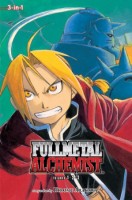
Fullmetal Alchemist, Omnibus 1And the winner of the Fullmetal Alchemist Giveaway is…Naomi!

As the winner, Naomi will be receiving a copy of the first Fullmetal Alchemist omnibus released by Viz Media which collects the first three volumes of Hiromu Arakawa’s excellent manga. Because Fullmetal Alchemist is such a great series, and because Arakawa is such a great mangaka, for this giveaway I asked participants to tell me about some of their other favorite women mangaka. The responses were fantastic and I highly recommend reading the Fullmetal Alchemist Giveaway comments for all of the details. As usual, I also took the giveaway as an opportunity to compile a list. In this particular case, a list of some great shounen and seinen manga which are written or illustrated by women and are available in English.

Some great shounen and seinen manga by women mangaka:
Angelic Layer by CLAMP
Afterschool Charisma by Kumiko Suekane
Black Butler by Yana Toboso
Blue Exorcist by Kazue Kato
Blood+ by Asuka Katsura
Bloody Cross by Shiwo Komeyama
A Bride’s Story by Kaoru Mori
Code: Breaker by Akimine Kamijyo
Chobits by CLAMP
Chi’s Sweet Home by Kanata Konami
D. Gray-Man by Katsura Hishino
Deadman Wonderland written by Jinsei Kataoka, illustrated by Kazuma Kondou
Dorohedoro by Q Hayashida
Drug & Drop by CLAMP
Emma by Kaoru Mori
ES: Eternal Sabbath by Fuyumi Soryo
Flowers & Bees by Moyoco Anno
Fullmetal Alchemist by Hiromu Arakawa
Gangsta by Kohske
Hikaru no Go written by Yumi Hotta, illustrated by Takeshi Obata
House of Five Leaves by Natsume Ono
Inu x Boku SS by Cocoa Fujiwara
InuYasha by Rumiko Takahashi
Kekkaishi by Yellow Tanabe
Lament of the Lamb by Kei Toume
Magi by Shinobu Ohtaka
Maison Ikkoku by Rumiko Takahashi
Mermaid Saga by Rumiko Takahashi
Mushishi by Yuki Urushibara
Nabari no Ou by Yuhki Kamatami
Noragami: Stray God by Toka Adachi
Pandora Hearts by Jun Mochizuki
Ranma 1/2 by Rumiko Takahashi
Reborn! by Akira Amano
Saiyuki by Kazuya Minekura
Sakuran by Moyoco Anno
Tactics by Sakura Kinoshita and Kazuko Higashiyama
To Terra… by Keiko Takemiya
Tsubasa by CLAMP
What Did You Eat Yesterday? by Fumi Yoshinaga
Wolfsmund by Mitsuhisa Kuji
xxxHolic by CLAMP
Zombie-Loan by Peach-Pit

This list is by no means exhaustive! Phenomenal women mangaka have created tons of great manga, far to many for me to list here. Also, thank you to everyone who shared their favorite women mangaka creators with me! I hope to see you again for the next manga giveaway, too.

Filed Under: UNSHELVED Tagged With: fullmetal alchemist, Hiromu Arakawa, manga

My Week in Manga: April 28-May 4, 2014

May 5, 2014 by Ash Brown

My News and Reviews

I was in Texas for much of last week, attending a conference for work, but I was still able post a few things here at Experiments in Manga. The most recent manga giveaway is underway, for one. This month you all have a chance to win the first omnibus of Hiromu Arakawa’s Fullmetal Alchemist. All you have to do is tell me a little about some of your favorite women mangaka. April’s Bookshelf Overload was also posted; there were all sorts of great releases last month. And finally, the first in-depth manga review of May goes to the very recently released Vinland Saga, Omnibus 3 by Makoto Yukimura. Vinland Saga is one of my favorite series currently being published in English. The entire series is epic and third omnibus is awesome.

Because I was traveling and caught up in conference goings-on, I may have missed some news. (If there’s something that caught your interest last week, do let me know!) However, I did come across a few things that made for good reading. I particularly enjoyed Tony Yao’s post at Manga Therapy, The Ambiguously Amazing Hange Zoe which discusses things like Attack on Titan, gender, and ambiguity. I recently reviewed Jen Lee Quick’s Off*Beat, Volume 2 in preparation for the release of the third and final volume. The series’ editor Lillian Diaz-Przybyl offers some Editorial Thoughts on the End of Off*Beat, one of Chromatic Press’ flagship titles. RocketNews24 offers a list of the twenty most popular manga in Japan, based on publication numbers. Justin Stroman interviews Eric Eberhardt (Viz Media’s Director of Digital Publishing) about Viz’s new digital imprint VIZ Select.

And for those of you in the Toronto area next week and weekend, do be sure to check out the Toronto Comic Arts Festival! There will be some phenomenal programming and incredible creators in attendance (including Moyoco Anno, Est Em, and Akira Himekawa among many, many more), and it’s free! TCAF is the only comic festival/conference that I go to and I highly, highly recommend it.

Quick Takes

Constellations in My PalmConstellations in My Palm written by Chisako Sakuragi and illustrated by Yukine Honami. I happen to really enjoy Honami’s artwork–a somewhat softer style with light but expressive lines–so I’ve slowly been getting around to reading the various boys’ love manga that she’s worked on. As far as I know, Constellations in My Palm is the only manga that Sakuragi has written. It’s a fairly realistic romance and tends to be somewhat quiet and subdued. It’s narrated by Mizuho, a college student, whose younger cousin Enji moves in with his family as he is about to start college, too. When they were younger they were very close, but it’s been seven years since they’ve been in contact with or seen each other. Mizuho and Enji both care about each other, but their relationship has become awkward and strained. Constellations in My Palm has some wonderful moments in it, but I was largely frustrated by the manga. So much of the story is driven by misunderstandings, and many of them aren’t even the result of miss-communication. Generally, it’s Mizuho who’s the culprit–even when he’s told something straight to his face, repeatedly, he simply can’t or chooses not to believe it. As Mizuho has some self-esteem issues this does fit his character, but it doesn’t make it any less exasperating.

The Flowers of Evil, Volume 7The Flowers of Evil, Volumes 7-9 by Shuzo Oshimi. I’ve been waiting for the entirety of the third arc of The Flowers of Evil to be released before reading it. I’m glad that I did, because once I started I didn’t want to put the manga down. After the resolution of the incident at the summer festival, there is a timeskip of three years. Kasuga and his family have moved to a different town in order to start over, but he is still haunted by his past. His relationship with his parents is broken and almost nonexistent. His new classmates tolerate him, but he remains distant and disconnected (and understandably so). But then he meets and, despite his weirdness and strange behavior, is befriended by Tokiwa–a popular and attractive girl whom all of the boys have a crush on. Like Kasuga, she’s hiding parts of herself from others, too. On the surface, the third arc is almost tame when compared to what came before it, but it is still extremely effective. It has a very different sort of intensity than the previous arcs. The story has become more subtle but retains a constant undercurrent of dread. Even when good things happen it seems as though they could only possibly be a prelude to some sort of disaster. The Flowers of Evil is an incredibly engaging series and just keeps getting better and better.

Say I Love You, Volume 1Say I Love You, Volume 1 by Kanae Hazuki. I didn’t really know much about Say I Love You before reading the first volume; I was vaguely aware of the series because of its recent anime adaptation (which I haven’t seen yet), but that’s about it. There’s not really much of a “hook” per se in Say I Love You. The characters are fairly normal. The story isn’t particularly unusual. The the two leads are Mei Tachibana–who although she avoids making friends is very aware of others and their feelings–and Yamato Kurosawa–whose popularity stems from his good looks but who otherwise is extremely average. So far the manga is simply about a group of teenagers living out their high school years. This includes all of the cliques and the bullying, the stress caused by interpersonal relationships, the self-consciousness and the issues of self-esteem. But that realism is probably the series’ strength. Say I Love You has some humorous moments, but I wouldn’t really describe it as a comedy at this point since in general Hazuki takes a more serious approach with the series. I’m actually very curious to see how Mei and Yamato’s relationship continues to develop, as well as how the relationships between the other characters evolve as well.

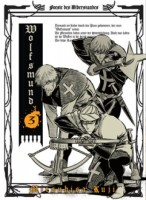
Wolfsmund, Volume 3Wolfsmund, Volumes 3-4 by Mitsuhisa Kuji. At first Wolfsmund seemed to me as though it was going to be an episodic series, but with the third and fourth volumes the manga has focused in on an overarching narrative. However, the bleakness and brutality that has been present from the very start of Wolfsmund remains constant. These volumes see the beginning of the Swiss rebellion against the Austrian occupation and all of the violence and death that entails, including the incredible siege of the Wolf’s Maw at Sankt Gotthard Pass. The uprising has been in the planning stages for quite some time, but now the rebels finally have the opportunity to take action. 14th-century warfare is not pretty. There are very good reasons why attacking an overtaking a fortress are difficult tasks to accomplish–they are built to withstand assault and are designed to allow defenders to wreak havoc on invading forces and to cause tremendous amounts of damage. The rebels must face skilled soldiers, traps, fire, molten lead, boiling water, and more. And on top of that Wolfram, the bailiff of the Wolf’s Maw, is a vicious and sadistic leader who is not above torture. In fact, he seems to delight in it. Wolfsmund continues to be a dark and intense manga that is definitely meant for maturer audiences.

Filed Under: FEATURES, My Week in Manga Tagged With: Chisako Sakuragi, Flowers of Evil, Kanae Hazuki, manga, Mitsuhisa Kuji, Say I Love You, Shuzo Oshimi, Wolfsmund, Yukine Honami

Vinland Saga, Vol. 3

May 3, 2014 by Ash Brown

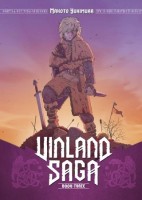
Vinland Saga, Omnibus 3Creator: Makoto Yukimura
U.S. publisher: Kodansha
ISBN: 9781612624228
Released: April 2014
Original release: 2007-2008
Awards: Japan Media Arts Award, Kodansha Manga Award

Vinland Saga, an award-winning manga series by Makoto Yukimura, is a title that I’ve been wishing for a release in English for years. Thanks to Kodansha Comics, it’s finally available, and in a deluxe hardcover edition no less. I couldn’t be happier. If I loved the first omnibus, I loved the second omnibus even more. Vinland Saga has easily become one of my favorite manga series currently being released in English. The third Vinland Saga omnibus, published by Kodansha in 2014, collects the fifth and sixth volumes of the original Japanese edition, released in 2007 and 2008 respectively. Vinland Saga, Omnibus 3 also includes a brief section of questions answered by Yukimura about the series which is exclusive to the English release. Vinland Saga is Kodansha’s first foray into deluxe manga releases and features color pages as well as a slightly larger trim size than most of its other manga which allows Yukimura’s artwork to present itself as strongly as his storytelling skills. Vinland Saga is an excellent series and has won both a Japan Media Arts Award as well as a Kodansha Manga Award.

The Danish invasion of England is steadily progressing. The English forces are preparing to surrender, which doesn’t sit well at all with Thorkell the Tall. A Viking mercenary fighting on the side of the English with an insatiable thirst for battle, he would much rather see the war continue indefinitely. One way he can encourage the conflict to continue is by taking Canute, the son of Denmark’s King Sweyn and second in line to the throne, captive. Canute is currently being escorted by Askeladd and his band of mercenaries. They initially escaped Thorkell’s pursuit by fleeing to Wales. Askeladd planned to rejoin with the main Danish force, but to do so required traveling through English-controlled territory. To make their situation even worse, winter and a heavy snowstorm forced them to halt their march in a small English village. Their presence behind enemy lines is discovered far sooner than they had wished or expected. Askeladd and his men are once again faced with confronting Thorkell and his mercenaries in bloody battle.

The struggle for the control of Canute and his fate is pivotal to the story of Vinland Saga. It also provides a phenomenal opportunity for battle sequences and they are brutal. Yukimura doesn’t hold back or spare any details, depicting broken bones, severed limbs, crushed skulls, blood and gore as needed or required. Askeladd’s plans are falling apart around him and his men are beginning to lose confidence in their leader. Already in disarray, they are in an extremely bad position when Thorkell and his band catch up with them. The battle as a whole is intense, but then comes the fight between Thorkell and Thorfinn. Their confrontation in the second omnibus was impressive to begin with, but their duel in the third is even more so. Thorfinn is skilled, quick, small, and volatile while Thorkell is a literal giant of a man who primarily relies on his strength. Their fight is incredible to watch unfold. Thorfinn holds his own against Thorkell surprisingly well, but Thorkell’s physical feats are astounding.

The battles and duels in Vinland Saga are well-executed and thrilling, but just as important to the series is the development of the story and of the characters. Particularly astonishing in Vinland Saga, Omnibus 3 is the remarkable growth of Canute. Up until this point he has seemed sheltered and coddled; he abhors the senseless violence around him which makes the others view him as weak. However, Canute is all too aware of his unfortunate situation. Askeladd and Thorkell are surprised to discover that Canute carries very little value as a hostage, nor will his survival necessarily be appreciated by the king. Ultimately, it is up to Canute himself to take control of his own destiny. His true strength is revealed and it is utterly magnificent. This marks a turning point not only for Canute but for the entirety of Vinland Saga. Yukimura mixes historical fiction with meticulously researched historical fact and the results are extraordinarily engaging. Vinland Saga is the epic that I’ve been waiting for and I can’t wait to read more.

Filed Under: REVIEWS Tagged With: Japan Media Arts Award, kodansha, Kodansha Comics, Kodansha Manga Award, Makoto Yukimura, manga, Vinland Saga

Manga Giveaway: Fullmetal Alchemist Giveaway

April 30, 2014 by Ash Brown

It’s the last Wednesday of April (not to mention the last day of April) which means it’s time for the monthly manga giveaway here at Experiments in Manga to begin! This month you have the opportunity to win the first omnibus of Hiromu Arakawa’s wonderful manga series Fullmetal Alchemist as published by Viz Media. The omnibus collects the first three volumes of the series in one convenient package and makes a great introduction to Fullmetal Alchemist. (And for you collectors who like your manga to match, never fear! The final volume of the omnibus edition is currently scheduled for release this November.) As always, the giveaway is open worldwide!

Fullmetal Alchemist, Omnibus 1

Gender has been a fairly hot topic in comics over the last few years (if not longer). The discussion isn’t just about who is represented in comics, but who’s reading and creating comics as well. Amazing women creators are out there, and they have been for a long time.  This is not only true for comics in general, but for manga specifically. Women are and have been creating for all demographics. I am aware of plenty of women mangaka working in seinen and shounen, which are primarily aimed at men and boys, not to mention those who are working in josei and shoujo, which are primarily aimed at women and girls. Of course there are all of those manga that don’t neatly fit into one of the four main demographics and women are creating those, too.

Now, when I’m looking for manga to read, I’m looking for great characters, great stories, and great art. Whether the creator is a woman or a man (or any other gender for that matter) can be important, but for me it usually isn’t a deciding factor when it comes to choosing what to read. Sadly, that’s not true for everyone. I know of readers who will intentionally avoid the work of women creators, authors, and artists simply because they’re women. And they’re missing out on some fantastic material because of it. Take Fullmetal Alchemist as an example.

So, you may be wondering, how can you win a copy of the first Fullmetal Alchemist omnibus?

1) In the comments below, simply name one of your favorite women mangaka and tell me what you enjoy about her work.
2) For a second entry, name a shounen or seinen manga series (which hasn’t been mentioned by me or by someone else) that is written and/or illustrated by a woman.
3) If you’re on Twitter, you can earn a bonus entry by tweeting about the contest. Make sure to include a link to this post and @PhoenixTerran (that’s me).

And there you have it! Each person participating in the giveaway can earn up to three entries and has one week to submit comments. If you have trouble leaving a comment, or if you would prefer, entries may also be submitted via e-mail to phoenixterran(at)gmail(dot)com. I will then post the comments in your name. The giveaway winner will be randomly selected and announced on May 7, 2014. Good luck!

VERY IMPORTANT: Include some way that I can contact you. This can be an e-mail address, a link to your website, Twitter username, or whatever. If I can’t figure out how to get a hold of you and you win, I’ll just draw another name.

Contest winner announced–Manga Giveaway: Fullmetal Alchemist Giveaway Winner

Filed Under: FEATURES Tagged With: fullmetal alchemist, Hiromu Arakawa, manga

My Week in Manga: April 21-April 27, 2014

April 28, 2014 by Ash Brown

My News and Reviews

Last week was another week with two reviews here at Experiments in Manga. The first review was of Fumi Yoshinaga’s What Did You Eat Yesterday?, Volume 1, one of the manga I was most looking forward to being released this year. I really enjoyed the debut of the series and look forward to reading more. The second review posted last week was of Jen Lee Quick’s Off*Beat, Volume 2. The third volume in the series will be released soon, so I decided to revisit the previous volume in preparation. Off*Beat is a comic that simply makes me happy and I think I enjoy it more with each rereading.

And now for some interesting found online: Jason Stroman wraps up his manga advice series at Organization Anti-Social Geniuses with 20 Things I Learned from the Manga Advice Series. Joe McCulloch takes a close look at some of the pre-Tezuka manga available in English at The Comics Journal. No Flying No Tights has updated its list of must have manga for teens. A recent poll of Japanese parents asked “Which manga do you want your kids to read?” RocketNews24 lists the top ten, eight of which are currently available in English either digitally or in print.

Quick Takes

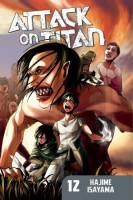
Attack on Titan, Volume 12Attack on Titan, Volume 12 by Hajime Isayama. The English-language release of Attack on Titan has now more or less caught up with the Japanese release of the series, which means the time between volumes has increased. Granted, those who are impatient have option of reading the most recent chapters on Crunchyroll, but I’ve personally been waiting since January to see what happens next. I am still impressed by just how many twists and turns Isayama is able to incorporate into the plot of Attack on Titan. Even though the twelfth volume is more about the action than it is about the story, there are still some surprises in store. Granted, each revelation in Attack on Titan only seems to raise more questions. In this volume the Survey Corp is tasked with rescuing Eren, who is in bad shape and being held captive along with Ymir by Reiner and Bertolt. Facing off against Titans is one thing, but having to attack those who at one point seemed to be allies is another thing entirely. Attack on Titan has always been intense and the twelfth volume is no different.

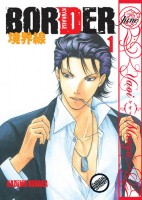
Border, Volume 1Border, Volumes 1-3 by Kazuma Kodaka. Although Border is an ongoing series at five volumes and counting, only three of those volumes have so far been released in English. I’m not sure if Digital Manga plans on licensing more at this point or not. Border is the most recent of Kodaka’s boys’ love manga to be translated. Though calling it boys’ love might be a bit misleading. The manga’s lead, Yamato, is gay and all of the characters seem to be in love with him to one extent or another, but so far the series seems to be more about detective agency he runs with his two foster brothers and his cousin than it is about romance. The first volume, which focuses on ex-soldier Yamato and his tragic past, is the most boys’ love-like (including explicit sex scenes), but subsequent volumes turn to the other characters–his brothers Kippei, a computer genius, and Tamaki, a hair designer whose skills are handy when disguises are needed. Their backstories are likewise tragic. I like this narrative structure of Border. And if the pattern continues, the next volume in the series should focus on Yamato’s cousin Sogo, which I would be very interested in reading.

Eyeshield 21, Volume 32Eyeshield 21, Volumes 32-34 written by Riichiro Inagaki and illustrated by Yusuke Murata. Often I find that reading sports manga makes me at least temporarily more interested in the games which they’re about, but for whatever reason that hasn’t been the case for Eyeshield 21. I probably have developed more of an appreciation for American football, but it still isn’t a sport I care very much about. Eyeshield 21 on the other hand, I’ve come to love. The artwork is phenomenal and the characters are engaging and distinctive. At this point, much of the humor and many of the running gags from the start of the series have faded into the background; Eyeshield 21 has become much more serious and dramatic, but it’s still a tremendous amount of fun. The series has been building up to the Christmas Bowl where the Deimon Devil Bats are playing against the Teikoku Alexanders, an all-star team which has never lost the tournament. The games in Eyeshield 21 have always been exciting but the Christmas Bowl match is fantastic. I fully anticipated Eyeshield 21 to end with the Christmas Bowl, but no, there are still three more volumes to go!

xxxHolic: Rei, Volume 1xxxHolic: Rei, Volume 1 by CLAMP. It’s been a while since I’ve read any of the original xxxHolic manga, and I never did finish reading the series before it went out of print (happily, Kodansha will be re-releasing the series in an omnibus edition), but I was still happy to see Rei licensed. As indicated in the translation notes, rei in this instance means return, “signaling a return to the series and to its roots.” It’s not really clear yet exactly how, or if, Rei will tie into the main series. I do have a few ideas how it might, though. Those who have read at least some of xxxHolic will be at a slight advantage over those who haven’t since the characters aren’t thoroughly introduced, but even new readers should be able to make sense of most of Rei. I love Clamp’s artwork in this series. The high-contrast and relatively simple illustration style is very evocative and elegant, and creepy and disconcerting when required. The supernatural elements in the manga tend to be dark in tone, but at the same time the main characters and their interactions tend towards the more comedic. It’s an interesting mix that somehow works; even the humorous scenes have something menacing lurking underneath.

Filed Under: FEATURES, My Week in Manga Tagged With: attack on titan, border, clamp, Eyeshield 21, Hajime Isayama, Kazuma Kodaka, manga, Riichiro Inagaki, xxxholic, Yusuke Murata

What Did You Eat Yesterday?, Vol. 1

April 23, 2014 by Ash Brown

What Did You Eat Yesterday?, Volume 1Creator: Fumi Yoshinaga
U.S. publisher: Vertical
ISBN: 9781939130389
Released: March 2014
Original release: 2007

I have been a fan of Fumi Yoshinaga and her work for quite some time now. English-language readers have been fortunate in that so many of her manga have been translated. I and many others were very excited when Vertical announced the license of her series What Did You Eat Yesterday?, a series that I have been hoping would be picked up for years. The first volume was one of the manga releases that I was most looking forward to seeing in 2014. What Did You Eat Yesterday?, Volume 1 was originally published in Japan in 2007; I am thrilled that it is now available in English. There were several reasons why I was particularly interested in reading What Did You Eat Yesterday?. It’s by Yoshinaga, from whom I’ve come to expect great stories and complex characters. The series is also a food manga, a niche that I am known to enjoy. (Actually, food often plays an important role in Yoshinaga’s manga.) And I was especially interested in the incorporation of contemporary Japanese gay life in What Did You Eat Yesterday?–the two main characters are boyfriends in their forties who live together.

Shiro Kakei is a successful lawyer at a small firm, but his real passion is food. He’s a great cook, and an extremely frugal one, too. Kakei simply enjoys a good meal. The palate of his boyfriend Kenji Yabuki, a flamboyant hairstylist, isn’t nearly as refined as Shiro’s but he certainly appreciates his partner’s creativity in the kitchen. The two of them have been dating for three years, so their relationship is well established, but they still face some challenges. Although both of their families know that they are gay, Shiro prefers to be much more discreet about his homosexuality when dealing with his coworkers and strangers. Kenji, on the other hand, is happy to have a chance to brag about his boyfriend. And just because they’ve been together for so long doesn’t mean that they don’t have to deal with old flames and jealousy. But at least they can always depend on delicious cuisine to help smooth over the bumps in their relationship.

The food in What Did You Eat Yesterday?, both the description of the meals and the care that Yoshinaga has put into drawing them, can be mouth-watering. Even the most simple dishes are beautifully portrayed, in part because food is so important to Shiro and he puts time and effort into its preparation, but also because Yoshinaga shares that same passion. There is enough instruction in What Did You Eat Yesterday? that adventurous readers could easily duplicate the featured recipes. However, the food in What Did You Eat Yesterday? works best when it is directly tied into the manga’s plot and story. Occasionally that ideal balance is missing in the first volume. The meals, while lovely, can from time to time feel tangential, almost as if there are two different manga sharing the same series–one focusing on food and one focusing on people.

I do enjoy the food and the important role that it plays in What Did You Eat Yesterday?, but in the end I’m even more interested in the characters, their relationships, and their lives. Shiro and Kenji make an intriguing couple. Out of the two of them, Shiro is the least secure with who he is and is very concerned with keeping up appearances. He comes across as very brusque and some find him unlikeable as a result, but it’s a defense mechanism. Kenji seems to be much more comfortable with himself. The two of them aren’t frequently affectionate, at least not overtly so, but they do care about each other. It can be seen in the little things that they do–such as simply offering to carry a heavy bag–and in their more subtle interactions. Shiro often tries to smooth over arguments and hurt feelings the best way he can: through cooking. And that’s one of the things What Did You Eat Yesterday? does best–showing how people connect and communicate through food.

Filed Under: REVIEWS Tagged With: fumi yoshinaga, manga, vertical, what did you eat yesterday?

My Week in Manga: April 14-April 20, 2014

April 21, 2014 by Ash Brown

My News and Reviews

There were two in-depth reviews posted at Experiments in Manga Last week. The first review was of Torajiro Kishi’s manga Maka-Maka: Sex, Life, and Communication, Volume 1 as a part of my Year of Yuri review project. Maka-Maka is definitely a mature title and there’s quite a bit of sex and physical intimacy, but I think it’s one of the best adult-oriented yuri manga to have been released in English. Sadly, it’s very out-of-print. The second review was of The Black Lizard and Beast in the Shadows, a collection of two of Edogawa Rampo’s better known short novels of suspense. I though they were pretty great, but then again I tend to be rather fond of Rampo’s works.

As for a few other interesting things: Jason Thompson takes a look at the mahjong manga The Legend of Koizumi in the most recent House of 1000 Manga column. (Ed Chavez apparently wanted to license the series. It’s unlikely to ever actually happen, but we can dream!) Yen Press had quite a few license announcements of its own to make, including the establishment Yen On, an imprint specifically devoted to light novels. Dark Horse also announced some exciting licenses–more manga by CLAMP and Satoshi Kon. Toh EnJoe won the Philip K. Dick Award Special Citation for his work Self-Reference Engine, one of my favorite books released last year. And speaking of awards, the 2014 Eisner Award Nominees have been announced. Manga up for an Eisner Award include The Heart of Thomas, The Mysterious Underground Men, Showa: A History of Japan, 1926–1939, The Summit of the Gods, Volume 4, and Utsubora: The Story of a Novelist in the Best U.S. Edition of International Material—Asia category and The Strange Tale of Panorama Island in the category for Best Adaptation from Another Medium.

Quick Takes

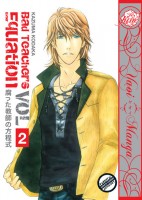
Bad Teacher's Equation, Volume 4Bad Teacher’s Equation, Volumes 4-5 by Kazuma Kodaka. Bad Teacher’s Equation has come a long way since its first volume. The series was nearly a decade in the making, so it probably shouldn’t be too surprising that it underwent some significant evolution in both artwork and storytelling, including some unexpected plot developments. In the series’ afterword, Kodaka notes that Bad Teacher’s Equation “mirrored the history of boy’s love comics throughout the ’90s” and that it was her first foray into the genre. It started out as a comedy, but by the end of the series, while there is still a fair amount of humor, it has become much more serious and even addresses some of the challenges that face same-sex couples in a more realistic fashion. I particularly enjoyed the fourth volume because of this and because of its focus on Masami and Toru’s relationship. They are the most consistently believable couple in Bad Teacher’s Equation. Although I wasn’t always convinced by Masayoshi and Atsushi’s relationship in the series, for the most part I did really like how things played out for them in the final volume.

Click, Volume 1Click, Volumes 1-4 by Youngran Lee. The basic premise of Click is fairly absurd–Joonha’s family has a strange genetic mutation which causes their bodies to change sex shortly after they reach puberty. Of course, this was never actually mentioned to Joonha and so he’s understandable concerned when at the age of sixteen all of a sudden he seems to have turned into a girl. At first, I thought that Click was going to be a comedy, but that’s not entirely the case. There are humorous elements, Joonha’s parents, for example, are a rather unusual pair and their scenes are generally played for laughs, but the manhwa is much more about the drama (and melodrama). It might not be the most realistic series, but there’s actually some interesting exploration of gender, gender roles, and gender identity in Click. Joonha isn’t a particularly pleasant person and on top of that he’s a misogynistic jerk, too. His sex change is a rather traumatic event for him and he’s now stuck in between genders. His body is female, and he tries to live as a girl, but his personality and way of thinking hasn’t really changed that much.

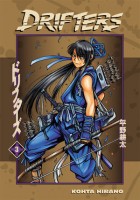
Drifters, Volume 3Drifters, Volume 3 by Kohta Hirano. I’m still not sure that I entirely understand what the underlying plot of Drifters is supposed to be, but I’m not entirely certain that it matters much at this point, either. At least not to me. I enjoy Drifters for the series’ outrageous characters and battles more than any sort of coherent story. I also appreciate Hirano’s use of historic figures in the series, although it does help to have at least some vague idea of who they are outside of the manga. Admittedly, Hirano’s interpretations are extraordinarily liberal and irreverent. Most of the characters exhibit varying degrees of insanity and there’s not much subtlety or nuance to their characterizations, either. So far, Drifters has been a very violent series. The third volume is no exception to this and battle after battle is fought. I have noticed some continuity errors in the artwork which can be distracting or confusing, especially when they occur in the middle of a fight scene. (Past volumes had this same problem, too.) In the end, Drifters still doesn’t make much sense yet, but I continue to find it to be highly entertaining.

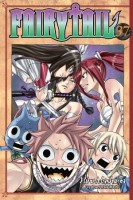
Fairy Tail, Volume 37Fairy Tail, Volume 37 by Hiro Mashima. It’s the final day of the Grand Magic Games, the results of which will literally determine the fate of the world. The danger of course is that Mashima may have over-hyped the Games’ finale; the victory of the guild that ultimately wins is described as being impossible and highly unusual. But if there’s going to be a tournament arc, that’s certainly one way of making it crucial to the development of the story. I consider it to be a good thing. While the Grand Magic Games were diverting, for a while there they didn’t seem to have much of a point except to serve as an excuse to have high-powered wizards doing battle. And there’s plenty of fighting in the thirty-seventh volume, including several confrontations that occur simultaneously. Sadly, compared to previous battles, I didn’t find them to be especially engaging. The most interesting fight is the one between Erza and two other extremely skilled and strong women, Kagura and Minerva, which has several scenes which are particularly dramatic. Mashima does have to cheat and mislead readers with the artwork a bit to achieve some of those moments, though.

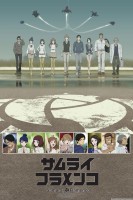
SamuraiFlamencoSamurai Flamenco directed by Takahiro Omori. Samurai Flamenco is an anime series that celebrates superheros and superhero shows. It uses a strange mix of silliness bordering on parody and seriousness, but it somehow works. Samurai Flamenco begins very realistically, with Hazama acting as a vigilante. He’s not particularly competent at first, but he makes up for that with his enthusiasm, passion, and belief in justice. It also helps that other people are drawn to him and his cause. On the surface, the middle portion of the series seems like a very typical superhero show with monsters and evil organizations. The villains’ character designs are frankly ridiculous. But then the anime returns to a more serious approach and the final episode pulls everything together perfectly. I did enjoy the humor of the series but I probably appreciated the more realistic examination of what it means to be a superhero even more. I quite enjoyed Samurai Flamenco and found the characters, all of whom are just a little bit strange, to be both likeable and interesting.

Filed Under: FEATURES, My Week in Manga Tagged With: anime, Bad Teacher's Equation, Click, Drifters, Fairy Tail, Hiro Mashima, Kazuma Kodaka, Kohta Hirano, manga, manhwa, Samurai Flamenco, Youngran Lee

Maka-Maka: Sex, Life, and Communication, Volume 1

April 16, 2014 by Ash Brown

Maka-Maka: Sex, Life, Communication, Volume 1Creator: Torajiro Kishi
U.S. publisher: Media Blasters
ISBN: 9781598832938
Released: November 2008
Original release: 2003

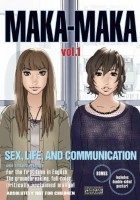
There have been relatively few mature, adult-oriented yuri manga licensed in English. One of the best, or at least one of my favorites, is Torajiro Kishi’s Maka-Maka: Sex, Life, and Communication. It’s a short series consisting of only two slim volumes, both of which are unfortunately very out of print. The first volume of Maka-Maka was released in English in 2008 by Kitty Media, the adult and mature content imprint of Media Blasters. Maka-Maka was also released in French as well as in German. The first volume of Maka-Maka was originally published in Japan in 2003. The English edition of Maka-Maka closely emulates the Japanese release. The cover of Kitty Media’s English-language release declares Maka-Maka to be a groundbreaking, critically acclaimed work. I can’t really comment on that, but I do know that the series was generally well-received when first released in English. One of the things that makes Maka-Maka particularly stand out is that Kishi’s artwork is completely in color. In fact, if I recall correctly, Maka-Maka was the first full-color manga that I ever came across.

Jun and Nene are exceptionally close. The two young women attend the same art college–Jun studies graphic arts while Nene pursues fashion design–and they share similar interests as well. When the two of them aren’t working on assignments for class they enjoy spending time together. They both have boyfriends (Jun actually has three), but their most satisfying relationship sexually and romantically is the one that they share with each other. Nene and Jun are friends with benefits, but they are also best friends. They care immensely about each other, support each other, and simply enjoy being together. They relax and have fun, complain about schoolwork and their boyfriends, and are generally just there for each other. Which isn’t to say that they don’t have their disagreements and arguments. Occasionally teasing goes a little too far and feelings get hurt, but in the end both Nene and Jun love each other. Their relationship is one of the most important things in their lives and it is something that neither of them wants to give up.

As previously mentioned, one of the things that sets Maka-Maka apart from many other manga is Kishi’s color artwork, which is excellent. The highlighting does sometimes make it appear as though Jun and Nene have a shiny, plastic-like sheen to their bodies, but otherwise the artwork is quite nice. The shading, textures, and skin tones are particularly lovely and realistic. They also change depending on a chapter’s setting or the lighting of the environment. Whether it’s harsh fluorescent indoor lights, the brilliant noonday sun, cool moonlight, or a warm sunset, Kishi adapts the color palette in Maka-Maka to fit the various moods and scenes. Kishi’s figure work is also very strong. Though somewhat idealized and flawless, Jun and Nene’s appearances aren’t especially exaggerated or unnatural. They are obviously adult women and they have curves. The two of them are almost constantly smiling, too. Their likeable personalities shine through their facial expressions and body language as they enjoy each other’s company.

Maka-Maka is unquestionably an erotic manga and Sex, Life, and Communication is an extremely apt subtitle. Sex, kissing, cuddling, groping, and fondling make up a large portion of the manga. Physical intimacy is one of the ways that Jun and Nene communicate with each other and show their love and affection. The sex between Nene and Jun in Maka-Maka is joyful and includes plenty of laughter. Their close, intimate relationship, of which sex is only one part, simply makes me happy. In comparison, their sexual encounters with men in the manga, at least those that are shown, are much more awkward and can even be unpleasant. Jun and Nene are happiest when they are together. Maka-Maka doesn’t have much of an ongoing story. Instead, the short chapters, each only seven pages long, allow readers brief glimpses into the everyday lives of the two young women and their close, personal relationship. Some of the content in Maka-Maka may be explicit and mature, but the manga is just as much about these wonderful, believable characters as it is about the sex.

Filed Under: REVIEWS Tagged With: Maka-Maka, manga, Media Blasters, Torajiro Kishi, Year of Yuri

My Week in Manga: April 7-April 13, 2014

April 14, 2014 by Ash Brown

My News and Reviews

With all of the various review project that I recently have had going on, it’s been a while since there’s only been two posts at Experiments in Manga for any given week. (Not counting the My Week in Manga feature.) Last week I posted a review of Chōhei Kambayashi’s science fiction novel Yukikaze. Although interesting from the start, it did take me a few chapters to really get into the book, but ultimately I was very impressed with the depth of Kambayashi’s ideas. The sequel Good Luck, Yukikaze has also been translated and released in English. I’ll be making a point of reading it, as well. My other post last week was a part of the Discovering Manga feature which explores some of the ways that I learn about and learn more about manga and the manga industry. This time around I talked about the site Organization Anti-Social Geniuses which has some great manga-related content–not just reviews, but articles and interviews, too. If you’re not already familiar with OASG, it’s definitely worth checking out.

As for other things worth checking out online: Justin Stroman’s most recent guest post at Manga Bookshelf focuses on manga adapters and the history of manga adaptation. Vertical is hinting at a new license. (A huge volume of 1980s manga, possibly in hardcover? Yes, please.) Manjiorin of Manga Connection has started her Swan review project. I recently finished reading all of Swan that was published in English. I absolutely loved the series, so am looking forward to reading her reviews. A Bento Books newsletter is now available for those interested in staying on top of Bento Books and its releases. The Kodansha Comics tumblr weighs in on piracy from a publisher’s perspective. And finally, Ryan Holmberg takes a look at 1930s shoujo manga with his article Matsumoto Katsuji and the American Roots of Kawaii.

Quick Takes

Beast & FeastBeast & Feast by Norikazu Akira. After a somewhat dubious first chapter, Beast & Feast ends up being a rather cute and sweet boys’ love manga, although it does seem a little odd to describe it using those words. Considering the seriousness of the yakuza storyline and the violence (mostly implied rather than seen), the manga can actually be surprisingly lighthearted. This is mostly due to the characters. Despite their differences, and despite the fact that Hyodo is a yakuza and Kazuha is a police detective, the two of them ultimately make a great couple and they care about each other tremendously. There’s also a fair amount of explicit sex. Hyodo’s sexual appetite is insatiable, making Beast & Feast a very apt title for the manga. While I wasn’t blown away by Beast & Feast, it was solidly entertaining in addition to having attractive artwork. I enjoyed the manga and its characters. So much so that I plan on picking up Honey Darling, the only other manga by Akira currently available in English. (Actually, now that I think about it, she also collaborated on Clan of the Nakagamis.)

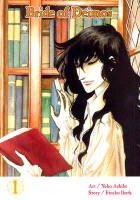
Bride of Deimos, Volume 1Bride of Deimos, Volumes 1-7 written by Etsuko Ikeda, illustrated by Yuho Ashibe. There is something about shoujo horror that I find irresistible; maybe it’s just that so much of it seems to have close ties to Gothic literature and Romanticism and emphasizes the emotional and psychological aspects of the story. Bride of Deimos is an interesting example of this type of shoujo horror. It’s from the 1970s and so it also has that fabulous classic shoujo style, too. Only seven of the seventeen volumes were ever released in English. However, the manga tends to be mostly episodic, so it’s not as though the story feels terribly incomplete. I do wish more had been translated though; I ended up really enjoying the series. The framing story for Bride of Deimos focuses on Minako, a young woman whom the androgynously beautiful devil Deimos is determined to make his bride. Many of the individual tales in some way involve love and generally end very badly for those involved. Bride of Deimos somewhat strangely incorporates both Japanese and Greek mythology as well other elements of traditional Western horror and the supernatural.

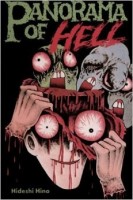
Panorama of HellPanorama of Hell by Hideshi Hino. And then there’s Panorama of Hell, a horror manga of a completely different sort from 1982. As can probably be determined from the cover alone, Panorama of Hell is extremely gruesome, bloody, violent, and visceral. Panorama of Hell is legitimately terrifying and frightening, and probably one of the best horror manga that I have read. But because it is so graphic and disturbing, and because the humor is so exceptionally dark, Panorama of Hell is definitely not something that I would recommend to just anyone. It takes a reader with a strong heart and stomach to really appreciate the manga. Panorama of Hell is the story of an unnamed painter who has an obsession with blood which he uses in the creation of his artwork. The manga explores his paintings before turning to his family, his past, and all of the abuse and insanity which has had a tremendous influence on him. Hino mixes surreal imagery with historic events in Panorama of Hell. The results are hellish, driving home just how terrible reality can be. Some of Panorama of Hell is actually based on Hino’s life, which in itself is terrifying.

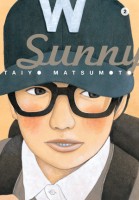
Sunny, Volume 2Sunny, Volumes 2-3 by Taiyo Matsumoto. Sunny is another manga that draws inspiration from the creator’s life. Set in Japan in the 1970s, Sunny can be almost overwhelmingly melancholic. Although there are heartwarming moments there are just as many scenes that are absolutely heartbreaking. Sunny follows the lives of the children at the Star Kids Home. Some are orphans, some have been completely abandoned by their parents, and some have only been temporarily separated from their families. The story also follows the adults in their lives, both those who are positive influences on the children and those who have caused them harm. The people at Star Kids Home, the children and the adults, form an odd sort of family with all of the benefits and disadvantages that that entails. Out of all of the manga by Matsumoto that has so far been released in English, Sunny is the most realistic and therefore probably the most readily accessible for a casual reader. It lacks much of the surrealism present in his other works. Instead Sunny relies even more heavily on the complexities of the characters and their relationships with one another.

Filed Under: FEATURES, My Week in Manga Tagged With: Bride of Deimos, Etsuko Ikeda, Hideshi Hino, manga, Norikazu Akira, sunny, Taiyo Matsumoto, Yuho Ashibe

My Week in Manga: March 31-April 6, 2014

April 7, 2014 by Ash Brown

My News and Reviews

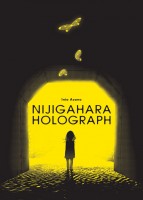
Last week was one of Experiments in Manga’s slower weeks, but there was still some good stuff to be had, if I do say so myself. First up was the announcement of the Battle Angel Alita Giveaway Winner, which also includes a list of some of the cyborg manga available in English. Next came March’s Bookshelf Overload, which was not nearly as an absurd month for preorders as April will be for me. Finally, we get to the really good stuff. The honor of the first in-depth manga review for April goes to Inio Asano’s Nijigahara Holograph, one of my most highly anticipated releases for 2014. It’s a dark and disturbing work, but also very beautiful. Probably one of the best comics that I’ve read so far this year.

As for a few thing found online: Kim Hoang translated an interview of Kaoru Mori from the French site madmoiZelle. Sean Gaffney at A Case Suitable For Treatment investigates some of Japan’s recent manga bestsellers with an eye towards license requests. Akira Himekawa, the creative team behind the various The Legend of Zelda manga, will be featured guests at the Toronto Comic Arts Festival in May. The most recent Mike Toole Show takes a look at the three incarnations of To Terra… (or Toward the Terra), originally a manga by Keiko Takemiya. And last but not least, I was very excited to see that the Manga Connection blog has been rebooted! (Which reminds me that I really need to do some cleanup and maintenance on my resources page…)

Quick Takes

Bad Teacher's Equation, Volume 2Bad Teacher’s Equation, Volumes 2-3 by Kazuma Kodaka. While I wasn’t blown away by it, I did enjoy the first volume of Bad Teacher’s Equation well enough to track down the rest of the boys’ love manga. I had heard that the series gets better as it goes along, but surprisingly enough, so far I think I actually prefer the slightly more absurd first volume. I seem to like Bad Teacher’s Equation best when it is being particularly ridiculous. The more obviously comedic aspects of the series work better for me than when the story takes a more serious turn. I was also happy to see the feelings that Masayoshi held for his brother Masami dealt with fairly quickly so that the series’ focus could turn elsewhere. The dynamics of that particular relationship were probably the least interesting in the entire series. One of the things that Bad Teacher’s Equation really has going for it is the manga’s large ensemble cast–their interactions can be very entertaining to watch. And as a result, there’s actually some legitimate character development to be seen, too.

Black Jack, Volume 10Black Jack, Volumes 10-13 by Osamu Tezuka. Because of Tezuka’s Star System, it’s not uncommon to encounter a character from another of his series in a different role. Due to that, I was particularly looking forward to the story “Ashes and Diamonds” collected in the tenth volume of Black Jack because it features Hyakkimaru in the role of Dr. Hyakki. (Hyakkimaru is from Dororo, one of my favorite Tezuka manga.) These volumes also reveal more about Black Jack’s unfortunate family situation. According to an editor’s note in the eleventh volume, the edition of Black Jack upon which Vertical’s release was based was initially intended to be a “best of” collection. However, it proved to be so popular that, excepting for a few stories which were deemed objectionable or inappropriate in some way, the edition became a complete collection. In the past I’ve mentioned that I generally prefer the more realistic scenarios in Black Jack, but I’ve come to really enjoy the more fantastical chapters as well. On occasion, aliens, ghosts, and the supernatural all have their own part to play in the series.

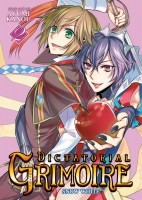
Dictatorial Grimoire, Volume 2: Snow WhiteDictatorial Grimoire, Volume 2: Snow White by Ayumi Kanou. I was intrigued by the first volume of Dictatorial Grimoire. It was a mess, but it was a fun mess. I was less enamored with the second volume, though I do still plan on reading the third and final installment in the series. The story in Snow White is still a mess. This time though, for whatever reason, I found it to be more frustrating than entertaining. So much of Dictatorial Grimoire makes very little sense and Kanou relies heavily on standard tropes and character types. Because of this, the story developments don’t really come as a surprise and readers are left to fill in the actual details themselves as Dictatorial Grimorie progresses from one expected plot point to the next. As might be assumed from the subtitle, Snow White features heavily in the second volume. Sadly, his bustier does not. He does, however, gain a pair of glasses for all of those megane fans out there. (Yes, that would include me.) I also do appreciate that Hiyori, though she’s portrayed as somewhat brainless, is very competent and dependable when it comes to a fight.

Shinobi Life, Volume 1Shinobi Life, Volumes 1-6 by Shoko Conami. Shinobi Life was originally created as a one-shot story but ended up being developed into a thirteen-volume series, seven of which were released in English by Tokyopop. The transition from what was supposed to be a standalone story into an ongoing series is awkward. Story elements are dropped or forgotten (in some cases actually for the better) as the plot is forced into something that wasn’t initially planned. In general, Shinobi Life is a manga that I like much better in concept than I do in execution, although it does improve greatly as the series progresses. I specifically like the time travel elements. However, I’m much fonder of the series when it’s dealing with the past than I am of its contemporary storyline. The art, though not especially original, is pretty, too. All of the adults in Shinobi Life are despicable, so it’s probably not too surprising that the teenage leads have significant personal issues to deal with; their parents don’t make particularly good role models.

Filed Under: FEATURES, My Week in Manga Tagged With: Ayumi Kanou, Bad Teacher's Equation, black jack, Dictatorial Grimoire, Kazuma Kodaka, manga, Osamu Tezuka, Shinobi Life, Shoko Conami

Nijigahara Holograph

April 6, 2014 by Ash Brown

Nijigahara HolographCreator: Inio Asano
U.S. publisher: Fantagraphics Books
ISBN: 9781606995839
Released: March 2014
Original release: 2006

Nijigahara Holograph, the third manga by Inio Asano to have been licensed in English, was one of my most highly anticipated manga releases for 2014. Originally published in Japan in 2006, Fantagraphics’ English-language edition is collected in an attractive, large-trim hardcover much like its other manga releases. I had previously read and greatly enjoyed Asano’s other manga currently available in English–What a Wonderful World! and Solanin, both published by Viz Media–so I was naturally interested in Nijigahara Holograph. But after seeing an early preview of the manga, I knew that I would need to read it no matter what. The sequence, taken from near the end of Nijigahara Holograph, was so chilling and unsettling and at the same time so striking and beautiful that it left a huge impression on me. I couldn’t get that short segment of Nijigahara Holograph out of my mind, my anticipation only growing stronger the closer the manga’s release date came.

Eleven years ago Arie Kimura, a young girl bullied by her classmates, fell down a well. As a result of her injuries she has been in a coma ever since. She told a story about a monster that lived in a tunnel along the Nijigahara embankment that would bring the world to an end, which terrified the other children. Arie’s accident is only one small part of an ongoing pattern of fear and violence. It isn’t a pleasant memory for anyone involved. Her friends, classmates, teachers, and family members have continued living their lives, but even more than a decade later they still can’t escape their pasts and the consequences of their actions. Some of them live in denial while others have tried to move on and to forget, but for some that is a complete impossibility. They have no choice but to remember, tormented with the knowledge of the suffering and pain caused by the unnecessary tragedy. The story of the monster in the tunnel may be more real than any of them could have imagined.

Nijigahara Holograph is a dark and disconcerting work. The manga deals with some very heavy subjects: suicide, incest, abuse, and sexual and physical violence, among many other serious matters. Instead of being sanitized or romanticized, Asano has created an intensely disturbing tale in which all of these elements are incorporated and intertwined. Nijigahara Holograph is open to several interpretations. It’s dreamlike ambiguity makes it difficult to determine just how much of Nijigahara Holograph is real and how much of it is simply the product of the damaged psyches of the characters. It cold be a waking nightmare, it could be some sort of afterlife, or it could all be true. It would almost be comforting if Nijigahara Holograph was a portrayal of hell or purgatory; the possibility that it shows the characters’ reality is terrible to contemplate. But life isn’t always pretty and sweet, and it certainly isn’t in Nijigahara Holograph where innocence, minds, and bodies have been shattered.

As horrifying and distressing as Nijigahara Holograph is, the manga is also extraordinarily compelling and engaging. It is both brutal and beautiful. Nijigahara Holograph is also remarkably complex and layered–the characters, their lives, and their stories connect and overlap, often in unexpected and surprising ways. This is reinforced by Asano’s artwork. Visual cues are incorporated throughout Nijigahara Holograph which tie the narrative together, drawing upon the similarities between the characters and their circumstances. The parallels found in both the artwork and the story of Nijigahara Holograph are marvelously effective, underscoring the ever-increasing sense of despair as the characters are caught in a never-ending cycle of anguish and misery. Nijigahara Holograph is a work that can be and maybe even should be read several times. The clues are all there from the very beginning, but many of the subtle connections can only be seen in retrospect. It’s challenging and not always an easy read, but Nijigahara Holograph is definitely a manga that I’ll be thinking about for quite some time.

Filed Under: REVIEWS Tagged With: Fantagraphics Books, Inio Asano, manga

Manga Giveaway: Battle Angel Alita Giveaway Winner

April 2, 2014 by Ash Brown

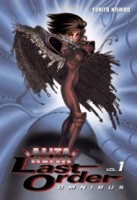
Battle Angel Alita: Last Order, Omnibus 1And the winner of the Battle Angel Alita Giveaway is…Anna-neko!

As the winner, Anna-neko will be receiving the first omnibus in Kodansha Comics’ release of Battle Angel Alita: Last Order by Yukito Kishiro. The omnibus collects the first three volumes of the series as well as additional stories by Kishiro. The titular Alita is a kick-ass cyborg, and I have a particular fondness for cyborgs, so I asked those entering the giveaway to tell me a little about their favorite cyborgs from manga. Check out the Battle Angel Alita Giveaway comments for all of the details, and check out the list of some of the manga available in English that feature cyborgs below!

Cyborg manga in English:
Appleseed by Masamune Shirow
Ashen Victor by Yukito Kishiro
Battle Angel Alita by Yukito Kishiro
Battle Angel Alita: Last Order by Yukito Kishiro
Blame! by Tsutomu Nihei
B’t X by Masami Kurumada
Cyborg 009 by Shotaro Ishinomori
Cowboy Bebop by Yutaka Nanten
Cowboy Bebop: Shooting Star by Cain Kuga
Descendents of Darkness by Yoko Matsushita
Eden: It’s an Endless World by Hiroki Endo
Ghost in the Shell by Masamune Shirow
Ghost in the Shell: Stand Alone Complex by Yu Kinutani
Gunslinger Girl by Yu Aida
Heavy Metal Warrior Xenon by Masaomi Kanzaki
Kamen Rider by Shotaro Ishinomori
Knights of Sidonia by Tsutomu Nihei
Madara written by Eiji Otsuka and illustrated by Shou Tajima
Made in Heaven written by Ami Sakurai and illustrated by Yukari Yashiki
Mardock Scramble by Yoshitoki Oima.
One-Punch Man written by ONE and illustrated by Yusuke Murata
Star Wars: Return of the Jedi by Sin-ichi Hiromoto
Trigun by Yasuhiro Nightow
Trinity Blood written by Sunao Yoshida and illustrated by Kiyo Kyujyō
Vassalord by Nanae Chrono
The World of Narue by Tomohiro Marukawa

Thank you to everyone who participated in the giveaway and shared a bit about their favorite cyborgs from manga. I hope to see you all again for the next giveaway, too!

Filed Under: UNSHELVED Tagged With: Battle Angel Alita, manga, Yukito Kishiro

My Week in Manga: March 24-March 30, 2014

March 31, 2014 by Ash Brown

My News and Reviews

Posts last week at Experiments in Manga included a new manga giveaway as well as two new in-depth manga reviews! There’s still time to enter the giveaway, too. Head over to the Battle Angel Alita Giveaway to enter for a chance to win the first omnibus in Yukito Kishiro’s manga series Battle Angel Alita: Last Order. As for the reviews: I took a look at the most recent Moyoco Anno manga to be released in English, Insufficient Direction. It’s an autobiographical manga about her married life with Hideaki Anno and is quite funny. I adore Anno’s work, so was happy to learn a little more about her. I also wrapped up my Manga March Madness project. I was rather pleased that I managed to pull it off. Every weekend in March I reviewed a volume of Takehiko Inoue’s basketball manga Real. Since there were five weekends in March and I started with the first volume in the series, my last review for the project was for Real, Volume 5. I hope I was able to at least begin to express why Real is such a fantastic manga in my reviews, because it really is a phenomenal series.
Speaking of Takehiko Inoue, David Brothers, writing for Comics Alliance back in 2010, had a great article that was recently brought to my attention again–From Samurai to Shooting Hoops: Takehiko Inoue, Art Chameleon. As for other things found online: Nahoko Uehashi (the author of Moribito) won the 2014 Hans Christian Andersen Author Award, which is a pretty big deal. As usual, Organization Anti-Social Geniuses had some great manga content last week. I particularly enjoyed What Manga Publishers Can Actually License in The US and Advice on Manga Editing, From Manga Editors. Tokyopop’s Stu Levy participated in a recent “Ask Me Anything” on Reddit. The daughter of Osamu Tezuka opened a drawer of her father’s desk that had been locked since 1985 and found some pretty cool stuff. And finally, I was pointed towards a brief biography of Takashi Nagasaki, who works closely with Naoki Urasawa.

Quick Takes

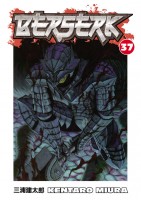
Berserk, Volume 37Berserk, Volume 37 by Kentaro Miura. I love the early story arcs of Berserk and continue to enjoy the series, so I’m always excited when another volume of the manga is finally released. After reading the thirty-seventh volume, I’m particularly anxious to get my hands on the next installment, whenever that may be. The battle between Guts and the rest of the crew against the sea god and its minions reaches its climax in this volume. They are aided by the merrow, Berserk‘s mermaids. Even though Miura’s version of mermaids is fairly traditional, though perhaps slightly more fish-like, I did like them. The thirty-seventh volume also contains a long flashback to Guts’ past as a young mercenary, which I particularly enjoyed reading. It’s set during a time when magic and the supernatural were more hidden and uncommon in the world, though hints of it could still be seen. The end of the volume also turns towards the current activities of Griffith’s army, which recently hasn’t had much prominence in the manga. After so much action and fighting, which I do enjoy, I’m very glad to see more story and plot development.

Black Sun, Volume 2Black Sun, Volume 2 by Uki Ogasawara. It’s been quite a while since I read the first volume of Ogasawara’s boys’ love manga Black Sun. I had a few issues with the story itself, mostly that the lead characters’ relationship moved a little too quickly from lust to possible love, but overall I thought the manga had good potential. I particularly liked the setting of Black Sun, a medieval fantasy inspired in part by the Crusades. Ogasawara’s artwork was also excellent, with particular attention given to the beautiful details of clothing and weaponry as well as attractive, muscular men. When I read the first volume of Black Sun I didn’t actually realize that it was a first volume. I appreciated it’s somewhat ambiguous ending, but was ultimately glad to discover that there was more to the series. The ending of the second and final volume is much less ambiguous, and much happier than I expected that it would be. Black Sun is part of Digital Manga’s 801 Media imprint, so unsurprisingly there is a fair amount of sex to go along with the plot. And Black Sun actually does have a plot. The relationship between Jamal and Leonard plays out against a backdrop of war and political intrigue.

From the New World, Volume 2From the New World, Volumes 2-3 written by Yusuke Kishi and illustrated by Toru Oikawa. I was very torn over the first volume of the From the New World manga. I absolutely loved its dark tone, but found the blatant, pandering fanservice to be a bit off-putting and out-of-place. Thankfully, the fanservice in the second volume is greatly toned down. The outfits worn by the young women are still fairly ridiculous and revealing, though, especially when compared to the male characters who tend to be covered from head to toe in oversized clothing. The lesbian sex returns in the third volume, but it makes much more sense within the context of the series than it did in the first volume. Part of this is because the worldbuilding has progressed significantly. From the New World suffers a little from large info dumps, but at least all of the information is new to the characters, too, so it’s not as egregious a problem as it could be. I’m still loving the actual story of From the New World. The series atmosphere is creepy and ominous, contrasting magnificently with what is supposed to be a perfect and pristine society. What humanity is willing to give up and the terrible steps that have been taken to maintain that system are now being revealed.

Swan, Volume 13Swan, Volumes 13-15 by Kyoko Ariyoshi. In Japan, Swan lasted for twenty-one volumes, only fifteen of which were released in English. It’s too bad that CMX folded before the series could be completely released. Swan is fantastic, and I’m very glad for the fifteen volumes that were translated. These last three volumes of the English edition follow Masumi as she travels to New York with Leonhardt to continue her study of ballet following the aftermath of the Tokyo World Ballet Competition. It’s the beginning of an important new story arc. Masumi has grown tremendously as a ballerina as well as a person, but her time in the United States presents new challenges. Her foundation is in classical ballet but now she is faced with modern ballet which is completely outside of her experience. She has trouble understanding modern ballet and so struggles greatly with its performance. Also introduced in these volumes are new characters and even a potential new love interest, which offers another set of problems for Masumi to deal with. Swan is a beautiful and surprisingly intense series; I was very impressed by it.

Arakawa2Arakawa Under the Bridge x Bridge, Season 2 directed by Akiyuki Shinbo. I enjoyed the first season of Arakawa Under the Bridge a great deal. I very much enjoyed the second season, too, but for some reason wasn’t quite as taken with it. I’m not really sure why that is though since not much really changed between the two. Arakawa Under the Bridge is still funny and absurd. I still like the humor and the characters. While the first season focused on Rec as he gets to know everyone living along the banks of the Arakawa River, everyone’s personalities and quirks have been well established by the start of the second. Maybe it’s that sense of newness and discovery that the second series lacks. But then again maybe not: the second season introduces new cast members as well as a storyline that provides an ongoing framework for some of the gags. (Ultimately it doesn’t really end up going anywhere, though.) One of the things that particularly amused me about the second season of Arakawa Under the Bridge is that Rec has more or less become a shoujo heroine, complete with flowers and sparkles. Nods to Riyoko Ikeda’s series are right at home alongside references to Fist of the North Star and other “manly” anime.

Filed Under: FEATURES, My Week in Manga Tagged With: anime, Arakawa Under the Bridge, Berserk, Black Sun, From the New World, Kentaro Miura, Kyoko Ariyoshi, manga, swan, Toru Oikawa, Uki Ogasawara, Yusuke Kishi

Real, Vol. 5

March 29, 2014 by Ash Brown

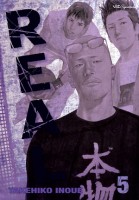
Real, Volume 5Creator: Takehiko Inoue
U.S. publisher: Viz Media
ISBN: 9781421519937
Released: July 2009
Original release: 2005
Awards: Japan Media Arts Award

When I first started reading Takehiko Inoue’s prize-winning manga series Real, I didn’t expect to appreciate it as much as I do. Real has actually become one of my favorite series. I wasn’t particularly interested in wheelchair basketball, one of the main subjects of Real, although that has since changed. Instead, I was initially drawn to the manga because it was created by Inoue, whose artwork I greatly admire. I also am very impressed by his storytelling skills, especially in Real, but also in his other manga available in English, Slam Dunk and Vagabond. As much as I enjoy those two series, in the end it’s Real that I find to be the most compelling. It is a very powerful work. I’ve said it many times before, but it is still true–I honestly believe Real to be one of the best comics that is currently being released in English. The fifth volume of Real was originally collected in Japan in 2005 while the English-language edition, released under Viz Media’s Signature imprint, was published in 2009.

Ever since his motorcycle accident, Nomiya’s life has been falling apart. Although he has tried to earn his drivers’ license, it has taken him quite some time since he is terrified to be on the road. Nomiya is even more terrified of facing Natsumi, the young woman who was in the accident with him. While Nomiya was barely injured, Natsumi has lost the ability to walk and must now use a wheelchair. Nomiya blames himself for the accident and Natsumi’s current condition. The guilt has nearly brought his life to a standstill. He wants to do all that he can to move forward, but this means confronting his fears and confronting Natsumi. Unsurprisingly, she’s not particularly interested in seeing Nomiya, either–she blames him for the accident, too. Her rehabilitation is going well, but Natsumi’s life has been changed forever. Takahashi’s rehabilitation has actually taken a turn for the better, too, after a visit from Nomiya that ends rather badly. It’s been about six months since Takahashi’s own accident which cost him the use of his legs, but he has recently shown enough improvement that he will soon be able to leave the hospital.

Whereas the previous volumes of Real thoroughly introduced the lead characters–Nomiya, Togawa, and Takahashi– and explored their personal, internal struggles, the fifth volume addresses some of the more practical problems and challenges experienced by those who are disabled in an world and environment designed for the able-bodied. This can particularly be seen when Takahashi is considering returning to Nishi High to finish school. Not only is he not yet in a position where he can take of himself, the school itself isn’t at all accessible to someone in a wheelchair and the needed accommodations are prohibitively expensive. These external issues and concerns are inexorably tied to how Takahashi and the others view themselves and and see themselves as people of worth. Takahashi in particular is obsessed with ranking people and assigning them value. He used to consider himself one of the elite, but now his self-worth has been severely compromised. It’s understandable that this is something that he continues to struggle with, especially as he no longer feels that there is a place for him.

Takahashi isn’t the only one suffering from a crisis of self-worth in the series. A major theme in Real deals with what it means to be a good person and a decent human being. Takahashi’s attitude and efforts to be the best in whatever he does comes across as extremely arrogant, but people are beginning to see through his facade of perfection. Nomiya has made, and continues to make, plenty of mistakes in his life, but his honest desire to improve himself and the care and acceptance that he offers others show that he is a much better person than he recognizes. This search for self-worth isn’t limited only to the series’ leads, either. All of their friends and family members are struggling with it as well. In a particularly heart-wrenching development, Togawa’s close friend Yama, who has always been vibrant and maintained an admirably positive outlook, is frightened of who is becoming now that his disease is overtaking his body and mind. Inoue’s characterizations in Real are fantastic. The series is compelling because it is so easy for anyone to identify with the personal struggles being portrayed in the manga even if the characters’ particular situations are unique.

Filed Under: REVIEWS Tagged With: Japan Media Arts Award, manga, real, Takehiko Inoue, viz media, VIZ Signature

Insufficient Direction

March 28, 2014 by Ash Brown

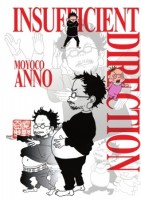
Insufficient DirectionCreator: Moyoco Anno
U.S. publisher: Vertical
ISBN: 9781939130112
Released: February 2014
Original release: 2005

I picked up the first few volumes of Moyoco Anno’s manga series Happy Mania more on a whim than anything else. After reading them I immediately went out and tracked down all of the manga by Anno available in English that I could find. I have been a fan ever since and even went so far as to host the Moyoco Anno Manga Moveable Feast. Anno is an extraordinarily talented creator. I adore her work and so was extremely happy when Vertical released Insufficient Direction in 2014. Originally published in Japan in 2005, the manga is a somewhat fictionalized account of Anno’s married life with her husband Hideaki Anno of Neon Genesis Evangelion fame. Now, I know quite a few people who were interested in Insufficient Direction primarily because of the Hideaki Anno connection. In addition to being one of the manga’s main subjects, an essay in which he discusses Insufficient Direction is also included as part of the volume’s extra materials. But for me, my interest in Insufficient Direction was all about Moyoco Anno. I was excited to have the chance to learn a little more about her and her life directly from her own perspective.

Rompers (aka Moyoco Anno) and Director-kun (aka Hideaki Anno) are getting married. It just so happens that Director-kun is one of the “big four” of Japanese otaku. A director of both film and anime, he is also a huge fan and obsessive collector of Japanese pop culture. Rompers has her own otaku tendencies and enjoys manga, anime, and such, but she has tried to keep those impulses under control in order to lead a more “normal” life. However, Rompers’ marriage to Director-kun makes that almost impossible and she slowly becomes bona-fide ota wife. Although Rompers obsesses over some of her own interests, it’s nothing when compared to Director-kun. Instead of denying her otakuness, Rompers begins to embrace it, partly out of self-preservation. She and Director-kun are able to share their love of Japanese television, anime, and manga, but how much is too much? Their home quickly fills with their collections and they can be embarrassingly enthusiastic over the smallest bits of trivia. In the end, it is a way of life and they love it (although Rompers continues to have some reservations). But more importantly, they love each other.

There are a ton of references to tokusatsu, anime, manga, and other Japanese pop culture and celebrities. In fact, there are thirty pages of annotations to help interested readers keep a handle on everything. Sometimes reading the notes actually takes longer than reading the chapters they’re associated with. However, understanding all of the minutia and details isn’t absolutely needed to enjoy Insufficient Direction; simply recognizing the extreme levels of geekiness and nerd cred involved should be enough. Rompers and Director-kun make an adorable and loving couple. The reason that there are so many pop culture references isn’t just because that is what they are interested in, it’s also one of the ways they connect and communicate with each other. Entire conversations can be held that consist of nothing but quotes from anime and other media. Singing theme songs at the top of their lungs brings them even closer together. Vacations and excursions are based on locations from films and television shows. Fortunately, because they do share so many interests, they usually can happily spend time enjoying them as a couple.

Although Insufficient Direction is fictionalized–mostly to emphasize the more humorous aspects of Rompers and Director-kun’s relationship–I find it to be entirely and completely believable. As a bit of an otaku myself, I am very familiar with relationships that work in similar ways to theirs and am all too aware of some of the challenges faced by avid collectors. Insufficient Direction shows both of the Anno’s to be very relatable people. At least I could certainly identify with them. Insufficient Direction is quirky, smart, and very funny. Compared to some of Anno’s other manga, the artwork in Insufficient Direction tends to be simpler in style, suitable for what basically amounts to a real-life gag manga. The individual chapters are short and there isn’t really an overarching plot so much as there is an ongoing challenge for Rompers and Director-kun to put up with each other’s quirks and interests. There’s quite a bit of good-natured teasing in Insufficient Direction and quite a bit of love, not just for each other but for art and entertainment as well. I found Insufficient Direction to be a very enjoyable read and am very happy to have it in English.

Filed Under: REVIEWS Tagged With: manga, Moyoco Anno, vertical

  • « Go to Previous Page
  • Page 1
  • Interim pages omitted …
  • Page 26
  • Page 27
  • Page 28
  • Page 29
  • Page 30
  • Interim pages omitted …
  • Page 60
  • Go to Next Page »
 | Log in
Copyright © 2010 Manga Bookshelf | Powered by WordPress & the Genesis Framework