• Skip to primary navigation
  • Skip to main content
  • Skip to primary sidebar
  • Home
  • About Us
    • Privacy Policy
    • Comment Policy
    • Disclosures & Disclaimers
  • Resources
    • Links, Essays & Articles
    • Fandomology!
    • CLAMP Directory
    • BlogRoll
  • Features & Columns
    • 3 Things Thursday
    • Adventures in the Key of Shoujo
    • Bit & Blips (game reviews)
    • BL BOOKRACK
    • Bookshelf Briefs
    • Bringing the Drama
    • Comic Conversion
    • Fanservice Friday
    • Going Digital
    • It Came From the Sinosphere
    • License This!
    • Magazine no Mori
    • My Week in Manga
    • OFF THE SHELF
    • Not By Manga Alone
    • PICK OF THE WEEK
    • Subtitles & Sensibility
    • Weekly Shonen Jump Recaps
  • Manga Moveable Feast
    • MMF Full Archive
    • Yun Kouga
    • CLAMP
    • Shojo Beat
    • Osamu Tezuka
    • Sailor Moon
    • Fruits Basket
    • Takehiko Inoue
    • Wild Adapter
    • One Piece
    • After School Nightmare
    • Karakuri Odette
    • Paradise Kiss
    • The Color Trilogy
    • To Terra…
    • Sexy Voice & Robo
  • Browse by Author
    • Sean Gaffney
    • Anna Neatrour
    • Michelle Smith
    • Katherine Dacey
    • MJ
    • Brigid Alverson
    • Travis Anderson
    • Phillip Anthony
    • Derek Bown
    • Jaci Dahlvang
    • Angela Eastman
    • Erica Friedman
    • Sara K.
    • Megan Purdy
    • Emily Snodgrass
    • Nancy Thistlethwaite
    • Eva Volin
    • David Welsh
  • MB Blogs
    • A Case Suitable For Treatment
    • Experiments in Manga
    • MangaBlog
    • The Manga Critic
    • Manga Report
    • Soliloquy in Blue
    • Manga Curmudgeon (archive)

Manga Bookshelf

Discussion, Resources, Roundtables, & Reviews

comics

Random Musings: Wrapping Up the Year of Yuri Monthly Review Project

November 15, 2014 by Ash Brown

BlueAlthough I’ve continued to review the new volumes of the series as they are released, last year I wrapped up my Blade of the Immortal monthly review project. Because I enjoyed the project, which took me nearly two years to complete, I started to look for a new one to take its place. Ultimately, I decided I wanted readers of Experiments in Manga to have some input in which manga I would tackle next and so put it up for a vote. Out of the five options that I narrowed it down to, by far the most popular choice was what I called “Year of Yuri.”

Over the course of twelve months, I reviewed twelve different comics and manga with yuri and/or lesbian themes. My intention was to feature a wide variety of genres, demographics, and styles. I think I was fairly successful in that. Most of the stories were based in reality, but there was a bit of fantasy, too. Some were erotic while others were very chaste. There were first loves and failed loves, healthy relationships and relationships that did more harm than good, humor and nostalgia, lightheartedness and seriousness, stories about school girls and stories about grown women, and more.

Whereas the Blade of the Immortal project focused on a single series, the Year of Yuri project allowed me to explore a range of titles which was interesting to do. Granted, with only twelve reviews, I could only begin to scratch the surface of the entire realm of possibilities. But hopefully I featured at least one manga or comic that sparked someone’s interest. I enjoyed having a project to work on from month to month and had fun selecting the comics and manga that I would review. Now that my Year of Yuri monthly review project has concluded, I’ll once again be turning to the readers of Experiments of Manga to help choose my next project. Another poll will be opened in the very near future, so stay tuned!

The links to all of my Year of Yuri manga reviews can be found below. I have also conveniently added a Year of Yuri tag to all of the reviews to pull them all together and for even greater ease of access. While I’ll no longer be focusing on yuri and lesbian comics as part of a monthly review project, I will continue to read and review them, so expect to see more quick takes and in-depth reviews in the future. I hope you all enjoyed this project as much as I did!

Year of Yuri reviews:
12 Days by June Kim
Before You Go by Denise Schroeder
Between the Sheets by Erica Sakurazawa
Blue by Kiriko Nananan
Gakuen Polizi, Volume 1 by Milk Morinaga
Kisses, Sighs, and Cherry Blossom Pink by Milk Morinaga
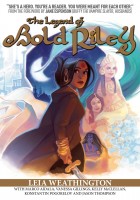
The Legend of Bold Riley created by Leia Weathington
Maka-Maka: Sex, Life, and Communication, Volume 1 by Torajiro Kishi
Revolutionary Girl Utena: The Adolescence of Utena by Chiho Saito
S.S. Astro: Asashio Sogo Teachers’ Room, Volume 1 by Negi Banno
Sweat & Honey by Mari Okazaki
Whispered Words, Omnibus 1 by Takashi Ikeda
Filed Under: UNSHELVED Tagged With: comics, manga, Year of Yuri

The Legend of Bold Riley

November 14, 2014 by Ash Brown

The Legend of Bold RileyCreator: Leia Weathington
Illustrator: Vanessa Gillings, Jason Thompson, Marco Aidala, Konstantin Pogorelov, and Kelly McClellan; Chloe Dalquist and Liz Conley

Publisher: Northwest Press
ISBN: 9780984594054
Released: June 2012

The Legend of Bold Riley is writer and illustrator Leia Weathington’s first graphic novel. Published by Northwest Press in 2012, the volume is a collection of related stories, each illustrated by a different artist. In addition to Weathington, Vanessa Gillings, Jason Thompson, Marco Aidala, Konstantin Pogorelov, and Kelly McClellan contributed their artistic skills to The Legend of Bold Riley, with Chloe Dalquist and Liz Conley assisting with some of the colors. I first became aware of The Legend of Bold Riley thanks to the involvement of Thompson (to whom I give partial credit for igniting my interest in manga). And it’s thanks to The Legend of Bold Riley that I discovered Northwest Press, a publisher specializing in queer comics, graphic novels, and anthologies. The Legend of Bold Riley is a sword and sorcery adventure featuring a princess as a hero. She also happens to be a lover of women. Happily, The Legend of Bold Riley doesn’t end with this collection. The second volume, Unspun is currently being serialized and Weathington has already started working on a third book.

Rilavashana SanParite, who would come to be known as Bold Riley, is the youngest child of the king and queen of the eastern nation of Prakkalore. She and her two older brothers are heirs to the throne, groomed to be fair and just rulers of the kingdom and knowledgeable in the arts of state in addition to the fine arts, sciences, history, and swordplay. But Riley finds that her heart lies somewhere beyond the walls of the capital city of Ankahla and even beyond the borders of Prakkalore. She wants to travel the world to see the places and meet the people she’s only ever read about in her studies. And so the princess sets out with a sword strapped to her side and a horse to carry her, first to the southern kingdom of Connchenn and then further to the jungles of Ang-Warr, the distant Qeifen, and all the lands in between. Over the course of her journey Riley meets gods and battles demons, the sharpness of her mind and wits just as valuable as the sharpness of her sword. She even falls into the bed of a lovely lady or two.

Although the stories in The Legend of Bold Riley all have continuity with one another, the prologue and the five individual chapters that follow can largely stand on their own once Riley has been introduced. As already mentioned, each chapter is illustrated by a different artist. Riley is always recognizable, but otherwise there is no attempt to have uniform artwork in the volume. Instead, the artists are given free rein, resulting in a marvelous assortment of different art styles and illustration techniques and a range of color palettes. The resulting shift of mood and atmosphere is quite effective in emphasizing the changes in the setting and the type of story being told from one chapter to the next. As Riley travels, visiting different countries and kingdoms, the artwork reflects those differences. The Legend of Bold Riley is diverse, and not just in its illustrations. The volume’s sceneries and stories take inspiration from the fantasy counterparts of India, Central and South America, Southeast Asia, and other areas.

The artwork in The Legend of Bold Riley may change from story to story, but Riley is always Bold Riley. She’s a fantastic and exceptionally appealing character, a dashing and daring young woman with strengths and weaknesses, remarkable talents, and human flaws. Although Riley’s sexuality is never the focus of the comic, it’s always a part of who she is as a person and as a well-rounded character. She falls in love, she makes mistakes, and she struggles and is challenged when faced with a world that’s not always black and white or even kind. The Legend of Bold Riley, while something new and refreshing, somehow also feels very familiar. It’s a collection of heroic tales, some ending in triumph and others ending in heartbreak. Because of its episodic nature there’s not a lot of character development, but Riley is such a great character to begin with that the work is still very satisfying. I thoroughly enjoyed The Legend of Bold Riley and look forward to reading more of Riley’s adventures in the future.

Filed Under: REVIEWS Tagged With: Chloe Dalquist, comics, Jason Thompson, Kelly McClellan, Konstantin Pogorelov, Legend of Bold Riley, Leia Weathington, Liz Conley, Marco Aidala, Northwest Press, Vanessa Gillings, Year of Yuri

My Week in Manga: October 20-October 26, 2014

October 27, 2014 by Ash Brown

My News and Reviews

I posted two reviews at Experiments in Manga last week. First up was my review of Baku Yumemakura and Jiro Taniguchi’s The Summit of the Gods, Volume 4. It’s the penultimate volume in one of my favorite manga series. It was also a particularly intense volume. The fifth and final book should be available sometime next year; I’m really looking forward to it. My second review last week was of Boogiepop Returns: VS Imaginator, Part 1, the second volume in Kouhei Kadono’s Boogiepop light novel series. I didn’t find it to be quite as dark as the first novel, but it still had an interesting mix of science fiction, horror, mystery, and even a bit of romance. I discovered Boogiepop late (the four novels and the four volumes of manga that were translated into English are now out of print) but I’m really enjoying the franchise so far. At this point I definitely plan on checking out the rest of the Boogiepop novels, manga, music, anime series, and live-action film.

On to other things online! Digital Manga has launched its most recent Tezuka Kickstarter project and it is…ambitious. At Manga Comics Manga, Deb Aoki has a nice roundup of some the concerns and criticisms fans have been expressing about the project. Justin has been busy posting more New York Comic Con content at Organization Anti-Social Geniuses, including interviews with Viz Media’s Andy Nakatani (editor-in-chief of Weekly Shonen Jump) and Leyla Aker (Vice President of Publishing). Also, in case you missed it (like I did), Brigid Alverson posted her NYCC interview of Takeshi Obata at Comic Book Resources a couple Fridays back. Ryan Holmberg’s most recent What Was Alternative Manga? column focuses on the proto-gekiga work of Masahiko Matsumoto. The post has great (and probably deliberate) timing–Matsumoto’s The Man Next Door is now available to order from Breakdown Press. Over at Manga Connection, Manjiorin is embarking on a new review project focusing on Crunchyroll’s digital manga. And speaking of manga reviews, Manga Blog’s inagural Bookmarked! feature was posted. I’m very happy to see Manga Blog so active again. Be sure to check it out for its link-blogging, too!

Quick Takes

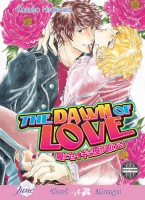
The Dawn of LoveThe Dawn of Love by Kazuho Hirokawa. Masahiro is infatuated with his fellow law student Takane and so is very happy to discover that Takane, like him, is also gay. Takane has multiple partners which doesn’t bother Masahiro at first, but eventually he decides that he wants Takane to exclusively date him. My biggest issue with The Dawn of Love is that Masahiro uses sex to manipulate Takane, basically forcing Takane to choose monogamy regardless of his own feelings about the matter; it’s really not a good basis for a healthy, long-lasting relationship. I think Hirokawa was trying to going for a sort of “true love conquers all” take with the manga, but The Dawn of Love isn’t successful in achieving that, mostly because I was never convinced that Masahiro and Takane were actually in love to begin with. Even Masahiro doesn’t bother to ask himself why he loves Takane until well into the story, and he never really answers that question. It’s obvious that the two of them enjoy having sex with each other (and there’s a lot of sex in The Dawn of Love), but sexual desire isn’t the same thing as romantic love. The Dawn of Love had great potential and was even rather funny in places, but overall I didn’t end up enjoying it much at all.

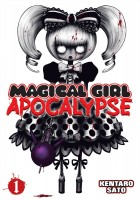
Magical Girl Apocalypse, Volume 1Magical Girl Apocalypse, Volume 1 by Kentaro Sato. I can’t tell for certain yet, but by the end of the first volume of Magical Girl Apocalypse it seems as though the series might actually be a parody. If that’s true, it makes the manga a little more interesting to me. If not, Sato is going to need to do something else to keep my attention. I’m more frightened that Yoruka will have a horrifying back injury due to her ridiculously large breasts than I am of the series’ “zombies.” Despite the inclusion of the creepy-cute magical girls instead of more traditional zombie-like monsters, the manga doesn’t really set itself apart yet. At this point, it somehow feels like a pretty generic zombie story. There’s plenty of disturbing scenes and well-drawn gore, and I appreciate that Sato isn’t afraid to kill off characters who in other series would actually manage to live for more than one chapter, but otherwise I found Magical Girl Apocalypse to be a fairly typical zombie survival manga. The series should be an entertaining read for those fond of the subgenre, and there’s nothing wrong with that, but personally I find myself a little zombied-out these days and prefer my horror to have a little more substance.

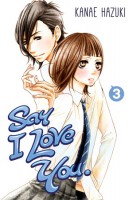
Say I Love You, Volume 3Say I Love You, Volume 3 by Kanae Hazuki. One of the things that really impresses me about Say I Love You is Hazuki’s forthright portrayal of teenage sexuality. The characters exhibit both maturity and immaturity in their relationships; they can be surprisingly levelheaded, but they can also let their feelings get the best of them. There’s conflict and selfishness in addition to the beginnings of new love and developing respect for others. The characters and their relationships are believable and have depth to them. The more I read of Say I Love You the more and more like Mei. She, like so many of the other characters, has been hurt in the past, but despite her nervousness and anxiety she’s at a point in her life that she’s able to stand up for herself and for others. (Bullying and dealing with bullies is a recurring theme in Say I Love You.) Though Mei tends not to take crap from other people, she is still vulnerable and she still experiences pain, especially now that she is beginning to open herself up to others again. She’s learning to trust, but it doesn’t always come easily for her. It’s this sort of realistic and layered characterization that Say I Love You does particularly well.

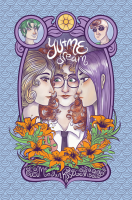
YU+ME: Dream, Omnibus 1YU+ME: Dream, Omnibuses 1-2 by Megan Rose Gedris. I only recently discovered YU+ME, a webcomic that was originally released online between 2004 and 2010. The comic is still freely available to read online, but the series has also now been collected into two omnibuses which include additional content. The first part of YU+ME comes across as a fairly standard girl-meets-girl high school love story. It’s certainly enjoyable, but not an exceptional story on its own. (Although it is noteworthy that the series may have been one of the earliest queer-focused webcomics.) What really makes the YU+ME outstanding is its second part, which places the first half within an entirely new context. Gedris wanted to turn the “but it was all a dream” trope on its head and she does so magnificently. Both the artwork and the storytelling are a bit rough in the beginning, but Gedris steadily improves and by the end the series has turned into something truly spectacular. The first part of YU+ME primarily uses a single art style while the second half explodes into a brilliant variety of design, color, and texture. YU+ME is an epic and surreal lesbian love story with a grand mythos to go along with it and a plot that is much more complex than it first appears.

Filed Under: FEATURES, My Week in Manga Tagged With: comics, Kanae Hazuki, Kazuho Hirokawa, Kentaro Sato, Magical Girl Apocalypse, manga, Megan Rose Gedris, Say I Love You, YU+ME

Adaptation Adventures: Udon Entertainment’s Manga Classics

October 8, 2014 by Ash Brown

One day long ago when I was still very small my parents brought home for me a box filled with Great Illustrated Classics–small, compact adaptations of classic literature with illustrations on almost every other page intended to introduce younger readers to some of the great, influential stories of the Western canon. I devoured them. It’s largely thanks to that series that I became so well versed in the classics. When I was older I would go on to read the originals of some of my favorites. And even those that I never got around to, I became familiar enough with their stories that I could hold my own in conversation and understand references made to them.

Literacy is something that I care very deeply about. Closely related to that, I also feel that exposure to the classic stories that have gone on to become such an integral and influential part of Western culture and world literature is important. However, I realize how intimidating those classics can be, especially for those who are reluctant readers to being with, or who simply don’t enjoy the authors’ styles of writing or find the length of some of the originals to be formidable. Because of that, I believe that efforts to adapt these stories in a way that is more approachable and appealing to a larger audience can be extremely valuable, which brings me to Manga Classics.

Manga Classics

Manga Classics is a line of graphic novel adaptations jointly released by Udon Entertainment and Morpheus Publishing. Their aim is to present faithful, high-quality adaptations of classic stories in a format intended to be especially appealing to young adults–that is, full-length, manga-style graphic novels. Udon isn’t the only publisher to attempt something similar to this. Recently I’ve seen other comics, graphic novel, and manga adaptations of classics released by publishers like Marvel and One Peace Books (to provide just two examples) with varying levels of success.

Strong adaptations can be notoriously difficult to achieve. Purists will often outright shun adaptations as they almost never carry the same nuance and complexity found in the source material or because they may stray too far from the original. Adaptations are especially challenging when trying to present a story in an entirely different medium, such as adapting prose into comics or film. For me, I consider an adaptation to be a great one if it is entertaining and engaging in its own right while at the same time inspiring readers (or viewers) to seek out the original stories. I feel that Manga Classics’ first two adaptations have accomplished this.

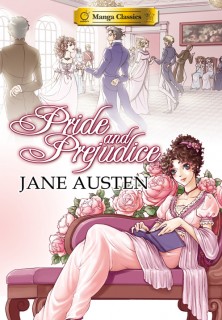
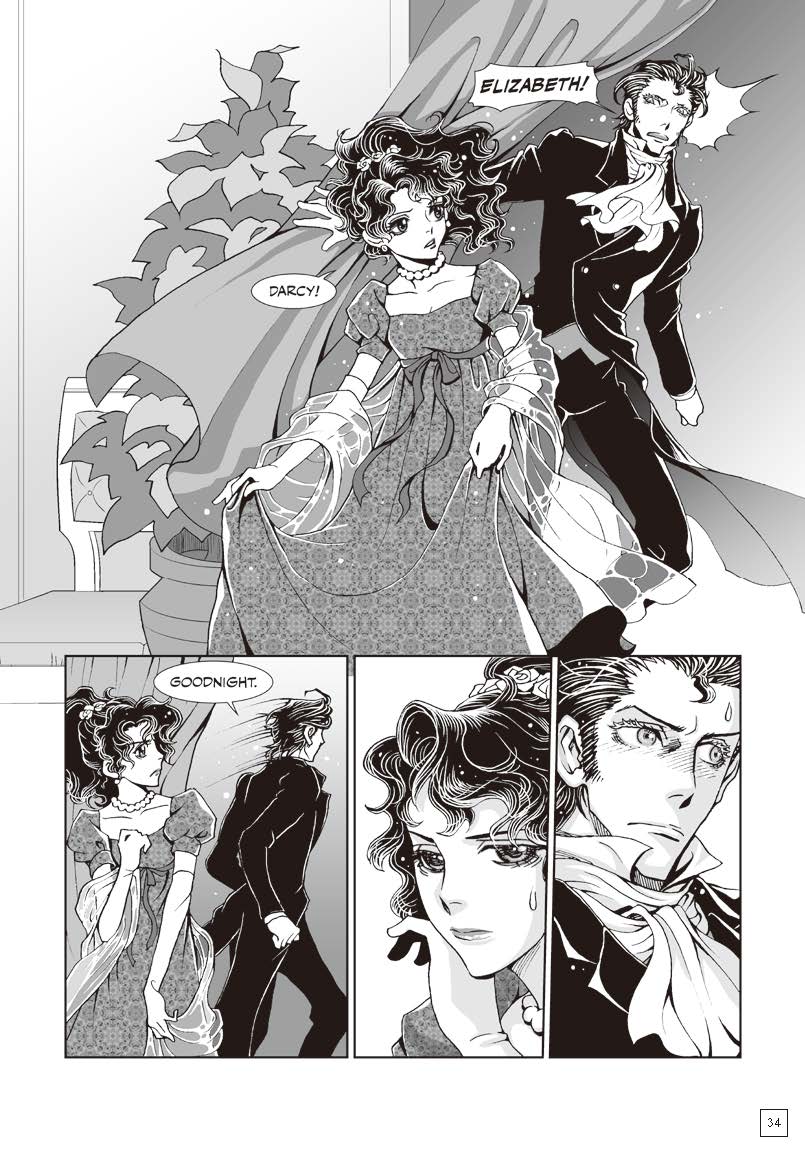
Pride & PrejudiceThe Manga Classics series debuted in 2014 with adaptations of Jane Austen’s Pride & Prejudice and Victor Hugo’s Les Misérables. Out of the two, I am most familiar with Pride & Prejudice. I’ve read the original, I’ve seen many of its film and television adaptations (if you’ve not already discovered the recent webseries The Lizzie Bennet Diaries, I highly recommend it), and back in high school I was actually even a main cast member in a Pride & Prejudice stage production.

The original Pride & Prejudice was first published in England in 1813. The story follows Elizabeth Bennet, the second-oldest daughter of an English family with a country estate outside of London. Elizabeth’s mother is determined to see her five daughters married, and married well, so when the wealthy (and young) bachelor Mr. Bingley moves into the neighborhood, her scheming immediately begins. Fortunately, Bingley and Jane, the eldest Bennet daughter, hit it off. Unfortunately, due to some misunderstandings and interference from Bingley’s best friend Mr. Darcy, their romance is cut short. And because of that, Elizabeth’s opinion of Darcy suffers greatly, not that she held him in very high regard to begin with. To add to the awkwardness, Darcy, to his dismay, seems to have developed feelings for Elizabeth. Things get even more complicated from there as manners, social standing, morals, and some very strong personalities come into play before the Bennet daughters find their way in life and love.

Elizabeth Bennet and (blushing!) Mr. Darcy

Elizabeth Bennet and (blushing!) Mr. Darcy

Reading the Manga Classics version of Pride & Prejudice reminded me how much I enjoy the original novel, its story, and its characters. I was also struck by how perfectly Austen’s work is suited for shoujo. The story has been adapted by Stacy King and illustrated by Po Tse. The narrative has been slimmed down and largely focuses on Elizabeth and the ups and downs of her delightfully antagonistic relationship with Darcy. All of the major plot points are still there although some of the other characters (such as Elizabeth’s younger sisters) aren’t as fully developed. But the story still works and works quite well. The only thing I didn’t really like about Manga Classics’ Pride & Prejudice was the portrayal of Mr. Collins, the heir to the Bennet estate. To some extent he serves as the story’s comic relief, but he comes across as too much of a caricature in the graphic novel (visually and narratively) which clashes in style from the rest of the comic. Generally though, Po Tse’s artwork is quite lovely and occasionally even stunning. Elizabeth and Jane’s hair is gorgeously drawn and particular attention has been given to Regency period clothing and architecture as well. (A preview of the first chapter is available here!)

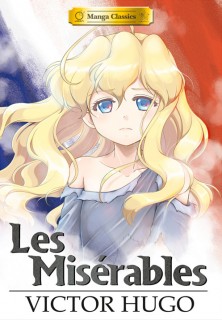
Les MisérablesI am much less familiar with Les Misérables. Although I know the basic story of the novel, I’ve never actually read the original. Nor have I seen any of its direct adaptations. However, I have listened to multiple sound recordings of the musical many, many times. I’ve seen the recent 2012 film adaptation of the musical as well, but that’s a couple steps removed from Hugo’s original.

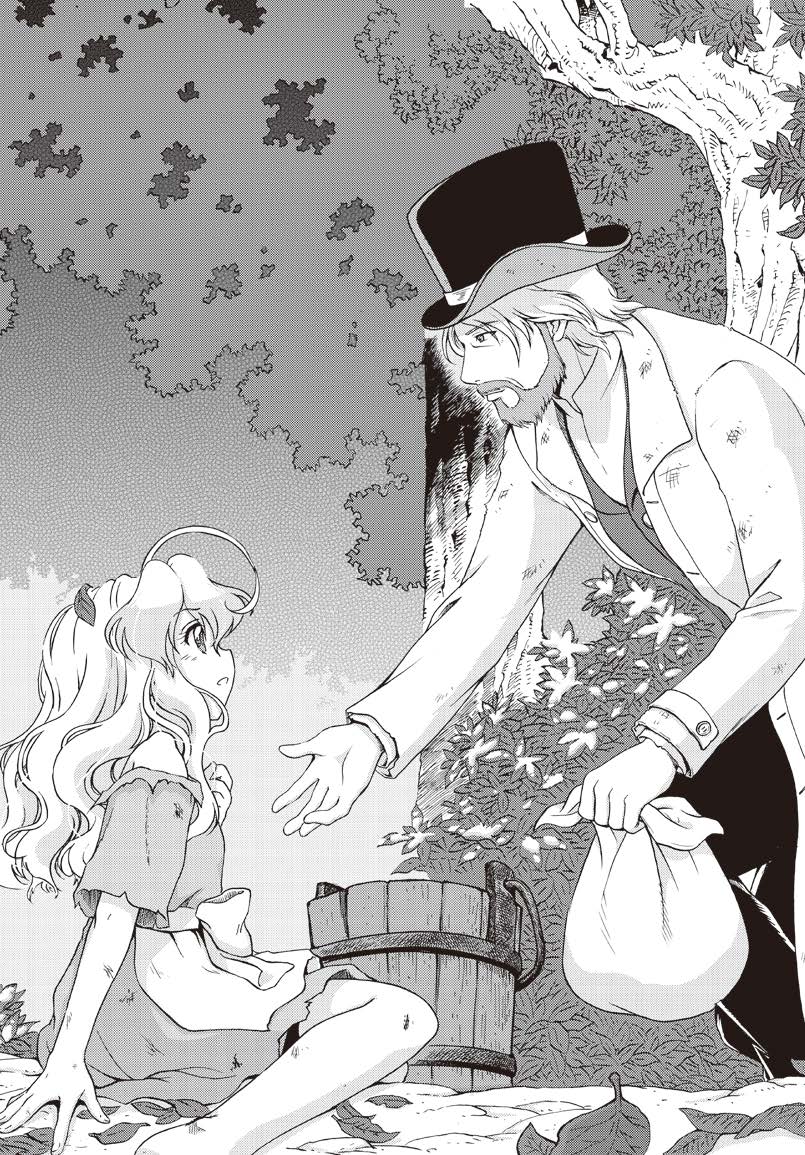
Les Misérables was first published in France in 1862. The novel (one of the longest ever written) is an epic work of historical fiction set in the first half of the 19th-century, a rather tumultuous time in France. The novel begins in 1815 after the defeat of Napoleon Bonaparte and, following a large cast of characters, digressions, and subplots, climaxes with the June 1832 uprising in Paris. The most well-known story out of Les Misérables is that of the ex-convict Jean Valjean, the officer Javert whose goal is to recapture Valjean, and a young orphan girl named Cosette who becomes Valjean’s charge. Those three individuals and their relationships and connections to one another and the rest of the characters form the core of Les Misérables. Politics, religion, economic and social conditions, philosophy, morality, redemption, and love all have an important role to play in the novel as well.

Cosette and Jean Valjean

Cosette and Jean Valjean

Because I’m not as familiar with the original Les Misérables it’s difficult for me definitively say how the Manga Classics’ adaptation directly compares. However, I can say that it reads very well. Most of the subplots have been dropped in favor of the main storyline following the Valjean and Cosette and those who are directly involved with them. The adapter, Crystal Silvermoon, has taken great care to consider other adaptations of Les Misérables in addition to the original in the creation of the graphic novel. Because Les Misérables is so lengthy and complex there would be no possible way to include everything, but the most iconic scenes are all present in the Manga Classics adaptation. Stacy King provided additional assistance with the scripting and SunNeko Lee served as the volume’s illustrator. Stylistically, the art is a little simpler than that found in the Pride & Prejudice adaptation. However, it is more even in tone which suits the story’s serious and dramatic nature. Once again, particular attention has been given to the setting. I found the Les Misérables graphic novel to be engaging and, perhaps more importantly, it’s the first adaptation that has really made me interested in picking up the original.

Because it is so easy to create an unsatisfying adaptation of any work, let alone a work that is well-loved or held in high esteem, and after seeing so many poor adaptations, I’ll admit that I approached Manga Classics with some apprehension. However, I was very happy to discover that the line’s first two adaptations were very well done. Though I might have a small nitpick here or there, I sincerely enjoyed both volumes. I could easily see Manga Classics being used in a classroom setting, but I think the graphic novels will appeal to readers outside of that context as well. I am very pleased that new audiences will have the opportunity to be introduced to some of the classic works of literature in such an approachable format. Hopefully, like Great Illustrated Classics did for me, Manga Classics will inspire new generations to seek out those original stories.

Spring 2015 will bring three more adaptations to the Manga Classics line, graphic novel versions of Jane Austen’s Emma, Charles Dickens’ Great Expectations, and Nathaniel Hawthorne’s The Scarlet Letter. So far, Manga Classics has approached the source material of its adaptations with care and respect; I can honestly say that I’m looking forward to seeing future Manga Classics releases.

Thank you to Udon Entertainment for providing copies of Pride & Prejudice and Les Misérables for review.

Filed Under: FEATURES Tagged With: comics, Crystal Silvermoon, Jane Austen, Manga Classics, Po Tse, Stacy King, SunNeko Lee, Udon Entertainment, Victor Hugo

My Week in Manga: September 29-October 5, 2014

October 6, 2014 by Ash Brown

My News and Reviews

Last week at Experiments in Manga there were three posts in addition to the usual My Week in Manga feature. To start with, the winner of the Triton of the Sea manga giveaway was announced. The post also includes a list of some of the manga available in English that feature mermaids and/or mermen. Next was my review of Ryo Suzukaze’s novel Attack on Titan: Before the Fall, which is a prequel to Hajime Isayama’s original Attack on Titan manga series. I liked the premise of the novel much more than I did its execution, but it should still be pretty interesting for Attack on Titan fans. And finally, over the weekend, September’s Bookshelf Overload was posted. As for other interesting things online…I’ve been so busy at work lately that I’ve not really been able to keep up with all that’s going on. However, I do know that Seven Seas is currently in the process of revealing seven new licenses via Twitter. I’m pretty sure that Sean will be doing a wrap-up at A Case Suitable for Treatment soon which I’ll link to, but in the meantime you can always check out Seven Seas’ Twitter timeline. (There have been some really interesting choices so far!)

Quick Takes

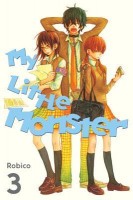
My Little Monster, Volume 3My Little Monster, Volume 3 by Robico. I have been thoroughly enjoying My Little Monster and its cast of rather quirky characters. However, the third volume doesn’t seem to really move the plot along much, nor does it really develop the characters further. If anything, the series has lost its forward momentum and undoes some of the progress that has been made. After the various confessions of love from the previous volumes, Haru and Shizuku spend most of the third going through it all again. Shizuku has once more decided that she doesn’t have time for friendships or romantic relationships and wants to focus on her studies. Haru is fitting in a little better at school and is actually able to put the fact that everyone except Shizuku is terrified of him to good use, although he’s still fairly volatile and his behavior and obliviousness of others occasionally causes some real problems. So overall, not much has really changed in My Little Monster except that a few more hints have been dropped about Haru’s brother, whom I’m very curious about. I’m still enjoying the series and find its deadpan humor amusing, but I do hope to see more plot and character development in future volumes.

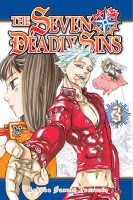
The Seven Deadly Sins, Volume 3The Seven Deadly Sins, Volume 3 by Nakaba Suzuki. As can be safely assumed from the cover, the third volume of The Seven Deadly Sins heavily features the newly introduced Ban, the Fox Sin of Greed. I’m okay with this because, well, I actually like Ban as a character. Despite being one of the Seven Deadly Sins and therefore being one of the series’ heroes (or at least one of its protagonists), Ban’s really not that nice of a guy. Frankly, he’s an unapologetic jerk (with a very nice set of abs and a fondness for alcohol, though he really can’t hold his drink). But, like the other Sins, Ban has a tragic past to go along with his arrogant personality. He’s also kind of a goofball. One of the things that I particularly enjoy about The Seven Deadly Sins is the ridiculously overpowered battles between the ridiculously overpowered characters. The action can sometimes be a little difficult to follow, but the resulting destruction is quite obvious. I’m also rather impressed by how well Suzuki visually handles Diane, the giantess of the Seven Deadly Sins. She’s huge, but her presence always seems very natural on the page and Suzuki does a nice job of incorporating her into the artwork.

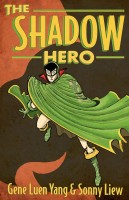
The Shadow HeroThe Shadow Hero written by Gene Luen Yang and illustrated by Sonny Liew. Initially I wasn’t planning on picking up The Shadow Hero, most likely because I’m generally not that interested in superheroes. Fortunately I realized that was a very silly reason not to read the comic, especially considering that Yang is a fantastic writer and I really like Liew’s artwork and use of color. Long story short, I absolutely loved The Shadow Hero. The story of The Shadow Hero was inspired by an obscure superhero from the 1940s called the Green Turtle which was created by Chu Hing, one of the first Asian Americans to work in American comics. (The volume also contains a reproduction of the first Green Turtle comic, which was a nice addition.) The Shadow Hero serves as the Green Turtle’s origin story. Hank Chu is the son of a Chinatown grocer who looks forward to taking over his father’s store. His mother, however, has much bigger plans for her son and has decided that he will become a superhero, despite the complete lack of any superpowers. With a great story and great art, and plenty of humor to balance the more serious aspects of the comic, The Shadow Hero is definitely recommended.

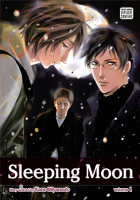
Sleeping Moon, Volume 1Sleeping Moon, Volumes 1-2 by Kano Miyamoto. I tend to really enjoy Miyamoto’s work, so I was pretty excited when SuBLime licensed her short boys’ love series Sleeping Moon. I was particularly looking forward to it due to its supernatural elements, but in the end I didn’t find it as compelling as some of her other manga which are more firmly based in reality. Part of that is probably because much of the romantic relationship between two of the leads felt as though it was tacked on simply because the series was supposed to be boys’ love. Still, there were parts of Sleeping Moon that I enjoyed, and Miyamoto’s artwork is as lovely as ever. Akihiko’s family is cursed–the male heirs all die young, never making it past their thirties. And since his thirtieth birthday is fast approaching, Akihiko has a vested interest in discovering the truth behind the curse in order to prevent his own death and the death of his cousin. And that’s when the time slips begin–Akihiko finds himself spontaneously traveling to the Meiji era where one of his distant relatives is trying to unravel the same mystery. The moody supernatural and horror elements work better than the manga’s romance and the time traveling is handled quite well, too.

Filed Under: FEATURES, My Week in Manga Tagged With: comics, Gene Luen Yang, Kano Miyamoto, manga, My Little Monster, Nakaba Suzuki, Robico, Seven Deadly Sins, sleeping moon, Sonny Liew

My Week in Manga: August 25-August 31, 2014

September 1, 2014 by Ash Brown

My News and Reviews

The most recent manga giveaway at Experiments in Manga is currently underway, and there is still time to enter for an opportunity to win Nana, Volume 1 by Ai Yazawa. All you have to do is tell me whether or not you’ve ever given a manga a second chance and what your experience was. I also posted two reviews last week. The first was for the third and final volume of Off*Beat by Jen Lee Quick, which I was very happy with. Nearly ten years after the series first began, fans finally have a chance to read its conclusion thanks to the efforts of Chromatic Press. The second review last week was for Keigo Higashino’s most recently translated mystery novel, Malice. I enjoy Higashino’s work tremendously and was not at all disappointed with Malice. The novel will be released in October and is recommended for readers who enjoy smart, clever mysteries. Although it was from a couple of weeks ago, my Spotlight on Masaichi Mukaide has been making the rounds and gaining some attention. I worked pretty hard on it, so I’m extremely pleased that people are finding the post interesting.

Elsewhere online, Organization of Anti-Social Geniuses has an interview with Vertical’s Ed Chavez, discussing the success of Knights of Sidonia. And speaking of Vertical, the Fall 2014’s reader survey and license request form has been launched. Comics Alliance has an interesting interview with Felipe Smith (whose series Peepo Choo was published by Vertical). Yen Press announced some new light novel and manga licenses. And for your enjoyment, one of Kate Beaton’s recent Hark! A Vagrant comics focuses on Natsume Sōseki’s classic novel Kokoro. (I actually really like Kokoro and reviewed it a few years ago.)

Quick Takes

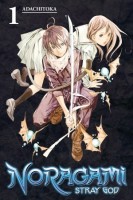
Noragami: Stray God, Volume 1Noragami: Stray God, Volume 1 by Adachitoka. Yato is a god of war that everyone has forgotten, or maybe never even knew about to being with. He has no temples or shrines, no followers or worshipers, but he’s determined to change all of that. Unfortunately, his personality leaves a bit to be desired and even his servants don’t like him; he’s had to resort to doing odd jobs and spreading his name (and number) by graffitiing the walls of bathroom stalls and alleyways. The beginning of Noragami: Stray God is somewhat uneven in tone, but by the end of the first volume it seems to have found a nice balance between the manga’s humor and the more serious aspects of the story. The introduction of the series’ other lead character–Hiyori, a human girl who has a little trouble with her spirit leaving her body after a near-death experience–helps to achieve this balance. She also happens to be a fan of professional wrestling, which actually comes into play in the story instead of just being a character quirk. I quite enjoyed the first volume of Noragami, finding it to be amusing and even a bit charming, and look forward to reading more of the series.

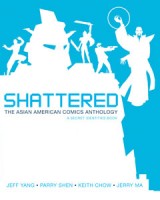
Shattered: The Asian American Comics AnthologyShattered: The Asian American Comics Anthology edited by Jeff Yang, Parry Shen, Keith Chow, and Jerry Ma. The followup anthology to Secret Identities, Shattered collects forty-three short comics and pin-ups from seventy-five contributors. Whereas Secret Identities focused on superhero stories, Shattered also includes other genres of comics–fantasy, science fiction, martial arts, historical, contemporary fiction, and so on. The volume is intended to address and subvert five stereotypical representations of Asians and Asian-Americans in media: The Brute, The Temptress, The Brain, The Alien, and The Manipulator. Although there are some absolute gems in the collection–personal favorites include Tak Toyoshima’s “Occupy Ethnic Foods” and the precursor to Gene Luen Yang and Sonny Liew’s graphic novel The Shadow Hero–for me Shattered works better in concept than in execution. Many of the comics are either incomplete or feel as though they are pitches for a longer series instead of being finished works in their own right, making for a rather unsatisfying reading experience. However, I did appreciate the wide variety of comics and creators included in the volume.

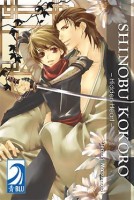
Shinobu Kokoro: Hidden HeartShinobu Kokoro: Hidden Heart by Temari Matsumoto. Way back when, Shinobu Kokoro: Hidden Heart was one of the first boys’ love manga that I ever read. Had it been my only exposure to the genre, I might have given up on boys’ love because I didn’t enjoy Shinobu Kokoro much at all. And honestly I still don’t, despite there being a few elements that I like. Actually, it might be some of those elements that hinder my enjoyment of the manga. Two of the three couples in Shinobu Kokoro are ninja. When handled well, I generally like ninja. Sadly, they’re not handled particularly well in Shinobu Kokoro, or at least not believably. Subaru is so incredibly naive, I’m not sure how he’s managed to survive. Also because of this, the unbalanced power dynamics in his relationship with the head ninja come across as disconcerting rather than romantic. And it’s surprising that the ninja clan has continued to exist at all since Hiiragi and Asagi find it appropriate to take time to have sex while in the middle of an escape from a difficult mission. The third set of stories is about snow spirits, but I’ve since read better snow spirit stories, too. There is some nice artwork here and there, but overall I wasn’t especially impressed by Shinobu Kokoro.

Filed Under: FEATURES, My Week in Manga Tagged With: Adachitoka, comics, manga, Noragami, Temari Matsumoto

Off*Beat, Vol. 3

August 29, 2014 by Ash Brown

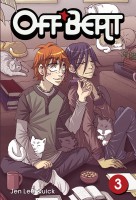
Off*Beat, Volume 3Creator: Jen Lee Quick
Publisher: Chromatic Press
ISBN: 9780991946648
Released: August 2014
Original run: 2013-2014

Nearly a decade after the series first began it’s finally here–the third and final volume in Jen Lee Quick’s Off*Beat. The first two graphic novels in the series were published by Tokyopop in 2005 and 2006, but the planned third volume never materialized and the first two volumes went out of print. For years fans were left languishing with one heck of a cliffhanger and with little hope of ever seeing the ending of Off*Beat. But then along comes a brand new publisher, Chromatic Press, to save the series, reprinting new editions of the first two volumes in 2013 and serializing the third in its digital multimedia magazine Sparkler Monthly. Off*Beat, Volume 3 made its debut in the first issue of Sparkler Monthly in 2013, reaching its conclusion in the ninth issue in 2014. The collected print edition of Off*Beat, Volume 3, which includes additional material not serialized online, was published later in 2014. As a long time fan of Off*Beat, I am absolutely thrilled to finally have the completed series.

With the next stage of the Gaia Project about to begin, Colin must make a decision. He knows that Tory has been spying on him–he even has one of Tory’s many notebooks recording his activities as proof–and despite Colin being drawn to the other young man, Tory seems to be lacking the attunement that Colin is hoping to find in another person. Though somewhat reluctant, Colin is preparing himself to end his strange relationship with Tory. As for Tory, what started out as a dubious obsession with his neighbor has grown into genuine affection. Although he is still intensely curious about the top-secret Gaia Project, he has begun to care less and less about it and more and more about Colin. He can’t seem to help himself. And so when Colin disappears without a word, Tory momentarily finds himself at a loss before applying all of his investigative skills into searching for him. He has very few clues to work with, but if nothing else Tory is meticulous and determined.

I really love the slow, natural development of Tory and Colin’s awkward relationship over the course of Off*Beat. It takes them all three volumes to recognize and come to terms with their complicated feelings for each other and matters are made even more difficult by Colin’s peculiar circumstances. They both have to figure out what to do about Colin’s devotion to the Gaia Project and how that will impact their budding relationship. One of the things that is never called into question in Off*Beat is the legitimacy of Colin and Tory’s liking each other–something about the series that makes me extraordinarily happy. If the two young men can somehow find a way to make their relationship work despite the strangeness of their situation, they have the ready support of family, friends, and classmates. That they would even be interested in another person romantically is what the drama stems from; a big deal is never made over the fact that they both happen to be guys. Their close relationships with the other characters in the series are another very important part of Off*Beat as well.

Off*Beat reaches a very satisfying conclusion with the third volume and yet at the same time it is open-ended enough that readers are left imagining all of the possibilities presented by the last few pages. Quick’s ending, like real life, is messy and complicated, but most of the plot threads are tied up in some fashion. Which is not to say that all of the questions have been answered–more has been revealed about the Gaia Project, but there is still plenty about it and about Colin himself that remains hidden and unknown even by the series’ end. The needed speculation may frustrate some readers, but I found it to be a believable and engaging aspect of the story. Despite all of the curious mysteries and top-secret projects, the characters’ relationships and feelings are both realistic and authentic. They all have their quirks, flaws, and strengths. It’s this beautifully strong human element in Off*Beat that really makes the series work. With the final volume of Off*Beat I find that I love the series more than ever. I am so incredibly happy to have finally been able to see the completion of such a wonderful story.

Filed Under: REVIEWS Tagged With: Chromatic Press, comics, Jen Lee Quick, off*beat

Random Musings: Spotlight on Masaichi Mukaide

August 22, 2014 by Ash Brown

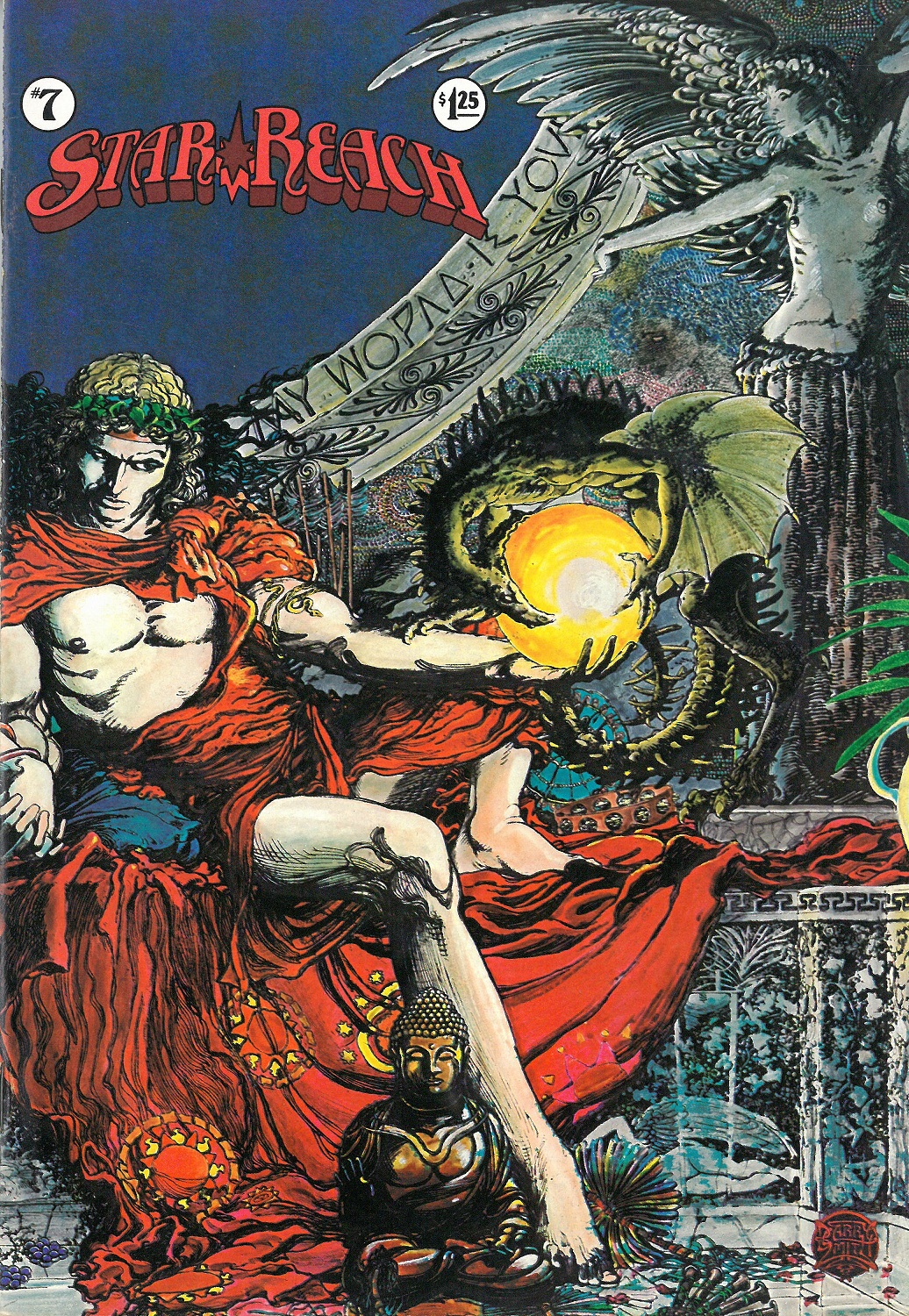
Star Reach, Issue 7

Star Reach #7

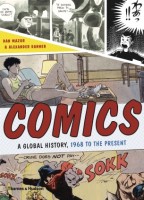
While reading Comics: A Global History, 1968 to the Present, I encountered a single sentence that particularly caught my attention: “Star Reach was also notable for printing the first Japanese comics to be translated into English, two short pieces by Masaichi Mukaide; the style displayed was not characteristically Japanese, however, and failed to ignite any further interest in importing manga for the time being.”

Masaichi Mukaide. Though at that point I was unfamiliar with Star Reach, I was pretty sure that I had come across Mukaide’s name somewhere before. And so I decided to investigate.

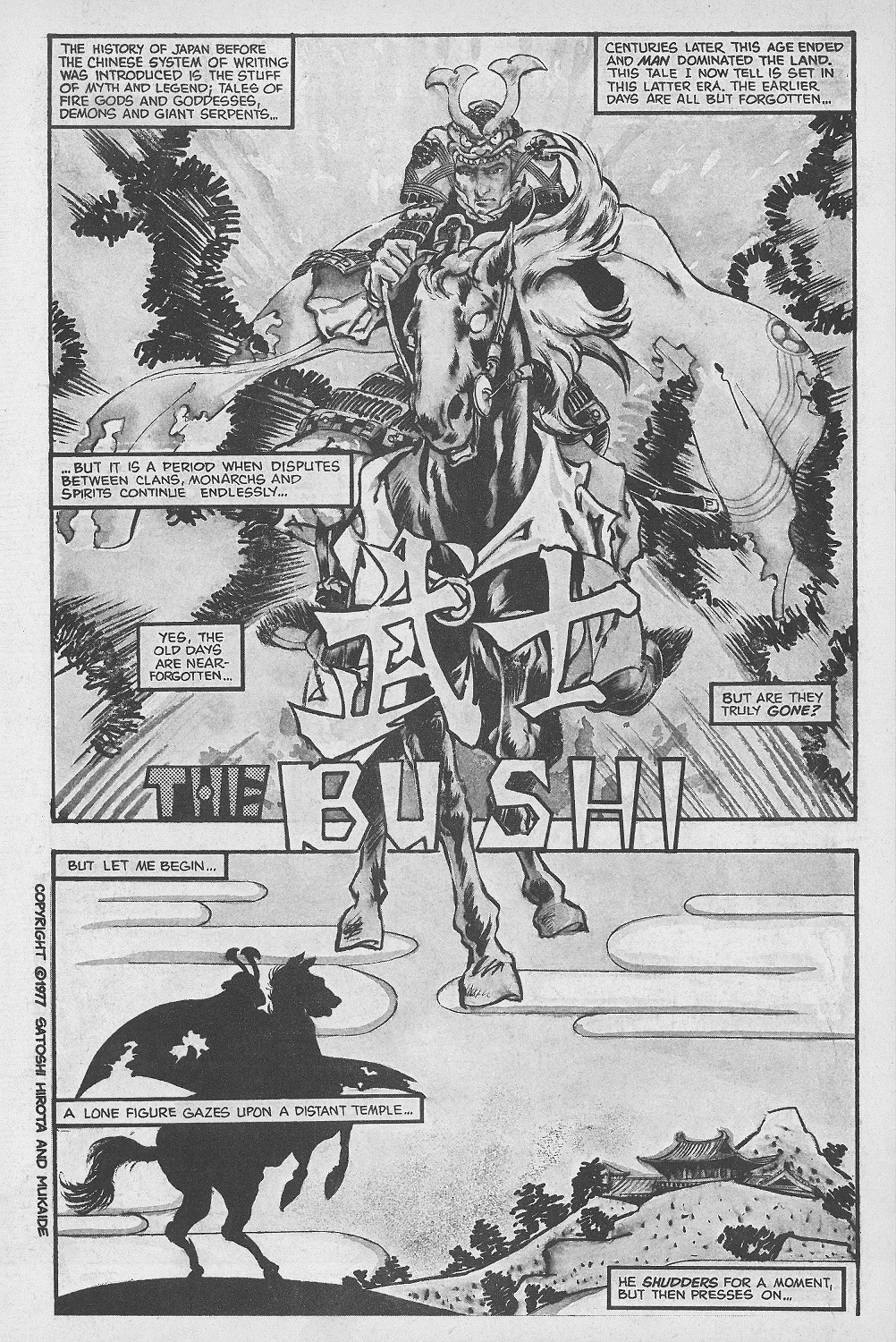
Star Reach was an influential independent American comics anthology that focused on science fiction and fantasy stories. Mike Friedrich, who was once an editor and writer at both DC Comics and Marvel, established his own press in order publish Star Reach, which began in 1974. In 1978, he also started to release Star Reach‘s sister publication Imagine. At one point or another, both of those magazines included short works by Mukaide. Some of the comics were entirely his own creation while others were collaborations with different writers, both Japanese and American–notably Lee Marrs and Steven Grant. The first of Mukaide’s comics to appear in English, “The Bushi,” was written by Satoshi Hirota and was published in the seventh issue of Star Reach January 1977.

In an interview with Friedrich included in the Star Reach Companion, Richard Arndt asked how it came about that Star Reach published the first manga to appear in America. Friedrich replied:

I’ve never met the Japanese artist I published, although we did present a fair amount of his work. Oddly enough, he’s not a comic book artist in Japan. He was basically a fan artist over there. He could not make his living as an artist in Japan because his work was considered too American! If you look at it now, it was probably the first combination of manga and American comics. His work didn’t quite fit anywhere. But, yeah, there’s a book, Manga! Manga!, which certifies that the first appearance of manga in the United States was in Star Reach. I had no idea that was true.

Well, it turns out that technically isn’t true–Ryan Sands has noted that a 1971 issue of Concerned Theatre Japan included three short manga in translation–but for all intents and purposes, Mukaide’s work was the first exposure that the average comics reader in the United States had to manga.

Try as I might, I’ve been unable to find very much information about Mukaide himself. The best clue that I’ve discovered comes from Friedrich’s editor’s note accompanying Star Reach #18, the magazine’s final issue:

A friend of Masaichi Mukaide dropped by the other day and I found out a bit more about our distant Japanese contributor. He’s a law school graduate who opted out of a legal career to enter the publishing world and keep up his art. His wife is also an artist, working on the local comics (I believe I was told).

However, that’s not the last that was seen of Mukaide in English. Sometime between 1980 and 1982 a volume simply called Manga was released. (ISBN 4946427015 for those who are interested in trying to track down a copy.) This collection is the reason that Mukaide’s name seemed familiar to me–his comic, “The Promise,” concludes the volume. He was also the editor of the collection. Looking more closely at Manga‘s credits, there are also some other names that I now recognize: Friedrich served as the consulting editor, Hirota was the associate editor, and Marrs was a contributing writer.

Manga was one of the first collections deliberately crafted in order to introduce Japanese comics to Western audiences: “Our purpose in publishing Manga is to give the non-Japanese reading public a visual taste of Japan and the creative talents that exist there. Nothing would give us greater pleasure, however, if in doing so we are able to boost the cultural understanding in the west about Japan.”

The Bushi

“The Bushi”

As already mentioned, the first work by Mukaide to appear in English was “The Bushi,” which was written by Satoshi Hirota. Were it not for the historical Japanese setting, there is very little to indicate that the creators themselves were also Japanese. Mukaide’s artwork is not all that different from many of the other comics found in Star Reach. The story is set during the tumultuous time between the age of myth and legends and the age of humans. A young warrior confronts and battles with a demon, seeking revenge for the slaughter of his family, only to become a demon himself.

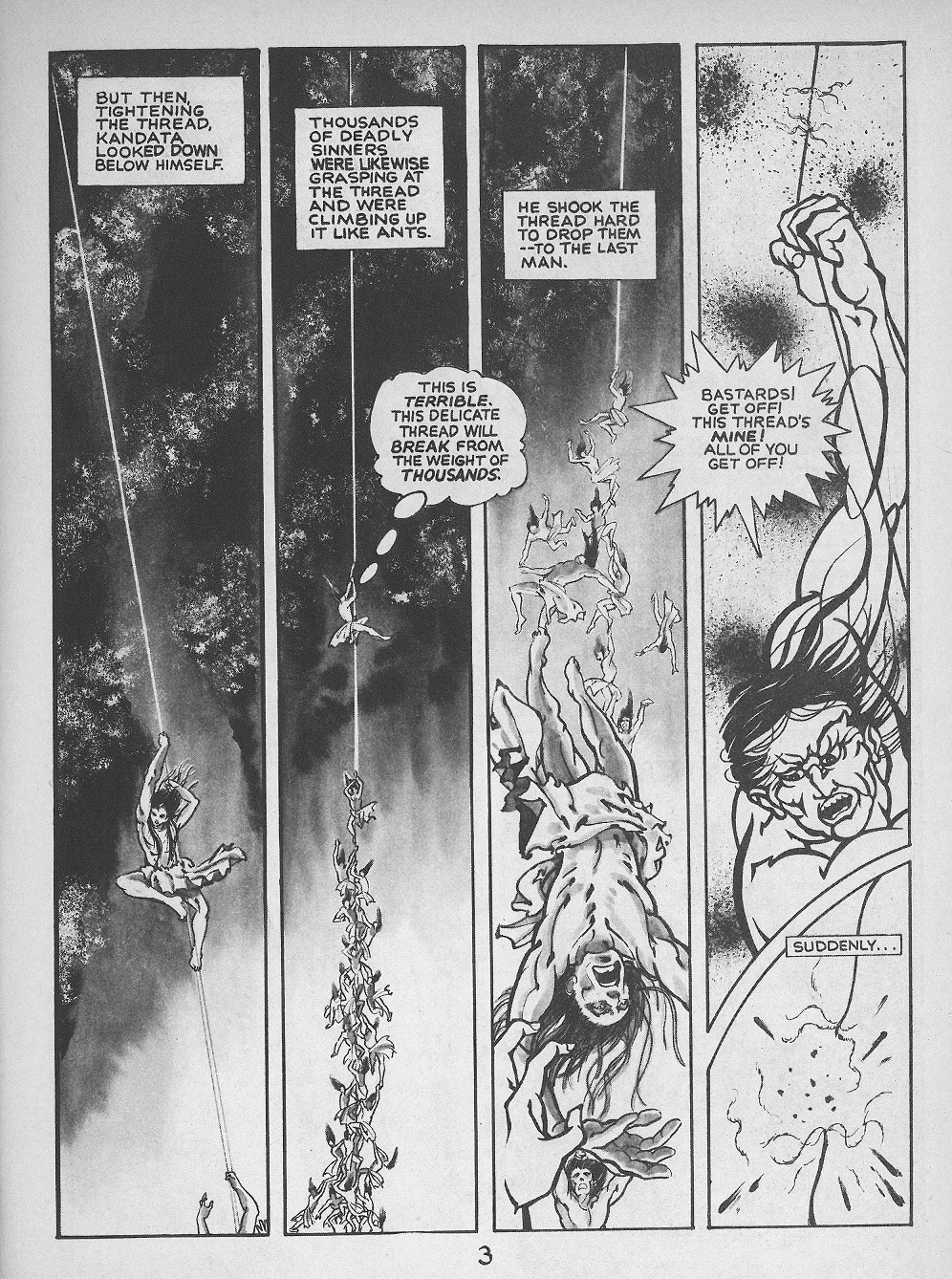
“The Spider Thread” is based on the well-known short story “The Spider’s Thread” written by Ryūnosuke Akutagawa in 1918. In it, a sinner is given the chance to escape hell because he once saved the life of a spider–the only good deed that he ever committed. However, Mukaide gives his own little twist to the tale at the end of the comic. Considering the seriousness and drama of the story–it almost entirely takes place among the tortured souls in hell–the final panel is surprisingly humorous, turning the comic into a joke. “The Spider Thread” also contains what is probably my favorite single page composed by Mukaide.

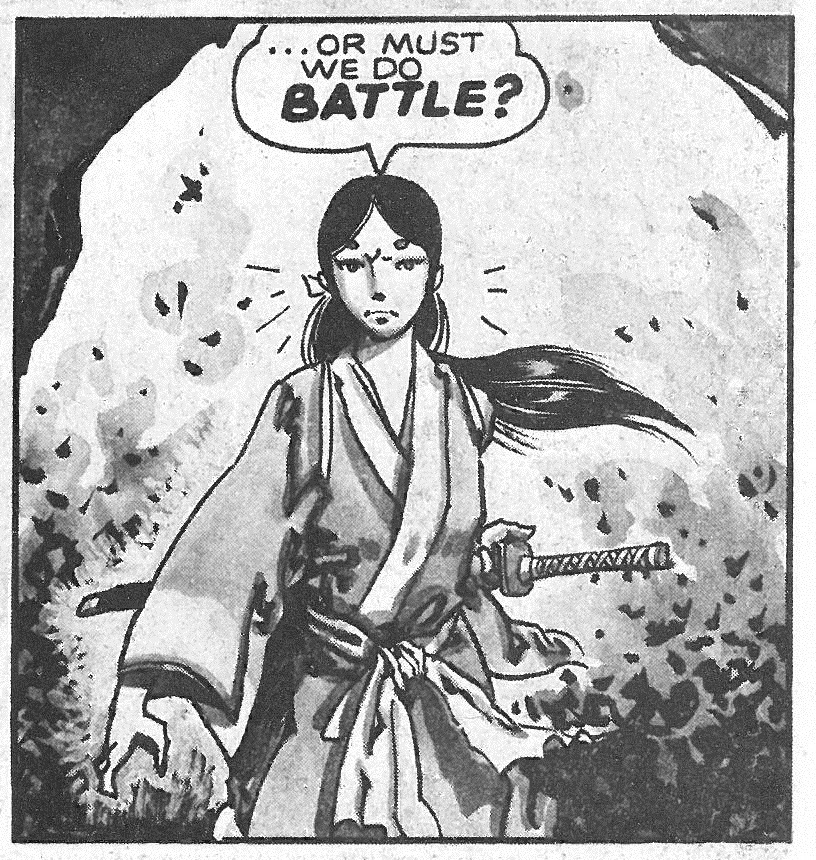
Mukaide’s first collaboration with writer Lee Marrs, “The Awakening of Tamaki,” was apparently intended to be the start of a series which would follow the trials of a young woman named Tamaki. After her family is killed, Tamaki is raised in seclusion by her sole-surviving uncle. When he dies as well she must make her own way in the world, disguised as a boy for the sake of her safety. Thanks to her uncle’s training, Tamaki is an excellent swordswoman with exceptional moral strength. As far as I know, there were never any more installments in the series, which is a shame; I really liked the comic.

The Spider Thread

“The Spider Thread”

“The Mission” was Mukaide’s second collaboration with Marrs. Whereas I was very fond of “The Awakening of Tamaki,” “The Mission” is probably my least favorite of Mukaide’s comics in English. It seems like it should be a something that I would enjoy, but it just didn’t grab me. Despite the numerous twists and turns the story takes within its few pages, despite the lies and betrayals, despite the quick pace and all of the action and fighting, for some reason “The Mission” simply strikes me as somewhat generic ninja adventure. Ninja doesn’t even have a name; he’s just Ninja.

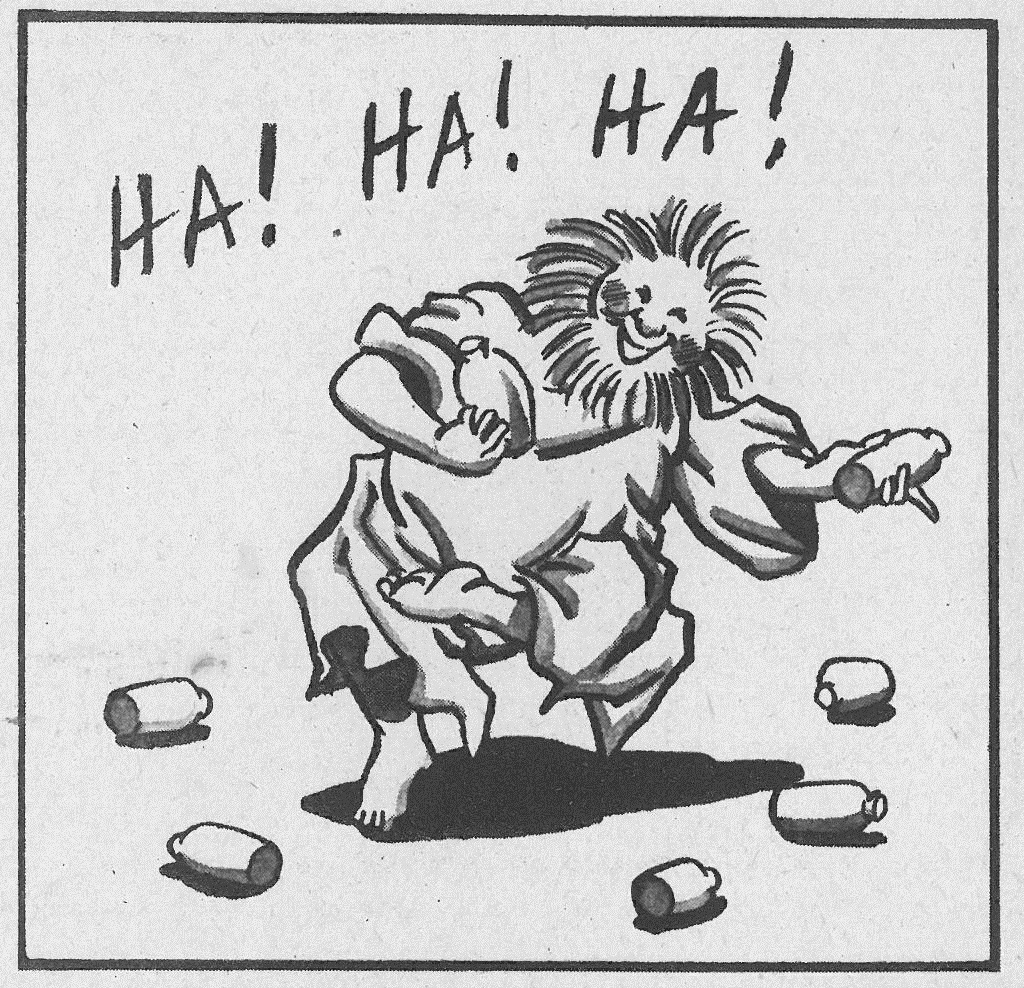
When compared to the rest of Mukaide’s English-language comics,  the two-paged “Salvation” stands out because the artwork and story is so simple. Backgrounds are almost nonexistent and the shading and detail of the illustrations are limited as well. The story follows a drunkard who keeps getting kicked out of drinking establishments. He causes a panic by claiming that a doomsday flood is coming in order to sneak back into the bars after everyone else has fled. It’s an amusing and silly short comic that, like most of Mukaide’s other comics, has a bit of a twist at the end.

“The Soldier Who Guards the Gate of the City Freedom” is another two-paged comic by Mukaide, although it is more of a historical allegory instead of a humorous gag like “Salvation.” A young soldier, a man of honor, has the lonely duty of guarding the city gates. He does so willingly, though the eventual enemy attack is a long time in coming. Mukaide’s emphasis on the soldier’s loneliness is the key to the impact of the brief comic. The steady passage of time, too, is important. Mukaide captures this through the use of a very regular progression of narrow panels which are all of the exact same size.

“Crashing,” which was written by Steven Grant, is the only example of Mukaide’s work in the genre of science fiction. All of his other comics published in English are historical in nature, generally with touches of the fantastic. Mukaide’s artwork in “Crashing” is not at all dissimilar to American science fiction comics of the era. It’s a somewhat confusing story, but this is exceedingly appropriate as the comic’s protagonist has gone insane. Mukaide’s artwork supports this as well–the illustrations can be somewhat hallucinogenic and the page layouts are often fragmented.

The Awakening of Tamaki

“The Awakening of Tamaki”

“The Promise,” the last of Mukaide’s comics to be translated, is his rendition of the legend of the Yuki-onna, or the Snow Woman. Lafcadio Hearn’s telling of the story in Kwaidan is probably the version with which English-language audiences are most familiar. Mukaide’s tale incorporates many of the same elements as Hearn’s, but he adds his own touches as well. “The Promise” also shares some similarities with “The Bushi,” especially in style, although “The Promise” tends to be stronger overall. However, the two comics bookend Mukaide’s excursion into English particularly nicely because of their parallels.

After that, Mukaide seems to disappear. I have no idea what happened to him or if he’s even still creating comics. Perhaps he went back to working in law. Either way, a small corpus of Mukaide’s comics released in English in the late 1970s and early 1980s does exist. What particularly strikes me about these works are the changes and adjustments that he makes to his art style and page layouts to better suit each story being told. Although each comic is definitely its own work, there are some common elements as well. For example, his narratives and artwork frequently draw inspiration from traditional stories, tales, and legends. Interestingly, although many of his comics take place within a vaguely historical Japanese setting, he does not exclusively limit himself to Japanese sources. Instead, Mukaide’s work blends together both Eastern and Western influences, which seems oddly fitting for one of the first Japanese comics creators to be released in English.

Masaichi Mukaide Bibliography

  • “The Awakening of Tamaki” written by Lee Marrs and illustrated by Masaichi Mukaide (Imagine #4, October 1978)
  • “The Bushi” written by Satoshi Hirota and illustrated by Masaichi Mukaide (Star Reach #7, January 1977)
  • “Crashing” written by Steven Grant and illustrated by Masaichi Mukaide (Star Reach #18, October 1979)
  • “The Mission” written by Lee Marrs and illustrated by Masaichi Mukaide (Star Reach #15, December 1978)
  • “The Promise” written and illustrated by Masaichi Mukaide (Manga, 1980/1982?)
  • “Salvation” written and illustrated by Masaichi Mukaide (Imagine #6, June 1979)
  • “The Soldier Who Guards the Gate of the City Freedom” written and illustrated by Masaichi Mukaide (Star Reach #18, October 1979)
  • “The Spider Thread” written and illustrated by Masaichi Mukaide (Imagine #3, July 1978)
Salvation

“Salvation”

Further Reading
Comics: A Global History, 1968 to the Present by Dan Mazur and Alexander Danner
Early Manga: A Chronology by Ryan Sands
Incredible First-Ever Manga Translated in 1971 by Ryan Sands
Manga and Mega Comics by Jason Thompson
Manga in the USA by Michael Toole
My Life is Choked with Comics #19a: Manga by Joe McCulloch
My Life is Choked with Comics #19b: Manga by Joe McCulloch
Star Reach Companion by Richard Arndt

Filed Under: FEATURES Tagged With: comics, manga, Masaichi Mukaide

Before You Go

August 13, 2014 by Ash Brown

Before You GoCreator: Denise Schroeder
Publisher: Chromatic Press
Released: May 2014
Original release: March 2014

Before You Go is a short, thirty-three paged comic written and illustrated by Denise Schroeder. Originally published in the March 2014 issue of Chromatic Press’ online multimedia magazine Sparkler Monthly (which, by the way, is marvelous), a small print run of Before You Go was released in time to debut at the 2014 Toronto Comic Arts Festival. Schroeder is an American artist currently living in Colorado. Before reading Before You Go I wasn’t familiar with her work, but in addition to various other things she is also the creator of three webcomics: Conquest, The Good Prince, and Paradox. I actually briefly met Schroeder while at TCAF, which was a delight. She very openly and happily proclaims manga and anime as major influences on her work, Sailor Moon being the series that ignited her passion. I follow the work of Chromatic Press very closely which is how I came to discover Schroeder and Before You Go. I am very glad to have been exposed to her comics.

One rainy day Sadie misses catching her train home after work, but then her luck changes for the better. Because of the mishap she meets Robin. The two young women hit it off and suddenly Sadie’s daily commute becomes something she looks forward to because it means she gets to spend more time with Robin. Eventually Robin begins to walk Sadie the rest of the way home even though it’s out of her way. Sadie and Robin’s initial chance encounter quickly blossoms into friendship with the possibility for their relationship to become something even more. They enjoy each other’s company and have become quite close. At least that’s what Sadie would like to think. The problem is that Robin is hesitant to open up; while she definitely shows interest in Sadie, she doesn’t seem to want to share anything about herself. Trust and communication are extremely important in any relationship, but they can also be some of the scariest parts, too.

Most of Before You Go either takes place on the train or on the way to and from the station as Sadie and Robin get to know each other. Their flirting and blushing is absolutely adorable. Even though Before You Go is a short comic, both Robin and Sadie are fully realized characters with distinctive personalities. They have hopes and dreams, and they have fears and regrets, too. Of the two, Sadie is the more dynamic and exuberant, evidence of her passion for the theater and performance. Robin tends to be more reserved, content to quietly observe. As Sadie points out in Before You Go, closely watching someone else can be valuable, but even that can’t reveal everything about who that person is. Because Before You Go is a comic, the act of looking and the visual storytelling elements are important for the reader’s understanding, too. The surprise, love, and concern between Sadie and Robin can be seen in Schroeder’s artwork even when the two women aren’t saying, or can’t say, anything at all.

Before You Go is a wonderful and utterly charming comic. I particularly appreciate the realism of the story as well as the realism of the characters and their relationship and interactions with each other. The comic has a quirky sense of humor to it which balances perfectly with the more serious and contemplative aspects of Before You Go. It’s also nice to see a love story between two adult women that recognizes the problems that someone who is queer might encounter in life without dwelling on the sadness that that so often entails. Before You Go is a quiet drama with honest heart and feeling behind it. The comic may be brief, but it is also marvelously complete–both the characters and the story are well thought out and developed with more maturity and depth than might appear at first glance. In the end, Before You Go is simply a comic that makes me happy to read. I look forward to seeing more of Schroeder’s work in the future.

Filed Under: REVIEWS Tagged With: Chromatic Press, comics, Denise Schroeder, Year of Yuri

My Week in Manga: August 4-August 10, 2014

August 11, 2014 by Ash Brown

My News and Reviews

There were two reviews at Experiments in Manga last week in addition to the announcement of the Mecha Manga Giveaway Winner, which also includes a list of some of the mecha manga that has been licensed in English at one point or another. (Considering how many have been released in English, it’s not a comprehensive list. Instead it focuses on some favorites.) As for the reviews, I recently read Fuyumi Ono’s The Twelve Kingdoms, Volume 4: Skies of Dawn. Sadly, this was the last volume in the series to be translated into English. The Twelve Kingdoms is a great series of fantasy novels, all of which are worth tracking down. Keeping with last week’s unintentional theme of reviewing fourth volumes of epic series, I also took a look at Vinland Saga, Omnibus 4 by Makoto Yukimura. Vinland Saga is one of my favorite manga series currently being released and this volume hasn’t changed that.

The phenomenal Sparkler Monthly is currently running a membership drive for its second year, and there are some fantastic incentives. I highly recommend checking the project out and contributing if you’re able. Lori at Manga Xanadu has a nice post looking back at the first year of Sparkler Monthly and looking forward to Sparkler Monthly Year Two. For some of my own reviews and random musings on the excellent content being released by Sparkler Monthly, check out the Chromatic Press tag. (Actually, I’ll be posting a review of Denise Schroeder’s Before You Go later this week, too.)

Elsewhere online, ICv2 has a two-part interview with Viz Media’s Leyla Aker and Kevin Hamric looking at What’s Selling, Where, and Why as well as focusing On Specific Products and Programs. Justin at Organization Anti-Social Geniuses has a fun post about The Curious Case of Last Pages For US Manga Editions. Also, Mangabrog has translated some of Takehiko Inoue’s interviews from back when Vagabond was on hiatus.

Quick Takes

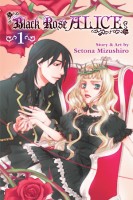
Black Rose Alice, Volume 1Black Rose Alice, Volume 1 by Setona Mizushiro. I’ll admit, even though I have enjoyed the other manga by Mizushiro that I have read and despite the very good things that I’ve heard about Black Rose Alice, I was still a little hesitant to read the series. Mostly because I’ve become a little weary, and therefore wary, of vampire stories. But the vampires in Black Rose Alice are so different that I’m actually hesitant to even call them vampires. Either way, the first volume was phenomenal. It’s creepy and disconcerting, tragic and chilling. Dimitri is a rising star, an operatic tenor with a beautiful voice and a handsome face who is astounded when a stranger tells him he is to blame for a sudden wave of suicides. The deaths in the story have tremendous emotional impact, which is particularly impressive since the characters have just been introduced. The characterization in Black Rose Alice is excellent, especially that of Dimitri, and the artwork is lovely and atmospheric. I am a little sad to see early 20th-century Vienna already left behind as a setting in exchange for modern-day Tokyo, but I’m very curious to see where the story goes from here. I’ll definitely be picking up more of Black Rose Alice.

Blank Slate, Volume 1Blank Slate, Volumes 1-2 by Aya Kanno. I first read Blank Slate several years ago and recall really liking it. Upon rereading, it’s honestly not as good as I remember it being, though the art is pretty great. Even considering the flaws in its execution, I actually still really like the series. Apparently the story that Kanno originally planned was much longer and more complicated. Quite a few things changed plot-wise as well as character-wise when she shortened the series; the transition isn’t as smooth as it could have been. Blank Slate would have benefited from at least another volume or two so that all of the backstory that’s crammed into the second volume could have been more fully developed. Though in its way it is thrilling, there are so many plot twists and major reveals towards the series’ end that it’s almost absurd. Some of the characters are shown to be so different from who they were when they were first introduced that it’s almost difficult to believe the changes, but that does make their betrayals rather effective. And I do like that the completely amoral and nearly emotionless Zen, the series lead, remains a villain throughout despite a tragic past that is supposed to make him more sympathetic.

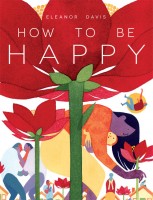
How to Be HappyHow to Be Happy by Eleanor Davis. I wasn’t previously familiar with Davis’ work, but after experiencing How to Be Happy I certainly want to read more of it. How to Be Happy is a collection of her short comics, some no longer than a page. Though her black and white illustrations are effective, Davis’ color work is especially striking. She exhibits a wide variety of styles in How to Be Happy, evoking a number of different moods. However, all of the comics come across as being at least a little surreal. Many, perhaps most, of the stories tend towards the melancholy and somber, but others have an underlying and almost hidden sense of humor and joy. As Davis points out in her author’s note, the book actually isn’t about how to be happy. And yet, I found reading the volume to be a wonderfully cathartic and thought-provoking experience. I would even go as far as to call it inspiring. Though she often employees fantastical elements, what Davis really seems to be doing in How to Be Happy is exploring the nature of life and reality through her short narratives. How to Be Happy is a beautiful, strange, and wondrous collection and one that I can definitely see myself returning to again.

Midaresomenishi: A Tale of Samurai LoveMidaresomenishi: A Tale of Samurai Love by Kazuma Kodaka. Although Midaresomenishi is self-described as a romantic epic, there’s not very much at all that is romantic about this boys’ love manga. Instead it’s an extremely dark tale with a focus on violence, sexual and otherwise. Truly terrible things happen in it. Blood, death, and sadism take precedence over affection and love. There is very little happiness to be found in Midaresomenishi, and what little there is is fleeting. Shirou is a young samurai who takes great pleasure in killing, but that is nothing in comparison to the joy that Sougetsu, a powerful and decadent master of bandits, takes in sexually dominating others. In order to protect the life of his younger brother Fujimura, Shirou allows himself to be subjugated by Sougetsu. What he doesn’t realize is that while Fujimura is alive, he has become a sexual plaything for Sougetsu’s underlings. There actually is some doomed love and strong familial bonds in Midaresomenishi, but for the most part the manga’s focus is on the more unpleasant relationships. Midaresomenishi doesn’t work for me as a love story, there’s simply too much force and coercion, but as a violent tragedy it is fairly successful.

Filed Under: FEATURES, My Week in Manga Tagged With: Aya Kanno, Black Rose Alice, Blank Slate, comics, Eleanor Davis, Kazuma Kodaka, manga, Setona Mizushiro

My Week in Manga: July 21-July 27, 2014

July 28, 2014 by Ash Brown

My News and Reviews

It wasn’t entirely intentional, but last week Experiments in Manga ended up being full of Vertical reviews. (And by full, I mean that two reviews were posted.) The first was of Fumi Yoshinaga’s gay slice-of-life and food manga What Did You Eat Yesterday?, Volume 3. With each volume that is released, I fall in love with the series a little more. I also reviewed Yoshikazu Yasuhiko’s Mobile Suit Gundam: The Origin, Volume 6: To War which continues to delve into the pasts of the characters and the war between the Earth Federation and the Principality of Zeon. The volume also features Char quite a bit. (I’ll admit, that made me happy.)

Elsewhere online, The Lobster Dance posted the seventh and final part of “Revealing and Concealing Identities: Cross-Dressing in Anime and Manga.” Kathryn Hemmann, the co-author, has a nice roundup and summary of the multi-part essay, and Leah has some final comments of her own as well. San Diego Comic Con was last week, which means the winners of the 2014 Eisner Awards were named (spoilers: Osamu Tezuka and Hayao Miyazaki were honored) and new manga licenses from Drawn & Quarterly, Kodansha Comics, and Udon Entertainment were announced. Also, the list from the Best & Worst Manga panel has been posted, with more commentary on the choices planned to be posted at a later date.

Quick Takes

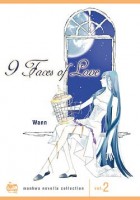
9 Faces of Love9 Faces of Love by Wann. As can probably be gathered from its title, 9 Faces of Love is a collection of nine short manhwa dealing with themes of love and the meaning of love. 9 Faces of Love is the second volume in Netcomics’ Manhwa Novella Collection series which is meant to feature short works by prominent Korean creators. I hadn’t previously read any of Wann’s works, but I’d definitely be interested in reading more; I really enjoyed 9 Faces of Love. It’s an excellent collection of short manhwa selected from Wann’s work between 1998 and 2005. Most of the stories deal with romantic love, but a few of them also deal with friendship and familial love. I initially picked up the volume for the android story “Automaton,” which happily ended up being quite good. While they deal with similar themes, there is a nice variety to the stories in 9 Faces of Love. Many incorporate science fiction, fantasy, or horror elements while others are more firmly grounded in reality. Some are sweet, some are sad, and some are actually somewhat disconcerting.

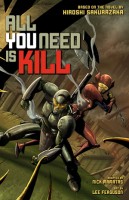
All You Need Is KillAll You Need is Kill adapted by Nick Mamatas, illustrated by Lee Ferguson and Fajar Buana. A few years ago I read Hiroshi Sakurazaka’s All You Need Is Kill light novel and greatly enjoyed it. So I was rather curious when Haikasoru announced a graphic novel adaptation, the release conveniently timed to coincide with the Hollywood film adaptation Edge of Tomorrow. (Granted, I was much more interested in Takeshi Obata’s All You Need Is Kill manga which has now also been licensed.) Sadly, I was rather disappointed with the graphic novel. I’m not sure that anyone who hasn’t read the original would be able to follow the comic very easily or make sense of the importance of some of the scenes that were included. For example, I loved the umeboshi eating contest in the novel, but in the comic it’s difficult to realize that that’s what’s going on or why it matters. Romantic elements are introduced at the end more as an afterthought in an effort to neatly tie things together, but it’s a little too late by that point. For the most part the artwork was decent, but the battle suit design left something to be desired. I did like the color palette used, though. My copy of the graphic novel also had a printing error. At least I’m assuming it was an error—one of the signatures was repeated. Though, I suppose that does emphasize the plot’s time loop.

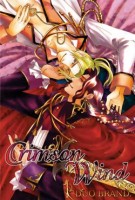
Crimson WindCrimson Wind by Duo Brand. A follow-up to White Guardian, Crimson Wind starts out as a sequel but really ends up being more of a prequel. The majority of the manga explores the backstories of General Sei and Baron Touri and their relationship with each other. Except for his attractive character design, I didn’t like Touri much at all in White Guardian and I like him even less in Crimson Wind. He’s a rapist and possessive, resorting to drugging the object of his desire when coercion and force isn’t enough to get what he wants. It’s not at all romantic even though Sei ends up falling for him. Most of the court intrigue and politics that made White Guardian interesting have been dropped in Crimson Spell; only the dubious love story remains. I would have much rather have seen the tale of how Sei became disillusioned and unhappy with the kingdom he pledged his life to protect. I may not have enjoyed the main story of Crimson Wind, however I really liked the short side story “Never Ever” which concludes the volume and features two completely different character who actually care for and respect each other.

Showa: A History of Japan, 1939-1944Showa: A History of Japan, 1939-1944 by Shigeru Mizuki. With this volume of Showa: A History of Japan the manga begins to cover history that I’m a little more familiar with—the Pacific War. While the factual recounting of the events that led up to the war and the war itself is well told, what makes the series particularly engaging is the incorporation of Mizuki’s own experiences as a student and eventually as a drafted soldier during the time period. The artwork in Showa: A History of Japan easily slips between photorealism and more stylized drawings to very good effect. Mizuki’s illustrations of naval and sea battles are particularly impressive and he uses some very interesting two-page layouts for many of them. He conveys the reality of war but doesn’t glorify it or the numerous deaths, treating the combatants of both sides of the conflict with respect. Mizuki’s Eisner-winning, semi-autobiographical Onward Towards Our Noble Deaths (also available from Drawn & Quarterly), which deals with a similar time period and story, makes an excellent companion to this volume of Showa: A History of Japan.

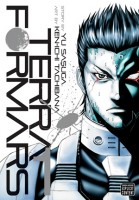
Terra Formars, Volume 1Terra Formars, Volume 1 written by Yu Sasuga and illustrated by Ken-ichi Tachibana. I have a peculiar love for Mars, and so when a manga has anything to do with the planet, however slight, it immediately catches my attention. I was looking forward to Terra Formars and really liked its basic premise. Efforts to terraform Mars using moss and cockroaches over hundreds of years has largely been successful, but now humans have a bit of a bug problem to deal with seeing as the cockroaches have evolved into a sentient race. Genetic experimentation has also allowed human and insect DNA to be combined, creating humans with bug-inspired superpowers. (Admittedly ridiculous, but kind of cool.) Terra Formars is an extremely violent and action-heavy manga requiring a tremendous amount of suspension of disbelief from it readers. There were parts of the manga that I loved, like the fight sequence paired with biblical verses about locusts. However, I really dislike the design of the cockroaches (inspired by Homo erectus), and not just because they’re unintentionally reminiscent of racist caricatures. They seem more mammalian than insectoid and feel out-of-place art-wise. At this point I’m torn over the series, but I’ll probably give it another volume or two to see what direction it takes.

GinTamaGin Tama, Episodes 50-74 directed by Shinji Takamatsu. It’s been a while since I’ve watched any of the Gin Tama anime, but I do like the series. I was in the mood for some absurd humor and antics, and so ended up binging on the first half of the second season. Like the manga which it more-or-less follows, the anime is mostly episodic. Occasionally there will be a set of episodes that form a larger story arc, but generally once someone is familiar with the characters and recurring jokes it doesn’t much matter in which order the anime is watched. Gin Tama is a series rife with parodies of and references to other pop culture media. (Mostly but not exclusively Japanese pop culture.) I’ve always been highly amused by Gin Tama, but the more manga that I read and the more anime that I watch the more of references I catch and appreciate. My interest in Japanese history has come in handy, too, since there are plenty of nods to historical figures and events in Gin Tama as well. For a comedy series, at times Gin Tama can also be surprisingly touching.

Filed Under: FEATURES, My Week in Manga Tagged With: All You Need Is Kill, anime, comics, Duo Brand, Fajar Buana, gin tama, Ken-ichi Tachibana, Lee Ferguson, manga, manhwa, Nick Mamatas, Shigeru Mizuki, Showa: A History of Japan, Terra Formars, Wann, Yu Sasuga

My Week in Manga: July 7-July 13, 2014

July 14, 2014 by Ash Brown

My News and Reviews

Two reviews were posted at Experiments in Manga last week, though neither of them were actually for manga. First up was Yasutaka Tsutsui’s The Girl Who Leapt Through Time, which collects two of his stories: The Girl Who Leapt Through Time and The Stuff That Nightmares Are Made Of. The Girl Who Leapt Through Time is one of Tsutsui’s most well-known and beloved novels and was the inspiration for Mamoru Hosoda’s 2006 anime by the same name, which happens to be one of my favorite animated films. I also reviewed Dan Mazur and Alexander Danner’s Comics: A Global History, 1968 to the Present. It’s an extremely informative volume and highly recommended for people who are interested in the history of comics, including manga. I wasn’t online much last week, but I did notice that Revealing and Concealing Identities: Cross-Dressing in Anime and Manga, Part 6 was posted at The Lobster Dance, focusing on Fumi Yoshinaga’s marvelous series Ōoku: The Inner Chambers. If there were any big announcements or other noteworthy news items that I missed, please do let me know!

Quick Takes

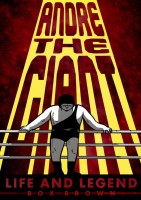
Andre the Giant: Life and LegendAndre the Giant: Life and Legend by Box Brown. Growing up, I knew of Andre the Giant from his role as Fezzik in the film The Princess Bride, only later learning about his professional wrestling career. Andre Roussimoff was a literal giant of a man–at one point over seven feet tall and over six hundred pounds–who also suffered from acromegaly, though he wasn’t diagnosed with the condition until he reached his twenties. Brown’s thoroughly researched biographical comic captures Andre’s life and legacy, revealing just how human the legend really was. Like anyone else, he had his strengths and his flaws. Because of his size the life he led was an unusual one and he was treated differently, and not always kindly, by other people. Surprisingly, Andre the Giant: Life and Legend is actually one of the very few works devoted to Andre. It’s a collection of stories and anecdotes about the man beginning with his childhood in France and then following him through his globe-spanning career as a professional wrestler as well as his time on the set of The Princess Bride. The comic is very well done and includes a bibliography in addition to notes on the sources used.

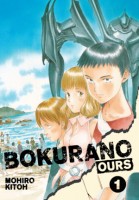
Bokurano: Ours, Volume 1Bokurano: Ours, Volume 1 by Mohiro Kito. One summer, fourteen seventh graders and a fourth grader participating in a nature school program wander into a seaside cave where they discover a strange man holed away who invites them to play a game. They will be placed in charge of piloting a giant robot in order to fight massive alien invaders. Except that the game they’ve agreed to play turns out to be much more real than any of them counted on. This early in the series it’s a little difficult to get a good feel for all of the characters since there are so many of them, but it seems that as they each have their own opportunity to pilot the robot more will be revealed about them as individuals. It also looks like the series will have a fairly high death count, too, even when it comes to main, named characters. Bokurano: Ours has a dark ambiance as well strong psychological elements. Though there are grand battles, the real drama of the series revolves around how the children respond to being granted such enormous power. Some delight in the chance to wreak havoc while others are more hesitant, understandably concerned about the strange situation they’ve gotten themselves into.

Monster Musume: Everyday Life with Monster Girls, Volume 2Monster Musume: Everyday Life with Monster Girls, Volumes 2-3 by Okayado. At its heart, Monster Musume is an unapologetic, ecchi harem series. Readers looking for nuanced characters or plot from the manga will be sorely disappointed. And considering the amount of uninhibited fanservice, highly suggestive scenarios, partial nudity, and nipples on display, I continue to be surprised that Seven Seas is able to get away with calling Monster Musume a series for older teens. Initially, I wondered if monster boys existed in the manga since the series focuses almost entirely on monster girls. They actually do, but that fact isn’t confirmed until a bunch of otaku orcs appear in the third volume. In addition to the orcs, plenty of other liminal races have been introduced as well: slimes, mermaids, zombies, ogres, cyclops, shape-shifters, and so on. Not all of the liminal ladies become love interests for Kimihito, the series’ protagonist and host family for many of the visiting monster girls, which is a good thing. Monster Musume is an extraordinarily silly and trashy manga that can actually be a lot of fun for those who don’t mind its blatantly sexualized content. Its monster girl gimmick sets it apart from other harem manga, but probably won’t win anyone over who doesn’t already read the genre.

Soul Rescue, Volume 1Soul Rescue, Volumes 1-2 by Aya Kanno. I’ve really enjoyed Kanno’s other manga currently available in English (Blank Slate and Otomen), so when I discovered that Tokyopop had also published one of her series I made a point to track it down. I believe Soul Rescue was actually Kanno’s debut manga, too, which made me even more interested in reading it. Honestly, it’s a bit of a mess. The artwork is nice, even though the pages are very full, and I liked the characters and basic premise of the story, but it doesn’t quite pull together as a whole. Renji is an angel with a propensity towards being overly violent, and so he has been temporarily banished to Earth in order to mend his ways. Another angel, Kaito, has been sent along with Renji as his supervisor to keep him in check and prevent him from doing too much damage. Renji will be allowed to return to Heaven after rescuing the souls of 10,000 humans. (Kissing is somehow involved in all of this.) By the end of Soul Rescue, he’s only saved two, maybe three souls. Though there are recurring characters, the series is largely episodic with almost no overarching plot arc or real conclusion. Kanno doesn’t seem to be concerned with consistent time periods or settings in the manga, either. Modern cities, Medieval kingdoms, and fuedal Japan, all with their own anachronisms, exist simultaneously.

White GuardianWhite Guardian by Duo Brand. I’m fairly certain that White Guardian was Duo Brand’s first professional boys’ love manga; it was also their first manga to be released in English. White Guardian includes many elements found in the pair’s other manga that I’ve read, namely swords, sex, and fantasy. Granted, in the case of White Guardian, it seems to be more of a historical setting than it is strictly fantasy; there are no supernatural aspects or magic involved in the plot. The kingdom of Landa is suffering from internal conflict and corruption which the Crown Prince is determined to address with the aid of the famed General Sei. Prince Linth is a bit of an oddball, lighthearted and earnest if a bit naive. He’s also strangely accepting and forgiving of his own rape, which happens multiple times over the course of the short manga. Happily, there’s some consensual sex to be found in White Guardian, too. The manga has some actual plot to go along with its smut as well. I’ll admit to being fond of court intrigue, espionage, and battles, which are all present and play their own roles in the story. White Guardian is followed by its sequel Crimson Wind which was also released in English, though it’s a little more difficult to find at this point.
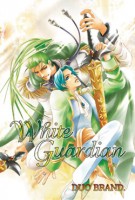
Knights of SidoniaKnights of Sidonia directed by Kobun Shizuno. I have been enjoying Tsutomu Nihei’s Knights of Sidonia manga a great deal, and so when the anime adaptation was announced I was immediately interested in watching it. Of all places, the series was exclusively made available for streaming in English through Netflix with both a dubbed version and a subbed version. Overall, the anime was a fantastic adaptation. It hits all the major plot points and highlights of the manga, and in some cases it was actually easier to follow what was going on. The anime is very faithful to the original without slavishly adapting the source material to a new medium. As should be expected, the pacing of the story is slightly changed and the visual impact of the anime is different from that of the manga. However, I was never completely sold on the 3D CG animation style. Though the backgrounds, environments, and many of the special effects looked great with it and were sometimes even stunning, the movements of the characters occasionally would feel just a little off. It did seem to improve as the series went along, but maybe it was just that I was finally getting used to it. I do look forward to seeing the second season.

Filed Under: FEATURES, My Week in Manga Tagged With: anime, Aya Kanno, bokurano: ours, Box Brown, comics, Duo Brand, knights of sidonia, manga, Mohiro Kito, Monster Musume, Okayado, Soul Rescue

Comics: A Global History, 1968 to the Present

July 11, 2014 by Ash Brown

Comics: A Global History, 1968 to the PresentAuthor: Dan Mazur and Alexander Danner
Publisher: Thames & Hudson
ISBN: 9780500290965
Released: June 2014

Comics: A Global History, 1968 to the Present was published by Thames & Hudson in 2014. Written by Dan Mazur and Alexander Danner, both of whom are involved in comics as creators, educators, and scholars, the volume is one of the few works that attempts to outline a comprehensive history of the comics medium on a global scale, though it has a particular emphasis on the comics traditions from North America, Japan, and Western Europe. I first learned about Comics: A Global History when I came across an essay by Mazur on early shoujo manga, which excerpted and expanded sections from the book. My curiosity was piqued. Although I now have a particular interest in manga, I first started out and still enjoy reading American comics. My experience with comics from other regions of the world is somewhat limited, but those that I have read I have liked. I simply enjoy comics, regardless from where they originate. That being said, I’m not actually very familiar with much of their history, and so Comics: A Global History appealed to me immensely, especially considering that it is heavily illustrated as well.

Comics : Global History is divided into three parts (“1968-1978”, “1978-1990”, and “1990 Onward”) and nineteen chapters in addition to a preface, introduction, notes, bibliography, index of creatives, and index of comics. The preface puts the volume into context and notes its limitations, though the authors have tried to present as comprehensive a history as possible of comics from the three major comics cultures. They identify 1968 as the year in which “a number of creators in Japan, America, and Europe began to aggressively demonstrate that comics could be more than an ephemeral vehicle for children’s entertainment” and the year in which a rise in comics-as-expression was seen. It was for those reasons that 1968 was selected as the starting point for their modern history of comics. The introduction provides a brief overview of the state of comics worldwide in the postwar era and of the development of comics for an adult audience. Five chapters in Comics: A Global History are specifically devoted to American comics, five address manga (including an entire chapter on Osamu Tezuka), four present European comics, and four take a more general, border-crossing approach.

No matter how thorough it would be impossible for a single volume to address every single detail of something as complex and wide-reaching as the history of the comics art form, but from what I can tell, Mazur and Danner have done an excellent job covering the major trends, noteworthy movements, critical events and developments, influential creators, and important works in Comics: A Global History, paying attention to both mainstream and alternative comics and markets. The individual chapters can largely be read separately and follow a loose chronology rather than adhering to a strict timeline, allowing the authors to address related topics in a more thematic fashion and logical progression. There is some analysis, criticism, and review to be found in Comics: A Global History, but the volume focuses more on chronicling what was happening where, when, and by whom than it does on in-depth critique. What Comics: A Global History may lack in minute detail it makes up for in its wide breadth.

Comics: A Global History is an impressively informative and valuable text. My only real complaint is that it’s lacking a topical index. However, the chapters are presented and formatted in such a way that, combined with the two existing indices, makes the volume fairly easy to browse or search for a particular subject. I learned a tremendous amount by reading Comics: A Global History. While the volume doesn’t go into extreme detail, it does provide an excellent overview of the history of modern comics and presents enough information that readers could pursue anything that particularly captured their interest. At least I know that my reading list has certainly grown substantially as a result. Comics truly are a global art form. Though different geographical regions each have their own histories and traditions, over time they have also influenced one another. Comics: A Global History is a fantastic introduction to comics and how they have developed over the last several decades and how they continue to evolve internationally as a medium of expression.

Filed Under: REVIEWS Tagged With: Alexander Danner, comics, Dan Mazur, manga, Nonfiction

My Week in Manga: June 30-July 6, 2014

July 6, 2014 by Ash Brown

My News and Reviews

The first week of the month tends to be a little slow at Experiments in Manga (at least it feels slow to me). Granted, there were still three posts last week. The Juné Manga Giveaway Winner was announced, which also includes a list of some favorite Juné manga. June’s Bookshelf Overload was posted. (My wallet thanks me that June was a little less ridiculous than the last few month have been.) And finally, the first in-depth manga review of July goes to Battle Royale: Angels’ Border. Written by the author of the original Battle Royale novel, the volume collects two side stories about the girls who try to survive the death match by banding together at a lighthouse. Angels’ Border is surprisingly romantic, but if you know anything about Battle Royale, you know that things don’t end very well for almost anyone involved.

There were plenty of things that I found to read online last week. Here’s a quick list of a few of the posts that I thought were particularly interesting: Ryan Holmberg takes a look at Hayashi Seiichi’s pop music manga, specifically focusing on “Flowering Harbour” (which is now available in English!) Moyoco Anno was interviewed by Publishers Weekly. The Beautiful World has created a Transgender Manga Masterpost. J. R. Brown has a fascinating article about what can be gleaned by paying attention to the details of ukiyo-e prints. And Justin has a rant about the state of manga in translation that is worth reading. Also, Anime Expo was last week and there were a ton of announcements. Sean has a good roundup of the licenses at A Case Suitable for Treatment.

Quick Takes

Cowboy Bebop: Shooting Star, Volume 1Cowboy Bebop: Shooting Star by Cain Kuga. Of the two Cowboy Bebop manga, Shooting Star was actually the first to be released in Japan although it was the second series to be published in English. Technically, it also preceded the Cowboy Bebop anime series, which I hadn’t previously realized. However, it’s still based on the anime. Kuga was given free rein with the characters and story, which makes Shooting Star not exactly a retelling but more like an alternate version or universe. The manga isn’t as dark as the anime (though there’s humor to be found there as well), and the story is somewhat different, but the basic premise of near-future bounty hunters in space remains. Frankly, though vaguely entertaining in places, Shooting Star just isn’t as good as the anime, the action can be difficult to follow, and the slapstick is a little too silly for my taste. Shooting Star will most likely be of interest to established fans of the Cowboy Bebop anime as a curiosity more than anything else. Even though Shooting Star mostly stands on its own, people who haven’t seen the anime probably won’t get much out of it.

I Shall Never Return, Volume 1I Shall Never Return, Volumes 1-5 by Kazuna Uchida. Although the first volume of I Shall Never Return is a little shaky at the start (and parts of Ken’s stepfather’s backstory seem to be unnecessary and superfluous), overall I was actually rather impressed with this short boys’ love series. Ken comes from a broken home and is a high school dropout. His best friend Ritsuro was the only stable thing in his life but now they’re having problems, too. I Shall Never Return is filled with drama and deals with some very mature themes, such as abuse, drug use, prostitution, and rape. Terrible things happen and I was constantly waiting for something even worse. But there are also some wonderful moments of support, love, and acceptance. One of the things that I found particularly interesting about I Shall Never Return is that while it’s definitely a romance, the two leads actually spend much of the series apart from each other. Ritsuro remains in Japan while Ken travels to Singapore and then to India, trying to find a new start and become a better person. They have to deal with a long-distance relationship at the same time they’re coming to terms with their feelings for each another. It’s a believable and difficult process.

Knights of Sidonia, Volume 8Knights of Sidonia, Volumes 8-9 by Tsutomu Nihei. Maybe it’s because the manga’s such a bizarrely quirky series–a strange mix of science fiction, horror, and romantic comedy–but I can’t help but love Knights of Sidonia a little more with each passing volume. Nagate, Tsumugi, and Izana make a marvelous and frequently awkward family unit. And even considering that Tsumugi is a monstrous human-Gauna hybrid, she manages to be endearingly charming, sweet, and adorable. Nagate continues to be socially inept, though certainly less so, and Izana has fallen more in love with him, which has triggered physical changes. The three of them together are simply delightful, forming a not quite love triangle. In direct contrast to the humor and cheerfulness surrounding the trio, humanity’s fight for survival against the Gauna remains terrifyingly intense and death tolls continue to rise. Sometimes the battles can be a little difficult to follow, but they’re always exhilarating. There are some definite sexual overtones to Knights of Sidonia in these two volumes, which are especially apparent in the artwork, but this appropriately adds to the series’ more disconcerting atmosphere.

This One SummerThis One Summer written by Mariko Tamaki and illustrated by Jillian Tamaki. The Tamakis are a pair of cousins who previously worked together on the award-winning graphic novel Skim. This One Summer is their second collaboration. The story follows Rose over the course of her family’s summer vacation at Awago Beach where they have always rented a cottage. Rose’s mother has become more distant over the last year and can’t seem to relax, creating a significant amount of tension. There are reasons for that, though, and Rose is more perceptive than her parents might realize. But because communication has broken down between them all, it may be a while before everything will be okay again. Meanwhile, Rose spends time with her friend Windy, enjoying the beach and bingeing on horror films that they probably shouldn’t be watching at their age. In the background another drama is unfolding among the local teenagers when one of the young women discovers that she might be pregnant. It’s heartbreaking to see how insidious sexism can be. In addition to the strong and effectively layered storytelling in This One Summer, the artwork is beautiful as well.

YowamushiPedalYowamushi Pedal, Episodes 15-26 directed by Osamu Nabeshima. This set of episodes finishes up the Sohoku racing club’s grueling training camp and then launches almost directly into the Inter-High race, following the competition up through the first section of the first day and ending with one heck of a dramatic plot development. Yowamushi Pedal manages to be incredibly exciting, mostly due the intensity and passion of the characters and because it includes just a touch of the ridiculous. More characters and teams are introduced, and more backstories and rivalries are revealed in this part of the series, too. The animation is sadly a bit inconsistent, sometimes impressively good while at other times lacking in finesse. Although I enjoy cycling, I’ve never really followed road racing closely. I was surprised to learn just how much teamwork can go into it; I’d always assumed it was more of an individual event. I’ve also enjoyed learning more about some of the strategies involved in racing. (And I’ll admit, now that the weather is finally decent where I live I really want to get my bike out again and hit the road! Who says watching anime can’t be good for you?)

Filed Under: FEATURES, My Week in Manga Tagged With: anime, Cain Kuga, comics, Cowboy Bebop, I Shall Never Return, Jillian Tamaki, Kazuna Uchida, knights of sidonia, manga, Mariko Tamaki, Tsutomu Nihei, Yowamushi Pedal

My Week in Manga: June 2-June 8, 2014

June 9, 2014 by Ash Brown

My News and Reviews

Three posts last week! The first was the announcement of the Oi, Oishinbo! manga giveaway winner, which also includes a list of some of the food manga that has been licensed in English. And speaking of food manga, last week I reviewed Fumi Yoshinaga’s What Did You Eat Yesterday?, Volume 2. I’m really enjoying the series and am thrilled that it’s being released in English. I also reviewed Blade of the Immortal, Volume 29: Beyond Good and Evil by Hiroaki Samura, which is pretty much the beginning of the end of the series. I love Blade of the Immortal, so I’m interested to see how Samura will wrap everything up and who, if anyone, will survive its conclusion.

Things have been a bit hectic in my life lately, so I’ve not been able to pay attention to all of the news and announcements recently, but I did catch a few things on Vertical’s Twitter account. Apparently, its warehouse is down to the last 24 copies of Message to Adolf, Part 1 and it may or may not be reprinted. So, if you want a copy, you should probably grab it sooner rather than later. Adolf was my introduction to Osamu Tezuka, and it remains one of my favorite works by him. Also, Vertical was at AnimeNEXT and made a new license announcement—Dream Fossil: The Complete Short Stories of Satoshi Kon. Though it wasn’t perfect, I enjoyed Kon’s Tropic of the Sea a great deal, so am looking forward to this collection as well as the other Kon manga announced by Dark Horse a couple of months ago.

Quick Takes

Monster Soul, Volume 1Monster Soul, Volume 1 by Hiro Mashima. For readers intimidated by the length of Fairy Tail or Rave Master, Mashima’s two-volume Monster Soul sets a much lower bar for entry to his work. During the Human-Monster War, the Black Airs were an elite group of exceptionally powerful monsters. Now that the war is over, and the monsters have lost, they mostly try to keep to themselves. But with human poachers, a ghost with an agenda, and another monster picking a fight, trouble seems to find them anyway. Monster Soul is somewhat episodic, but Mashima does seem to be developing some sort of underlying plot. Since the series is only two volumes long though, it probably can’t be particularly convoluted or in-depth. That being said, I’m not entirely sure what direction Monster Soul will be taking. The story moves along very quickly, there are numerous fights, and the characters are boisterous. I wasn’t blown away, but the first volume of Monster Soul could be entertaining.

Otomen, Volume 16Otomen, Volumes 16-18 by Aya Kanno. I’m not sure that Otomen really needed to be eighteen volumes long, but I enjoyed every volume of it. The series just makes me so incredibly happy. It can be ridiculous and eyeroll-worthy at times, usually deliberately so, but I love it. The characters, while they don’t have much depth, are incredibly endearing. Kanno plays around with gender roles and expectations in Otomen, that’s one of the major points of the series, but never in a denigrating way. The not-so-subtle message of Otomen is that it is just fine to be whoever it is you are. These final three volumes find Asuka and many of the others in their last year of high school. They begin drifting apart for various reasons, the biggest being the influence of Asuka’s mother, and it is heartbreaking to see. Kanno has never hesitated to make use of well-worn tropes and plot developments in Otomen–frequently the series verges on parody because of that–but I was a little unsure about the memory loss arc. Ultimately though, the series ends in a very satisfying way.

The Seven Deadly Sins, Volume 1The Seven Deadly Sins, Volumes 1-2 by Nakaba Suzuki. Back in my undergrad days I took a fantastic course that focused on the use and portrayal of the seven deadly sins in music and literature, and so Suzuki’s The Seven Deadly Sins manga immediately caught my attention. At first, I was a little uncertain about The Seven Deadly Sins. It took a few chapters to really grow on me, and when present Meliodas’ lecherous tendencies still seem more like a tired cliché rather than any sort of legitimate character development, but the series has great potential. The Seven Deadly Sins are a group of extremely talented warriors who may be the only ones capable of stopping the Holy Knights from destroying Britannia. It isn’t yet known why the group goes by “The Seven Deadly Sins,” or what sins the members have committed to earn their monikers, but I’m assuming that will be revealed sometime in the future. The Holy Knights are the ones being framed as the series’ villains, but the Sins aren’t entirely good, either, which I appreciate. With interesting characters and epic battles, I’m looking forward to reading more.

The Sleep of ReasonThe Sleep of Reason: An Anthology of Horror edited by C. Spike Trotman. Edited by the same person who has been coordinating the new Smut Peddler anthologies, The Sleep of Reason collects twenty-six short horror comics. Some of the creators (like Jason Thompson and Carla Speed McNeil, among others) I was already familiar with, but there were plenty of other contributors whose work I was encountering for the very first time. That’s one of the things I love about anthologies like The Sleep of Reason–they introduce me to new artists that I want to follow. I also love being exposed to so many different styles of art and storytelling. There is some blood, death, and gore in The Sleep of Reason, but the collection isn’t a splatter fest and relies much more heavily on the psychological aspects of horror rather than on violence. As with any anthology, some of the stories are stronger than others. I’m not sure that I even completely understood some of them, but they all were eerie, disconcerting, and creepy. The Sleep of Reason is a great collection; definitely recommended for fans of horror.

Filed Under: FEATURES, My Week in Manga Tagged With: Aya Kanno, comics, Hiro Mashima, manga, Monster Soul, Nakaba Suzuki, otomen, Seven Deadly Sins

  • « Go to Previous Page
  • Page 1
  • Interim pages omitted …
  • Page 4
  • Page 5
  • Page 6
  • Page 7
  • Page 8
  • Go to Next Page »
 | Log in
Copyright © 2010 Manga Bookshelf | Powered by WordPress & the Genesis Framework