• Skip to primary navigation
  • Skip to main content
  • Skip to primary sidebar
  • Home
  • About Us
    • Privacy Policy
    • Comment Policy
    • Disclosures & Disclaimers
  • Resources
    • Links, Essays & Articles
    • Fandomology!
    • CLAMP Directory
    • BlogRoll
  • Features & Columns
    • 3 Things Thursday
    • Adventures in the Key of Shoujo
    • Bit & Blips (game reviews)
    • BL BOOKRACK
    • Bookshelf Briefs
    • Bringing the Drama
    • Comic Conversion
    • Fanservice Friday
    • Going Digital
    • It Came From the Sinosphere
    • License This!
    • Magazine no Mori
    • My Week in Manga
    • OFF THE SHELF
    • Not By Manga Alone
    • PICK OF THE WEEK
    • Subtitles & Sensibility
    • Weekly Shonen Jump Recaps
  • Manga Moveable Feast
    • MMF Full Archive
    • Yun Kouga
    • CLAMP
    • Shojo Beat
    • Osamu Tezuka
    • Sailor Moon
    • Fruits Basket
    • Takehiko Inoue
    • Wild Adapter
    • One Piece
    • After School Nightmare
    • Karakuri Odette
    • Paradise Kiss
    • The Color Trilogy
    • To Terra…
    • Sexy Voice & Robo
  • Browse by Author
    • Sean Gaffney
    • Anna Neatrour
    • Michelle Smith
    • Katherine Dacey
    • MJ
    • Brigid Alverson
    • Travis Anderson
    • Phillip Anthony
    • Derek Bown
    • Jaci Dahlvang
    • Angela Eastman
    • Erica Friedman
    • Sara K.
    • Megan Purdy
    • Emily Snodgrass
    • Nancy Thistlethwaite
    • Eva Volin
    • David Welsh
  • MB Blogs
    • A Case Suitable For Treatment
    • Experiments in Manga
    • MangaBlog
    • The Manga Critic
    • Manga Report
    • Soliloquy in Blue
    • Manga Curmudgeon (archive)

Manga Bookshelf

Discussion, Resources, Roundtables, & Reviews

comics

My Week in Manga: February 22-February 28, 2016

February 29, 2016 by Ash Brown

My News and Reviews

It’s the end of the month, so there were a couple of different things posted at Experiments in Manga last week, such as the launch of the most recent manga giveaway. The winner will be announced on Wednesday, but until then there’s still time to enter for a chance to win the first two volumes of Daisuke Ashihara’s World Trigger. The most recent review in my monthly horror manga review project was posted last week as well (technically it’s a week late). This month I took a look at After School Nightmare, Volume 8 by Setona Mizushiro. It’s a fairly momentous installment in the series, with several major developments and revelations.

Elsewhere online: Ryan Holmberg examines pro-nuclear manga of the seventies and eighties; Kodansha Comics has a two part interview with Hiroya Oku, the creator of Gantz and the more recent Inuyashiki; Justin of The Organization of Anti-Social Geniuses contacted Robert McGuire to determine the status of Gen Manga since the publisher has been rather quiet of late; finally, in an interesting move, Funimation has launched a Kickstarter for a newly dubbed blu-ray release of The Vision of Escaflowne; Anime News Network also interviewed some of Funimation’s staff members about the project.

Quick Takes
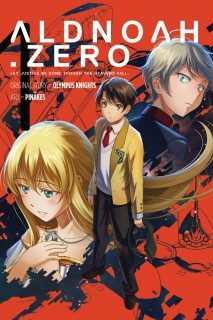
Aldnoah.Zero: Season One, Volume 1Aldnoah.Zero: Season One, Volumes 1-2 written by Olympus Knights and illustrated by Pinakes. I haven’t seen any of the original Aldnoah.Zero anime series, though I have been meaning to give at least a few episodes a try. The series mostly caught my attention for two reasons: the underlying story about interplanetary warfare between the humans on Earth and Mars (as I’ve mentioned in the past, I have particular interest in Mars), and the fact that Wandering Son‘s Takako Shimura was responsible for the character designs. Seeing as I generally have more opportunities to read manga than I do to watch anime, I figured I’d give the Aldnoah.Zero manga adaptation a try. Sadly, parts of the manga are somewhat difficult to understand if one isn’t familiar with the original. Pinakes makes heavy use of screentone, which obscures the artwork and action and gives the pages a cluttered feel. I do like the basic premise of the series, but the motivations behind the war, while cursorily explained, remain frustratingly unclear and many of the Martians come across as villainous caricatures rather than well-rounded characters.
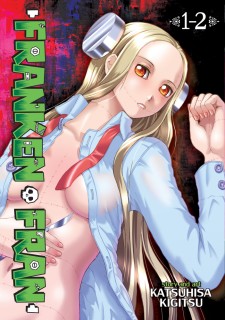
Franken Fran, Omnibus 1Franken Fran, Omnibus 1 (equivalent to Volumes 1-2) by Katsuhisa Kigitsu. I tend to enjoy horror manga and I had heard great things about Franken Fran, so I was very much looking forward to giving the series a try. The manga and its characters are delightfully quirky, in turns disturbingly cute and skin-crawlingly creepy. Fran is a charming young woman who, due to her nearly irrational reverence for life, is more or less an unintentional sadist. She, along with her cadre of assistants and monsters, saves lives through extreme surgeries and bizarre experiments often with gruesome results. Although there are recurring characters, the manga is generally episodic without much of a continuing story, but the chapters all have at least one deliberately shocking twist to them. Franken Fran, with its incredibly dark sense of humor, quickly and repeatedly swings from the surprisingly heartwarming to the magnificently grotesque and back. It’s definitely not a series for everyone, but I’ll certainly be picking up the rest of the manga.
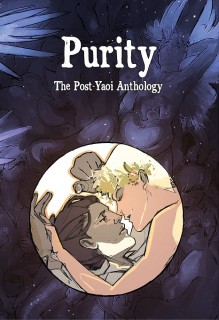
Purity: The "Post-Yaoi" AnthologyPurity: The “Post-Yaoi” Anthology edited by Anne Notation and A. E. Green. I was previously unfamiliar with most of the contributors to Purity; I learned about the anthology due to the participation of two creators whose work I currently follow—Kori Michele Handwerker and Starlock. (I was happy to discover that a comic by Alexis Cooke, one of Sparkler Monthly‘s creators, was also included.) Purity is a collection of forty-two homoerotic illustrations and short comics by forty-eight creators from around the world who have been influenced by yaoi manga. Although it’s clear that some of the artwork was originally in color, the anthology has been printed in grayscale. There’s a nice variety in the tone and style of the contributions in Purity; some are sweet while others are unapologetically smutty (and there’s nothing wrong with that). Genre-wise, the anthology tends towards the paranormal, fantastic, and futuristic, but there are contributions firmly based in reality, too. Although all of the stories stand on their own, a few do tie in with some of the creators’ existing works.
Filed Under: FEATURES, My Week in Manga Tagged With: Aldnoah.Zero, comics, Franken Fran, Katsuhisa Kigitsu, manga, Olympus Knights, Pinakes

My Week in Manga: February 1-February 7, 2016

February 8, 2016 by Ash Brown

My News and Reviews

I posted a few different things at Experiments in Manga last week. For starters, the Love at Fourteen Giveaway Winner was announced. The post also includes a list of some of the manga available in English which feature a bit of romance. Last week I also reviewed Tokyo Decadence: 15 Stories by Ryu Murakami which in some ways is about love, or at least lust. Due to be published later this year, the collection is engaging but definitely not for everyone as some of the stories are quite disturbing. Over the weekend January’s Bookshelf Overload was posted for those of you curious about what made it onto my shelves last month. I also had a taiko gig over the weekend that took up a fair amount of time. As a result of that and other some other life stress, I’ve fallen a bit behind on my writing (just when I thought I’d finally gotten ahead!), so there’ll likely only be one review coming this week instead of the two that were originally planned.

Quick Takes

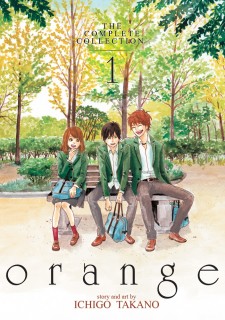
Orange, Omnibus 1Orange, Omnibus 1 by Ichigo Takano. I had heard very good things about Orange and so was greatly looking forward to reading the manga, but I honestly didn’t anticipate that the series might become one of my favorite releases of the year. (It all depends on exactly how the story plays out in the second and final omnibus.) Orange sensitively deals with some fairly heavy subject matter, including suicide and crippling regret, but at the same time the manga also has a lighter sweetness to it. The manga is both heartwrenching and heartwarming, a melancholic story about close relationships and human connection. Admittedly, Naho is incredibly dense when it comes to recognizing other people’s feelings for her, even when they basically come right out and tell her, which can be a bit exasperating. But overall, the feelings and emotions in Orange ring true, especially as the series progresses and it’s revealed just why everyone is behaving in the ways that they are. I can see Orange ending either in tragedy or in happiness and I’m very curious to see which it will be.

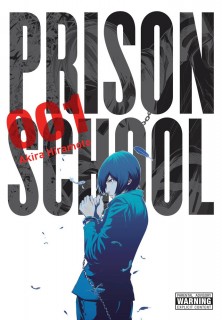
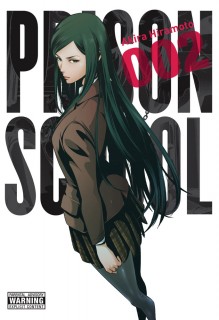
Prison School, Omnibus 2Prison School, Omnibus 2 by Akira Hiramoto. The first omnibus of Prison School established the manga as a series that is simultaneously appalling and strangely engaging. This of course assumes that readers aren’t immediately offended by its highly sexualized and incredibly vulgar nature to begin with. Prison School is definitely not a series for everyone even if, surprisingly, it has its sweet moments. The second omnibus very much continues in the same vein, so the initial shock caused by the manga’s obscenity, over-the-top fanservice, and ridiculous premise has diminished some. Even so, Prison School is a page-turner. The series has been building up to Kiyoshi’s escape attempt, resulting in a situation that gets progressively worse as time goes by. Seeing just how bad things can possibly get (which is pretty bad) is one of Prison School‘s major draws. That and Hiramoto’s impressive skills as an artist. The manga’s content will certainly not be to everyone’s taste, but it’s hard to deny Hiramoto’s talent.

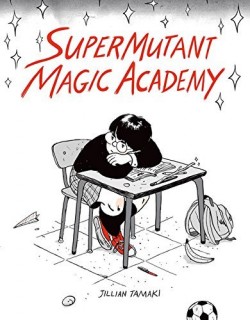
SuperMutant Magic AcademySuperMutant Magic Academy by Jillian Tamaki. Originally a webcomic, the best of SuperMutant Magic Academy has now been collected into a single volume along with newly-created content. I hadn’t actually read any of the comic while it was being released online, but I was obviously missing out—SuperMutant Magic Academy is great stuff. The comic takes place in a high school where students study magic and learn to control their superpowers (sort of an odd mix between Harry Potter and X-Men that bizarrely works), all while dealing with the more normal sorts of teenage angst and anxiety. Except for the series’ lengthy finale, created specifically for the collected volume, most of SuperMutant Magic Academy consists of single-page, and in some cases single-panel, gag comics.There’s no real overarching plot, but there are recurring characters and running jokes. Some of the social commentary can be fairly biting, but SuperMutant Magic Academy is very funny, frequently absurd, and wholly enjoyable.

Filed Under: FEATURES, My Week in Manga Tagged With: Akira Hiramoto, comics, Ichigo Takano, Jillian Tamaki, manga, Orange, Prison School

My Week in Manga: January 18-January 24, 2016

January 25, 2016 by Ash Brown

My News and Reviews

Two in-depth reviews were posted at Experiments in Manga last week. The first was of The Fall of Language in the Age of English by Minae Mizumura, a fascinating and immensely readable work of nonfiction about literature and language. (Mizumura’s A True Novel also greatly impressed me, so at this point I’ll basically read anything written by her; if only more would be translated!) The second review was of KaiJu’s Mahou Josei Chimaka, one of Chromatic Press’ most recent paperback releases and a delightfully entertaining parody of and a loving homage to the magical girl genre. The comic is playful, humorous, and a lot of fun.

Elsewhere online: The Toronto Comic Arts Festival has announced its first round of featured guests. The list includes Rokudenashiko, whose manga What Is Obscenity? will be making its English-language debut at the festival. Bruno Gmünder will be bringing The Passion of Gengoroh Tagame back into print later this year in a newly revised and expanded edition. Ryan Holmberg’s most recent What Was Alternative Manga? includes a translation of a discussion between Hayashi Seiichi and Sasaki Maki. And on Twitter, Digital Manga is hinting at a launch of another classic manga Kickstarter, only this time it won’t be Tezuka.

Quick Takes

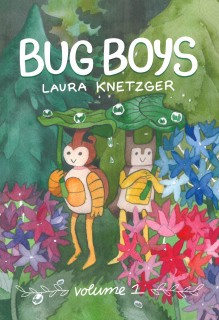
Bug Boys, Volume 1: Welcome to Bug VillageBug Boys, Volume 1: Welcome to Bug Village by Laura Knetzger. Although I’ve read and enjoyed a few of Knetzger’s short autobiographical comics, I picked up Bug Boys more by chance than anything else. I’m so glad that I did, because I’m absolutely loving this comic. Originally a series of self-published mini-comics, the first book was recently released by Czap Books. The hefty volume collects all of the previously released Bug Boys comics in addition to new, never-before-seen content. The comics are mostly black-and-white, but Knetzger also occasionally uses color. The story follows Rhino-B and Stag-B, two young beetles and best friends living in Bug Village, as they grow up, go on adventures, and explore their world. It’s all incredibly cute and touching, even when the two of them are dealing with some fairly big, weighty issues. Friendly enough for children, but also thoroughly enjoyable for adults, Bug Boys is one of the most wonderfully delightful and charming comics that I’ve read in a very long time. I’ll definitely be keeping an eye out for more of the series and for more of Knetzger’s work.

Butterflies, Flowers, Volume 1Butterflies, Flowers, Volume 1 by Yuki Yoshihara. Once wealthy aristocrats, the members of the Kuze family have fallen on hard times. They no longer have any servants and have instead become the masters of a soba noodle shop. Choko is now searching for separate employment, only discovering after the fact that her new boss, Masayuki Domoto, is the son of the family’s old chauffeur. Butterflies, Flowers is a somewhat peculiar romantic comedy that’s hard to take seriously. Granted, I don’t think that the manga is really intended to be taken seriously. And I’ll admit, the first volume of the manga made me laugh on several occasions. The power dynamics in Butterflies, Flowers are all over the place, so it’s difficult to know what to expect from one page to the next, especially where Choko and Domoto are involved. At first Choko doesn’t have much confidence—working in an office is a new experience for her—but every once in a while she’ll take charge of the situation. As for Domoto, he frequently switches from being an overbearing and demanding boss to being completely subservient to the woman and family that used to employ his father.

Terra Formars, Volume 5Terra Formars, Volumes 5-8 written by Yu Sasuga and illustrated by Ken-ichi Tachibana. It’s been a while since I’ve read any of Terra Formars, but it wasn’t too difficult to pick it up again where I left it—even considering the various plot twists, the series is pretty easy to follow and tends to be fairly action-oriented. By far the best thing about Terra Formars for me are the over-the-top battles between super-powered combatants. Not only have humans been crossed with insect genetics, there are examples of those who have been crossed with birds, mammals, aquatic creatures, plants, and even bacteria, giving the individuals a wide variety of incredible abilities. Realistic? Perhaps not, but the resulting battles are epic. (Surprisingly, Terra Formars has actually taught me quite a few things about plants and animals.) The political maneuvering back on Earth, while being portrayed in a very dramatic fashion, frankly doesn’t interest me that much. However, it is that drama that largely propels what little story the series has. It also means that the modified humans end up having to fight each other in addition to the Martian inhabitants.

Filed Under: FEATURES, My Week in Manga Tagged With: Bug Boys, butterflies flowers, comics, Ken-ichi Tachibana, Laura Knetzger, manga, Terra Formars, Yu Sasuga, Yuki Yoshihara

Mahou Josei Chimaka

January 22, 2016 by Ash Brown

Mahou Josei ChimakaCreator: KaiJu
Publisher: Chromatic Press
ISBN: 9781987988017
Released: December 2015
Original run: 2014-2015

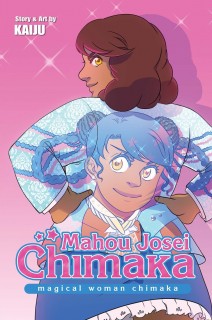
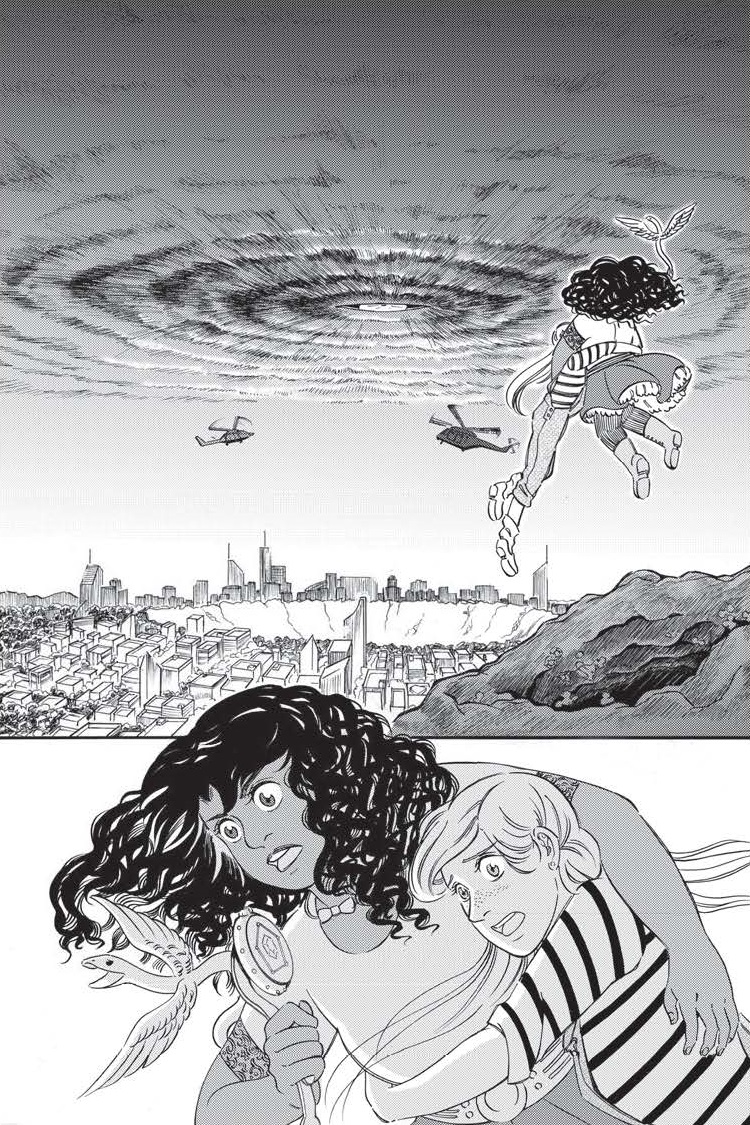
Mahou Josei Chimaka, or Magical Woman Chimaka, is the second long-form comic by KaiJu, a creative team made up of Kate Rhodes and Jennifer Xu, that I’ve had the opportunity to read. The three-chapter comic was originally serialized online in Sparkler Monthly between 2014 and 2015 before being collected and released in both digital and print book editions by Chromatic Press later in 2015. I love everything that Chromatic Press is involved with, but I was especially looking forward to Mahou Josei Chimaka for a number of reasons. Most notably, I was greatly impressed by KaiJu’s previous comic The Ring of Saturn (which also released by Chromatic Press) and have been closely following the team’s work ever since. It also didn’t hurt that in large part Mahou Josei Chimaka is a loving homage to and parody of the magical girl genre. That and it also it ends up being a sweet romance between two women.

Fifteen years ago Shimmer Shimmer Skypatcher Chimaka faced her greatest nemesis and lost, failing to protect her city. While Chimaka was able to temporarily repel the threat, a large portion of the city was laid to waste and left a giant, lifeless crater. Now her enemy has returned, intending to finish the job, only Chimaka isn’t a magical girl anymore. Her life fell apart after that fateful, disastrous encounter and, although she’s back on her feet again, the magic is gone. Chimaka now spends her days working as a scientist at Squid Petroleum and nights drinking with her colleague Pippa with whom she has become very close. But with the return of her old enemy, along with the persistence of a certain government agency which uncovered her past, Chimaka needs to find a way to regain her powers. The ever cheerful Pippa is determined to do all that she can to help Chimaka, but the task that the two of them face is a difficult and daunting one—Chimaka must once more become Shimmer Shimmer Skypatcher if she wants to save the world.

Mahou Josei Chimaka, page 94Mahou Josei Chimaka is crafted to especially appeal to readers who are fans of the magical girl genre (or, in this particular case, the magical woman genre) and who are interested in a slightly different approach than is often seen. While it’s not absolutely necessary to be familiar with the common tropes and themes of the genre—Mahou Josei Chimaka is completely enjoyable as a story in its own right—readers who are will be in a better position to truly appreciate the entirety of the comic and its satire. The elements one would expect to see in a magical girl story are all present in Mahou Josei Chimaka, including but certainly not limited to animal companions, transformation sequences, dazzling accessories, and an emphasis on the power of love. But these have all been slightly skewed through the lens of Chimaka’s growth into cynical adulthood. And yet, while KaiJu’s interpretation of the magical girl genre is honest and mature, it doesn’t become dark and depressing.

Mahou Josei Chimaka is a delightfully funny and charming comic. Much of this comes from the contrasting but complimentary personalities of the comics’ two leading women and the sweetness of their blossoming relationship, but as a whole Mahou Josei Chimaka is very playful. KaiJu has a great sense of humor which comes through not only in the story and characters, but in the artwork as well. The artists alternate between using more realistic illustrations and those that are exaggerated for great comedic effect. The final chapter does perhaps rush the story’s climax a bit as the creators pull out all the stops for the epic final battle, but it’s a sort of intentional ridiculousness that’s highly entertaining. Although preventing the end of the world is serious business, Mahou Josei Chimaka mixes in silliness in the best sort of way. I enjoyed the comic on my first read but I find that I like it even more after reading it again; Mahou Josei Chimaka is a great deal of fun.

Filed Under: REVIEWS Tagged With: Chromatic Press, comics, kaiju

My Week in Manga: January 11-January 17, 2016

January 18, 2016 by Ash Brown

My News and Reviews

It was entirely unintentional, but last week was apparently the week for sevens—both of my in-depth manga reviews last week were for the seventh installment of their respective series. They both happen to be manga currently licensed by Kodansha Comics, as well, which was also a coincidence.  On Wednesday, I reviewed the seventh omnibus of Vinland Saga by Makoto Yukimura. The series continues to be magnificent. The seventh omnibus might be the last of the series to be released in English, which would truly be a shame. The volume does bring to a close one of the series’ major story arcs, but I really hope more of Vinland Saga will be able to be translated. The second review, part of my monthly horror manga review project, was of Yuki Urushibara’s Mushishi, Volume 7. Mushishi continues to be one of my favorite manga. I’m really enjoying my reread of the series and the opportunity to write about it in more detail. One other thing I wanted briefly to mention was a Kickstarter project to help Yamakiya Taiko, a wonderful youth taiko ensemble from Fukushima, raise money to defray the cost of their upcoming trip to the United States in March. I’ll actually be playing with the group a bit while they’re in Michigan, so I especially hope that the campaign succeeds.

Quick Takes

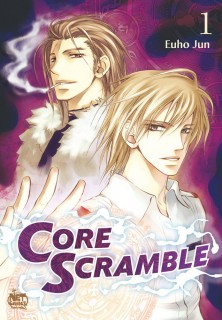
Core Scramble, Volume 1Core Scramble, Volume 1 by Euho Jun. I’ve been slowly making my way through Netcomics’ new series which is what brought Core Scramble to my attention. That and the promise of boys’ love mixed with science fiction, fantasy, and action. At this point, romance doesn’t seem to be the priority of Core Scramble, though there is some sexual harassment thrown in. Chaeun is a fairly average soldier—one of many fighting in a war against swarms of extra-dimensional monsters invading the planet—but he has developed a knack for surviving situations that many seasoned veterans would consider hopeless. His tenacity has impressed his comrades as well as those who would like to take advantage of the invasion for their own purposes. The first volume of Core Scramble spends quite a bit of time establishing the series’ setting, explaining how the world’s magic, science, and inter-dimensional portals function and interact. Infodumps are a regular occurrence and break up the flow of the story itself, but I suspect that this shouldn’t be as much of an issue for the series’ later volumes. Granted, there are only two more.

Deep Dark FearsDeep Dark Fears by Fran Krause. What started out as a project to illustrate all of his irrational fears eventually evolved into an ongoing series of  online comics in which Krause would not only draw his own fears but the fears submitted by his readers as well. Just over a hundred of those comics have now been brought together in the print collection of Deep Dark Fears, about half of them being newly published while the other half were selected by Krause as some of his favorites from online. While the subject matter can be disturbing and occasionally even grotesque, the comics themselves are actually quite charming. Krause doesn’t comment on or judge any of the fears but simply presents them as they are, irrational but still discomfiting whether they be based on known falsehoods learned as children or overactive imaginations as adults. Deep Dark Fears is a great collection of short comics about strange and bizarre fears. Some are only a single panel long while others may be a few pages, but they all leave an impression. I’m not sure if Krause has plans for additional print collections, but the series continues to grow online.

Witchcraft Works, Volume 3Witchcraft Works, Volumes 3-7 by Ryu Mizunagi. Although I quite enjoyed the first two volumes of Witchcraft Works, I recently realized that I had fallen behind in actually reading the series. After catching up I can say that there are still things that I like about the manga, but I also find myself slightly less enamored with it than I once was. Primarily, I continue enjoy the reversal of stereotypical gender roles. If it wasn’t for that, I think the series would have bored me fairly quickly, even despite its other entertaining quirks. With the seemingly endless of author’s notes, it’s obvious that Mizunagi has put plenty of thought into the world of Witchcraft Works, but it isn’t always incorporated well into the story itself which is unfortunate. This seems to especially be a problem during the series’ battle and action-oriented story arcs where it feels like the characters spend more time explaining things they already know to one another rather than fighting, though they do eventually get around to that, too. Witchcraft Works is a great looking manga, though, Mizunagi’s visual style working wonders with all of the magic and mayhem. But ultimately, I think what I want is a little more substance to accompany all the spectacle.

Filed Under: FEATURES, My Week in Manga Tagged With: comics, Core Scramble, Euho Jun, Fran Krause, manga, manhwa, Ryu Mizunagi, Witchcraft Works

My Week in Manga: January 4-January 10, 2016

January 11, 2016 by Ash Brown

My News and Reviews

The new year is now well on its way, and I finally feel like I’m getting back into my writing groove; my regular posting schedule has mostly returned, though there might be a slight interruption in February. Anyway. In addition to the regular My Week in Manga feature, there were two other posts at Experiments in Manga last week. The first was the announcement of the Merman in My Tub Giveaway Winner which also includes a compiled list of some of the giveaway participants’ favorite manga that were released in 2015. The second post last week also happened to be the second in-depth manga review for the year—JoJo’s Bizarre Adventure, Part 1: Phantom Blood, Volume 3 by Hirohiko Araki. It’s such a ridiculous, over-the-top series, but I’m sincerely enjoying it.

As for some of the interesting things I’ve discovered online recently: The news was previously leaked, but Dark Horse has now officially announced its two new manga licenses, Kenji Tsuruta’s Wandering Island and CLAMP’s RG Veda. I thought I had mentioned it a few weeks ago when it first launched (apparently I forgot), but Digital Manga’s boys’ love imprint Juné has a new Kickstarter project to publish four titles by Sakira in print. At least three of the four manga were Digital Manga Guild publications that were previously only available digitally. The project has already succeeded, but Digital Manga’s plan is to put a fair amount of the money pledged into restocking/reprinting some of its older, hard-to-find boys’ love titles. Finally, over at MangaBlog, Kate Dacey, Brigid Alverson, and Deb Aoki talk about some of their most anticipated manga of 2016, many of which happen to be some of my most anticipated releases as well.

Quick Takes

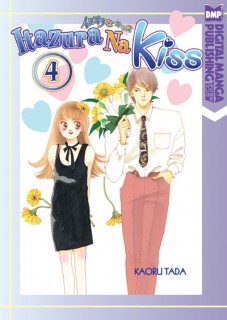
Itazura na Kiss, Volume 4Itazura na Kiss, Volumes 4-6 by Kaoru Tada. For the most part, I’m continuing to enjoy Itazura na Kiss. At this point in the series, Naoki and Kotoko are in college, each trying to figure out what to do with their lives. Kotoko’s infatuation with Naoki is the most important impetus for her to do just about anything, whether it be joining the tennis club, becoming a waitress, or trying her hand at office work. Normally, this would probably annoy me, but I appreciate her gusto, individuality, and willingness to follow through with what she’s started. Even though Kotoko is so incredibly focused on Naoki, her world actually doesn’t completely revolve around him and she’s not defined by him either, which I think is what makes her character work for me. Were it otherwise, I don’t think that I would enjoy the series nearly as much. Naoki continues to be aloof and more often than not a jerk. One particular instance in which Kotoko is unnecessarily treated very poorly could have been avoided entirely if he would have just had the courtesy to tell her what was going on, and there was no good reason for him not to. Thankfully, this sort of behavior isn’t romanticized or idealized in the manga.

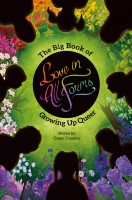
Love in All Forms: The Big Book of Growing Up QueerLove in All Forms: The Big Book of Growing Up Queer edited by Serafina Dwyer. I follow the work of Kori Michele Handwerker who contributed to Love in All Forms which is how I first learned about the collection. I was also thrilled to discover that Jennifer Doyle, another artist whose work I enjoy, was also a contributor. The anthology collects fourteen comics by queer creators about queer children. Most of the creators were actually new to me, so I’ve definitely found some new artists to follow. As for the comics themselves, some of the stories are based in reality, while others are fantasy or science fiction, but they all deal with love and personal identity in one way or another. Many of the characters skew towards the feminine side of the gender non-conforming spectrum, but there’s a nice range of representation in the anthology with an emphasis on acceptance. Generally the stories tend to be fairly optimistic, which is marvelously refreshing. The name of the anthology might be a little misleading, or at least overly broad or ambitious, but it’s a lovely collection of beautifully heartfelt and touching queer comics.

Yowamushi Pedal, Omnibus 1Yowamushi Pedal, Omnibus 1 (equivalent to Volumes 1-2) by Wataru Watanabe. I’ve watched and enjoyed part of the Yowamushi Pedal anime adaptation, so I wasn’t especially surprised by any of the developments found in the original manga. Even so, the first omnibus was great fun and I enjoyed it a great deal. Onoda is a fan of anime and manga whose surprising natural talents and regular trips by bicycle to Akihabara using less than ideal equipment have granted him some impressive cycling skills. He doesn’t even recognize his own abilities, though, not at all identifying with the more athletically inclined students at his school. But after several curious turns of events, he finds himself joining the bicycle road racing club. Watanabe isn’t very subtle when working information about cycling and bicycles into the story, which can be a little jarring, but the manga is still entertaining and I really like the characters. I’m glad that Yen Press is taking a chance on a long-running sports manga (the series is already over forty volumes in Japan and is still ongoing) and I sincerely hope that Yowamushi Pedal is a success.

Filed Under: FEATURES, My Week in Manga Tagged With: comics, itazura na kiss, Kaoru Tada, manga, Wataru Watanabe, Yowamushi Pedal

Random Musings: Notable in 2015

December 25, 2015 by Ash Brown

For the last couple of years, I have made a point to compile an end-of-year list of works that, for me, were particularly notable. In general I tend to like making lists, but I particularly enjoy working on this one because it specifically provides me the opportunity to reflect back on the year. The notable list isn’t exactly a “best of” list or even a list of favorites. To be included, a work must simply have been released in 2015, read in 2015, and stood out to me in one way or another. (That being said, I didn’t get to read as much this past year as I have in previous years. I’m sure that, had I had the chance to read them, there would be other works represented here, too.)

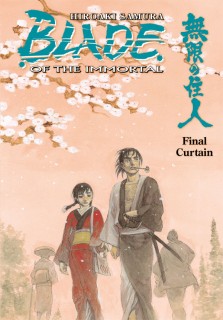
Blade of the Immortal, Volume 31: Final Curtain2015 was a year in which many series came to an end. Final Curtain, the last volume in the English-language edition of Hiroaki Samura’s Blade of the Immortal, was especially meaningful to me since the series was one of the first manga that I ever read and continues to be a personal favorite. Dark Horse began releasing the series in individual issues back in 1996; nearly two decades later it is now available in its entirety. All in all, it was a great ending to a great series.

The Summit of the Gods, Volume 5Another series that concluded in English in 2015 was The Summit of the Gods, written by Baku Yumemakura and illustrated by Jiro Taniguchi. Fanfare/Ponent Mon is one of the smaller, more niche manga and comics publishers and has infrequent releases. Multiple years passed between the publication of some of the volumes in the series, so I was honestly afraid I’d never have the opportunity to read the conclusion of such an impressively drawn and written manga.

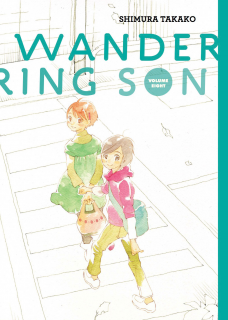
Wandering Son, Volume 8 2015 also saw what may be the premature end to a few manga in English. Tragically, for a variety of reasons, Fantagraphic’s release of Takako Shimura’s Wandering Son hasn’t been doing well and the publisher might have to cancel the series if sales don’t improve. Only a single volume, with one heck of a cliffhanger, was able to be released in 2015. The series is incredibly important to me on a very personal level—it was literally life-changing—so I’ll heartbroken if this is truly the end.

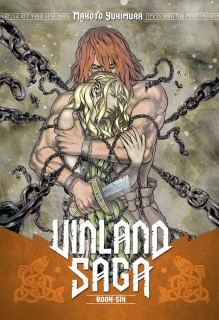
Vinland Saga, Omnibus 6Makoto Yukimura’s Vinland Saga is another series that might come to a close before its time in English. After a temporary hiatus, the sixth and seventh omnibuses, the last that are guaranteed to be published, were released in 2015. Even if the rest of the series isn’t translated (and I hope that it is), the first two major story arcs are complete and the manga is well-worth seeking out. The character development in the series is fantastic, the artwork is excellent, and the story is marvelous.

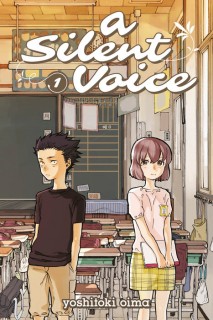
A Silent Voice, Volume 1One of the manga to debut in 2015 that stood out to me the most was A Silent Voice by Yoshitoki Oima. A realistic portrayal of bullying and the consequences of such cruelty, the series can be a difficult but ultimately worthwhile read. The subject matter is heartwrenching but handled extremely well, skillfully showing the nuanced complexity of human nature and relationships while exploring themes of forgiveness, empathy, and redemption.

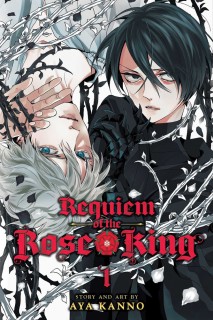
Requiem of the Rose King, Volume 1Aya Kanno’s Requiem of the Rose King was one of my most anticipated manga series to be released in 2015. A combination of historical fact and historical fantasy inspired by the plays of William Shakespeare, Kanno’s research into the Wars of the Roses, and her own imagination, the manga hasn’t yet disappointed me and gets better with each volume. The storytelling can be somewhat cryptic and chaotic at times, but its dark, dreamlike nature can also be wonderfully effective.

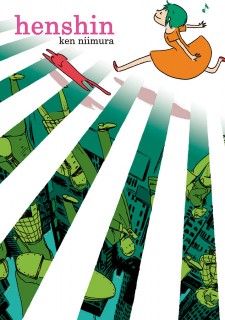
HenshinKen Niimura is an award-winning Spanish comics creator of Japanese heritage who has worked in the European, North American, and Asian markets. Henshin is a delightfully quirky collection of thirteen short manga originally released online by Ikki, making it Niimura’s first major Japanese publication. While the stories range from semi-autobiographical to the absolute fantastic, they all tend to have surprising twists to them with great emotional impact.

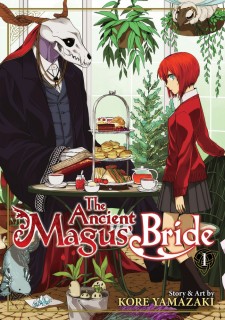
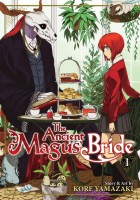
The Ancient Magus' Bride, Volume 1Seven Seas has recently shown a remarkable increase in the number and variety of titles it has licensed. Kore Yamazaki’s The Ancient Magus’ Bride is perhaps one of Seven Sea’s more atypical series, but it seems to be doing well for itself. I’m glad, because I enjoy the manga and its strangeness immensely. A peculiar romance incorporating horror and fantasy, magic and science, the series is heavily influenced by European legends, fairy tales, and folklore.

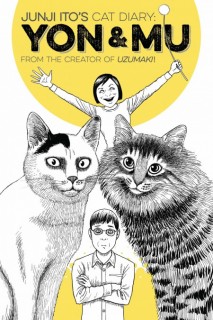
Junji Ito's Cat Diary: Yon & MuJunji Ito had a pretty good showing in English in 2015 with several new releases and re-releases. Of those, it was Junji Ito’s Cat Diary: Yon & Mu that made the strongest impression on me. (I admittedly find it difficult to resist cat comics.) The manga is drawn in Ito’s signature style but is undoubtedly a comedy, granted one about the horrors and anxieties of pet ownership. The disconnect between the artwork and the story makes it even funnier.

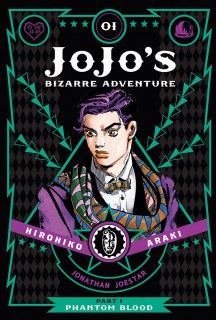
JoJo's Bizarre Adventure, Part 1: Phantom Blood, Volume 1I never expected to see the beginning of Hirohiko Araki’s exceptionally weird yet iconic manga series JoJo’s Bizarre Adventure released in English. The third story arc was published years ago but only garnered a relatively small following. Thankfully, the manga’s recent anime adaptation revitalized interest in the series, leading Viz Media to release the first two arcs of the epic—Phantom Blood and Battle Tendency—and in a beautiful hardcover edition no less.

Prison School, Omnibus 1Probably one of the most divisive debuts of 2015 was Prison School by Akira Hiramoto, but Yen Press had the guts to license it. With its highly sexualized content, over-the-top fanservice verging on the grotesque, and preponderance despicable characters, it’s definitely not a series for everyone. The manga revels in its salaciousness to the point of parody, making it a strangely engrossing and humorous work for readers who aren’t immediately offended by it.

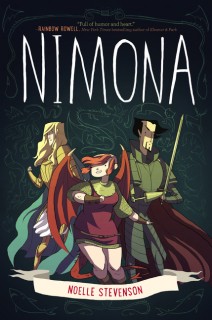
NimonaNimona had its beginnings as an award-winning webcomic, ultimately becoming Noelle Stevenson’s debut graphic novel; the print edition also includes additional material not found online. I absolutely loved this comic. It starts out rather lighthearted, but as the graphic novel progresses it becomes more serious. However, it never loses its sense of humor. Stevenson combines colorful characters, settings, and artwork to create a comic that is both entertaining and meaningful.

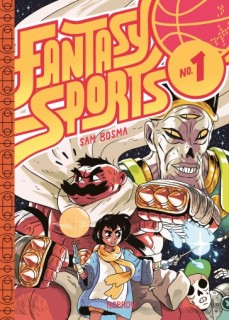
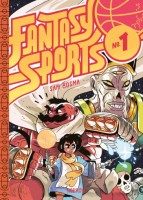
Fantasy Sports, Volume 1Sometimes all I want from a comic is something fun, and Fantasy Sports by Sam Bosma is certainly that and then some. The comic started as a short, self-published, black-and-white work but it has been expanded into an ongoing, full-color series being released by Nobrow Press. The marvelous first volume, featuring a life-and-death game of basketball between an ancient mummy and a young magic user interning at the United Order of Mages, is filled with silliness and adventure.

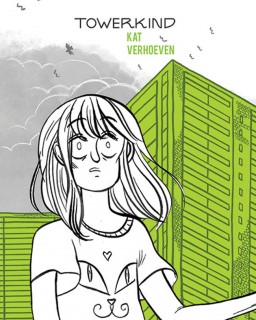
TowerkindAlso originally self-published, Towerkind by Kat Verhoeven was a comic that I came across by chance more than anything else; I picked up the book on an impulse after seeing it at the Toronto Comic Arts Festival and finding myself oddly drawn towards it. The comic is surreal, about a group of children with supernatural abilities who may or may not be facing the end of the world. It’s both a strangely compelling and darkly ominous work.

Red Girls: The Legend of the AkakuchibasOut of all of the novels released in 2015 that I read, Red Girls: The Legend of the Akakuchibas by Kazuki Sakuraba was perhaps the most curious, peculiar, and enthralling. A multi-generational family epic, the story follows the lives and legends of three women, each powerful in their own way. (One of them even becomes a successful mangaka after retiring from being the leader of a girl gang.) Part history, part mystery, and part fantasy, I enjoyed the novel a great deal.

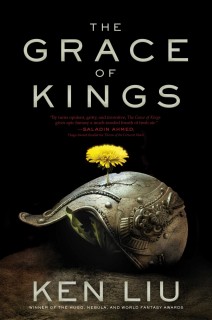
The Grace of KingsKen Liu is probably best known for his short fiction, but in 2015 he made his debut as a novelist with The Grace of Kings, the first book in The Dandelion Dynasty which is a sort of retelling or reimagining of China’s historical legends and mythologies. The novel is a massive and expansive work with incredible worldbuilding. Though contemporary fantasy fiction, stylistically Liu also pays tribute to the narrative structure of the Chinese classics and not just their stories.

Filed Under: FEATURES Tagged With: comics, manga, Novels

Windrose, Vol. 1

December 4, 2015 by Ash Brown

Windrose, Volume 1Creator: Studio Kôsen
Publisher: Chromatic Press
ISBN: 9781987988055
Released: November 2015
Original run: 2014-2015

Windrose is an ongoing series by Studio Kôsen, a Spanish creative team made up of two comics artists: Aurora García and Diana Fernández. Kôsen has had several comics as well as an artbook released in English in the past, including Saihôshi: The Guardian (my introduction to the team’s work), Stallion, and Daemonium. Currently, both Windrose and Kôsen’s previous work Lêttera are being serialized online through Chromatic Press’ multimedia magazine Sparkler Monthly. I was very excited when Windrose was first announced–I love Kôsen artwork and am a huge fan of Chromatic Press and Sparkler Monthly–and even more so when it came time for the first volume to be released in print. Windrose, Volume 1, completed in 2015, collects the first six chapters of the comic originally serialized between July 2014 and May 2015, as well as some additional notes from the creators about the comic and its historical setting.

On the day of her seventeenth birthday, Danielle received a strange gift from her father, a French merchant who has been away from their Barcelona home for months. Inside the secret compartment of a cleverly designed puzzle box is a miniature astrolabe and a letter asking her to keep it safely hidden away as his own life is in grave danger. Instead passively waiting for more information, Danielle decides to leave her Spanish mother behind in order to search for her father in France. Danielle’s mother never approved of Danielle’s more adventurous nature, trying with little success to raise her daughter to act like a proper lady. And Danielle’s journey to Marseille is not without incident–it’s dangerous for a young woman of the upper class to travel alone in the seventeenth century. After pirates attack the ship she is sailing on, Danielle is rescued by two fellow travelers, Angeline and Leon, whose reasons for helping are less than virtuous. Danielle may be in well over her head in more ways than one.

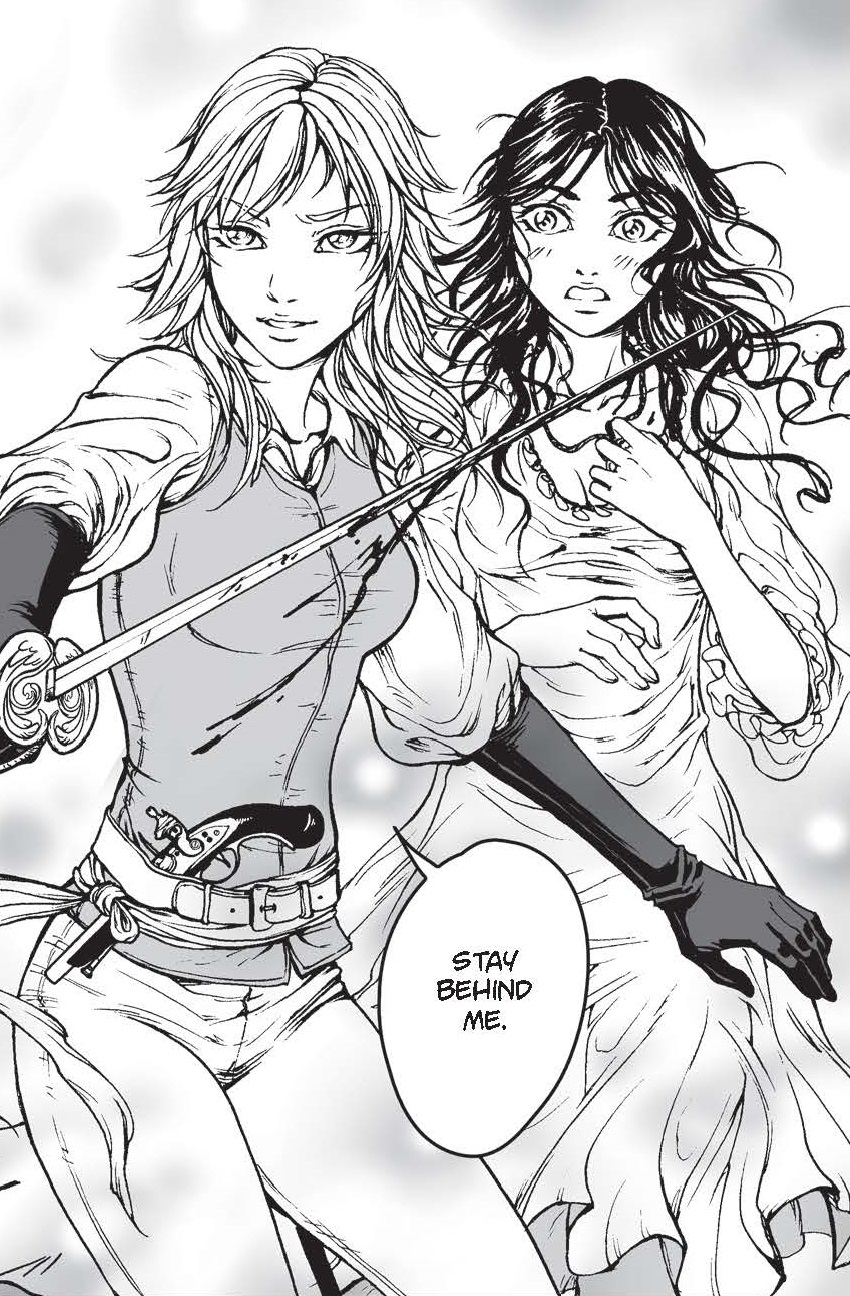
Windrose, Volume 1, page 17After only a single volume of Windrose I’m already absolutely loving the series. In fact, Windrose may very well be my favorite work by Kôsen to date. The art in the comic is gorgeous, and the inkwork in particular is especially striking. Kôsen has also made the effort to research the time period, including its clothing. The resulting character designs are wonderful in their details, whether the attire called for is intricate formal wear or simpler, more practical dress. Already the story of Windrose has moved through a wide variety of settings which Kôsen has expertly conveyed without visually overwhelming the scenes. There are countryside estates and lavish manors, docks and seafaring vessels, shady bars, dark alleyways, and even an abbey complete with secret passages. And of course there are the exceedingly attractive protagonists and antagonists of the series, too, each with their own distinct personality and ways of expressing themselves.

In addition to being beautifully drawn, the characters themselves are a large part of why I’m enjoying Windrose so much. At first Danielle seems to be sheltered and naive to the ways of the world, but she’s intelligent and learns quickly. She also has a particular talent for solving puzzles and riddles, encouraged and instilled in her by her father. Not much has been revealed yet about Angeline and Leon’s pasts, but they make a strong impression from the start. Angeline is a brash young woman with an aggressive streak which, when combined with her sword skills, allows her to pose as a man if it happens to be convenient or serve her purposes. Leon, while just as beautifully handsome as Angeline, has a more reserved and cautions nature which helps to balance her hotheadedness. The three of them together make a somewhat peculiar trio, but already Danielle is starting to rely on the other two even if she can’t quite trust them. With spectacular artwork, engaging characters, and exciting adventure, Windrose is off to a magnificent start.

Filed Under: REVIEWS Tagged With: Chromatic Press, comics, Kôsen, Windrose

My Week in Manga: September 28-October 4, 2015

October 5, 2015 by Ash Brown

My News and Reviews

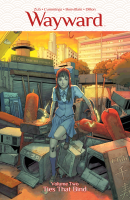
A few different things were posted at Experiments in Manga last week. First of all, it’s time for the most recent monthly giveaway. The winner will be announced on Wednesday, so you all still have a chance to enter to win the first volume of Madoka Takadono and Utako Yukihiro’s Devils and Realist. The honor of the first in-depth review for October goes to Jim Zub and Steve Cummings’ Wayward, Volume 2: Ties That Bind, which continues to successfully meld the history and legends surrounding yokai with a brand new story. The series, which I’m thoroughly enjoying, would probably make a great entry point for manga fans who would be interested in exploring American-style comics. Finally, over the weekend I posted September’s Bookshelf Overload.

As for some of the interesting things that caught my attention elsewhere online last week: Foreign Policy has a nice piece about evolving LGBT rights in Japan and the role that manga like Wandering Son and boys’ love has played in it; Otaku USA has an interview with the (in)famous mangaka and tentacle master Toshio Maeda; it looks as though Masahiko Matsumoto’s long-awaited Cigarette Girl is currently scheduled for release in 2016 by Top Shelf; and Digital Manga, despite the trouble it seems to be having actually publishing anything in print these days, has launched its newest Tezuka Kickstarter aiming to release Wonder 3 and, as a stretch goal, The Film Lives On.

Quick Takes

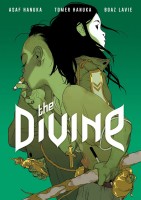
The DivineThe Divine by written by Boaz Lavie and illustrated by Asaf Hanuka and Tomer Hanuka. The striking color artwork of The Divine is what first caught my attention. (It looked vaguely familiar, and indeed, it turns out that Tomer created the cover art for Haikasoru’s recent Battle Royale releases.) The graphic novel follows Mark, an explosives expert, who travels to a remote Southeast Asian country on a military contract. The mission seems relatively straightforward—blowing up a mountain, supposedly to help the locals gain better access to its rich mineral resources—but Mark ends up caught up in the local civil war when he’s captured by a group of young rebels. Mixing mythology and modern warfare and the supernatural with man-made terrors, the comic is graphic in its blood and violence. The artwork is consistently great, but I found the narrative to be a little uneven and none of the characters are particularly likeable. The Divine was in part inspired by a photograph of the twelve-year-old Htoo twins from Burma, the leaders of the God’s Army guerrilla group in the 1990s. Although I did enjoy The Divine, I think I’d actually be even more interested in seeing a direct retelling of their story.

Inuyashiki, Volume 1Inuyashiki, Volume 1 by Hiroya Oku. It’s been a long while since I’ve read any of Gantz, the series that Oku is most well-known for, but I was still curious about Inuyashiki, his most recent series to be released in English. Almost unheard of in manga available in translation, which largely tends to be targeted at a younger audiences, one of lead characters, the titular Ichiro Inuyashiki, is nearly sixty years old. In fact, he looks even older than that. The first volume of Inuyashiki seems to mostly be a prologue for the rest of the series, establishing the premise of the manga and introducing the characters who will become the major players. Oku makes a point to emphasize just how sad and miserable Inuyashiki’s life is before killing him and another innocent bystander off in a freak accident. Granted, they are then both resurrected as extraordinarily powerful, weaponized cyborgs. In the case of Inuyashiki, he’s using his new-found abilities for good, and in spectacular fashion, too. As for the other victim, I don’t expect that he’ll be quite as magnanimous. Inuyashiki, as ridiculous as its setup is, has a promising start. I’m rather curious to see the direction Oku will be taking the series.

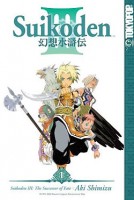
Suikoden III: The Successor of Fate, Volume 1Suikoden III: The Successor of Fate, Volumes 1-5 by Aki Shimizu. Although I am aware of the RPG series, I haven’t actually played any of the Suikoden video games. I was specifically interested in the Suikoden III manga adaptation for two reasons: the entire Suikoden series is loosely based on the Chinese classic Water Margin, and I generally enjoy Shimizu’s work (which also tends to have a Chinese influence). An overview of the previous two Suikoden stories is provided before the manga gets underway; it’s a nice, but largely unnecessary addition. The Successor of Fate seems to stand well on it own, so far. The manga doesn’t really feel like a video game adaptation, either, which I was happy to discover. References are made to past events (and past games, technically), but for the characters that history is shrouded in myth and legend. At this point The Successor of Fate hasn’t really made itself stand out from most other epic fantasy series, but its a solid beginning and, despite a few infodumps, there are plenty of things to like: a large cast of characters (including quite a few women in prominent roles), prophecies and magic, politics and intrigue, battles that rely on strategy as much as strength, and so on.

Filed Under: FEATURES, My Week in Manga Tagged With: Aki Shimizu, Asaf Hanuka, Boaz Lavie, comics, Hiroya Oku, Inuyashiki, manga, Suikoden, Tomer Hanuka

Wayward, Vol. 2: Ties That Bind

October 2, 2015 by Ash Brown

Wayward, Volume 2: Ties That BindCreator: Jim Zub and Steve Cummings
Publisher: Image Comics
ISBN: 9781632154033
Released: August 2015
Original run: 2015

Ties That Bind is the second volume of the American comic series Wayward, created by Jim Zub and Steve Cummings and released by Image Comics. Anything having to do with yokai immediately catches my attention, and I had previously read and enjoyed some of Zub’s earlier work, so I was very interested in reading Wayward. I thoroughly enjoyed the first collected volume in the series, String Theory, meaning that there was absolutely no question that I would be picking up the second, too. (Well, at least that was the case before I learned that a deluxe omnibus edition was going to be released—then there was a difficult choice to be made.) Ties That Bind, published in 2015, collects the sixth through tenth issues of Wayward which were originally serialized between March and July 2015. Also included is an introduction by Charles Soule as well as several yokai essays by Zack Davisson which I especially appreciate. For this particular volume, Zub is credited for the story and Cummings for the line art while the credit for the color art goes to Tamara Bonvillain and color flats to Ludwig Olimba.

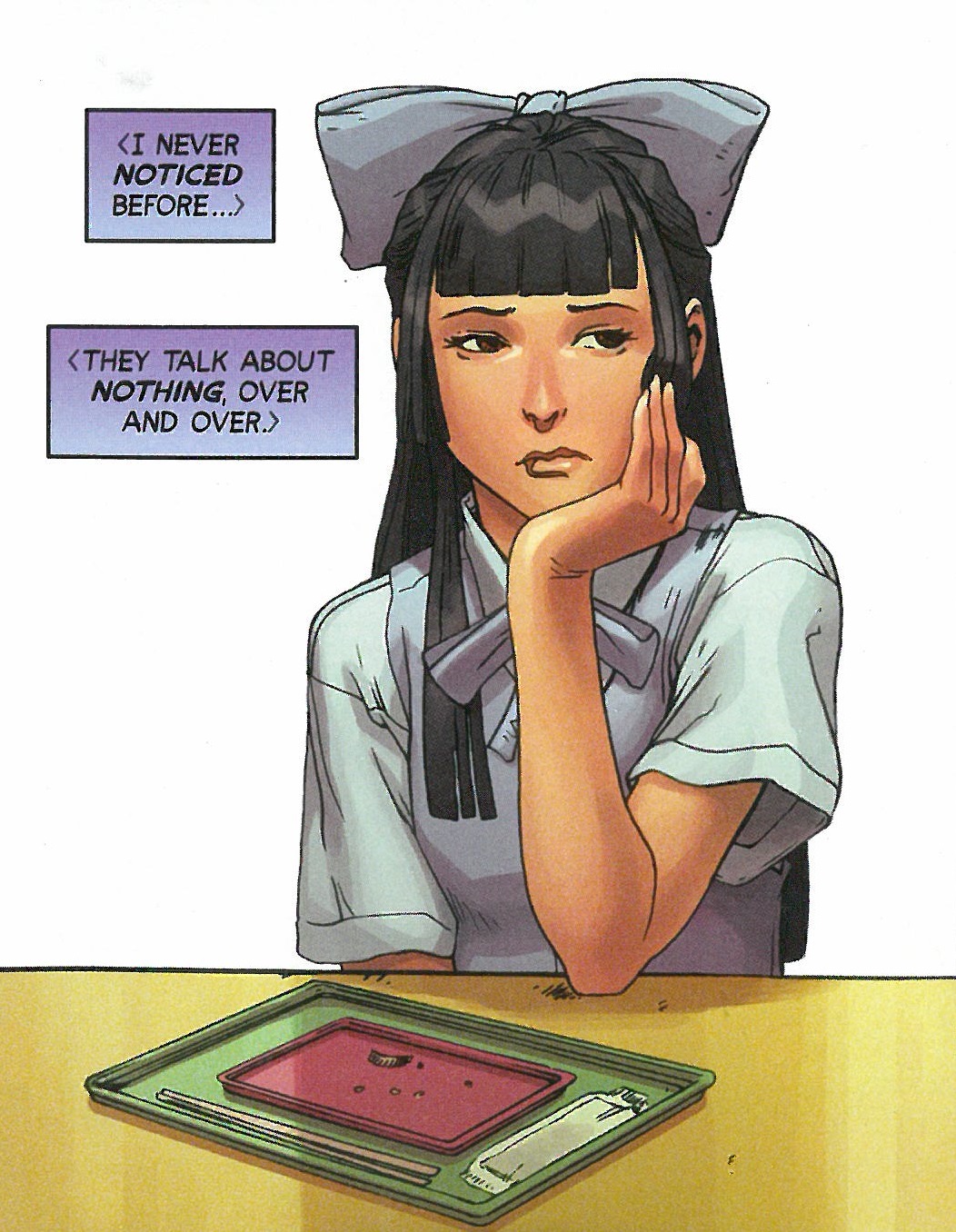
Emi Ohara’s life follows a simple, predictable routine. Without much variation from day to day she wakes up, goes to school, and returns home. But Emi yearns to have the exciting lives that the heroines of her favorite shoujo manga enjoy. Little does she know that she’ll get what she wished for, but not at all in the way that she expected—Emi discovers she has the ability to manipulate her body and the materials around her in astonishing ways. Suddenly, among other strange developments, her touch is able to melt and mold plastic and her arm can take on the characteristics of metal and glass. At first she thinks it’s all a dream, but then she is chased down by a group of monstrous kitsune only to be rescued by Ayane and Nikaido, two young people who have their own special powers and who are also the yokai’s targets. It’s been three months since the other members of their group, Rori and Shirai, disappeared during the chaos of an epic confrontation with a faction of yokai. At this point Ayane and Nikaido are welcoming any allies they can find, and that includes Emi.

Wayward, Volume 2, page 40Whereas String Theory largely followed Rori’s perspective of the supernatural events unfolding in Tokyo, much of the focus of Ties that Bind is on Emi. Some of the contrasts between the young women as two of the leads in the story are particularly interesting. Rori, who is half-Japanese and half-Irish, is often considered to be an outsider within Japanese society. Emi, on the other hand, is a “proper Japanese girl,” dutiful and obedient even though she finds that role to be increasingly suffocating. Rori is a Weaver with the ability to alter reality and change a person’s fate. (Just how incredibly powerful and far-reaching her talents truly are is still in the process of being revealed, but the continuing development and evolution of her skills in Ties That Bind is impressive.) However, Emi, who like Rori is sensitive to patterns and seems to be able to at least partially identify the course of fate and destiny, feels trapped and unable to make meaningful choices or to change the direction of those events that have already been set in motion.

At times, Wayward can be an extremely violent series. Ayane’s way of taking charge of the situation is to go on the attack, dragging Nikaido and Emi along with her. The yokai, threatened by the very existence of the supernaturally-gifted teens, are more than willing to fight back. The resulting battles are intense, bloody, and even gruesome. But the yokai aren’t united in their efforts—Ties That Bind introduces the tsuchigumo, or dirt spiders, who would seem to have their own agenda. I love that Wayward incorporates the lore and, especially in the case of the dirt spiders, the history surrounding yokai. The series’ interpretation of yokai and traditional tales is its own and is closely integrated with an entirely new, contemporary story. Wayward effectively creates a cohesive and compelling narrative that can be enjoyed by readers who are already familiar with yokai as well as by those who are not. Ties That Bind brings together new characters, new conflicts, and new plot threads while expanding and further developing those that had already been established. Wayward is an excellent series with great art, characters, and story; I’m definitely looking forward to the next volume.

Filed Under: REVIEWS Tagged With: comics, Image Comics, Jim Zub, Steve Cummings, Wayward

My Week in Manga: September 14-September 20, 2015

September 21, 2015 by Ash Brown

My News and Reviews

Two in-depth manga reviews were posted last week! As part of my monthly horror manga review project, I took a look at Yuki Urushibara’s Mushishi, Volume 5. I still love this series tremendously and wish it wasn’t out-of-print, but at least it’s available digitally from Kodansha Comics now. The second review last week was of Masayuki Ishikawa’s Maria the Virgin Witch: Exhibition, which is a collection of side stories, both prequels and sequels, focusing on the characters of Maria the Virgin Witch. For fans of the original series, it’s a very nice addition. The volume probably won’t appeal to or make much sense to anyone who hasn’t read the main manga, though.

There were a ton of interesting articles, reviews, and news announcements that I saw last week. Deb Aoki has been busy at Anime News Network with a two part interview with various Kodansha folk, mostly focusing on the Kodansha Advanced Media digital manga efforts, as well as an interview with those involved with the new Ultraman manga series, including the creators Eiichi Shimizu and Tomohiro Shimoguchi and Mike Montesa from Viz Media and Ai Shimizu from Hero’s Magazine. Over at Publishers Weekly, she takes a closer look at Tokyopop’s most recent efforts. Elsewhere, Kristin of Comic Attack interviewed Arina Tanemura at Anime Fest; AM Cosmos writes about the different perspectives of bullying found in A Silent Voice and Haven’t You Heard? I’m Sakamoto; and Organization Anti-Social Geniuses concludes its Advice on Manga series with advice on manga editing from manga editors.

In licensing news, the fine folk of MASSIVE will be working with Koyama Press to translate What Is Obscenity?, the comic memoir of sculptor and mangaka Megumi Igarashi (aka Rokudenashiko). In addition to the three original short manga, the English-language edition will have additional content, such as a new introduction by the artist and an interview between Rokudenashiko and Sion Sono. Yaoi Con was held over the weekend and there were some other licensing announcements made. SuBLime Manga picked up Rihito Takarai’s Ten Count, Bohra Naono’s Midnight Stranger, and Yonezou Nekota’s Don’t Be Cruel. (I’m especially looking forward to Ten Count, but am always happy to see more of Naono’s work translated.) As for Digital Manga, the Juné imprint is adding twenty-four new titles… except that they’re all digital, no print. (Interestingly, Project H’s recent license announcements were all digital-only as well, which really makes me wonder about DMP, especially as it’s starting to gear up for its next Tezuka Kickstarter.) And speaking of yaoi and BL, Kathryn Hemmann’s academic article “Queering the Media Mix: The Female Gaze in Japanese Fan Comics” takes a look at BL doujinshi based on CLAMP’s works.
Quick Takes

Devils and Realist, Volume 3Devils and Realist, Volumes 3-4 written by Madoka Takadono and illustrated by Utako Yukihiro. Sometimes the two major aspects of Devils and Realist (it’s humor and it’s drama) mesh well and sometimes they make the manga seem like it’s trying to be two entirely different series. Despite the demons that have become students in order to be closer to him, William’s school life remains fairly mundane, though humorous. That part of the story isn’t so different from any other school-based manga. What makes the series more interesting is the drama, politics, and intrigue surrounding the selection of the next ruler of hell. Heaven is getting involved now, too. Not only does William have to deal with demons vying for his attention, and in some cases his life, angels are beginning to make their presence known, causing even more problems for him. Also, angels can be just as big of jerks as their fallen brethren. Although I’m not in a rush to find out what happens next, I am still enjoying Devils and Realist; the art and character designs are pretty and I generally find the series to be entertaining.

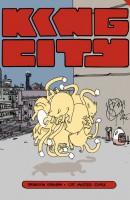
King CityKing City by Brandon Graham. The first half of King City was initially published by Tokyopop but the series, like so many of the publisher’s other original English comics, was left unfinished. However, unlike all but a very select few of the series that met that particular fate, King City found a new home and was able to be completed, in this case thanks to Image Comics. Although there are some dramatic battles and rescues in King City, there really isn’t much in the way of a plot. What there is a bizarre futuristic city filled with some very strange residents. The comic focuses on Joe, his friends and acquaintances, and Earthling, his extremely intelligent and multi-talented cat. Joe is a Catmaster—with a little help from an injection, Earthling can turn into or do anything. What I love most about King City, besides Earthling and the rest of the cats, is that it is absolutely crammed with wordplay and visual puns. It’s worth taking time to thoroughly examine every page because Graham has incorporated so much humor in the small, seemingly inconsequential details. King City is very strange, but it’s the kind of strange that I tend to enjoy.

Pandora Hearts, Volume 1Pandora Hearts, Volumes 1-3 by Jun Mochizuki. I know so many people who absolutely adore Pandora Hearts that I’ve been meaning to try the series for a while now. To be honest, After reading the first volume, I wasn’t so sure about the manga—I found it to be extremely chaotic and confusing, and almost nonsensical (maybe I just wasn’t reading closely enough)—but after the second volume it started to click for me and by the third I was completely hooked on the series. Mochizuki’s artwork is pretty great, too. I definitely plan on reading more of Pandora Hearts. I’ll admit, I’m still not entirely sure what’s going on yet, but that mystery is part of the point. Most of the characters don’t understand everything, either, and those who do know at least part of the truth aren’t necessarily sharing that information anyone else unless it serves their own purpose. Tragedy and psychological trauma are major components of Pandora Hearts. There is violence and horror, betrayals and lies, but also obsessive loyalty and kindness. The characters are struggling with loneliness and the intense desire and need to belong and feel wanted.

Filed Under: FEATURES, My Week in Manga Tagged With: Brandon Graham, comics, Devils and Realist, Jun Mochizuki, King City, Madoka Takadono, manga, pandora hearts, Utako Yukihiro

Orange Junk, Vol. 1

July 31, 2015 by Ash Brown

Orange Junk, Volume 1Creator: Heldrad
Publisher: Chromatic Press
ISBN: 9781987988031
Released: July 2015

Orange Junk, created by Mexican artist (and architecture student) Heldrad, is an ongoing comic series strongly influenced by shoujo manga. The series had its beginnings back in 2010 and eventually became one of the most well-loved comics hosted online at Inkblazers (previously known as Manga Magazine). Sadly, Inkblazers closed in early 2015. Happily, Orange Junk was quickly picked up by the publisher Chromatic Press to be featured in its online multimedia magazine Sparkler Monthly. And now, less than a year later, the first volume of Orange Junk has been collected and released both digitally and in print. While I was vaguely aware of Orange Junk before its debut in Sparkler Monthly, I didn’t have any extensive knowledge about its plot or characters. (Really, I recognized it more by name than anything else.) However, the release of the collection of the first four chapters and additional bonus content provided the perfect opportunity to be introduced to the unabashed shoujo delight that is Orange Junk.

Louise Barton is the oldest child of a family that at one point was very wealthy. She lived in comfort, had plenty of time and opportunity to pursue her hobbies, and was generally happy and content with her lot in life. But then her father’s company went bankrupt and her family is now struggling to pay back the debt and make ends meet. Louise, her younger brother, and both of their parents are still adjusting to their new circumstances. One of the greatest challenges for Louise is that she must attend a public school for the first time. Starting over as a transfer student, she has no friends and an unfortunate lack of academic aptitude. Not to mention that she’s also already managed to get on the bad side of Bruce Daniels, a classmate notorious for his temper and getting into fights. But not everything is bad in the eleventh grade. Andrew Grey, another transfer student and one of the cutest guys in the school, is in her class, too. And when the three of them get thrown together, things take an unexpected turn or two.

Orange Junk, Volume 1, page 34Out of all of the stories that have so far appeared in Sparkler Monthly, Orange Junk is the one that is probably the most stereotypically “shoujo,” except that in most cases Heldrad has deliberately taken frequently found tropes and stereotypes and given them a bit of twist. This is especially apparent in the characterizations of the series’ lead trio. Bruce is athletic and constantly getting into fights, but he’s also the smartest student in class. Drew may have the looks that make many of the girls swoon, but he’s also a complete airhead (with occasional moments of wisdom) and an otaku to boot. Almost everyone assumes that Louise has great connections and great grades, but her social life is lacking and she’s absolutely terrible at math. Even the underlying drama of the comic—Louise’s family losing their wealth and status—seems to be less commonly seen than a downtrodden heroine suddenly coming into a fortune of some sort. Orange Junk isn’t necessarily a shoujo manga parody, but it does approach being one at times. Either way though, the comic is very funny.

In the author’s notes, Heldrad explains why the series is named Orange Junk. “Orange” because it conveys a sense of energy and “junk” because the comic is akin to junk food. It’s a title that actually fits the series quite well. Orange Junk is fantastically energetic and the chemistry between its characters is great. Louise and Bruce’s interactions are particularly entertaining to watch. They both have strong personalities that frequently clash with each other—Louise is one of the few people who can actually stand up to Bruce—but they begin to establish an awkward sort of friendship over the course of the comic that is absolutely adorable. Ultimately, Orange Junk is a romantic comedy that’s not to be taken too seriously. Although many of the relationships evolve naturally, the comic has its fair share of silliness and melodrama, and there are plenty of developments that inspire incredulity. But that’s really all part of Orange Junk‘s charm. If the first volume is any indication, the rest of the series should be a tremendous amount of fun.

Filed Under: REVIEWS Tagged With: Chromatic Press, comics, heldrad, orange junk

My Week in Manga: July 13-July 19, 2015

July 20, 2015 by Ash Brown

My News and Reviews

Two in-depth reviews were posted at Experiments in Manga last week. The first took a look at Mushishi, Volume 4 by Yuki Urushibara. The review is part of my monthly horror manga review project; next month I’ll be bouncing back to Setona Mizushiro’s After School Nightmare. Mushishi continues to be one of my favorite manga series. The second review was of A Sky Longing for Memories: The Art of Makoto Shinkai, the most recent artbook to be released by Vertical. It’s a gorgeous volume to simply look at, but I also learned a little about art design and digital illustration while reading it, too. Also of note, over at Organization Anti-Social Geniuses, I and six other manga and anime enthusiasts weighed in on the question “What Was the Biggest Announcement at Anime Expo/SDCC?”

There were a few other manga-related posts at OASG last week, too, including some great tips on getting manga for cheap, advice from manga letterers, and an interview with Kodansha’s Ben Applegate from San Diego Comic-Con. A couple of other convention-related articles that I came across: Brigid Alverson talked to Tokyopop’s Stu Levy and Deb Aoki summarizes some of the recent manga news. Also, the audio recordings of some of the SDCC panels, including the Best and Worst Manga panel, have been posted.

In licensing news, Seven Seas announced The Other Side of Secret manga series by Hideaki Yoshikawa. Seven Seas will also be releasing a newly-illustrated omnibus of L. Frank Baum’s The Wonderful Wizard of Oz & The Marvelous Land of Oz. (This will be similar to Seven Seas’ edition of Lewis Carroll’s Alice’s Adventures in Wonderland and Through the Looking-Glass which was quite charming.) Finally, a couple of interesting reads I happened upon: Léopold Dahan wrote about studying the magazine Garo and Kevin Frane discussed gender in Quantum Devil Saga: Avatar Tuner. (Frane is the translator of the series in English, and I really enjoyed the first volume, but I’m looking forward to the following volumes even more now.)

Quick Takes

After I WinAfter I Win by Kaname Itsuki. Out of all the boys’ love manga that I’ve so far read, I think After I Win is the one that is the quickest to reach the all-important love confession. Only three pages into the manga and the leads—the beautiful Hiyori and his underclassman and roommate Kasumi—have admitted their feelings for each other. Granted, it takes most of the rest of the volume for them each to realize that the other young man actually meant what he said. After I Win is probably also the boys’ love manga with the most masturbation scenes that I’ve come across. (In the afterword, Itsuki mentions that it was her intention to feature at least one such scene in every chapter.) Hiyori and Kasumi spend so much time getting it on on their own rather than getting it on together for two main reasons: the aforementioned confusion regarding how seriously they should take each other’s confession, and the fact that Hiyori gets so nervous with anticipation and excitement that he tends to get nauseous. But even considering this, and despite his angelic appearance, Hiyori is very dirty-minded and looks forward to the opportunity to cement his relationship with Kasumi physically. After I Win, perhaps surprisingly, is actually pretty cute.

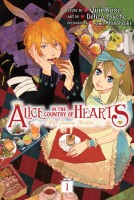
Alice in the Country of Hearts: My Fanatic Rabbit, Volume 1Alice in the Country of Hearts: My Fanatic Rabbit, Volumes 1-2 by Psyche Delico. After reading and enjoying the first Alice in the Country of Hearts manga series, I asked fellow enthusiasts to recommend which among the multitude of Alice manga I should follow-up with. My Fanatic Rabbit wasn’t mentioned a single time. So why did I tackle it next? Mostly because Psyche Delico was involved. (I loved her other manga released in English, Love Full of Scars.) My Fanatic Rabbit is more or less a retelling of Alice in the Country of Hearts, except that Alice has decided to stay with the Hatter mafia rather than Julius, ultimately falling in love with the March Hare. There are some cute romantic parts scattered throughout the series, especially towards the end, as well as some genuinely funny moments, but overall the manga really isn’t especially strong. It doesn’t stand well on its own and those who have read the first series won’t find much new, either. Maybe in part because it’s a shorter series, neither the characters nor the world have much of chance to develop and simply must be taken as is. My Fanatic Rabbit will likely appeal most to those who want to see Elliot and Alice together.

Aquarion Evol. Volume 1Aquarion Evol, Volumes 1-3 written by Shoji Kawamori, illustrated by Aogiri. Despite taking place twelve thousand years after Genesis of Aquarion, its sequel Aquarion Evol doesn’t make much sense at all to those who aren’t already familiar with the franchise. At least that’s the case for the ongoing manga series; perhaps the anime does a better job of initiating newcomers. Having seen neither of the anime series, I can only say that the story of the Aquarion Evol is a mess and nearly impenetrable at first. By the third volume things begin to be explained a little more coherently, but the manga seems to be taking a lot of shortcuts with the plot and character development. Probably because of my confusion, I generally wasn’t overly impressed with the Aquarion Evol, but there were still some things that I liked about it. The various supernatural powers are interesting (there’s even a music-based one!) as are the somewhat bizarre gender dynamics and curious sexual overtones. The artwork is attractive, too, with exciting action sequences and nice character designs. The mecha are difficult to tell apart at first glance, though. I wonder if I might actually enjoy the Aquarion Evol anime, but I find the manga to be frustrating.

Fantasy Sports, Volume 1Fantasy Sports, Volume 1 by Sam Bosma. Before stumbling upon Fantasy Sports, I hadn’t previously read any of Bosma’s work. I definitely want to read more now because Fantasy Sports was fantastic. It apparently started out as a self-published, black-and-white comic called Fantasy Basketball, but it was later expanded and colored for release by Nobrow and made the first installment in an ongoing series. I absolutely loved the comic and can’t wait to read future volumes of Fantasy Sports. The story follows Wiz, a young magic user and intern at The United and Ancient Order of Mages. Her mentor in the guild is Mug, a hulk of a man who usually solves his problems through brute strength and who doesn’t know a thing about magic. They don’t really get along very well, making their job raiding and searching for treasure even more difficult. During their most recent expedition, they encounter an ancient mummy who they must defeat in a game of basketball if they hope to escape with the fortune and their lives intact. It’s a slim volume, but with great art, great colors, and great characters, not to mention just enough silliness and adventure, the first volume of Fantasy Sports is a tremendous amount of fun.

Filed Under: FEATURES, My Week in Manga Tagged With: Alice in the Country of, Aogiri, Aquarion Evol, comics, Fantasy Sports, Kaname Itsuki, manga, Psyche Delico, Sam Bosma, Shoji Kawamori

My Week in Manga: June 29-July 5, 2015

July 6, 2015 by Ash Brown

My News and Reviews

Once again, I was actually away for most of the week last week. The taiko ensemble I that primarily play with had a series of performances, a mini taiko tour of sorts, so I was traveling. We had a great time; I only wish I that could make my living in music! (Who knows, maybe in the future I’ll be able to make it work. You know, once the mountain of student loans has been paid back.) Although I fell behind in my reading and writing, I did have a few things in queue to post at Experiments in Manga. First, the Assassination Classroom Giveaway Winner was announced. The post also includes a list of manga available in English that feature teachers. I’m a couple of volumes behind in my reviews for the series, but the honor of the first in-depth manga review for July goes to Fumi Yoshinaga’s What Did You Eat Yesterday?, Volume 7. Kenji finally has the chance to meet Shiro’s parents and it’s great. Finally, over the weekend, I posted June’s Bookshelf Overload. Most notably, I found an entire set of the tragically out-of-print Banana Fish that I didn’t have to trade a kidney to obtain!

Because I was away from the Internet for so many days, I didn’t really stumble across any articles that I found particularly interesting. However, Anime Expo was held last week, and there were a ton of licensing announcements. (Manga Bookshelf cohort Sean has a nice roundup.) Kodansha has Akiko Higashimura’s Princess Jellyfish (I’m thrilled!), Shizumu Watanabe and Okushō’s Real Account, and Hoshino Taguchi’s Magatsuki. Haikasoru has the first three novels of Yoshiki Tanaka’s Legend of the Galactic Heroes (hooray!), and Sentai licensed the anime series. Shojo Beat picked up Matsuri Hino’s Shuriken and Pleats and Bisco Hatori’s Behind the Scenes. Seven Seas licensed Angel Beats!: Heaven’s Door. Tokyopop returns to manga publishing in 2016, but no specific titles have yet been mentioned. Vertical will be releasing Keiichi Arawi’s Nichijō, and Kanata Konami’s FukuFuku: Kitten Tales among other things. Yen Press announced a slew of manga and light novel acquisitions, too, including the mahjong manga Saki! (Sadly, it’s currently only a digital release.) I’m sure I’ve missed something, so please let me know what exciting news or reading I should be aware of!

Quick Takes

The Ancient Magus' Bride, Volume 1The Ancient Magus’ Bride, Volume 1 by Kore Yamazaki. Apparently, The Ancient Magus’ Bride started as a one-shot doujin before catching the eye of an editor. It’s a curious and atmospheric manga, mostly set in current-day England, albeit it’s a world in which magic and alchemy take their place alongside science. Although magic use seems to be fading away, fae are still very real and a few humans show rare talent for the craft. Chise is one of those humans. Sold into slavery, she is purchased and perhaps rescued by a Elias, a powerful mage who wants her to become his apprentice. He also mentions something about Chise becoming his bride, too, though she can’t quite tell if he’s being serious or not. Granted, it’s a little difficult to read a person with an animal skull for a head. Yokai exist in The Ancient Magus’ Bride as well (they can be seen in the background of some of Chise’s memories), but so far it appears as though the manga will be focusing on Europe’s fantastical and legendary creatures. I enjoyed the first volume of The Anceint Magus’ Bride a great deal and look forward to reading more of the series.

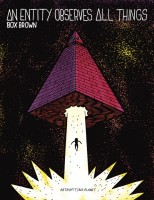
An Entity Observes All ThingsAn Entity Observes All Things by Box Brown. I was already curious about An Entity Observes All Things, but after briefly meeting Brown at TCAF I knew that I wanted to read it. The volume includes nine of Brown’s short, alternative comics, three of which were previously published elsewhere while I believe the other six are new for the collection. Though for the most part the comics are unrelated to each other—they don’t really share characters, plots, or settings and even their color palettes are different—in general, the short works fall into the category of science fiction and deal with themes of exploration, specifically of the world and of the self. They all tend to be fairly quirky, too, and can often be rather humorous without necessarily being comedies. I enjoyed An Entity Observes All Things quite a bit. As with most collections, some of the individual comics worked for me more than others, but overall I found the selections to be engaging. Sometimes funny and sometimes sad, the comics are all somewhat strange, and that’s something that I particularly appreciate about An Entity Observes All Things.

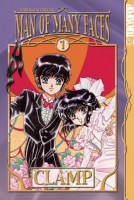
Man of Many Faces, Volume 1Man of Many Faces, Volumes 1-2 by CLAMP. I largely enjoy manga by CLAMP, but if I’m going to be honest, I was primarily interested in Man of Many Faces due to its loose connection to the works of Edogawa Rampo. For the most part, the Rampo references are limited to the characters’ names and roles. There’s the titular “Twenty Faces,” a skilled thief in both Rampo and CLAMP’s creations, a young man by the name of Kobayashi who chases after him, and even Akechi-sensei, although he’s a school doctor rather than a detective in the manga. Man of Many Faces is one of CLAMP’s earliest professional works and it is very, very silly, the more absurd elements being lampshaded and intentionally left unexplained. However, the manga ends up being rather sweet and charming, too. Twenty Faces is a third grader who has taken on the role of the gentleman thief in the absence of his father. Akira steals things according to the whims of his two eccentric mothers in addition to doing all of the cooking and housework. Although the story at first focuses on the various heists, ultimately Man of Many Faces is about romantic love.

Filed Under: FEATURES, My Week in Manga Tagged With: Ancient Magus' Bride, Box Brown, clamp, comics, Kore Yamazaki, Man of Many Faces, manga

My Week in Manga: June 22-June 28, 2015

June 29, 2015 by Ash Brown

My News and Reviews

Last week, the most recent manga giveaway at Experiments in Manga was posted. The winner will be announced on Wednesday, so there are still a couple of days left to enter for a chance to win the first volume of Assassination Classroom. All you have to do is tell me about your favorite teacher from a manga. I also posted two reviews last week. The first review was of Yaya Sakuragi’s boys’ love manga Hide and Seek, Volume 2. The series continues to be one of her strongest; I’m really enjoying it. The second review was of Taiyo Fujii’s novel Gene Mapper, the most recent release from the Haikasoru. Gene Mapper is a great example of realistic near future science featuring thought-provoking information and bio-technologies.

Organization Anti-Social Geniuses has been posting some great manga-related content recently, including a conversation with manga translator Amanda Haley about Book Walker and the translation field. A new manga feature at OASG was announced for the summer as well: Shoujo You Should Know, the first column focusing on CLAMP’s short series Wish. And speaking of shoujo manga, Shojo Beat is celebrating its tenth anniversary. Among other thing, the imprint is posting brief interviews with some of its creators. First up was Maki Minami followed by Yun Kouga. Over at Things We Lost at Dusk, Alicia posted and interesting essay about gender, identity, and language, specifically in regards to Moto Hagio’s manga They Were Eleven.

Last but not least, I would like to draw everyone’s attention to Chromatic Press’ Kickstarter project to help support and fund Sparkler Monthly‘s third year. I am a huge fan of Sparkler Monthly and everything else that Chromatic Press is doing. (Experiments in Manga’s Chromatic Press tag is filled with my love, reviews, and features.) The content, creators, and everyone else involved are all fantastic. So, please check out Sparkler Monthly. Most of the comics, prose, and audio, is currently available for free online. And if you like what you see, please consider pledging to the Sparkler Monthly Kickstarter project if you can. Every little bit helps. The work being done at Chromatic Press is spectacular; I sincerely hope that Sparkler Monthly and the publisher’s other efforts are able to continue.

Quick Takes

Awkward Silence, Volume 4Awkward Silence, Volume 4 by Hinako Takanaga. Some of the very first boys’ love manga that I ever read we’re by Takanaga. I soon began counting her among my favorite creators working in the genre and so was quite pleased when Sublime licensed Awkward Silence. The fourth volume in the series was actually released in English quite a while ago, but I only recently realized that I hadn’t actually read it yet, probably because Awkward Silence isn’t particularly memorable. It’s not a bad manga, and there are plenty of things that I like about it—Takanaga’s artwork is great, for one, as are some of the characters—but overall, Awkward Silence somehow manages to come across as generic. For the most part it’s enjoyable and sometimes even sweet, but the series just doesn’t stand out. Initially, I was under the impression that the fourth volume was the end, but apparently it’s an ongoing series. Being something of a Takanaga completist I’ll likely read any subsequent volumes, but otherwise I don’t know that I would feel compelled to seek the series out.

Just So HappensJust So Happens by Fumio Obata. Originally published in the United Kingdom in 2014, Just So Happens was recently released in North America. Yumiko is a designer who left Japan to study and work in London. From time to time she returns to Japan to visit her family, but she is largely satisfied with her life in England. But Yumiko’s most recent trip to Japan is different. Her father unexpectedly died in a mountain climbing accident and she wants and needs to be there for his funeral. In part drawing inspiration from the imagery and symbolism of Noh theater, Just So Happens is a beautiful and subtle work about family, grief, identity, and coming to terms with past decisions. Obata’s watercolor illustrations are absolutely lovely and very effective in conveying the work’s quiet, introspective atmosphere. The story itself is fairly simple and is emotionally resonant without being overly dramatic. Much like Yumiko, Obata is himself a Japanese artist who has made England his home, so while the graphic novel isn’t necessarily autobiographical, Just So Happens still feels very personal.

Servamp, Volume 1Servamp, Volumes 1-2 by Strike Tanaka. From my admittedly limited exposure, my impression of manga originating from Comic Gene is that they tend to have a lot of style without necessarily making a lot of sense. So far, that seems to be the case with Servamp as well. The first two volumes are entertaining, even enjoyable, but I’d be hard pressed to actually explain everything that is going on in the manga. Granted, Mahiru, the series protagonist, doesn’t really know what’s going on either, and the characters who do aren’t being particularly forthcoming. Mahiru likes to keep things simple, which basically means that he ends up doing up anything and everything himself rather than involving other people. And so he’s more or less taken on the responsibility of saving the world, or at least saving humans from the vampires who would kill them all. Mahiru does have some help though, namely an exceptionally lazy but supposedly extremely powerful vampire known as Sleepy Ash, as well as a few other allies. Though it has yet to be seen just how far those allies can really be trusted.

Ubel Blatt, Omnibus 1Übel Blatt, Omnibus 1 (equivalent to Volumes 2-3) by Etorouji Shiono. Although there was a fair amount that bothered me about the initial omnibus of Übel Blatt, the series still showed some potential and I was curious to see where it might go. I am happy to be able to say that the most recent omnibus is an improvement. There’s still gratuitous nudity and sexual content, but it doesn’t seem nearly as out-of-place as it was at the beginning of the series. The fact that many of women are dressed in ridiculously revealing and impractical clothing is even lampshaded at one point when Peepi celebrates the fact that she gets to wear “normal clothes.” In general, the female characters actually are treated a little better and are slightly more developed as individuals in Übel Blatt, Omnibus 1, but sadly not to the extent that I really want to see. To be fair, though, most of the characters seem to lack depth. The action sequences and artwork remain fairly strong, and I do largely like the lead, but for the most part Übel Blatt just isn’t connecting with me. This does surprise me somewhat as I usually really enjoy dark fantasy and tales of revenge.

Filed Under: FEATURES, My Week in Manga Tagged With: awkward silence, comics, Etorouji Shiono, Fumio Obata, Hinako Takanaga, manga, Servamp, Strike Tanaka, Ubel Blatt

  • « Go to Previous Page
  • Page 1
  • Page 2
  • Page 3
  • Page 4
  • Page 5
  • Page 6
  • Interim pages omitted …
  • Page 8
  • Go to Next Page »
 | Log in
Copyright © 2010 Manga Bookshelf | Powered by WordPress & the Genesis Framework