• Skip to primary navigation
  • Skip to main content
  • Skip to primary sidebar
  • Home
  • About Us
    • Privacy Policy
    • Comment Policy
    • Disclosures & Disclaimers
  • Resources
    • Links, Essays & Articles
    • Fandomology!
    • CLAMP Directory
    • BlogRoll
  • Features & Columns
    • 3 Things Thursday
    • Adventures in the Key of Shoujo
    • Bit & Blips (game reviews)
    • BL BOOKRACK
    • Bookshelf Briefs
    • Bringing the Drama
    • Comic Conversion
    • Fanservice Friday
    • Going Digital
    • It Came From the Sinosphere
    • License This!
    • Magazine no Mori
    • My Week in Manga
    • OFF THE SHELF
    • Not By Manga Alone
    • PICK OF THE WEEK
    • Subtitles & Sensibility
    • Weekly Shonen Jump Recaps
  • Manga Moveable Feast
    • MMF Full Archive
    • Yun Kouga
    • CLAMP
    • Shojo Beat
    • Osamu Tezuka
    • Sailor Moon
    • Fruits Basket
    • Takehiko Inoue
    • Wild Adapter
    • One Piece
    • After School Nightmare
    • Karakuri Odette
    • Paradise Kiss
    • The Color Trilogy
    • To Terra…
    • Sexy Voice & Robo
  • Browse by Author
    • Sean Gaffney
    • Anna Neatrour
    • Michelle Smith
    • Katherine Dacey
    • MJ
    • Brigid Alverson
    • Travis Anderson
    • Phillip Anthony
    • Derek Bown
    • Jaci Dahlvang
    • Angela Eastman
    • Erica Friedman
    • Sara K.
    • Megan Purdy
    • Emily Snodgrass
    • Nancy Thistlethwaite
    • Eva Volin
    • David Welsh
  • MB Blogs
    • A Case Suitable For Treatment
    • Experiments in Manga
    • MangaBlog
    • The Manga Critic
    • Manga Report
    • Soliloquy in Blue
    • Manga Curmudgeon (archive)

Manga Bookshelf

Discussion, Resources, Roundtables, & Reviews

clamp

Magic Knight Rayearth, Vol. 1

July 22, 2011 by Katherine Dacey 24 Comments

Shonen manga in drag — that’s my quick-and-dirty assessment of CLAMP’s Magic Knight Rayearth, a fantasy-adventure that adheres so closely to the friendship-effort-victory template that it’s easy to forget it ran in the pages of Nakayoshi. A closer examination reveals that Rayearth is, in fact, a complex, unique fusion of shojo and shonen storytelling practices.

If you missed Rayearth when it was first released by Tokyopop, the story goes something like this: three schoolgirls are summoned to defend the kingdom of Cefiro from the wicked priest Zagato, who’s imprisoned Cefiro’s regent, Princess Emeraude, in a watery dungeon. In order to rescue Emeraude, Fuu, Umi, and Hikaru must endure a series of trials that will reveal whether the girls are equal to the task. As the girls advance towards their goal of becoming Magic Knights, however, they begin to realize that Clef Guru, their guide and protector, has misrepresented the true nature of their assignment.

On a moment-to-moment basis, Rayearth reads like shojo. The girls bicker and complain about school; they chibify whenever they’re flustered or frustrated; they cluck and fuss over cute animals; and they share a collective swoon over the series’ one and only cute boy. (He makes a brief but memorable cameo early in the story, as the girls struggle to escape The Forest of Silence.) The girls’ fights, too, are tempered by shojo sentiment; “heart” and compassion play as important a role in defeating many of their enemies as strength and speed.

What sets Rayearth apart from so many other shojo fantasies, however, are the lengthy battle scenes. Fuu, Umi, and Hikaru prove just as adept at repelling surprise attacks and killing monsters as their shonen manga counterparts; though all three girls experience pangs of self-doubt, they show the same steely resolve in combat that Naruto, Ichigo, and InuYasha do. Equally striking is their fierce loyalty to one another; each girl is willing to sacrifice herself so that her friends might live to complete their mission. Though shojo manga can and does stress the importance of female friendship, Rayearth places unusual emphasis on the girls’ shared sense of purpose and commitment to one another. From the very earliest pages of the story, Fuu, Umi, and Hikaru characterize their bond as “sisterhood,” and believe that their love for one another is crucial to their success — a belief that’s systematically tested and proven throughout their journey.

And if you need further proof of Rayearth‘s shonen manga influence, look no further than the Mashins, a trio of anthropomorphic battle robots that Fuu, Umi, and Hikaru awaken in their quest to become Magic Knights. The Mashin are towering, sleek, and lupine, reminiscent of Yoshiyuki Tamino’s iconic mecha designs. Most importantly, the Mashin are fundamental to the story; they’re not an afterthought, but an essential element of the third act, providing the girls with the firepower necessary to combat Zagato.

Yet for all its shonen swagger, Rayearth has some of the most graceful, feminine artwork in the CLAMP canon. The girls’ physical transformations have the same sensual quality as Bernini’s The Ecstasy of St. Theresa, while their magical spells are depicted as undulating waves of energy that envelop their enemies, rather than jagged bolts of light that pierce and slice. Even small, seemingly inconsequential details — Princess Emeraude’s hair, Zagato’s robes — are infused with this same graceful sensibility — the visual antithesis of the spiky, angular aesthetic that prevails in shonen manga.

I only wish Rayearth was as satisfying to read as it is to critique. For all its genre-bending bravado, the script is so painfully earnest that it verges on self-parody. (Sample: “In Cefiro, the heart controls everything. The power of my belief can change the future!”) The girls, too, lack distinctive personalities. Fuu, Umi, and Hikaru are defined primarily by their magical powers and hairstyles, with only superficial differences in behavior and attitude to help readers distinguish them from one another. Perhaps most disappointing is the conclusion, in which we finally grasp the true cause of Emeraude’s imprisonment. For a brief moment, Emeraude seems poised to break free of an onerous responsibility that demands her complete self-abnegation to fulfill. Yet CLAMP’s desire for a dramatic ending demands that Emeraude be punished for even desiring her freedom, making Emeraude the umpteenth female character to be taken out to the woodshed for resisting such a fate.

That said, Magic Knight Rayearth‘s historical importance can’t be denied. Not only was it CLAMP’s first big commercial hit, it was also the title that demonstrated just how effortlessly they could cross genre boundaries. The resulting hybrid of shonen and shojo, sci-fi and fantasy, RPG and classic adventure story is as unique today as it was when it first appeared in the pages of Nakayoshi eighteen years ago, even if some of the visual details and dialogue haven’t aged well. Recommended.

MAGIC KNIGHT RAYEARTH, VOL. 1 • BY CLAMP • DARK HORSE • 640 pp. • RATING: TEEN (13+)

Filed Under: Manga Critic Tagged With: clamp, Dark Horse, Magic Knight Rayearth, shojo

My 10 Favorite TOKYOPOP Titles

April 19, 2011 by MJ 54 Comments

Like many other readers who first discovered manga in the mid-2000s, TOKYOPOP played a major role in introducing me to to the medium. Tokyo Babylon was the first TOKYOPOP title I ever read, followed soon after by Legal Drug, The Legend of Chun-Hyang, and — God help me — Model, a manhwa about a Korean art student who lives in a crumbling mansion with two European vampires. (I should add that the vampires are male and the student is female, and both vampires appear to have bought their wardrobes at Hot Topic.) Though I’d be the first to admit that some of the manga I read were terrible, what I remember most about them was their romanticism: these were big, bold stories featuring impossibly beautiful characters in ridiculous situations, and I couldn’t get enough of them.

Over the years, my tastes have changed considerably, but I still feel a special allegiance to TOKYOPOP: its catalog is so large and diverse that I found plenty of other series to read when I outgrew my initial infatuation with overripe shojo. I had a hard time confining myself to just ten titles; I agonized about whether to include Mitsuhazu Mihara’s Doll, and Erica Sakakurazawa’s Between the Sheets, and Kenji Sonishi’s Neko Ramen, and Minetaro Mochizuki’s Dragon Head, all excellent series that still have pride of place in my manga library. In the end, however, I decided I had to put a cap on the number of titles to prevent my list from swelling to unmanageable proportions. Below are my ten favorite TOKYOPOP manga.

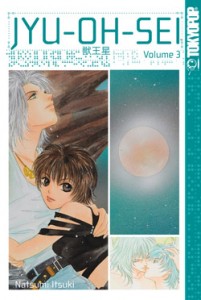
10. JYU-OH-SEI (Natsumi Itsuki)

After their parents are assassinated, twin brothers Rai and Thor are exiled to the penal colony of Kimaera, where they discover extreme weather, man-eating plants, and an elaborate tribal system in which women call the shots. Their only hope of escaping the planet’s inhospitable surface is for one of them to fight his way up the social ladder to become The Beast King, or supreme ruler of Kimaera. Like Invasion of the Body Snatchers and District 9, Jyu-Oh-Sei addresses social taboos and scientific issues while serving up generous portions of what audiences crave most: action, romance, monsters, and explosions. Best of all, Jyu-Oh-Sei comes in a neat, three-volume package that’s long enough to allow for world-building and character development but short enough to stay fresh and surprising until the end. –Reviewed at The Manga Critic on 8/14/09

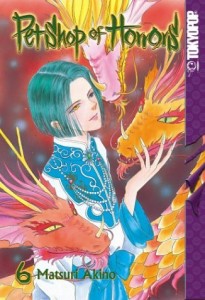
9. PETSHOP OF HORRORS (Matsuri Akino)

You won’t mistake Count D’s emporium for PETCO—the animals he sells are, in fact, demons, demi-gods, and shape-shifters who assume various guises. (One of the series’ running jokes is that some pets take human form, arousing the landlord’s suspicions that Count D actually runs a brothel.) Count D selects a pet for each customer that will help its owner realize a long-repressed dream. Of course, Count D’s services don’t come cheap; each character suffers an unexpected and often terrible consequence for seeking a magical solution to her problems. What sets Petshop apart from other examples of comeuppance theater is the writing. The characters’ plights elicit genuine sympathy from the reader; though we want these mothers and writers and lovesick twenty-something to find happiness, we can see that their own wishes are sometimes selfish, unwise, or genuinely harmful. –Reviewed at PopCultureShock on 2/13/08

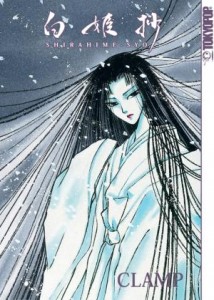
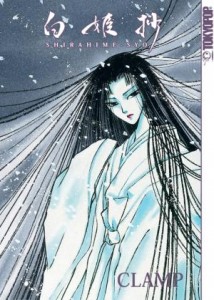
8. SHIRAHIME-SYO: SNOW GODDESS TALES (Clamp)

This lovely anthology is a radical departure for CLAMP. Gone are the super-detailed costumes and fussy character designs of their early, post-doujinshi work; in their place are spare, simply-drawn figures that seem consciously modeled on examples from eighteenth- and nineteenth-century scroll paintings. The stories themselves are told directly without embellishment, though CLAMP infuses each tale with genuine pathos, showing us how the characters’ anger and doubt lead to profound despair. As a result, the prevailing tone and spirit are reminiscent of Masaki Kobayashi’s 1964 film Kwaidan, both in the stories’ fidelity to the conventions of Japanese folklore and in their lyrical restraint. My favorite work by CLAMP.

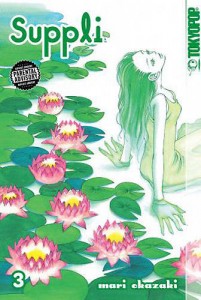
7. SUPPLI (Mari Okazaki)

After being dumped by a long-term boyfriend, twenty-seven-year-old ad executive Minami carves a new identity for herself, accepting more challenging work assignments, forging friendships with her office mates, and exploring her feelings for two very different men: Ishida, a blunt co-worker with bad-boy sex appeal, and Ogiwara, a Tokyo University grad who looks great on paper, but has some nasty romantic baggage of his own. Suppli vividly and humorously evokes office life, from the unproductive meetings and grueling all-nighters to the horseplay and flirtatious banter between co-workers. The denizens of Minami’s office are colorful, if one-dimensional, characters: a salty old maid, two flamboyant karaoke fiends, and a tart-tongued temp who offers sound relationship advice to her officemates while sleeping with a married man. Anyone who’s watched Ally McBeal, The Office, or Ugly Betty has encountered these types before, but Mari Okazaki breathes fresh life into her scenario with stylish artwork, sharp dialogue, and a heroine who occasionally doubts herself, but isn’t neurotic . —Reviewed at PopCultureShock on 12/5/07

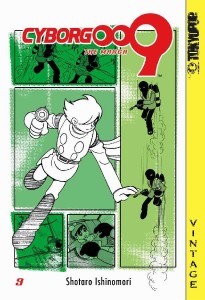
6. CYBORG 009 (Shotaro Ishimontori)

Cyborg 009 was one of TOKYOPOP’s few forays into classic manga — a pity, because TOKYOPOP did a solid job translating and packaging Shotaro Ishimonori’s best-known work. For readers unfamiliar with this iconic series, the plot revolves around a group of people who have been kidnapped and brought to the lair of the Black Ghost organization, where surgeons transform them into robot-human fighting machines. The cyborgs soon turn on their creators and escape, intent on preventing armaggedon. I’d be the first to admit that Cyborg 009 is dated: the Black Ghost’s world-domination schemes have the same quaintly outdated ring as Dr. Evil’s, and several characters embody unfortunate gender and racial stereotypes. (As Shaenon Garrity dryly observes, “Cyborg 003 is a French girl with enhanced senses. Her duties are to hold the baby and occasionally hear things.”) Yet Ishimonori’s crisp cartooning, imaginatively staged battle scenes, and fundamental — if fumbling — humanism remain as arresting now as they did when the series first debuted in 1964.

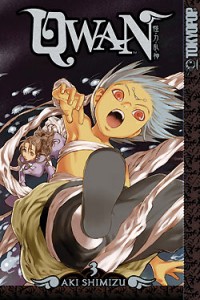
5. QWAN (Aki Shimizu)

Meet Qwan, a child-like figure who possesses super-human strength and speed. Though Qwan realizes he isn’t human, he’s never questioned his origins or abilities — that is, until he meets Shaga, a courtesan who urges him to seek the Essential Arts of Peace, a sutra that will reveal where Qwan came from and why he was sent to live among humans. Questing boys and magical scrolls are de rigeur in fantasy-adventure stories, but Qwan distinguishes itself in two crucial areas: terrific characters and gorgeous artwork. Aki Shimizu’s hero is far more quirky and interesting than the typical shonen lead — Qwan never promises to do his best, or to put friends before himself — while Shimizu’s fight scenes are among the most beautifully choreographed in any licensed manga. TOKYOPOP never finished this one-of-a-kind series, but it’s still worth seeking out, if only to get acquainted with a criminally under-appreciated artist. –Reviewed at The Manga Critic on 3/3/11

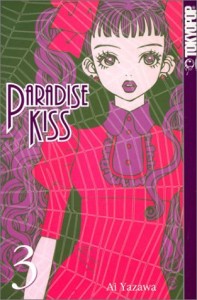
4. PARADISE KISS (Ai Yazawa)

Ai Yazawa knows how to have her cake and eat it, too: though she loves to write stories about such fantasy professions as runway model and rock star, she populates those stories with characters whose relationships and values are firmly rooted in everyday life. Consider Yukari (a.k.a. “Caroline”), the heroine of Paradise Kiss: Yukari becomes the muse for a group of aspiring fashion designers, modeling their clothing at a big design-school show and inspiring their most talented member, George, to new creative heights. In most manga, Yukari and George would bicker like teenage versions of Beatrice and Benedict until they finally admitted their mutual feelings of attraction; in Paradise Kiss, however, Yukari and George’s relationship unfolds in a more haphazard, organic way that reflects the fact that George is far more worldly and romantically experienced than Yukari. For my money, Paradise Kiss is Yazawa’s best work to date.

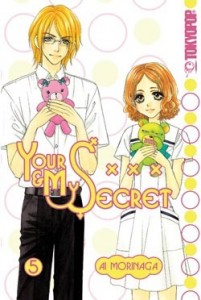
3. YOUR & MY SECRET (Ai Morinaga)

Your & My Secret focuses on Nanako, a swaggering tomboy who lives with her mad scientist grandfather, and Akira, an effeminate boy who adores her. With the flick of a switch, Akira becomes the unwitting test subject for the grandfather’s latest invention, a gizmo designed to transfer personalities from one body to another. Nanako revels in her new-found freedom as a boy, enjoying sudden popularity among classmates, earning the respect of Akira’s contemptuous little sister, and discovering the physical strength to dunk a basketball. Akira, on the other hand, finds his situation a mixed bag: for the first time in his life, his sensitive personality endears him to both male and female peers, but many of the things his maleness had previously exempted him from turn out to be much worse than he’d imagined. There are plenty of gender-bending hijinks — and the inevitable blackmail scene in which someone threatens to reveal Akira’s secret — but Morinaga still allows her characters moments of vulnerability and decency, preventing the humor from curdling into pure meanness. –Reviewed at The Manga Critic on 4/25/10

2. TRAMPS LIKE US (Yayoi Ogawa)

Twenty-eight-year-old Sumire Iwaya is frustrated: though she’s a successful journalist with degrees from Tokyo U. and Harvard, she’s hit the glass ceiling at her job and has just been dumped by her fiance. When she discovers a cute but dissheveled young man sleeping in a box outside her apartment, Sumire “adopts” him, allowing Takeshi to stay in her apartment as her “pet.” You don’t need a PhD in manga to guess the outcome of their unusual arrangement, but romantic triangles and workplace intrigue prevent Tramps Like Us from spinning into complete silliness or offensive gender stereotyping. But what really stayed with me was the depiction of Sumire’s romance with her handsome senpai Hasumi; almost every woman I know has had a relationship like theirs — perfect on paper, but stressful and unhappy in practice — and Yayoi Ogawa captures Sumire and Hasumi’s awkward dynamic in pitch-perfect detail. Now that’s good writing.

1. PLANETES (Makoto Yukimura)

Planetes is that rarest of manga: a human interest story that just happens to have some sci-fi trappings.Planetes focuses on a motley crew of junk collectors that includes Hachimaki, a young astronaut who aspires to join a pioneering mission to Jupiter; Yuri, a Russian astronaut with a Tragic Past; Tanabe, a sensitive but emotionally resilient trainee; and Fee, the ship’s balls-to-the-wall captain. Makoto Yukimura skillfully uses of each of his principal characters’ personal histories to explore meaty issues such as eco-terrorism, space pollution, and good old-fashioned racism. I know, I know — I’m making Planetes sound like Star Trek: Deep Space Waste Removal Station, but Yukimura is a more graceful storyteller than Gene Rodenberry every was, allowing the characters’ actions to speak louder than their words. Vivid, detailed artwork brings the terrestrial and extra-terrestrial settings to life.

* * * * *

So I turn the floor over to you: which titles were your favorites? Which ones deserve to be rescued and finished by another publisher? Inquiring minds want to know!

POSTSCRIPT, 4/20/11: Readers seeking a list of titles published by TOKYOPOP may wish to consult the ANN database entry on TOKYOPOP, the Comic Book DB entry on TOKYOPOP, or Wikipedia’s list of titles published by TOKYOPOP. I can’t vouch for their accuracy, but a quick glance at all three website suggests that these lists are comprehensive. Special thanks to all the folks on Twitter who pointed me towards these resources: @skleefeld, @yuriboke, @Funkgun, and @andrecomics.

Filed Under: Manga Critic Tagged With: Ai Morinaga, Ai Yazawa, Aki Shimizu, clamp, Comedy, Josei, Matsuri Akino, Natsumi Itsuki, Sci-Fi, shojo, Shonen, Shotaro Ishimontori, Tokyopop

My 10 Favorite TOKYOPOP Titles

April 19, 2011 by Katherine Dacey

Like many other readers who first discovered manga in the mid-2000s, TOKYOPOP played a major role in introducing me to to the medium. Tokyo Babylon was the first TOKYOPOP title I ever read, followed soon after by Legal Drug, The Legend of Chun-Hyang, and — God help me — Model, a manhwa about a Korean art student who lives in a crumbling mansion with two European vampires. (I should add that the vampires are male and the student is female, and both vampires appear to have bought their wardrobes at Hot Topic.) Though I’d be the first to admit that some of the manga I read were terrible, what I remember most about them was their romanticism: these were big, bold stories featuring impossibly beautiful characters in ridiculous situations, and I couldn’t get enough of them.

Over the years, my tastes have changed considerably, but I still feel a special allegiance to TOKYOPOP: its catalog is so large and diverse that I found plenty of other series to read when I outgrew my initial infatuation with overripe shojo. I had a hard time confining myself to just ten titles; I agonized about whether to include Mitsuhazu Mihara’s Doll, and Erica Sakakurazawa’s Between the Sheets, and Kenji Sonishi’s Neko Ramen, and Minetaro Mochizuki’s Dragon Head, all excellent series that still have pride of place in my manga library. In the end, however, I decided I had to put a cap on the number of titles to prevent my list from swelling to unmanageable proportions. Below are my ten favorite TOKYOPOP manga.

10. Jyu-Oh-Sei
By Natsumi Itsuki
After their parents are assassinated, twin brothers Rai and Thor are exiled to the penal colony of Kimaera, where they discover extreme weather, man-eating plants, and an elaborate tribal system in which women call the shots. Their only hope of escaping the planet’s inhospitable surface is for one of them to fight his way up the social ladder to become The Beast King, or supreme ruler of Kimaera. Like Invasion of the Body Snatchers and District 9, Jyu-Oh-Sei addresses social taboos and scientific issues while serving up generous portions of what audiences crave most: action, romance, monsters, and explosions. Best of all, Jyu-Oh-Sei comes in a neat, three-volume package that’s long enough to allow for world-building and character development but short enough to stay fresh and surprising until the end. —Reviewed at The Manga Critic on 8/14/09

9. Petshop of Horrors
By Matsuri Akino
You won’t mistake Count D’s emporium for PETCO—the animals he sells are, in fact, demons, demi-gods, and shape-shifters who assume various guises. (One of the series’ running jokes is that some pets take human form, arousing the landlord’s suspicions that Count D actually runs a brothel.) Count D selects a pet for each customer that will help its owner realize a long-repressed dream. Of course, Count D’s services don’t come cheap; each character suffers an unexpected and often terrible consequence for seeking a magical solution to her problems. What sets Petshop apart from other examples of comeuppance theater is the writing. The characters’ plights elicit genuine sympathy from the reader; though we want these mothers and writers and lovesick twenty-something to find happiness, we can see that their own wishes are sometimes selfish, unwise, or genuinely harmful. —Reviewed at PopCultureShock on 2/13/08

8. Shirahime-Syo: Snow Goddess Tales
By CLAMP
This lovely anthology is a radical departure for CLAMP. Gone are the super-detailed costumes and fussy character designs of their early, post-doujinshi work; in their place are spare, simply-drawn figures that seem consciously modeled on examples from eighteenth- and nineteenth-century scroll paintings. The stories themselves are told directly without embellishment, though CLAMP infuses each tale with genuine pathos, showing us how the characters’ anger and doubt lead to profound despair. As a result, the prevailing tone and spirit are reminiscent of Masaki Kobayashi’s 1964 film Kwaidan, both in the stories’ fidelity to the conventions of Japanese folklore and in their lyrical restraint. My favorite work by CLAMP.

7. Suppli
By Mari Okazaki
After being dumped by a long-term boyfriend, twenty-seven-year-old ad executive Minami carves a new identity for herself, accepting more challenging work assignments, forging friendships with her office mates, and exploring her feelings for two very different men: Ishida, a blunt co-worker with bad-boy sex appeal, and Ogiwara, a Tokyo University grad who looks great on paper, but has some nasty romantic baggage of his own. Suppli vividly and humorously evokes office life, from the unproductive meetings and grueling all-nighters to the horseplay and flirtatious banter between co-workers. The denizens of Minami’s office are colorful, if one-dimensional, characters: a salty old maid, two flamboyant karaoke fiends, and a tart-tongued temp who offers sound relationship advice to her officemates while sleeping with a married man. Anyone who’s watched Ally McBeal, The Office, or Ugly Betty has encountered these types before, but Mari Okazaki breathes fresh life into her scenario with stylish artwork, sharp dialogue, and a heroine who occasionally doubts herself, but isn’t neurotic . —Reviewed at PopCultureShock on 12/5/07

6. Cyborg 009
By Shotaro Ishimontori
Cyborg 009 was one of TOKYOPOP’s few forays into classic manga — a pity, because TOKYOPOP did a solid job translating and packaging Shotaro Ishimonori’s best-known work. For readers unfamiliar with this iconic series, the plot revolves around a group of people who have been kidnapped and brought to the lair of the Black Ghost organization, where surgeons transform them into robot-human fighting machines. The cyborgs soon turn on their creators and escape, intent on preventing armaggedon. I’d be the first to admit that Cyborg 009 is dated: the Black Ghost’s world-domination schemes have the same quaintly outdated ring as Dr. Evil’s, and several characters embody unfortunate gender and racial stereotypes. (As Shaenon Garrity dryly observes, “Cyborg 003 is a French girl with enhanced senses. Her duties are to hold the baby and occasionally hear things.”) Yet Ishimonori’s crisp cartooning, imaginatively staged battle scenes, and fundamental — if fumbling — humanism remain as arresting now as they did when the series first debuted in 1964.

5. Qwan
By Aki Shimizu
Meet Qwan, a child-like figure who possesses super-human strength and speed. Though Qwan realizes he isn’t human, he’s never questioned his origins or abilities — that is, until he meets Shaga, a courtesan who urges him to seek the Essential Arts of Peace, a sutra that will reveal where Qwan came from and why he was sent to live among humans. Questing boys and magical scrolls are de rigeur in fantasy-adventure stories, but Qwan distinguishes itself in two crucial areas: terrific characters and gorgeous artwork. Aki Shimizu’s hero is far more quirky and interesting than the typical shonen lead — Qwan never promises to do his best, or to put friends before himself — while Shimizu’s fight scenes are among the most beautifully choreographed in any licensed manga. TOKYOPOP never finished this one-of-a-kind series, but it’s still worth seeking out, if only to get acquainted with a criminally under-appreciated artist. —Reviewed at The Manga Critic on 3/3/11

4. Paradise Kiss
By Ai Yazawa
Ai Yazawa knows how to have her cake and eat it, too: though she loves to write stories about such fantasy professions as runway model and rock star, she populates those stories with characters whose relationships and values are firmly rooted in everyday life. Consider Yukari (a.k.a. “Caroline”), the heroine of Paradise Kiss: Yukari becomes the muse for a group of aspiring fashion designers, modeling their clothing at a big design-school show and inspiring their most talented member, George, to new creative heights. In most manga, Yukari and George would bicker like teenage versions of Beatrice and Benedict until they finally admitted their mutual feelings of attraction; in Paradise Kiss, however, Yukari and George’s relationship unfolds in a more haphazard, organic way that reflects the fact that George is far more worldly and romantically experienced than Yukari. For my money, Paradise Kiss is Yazawa’s best work to date.

3. Your & My Secret
By Ai Morinaga
Your & My Secret focuses on Nanako, a swaggering tomboy who lives with her mad scientist grandfather, and Akira, an effeminate boy who adores her. With the flick of a switch, Akira becomes the unwitting test subject for the grandfather’s latest invention, a gizmo designed to transfer personalities from one body to another. Nanako revels in her new-found freedom as a boy, enjoying sudden popularity among classmates, earning the respect of Akira’s contemptuous little sister, and discovering the physical strength to dunk a basketball. Akira, on the other hand, finds his situation a mixed bag: for the first time in his life, his sensitive personality endears him to both male and female peers, but many of the things his maleness had previously exempted him from turn out to be much worse than he’d imagined. There are plenty of gender-bending hijinks — and the inevitable blackmail scene in which someone threatens to reveal Akira’s secret — but Morinaga still allows her characters moments of vulnerability and decency, preventing the humor from curdling into pure meanness. —Reviewed at The Manga Critic on 4/25/10

2. Tramps Like Us
By Yayoi Ogawa
Twenty-eight-year-old Sumire Iwaya is frustrated: though she’s a successful journalist with degrees from Tokyo U. and Harvard, she’s hit the glass ceiling at her job and has just been dumped by her fiance. When she discovers a cute but dissheveled young man sleeping in a box outside her apartment, Sumire “adopts” him, allowing Takeshi to stay in her apartment as her “pet.” You don’t need a PhD in manga to guess the outcome of their unusual arrangement, but romantic triangles and workplace intrigue prevent Tramps Like Us from spinning into complete silliness or offensive gender stereotyping. But what really stayed with me was the depiction of Sumire’s romance with her handsome senpai Hasumi; almost every woman I know has had a relationship like theirs — perfect on paper, but stressful and unhappy in practice — and Yayoi Ogawa captures Sumire and Hasumi’s awkward dynamic in pitch-perfect detail. Now that’s good writing.

1. Planetes
By Makoto Yukimura
Planetes is that rarest of manga: a human interest story that just happens to have some sci-fi trappings.Planetes focuses on a motley crew of junk collectors that includes Hachimaki, a young astronaut who aspires to join a pioneering mission to Jupiter; Yuri, a Russian astronaut with a Tragic Past; Tanabe, a sensitive but emotionally resilient trainee; and Fee, the ship’s balls-to-the-wall captain. Makoto Yukimura skillfully uses of each of his principal characters’ personal histories to explore meaty issues such as eco-terrorism, space pollution, and good old-fashioned racism. I know, I know — I’m making Planetes sound like Star Trek: Deep Space Waste Removal Station, but Yukimura is a more graceful storyteller than Gene Rodenberry every was, allowing the characters’ actions to speak louder than their words. Vivid, detailed artwork brings the terrestrial and extra-terrestrial settings to life.

* * * * *

So I turn the floor over to you: which titles were your favorites? Which ones deserve to be rescued and finished by another publisher? Inquiring minds want to know!

POSTSCRIPT, 4/20/11: Readers seeking a list of titles published by TOKYOPOP may wish to consult the ANN database entry on TOKYOPOP, the Comic Book DB entry on TOKYOPOP, or Wikipedia’s list of titles published by TOKYOPOP. I can’t vouch for their accuracy, but a quick glance at all three website suggests that these lists are comprehensive. Special thanks to all the folks on Twitter who pointed me towards these resources: @skleefeld, @yuriboke, @Funkgun, and @andrecomics.

Filed Under: Manga, Manga Critic, Manhwa Tagged With: Ai Morinaga, Ai Yazawa, Aki Shimizu, clamp, Comedy, Matsuri Akino, Natsumi Itsuki, Sci-Fi, Shotaro Ishinomori, Tokyopop

5 Underrated Shojo Manga

July 10, 2010 by Katherine Dacey 7 Comments

Earlier in the week, I sang the praises of Kaze Hikaru, my all-time favorite shojo manga (and one of my all-time favorite manga, period). Today I shine the spotlight on five great titles that haven’t garnered as much favorable notice as they deserve. Sadly, all but one are officially out of print or will be soon, owing to publisher closings, lapsed licenses, and so-so sales. If you can’t find them through retailers such as Amazon, Buy.com, or Right Stuf!, you might wish to cast your net wider to include sites like Robert’s Anime Corner Store (a good source for older titles) and eBay, or try your local library for copies.

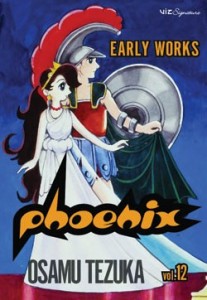
phoenix125. PHOENIX, VOL. 12: EARLY WORKS

OSAMU TEZUKA • VIZ • 1 VOLUME (complete)

A better subtitle for volume twelve of Phoenix would be I Lost It At the Movies, as these four stories reveal just how passionately Osamu Tezuka loved American cinema. In a 1980 essay, Tezuka explained that “watching American big-screen spectacle movies such as Helen of Troy and Land of the Pharaohs made me want to create a similar sort of romantic epic for young girls’ comics.” Looking at this collection, the sword-and-sandal influence manifests itself in almost every aspect of Tezuka’s storytelling, from the costumes and settings to the dialogue, which the characters declaim as if it were of Biblical consequence. (Paging Charlton Heston!) What makes this Hollywood pomposity bearable — even charming — is the tempering influence of Walt Disney. The character designs owe an obvious debt to Snow White, while the supporting cast could easily belong to Cinderella or Sleeping Beauty’s entourage of chatty animal friends.

Anyone looking for the moral complexity of later Phoenix stories will be disappointed in volume twelve, as Tezuka’s villains are cartoonishly evil and his heroes (and heroine) chastely noble. If one approaches this collection in the spirit of, say, a musicologist flipping through Beethoven’s pre-Eroica manuscripts, however, the rewards are more palpable. In these early stories we see Tezuka developing his comedic chops with pop culture references and physical slapstick; we see him experimenting with layout, as he renders the battlefields of Troy and Rome in sweeping, full-page panels; and we see him creating his first cycle of interconnected stories, introducing some of the themes that would unify the entire Phoenix saga. In short, we see Tezuka’s first attempts to find his own voice as he pays tribute to the artists who influenced him, learning more about his exuberant, unique artistry in the process. (Originally reviewed at PopCultureShock on 3/19/08.)

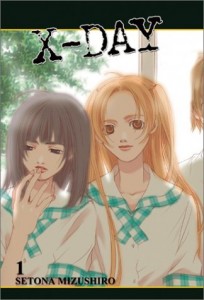
xday14. X-DAY

SETONA MIZUSHIRO • TOKYOPOP • 2 VOLUMES (complete)

When star high jumper Rika injures her leg and loses her boyfriend to a teammate, she becomes profoundly depressed. She soon discovers an online community of similarly disaffected students, however, all of whom share her desire to “make the school disappear.” Their internet chats soon give way to in-person meetings, where Rika comes face-to-face with three very different people: “Polaris,” a shy teen who dresses like a Goth off campus, “Mr. Money,” a friendly underclassman, and “Janglarian,” a young biology teacher who wants to dynamite the school. Setona Mizushiro’s dark story could easily spiral into melodrama, but she does a fine job of showing us how the normal tribulations of being a teenager — fighting with parents, enduring harassment from peers, feeling overwhelmed by anxiety — have led these four fragile people to hatch such a radical plan for coping with their pain. The second volume lacks the dramatic urgency of the first, as the students’ plot begins to come unraveled, but X-Day remains persuasive until its final pages, thanks to Mizushiro’s vivid characterizations and nuanced artwork.

airevolution13. A.I. REVOLUTION

YUU ASAMI• GO! COMI • 5 VOLUMES (incomplete; 17 volumes in Japan)

A.I. Revolution starts from a premise familiar to legions of Isaac Asimov fans: a human builds a robot, only to discover his creation has a mind and feelings of its own. Sui, the story’s human protagonist, initially views robots as household appliances, not unlike toasters or vaccuum cleaners. When her father presents her with an android companion, however, Sui develops a strong bond with it, discovering that Vermillion has a capacity for emotion that far outstrips her expectations.

A.I. Revolution may sound like I, Robot Hottie, but Yuu Asami puts a thoughtful spin on the material, filtering familiar sci-fi themes through a shojo lens. Though she weaves evil scientists and corporate espionage into the narrative, the story is at its best when focusing on Vermillion’s interactions with his human family; Sui’s father, for example, has modeled Vermillion in the image of a colleague that he admired, leading to a few funny, awkward moments of human-robot flirtation, while Sui seesaws between sisterly protectiveness and romantic attachment to her handsome companion. (Really, is there any other kind of robot in shojo manga?) Asami’s art reminds me of Akimi Yoshida’s with its elongated character designs, delicate linework, and sparing use of screentone. It’s a little dated perhaps, but a welcome change of pace from the slicker, busier layouts characteristic of the titles licensed by Tokyopop and VIZ. Highly recommended for fans of old-school shojo. (Originally reviewed at PopCultureShock on 3/4/08.)

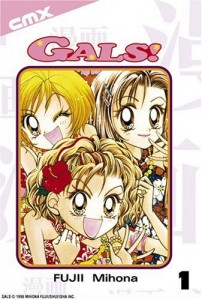
gals12. GALS!

MIHONA FUJI • CMX • 10 VOLUMES (complete)

This wacky comedy is one of the better shojo licenses in the CMX catalog, a rude, raunchy, and oddly moral tale about a feisty kogal named Ran Kotobuki. Though Ran and her pals are primarily interested in shopping for outrageous outfits, visiting the tanning salon, and stealing book bags from students at rival schools, Ran’s upbringing in a household full of police officers (dad, mom, and big brother are all cops) has taught her to adhere to a strict code of conduct: no sex for favors, and no tolerance for anyone who disrespects her friends.

Ran is a terrific, memorable character — impetuous, loud, funny, and tough, the kind of person who would literally smack sense into another girl if she thought it would work. Better still, she’s not easily swayed by boys; her relationship with the sweet but dim Tatsuki is surprisingly chaste, limited primarily to hand-holding and awkward discussions about feelings. (Ran won’t deign to say, “I love you,” as it compromises her tough-girl image.) As befits a manga that was serialized in Ribon, all of the characters have enormous, doll-like eyes in the Arina Tanemura style, and fabulous outfits that shame the Gossip Girls. The backgrounds are surprisingly detailed, conveying the look and feel of the Shibuya district with a specificity that’s all too rare in shojo manga. In sum, Gals! is the kind of good-natured gang comedy that I hoped My Darling! Miss Bancho would be: full of humor and heart, but with fewer capitulations to shojo convention.

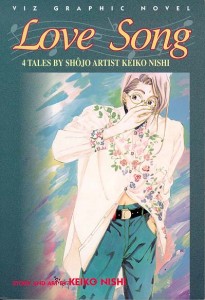
lovesong1. LOVE SONG

KEIKO NISHI • VIZ • 1 VOLUME (complete)

Back in the 1990s, Matt Thorn labored hard to make Keiko Nishi a household name among American manga readers, translating six of her stories for VIZ; two appeared in Four Shojo Stories alongside work by Moto Hagio and Shio Sato, and four appeared in a stand-alone volume called Love Song. Though Nishi didn’t catch on with Western shojo fans, it’s easy to see why Thorn championed her work: she’s a terrific, versatile storyteller, equally capable of writing light-hearted fantasies and character studies of deeply damaged people.

Of the four stories that appear in Love Song, two are standouts: “Jewels of the Seaside,” a black comedy about three sisters who compete for the same man’s affection, with disastrous results, and “The Skin of Her Heart,” a quiet sci-fi tale about a young woman torn between what she wants and what her mother wants for her. (Readers who enjoyed A, A’ or Twin Spica are a natural audience for “Skin of Her Heart,” though it works equally well for folks who aren’t big sci-fi buffs.) Nishi’s artwork is an acquired taste, at times precise, elegant, and naturalistic, and at times loose and sketchy, with the white of the page playing an important role in underscoring the emotional distance between her characters. Her minimalist approach won’t be to every shojo fan’s liking, but she demonstrates that it’s perfectly possible to convey the interior lives of her characters without resorting to the kind of visual shorthands — flowers, sweatdrops, nosebleeds — that have been overused in contemporary shojo manga. Love Song is out of print, but unlike Four Shojo Stories and A, A’, is still relatively easy to obtain through online retailers like Amazon. Highly recommended.

HONORABLE MENTIONS

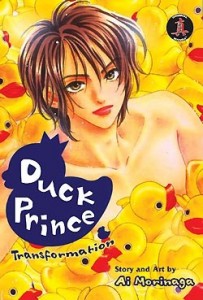
duckprince1DUCK PRINCE (Ai Morinaga • CMP • 3 volumes, suspended)
Morinaga’s battle-of-the-sexes comedy takes a standard shojo plot — homely gal gets makeover to win the guy of her dream — and turns it on its head, substituting a sweet, helmet-haired nerd for the customary plain Jane, and adding a novel twist: Reiichi appears to most girls as a smokin’ hottie, but in the presence of his beloved Yumiko, he reverts to his original form. As in all her work, Morinaga uses humor to make deeper points about gender roles and physical beauty, though Duck Prince is too rude and risque to be mistaken for an Afterschool Special. Central Park Media released three of the five volumes before suspending Duck Prince; of all the titles left homeless by CPM’s demise, it seems like one of the strongest candidates for a license rescue, though middling sales of Your & My Secret and My Heavenly Hockey Club may have scared American publishers away from Morinaga’s distinctive comedies.

shirahimesyoSHIRAHIME-SYO: SNOW GODDESS TALES (CLAMP • Tokyopop • 1 volume)
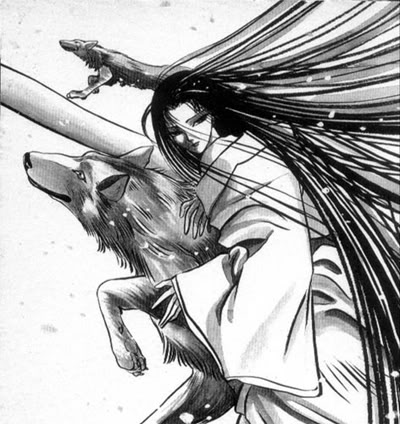
This lovely anthology is a radical departure for CLAMP. Gone are the super-detailed costumes and fussy character designs of their early, post-doujinshi work; in their place are spare, simply-drawn figures that seem consciously modeled on examples from eighteenth- and nineteenth-century scroll paintings. The stories themselves are told directly without embellishment, though CLAMP infuses each tale with genuine pathos, showing us how the characters’ anger and doubt lead to profound despair. As a result, the prevailing tone and spirit are reminiscent of Masaki Kobayashi’s 1964 film Kwaidan, both in the stories’ fidelity to the conventions of Japanese folklore and in their lyrical restraint. And if my description didn’t sell you on Shirahime-Syo, let this beautiful image, taken from the final story of the collection, persuade you to give this out-of-print gem a try:

snowgoddess2

* * * * *

So what titles top your list of underrated shojo manga? Inquiring minds want to know!

Filed Under: Manga Critic Tagged With: Ai Morinaga, clamp, Classic, cmx, Comedy, CPM, Drama, Go! Comi, Historical Drama, Osamu Tezuka, Sci-Fi, Setona Mizushiro, shojo, Tokyopop, VIZ

5 Underrated Shojo Manga

July 10, 2010 by Katherine Dacey

Earlier in the week, I sang the praises of Kaze Hikaru, my all-time favorite shojo manga (and one of my all-time favorite manga, period). Today I shine the spotlight on five great titles that haven’t garnered as much favorable notice as they deserve. Sadly, all but one are officially out of print or will be soon, owing to publisher closings, lapsed licenses, and so-so sales. If you can’t find them through retailers such as Amazon, Buy.com, or Right Stuf!, you might wish to cast your net wider to include sites like Robert’s Anime Corner Store (a good source for older titles) and eBay, or try your local library for copies.

phoenix125. Phoenix: Early Years, Vol. 12
By Osamu Tezuka • VIZ Media • 1 volume (complete)
A better subtitle for volume twelve of Phoenix would be I Lost It At the Movies, as these four stories reveal just how passionately Osamu Tezuka loved American cinema. In a 1980 essay, Tezuka explained that “watching American big-screen spectacle movies such as Helen of Troy and Land of the Pharaohs made me want to create a similar sort of romantic epic for young girls’ comics.” Looking at this collection, the sword-and-sandal influence manifests itself in almost every aspect of Tezuka’s storytelling, from the costumes and settings to the dialogue, which the characters declaim as if it were of Biblical consequence. (Paging Charlton Heston!) What makes this Hollywood pomposity bearable — even charming — is the tempering influence of Walt Disney. The character designs owe an obvious debt to Snow White, while the supporting cast could easily belong to Cinderella or Sleeping Beauty’s entourage of chatty animal friends.Anyone looking for the moral complexity of later Phoenix stories will be disappointed in volume twelve, as Tezuka’s villains are cartoonishly evil and his heroes (and heroine) chastely noble. If one approaches this collection in the spirit of, say, a musicologist flipping through Beethoven’s pre-Eroica manuscripts, however, the rewards are more palpable. In these early stories we see Tezuka developing his comedic chops with pop culture references and physical slapstick; we see him experimenting with layout, as he renders the battlefields of Troy and Rome in sweeping, full-page panels; and we see him creating his first cycle of interconnected stories, introducing some of the themes that would unify the entire Phoenix saga. In short, we see Tezuka’s first attempts to find his own voice as he pays tribute to the artists who influenced him, learning more about his exuberant, unique artistry in the process. (Originally reviewed at PopCultureShock on 3/19/08.)

xday14. X-Day
By Setona Mizushiro • Tokyopop • 2 volumes (complete)
When star high jumper Rika injures her leg and loses her boyfriend to a teammate, she becomes profoundly depressed. She soon discovers an online community of similarly disaffected students, however, all of whom share her desire to “make the school disappear.” Their internet chats soon give way to in-person meetings, where Rika comes face-to-face with three very different people: “Polaris,” a shy teen who dresses like a Goth off campus, “Mr. Money,” a friendly underclassman, and “Janglarian,” a young biology teacher who wants to dynamite the school. Setona Mizushiro’s dark story could easily spiral into melodrama, but she does a fine job of showing us how the normal tribulations of being a teenager — fighting with parents, enduring harassment from peers, feeling overwhelmed by anxiety — have led these four fragile people to hatch such a radical plan for coping with their pain. The second volume lacks the dramatic urgency of the first, as the students’ plot begins to come unraveled, but X-Day remains persuasive until its final pages, thanks to Mizushiro’s vivid characterizations and nuanced artwork.

airevolution13. A.I. Revolution
By Yuu Asami • Go! Comi • 5 volumes (incomplete; 17 volumes in Japan)
A.I. Revolution starts from a premise familiar to legions of Isaac Asimov fans: a human builds a robot, only to discover his creation has a mind and feelings of its own. Sui, the story’s human protagonist, initially views robots as household appliances, not unlike toasters or vaccuum cleaners. When her father presents her with an android companion, however, Sui develops a strong bond with it, discovering that Vermillion has a capacity for emotion that far outstrips her expectations.

A.I. Revolution may sound like I, Robot Hottie, but Yuu Asami puts a thoughtful spin on the material, filtering familiar sci-fi themes through a shojo lens. Though she weaves evil scientists and corporate espionage into the narrative, the story is at its best when focusing on Vermillion’s interactions with his human family; Sui’s father, for example, has modeled Vermillion in the image of a colleague that he admired, leading to a few funny, awkward moments of human-robot flirtation, while Sui seesaws between sisterly protectiveness and romantic attachment to her handsome companion. (Really, is there any other kind of robot in shojo manga?) Asami’s art reminds me of Akimi Yoshida’s with its elongated character designs, delicate linework, and sparing use of screentone. It’s a little dated perhaps, but a welcome change of pace from the slicker, busier layouts characteristic of the titles licensed by Tokyopop and VIZ. Highly recommended for fans of old-school shojo. (Originally reviewed at PopCultureShock on 3/4/08.)

gals12. GALS!
By Mihona Fuji • CMX Manga • 10 volumes (complete)
This wacky comedy is one of the better shojo licenses in the CMX catalog, a rude, raunchy, and oddly moral tale about a feisty kogal named Ran Kotobuki. Though Ran and her pals are primarily interested in shopping for outrageous outfits, visiting the tanning salon, and stealing book bags from students at rival schools, Ran’s upbringing in a household full of police officers (dad, mom, and big brother are all cops) has taught her to adhere to a strict code of conduct: no sex for favors, and no tolerance for anyone who disrespects her friends.

Ran is a terrific, memorable character — impetuous, loud, funny, and tough, the kind of person who would literally smack sense into another girl if she thought it would work. Better still, she’s not easily swayed by boys; her relationship with the sweet but dim Tatsuki is surprisingly chaste, limited primarily to hand-holding and awkward discussions about feelings. (Ran won’t deign to say, “I love you,” as it compromises her tough-girl image.) As befits a manga that was serialized in Ribon, all of the characters have enormous, doll-like eyes in the Arina Tanemura style, and fabulous outfits that shame the Gossip Girls. The backgrounds are surprisingly detailed, conveying the look and feel of the Shibuya district with a specificity that’s all too rare in shojo manga. In sum, Gals! is the kind of good-natured gang comedy that I hoped My Darling! Miss Bancho would be: full of humor and heart, but with fewer capitulations to shojo convention.

lovesong1. Love Song
Keiko Nishi • VIZ Media • 1 volume (complete)
Back in the 1990s, Matt Thorn labored hard to make Keiko Nishi a household name among American manga readers, translating six of her stories for VIZ; two appeared in Four Shojo Stories alongside work by Moto Hagio and Shio Sato, and four appeared in a stand-alone volume called Love Song. Though Nishi didn’t catch on with Western shojo fans, it’s easy to see why Thorn championed her work: she’s a terrific, versatile storyteller, equally capable of writing light-hearted fantasies and character studies of deeply damaged people.

Of the four stories that appear in Love Song, two are standouts: “Jewels of the Seaside,” a black comedy about three sisters who compete for the same man’s affection, with disastrous results, and “The Skin of Her Heart,” a quiet sci-fi tale about a young woman torn between what she wants and what her mother wants for her. (Readers who enjoyed A, A’ or Twin Spica are a natural audience for “Skin of Her Heart,” though it works equally well for folks who aren’t big sci-fi buffs.) Nishi’s artwork is an acquired taste, at times precise, elegant, and naturalistic, and at times loose and sketchy, with the white of the page playing an important role in underscoring the emotional distance between her characters. Her minimalist approach won’t be to every shojo fan’s liking, but she demonstrates that it’s perfectly possible to convey the interior lives of her characters without resorting to the kind of visual shorthands — flowers, sweatdrops, nosebleeds — that have been overused in contemporary shojo manga. Love Song is out of print, but unlike Four Shojo Stories and A, A’, is still relatively easy to obtain through online retailers like Amazon. Highly recommended.

HONORABLE MENTIONS

duckprince1Duck Prince
By Ai Morinaga • CMP • 3 volumes (suspended)

Morinaga’s battle-of-the-sexes comedy takes a standard shojo plot — homely gal gets makeover to win the guy of her dream — and turns it on its head, substituting a sweet, helmet-haired nerd for the customary plain Jane, and adding a novel twist: Reiichi appears to most girls as a smokin’ hottie, but in the presence of his beloved Yumiko, he reverts to his original form. As in all her work, Morinaga uses humor to make deeper points about gender roles and physical beauty, though Duck Prince is too rude and risque to be mistaken for an Afterschool Special. Central Park Media released three of the five volumes before suspending Duck Prince; of all the titles left homeless by CPM’s demise, it seems like one of the strongest candidates for a license rescue, though middling sales of Your & My Secret and My Heavenly Hockey Club may have scared American publishers away from Morinaga’s distinctive comedies.

shirahimesyoShirahime-Syo: Snow Goddess Tales
By CLAMP • Tokyopop • 1 volume

This lovely anthology is a radical departure for CLAMP. Gone are the super-detailed costumes and fussy character designs of their early, post-doujinshi work; in their place are spare, simply-drawn figures that seem consciously modeled on examples from eighteenth- and nineteenth-century scroll paintings. The stories themselves are told directly without embellishment, though CLAMP infuses each tale with genuine pathos, showing us how the characters’ anger and doubt lead to profound despair. As a result, the prevailing tone and spirit are reminiscent of Masaki Kobayashi’s 1964 film Kwaidan, both in the stories’ fidelity to the conventions of Japanese folklore and in their lyrical restraint. And if my description didn’t sell you on Shirahime-Syo, let this beautiful image, taken from the final story of the collection, persuade you to give this out-of-print gem a try:

snowgoddess2

* * * * *

So what titles top your list of underrated shojo manga? Inquiring minds want to know!

Filed Under: Manga, Manga Critic, Recommended Reading Tagged With: Ai Morinaga, clamp, Classic, cmx, Comedy, CPM, Drama, Go! Comi, Historical Drama, Osamu Tezuka, Sci-Fi, Setona Mizushiro, Tokyopop, VIZ

Kobato, Vol. 1

April 26, 2010 by Katherine Dacey

kobato1Kobato Hanato has a job to do: if she can fill a magic bottle with the pain and suffering of people whose lives she’s improved, she’ll have her dearest wish come true. There’s just one problem: Kobato is completely mystified by urban life, and has no idea how to identify folks in need of her help. Lucky for her, Ioryogi, a blue dog with a foul mouth and fierce temper, has been appointed her sensei and guardian angel, tasked with helping Kobato develop the the street smarts necessary for completing her mission.

It’s perfectly possible to read Kobato as a story about a sweet, clueless girl who teams up with a gruff but lovable animal to collect wounded hearts. That book is beautifully drawn, but isn’t terribly interesting; most of the stories follow the same template so, well, doggedly, that even the most committed fan of cute would find Kobato too repetitive to be much fun. A more productive way to understand Kobato is as a moe parody, a gleeful skewering of an entire genre in which the cute, underage heroine’s primary role is to endear herself to readers with her mixture of enthusiasm, naivete, and sensitivity.

…

Read More

Filed Under: Manga Critic Tagged With: clamp, Shonen, yen press

Kobato, Vol. 1

April 26, 2010 by Katherine Dacey

Kobato Hanato has a job to do: if she can fill a magic bottle with the pain and suffering of people whose lives she’s improved, she’ll have her dearest wish come true. There’s just one problem: Kobato is completely mystified by urban life, and has no idea how to identify folks in need of her help. Lucky for her, Ioryogi, a blue dog with a foul mouth and fierce temper, has been appointed her sensei and guardian angel, tasked with helping Kobato develop the the street smarts necessary for completing her mission.

It’s perfectly possible to read Kobato as a story about a sweet, clueless girl who teams up with a gruff but lovable animal to collect wounded hearts. That book is beautifully drawn, but isn’t terribly interesting; most of the stories follow the same template so, well, doggedly, that even the most committed fan of cute would find Kobato too repetitive to be much fun. A more productive way to understand Kobato is as a moe parody, a gleeful skewering of an entire genre in which the cute, underage heroine’s primary role is to endear herself to readers with her mixture of enthusiasm, naivete, and sensitivity.

Exhibit A in the case for moe parody: CLAMP has provided Kobato with a name and a mission, but no history that would explain her bizarre behavior. (Is she an amnesiac? An alien? A simpleton?) Nor does CLAMP reveal Kobato’s deeper motivation for collecting wounded souls. “There’s a place I want to go!” she cheerfully tells Ioryogi without elaborating on the why and where. Exhibit B: Kobato’s behavior seldom endears her to anyone. When Ioryogi instructs her to “do the things that are appropriate for Christmas,” for example, Kobato casually asks a stranger to spend the night with her in a hotel, to the consternation of his girlfriend, while an old man interprets her request to “heal his heart” as a solicitation for sex. Exhibit C: Ioryogi has a sadistic streak that far outstrips the basic demands of the plot. Though his comments are shockingly abrasive at first, it doesn’t take long for the reader to realize that Ioryogi’s assessment of Kobato is spot-on; in effect, he gives the audience permission to dislike Kobato, despite her sweet face and Holly Hobbie outfit.

CLAMP has performed this sleight of hand before with Chobits, another series that can be read as a straightforward genre exercise or a parody. In the case of Chobits, CLAMP starts from the basic nebbishy-guy-meets-magical-girl premise, adding some perverse ruffles and flourishes that call attention to the genre’s more unsavory aspects. (Chi, the magical girl/robot/love interest, behaves like a horny frat guy’s idea of the perfect girlfriend, eschewing underwear, hanging on her owner’s every word, and buying him porn magazines as a gift.) The complexity of the story and the size of the cast eventually overwhelm the satire, however, making it hard for the reader to know how, exactly, she’s supposed to react to Chi and Hideki’s relationship. In Kobato, on the other hand, CLAMP strips things down to the bare essentials, putting the focus squarely on the darkly comic hijinks.

Lest I make Kobato sound unbearably mean-spirited, the manga equivalent of kicking a puppy, let me assure you that it’s actually good fun. Ioryogi, the unquestionable star of the series, is a hoot; CLAMP wrings considerable laughs from the cognitive dissonance between his cute, doll-like appearance and his destructive rages, martial arts moves, and unsavory habits. (Like Mokona Modoki, Ioryogi is always jonesing after beer or sake.) Long-time CLAMP fans will enjoy the cameos sprinkled throughout the book, as characters from Chobits, Suki, and xxxHolic cross paths with Kobato in subtle, unexpected ways — think Where’s Waldo for the Card Captor Sakura crowd. (Bonus points if you can identify the characters without consulting the translation notes.) As one might expect, the artwork is clean and elegant, filled with beautiful costumes, lovely title pages, and crisply executed action sequences in the manner of Tsubasa: Reservoir Chronicles.

A quick glance at the Wikipedia entry suggests that future volumes of Kobato may cant more towards romance than satire. So long as Ioryogi is along for the ride, however, I’m confident that Kobato will remain edgy enough for readers, like me, who have a limited tolerance for insipid heroines. Recommended.

Review copy provided by Yen Press. Volumes one and two of Kobato will be released simultaneously on May 18, 2010.

KOBATO, VOL. 1  • CLAMP • YEN PRESS • 160 pp. • RATING: TEEN (13+)
Filed Under: Manga, Manga Critic, REVIEWS Tagged With: clamp, Comedy, Fantasy, yen press

Legal Drug, vols 1-3

February 2, 2009 by MJ 17 Comments

Quick link! I have a review in today’s Manga Minis at Manga Recon for NETCOMICS’ Main Street in Elysium. It was hard for me to write a balanced review of this because I found it so distasteful. I think I did not succeed.

What I really want to talk about, though, is CLAMP’s Legal Drug. I know this is old hat for most of you, but I finally read it last night, and some thoughts popped to mind. …

Read More

Filed Under: FEATURES, MANGA REVIEWS Tagged With: clamp, legal drug, manga

  • « Go to Previous Page
  • Page 1
  • Page 2
  • Page 3
  • Page 4
 | Log in
Copyright © 2010 Manga Bookshelf | Powered by WordPress & the Genesis Framework