• Skip to primary navigation
  • Skip to main content
  • Skip to primary sidebar
  • Home
  • About Us
    • Privacy Policy
    • Comment Policy
    • Disclosures & Disclaimers
  • Resources
    • Links, Essays & Articles
    • Fandomology!
    • CLAMP Directory
    • BlogRoll
  • Features & Columns
    • 3 Things Thursday
    • Adventures in the Key of Shoujo
    • Bit & Blips (game reviews)
    • BL BOOKRACK
    • Bookshelf Briefs
    • Bringing the Drama
    • Comic Conversion
    • Fanservice Friday
    • Going Digital
    • It Came From the Sinosphere
    • License This!
    • Magazine no Mori
    • My Week in Manga
    • OFF THE SHELF
    • Not By Manga Alone
    • PICK OF THE WEEK
    • Subtitles & Sensibility
    • Weekly Shonen Jump Recaps
  • Manga Moveable Feast
    • MMF Full Archive
    • Yun Kouga
    • CLAMP
    • Shojo Beat
    • Osamu Tezuka
    • Sailor Moon
    • Fruits Basket
    • Takehiko Inoue
    • Wild Adapter
    • One Piece
    • After School Nightmare
    • Karakuri Odette
    • Paradise Kiss
    • The Color Trilogy
    • To Terra…
    • Sexy Voice & Robo
  • Browse by Author
    • Sean Gaffney
    • Anna Neatrour
    • Michelle Smith
    • Katherine Dacey
    • MJ
    • Brigid Alverson
    • Travis Anderson
    • Phillip Anthony
    • Derek Bown
    • Jaci Dahlvang
    • Angela Eastman
    • Erica Friedman
    • Sara K.
    • Megan Purdy
    • Emily Snodgrass
    • Nancy Thistlethwaite
    • Eva Volin
    • David Welsh
  • MB Blogs
    • A Case Suitable For Treatment
    • Experiments in Manga
    • MangaBlog
    • The Manga Critic
    • Manga Report
    • Soliloquy in Blue
    • Manga Curmudgeon (archive)

Manga Bookshelf

Discussion, Resources, Roundtables, & Reviews

Reviews

Sugar Apple Fairy Tale: The Silver Sugar Master and the Obsidian Fairy

October 8, 2022 by Sean Gaffney

By Miri Mikawa and Aki. Released in Japan by Kadokawa Beans Bunko Bunko. Released in North America by Yen On. Translated by Nicole Wilder.

Frequently in romance novels, in both English and Japanese, I find myself waiting for the bomb to go off. It’s always really easy to spot the bomb. It’s the guy who we first meet. He’s not on the cover art. He’s usually a Swell Guy ™. He loves the heroine. He says so. A lot. Ignoring whatever she might have to say about it. Sometimes everyone else around her also assumes that they’re fated to be together. And, credit to our Sugar Apple heroine, she is deeply aware of this and runs away at the earliest opportunity. Alas, the bomb follows her. That’s when I started to get annoyed. I was on edge, waiting for the Asshole Bomb to go off, and when it finally did, I breathed a sigh of relief. Now, it does mean the identity of the villain in this first book is immediately obvious from about page 3, but that’s fine. This first book is not about Asshole Dude, it’s about a teenager who just lost her mother weeks before trying to cope with overwhelming grief.

Our story takes place in the Kingdom of Highland, where they have candy crafters, the highest ranked of which are Silver Sugar Masters, whose candy is basically endorsed by the Crown. Our heroine, Anne, has bee traveling the country with her mother Emma, learning at her elbow and growing up. Then Emma gets sick and dies. Anne resolves to travel to the main city of the Kingdom so that she can pass the test to become a Silver Sugar Master. She needs to do this by the next holy day, so that her mother’s spirit can rest in peace. Of course, she can’t make it in time till she takes a nasty and brutal shortcut… for which she will need a bodyguard. Fortunately, this Kingdom also has fairies! To be their slaves.

So yeah, I liked this book, but it has a very high bar to clear. There’s slavery here, and our heroine immediately buys a slave, because she needs a bodyguard to get there in time and does not have the ability to stick to her principles. She talks about slavery being wrong, and frees him at the end of this book, but… yeah. Fairies are still slaves, that’s not going away. As for the rest of the book, the romance was OK, but I think my favorite part was exploring Anne’s attempts to be plucky and have gumption in the wake of her mother’s death, which the book needs to remind us a few times was only about three weeks before the start. She’s an excellent candy crafter, but she’s not making her OWN candies, she’s making the candies her mother made. She needs to accept her grief, then she can flower as a true artist. That’s the good part of the book.

I also enjoy Culinary Chronicles of the Court Flower, by the same author. This series came out before that one, and is 17 volumes, so we have a ways to go. If you like romantic fantasies, and can get past “slaves are bad, but here I am buying a slave”, this is a solid start.

Filed Under: REVIEWS, sugar apple fairy tale

When Supernatural Battles Became Commonplace, Vol. 4

October 7, 2022 by Sean Gaffney

By Kota Nozomi and 029. Released in Japan as “Inou Battle wa Nichijoukei no Nakade” by GA Bunko. Released in North America by J-Novel Club. Translated by Tristan K. Hill.

As always, this series tends to run on character-based comedy that is 50% decent, 30% good with a side of heartwarming, and 20% godawful. Usually the godawful part involves Andou doing something mind-numbingly stupid, but aside from one poorly-delivered euphemism that causes dangerous searches on the internet, he’s mostly fine now. It’s Sagami that gets the bulk of being awful. That said, it’s good in this case, because it’s showing off that he really IS the villain of this piece. For the most part the overarching plot of this series has been very hit and miss, and we haven’t seen that gang that attacked Hatoko since her book. But Sagami’s preening, salacious inability to see anything except as a fictional construct does make him a good antagonist. And of course this IS a fictional construct that is also a romantic harem comedy, so he gets the added aggravation of being correct. I think most readers were thinking the same thing Sagami was: in a harem of four girls, Sayumi is a distant fourth place.

Each volume has focused on one of the girls in the Literary Club, and as the cover suggests, this is Sayumi’s book. The actual present-day dilemma is fairly easy to resolve, but it also ties back to the past, so we see flashbacks, from Sayumi’s POV, of how she first met Andou and immediately did not get on with him. Unsurprising, this is Andou. In the present, the girls all present Andou with a game that they’ve been coding and ask him to play test it, which gives us a string of great humiliating gags as well as a wonderful sweet heartwarming bit at the end. As for the conflict, Andou discovers that Sayumi was going to run for Student Council President in high school, but never did… and he thinks that he’s the reason for this.

Sayumi is the most mature of the cast, meaning that thankfully we get less of the antics that we got last volume (though they’re still there, sadly, but at least Andou is NOT involved in the stupidity this time). It makes sense that her arc is resolved by simply telling Andou he’s gotten things wrong and that she doesn’t regret what happened. Of course, that’s not really what this book is doing. This is the fourth volume, so we’ve run out of heroines. It’s setting up the next arc, and doing so pretty well. All four girls are explicitly in love with Andou by the end of the book. Chifuyu doesn’t really know what it means, Hatoko knows what it means and who the “best girl” is and is ready to go to war, and Sayumi is getting advice from the devil himself. That just leaves Tomoyo, and if Sagami was here he’d no doubt say that she’s “best girl” at this point, or at least the most likely winner, if she can stop tsunning it up.

As always, I don’t recommend this book to anyone but those who are buried so far into otaku culture that they don’t really notice the bad things. If you’re that sort of person, this is a solid volume.

Filed Under: REVIEWS, when supernatural battles became commonplace

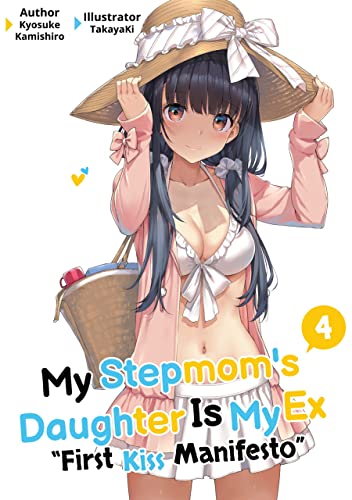
My Stepmom’s Daughter Is My Ex: “First Kiss Manifesto”

October 6, 2022 by Sean Gaffney

By Kyosuke Kamishiro and TakayaKi. Released in Japan as “Mamahaha no Tsurego ga Motokano datta” by Kadokawa Sneaker Bunko. Released in North America by J-Novel Club. Translated by Gierrlon Dunn.

Last time I mentioned that the anime was just starting, and I wondered how it would be handled. Well, now we know, and we also know that apparently the anime producers like Akatsuki as much as I do. Almost the entire third volume was jettisoned from the anime, which decided it really did not need multiple episodes focusing on the world’s most toxic ex-couple. More to the point, they knew something had to go if they wanted to adapt this volume, which turns out to have the perfect “open ending” for an anime that might eventually get a second season. It focuses squarely on our main couple… well, OK, no it doesn’t. It focuses squarely on Yume. The back and forth narrative voices are skewed very much towards the feminine thins time around, because Yume wears her heart on her sleeve and is really easy to figure out, but Mizuto bottles everything up and is not. It takes a family reunion to finally crack the “my stupid ex” facade.

Mizuto and Yume have now gotten comfortable with each other, and with arguing. Perhaps a bit too comfortable, as their parents note they act like a couple that’s fallen out of the “honeymoon” phase. Because Yume is Yume, she looks up online how to deal with this, which apparently involves going with Mizuto to try on swimsuits. The reason for the swimsuit is that they’re making the annual trek into the rural hinterlands of Japan to see Mizuto’s extended family, and this is the first year Yume and her mother will be making the trip. Meeting the in-laws goes well enough, but unfortunately they also come with a hot older cousin, who Yume seems to be convinced was Mizuto’s first love. And in fact Mizuto has been acting even more remote and uncaring than usual lately. Is there something going on?

I don’t want to spoil one of the major emotional parts of the book, which involves Mizuto’s great-grandfather, but suffice it to say it’s really well handled and offers some insight into Mizuto himself. But what this book is really about is Yume coming to terms with the fact that she’s in love with Mizuto. I enjoy the way that it’s framed, as it’s not a case of “oh, I’ve been in love with him all this time”, but rather that the Yume here and now loves him, and her biggest rival turns out not to be Higashira (who is busy trying to write AO3 fanfics of herself and Mizuto, and failing) but her younger self, the one who first captured Mizuto’s heart. The reason that most of the narrative is from her perspective is because we need Mizuto to be mysterious and remote here. I do wonder what his reaction will be in the next book.

I may need to wonder longer, of course, given that the cover art and back cover copy of Volume 5 imply it’s a 100% Higashira focused book. In the meantime, this was an excellent romantic comedy volume… unless you’re Akatsuki and Kawanami, I guess. Sorry, guys, cute pool antics aside, you’re just not important enough.

Filed Under: my stepmom's daughter is my ex, REVIEWS

A Late-Start Tamer’s Laid-Back Life, Vol. 4

October 5, 2022 by Sean Gaffney

By Yuu Tanaka and Nardack. Released in Japan as “Deokure Tamer no Sono Higurashi” by GC Novels. Released in North America by J-Novel Club. Translated by Yuko C. Shimomoto.

At long last, Yuto and his tamed monsters are finally starting to get good at the sort of combat that everyone else figured out three days into the game. Sure, later in the book he runs into two top-tier players who remind him that he’s still really weak by comparison, but there’s more here of him and the others actually defeating a lot of monsters. That said, fear not, because the main reason to read the book is still here, by which I mean Yuto telling Alyssa about everything he’s done recently and watching her reaction. I’m not kidding, this has become the highlight of the series, and I love it every time. He simply cannot accept that he is breaking the game in ways no one would ever think of before… but that also allows other players to do things the normal way, so everyone benefits. Indeed, another running gag, which has Yuto casually giving away powerful intel and items because he wants to, is all present and correct.

At long last, after three books hanging around the starter town like Lloyd Belladonna, our heroes finally move on to the next set of towns (though they maintain their farm back at the start as well). This allows Yuto to accidentally figure out how to access two powerful areas, where he can tame an undine (who is, of course, incredibly cute), gain odd new skills that will work out down the line, and have his monsters level up and evolve by the secret method of being nice to them and treating them like equals. We also meet the rest of Alyssa’s intel group, and they’re all as fired up about him as you’d imagine. And he runs into the game’s other top tamer, Amimin, and her summoner friend Mattsun, who both happen to fill the ‘shy girl and her aloof tomboy friend’ stereotype this series has desperately needed. Yuto’s circle of friends is opening up!

We do see the occasional sign that reminds us that Yuto is actually a middle-aged salaryman, and that it’s probably a good thing he’s unlocking so many things, as soon he will have to go back to the grind. For now, though, he’s essentially walking around this game like Maple from Bofuri, accomplishing things the development team had made ludicrously impossible by accident. The devs, at least, seem far more sanguine about it than Maple’s do – especially about Sakura’s evolution, which was supposed to be super incredibly rare and which (as we see in a battle near the end) proves to definitely be life saving. And… yeah, sorry. This is still a slow life book about a game, so I don’t really have much to analyse here. He makes lots of fish dishes. The treant from the last book evolves, but is a stay-at-home treant, so we don’t learn much about it. The undine seems nice, but the fact that none of the monsters speak makes character development more obscure.

Still, this is another volume of the series that does whatever the hell it wants, and does it in a way that I want to read more of it. For fans who would like to play this game themselves.

Filed Under: late start tamer's laid back life, REVIEWS

Surviving in Another World As a Villainess Fox Girl!, Vol. 1

October 4, 2022 by Sean Gaffney

By Riia Ai and Mucha. Released in Japan as “Scenario Nante Iranai! Rival Chara no Kitsunekko” on the Shousetsuka ni Narou website. Released in North America by Cross Infinite World. Translated by Miki “Zombie” Zuckerman.

It’s always tough when a word ends up being shorthand for a genre. There’s no “villainess” in this book. Indeed, the Japanese romanji uses “Rival Chara”, which is far more accurate. But, as with “isekai” books that aren’t really isekai, “villainess” has become shorthand for a genre of books that this series falls under, so here we are. That said, it’s also intriguing for other reasons. First of all, as the blurb suggests, we have two different “reincarnated into a game” characters butting heads in order to save the game from a bad end, which honestly is mostly used for comedy here. Secondly, the “villainess” is NOT one of the reincarnated Japanese people, and she’s the narrator. Just having a reincarnation book from the POV of someone else is refreshing, but it turns out that the villainess is sweet as pie, and makes everyone around her want to protect and love her. Honestly, it’s no surprise that the actual “heroine” doesn’t even show up in this volume.

Miku and Claire are sisters, and both are Fox Girls, one of many demi-human races in this world. That said, Miku was rather startled when Claire, back when she was 4 years old or so, fell over, hit her head, and then started talking about her past life from Japan! Miku doesn’t really get all this talk about otome games and airplanes, but she loves her sister, so if her sister wants her to train her magic so that they can fight monsters and save the village from a theoretical attack, then that’s what they’ll do. Things get complicated when the love interest from the game arrives, and he too also appears to be attempting to change the narrative to suit his tastes. Both Ektor and Claire have Miku’s best interests at heart… even if they want to solve things in different ways. After all, if they don’t do anything, Miku will die!

I will be honest, this is a book that lives and dies on its ideas, because its writing style and characters are somewhat basic and bland. I had to look at the cover to remind myself that Claire did not have red hair, simply because she fills the “red-headed anime girl” slot so well. As with many books in this genre, Claire and Ektor both don’t really seem to realize that by changing things so much, they’ve probably already achieved their goal. That said, the “gimmick” behind Miku’s powerful light magic is a dangerous one, and while I get that they wanted to wait till she was mature enough to handle it, I appreciate it that they told her immediately once the truth came out. Mostly, though, this is a story of Miku walking around charming everyone in her wake by being adorable, naïve, kind, and earnest. The reader wants to protect her as well.

As noted above, the cliffhanger ending of this volume implies that the “heroine” of the games (there’s more than one genre, something that comes as a surprise to Claire, who only played the original) will show up and make things difficult, though given that Ektor is firmly on Team Miku, it’s hard to see how.Till then, this is a standard webnovel with a decent gimmick of having the narrative come from the non-isekai character.

Filed Under: REVIEWS, surviving in another world as a villainess fox girl

The Ideal Sponger Life, Vol. 8

October 2, 2022 by Sean Gaffney

By Tsunehiko Watanabe and Jyuu Ayakura. Released in Japan as “Risou no Himo Seikatsu” by Hero Bunko. Released in North America by J-Novel Club. Translated by MPT.

The Ideal Sponger Life is doing a pretty good job of trying to strike a balance between fantasy (after all, this is a series with magic and dragons and the like) and realistic political outcomes. And one of the realistic political outcomes that comes up in this volume is Aura having to give up some of her power. This comes in two different ways – the first is appointing her general/rival as military leader, an unfortunate necessity now that she is pregnant with her second child. The second is finally giving in and admitting (and Zenjirou also has to admit this) that Freya has won the battle, and that she is now definitively going to be his first concubine. Ironically, this means that competition for additional concubines is heating up even MORE, as it means that he has a type other than “tall, strong, buxom amazon”, meaning there’s a larger pool of potential nobles stepping up to the plate. Starting with one who is probably going to be on the next few covers.

Freya is on her fourth straight cover, however this is effectively the end of her arc, as she and her crew have now finished repairs, and have to get back home to not-Sweden before the winter arrives there. She’s quite happy with Zenjirou himself, especially the way that he treats her as an equal, which I think she not only finds affirming but also arousing. That said, the heat is something that she’s going to have to get used to, and we see her and Skaji suffering through a typical “blazing season” here. Meanwhile, Nilda has arrived in the capital and needs training in how to be a noble, so ends up being hired as a palace maid – meaning, once again, that the three comedy maids are forced to step up their game and be more mature. As for Zenjirou, he finally masters teleportation – which means another mission to another country.

I must be honest, even if it weren’t for her name making me wonder if she was going to assassinate someone, I don’t think I’d be looking forward to the arrival of Lucrezia Broglie all that much. She’s far younger than his other love interests, and is deliberately being deceptive by pretending to be clumsy and naïve – something that, I suspect, is going to bite her in the ass when she gets to know the real him. Honestly, I’d be far happier with Bona as his next choice, but that does not appear to be happening, possibly as Aura thinks that she and Zenjirou are a bit TOO compatible. I do also wonder if we’re setting up for a throne war in the future – Aura is correct in that she’s going to have to start giving up some of her power, but in a heavily patriarchal society like this one, that’s power she’s likely never going to be able to get back. I worry about them.

All this plus, worst of all, no sex, as Aura is confirmed to be with child. Still, anyone reading this series for sex long since stopped, as I’ve said before. The politics is still first rate.

Filed Under: ideal sponger life, REVIEWS

Though I Am an Inept Villainess: Tale of the Butterfly-Rat Body Swap in the Maiden Court, Vol. 2

October 1, 2022 by Sean Gaffney

By Satsuki Nakamura and Kana Yuki. Released in Japan as “Futsutsuka na Akujo dewa Gozaimasu ga: Suuguu Chouso Torikae Den” by Ichijinsha Novels. Released in North America by Airship. Translated by Tara Quinn.

I want to be able to talk about the rest of the cast when I review these books. After all, it can’t ALL be about Reirin. I could talk about Keigetsu, and how my opinion of her went way, way up with this book, when we finally get to delve deeply into how she’s being used as a tool. I could discuss the wonderful flashback showing us Kenshuu and Gabi, which takes a mystery with a rather obvious culprit and turns it into a sad tragedy. I could mention Leelee, who goes from reluctant servant and straight man to … well, less reluctant servant and straight man, to be fair, but she does it beautifully. Hell, even the prince, who is literally said to be most appealing to Rinrin when he’s weak and pathetic, manages to carry off some really good moments. That said, all of this is going to have to get around the insurmountable wall that is Reirin, because OH MY GOD, Reirin.

We pick up immediately where we left off at the end of the first volume. Someone else may have figured out that Reirin is in Keigetsu’s body, but that does not really help things because there’s far more to it than just that. Even if Keigetsu was willing to undo the bodyswap and blithely go off to get tortured and executed, it rapidly becomes clear that, as with Leelee, someone is manipulating things behind the scenes to make sure that, somehow, Reirin dies. And when that doesn’t happen, we actually get a worse outcome, as the next in line for vengeance is the Empress herself. Can Reirin manage to fix things so that no one dies – not her, not the Empress, not Keigetsu, not even the actual culprit? And can she do this despite almost everyone now realizing that she’s in the wrong body?

Last time I wondered how on earth this was going to be spun out into an entire volume given that the secret was out, and kudos to the author for managing to do it. It helps that we would honestly read 89 volumes of this if it meant to got to experience the tornado that is Reirin some more. Her attempts to pretend to be Keigetsu are laughable, especially as she is describing herself as a villainess, but by the end of the book it’s pointed out that she really *is* one – in that she has everyone wrapped around her finger with no idea that that’s what she’s doing. Including the two hottest men in the palace. She may be most attracted to Gyoumei when he’s pathetic, but we love Reirin most when she’s being strong, righteous, and kickass. You get the sense that the reason she’s so desperately ill all the time is that without that handicap, she’d have taken over the world by now. And filled it with potatoes.

The original story ended with this volume, but apparently it was such a success that the author is continuing it with more, and I’m glad, even as I know that this will likely mean more bad things happening to our heroine. Oh well, at least she has a friend now, in addition to her cadre of family and attendants who would absolutely die for her if she asked them. The friend is more important.

Filed Under: REVIEWS, though i am an inept villainess

Yashiro-kun’s Guide to Going Solo

September 29, 2022 by Sean Gaffney

By Dojyomaru and Kou Kusaka. Released in Japan as “Yashiro-kun no Ohitori-sama Kouza” by Overlap Bunko. Released in North America by J-Novel Club. Translated by Andria Cheng-McKnight.

Authors, of course, read other authors, and are influenced by them. The book in, say, isekai books, or villainess books, etc. is not JUST publishers trying to milk the latest cash cow, it also stems from authors reading a title and thinking “what would happen if I tried this instead?”. And it’s the same with the author of How a Realist hero Rebuilt the Kingdom, who notes in the Afterword that he wrote this book heavily influenced by titles like My Youth Romantic Comedy Is Wrong, As I Expected. Though honestly, it reads more like a Bottom-Tier Character Tomozaki. Our male lead is a loner who sits by himself in the classroom. We also have the popular girl, part of her cool clique, etc. you know the two of them are going to be the focus. Which is… sort of accurate. Because this is not really a story, it’s more of a thought experiment. How much you enjoy it might depend how much you like those.

We are in a world where so many people have been reading high school “fix it” romcoms that the power balances have shifted a bit. Suddenly loners are admired for their ability to not conform, and the popular kids are seen as having to force themselves to fit in. Yashiro is one of those loners, and he’s approached by the popular girl Kanon. She’s been forcing herself to fit into her group seamlessly, and it’s not working well. She wants to learn from him how to enjoy doing things by herself. Despite being somewhat baffled by this, he agrees, ans the two of them start confabbing on things like studying at a karaoke place, going to really nice public baths and soaking by yourself, etc. Then her sporty friend Ido approaches Yashiro, at first to make sure he’s not trying anything weird with Kanon, but then to get her own lessons in enjoying time by herself. Then a new transfer student arrives… when does this end?

As a book, without its main conceit, this is just OK. The world feels like a bizarre, conflictless alternate universe (it’s by the author of Realist Hero, and indeed a crossover available to J-Novel Club subscribers indicates this happens at the same time as Souma is going to high school there). However, as I read it I began to notice someone else outside of the field of the book’s vision. It did not take me very long to realize what was going on, but it’s not the sort of trick where the joy is in guessing it, it’s the sort where it works better when you’re in on it. The “missing” character became my favorite in the book, which is why I was happy when (and the author has done this before) the afterword was actually a midword, and the 2nd chunk of the book was a retelling of the series from their perspective. It also shows that the author was reading more than just Oregairu, because the 2nd part of this book is the current wave of “sugar sweet romance” types, and boy is it sweet.

This is a single volume – it wouldn’t work as a continuing series. And you have to make a few logical leaps to get to the “Oh, nerds are admired and cool kids are pitied” worldview it takes. But overall, I really loved its lead couple, and the trick behind them.

Filed Under: REVIEWS, yashiro-kun's guide to going solo

Sword Art Online, Vol. 25: Unital Ring IV

September 27, 2022 by Sean Gaffney

By Reki Kawahara and abec. Released in Japan by Dengeki Bunko. Released in North America by Yen On. Translated by Stephen Paul.

The basic premise of Unital Ring is that something has mashed up all the MMORPGs out there, meaning that SAO, ALO, GOO, etc. are all in the same world. This even includes American games where you choose to star as a bug (the spiders side is far more popular than the centipede side, and I don’t really blame them, though I do admit to a bit of surprise that the game is popular in the West at all.) But, as we have also discovered, Unital Ring is not just about uniting the various games our cast has played in, it’s about uniting the various arcs of the series. The first non-web novel arc Kawahara takes on sticks together all of his previous books, plus real life, plus the Underworld, which it turns out is a lot more relevant to the main plot than we’d thought. That said, the series no longer moves as fast as its first volume did, meaning that any chance of the Underworld side meeting up with the Unital Ring side is going to have to wait a bit.

The book is divided into two chunks, with a real world interlude between them. The first takes place in Unital Ring, as Kirito and company try to figure out a way to stop Mutasina and her blackmailed players from destroying the new town that’s been raised around their log cabin. This, as you can imagine, involves a lot of fighting, game stats, etc., and should be very familiar to the SAO reader. It’s hard to coordinate, though, meaning that Asuna can’t get a chance to meet up with the mysterious new transfer student who’s been trying to talk with her. As for Underworld, well, we still don’t know if Eolyne is Eugeo reborn, or a clone, or a descendant, or what, but there’s enough to make Kirito and Alice very suspicious. That said, they have a bigger issue to take care of: reuniting Alice with her sister, who has been in cryosleep.

Sword Art Online has generally never been a mystery series, nor has it relied on surprises or last minute swerves. This is good, because at this point I will be a lot more surprised if Kamura, the new transfer student, ISN’T Mutasina. Kawahara can be very straightforward. That said, this is a perfectly fine volume of Sword Art Online, though it’s suffering from being the 4th book in what is probably another 9-book arc. There are hints that Unital Ring’s plot and the Underworld plot will connect in the future, but hints are all they are now, so it does suffer a bit from having to, about 2/3 of the way through the book, shift gears and remind us to start caring about what seems like a completely different story. It will probably read better when the whole arc is out, but for now it feels a bit thin.

Still, the next book is out in Japan, and we should see it in the spring sometime. Till then, enjoy Kirito cutting things with his sword and also acting like a dumb teenage boy.

Filed Under: REVIEWS, sword art online

Reincarnated as the Piggy Duke: This Time I’m Gonna Tell Her How I Feel!, Vol. 7

September 25, 2022 by Sean Gaffney

By Rhythm Aida and nauribon. Released in Japan as “Buta Koushaku ni Tensei shita kara, Kondo wa Kimi ni Suki to Iitai” by Fujimi Fantasia Bunko. Released in North America by J-Novel Club. Translated by Zihan Gao.

The Piggy Duke series has always had a tendency, much like its title character, of avoiding difficult confrontations. We’ve seen in the last few books Slowe trying to work up the courage to confess to Charlotte and failing miserably, and the revelations about Charlotte’s past and how much everyone knows about it, while they have been coming out, are almost inevitably interrupted by some crisis needing attention, and by the time it’s over the moment has passed. Well, those who have been waiting seven books for Slowe to get off his ass and say something will be pleased to see that it finally happens here, as a stupid series of “high school drama” events manage to force his hand. The confession scene is excellent. As for the aftermath? Oh, sorry, it’s crisis time. The aftermath will have to wait. Sadly, Charlotte gets little to do in this volume, despite her heritage being one of the reasons for the crisis.

The title once again is a lie, as, in order to get rid of the stress he’s been dealing with recently, Slowe has taken to working out by lifting weights all over campus – something that the student body actually finds a bit terrifying. That said, he’s slimmed down again, so is attracting looks, and his “commoner” friend Tina tries to get him to branch out by actually interacting with other women besides her, Charlotte and Alicia – something that sadly proves disastrous for his reputation. Fortunately, a distraction comes along. The Witch, fresh off the last book, has gone to attack the Queen, and the fallout from that means that the Queen, her Guardian Knight, the Princess, and the Royal Knights are ALL now at the school, trying to bait the Witch. Unfortunately, this is also a family argument between mother and daughter… who do NOT get along.

We’d met the lazy princess before, but the narrative is a lot more sympathetic towards her this time, putting her behavior in much-needed context. Her behavior also ties into Charlotte’s past, which (of course) is not nearly as secret as Slowe would like, and I really enjoyed that this was part of the bargain made. That said, most of this book, as with the other books in the series, relies on you finding Slowe’s behavior amusingly annoying rather than just annoying. Again, I really wish we had more of Charlotte’s POV in this series, as she’s still technically Slowe’s retainer, and is having to deal with him being the talk of the school – again – and also some incredibly nasty rumors about him – again. If you add in his accidental confession to her, you can see why she spends the last quarter of the book unconscious. I’m sure we’ll find out what she thinks of Slowe’s confession of love in the next book… maybe.

I have been accused before of caring more about the romance in a book than the plot, and that’s probably true, but a lot of the plot in Piggy Duke is the romance, so I think I have the right to be a bit annoyed. Still, the Princess made this book worth reading, and I hope we see more of her in the future.

Filed Under: reincarnated as the piggy duke, REVIEWS

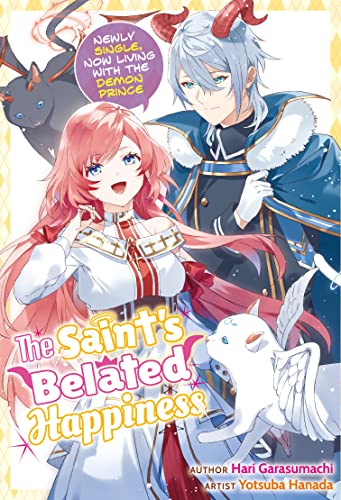
The Saint’s Belated Happiness: Newly Single, Now Living with the Demon Prince

September 22, 2022 by Sean Gaffney

By Hari Garasumachi and Yotsuba Hanada. Released in Japan as “Iki Okure Seijo no Shiawase – Konyaku Hakisareta to Omottara Mazoku no Ouji-sama ni Dekiaisaretemasu!” by M Novels f. Released in North America by Cross Infinite World. Translated by Kai Sadler.

This is another book that falls into the category of “not a villainess, but villainess things happen to her” books. You know, dumped by her fiancee, exiled from the royal palace, etc. Generally speaking, most of the stories in this genre tend to go for the aware, savvy sort of heroine. This is not one of those stories. Honestly, the heroine of this book, Marialite, may be more on the Katarina Claes end of the spectrum – in terms of outward personality they’re not that similar, but they both have “empathy” turned all the way up to ten while “intellectual” is at about a two. Marialite is not an airhead per se… she’s just the sort of character I refer to as the “ara ara” woman. You know, Kasumi Tendo from Ranma. Every situation, no matter what it is, is met with a hand to the cheek, a tilted head, and an “ara, ara”. That’s what we’re dealing with here.

Marialite has had a pretty rough life, though if you asked her about it I doubt she’d say the same thing. Her parents are dead. When she was discovered to be the Saint, her fiancee (who was already cheating on her) was dumped and replaced with the Crown Prince. She then spend the next several years saving the kingdom with her plant-based powers. Now the kingdom has “magic tools” that will do the same thing. And she’s twenty-seven years old. So the Prince dumps her, planning to get a younger wife. Going back to her abandoned childhood home, Marialite finds a young boy hiding inside. Sorry to spoil the surprise (it’s not much of one), but he’s the Demon King of the title, and he gets much bigger very fast. He’s also over the moon for Marialite… who seems to not really realize what love is.

This book is, to be honest, highly variable. The sections with the Crown Prince are amusing if you like to see asshole misogynists get wrecked (and I do), but he’s so one-note it’s hard to really be happy. The best part of the book involves Cornelia, the daughter of a rival dukedom to the Demon King, who is a) an obnoxious ojou-sama, b) with fire magic, c) with cat ears, and d) secretly weak to characters like Marialite, who she can’t intimidate. Everything about her is great, though I wasn’t that wild about the “now she’s a maid” subplot. As for Marialite herself, her naivete about love is presented as the fault of her past relationships, both of which were terrible, but she also admits she doesn’t think she was in love with them either, so there’s little to no hurt feelings or devastation about them. This makes her something of a blank slate, to be honest. I suppose if we can have harem protagonists who are potato boys, we can have the same with shoujo romance protagonists. I just wish she had more personality.

This book does not really have a definite ending, and there may be more coming, but if so it’s not immediately obvious. Till then, if you like “dumped by the asshole prince and finds a better life” stories, or cat-eared red-headed girls who yell a lot, this is worth your time.

Filed Under: REVIEWS, saint's belated happiness

Reborn to Master the Blade: From Hero-King to Extraordinary Squire, Vol. 6

September 20, 2022 by Sean Gaffney

By Hayaken and Nagu. Released in Japan as “Eiyu-oh, Bu wo Kiwameru tame Tensei su. Soshite, Sekai Saikyou no Minarai Kisi ♀” by HJ Bunko. Released in North America by J-Novel Club. Translated by Mike Langwiser.

Several characters over the course of this series have noted an odd disconnect between Inglis and, well, everything she says or does. We, the reader, know the reason for this, i.e. she’s a reincarnation of an ancient King. Of course, that’s not entirely the explanation, because the previous King was honestly nothing like Inglis – this seems to be that King unfiltered, with “fight fight fight eat eat eat” as their main theme song. Sometimes, though, this disconnect ends up happening to the reader as well, because some of the events in this volume feel like straight up horror, or tragedy, but they’re not written that way at all. They’re written the Inglis way. Which is to say “Aw, shame that happened, anyway, next battle plz”. And the effect can be jarring. I already have tremendous trouble with remembering anyone in this series who is not Inglis or Rafinha, I need my books to be uncomplicated. And what happens here… is, but that’s the problem.

To sum up this entire volume: “what if Smaug was a woobie?”. Inglis and the others have found an ancient sleeping dragon, but it’s hard to wake him up, so they decide instead to cut off his tail and use it to feel the starving people of that area (well, and feed Inglis and Rafinha, who gets first shot). The tail grows back, so no issues there. Finally the dragon does wake up, and he’s really, really pissed off at Inglis. Sadly for him, Inglis not only really wants a good fight, but is good enough to back up her talk. What follows is almost bullying, and it’s only resolved when the dragon finally decides “why am I bothering?” and stops rising to her taunts. That said, Inglis may have a bigger problem… the folks in the town they’re staying in want to execute Pullum for her brother’s crimes.

As I said, I liked the dragon. He was clearly being led by the nose by Inglis, and his solution to the problem was funny. Even the cast thinks that her plan was “become friends with the dragon”. That’s why the sudden ending of that plotline left such a bad taste in my mouth. It feels like it should be terrifying, sad and awful, but this author cannot really seem to do convey that mood, so it comes out, as most things in this series do, as “OK, so that happened”. Similarly, Ian’s story, which is similar to what happens to the dragon’s, comes to a sudden fatal end here, but there’s no real time for any emotions or grieving because we’ve already moved on to the next crisis. I get that they’re at war, but it’s not letting the reader connect with any of this either, and the result is that we don’t care.

This is still a good book if you like meathead girls who love to fight. But it’s very, very shallow.

Filed Under: reborn to master the blade, REVIEWS

Loner Life in Another World, Vol. 3

September 18, 2022 by Sean Gaffney

By Shoji Goji and Saku Enomaru. Released in Japan as “Hitoribocchi no Isekai Kouryaku” by Overlap Bunko. Released in North America by Seven Seas. Translated by Eric Margolis. Adapted by Veles Svitlychny.

Increasingly reading Haruka’s narration in Loner Life is sort of like trying to solve a puzzle. Class Rep actually lays it out for us midway through the book: Haruka simply is incapable of seeing anyone’s actions except in the absolute worst way – and that includes his own. It’s especially true of him, in fact, because – with the exception of Angelica, who he has a very different kind of relationship with – he does not want to have anyone get too close to him or even like him all that much. For all that he complains about constantly getting lectured or having no money, it’s a situation he deliberately engineers himself. And I hate to break it to him, but the ship has definitely sailed with some of the girls – Class Rep, if no one else, certainly has feelings for him. But it gets to the point where even a spy sent to see what Haruka is like gets the absolute worst impression of him… at least till everything blows up.

After getting back from the Ultimate Dungeon, Angelica in tow, Haruka and his friends now have to go around trying to clear out all the other, lesser dungeons that lie around their town. Haruka’s casual, vicious approach to this makes everyone feel incredibly sorry for the monsters who just happened to be in his way. That said, he’s also casually doing things like saving the livelihoods of a dying hamlet by getting rid of the dungeon (and also giving them medicine and food, something he fails to mention in his tortured narration) or converting the general store in town into a 5-story department store with the latest fashions (also created by him, which prompts the girls to wonder when exactly he read so much about fashion). But when the “Stalker Girl”, aka spy, arrives from the noble city that financially cripples their town, it’s Haruka who sees the larger picture as to what’s going on.

It’s not quite as jaw-dropping as the speech from When Supernatural Battles Become Commonplace, but Haruka’s breakdown near the end of this book is startling in how (seemingly) out of character it is, as for once he briefly breaks his facade to try to convince the girls that they’re all in serious trouble here. The corrupt lord ruling the area is not above sending soldiers to wipe them out, and he’s also certainly going to kill the spy once she gets back and delivers her report. He spent the entire time he was dungeon crawling with the spy at his absolute trashiest and worst in order that she could go back and say that he’s not worth caring about, but when this didn’t work he finally snaps and has to fix things. Class Rep and the others get it, even if Haruka doesn’t want them to – she says he and Angelica “destroy tragedies”, and that’s as good a description as any.

One last thing: yes, this is the one with the vibration magic. Between that and Haruka’s “nighttime activities” with Angelica, the light novels are 200% hornier than the manga equivalent. The manga is still probably a safer bet, but the light novels remain a fascinating but flawed experience.

Filed Under: loner life in another world, REVIEWS

Formerly, the Fallen Daughter of the Duke, Vol. 1

September 17, 2022 by Sean Gaffney

By Ichibu Saki, Nemusuke, and Ushio Shirotori. Released in Japan as “Moto, Ochikobore Koushaku Reijou desu” by Mag Garden Novels. Released in North America by J-Novel Heart. Translated by Andrew Schubauer.

The idea of the “twist ending” has gotten a bit of a bad rap in recent years. This can mostly be blamed on the films of M. Night Shyamalan, whose films got to the point where the real twist ending would be that there wasn’t a twist. There’s always the danger of alienating your audience as well – to quote Futurama, “it’s not ironic, it’s just mean!”. When done properly, though, a good twist ending can cause a person to immediately go back and look at the entire plot all over again. And, in a case like Formerly, the Fallen Daughter of the Duke, it can cause you to want to get the next book in the series. I won’t lie, this felt very much like a “villainess by numbers” storyline. Claire is more a rival than a villainess, but every single plot point in this book is predictable and right on the beat. At least, until everything turns out bad.

This book hits the ground running, picking up right as our protagonist, Claire, is rejected by her fiance, sister, and family. She quickly realizes that staying in her kingdom will do her no good at all, so resolves to escape to a nearby abbey. That said, it’s hard to escape when you’re the daughter of a duke and you have retainers that go with you everywhere. Then she runs into a young man and his group of friends, who help her ditch the retainers and offer to take her to their nearby country – which is much better off than the one she just came from. Oh, and said young man is really the prince of said country. Plus, the pitiful amount of magic she thought she had turns out to have been a massive trap. She’s really ludicrously powerful. So far so boring. But… why does she keep waking up in Japan? Is this a game? Is this a secret hidden route of the game?

Let’s start with that last part, because after a number of books where the “villainess” dies in every route, it’s refreshing to see this is the one bad route for Claire in the game. The player character, Charlotte, has a normal amount of routes and friends, and is helped by her older sister and NPC Claire, who is set to marry the prince. But if you play the secret hidden route, where you do something truly nasty to destroy Claire’s life in many ways, you get the chance to win the heart of the prince for yourself. That fits with the portrayal of Charlotte in this volume – she’s astonishingly stupid and petty, as befits a side route that was only added later for extra content, and where not as much thought was required. And then there’s the ending, which made me wonder what in God’s name the series was really going to be about. Nicely done.

That said, you’ll have to plow through a lot of “pleasant but predictable and a bit boring” to get to the good bits. it’s worth it, though.

Filed Under: formerly the fallen daughter of the duke, REVIEWS

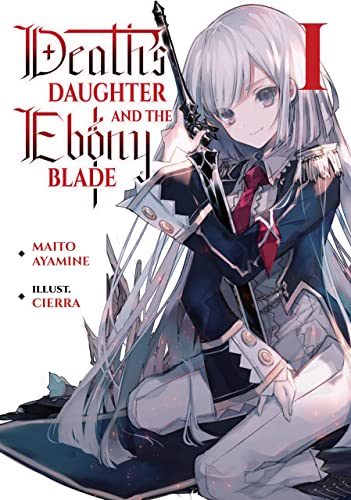
Death’s Daughter and the Ebony Blade, Vol. 1

September 15, 2022 by Sean Gaffney

By Maito Ayamine and Cierra. Released in Japan as “Shinigami ni Sodaterareta Shoujo wa Shikkoku no Tsurugi wo Mune ni Idaku” by Overlap Bunko. Released in North America by J-Novel Club. Translated by Sylvia Gallagher.

It has become very common in novels these days, be they Japanese or no, to have something that is basically “I want to write my kind of book, but it won’t sell unless I give it the current popular gimmick”. So we get isekai economic policy books, and isekai military history books, and villainess fantasy magic battle books. Death’s Daughter and the Ebony Blade sort of falls into that category, though the genre it’s using – generally referred to as “raised by wolves” – isn’t hugely popular. The idea is that you have a protagonist who was raised by something so outside of normal humanity that they grow up to be very weird. Technically Faraway Paladin should have been this, if he hadn’t basically grown up to be Superman. But Olivia in Death’s Daughter definitely qualifies. She is described more than once as lacking in manners and common sense. But boy, she can kill people really, really well.

Three shinigami discover a baby outside of an abandoned temple, and rather than eat the baby’s delicious soul, one of them decides to try raising them as a child. Olivia gets fifteen years of combat practice, history lessons, and not much else. Then one day her mentor simply vanishes without a trace, and she goes off to look for him. Meanwhile, the Empire is battling the Kingdom, and the Empire is winning. For some reason, while searching for her shinigami dad, she decides to join the Kingdom as a soldier, something she does by going to the nearest Empire stronghold, decapitating everyone, and presenting their heads to the general. This is good enough for them, and now we watch Olivia tear her way through enemies, befriend nerdy guys who have a good eye for tactics, and try to learn what it’s like to be human.

To be honest, that last part doesn’t happen very much. The biggest flaw in this book is that Olivia does not really develop all that much as a character. Sure, she’s introduced to the wonders of soft bread and cakes, but she still does not understand how humans think, and mostly does not bother to try. I did appreciate that her aide (and oh boy, there’s an OT3 there I’d love to see but will not) is able to get her to dress up and perform basic award etiquette, but that’s about all we get. (Also, be warned, there’s a “the chest is too tight/the hips are too loose” gag here. I thought those were banned by the Geneva Convention?) The bulk of the book, though, it military combat, with the Empire gradually realizing that the tide is now turning against them, thanks entirely to the presence of Olivia cutting down most of their important generals.

This is the sort of series where I know development will be slow in coming, so I’m willing to give it more time. Olivia is fun, and I also liked Ashton and Claudia. Recommended only if you like military histories and don’t mind a lot of battle carnage, though.

Filed Under: death's daughter and the ebony blade, REVIEWS

  • « Go to Previous Page
  • Page 1
  • Interim pages omitted …
  • Page 72
  • Page 73
  • Page 74
  • Page 75
  • Page 76
  • Interim pages omitted …
  • Page 346
  • Go to Next Page »
 | Log in
Copyright © 2010 Manga Bookshelf | Powered by WordPress & the Genesis Framework