• Skip to primary navigation
  • Skip to main content
  • Skip to primary sidebar
  • Home
  • About Us
    • Privacy Policy
    • Comment Policy
    • Disclosures & Disclaimers
  • Resources
    • Links, Essays & Articles
    • Fandomology!
    • CLAMP Directory
    • BlogRoll
  • Features & Columns
    • 3 Things Thursday
    • Adventures in the Key of Shoujo
    • Bit & Blips (game reviews)
    • BL BOOKRACK
    • Bookshelf Briefs
    • Bringing the Drama
    • Comic Conversion
    • Fanservice Friday
    • Going Digital
    • It Came From the Sinosphere
    • License This!
    • Magazine no Mori
    • My Week in Manga
    • OFF THE SHELF
    • Not By Manga Alone
    • PICK OF THE WEEK
    • Subtitles & Sensibility
    • Weekly Shonen Jump Recaps
  • Manga Moveable Feast
    • MMF Full Archive
    • Yun Kouga
    • CLAMP
    • Shojo Beat
    • Osamu Tezuka
    • Sailor Moon
    • Fruits Basket
    • Takehiko Inoue
    • Wild Adapter
    • One Piece
    • After School Nightmare
    • Karakuri Odette
    • Paradise Kiss
    • The Color Trilogy
    • To Terra…
    • Sexy Voice & Robo
  • Browse by Author
    • Sean Gaffney
    • Anna Neatrour
    • Michelle Smith
    • Katherine Dacey
    • MJ
    • Brigid Alverson
    • Travis Anderson
    • Phillip Anthony
    • Derek Bown
    • Jaci Dahlvang
    • Angela Eastman
    • Erica Friedman
    • Sara K.
    • Megan Purdy
    • Emily Snodgrass
    • Nancy Thistlethwaite
    • Eva Volin
    • David Welsh
  • MB Blogs
    • A Case Suitable For Treatment
    • Experiments in Manga
    • MangaBlog
    • The Manga Critic
    • Manga Report
    • Soliloquy in Blue
    • Manga Curmudgeon (archive)

Manga Bookshelf

Discussion, Resources, Roundtables, & Reviews

Reviews

Spell of Desire Vol. 5

August 11, 2015 by Anna N

Spell of Desire Volume 5 by Tomu Ohmi

It is the final volume of Spell of Desire! What’s happening in the conclusion of this paranormal romance series?

Throughout Spell of Desire Kaoruko has been heading towards a confrontation with her mother, the mysterious Witch Queen. She finds out that her mother sealed herself away as part of a spell to balance out the positive and negative energy that was building up in the world. The Witch Queen emerges, and Kaname confesses that he’s no longer able to serve as the Witch Queen’s knight due to his love for Kaoruko. The Witch Queen promptly wins an award for worst mother of the year when she announces that she’s going to curse her daughter’s boyfriend by taking all of his senses away, followed by taking his memories of Kaoruko away too. Kaname is blinded, and he slowly becomes more and more debilitated.

This curse presents quite the conundrum, and Kaoruko is determined to harness her power for once and for all in order to save Kaname. She’s been slowly inching towards claiming her power, so it was great to see her finally take charge and do something. She’s aided by an elderly black witch who shows up and indulges in a great deal of exposition as the volume wraps up.

Overall, I thought the pacing of this series was a bit off. I enjoyed the world building and character introductions in the first couple volumes a great deal, but the rest of the series felt like it was just marking time until the big witch battle happened in the final volume. Kaoruko’s rise to self-assurance and command of her power felt a bit rushed, but I still appreciate that by the end of the series she was making her own decisions and acting heroically in order to create her own happy ending. While Spell of Desire wasn’t the best example of paranormal romance, Ohmi’s clear visual storytelling made it easy to read.

I see that this manga hasn’t sold as well as Ohmi’s other series to be translated into English, Midnight Secretary. This is a bit of a shame, because I was hoping that Viz would bring out her earlier series Kindan no Koi de Ikou, since there is such a dearth of werewolf manga romance being translated into English. We have all the vampires we need, what about some werewolves for a change? I’d still recommend Spell of Desire and Midnight Secretary to romance manga fans, and I hope more of Ohmi’s work gets translated here.
Filed Under: REVIEWS Tagged With: shojo beat, spell of desire, viz media

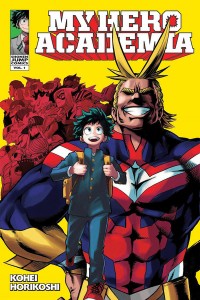
My Hero Academia, Vol. 1

August 11, 2015 by Sean Gaffney

By Kohei Horikoshi. Released in Japan by Shueisha, serialization ongoing in the magazine Weekly Shonen Jump. Released in North America by Viz.

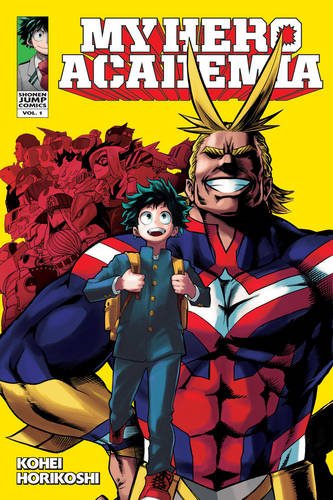
It has to be said, if you’re looking to succeed in Weekly Shonen Jump, ‘write the same thing as everyone else, only your way’ is a pretty good description of how to go about doing it. And to a degree, that’s what the author does with this new series. Even though the front cover parodies Marvel and DC Comics, and the kids are ‘superheroes’ in a Western sense, this is very much in the classic Jump mold – indeed, some of the amusing yet insane superpowers reminded me of the late lamented Medaka Box. Our hero as well is a sweet kid, the Naruto sort who starts off weak and bullied but will improve by leaps and bounds because he tries hard and refuses to back down when his principles tell him it’s wrong.

academia1

Our hero Izuku (abbreviated to ‘Deku’ for reasons that Viz won’t explain because Jump titles don’t have endnotes) is the small guy on the cover, as you no doubt guessed. The world about 25-30 years ago evolved superpowers in about 80 percent of the population. And Izuku really, really loves superheroes – he’s pretty much an otaku. Sadly, he’s in the 20% that doesn’t have powers. This, naturally, leads to bullying on the part of all his school classmates, particularly Katsugi, who plays the role of the selfish ass quite well in this volume, though I suspect he will gain greater depth as the title goes on, particularly give his childhood past with Izuku.

Luckily, Izuku gets a superpower transferred to him from the other guy on the cover. Even more luckily, the power does not just magically make him a superhero – he has to go through an amusing and heartwarming training montage, complete with the usual ‘drag a refrigerator across the beach’ stuff, till he’s no longer a wimpy kid but rather a wimpy kid with a muscular build. And he doesn’t really get a chance to train with his powers, either – which means he’s in trouble when he applies to Superhero School, where the goal is to be awesome immediately.

Nothing here is really original, but also nothing here is really poorly done, either. The author has learned from Barrage, his previous series. Izuku is a bit of a shy coward without being unlikeable, All Might’s secret allows him to be hilarious as well as inspiring, and his new friend Ochako is cute, and not Shiemi from Blue Exorcist despite all appearances saying she is. The fight scenes look smooth and non-confusing, and there is actual tension as you wonder how this will get resolved – it also allows Izuku to be clever, which is the best way to advance when you also have cool superpowers. Add on a reluctant mentor and some random giant woman fanservice, and you can see exactly why this became a bit hit while Barrage was cancelled after 2 volumes.

If you want something you’ve never seen in Jump before… why do you read Jump, exactly? But if you want something light and fun, with potential for more, My Hero Academia may be right up your alley.

Filed Under: REVIEWS

Maria the Virgin Witch, Vol. 3

August 9, 2015 by Ash Brown

Maria the Virgin Witch, Volume 3Creator: Masayuki Ishikawa
U.S. publisher: Kodansha
ISBN: 9781632360823
Released: June 2015
Original release: 2013

Maria the Virgin Witch is a three-volume manga series (four volumes if counting the sequel Exhibition) created by Masayuki Ishikawa. It was actually because the series was by Ishikawa, who is also the creator of Moyasimon (which I enjoy), that it first came to my attention. The first volume of Maria the Virgin Witch intrigued me, and the second ends with the heroine in a rather dire-looking situation, so I was very curious to see how the story would continue to play out in the third. Happily, Kodansha Comics was kind enough to send a review copy along to me. Maria the Virgin Witch, Volume 3 was originally published in Japan in 2013. Kodansha’s English-language edition of the volume was released in 2015. Despite being a short series, the narrative of Maria the Virgin Witch has the tendency to be a little unfocused, but I still find the manga to be consistently engaging. I especially appreciate the quirkiness of the series in general as well as the quirkiness of its characters specifically.

Maria had been warned by the Archangel Michael: If the young witch continued to interfere with the natural order of the world she would be struck down. However, so devoted to ending the long-lasting war between France and England, Maria continued to flaunt her powers, even while in the presence of Michael’s messenger Ezekiel. Now the time has come for her to face the consequences of her actions. She was, however, somehow able to survive what was intended to be a fatal blow from Michael’s spear. But she’s still vulnerable and must rely on the protection of her two owl familiars and the kindness of her fellow witches who don’t necessarily approve of her efforts to force a peace. Maria was at one point alone in the world—the Heavens, other witches, and even some of the humans she was trying to save all standing against her—but over time her earnestness and innocence has earned her some friends, a few of whom could have at one time been counted among her enemies. But even with their support Maria is beginning to lose her naiveté, realizing that bringing happiness to humanity may be more complicated than she initially considered.

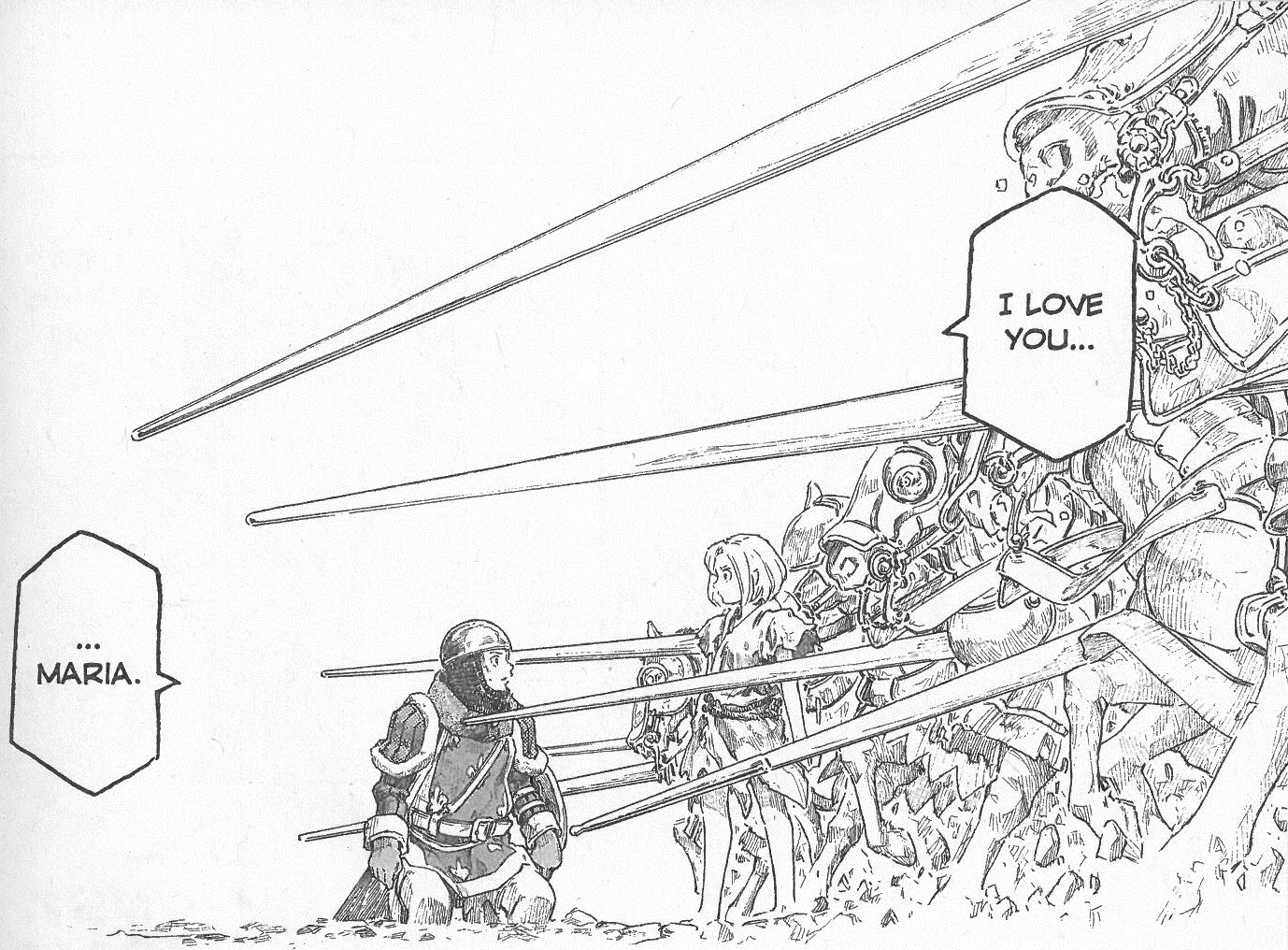
Maria the Virgin Witch, Volume 3, page 154Maria the Virgin Witch has always been a peculiar mix of quirky humor and more serious philosophical and theological reflection. There are a lot of ideas that Ishikawa was able to work into such a short series, although at the same time it’s difficult to thoroughly explore all of them in only three volumes. (It actually makes me wonder if Maria the Virgin Witch was originally intended to be a longer story.) The third volume brings up questions about Maria’s family and backstory without really answering them. Also, apparently many if not all witches are loners, something that wasn’t clearly established until now. Maria’s close friendship with the English witch Viv develops suddenly, and their discussions about the true meaning of happiness and love come across as a little forced. It was as if Ishikawa needed to rush in order to make sure that the heart of the series was addressed and made absolutely clear, paring down the seemingly extraneous elements introduced earlier in the manga.

Although overall the narrative of Maria the Virgin With is somewhat uneven, in the end I did largely enjoy the series and I would like to read Exhibition as well. Since the very beginning of the manga, I’ve been particularly fond of Maria herself. While she and the other witches feel more contemporary in thought and appearance than the rest of the series’ setting, I do appreciated her struggle to come to terms with not only her own position in the world, but also the role of the higher powers of Heaven. It’s a debate that humankind has been wrestling with for ages and is one more link between the manga’s historical backdrop and the present day. Ishikawa explores the answer to this timeless question through Maria’s growth as a character. She begins as a young, determined woman seeking to right the wrongs of the world, becoming wiser and more mature as she is confronted with the often brutal realities of life. But importantly, Maria never loses her ideals or succumbs to despair, which is why so many people come to love her so dearly.

Thank you to Kodansha for providing a copy of Maria the Virgin Witch, Volume 3 for review.

Filed Under: REVIEWS Tagged With: kodansha, Kodansha Comics, manga, Maria the Virgin Witch, Masayuki Ishikawa

One Piece, Vol. 75

August 9, 2015 by Sean Gaffney

By Eiichiro Oda. Released in Japan by Shueisha, serialization ongoing in the magazine Weekly Shonen Jump. Released in North America by Viz.

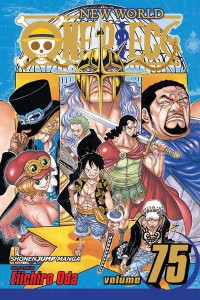
The Dressrosa arc has gone on for a long time, and it’s got a long, long way to go. This can be a bit exhausting, especially given that this volume takes an already chaotic situation and threatens to turn it into incoherency. Thanks to Usopp, the toys are all turning back into people, and those left behind have regained their memory of them – including Violet and Rebecca. But Doflamingo is not going to let this stop him, as he deploys several body doubles and puts bounties on everyone who has opposed him – including Usopp, who gets the highest bounty of all, possibly the funniest moment in the book. There’s a lot going on, and One Piece is always enjoyable, but I always feel like I should reread the previous few volumes before I start this new one.

op75

At least I’m finally able to talk about some revelations, even though the reappearance of Sabo has been the most obvious plot twist since Sogeking turned out to be Usopp. He and Koala are here representing the Revolutionary Army, who have to stop Doflamingo, but in reality he seems to mostly be here to help Luffy. This now means we have every major force on the island – pirates, marines, revolutionaries, actual residents, Tontattas… and it makes for a giant melee, as there’s just no way Dressrosa can contain this. At least Robin’s not a toy anymore. Oh yes, adn the tournament is over, as the Flame-Flame fruit is claimed by the victor. Somehow I don’t think Luffy will object too much.

Speaking of Luffy, he and Law make for an amusing comedy team throughout. Law is still cuffed with seastone, so literally all he can do is lay there and whine, and boy howdy does he. It’s always wonderful in One Piece to see the incredibly cool characters show off how nobody is ever that cool all the time, and Law’s frustration with Luffy’s ‘whatever, just go with it’ attitude is simply always funny. That said, I do hope he gets unlocked soon, as I’m fairly certain Doflamingo is not going to be as easy to defeat as Caesar Clown.

I’d say there are a few weaknesses. Rebecca continues to not be as strong a character as I’d expected, though to be fair to her she’s really going through a bunch of traumas that would make anyone break down. The huge cast and need to switch to a different part of the city every 2-3 pages does not make for easy reading, and I also miss Sanji, Nami, and other major Straw Hats, who have been shuffled off the page till this is all over. And I will admit, I thought everyone making fun of Pica’s voice was a bit mean. That said, it’s One Piece. If you read it, you’ll love it. If you don’t, you aren’t going to pick up Vol. 75.

Also, Sabo and Koala are totally Luffy and Nami, right? She even carries his hat!

Filed Under: REVIEWS

The Manga Revue: Back to School Special

August 7, 2015 by Katherine Dacey

My inbox is overflowing with emails touting back-to-school deals on everything from sneakers to school supplies–a sure sign that the fall semester is right around the corner, and a nice reminder that Seven Seas, VIZ, and Vertical all have new (well, new-ish) school-themed comedies arriving in stores this month. Today, I take a look at Haven’t You Heard? I’m Sakamoto, a comedy about the World’s Most Fascinating High School Student; My Hero Academia, a shonen adventure about a teen who’s studying to become a superhero; and My Neighbor Seki, a gag series about a slacker who elevates procrastination to an art form.

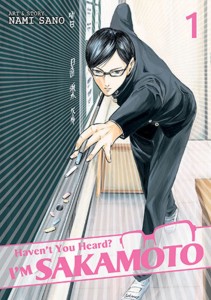
sakamotoHaven’t You Heard? I’m Sakamoto, Vol. 1
By Miki Sano
Rated Teen
Seven Seas, $12.99

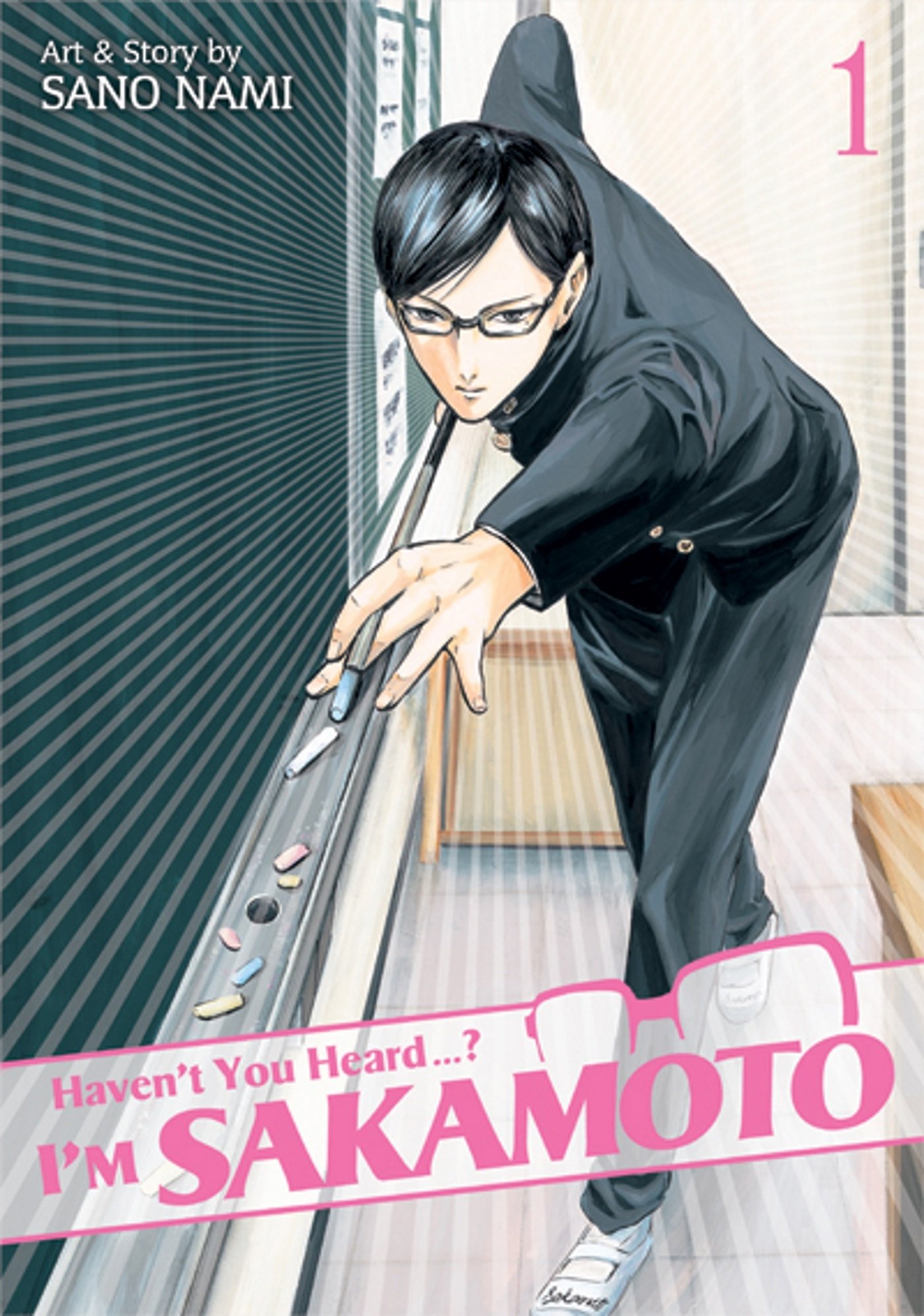
Haven’t You Heard? I’m Sakamoto is “The Aristocrats” of manga, a basic joke that yields endless variations, each more baroque than the last. The premise is simple: transfer student Sakamoto is handsome, brilliant, and athletic, making him a natural target for bullies and lovelorn girls. Any time a challenging situation arises–a bee in a classroom, a classmate injured by a softball–Sakamoto effortlessly meets that challenge, in the process revealing a previously undisclosed talent.

In the hands of a less imaginative storyteller, Sakamoto might be a wish-fulfillment character for every teenager who’s ever been tongue-tied or harassed by other students. Nami Sano puts a distinct spin on the material, however, portraying Sakamoto as so calculating and unflappable that he’s genuinely creepy; Sakamoto never smiles, laughs, or shows any discernible human emotion, even when confronted with other people’s tears or anger. (The real joke seems to be that everyone admires Sakamoto anyway.) I’m not sure that I LMAO, but Sakamoto’s odd persona and equally odd talents are a welcome rebuke to the school council presidents and earnest strivers who populate most teen-oriented manga; I’d much rather spend time with him than a standard-issue shonen prince.

The verdict: You’ll either find Sakamoto’s antics inspired or too weird to be amusing.

academiaMy Hero Academia, Vol. 1
By Kohei Horikoshi
Rated T, for teens
VIZ Media, $9.99

Meet Izuku Midoriya: he’s an ordinary teen living in a world where 80% of humanity possesses a super power. That doesn’t stop Izuku from aspiring to become a professional hero, however; since childhood, he’s dreamed about the day he might gain admission to prestigious U.A. High School, a training ground for future crime-fighters. A chance encounter with All Might, a celebrity superhero, gives Izuku a chance to prove his mettle and get the coaching he needs to pass the U.A. entrance exam.

Though the plot twists are unsurprising, and Izuku’s classmates familiar types (e.g. the Bully, the Spazzy Enthusiast), the breezy script propels My Hero Academia past its most hackneyed moments. The clean linework, playful superhero costumes, and artfully staged combat further enhance the series’ appeal; Kohei Horikoshi could give a master class on the reaction shot, especially when a supervillain is wrecking havoc on a downtown skyline. Most importantly, Horikoshi respects the sincerity of Izuku’s ambitions without letting the character’s earnest intensity cast a pall over the fun–in essence, it’s a Silver Age comic in modern shonen drag, with all the corny humor and fist-pumping action of Stan Lee and Steve Ditko’s best work on Spider-Man.

The verdict: My Hero Academia is as predictable as death and taxes, but a smart script and crisp artwork help distinguish it from other titles in the Shonen Jump catalog.

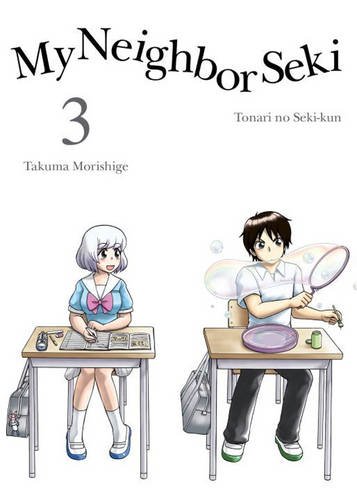
sekiMy Neighbor Seki, Vols. 1-3
By Takuma Morishige
Unrated
Vertical Comics, $10.95

Like Haven’t You Heard? I’m Sakamoto, My Neighbor Seki is a one-joke series: middle-school student Seki goofs off during class, much to the consternation of his seat mate Rumi. Seki isn’t just doodling in his notepad, however. He pets kittens, builds elaborate sculptures from shoji pieces, runs an intraschool mail service, and hosts a tea ceremony. To vary the rhythm of the joke-telling, artist Takuma Morishige occasionally transplants the action from the schoolroom to the playground, though the set-up remains the same; Seki does something outrageous and Rumi reacts, prompting the teacher to scold Rumi for not paying attention.

Given Seki‘s slender premise, it’s not surprising that each volume is a hit-and-miss affair. In volume one, for example, Seki knits a cactus plushie using a double-ended afghan hook. Rumi initially scoffs at his choice of tool; as she observes, “The hallmark of afghan knitting is its unique thickness and softness. It’s a texture best utilized when making sweaters,” not stuffed animals. When she sees the final results, however, she concedes that Seki has chosen the perfect technique and materials for his cactus, sending her into a rapturously funny meditation on yarn. Not all the gags are as successful: Seki’s penchant for staging elaborate scenes with action figures is moderately amusing at first, but grows more tiresome with each new and less imaginative iteration. Still, it’s impossible to deny the energy, creativity, and specificity with which Morishige brings Seki’s exploits to life, making this series more “win” than “fail.”

The verdict: My Neighbor Seki is best enjoyed in one or two chapter installments; when read in large bursts, some scenarios read like 4-koma strips stretched to epic and unfunny proportions.

Reviews: Over at Manga Connection, manjiorin reviews the first four volumes of Princess Jellyfish, which are currently available on Crunchyroll. TCJ columnist Joe McCulloch jumps in the WABAC machine for a nostalgic look at Even a Monkey Can Draw Manga. In honor of 801 Day, Megan R. reviews a title from the Tokyopop/BLU Manga catalog, Shout Out Loud.

Matthew Alexander on vol. 1 of Aoi House (The Fandom Post)
Michael Burns on vol. 5 of Assassination Classroom (AniTAY)
Nick Creamer on vol. 4 of A Bride’s Story (Anime News Network)
Rebecca Silverman on vol. 1 of First Love Monster (Anime News Network)
Michael Burns on vol. 7 of Food Wars! Shokugeki no Soma (AniTAY)
SKJAM! on Fragments of Horror (SKJAM! Reviews)
Connie on vol. 1 of Junjo Romantica (Slightly Biased Manga)
Sean Gaffney on vols. 1-2 of Maid-Sama! (A Case Suitable for Treatment)
Wolfen Moondaughter on vols. 1-2 of Maid-Sama! (Sequential Tart)
Lesley Aeschliman on vol. 1 of My Hero Academia (WatchPlayRead)
Adam Capps on vol. 3 of My Neighbor Seki (Bento Byte)
Connie on No Touching At All (Slightly Biased Manga)
Adam Capps on vol. 75 of One Piece (Bento Byte)
Ken H. on vols. 9-11 of Sankarea: Undying Love (Sequential Ink)
Matthew Warner on vol. 7 of Say I Love You (The Fandom Post)
ebooks girl on vol. 1 of Shiba Inuko-san (Geek Lit Etc.)
confusedmuse and Helen on Shugo Chara (Organization Anti-Social Geniuses)
Marissa Lieberman on vol. 1 of Spell of Desire (No Flying No Tights)
manjiorin on vol. 1 of Tokyo Ghoul (Manga Connection)
Ian Wolf on vol. 1 of Twin Star Exorcists (Anime UK News)
Connie on vol. 1 of Twittering Birds Never Fly (Slightly Biased Manga)
Connie on vol. 2 of Twittering Birds Never Fly (Slightly Biased Manga)
Lori Henderson on vols. 3-4 of Until Death Do Us Part (Manga Xanadu)
Sarah on vol. 9 of What Did You Eat Yesterday? (Anime UK News)
Connie on vol. 1 of World’s Greatest First Love (Slightly Biased Manga)
Alice Vernon on xxxHolic (Girls Like Comics)
SKJAM! on vol. 1 of Yamada-Kun and the Seven Witches (SKJAM! Reviews)
Ash Brown on vol. 2 of Your Lie in April (Experiments in Manga)

Filed Under: MANGABLOG, REVIEWS Tagged With: I'm Sakamoto, Manga Review, My Hero Academia, My Neighbor Seki, Seven Seas, Shonen Jump, Vertical Comics, viz media

Your Lie in April, Vol. 2

August 7, 2015 by Ash Brown

Your Lie in April, Volume 2Creator: Naoshi Arakawa
U.S. publisher: Kodansha
ISBN: 9781632361721
Released: June 2015
Original release: 2012
Awards: Kodansha Manga Award

Your Lie in April is an eleven-volume manga series created by Naoshi Arakawa that began serialization in Japan in 2011. The manga is one of Arakawa’s earliest professional works. Even so, Your Lie in April would go on to win a Kodansha Manga Award in 2013 and in 2014 the series’ anime adaptation debuted. Although I haven’t actually seen it yet, it was the anime that first brought Your Lie in April to my attention. As a lover of both manga and music (in addition to being a musician myself), the basic premise of Your Lie in April appealed to me a great deal. I was glad that Kodansha Comics licensed the series since I’m always excited to see more music manga released in English. I largely enjoyed the first volume of Your Lie in April and so was happy to receive a review copy of the second as well. Your Lie in April, Volume 2 was originally published in Japan in 2012 while the English translation was released in 2015.

Kosei hasn’t played the piano publicly for years, having tried to give it up after the death of his mother and a disastrous performance in competition. He has become so psychologically distraught that he literally can no longer his own music; the sound seems to disappear when he begins to seriously play. Very few people actually know why Kosei no longer performs or competes, and his closest friends continue to encourage him to play despite his reluctance. Somehow Kaori manages to bully him into serving as her accompanist in the second round of her violin competition at the last minute. She’s a passionate and headstrong musician who other pianists find difficult work with, sometimes even refusing to accompany her. But Kaori wants to be remembered by her audiences and she is convinced that Kosei, who was once well-known as a child prodigy, can help her do that. Except that he’s never been an accompanist before, they’ve never practiced together, and he hasn’t even had the change to study the score.

YourLieApril2-68Though Your Lie in April can be somewhat melodramatic at times, I appreciate that Arakawa is leveraging the psychological states of the series’ characters in order to further the story. Kosei being thrust into the spotlight and once again experiencing the thrill of performance doesn’t simply make everything all right or solve his problems. If anything, it actually makes matters more complicated. He continues to be torn between wanting to play and never wanting to touch the piano again. Hovering over Kosei is the shadow of his dead mother, an abusive woman who demanded perfection from him and his playing. But she was also the person who first taught him to love music. By the end of her life she had become cruel, but Your Lie in April, Volume 2 reveals that before she became ill she was much kinder and gentler person. It doesn’t excuse how she eventually treated her son, though it does help to explain in part why Kosei remained and continues to be devoted to her throughout the pain and suffering that was inflicted upon him.

What little is known about Kosei’s mother so far in Your Lie in April provides an interesting counterpoint to what little is known about Kaori. They are both musicians, they both are partly responsible for drawing Kosei into the world of music and, as the second volume of the series shows, they both struggle with physical illness. However, whereas Kosei’s mother became cruel, Kaori’s illness has caused her to devote herself to her music, striving to leave a lasting impression on those around her. No matter what happens in the future, Kosei’s relationship with Kaori, like the one with his mother, will be a formative one. He, at least, will never be able to forget her. She is an inspiration dragging him out of his personal darkness. This is something that is visually reinforced in the manga as well. Kaori is almost always shown in the light, sometimes she even seems to be the source of light, while Kosei is frequently seen in shadow, especially when he is playing. But Kaori is challenging and changing him. The time may come when Kosei will be able to freely stand in the light, too.

Thank you to Kodansha for providing a copy of Your Lie in April, Volume 2 for review.

Filed Under: REVIEWS Tagged With: kodansha, Kodansha Comics, Kodansha Manga Award, manga, Naoshi Arakawa, Your Lie in April

Maid-sama!, Vols. 1 & 2

August 7, 2015 by Sean Gaffney

By Hiro Fujiwara. Released in Japan as “Kaichō wa Maid-sama!” by Hakusensha, serialized in the magazine LaLa. Released in North America by Viz Media.

It’s hard when things that you enjoyed in the past suddenly seem more problematic to you. That hilarious maid from the old sitcom turns out to be a pretty bad stereotype. The running gag in the old British radio show is basically sexist as hell. That heartwarming childhood movie is teaching messages that are disempowering and stultifying. And yes, it even applies to license rescues, as Maid-sama!, the portrait of a gung-ho Type-A high school girl and the stalkerish guy who loves her and keeps saving her from various types of sexual assault… isn’t as funny as it used to be.

maid1

To be fair, looking back over my past reviews of this title back when Tokyopop was releasing it, I wasn’t too wild about Usui then either. But in six short years he’s gotten less tolerable, mostly because the narrative frames him as correct all the time. Part of this is the comedic conceit that he’s perfect at everything – to the point where Misaki begins to wonder if he’s actually human. But part of this is because the narrative enjoys having Misaki be strong, smart and try to rescue herself from danger but also can’t help put her in danger all the time in order to get rescued by the guy who likes her. It simply can’t avoid the standard cliches, and they’re not cliches for a good reason (and yes, there will be more sexual assault attempts as the series goes on.)

Luckily, the title has one big plus going for it, and that is Misaki herself. She’s loud, angry all the time, and can’t understand why boys exist, but at her core is a good heart and a girl who wants to help everyone – which is why she became Student Council President. She’s of a type I personally am very fond of, one that comes up often in Hakusensha titles – see also Special A and I Hate You More Than Anyone. And I do agree with Usui on one thing – teasing her and seeing her blush is adorable, and we will be seeing more and more of that blush as the series goes on. She’s stubborn as a mule (the “keep my job secret” thing isn’t even due to the traditional “no part time jobs” school rule – they’re allowed, she’s just embarrassed), but that’s also presented as a positive.

As for the rest of the cast, we still haven’t seen enough of them to really get an impression. Misaki’s trio of lovestruck idiots are pure comic relief, and the less said about the arrogant rich rapist from the rival school the better. I seem to recall when I first read the series that I liked it more when it was telling stories revolving around the maid cafe more than the school, so I look forward to reminding myself why – particularly Honoka. In the meantime, I am pleased that Viz picked this up, as I do want to see how it ends. But man, Usui is a lot harder to take in 2015 than he was in 2009 – particularly when the author agrees with him.

Filed Under: REVIEWS

A Silent Voice, Vol. 2

August 4, 2015 by Sean Gaffney

By Yoshitoki Oima. Released in Japan as “Koe no Katachi” by Kodansha, serialized in the magazine Weekly Shonen Magazine. Released in North America by Kodansha Comics.

After the pressure cooker that was the first volume of this series, it was somewhat inevitable that things would slow down and get a bit less traumatic with this second one. this is not to say that nothing happens, but we need to take a step back from the brink and see where our hero and heroine are now. Indeed, taking a step back from the brink is exactly what Shoya does, as after seeing Shoko again he makes a decision not to kill himself (which leads to one of my favorite parts of the book, where his mother confronts him about it and accidentally burns the money that he saved up for her. She’s presented as sort of a grown-up airhead much of the time, but I loved her reasoning in this scene as to why it was fine she burned the money.

silent2

As for Shoko, there’s a nice bit of narrative fooling that makes us think that we’re hearing her fairly negative thoughts about seeing Shoya after all these years. but in fact after a brief moment Shoko proves to be as sweet and understanding as you’d expect from a manga like this, and it turns out the narrative voice we heard hating on Shoko was her younger sister Yuzuru, who understandably thinks that Shoya ruined her sister’s life. This leads to her amusingly pretending to be Shoya’s boyfriend, which I didn’t buy for one moment, mostly as I assumed she was just a young tomboy from the start. Unlike Shoko’s mother (who not only does not remotely forgive Shoya for what he did to her child, but seems to have the ability to literally teleport in order to slap someone across the face), Yuzuru finally sees that Shoya really is making an effort to make amends, and starts to warm up to him by the end of the book.

Of course, it’s not as easy as that. I was impressed with how Shoya can still be resolutely unlikeable at times, even as we see him trying to deal with the fallout of various events (including serving a suspension for leaping into the river to save Shoko’s notebook), he’s still bad at understanding other people to a great degree. He makes friends with Tomohiro, who also seems to be bullied in his classroom, though that’s more for the traditional “I am pudgy and a bit of a nerd” than anything else, but we still get his POV of his fellow students as having X’s over their faces, which is a stark reminder of how in many ways his basic worldview hasn’t changed much. His guilt about Shoko drives him to learn sign language and apologize, but he needs to make more effort with everyone else. And that’s hard, given what happened in Volume 1, as no one will allow him to make that effort.

I’m not sure if this is going to go in a romantic direction – the ending seems to imply it might, but I’m not sure if that’s the best thing for this series, and in any case the two leads still have a lot more to sort through before that can happen. In the meantime, the second volume builds on the success of the first, and is not nearly as discomfiting.

Filed Under: REVIEWS

Accel World: Flight Toward A Blue Sky

August 2, 2015 by Sean Gaffney

By Reki Kawahara and Hima. Released in Japan by ASCII Mediaworks. Released in North America by Yen Press.

One of the issues with Sword Art Online, particularly as it goes on, is that we keep seeing these deadly MMORPGs that wind up being abused for nefarious purposes, yet somehow more of them continue to be made, and are not banned or made illegal in any way (at least so far). I think Kawahara understands that, as in Accel World we have Brain Burst being very much an isolated thing, only playable to a certain (very young) age and unknown to the greater populace or government. And then there’s what happens at the end of this book, which helps to explain why revenge and real-world consequences of battles are not an issue here, even though it feels like Nomi wasn’t really punished enough for what he did. Indeed, the worldbuilding in this series is intriguing me more than the characters.

aw4

The Brain Burst system, in fact, is starting to look more like a form of therapy than anything else. We’ve already seen how Haruyuki’s wings represented his own personal demons from reality. Now we see how even the powerups – which do so much damage to the psyche they’re practically forbidden – take their form based on childhood traumas, something bluntly stated by Niko, who shows up again in this book to mentor Takumu in how to properly use this technique (and by mentor I mean “beat up”, but this is a shonen fighting series, basically). Also, we finally figure out what Chiyuri’s ability is – not healing, but literal reversal of time – which is an amazing game power but also really depressing when you think about her relationship with Haruyuki and Takumu – she wants to return to when they were happy kids.

Chiyuri also showed the most sense in actually calling Kuroyukihime so that she could join the final battle – Haruyuki and Takumu are too invested in personal revenge and in not wanting to rely on her that they lose sight of how fatally dangerous this situation is. It’s always best to remember in situations like these, when you want to grit your teeth and beat some sense into the protagonists, that these are teenagers – not even that in some cases – dealign with needs and desires they’ve never felt before. Particularly Haruyuki, who has Chiyuri strip down and offer herself to him (something I id not like at all) and Kuroyukihime accept his accidental proposal (with a heavy blush – SHE at least gets it), but still too tied up in self-hatred to notice.

There’s definitely some seeds of future plotlines laid out here, as Nomi is backed by some sort of shadow organization that doesn’t like Kuroyukihime much, and I still get the sense that the psychotic sentient armor from Book 2 is not entirely formant, judging from some of Haruyuki’s OOC moments. On the down side, I’m fairly certain the resolution of the “Haruyuki is a peeper” plotline was far too easy, and there’s no way his reputation would be repaired that fast normally. Also, the reunion of Sky Raker and Kuroyukihime was far too abrupt and last-minute, and there had better be more to it in the next book. A good solid volume overall, though, and I will see what new twists the next in the series has – and hope Haruyuki continues to gain real-world confidence.

Also, for those who only saw the anime, this catches up to it, so Book 5 will have unanimated content.

Filed Under: REVIEWS

Orange Junk, Vol. 1

July 31, 2015 by Ash Brown

Orange Junk, Volume 1Creator: Heldrad
Publisher: Chromatic Press
ISBN: 9781987988031
Released: July 2015

Orange Junk, created by Mexican artist (and architecture student) Heldrad, is an ongoing comic series strongly influenced by shoujo manga. The series had its beginnings back in 2010 and eventually became one of the most well-loved comics hosted online at Inkblazers (previously known as Manga Magazine). Sadly, Inkblazers closed in early 2015. Happily, Orange Junk was quickly picked up by the publisher Chromatic Press to be featured in its online multimedia magazine Sparkler Monthly. And now, less than a year later, the first volume of Orange Junk has been collected and released both digitally and in print. While I was vaguely aware of Orange Junk before its debut in Sparkler Monthly, I didn’t have any extensive knowledge about its plot or characters. (Really, I recognized it more by name than anything else.) However, the release of the collection of the first four chapters and additional bonus content provided the perfect opportunity to be introduced to the unabashed shoujo delight that is Orange Junk.

Louise Barton is the oldest child of a family that at one point was very wealthy. She lived in comfort, had plenty of time and opportunity to pursue her hobbies, and was generally happy and content with her lot in life. But then her father’s company went bankrupt and her family is now struggling to pay back the debt and make ends meet. Louise, her younger brother, and both of their parents are still adjusting to their new circumstances. One of the greatest challenges for Louise is that she must attend a public school for the first time. Starting over as a transfer student, she has no friends and an unfortunate lack of academic aptitude. Not to mention that she’s also already managed to get on the bad side of Bruce Daniels, a classmate notorious for his temper and getting into fights. But not everything is bad in the eleventh grade. Andrew Grey, another transfer student and one of the cutest guys in the school, is in her class, too. And when the three of them get thrown together, things take an unexpected turn or two.

Orange Junk, Volume 1, page 34Out of all of the stories that have so far appeared in Sparkler Monthly, Orange Junk is the one that is probably the most stereotypically “shoujo,” except that in most cases Heldrad has deliberately taken frequently found tropes and stereotypes and given them a bit of twist. This is especially apparent in the characterizations of the series’ lead trio. Bruce is athletic and constantly getting into fights, but he’s also the smartest student in class. Drew may have the looks that make many of the girls swoon, but he’s also a complete airhead (with occasional moments of wisdom) and an otaku to boot. Almost everyone assumes that Louise has great connections and great grades, but her social life is lacking and she’s absolutely terrible at math. Even the underlying drama of the comic—Louise’s family losing their wealth and status—seems to be less commonly seen than a downtrodden heroine suddenly coming into a fortune of some sort. Orange Junk isn’t necessarily a shoujo manga parody, but it does approach being one at times. Either way though, the comic is very funny.

In the author’s notes, Heldrad explains why the series is named Orange Junk. “Orange” because it conveys a sense of energy and “junk” because the comic is akin to junk food. It’s a title that actually fits the series quite well. Orange Junk is fantastically energetic and the chemistry between its characters is great. Louise and Bruce’s interactions are particularly entertaining to watch. They both have strong personalities that frequently clash with each other—Louise is one of the few people who can actually stand up to Bruce—but they begin to establish an awkward sort of friendship over the course of the comic that is absolutely adorable. Ultimately, Orange Junk is a romantic comedy that’s not to be taken too seriously. Although many of the relationships evolve naturally, the comic has its fair share of silliness and melodrama, and there are plenty of developments that inspire incredulity. But that’s really all part of Orange Junk‘s charm. If the first volume is any indication, the rest of the series should be a tremendous amount of fun.

Filed Under: REVIEWS Tagged With: Chromatic Press, comics, heldrad, orange junk

The Manga Revue: The Demon Prince of Momochi House

July 31, 2015 by Katherine Dacey

I’m hitting the road for a brief vacation this weekend, so this week’s column is more of a drive-by than a full-on review. On the menu: The Demon Prince of Momochi House, a supernatural rom-com that recently joined VIZ’s Shojo Beat line-up.

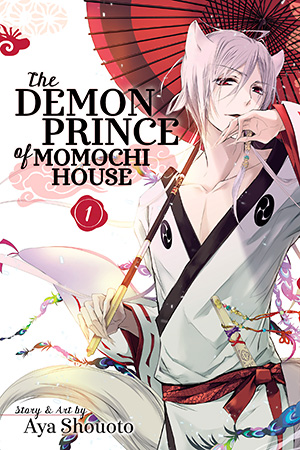
demon_princeThe Demon Prince of Momochi House, Vol. 1
By Aya Shouoto
Rated T, for teen
VIZ Media, $9.99

The Demon Prince of Momochi House follows a tried-and-true shojo formula: a plucky girl inherits a house–or a school, temple, or dojo–that’s already inhabited by a posse of good-looking boys. The wrinkle is that Himari–said plucky girl–has inherited a haunted house that sits atop a portal between the demon and human worlds. Her arrival triggers a flurry of supernatural activity, as ayakashi descend on Momochi House to investigate its new resident. Protecting her is Aoi, a seemingly ordinary seventeen-year-old who transforms into a fox-eared demon whenever an unruly spirit appears, and Yukari and Ise, a pair of shikigamis whose human form screams “boy band!”

The plot is as road-tested as the premise. In every chapter (1) Aoi warns Himari not to explore Momochi House on her own (2) Himari ignores him and is promptly attacked by a demon and (3) Aoi then rescues Himari, causing her to blush, stammer, and wonder why she feels flustered when he’s around. Must be heartburn…

If the story barely deviates from the Kamisama Kiss playbook, the brisk pacing and cheerful banter between Himari and her tenants prevents the story from devolving into pure formula. So, too, do Aya Shouoto’s sensual character designs and smart-looking yokai, both of which suggest the influence of CLAMP’s xxxHolic or Gate 7. I’m not sure that snazzy artwork and a spunky heroine are enough to sustain my interest for ten or fifteen volumes, but I’d certainly pick up the next installment to see if the story moves in an unexpected direction.

Reviews: Megan R. takes Full Metal Panic: Overload! for a spin at The Manga Test Drive, while Sean Gaffney posts an early review of Haven’t You Heard? I’m Sakamoto. Over at Otaku USA, Sean O’Mara posts a generously illustrated essay on Hayao Miyazaki’s manga.

Sheena McNeil on vol. 15 of 07-Ghost (Sequential Tart)
Adam Capps on vol. 5 of Ajin: Demi-Human (Bento Byte)
Leroy Douresseaux on vol. 55 of Case Closed (Comic Book Bin)
Kaylee Barton on vol. 1 of The Demon Prince of Momochi House (Bento Byte)
Matt on vol. 1 of Final Fantasy Type-0 Side Story: The Ice Reaper (AniTAY)
Amanda Vail on vols. 1-2 of Drug & Drop and Legal Drug (Women Write About Comics)
Sheena McNeil on vol. 6 of Food Wars! Shokugeki no Soma (Sequential Tart)
Patti Martinson on Fragments of Horror (Sequential Tart)
Allen Kesinger on vol. 1 of Is It Wrong to Try to Pick Up Girls in a Dungeon? (No Flying No Tights)
Majin Oni on Jaco the Galactic Patrolman (majinoni6)*
Matt on vol. 2 of Kagerou Daze (AniTAY)
Wolfen Moondaughter on vol. 1 of My Hero Academia (Sequential Tart)
Majin Oni on vol. 1 of Prison School (majinoni6)*
Matt on vol. 1 of Prison School (AniTAY)
Kane Bugeja on vol. 5 of Seraph of the End (Snap30)
Sarah on vol. 2 of Servamp (Anime UK News)
Lesley Aeschliman on vol. 7 of Tiger & Bunny (WatchPlayRead)
Adam Capps on vol. 1 of Twin Star Exorcists (Bento Byte)
Majin Oni on vol. 1 of Twin Star Exorcists (majinoni6)*
Joseph Luster on vol. 1 of Ultraman (Otaku USA)
Sheena McNeil on vol. 10 of Voice Over! Seiyu Academy (Sequential Tart)
Alberto Cadena on vol. 9 of What Did You Eat Yesterday? (Bento Byte)

* Denotes a video review.

Filed Under: MANGABLOG, REVIEWS Tagged With: Aya Shouoto, demon prince of momochi house, Manga Review, shojo beat, viz media

So Cute it Hurts!! Vol. 2

July 30, 2015 by Anna N

My biggest complaint with the first volume of So Cute it Hurts!! was that I thought it focused a bit too much on boy twin Mitsuru’s adventures cross-dressing as a girl, without as much character development or action for his sister Megumu pretending to be her brother at a school largely populated by juvenile delinquents. I was happy to see that in the second volume Megumu gets a larger chunk of the story.

One of the things that I’ve enjoyed in Ikeyamada’s series so far is that the plot moves fairly fast. Developments that might take at least a two volumes to be explored in another series are quickly resolved, only for even more complications to pop up. Also, many of the issues that the characters have are so ridiculous, I find it extremely entertaining. Megumu pretending to be her brother grows closer and closer to head one-eyed delinquent Aoi Sanada, who turns out to have a deadly Achilles heel involving female company. If he so much as touches a girl, he immediately feels faint and sick. It is to Megumu’s credit that as soon as she finds this out after indulging in fantasies about revealing her true gender and confessing her love to Aoi, she vows to just remain at his side as a male because she doesn’t want to burden him by making him deal with her as a girl.

In the first volume there’s a hint that the deaf girl that Mitsuru likes, Shino and Aoi know each other. This is promptly explored in the second volume, continuing with the plot moving along quickly. Most of this volume will be very familiar to Hana Kimi fans, as Megumu’s natural cuteness shines through her boyish disguise, causing her classmates and Aoi in particular to experience odd feelings. Even though the romances in So Cute it Hurts!! are absolutely silly, there are a few sweet moments where it is clear that twins really do care about the objects of their affection. Overall, I was happy to see the additional character development I was hoping for and while So Cute it Hurts!! is not in any way profound, it is a nice brain candy type manga series.

Filed Under: REVIEWS Tagged With: a devil and her love song, shojo, shojo beat, so cute it hurts!

Duncan Kincaid and Gemma James, Books 1-4 by Deborah Crombie

July 30, 2015 by Michelle Smith

Like Elizabeth George, Deborah Crombie is an American writing about Scotland Yard detectives in England. Her works come recommended by a friend who knows and shares my taste in mysteries, and now that I’ve been overtaken by a powerful urge for a mystery binge, I am finally checking them out. There are presently sixteen books in the series; I plan to tackle them in four installments.

share_in_deathA Share in Death
Newly promoted Detective Superintendent Duncan Kincaid is in Yorkshire on holiday, taking his cousin’s place at a timeshare for a week. He intends to keep his profession a secret from his fellow guests, but when he discovers the body of an employee floating in the pool, he can no longer maintain his anonymity. And, despite his attempts to convince himself that it isn’t his case, he also cannot resist getting involved with the investigation.

In some ways, A Share in Death is a traditional British cozy mystery. Kincaid’s not an amateur, as many sleuths tend to be in those sorts of mysteries, but the action does take place in a small village and involves a finite cast of suspects, some of whom have preexisting relationships. Crombie has a way with physical descriptions that is admirable—she doesn’t expend excess words in the act, but yet I somehow came away with a distinct picture of each individual guest—and between this and the cozy feel, the experience of reading this book was rather like watching my own mental PBS mystery program!

It’s not a perfect book—one secret held by a guest was not difficult to work out, and I’m not entirely sure that everything about the resolution makes perfect sense—but it was still on the whole very enjoyable. Engaging and not intellectually demanding, it managed not to come across as fluffy or trivialize the act of murder. I very much look forward to continuing with this series, and especially hope to see more of Kincaid and his capable Sergeant, Gemma James, working together (as opposed to separated by distance, as they were here).

all_shall_be_wellAll Shall Be Well
Like the first book in the series, All Shall Be Well involves a murder that has taken place in close proximity to Duncan Kincaid. This time it’s his cancer-stricken friend and neighbor, Jasmine Dent, whose death might’ve been assumed to be natural had not Duncan been suspicious and ordered a postmortem, discovering that Jasmine died of an overdose of morphine. Suicide is a possibility, but certain details prevent Duncan from accepting that conclusion.

Again, there is a short list of suspects, with the strongest suspicion resting upon the douchebag boyfriend of the former coworker to whom Jasmine has left the bulk of her estate. And yet, the end result doesn’t feel as typically cozy as A Share in Death because Duncan’s investigation takes him far and wide in search of clues. Happily, there is also much more interaction with Gemma in this book. (I especially liked that Duncan made a point of comparing her to the aforementioned coworker and how the latter inspired parental feelings but the former certainly did not.) There is also a very positive outcome regarding Jasmine’s kitty about whom I worried for the entire book.

I am really enjoying this series so far, and looking forward to the third book, in which Duncan seems to shed his Jessica Fletcher murder-magnet ways and is actually assigned a case!

leave_grave_greenLeave the Grave Green
Okay, Leave the Grave Green is definitely my favorite of the series so far. Instead of a murder happening in Duncan’s vicinity, this time he and Gemma are assigned to the case of Connor Swan, an apparent drowning victim who also had handprints on his throat. He is the son-in-law of a famous and influential couple in the opera scene, thus Scotland Yard’s involvement.

I thought it was interesting that there was essentially no physical evidence to consider, with the autopsy being inconclusive about what exactly happened, so the case was more-or-less solved by talking to the same half dozen or so characters, over and over, with each revealing things they had neglected to mention in previous conversations until finally, Duncan works out what must have happened. It’s not as tidy of a conclusion as they could wish from a prosecutorial standpoint, but it’s satisfying enough for readers.

There was one instance where a clue about a particular family link was a little too obvious, but ultimately, I did not peg the likely culprit. I also appreciated spending more time with Duncan and Gemma’s partnership, complete with a burgeoning physical attraction that culminates in something that they have fascinatingly contrary reactions to afterwards. And, lastly, I didn’t even dare to hope that we’d get a kitty update, but not only did we, but Crombie also kindly told us who was looking after him while Duncan was away on the case. This degree of solicitude made me suspect Crombie must have cats herself and, verily, her bio confirms it.

mourn_not_deadMourn Not Your Dead
I begin to wonder whether I will declare with each successive book, “Okay, this one is my favorite now.”

Mourn Not Your Dead picks up a few days after the conclusion of Leave the Grave Green. Gemma has been avoiding Duncan, but must come into work when they are assigned to the case of a high-ranking police officer found bludgeoned to death in his home. In retrospect, the case itself isn’t terribly fascinating or twisty, but there’s a remarkably solid and memorable cast of suspects and locals, and the undercurrents between Gemma and Duncan make this quite a riveting read.

They are envisioning wildly different outcomes, and Duncan is hurt and baffled when Gemma calls what happened between them “a dreadful mistake.” I loved that he hadn’t even considered how she might worry about and wish to prioritize her career, and I loved too that he told her she had no need to apologize for what she felt or didn’t feel. It was a nice way of showing that he’s got some flaws, but also deeply respects Gemma’s agency. I also really enjoyed the way they gradually regained some equilibrium and how the case helped put some things in perspective.

I love mysteries where the leads are just as interesting as the cases, and this is definitely such a series. Onward, ho!

Filed Under: Books, Mystery, REVIEWS Tagged With: Deborah Crombie

Haven’t You Heard? I’m Sakamoto, Vol. 1

July 30, 2015 by Sean Gaffney

By Nami Sano. Released in Japan as “Sakamoto Desu Ga?” by Enterbrain, serialization ongoing in the magazine hertz. Released in North America by Seven Seas.

I’ve been waiting for this series for a long time, and it’s been worth the wait. This may be surprising, given that on the surface, the title seems like a simple gag manga. But the execution of its one gag is what matters, and, like its eponymous character, Haven’t You Heard? I’m Sakamoto does it with coolness, flair and style. This is not a manga to be read ironically – if you go into this waiting to see the jokes getting undercut, you will be sorely disappointed. This is a straight up look at one of the coolest kids ever, and how not even his enemies can possibly stand up against his sheer force of personality. The humor comes from what Sakamoto does and how he does it – and the realization that he’s not only incredibly cool, but also incredibly strange.

sakamoto1

Of course, Sakamoto on his own is only half of the joke. Because of his very nature, he inspires frustration, jealousy and desire in those around him. We see the school bullies, angry as all the girls have totally fallen for him, trying to teach Sakamoto to know his place. We also see one of the bullied ones, who gets training on how to develop self-respect and fight back from Sakamoto (who also makes the most amazing McDonald’s clerk you’ll ever see). Another classmate wants desperately to stand out, be it via trendy fashions or just being the class clown. And though all the girls may swoon over Sakamoto, they’re not any better off – his total obliviousness to subtle love overtures leads to frustration and jealousy among the female classmates.

It’s interesting to think about how much of Sakamoto’s straightforward cluelessless is just an act. Clearly some of it is – he seems to get that the girls are fighting over him and tries to resolve it in his usual eccentric way, and early on has reactions to the attempted bullying that almost seem like a sneer. But as the book goes on we begin to realize that Sakamoto is not merely the coolest man alive, but also incredibly bizarre and sometimes incredibly obtuse. Keeping the balance is important – you’re never quite sure in the final chapter whether he’s driving another bully into fending for himself by being over-solicitous, or is genuinely, terrifyingly unaware of how creepy he’s getting.

Nami Sano’s art is also excellent, and fits the type of humor she’s trying to tell – this wouldn’t work if the art were more cartoonlike. Sakamoto’s poses, seen throughout, are drawn to look as amazing as possible, and he can make even the most trivial task seem easy – though he’s at his best when the tasks are almost impossible, such as skewering a hornet by its stinger with only his compass point. There’s not really any character development or plot to speak of here, but this isn’t that type of manga. Instead we are here to be amazed at Sakamoto, watch his antics along with the rest of his class, and wonder if he really is human after all – and if so, how can we be more like him? Even if you aren’t normally a fan of gag manga, give this a try – I guarantee you’ll laugh out loud at least once during the volume.

Filed Under: REVIEWS

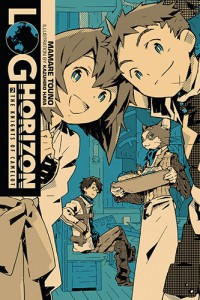
Log Horizon: The Knights of Camelot

July 28, 2015 by Sean Gaffney

By Mamare Touno and Kazuhiro Hara. Released in Japan by Enterbrain. Released in North America by Yen On.

This second volume of Log Horizon improves on the first, doubling down on its world-building and showing us what it would be like to have to set up an entire governing body from scratch, particularly when there’s a limit to what penalties you can enact for immoral but not technically illegal behavior. Some folks, such as our heroes, regard abusing the rules of this new world for profit and ruthlessness to be no fun. Others are perfectly happy to enslave children to mass-produce what they need. And, despite the obvious black-and-white morality on display there, there’s a long argument that talks about what can actually be done given the resources and authority they have.

lh2

The young kids seen on the cover are the twins that Shiroe occasionally mentioned in the first book. He had happened across them when they were just starting out, and helped them slowly advance through some beginner quests. Now they’re trapped in slavery, sleeping on hard cement floors and going out to get ingredients for useful potions which are then sold to those who DON’T need them. That said, they did agree to join the Hamelin guild, even in trickery, so, unless Shiroe can buy the entire building and kick who he wants out (which is prohibitively expensive), there’s not a lot that he can do. Which frustrates him intensely. Shiroe’s brilliant tactics keep getting undercut by his own self-hatred, as he keeps justifying making this world a better place as his own selfishness, and framing everything in the worst way.

I hadn’t thought that one of the minor aspects of the first book – food is bland and tasteless, so unenjoyable – would wind up being the main plot point of the second book. Once Nyanta, the Obi-wan Kenobi of this series (though not dead yet), discovers how you can make tasty food, suddenly endless possibilities spiral outward. It’s up to Shiroe and the Crescent Moon Guild to corral those possibilities and make sure that they can be used as a negotiating tool. I really love the look we get at the Crescent Moon Guild here – Marielle proves to be an emotional center, and we see a lot more of her self-doubt here even as she tries to cover it up with her dazzling smile. Meanwhile, Henrietta proves to be even smarter than Shiroe when she’s not busy trying to molest Akatsuki.

I had one or two niggles – when discussing what the new government should make illegal, rape was mentioned only as ‘between those of the opposite sex’, which left a bad taste in my mouth, especially given the aforementioned molestation being used as a running gag with no actual concern about Akatsuki’s lack of consent. And again, for non-gamers there really is a lot of technical detail in this book that goes over my head sometime. The Round Table meeting also introduced a bunch of people all at once, and I hope that we’ll see more of them in future books, but I could barely match names to lines – only Soujiro Seta made an impression, and that’s because he got to be the cute bishie.

Overall, though, this novel expands on the possibilities of the first and gives us a lot more cast, along with introducing a few ‘regulars’ – I look forward to seeing how the twins do in Shiroe’s new guild. I also look forward to more of Naogetsu and Akatsuki, who had surprisingly little to do in this book. Definitely recommended.

Filed Under: REVIEWS

  • « Go to Previous Page
  • Page 1
  • Interim pages omitted …
  • Page 232
  • Page 233
  • Page 234
  • Page 235
  • Page 236
  • Interim pages omitted …
  • Page 346
  • Go to Next Page »
 | Log in
Copyright © 2010 Manga Bookshelf | Powered by WordPress & the Genesis Framework