• Skip to primary navigation
  • Skip to main content
  • Skip to primary sidebar
  • Home
  • About Us
    • Privacy Policy
    • Comment Policy
    • Disclosures & Disclaimers
  • Resources
    • Links, Essays & Articles
    • Fandomology!
    • CLAMP Directory
    • BlogRoll
  • Features & Columns
    • 3 Things Thursday
    • Adventures in the Key of Shoujo
    • Bit & Blips (game reviews)
    • BL BOOKRACK
    • Bookshelf Briefs
    • Bringing the Drama
    • Comic Conversion
    • Fanservice Friday
    • Going Digital
    • It Came From the Sinosphere
    • License This!
    • Magazine no Mori
    • My Week in Manga
    • OFF THE SHELF
    • Not By Manga Alone
    • PICK OF THE WEEK
    • Subtitles & Sensibility
    • Weekly Shonen Jump Recaps
  • Manga Moveable Feast
    • MMF Full Archive
    • Yun Kouga
    • CLAMP
    • Shojo Beat
    • Osamu Tezuka
    • Sailor Moon
    • Fruits Basket
    • Takehiko Inoue
    • Wild Adapter
    • One Piece
    • After School Nightmare
    • Karakuri Odette
    • Paradise Kiss
    • The Color Trilogy
    • To Terra…
    • Sexy Voice & Robo
  • Browse by Author
    • Sean Gaffney
    • Anna Neatrour
    • Michelle Smith
    • Katherine Dacey
    • MJ
    • Brigid Alverson
    • Travis Anderson
    • Phillip Anthony
    • Derek Bown
    • Jaci Dahlvang
    • Angela Eastman
    • Erica Friedman
    • Sara K.
    • Megan Purdy
    • Emily Snodgrass
    • Nancy Thistlethwaite
    • Eva Volin
    • David Welsh
  • MB Blogs
    • A Case Suitable For Treatment
    • Experiments in Manga
    • MangaBlog
    • The Manga Critic
    • Manga Report
    • Soliloquy in Blue
    • Manga Curmudgeon (archive)

Manga Bookshelf

Discussion, Resources, Roundtables, & Reviews

Reviews

The Devil Is a Part-Timer!, Vol. 17

October 19, 2020 by Sean Gaffney

By Satoshi Wagahara and 029. Released in Japan by Dengeki Bunko. Released in North America by Yen Press. Translated by Kevin Gifford.

Even more than the last volume, this one gives off the feeling of an author who has been told precisely when his series will be ending. We have five more to go, including this one. As such, it’s far more concerned with the future of the main cast than previous books, as well as pointing blinking arrows at one of the main unanswered questions of the series: why is Maou so dedicated to working his way up the McRonald’s ladder? Shouldn’t he be more worried about Enta Isla? The ongoing battle against God gets shunted to the last fifth of the book (which is quite good, don’t get me wrong), leaving the bulk of it focusing heavily on Maou having the 23-year-old equivalent of a mid-life crisis. He still hasn’t answered Chiho, Emi continues to give him the most mixed signals imaginable, and he’s also reached a crisis point at his job: he failed the managerial exam. Like most huge corporations, they won’t tell him why. Does Maou have what it takes to lead?

It’s a bigger problem than you’d think. He can’t retake the exam for a year. And he has to be recommended again, which is a problem, as Kisaki, who graces the front cover, is being promoted. She’s not leaving the store per se, but she won’t be managing anymore, meaning she won’t be able to help guide Maou’s career. Indeed, she seems far more concerned about her own dream of opening an upscale coffee bar. That said… that dream might include Maou. As well as Sariel, surprisingly, who Kisaki points out is very good at managing money, hopelessly devoted to her, and won’t actually lay a hand on her – the perfect lackey. (This seems cruel, but Sariel is really too pathetic to sympathize with.) That said, Maou simply can’t accept right now – not with everything else in his life up in the air, including monstrous lizards invading Japan, injured chickens, and White Day chocolates needing to be purchased.

One theme of the entire series has been that Maou is excellent at leadership skills when they involve concrete things that need doing, but he’s very bad at reading the emotions and hearts of anyone he deals with. This is especially proven in the scene where he gives out the White Day chocolates – he thinks of everything, including getting chocolate for people who only gave it to him indirectly (coughEmiliacough), then proceeds to ask Emilia to help him go to the demon territories, which sounds to everyone (including her) like he’s taking her on a date and going back to his place. He is dull when it comes to love and romance. Which is why he hasn’t answered Chiho either. Fortunately for him, the crisis at the end of the book will likely make it OK to forget about that again for a bit. They really DO need to clear up Enta Isla first.

There’s even a bonus short story here, which was not in the Japanese volume, showing off Maou’s terrible fashion sense. Assuming Devil Is a Part-Timer fans have not spoiled themselves on what happens next, this should be a great pickup for them.
Filed Under: devil is a part-timer!, REVIEWS

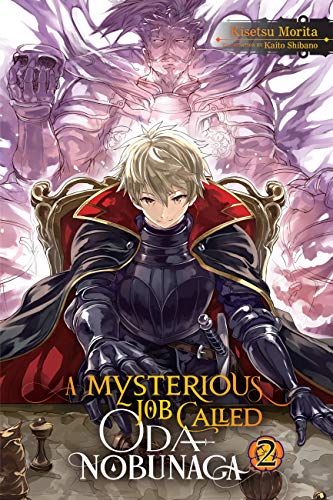
A Mysterious Job Called Oda Nobunaga, Vol. 2

October 18, 2020 by Sean Gaffney

By Kisetsu Morita and Kaito Shibano. Released in Japan as “Oda Nobunaga to Iu Nazo no Shokugyou ga Mahou Kenshi Yori Cheat Datta Node, Oukoku o Tsukuru Koto ni Shimashita” by GA Novels. Released in North America by Yen On. Translated by Alex Wetnight.

I feel like this review should be very short. It should essentially be “everything I said last time, but EVEN MANLIER”. I’ve said this about a few light novels in the past, but the Job Called Oda Nobunaga series really does feel like it’s written for a very specific type of fan. They hang out on internet forums, wondering why the male leads in these books are all such weak-ass wimps. They read harem manga and ask themselves why he doesn’t just bang everyone. They want a hero who kicks ass, takes names, makes love… I have very good news for them. Aside from cutting away before actual sex scenes, this book is basically exactly what they’ve been yearning for all this time. Alsrod, over the course of the 6-7 years or so this book takes place in, ends up as Regent to the King that he’s basically helped install, while finding time for some more wives and lovers.

Last time I mentioned that Alsrod had finally met someone who also had a famous Japanese warrior as their profession, and wondered if they might actually force him to fail or do badly at something. I feel embarrassed for even mentioning it, because by Page 7 or so he’s already won her to his side and bedded her. Over the course of the book he also takes as a lover his werewolf spy, weds the King’s younger sister (who, thankfully, has to wait for the loving – apparently 15 is old enough but 13 is not), is enchanted by a dragonewt tea merchant who he also beds and proposes to (she says no), and towards the end we get a meek and self-deprecating young woman, the daughter of another of his vassals, who simply wants to be a good mother to strong children. Given all these women (remember, he still has his childhood friend, the strong-willed daughter of another Lord, and another concubine from a northern area), it’s a wonder he finds the time to keep conquering. However, no fear, there’s plenty of that as well.

Again, this falls into the “this sounds absolutely vile but is strangely readable” category. It helps that most of the women he ends up with are also in major positions of power – indeed, his childhood friend and the Akechi Mitsuhide general both don’t want to be an official wife because they want to fight at his side. Oda Nobunaga is there as well, of course, in the back of Alsrod’s head, but he is getting strangely less and less relevant, and as the book goes on his advice is getting heeded less and less. Possibly the most interesting part of this book is that we meet three more “occupations” along the same lines – Kunitomo Shuu, Sen no Rikyuu, and Takeda Shingen – and it seems that this land is essentially an afterlife for these famous folks. As for the battles… well, they’re OK. They’re sword fights. You know how it goes.

The end of the book has another rival appear, Takeda Shingen, but given Alsrod has already captured the girl with that “job” by the end of this book, I suspect she will simply be added to the pile of wives. That said, I’m not entirely certain this book will end with Alsrod triumphant. It continues to mirror somewhat events in Nobunaga’s life… which did not have him winning the day in the end. The third book is the final one – will it actually kill Alsrod off to teach readers a lesson about hubris? Or will he stand victorious with his many, many women at his wide? If this were a long-runner I’d be dropping it, but three volumes seems just about right.

Filed Under: a mysterious job called oda nobunaga, REVIEWS

Accel World: Sun God of Absolute Flame

October 17, 2020 by Sean Gaffney

By Reki Kawahara and Hima. Released in Japan by Dengeki Bunko. Released in North America by Yen On. Translated by Jocelyne Allen.

In general, one step forward and two steps back is the Accel World way, so I will admit that when we finally got to the big villain reveal here I was half expecting that they had in fact sabotaged the video card that Chocolat Puppeter had, or altered the footage, or what have you. Fortunately, Kawahara still knows how much is too much and how much is just enough. This may come as a surprise to those of you who just read ten straight volumes of Sword Art Online: Alicization, but hey. But yes, the plan to reveal White Cosmos as the masterminds of all the bad things in Accel World is finally borne to fruition here. Of course, there’s just one slight problem with that, which is that in order to do so, all the major players in Brain Burst are gathered in one place. It’s the perfect time to do some culling. And White Cosmos is super powerful, even though, to my annoyance, Kuroyukihime’s sister did not show up for this big battle. Basically, expect deathtraps.

There are a lot of the things I like about Accel World here. The cast all get some cool things to do. Chocolat Puppeter gets to fulfill her role as the one with the evidence. Sky Raker and Silver Crow end up making a great flying team, and Fuko in general gets a lot to do in this book. There’s suggestions throughout that there was a lot of history in this game Haruyuki missed before he was given it, and while he knows a lot of it, he doesn’t know all of it. (In particular, every single player seems to think of themselves as Fuko’s rival.) Haruyuki’s “gosh, why am I so weak and bad” mindset is virtually absent here, mostly admittedly due to the fact that there’s no time to think in this book, but the ending is fantastic, with his realization that Kuroyukihime is in fact upset and depressed, and his overture of food to cheer her up is very sweet – that said, I doubt that the cliffhanger ending we see here is going further than snuggling.

Of course, this is still Accel World, so there are also several things I wasn’t too fond of here. I’m never going to love Hima’s oversexualized tweens artstyle, and the fact that the series seems determined to show the girls “naked” behind their avatars (while Haruyuki gets to keep his shirt) and the huge chests of some of them – the fanservice in this series is ludicrous to the point where it’s hard to read in public without getting arrested. And Kawahara admits this next one himself – we’re spending more time in the game, which is okay – I mean, it’s the subject of the series – but at the expense of the real lives of these characters, and he’s absolutely right – I do want to see the group all go to Haruyuki’s farm, or the elections, or all the things he set up that have been in stasis because of these endless fighting arcs. It can be grindingly exhausting.

That said, this problem may be solved very fast unless Silver Crow and Sky Raker can do something, as most of the rest of the good guys are in a nasty deathtrap that will be hard to escape. Fortunately, we get Vol. 23 soon, and let’s look at the cover art… (sighs, slaps forehead). Maybe we’ll get 23 soon.

Filed Under: accel world, REVIEWS

Baccano!: 1931 Another Junk Railroad: Special Express

October 16, 2020 by Sean Gaffney

By Ryohgo Narita and Katsumi Enami. Released in Japan by Dengeki Bunko. Released in North America by Yen On. Translated by Taylor Engel.

It’s nice to see Baccano! returning to the 1930s, which has always felt like Home Base. This volume has an odd history (get used to me saying this). Before the anime came out there was an audio drama of the Flying Pussyfoot books, and Narita wrote a short novel as a bonus for the CDs. The short novel was then used by the anime when it came out the following year for three OAVs at the end of the story. Then, two years after that, he expanded the short novel into the novel that you see here. And given that it was always meant to be something of a bonus feature, it’s no surprise that this book is filled with references to past novels, even above and beyond the fact that it’s a semi-sequel to the other Railroad arcs. Indeed, I would say that if you read Vols. 2 and 3 and then try to jump ahead and read this as a pure sequel, you will be very unhappy. Because this is also a sequel to several other books.

As with all Narita novels, there are several things going on at once in this book, but the “main” storyline is Chane trying to figure out life after her father has been taken into custody by the FBI. She’s left a message for Claire, but it’s unclear what the message means… to both him and in her own mind. What’s more, Chane, who has spent her entire life being betrayed and used, even by the one man that she wholly trusts, finds the very idea of Jacuzzi’s idealistic niceness baffling. Later books in the timeline (which we’ve read earlier in the series) show how joining up with Jacuzzi’s crew and falling in love with Claire is the best thing that’s ever happened to her, and this book shows that evolution. We also get introduced to Graham, who, again, we’ve already been well acquainted with in previous books. More importantly, the fact that this is Book 14 in the series allows Narita to reveal a couple more immortals who happened to be on the train that we never saw…

Now that Narita is allowed to have his bad guy front and center, he’s clearly reveling in it. Fermet is simply terrible throughout this entire book. We know, having read the 2002 books, that he will be terrible in the future as well. And, given that Huey explicitly says that Fermet killed his wife, we know that he’s going to be terrible in the past. Fortunately, Elmer is here to help out somewhat (and there’s a tie-in to the Baccano! DS game here as well, which I won’t even get into…), but given that Elmer is broken as well, that’s not exactly a comfort. Fortunately, this is balanced out by the sweetness surrounding Chane and Jacuzzi’s gang, as well as seeing an epilogue for Rachel, who is allowed to dress in something other than khakis (though the anime missed that) and give love advice to Claire.

So, having been thoroughly spoiled by this book and the previous one, it’s time to go read the ending no one wants to read. Well, that’s not quite true. In all of Baccano fandom, the next book and 1711 may be the most awaited books in the entire series. Back to 1710 next time, where everything is smiles and happy times. Till then, enjoy this book that feels like a DVD extra but is still a lot of fun.

Filed Under: baccano!, REVIEWS

Combatants Will Be Dispatched!, Vol. 4

October 15, 2020 by Sean Gaffney

By Natsume Akimoto and Kakao Lanthanum. Released in Japan as “Sentouin, Hakenshimasu!” by Kadokawa Sneaker Bunko. Released in North America by Yen On. Translated by Noboru Akimoto.

This is still very much your typical volume of Combatants Will Be Dispatched!, where everyone is terrible above and beyond the call of duty. But there are glimmers of the future here, a sign that perhaps the series is not simply destined to be “KonoSuba’s first, crappier draft”. A bit more attention is paid to the ongoing plot of the series itself, with a revelation that this is not simply Six and company scouting an alien planet for the lulz, it’s because Earth is genuinely going ecologically batshit and the evil organization is trying to find a new home for everyone. That said, it doesn’t have to be Six personally, and the other subplot that matters is that there are a bunch of evil overlords who want their boytoy back home with them and are fine with leaving the worldbuilding to someone else. For any other light novel protagonist this would be heaven on Earth, but Six is decidedly uninterested in a harem, content to stay on this world with Alice. Is he getting soft?

As you can see by the cover, this volume’s “Heroine” is Lilith, one of the three evil overlords Six works for. He specifically requested her because she’s the mad scientist, and that’s just what they need right now, if only to stop their bases getting blown up. Sadly, she’s just as useless as everyone else that is in this book, and she also has all the character flaws that go along with her archetype. She’s also grumpy as Six, while happy to banter with her and also happy to threaten to sexually assault her, is not all that into her. Even worse, Alice, her own creation, is going through a rebellious stage, being crankier than usual. While Lilith is there, they dig for water (triggering a slime monster), try to get the poop of a giant sparrow for fertilizer (triggering Snow’s greed at the shiny things in its next), summon an actual angel (which terrifies everyone but Alice, who insists she’s a cosplayer), and battle the Demon Lord’s armies again, just so Rose can ask him why they’re staying at her old holiday home.

As you can see, the goal of this series is still laughs first and foremost. Usually of the “dear lord” variety – there really is a lot of discussion of pee and poop here, and one scene showing how the kingdom uses orcs horrifies Six and Lilith so much that they’re almost ill (and we’re in hysterics). But as I said, the series is starting to get a hang of its characterization. Six’s problem is that, when you get right down to it, he’;s an asshole but he isn’t evil. And what’s more, everyone around him knows it. It’s only gotten worse since he’s arrived on this planet, but that doesn’t seem to bother him much. Being separated from Alice does, though – they aren’t a romantic couple (there really aren’t any in this series, mostly as Six is uninterested and everyone is terrible) but their bond and banter is still the best reason to read the series. They sound like best friends.

As always, this series is not for everyone. Stay away if puerile stuff makes you roll your eyes. But I think it’s finally hitting its groove, and I can actually read it without seeing what the author later ripped off for KonoSuba.

Filed Under: combatants will be dispatched!, REVIEWS

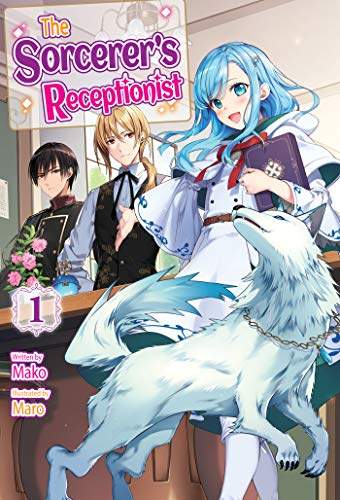
The Sorcerer’s Receptionist, Vol. 1

October 14, 2020 by Sean Gaffney

By Mako and Maro. Released in Japan as “Mahousekai no Uketsukejou ni Naritaidesu” by ArianRose. Released in North America digitally by J-Novel Club. Translated by Roko Mobius.

There have been an awful lot of Japanese fantasy novels released over here in the last few years, be they isekai or straightforward fantasy. One thing common to many of them is the Guild, the place where adventurers go to get their dungeon crawling or monster hunting assignments. Said guild is almost always staffed by a beautiful young woman, there to give out work, cheer our heroes on, and worry when they don’t return on time or come back beat up. Sometimes they’re also love interests, but more often they tend to simply be minor supporting characters. After all, it’s just receptionist work, right? Wrong. The Sorcerer’s Receptionist is here to show you how much work and power is needed to actually be in that position, which is not one for mere pretty faces. Our heroine may fall in love with the job at a young age for mostly aesthetic reasons, but by the time she arrives at magic school she is ready to give it her all and be number one! Well, OK, number two…

Our heroine is Nanalie, and this first volume sees her journey from the first years of magic school all the way to settling into her dream job at the Harré Sorcerer’s Guild. The first half of the book will be familiar to anyone who’s read a magical academy story, and Nanalie is very much the bookish, studious, tries-too-hard sort. She’s got rare ice magic (which gives her the blue hair we see on the cover) and a cool wolf familiar, and yet most of the book is dedicated to her constant frustration at always being second in class to the arrogant Alois Rockmann, who is her self-proclaimed nemesis. The two of them spend the entire time at school not getting along, setting each other on fire/freezing them, etc. Because yeah, this is not only the story of a young woman’s dream career, it also has a romance to it. Which everyone can see except Nanalie herself.

It is honestly rare to see a title where everyone else in the cast knows that they’re in love except the protagonist and not have it be irritating. Likely as this is mostly the standard harem guy “I am oblivious because the plot requires it” sort. But Nanalie’s obliviousness to love works in the context of the story – she is extremely career driven to the point where social interaction is sometimes difficult for her, and the guy who supposedly loves her spends the entire time they’re together badmouthing and abusing her. Enemies to Lovers is a very popular trope, after all. It’s still one-sided at the end of this book, though, as Nanalie is far more concerned about things like tracking down a woman’s missing husband and notifying the right people about the demon that’s lurking in the woods.

This is a long book for a light novel, but it doesn’t feel like it’s meandering. I really enjoyed the emphasis it gave to “it’s not just a secretarial job” in regards to guild receptionists, and also shows young women becoming knights, or sorcerers, rather than just getting married right out of school. And Nanalie is fun in a way that might remind you of a certain bushy-haired girl in a series we don’t talk about anymore. Definitely looking forward to more.

Filed Under: REVIEWS, sorcerer's receptionist

Re: ZERO -Starting Life in Another World – Ex, Vol. 4

October 13, 2020 by Sean Gaffney

By Tappei Nagatsuki and Shinichirou Otsuka. Released in Japan by Media Factory. Released in North America by Yen On. Translated by Kevin Steinbach.

Ah, side stories, beloved by fans and feared by publishers. It may be dismaying to light novel fans, but most series coming out over here are running a year to several years behind Japan. This includes Re: Zero, whose 14th volume is due out here in October 2020, but it came out in September 2017 in Japan. When Re: Zero EX started coming out here, I noted that the timing was off, that we got the Ex books before the main titles that they were supposed to be supplementing. We have the opposite problem with this book, which came out in Japan last Christmas. It’s meant to be a supplement to the 6th arc, which begins with the 21st volume, which had just come out a couple months before in Japan. Here, we’ll likely see Vol. 21 in 2022. Fortunately, the book still does read as a stand alone, so the English speaker need not worry about spoilers here. They may, however, wonder why so much attention is being paid to a goofy samurai with a flair for drama.

The cover may be packed with people, but the most important one is right at the front. This is a book meant to give a strong role to Julius and show off how great he is when he isn’t around Subaru. The story takes place a few months before the start of the main series, and Julius, Reinhard and Ferris are bodyguards for two elder politicians who are going to negotiate with the nearby Empire. Having recently lost the entire royal family (see: Re: Zero Ex 1), they are in a very precarious position, so are trying to negotiate a non-aggression pact. Unfortunately, the Volakia Empire has “strength is the most important thing” as their watchword, so things are already unlikely to go their way. Then Reinhard is framed for murder, and he, Julius and Ferris must flee with the Emperor in tow and avoid everyone else in the Empire trying to kill them.

The Ex books are not meant to be as much of a meta commentary on isekai titles as the main series is, mostly as the isekai hasn’t happened yet – Subaru isn’t around. As such, the author is allowed to write what is essentially a straightforward swashbuckling tale, with an added air of mystery – our heroes must figure out why they’re being framed, who framed them, and how much backstabbing and double dealing is actually going on. Ferris gets a few moments to shine, but is mostly there to allow someone to be emotional, which Julius (stoic) and Reinhard (blase) have trouble pulling off. Reinhard is there to show off how monstrously strong he is, but as ever he only works because he’s something of a cipher. As such, it’s Julius who gets the heavy lifting, along with the Empire’s Cecils, the goofy samurai I mentioned earlier, who is the Empire equivalent to Reinhard and whose overdramatic flair masks his dangerous abilities.

So not as astonishing as the main series, but it’s a fun, solid romp, and fans of fighting and sleuthing will have a great time here.

Filed Under: re: zero, REVIEWS

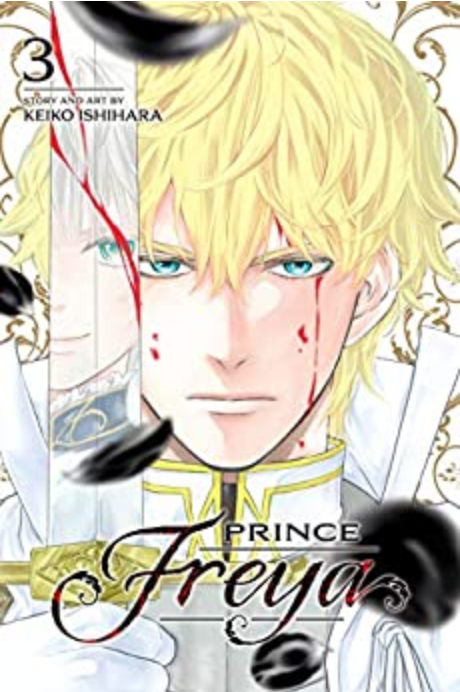
Prince Freya, Vol 3

October 12, 2020 by Anna N

Prince Freya Volume 3 by Keiko Ishihara

In three volumes Prince Freya has evolved into an enjoyable fantasy potboiler of a manga, with plenty of cliffhangers to keep the reader’s interest as well as a tendency to kill off sympathetic supporting characters. The story ratchets up the suspense because it seems clear that no one is safe from medieval mayhem in this story of a simple girl forced to masquerade as the charismatic Prince Edvard. As the manga opens, Freya is displaying her characteristic tendency to put herself in danger in order to save anyone in her near vicinity as she tries to rally the soldiers in a small fort against an enemy invasion.

The White Knight Julius is now Freya’s main protector after the deaths of her childhood companions Alek and Aaron. Does Julius start experiencing conflicting emotions about his new charge? Does one even have to ask when this is shoujo manga that we’re talking about??? Freya’s actions show her motivating her soldiers with a different type of charisma than the late Prince Edvard as she makes a point to get to know all of the men in the fort who are trying to defend her. She’s not afraid to take part in tactical maneuvers in order to confuse the enemy, and while the extent to which she is willing to sacrifice herself might seem extreme, when balanced at all the family and friends she’s lost in her life the reader can see why she’s resistant to seeing anyone die unnecessarily. There’s medieval battle scenes galore and an enemy soldier making fun of Julius for being a pretty boy, so there’s plenty to enjoy in this volume, which ends on an incredible cliffhanger that promises plenty of angst in the next volume. This manga isn’t particularly deep, but it does serve up plenty of gender-swapped shoujo medieval action which I am finding to be delightfully distracting in these current times.

Filed Under: Manga Reviews, REVIEWS Tagged With: Prince Freya, shojo beat, shoujo, viz media

A First Look at YashaHime: Demon Half-Princess

October 11, 2020 by Katherine Dacey

For a brief moment in the early 2000s, Rumiko Takashashi’s InuYasha was the shonen franchise in America. It was a constant presence on cable television, where it anchored Cartoon Network’s Adult Swim line-up, and a commercial success for VIZ Media, which issued and re-issued the series in formats ranging from flipped floppies to deluxe, three-in-volumes. By the time InuYasha finished its run in 2008, readers had moved on to other franchises, but InuYasha was an important series for the North American comics market, as it helped reveal an underserved population of teens who weren’t particularly interested in Batman or Captain America, but were interested in reading comics about characters their own age.

InuYasha also demonstrated that teen girls were just as enthusiastic about action, adventure, and horror comics as their male counterparts, especially if the series featured well-rounded female characters. To be sure, plenty of shonen manga included at least one Tough Female Character™, but InuYasha’s three female leads were defined as much by their frustrations, insecurities, and smarts as they were their ass-kicking capabilities. Equally important, Kagome, Sango, and Kikyo weren’t drawn for the male gaze; they were depicted as normal young women, making it easier for teen girls to identify with the characters’ struggles and triumphs.

It seems fitting, then, that the new InuYasha spin-off puts girls front and center. YashaHime: Princess Half-Demon is a “next generation” sequel that focuses on the original characters’ offspring—in this case, the teenage daughters of InuYasha and his big brother Sesshomaru. This time around, however, Sesshomaru’s twins Towa and Setsuna are the leads and InuYasha’s kid Moroha is the brash, impetuous foil to her sterner, more reticent cousins.

The good news is that YashaHime faithfully adheres to the spirit of the original series, with its characteristic mixture of romance, slapstick, horror, and action; anyone worried that the new series might try too hard to differentiate itself from InuYasha will be happy to see that the new show keeps the focus on demon-fighting, quests, and camaraderie. The bad news is that the first episode is so compressed that the new heroines barely make an impression on the viewer, as their introductions are overshadowed by clumsy bits of exposition, cameo appearances by the original series’ main characters, and a showdown between a demon and the old gang.

In an effort to create more continuity between the original series and the sequel, the second episode reveals that Towa was raised by Kagome’s younger brother Sota in present-day Tokyo. Towa’s introductory scenes are so focused on explaining her backstory that her distinctive choice of clothing—a schoolboy’s uniform—initially seems like an afterthought: “better for fighting,” Towa tells us in a voice-over. That detail turns out to be an important clue about how Towa sees herself, as she complains that “girls must be feminine and boys must be masculine,” a distinction that Towa finds as restrictive as the clothes she’s expected to wear. Towa’s gender presentation is addressed in a ham-fisted way—her younger sister pleads with Towa to be more “girly” and “cute”—but the writers’ willingness to address Towa’s fierce rejection of gender binaries suggests that YashaHime may explore some interesting new thematic territory.

The only truly disappointing aspect of YashaHime is the animation, a flaw that’s most evident in its stiffly executed fight scenes. The animators never create a persuasive illusion of people jumping, flying, and running through three-dimensional space; all the characters look like paper cut-outs superimposed on unimaginative backgrounds. The flatness of the imagery is even more obvious when YashaHime and InuYasha are viewed side-by-side, as InuYasha’s softer, more nuanced color palette gave the picture plane more depth and the characters’ bodies more weight. The one bright spot is YashaHime‘s character designs: Moroha, Towa, and Setsuna bear just enough resemblance to their parents to make it easy for the viewer to grasp the father-daughter connection, even though each girl has her own unique look. That attention to detail extends beyond their physical appearance, too, influencing the way they move, talk, and twitch their noses when they catch wind of a demon.

If I sound a little ambivalent about YashaHime, I am: it shows considerable promise, but hasn’t quite escaped the long shadow of its parent series or found the right pacing for the kind of stories it wants to tell. I’m reserving final judgment until the relationships between Towa, Setsuna, and Moroha are more clearly delineated—after all, it was the complex web of feelings and friendships that made InuYasha compelling as much as its demon-of-the-week adventures. Here’s hoping the sequel will embrace that approach, too.

Episodes 1-2 of YashaHime: Princess Half-Demon are currently streaming on Crunchyroll, Funimation, and Hulu. New episodes air on Saturdays.

Filed Under: Manga Critic, Movies & TV, REVIEWS Tagged With: anime, inuyasha, VIZ, YashaHime

A Lily Blooms in Another World

October 11, 2020 by Sean Gaffney

By Ameko Kaeruda and Shio Sakura. Released in Japan as “Isekai ni Saku wa Yuri no Hana” by GL Bunko. Released in North America digitally by J-Novel Club. Translated by Tom Harris.

We have been getting rather glutted with this genre over the last couple of months, but I have to say I’m still not really that tired of ‘otome game villainesses’, if only as we have a long way to go before it catches up to ‘nebbish guy in fantasy dungeon crawl’ or even ‘grumpy cynical high school guy gains a heart (and a harem)’. It helps that, Bakarina aside, most of the genre tends to be one-shots or short series, so doesn’t wear out its welcome quite as much. This has a similar premise to another title I reviewed recently, I’m in Love with the Villainess, and it’s not hard to see why – Japanese otome games rarely if ever give you a chance to go that route, and frequently the villainess has a lot more character than the love interests. Why wouldn’t anyone be drawn to them? Especially someone looking for romance between young women.

Our heroine is another in a long line of office workers who give and give and give till they have a heart attack and die young. She is reborn as Miyako Florence, the star of her favorite otome game, and is engaged to one of the nobles. There’s just one problem. She has no interest in Klaus, the noble in question. Instead, her attention is drawn to Fuuka Hamilton, the “stereotypical villainess” character who tries, seemingly, to belittle her at every turn. Miyako, though, sees through Fuuka’s facade and knows there’s a serious-minded and kind woman underneath the arrogant exterior. So… she kidnaps her, Retreating to her own family’s cottage, Miyako promises Fuuka that within 14 days she will get her to admit that she is happy living there with her. Fuuka, suffering from the effects of the first good night’s sleep she’s had in ages, agrees to this plan. That said, this world runs on “young women are only as important as who they marry”. Will Miyako be allowed to get away with this?

This is by the author of Sexiled, but aside from a brief mention of Laplace as a figure in the land’s past history, they aren’t connected. Except, of course they are, because this is a world where a woman’s value is in who she marries and those who fail or otherwise embarrass their families are completely destroyed. The first half of the book softens us up, being very much watching two women have a honeymoon together at a lovely guest cottage in the country. It’s cute, but it’s also slight. The second half, when Fuuka decides to return home to accept what she knows will be a horrific punishment, is where things really get good, particularly in regards to our heroine, Miyako. I’d written her off as the weak part of the book, but seeing her character development, particularly when the penny drops as she meets another couple who let her know that no, you do NOT have to accept that this world is sexist and just run away – is excellent, and leads to an action-packed and satisfying ending, giving Miyako and Fuuka’s love the depth it needed.

It’s possible I’m playing this up a bit too much – it is pretty fluffy and slight at the end of the day. But I had a lot of fun reading it, and am absolutely not tired of the genre. Or the author, who I’d love to see more of. Fans of Sexiled and otome villainesses will find this a must-buy.

Filed Under: a lily blooms in another world, REVIEWS

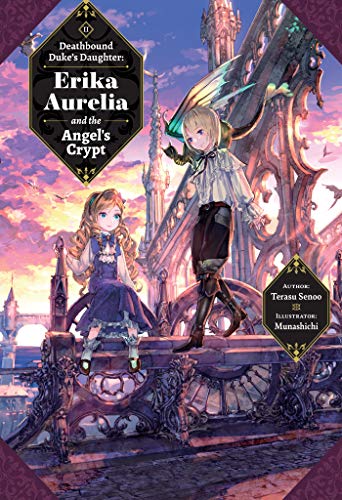
Deathbound Duke’s Daughter: Erika Aurelia and the Angel’s Crypt

October 10, 2020 by Sean Gaffney

By Terasu Senoo and Munashichi. Released in Japan as “Shini Yasui Koushaku Reijou to Shichi-nin no Kikoushi” by M Novels (Futabasha). Released in North America digitally by J-Novel Club. Translated by Roy Nukia.

The second volume of the Erika Aurelia series sees her trying to prevent her death in Route Two of the otome game she played in her past life. That said, honestly, if you’re after otome game villainess novels you may find this wanting – Erika’s past life is important in determining her character as a whole, but rarely comes up in the text itself. Which simply leaves us with a fantastic action-adventure mystery series for young adults – and that’s fine by me. Erika ends up befriending her rivals, wandering into deathtraps, having to think her way out of deathtraps (and not always succeeding, though rest assured she is not killed off), and otherwise behaving just as I’d like a savvy eight-year-old with past-life memories to behave. Plus, in this book, there’s piles and piles of dragons. And if the villain seems a bit overly obvious, well, that’s what the extra chapters after the main story are for – this is not just Erika’s tale.

Erika and her father are headed to Ynys Negesydd, which is not in Wales, but is instead the capital of Ignitia, and they’re there for a royal banquet and also to watch a joust with dragons as the mounts. Erika is nervous as this is what sets up Death #2 on her list of things to avoid; her old self was rude to the first prince August, who is unable to ride dragons in a land where that is considered scandalous for royalty. Erika is unlikely to be as rude and obnoxious as her old villainous self, but she still has a tendency to speak her mind without thinking, so she could still be in trouble. Especially when August invites her to see the underground crypt rumored to hold the Beast of Contracts, and you start to realize that selling his soul to be able to ride dragons may be happening much faster than in Erika’s otome game.

There’s lots to like here. Erika is a great lead character, being very clever but also prone to making mistakes. Her past life, we are told, was filled with boys flocking around her and girls hating her, and honestly in this one, while she’s managed to avoid the latter, she still has the former. That said, the fact that everyone is pre-teen means the romance can be cute rather than annoying, especially given Erika right now has no feelings for anyone – and no sense of self-preservation, a fact noted by about half the cast. It’s also not a series that revolves entirely around her – her older brother has his own adventures, which seem to be just as if not more dangerous than her own, and there’s lots of bits of world building and lore that you know will pay off down the line but are just dropped casually here. Best of all, it’s simply thrilling to read.

Unfortunately, this may be all we get to read. While the webnovel this is based on has more material, Futabasha has not published a new volume in almost three years, so it seems to be cancelled. (This seems to be a problem with this publisher – see also The Epic Tale of the Reincarnated Prince Herscherik.) That said, if you’re looking for a fun YA novel with a great protagonist, you can’t really go wrong with Erika Aurelia.

Filed Under: deathbound duke's daughter, REVIEWS

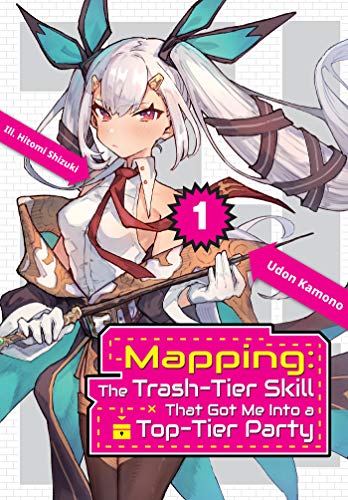
Mapping: The Trash-Tier Skill That Got Me Into a Top-Tier Party, Vol. 1

October 8, 2020 by Sean Gaffney

By Udon Kamono and Hitomi Shizuki. Released in Japan as “Hazure Skill “Mapping” wo Te ni Shita Shounen wa Saikyou Party to Dungeon ni Idomu” by Overlap. Released in North America by J-Novel Club. Translated by Mana Z.

I admit when this first came out, I was planning on skipping it. While I do read far too many light novels, my days of trying to read all the Vol. 1s are gone forever. And when J-Novel Club posted the first chunk on their site/app, it read like someone who enjoyed Arifureta but wished the lead was a bit whinier. But a couple of folks told me that it actually got pretty interesting, so I ended up checking out the first volume all the way through. And, while I don’t think I’ll be reading any further, I can confirm that it does get interesting, despite its extremely poor start, and ends up being more an examination of how to try to drag your way to improving yourself when you don’t have the resources that everyone else around you has. It also has a final reveal that is quite well handled.

Our protagonist is Note. He and his childhood friend are getting the Skills that, in this world, can make or break your future. She gets three fantastic skills. He gets one Super Rare one that takes all three skill slots… and is famously known for being useless (there are two, much better mapping skills after this one). A year later, he’s been dumped by his childhood friend and is trying to join adventuring parties as baggage handler and getting drunk in bars. Then he’s scouted by a high-grade party who seem to have figured out a use for Mapping… it can handle mapping dungeons, which the other two mapping skills can’t do. Of course, he has Mapping, but he’s also a weak, self-hating guy, so the rest of the book is spent trying to get him in shape, teach him other, more useful talents for their party, and get him to actually stop acting like a wuss.

As I said before, the book starts off terribly, and I was also annoyed that we never got the perspective of the childhood friend that abandoned him, who reads as nothing other than a plot device. Things improve after he’s picked up by the Arrivers, the dungeon-crawling party that recruits him. The idea of taking months to train him up to do dungeon crawls (which are minimal in this first volume) is a good one, and we do see him slowly regain a sense of self-worth and show off quite a bit of cunning and self-awareness. The last quarter of the book has him trying to stop another one of their party, the sword expert, from leaving as he’s fallen in love with a girl. The classic “oh no, he’s fallen for the girl who has eight different men on the side” plot made me roll my eyes at first, but here we actually DO get her perspective later on, and her backstory, and while that doesn’t make her more likeable, it does work very well with the story.

The book has, beyond its stock low self-worth hero, more stock characters – our party leader whose dark past is no doubt waiting to be unearthed; the lecherous sword guy; a cardboard tsundere magic user (that’s her on the cover); and a dwarf girl who is there to fill the “I look (and act) underage but am not” slot. It improved in the second half, and if you like these types of characters, or “weakest becomes strongest” fantasies, this might appeal to you.

Filed Under: mapping, REVIEWS

The Extraordinary, the Ordinary, and SOAP!, Vol. 3

October 7, 2020 by Sean Gaffney

By Nao Wakasa and ICA. Released in Japan as “Hibon, Heibon, Shabon!” by ArianRose. Released in North America by J-Novel Club. Translated by Emily Hemphill.

This is the final volume of this romantic fantasy, and that feels just about right. The wary reader will also note that everything seems to be resolved by about Page 80, and knows that we’re not going to get 130 pages of wedding prep. Indeed, this volume balances out dramatic crisis and romantic fluff almost equally, sliding from one to the other with verve. There is one thing I wasn’t too fond of, but that was driven by the plot, so I can’t complain too much. More importantly, I really loved the way that the friendship between Lucia and Maria was shown – it’s just as important as the romance between Lucia and Celes, and the ongoing development of Maria continues in this book. Indeed, I’d argue Maria is the best part of the series, which pulls off its isekai with a twist fantastically. Well, there are a few annoying romance novel tropes as well, but eh. For the most part, I was quite pleased with this.

We begin in a bad place, as our heroes are separated and locked up in the final kingdom they’d been visiting. This leads to Lucia getting kidnapped and almost killed by some evil nobles – someone seems to have it in for her. After this, it’s almost an anticlimax when the final tree is purified and the monsters are removed from the land… though that includes their baby dragon pet, which makes Maria and Lucia sad. That said, success! The sacred maidens did it! Lucia and Celes are engaged! Lucia no longer has her Soap! powers, but that’s likely because there’s no reason for them anymore. Now they can all go home and… wait, something is tickling the back of my brain. Wasn’t the king evil and wanted the shrine maiden killed off after they completed their duty? And isn’t Lucia without her Soap! powers… just a commoner maid? Is this going to have a tragic ending after all?

So yeah, about halfway through the book everything falls apart and we have to put it back together. That does not take long. I do wish Lucia had a bit more agency in the whole ordeal, but the problem with taking away the awesome magic powers from your heroine after her work is done is that it does tend to leave her powerless. I did love Maria’s solution to finding Lucia, which was very clever and also helped to make Lucia’s adventure well known among the entire kingdom. And yes, after THAT we get the wedding prep and the reunions and everything else, now that the evil king has been removed and Edoardo is in power. (Maria and Edoardo’s romance is not quite as heartwarming – let’s face it, if it weren’t for Celes this would be a yuri title.) And Lucia may not have Soap! anymore, but her debt is paid off, she has a husband and an ever-growing family, which is all she really ever wanted.

This was, overall, quite a nice read, and I liked the gimmick of the heroine being one of the fantasy world residents, with the actual isekai’d from Japan protagonist being a supporting character. Those who enjoy J-Novel Heart titles will want to read this one.

Filed Under: extraordinary ordinary and soap!, REVIEWS

Invaders of the Rokujouma!?, Vol. 32

October 6, 2020 by Sean Gaffney

By Takehaya and Poco. Released in Japan as “Rokujouma no Shinryakusha!?” by HJ Bunko. Released in North America digitally by J-Novel Club. Translated by Warnis.

It’s been a while since we’ve checked in with our Rokujouma family, and it’s a relief to see that everyone is much the same. It’s actually quite impressive that this series that should have ended with Vol. 29 is taking a relaxing victory lap and also springboarding a whole new plot that will take many books to resolve at the same time. It doesn’t actually feel dissonant – what’s resolved is Koutarou and the other girls, and though he’s still too “teenage” to actually say I Love You out loud or anything, it’s only a matter of time. This is pointed out to him by MacKenzie, after Koutarou worries about Yurika above and beyond the call of duty – he cannot simply choose one girl at this point. Indeed, the author agrees, which is why we’re getting the side stories that imagine life if he DID fall for only one girl. But that’s next time: this volume is back in the present-day, and showing that the aftermath of the war is still coming to Earth… literally.

There are three main plot threads here, all of which tie into each other. First of all, it’s time for the sports festival again, which is very important to the original core cast as it’s the first time they really bonded as a group way back in the single digit volumes. Unfortunately, dreams of winning the big prize may have to be put on hold. The spaceship that blew up at the end of the last volume was deliberately blown up – now its alien tech is scattered all over Japan, and is being picked up by unscrupulous companies to examine. Even worse, they’ve kidnapped an American scientist and are holding his family hostage in order to force him to work on the alien tech. Now our heroes have to rescue the scientist, his wife and daughter, and retrieve or destroy the technology, all while trying not to get in trouble at school. Oh, and Yurika’s working for the bad guys again, though this time it really is an accident.

It needs to be said, there’s a whole lot of sap here, and if you dislike that, you may want to stop reading. That said, this is the 34th book in the series (counting the two .5 volumes), and I suspect new readers are not going to be anywhere near this. Old readers will find plenty to smile about – every girl gets a chance to be sweet with the man they love, except MacKenzie’s little sister, who’s still trying to come to terms with the fact that the brother she idolized is a playboy. This actually gets weaponized towards the end of the book, as part of the plan. The plan itself makes the latter half of the book feel like a heist movie, as we see everything coming together, everyone gets to show off their cool powers, and only a few girls have emotional crises. (Yurika is a given, but Shizuka is really starting to get worried about everyone thinking of her as basically “the big guy”.)

Summing up, this is exactly what Rokujouma fans want in a book. Next time we get another three short stories/alternate universe book, with Clan winning the “what if Koutarou chose only me?” sweepstakes. So expect bickering galore.

Filed Under: invaders of the rokujouma!?, REVIEWS

The Invincible Shovel, Vol. 3

October 5, 2020 by Sean Gaffney

By Yasohachi Tsuchise and Hagure Yuuki. Released in Japan as “Scoop Musou: “Scoop Hadouhou!” (`・ω・´)♂〓〓〓〓★(゜Д゜ ;;) .:∴DOGOoo” by MF Bunko J. Released in North America by Seven Seas. Translated by Elliot Ryoga.

Gotta admit, starting to get a bit annoyed with this title at times. Not all the time, mind you. When it’s at its best it’s doing what it’s done the last two volumes: have Alan solve problems immediately by using his shovel in ways that make no sense, have Catria get upset about this, and have Lithisia be silly and also somewhat scary. There is plenty of that in this book. It also uses the word ‘shovel’ 900 times, more than the previous two, and that’s not even counting the fact that the translator gave in and started using ‘scoop’ as well, which is there 120 times. But there is another element of the book, which is the ‘using shovel in a sexual way’ part, and it is, frankly, getting rather irritating, as it’s less subtle and more creepy throughout, especially in any scene involving Lithisia abusing Alice. It’s one of those times when the brain just refuses to make something funny. The phrase “Alice-juices” really does not help.

Our heroes continue to try to track down orbs from the four corners of the world. They rescue the mermaid population from an evil Hydra, go up to the sky world and meet two angels, one of whom briefly joins Catria as the sole voice of reason in the party, and try to stop demons corrupting more angels; they go to the Kingdom of Darkness and help free its people from demonic enslavement (and forced rape, something else I was not happy with), and finally they descend to hell and take on various minions, some familiar to Alice and some familiar to Alan. Throughout this Alan uses shovels to do damn near anything, but more surprisingly, so does Catria, though she’s not quite ready to admit that just yet.

Catria is probably the best part of the book, as it’s actually funny seeing her being the “voice of common sense” while, at the same time, firing off wave motion shovel blasts with her sword, which over the course of the book is slowly starting to turn into a shovel. She’s still the person with the most ethical sense here, though. That said, Lithisia may not be quite as far gone as the previous book… and, if I’m being honest, most of this one… has portrayed her. Seeing the hydra, who essentially turned evil when their love was spurned, makes her worry that if Alan leaves her she’ll to the exact same thing. There’s also the ending, where she gets in over her head when battling a God trying to possess Alice, and is forced to admit that perhaps she is NOT ready to solve every problem with a shovel like Alan can.

Honestly, I don’t see the sexual humor going away anytime soon, but I wish it would stick to ‘misunderstanding uses of the word ‘shovel’ in salacious ways’ rather than ‘Lithisia molests Alice with a shovel repeatedly’. The book is showing signs of depth – about 5% of the book, perhaps – which is enough given it’s meant to be a broad comedy. I will keep reading, though I expect I will remain a bit irritated. (Also, given the use of the shovel is frequently only implied by the text, how on Earth will they ever animate this?)

Filed Under: invincible shovel, REVIEWS

  • « Go to Previous Page
  • Page 1
  • Interim pages omitted …
  • Page 113
  • Page 114
  • Page 115
  • Page 116
  • Page 117
  • Interim pages omitted …
  • Page 346
  • Go to Next Page »
 | Log in
Copyright © 2010 Manga Bookshelf | Powered by WordPress & the Genesis Framework