• Skip to primary navigation
  • Skip to main content
  • Skip to primary sidebar
  • Home
  • About Us
    • Privacy Policy
    • Comment Policy
    • Disclosures & Disclaimers
  • Resources
    • Links, Essays & Articles
    • Fandomology!
    • CLAMP Directory
    • BlogRoll
  • Features & Columns
    • 3 Things Thursday
    • Adventures in the Key of Shoujo
    • Bit & Blips (game reviews)
    • BL BOOKRACK
    • Bookshelf Briefs
    • Bringing the Drama
    • Comic Conversion
    • Fanservice Friday
    • Going Digital
    • It Came From the Sinosphere
    • License This!
    • Magazine no Mori
    • My Week in Manga
    • OFF THE SHELF
    • Not By Manga Alone
    • PICK OF THE WEEK
    • Subtitles & Sensibility
    • Weekly Shonen Jump Recaps
  • Manga Moveable Feast
    • MMF Full Archive
    • Yun Kouga
    • CLAMP
    • Shojo Beat
    • Osamu Tezuka
    • Sailor Moon
    • Fruits Basket
    • Takehiko Inoue
    • Wild Adapter
    • One Piece
    • After School Nightmare
    • Karakuri Odette
    • Paradise Kiss
    • The Color Trilogy
    • To Terra…
    • Sexy Voice & Robo
  • Browse by Author
    • Sean Gaffney
    • Anna Neatrour
    • Michelle Smith
    • Katherine Dacey
    • MJ
    • Brigid Alverson
    • Travis Anderson
    • Phillip Anthony
    • Derek Bown
    • Jaci Dahlvang
    • Angela Eastman
    • Erica Friedman
    • Sara K.
    • Megan Purdy
    • Emily Snodgrass
    • Nancy Thistlethwaite
    • Eva Volin
    • David Welsh
  • MB Blogs
    • A Case Suitable For Treatment
    • Experiments in Manga
    • MangaBlog
    • The Manga Critic
    • Manga Report
    • Soliloquy in Blue
    • Manga Curmudgeon (archive)

Manga Bookshelf

Discussion, Resources, Roundtables, & Reviews

Reviews

Slayers: The Darkness in Vezendi

March 19, 2021 by Sean Gaffney

By Hajime Kanzaka and Rui Araizumi. Released in Japan by Fujimi Fantasia Bunko. Released in North America by J-Novel Club. Translated by Elizabeth Ellis.

We are slowly starting to edge towards an ongoing narrative, even though for the most part these books still try their best to be books that can be read entirely on their own. That’s harder here, as we get the villains from the 2nd and 4th books seemingly teaming up to try to take out Lina… and the others, but mostly Lina. This should not be surprising – as Lina has been going around the countryside wiping out more and more people, even leaving out the Dragon Slave and Giga Slave, she’s attracted a name for herself, and there are a few folks who want her to stop doing that – particularly demons. Unfortunately for them, Lina feels no real need to change any of her habits – she still gleefully goes out bandit hunting at night, and while she can justify it to Amelia as needing traveling funds, there’s no denying that she also does it as she loves beating the shit out of people. Good news for her, then, this book is full of fights.

Zelgadis is on the cover, and those of you know know light novel cover art know what that means. Right – he does very little in this book. The plot involves Zuma, the hired killer from the 4th book, suddenly reappearing saying that he never finished the job he was hired for, mysteriously having two whole arms again, and demanding that Lina travel to Vezendi or innocents will die. Despite the fact that their party is one larger than expected (Xellos is back, and Amelia and Zelgadis are furi… well, actually, no, they take it quite well), they arrive and are hired as guards to a local merchant who Zuma says he’s going to kill. Oh yes, and Seigram, the villain from the SECOND novel, is also back… somewhat randomly… and trying to kill Lina. Do all of these things have a common element? Can Lina avoid getting killed? And can Lina avoided getting savagely roasted by her “friends”?

It is somewhat interesting still to see the differences between the novels and their far better known anime adaptation. I’ve talked before about Lina’s narration, and how she frequently skews things to make herself look better, but it’s actually a bit more than that: her inner thoughts are very cool, logical, and collected, even during a fight. The girl who will explode if you look at her wrong shows up sometimes, but it’s far rare than the anime. Amelia, as well, also feels “cooler”. While she does go on about justice, she is also not above beating the crap out of bandits, and literally says to Lina that if she dies Amelia will loot her corpse. WOW. She’s also far more competent in these books. And Gourry… OK, you’ve got me there, Gourry has been getting dumber by the book, and now appears to have reached anime levels, though he still sometimes steps in as the voice of common sense when needed.

The epilogue is not so much of a cliffhanger as an “ah, there it is”, and it comes as a surprise to no one, least of all Lina. I’m interested to see what happens in the next book, which is the final one in this loose “arc”. That said… these are still books that function more as a tasty snack than as a full meal.

Filed Under: REVIEWS, slayers

Downfall

March 19, 2021 by Katherine Dacey

Downfall is the story of Karou Fukazawa, a deeply flawed, forty-something manga artist whose career has stalled, marriage has soured, and self-esteem has curdled into a toxic form of self-pity. He lies; he procrastinates; he cheats on his wife; he berates his assistants. Though he eventually finds a path forward, his journey is not one of self-discovery or personal growth, but of resignation, of realizing that the life he’d imagined for himself turned out to be deeply disappointing.

Inio Asano underscores the depth of Fukuzawa’s self-loathing in the way he depicts Downfall‘s female characters. Fukazawa’s wife Nozomi, for example, is a successful manga editor in her own right, but she carries herself like a remorseful child, shoulders slumped, eyes downcast, and lips pursed. Fukuzawa complains that Nozomi devotes too much time to her job, criticizing her for paying more attention to the artists in her portfolio than to him, and excoriating her for not supporting him. His sense of entitlement is so powerful, in fact, that he coerces her into sex during a particularly nasty argument, a scene that’s so visceral, awkward, and claustrophobic that it’s genuinely hard to read, not least because it is such an unflinching portrayal of his narcissism.

Other female characters fare worse than Nozomi. Yunbo and Marimekko, two sex workers whom Fukazawa visits, are drawn in the same grotesque fashion as the pompous, foolish, and hypocritical characters in Dead Dead Demon’s Dedededestruction and Goodnight, Punpun. Fukazawa’s contempt for these women is thrown into sharp relief when contrasted with Chifuyu, an escort who reminds Fukazawa of an old girlfriend. Chifuyu is a gamine figure, with stylishly cropped hair, cat-like eyes, and a lithe body—a symbol of youth, possibility, and sexual desirability, unburdened by years of marital and professional disappointments—whereas Yunbo and Marimekko are awkward and unattractive, less individuals than vessels for Fukuzawa’s rage, and reminders of how much shame he feels over his faltering career.

As damning as all this sounds, Downfall isn’t simple misery porn. Fukuzawa is a rotten person, to be sure, but his ennui is genuine, rooted in the question of what it really means to turn one’s passion into a career. For Fukuzawa, that question is all-consuming, as he wrestles with the difficulty of making art in the context of the commercial publishing industry, where deadlines, reader surveys, and fickle fans exact their tolls. Fukuzawa also struggles with the manga industry’s voracious appetite for new talent, as he watches his book sales plunge while young, inexperienced artists find the kind of readership and acclaim that he himself once enjoyed. Even as I recoiled from Fukazawa’s sourness and misogyny, his professional dilemma resonated with me as a fellow forty-something with a career in the arts. What is the emotional and creative cost of making art on demand? How do you continue telling a story, creating art, or writing music when you are fundamentally disillusioned with the process? If you allow work to consume you in the name of becoming an expert, what remains when you reach those benchmarks of success? 

To explore these questions, Asano eschews a conventional narrative form, instead juxtaposing past and present in a rondo-like fashion (ABACA). The “B” and “C” sections take place in the present, unfolding in a linear manner, while the “A” section revisits a specific moment in Fukuzawa’s past: a youthful relationship that ended when Fukuzawa’s girlfriend declared, “As long as you keep drawing manga… you’ll keep on hurting people.” Asano is particularly adept at capturing the way in which the past and present sit side by side in the mind of an agitated person, rendering Fukuzawa’s memories as vividly as the present-day scenes, with consummate attention to small but meaningful details. From the way Fukazawa remembers this relationship—reciting the same observations about his girlfriend over and over again—it’s clear that he views this moment as a turning point in his life, and an explanation for who he has become. 

Yet these final pages feel less like a condemnation of Fukuzawa’s selfishness than a plea to understand his behavior: I renounced love for art. For me, at least, that feels like a cop-out, a way for Fukuzawa—and perhaps Asano—to tacitly acknowledge the character’s monstrous behavior while suggesting that it was somehow inevitable, pre-ordained, or natural. Viewed from a feminist perspective, though, it’s awfully hard to muster sympathy for a character who justifies his tantrums, violence, and vicious remarks as necessary to his art, especially when so much of his vitriol is directed at women. Your mileage may vary.

DOWNFALL • STORY AND ART BY INIO ASANO • TRANSLATED BY JOCELYNE ALLEN • EDITED BY PANCHA DIAZ • TOUCH-UP ART AND LETTERING BY JOHANNA ESTEP • VIZ MEDIA • 246 pp. • RATED MATURE (sexual situations, violence)

Filed Under: Manga, Manga Critic, REVIEWS Tagged With: Inio Asano, VIZ Signature

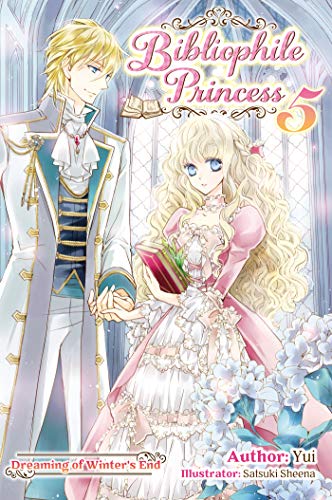
Bibliophile Princess, Vol. 5

March 18, 2021 by Sean Gaffney

By Yui and Satsuki Sheena. Released in Japan as “Mushikaburi-hime” by Ichijinsha Bunko Iris NEO. Released in North America by J-Novel Club. Translated by Alyssa Niioka.

Boy, remember when this was a fluffy little puff of a light novel series? Those days are gone for good now, as this book continues its slide into the dark side of things, mostly as it seems the only two people in the world who want Chris and Elianna to get married are Chris and Elianna. There is a possible war going on that both sides seem to want, the Ashen Nightmare has hit the Royal Palace, there’s a woman going around giving out placebos who really wants to be the one to give Chris an heir, and Elianna is forced to disguise herself as a boy and negotiate tragic backstories as she desperately tries to find the one book that can help them figure out a way to cure this disease… and then things get REALLY bad. There’s just a lot going on, and if you were expecting things to end nicely in this book, well, sorry. That said, it’s good writing, and I was drawn into it throughout.

A large chunk of this is from Chris’s perspective, and he holds up a lot better than I would have expected given that the last book ended with him hearing about Elianna going missing. Turns out he suspected something like this might happen. Even worse, there are many, many traitors around, some of whom are old friends of his. This isn’t even getting into the group that wants war, or the group that wants him on the throne but married to someone else. And, given the King is now deathly ill, that group is starting to hammer on things really hard. Oh yes, and there’s the delegation from Maldura, who also have their own agenda involving Chris, and who are really there to see Elianna… who, much to their annoyance, isn’t there. Oh, and did I mention that there’s a cool new gemstone that might be CAUSING this new outbreak?

As for Elianna, she is pretty much herself, and what little comedy there is in this volume comes from the various characters talking about how boyish and unsexy she is, and her deadpan, but irritated on the inside, reactions to this. (There is also the short story towards the end, taking place in happier times, where she and her friends investigate a haunted house and learn of its tragic past.) She too is having to deal with many problems, including the person who has the book she’s looking for, whose son was scapegoated by the Royal Family years ago, and therefore gets someone ELSE saying “you must first say you will never marry Prince Chris”. The ending is not exactly a cliffhanger in terms of danger, but it is very much one in terms of “the thing we were hoping would solve everything is now gone, and we are screwed”. It really makes you want to read the next book.

Bad news about that, alas. This came out in early 2019 in Japan, and there’s been nothing since. The webnovel it’s based on has only recently started moving slowly forward again, and the author is notorious for being slow. So… hope you enjoyed this one, as it’s gonna be a while. That said, this was a decent book, though somewhat low on puffball princess antics. She only tilts her head in confusion twice!

Filed Under: bibliophile princess, REVIEWS

Combatants Will Be Dispatched!, Vol. 5

March 17, 2021 by Sean Gaffney

By Natsume Akimoto and Kakao Lanthanum. Released in Japan as “Sentouin, Hakenshimasu!” by Kadokawa Sneaker Bunko. Released in North America by Yen On. Translated by Noboru Akimoto.

For some time now, the “evil” in this series’ evil organization has been somewhat questionable. At first it looked like it was just Six, who clearly was content with being a creepy asshole but drew the like at, know, actual evil things like rape and murder. As we’ve gone on, and found that the evil organization is in fact trying to save the planet Earth, more motives have been questioned. And now we find that the organization actually has a real HR policy – we’re told that the Combat agents can sexually harass to their heart’s content (it gets them evil points, after all) but that actual sexual assault is a punishable offense. You get the sense the author realized that they were going a bit too far. KonoSuba, by the same author, will also try to walk this very thin line. In the meantime, the organization is going to have to deal with the biggest threat it’s ever seen to date. The demon lord is dead and his daughter has taken over… and she’s a total sweetie pie.

Rose gets the cover, and is the “heroine of this volume”, but actually gets very little to do besides eat. The Demon Lord’s Domain wants to negotiate, so the group heads over there, and as noted above, finds they accidentally killed the demon lord in their last attack, leaving his daughter Viper in charge. The demon lord was a stubborn middle aged cuss. Viper is kind, gentle, and very apologetic. As such, the demons are actually surrendering – and asking for Six and company to find them a new place to live, as their territory is basically uninhabitable. There’s just one problem with this – the Kingdom of Grace is not content to let the demons simply go “our bad, sorry” and then move in next door. They want reparations. Can Alice negotiate their way to a settlement? Can Heine come to terms with her new job as a magical boiler room? And can six and Viper team up to take out those pesky Puzzle x Dragon games once and for all?

So yes, Viper’s presence in the cast really shakes things up, mostly as, unlike Princess Tillis, Grimm, Snow, or the other characters whose suffering is hilarious (and in Grimm and Snow’s case, brought upon themselves), being mean to Viper is like kicking a puppy. Indeed, the main worry is that she’s too naive and willing to do whatever anyone else wants – hence the mention of the HR guidelines. Honestly, she’s probably the first major character in this that I can’t think of an equivalent to in KonoSuba, the way that you can see Snow as Aqua + Darkness or Grimm as Wiz + Yunyun. Her friendship with Six is actually, dare I say it, rather sweet. Of course, this does not mean the author has suddenly forgotten that this is the Japanese equivalent of It’s Always Sunny in Philadelphia. There is lots of terrible stuff here. But when said stuff hits too close to Viper, it just sort of drifts to a halt.

We’ve almost caught up with Japan, and the anime based on the series is out next month. So it’s a good time to read a new volume of the worst evil organization, and see how they deal with good.

Filed Under: combatants will be dispatched!, REVIEWS

How a Realist Hero Rebuilt the Kingdom, Vol. 13

March 16, 2021 by Sean Gaffney

By Dojyomaru and Fuyuyuki. Released in Japan by Overlap Bunko. Released in North America digitally by J-Novel Club. Translated by Sean McCann.

Anyone who has consumed any amount of Japanese anime/manga/light novel material will be familiar with the concept of the “bland hero”. He is there to be the reader, essentially. He is nice. He is usually smart, at least in these sorts of books. He is sensible. He tends to get flustered easily, usually. Sometimes this can even be done well. Realist Hero’s Souma is a fairly good example of the type without having most of the negative points that people complain about. Unfortunately, this can become a problem when the situation requires the character to have a reaction that is NOT “bland hero”. Near the start of this book, Souma takes offense to the rather wet (no pun intended) island princess comparing her situation to his wife Roroa’s, and gets mad. Which is fine, except I do not for one minute buy his anger at all. I had thought it was a calculated move, like virtually everything else he does. But no, it was meant to be rage. And wow, nope. Fortunately, the book improves greatly after that.

We pick up where we left off last time, with Princess Shabon and her bodyguard Kishun begging Souma to stop the upcoming war with the Nine-Headed Dragon Archipelago Union. This proves to be quite a wrench in the works, not only because Shabon’s desperation and poor self-image leads her to piss Souma off, but also as, well, he’s already got a plan in place, no worries. That said, there’s a bigger issue here, as the reason that all this seems to be happening is a giant monster that is prowling the seas and taking away all the fish – and sometimes the fishermen. Souma has to find a way to not go to war, avoid having the Empire called in, and deal with what is, let’s face it, Gamera. Fortunately, he has a lot of tricks up his sleeve, including a Navy that is powerful and does things other navies can’t, a monster expert who’s still a kid (I mean, when I say it’s Gamera I’m not making things up) and also find time to deal with the fact that another of his wives is pregnant.

The action parts of this book are quite well done, as is the “clever plan”, especially when we realize who Souma’s contact inside the Archipelago Union is. As noted above, this is very deliberately an homage to old kaiju movies (Souma uses the word to refer to the creature), and like most of those movies, you feel sad when it is finally brought down. There’s also some good politicking for those who read the series for that. I’m especially interested in what’s going on 3with Empress Marie, who pretty blatantly says here that she’s fine with simply letting Souma rule over everything. (I’m still betting she’ll be a final wife.) In terms of the ongoing plot, however, it’s still simmering, with Souma and Fuuga knowing they’re going to have to fight to the death and not really wanting to do it.

The next volume isn’t out in Japan yet (late April, I think), so we’ll be waiting a while to see what’s next. Till then, Gamera is really neat, he is filled with turtle meat, and please try not to let Souma show actual emotions.

Filed Under: how a realist hero rebuilt the kingdom, REVIEWS

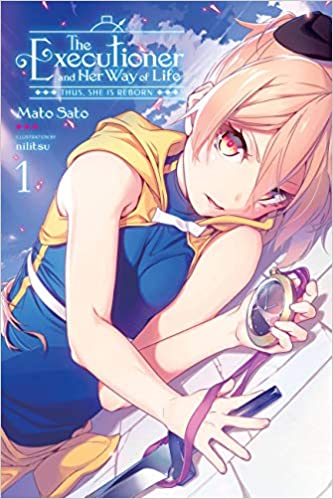
The Executioner and Her Way of Life: Thus, She Is Reborn

March 14, 2021 by Sean Gaffney

By Mato Sato and nilitsu. Released in Japan as “Shokei Shoujo no Virgin Road” by GA Bunko. Released in North America by Yen On. Translated by Jenny McKeon.

As we see more and more deconstructions of the basic isekai light novel and its tropes, it’s inevitable that some of those deconstructions are going to involve “isekai is bad, really”. Yeah, taking a young, immature Japanese man and dropping him into a fantasy world with monsters and magic, where he inevitably starts plotting how to “invent” mayonnaise and miso soup, is not necessarily the best decision one can make. Indeed, this is not even the first book we’ve seen in English with this plot, as Isekai Rebuilding Project already wandered down this road. That said, this world is pretty hardcore about stopping it. Isekai’d Japanese people, in the past, have created horrors of apocalyptic form. There’s no stopping them, all you can do is put them out of their misery. And, well, if you have to kill them before they even gain access to their powers, well, this is a sacrifice that will have to be made. This book is about one of those killers, and the girl she can’t kill.

We are introduced to Menou, the titular executioner, when she meets a young man who was brought to this world from Japan… and then promptly kicked out. Not spoiling much, but… he is not our hero. Menou fills that role. The heroine is actually Akari, the girl who was brought to this world at the same time, and who Menou also kills… but Akari can control the element of Time, and this the clock rewinds her body back to being unhurt. She also doesn’t seem to remember Menou doing this, so Menou continues to pretend to be helping her while, in actuality, leading her to the Church, which apparently can do a better job of wiping her out. She’s helped by her assistant Momo, who is basically Shirai Kuroko from Index in pink, and, albeit inadvertently, by Ashuna, the princess of the royal family who started this whole mess. That said, Menou will rapidly find that there’s far more going on here than meets the eye.

Getting the bad out of the way, this book’s afterword sells itself as “grimdark”, and it’s not kidding. There’s lots of dead and eviscerated people in this, Menou’s backstory verges on terrifying, and the ending implies that the entire series may end in a tragedy. And, because this is a Japanese light novel, we’ve got to have lots of talk about Akari’s big breasts and art of them being big. This ends my negative comments. Everything about the book that is not those two things was fantastic. The magic system is well thought out, and integrates nicely with the world’s religion. The characterization of the four leads manages to make them all obvious “types” that anime fans will be VERY familiar with, but then also turn around and give most of those people (Ashuna does not get much to do here, to be fair) a depth that also works the way a good mystery does – after reading the ending, you want to go back and read the start again. When we first meet Akari, there’s a bit of her own narration that is 100% at odds with everything we get for the next 150 pages… until the climax, when it all comes together and you go “OOOOOOH!”. Love it. Even Momo, who I was sure would be the one character that irritated me throughout, gets a touching backstory, an actual reason for her behavior, and a terrific romantic afterword, though I have bad news for her if she hopes to be best girl.

So yes, definitely recommended. Even the title and subtitle have a sense of “grand epic” to it. Oh yes, and there’s also a tinge of yuri to it, so folks who enjoy that will also want to read it. Plus, anime coming soon! Basically, get in on the ground floor of this one.

Filed Under: executioner and her way of life, REVIEWS

Sword Art Online Alternative: Gun Gale Online: 4th Squad Jam: Continue

March 13, 2021 by Sean Gaffney

By Keiichi Sigsawa and Kouhaku Kuroboshi, based on the series created by Reki Kawahara. Released in Japan by Dengeki Bunko. Released in North America by Yen On. Translated by Stephen Paul.

I have been known at times to be a little annoyed when a book consists primarily of fight scenes. Let’s face it, for the most part, I enjoy talking about plot and character beats here. (Well, that and obscure stuff about publishers no one cares about but me.) When you get things like a tournament arc, or the Squad Jams in Gun Gale Online, there’s not really as much for a good reviewer to sink their teeth into. Readers don’t really want you telling them “watch out for this cool fight sequence”, and if I say Llenn and Pitohui are awesome and badass, I will likely just get a “well, duh” in response. That said, after a book like the previous one in this series, introducing yet another smug bastard who has decided to make the girl he is obsessed with his whether she likes it or not, and the fact that, despite Llenn’s protestations, the engagement seems to ride on this game… honestly, I’m delighted it’s just wall-to-wall action here.

The first third or so of the book is, refreshingly, not from the POV of our main team, allowing us to get into the heads of the others first before we resolve the cliffhanger from last time. We get to see MMTM be sensible, intelligent, and use their gaming knowledge well, which never works out in these sorts of books. We get to see Shirley and Clarence be the manzai comedy duo they were always meant to be. And we get to see exactly why SHINC takes Llenn’s unwanted suitor up on his offer, which is a nice combination of stick and carrot. This then allows the last two thirds of the book to simply be a bunch of really good set pieces, allowing the author to do what they do best: talk endlessly about guns and write action sequences that will look great if they’re ever animated.

I will note right away, the best part of the book for me was the carrot that got SHINC to agree to be part of the collective group, if only as it’s a tempting carrot for the reader as well. The fact that Llenn never gets to have her fated battle with these girls in book after book has become the running gag of the series, deliberately so, and it’s wonderful that THIS is the bait used to lure them in: we promise to let you have your fated battle. Of course, that promise ends up being broken, so I suppose technically this doesn’t count. But boy, it’s amazing till then, exactly what I would have wanted from a rematch, with both sides evenly matched and being clever, desperately, and crafty. Even Fukaziroh, whose job, let’s face it, is to be the goofy one, gets to do a bunch of really cool shit. M gets to be the sensible one. Pitohui is in her element, getting to shoot people and make suggestive remarks to Llenn. It ends badly, but THIS was the rematch we wanted, and we finally get it.

Unfortunately, now the boyfriend’s back, and there’s gonna be trouble. Kawahara may not be writing this, but it’s set in his universe, and thus the series has an allergic reaction when it comes to subtle, nuanced villains. But that’s next book’s problem. This one turned out to be a great ride.

Filed Under: REVIEWS, sword art online

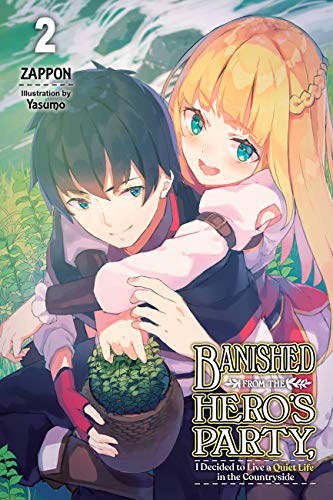
Banished from the Hero’s Party, I Decided to Live a Quiet Life in the Countryside, Vol. 2

March 12, 2021 by Sean Gaffney

By Zappon and Yasumo. Released in Japan as “Shin no Nakama ja Nai to Yuusha no Party wo Oidasaretanode, Henkyou de Slow Life Surukoto ni Shimashita” by Kadokawa Sneaker Bunko. Released in North America by Yen On. Translated by Dale DeLucia.

The second volume of Gap Moe: The Light Novel. No, hear me out here. It’s nothing to do with any of the characters, but rather to do with the two moods of the book which are pulling on each other. the majority of the book is quite serious and rather dark. There’s drug addiction, beatings, child abuse, lots of death, demons possessing people, and, in the end, a cliffhanger which promises an absolute nightmare descending on Red and Rit in the third volume, especially if the Hero has as much of a brother complex as I suspect she does. And this is contrasted with the schmoopiest romance I’ve seen this side of SAO: Sugary Days. Rin and Rit are deeply in love with each other, have grown and matured enough to get past the self-deprecating or tsundere masks they’ve been hiding behind, and are here to be as sickeningly sweet as you can possibly imagine. It’s pretty great.

While Red and Rit go on a lakeside picnic, buy a double bed, and sit in each other’s laps a lot, other things threaten their bliss. Al, the kid from last volume with the weapon blessing, is still having trouble reconciling his feelings with his blessing. Then his parents are attacked by the kid who bullied him previously, who was supposed to have turned over a new lead. Could this be related to the new, highly addictive drug going around that changes your blessing for you? Could it be related to the ongoing class war that still infests the town? Or could it be related to the fact that the local slumlord kingpin has made a deal with a demon to rule the city? Oh yes, and the Hero’s Party continues to fall about without Gideon, Ares is desperate and pathetic, and Ruti gets even more terrifying by the page.

As you can see, the idea that this is Slow Life is hogwash… except that Rin and Rit are determined to make their own little world exactly that. They’ve got the apothecary, they’ve got the day-long dates, they’ve got still being too shy to even grope each other properly… really, I’m not exaggerating, it is SICKLY sweet. But that’s good, because without this the rest of the book would just be grim. And the grim stuff gets equally good attention. This town may be where Red and Rit have chosen to reside, but it’s an ugly little town. Albert, the creep knight from the last volume, shows up here and is even worse, and it’s darkly hilarious that the demon cannot fulfill his contract because this city is too lazy and halfassed to be properly conquered. As I said last time, my one complaint is that it really goes into ridiculous detail about its worldbuilding, the blessings in particular. And honestly, I’m well aware that for most readers my complaint is their high point.

So yes, this is an excellent light novel, and you should read it. And I really hope that Ruti does not kill Rit stone dead in the next book, as that would make the rest of the series rather short.

Filed Under: banished from the hero's party, REVIEWS

A Certain Magical Index SS, Vol. 2

March 11, 2021 by Sean Gaffney

By Kazumi Kamachi and Kiyotaka Haimura. Released in Japan as “To Aru Majutsu no Index” by Dengeki Bunko. Released in North America by Yen On. Translated by Andrew Prowse.

And so, once again, we have the “final” volume of Index in North America. Last time we thought it was the 22nd volume, then Yen picked up the two short story volumes after the fact. Now, we even get a translator’s afterword by Andrew Prowse thanking the readers, saying this is it for now, and please keep reading the manga. All it needs is “And the adventure continues…” after the final page. In other words, don’t expect New Testament unless there’s an anime. As for this volume, it’s far more of a short story book than the first one, though the stories eventually do tie together up to a certain point. It’s also a lot goofier, with Kamachi’s usual hit-and-miss attempts at humor and lots of powerful teenagers doing dumb teenage things. There’s ninjas, hackers, slashers, fixers, and those who fight using only their GUTS! That said, it’s a reasonable amount of fun, and Index fans should have no reason not to pick it up, especially since good sales might also change Yen’s mind.

Introduced in this volume: Balbina, Gunha Sogiita, Tabigake Misaka, Ollerus, Silvia, Kuruwa, Seria Kumokawa, Stephanie Gorgeouspalace, Misaka 17000, Misaka 18022, Misaka 14333, Misaka 15110, Misaka 10090, Misaka 12053, Misaka 19009, Misaka 11899, Misaka 16836, Misaka 10501, Misaka 19900, Misaka 12083, Misaka 10855, Misaka 17203, Misaka 19488, Misaka 15327, Misaka 13072, Misaka 17403, Misaka 10050, Misaka 10840, Misaka 12481, Misaka 18072, Misaka 19348, Misaka 17009, Misaka 15113, Misaka 14014, and Misaka 18829. (Sorry, I had to.) This takes place over the course of the entire series, and even prior to it, but in Japan it was released between Vol. 16 and 17. As you can see by the list above, leaving out the Misakas, there’s a lot of major characters who make their debut here (including some we’ve seen “debut” in English in Books 19-22, or the Railgun manga). That said, three make the most impact: Gunha, a Level 5 who gets by by essentially having Shonen Champion power (I’d say Jump, but if you look at him he’s clearly more an Akita Shoten boy); Ollerus, a somewhat distracted young man who also proves to be the most powerful person in the book; and Seria Kumokawa, a 3rd year at Touma’s school who also appears to be one of those powers behind the throne sorts.

There are some definite high points here. Uiharu gets two stories showing off her masterful computer skills, though the end of the second one implies she is fine with destroying data to avoid letting the hackers win. We meet Mikoto’s dad, and he’s pretty much exactly as you’d expect, being the sort of man who can casually threaten to bring down Crowley should he so choose. Touma and Index are absent from the book, and Mikoto’s only in one story, so this is definitely focused on the minor characters. The main “plot” involved a group of 50 “uncut gems”, who seems to be kids with powers that are unaffiliated with a country, and everyone trying to find and control/kill/do whatever with them. The best scene in the whole book occurs when Seria decides to have all these “gems” retrieved by Misaka clones, leading to an action scene we only here about via the Misaka Network, equal parts badass and funny.

It’s not a long book, and as a final volume of Index the 22nd book works better, but I’m pleased Yen went back and picked up these two books. Who knows, if Japan can get over the disaster that was the third Index anime and do more, we may see New Testament someday. Till then, don’t get your jeans slashed, don’t get into a hacking battle with Uiharu, and don’t piss off Academy City so much you get yourself super killed.

Filed Under: a certain magical index, REVIEWS

Ascendance of a Bookworm: I’ll Do Anything to Become a Librarian!, Part 3: Adopted Daughter of an Archduke, Vol. 4

March 10, 2021 by Sean Gaffney

By Miya Kazuki and You Shiina. Released in Japan as “Honzuki no Gekokujou: Shisho ni Naru Tame ni wa Shudan wo Erandeiraremasen” by TO Books. Released in North America digitally by J-Novel Club. Translated by quof.

It’s a good thing these books are coming out every two months rather than every three or four, as they definitely rely on a reader remembering everything that has come before. Nothing that happens in these books is ever truly forgotten, and it ranges from Rozemyne’s worrying about her autumn monster hunt (the one she accidentally failed last year) to remembering a very minor character who popped in about 7-8 books ago. To be fair, Rozemyne does not remember him either, and the books are not written in such a way that they are incomprehensible if you haven’t done your homework. It does serve to show off how important and prevalent the worldbuilding in this series is. Rozemyne still has aspects of the world she now lives in that she is unaware of, and this is fortuitous, as it can themn be explained to us without sounding too much like infodumping. This includes family politics, a rather more serious part of the series.

Given the size of each volume, it’s no surprise there’s a lot going on in this one. Rozemyne gets her summer ingredient for the “fix my broken body tour”, which involves going inside a volcano and stealing an egg – expect lots of hot springs references. The printing press is finished, and we get to see them printing their first non-picture books. Brigitte’s dress is finished, and she makes a stunning appearance at an event, showing off how good tall, muscular, busty women look in this new fashion – and getting a proposal from the earnest Damuel, though more on that in a bit. We also visit Illgner to search for new kinds of paper, and if Rozemyne’s world is the equivalent of Boston, this would be the equivalent of Portland, Maine. In her spare time, Rozemyne also invents hand pumps for wells (deliberately) and intelligent talking swords (accidentally). The biggest issue, though, is the arrival of Georgine, Sylvester’s older sister and. let’s face it, the story’s new villain.

One thing brought up here is marriages in this society, and how nobles tend to marry based on mana capacity. This is why Brigitte doesn’t see Damuel as a partner – his mana is not strong enough, though he’s working to make it more impressive, and asks her to wait a year for him to improve. It also shows off why Rozemyne, in the future, will have a limited number of partners – and sorry, Lutz fans, he ain’t gonna be one of them. Brought up in this volume are Wilfried, which I cannot see working at all given his behavior through the entire series, and Ferdinand, a suggestion proposed by Sylvester that is immediately shot down by both parties. Fortunately, Rozemyne is still about nine years old here, so we don’t have to worry about this anytime soon.

The book ends very ominously, with Georgina’s faction gleefully talking about plotting against Rozemyne – indeed, they talk about torturing her. What’s more, the next book in the series is the final one in this arc. I know the series goes on long after this, but it is worrying that Rozemyne’s life as an adopted daughter may be coming to an end soon. Till then, this remains essential reading.

Filed Under: ascendance of a bookworm, REVIEWS

I Shall Survive Using Potions!, Vol. 6

March 8, 2021 by Sean Gaffney

By FUNA and Sukima. Released in Japan as “Potion-danomi de Ikinobimasu!” by K Lanove Books. Released in North America by J-Novel Club. Translated by Hiroya Watanabe.

Word of warning first, it is impossible to review this volume without spoiling the biggest parts of it, as the plot IS the spoiler. So reader beware!

Nothing makes my jaw drop quite like a volume of I Shall Survive Using Potions!, and this one made me do it even more than usual. I mean, it starts out normally. There’s a civil war going on in the kingdom next door, and the first prince (the one who’s stalking… erm, crushing on Kaoru) has had to go into hiding, while the arrogant and dimwitted second prince is now in power, held up by the evil bishops who have managed to escape from their religious dictatorship and insinuate themselves here. Kaoru is not particularly interested in helping the stalker prince, nor does she feel any need to protect Roland and Francette’s kingdom. Instead, she feels that this is her war and she’s the one who’s going to put an end to all of it. This goes quite well at first… until she’s killed off brutally.

The cover deliberately has a feel of “this is the final volume, please enjoy the author’s next work”, let’s face it. Now, this is NOT the final volume – the 7th book came out recently in Japan – but certainly it’s a big ol’ sea change, with most of the supporting cast thrown out the window. Kaoru is able to escape her deathtrap, but it takes a long time and the help of a long lost friend… and when she gets out, it’s 70 years later. In fact, I was pretty convinced (as was Kaoru) that all of her friends would be dead. That turns out not to be true, thanks mostly to Kaoru’s ludicrous potions, but she also makes a clear decision, now that she’s been essentially killed off and made into a legend, to not go back to her old life, and to seek out a new country to live in far away. It’s a very Kaoru thing to do, and fits her well.

As for the rest of the cast, well, they’re mostly not in it, as you’d expect, though Francette gets a big chance to step up and be the hero, saving the world from the wrath of a furious goddess who has just lost her friend. (I also loved said goddess yelling at Francette for offering up her own life as sacrifice, as if Kaoru would want that either.) The main addition here is Reiko, one of Kaoru’s two friends from Japan. Time apparently passes the same in Japan as it does here, and since it’s 70 years later, the two friends can now reunite (the third is still alive, but presumably will show up soon). Reiko and Kaoru are very similar types, but they also play off each other well, and Reiko is (slightly) more sensible. As for where the story goes from here, well, we’re already adding a whole new cast of waifs nd strays for Kaoru to take in next time.

So yes, time skip, new cast, everything you would NOT expect from FUNA, whose Make My Abilities Average is noted for the stasis of its lead girls. FUNA: Hard Mode continues to reward fans of the author, while possibly appalling those unused to such things.

Filed Under: i shall survive using potions!, REVIEWS

Altina the Sword Princess, Vol. 7

March 7, 2021 by Sean Gaffney

By Yukiya Murasaki and himesuz. Released in Japan as “Haken no Kouki Altina” by Famitsu Bunko. Released in North America digitally by J-Novel Club. Translated by Roy Nukia.

We’re still fighting the battle against Britannia here, though after the one volume dedicated to the other side it’s been very much a battle seen from Altina and Regis’ side. Things don’t go swimmingly for our heroes here, though they do get to claim the big win in the end. There are far more casualties than Regis has ever had to deal with as a result of one of his plans, leading him to have even more self-loathing than his normal levels. Even worse, some of his plans actually don’t work, and he’s forced to watch in horror as the biggest, baddest mercenary in Britannia’s army ends up waltzing right into their camp and dueling Altina. Fortunately, they do also have a few things go their way, including some surprise new characters and the return of a beloved weapon. That said, the entire book may be dwarfed by the ending, which I will try not to spoil but which is definitely a game changer. Assuming that Belgaria manages to survive this war, they’re certainly going to have their hands full.

The series is in general a military chronicle, and not all that interested in romance. That said, Altina and Regis shippers should be relatively pleased with events towards the start of this book, though Altina really is going to have to spell things out to Bakarina levels in order to get past Regis’ self-image issues. She’s also growing up and getting smarter… and, more importantly, more inclined to think first and not act as impulsively. She asks Regis the reasons behind some of his decisions, and does not need it dumbed down quite as much as she did in Book 6. The conversation they have about balancing the present and the future is also excellent, with Regis trying to get Altina to be more forward thinking, and Altina trying to get Regis to see that “a land of peace” can in fact be an option to try, even in a land as warmongering as their own.

I will admit there was one plot twist that I found a bit eyebrow-raising, as the blacksmith who is trying to get Altina her now-repaired sword ends up meeting a seemingly harmless old man in the middle of a battlefield. I didn’t expect him to be harmless, but I was expecting him to be one of the enemy. The revelation that he ‘s actually Altina’s mentor is a bit too pat in a series that usually doesn’t rely on that sort of thing too much. That said, the end of the book is also extremely predictable in every possible way, but this time it works quite well, mostly as it’s fast, violent, and will spark a lot of plot in upcoming volumes more than Altina being reminded that fighting fair is something that you should not worry about on a battlefield.

This came out in Japan at the same time as a volume of short stories, which the author says complement the novel. Good news, we are getting the short story volume over here, but bad news, it’s coming out simultaneous with Volume 8, not 7. At least you know which to read first! In any case, still a good series with no magic or fantasy elements, just straight up alternate world battlefield.

Filed Under: altina the sword princess, REVIEWS

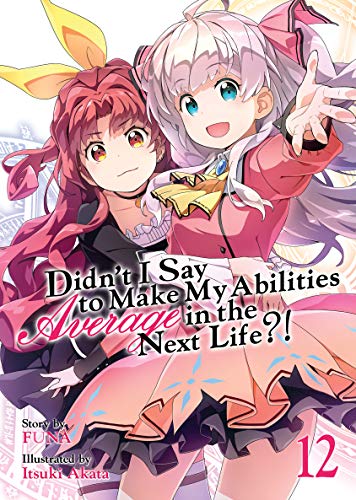
Didn’t I Say to Make My Abilities Average in the Next Life?!, Vol. 12

March 6, 2021 by Sean Gaffney

By FUNA and Itsuki Akata. Released in Japan as “Watashi, Nouryoku wa Heikinchi de tte Itta yo ne!” by Earth Star Novels. Released in North America by Seven Seas. Translated by Diana Taylor. Adapted by Maggie Cooper.

I’ve often felt that my reviews are read by the Japanese authors after I write them, and they subsequently go back in time to before the next volume was out in Japan to deal with what I was talking about. Now, I can’t confirm this is 100% true, but I will admit that after admitting to the author of this series that I had forgotten the ongoing plot and worldbuilding and only read it for the cute overpowered girls doing cute overpowered things part, the author now seems to have buckled down a bit and started to pay more attention to how the antics of Mile and company are affecting not just their own kingdom but also the world as a whole. Now, don’t worry, this is not remotely a serious-minded volume or anything, and Mile is still completely ridiculous in the best FUNA way. But… there’s thoughts going into other countries’ actions here, and also what happens when you bitchslap a dragon.

After a prologue that shows us what life is like in their default inn with Lenny when they aren’t around (spoiler: not great, but at least she’s building up strong muscles), we get the plot that makes up the bulk of this book, as the Crimson Vow are asked to escort four researchers disguised as merchants to Albarn’s Empire, as there are disquieting rumors going around about what they’re up to. Given the Vow were responsible for much of their downfall, they’re not wild about it, but they do go along, also pretending to be merchants and making a mint. After managing to find the one company picnic to end up getting attacked by bandits bent on murder and kidnapping, they manage to find out why Albarn is going to war, and it’s a reason that’s a lot closer to what they’ve been doing lately… those damn ruins. And to solve this… they may need to beat up a lot more dragons.

As always, the best part of these books are the bond between the four girls, who may occasionally get jealous of each other’s powers (Mile) or large bust (Pauline) but for the most part are so close than when asked by Mile, in one of her attempts to amuse herself late at night, what they would take with them to a desert island, the answer ends up being Mile… as she can provide anything else. Reina is a bit despairing of the fact that if they ever do split up,. the others will be totally unable to work as a team, but let’s face it, they’re never going to split up as long as this series is an ongoing concern. As for the Albarn Empire, the discussion of why they always go to war, and what’s driving them to do so again, is pretty well nuanced, with the family that the Crimson Vow protect on the company picnic essentially military suppliers. A lot of the reason things are like this now is related to either Mile or her prior self, Adele. Will she take responsibility? Well, sort of, as we see with the golems. But not a whole lot.

Still the most nuanced of the three FUNA series, but that’s a matter of degree – this is still toxic to anyone who hates OP characters.

Filed Under: Didn't I Say to Make My Abilities Average in the Next Life?!, REVIEWS

Do You Love Your Mom and Her Two-Hit Multi-Target Attacks?, Vol. 8

March 5, 2021 by Sean Gaffney

By Dachima Inaka and Iida Pochi. Released in Japan as “Tsujo Kogeki ga Zentai Kogeki de Ni-kai Kogeki no Okasan wa Suki desu ka?” by Fujimi Fantasia Bunko. Released in North America by Yen On. Translated by Andrew Cunningham.

As I look back through previous volumes of this series, I keep having to remind myself “this is a parody” more and more often, for two reasons. First, because as the series goes on the serious plotline of what the proper amount of love and distance should be between mother and child is taken more and more seriously, and that holds here as well. The other reason, of course, is that due to the nature of the plot and the over the top parody aspects, we see some really toxic abusive relationships between mothers and daughters. I mention this in passing because Wise and Mehdi’s mothers show up again in this volume to team up with Mamako, and for the most part they’re being greatly softened. I should not have expected much else – even if “sometimes you need to cut off an abusive parent” was a thing that happened very often in media like this, it’s certainly not going to happen in this specific title with the opposite message.

The book leads off with the moment we’ve been waiting for – finally, we get Porta’s mom. As was hinted last volume, she is the final of the anti-mom generals – and also one of the main developers of the game itself. She and Porta have a strained relationship that manages to be different from our other three mom-child teams. Mamako is the smothering type, Wise’s mother the ignoring type, and Mehdi gets the education mama, but Porta and her mother both compete to see who can hate themselves the most, and let me tell you, it’s neck and neck. What’s more, the latest plot to break up the game seems to work quite well – planting pins on the kids of the world so that they all try to act super independent, leading their mothers to get depressed that they aren’t needed any more. This goes double for Mamako, who knows that she doesn’t even need to have a pin to get those feelings – her baby is growing up, and pretty soon she’ll have to let him to at least a little.

If you worried the humor was gone, no fear. Shiraaase is still around to make everything hilarious, this time by making Mamako and her other mom companions idol singers, something that humiliated all the children, and all the moms who are not named Mamako, who is of course delighted. Shiraaase has also managed to find a way to weaponize her own coffin demises, which is impressive. There’s also some amusing schtick in the middle of the book, as Masato and company have to play Porta’s life-sizes board game in order to advance, a board game filled with annoying yet amusing pitstops. It’s also quite nice that, even after 8 volumes (out of 11 total), there is very little to no romance in this still. Sometimes, once or twice a book, Wise and Medhi briefly show they might like Masato, but they’re far more comfortable emasculating him instead.

So yes, as long as you don’t take this too seriously, it’s still good enough, and it was nice to see the guilty workaholic mom added to the pile. (Honestly, I thought that might be filled by Shiraaase, but her kid is only 5, so unlikely to show up in this game.) Next time around… (Noddy Holder scream) IT’S CHRIIIIIISTMAAAAAAS!!!!

Filed Under: do you love your mom?, REVIEWS

Re: ZERO ~Starting Life in Another World~, Vol. 15

March 4, 2021 by Sean Gaffney

By Tappei Nagatsuki and Shinichirou Otsuka. Released in Japan by MF Bunko J. Released in North America by Yen On. Translated by Jeremiah Borque.

This book slid in RIGHT under the wire in avoiding spoiling English-speaking fans. The book came out literally the day before the episode aired which animated the first part of it. It also brings to an end the 4th arc in this series, in a mostly satisfying way. Some of the beats feel very obvious, but as always with Re: Zero, they feel that way because we’ve spent so long setting up those beats with the previous go-rounds. This series also does a very good job of keeping all the fights it has to have here interesting, either through breaking them up by moving from the Sanctuary and Emilia’s trials to the mansion and Subaru’s pleading and back again, but also because, much like Banner of the Stars, this series runs on banter and there is a lot of that. Still, by the end of the book our heroes have won the day, though… not without some cost with a last minute bitter sting in its tail. And we’re ready to move on to a new arc!

Beako is on the cover, and deservedly so. Garfiel, Emilia and Ram/Roswaal’s stories also come to a conclusion here, but there’s no real surprises in any of them on an emotional level. Emilia’s trials two and three feel almost anticlimactic – after failing so hard at the first trial over and over, she sails through them. But that’s to be expected, as she has moved past the trauma that held her back. Garfield too had most of his issues resolved in earlier books, allowing him to be the muscle that’s required in order to beat the immortal nightmare that is Elsa (who gets a shred of backstory here, but honestly I think works best as simply a grotesque impossible to stop enemy). But Beatrice’s story is the one that needs Subaru, and, true to form, he fails over and over again to convince her to leave the Library of Forbidden Books and come with him. Not even the entire mansion burning down can sway her.

The high point of the book, as I just said, is Subaru and Beatrice, and I loved every scene with both of them in it. The rest of the book does not QUITE reach those heights. Emilia, in particular, suffers from the author wanting her to grow up and move past her trauma but also being an innocent boke who knows nothing about anything. Sometimes this is hilarious – her comment on “Ryuzu’s mother” may be one of the best jokes in the series – but announcing she’s pregnant because she and Subaru kissed fell a bit flat to me. (Presumably he explains later – or more likely Ram does). Oh yes, and there’s another character who I thought was gone for good who shows up again to help kick Roswaal’s ass, which was great. Actually, there’s a scene which mentions that the entire cast take turns punching Roswaal at some point, and I deeply hope this gets like an entire episode devoted to it in the anime.

Where will this go next? There’s apparently the series’ first time skip coming up, and presumably we’ll see more of Anastasia, Priscilla and Felt. Till then, though, please enjoy Garfiel punching forever, Subaru and Otto being bros, and Emilia being even more earnest than Rem, if that’s even possible. (Technically Rem is in this book a lot, but sorry, she still does not wake up.)

Filed Under: re: zero, REVIEWS

  • « Go to Previous Page
  • Page 1
  • Interim pages omitted …
  • Page 103
  • Page 104
  • Page 105
  • Page 106
  • Page 107
  • Interim pages omitted …
  • Page 346
  • Go to Next Page »
 | Log in
Copyright © 2010 Manga Bookshelf | Powered by WordPress & the Genesis Framework