• Skip to primary navigation
  • Skip to main content
  • Skip to primary sidebar
  • Home
  • About Us
    • Privacy Policy
    • Comment Policy
    • Disclosures & Disclaimers
  • Resources
    • Links, Essays & Articles
    • Fandomology!
    • CLAMP Directory
    • BlogRoll
  • Features & Columns
    • 3 Things Thursday
    • Adventures in the Key of Shoujo
    • Bit & Blips (game reviews)
    • BL BOOKRACK
    • Bookshelf Briefs
    • Bringing the Drama
    • Comic Conversion
    • Fanservice Friday
    • Going Digital
    • It Came From the Sinosphere
    • License This!
    • Magazine no Mori
    • My Week in Manga
    • OFF THE SHELF
    • Not By Manga Alone
    • PICK OF THE WEEK
    • Subtitles & Sensibility
    • Weekly Shonen Jump Recaps
  • Manga Moveable Feast
    • MMF Full Archive
    • Yun Kouga
    • CLAMP
    • Shojo Beat
    • Osamu Tezuka
    • Sailor Moon
    • Fruits Basket
    • Takehiko Inoue
    • Wild Adapter
    • One Piece
    • After School Nightmare
    • Karakuri Odette
    • Paradise Kiss
    • The Color Trilogy
    • To Terra…
    • Sexy Voice & Robo
  • Browse by Author
    • Sean Gaffney
    • Anna Neatrour
    • Michelle Smith
    • Katherine Dacey
    • MJ
    • Brigid Alverson
    • Travis Anderson
    • Phillip Anthony
    • Derek Bown
    • Jaci Dahlvang
    • Angela Eastman
    • Erica Friedman
    • Sara K.
    • Megan Purdy
    • Emily Snodgrass
    • Nancy Thistlethwaite
    • Eva Volin
    • David Welsh
  • MB Blogs
    • A Case Suitable For Treatment
    • Experiments in Manga
    • MangaBlog
    • The Manga Critic
    • Manga Report
    • Soliloquy in Blue
    • Manga Curmudgeon (archive)

Manga Bookshelf

Discussion, Resources, Roundtables, & Reviews

Reviews

Starting on Hard Mode: God Levels, Got Problems, Vol. 1

May 12, 2026 by Sean Gaffney

By Hanmenkyoushi and ririnra. Released in Japan as “Level Count Stop kara Hajimaru, Kamisama-teki Isekai Life: Saikyou Status ni Tenseishita node Suki ni Ikimasu” by DRE Novels. Released in North America by J-Novel Club. Translated by Jessica Speed.

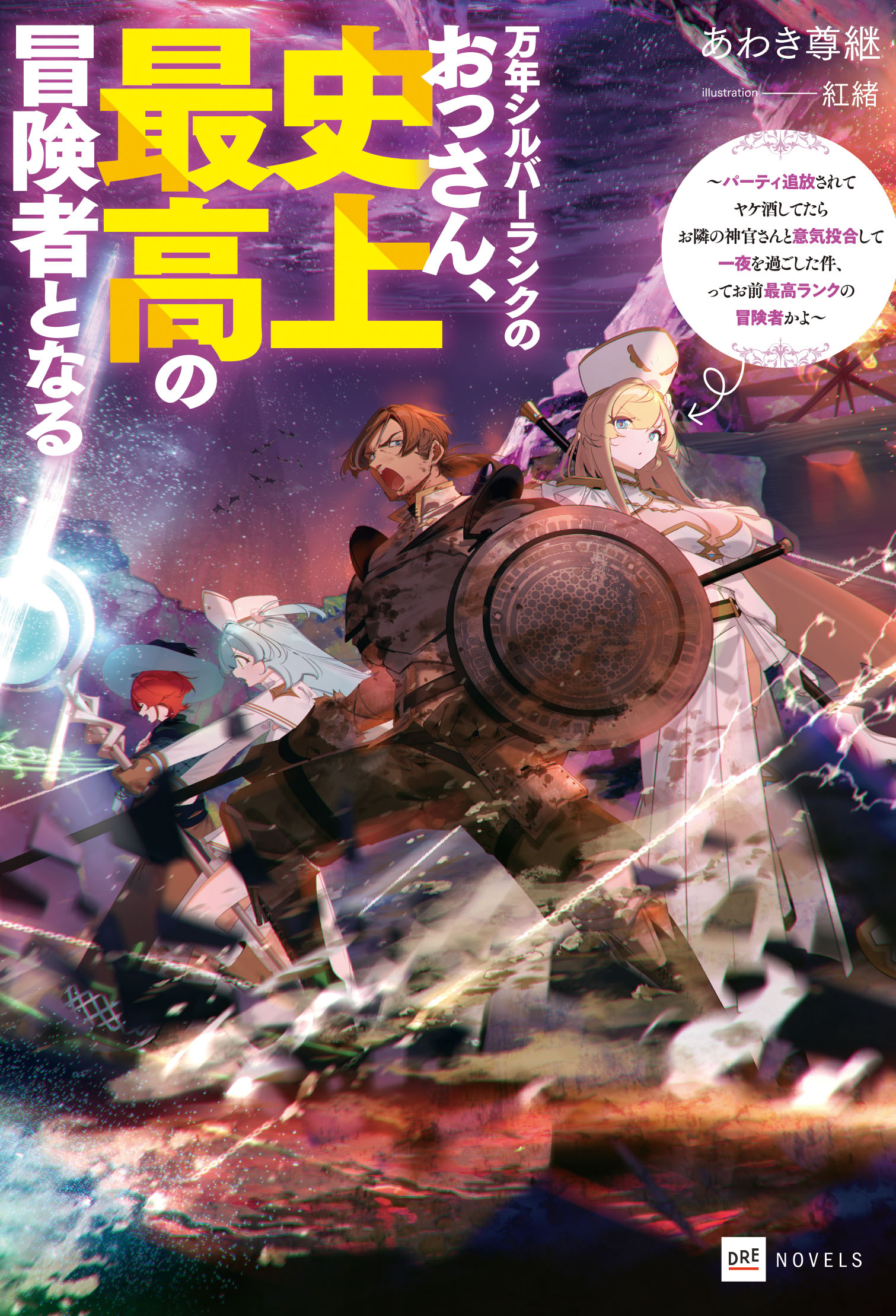
There are series rich in depth, with multiple layered plots and character development galore, the sort that you read by a roaring fire in your study. And there are books that you read when you’re lying on the beach and want brain candy, something that really does not require you to think. Take a wild guess which one this falls into. There’s a smorgasbord of all the things that you’d expect from a series that looks like this cover and with this title. Overpowered guy, cute girls of elf and beast variety, adventuring parties, lots of monster killing, and even a backdrop of racial discrimination crushing the souls of everyone who isn’t a human. OK, not all of it is brain candy for the beach, but I’m letting people know not to raise their expectations above about knee level. If you manage to keep them there, this isn’t all that bad. It hasn’t really made any of the more egregious errors titles like these do.

It’s possible our nameless Japanese guy was hit by Truck-kun, but as he doesn’t remember anything we won’t find out. God, talking in his head, tells him he’s been reincarnated in another world! And he’s overpowered! In fact, ridiculously overpowered. His stats are about 25 times stronger than the strongest humans. Oh, and his physical appearance looks just like, well, God. Surely this will not lead to misunderstandings! No sooner is he dumped in a forest full of monsters than he saves a desperate elf girl. Unfortunately, no haughty or powerful elves in this world. Here elves are treated like dirt. What’s more, after arriving at the nearby town and going to the obligatory adventurer’s guild, he meets a beastgirl… who is also despised, despite being really strong. Why was he reincarnated into racism world? To make things better, of course.

I do appreciate that Merlin (said nameless hero has a name in fantasy world) has an immediate and visceral reaction to all the prejudice going on around him, and that he takes pains to be extra nice to the elves and beastgirl as a result. (Oh yes, cute elf has a dying sister. It’s OK, Merlin is powerful enough to heal anyone.) The girls are all cute, and due to the genre I can let slide that they are torn between worshiping him and falling in love with him, and sort of decide to do both. There’s also some obligatory fanservice, but Merlin is the “I will blush and turn away they’re like little sisters” sort, so don’t expect any romance anytime soon. For the most part, though, we’re here to watch Merlin be awesome and then try to cover up the fact that he’s being awesome. It’s hard enough getting a slow life in a series like this without being gorgeous, all-powerful, and a budding activist.

This is a DRE series, so should not run too long. Recommended for folks who like what the cover art shows them.

Filed Under: REVIEWS, starting on hard mode

Proud to Be the Villainess: If My Doom Can Be Her Happily Ever After, So Be It!

May 12, 2026 by Sean Gaffney

By Mary=Doe and Kuga Huna. Released in Japan as “Akuyaku Reijou no Kyouji” by SQEX Novel. Released in North America by J-Novel Club. Translated by Bérénice Vourdon.

It’s always interesting seeing a Villainess title on the Club side of J-Novel rather than the Heart side. Usually it means that the romance isn’t the point of the exercise, and that is the case here, though that might surprise you after you see what the plot is, as there is an awful lot of romance in this book. But in the end this isn’t a romance as much as a twisted caper film. Our protagonist has a goal, that will take years and involves lots of moving parts, and eventually everything comes together until she’s able to pull off the goal… or at least, she hopes that’s what happens. Heck, since she’s not reincarnated from Japan, this doesn’t even have to involve a game world at all, and there’s no pesky heroine either. There’s just two sisters, with one of them being noble and abused and the other being arrogant and haughty. All is as it should be… except, as you may have gathered by the title, the other sister is the main character.

We open the way a lot of villainess books open – with the seeming romantic lead cruelly breaking off his engagement to his poor fiancee. However, we see this from the perspective of Iora’s sister Wellmy. While Iora has been abused by her parents, barely fed, forced to live apart from the main house, and essentially tortured, Wellmy has had it good. The best dresses, the finest jewely. She even has fantastic grades… which also happen to have her forcing her sister to write her papers for her and sign Wellmy’s name. She is every inch the terrible stepsister we see in these books, and she even manages to get Iora married off to the horrible Marquis, rumored to hate women. It is therefore no surprise whatsoever that, six months from now, Wellmy arrives at a party only to have Aides, the Marquis in question, reveal all of her horrible deeds in front of everyone. Just as Wellmy planned.

This book does have its flaws. It’s horribly overbalanced towards the front, having its climactic and best scene (the slap) only 1/4 of the way through, with over half the book devoted to looking at the “other side” of what’s been going on. It’s also clearly written as a standalone, and it is hard to see how it has 7+ volumes in Japan now, which it does. That said, I loved this to bits. Not a surprise, everything in it was designed to be catnip to me. It’s not as dark as I expected, frankly – there is a lot of funny business here, especially when Wellmy discovers her inner submissive – but there is a core of despair that falls over the main events. Wellmy’s grand plan means that she’s never considered what to do with her life besides “die”. Iora is forced to watch from afar as her sister deliberately destroys herself. Even their mother, who is written off for most of the book as a scheming woman who loathes her adopted daughter, turns out to have a terrible backstory. There are definitely reasons why Wellmy had to go so far, though in the end she and Iora reap the rewards… even if Wellmy does so reluctantly.

All this plus casual verbal abuse of a crown prince. What’s not to love? For all fans of this genre, and I hope the author can figure out what comes next.

Filed Under: proud to be the villainess, REVIEWS

Heroine? Saint? No, I’m an All-Works Maid (And Proud of It)!, Vol. 6

May 10, 2026 by Sean Gaffney

By Atekichi and Yukiko. Released in Japan as “Heroine? Seijo? Iie, All Works Maid desu (ko)!” by TO Books. Released in North America by Airship. Translated by Matthew Jackson. Adapted by Michelle McGuinness.

A lot of these “we’re in the world of a game” series tend to fall into two categories. Either the game just goes off the rails immediately but the main character doesn’t realize it and is determined to fight against a fate that no longer exists (e.g. Observation Records of My Fiancee), or the game has a malevolent mind of its own and is determined to make sure those pesky villainesses die and heroines save the day. This title is firmly in the second category, and while the bulk of most of the book is fairly light and maid-related, it does not let you forget it. The climax of this book does feature the “heroine”, Melody, but because she’s already derailed this game as far as possible, even she cannot save the day in the end. And it’s not going to be the tsundere duke’s daughter either, who comes a lot closer but falls short. No, in the end it’s past tragedies that will have to win out.

Despite the fact that you’d never imagine it with a culture like the one we have, it’s school festival time, and thanks to the dumbass Prince Christopher suggesting something anonymously assuming no one would go along with it, their class is doing a maid cafe. Since Cecilia is currently convalescing back home, Melody will of course not be participating (yet… the festival will be in the next book, and I have my suspicions), but she can advise folks on what works and doesn’t work when it comes to a practical maid uniform. Celedia would like to be getting closer to the capture targets, but alas all she’s doing is secretarial work related to the festival, and she thrown a hissy fit that goes wrong thanks to the evil lurking inside her. Unfortunately, said hissy fit is stopped by Christopher, and even though he and Anna-Marie have done their best to avoid having the plot impact them, it’s time for him to turn evil.

Christopher and Anna-Marie have been around since the start, usually complaining about the fact that they’re trying to stop the plot of the game but that it’s been stopped before it gets to them, but they’ve been relatively minor characters. Here they get more to do, though I’m sure they wish they didn’t. I feel bad for Christopher, who didn’t do anything wrong, really, but ended up almost destroying the world, because thanks to Celedia’s extra added evil Melody is NOT strong enough to head him like the game says. The final scenes are really dark and horrific, both because Christopher is slowly being mind-controlled and also because we get a flashback showing Maika’s reaction to her brother and his “childhood friend’s” death, and how deeply that affected her. It’s pretty heartbreaking, and Christopher and Anna-Marie are appropriately heartbroken. It also allows the Maika that’s HERE to accidentally save the day, though she’s unaware of it. I really enjoy the way this series interweaves everyone’s past lives into the mix.

As I noted earlier, we get all the buildup to the festival but not the festival itself. And by the time the next book comes out, the anime will have aired. We’ll see how that goes. Sometimes it helps, sometimes you’re Private Tutor to the Duke’s Daughter. But the books are good.

Filed Under: heroine? saint? no i'm an all-works maid, REVIEWS

The Bladesmith’s Enchanted Weapons, Vol. 4

May 8, 2026 by Sean Gaffney

By Kazuma Ogiwara and CARIMARICA. Released in Japan as “Isekai Toushou no Maken Seisaku Gurashi” by Kadokawa Books. Released in North America by J-Novel Club. Translated by Ryan Burris.

This remains a series written almost entirely for teenage boys, but it’s worth noting that this isn’t just one aspect of things teenage boys like. Obviously there’s the stuff about the swords, because teen boys love swords, and fantasy authors love treating the swords like they’re women, which this book absolutely does. It’s also written for teen boys in terms of the sexuality – Lutz and Claudia remain very sexually active, and a princess of another country’s city/tribe is mostly described by her large breasts. But there’s something else teenage boys like, and that’s grimdark, and this series has that as well. It never quite spills over into actual tragedy, but there’s a lot of bleak, depressing stuff in this series, ranging from the start with Claudia being saved from a fate worse than death (more on that later), to a clan leader who has let the love of a sword turn him evil, to a vengeful knight seeking to atone for past sins by killing his fellow sinners. It’s not fluffy.

This story essentially consists of two parts. In the first, Lutz, Claudia, and Ricardo head to the federation to see what’s going on there after the death of their king. Turns out things aren’t great. They meet up with Gwynn, the guy who asked Lutz to create a katana he could give painless death with, and together they head to a wretchedly poor city where the chief seems to really, really hate them. He has a daughter who’s far more sensible, but he also has a bewitching katana that has killed three of her brothers when they challenged dear old dad. Maybe an unbewitching katana from Lutz can help. When they return home, they find that there’s a masked avenger going around killing the lazy knights, and while Lutz and especially Claudia have no love lost for those guys, Lutz decides to investigate just in case this turns out to be the fault of one of his katanas, like almost everything else in this series.

There is some humor in this, of course. The darkness of the village chief and his bewitching sword is offset by the adorableness of the first love between Gwynn and Melty. There’s another subplot about Ricardo asking for a second katana to be used with Tsubaki as a dual wield, and it’s up to Lutz to show Ricardo that dual wielding is something mostly done by fictional heroes for good reason. But we see slavery here, and a village whose people are starving to death just because its chief wants a second priceless katana to go with his first. There’s also the entire plot with Donaldo, who worships Lutz for all the wrong reasons. Lutz has to secretly meet with Donaldo to resolve this, because much as Claudia likes to pretend that she’s over the terror of what the knights did to her in the first book, she’s really not, and he knows that he needs to handle this away from her. The darkness of this world leaks in whether you want it to or not, and it’s impossible to get rid of.

It will be interesting to see where this series goes next – especially given we’re now seeing Enchanted Weapons by people other than Lutz. I’m still really loving it.

Filed Under: bladesmith's enchanted weapons, REVIEWS

Observation Records of My Wife: The Misadventures of a Self-Proclaimed Villainess, Vol. 3

May 3, 2026 by Sean Gaffney

By Shiki and Wan Hachipisu. Released in Japan as “Jishō Akuyaku Reijō na Tsuma no Kansatsu Kiroku” by Regina Books. Released in North America by Hanashi Media. Translated by Ethan Holms.

Since I last reviewed this series, the anime has debuted, and a few things are becoming clear. First of all, like many light novel adaptations, the anime is speed running things a bit, so I suspect we’ll get into the “wife” part of the series before the end of the season. Secondly, I’d forgotten how some of the characters looked at the start of the series compared with now. In the first volume, Zeno was a beleaguered but relatively calm butler who normally served to snark at Cecil when Cecil was being particularly evil. In this sixth book, Zeno is an absolute wreck of a spirit, constantly whining and yelling at everyone around him. Part of this is due to the dreaded “oh, his partner looks really young, ha ha he’s a lolicon” joke we get in light novels, which is never funny and isn’t here either. But partly it’s because family, no matter how much you may try to avoid it, will always be embarrassing.

Cecil and Bertia are home from Seahealby, and everything seems relatively peaceful. So it’s now time for Zeno to go visit the spirit kingdom, so that he can ask permission from Kuro’s parents to marry her. This isn’t required, but he wants to be polite about it. Bertia is going as Kuro is very attached to her. Cecil is going as Bertia is going. And everyone else is suffering, because Cecil was already gone for an extended period and now he’s leaving again. When they arrive, they have to deal with Zeno’s parents, who are merely very embarrassing, and who also set up the plot of the 4th book in this series, when we’ll meet his seemingly overbearing sisters. The main plot, though, has the “ha ha he’s a lolicon” jokes hit at exactly the wrong time, meaning he and Cecil are now locked out of her parent’s castle till he completes some herculean tasks. No worries, Cecil is here to help. Wait, no, here to observe.

I have to admit, the stakes in this one are pretty low, mostly because you know all that has to happen is Kuro putting her foot down and the problem is solved. Also, Bertia is mostly sidelined in this book, as she stays behind while Zeno and Cecil go off to do the plot, staying behind mostly to try to be villainous again, as Kuro’s mother hits a bunch of her “so cool!” buttons and she goes off into la-la land. (I will admit, Bertia trying to have herself get tied up is a very funny bit.) The bulk of the heavy lifting goes to Cecil, though, as is appropriate. here he’s smug, a bit sadistic, and also accidentally helps Zeno save the day. While Cecil is pretty much an expert at anything he’s ever done, he also has a fair bit of “golden boy” luck, which helps him out here. I also appreciated that Kuro’s parents end up being just as socially awkward as she is, and it explains quite a bit.

This series feels like it’s coasting, but I still like the cast, and it’s fun most of the time.

Filed Under: observation records of my fiancee, REVIEWS

Earl and Fairy: How to Win Over a Gentleman

April 30, 2026 by Sean Gaffney

By Mizue Tani and Asako Takaboshi. Released in Japan as “Hakushaku to Yōsei” by Shueisha Cobalt Bunko. Released in North America by J-Novel Heart. Translated by Alexandra Owen-Burns.

Well, I was suckered in once again. I was all set to talk about the fact that Earl and Fairy is a product of 90s shoujo, and that like a lot of 90s shoujo (and indeed a lot of manga and comics in general), it had a habit of snapping back to the default whenever anything important happened. I was ready to rage against no one seeming to have learned their lesson and everyone forgetting what happened the previous book. But no, it’s another stealth short story collection. Which means I can’t be really annoyed at Lydia and Edgar for behaving like they used to eight or nine books ago. There’s just one issue with this: I am annoyed anyway. Given that getting these two to meet in the middle and come to an understanding has been like pulling teeth, I feel no need to go back to the days where Lydia was stubborn and quick to believe the worst, and Edgar helped her along very well in that regard. On the bright side, the last story is terrific.

There are three short stories here, two of which were written for magazines and feature Edgar and Lydia towards the start of the series. In the first, a “stork fairy” arrives posing as a baby, and a delighted Edgar takes this opportunity to play as if he and Lydia are already parents… while Lydia tries to hook him up with his own maid, despite the fact that she sort of hates that idea. In the second, a nightingale (fairy version, not bird version) tries to get Lydia to fall in love, because otherwise she will perish, but runs up against the problem of, well, Lydia in general. The final story is new to this volume, and takes place after Book 11. A newly engaged Edgar and Lydia are having dinner with her father, Frederick, and he takes the opportunity to reminisce (to himself, Lydia has no idea) how he met her mother.

I have mentioned this before, but will bring it up again: The author is much better at writing action, suspense and supernatural intrigue than they are writing romance. The first story really rubbed me the wrong way, mostly as I had forgotten this is what most 90s shoujo was actually like. The 2nd was a bit better, and we did get to see Raven in drag, which was a lot more fun for us than it was for Raven. But no, the main reason this was a decent book is the back half, with the story of Frederick and Aurora. They meet cute, and you do get the sense that she falls for him almost immediately, but as the story goes on you see that’s not quite true. It also has some unnerving and scary bits. This is an insular community, and her father is unpleasant. What’s worse, her “second fiance” is abusive, and it’s hinted that if she doesn’t get away with Frederick getting abused will be her lot in life. It’s well known to the village that she’s a changeling, and not everyone seems at peace with that – though more people are than Aurora expects, leading to the sweetest part of the book.

I assume next time we’ll get a full volume. I also assume some fairy-related or Edgar’s past-related thing will get in the way of our heroes getting married, because that’s how this sort of series rolls. Less of past “always angry, always caddish” Lydia and Edgar, please.

Filed Under: earl and fairy, REVIEWS

Our Party Nearly Wiped and Then Everything Went Downhill, Vol. 1

April 28, 2026 by Sean Gaffney

By Ameria and kodamazon. Released in Japan as “Zenmetsu End wo Shi ni Monogurui de Kaihishita. Party ga Yanda” by Enterbrain. Released in North America by Yen On. Translated by Leah Sargent.

Our main character, Walker, remembers his past life from Japan, and also that he’s in a grimdark manga that begins with an adventuring party getting murdered (him) and raped and murdered (the rest of his party) by a monster almost no one has defeated called Grim Reaper. He remembers all this just in time to figure out a way to defeat it. He does not remember this in time to avoid losing an eye and a leg to it. Now he’s recuperating in the Church and trying to combine his stoic, overly serious in-world memories with his somewhat current personality, as well as try to work out if he can ever use a sword again. Because boy, does Walker love swords. He’s invented a new sword style this world doesn’t know. Which is probably why he was able to survive. As for the rest of his party… well, they’re a bit traumatized and guilt-ridden. He really should do something about that too.

Things that annoyed me about this book:

• Lisellarte, the girl with the giant witch hat on the cover, is a supposedly hundred year old magic user who acts like a 7-year-old child most of the time, even before the tragic event that starts things off. She feels like she was added to fulfill the “loli” quotient.

• Euritia, a 13-year-old swordswoman who has a problem with men constantly trying to pick her up, has decided that the best way to deal with her grief is to kill everyone who even comes close to being against Walker.

• Atri, the obligatory Amazon girl, has been told by her grandmother that when she finds the one she loves she needs to “Accept his seed”, but of course every time she tries to he assumes she’s trying to fight him because he is dense.

• Walker himself started off (in the fantasy world) as a stoic blank slate dedicated to his sword fighting and his party. Adding the memories of his past life mostly makes him more annoying than anything else, and the book could easily have happened without any of that.

• Anze, the holy woman who knows their party, gets the fanservice jokes. I’m mostly annoyed at this as otherwise the book is relatively free of a leering fanservice gaze. There are rape mentions throughout, as that’s what originally happened to the party in the “manga”, but Walker doesn’t see the girls as anything but family.

• This is far more serious than I expected it to be, and that works to its detriment. I had assumed, based on the premise, we’d be in for some yandere stuff, and that’s true, but it’s really mild and not funny. Honestly, I wish there was more yandere stuff, it might lighten up the book.

• Most importantly, though, is that the author’s barely disguised fetish in this book isn’t yanderes or lolis or large-breasted nuns. It’s the girls all crying brokenly and feeling guilt-ridden and sad. They say in the afterword this is true, I’m not reading into it. And that makes this a different kind of book. It’s not about this group having to overcome a severe setback and tragedy, about Walker overcoming his disability, and about the girls regaining their confidence. We won’t see the girls regaining their confidence because the sad crying guilt-ridden monologues are the point. This is about the reader going “awwww” while seeing them castigate themselves.

And you know what that is? It’s torture porn. Bye-bye. You weren’t enjoyed.

Filed Under: our party nearly wiped and then everything went downhill, REVIEWS

Imperial Reincarnation: I Came, I Saw, I Survived, Vol. 5

April 28, 2026 by Sean Gaffney

By Masekinokatasa and Kaito Shinobu. Released in Japan as “Tenseishitara Koutei deshita: Umarenagara no Koutei wa Konosaki Ikinokoreru ka?” by TO Books. Released in North America by J-Novel Club. Translated by Gwendolyn Warner.

Of all the series to be reminded of while reading this isekai military fantasy, I was not expecting it to be The Executioner and Her Way of Life. But with this volume, it’s unavoidable. Executioner has at its core the premise that being isekaid’s to another world can be bad, especially if you’re not the only one. Catastrophic world ending things happen because Formerly Japanese folks get magical power and abilities and go slightly mad. And while that’s not happening here, it is very clear that this world has the potential for also wiping out civilizations because of their interdimensional travelers. Not only is Carmine not the only reincarnator, but there are absolute piles of them out there, some of whom are on his side but some of whom are working for the enemy… and easily manipulable. And they’re also having children, who sometimes have to suffer for the sins of their parents. Carmine will have a rough ride ahead.

When we last left Carmine, he was finding that his legendary victory was not without a cost, that being everyone suddenly deciding that now is the time to turn and wipe him out. Fortunately, (military things) and he is able to return to the palace, where plans are afoot for him to marry Rosaria… at least in two years, once he’s fifteen, the age of adulthood in this world. He also is urged by Rosaria to take Nadine and Vera-Sylvia as his concubines, which he pushes back against at first but is reminded that this world runs on politics rather than love and caves in… that said, he clearly also likes them, and they love him. After this he goes on a campaign to take Teyanave… which ends up going very badly indeed because (military things). He is barely able to make it back in time for his wedding.

As you may have guessed by reading the above, I am the wrong audience for this series, even though I enjoy it a great deal. I really do not have any interest in the battles, the strategies, and how we get from point A to point B while losing as few men as possible. This series, and this book, really do love that. Expect more of me eliding in future reviews. For now, let me focus on my favorite part, which is Carmine and his wives. He is a classic case of “does not realize what a smooth player he is”, and it’s very amusing seeing him say bluntly to Rosaria, who lives in a world where everything is couched in subtle metaphor, how gorgeous she is and how much he owes to her. Other than that, the most interesting thing in the book was the introduction of Mei Hatsume… erm, Lady Valenriehl, the daughter of a reincarnator with a grudge against the Church but a fantastic mind for taking apart magic things. I like her. Carmine is very wary of her.

If you like military history you will eat this up. If you don’t, you are me, and I still liked the smaller parts of the book that were not that.

Filed Under: imperial reincarnation, REVIEWS

Lady Bumpkin and Her Lord Villain, Vol. 7

April 26, 2026 by Sean Gaffney

By Ageha Sakura and Kurodeko. Released in Japan as “Imokusa Reijou desu ga Akuyaku Reisoku wo Tasuketara Kiniiraremashita” by Overlap Novels f. Released in North America by J-Novel Heart. Translated by Vasileios Mousikidis.

I had forgotten last volume, when we were dealing with Robin, the horrible villain from the start of the series, that there were of course other terrible people at the start as well. There’s Princess Mia, who has been exiled to Conveniently Close Prisoner Island. She gets a brief cameo here, though unfortunately she and Agnes don’t get to see each other again. And then there’s a family I had completely forgotten about. I’m so used to Kelly being the unflappable supermaid that she is in this series that I forgot how we were introduced to her, and it comes back to haunt her here, as her family, long used to treating her as a combination slave and object, demand she return to get married to an old guy twice her age. Even unflappable Kelly is flapping a bit here. Fortunately, Agnes is not going to take this lying down. Also fortunately, her family are so comically evil that it takes no effort to absolutely destroy them.

Kelly’s impending arranged marriage is not the only thing going on in this book. It turns out that the second prince of Myzahn has more abilities than he’d let on, and he’s gone back to his country with something extra that will make invading other countries a lot easier. Agnes’ son has magic powers that are far more active at his age them most people, and she has to stop him from constantly running away. She and Nazelbart are finally going back to the capital (sans child) to talk to the King and Queen, helped out quite a bit by the Purge finally having taken place, meaning Agnes is surrounded by people who at least don’t hate her. Unfortunately, all this pales in comparison to the second half of the book – Polypstan is being invaded, and the war is going badly thanks to a certain prince. Can Desnim help without getting too involved?

Well, of course not. For one thing, this is a light novel series with a bit of action in every book. For another, the Queen is from Polypstan, and is not going to sit back while her homeland gets wiped out. That said, if you like tense battles where you’re not sure who will come out on top… this isn’t that. It’s laughably easy once Agnes forcibly invites herself along. Actually, the bigger issue may be the number of people who find out about other secret powers. The Myzahn Prince has multiple abilities, including a copying ability. The King’s teleportation ability is also a storage ability, something he’s tried to hide to avoid being used… well, like he’s used here. And of course more people find out that Agnes’ cool power is really a SUPER cool power, which is unavoidable when you accidentally cure a lethal poison. Agnes, honey, you need to try harder not to be the next saint, y’know?

Fortunately, Agnes will have other things to worry about next time: she’s pregnant again, and I suspect the next book will deal with that child. Till then, please don’t treat your daughter like a slave just because she’s a competent girl.

Filed Under: lady bumpkin and her lord villain, REVIEWS

Zero Damage Sword Saint: I Enrolled in a Magic School and Wound Up in a Contract with the Demon Queen, Vol. 3

April 23, 2026 by Sean Gaffney

By Isle Osaki and kodamazon. Released in Japan as “Kougekiryoku Zero kara Hajimeru Kenseitan: Osananajimi no Oujo ni Suterare Mahou Gakuen ni Nyuugakushitara, Maou to Keiyakusuru Koto ni Natta ” by Overlap Bunko. Released in North America by J-Novel Club. Translated by Stephanie Liu.

The light novels are still ongoing in Japan, but the webnovel this is based on finished last month. The author gave their feelings about all the characters, and for Eugene they wrote, essentially, that they felt a little guilty, given that he was an incredibly cool swordsman who has a loving family and good friends who believe in him, as well as multiple beautiful lovers. The author has a point, this once again falls into the category of “if you like your protagonists to struggle, reading this must feel like acid in your veins”. But I dunno, it’s so unassuming I actually enjoy it more with every book I read. There’s a lack of surprise so far, but that fits – this isn’t slow life, but it’s almost the OP equivalent, and so we see Eugene go home to meet the folks with his new lover, make up with his childhood sweetheart (eventually), and save the world. As a treat.

Eugene is off to his home city, taking along Sumire, who is delighted she gets to ride an airship. Sara is trapped in the land of demon paperwork and will have to arrive later. Erinyes is, of course, still sealed in her “prison”. Sumire has an even easier time than expected, as it turns out Eugene’s dad is from not-Japan, and therefore his favorite foods are things like sukiyaki and bento boxes. Eugene’s father takes him to visit the palace, where he’s made a baron, and he also sees his ex Airi, who keeps trying to speak with him but gets prevented from doing so for some reason. He also goes to visit… no, not his mother’s grave, but a church, where he makes a very startling discovery about his origin and why he has his white healing magic. It’s also a good thing he’s there, as one of the legendary sealed beasts of the kingdom is becoming unsealed, and it’s up to everyone to do something. Even if that means sleeping with more girlfriends.

Like a lot of light novels these days, this has a lot of sex in it without actually being all that sexually explicit. We cut away before the deed is done. That said, the sex is a combination of “we both are really hot for you and have decided that this isn’t happening unless we both do this at the same time” and “sex will help our magic power up and save the world!”. In other words, patently ridiculous, but likely why a lot of folks are reading this. As for Airi, unsurprisingly she’s still in love with Eugene, never dumped him at all (the girl who made the catty remarks ends up getting mojo’d by Eugene to be his spy, in one of the more uncomfortable scenes in the book. Don’t do that), by the end of the book she wants to be one of the lovers as well, but circumstances will likely prevent that for a bit. Other than that… good sword battle, he’s a real sweetie, lookit all the babes.

We’re back to school/dungeon crawling next book, and I do wonder if the polycule (I’ll call it that as Sara and Sumire at least now seem to get along pretty well) adds anyone else or if this is it. If you like male fantasy … fantasy novels, this gives you what you want.

Filed Under: REVIEWS, zero damage sword saint

A Tale of the Secret Saint, Vol. 10

April 23, 2026 by Sean Gaffney

By Touya and chibi. Released in Japan as “Tensei Sita Daiseijyo ha, Seijyo Dearuko Towohitakakusu” by Earth Star Novels. Released in North America by Airship. Translated by Kevin Ishizaka. Adapted by Michelle McGuinness.

I’ve talked before about the series’ biggest draw, which is that Fia is a complete airhead who runs on instinct and misapprehension of everything. The big reveal over the course of these ten books is that it’s not due to her having the memories of someone who lived 300 years ago, but that 300 years ago she was exactly the same – no common sense, head empty. But it’s important to remember the other half of this, because when you have one of those ditzy, strong women protagonists, invariably they amaze everyone around them with their goodness and niceness, and that’s been the case here as well. We meet several new saints, most of whom are either doing the saint gig because they have been forced to, or are trying to use the saint gig to get a good husband. And then they run into Fia, and they’re reminded no, wait. I forgot what I felt when I first gained powers. I forgot that healing people and making them happy is wonderful. That’s Fia’s greatest strength.

We pick up where we left off, with the Evil Queen Hyacinthe being told that Fia will be entering the next Saint Competition. Hyacinthe is against this, but Cerulean is determined to have Fia put Hyacinthe in her place. He does this without bothering to ask Fia, who keeps insisting she’s a knight, and has very good reasons why she does not want to be recognized as the next great saint. (Her backstory of her first death, mentioned in the first book and then quietly dropped, is alluded to here, mostly as to why she’s still viscerally afraid of meeting another demon.) Plus for some reason Fia still can’t really think of Hyacinthe as evil, even after we get backstory of Colette, who is of course sweet as pie and tragically ill. As for the Saint Competition itself… well, that’s where we get back to the funny part of the series.

It is a sign of how desperate everyone is in regards to Colette that they decide the answer is simply to let Fia do her Saint stuff and just tell her to be careful, which is sort of like pulling the pin off a grenade and telling it not to explode. They give Fia a veil to hide herself… except her red hair is immediately recognizable, and in any case she takes it off almost immediately. She realizes that some folks may regard her as Fia the knight, so she decides to skip instead of walk. During the saint ceremony. In front of everyone. She skips. I laughed till I cried. She explains that she’s dropping out as she doesn’t have a lot of mana, but she heals people almost instantly and never feels tired. The only time I was surprised is when she met the guy who lost both legs and didn’t magic them back, and I then realized the only reason she didn’t do that is it’s probably being saved for Book 11. She is an adorable, sweet, all-loving menace to society.

Unfortunately for Fia, I think she is going to attract attention, and that demons will show up again. That said, this is the slowest light novel series out there in terms of dribbling out its plot, so it could be Book 20 by the time that happens. In any case, this is fun.

Filed Under: a tale of the secret saint, REVIEWS

I Saved Myself with a Potion!: Life in Another World, Vol. 1

April 21, 2026 by Sean Gaffney

By Akira Iwafune and Sunaho Tobe. Released in Japan as “Potion, Waga Mi o Tasukeru” by Hero Bunko. Released in North America by Hanashi Media. Translated by Harris Hayes.

I sometimes feel guilty that I don’t read more Hanashi Media. Aside from Observation Records of My Fiancee/Wife (now with an anime!), most of their output has basically looked like things I wouldn’t touch with a ten foot pole. They had a recent round of licenses, though, and a couple of them jumped out at me, including this one. Slow life! Cute female protagonist! Struggling to get by in a world she knows nothing about! And sure enough, all those things are here. It’s mostly a cute book. It’s content to coast along, and Kaede is something of a female Potato-kun, but it’s nice enough. That said, when I started it I read the table of contents and said “uh oh”. Sure enough, this ends up being another in a long line of “welp, guess I gotta buy a slave” books. Yes, I’m sure she and Kaede will become bestest friends. Yes, Kaede treats her wonderfully. Don’t really care. Stop with the slavery shit.

Kaede wakes up, not on her way to high school as she had been, but in an alley of a fantasy world. She has it easier than some – she can speak and read the language – but she has no money, no food, and no idea how this world works. But she finds a book in her backpack – it tells her how to make potions, and the easiest uses just grass and water. Gradually, using the potions she makes, she gets food, a room and a guild card that gives her ID. She could theoretically make stronger potions, but the ingredients are much harder to find. Then she runs into a party of dragon hunters, who tell her – try to contain your shock – her normal potions work MUCH better than others. What’s more, the way she makes them is unheard of. If she can just survive the massive dragon that landed right in front of her, maybe she’ll become someone really special!

As I said, for the most part this is earnest slow-life stuff. Kaede makes potions, buys things, makes more potions, meets adventurers, takes out a dragon with a one-shot crystal she just powered up that day… you know, the usual. By the end of the book she’s moved to the capital, has made friends with a woman so terrifyingly powerful everyone rushes to obey her (she thinks Kaede is really cute – Kaede suffers from “I’m 17 but look 12” syndrome), she’s got a great cabin in the middle of nowhere, and she’s befriended a fairy. Unfortunately, “make a ton of money selling potions then walk back alone to my remote cabin where I live alone as a young woman” carries dangers that you can probably guess. And guards are expensive and also won’t be live-in guards. Hence: welp, guess I gotta buy a slave. Kaede feels uncomfortable, but is shown that you don’t HAVE to abuse your slave, so treats the 6’5″ gorgeous wolfgirl she buys well. I’m sure they’ll be besties. Nevertheless.

I was sort of hoping to add this to my list of “cute girl does OP things”. It’s 11+ volumes in Japan, so looks popular. But I really try to avoid “welp, guess I gotta buy a slave” books these days, no matter how nice and non-harem the relationship is.

Filed Under: i saved myself with a potion, REVIEWS

Reign of the Seven Spellblades, Vol. 14

April 21, 2026 by Sean Gaffney

By Bokuto Uno and Miyuki Ruria. Released in Japan as “Nanatsu no Maken ga Shihai suru” by Dengeki Bunko. Released in North America by Yen On. Translated by Andrew Cunningham.

The previous books have been packed with stuff, so many plots that it was hard to remember them all. What’s more, we were leisurely strolling through the years at school. Those days are gone now. Not only are Oliver and Company now 5th years (yes, it’s graduation for Tim Linton, though don’t worry, he’ll be around), but there is no leisurely strolling in this book – it’s war. Even worse, the war looks to continue into the next book. This means that the book is almost entirely battle scenes, with some no-names dying, some people we know getting grievously injured, and our heroes all getting the chance to show off both how cool and powerful they are and also that they are the biggest weirdos and freaks in the school. But that’s fine – it’s Kimberly, so everyone’s used to that. The trouble is that most of the powerhouse teachers were suckered away from the school, and the school itself is lacking powerhouse teachers as SOMEONE keeps killing them off.

It’s time for the war against the Gnostics, but fear not – everything has been foretold, and the teachers have gone to the most likely incursion spots. Unfortunately, the foretellers were compromised, and the Gnostics’ true plan becomes clear – attack and wipe out Kimberly. That means the students have to battle it out, led by student council president Vera Miligan, who is staying behind for an unheard of eighth year just so that she can whine about why this is happening to her. Katie and Nanao are sent to the front lines, while the other four (well, OK, other three, Pete is barely in this except for the cliffhanger setup) stay behind to battle the soldier/mages that will inevitably get through. All our old familiar friends and enemies chip in – even Teresa’s group, who find themselves in the midst of an attack from within. Can everyone show off why they’re awesome?

Of course they can, that’s the whole point of this book. Oliver, for once, is merely normally amazing, having lightning fast reflexes taught to him by a supposed traitor, and he does well enough but it’s not jaw-dropping. Same with Chela. Nanao gets the best action set piece, with what can only be described as “death from above”, and I liked the tie-back to Ashbury’s broom arts. But let’s face it, the best scene in the book, and one of the best scenes in the series, is Katie forcing an enemy general to explain why they’re fighting, and then trying to see how she could improve on it. Katie is regarded as a walking time bomb even by her friends, and we know that she’s got demi-human rights on the brain, but I have to tell you that when I saw “I just thought it’ll be my turn next“, I both shuddered and howled with laughter. Chela, Pete, your goal of a six-person harem living happily ever after is severely hampered by the other four.

As I said, cliffhanger, so we’ll have to see who lives and who dies next time. Thrilling stuff.

Filed Under: reign of the seven spellblades, REVIEWS

Agents of the Four Seasons, Vol. 6

April 19, 2026 by Sean Gaffney

By Kana Akatsuki and Suoh. Released in Japan as “Shunka Shūtō Daikōsha” by Dengeki Bunko. Released in North America by Yen On. Translated by Sergio Avila.

So the first two-part arc of this series involved the past and present trauma of Hinagiku, the Agent of Spring. The second two-parter gave us even more trauma, mostly present, for the twin Agents of Summer. Now, after a one-volume “break”, we’re ready to dip into Autumn. Nadeshiko has been involved quite a bit in the last few books, both as a victim of kidnapping and as an Agent in her own right. That said, she’s still an eight-year-old girl who has been through far more than most eight-year-olds should. And, as is pointed out several times in this book, she’s much more mature than someone of her age should be when confronted with all this. She should be more like… well, like Ruri, to use an example Ruri herself would probably get mad at. In this book, though, we hear more about Nadeshiko’s life before she became an Agent… and it’s a very depressingly familiar tale. There’s no supernatural forces or twisted destiny here, just a young girl whose parents quickly realize they don’t want a child after all.

Nadeshiko is not having a great time at the moment, though it’s certainly better than it’s ever been for her. Rindo is running himself ragged trying to avoid having to answer a summons from Kyokoku, which is this world’s equivalent of the United States. There used to be a mutual aid policy between countries to help out when an Agent needed it. This is no longer the case, for many reasons, some of which might be that Kyokoku is a very dangerous country filled with religious fundamentalists whose Agents live fast and die young. (If you are looking for light, subtle political commentary, this is not the series for you.) Eventually Rindo realizes that he can’t avoid this, so Nadeshiko is going to not-America… along with a passel of guards and aides, as well as the Agent of Winter and his Guard, the Agent of Summer (Ruri version) and her guard, and Tsukihi, the National Security Agent we last saw with the Agent of Twilight. They expect treachery. They get it.

The author of this series has been talking with the author of My Happy Marriage, I expect, as they included in the Afterword a bit about how readers who would like all the trauma to stop soon are reading the wrong title. “It is a story for the scars you bore back then.” It certainly is, as Nadeshiko’s past of neglectful parents goes down like you’re choking, and her present is worse. The two on the cover are the Kyokoku Agent of Autumn, who is a year younger than her, and his Guard. They’re both unable to fight back against the Church. (Anyone reading this series who loves American unconditionally or is deeply religious may want to drop it here.) I also warn that there is the most dreaded of literary devices here, which is the overheard and misunderstood conversation. That said, when you have so little regard for yourself as Nadeshiko does, it’s hard not to misunderstand that people might care about you.

On the bright side, Ruri is fantastic in this, and I love the banter between her and Rosei. They’ve both grown so much. I hope Nadeshiko is allowed to do the same. In any case, we need to wait for Book 7, which… yeah, is not yet scheduled by Yen. Essential reading for fans of the series or those who love to read about good people overcoming suffering.

Filed Under: agents of the four seasons, REVIEWS

A Misanthrope Teaches a Class for Demi-Humans, Vol. 3

April 19, 2026 by Sean Gaffney

By Kurusu Natsume and Sai Izumi. Released in Japan as “Jingai Kyōshitsu no Ningen-girai Kyōshi: Hitoma-sensei, Watashi-tachi to Mirai ni Susundekuremasuku…?” by Media Factory. Released in North America by Yen On. Translated by airco.

In the long interim between the second and third volumes coming out over here (there was a gap in Japan as well, plus a translator change), we had the anime version of this title, and while I’m not sure if it was a success in Japan, I do know that it went down over here like a lead balloon. I didn’t watch it, but a lot of folks made it sound like it was a romantic fantasy of a nebbish guy meeting a smorgasbord of supernatural monster girls, rather than what the novels make it clear that it actually is, which is another in the long line of “teacher arrives at school and proceeds to make the kids’ lives better whether they like it or not”. That said, there was a past trauma that made it sound like maybe he had a teacher student romance in his past? This third volume makes it clear that it was a lot more ordinary than that… while also maybe making you think the anime had a point.

It’s a new year, with two new students, who as usual appear on the cover. What’s that? No, the third girl is a human… and Hitoma’s new assistant teacher. Which is a problem as Haruna is also the high school girl who caused him to resign and become a shut-in for two years as well. The bulk of the book is in the present, but each chapter ends with a past flashback to the two of them in their previous school, and why things happened the way they did. (Spoiler that isn’t one: bullying is omnipresent, and teachers who try too hard to stop it get destroyed.) As for the new kids, Wakaba is a cool elf girl with a surprising past, and Okonogi is a gyaru-type oni girl with a depressing past. That said, we’ve had one graduation per book so far, and given that Haneda isn’t going anywhere, the end of the book becomes “what’s going to happen with Usami?”.

The Usami plotline is easily the best part of the book, to be honest, which makes sense given she’s the student we’ve known the longest who’s still there. As for the new folks, Wakaba’s origins are a terrific idea that ended up being less interesting than I expected, and she doesn’t really feature after her spotlight. Ononoki provides some nice drama, but I was a little uncomfortable with the reverse of the usual blonde vampire rule – instead of “she’s 800 years old but looks 8”, here we have a girl who looks like a 16-year-old high school girl who’s much younger. And then there’s Haruna. I clocked what was going on with her long before Hitoma did. That said, I’m not sure how I feel about her feelings for him even though she’s now a colleague. We see Hitoma rejecting Ryuzaki here as well, so I don’t know if he’d go for it regardless, but… it does make me wonder if this was meant to be a romantic fantasy after all.

I had assumed that the series would end with the third book, and it definitely wraps up the major plotlines from the start. But there’s two more to go, and I think we get a seed of that when we see Hitoma telling the director that his goal for next year is to see Haneda graduate. This is an awkward series that either doesn’t do enough or missteps, but you end up liking it a lot anyway. Much like its main character.

Filed Under: a misanthrope teaches a class for demi-humans, REVIEWS

  • « Go to Previous Page
  • Page 1
  • Page 2
  • Page 3
  • Page 4
  • Page 5
  • Interim pages omitted …
  • Page 349
  • Go to Next Page »
 | Log in
Copyright © 2010 Manga Bookshelf | Powered by WordPress & the Genesis Framework