• Skip to primary navigation
  • Skip to main content
  • Skip to primary sidebar
  • Home
  • About Us
    • Privacy Policy
    • Comment Policy
    • Disclosures & Disclaimers
  • Resources
    • Links, Essays & Articles
    • Fandomology!
    • CLAMP Directory
    • BlogRoll
  • Features & Columns
    • 3 Things Thursday
    • Adventures in the Key of Shoujo
    • Bit & Blips (game reviews)
    • BL BOOKRACK
    • Bookshelf Briefs
    • Bringing the Drama
    • Comic Conversion
    • Fanservice Friday
    • Going Digital
    • It Came From the Sinosphere
    • License This!
    • Magazine no Mori
    • My Week in Manga
    • OFF THE SHELF
    • Not By Manga Alone
    • PICK OF THE WEEK
    • Subtitles & Sensibility
    • Weekly Shonen Jump Recaps
  • Manga Moveable Feast
    • MMF Full Archive
    • Yun Kouga
    • CLAMP
    • Shojo Beat
    • Osamu Tezuka
    • Sailor Moon
    • Fruits Basket
    • Takehiko Inoue
    • Wild Adapter
    • One Piece
    • After School Nightmare
    • Karakuri Odette
    • Paradise Kiss
    • The Color Trilogy
    • To Terra…
    • Sexy Voice & Robo
  • Browse by Author
    • Sean Gaffney
    • Anna Neatrour
    • Michelle Smith
    • Katherine Dacey
    • MJ
    • Brigid Alverson
    • Travis Anderson
    • Phillip Anthony
    • Derek Bown
    • Jaci Dahlvang
    • Angela Eastman
    • Erica Friedman
    • Sara K.
    • Megan Purdy
    • Emily Snodgrass
    • Nancy Thistlethwaite
    • Eva Volin
    • David Welsh
  • MB Blogs
    • A Case Suitable For Treatment
    • Experiments in Manga
    • MangaBlog
    • The Manga Critic
    • Manga Report
    • Soliloquy in Blue
    • Manga Curmudgeon (archive)

Manga Bookshelf

Discussion, Resources, Roundtables, & Reviews

Reviews

[New Life+] Young Again in Another World, Vol. 2

May 13, 2018 by Sean Gaffney

By Mine and Kabocha. Released in Japan by Hobby Japan. Released in North America digitally by J-Novel Club. Translated by David Teng.

There were certain things I asked for in my review of the first volume of this series, and to its credit I sort of get some of them. The writing is far more consistent in tone for this second volume, and while there are still “gosh, big breasts!” scenes, they’ve gotten smaller in number. I also think I have more of a handle on why this series in particular may have been licensed – the hero’s pragmatism I think would greatly appeal to the sort of online reader of isekais who hates isekai heroes. Several times in this book Renye does things that are, while not exactly bad, at least on the morally grey end of the spectrum. That said, he also gets to have a nice cool fight at the end, so it’s not all cynical. I would like, however, to see if this series has an overarching plot beyond “I want to buy a house and make better bread”. So far, it doesn’t seem to.

For those of you looking at that cover and thinking “gosh, I hope that’s real yuri and not just godawful pandering”, I’m afraid to say your hopes are in vain. In fact, the big drawback in this second volume is that both Shion and Rona get much less to do this time around. Shion is a big shiny ball of naive gumption, so it doesn’t matter as much in her case. But given that Rona was the main reason that I read this series beyond the first volume, the fact that she spends most of the time being the “long-suffering minder” sort is quite disappointing. Also, while I usually don’t really care as much that the heroes is so overpowered it’s ridiculous, it did bother me in the ending fight here, as it meant that all the other cast had to be beaten so hard that it amounted to a one-on-one battle. Which is a shame, as Renye is, to be honest, not the most charismatic person in the world. I prefer bland and nice to bland and grim.

Other things to mention: Since I brought up Renye’s overpowered skills already, I will note that his magic training did amuse me greatly, and it’s always funny whenever he thinks that he’s really weak or average at something but it turns out to be ludicrously over the top instead. There is also a lot of discussion of the making and preparing of food – I realize that foodie series are the new vampires/ninjas/Alices, but still wasn’t expecting it in a series like this. (Speaking of which, it’s surprising that Cooking with Wild Game hasn’t been licensed by now…) And there’s a side story where Renye briefly turns into a woman, causing Shion and Rona to briefly lose their minds. I’ve come to the conclusion that when I see “side story” at the end of these isekai volumes, it’s almost always going to be annoying fanservice.

As I said at the start, the prose is settling down a bit, and I’m starting to see why this ran for so many volumes in Japan. But I think it needs a better hook than it has, and an actual overarching plot. Till then, I’d only recommend New Life Plus to people who like more cynical heroes, or who like to admire the girls.

Filed Under: new life plus, REVIEWS

In Another World with My Smartphone, Vol. 8

May 11, 2018 by Sean Gaffney

By Patora Fuyuhara and Eiji Usatsuka. Released in Japan as “Isekai wa Smartphone to Tomo ni” by Hobby Japan. Released in North America digitally by J-Novel Club. Translated by Andrew Hodgson.

Sometimes I wonder if the author of this series is even aware of the disquieting implications of what he writes. At times it looks like he is. The start of this volume has Touya discovering, at last, the Library of Babylon, with its ridiculous number of ancient scripts. Leen, who is over the moon about this, proposes to Touya on the spot. Touya is rather nonplussed by this, as is the reader, because in the last seven volumes we’ve seen nothing that puts Leen on the same level as the other girls in love with Touya. Indeed, later on the rest of the fiancees confront her and express doubts as well. It’s nice to see the author realized he didn’t really do enough foreshadowing. Sadly, the entire situation is resolved in about three paragraphs, after which she’s given a pass. So maybe the author is not as aware as I’d like.

That said, Leen is now a fiancee, which means she gets the main bonus of Touya turning into a raging villain whenever anyone threatens to rape her, something which happens a lot more in this series than I’d like. Again, because Touya is so bland of a protagonist, the fact that he’s casually cursing evil mooks with curses that are brutally horrific gives the reader a giant sense of disconnect. We also get more examples of his ridiculous power here, though that’s downplayed by the occasional bout of stupidity he has, like “oh, right, I really should give my kingdom laws”, or “maybe I shouldn’t have gone off somewhere with my new fiancee and not told any of the others.” (This also allows Leen to be blushy and embarrassed, which honestly seems grotesquely out of character for her.)

The plot, as with most Smartphone books, is divided into three. First we get the discovery of the library and its bookaholic maintainer, as well as Leen’s proposal. Next, young dragons are attacking cities, and it’s up to Touya and company to teach them a lesson. Finally, there’s a new dungeon that’s been discovered, leading Touya to do some dungeon crawling, something he really hasn’t done in his series, as opposed to most isekai titles like this. This leads to the discovery of a slaver ring, which Touya needs to break up. Oh, and we also have the Storehouse and its dojikko maintainer. Side stories include Leen needing to get permission from the fairies to get married, which mostly involves her upset kohai, as well as Regina Babylon, who does a lot in this series despite being dead, tricking Touya and company into playing an embarrassing real-life board game, which is mostly an excuse for fanservice. It also allows Touya to briefly have a libido, something he only seems to gain in these side stories.

Again, Isekai Smartphone is one of those series you’ll enjoy if you’ve enjoyed previous volumes, and after briefly making me think it would turn it up a notch has settled back down into “not good but entertaining”. Which is fine, I like being entertained, but don’t think I don’t notice the major characterization issues on display here.

Filed Under: in another world with my smartphone, REVIEWS

The Asterisk War: The Triumphal Homecoming Battle

May 10, 2018 by Sean Gaffney

By Yuu Miyazaki and okiura. Released in Japan by Media Factory. Released in North America by Yen On. Translated by Haydn Trowell.

New semester, new characters, new translator, it’s all new on the Asterisk War front. That said, I would not call this the start of a new arc, really. This book seems to be entirely concerned with putting pieces in place to set up the next few books. Sometimes this works well – the villain of the book is suitably arrogant and snotty, and you will enjoy his defeat – and sometimes it feels like it’s been shoehorned in – Orphelia essentially drops in to reveal who she is and her connection to Julis before going away for the rest of the book. Everyone’s schemes seem to have one think in common, though, which is to stop Claudia winning the next section of the tournament. This is because of her wish, which we are told several times we’re going to hear but never do. And certainly our main five characters would make quite a team if they can all work together, so the bad guys have good reason to worry.

We’ve moved a few months along after the battle of the last three books, and I am very happy o see we won’t have to deal with wacky classroom comedy like a lot of other magical school series. Instead Julis invites everyone to her home country, which is the ever popular “tiny country somewhere in Central Europe” that fantasy authors seem to love, so that she can visit the orphanage she saved by winning the tournament and also catch up with her brother the King. Of course, Julis lacks self-awareness (something she shares with Ayato at times), so is not sure why there’s suddenly a giant parade in her honor, or a party set up to show her off. She’s insanely popular now. Also, the country and various organizations seem to be shipping her with Ayato, which should go well as the author is as well, despite all the fanservicey harem illustrations. Unfortunately, there’s also a group out to kill her, and they’ve sent an assassin who can create magical beasts. Oh yes, and Julis’ old childhood friend shows up. Sadly, she’s evil now.

As I’ve said before (possibly in every single review), no one reads Asterisk War for the plot twists. Everything develops the war you think it is going to develop. But the book also exhibits a basic level of competence that makes me quite happy to keep reading it, and the girls are all harem ‘types’ without quite being boring cliches. I am looking forward to the main cast teaming up with Claudia, if only as I find Claudia’s powers and backstory the most interesting of them. Everyone gets something cool to do in the final battle, and there’s some decent discussion of politics. And oh yes, after Ayato asid his wish was for his sister to be found last time… his sister is found. Sadly, that doesn’t really do him much good, abut at least he knows her circumstances now.

This takes us to the end of the Asterisk War anime adaptation, so new volumes should be new content. I am aware that the anime was unpopular, but I’ve never had an issue with the books. Perhaps it reads better in prose. (More likely it’s because I’ve never read Chivalry of a Failed Knight.) I’d still recommend Asterisk War to anyone who likes magical fighting school series, it is a nice light snack of a novel.

Filed Under: asterisk war, REVIEWS

Hungry for You: Endo Yasuko Stalks the Night, Vol. 1

May 9, 2018 by Sean Gaffney

By Flowerchild. Released in Japan by Shonen Gahosha, serialization ongoing in the magazine Young Comic. Released in North America by Seven Seas. Translated by Christine Dashiell. Adapted by Casey Lucas.

Mever let it be said that the author isn’t putting all her cards on the table here. The cover, which features our titular heroine carrying a blood bag stand, boxes of tomatoes, drinking tomato juice, with with garlic streaming behind her… yeah, this is a vampire manga. And a very silly vampire manga – indeed, the selling point is the humor, rather than the vampirism, though there is the occasional semi-serious element. Mostly what we see here is Endo Yasuko (the vampire) becoming friends with (somewhat by force) Mikaoka Shizue, her self-proclaimed emergency rations. (Given this is a Shonen Gahosha title, I have to wonder if the Excel Saga allusion is deliberate or not.) There has been a string of murders of young women at their school… but is Yasuko really responsible? And perhaps most importantly: is this series actually yuri, or just suggestive and fanservicey?

There’s actually more going on here than I expected with a premise like “comedic vampire girl’. It’s not as slice-of-life as you’d think. As the book goes on, Shizue tries to subtly figure out what really happened with the murders of the three girls, and also see how Yasuko actually deals with her victims. She herself is a victim (mostly willingly) a few times, but it’s clear Yasuko is holding herself back. There’s also a few new characters introduced to help expand things – the overly bitter student who has an ax to grind uses her daddy’s money to hire a vampire hunter from Texas of all places. Vampire hunter is also a teen girl, and in perhaps the most surprising move of the volume starts off as being completely unable to speak Japanese but by the end of the book is almost fluent in it – she is a funny foreigner, but it’s less because of her mangled Japanese and more because of her growing obsession with manzai humor.

This series runs in Young Comic, which is not QUITE as salacious and sex-filled as its sister magazine Young King but comes close. As such, I was rather surprised that there wasn’t more fanservice – this is definitely a Seven Seas title, rather than their Ghost Ship line. There’s the occasional emphasis on Yasuko’s large breasts, and Yasuko and Shizue share a bedroom but nothing really happens. Honestly, this is really somewhat pure. It becomes fairly clear by the end of the book that Yasuko likely ISN’T responsible for the murder of the three girls, though it’s not made clear who is, and Yasuko is going to have a lot of trouble proving her innocence, especially since the police are now sniffing around. There’s also Itami Mitsuri, who seems to be a typical Gal but one or two scenes suggest she may also have supernatural origins. That said, right now she seems to be harassing the heroine more through social media than anything else.

This is a cute, funny title, though I’m not sure where it’s going to be going. If you like vampires and are looking for a less serious take on the genre, you may want to give it a try.

Filed Under: endo yasuko stalks the night, REVIEWS

The Devil Is a Part-Timer!, Vol. 10

May 8, 2018 by Sean Gaffney

By Satoshi Wagahara and 029. Released in Japan by ASCII Mediaworks. Released in North America by Yen Press. Translated by Kevin Gifford.

It’s never a good sign when you can start to see the author and editor’s plotting and scheming as you’re reading a book. I’m not sure which took priority here – if the author decided that he’d had enough of the Enta Isla plot and wanted to end it fast with this volume, or if an editor convinced him to do the same – but there’s no doubt about it, this volume is rushed as hell. That’s not to say there aren’t good scenes or ongoing deep characterization – Emi remains a highlight, and Maou’s use of pizza delivery scooters as a weapon may be one of the funniest bits in the series. But when you take what should have been one of the more dramatic scenes of the book and turn it into a one-page summary by the involved parties after the fact, it’s hard not to be disappointed. Someone at some point said “This isn’t working, let’s solve it quickly and get back to McRonald’s where this series belongs”.

We pick up right from where we left off last time. Emi and Ashiya are being forced to fight to the death thanks to Olba’s scheming, and Suzuno and Maou are trying to stop it. Unfortunately, Maou is still without his demonic powers, so he gets left behind to babysit Alciel. The keyword here is ‘breakneck’, as events happen very fast, allowing Maou to get to where he’s needed and solve what’s happened to him. We get a lot of discussion about what the Yesod fragments really are, and it turns out that they are not really a binary ‘good/evil’ at all – no surprise there, as part of the main plot of this series is that the humans, demons and angels are all basically very similar rather than higher or lower beings. The whole shebang is resolved by a) Maou beating everyone up once he’s back to full power, and b) a deus ex machina that’s a bit ridiculous, so I won’t spoil it here. And Crestia Bell’s righteous religious fury is always fun to see.

Again, the best part of this book was Emi, even though she ends the book at her lowest ebb. She’s reunited with her father, but after being away from work for over a month she’s pretty much fired, and thus unlikely to keep her swank apartment. Rika’s suggestion of working at McRonald’s and moving to Maou’s apartment complex may sound like the author talking instead of her, but it honestly comes as a relief. Now that Emi is no longer trying to kill Maou whenever she sees him, and in fact realizing (slowly) she has feelings for him, it makes far more sense for her to be involved in the action more. So as a setup for future books, I’m very pleased. Unfortunately, as a wrapup to this arc in particular, this book is really not that great a success. I still love the series, but I’m happy to see it moving back to Japan – as is everyone involved, I suspect.

Filed Under: devil is a part-timer!, REVIEWS

Kenka Bancho Otome, Vol 1

May 7, 2018 by Anna N

Kenka Bancho Otome by Chie Shimada

Kenka Bancho Otome has many elements that I like present in a single manga. There is a reverse harem scenario in which a girl has to dress as a boy! It is an adaptation of an otome game, and I enjoy the occasional otome game (still playing Ninja Shadow). Also, there is punching and juvenile delinquency involved, and I do greatly appreciate shoujo manga heroines with the ability to perform acts of physical strength.

One thing I found absolutely hilarious was the way the set-up for the whole manga was taken care of in about 5 panels. Hinako, an orphan, is about to start her high school career at an all girls school, when she brushes against a boy who fakes a violent fall. The mysterious boy’s manservant tells her that he has broken his arm, and Hinako is forced to attend his school entrance ceremony in his place. Conveniently, the “injured” boy is Hinako’s doppleganger. She finds herself dressed as a boy, attending an all boys school for juvenile delinquents. Hinako is cosplaying as Hikaru Onigashima, the son of a yakuza boss, whose family obligations require him to become the boss of the school by beating up everyone around him. I sort of wish the rest of the manga took place at such a breakneck speed, but I’m sure that would not be practical to execute.

This being an adaptation of an otome game, handsome boys of different types are introduced in short succession. There’s the mysterious dark-haired uppperclassman with a secret shared past with Hinako, a sporty exuberant boy who blushes all the time, a silent boy with hidden depths, and a flamboyant rock star. I can’t remember their names because the characters are not really all that memorable, but that’s not really the point! Kenka Bancho Otome steps through many standard shoujo plot points with a breezy charm and attractive character designs. It did make me wish that the game was available on android, because I totally would have played it after reading the manga. On that level, I think the manga is a success. It was fun to read, mainly because I’m always up for punching and reverse harem manga. On the other hand, any otome game adaptation isn’t going to have the emotional depth of a manga like Hana Kimi or the hilarity of a series like Oresama Teacher. So Kenka Bancho Otome is nice and diverting, when someone might be in the need of a pleasant distraction, which is a mood I find myself in most of the time.

Filed Under: Manga Reviews, REVIEWS Tagged With: kenka bancho otome, shojo beat, shoujo, viz media

One Piece, Vol. 86

May 7, 2018 by Sean Gaffney

By Eiichiro Oda. Released in Japan by Shueisha, serialization ongoing in the magazine Weekly Shonen Jump. Released in North America by Viz. Translated by Stephen Paul.

Food has always played an important role in One Piece, from Luffy’s voracious appetite to Sanji’s chef skills. And in this arc we’ve seen the dangers of food as well in a kingdom where everything is edible. But I don’t think we’ve ever quite gotten as terrifying as Big Mom and her backstory, one of the most truly unnerving and creepy moments in the entire series, especially because it’s implied – we don’t quite see it, as we’re seeing things from Charlotte Linlin’s point of view. Big Mom is certainly the villain of this arc, but I’m not sure we’ve seen a villain quite as psychologically damaged from a very young age as she’s been, and it makes her ravenous appetite far less of a joke than it had previously seemed (and it was always meant to be disturbing). Kudos to Oda for getting really, really dark here.

Elsewhere in the volume, it’s becoming more apparently that Jimbei actually IS going to be a new crewmember, provided he manages to survive the upcoming battle without a tragic sacrifice. This is actually rather interesting, as he’s the first semi-serious crewmember to be added since Nico Robin. Jimbei’s really cool here, standing up to Big Mom and refusing to cower, and I’m actually looking forward to seeing what he brings to the crew. Admittedly, the gender imbalance of the crew is starting to show itself a bit as well. Maybe we can get Vivi back? It’s certainly not going to be Charlotte Pudding, who despite her best efforts to be super evil, and her genuine irritation at Sanji’s goofy pervert persona, is backsliding into being a good person. I’m not sure how happy I’ll be with this, we’ll have to see.

As for Luffy, I have to hand it to him, that was a very clever (and funny) way to crash the wedding, and shows that he’s starting to strategize rather than just burst in fists akimbo – or rather, he still bursts in but works strategy into it. Unfortunately, things don’t go quite as planned (big surprise there), and it looks as if we’re settling in for the long haul, introducing several of the Charlotte family to no doubt battle our heroes one by one and show off their quirks… sorry, Devil Fruit Powers. I have to say I won’t cry if Capone ends up dying (though it’s always hard to have actual named characters die in One Piece), given that his plan to take out Big Mom relied on basic mental cruelty. I was also amused at the Straw Hat Crew (even Nami!) all sleeping like the dead before the big event, because, as Jimbei points out, they’ve been running flat out for days before this.

I suspect the next couple of volumes are going to be pure chaotic fighting, though hopefully it won’t go quite as long as Dressrosa. Still, this was a stronger volume of Once Piece than we’ve seen lately, and I look forward to seeing how that chaos plays out. Definitely recommended for fans.

Also, the Grand Line has a Pleasure District? How adult!

Filed Under: one piece, REVIEWS

That Time I Got Reincarnated as a Slime, Vol. 2

May 6, 2018 by Sean Gaffney

By Fuse and Mitz Vah. Released in Japan as “Tensei Shitara Slime Datta Ken” by Micromagazine Publishing. Released in North America by Yen On. Translated by Kevin Gifford.

Here I am, back with a book that I found deeply frustrating with occasional bursts of promise in its first volume. I have now read the second volume, and the promise is starting to bear fruit – I was more interested in the worldbuilding this time around when it wasn’t trapped in statland, and the occasional moments in the book that are dramatic action scenes or dialogue are decently well told. The problem is that the deeply frustrating parts of the book are still there and still deeply frustrating – in fact I found them even more frustrating because the rest of the book had improved around them. Our slime hero is still a very boring, matter of fact hero whose chief interesting bit is that he really seems to underestimate how amazingly overpowered he is. And he still goes on about stats. On and on and on. I am not a gamer, and I honestly don’t care if your Flame Throw stat has evolved into Flame Hurl when you level up. Spider So What did this too, but that heroine has personality to carry me through it.

We begin with our slime helping his goblin followers build their village, which has now become about the size of a town. They run into some ogres, who are attacking the goblins on the basis of mistaken identity, something that Rimuru tries to correct but to no avail. Fortunately he’s able to defeat them all fairly handily, to the point where they too want to follow him. After naming them (which knocks him out – you’d think he’d learn) they become Ogre Mages, and are various degrees of fantasy types – the noble leader, the smooth ninja spy guy, the cute princess, and (oddly enough) the sexy secretary, who even gets a business suit but unfortunately may not have the temperament for it. And it’s probably a good thing he gained new allies, as he discovers than an army of 200,000 orcs is coming down and destroying everything in its path. Can Rimuru and his allies, along with some lizardmen and a dryad or two, stop the creation of a new demon lord?

Again, the bits of the book that are not discussing RPG stats are better this time around. Even Rimuru is more interesting, though I wish he had a personality that would evolve beyond “well, huh. That’s a thing.” The ogres are a more interesting secondary cast than the goblins from the first book, particularly Shion (who is a bomb waiting to go off, I suspect) and Soei, the cool ninja. The lizardmen also are complex, and two of the major villains of this arc get to have nuance and be more than just the typical Japanese “Mwah ha ha!” isekai villain. But… I’m sorry, there are large chunks of this book that are boring as hell. It’s a very lengthy book, probably close to 300 pages in print, and if you cut out Rimuru wanking on about his powers and levelups it would be 1/3 of that size and a much, much better book.

Still, it’s improved enough that I will be giving it a third volume, though I will likely skim the stats as I did here. If you like isekais and don’t mind RPG nerdery, Reincarnated as a Slime should appeal to you.

Filed Under: REVIEWS, that time i got reincarnated as a slime

The Bride Was a Boy

May 5, 2018 by Sean Gaffney

By Chii. Released in Japan as “Hanayome wa Motodanshi” by Asuka Shinsha. Released in North America by Seven Seas. Translated by Beni Axia Conrad. Adapted by Shanti Whitesides.

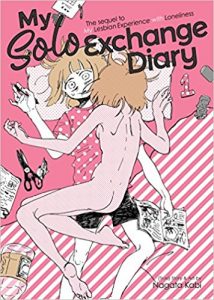
I will admit that when I first saw that this was licensed, my feeling was that it would be something more along the line of My Lesbian Experience with Loneliness, i.e. very stark and autobiographical. While it is autobiographical, I could not have been more wrong about it otherwise, as this title might best be described as “fluffy”. (The cover was likely a clue I just wasn’t picking up.) The title also makes it sound as if this is meant to be BL, which it isn’t. The emphasis should be on the ‘Was’ in the title, whereas I suspect most readers would see it as “Good Grief, the Bride Was a Boy!”, Kermit-style. But our author, Chii, is a woman who was assigned male at birth, and this manga is her story of exploring that, then transitioning, and finally getting married.

Chii’s art is cute and adorable, as is Chii, and the story flows along fairly well. Each chapter is followed by a brief ‘guide’ regarding transgender touchpoints, such as Gender Identity Disorder, LGBT, gender transition, etc. The story itself starts off with Chii meeting her future husband, though he was more “love at first sight” than she was. The husband is something of an amusing dork, but he’s very understanding, even when she explains to him that she’s a cisgender woman who was born as a man. We then flash back to various points in Chii’s life; growing up and realizing that she didn’t feel the same as the other guys around her; doing research and dating both men and women; and then starting the steps of transitioning and explaining things to her family and friends. The manga then ends with the wedding in question, which goes very well, even if Chii ends up crying when she said she wouldn’t.

If this all sounds somewhat undramatic, I won’t argue with that; it’s hard to take issue at the story since it’s autobiographical, but things honestly went very smoothly for Chii throughout this process, with her immediate family and her boyfriend/husband loving and supporting her no matter what. That said, it is nice to see this sort of story portrayed as happy and sweet, rather than like a YA novel with heavy drama. If you’re a reader who is not up to date on the various aspects of transgernderism, this is also a very good read, getting into greater detail on Sex Reassignment Surgery (which Chii does have, though it’s a tough decision – she ends up flying to Thailand to have it due to the high cost in Japan) and all the legal hoops that have to be jumped through in order to make things official in Japan.

This really ended up being a fun, educational read, and I’m definitely glad I picked it up. Chii’s art style is cute (her husband’s less so – we get a sample), and I’d recommend it to anyone who wants to read about a transgender protagonist or even just a “meet cute and get married” story.

Filed Under: bride was a boy, REVIEWS

Konosuba: God’s Blessing on This Wonderful World!: Crimson Magic Clan, Let’s & Go!!

May 4, 2018 by Sean Gaffney

By Natsume Akatsuki and Kurone Mishima. Released in Japan as “Kono Subarashii Sekai ni Shukufuku o!: Chūnibyō demo Majo ga Shitai!” by Kadokawa Sneaker Bunko. Released in North America by Yen On. Translated by Kevin Steinbach.

Another new KonoSuba novel, another obscure yet nerdy subtitle for the volume. This one never even got licensed in North America at all, it’s for the kids’ series Bakusō Kyōdai Let’s & Go!!, which is about mini-car racing. Fortunately, the novel itself has no actual car racing, but it does introduce us to the rest of Megumin’s Crimson Magic Clan, as we head to her hometown after there is news of an attack that will destroy the village. As it turns out, Yunyun and Megumin are the staid, sensible ones in this group, which consists entirely of overdramatic nerds living out their grand magic fantasies – only they actually have magic power to back themselves up. Even Megumin’s parents don’t escape this, though they’re more concerned with her relationship with Kazuma. And, as it turns out, it’s a good thin they came, as there really *is* a demon invasion happening, though at first it seems like the Clan has it under control.

Despite Yunyun being on the cover and jumpstarting the plot, this is not really her book, it’s Megumin’s. And Kazuma’s, of course. I’ve talked before about how his group feels more like a close-knit (if dysfunctional) family than anything else. That’s definitely changing here, as Megumin explicitly says that she’s fallen in love with him, something that Kazuma somehow manages not to quite understand. it’s a bit difficult for Megumin to admit it anyway, mostly as Kazuma is still several shades of terrible at times, though usually every time he tries to do something stupidly selfish it comes back to hit him in the ass. But Kazuma is Kazuma, so you also see exactly why it is that she fell for him anyway. Darkness is likely in the same boat, though this isn’t her book, so we don’t get much of that and instead get more of her being totally useless at anything except defense. As for Aqua, I’m relieved to say that there is no sexual tension there whatsoever. Let’s keep it that way.

This is the first book that hasn’t (yet) been adapted into an anime, but the adaptation, when it comes, should go very smoothly – there’s going to be a lot of fun set pieces here. Leisure Girl was particularly amusing, and the female orcs wanting to ravish Kazuma is a nice reversal of the standard fantasy “orcs want to rape the women all the time” trope. There’s also a few nice fights, particularly the one at the end, even though it consists of the whole Clan essentially dodging the demon lord while Kazuma tries to figure out what can stop them. The best scene, however, is right at the end. I will try not to spoil it, but it involves Megumin recognizing her own shortcomings and trusting Kazuma to help her get past them… and Kazuma realizing that Megumin’s happiness is more important. It’s really sweet.

Next time, to Darkness’ horror, we will be meeting the princess of this land, and I have no doubt fresh new disasters will ensue. Till then, KonoSuba remains a funny, light read, and anyone who likes to see the standard fantasy light novel tweaked on the nose will want to pick it up.

Filed Under: konosuba, REVIEWS

Yuuna and the Haunted Hot Springs, Vol. 1

May 3, 2018 by Sean Gaffney

By Tadahiro Miura. Released in Japan as “Yuragi-sou no Yuuna-san” by Shueisha, serialization ongoing in the magazine Weekly Shonen Jump. Released in North America by Ghost Ship. Translated by Kayla Albarado. Adapted by David Lumsdon.

When I was first researching this manga, more than one site told me that it was “the spiritual successor to To-Love-Ru”. Which makes sense. Jump usually has one title that is written purely for the sake of teenage hormones, and for years To-Love-Ru was the one. And so, perhaps after briefly checking to make sure none of the cast are based on anyone’s wife, we have Yuuna and the Haunted Hot Springs, an ecchi Jump title which offers pretty much a lot of the same things that To-Love-Ru gave the reader. There’s a guy surrounded by a bunch of hot young girls. There is an awful lot of tripping and falling into boobs. There is a lot of violence towards the lead guy by said girls after that happens. And no doubt most of them will fall for him, though so far we only have the titular ghost. It’s Harem Comedy 101.

Our hero is Kogarashi, who has had a pretty unlucky life – he’s easily possessed by spirits, and it’s made his life very difficult, as well as made him very poor. Fortunately, he’s learned (almost out of necessity) to be an exorcist so that he can deal with these things. He’s also found an inn with attached hot springs where the rent is dirt cheap – because, of course, it’s haunted. He meets the residents, all of whom are gorgeous girls, and also the girl haunting his room, who is a cute fluffy-headed poltergeist with a bad habit of making things float around her when she is flustered, which is most of the time. Yuuna is a cute girl, so Kogarashi can’t exorcise her. Instead he befriends her, which works out even better (and also makes her fall head over heels in love with him). Then we discover the other residents are also… not ghosts, but various types of supernatural entities or those that deal with them. Can he get along with everyone? And what about school?

As you might be able to guess, this is not exactly the most original title in the world. At the same time, it has a job to do and does it well. Everything is in the standard ecchi harem language, but there was no point where I was bored or turned off by any of the various goings-on. Kogarashi is more of the “confident” Jump hero in the Luffy/Soma tradition, which makes a nice change from the meek nerds that usually inhabit such titles (as, for example, To-Love-Ru). Yuuna is as you’d imagine, but I did like the way she was translated/adapted, as she uses a certain amount of “Scooby-Doo” style exclamations at times, which is amusing as she’s a ghost, but also apropos as it shows she’s older than she should be. We’ve barely met the other residents yet (there’s a demon slayer who I still call Motoko as she hasn’t really differentiated herself from the Love Hina character), but I’m sure that will come soon.

So this won’t win any awards, but if you’re here for amusing comedic romance with lots of large breasts, and don’t mind no actual romantic resolution for 25 volumes or so (because did I mention it’s a comedic romance manga?), this could be the title for you.

Filed Under: REVIEWS, yuuna and the haunted hot springs

The Queen’s Thief, Books 4-5 by Megan Whalen Turner

May 2, 2018 by Michelle Smith

A new installment of The Queen’s Thief is here! That proved an excellent incentive to reread the first three books (which I deeply love) and finally tackle the fourth book as well as the handful of short stories that’ve appeared as paperback extras.

A Conspiracy of Kings
A Conspiracy of Kings is a coming-of-age story for Sophos, the sweet, scholarly boy we met in The Thief who also happens to be the heir to Sounis. Some of the barons are in revolt, and when the villa in which he’s staying is attacked, Sophos tries to save his mother and sisters but ends up captured himself. Although he’s resourceful enough to escape and hide out amongst enslaved field hands, he nonetheless is bitterly self-critical and sure his father is disappointed in him (as usual). And yet, throughout the course of the novel, he exhibits a great deal of courage, makes some hard choices, and—though still the sweet, scholarly boy underneath—ultimately becomes a worthy king.

A Conspiracy of Kings strikes me as a simpler book than The King of Attolia, probably because Sophos is earnest and idealistic rather than guarded and secretive, though that’s not to say that he’s incapable of carrying out a secret plan or clever strategy. The book does have an unusual narrative style, beginning in the third person with Sophos already in Attolia, switching to first person as he tells Eddis his story up to that point, going back into third while everyone’s together in Attolia, going back into first when he returns after claiming the throne and fills Eddis in again, and then back into third for the ending.

It occurs to me that as The Queen’s Thief series continues, the further we’re getting away from Eugenides. The Thief was first-person from his point of view, The Queen of Attolia was third-person, The King of Attolia viewed Gen and his relationship with the queen through the eyes of a palace guard, and now we have a story about Sophos in which Gen appears occasionally and spends some of that time behaving with icy formality. I appreciate the expanding world the characters inhabit and genuinely enjoy spending time with everyone, but I do love Gen best and hope the focus returns to him someday.

Thick as Thieves
After waiting so long for a new book in the series, learning that it would be about Kamet, the slave of the Mede ambassador Nahuseresh, was somewhat of a disappointment. Now, I feel compelled to apologize to the author because I really should’ve had more faith in her. Kamet is a smart, distrustful protagonist with somewhat of a superiority complex and his evolution throughout the novel is fascinating.

Thick as Thieves is most similar to the first book in the series, since it involves a road trip peppered with storytelling. An Attolian soldier has been dispatched by Eugenides to steal Kamet out of spite, and after initially planning to decline the offer of freedom (thinking of all the power he will one day wield after he is gifted to the next emperor), Kamet is forced to accept after learning that his master has been poisoned and that he must escape quickly or face torture and execution. A Goodreads reviewer describes what follows as “bloodshed, betrayal, and bromance,” and I really cannot improve on that description. Although he initially thinks the Attolian is an idiot and plans on ditching him at the earliest opportunity (rather than return to uncivilized Attolia) he comes to like and respect him very much. I also love how one little piece of information lets readers know exactly who this soldier is, although Kamet does not use his name until near the end.

I don’t want to spoil the ending, but that’s the part of the book that really shines. (Alas, the road trip does drag a little in parts.) There are quite a few surprises—including one satisfying “I knew it!” moment—and the conclusion is both sniff-inducing and exciting, as conflict is still brewing between the Empire and the small countries on the peninsula, though the latter (thanks to Eugenides) appear to have acquired some powerful allies. This is such a great series and I hope we’ll see Kamet again in what follows.

The short stories:
“Thief!”, originally printed in Disney Adventures Magazine in 2000, is a prequel short story about Eugenides as a kid. There’s not much to it, but I liked seeing Gen interact with his older brother and favorite sibling, Stenides.

“Eddis” was included in the 2007 paperback edition of The King of Attolia. In it, nine-year-old Helen—wonderfully described as round, solid, sturdy, and not too bothered by the fact that she isn’t pretty—slips away from the palace to go exploring. Her destination is a desolate temple where she is visited in the night by a trio of gods, who refer to her as “the last Eddis.” It’s a neat story that not only fleshes out Helen’s background a little bit and explains why she uses the masculine “Eddis” rather than “Eddia,” but ties in nicely with her motivations in A Conspiracy of Kings.

“Destruction” was included in the 2011 paperback edition of A Conspiracy of Kings. In this brief story, we witness the ceremony to dispose of Hamiathes’s Gift in the fires of the Sacred Mountain in Eddis. Frustrated Sounis is in attendance as is Attolia, who never takes her eyes from Eugenides. Scant though it is, I find I appreciate having a mental image for this occasion, as well as the moment in which Eugenides achieves certainty that the stone is really gone.

“Knife Dance” is included in the new paperback edition of The Queen of Attolia. In it, a juggler named Druic is coerced by his jerk of a brother to perform a certain Eddisian knife dance—”one of the Mysteries of the Thieves”—for the court of Attolia. Both the king and his god have something to say about it. I liked this one, and the ending was very satisfying.

“Wineshop” is included in the new paperback edition of The King of Attolia. It’s extremely short and depicts Eugenides enjoying his final moment of anonymity before coins bearing his likeness enter circulation and how Teleus spoils it all. There’s one part of it that makes me wonder if Eugenides knew that was going to happen. It would not surprise me.

Filed Under: Books, Fantasy, REVIEWS, YA Tagged With: Megan Whalen Turner

Sword Art Online, Vol. 13: Alicization Dividing

May 2, 2018 by Sean Gaffney

By Reki Kawahara and abec. Released in Japan by ASCII Mediaworks. Released in North America by Yen On. Translated by Stephen Paul.

As you might gather from the title, Kirito and Eugeo are divided throughout the book, as the cliffhanger from last time leaves Kirito and Alice hanging off the edge of the tower, and Eugeo needs to go on by himself to duel the last of the Integrity Knights there to stop them. This once again allows the author to alternate between third-person Eugeo POV and first-person Kirito POV. I’m not entirely certain if the hate-on fans have for Kirito is as omnipresent in Japan as it is here in the West, but I get the sense that Kawahara is playing with the reader a bit here. Eugeo is the straightforward, pure, noble type hero and Kirito is the snarky little cheater. Possible the funniest moment in the book is when Kirito wears Eugeo’s sword, and he and Alcie talk for a bit about how difficult using two swords actually is. Kirito doesn’t bring up his past as he feels embarrassed by it. Even Kirito is sick of Kirito. That said, Eugeo does not end up in a good place either.

As I said before, Kirito and Alice end up hanging off the tower by their swords, and have to find a way to climb up about twenty floors. This allows them to snark at each other, bond during fights, and of course for Kirito to tell Alice what’s really going on with the Integrity Knights. I will note that this scene should look fantastic when animated, though I suspect my fear of heights will mean I would never be able to watch it. I was most interested in how Kirito and the author are both telling the reader to think of Alice Zuberg, the little girl and childhood friend, as a separate person from Alice Synthesis Thirty, the Integrity Knight. Kirito knows that saving the former means killing the latter, and is feeling increasingly bad about that. More to the point, Eugeo is clearly there for Alice Zuberg… but Alice the Integrity Knight is obviously being set up as another of Kirito’s love interests.

Speaking of Eugeo, his fight against Bercouli was pretty awesome, and I was amused by the idea of a time-traveling sword slash. Eugeo gets the better of him in sort of a double suicide attack, but unfortunately is then found and brought to the administrator, whereupon he runs up against the necessity of the plot. Kirito and Eugeo are both great protagonists, but there can be only one Kirito in Sword Art Online. And come on, you know that the two friends were going to have to battle at some point. So yes, much as we’d like Eugeo to be strong and throw off the obvious brainwashing, he falls, and the cliffhanger shows that he is now an Integrity Knight with his memory removed. (Speaking of which, Alice, Eugeo and Kirito all have flashes of Kirito being present in their childhood – something Kirito clearly doesn’t recall now. I do wonder what’s going on there.)

So we’re all set up for friend vs. friend next time around. Will they finally be able to take down the Administrator? Well, possibly not, as we’re only now at the halfway point of the Alicization arc. One last thing: Kirito and Alice discovering the true nature of the Senators may in fact be the darkest, most horrifying scene Kawahara has ever written. Well done. I shuddered.

Filed Under: REVIEWS, sword art online

Baccano!: 1933 The Slash -Bloody to Fair-

April 30, 2018 by Sean Gaffney

By Ryohgo Narita and Katsumi Enami. Released in Japan by ASCII Mediaworks. Released in North America by Yen On. Translated by Taylor Engel.

“There’s always someone better than you.” A truism that this two-volume arc of Baccano! seems to be taking to heart. Last time we saw Maria devastated when her swordplay lost out to Adele’s spear, and the repercussions of that reverberate though this book. But it doesn’t just end with her. Adele herself gets shattered when Maria’s clever thinking is actually able to deliver a bad wound, and the newly introduced Christopher Shaldred can try all he wants to be a cool, constantly talking killer, but we already have Clare/Felix, so he’s inevitably going to come out second best, especially when you realize that Felix prolonged the fight solely for the reason that he wanted to fight back to back with his fiancee. And then there’s Tim, who finds that not only is he easily manipulated by Huey, but also gets verbally destroyed by Senator Beriam. The theme here is “stay humble”, though to be honest nobody really learns that lesson.

By the time this book had come out, Narita had already started his other popular novel series Durarara!!, and I have to admit that of all the Baccano! novels, this one feels the closest to DRRR!! style shenanigans. That said, DRRR!! never gets quite as bloody as Baccano! does, and the massacre of the employees of the Nebula Building is (at least temporarily) a bit horrifying. Again one is reminded that there really aren’t too many “good guys” in this series – even Jacuzzi and Nice are gang leaders, and honestly I think the only reason they don’t get taken to the cleaners at the end is because Chane is part of their gang. The new villains are also pretty bad, and continue the theme of “someone better than you” – Tim’s Larva group from the prior book is as nothing compared to Huey’s experimental Lamia children, and it’s notable that after the fight at the end of the previous book, Adele is ready to go off the rails at a moment’s notice.

And then there’s Maria. I savaged her pretty badly in the first volume’s review, and to be fair she was incredibly annoying then. That doesn’t completely change (Luck confronting her at the end may be the funniest scene in the book, especially as by then the reader had ALSO forgot what her original mission was), but she manages to overcome her fears and doubts, gets a ridiculously cool two-sword move (honestly, this book would be fantastic animated), and possibly hook up with Tick – she says he gets to decide if they’re friends or lovers, to which I think Tick’s response can best be described as “Buh?”. She’s certainly better off than Firo, who runs around trying to save Ennis only to find Ennis never really needed saving at all. and then has Ennis say that she thinks of Firo… as family. Good thing these two are immortal, they need all that time.

Narita’s afterword says that the publisher wanted to get away from the 1930s again (so The Children of Bottle apparently did pretty well), but he said he had far too many 1930s plots still to tell. As such, be prepared to start a THREE-part arc next time, as we advance one year but otherwise have the same old ruckus. Plus maybe we’ll see who rescued Christopher, last seen bleeding out. As for The Slash, the second part definitely is better than the first. This is a fun ride.

Oh yes, Dallas is in this too. Sorry, totally ignored him.

Filed Under: baccano!, REVIEWS

Monthly Girls’ Nozaki-kun, Vol. 9

April 29, 2018 by Sean Gaffney

By Izumi Tsubaki. Released in Japan as “Gekkan Shoujo Nozaki-kun” by Square Enix, serialization ongoing in the online magazine Gangan Online. Released in North America by Yen Press. Translated by Leighann Harvey.

It’s been a long nine months since we last saw Nozaki-kun here, the curse of having caught up with Japan. I’m relieved to say, though, that the wait is worth it, as this series’ one and only job is stillo being done incredibly well: I laugh a whole lot when reading this. In fact, one joke made me laugh so much I had to put the book down for a few minutes. (It involves the art club and their “perfect guys”.) Characterization remains strong but static: apart from Hori maybe realizing that Kashima is attractive as a woman (though that doesn’t necessarily translate to any love epiphanies), no one here grows or changes, but remains the same lovably exaggerated idiots we want and expect. Chiyo’s Nozaki-love is up to eleven, Seo continues to be the best troll, and Nozaki’s people watching is as entertaingly wrong as ever.

If there’s a straight man left in the series, it’s probably Mikoshiba, whose attempts at getting Mayu and Wakamatsu interested in visual novels is a hilarious disaster, given that they’re not really playing the game for the same goals. Mikoshiba continues to be Chiyo’s BFF (yes, even though he’s a guy), trying in vain to help her and Nozaki get closer. This culminates in the guys and girls having (separate) sleepovers, which predictably involves Mikoshiba an company staying up late and gossiping about the romance game they played, while the three girls (who have no idea how an actual slumber party works) just talk about what male underwear looks sexiest.

I’ve been reviewing this series with full reviews since it began, and I admit it can sometimes be a bit of a challenge given that there’s not much to say here beyond “this is what I thought was the funniest”. But it is funny, and I can admire the craft that Tsubaki brings to the title in developing each gag. This series is not really much at all like Oresama Teacher beyond the love of “tsukkomi” style punchlines. Nozaki-kun has to be punchier, faster, and not wait for the gag to land. It can also be hard to think up material every week – you might see some of that in Nozaki’s watching the drama club improv, where they all talk about how easy it is to end a scene by having everyone drop dead or be murdered.

I’m not sure when Nozaki will end – I suspect when Tsubaki and Square Enix decides it’s run its course. We’ve already had an anime,. and a 2nd season is not on the horizon. That said, I’m not sure I’d expect much resolution in any ending – much as the fans might want the three “main couples” to get together – or even Mikoshiba and Mayu – I’m inclined to agree with the drama club. Ending with a romantic kiss is cheap and easy. Especially for a series like this. Making us laugh, though? That’s guaranteed.

As for tanukis, well, just look at the cover.

Filed Under: monthly girls' nozaki-kun, REVIEWS

  • « Go to Previous Page
  • Page 1
  • Interim pages omitted …
  • Page 168
  • Page 169
  • Page 170
  • Page 171
  • Page 172
  • Interim pages omitted …
  • Page 342
  • Go to Next Page »
 | Log in
Copyright © 2010 Manga Bookshelf | Powered by WordPress & the Genesis Framework