• Skip to primary navigation
  • Skip to main content
  • Skip to primary sidebar
  • Home
  • About Us
    • Privacy Policy
    • Comment Policy
    • Disclosures & Disclaimers
  • Resources
    • Links, Essays & Articles
    • Fandomology!
    • CLAMP Directory
    • BlogRoll
  • Features & Columns
    • 3 Things Thursday
    • Adventures in the Key of Shoujo
    • Bit & Blips (game reviews)
    • BL BOOKRACK
    • Bookshelf Briefs
    • Bringing the Drama
    • Comic Conversion
    • Fanservice Friday
    • Going Digital
    • It Came From the Sinosphere
    • License This!
    • Magazine no Mori
    • My Week in Manga
    • OFF THE SHELF
    • Not By Manga Alone
    • PICK OF THE WEEK
    • Subtitles & Sensibility
    • Weekly Shonen Jump Recaps
  • Manga Moveable Feast
    • MMF Full Archive
    • Yun Kouga
    • CLAMP
    • Shojo Beat
    • Osamu Tezuka
    • Sailor Moon
    • Fruits Basket
    • Takehiko Inoue
    • Wild Adapter
    • One Piece
    • After School Nightmare
    • Karakuri Odette
    • Paradise Kiss
    • The Color Trilogy
    • To Terra…
    • Sexy Voice & Robo
  • Browse by Author
    • Sean Gaffney
    • Anna Neatrour
    • Michelle Smith
    • Katherine Dacey
    • MJ
    • Brigid Alverson
    • Travis Anderson
    • Phillip Anthony
    • Derek Bown
    • Jaci Dahlvang
    • Angela Eastman
    • Erica Friedman
    • Sara K.
    • Megan Purdy
    • Emily Snodgrass
    • Nancy Thistlethwaite
    • Eva Volin
    • David Welsh
  • MB Blogs
    • A Case Suitable For Treatment
    • Experiments in Manga
    • MangaBlog
    • The Manga Critic
    • Manga Report
    • Soliloquy in Blue
    • Manga Curmudgeon (archive)

Manga Bookshelf

Discussion, Resources, Roundtables, & Reviews

Features & Reviews

BL Bookrack: April

April 20, 2011 by MJ 9 Comments

Welcome to the April installment of BL Bookrack, a monthly feature co-written with Soliloquy in Blue‘s Michelle Smith.

This month, we take a look at two offerings from Digital Manga Publishing’s Juné imprint, Love Syndrome and Right Here, Right Now, as well as BLU Manga’s Crimson Snow.


Crimson Snow | By Hori Tomoki | Published by BLU Manga | Rated Mature (18+) | Buy at Amazon – “Crimson Snow,” the three-part title story in this collection, is a compelling character piece, focusing on the surprising bond that grows between two very dissimilar people. When Kazuma, a yakuza gangster, is shot in the act of exacting revenge for the killing of his beloved boss, he has nowhere to go. Pausing for a moment’s rest in the snow, which he stains red with his blood, he is discovered by Yukihiro Shibata, the rich bastard son of a renowned tea ceremony master. Without a moment’s hesitation, Yukihiro takes Kazuma in and begins to nurse him back to health.

This reaction utterly baffles Kazuma. “Don’t you know what kind of person I am?” he inquires. His background makes no difference to Yukihiro or his servants, however, and as Kazuma comes to know his caregivers, he begins to understand why they’re willing to help him. For one thing, one of the servants is himself a reformed gangster, and for another, Yukihiro is so used to accepting only what he is given—a holdover from many disappointments in his relationship with his absentee father—that when he is actually adamant about something, the servants will do anything to make sure he gets it.

Despite the yakuza connection, “Crimson Snow” is actually a quiet kind of story, largely because Kazuma, for the first time in his life, has the opportunity to simply be still and spend time reflecting on his life. He loved his former boss, and loved being by his side, but it did lead him into a life of violence. Life by Yukihiro’s side is different, peaceful, and in time, Kazuma realizes that he must leave in order to avoid bringing ruin upon his friend. (“I don’t know how to protect things I care about. My hands only ever break things and take things away.”)

Awesomely, however, Kazuma makes his decision with a minimum of angst, and with the clear-eyed intent of paying for his crimes. I would have been perfectly happy if the tale had ended here, but the brief and satisfying “Galance” provides some closure to Kazuma and Yukihiro’s story. There are two other stories in the collection, as well. “At First Sight” is a simple and happy love story between two students who follow up on mutual staring with some highly consensual intimacy. “Cry for the Sun” is a little odd—being the story of a young man who falls in love with his father’s former lover—but the premise is interesting.

On the whole, I enjoyed Crimson Snow quite a lot. Hori writes that this was her first foray into BL, and she shows great promise both in storytelling and in art. (Kazuma, in particular, often looks disconcertingly realistic.) I’d love to read more by her someday.

-Review by Michelle Smith


Love Syndrome | By Yura Miyazawa | Published by Juné | Rated Mature (18+) | Buy at Akadot – As a regular reader of boys’ love manga, I’ve developed my share of pet peeves. Romanticization of rape, the excessively tortured uke, demonization of female characters–all are common elements of the genre that invariably make me cringe. The greatest sin of all, however–the one most hurtful and difficult to forgive–is that of the advertised single-volume story that turns out to be an anthology. This is the sin of the publisher, not the title, of course. Yet when reading for review, it’s the poor manga at which I’ll usually direct my wrath. Fortunately, in this case, that wrath is a bit subdued.

Most BL anthologies share a few tragic failings, and Love Syndrome is no exception. Though typically revolving around a common theme (in this case, friends-turned-lovers), the stories are rushed and underdeveloped, forced to a romantic climax (pun intended) by whatever means necessary, with little attention given to minor issues like characterization and basic believability.

Take a look at this volume’s first story, for instance. An unexpected water leak in his apartment building compels college student Serizawa to seek shelter with his old friend, Shinoda. Shinoda agrees, but inexplicably dictates that his guest agree to kiss him every morning. As Serizawa quickly discovers that he enjoys Shinoda’s kisses, he also finds out that Shinoda has been in love with him for years! Now Serizawa’s in love too! Hurray! The end. While the specific circumstances of the volume’s subsequent pairings differ slightly, the general trajectory remains the same throughout. Yura Miyazawa’s characters fall fast, overcome obstacles immediately, and declare their love (with a few panels left over for the suggestion of sex), all in the span of about 30 pages.

With all that in mind, though it would be an overstatement to suggest that Love Syndrome really *succeeds* at anything, it doesn’t completely fail either, thanks in great part to its author’s relentless good cheer. If these stories are obviously spun from the thinnest wish-fulfillment fantasies, they’re also crafted with a genuine delight for those fantasies. Miyazawa’s characters beam with love, creating a sense of real warmth within their hopelessly clichéd world. And in the cold, murky depths of the BL anthology market, a little warmth goes a long way.

-Review by MJ


Right Here, Right Now!, Vols. 1-2 | By Souya Himawari | Published by Juné | Rated Mature (18+) | Buy at Akadot – If I were to describe this two-volume series as a time travel historical romance, probably you’d imagine something a lot more fluffy than what Right Here, Right Now! actually has to offer. Oh, sure, it’s not particularly deep or dramatic, but it also doesn’t gloss over some of the problems with falling in love with a guy who lived over 500 years ago.

On his way home from school one day, Mizuo Yanase decides to shirk his tea ceremony lesson and loiter at the run-down local temple instead. While sitting in the spot where the Buddha altar should be, he is suddenly tranported back in time to the Warring States period, where he is hailed as the living incarnation of Buddha. He is promptly introduced to Takakage, a boy about his age, who wastes no time glomping Mizuo and requesting that he become his “page,” which seems to be a euphemism for “bedmate.”

Mizuo demurs, and spends most of the first volume learning about Yamako, the land in which he finds himself, and taking combat lessons as a way to fend off his own feelings of insecurity because Takakage is so much more manly and mature than he is. After a brief visit home, he turns to find that Takakage has aged six years and become a hardened military general. Too, Takakage’s mother is pressuring him to produce an heir, and when a proposed marriage to an enemy princess seems like the path to peace for the people of Yamako, Mizuo thinks it best to remove himself from the picture, lest he be the cause of Takakage’s refusal and, therefore, the citizens’ suffering.

Mizuo is a bit of a milquetoast protagonist, but I still enjoyed his growth as he becomes more interested in trying his best, thinks of others before himself in a way that isn’t actually annoying, and ultimately resolves that he needs to find a way to contribute if he’s ever going to feel truly at home in the past. His dilemma over whether to stay with Takakage or return to his family is also a nice touch—many such stories give the characters an easy out in this regard, but not this one. The situation with the proposed marriage is also resolved more rationally than I expected, and with a minimum of melodrama.

As a time travel fantasy, therefore, Right Here, Right Now! is pretty decent. It’s in the romance department that things didn’t work for me. Right off the bat, Takakage is eager to get physical with Mizuo, which makes him look more like a horndog than someone actually in love. Mizuo protests for a while, then eventually submits without much enthusiasm. I can totally buy that Mizuo admires Takakage and wants to be by his side, but have a hard time seeing them as a couple.

In the end, Right Here, Right Now! isn’t perfect, but it’s certainly better than expected.

-Review by Michelle Smith


Review copies provided by the publisher.

Filed Under: BL BOOKRACK Tagged With: crimson snow, love syndrome, right here right now, yaoi/boys' love

The Josei Alphabet: L

April 20, 2011 by David Welsh

“L” is for…

Well, it’s for “Love.” Duh.

Love Blog!!, written and illustrated by Akira Fujiwara, originally serialized in Shogakukan’s Petit Comic, three volumes, published in German by Tokyopop. Frustrated with her love life, office lady Eriko takes to the web to blog about her search for romantic fulfillment. There’s a sequel, Love Blog!! Next, and Fujiwara has another “L” josei series, Lost Girl wa Koi o Suru, currently running in Petit Comic.

Love Cruise, written and illustrated by Tomu Ohmi, originally serialized in Shogakukan’s Petit Comic, one volume. This collection of smutty short stories is noteworthy mostly because it’s by the creator of the awesome-or-horrible-sounding Midnight Secretary, which I’ll almost certainly mention again next week.

Love My Life, written and illustrated by Ebine Yamaji, originally serialized in Shodensha’s Feel Young, one volume, published in French by Asuka. Won’t someone please, please, please publish this by-all-accounts gorgeous and moving yuri romance? Please?


Love Vibes, written and illustrated by Erica Sakurazawa, originally serialized in Shueisha’s Young You, one volume. Mako is stuck in a love triangle with her unreliable ex-boyfriend, Shoji, and an alluring bisexual woman named Mika. Another Sakurazawa title in this corner of the alphabet is Lovely!, originally published by Shodensha.

Lovers’ Kiss, written and illustrated by Akimi Yoshida, originally serialized in Shogakukan’s Flowers, two volumes. Everyone’s kissing everyone at this public high school, which promises both shônen- and shôjo-ai.

Licensed josei:

  • Loveless, written and illustrated by Yun Kouga, originally serialized in Ichijinsha’s Comic Zero-Sum, published in English by Tokyopop.

What starts with “L” in your josei alphabet?

Reader reminders and recommendations:

  • Love for Dessert, written and illustrated by Hana Aoi, originally published by Ohzora Shuppan, published in English by LuvLuv, published in French by Asuka.
  • Lady Rin!, written and illustrated by Youko Hanabusa, serialized in Shodensha’s Roma x Puri.

Filed Under: FEATURES

Bookshelf Briefs 4/18/11

April 18, 2011 by David Welsh, MJ, Katherine Dacey and Michelle Smith 6 Comments

This week, MJ, Kate, David, & Michelle take a look at slew of comics (and one light novel) from Viz Media, Oni Press, Yen Press, and TOKYOPOP.


Book Girl and the Suicidal Mime | By Mizuki Nomura | Yen Press – “Warmly despondent – that’s the kind of story I hope it will be,” Nomura says in this light novel’s afterword. Her hope is fulfilled, and she manages to add healthy doses of humor and suspense along the way. It’s about a high-school literature club that consists of a fetching goblin who literally eats prose and a boy who keeps her in snacks in the form of handwritten stories. They’re drawn into the romantic woes of a classmate, and their efforts to help her take some darkly unexpected turns that force the boy to confront painful events from his own past. It’s a quirky, thoughtful celebration of the power of stories, and it features interesting, well-developed characters with complex problems. I haven’t read many light novels, but I’m looking forward to reading more installments in this series. – David Welsh

Karakuri Odette, Vol. 6 | By Julietta Suzuki | TOKYOPOP – After the introduction of Travis, an advanced robot who wants Odette for his bride, in volume five, I was a little worried about this, the final volume of the series. Happily, I needn’t have been. Manga-ka Julietta Suzuki avoids any semblance of hijinks, framing her story instead around Grace, an earlier model of robot made by Travis’s creator, and the pain she feels over no longer being considered Papa’s precious masterpiece, and the relationship between Odette and her protector and friend, Asao. This leads to many poignant and bittersweet moments, as Odette realizes for the first time that nothing stays the same forever. It’s a lovely end to a lovely series. -Michelle Smith

Nura: Rise of the Yokai Clan, Vol. 2 | By Hiroshi Shiibashi | Viz Media – Until someone licenses GeGeGe no Kitaro for the US market, yokai lovers will have to make do with this solid, if uninspired, story about a teenage boy who’s caught between the demon and human worlds. The second volume finds Rikuo tapping more readily into his yokai powers in order to save his friends — a marked improvement over the first volume, in which Rikuo spent more time trying to deny his abilities than make use of them. Rikuo’s yokai pals also get more screen time in volume two, giving the story a much-needed jolt of humor and weirdness. Much as I like the artwork and the concept, however, I’m still not taken with Nura; the stories follow all-too-predictable predictable patterns, and the main characters — the human ones, at least — aren’t well-rounded enough to be genuinely memorable. -Katherine Dacey

Pandora Hearts, Vol. 5 | By Jun Mochizuki | Yen Press – Everyone knows by now that I think Pandora Hearts is stylish, and to some extent that’s its greatest weakness. Though Jun Mochizuki uses her obvious Carroll/Tennial influence to create much beauty on the page, it is exactly that influence that encourages her least effective impulses. While the story she’s created is wonderfully compelling, she risks losing the thread, time and again, by tangling it up in useless references that don’t serve the series at all. The Cheshire Cat? The Mad Hatter? These names are not only meaningless in the context of her story, but actually harmful to it, making it appear as if she doesn’t trust it to stand up on its own. Fortunately, in volume five, Mochizuki steps back from the Wonderland-heavy muddle and remembers to tell her story, in all its beautifully twisted, heart-rending glory. Still recommended. – MJ

Salt Water Taffy: The Seaside Adventures of Jack and Benny: Caldera’s Revenge Part 1 | By Matthew Loux | Oni Press – If you haven’t treated yourself to any of the previous installments of Loux’s series, I’d recommend you correct that at your earliest convenience. Young brothers Jack and Benny are spending the summer at the deceptively peaceful seaside town of Chowder Bay. A potentially dull family vacation is saved by the fact that Chowder Bay is weirder than Key West and Provincetown combined, with totally true tall tales of giant lobsters, ghosts, and hat-stealing eagles lurking around every corner. This time around, the boys try and help a giant squid reunite with his parents, complicated by the interference of a determined sperm whale and an ominous ghost ship. Loux’s style is a joy, lanky, witty, and evocative, and this chapter is a real treat for anyone who’s having a hard time waiting for their own summer vacation to start. -David Welsh

Stepping on Roses, Vol. 5 | By Rinko Ueda | Viz Media – “I really enjoy drawing Stepping on Roses as it continues to have this stereotypical, melodramatic storyline,” says mangaka Rinko Ueda in her author’s notes for volume four. And, sure, I get where she’s coming from. There’s something cozy and comforting about by-the-book romance that I’m certainly not immune to. There’s a reason why that structure works, and it only takes a single spark of real personality to ignite the fire of heart-pounding romance. Trouble is, there’s no spark here to be found. Ueda has perfected the structure and she draws very prettily indeed, but she fails to make it personal, leaving our hearts to beat quietly on. Volume five has a few interesting moments thanks to a sub-plot involving the Ashidas’ devoted butler, but the series’ primary romance remains as empty as ever. Not recommended. – MJ

Time and Again, Vol. 5 | By JiUn Yun | Yen Press – Exorcist Baek-On is full of haughty scorn when he encounters a farmer who believes that his beautiful new wife is really an angel. When he forces the man to see the truth, it results in the husband killing his wife then belatedly realizing she did truly love him. This outcome leaves Baek-On reeling—was he wrong to interfere? has he been living his life the wrong way?—and sends him to a family friend for some advice. Although the volume is a little light on our main characters and doesn’t provide the same kind of character development as the previous volume, it still fleshes out the world well, filling in bits of Baek-On’s family history while offering twisty takes on traditional Asian folk tales. I’m looking forward to the sixth and final volume very much. -Michelle Smith

Filed Under: Bookshelf Briefs Tagged With: book girl and the suicidal mime, karakuri odette, nura: rise of the yokai clan, pandora hearts, salt water taffy, stepping on roses, time and again

From the stack: Onward Towards Our Noble Deaths

April 18, 2011 by David Welsh

There are several very welcome text pieces in Drawn & Quarterly’s handsome production of Shigeru Mizuki’s Onward Towards Our Noble Deaths – a foreword by Frederik L. Schodt, extensive translation notes, and an afterword by the creator. My favorite extra has to be an interview with Mizuki in which the legendary mangaka is simply not having it.

He’s not being difficult or unpleasant, but he’s not really game for the standard questions that legendary cartoonists generally get asked. His answers tend to be much shorter than the inquiries that triggered them. He won’t play into the “trailblazing artiste” narrative, nor will he won’t deprecate himself. He won’t list his influences, trash commercial comics, or paint the creation of Onward… as an artistic or personal struggle.

Of course, my favorite bit of the interview is when Mizuki is asked which of his works he’s most proud of and would like to see made available in English:

SM: I would have to say GeGeGe no Kitaro.

I would have to agree with him. Grateful as I am to have any of his work licensed and in translation, it feels kind of odd to start with one of his darker works. It would be like if Osamu Tezuka’s Ayako had been licensed before anyone had a chance to read Astro Boy. Of course, GeGeGe no Kitaro is a Kodansha property, some of which was published ages ago in the publisher’s bilingual comics initiative, so that complicates things. It’s also beloved and probably very expensive, so one can’t precisely fault other publishers for not waiting. Of course, Onward… was a Kodansha property as well, originally serialized in Gekiga Gendai, so it’s nice to see the publisher continue to work with other houses rather than keep everything for themselves.

And Onward Towards Our Noble Deaths has numerous merits in its own right beyond being part of Mizuki’s body of work. It’s based on Mizuki’s experiences as a soldier serving in Papua New Guinea during World War II and portrays the hardships and ill use average soldiers endured at the hands of their superiors. These abuses range from routine, almost desultory physical punishment – “New recruits are like tatami mats: the more you beat them, the better they are.” – to the overall military culture that paints surrender as the worst kind of shame and promotes dying in battle, no matter how senseless and futile the effort, as every soldier’s highest calling (aside from victory, obviously).

Mizuki doesn’t need to do much beyond merely portraying this mindset in order to condemn it. His cast of everyman grunts doesn’t pontificate about its fate. They gripe about the shortage of food, the isolation, the grueling routine, the danger and disease. The overarching injustices they face and the ways that these will doom them always loom, and the soldiers are keenly aware of them, but they’re rarely addressed directly in the text. This is welcome, because it keeps subtler, more effective condemnation from becoming an obvious screed, and it’s also natural in a way. It makes sense to me that these powerless people are reluctant to address the fact that their day-to-day suffering is almost certainly for nothing, and that the people responsible for their fate know that and don’t care. As a result, it’s a very straightforward, chronological narrative. The soldiers arrive, conditions deteriorate, they face unthinkable danger and impossible choices, and things end badly. The approach serves Mizuki’s aims well.

The visual style can be jarring at times. Mizuki paints lushly realistic backdrops and peoples them with cartoonish figures. That isn’t problematic by itself, as I’m more than happy to embrace the combination of cartoonish and gruesome in works like Tezuka’s MW and Ode to Kirihito. There are moments when Mizuki’s particular stylization is not just dissonant with his subject matter but directly at odds with it. This is particularly evident in more violent scenes when body parts are flying, and Mizuki’s strict adherence to his character aesthetic sometimes results in panels that look more ridiculous than horrific. He’s also dealing with a large cast, and individuality tends to get lost in terms of design and simple space to develop characters thoroughly. Ironically, it’s the higher-ups who make the strongest impression. Again, that fits, since they’re the ones with the most agency, and it reinforces the brutal expendable status of the rank and file.

It’s an effective piece on the whole, and I’m glad I had the opportunity to read it. The overall level of restrained sincerity is welcome and makes the piece stand out in the field of autobiographic comics. I’m also pleased that Drawn & Quarterly chose to mark the occasion of Mizuki’s proper English-language debut with proper introductory pieces providing an overview of his career and impact. If it doesn’t seem like the ideal piece to use for Mizuki’s reintroduction, it certainly does him credit.


Filed Under: REVIEWS

License request day: Kaguyahime

April 15, 2011 by David Welsh

Erica (Okazu) Friedman and I are usually of one mind on most issues, but we’re having a really teensy difference of opinion at the moment. She says Reiko (Moon Child, Himitsu: The Top Secret) Shimizu’s Kaguyahime is josei. I say it’s shôjo. On my side of the argument is the fact that the 27-volume series ran in Hakusensha’s Hana to Yume and Lala. But Erica has experienced the series first hand. After a mesmerizing synopsis of what the series is about (kind of a fusion of an LGBT soap opera with Parts: The Clonus Horror), Erica makes this recommendation:

If you like a challenge, strange sci-fi, conspiracies, pretty boys, hunky girls, angst, fantasy, absolutely ravishing art, and a TON of yaoi/yuri, you need to read this manga.

I NEED TO READ THIS MANGA.

Honestly, I cannot be bothered to try and understand the plot, which seems to defy succinct description, but those are sometimes the best comics of all.

Those lucky, lucky French are able to enjoy this under the title Princess Kaguya, courtesy of Panini. Let’s see how their first-volume blurb translates, shall we?

Reiko Shimizu revisits an old Japanese legend in this new shôjo manga with the pace of a thriller. Children raised at an orphanage on an island off the coast of Japan are intended to be sacrificed to the princess of the moon when they reach sixteen years age. Some manage to escape, but they still feel the island’s pull. Will they be able to escape their destiny? A fascinating thriller with breathless suspense!

That’s so un-French of them not to mention the rich tapestry of sexual orientations Erica promises. Anyway, Panini seems to be about halfway through the series at the moment.

I think, in cases like this, it’s best to just conclude that everyone’s right. I’m technically correct in saying that Kaguyahime ran in shôjo magazines. Erica’s certainly correct in noting it has enough sex and violence to snap most comics for teen-agers right in half. And really, its category doesn’t matter. I just want to read it.


Filed Under: LICENSE REQUESTS, Link Blogging

Manga Bookshelf 2011 Eisner Roundtable

April 14, 2011 by Katherine Dacey 18 Comments

KATE: The 2011 Eisner nominees were announced last week, and the results were genuinely surprising. Not only did Eisner mainstays like Naoki Urasawa and Osamu Tezuka get nods, but the judges also recognized an unusual number of female artists, including pioneering shoujo manga-ka Moto Hagio. The diversity of styles and subject-matters was noteworthy as well; this is the first time in several years that the judges have nominated shojo and josei titles, which often get less critical respect than seinen manga.

So my question to everyone participating in the roundtable is this: which titles are you most excited about seeing on the list? And do you think they have a shot at winning? Why or why not?

DAVID: In terms of being genuinely surprised, I’d have to pick Yumi Unita’s Bunny Drop (Yen Press) as the most pleasantly eye-opening inclusion. It’s a wonderful, wonderful series that doesn’t have any of those particular gravitas selling points, like a legendary creator or an out-there concept. Unita just tells a warm story about recognizable characters, and she tells it very, very well. It’s like the crowd-pleasing indie film that nobody expects to get a best picture nomination.

MJ: I’ll have to agree with David on the candidate for “most surprising,” for exactly the reasons he stated. In terms of pure excitement, though, I have to mention Natsume Ono’s House of Five Leaves. This thoughtful, languorous manga is one of my current favorites. And though its period setting and unique art style probably contribute to its Eisner-likeliness, I was still surprised to see it nominated.

KATE: Though I’d agree that Bunny Drop was the most surprising nomination, I’m most excited about A Drunken Dream and Other Stories. I’ve been a big Moto Hagio fan since I first read “They Were Eleven” four years ago, and have been frustrated by American publishers’ reluctance to license her work. (I know, I know: old-school shojo doesn’t sell very well, as Swan and From Eroica With Love‘s poor sales records attest.) Hagio’s Eisner nomination fills me with hope that Fantagraphics will take a chance on one of her longer stories — say, The Poe Family or Otherworld Barbara — allowing American readers to really get to know her work.

There’s another reason I want Drunken Dream to win: stories written by and for female audiences don’t often win major awards. Looking over the complete list of Eisner nominees, for example, I see only a sprinkling of female artists and writers singled out for recognition. The titles that did make the cut — Julia Wertz’s Drinking at the Movies, Raina Telgemeier’s Smile — are excellent, but I can’t help but wonder why female creators weren’t nominated in more categories, given how many smart, talented, and imaginative women are working in the field today. A win in the Best U.S. Edition of International Material–Asia category is a small but important step towards correcting that kind of oversight.

So what about you: which titles are you hoping will win? Which title would you bet on, if you were the gambling sort?

DAVID: Before I start odds-making, I definitely wanted to concur with your enthusiasm for the inclusion of women creators in the manga category. It’s been a while since they’ve been represented, I think since the 2007 and 2008 slates. And these women creators — Unita, Ono, Hagio — are extraordinary. I’m delighted to see all of them recognized.

Of course, I’m cynic enough to doubt that any of them will win. I think Eisner voters have an understandable fondness and admiration for Osamu Tezuka, so I would probably put my money on Ayako, even though I don’t think it’s his best work by any means. In fact, I’d rather have seen just about any of Vertical’s other books fill that fifth slot — Twin Spica or Peepo Choo in particular. But Ayako is a big, serious drama by a (male) legend, and that’s some serious voter bait right there.

MJ: I’m thrilled about the nomination of Drunken Dream, and out of the female-created manga on the list, I think it has the best chance to win. It’s “classic” and comes to us from a publisher that is better-respected in the western comics world than most of those that primarily (or exclusively) publish manga. I’ll join David in his cynicism, however, and agree that I think a classic from a beloved male creator (and Tezuka in particular) is much more likely to win. And while I’m not especially keen on an Ayako win (I, too, would have preferred to see nearly any of Vertical’s other recent releases nominated instead), in my heart of hearts, I admit I’d most like to see a longer series take the prize, above Ayako *or* Drunken Dream.

This will probably be an unpopular opinion, but long-form storytelling is one of the things I most highly value in comics from Japan, and though I’d like to see Hagio get the attention she deserves, I’d rather see her get it for one of her longer series. Like Kate, I hope the nomination inspires Fantagraphics to consider publishing some of those here. I’d be very excited to see one of them on the Eisner list in a couple of years.

All that said, I’d quite possibly die of joy if any of this year’s nominated female mangaka actually did win, Hagio included.

KATE: That’s a great point, MJ: multi-volume series have certainly won Eisners — Buddha and Old Boy are past winners — but it’s very difficult to compare a complete story such as Ayako with an ongoing one such as Bunny Drop or House of Five Leaves. Sustaining a complicated narrative over many volumes is a very different skill than telling a story in a single volume; it seems patently unfair to compare something which is still in an early stage of development with something where one can actually judge the effectiveness of the ending.

And speaking of long-form stories, do you think 2011 will be the year that Naoki Urasawa finally wins an award, or is he doomed to be the Susan Lucci of the Eisners?

DAVID: I think the best way I can answer this is to suggest that Urasawa is an excellent Eisner nominee but not necessarily an ideal Eisner winner. And, speaking as someone who watched All My Children for many of the years that Lucci was nominated for her performance and lost, I think the comparison is apt beyond the nominations-to-losses ratio.

The thing about Lucci, and I say this as an admirer of her work, is that she rarely had those moments of transcendence that could be found in the performances of the actresses who actually won. She’s adept at both comedy and drama, and she certainly has charisma in the role, but I think her great failing was that she made her work look effortless. She was reliably entertaining rather than transporting, and I think you can say something similar about Urasawa.

He makes terrific genre comics that are among the most reliably entertaining you’re likely to find on the shelf. But when I compare his work to that of Tezuka, Hagio, or even Ono to a lesser extent, I see Urasawa possessing great skill as an entertainer rather than singular vision as an artist, and I think that puts him at a disadvantage in the best manga category.

When you compare him to the competition in the best writer/artist category, I think he could theoretically enjoy better odds, but then you have to factor in the tastes of the general population of voters. What percentage of that pool reads comics from Japan? And what percentage of that percentage reads Urasawa’s work?

MJ: David, thank you for clarifying your point so beautifully. That makes a lot of sense to me, and I think it’s helped me understand my own feelings about Urasawa as well. I like 20th Century Boys and all the other work of his I’ve read, and I’d describe them as wonderful comics and great reads. Yet when someone asks me for a list of my favorite mangaka, his name never even comes to mind. Because even though I thoroughly enjoy his work, my “favorites” will be writers who really speak to me in some specific way that is unique to them, and aside from traumatizing me forever with the death of a robotic dog, that’s never been Urasawa.

KATE: Your comments about Urasawa, David, make me wonder if Nabuaki Tadano’s 7 Billion Needles has a chance at winning its category (Best Adaptation from Another Work). Tadano’s work is solid but not showy; unless the judges have read Hal Clement’s original novel, it would be hard for them to appreciate what Tadano did to make the storyline more appropriate for a sequential art treatment. (Clement’s book, for readers unfamiliar with it, takes place largely inside the human host’s body, and consists of many lengthy conversations between host and alien. It’s a good read, but not something that would translate directly into a graphic novel.)

DAVID: That’s hard for me to answer, since I haven’t read Clement’s book. I do think the outcome of that category will depend on whether or not voters are considering how the source material was adapted or the stand-alone quality of the work. I’ve really enjoyed the first three volumes of 7 Billion Needles, so I was just happy to see it get a nomination and, hopefully, more readers from that.

MJ: I was actually surprised to see it nominated there, not because it isn’t a great series (it is), but because from what I understood, it wasn’t a direct adaptation they way we tend to think of them. I do think 7 Billion Needles is the kind of manga that appeals easily to non-manga readers, so at least that might work in its favor. I’m always pleased to see manga nominated outside of the Asian-specific category, so this nomination was one of my special favorites this year.

KATE: I’m hoping that the judges understand that Needle would have been difficult to adapt as is; Tadano did a great job of taking Clement’s ideas and making them work in a visual format, which required some pretty fundamental changes to the script.

And since we’re on the subject of Asian comics nominated for categories besides Best U.S. Edition of International Material–Asia, what did you think of Korea As Viewed By 12 Creators: did it deserve a nomination?

DAVID: I think it did, yes. It’s not the stunner that Japan as Viewed by 17 Creators was, but it does what an anthology is supposed to do: present a variety of styles and introduce the reader to some talented creators while featuring a very respectable percentage of good stories and some great contributions.

I have to say that I was kind of surprised not to see Top Shelf’s Ax anthology nominated. I’m not saying I liked it better than Korea, but when you consider the ambition and breadth of the project, it seemed like such obvious Eisner bait.

MJ: I was a little disappointed in Korea As Viewed By 12 Creators, but I’ll admit that my expectations may have been inappropriately high. I am certainly happy to see it nominated, if only for the visibility it might bring to its Korean creators. Anything that might help to bring a greater variety of Korean comics our way is a win in my book.

I would have liked to see something like Twin Spica break into the non-Asian-specific categories, but I can’t be surprised that it didn’t.

KATE: I’d have been more inclined to nominate Herve Tanquerelle’s “A Rat in the Country of Yong” for Best Short Story than to nominate the entire Korea anthology. “Rat” is a perfect example of how to do wordless comics: it’s got a clear, simple narrative that anyone can follow, but all of the fine details — the character’s mode of transport, the view from his hotel window — add nuance to the “stranger in a strange land” concept. Furthermore, by using animals as stand-ins for people, Tanquerelle avoided one of the problems that plagued other stories in the collection: cultural condescension. I know I’m in the minority for disliking Catel’s contribution, but I found a lot of her observations patronizing and superficial; it’s as if someone based their entire impression of New York City on one trip to Barney’s, you know?

As for titles that I feel were neglected, I have to agree with both of you: Twin Spica would have been a natural choice for the Best Publication for Teens, as would Cross Game. Both series have the rhythm and feeling of a good YA novel — more so, I’d argue, than some of the nominated titles in the teen category, which seem a little young for real adolescents.

Are there any other titles that you feel were unjustly neglected?

DAVID: I do generally find myself wondering why there’s no room for manga in the Best Publication for Teens category, especially for the titles you mentioned, but that might be more of a function of me not having read enough of the nominees that are there. And given that he has three excellent series currently in publication, I would love to see Takehiko Inoue nominated in the Best Writer/Artist category at some point.

MJ: I could definitely get behind that. I’d also love to see Real in the Best Continuing Series category.


See The Manga Critic for a full rundown of 2011’s nominated manga and manhwa titles. A complete listing of this year’s nominees in all categories can be found at Comic-Con.org.

Filed Under: FEATURES Tagged With: 2011 Eisner, 20th century boys, 7 billion needles, a drunken dream and other stories, bunny drop, Eisner Awards, house of five leaves, korea as viewed by 12 creators

From the stack: Cross Game vol. 3

April 14, 2011 by David Welsh

Hello, and welcome to the latest installment of “David Gushes over Mitsuru Adachi’s Cross Game!” Listen, I know I’ve crossed over from any kind of clear-eyed critical examination into full-on, sweaty, tent-in-a-parking-lot evangelism with this title, but I also know that I’m beyond caring. This series delivers joy on a regular basis.

The third omnibus, which collects the sixth and seventh volumes of the series, can be reduced to the simplest of sports manga narratives. The team of plucky upstarts prepares for a big game, then plays the big game, then reacts to the outcome of the big game. It doesn’t get much purer than that, and the arc here is certainly exciting in terms of that basic outline.

But it’s so much more than that. Ultimately, the events portrayed here are about justice, about heart and determination winning out against elitism and presumption. Of course, that’s also one of the least novel conflicts ever to grace the pages of manga as a category, but still…

The thing is, while Adachi is working with one of the oldest road maps in the form, he doesn’t take a straight line anywhere. Our scruffy heroes don’t gaze off into the middle distance and make vows about their future. They’re too realistic for that. They don’t lapse into paragraphs of internal monologue about what’s happening, because Adachi draws too well and frames sequences too clearly for that to be necessary. Characters can behave entirely believably and still surprise you, because Adachi doesn’t feel the need to underline their every thought or feeling. He trusts your ability to comprehend subtext, to remember past moments, and to connect what you already know or suspect with what you see unfolding on the page in front of you.

As goofy as Adachi’s sense of humor can sometimes be, he can also tug at your heartstrings or thrill you with moments big and small. You can be both elated and tickled when justice is visited upon the smug. You can snicker at and feel sympathy for the team dork during his mishaps, and you can feel touched but not manipulated as characters inch towards a better understanding of each other.

It’s just an awesome comic, you guys. It does everything you expect a comic of this sort to do, but it does them with such distinctive style and heartfelt sincerity that you’ll never notice you’ve visited this territory before. Awesome.


Filed Under: REVIEWS

Off the Shelf: It’s all uphill…

April 13, 2011 by MJ and Michelle Smith 14 Comments

MJ: Hi, I’m hungry. Gimme food.

MICHELLE: You can have one of the chicken thingies I’m fixin’ to eat.

MJ: Can I, really???

MICHELLE: Sure. I will put it in the mail tomorrow.

MJ: Hm. I foresee several issues here. Maybe we should just talk about manga. Got any?

MICHELLE: Indeed I do! This week I decided to check out two new series from Digital Manga Publishing, neither of which happens to be boys’ love. The results were mixed.

I’ll start with the weaker of the two, Arata Aki’s The Beautiful Skies of Houou High. Now, we’ve been doing this column for almost a year now, so I hope you (and the readers) will appreciate the rarity of the statement I am about to make.

This manga is bad.

I don’t mean bad in a trashy, fun way. I mean bad in a thoroughly muddled and possibly even offensive way. About the only words of praise I can summon are “some of the characters look cool… until they open their mouths.”

The basic premise is this: boyish lesbian Kei Saeba spends all her time chasing girls. Her mother would rather see her married off to some rich dude, so she contrives to send Kei off to an all-male boarding school. Kei is so dense she doesn’t notice anything amiss, even when the school has a different name than the one she thought she was going to. Once there, she spends a lot of time puking (guys gross her out) and trying to keep her gender under wraps, since the school director has essentially threatened her life if her secret gets out. What? Why? Later, he hires his precocious eleven-year-old nephews, who happen to be scientific geniuses, to attack her with poison needles. To “pressure” her. What? Why? This makes absolutely no sense!

When not dealing with this thoroughly mishandled attempt at a mysterious subplot, the story focuses on Kei’s exceedingly unfunny interactions with her classmates, who include a bully, an Otomen, and a masochist.

I’m just so disappointed. I mean, it’s not like I was excited for another story about a girl disguising her gender or anything, but the cover doesn’t look so bad, and the boyish protagonist looked kind of appealing. Too bad she’s dumber than a box of rocks.

MJ: I hardly know what to say. That sounds… just awful. First of all, what the hell, boys make her sick? What an offensive way to portray a lesbian teen. And on top of that, she’s basically being tortured? You know, a manga about the mistreatment of gay teens in school could be a really great manga, but when these kinds of things are tossed into a story that’s not taking them seriously, it’s just gross.

It took me almost twenty minutes to type that, I was so distressed. Argh. Carry on.

MICHELLE: She isn’t being mistreated by the boys because she’s gay—I don’t think anyone actually knows that besides her mother—but the director is supposed to have some sinister agenda or something and the bully just enjoys making people uncomfortable (his words). The series totally seems poised to head into irredeemably offensive. territory, but it’s not quite there yet. Still, I would not be at all surprised if, once guys lose their emetic effect, she ends up deciding she likes them after all. I think flames would literally shoot out of my eyeballs if that should happen. Not that I intend to keep reading.

Anyway, let’s speak of more pleasant things. What did you read this week?

MJ: Well, I guess I’ll start on a low note as well, and whaddaya know, it also involves gender-disguised teens! Yes, I’m talking about Mayu Shinjo’s Ai Ore!, from Viz’s Shojo Beat imprint.

Mizuki is a student at an all-girls’ high school, where her boyish good looks have worked their way into every girl’s heart. She’s also the guitarist in a girl-band that’s about to lose its lead singer. When cutie Akira wants to audition for the spot, Mizuki is shocked and horrified to find herself smitten. And she soon discovers why–Akira’s a boy!

While I’m not prepared to denounce this manga quite as completely as you did The Beautiful Skies of Houou High, I can’t really praise it either. There could be a great story in the romance between two teens who defy their society’s gender expectations, but this manga is really, really not it.

“Romance is difficult when everyone keeps mistaking Mizuki for a boy an Akira for a girl!,” claims the back cover copy. Romance is difficult how, exactly? Aside from making constant note of how cute Akira is and how handsome Mizuki is, and the way their classmates dote over them as though they were members of the opposite sex, the whole gender thing seems completely superfluous, to the point of being offensive.

Mizuki is emotionally flustered and afraid of Akira because he makes her feel all fluttery inside. Akira is super-protective of Mizuki and anxious to get her naked. There is no challenging of traditional gender roles anywhere in sight. If anything, this manga reinforces them, and not in a positive way at all. And if I never had to read another discussion of breast size in manga again, I’d be the happiest girl on earth.

On top of it all, the romance isn’t particularly enjoyable, with or without the gender stuff. Their attraction seems to be completely physical (without any real acknowledgement of that by the author, who paints it all as sweet, sweet love). Akira’s cute, but kind of a jerk, and Mizuki is so helpless and fragile, it was enough to send this reader screaming into the night.

This is a nice, chunky release–a double-volume at least–but unfortunately the substance is paper-thin. It’s a real disappointment.

MICHELLE: Oh, that’s too bad. I was hoping Ai Ore! would be fun. But smut is Mayu Shinjo’s gig (she’s the creator of Sensual Phrase, after all) so it seems like we’re in for more of the same. Although I haven’t read W Juliet, a VIZ release under the Shojo imprint, this story strikes me as being kind of similar. Probably W Juliet is the story you wish this one was!

MJ: Well, I’ve yet to see a lot of smut here. It’s mostly just tedious mooning around, though there are some pretty unbelievable sexcapades near the end of the volume. Still, that’s definitely not what’s offensive about the series. And yes, I do wish I was reading W Juliet! It sounds much more promising.

MICHELLE: Somewhat better, yes! The second new series from DMP that I checked out is Countdown 7 Days. This manga is by Karakara Kemuri, whose Takeru: Opera Susanoh Sword of the Devil (TOKYOPOP) was ever so much better than that cumbersome title would suggest, so I had fairly high hopes.

The story so far is intriguing, but a bit unpolished. Mitamura, an instructor at an afterlife school that teaches the dead what they need to know in order to be reincarnated, has chaperoned a model student’s day trip to our world and promptly lost sight of her. While he tries ineffectually to track her down, he runs into—literally, on a moped—the recently dead Hanasuke Onigawara. Mitamura promises Hanasuke that he will reveal a way for him to come back to life if Hanasuke agrees to help him track down the missing student. Hanasuke agrees, but there’s just one problem: no such method exists.

Eventually, the rebellious student is captured and all three of them go back to the afterlife, with Hanasuke enrolling in the school himself. But that’s not really the point. Actually, the whole story seems to be about reforming Mitamura, who is cold and callous and doesn’t seem to realize when he has hurt people. Hanasuke’s devastated reaction when he learns the truth honestly shocks Mitamura, but he is moved by his student’s fervent efforts to get him to value life more. (It appears he reminds her of her first love.) In the final chapter, there are hints of darker doings between the spirit and human world, which could be interesting, but I hope the series doesn’t forget about making its hero a little more human.

As a final note, Kemuri’s art is really lovely. I’m especially fond of Mitamura’s character design. Even if the story itself hasn’t quite found its footing, the aesthetics alone are worth a look.

MJ: This sounds like one of those stories that might be really flawed, but I’d still love them. I could be wrong, of course, but I admit I’m intrigued. Messy human beings (living or dead) are fascinating to me.

MICHELLE: When I was reading it, I seriously thought, “MJwould like this.” Mitamura’s fun to look at and a character type one doesn’t see too often, so I’m looking forward to volume two to see how things develop.

What else have ya got?

MJ: Well, with the Eisner nominations out just last week, I thought this would be a great time to take a look at volume three of Nobuaki Tadano’s 7 Billion Needles, nominated this year for “Best Adaptation From Another Work.” This series was one of my picks for the 2010 Manga Bookshelf Gift Guide, and was a key player on the impressively strong roster of new series Vertical debuted last year.

In volume three, much of the focus shifts from Hikaru to the two warring aliens inside her who become aware of a growing number of mutations manifesting on earth. At one point this sort of god-like creature turns up, interested in the upcoming “macro-evolution” and wondering what the planet will ultimately look like, which is less fascinating than it sounds. To be honest, Tadano seems to be leading us down one of the series’ less compelling roads, at least for the moment. But even with all this, there’s so much good here.

And by “good” I mean “Hikaru.” Even on the sidelines, she’s still the heart of this series, worrying about an isolated classmate and willing to put herself on the line to try to save someone like her from going where she once did. And it’s Hikaru who provides hope that humanity might prevail in the upcoming evolutionary war. She’s the best of us, and I love the fact that she is, without having to be super-cheerful or always “doing her best.”

Tadano’s artwork is really a highlight in this volume, from expressive human faces to sci-fi gore. The art pulls us through, even in the story’s weakest moments, and with just one volume left, I’m on the edge of my seat.

MICHELLE: Vertical really has been releasing some awesome stuff this year! I didn’t manage a timely read of the first couple of volumes, so ended up deciding that I’d read the whole thing when the fourth and final volume comes out later this month.

I love what you said about Hikaru being kind of heroic despite not being perfect. It makes me much more interested to read about her story.

MJ: She’s definitely my favorite thing in the series, and there’s a lot to like overall. I should mention that the two aliens provide some winning moments in this volume as well, as they try to share Hikaru’s consciousness.

So, this column has shifted dramatically uphill since the first volume on the docket. Not a bad way to go!

MICHELLE: Ending on a high note is always good. But the real question is… did you find some food?

MJ: YES. And furthermore, my husband went out for donuts. I WIN.

MICHELLE: Wow. My repast was sadly lacking in donuts.

MJ: I’d send you one, but there’s that whole mail problem again. So…

MICHELLE: Yeah. Sigh.

Filed Under: OFF THE SHELF Tagged With: 7 billion needles, Ai Ore!, countdown 7 days, The Beautiful Skies of Houou High

The Josei Alphabet: K

April 13, 2011 by David Welsh

“K” is for…

Kuragihime, obviously, but that’s one of those “just a matter of time” titles, so I’ll save the five major slots for series that I haven’t really highlighted yet. Kiko-chan’s Smile might be less likely for licensing, but, again, I’ve already covered it to the best of my ability.

Kami no Kodomo, written and illustrated by Kyoudai Nishioka, originally serialized in Ohta Shuppan’s Horror M, one volume. This is described as a “twisted and deeply disturbing tale of a sociopathic serial killer.” The brother-and-sister team that goes by Kyoudai Nishioka was responsible for one of the stories in Top Shelf’s Ax anthology, and one of their other titles, Child’s Play, was published by Last Gasp, though it seems to be out of print.

Kanon, written and illustrated by Chiho (Revolutionary Girl Utena) Saito, originally serialized in Shogakukan’s Flowers, six volumes. This one promises seriously crazy melodrama about a gifted but emotionally damaged young violinist.

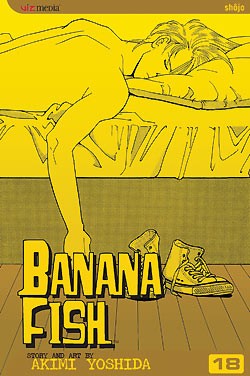
Kawa Yori mo Nagaku Yuruyaka ni, written and illustrated by Akimi (Banana Fish) Yoshida, originally serialized in Shogakukan’s Petit Flower, two volumes. The summary of this title has to be read to be believed, but it sounds just awesomely insane. A snippet: “Toshi is your regular senior high student, except in the evenings when he’s a bartender at a joint frequented by American servicemen, where he deals drugs, pimps, and even cross-dresses a little on the side.”

Kaze to Ki no Uta, written and illustrated by Keiko (Andromeda Stories, To Terra…) Takemiya, variously serialized in Shogakukan’s Sho-Comi and Petit Flower, 17 volumes. Yes, this is the legendary The Song of the Wind in the Trees.

Kiss and Never Cry, written and illustrated by Yayoi (Tramps Like Us) Ogawa, originally serialized in Kodansha’s Kiss, 10 volumes. This emotional drama focuses on a star-crossed pair of ice dancers.

Magazines:

  • Kiss, published by Kodansha

Licensed josei:

  • Kaze Hikaru, written and illustrated by Taeko Watanabe, currently serialized in Shogakukan’s Flowers, 28 29 volumes to date, published in English by Viz.

What starts with “K” in your josei alphabet?

Reader recommendations and reminders:

  • Karneval, written and illustrated by Touya Mikinagi, currently serialized in Ichijinsha’s Comic Zero-Sum, published in English in Singapore by Chuang Yi.
  • Kajimaya, written by Eiichi Ikegami, illustrated by Mamoru Kurihara, originally serialized in Kodansha’s Kiss, five volumes.

Filed Under: FEATURES

Butterfly, Vol. 1

April 11, 2011 by Katherine Dacey

Reading Butterfly won’t change your life, make you a better person, or cause subtle but significant changes to South American weather patterns, but it may just restore your faith in Tokyopop’s ability to suss out smart, entertaining series that quietly subvert genre conventions.

The genre in question is what I call “seeing dead people,” in which a teenager struggles to cope with the unwanted ability to interact with ghosts. Normally, these long-suffering teens see spirits everywhere, but Genji Ishikawa, Butterfly‘s protagonist, sees only one ghost: his older brother, who committed suicide after pushing a girl into the path of an oncoming train. Though Genji would like nothing better than to have a girlfriend, his tragic past and rumored ability to speak to the dead proves irresistible to classmates with an interest in the paranormal.

Genji has another problem: he’s ¥600,000 in debt, more than he could hope to earn through an after-school job. When a peculiar girl approaches him with a money-making proposition, he reluctantly accepts, only to renege on their agreement when he realizes what he’s being asked to do: tangle with ghosts. Or, more accurately, tangle with what Ageha’s clients believe are ghosts; she has the ability to make people’s fears take corporeal form, and expects Genji to “kill” these projections for her clients’ benefit.

Though Ageha is a type we’ve seen before — manipulative, preternaturally calm, faintly androgynous — her abilities put an interesting twist on the “seeing dead people” premise. She clearly profits from her deceptions, but her fraud is, at bottom, a useful public service, one that allows shopkeepers, frightened swimmers, and hotel chambermaids to resume their normal routines after a catastrophic event, even if these “exorcisms” don’t actually help the dead cross over to the afterlife. As mercenary as Genji finds Ageha, her success forces him to to consider the possibility that his own spiritual powers are less a bane than a blessing, that he has an obligation to develop and use them, rather than deny their value.

The only downside to such an ambitious premise is that Yu Aikawa needs almost every page of volume one to establish the basic parameters of her story. Some of the exposition is handled gracefully; the details of the brother’s death, for example, are revealed slowly and casually, forcing the reader to piece together what happened to him with little authorial guidance. Some of the exposition is handled clumsily, however; Ageha and Genji’s first few encounters seem more like job interviews than spontaneous exchanges of information, an impression that isn’t thoroughly dispelled until one of their ghostbusting gigs goes awry.

Narrative hiccups aside, the story that’s beginning to emerge in the later chapters of volume one is compelling, a supernatural mystery that explores its characters troubled emotional lives with the same thoroughness as it dispenses with pesky spooks. Recommended.

BUTTERFLY, VOL. 1 • BY YU AIKAWA • TOKYOPOP • 208 pp. • RATING: TEEN (13+)

Filed Under: Manga, Manga Critic, REVIEWS Tagged With: butterfly, Seinen, Tokyopop, Yu Aikawa

Tidbits: Shonen Jumpin’ Jehosaphat

April 11, 2011 by Michelle Smith

Sometimes I just crave some shounen manga! Here, then, are a few short reviews of some shounen I have lately read: the third volume of Bakuman。, the 31st through 34th of Bleach, the second of Genkaku Picasso, and the thirteenth through fifteenth of Slam Dunk. All are fairly recent releases and all published under VIZ’s Shonen Jump imprint; Bakuman。 and Genkaku Picasso also have new volumes due out in May.

Bakuman。3 by Tsugumi Ohba and Takeshi Obata
This was my favorite volume of Bakuman。 so far!

It begins with Mashiro and Takagi struggling to create a mainstream battle manga, over the objections of their editor, because they believe this is the ticket to popularity in Shonen Jump. They improve a lot between attempts, but in the end, Takagi requests some time alone over summer break to think of a new story, leaving Mashiro free to work as an assistant for Eiji Nizuma, their rival.

MJ adores Eiji, and when he first appeared in this volume I was wondering how that could be, since he comes across as bratty and weird. Once you get to know him, though, it turns out he’s actually kind of endearing. He simply says what he thinks, and is incapable of being malicious or devious. After watching him happily and genuinely soak up feedback from his assistants—apparently his editor at Jump is too in awe of his genius to offer any useful guidance—I kind of love him, too!

To top it off, we see some growth from the female characters. Miho makes some progress in her dream of becoming a voice actress, although right now she seems to be succeeding mostly on account of her good looks. Miyoshi comes up with the goal of being a novelist, though her primary function in this volume is to captivate Takagi with her general awesomeness and make Mashiro doubt that his partner is working on the promised story at all.

In the end, the future of the partnership appears to be in jeopardy, even though both guys have independently hit upon the idea of a detective manga as the way to go. I’ve always found this series interesting for its inside glimpse into the publication process, but now I’m starting to find it interesting for the characters, as well. I eagerly await volume four!

Bleach 31-34 by Tite Kubo
You might not think that battles against creepy supernatural foes with bizarre powers could be boring, but it turns out that Bleach somehow manages it.

Volumes 31 through 33 are chiefly comprised of fights against weird-looking dudes during which nearby structures often go “boom” and crumble. It’s pretty much impossible to tell what’s going on, so I just sort of coast along until there’s a panel that shows someone actually being hurt by something. There are but two bright spots in these volumes. One is the predictable but still gratifying revelation that Nel, the toddler who’s been accompanying Ichigo in his journey across Hueco Mundo, is actually a badass (and buxom) former Espada. The second is an honestly riveting scene in which a hollowfied Ichigo appears before Orihime for the first time and terrifies her.

Things improve a bit in volume 34 with the timely arrival of some Soul Reaper captains. Okay, yes, their explanation for their arrival is pretty flimsy, but I will accept any excuse if it means Byakuya will be around. This also leads to a crazy battle of one-upsmanship between one of the stranger Soul Reapers, Kurotsuchi, and his Arrancar opponent. It goes something like this:

Arrancar: Fear my leet skills! I will turn your innards into dust!

Kurotsuchi: Oh, actually, I infected [Uryuu] with surveillance bacteria the last time we were fighting, so I’ve been watching your battle and, aware of your abilities, have replaced all my insides with fakes. Too bad. Now my gloopy pet will eat you.

Arrancar: Lo, I have been et. But before that happened I implanted [Nemu] with my egg, which will hatch and grow a new me! Plus, there are bits of me still in your pet, which will allow me to use it to attack you.

Gloopy pet: *splat*

Kurotsuchi: Oh, but before you did that I programmed my pet to self-destruct if anyone ever tried to use it against me. Also, I filled Nemu’s body full of drugs for the same reason, so now you’re going to see everything in extreme slow mo while I kill you.

Arrancar: Crap.

Honestly, it’s so outrageous one kind of can’t help admiring it!

Genkaku Picasso 2 by Usamaru Furuya
I really wish I could like Genkaku Picasso more. Mostly this is because Usamaru Furuya’s art is really impressive—true, in their normal states the characters don’t look all that exciting (and the lip-glossy sheen on the boys’ lips is somewhat distracting) but the illustrations created by artistic protagonist Hikari Hamura are detailed and gorgeous, and I like that Furuya continues drawing in that style when Hikari and his ghostly advisor, former classmate Chiaki, enter into the drawings in order to help solve the problems plaguing their classmates.

The problem is that I just don’t like any of the characters! Hikari is creepy, anti-social, and perverted, and is always reluctant to help out his classmates, putting Chiaki in the role of always being the one who reminds him that he has to help them, otherwise he’s going to rot away. (He cheated death in volume one and this is the manner in which he must pay for that.) I could possibly like Chiaki if she were given something to do besides pester Hikari all the time, but that’s not the case.

The manner in which the classmates are helped by Hikari and Chiaki is also odd. The pair enters a drawing based on the “heart” of said classmate and attempts to figure out what is worrying them. One boy has created a fictional girlfriend, for example, while another girl sees herself as a mecha rather than an actual girl. While inside the drawing, Hikari and Chiaki attempt to reason with the classmate, while in the real world, the classmate answers them aloud, making them look totally freaking crazy to the people who happen to be around. If I was hanging out with my friend and he began to break up with his imaginary girlfriend right in front of me, I think I would be quite alarmed.

That said, there is one bright spot in this volume—the tale of Yosuke, a girl born in a body of the wrong gender. Perhaps it’s a little too optimistic, but I liked it anyway, especially the fact that the “heart” of the transgender kid is the calmest and healthiest place we’ve seen yet.

If Genkaku Picasso were any longer, I might not continue it, but since there’s only one volume left, I shall persevere.

Slam Dunk 13-15 by Takehiko Inoue
Ordinarily, if a series took two-and-a-half volumes to cover less than an hour of action, I might be annoyed. Not so with Slam Dunk, which takes that long to finish Shohoku High’s exciting prefectural tournament match against Kainan, a team that has made it to Nationals every year in recent memory.

There’s an interesting phenomenon that occurs when one reads Slam Dunk. Hanamichi Sakuragi, the hot-headed protagonist, has matured somewhat since the beginning of the series, though he’s still inclined to proclaim himself a genius at every opportunity. Hence, it’s pretty satisfying to see him humbled, and to watch him realize that he hasn’t yet got the skills to carry the team or hog the spotlight. And yet, there comes a point where the humbling has been sufficient, and one wants to see him triumph.

When Captain Akagi sprains his ankle during the game, Sakuragi, realizing how immensely important this game is to Akagi, does his best to fill the captain’s shoes. How can you not root for someone trying so hard to make someone else‘s dream come true? Yes, it’s the talented Rukawa who is single-handedly responsible for tying up the game by halftime, but Sakuragi is just trying so damned hard that his bluster actually becomes a source of strength for his teammates. When he finally makes an impressive slam dunk in front of a cheering crowd, I convince that I got a little sniffly.

Shohoku ends up losing the game, though this doesn’t put them out of the running for Nationals just yet. The disappointing experience makes Sakuragi more serious than ever before and he returns to school with a shaved head (as penance for an unfortunate mistake during the final seconds of the game) and a fierce desire to improve.

Why do I love sports manga so much? I’m honestly not sure I can articulate it, but with Slam Dunk part of it is the fact that the hero, who previously had no goals in life, has found a place to belong and something to care about. That kind of story pushes my personal buttons in a big way.

Review copies for Bakuman。, Genkaku Picasso, and volume fourteen of Slam Dunk provided by the publisher.

Filed Under: REVIEWS Tagged With: Shonen Jump, Takehiko Inoue, Takeshi Obata, VIZ

Bookshelf Briefs 4/11/11

April 11, 2011 by David Welsh, Katherine Dacey, MJ and Michelle Smith 6 Comments

This week, MJ, Kate, David, & Michelle take a look at several ongoing series from Viz Media, Digital Manga Publishing, TOKYOPOP, and Yen Press.


Bunny Drop, vol. 3 | By Yumi Unita | Yen Press – I think this column is a perfect venue for new volumes of series like Bunny Drop where all I basically have to say is that it’s still excellent. This time around, Daikichi deals with the milestone of Rin starting primary school, carries on traditions that his parents observed for him, and adds to the ever-growing list of responsibilities people face when they’re guardian for a child. For her part, Rin adapts to her new school and helps a friend do the same. Unita is such a smart and warm observer of the small moments that make up everyday life and the subtle connections that represent family at its best. I seriously can’t speak highly enough about this book and hope you’re all reading it. I’m thrilled that it received an Eisner nomination. – David Welsh

Countdown 7 Days | By Kemuri Karakara | Digital Manga Publishing – Kemuri Karakara’s latest series, Countdown 7 Days, focuses on the students at the Sheol Soul School — or should that be Schul? — an academy that prepares the recently deceased for the afterlife. Though I’m temperamentally predisposed to like manga with a supernatural theme, I’d be the first to admit that Karakara doesn’t seem to be in control of the material; the characters have no chemistry with each other, and the basic rules of the afterlife are so poorly explained that much of the action in volume one doesn’t make much sense. It’s a shame the plot is more muddle than linear narrative, as Karakara has a flair for drawing the kind of nattily attired men, fancy weapons, and evocative settings that inspire fan fiction and cosplay. -Katherine Dacey

High School of the Dead, vol. 2 | Story by Daisuke Sato, Art by Shouji Sato| Yen Press – The zombie action continues in volume two, but though the apocalyptic intrigue is beginning to ramp up as police and other authorities begin treating even living citizens as acceptable losses, the series’ fanservice has officially lost all touch with reality. While the volume begins promisingly, it later degenerates into unbelievable sexual fantasy, as we’re asked to believe that not only do average young women spend baths together playfully groping at each other’s (amazingly large) breasts, but that they are also keen to prance about in their thong underwear while all the menfolk remain fully clothed. Meanwhile, the avocados of doom have definitely grown. Suitable as wank-fodder only.– MJ

K-ON!, vol. 2 | By Kakifly | Yen Press – So, I have to wonder… am I really supposed to find any of this funny? When Yui, the ditzy lead guitarist of the band formed by the members of the pop music club, suddenly forgets a simple chord, am I supposed to laugh? How about when she acts superior to the new girl, Azusa, whose talent eclipses her own? Worst of all, how about when their faculty advisor, who is fixated on her students’ bust sizes, actually grabs one girl’s breasts? None of this is in the least bit amusing to me. The only reason I liked this volume a little more than the first is the introduction of Azusa, who motivates the girls to actually practice once in a while. Scintillating stuff, that. – Michelle Smith

Neko Ramen, vol. 3 | By Kenji Sonishi | TOKYOPOP – The third volume of Neko Ramen finds Taisho experimenting with “Boomeramen” (it comes back when the customer throws it), dressing as a panda (“They’re trendy,” he explains), and opening a high-end restaurant called Neko Ramen Hills. Though it’s clear to the reader – and to the shop’s only regular customer – that Taisho’s ideas are terribly misguided, the cat cook remains a fierce optimist, undeterred by failure and impervious to suggestion or criticism. That kind of character isn’t always the easiest to like, but Taisho is oddly winning in his dedication to building a successful business; it’s hard not to root for him, even though he never seems to learn from ill-advised promotions or impulsive hiring practices. Highly recommended. – Katherine Dacey

Otomen, vol. 9 | By Aya Kanno | Viz Media – Just days after rashly claiming my disillusionment with Otomen as a multi-volume series, I decided to give it another chance, with somewhat mixed results. Though a sub-plot in which Juta is nearly (but then not) outed as shoujo mangaka Jewel Sachihana only feeds my frustration with the series’ situation comedy setup, this volume’s ramped-up gender commentary has almost won me back over. Whether it’s enough to keep me hooked for more than another volume remains to be seen, but I can’t deny that things look more promising than they have in a while. Of course it doesn’t hurt that Kanno’s sense of humor and artwork are both just as stunning as ever. Cautiously re-recommended.– MJ

Filed Under: Bookshelf Briefs Tagged With: bunny drop, countdown 7 days, high school of the dead, k-on!, neko ramen, otomen

From the stack: Korea as Viewed by 12 Creators

April 11, 2011 by David Welsh

I don’t know if it was editorially composed to be this way, but Korea as Viewed by 12 Creators (Fanfare/Ponent Mon) puts its least successful pieces first, allowing the stories to build in ambition and interest as the anthology progresses. The order leaves the reader with the strongest possible impression of the collection and only a scant memory of the introductory blandness. It’s a smart choice.

Choi Kyu-Sok opens the collection with “The Fake Dove,” a reminder that pretense is an international language. In it, a manhwa artist tries to live among the homeless for an assignment. It’s exactly what you’d expect – halfhearted, privileged guilt tempered by winking cynicism. “Feel bad about their plight, but you can still complain about the way they smell.”

Catel’s “Dul Lucie” has a promising idea – the creator’s attempts to show South Korea through her trademark character’s eyes. Unfortunately, it ends up being a shapeless blend of travelogue and authorial excuse-making. It’s not without charm, though, and I’d like to read some of Catel’s other work. (This chapter is among those that suffer from sometimes awkward, seemingly rushed translation; happily, none of the really good pieces fall victim to that fate.)

Things start to perk up with “Solego’s Tree,” by Lee Doo-hoo. A gifted artist finds that masterworks can have unintended consequences in a simply structured, beautifully drawn little parable.

Alas, it’s back to the bland with Vanyda’s “Oh Pilsung Korea!” A French brother and sister (whose father is Korean) bemoan the fact that they aren’t seeing “the real Korea” during their visit. Putting aside the fact that they haven’t made any specific efforts in that direction, I always find the notion of finding the “real” anywhere kind of presumptive. If the story had been about the impracticality of expectations or the travelers’ accountability, there might have been something here.

I liked “Cinderella” by Park Heong-yong, a tale of boyhood mischief that morphs into something stranger but still welcoming. I found Mathieu Sapin’s “Beondegi” twee in the way I generally react to “normal person gets dragged into wacky misadventures by a free spirit” fiction. Byun Ki-hyun makes a conscientious effort to illustrate the ways women are underestimated and overlooked in “The Rabbit,” blending elements of fantasy into a realistic urban landscape. The results aren’t especially memorable or persuasive, though.

The anthology really takes off with Igort’s “Letters from Korea.” It displays the sharpest point of view of any of the stories up to this point, and the creator clearly filtered his experiences into a coherent, thematically resonant narrative. He recounts his experiences with artisans of various levels and types, from someone who crafts handmade notebooks to a legendary animator to the people who merely leave notes to loved ones on the border with North Korea. It’s a story with interesting things on its mind, representing a meaty kind of travel experience that’s well worth sharing.

Utterly different and even more glorious is “The Pine Tree,” by Lee Hee-jae. A large family gathers in their rural hometown for the funeral of their patriarch. It speaks clearly and eloquently of the power of tradition and the enduring bonds of home as it articulates, moment by moment, the experience of the wake, the funeral, and the landscape where they’re set. I’d love for someone to publish more of Lee’s comics if they’re even remotely close to the quality of this piece.

We’re back to travelogue with Hervé Tanquerelle’s “A Rat in the Country of Yong,” but what a travelogue it is. Tanquerelle forgoes conventional detail for wordless, anthropomorphous charm. It’s such a treat to see Tanquerelle visually frame the experience of going someplace utterly new in classic, children’s-book fashion. The experiences aren’t exactly novel, but their rendering has such endearing freshness and such a warm point of view that I doubt most readers will care.

Chaemin snaps us back into the real world with “The Rain that Goes Away Comes Back,” a glimpse at what the Korean equivalent of josei must look like. As with “The Rabbit,” Chaemin shows the challenges and choices working women face. Unlike “The Rabbit,” Chaemin doesn’t need to rely on obvious metaphor. Her protagonist, an unmarried woman working at a social service agency, makes eloquent points about the pros and cons of solitude and makes anxiety about the future palpable, while keeping it at a recognizable, human scale.

Things close out on a totally whimsical note with Guillame Bouzard’s “Operation Captain Zidane.” Bouzard, in a hilariously self-parodying frame of mind, paints his trip to Korea as a ridiculous bit of subterfuge tied to the World Cup. Bouzard neatly and winningly satirizes politics, nationalism, and manic sports fandom in this smart and frisky closer to the book.

While Korea isn’t as consistently successful as its predecessor, Japan as Viewed by 17 Creators, there’s more than enough excellent material here to make it worth your time. Its high points are extremely high, and they’re varied in tone and approach. It’s about two-thirds of a good-to-great anthology, which is a totally acceptable rate of return.


Filed Under: REVIEWS

Ill-Fated Relationship

April 10, 2011 by MJ 12 Comments

Originally hosted at Manhwa Bookshelf.

Ill-Fated Relationship | By Hwang Joon-Ho | Published by iSeeToon | Platform: iOS (iPhone only) – A man and woman meet in the big city, brought together by chance and undefinable desire. While this is not an uncommon premise in any kind of fiction, what distinguishes their story from others is what the two have in common. They’re both serial killers.

There are so many ways in which a story like this could go wrong. It could try too hard to be funny or sympathetic, trivializing both the characters’ mental illness and the suffering of their victims, all in the name of entertainment. It could also lean to the other extreme, reveling in a level of “realism” that ultimately borders on sick voyeurism. Or, more unfortunately, it could simply be dull, wrapped up in clinical analysis that engages no one, save a few idle academics. Thankfully, Ill-Fated Relationship avoids all of these traps, studying its characters with interest that steers safely clear of both fetishization and cold objectivity.

Hwang introduces his characters simply, avoiding coy humor or cheap surprises. A serial killer boards a public bus, looking for his next victim. He observes his surroundings quietly, even dispassionately, a sense enhanced by the comic’s drab color palette of blues, blacks, and grays (with the occasional red for emphasis). After leaving the bus, he’s confronted by a lost boy looking for his mother. “Should I feel pity for this child?” the killer asks himself. “Maybe not,” he finally determines, walking away from the scene. The boy turns then to a woman in the crowd, who takes him home to kill him. This brief chain of events, beginning with the first killer’s decision not to help the boy, serves as the catalyst for bringing the two killers together, ultimately leading them to their fate as described in the story’s title.

Though the plot of the story revolves around the two “helping” each other in various ways, the real point of the series has little to do with plot at all. All in all, there’s nothing new here, and certainly nothing unexpected. After all, the title alone pretty much gives away the ending, if in somewhat vague terms. And likewise, though the story’s philosophical and psychological trajectory is well-trodden ground (How does childhood trauma contribute to antisocial behavior? Are people essentially cruel and amoral beings?), again that’s hardly the point. For, despite its starkly unsentimental tone and ambivalent POV, Ill-Fated Relationship is, at its core, an intensely personal story.

The real heart of this manhwa lies in the personal journeys of its characters, how they became what they are, and how their experience with each other influences the way they view themselves and what they do. And though it is their differences that, in many ways, cause them to seek each other out (he’s drawn to her care-free worldview, while she’s drawn to his emotional vulnerability), it is the way in which they most closely connect that ultimately seals their fate, and perhaps even gives them meaning, something that Hwang manages to explore with surprising subtlety.

Hwang’s style is sparse, both visually and narratively, creating an environment that feels both intimate and detached at the same time. While the limited use of color suggests a similarly subdued emotional palette, the lack of detail (both background and foreground) brings each emotional beat into sharp focus. With just the sparest detail gracing the page, every small shift becomes significant, both in movement and expression. And with narration and dialogue used even more sparingly, it is these carefully-executed visual cues that do most of the heavy lifting.

With its clear, simple art style and minimal dialogue, this series is unusually well-suited to the iPhone’s small screen, but to limit its reach that way really does seem a shame. I’d love to see this manhwa on the iPad as well, and even more so on the web, which would substantially increase its potential for an English-speaking audience. In the English-language manhwa market, currently dominated by conventional romance and action series, Ill-Fated Relationship provides a welcome alternative for fans of indie comics and manga who are interested in exploring the largely untapped wealth of Korean webcomics.

Complete in twenty chapters (with a short parody comic as an extra), Ill-Fated Relationship‘s compelling characters and well-crafted narrative provide an exceptionally satisfying, compact read. Recommended.

Advance copy provided by the publisher. Editing not yet final. Short previews from the publisher available here.

Filed Under: Manhwa Bookshelf, MANHWA REVIEWS Tagged With: ill-fated relationship, iseetoon

Fanservice Friday: The sleeve’s the thing

April 8, 2011 by MJ 39 Comments

Earlier this week in our Off the Shelf column, Michelle and I reviewed Kazue Kato’s Blue Exorcist, at which time the following exchange occurred:

MICHELLE: … While I do like the art style, particularly the looks of Rin and Yukio, I must say that the quirky-just-to-be-quirky garb of the academy’s president puts me off quite a bit. Usually I take characters with a bizarre sense of fashion in stride, but this guy’s outfit just seems extra pointless to me.

MJ: I’m on the fence regarding the president’s odd outfit. It’s definitely “quirky-just-to-be-quirky,” just as you say, but it contains a particular element that tends to be bullet-proof costuming for me (giant cuffs on sleeves), which is almost enough to win me over all by itself. There’s a reason I’m obsessed with the artwork in Pandora Hearts.

MICHELLE: That is an oddly specific costuming kink! I haven’t paused to consider whether I have anything similar. Maybe I like long coats, because I really like the outfit Yukio wears while teaching his class.

MJ: Long coats are delicious. I can completely get behind that!

With this in mind, I’d like to dedicate this month’s Fanservice Friday to my bullet-proof costuming kink, CUFFED SLEEVES. Oh, the beauty of it all!

Since I mentioned Pandora Hearts specifically in the conversation with Michelle, I’ll use that manga as my prime example here. Clearly, Jun Mochizuki understands the power of the cuffed sleeve, as she’s filled up her manga with it. Furthermore, most of these sleeves occur on long coats, combining the deliciousness of both to substantial effect.

Raven does particularly well in the coat department, as you can see from the illustrations below. This is a long, flowing coat with a kind of bad-ass vibe, enhanced by the boots and hat. Note how Mochizuki accents the length and fullness of the cuffed sleeves with her choice of camera angle and poses. These illustrations are absolutely gorgeous, and they’re exactly the thing to satisfy my personal costuming desires. For the life of me, I can’t understand why anyone wants to see attractive manga characters nude or scantily clad, when they could be seeing them in a scrumptious coat. Everyone looks beautiful in a coat like this.

Break is also a winner in Mochizuki’s cuffed sleeve department, with a special feature that seems to belong only to him. In the scene below, you’ll see that Break’s overcoat is designed to sit perpetually off his shoulders (I’m not even sure it’s a separate piece of clothing). This has the effect of giving him over-long sleeves (another personal kink of mine), but it also actually creates the illusion of his sleeves being cuffed at the top as well as the bottom, for extra cuff-a-licious goodness.

Though this is an action scene with plenty of important stuff going on, I can’t help it, I’m looking at the sleeves.

On the left below, you’ll see a particularly nice example of Break’s behavior as concerns his over-long sleeves (Mochizuki obviously has a thing for this, and so do I), but it’s not just the men who get good sleeve action in this manga. Sharon’s lacy cuff reveals another just below it, an interestingly dainty look for a character who’s really only dainty on the outside. Echo gets cuffs on the top of her sleeves (similar to Break’s), and even on her boots, attractively framing the thigh area for those who are into that. But the best cuffs really belong to Alice, based on sheer size alone, gracefully matching in scale the large bow at the front of her coat.

Not that Mochizuki is alone in her appreciation of the cuffed sleeve.

Though the look is most common in manga set in the west or in heavy fantasy settings like Blue Exorcist, mangaka like CLAMP, for instance, have demonstrated some love for large, lovely cuffs. In xxxHolic, Watanuki and Doumeki’s winter uniform includes a long, slim coat (nicely matched to CLAMP’s long, slim character designs) with elegant buttons and a substantial cuffed sleeve. And in Tokyo Babylon, doting sister Hokuto is seen dressing up twin brother Subaru in some beautifully cuffed outfits, including this flowing shirt from volume three. Here again we have a large cuff that extends slightly past the wrist, which is a favorite look for me.

The allure of the cuffed sleeve is not limited to fantasy manga, either, nor to manga set in any particular period. Even modern gag series can be found sporting substantial cuffs, as seen here in Kōji Kumeta’s Sayonara, Zetsubou-Sensei. While Nozomu’s no-nonsense shirtsleeves provide a humorous contrast, peeking out from under his otherwise traditional garb (though of course, I wish they were wider!), student Kafuka’s coat is simply pretty and timeless. And no, those aren’t cuffs, of course, but they create a similar look that I’m very fond of, accenting the end of the sleeve by making it wider just before the wrist.

Why do I like this effect so much? I simply have no idea. I only know that it pleases my eye immediately, improving my impression of the outfit as a whole.

And though large, wide cuffs can often be used to accentuate the delicacy of smaller hands, they aren’t any less attractive when paired with large hands. Nor do I associate over-long sleeves with infantilizing characters, though I suspect they may sometimes be used specifically for this effect.

Looking for magical girl manga featuring cuffed sleeves? Look no further than Shugo Chara!‘s Amu Hinamori, cool and spicy, and sporting fantastic cuffs!


So, readers, do you have your own bullet-proof costuming elements? What piece of clothing makes you feel serviced as a fan?


All illustrations from English-language releases of Pandora Hearts (Yen Press), xxxHolic (Del Rey Manga), Tokyo Babylon (TOKYOPOP), Sayonara, Zetsubou-Sensei (Del Rey Manga), & Shugo Chara! (Del Rey Manga). Buy these books for more beautiful cuff action!

Filed Under: Fanservice Friday, UNSHELVED Tagged With: costuming, pandora hearts

  • « Go to Previous Page
  • Page 1
  • Interim pages omitted …
  • Page 451
  • Page 452
  • Page 453
  • Page 454
  • Page 455
  • Interim pages omitted …
  • Page 538
  • Go to Next Page »
 | Log in
Copyright © 2010 Manga Bookshelf | Powered by WordPress & the Genesis Framework