• Skip to primary navigation
  • Skip to main content
  • Skip to primary sidebar
  • Home
  • About Us
    • Privacy Policy
    • Comment Policy
    • Disclosures & Disclaimers
  • Resources
    • Links, Essays & Articles
    • Fandomology!
    • CLAMP Directory
    • BlogRoll
  • Features & Columns
    • 3 Things Thursday
    • Adventures in the Key of Shoujo
    • Bit & Blips (game reviews)
    • BL BOOKRACK
    • Bookshelf Briefs
    • Bringing the Drama
    • Comic Conversion
    • Fanservice Friday
    • Going Digital
    • It Came From the Sinosphere
    • License This!
    • Magazine no Mori
    • My Week in Manga
    • OFF THE SHELF
    • Not By Manga Alone
    • PICK OF THE WEEK
    • Subtitles & Sensibility
    • Weekly Shonen Jump Recaps
  • Manga Moveable Feast
    • MMF Full Archive
    • Yun Kouga
    • CLAMP
    • Shojo Beat
    • Osamu Tezuka
    • Sailor Moon
    • Fruits Basket
    • Takehiko Inoue
    • Wild Adapter
    • One Piece
    • After School Nightmare
    • Karakuri Odette
    • Paradise Kiss
    • The Color Trilogy
    • To Terra…
    • Sexy Voice & Robo
  • Browse by Author
    • Sean Gaffney
    • Anna Neatrour
    • Michelle Smith
    • Katherine Dacey
    • MJ
    • Brigid Alverson
    • Travis Anderson
    • Phillip Anthony
    • Derek Bown
    • Jaci Dahlvang
    • Angela Eastman
    • Erica Friedman
    • Sara K.
    • Megan Purdy
    • Emily Snodgrass
    • Nancy Thistlethwaite
    • Eva Volin
    • David Welsh
  • MB Blogs
    • A Case Suitable For Treatment
    • Experiments in Manga
    • MangaBlog
    • The Manga Critic
    • Manga Report
    • Soliloquy in Blue
    • Manga Curmudgeon (archive)

Manga Bookshelf

Discussion, Resources, Roundtables, & Reviews

Features & Reviews

Bookshelf Briefs 8/5/13

August 5, 2013 by Anna N, Sean Gaffney and Michelle Smith 4 Comments

This week, Anna, Sean, and Michelle look at recent releases from Viz Media and Kodansha Comics.

dawn10Dawn of the Arcana, Vol. 10 | By Rei Toma | Viz Media – This fantasy manga featuring a misfit red-headed princess struggling with her gift to see into the past and future has developed into an engrossing story with a focus on expansive worldbuilding and political machinations. The tenth volume heads into a new direction as Nakaba and Caesar are remarried to other people, while still determined to somehow build the better world they envisioned together. Nakaba has come a long way since her more tentative appearance in the first volume, so I’m looking forward to seeing what she does as she seeks her own political power with only Loki by her side. – Anna N.

devil10A Devil and Her Love Song, Vol. 10 | By Miyoshi Tomori | Viz Media – It isn’t often that a shoujo manga volume leaves me with conflicting feelings a few days after reading it, but I’ve come to expect the unexpected from this manga. While Shin has been warned off from physical intimacy with Maria due to her psychological issues, he does force the issue with traumatizing results. Maria has unsettling flashbacks as her repressed memories are triggered, and Shin continues for a bit despite her clear distress. In a way this scene almost feels like Tomori’s commentary on the way similar set-ups are romanticized in manga, but in A Devil and Her Love Song it is genuinely unsettling. I predict fallout from this volume will continue for awhile. This is one manga that is always a bit unpredictable, which is why I enjoy reading it. – Anna N

fairytail28Fairy Tail, Vol. 28 | By Hiro Mashima | Kodansha Comics – Several people may have been surprised, even a bit annoyed, at Cana ignoring her friends’ plight in order to reach the goal of the S-class battle that is clearly cancelled. Now we find out why – it’s tied in to finding her father, whose identity is someone we all know. Cana’s past is rather sad and lonely, and reminds me a bit of Wendy. Meanwhile, the villains strike back in the quest to secure victory on the island, and at one point are so strong they even take out Gildarts (who, it has been said, rarely appears as he’s such a game-breaker). Luckily, Erza wins the day by, well, her psychic connection with Jellal – sorry, folks who hate him. As for Grey, he quickly sees through Ultear’s false crocodile tears. But is that going to do him any good? Still a fun shonen battle manga. – Sean Gaffney

kaze21Kaze Hikaru, Vol. 21 | By Taeko Watanabe | Viz Media – Volume 21 focuses on the fallout from Sei’s stint as an undercover spy—as a result of Okita’s feelings for her jeopardizing the mission, Sei is transferred to another company. She’s never been one for just following orders and so demands an explanation, and when Okita claims he requested the transfer because he’s sick of her, she contemplates giving up on bushi life and becoming a nun until an actual nun helps her gain perspective. I enjoyed this volume, but I was troubled by the number of times various characters equate being a girl with impetuous thinking. Too, Sei blames the female part of herself for wanting love, but isn’t it equally the girl part of her that wants to be a bushi and avenge her father and brother? This is something that Basara got right, and which I thought Kaze Hikaru did too. I must say I’m a little disappointed, though my love for the series remains intact. – Michelle Smith

magi1Magi, Vol. 1 | By Shinobu Ohtaka | Viz Media – I knew absolutely nothing about Magi going in to this debut volume, but it turned out to be pretty fun! The first chapter introduces Aladdin, a young boy with a penchant for good food, pretty ladies, and super-deformity. He’s on the search for a metal vessel for his friend, Ugo the djinn, who currently resides in the flute Aladdin wears around his neck and who can be summoned in times of need. When Alibaba, a destitute young man looking to strike it rich by “clearing” one of the mysterious and deadly treasure-laden dungeons that have sprung up around the world, witnesses Ugo in action, he decides that Aladdin must be his servant friend and accompany him in this perilous endeavour. Magi‘s tone is light and the RPG influence strong, resulting in something that’s familiar and yet sort of refreshing. I’ll definitely be checking out volume two. – Michelle Smith

Filed Under: Bookshelf Briefs

Manga the Week of 8/7

August 1, 2013 by Sean Gaffney, Michelle Smith, Anna N and MJ 9 Comments

SEAN: Can’t talk, too much manga.

Dark Horse has the 2nd Lone Wolf and Cub omnibus. I enjoyed the first one more than I thought, and will hope that the 2nd gives us just as much assassination intrigue and adorable toddlers with killer eyes.

MICHELLE: I also liked it more than I expected.

ANNA: I read the first five or so volumes of this back in the day, and am glad it is getting reissued.

MJ: I’m surprised to find myself really looking forward to this second omnibus!

kitaro

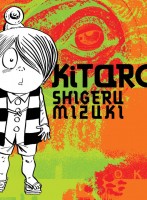
SEAN: Drawn and Quarterly finally, after a long gestation period, has the first in what I hope becomes a series of books based on Shigeru Mizuki’s 60s yokai classic, Gegege no Kitaro. Retitled Kitaro for North America (Gegege is sort of an untranslatable sound of fear), it’s over 400 pages of 60s shonen goodness. For those who love all the yokai manga coming out these days, here’s the King.

ANNA: I am intrigued by this!

MJ: Same here!

SEAN: I know only I care, but I still do care: Kodansha Comics has Vol. 31 of The Wallflower. 31 volumes! That’s more than Kenshin! Lots more than Fruits Basket! It’s 30 volumes more than Gaba Kawa! It’s a long series that rewards me with comedy, not romance.

MICHELLE: Back in the day, I bought the first six or seven volumes of this. But then I learned about its length and its episodic nature and I just went “Ugh.”

ANNA: I had a very similar reaction to Michelle’s. I found the first few volumes amusing but wasn’t willing to sign up for a neverending series.

SEAN: Seven Seas has a significant presence this week. There’s another Alice spinoff, The Clockmaker’s Story. The spinoffs are starting to glut the market, but I really enjoy Julius and his grumpypantsness. He reminds me of Austria from Hetalia. So I have hopes for this.

MICHELLE: I kinda like Julius, too, but I have really lost count of these spinoffs.

ANNA: I am pro-Julius!

SEAN: Hooray, a new volume of A Certain Scientific Railgun, the manga that reminds you once again that spinoffs can not only do better than the original, but inspire flamewars about the original! The athletics festival continues here, and we find out what Misaka does when her support team of good friends is taken from her.

Dance in the Vampire Bund continues to omnibus itself with Vols. 7-9. I understand it has vampires.

Kanokon also gives us an omnibus, featuring Vols. 3 and 4. I think I’ve already said what I need to about this series.

MICHELLE: I don’t even know what Kanokon is. Should I be glad?

sacredblacksmith

SEAN: The Sacred Blacksmith has a second volume, for fantasy swordplay fans. I seem to recall I liked this slightly better.

And World War Blue, Seven Seas’ attempt to license a Fairy Tail that’s all their own, has its own Volume 2, just a month after Vol. 1.

It’s rare I discuss artbooks, but I’m also a giant Haruhi Suzumiya fanboy, so this dovetails nicely. Udon is putting out the first of a series of Haruhi artbooks, this called Haruhi-Ism: Noizi Ito Artworks. I suspect, as opposed to Udon’s amazing Read or Die artbook, we’ll see more art and less infotext here. But hey, getting it anyway.

MJ: I’m actually kind of interested in this, too.

SEAN: Vertical gives us the 4th volume of Knights of Sidonia. What’s the chance they go back to the wacky harem comedy this time around? I’m guessing it’s more likely there will be body horror and space battles instead. But it’s good. I’m just being churlish.

MICHELLE: But it’s creepy body horror of the best kind! I love Sidonia a lot.

ANNA: I guess I am now two volumes behind on this series, but I look forward to getting caught up. I’m happy that Vertical is bringing over mecha manga like this and Gundam: The Origin.

MJ: I *heart* Knights of Sidonia very much.

SEAN: And Viz. Bakuman comes to an end with its 20th volume, and has proven to at least be a slightly happier ride than Death Note. Certainly more people know about the workings of Jump now…

MICHELLE: Stay tuned for a special Off the Shelf devoted to Bakuman., coming next month!

MJ: I’m really looking forward to the discussion with Michelle. This series surprised me at intervals, throughout, and I was especially surprised to find myself actually caring about the romance during the last volume. Can’t wait to see how it plays out!

SEAN: A Devil And Her Love Song hits double digits with Vol. 10. Given where last volume left off, it’s expecting this one will be a big ol’ angstfest, but you never know.

MICHELLE: I think angstfest is a good bet.

ANNA: I have read this and haven’t been able to write my review yet, but I would say that it goes beyond angsfest and heads strongly into severe emotional traumaland.

MJ: Oh, my.

hapimari1

SEAN: Happy Marriage?! is the new josei title from Shojo Beat, being another foray into the magazine that gave us Butterflies, Flowers. I must admit, I’m a bit wary – Butterflies, Flowers succeeded for me because of its ridiculousness – this may not have as much of that. But hey, any Petit Comic over here is good.

MICHELLE: I’m wary, too, but I’ll give it a shot.

ANNA: I liked it just fine! It is a lightweight, fun to read josei title. Not as goofy as Butterflies, Flowers, but still enjoyable.

MJ: I’m interested, for sure. Wary, but interested.

SEAN: Kamisama Kiss has caught up with Japan, at least as much as Viz allows itself to do, so it’s been a while since we’ve seen it. Lucky Number 13 should give us yokai manga of the week #2.

MICHELLE: I’m going to try to get caught up on this soon.

SEAN: Kaze Hikaru 21! Squee! OK, I admit, I’m still 20 volumes behind on this series. But hey, any series that comes out yearly is always in my wheelhouse, given Excel Saga was there for a while as well. Highly underrated shoujo, from what my friends tell me.

MICHELLE: I love Kaze Hikaru very much. Everyone should read it! But especially MJ.

ANNA: I adore this series and I always feel a bit giddy when a new volume comes out.

MJ: *hangs head in shame*

SEAN: Kimi ni Todoke 17. I have little to say about this series, even though I love it to bits. Just expect everyone to be even more sweet and adorable, OK?

MICHELLE: Works for me!

ANNA: Works for me too!

MJ: Count me in!

SEAN: Another series hits double digits as Library Wars: Love & War gets to Vol. 10. I think this got delayed a month or so, so I hope it’s worth the wait.

MICHELLE: I’m kind of surprised how much I’ve been enjoying Library Wars lately.

ANNA: I was always going to be a fan because it is not that often that my profession gets featured in a manga, but I think that this series has gotten more enjoyable several volumes in.

naruto62

SEAN: Naruto 62. That’s a whole lotta ninja.

Nura: Rise of the Yokai Clan wraps up Kyoto here at last, and moves on to a few side stories before the next big arc. It’s also yokai manga #3.

There’s always one Viz manga Diamond ships to my store late, and this month it’s Otomen 16. But the rest of you will get it. As always, I’m there for the Ryo.

Slam Dunk is in its closing volumes, but still not quite there yet. Here’s Vol. 29.

MICHELLE: It is taking a lot of willpower not to read the three unread volumes I have now collected, but this series is so good when read in chunks, so I’m tying to hold out ’til volume 31 gets here.

ANNA: I have less self control and generally read Slam Dunk as soon as it arrives because I can’t ration out my reading of this sports manga masterwork.

SEAN: Tegami Bachi is bachi-ing its tegami with Vol. 14. (Sorry, this has been a long post, I’m tired, and I don’t read the series.)

Lastly, Toriko 17 wraps everything up with some more tasty food fighting.

Assuming you didn’t move on halfway through this endless list, what are you getting this week?

Filed Under: FEATURES, manga the week of

The Twin Knights

July 31, 2013 by Sean Gaffney

By Osamu Tezuka. Released in Japan as “Futago no Kishi” by Kodansha, serialized in the magazine Nakayoshi. Released in North America by Vertical, Inc.

In this sequel to Princess Knight (well, the original Princess Knight, that is – the rewrite we saw here is still 5 years away), Osamu Tezuka shows us very clearly right from the start that this is a fairy tale, a stage production, a full-blown melodrama. No, even more, a mellerdrammer. This is a cartoon straight out of Mickey Mouse. It has talking animals, it has villains that are so paper-thin it’s amazing they don’t blow away, it has truly ridiculous plot contrivances, it’s has somewhat questionable gypsies (who are straight out of the European Comics Book Of Stereotypes), two sets of twins, multiple breaks of the fourth wall, including an appearance by Tezuka as himself, and an ending that does not so much end as simply stop.

twinknights

I loved it. But it really does seem to have everything that folks find annoying in a Tezuka manga. More than anything, I think this is the style of manga Tezuka did that we haven’t really seen over here much. The quick, dashed-off adventure stories. Lots of animal characters. Glib protagonists with not much depth. This is a good chunk of his output, particularly at this point in his career. If you read Tezuka for titles such as Barbara or MW, I can see you finding this ridiculously cloying and silly. Which it is. But it’s also so much fun! I can’t tell you the number of times I was grinning like a maniac while reading this. Not just for the adventures of Daisy and Violetta – truth be told, Daisy is perhaps the weak point of the entire manga. No, for things like the evil Duchess simply having her henchmen back out a high window to their deaths for irritating her. Ridiculous, but fun.

As for the sexism or lack thereof, it’s not too bad given the era and country it was written in, and I think does slightly better than Princess Knight. Yes, Violetta is constantly yearning to be female and wear dresses, etc, and her relationship with Emerald is far more interesting than that of her with Prince White (if this plot were written today, Daisy would marry Prince White and pretend to be Violetta while she goes off with Emerald for more adventures). But there’s no denying that Violetta kicks ass throughout, and the last page does note “Well, she may dress up as a man and have adventures in the future.”

Even better, and my favorite scene in the entire book, is when she and her family are thrown into the tower by the evil Duke and Duchess. She and her mother are separated into one room, and Violetta starts to despair. Then her mother sees a couple of swords that were conveniently left on the wall (the duke and duchess are not exactly the smartest of villains… we’re talking Gargamel-level smarts here) and decides that Violetta needs to learn how to REALLY fence… and be taught by Princess Knight. Here we see that, despite choosing to be Queen and settle down to raise a family, Sapphire has never truly abandoned her upbringing as a boy (and in fact, clearly must keep in shape with the rapier, given that she kicks her daughter’s ass). I loved this bit of family bonding.

There’s a lot packed into the 240 pages we get here. I didn’t even mention the incredibly tragic deer, or the cartoon wolves (one of whom I swear is voiced by Billy Bletcher), or the truly weird art that we see in places (check out the duke on page 231… pure Tex Avery). It’s not deep… it is in fact the very opposite of deep. But it’s fun, and lively, and would make a great fairy tale for children. Which, of course, is what it was meant to be back in 1958. A great addition to the North American Tezuka canon.

Filed Under: REVIEWS

Goong: The Royal Palace vols. 11 and 12

July 30, 2013 by Anna N

“This will be my great, tear-filled finale!”

Melodramatic lines like this, spoken in this case by prince-in-waiting Yul are why I enjoy this melodramatic manhwa so much. The misadventures and heartbreak of Prince Shin and common girl turned princess Chae-Kyung continue in Goong, as she deals with the death of her grandfather and forces within the royal family conspire to drive the couple apart.

Shin is consumed with guilt over not being able to tell Chae-Kyung that the palace kept her from going to her grandfather’s side as he was dying. The King begins to crack under the weight of the promise he made to make Yul the Prince instead of Shin. Yul manipulates the Queen into putting forward the divorce of Shin and Chae-Kyung even as he’s saddled with his own fiancee, the psychotic rich girl Mi-Roo. Yul justifies his actions by thinking of the love he has for Chae-Kyung, thinking that she’ll be happier outside the palace. While it is clear that living in the palace is taking a toll on her physical health, her growing devotion to Shin ensures that she’ll be experiencing plenty of trauma if she’s separated from her young husband.

As I was reading this volume I appreciated how far Shin has come as he’s adjusted to his royal responsibilities. The reader gets a sense of the king he could become when he hears out his father’s confession and makes an audacious speech to parliament. Shin and Chae-Kyung manage to sneak off with each other a little bit, and as a couple they seem stronger, which means that surely disaster lurks ahead.

The 12th volume marks a turning point, as the divorce between Chae-Kyung and Shin becomes public. Even thought the queen attempts to get Chae-Kyung to keep the reasons for the divorce secret, Shin quickly figures out that his wife isn’t divorcing him willingly. Chae-Kyung prepares to live the life of an ex-princess and Shin is determined to get her back somehow even after the divorce goes through. Chae-Kyung at first protests the idea of leaving the palace with money and property but Shin insists on giving her what she’s due because that’s the only thing he can do for her during the divorce.

More than anything else, I finished reading this volume with a sense that the institution of the palace in Goong damages most people in irreparable ways. The King seems like he’s about to have a nervous breakdown. The Queen vows revenge on her evil sister-in-law. Yul continues to be both handsome and deluded. Chae-Kyung and Shin are devastated, and while there’s no doubt in my mind that they’ll end up together, I’m guessing that it’ll take a bit of time before that’s possible. The glimmerings of kingly behavior Shin has displayed recently make me think that he might be up to the task of manipulating the Royal Family and leaning on public opinion until he gets what he wants.

Goong is a very satisfying, soapy series. The slapstick comedy elements combined with all the scenes of emotional devastation sometimes make the tone a little off, but the elaborate settings, ongoing plots, and stylized art combine to tie everything together nicely. I’m looking forward to reading volume 13, and I was excited to see that it looks like previous volumes of Goong are going to get a release on the kindle in the next couple months.

Filed Under: REVIEWS Tagged With: goong

Bookshelf Briefs 7/29/13

July 29, 2013 by Sean Gaffney, MJ and Michelle Smith Leave a Comment

This week, Sean, MJ, & Michelle look at recent releases from Yen Press, Seven Seas, Viz Media, and Vertical, Inc.


cheshire5Alice in the Country of Clover: Cheshire Cat Waltz, Vol. 5 | By QuinRose and Mamenosuke Fujimaru | Seven Seas – Once again, we have half a volume of the main story and half a volume of a side story, though at least the side story is about Alice and Boris. Aside from that niggle, this volume has a couple of interesting things going on. Ace is back to being the psychopath I like after the miserable Ace of Hearts spinoff, noting he only loves Alice when she’s miserable and indecisive. We also see two faceless spies who actually seem to have motivation and an agenda, which gives a whole new impression as to the real roles of the faceless. Mostly, though, this is Boris and Alice still feeling out their new relationship: what I noted are the interesting irrelevant bits. Still worth getting if you don’t mind the romance and can put up with side stories galore. – Sean Gaffney

limit6Limit, Vol. 6 | By Keiko Suenobu | Vertical, Inc. – The final volume of Limit is filled with dramatic, expository speeches that play to the back of the house. It is over the top, it is emotional, it is theatrical, and it has a truly ridiculous plot twist right at the end. Despite that, it’s also highly enjoyable and cathartic… precisely for those very reasons. No one wants a dull blase book about teens fighting for survival in the wilderness. Moreover, teenagers are by definition over the top, emotional creatures – heck, even Kamiya, the closest this series had to a stoic, is losing it by the middle of this book. And so we accept the ridiculous plot twists, and the drama. These are likeable characters put through the wringer, and I liked seeing how they all ended up by the end. Which I will try not to reveal here. I’m pleased that Vertical picked this up, though if it had been any longer I think I might have broken. – Sean Gaffney

pandorahearts16Pandora Hearts, Vol. 16 | By Jun Mochizuki | Yen Press – The best description I can come up with for the events of recent volumes of Pandora Hearts is “dizzying.” And as if volume 15 weren’t painful enough, with its heartwrenching revelations and noble self-sacrifice, volume 16 shows absolutely no signs of relenting. Oh sure, there’s a brief interlude at the beginning in which it seems that our heroes are going to be able to have a moment’s peace to process what has happened, but this is quickly shattered by a thoroughly creepy meeting with their new nemesis, still more betrayal, followed by still more hints of betrayal to come, or at least of intentions concealed and origins heretofore unknown. Now I honestly find myself worrying about the allegiance of everyone Oz is associated with, particularly Break, who in the past seemed to be attempting to strike up an alliance with the Baskervilles. I’m genuinely on edge! Kudos to you, Mochizuki-sensei. – Michelle Smith

tigerbunny2Tiger & Bunny, Vol. 2 | By Mizuki Sasakibara, based on the franchise created by Sunrise, Masafumi Nishida, and Masakazu Katsura | Viz Media – The beauty of series like these is that I get to write much less than usual, as the list of authors takes up half the review. There’s nothing particularly wrong with this volume of Tiger & Bunny – the art is sufficient, we get more of Barnaby’s backstory which I presume drives the plot, and I liked seeing that the other superheroes are all just as goofy as these two – but there’s nothing really that makes me want to keep reading more. It’s not gripping, and it still feels very corporate – for those who enjoyed the anime, here it is again in book form. Thus I’d recommend the manga for those who love Kotetsu and Barnaby, but it’s easily skippable for those who have no investment in it. – Sean Gaffney

twinknightsTwin Knights | By Osamu Tezuka | Vertical, Inc. – In this sequel to the original version of Tezuka’s Princess Knight, Sapphire, now happily married to Franz, has given birth to twins—a boy and a girl. Thanks to an internal dispute over the right of succession, the two are separated, and the princess, Violetta, finds herself on an epic journey in search of her lost brother, Prince Daisy. Though Violetta’s path as a cross-dressing swashbuckler is exciting and thankfully devoid of the unfortunate boy’s heart/girl’s heart drama that so heavily compromised the feminist potential of Princess Knight, her ultimate destiny as a conventional princess feels a little disappointing, as does the silliness that so often overwhelms any truly empowering moments the book might have had. Still, Twin Knights is undeniably fun and action-packed, and its heroine is glorious, indeed. Quibbles aside, it’s definitely worth a look. – MJ

Filed Under: Bookshelf Briefs

Off the Shelf: Cats, Rats, & First Love

July 27, 2013 by MJ and Michelle Smith 10 Comments

MICHELLE: I looked for a dumb joke that was not utterly unfunny, but I couldn’t find one, so you are all spared this week.

MJ: … is it weird that I’m kind of disappointed?

MICHELLE: Actually, it’s kind of gratifying!

Anyway, it feels like forever since we’ve done a “normal” column. What’ve you been reading lately?

MJ: Well, this will probably come as a surprise to no one, but the truth is, I’ve spent most of this week eagerly, painfully anticipating the launch of Chromatic Press’ new online magazine Sparker Monthly, due out sometime over the next couple of days. And though I’m looking forward to delving into the publication’s promised mix of female-focused comics, illustrated prose, and audio dramas, I’ll admit that the intensity of my anticipation is fueled largely by the long-awaited revival of Off*Beat, Jen Lee Quick’s manga-influenced comic that has been in publishing limbo ever since the demise of Tokyopop’s OEL manga initiative in 2008.

I read the first two volumes of Off*Beat in 2009, when they were already officially out of print, and immediately fell in love, though as the years flew by, it seemed less and less likely that we’d ever get to see its final volume. I’ll admit to having pretty much danced with glee when Chromatic Press announced its Kickstarter campaign to continue the series. I backed that project, of course, and I’ve been fawning over my new print editions of the first two volumes ever since. But, like every fan of Off*Beat, it’s new material I’ve been dying for, so when I was offered the opportunity to review the first new chapter in advance, I leapt at it in the least dignified manner possible.

MICHELLE: I have yet to read Off*Beat, so I am going to imagine your squeeful ecstasy as akin to what happened to me, a Veronica Mars fan since 2005, when the Kickstarter campaign for the movie first started. And also there are books coming! But, I digress.

MJ: I think that is probably an apt comparison!

offbeatcoverOff*Beat tells the story of Christopher “Tory” Blake, an exceptionally smart teenager who lives with his divorced mom in Queens. Tory’s a capable kid, but the sense of abandonment brought on by his father’s absence has manifested itself in an odd habit—meticulous record-keeping of every single thing that happens to him and those around him. And when a new kid, Colin, moves onto Tory’s block under potentially mysterious circumstances, Tory’s obsessive attention becomes focused on him, and he goes so far as to get himself transferred to Colin’s private school on Long Island, even though it takes him two hours (by subway, rail, and bus) to get there every day. Tory soon discovers that Colin and his guardian are involved in some sort of top-secret scientific project, and he’s able to convince himself that it’s the project he’s obsessed with, but it clearly all comes around to Colin.

Colin is initially cold and resistant to interaction with pretty much anyone, but thanks to Tory’s persistent (stalkerish?) approach and Colin’s failing grades, the two eventually begin to form a friendship. To the reader, it’s long been obvious that Tory’s falling in love, but just as he’s on the brink of maybe coming to terms with his sexuality (and the possibility that his feelings for Colin may even be reciprocated), his secret diaries are discovered and everything falls apart.

When we last saw Tory, he’d just been punched in the face by Colin … and that’s where Tokyopop left us hanging back in 2007. Fortunately, the new chapter picks up just where we left off, and it suddenly feels as if no time has passed at all. There’s always the danger that anticipation of a thing will turn out to be tragically superior to the thing itself, but I’m happy to report that this is not the case at all with the newest chapter of Off*Beat. The transition is seamless and Quick gratefully gets right into the meat of things, including the nature of Colin’s top-secret project, and the boys’ obvious mutual attraction, both in the same grounded, thoughtful manner in which the comic has conducted itself from the beginning.

I was thinking as I prepared for our column today about the contrast between Off*Beat and something like Loveless, which we lovingly discussed last week. Both series fall somewhere on the boys’ love spectrum (at least as far as their fans are concerned) and both succeed largely on their commitment to emotional truth. But where Loveless expresses that truth by way of the supernatural, Off*Beat feels very much like a celebration of the natural, the endless wonder of the everyday people and things that are just right in front of us, and the epic gloriousness of the most naturally human thing of all—honest connection with other human beings. Despite the whole “top-secret project” thing going on in the background of Off*Beat, the series is so deeply grounded in its environment and in Tory’s teenaged existence, its focus is really on the plain wonder of growing up and being a person. And I love it for that.

Also, there are cats, Michelle. Lots and lots of cats.

OffBeat-Cats1

MICHELLE: That really does sound wonderful. And y’know, for all the praise I’ve heard about Off*Beat over the years, no one has ever focused on the secret project as one of the reasons why it’s so compelling.

Do you know whether there are plans for a print edition of the new material?

MJ: Indeed there are! Chromatic Press’ publishing model is based heavily on Japan’s serialization-to-tankoubon process, so once the third volume has been completed in serialization, it will be made available in full, both electronically and in print. The first two volumes are already being sold this way, with print volumes priced at $13.99 apiece (plus some extra options) or downloadable ebooks (epub, mobi, or pdf) for $6.00 each. The ebook deal in particular is pretty unbeatable, I think, when you compare it with other download-to-own manga. I’m tempted to buy them all in both formats, just for the convenience.

So what have you been reading Michelle? And were there any cats involved?

MICHELLE: No cats, but quite a few rats!

number6My solo read this week was the first volume of No. 6, a new shoujo series from Kodansha. Originally a series of novels by Atsuko Asano, the manga adaptation is by Hinoki Kino and ran in Kodansha’s Aria magazine. (I confess that I had to look this up to confirm its shoujo bona fides, because Kino’s art does not have that traditional shoujo look.)

Shion is an elite student in a futuristic city called No. 6, which is lauded for its low crime rate, excellent medical care, etc. In this “ideal” city, everything is managed, from the weather to the people, and testing at the age of two put Shion on his current academic path. He has just been accepted into the advanced ecology program when his world is forever changed when Rat, a prison escapee from the wrong side of the tracks, slips through his open window. Seeing that Rat is wounded (and around his age), Shion stitches him up and shelters him for the night, which costs him his placement in society. But Shion doesn’t seem to mind, because he never held with all the conformist attitudes anyway. He regrets nothing.

Fast forward four years when mysterious insects are draining the life out of human victims. Shion has the bad luck to be nearby a couple of the resulting corpses and the government, attempting to bury the news, attempts to pin it all on him. Rat reappears just in time to repay his debt by rescuing Shion, and urges him to abandon all connection to his former life if he wants to survive.

If this summary seems very plot-driven and light on character, then that’s because No. 6 is the same. Despite attempts to depict a restrictive future society—which succeed about as well as those in Library Wars for a frame of reference—the setting feels generic and the characters flat. I couldn’t connect with any of them at all. There’s a particularly weird scene in which Shion is bidding farewell to his childhood friend Safu as she heads off to study abroad. Out of nowhere, and with barely any interaction between them (that readers have been privy to, at least), she blurts, “I want to have sex with you.”

In the end, I can’t label this “a mess,” because it flows coherently enough, but it’s rather blah. I’ll probably give it another volume to see if it improves, though.

MJ: I feel quite disappointed, not so much because I’d eagerly anticipated this release (though I was interested, for sure) but because all the way through your summary here, I was thinking that it really should be interesting. I mean, the story sounds like something I’d enjoy, but in my head, it magically contained awesome characterization, despite the lack of such in your description. I’m so disappointed. I’d rather it be “a mess,” as long as the characters were compelling. So sad. I hope the second volume is an improvement!

MICHELLE: The first volume ends with Shion on the verge of discovering the world that exists beyond No. 6, so hopefully that should be interesting. We shall see.

Anyhoo, want to take a stab at introducing this week’s mutual read?

kare-first-loveMJ: Sure! So, we’ve been delving into quite a number of Viz’s digital re-releases of older shoujo series—particularly those from their now-defunct “shōjo” imprint. So far, we’ve been focusing on supernatural and schoolgirl-in-another-world series such as From Far Away, Red River, and Angel Sanctuary, but this week we went for regular ol’ high school romance with the first two volumes of Kaho Miyasaka’s Kare First Love, originally released in North America between 2004 and 2006.

Karin is a quiet, bespectacled high school student who has never had a date with a boy, and whose school friendships revolve around Yuka, a vapid, popular girl who mainly uses Karin to get out of doing her own homework. On the bus to school one day, Karin overhears a group of boys making snide comments about her looks, but when one of them sees that she’s reading a particular photography book, he comes over to talk to her. The encounter ends in embarrassment for both of them, as the boy, Kiriya, accidentally lifts up the back of Karin’s skirt while trying to return the book to her. Kiriya turns up later at Karin’s school, again in an attempt to return her book, and the two are swept up in plans for a group date, spearheaded by Yuka.

In true shoujo manga form, Yuka sets her sights on Kiriya (who only has eyes for Karin), and tries to bully Karin into supporting her efforts. Fortunately, another girl from their class, mature, independent-minded Nanri, sticks up for Karin and even lets Kiriya in on what’s going on so that he can step up and become Karin’s knight in shining armor. Which he does. And they’re in love, whee! First love! Next: the group trip to the beach!

If my summary sounds a little jaded, I suppose it is, as there is truly nothing original to be found in Kare First Love. Its premise, its conflicts, even its artwork are so closely painted by the shoujo manga numbers, it’s maddening, truly. Yet, perhaps more maddening is the fact that, as a reader, I still care. These tropes endure because they mostly work, and they work on me here, despite myself. Even though I know what comes next, I still want to watch it play out. And though that may be sad on a number of levels, it’s undeniably the truth.

MICHELLE: I didn’t like Kare First Love as much as I expected to, either, which was disappointing. I do lay some of the blame for this on the back cover copy, though. Consider this excerpt from volume two:

The age-old dilemma of choosing between your friend and the one you love is the lesson for the day for these bubbly high-schoolers.

Okay, number one, none of them is bubbly. But more importantly, and established immediately… Yuka is not really Karin’s friend!

I was lead to expect exquisitely poignant angst, with Karin knowing how much her friend truly loves Kiriya, but still deciding that she’s not willing to sacrifice a chance at love and happiness for her friend’s sake. Something like Yano and Takeuchi in We Were There, for example. But that’s not what we get. Instead, Yuka is a “shallow skank,” to quote one of Kiriya’s friends, and completely unsympathetic. When things don’t go as she plans, she engages in tiresome mean girl shenanigans for a volume and a half, until Karin finally declares “You were never my friend,” at which point Yuka disappears from the story and we move on to more traditional couple drama.

Now, granted, I thought the story improved from this point, as I liked the increased presence of Nanri (my favorite character) and the depiction of Karin’s pressure to succeed in school, but it’s not really what the blurb originally promised.

MJ: Agreed on all points. And honestly, it’s Nanri who will probably keep me going through subsequent volumes, assuming she sticks around. Well, Nanri and the annoying fact that, in spite of everything, I still want to find out what happens. I would bet all my money and meager possessions that they get married. They totally get married in the end. Am I right?

MICHELLE: You’re right. And possibly in a few volumes there’ll be some focus on Nanri and her older (possibly married) boyfriend, and then perhaps she’ll end up forming a couple with Kiriya’s friend, or something.

MJ: And don’t forget the inevitable parental disapproval! Surely that is yet to come. Also, what dark secret lurks in Kiriya’s past??

*Sigh* I’ll probably read it all.

MICHELLE: Hee. Me, too. We are shoujo’s bitches.

MJ: Amen.

Filed Under: OFF THE SHELF Tagged With: kare first love, no. 6, off*beat

Soul Eater, Vol. 15

July 26, 2013 by Sean Gaffney

By Atsushi Ohkubo. Released in Japan by Square Enix, serialization ongoing in the magazine Shonen Gangan. Released in North America by Yen Press.

Soul Eater is a series I love, but it’s also a series that’s very easy to put on my ‘I only have one paragraph worth of things to say’ list, which is why I’ve been reviewing it as a brief for the last two years. With this volume ending the Baba Yaga’s Castle arc, however, it’s a good time to take stock and remind ourselves just why this series works. It’s not just about the awesomely surreal art any more. (Though the art is great… in particular, the use of simple black scribbles to show everyone’s minds being taken over by “spiders” is absolutely horrific.)

souleater15

The last time I did a big review was Vol. 6, where our heroes ended up losing their battle to stop the resurrection of the big bad. They fare somewhat better here, but it’s still something of a Pyrrhic victory. Arachnae, for all her disturbing spider imagery, was always going to fall into the category of ‘not as interesting as Medusa’. And the astute reader has been waiting for Medusa’s ‘helping’ our heroes to eventually rebound back on them for about 4 volumes, now, so it’s not much of a surprise when it does. (I do wonder what happened to the little girl Medusa was possessing… I assume she lived, but we never do see her again. The anime implied she was returned to her parents and absolutely not mentally scarred by all this, which… seems unlikely.)

And of course our heroes have some casualties of their own, namely Kid, who is still trapped within the villains’ book. This means that Liz and Patty are now a duo like everyone else, rather than a threesome with Kid, and Patty is now the meister. This is dealt with mostly in a lighthearted way (Patty is shown to be hella strong, and also has no qualms whatsoever in fighting dirty when the need arises), but I am hoping that at some point we get an explanation of their backstory, as Liz and Patty just aren’t as developed as the rest of the cast (no pun intended).

The end of one arc means the start of another, though, and there are several things in this volume that point forward to what is coming soon. We discover who the killer of B.J. is, and while it wasn’t obvious, it wasn’t all that surprising either – the killer has always seemed a little fishy throughout the series, so seeing he’s really evil is not that much of a stretch. As for Kim Diehl, it’s a bit of an anticlimax, as the far-too-understanding Shinigami seems to be perfectly OK with “she’s a witch, but not evil, so forgive her”. I wonder if Soul Eater Not! will deal with any of this fallout… assuming it ever catches up to this point in the manga. (I also want to meet her sister, who will inevitably be called Kelly Diehl.) Lastly, Maka and Soul hunt down a serial killer who is an amusing Freddy/Sadako hybrid, and finally gain the Death Weapon status they almost had in Chapter 1 before Soul messed everything up.

Everyone has matured and seem stronger now, which is good, as things are only going to get more dangerous from now on, particularly if Maka is still intent on saving Crona. Soul Eater has rapidly become one of the best shonen series available today. Get it.

(Also, trigger warning for spiders, but honestly, Soul Eater has so many terrifying art things that it seems a bit pointless to just narrow it to one.)

Filed Under: REVIEWS

Happy Marriage ?! Vol. 1

July 26, 2013 by Anna N

Happy Marriage?! Vol. 1 by Maki Enjoji

When the series Butterflies, Flowers ended I was a little bit concerned about the future state of translated editions of smutty romance manga for Older Ladies. There’s plenty of smutty romance manga set in high school, but josei titles are a bit hard to come by. Happy Marriage?! comes from the josei magazine Petit Comic, which is the home magazine of Butterflies, Flowers and Midnight Secretary (also coming soon!). The manga opens with a winning image as an attractive woman freaks out over having to sign her name to a marriage certificate. What will become of her!?

Chiwa Takanashi is a hard-working office lady who moonlights as a hostess in a bar to pay off her father’s business debts. She loudly proclaims to her friends that she has no interest in romance, because she would want a normal guy who can take care of himself, but all of those men are already taken. Chiwa has an odd encounter with an arrogant businessman at her night job who tells her “there’s no point to what she’s doing” and she should quit because there’s nothing about a hostess job to take pride in. Chiwa stands up for herself by throwing a drink in his face, and promptly gets fired. At her normal job, she’s called in to the office of the president of the company, meets his grandfather, and gets the proposition that if she marries the handsome CEO Hokuto, her family’s debts will all be paid off. Hokuto’s grandfather is delighted with the prospect of Chiwa as a granddaughter because he used to be in love with her grandmother. Chiwa decides to be pragmatic and go through with the marriage, only to find out that she’s getting a lot more than she bargained for.

The set-up and characters for Happy Marriage?! make it seem fairly similar to Butterflies, Flowers but there are enough differences that I think readers would enjoy both series. Chiwa is a little bit more scrappy than Choko, and while Hokuto and Masayuki both share certain romance manga alpha male tendencies, Hokuto is much less weird. Happy Marriage seems like it dials back the wackiness and insane situations of Butterflies, Flowers and explores the developing relationship between Chiwa and Hokuto with a bit more nuance and emotion.

Enjoji’s character designs remind me a little bit of Miki Aihara. The illustrations do a good job at portraying all the nuances of the character’s emotions, from Hokuto’s black moods when he’s worried their secret marriage is going to be revealed at work, to the unexpected enjoyment the new couple find in each other’s company when they hide out in a love hotel only to have a marathon video gaming and karaoke session. One of the things that I liked most about this volume was the fact that Hokuto would secretly go out of his way to surprise and support Chiwa when she has to face the anxiety-ridden situation of going to a high school reunion.

Overall, this was an enjoyable first volume. The insane arranged marriage is set up very efficiently in the first chapter, so the rest of the book is devoted to showcasing the unconventional romance. I’m always happy to read more josei manga in English, but it is even more of a treat when the series is fun, entertaining, and capably illustrated. Happy Marriage?! won’t disappoint josei fans looking for a new series to follow.

Filed Under: REVIEWS Tagged With: happy marriage

Manga the Week of 7/31

July 25, 2013 by Sean Gaffney, Michelle Smith, MJ and Anna N 5 Comments

SEAN: It’s the dreaded 5th week of the month, but there’s more to find here than usual, with a couple of really tasty manga treats, particularly if you like old-school manga.

Dark Horse has the 28th volume of Gantz. I’m not certain if they’re still all wearing shiny leather catsuits. I have to assume they are. Sadly, this series is still not Hen or HEN, two series (yes, they are separate, though connected) by the same author that I would rather see licensed over here.

MICHELLE: Do they involve chickens? (Please say yes.)

henSEAN: Nope. Hen involves a straight high school boy falling in love with another boy, and trying to convince himself that his love is a girl who’s just trapped in a boy’s body. HEN is essentially the same, only the lead is a girl falling for another girl (this version got an anime). They’re both more interesting than they sound. (Hen means ‘strange’ in Japanese.)

MJ: Is it awful that I’m more excited about this Hen/HEN discussion than I am about the actual items on this week’s list?

MICHELLE: So am I. Gender-complicated romance trumps shounen fighting sagas.

MJ: Amen.

MICHELLE: Even if there are no chickens.

MJ: Even then.

SEAN: I also note that both Hen and HEN ran in Young Jump (which explains much of the fanservice scattered throughout both titles). So they’re not just seinen gay manga, but MANLY seinen gay manga. :) (They also take place in the same ‘universe’, and intertwine slightly.)

I found out about HEN from Erica, who has the series in Japanese.

MJ: I feel somehow that this week’s featured image should be Hen. Or HEN. One of the two. :D No?

SEAN: Sadly, it would require Viz to license the series (or sublicense it to Dark Horse, but honestly Gantz is more their style), which I doubt will happen unless the market changes a lot more than it has to date. This is late 80s-mid 90s stuff, let’s remember. :)

MJ: Oh, well. *sniff*

SEAN: Kodansha Comics has a new Fairy Tail, also a Vol. 28. Still speeding up, though if you have a digital option, you can get up to Vol. 33 now, I believe. I believe that fights are still happening.

MICHELLE: That is a good bet.

mohicansSEAN: Picturebox debut their new line of ’10-cent manga’, which seems to pick up various influential old-school titles, Yes, Tezuka is coming in the fall, but first we have Shigeru Sugiura, who was almost as influential but is criminally underrepresented outside Japan. His Last of the Mohicans came out in 1953, though I believe this hardcover release is from his 1970s redraw/touch-up of that. This is not a straight-up adaptation, though. Surreal is the word of the day. Highly anticipated.

MICHELLE: Huh. Interesting.

MJ: I’m definitely interested in this, though with the slightest concern over my ability to fully appreciate it. But I have high hopes!

ANNA: This sounds off the beaten path and very interesting. I’m always glad when something unconventional gets released, and old-school manga is something that we’ve not seen as much of over here as I would like.

SEAN: And in case you really wanted Tezuka, Vertical has the sequel to Princess Knight, Twin Knights. This came out in 1958, 5 years before the Princess Knight we saw over here, which was a redone version of the original Princess Knight from 1954, of which this is a direct sequel. If that made sense to you, congratulations, you are a Tezuka fanboy. This should be light, frothy adventure fun.

MICHELLE: Maybe it will be missing the elements of Princess Knight that kinda made me mad.

MJ: I’m hoping so. A lot.

ANNA: Looking forward to this!

SEAN: Lastly, Yen releases another in their series of Kingdom Hearts releases, this one an omnibus repackaging of Kingdom Hearts II. This is a full-on shonen adventure, which ran in Square Enix’s main magazine, Gangan. The only odd thing about it is Donald Duck and Goofy’s presence, really. Otherwise this could be Fairy Tail or Soul Eater.

MICHELLE: I regret to say that I could not possibly care less about Kingdom Hearts.

MJ: I probably could, but not a lot less.

SEAN: Are these titles too old-school for you? Or not old enough? Or do you want HEN as well? (No, it’s still not licensed – that image above is from the French release.)

Filed Under: FEATURES, manga the week of

It Came from the Sinosphere: Starry Starry Night

July 23, 2013 by Sara K. Leave a Comment

Right near the beginning of the film, our protagonist is sitting inside Taipei Train Station, with a train ticket in her hand. Then it begins to snow.

starry01

I think that says more about what kind of movie this is than any blurb I can think up.

The Story

Xiaomei is not as happy living in the city with her parents as she was when she lived with her grandfather in the countryside. She becomes friends with her new classmate, Xiaojie, who is often bullied by the other students.

There is a piece missing in her “Starry Starry Night” jigsaw puzzle, and she can’t find it or replace it.

starry06

Eventually, shortly after her grandfather’s death, Xiaomei’s parents announce that they are going to divorce. Afterwards, Xiaomei runs away with Xiaojie to go to the house where she lived with her (now dead) grandfather. But they get lost…

Background

This film is based on the picture book by the very successful Taiwanese illustrator/writer Jimmy Liao, which in turn was named after a certain Vincent Van Gogh painting. It was a Chinese-Taiwanese co-production (China supplied the money, Taiwan supplied the creativity), and the first public screening was at the Busan International Film Festival.

Location, Location, Location

Wow.

First of all, when I saw the first scene, which was filmed in Taipei Train Station, I thought “that is exactly how it looked when I was living in Taipei.” I remember when the scaffolding in the background was first put up. However, it’s been over a year since Taipei train station looked like that (the scaffolding was for the renovation), so I checked. Lo and behold, that scene was shot in March 2011, when I was still living quite close to the train station. Back then, I spent quite a bit of time wandering around Taipei station, pondering whatever was on my mind (for example, I remember one evening when I was walking around Taipei train station and couldn’t stop thinking about Basara). The fact that this is exactly how Taipei Train Station looked when I lived around there (minus the snow, of course) makes this specific scene very nostalgic to me. When I get around to discussing Mars (I can hardly believe that I haven’t dedicated a post to Mars yet) I will say more about the neighborhood.

And then there are the scenes in the Alishan mountains.

This looks like it's might still in the subtropical zone, so I suspect this scene isn't too deep into the Alishan mountains.

This is nothing compared to the famous cypress or bamboo forests in the Alishan region.

The film never says that Xiaomei’s grandfather lived in the Alishan mountains … but it looks like the Alishan mountains, and I know that it was filmed in the Alishan mountains.

The Alishan mountains have an important place in Taiwan’s cultural heritage. First of all, Taiwan’s most famous kind of tea, Alishan mountain tea, is grown there. A popular Taiwanese drink/desert, aiyu, originated in the Alishan mountains, and the best aiyu I’ve ever consumed was in Ruifeng, one of Alishan’s villages. Alishan is one of the most popular places to view Yushan, Taiwan’s highest – and most culturally revered – mountain. And then, there is the famous Alishan Forest Railway, which an important cultural symbol, as well as notorious for its many mishaps. Currently, only a few sections of the railway are in operation (the tracks have a tendency to collapse during earthquakes and typhoons). The silver lining is that, because the trains aren’t running, it is safe to walk on the tracks, which is sometimes the best way to get around the transportation-hostile Alishan range (roads are often washed-out, buses get cancelled, etc). In fact, during the film, Xiaomei and Xiaojie do walk on some train tracks.

There are tons of tea fields in the Alishan region.

There are tons of tea fields in the Alishan region.

Currently, the grandfather’s house is in the historic town of Fenqihu. The movie was not filmed there, but the county requested they move the film set to a place where tourists could visit it. At the time I visited it, I had not seen the movie, but I could see the loving and meticulous care put into all of the little details of the house.

What Does France Have To Do With It?

Xiaomei’s mother is into all things French. She wears French clothes, drinks French wine, decorates her home with French artwork, often talks in France, and after the divorce, she moves to France.

A scene in France.

A scene in France.

Until a few decades ago, most prominent visual artists in Taiwan received their training abroad, usually in Japan, China, or … France. When I visit art galleries focusing on Taiwanese artists from before 1980, I can often tell whether the artist trained in Japan, China, or France. Since the institutions to support native talent in the fine arts in Taiwan are relatively young, patrons of the arts who are not so interested in contemporary work often devote most of their attention to foreign art.

What I find interesting is that, in Xiaomei’s imagination, Alishan/Taiwan and France/Europe are not separate worlds. They are part of the same world – her world. Nothing illustrates this more clearly than the scene where an Alishan alpine train rolls through Van Gogh’s “Starry Starry Night.”

The Alishan alpine goes through Van Gogh's Starry Starry Night

Climate-wise, Alishan and France are also not so different. Though Taiwan is a tropical island, the Alishan region is at such as a high elevation that it’s climate is temperate, as you can tell in the movie. When I show some of the photos I’ve taken in Taiwan’s mountainous interior to both Taiwanese and European people, they often comment ‘that looks like Europe’.

The Alishan region also has a significant number of European Catholic missionaries – as reflected in the movie by the abandoned church.

The abandoned church, next to a section of the Alishan railway.  There are reasons why most of the Alishan train line is not operating right now, and reasons why, back when it was operating, it was unreliable and had a number of accidents which killed a bunch of passengers.

The abandoned church, next to a section of the Alishan railway. There are reasons why most of the Alishan train line is not operating right now, and reasons why, back when it was operating, it was unreliable and had a number of accidents which killed a bunch of passengers.

Strike ‘Em With Magical Realism

A lot of the appeal of this movie comes from juxtaposing ordinary things in an extraordinary way. For example, Taipei Train Station is ordinary, and snow is ordinary, but snow in Taipei Train Station is extraordinary. Ditto with the Alishan alipine train and the painting ‘Starry Starry Night’.

However, sometimes it’s a little more subtle – light the shadow of Xiaomei’s half-naked body in an abandoned church (I’m surprised that I’m calling the silhouette of an adolescent girl changing her clothes inside a church “subtle”).

starry09

However, the climax of the movie is Xiaomei’s nightmare.

starry04

In her nightmare, her friend Xiaojie, and then her parents, are a jigsaw puzzle – and the pieces are falling apart.

The Human Side

However, what makes a deeper impression on me than the magical realism is the human side of the story.

Xiaomei's Mother

Xiaomei’s Mother

One of the most memorable scenes is when Xiaomei is dining with her mother in a very posh establishment. Xiaomei asks her mother if she’s happy, and her mother says that she is very happy. It’s obvious to the audience, however, that she is not at all happy. To get away from the topic of her (un)happiness, her mother spontaneously pulls her daughter out of her seat for a dance. For a moment, mother and daughter are cheerfully dancing together and then … the cheerfulness recedes.

It’s little touches like this throughout the film which makes the characters feel lively and real.

Availability in English

This movie is available on DVD with English subtitles.

Conclusion

I don’t get this movie.

Though I appreciated many of the individual elements in this movie, for some reason, the trees would not come together in my mind to form a forest.

It’s not that the plot is hard to follow. The plot is quite easy to follow. It’s the significance of what happens which baffles me.

I know this is supposed to be a movie about the loss of childhood innocence, and I can get that the jigsaw puzzle is a metaphor for Xiaomei’s life/world. However, I still do not get how some elements tie into this, and I’m not completely sure what the movie is trying to say about the loss of childhood innocence.

Maybe if I were to see the movie again next year, I would totally get it, and wonder why it wasn’t obvious to me before. Or maybe I still wouldn’t get it.

In spite of all this, the movie is still recommended. Even though I had trouble figuring out the sum of the parts, nearly all of the parts are very charming.

Next Time: Shadow of Visions (manhua)


As long as there isn’t a typhoon, or a big earthquake, or roads closed by landslides, or huge rocks falling for no obvious reason, Taiwan’s mountains are an excellent place to get away from the heat of the Taiwanese summer. Sara K. plans to go into the mountains next week, partially for that very reason. Alas, there are plenty of things which can foil her plans. Fortunately, she is less susceptible to altitude sickness than many people, which makes things a little easier.

Filed Under: It Came From the Sinosphere Tagged With: movie, Starry Starry Night, taiwan

Happy Hustle High!, Vol. 1

July 23, 2013 by Sean Gaffney

By Rie Takada. Released in Japan as “H³ School!” by Shogakukan, serialized in the magazine Shoujo Comic. Released in North America by Viz Media.

As many of you know, Viz has been releasing many of its titles digitally. And, while it’s great to have the latest Naruto or One Piece on your tablet, the main reason this is an amazing boon for consumers is seeing some of the older, out of print titles of yesteryear return. Let’s face it, I have enough trouble keeping up with the current titles I read, much less trying to go back and grab that series I missed 8 years ago. And this one intrigued me in particular, because I had vague memories of people really enjoying it. My other two experiences with the author – Punch! and Gaba Kawa – were more mediocre, so I wanted to give this a try to see if it was the exception. Sure enough, this is so far an excellent shoujo series with a great, spunky heroine.

hhh1

Hanabi Ozora is typical of the shoujo heroines I like – takes no shit from anyone, generally beloved by her female classmates, can be dense as lead when it comes to the opposite sex, etc. These qualities are put to the test for her when her school is folded into a boys’ school as it wasn’t doing all that well. Now she and her classmates have to deal with boys – boys who seem, at times, arrogant, haughty, and cold. But also, y’know, really amazingly handsome. In fact, the girls’ school council can’t deal with the devastatingly attractive Yoshitomo, who is making rules against classmates dating. That can’t stand! Enter Hanabi, who has no issues whatsoever dealing with handsome guys – hell, her biggest issue is her frizzy hair.

The romantic male lead, by the way, is not the aforementioned Yoshitomo, who so far tends to be the ‘arrogant with a nice streak underneath’ sort, but the school vice-president, Yasuaki. Yasuaki has trouble dealing with girls in general, so getting Hanabi in his face every day is almost too much for him. His cold aloofness, naturally, turns out to be shyness. Oh, and did I mention he’s a surfer? Hanabi has to get his signature in order to ditch the anti-fraternization rule, and he gradually comes to appreciate her never-quit attitude, which seems to apply to her entire life as well as her petitions.

The complications start when the other school council member, Tokihisa, starts to fall for Hanabi, who’s never dealt with romance, so has no idea why being friendly with another guy would make the first guy jealous. This must be resolved by a tennis match… between men! (With added Hanabi.) It doesn’t help that Yasuaki is effortlessly good at everything he does, leading to Tokihisa having a serious inferiority complex. And if you guessed we’d be dealing with a forceful kiss by the end of this, you’re right… in fact, as a bonus, we also get mouth-to-mouth resuscitation after a surfing accident too!

Absolutely nothing about this is original, but as I’ve noted before, if you want originality, why are you reading shoujo manga? This manga gave me what I wanted: a strong, amusing heroine, a variety of hot guys she could potential end up with, the one cool, brooding guy she obviously will end up with, and some nice surfing shots. (The author, by the way, has moved on to josei, writing for Hakusensha’s Silky and Shogakukan’s Judy. Since those two magazines combined have inspired zero North American licenses, we may not get much more of her over here.) I’ll definitely be checking out further volumes of this series.

Filed Under: REVIEWS

Weekly Shonen Jump Recap: July 1-15, 2013

July 22, 2013 by Derek Bown 1 Comment

July 15 CoverIn case it hasn’t become painfully obvious, my writing time is currently dependent on how busy work is. For the foreseeable future I’ll have to write these as a bi-weekly or tri-weekly column. It all depends on how things go at work during the week.

One Piece Ch. 712-714
Oh Sanji. Sanji, Sanji, Sanji. You used to be so cool? What happened man? Now you’re just the butt of jokes; sure I laugh at those jokes every time, and maybe a little part of me thinks it’s karma for your womanizing ways, but even I wish for a return to the Mr Prince times. Still, you manage to shine a little bit, but only after Violet looks into your mind and is horrified by what she sees. And considering she can read minds I imagine she’s seen some pretty perverted stuff. And somehow your sincerity brings her over to your side. I’m not sure if you’re really smooth or you just got lucky for once in your life.

What’s been great about One Piece these past few weeks is how much ground has been covered in the story. Splitting focus between multiple story lines is not an easy task, and most manga authors avoid it as much as possible. And yet, somehow Oda manages to do it not just chapter by chapter, but page by page in each individual chapter. He even manages to bring back old characters like Noland. And astute readers, such as the gentlemen at the One Piece Podcast, will notice that the seeds for the current arc were planted even so far back as the Skypiea arc. And there’s really nothing quite like one chapter ending with possibly one of the funniest faces in One Piece, and another ending with one of the many “most epic One Piece moments.” Luffy punches out a giant, what more do you want from your manga? (Please leave all answers to that question in the comments section.)

One Piece

Naruto Ch. 636-638
I’ve found that a lot of my time commenting on Naruto is spent referencing all the terrible stuff that has happened before the chapters in question. And in a way that is supremely unfair. After all, I dislike being judged for the deeds of my ancestors, so who am I to hold what came before against the most recent chapters?

Is what I’d love to say, but let’s be honest here. Once burned twice shy, and this manga has burned me multiple times. So already it’s impossible for me to really get invested in anything that happens in this series, because I know full well how bad things can get in this series. And even if I am able, with the most supreme of efforts, to forget everything I’ve disliked about this series in the past, I still find the recent chapters dull and uninspired. I could talk about specifics, but why bother? Everything is summed up in the most recent chapter; a chapter so rote and by the numbers that I’m amazed it was penned by the author of one of the most popular manga in the world. So the big event this most recent chapter was based on? The villain gets stronger. Shock and awe! I’ve never seen this exact scenario played out even as far back as say…JoJo’s Bizarre Adventure (and even before that). “But wait,” you might say, you hypothetical reader, “It’s not about the events, it’s about how they are portrayed. After all, originality died a long time ago. To really be great one must do what’s done before but do it better, or in a slightly different way.” Unfortunately neither of those happen. The reveal that Obito is now more powerful is as generic as it can get. I honestly think this series should have ended a long time ago, it’s just being stretched for time because someone in Shonen Jump is afraid of what will happen if Naruto ends at the same time Bleach is wrapping up. Well, I can tell you something that’s worse than this hypothetical eventuality, what we’re getting right now. There is nothing worse than a creatively bankrupt piece of art. Of course it’s impossible to separate manga from their commercial nature, but there is room to allow for decisions motivated by artistic integrity rather than a business committee. Ultimately consumers will react to great art, it’s just unfortunate that turning out a bunch of garbage and some good stuff is more economically sound.

One-Punch Man Ch. 021-023
Thanks goodness for series where sometimes the artist just decides, “Forget actually having a story, I’m going to spend an entire chapter drawing each and every exact motion my characters are making.” Sure it may not make for the longest read, and sure it may mean we get less story than in a chapter of Bleach, but the last thing I feel like doing is criticising the one shonen/seinen manga that is trying something different. Are some of these chapters a pain to read on a phone? Most definitely, but when I get around to reading them on my computer there is nothing better than how meticulously Murata captures motion in his art.

One-Punch Man

Toriko Ch. 239-241
There’s a stark difference when we move from Toriko and Starjun’s fight to the events in the coliseum. I may love Toriko, but he is not necessarily as interesting as pretty much every other character in this series. It’s when we focus on the next big reveal that this series really shows its strength. And of course, after a brutal two chapters, where the lines of reality and fantasy are blurred (though I could have sworn they were blurred long ago, Toriko is confusing when it comes to what is a physical manifestation and what is a metaphysical representation of a concept), we get a reveal that Shimabukuro knows how to draw women. After years of nothing but butch men and mostly butch women I’m amazed to see that Shimabukuro has finally gone outside his comfort zone and drawn a conventionally attractive woman. Though this latest reveal, that Froese was a woman, has shown a possible trend. I’ve been noticing that a lot of the cooks paired with gourmet hunters tend to be women, once again casting doubt as to what Komatsu’s gender was originally meant to be, or if perhaps there’s some gender role commentary going on here.

Toriko

Cross Manage Ch. 039-041
Cross Manage has managed a three week streak (not counting the weeks before of course) of absolute excellence. And now, with the end of the big game upon us, I find myself still wondering whether this series will be ending soon or not. Had they won I would have considered that the final nail in the coffin. After all, who ends a sports manga with the heroes losing to their big rivals? Possibly a genius, because the fact that they lost the game doesn’t mean that there will ever be a rematch. Whatever comes next, even if this series meets an early end, it has been handled so well that I’m certain whatever comes next, and however this series ends, it will be perfectly satisfying. I’ll still be enraged that the youth of Japan are incapable of recognizing true quality, but I’ll try my hardest to convince myself that this series has done everything it set out to do.

World Trigger Ch. 020-022
So we finally learn something about Yuma. Finally we get to see his back story. Keep in mind that for twenty chapters he’s more or less been the focus and we know nothing about him or his goals. And here we are twenty chapters in and we don’t exactly have a goal, but the author has admitted that he needs a goal. Too bad that goal he finally decides on is awful. And not just awful, awfully derivative. I won’t say that someone dipped into someone else’s creative well, but I have to say, this whole concept of a three man team competing against other three man teams to rise in the ranks of their organization sounds awfully familiar. I know I may be coming across as being impossible to please, but when we go from having absolutely not direction to having terrible direction then I have to put my foot down. This idea of a tournament, which is already a terrible idea no matter who writes it (minor exceptions apply), but for a series so early on to suddenly jump into a tournament is absolute lunacy. And if nothing else this series feels like its wasting the golden chance it’s been given. Shonen Jump is not an easy magazine to get into or stay inside. You’d think that anyone who finally manages to work their foot into the door would realize how lucky they are and not waste their time throwing the laziest tropes in the game at us.

What makes it worse is that there is some legitimately entertaining character work in chapter twenty two. There’s definite skill going into this manga, that skill just isn’t being applied where it should be. And even though I enjoyed the latter half of chapter twenty two, it doesn’t undo the rage I felt reading the first couple pages.

Nisekoi Ch. 080-082
Nisekoi continues to be funny, though the addition of fanservice in two of the three chapters these last three weeks makes this a bit of an uncomfortable set of chapters to read for older fans. Of course, they’re not real characters blah, blah, but yegads it feels so weird reading a series where one is reminded that the target audience is considerably younger. Not like that’s ever stopped me from enjoying a comic or cartoon before, but one does not like to be reminded of one’s age. Good thing the fanservice is not the only reason for these chapters. They also happen to be just as funny as any of the chapters preceding them. And in some cases they are even funnier.

Bleach Ch. 543-545
Sometimes I feel like a failure of a reviewer when I read Bleach and, when I try to actually review it, I can’t remember what happened. Well, after I blame the manga for that and not myself, I strain and I strain and I manage to remember a little bit of what happened these last three weeks. Mostly questions. Questions that I can’t help but ask. Such as, “If this woman brutally murders hot guys instead of having sex with them, why hasn’t anyone realized that maybe her room is the last place any horny guy should be going?” Is nobody in this army asking what’s happened to Private Hans? Isn’t there a commanding officer of some kind that might wonder what happened? No role call? Anything? Not even rumors about the crazy woman calling men to her room and then they never appear? Seems like the kind of gossip the new recruits would need to hear about. Just because WE didn’t know about her habits, doesn’t mean the entirety of the Bleach universe does not know. Things can exist before we see them. Some might even say that in order to write a good story one MUST do this.

It just goes to show, how little Kubo cares about his human characters, when it took me a couple seconds to realize the strange guy asking about Ichigo was Keigo. Maybe a smaller cast for your next project, Kubo-sensei? Something a little more manageable perhaps? Or you could do as Toriyama did and do professional character design for a while.

Bleach

Dragon Ball Z Ch. 022-024
Good old Dragon Ball Z. Sometimes all it takes is some mindless action to cool down after a long day of raging and commenting on other manga. Just this once, I think I won’t bother commenting on these chapters, and instead just let the good old action tropes of the past soothe my soul.

Blue Exorcist Ch. 047
But not for too long. We’ve got one of our monthlies to talk about. Of which I will say this, it’s amazing how enjoyable a series can become when one abandons the discipline of shipping. In the past perhaps I would have raged about the lack of any satisfying romantic development. But instead I will just enjoy the cute moment between friends and siblings, and the fact that this chapter reminds me of how importance friendship is. Sure romance is good and all, but not at the cost of other relationships. Love triangles may be fun and all (for some, I hate them myself), but sometimes it’s better to just focus on what really matters.

Jaco The Galactic Patrolman Ch. 001
It’s amazing how an old veteran can come on to the scene and show all the rookies how a first chapter should be written. Our characters have been introduced, and we’ve gotten two sources of conflict and plot. One of our main characters has a goal, and the other has been exposed to the variables he needs to determine his own goal. Will he work to save the world, or let Jaco destroy it? Considering that the character in question is a grumpy old man, I can’t say which way he’ll decide. Sure the humor may fall flat at some points, but Toriyama himself says some people are either too young or too not-Japanese to get it. And I’m perfectly happy with that, all I need is a first chapter that actually does what a first chapter should do. Take notes, World Trigger.


If you want to hear more, check out the Manga^3 Podcast Archives. Or go directly to the last few episodes, Episode 054 – July 1, 2013 – The Portrayal of Overweight People in Manga | Fairy Tail Vol. 9 and Episode 055 – July 8, 2013 – The Top Five Old People in Manga | Fairy Tail Vol. 10.

Filed Under: FEATURES & REVIEWS, WSJA Recaps Tagged With: bleach, blue exorcist, Cross Manage, Dragon Ball Z, Jako The Galactic Patrolman, naruto, nisekoi, One Piece, toriko, world trigger

Bookshelf Briefs 7/22/13

July 22, 2013 by Michelle Smith, Anna N and Sean Gaffney 3 Comments

This week, Michelle, Anna, & Sean look at recent releases from Viz Media, Last Gasp, Kodansha Comics, & Vertical, Inc.


kamisama13Kamisama Kiss, Vol. 13 | By Julietta Suzuki | Viz Media – This volume concludes the storyline where Nanami and her companions visit Himemiko’s erstwhile fiance Nishiki for their wedding, even though Himemiko is still in love with her human boyfriend Kotaro. Nishiki has gradually been changed by Nanami’s presence and his growing awareness of other people’s emotions. Nanami sees Kotaro and Himemiko’s relationship progress in a way that gives her hope for her feelings towards Tomoe, but everything is derailed a little bit when a toad spirit possesses her body. Nanami’s possessed form is unusually cheerful and doll-like, and Nanami as an amphibian is comically dispirited. Kamisama Kiss is always delightful and this volume is no exception! – Anna N.

knights3Knights of Sidonia, Vol. 3 | By Tsutomu Nihei | Vertical, Inc. – Man, Knights of Sidonia is so good, I think I could happily read, oh, 25 volumes in a row. Plus, compared to Nihei’s enigmatic (to put it mildly) BLAME!, we’re actually getting quite a few answers already. True, new mysteries are cropping up all the time, including the rapid evolution of the enemy gauna that sees them creating a replica of one of Tanikaze’s fallen comrades, but the final chapters, in which readers learn the truth of Tanikaze’s origins, are incredibly rewarding. I’m honestly surprised that this information was revealed so quickly and coherently. About the only thing I could wish for from this series would be more “life on the Sidonia” segments. The battles are fascinating, but I’d like to see more of the characters off-duty. There’s a little of that here, and it’s neat, but more, please! – Michelle Smith

pelu2Little Fluffy Gigolo PELU, Vol. 2 | By Junko Mizuno | Last Gasp – Delightfully strange. Wonderfully absurd. If either of these descriptive phrases appeals to you, then you might enjoy Junko Mizuno’s Little Fluffy Gigolo PELU. In this volume, Pelu (an alien fluffball who has come to Earth in search of a bride to have his baby) pines for an enigmatic “soap girl” from afar, is duped by a sentient crocheted puppet, competes for yakiniku on a gameshow, becomes a sex slave and unwitting porn star, nearly runs off with a broken-hearted kappa girl, and meets his niece, who has an adventure of her own involving quintuplets and sparkly, magical sausages. PELU is wholly original and you are guaranteed to encounter scenes you’ve never come across in manga before. And even with all this absurdity, the story is still both coherent and compelling. Highly recommended. – Michelle Smith

missions4Missions of Love, Vol. 4 | By Ema Toyama | Kodansha Comics – As I’ve noted before, my tolerance for trashy shoujo manga is basically proportional to the self-confidence of the heroine. This is likely the only reason I’m still reading Missions of Love like it’s eating candy. Everyone in this title is horribly flawed in some way, shape or form, none more so than our heroine, who has no idea what she does to everyone around her. We also have the addition of Mami, who is such a cliched “jealous rival girl” that I have to wonder if it’s parody of some sort. But the big draw for this title is still the sexiness, and more to the point, the dissonance between the brains of the lead couple and their emotions, which give the scenes like ‘bite me on the neck’ an extra erotic charge which you wouldn’t see if it were intentional. This manga is so bad for you, but I can’t stop. – Sean Gaffney

natsume14Natsume’s Book of Friends, Vol. 14 | By Yuki Midorikawa | Viz Media – This new volume of Natsume starts with two one-shots, one melancholy and one sweet. But the bulk of it is given over to his discovering more about his grandmother Reiko’s past, as we start to see what might become a backstory indicating how she even had a child – noted here to be out of wedlock. Natsume’s opening up to people is absolutely a good thing, and one of the ways in which he’s able to differentiate himself from his grandmother. But it also leads to pitfalls, as he can’t simply take advantage of his friends and family the way Reiko used to do. Caring too much is something Natsume has always done, but lately it’s getting worse, and you get the feeling that we’re headed to a breaking point. For now, though, we get some more yokai, and a slowly advancing plot. – Sean Gaffney

rin-ne12Rin-Ne, Vol. 12 | By Rumiko Takahashi | Viz Media – The last third of this volume of Rin-Ne is much like the previous 11 volumes, which is to say slice-of-afterlife comedy involving people who weren’t able to fulfill love so were unable to pass on, or alternately laughing at how poor Rinne is. The majority of the book, though, is devoted to a longer plot involving Rokumon, who is taking an exam to see if he can become a ranked Black Cat (which means a bigger budget for Rinne). He faces off against all the other familiars in the series, and the result is, as you’d expect from someone like Takahashi, more of a battle royale than a final exam. It does show off how earnest and dedicated Rokumon is, though, and how he can think fast when the need really arises. If you like Takahashi and don’t mind lack of plot movement, Rin-Ne won’t disappoint. – Sean Gaffney

Filed Under: Bookshelf Briefs

My Week in Manga: July 15-July 21, 2013

July 22, 2013 by Ash Brown

My News and Reviews

Last week I posted two in-depth manga reviews here at Experiments in Manga. The first review was for Hiroaki Samura’s Blade of the Immortal, Volume 23: Scarlet Swords. Now that Manji has made his escape from the dungeons under Edō Castle the series has started to focus a bit more on the Ittō-ryū once again, which I’m happy to see. My second review last week was my contribution to the Yun Kouga Manga Moveable Feast. I took a closer look at Viz Media’s new release of Kouga’s Loveless. I had previously read Loveless when Tokyopop published the first eight volumes years ago, but Viz’s first omnibus quickly reminded me why I find the manga so peculiarly compelling.

Last week was also the San Diego Comic-Con. Seeing as it’s clear across the country from me and it’s unlikely that I’d ever be able to handle such a huge event, I wasn’t in attendance. However, I did pay attention to some of the news and announcements coming out of SDCC. I was most interested in Haikasoru’s plans for a graphic novel adaptation of All You Need Is Kill (I reviewed the original a few years ago), a new translation of Battle Royale (I reviewed the previous translation a few years ago, too), and a collection of essays on Battle Royale. In other news: Viz is relaunching the Viz Kids imprint as Perfect Square; Kodansha is adding more shoujo titles to its catalog, including some Del Rey license rescues; and Naoki Urasawa’s 20th Century Boys won its second Eisner Award this year.

Oh! And the next Manga Moveable Feast will soon be upon us! Khursten of Otaku Champloo is hosting August’s Feast early in the month in order to coincide 8/01 (a.k.a. “yaoi day.”) Khursten’s calling it a fujojo fiyaysta and the Feast will be focusing on boys’ love and yaoi. So, join us from August 1 to August 10 for a good time, giveaways, and more!

Quick Takes

Honeydew Syndrome, Volumes 1-2 by New Shoe. I thoroughly enjoyed Honeydew Syndrome, particularly it’s quirky and true-to-life characters. Initially released as a webcomic, the boys’ love series was later collected in print in two volumes with additional bonus content. The first volume focuses on the somewhat awkward relationship between Metis and Josh which only gets its start after Josh hauls out and punches Metis in the face. The second volume partly overlaps with the first–some of the same events are seen from different perspectives–and focuses on their friends. Honeydew Syndrome doesn’t really have a driving plot; instead, it’s much more about relationships (and not just the romantic ones.)

Saiyuki Reload, Volumes 1-3 by Kazuya Minekura. Though the manga changed names, magazines, and demographics, Saiyuki Reload is a direct followup to Minekura’s Saiyuki. While I enjoyed the slightly ridiculous Saiyuki, for some reason Saiyuki Reload doesn’t seem to be clicking as well with me. Despite a few flashbacks delving into Sanzo’s past, these early volumes just don’t feel like they’re going anywhere with either the story or the characters. It’s as if Sanzo and his crew are simply playing their previously established roles; the character development seems to be missing. However, the artwork in Saiyuki Reload is more polished than that in Saiyuki. (It is a more recent series after all.) The action sequences tend to be clearer and easier to follow, too.

Sayonara, Zetsubou-Sensei: The Power of Negative Thinking, Volumes 9-10 by Koji Kumeta. Sayonara, Zetsubou-Sensei was originally released in English by Del Rey, but it is one of the series that Kodansha now continues to publish. It’s a slow seller–there hasn’t been a volume released in over a year–but I can understand why. The series tends to be episodic, has a very specific sense of humor, and the sheer number of cultural references it uses makes the series challenging to translate and adapt. Despite the fact that I often find Sayonara, Zetsubou-Sensei to be hilarious in a darkly absurd way, I can only read a volume or two at a time without it feeling like a chore. But I do like the series and am glad that it’s available.

Here Is Greenwood directed by Tomomi Mochizuki. Based on the shoujo manga series by Yukie Nasu, Here Is Greenwood is a six-episode OVA. Although it is a mix of strict adaptation, new material, and slight re-imaginings of the stories in the original, the anime stays very true to the tone of the manga. I read and enjoyed Here Is Greenwood and I enjoyed the anime as well, but I don’t think that it will hold much appeal to those who aren’t already familiar with the characters. Here Is Greenwood is fairly episodic but the stories all revolve around the perpetually stressed-out high school student Kazuya Hasukawa, his oddball dorm and class mates, and the often absurd situations they find themselves in. The series is quirky and funny and made me laugh on several occasions.

Filed Under: My Week in Manga Tagged With: anime, comics, Here Is Greenwood, Honeydew Syndrome, kazuya minekura, Koji Kumeta, manga, New Shoe, Saiyuki, sayonara zetsubou-sensei

K-On! College

July 21, 2013 by Sean Gaffney

By Kakifly. Released in Japan by Houbunsha, serialized in the magazine Manga Time Kirara. Released in North America by Yen Press.

It’s hard to be drawn in sometimes when a series is just so corporately driven. There was nothing wrong with the ending of the original K-On! It ended quite well, with the girls graduating and moving on to college. And yet suddenly, a few months later, we return with not one but TWO new series, each running in a separate magazine. It’s hard not to look at this and think that the publisher asked the writer to drag things on a little bit longer. What’s more, it is only a little bit – each sequel only lasted one volume, and the ending for this college volume just isn’t as satisfying as the original ending. Not to mention that many of the new characters fill similar functions to the old group. So, why read this cash-in?

k-oncollege

Well, because the author still knows how to write cute girls doing cute things and having cute situations. I mentioned in a comment on a previous review that I use ‘moe’ in two distinct and separate ways, and this is the first one. Everything about this is designed to make the reader happy to read about girls doing everyday things and trying to keep their high school rock band going. There is zero romance, and next to zero fanservice (there’s a suggestive color page of Mugi at one point). And there are absolutely no little sisters being this cute. Well, there’s Ui, but she acts the part of the responsible oneesama in any case. In any case, what we have here is more of the same, but at college. But if you enjoyed the first four volumes, there’s a high percentage you’ll enjoy this.

There is even, dare I say it, a bit of character development, showing that the girls might be growing up. Yui is trying to think about why she wants to keep playing music, even if she tends to think so hard it gives her a fever. Ritsu is the same, only she’s not a prodigy like Yui or a hard-worker like Mio and Mugi, so her fears tend to come to the fore. Mio still has her little foibles, but is cringing and freaking out a lot less, and is able to give just as good as she gets (her friendship with Ritsu remains a highlight). As for Mugi, she’s on her own for the first time in her life, so has her own insecurities that the others have never worried about. Seeing her joy in the little things we take for granted is really sweet.

As for the new girls, they get fleshed out more than I expected. Akira in particular I wasn’t fond of when we first met her, as it was fairly clear that the author needed someone for Yui to glomp and Azusa wasn’t around anymore, so here was a nearby replacement. Gradually, as the manga wears on, though, we see that she’s isn’t just another tsundere. She’s also allowed to have an old male crush, since she’s not one of the original cast and fanboys won’t burn merchandise in protest. But fear not, it doesn’t go anywhere. Sachi and Ayame round out the rest of that trio, and each have their own little quirks (particularly Sachi), but sadly don’t get as much time as Akira to develop in the minimal pages we see here.

Again, there’s nothing here that doesn’t support the idea that the author was asked to draw a little bit more to make some more money. But the core of what made K-On! enjoyable is also still here, and there’s nothing actively wrong with this. If you enjoyed reading about the four girls before, you’ll enjoy it here. If not, well, get it so that you can watch Ritsu’s hair evolve over the course of the volume.

Filed Under: REVIEWS

  • « Go to Previous Page
  • Page 1
  • Interim pages omitted …
  • Page 368
  • Page 369
  • Page 370
  • Page 371
  • Page 372
  • Interim pages omitted …
  • Page 538
  • Go to Next Page »
 | Log in
Copyright © 2010 Manga Bookshelf | Powered by WordPress & the Genesis Framework