• Skip to primary navigation
  • Skip to main content
  • Skip to primary sidebar
  • Home
  • About Us
    • Privacy Policy
    • Comment Policy
    • Disclosures & Disclaimers
  • Resources
    • Links, Essays & Articles
    • Fandomology!
    • CLAMP Directory
    • BlogRoll
  • Features & Columns
    • 3 Things Thursday
    • Adventures in the Key of Shoujo
    • Bit & Blips (game reviews)
    • BL BOOKRACK
    • Bookshelf Briefs
    • Bringing the Drama
    • Comic Conversion
    • Fanservice Friday
    • Going Digital
    • It Came From the Sinosphere
    • License This!
    • Magazine no Mori
    • My Week in Manga
    • OFF THE SHELF
    • Not By Manga Alone
    • PICK OF THE WEEK
    • Subtitles & Sensibility
    • Weekly Shonen Jump Recaps
  • Manga Moveable Feast
    • MMF Full Archive
    • Yun Kouga
    • CLAMP
    • Shojo Beat
    • Osamu Tezuka
    • Sailor Moon
    • Fruits Basket
    • Takehiko Inoue
    • Wild Adapter
    • One Piece
    • After School Nightmare
    • Karakuri Odette
    • Paradise Kiss
    • The Color Trilogy
    • To Terra…
    • Sexy Voice & Robo
  • Browse by Author
    • Sean Gaffney
    • Anna Neatrour
    • Michelle Smith
    • Katherine Dacey
    • MJ
    • Brigid Alverson
    • Travis Anderson
    • Phillip Anthony
    • Derek Bown
    • Jaci Dahlvang
    • Angela Eastman
    • Erica Friedman
    • Sara K.
    • Megan Purdy
    • Emily Snodgrass
    • Nancy Thistlethwaite
    • Eva Volin
    • David Welsh
  • MB Blogs
    • A Case Suitable For Treatment
    • Experiments in Manga
    • MangaBlog
    • The Manga Critic
    • Manga Report
    • Soliloquy in Blue
    • Manga Curmudgeon (archive)

Manga Bookshelf

Discussion, Resources, Roundtables, & Reviews

Features & Reviews

Bookshelf Briefs 8/26/13

August 26, 2013 by Sean Gaffney, MJ and Michelle Smith 4 Comments

This week, Sean, MJ, & Michelle look at recent releases from Yen Press, Seven Seas, Viz Media, and Vertical, Inc.


bunnydrop9Bunny Drop, Vol. 9 | By Yumi Unita | Yen Press – I went into this final volume with a great deal of trepidation, but I actually didn’t dislike it. True, I did find one big reveal terribly convenient in terms of making a relationship between Rin and Daikichi less icky—were there hints about this that I missed?—and I remain unconvinced that Daikichi feels something genuinely romantic towards Rin, but there were some aspects that I liked, as well. Daikichi’s reaction to the situation has some genuinely riveting moments—“That is the cruelest thing you could’ve done to me”—and I got a fuller sense of how Rin sees Daikichi that made her side of the relationship make more sense to me. I can imagine them forming a contented little family and dwelling in domestic bliss, but I certainly can’t imagine rollicking sexy times between them. Perhaps that is for the best. – Michelle Smith

limit6Limit, Vol. 6 | By Keiko Suenobu | Vertical, Inc. – I’ve been a fan of Limit from the start, and though I’ve often seen the series’ later volumes described as “melodramatic,” I personally find use of that word somewhat perplexing when discussing a story in which a group of not-necessarily-friendly teenagers has been stranded in the wilderness after an enormous trauma without necessary sustenance, training, or supplies. Does it really require the use of melodrama to imagine that things might go horribly wrong? I’m thinking not. High stakes naturally lead to life’s Big Moments, and this series is certainly full of those, quite a number of which occur in this tense, final volume. The series’ wrap-up is both predictably dramatic and surprising simple in equal parts, and gratefully hard-won. Compact and satisfying, Limit is hard to beat. Recommended. – MJ

nura16Nura: Rise of the Yokai Clan, Vol. 16 | By Hiroshi Shiibashi | Viz Media – I had been making fun of the last few volumes of Nura for having a Kyoto arc that would never end. it finally does this volume, but the point still remains: this felt really dragged out far longer than it ever should have been. As a result, when the tragic revelations are revealed (as they are here), there’s not as much weight to them as by now we just want to get it over with and move on. Luckily, we start to do that here. Tsurara/Yuki-Onna gets her own mini-arc, showing that she can control a group with her own force of personality and not just moon over Rikuo. As a reward, she gets a cute ship tease with an umbrella. The next arc looks like it involves a shrine where teens go missing, and introduces Rikuo’s new teacher, who knows more than she should about it. At least it’s not in Kyoto. – Sean Gaffney

pandora17Pandora Hearts, Vol. 17 | By Jun Mochizuki | Yen Press – As I pick up each new volume of Pandora Hearts, filled as they have been with increasingly shocking and painful revelations, I find myself thinking, “This is it. This must be the last. Nothing could be more shocking or painful than this.” I am always wrong. I had no idea, Pandora Hearts, where you were headed—what darkness and pain you had in store. I was a fool. I was a babe in the woods. Fortunately, this is not a bad thing by any means. Though I’ve often wondered just how far Jun Mochizuki will be able to stretch her increasingly complicated series before it collapses under its own weight, that day looks to be far off, indeed. For those who have made the sixteen-volume investment required to reach this point, you’re in for some spectacular drama. And the rest… what are you waiting for? Still recommended. – MJ

blacksmith2The Sacred Blacksmith, Vol. 2 | By Isao Miura and Kotaro Yamada | Seven Seas – For those who enjoy fantasy manga, there’s a lot to like here. Sword battles, magic battles, magic sword battles. I find that pretty boring myself. Luckily, there is a bit more than that here. We meet Aria, a human-looking woman who turns out to be a demon sword – one highly prized by many people who have mayhem on their minds. Most of the volume is spent protecting her (see previous discussion of fights), but we also wonder, as Aria does, how responsible she is for the deaths she causes when wielded by others. Combine this with Lisa’s own revelation as a demon – and low self-worth, it would seem – and the scene where Cecily helps exorcize a demon merely so a man can die as a human rather than possessed, and I think we’ve found this manga’s major theme. – Sean Gaffney

toriko17Toriko, Vol. 17 | By Mitsutoshi Shimabukuro | Viz Media – The first half of this volume consists of one-shot chapters, designed to help cleanse the palate after several long story arcs. Komatsu pulls Excalibur (or its equivalent) out, they worship at a shrine, they try to amaze some apples (that story has a great, if immature, punchline) and they talk to an old man about obsession and lost loves. The second half of the book begins a new arc proper, as they team up with Sunny to go after a fish that’s well-nigh impossible to get to. (We also get more people saying they want Komatsu to be their chef and companion – really, there’s not much difference between Toriko and a harem manga at times.) There’s nothing earth-shattering here, but it’s still big goofy shonen fun, which is exactly what I want out of a title like Toriko. – Sean Gaffney

wwb2World War Blue, Vol. 2 | By Crimson and Anastasia Shestakova | Seven Seas – The best scene in this volume involves our hero, finally meeting his father after so long, and immediately having to make a horrifying decision. It points out the fantasy aspect of this world, allows a sort of tortured bonding and grieving at the same time, and has some nice heartbreaking depth to it. Sadly, this is offset by the rest of the volume, which is really, really generic RPG-style manga fighting. There are, perhaps, more masturbation jokes than you’d normally find in a more mainstream manga, but other than that, there’s better shonen elsewhere. Even the ‘draw’ of this series, that the characters are based on 80s video games, is wearing a bit thin – particularly as we don’t have a glossary given all the time. Still, that one scene was very good. Perhaps it will gain more depth like that later. – Sean Gaffney

Filed Under: Bookshelf Briefs

My Week in Manga: August 19-August 25, 2013

August 26, 2013 by Ash Brown

My News and Reviews

Well, the biggest news from last week (at least for me and Experiments in Manga) is that I have officially joined the Manga Bookshelf family of blogs. I posted an introductory post for new readers and anyone else interested in learning a little more about me or Experiments in Manga. I’m still getting used to WordPress, and I still have some cleaning up to do, so if you notice anything amiss, I’d appreciate you letting me know!

I also posted a review of Edogawa Rampo’s collection of short stories Japanese Tales of Mystery and Imagination. Originally released in 1956, the volume was Rampo’s English-language debut. I had previously read and enjoyed Rampo’s novella Strange Tale of Panorama Island which is why I sought out more of his work. (And on a related note: Suehiro Maruo’s The Strange Tale of Panorama Island is also marvelous.)

I also had the opportunity to help out manga critic Jason Thompson last week (who I credit as one of the major reasons I became so interested in manga.) If you’re in Vancouver, Washington this coming Sunday, Jason is presenting “Manga Hell: The Worst Manga Ever Translated” at Kumoricon. It should be pretty great. I was able to provide some images of choice pages from Kazuo Koike and Ryoichi Ikegami’s notorious manga series Wounded Man. (I first learned about Wounded Man thanks when it was selected for Kate Dacey’s Manga Hall of Shame.)

On to a few interesting things found online! I either completely missed this when it was first announced or simply forgot about it, but Bento Books has licensed five novels from Hayakawa Publishing: Hiroko Minakawa’s Pleased to Dissect You, Yuka Nakazato’s Silver Wings of the Campanula, Yu Godai’s, Quantum Devil Saga: Avatar Tuner, Volume 1, Akimaro Mori’s The Black Cat Takes a Stroll, and Issui Ogawa’s Many Many Sheep. It’s an intriguing mix of fantasy, science fiction, and mystery and quite a change of pace from Bento’s first release Math Girls.

In other licensing news, Sean Gaffney has a roundup of the Japan Expo announcements from this weekend. Finally, if you have the time I recommend giving the most recent ANNCast episode a listen–Super Manga Pals Forever. The always marvelous Deb Aoki and Rebecca Silverman join host Zac Bertschy to talk about the manga they’ve been reading and discuss the use of rape and taboos as plot elements in entertainment media. (Warning: Spoilers for the ninth volume of Yumi Unita’s Bunny Drop if by some chance you haven’t been spoiled already.)

Quick Takes

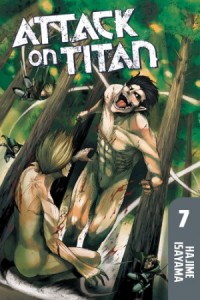
Attack on Titan, Volume 6 by Hajime Isayama. Despite the issues that I have with the art in Attack on Titan, which admittedly has been improving, I continue to be utterly absorbed and engaged by the story. The sixth volume picks up right where the fifth volume left off with the appearance of a new, seemingly intelligent, but still incredibly dangerous titan. It’s mostly one long action sequence as the titans tear through the ranks of the Survey Corps. Unsurprisingly, there are quite a few messy deaths. However, there’s a bit of character development as well. In particular, more is reveled about the members of the Special Operations Squad charged with guarding Eren who are also responsible for killing him should he get out of hand. The ending sets things up nicely for some major plot reveals in the next volume. Fortunately Kodansha has sped up the series release, so it won’t be too long of a wait to find out what happens next.

Awkward Silence, Volumes 1-3 by Hinako Takanaga. I tend to be fond of Takanaga’s boys’ love manga and so was happy when SuBLime picked up one of her ongoing series. Normally, I’m annoyed by manga where the plot hinges on a problem that would immediately be solved if the characters would just talk to one another. But in the case of Awkward Silence I didn’t mind as much because there is a very good reason that the characters don’t–Satoru has a difficult time expressing himself. It’s an integral part of his character and integral part of the story. One of the points of the series is that he and his boyfriend Keigo learn to overcome this. Their relationship is really quite sweet. Beginning with the third volume Awkward Silence starts to focus more on two of the secondary characters. (At least they started out as secondary characters.) Personally, I don’t find their relationship to be nearly as interesting. While still enjoyable, it feels more generic. Unlike the main couple, so far it’s missing something to really set it apart.

Saiyuki Reload, Volumes 4-6 by Kazuya Minekura. Although I was a little disappointed with the first three volumes of Saiyuki Reload, much preferring the earlier series Saiyuki, I think that Minekura has started to find her stride again. These volumes finish up the long flashback/backstory segement which included a look at Gojyo and Hakkai’s past when they were living together. (I’m a sucker for Hakkai, so I rather enjoyed that.) From there, Saiyuki Reload starts in on a new story arc, giving the plot the focus and direction that it needed. While the first few volumes of the series didn’t seem to be going anywhere, with the introduction of Hazel things are starting to get a bit more interesting. Sanzo and crew are faced with several moral conundrums and suddenly their journey west has some urgency behind it again. And speaking of The Journey to the West–the influences of the original work can definitely be seen. They aren’t always particularly prominent and Minekura is often very free with her interpretations, but The Journey to the West can still be found in there somewhere.

Tough, Volumes 1-6 by Tetsuya Saruwatari. Only six volumes of Tough were ever released in English. The series is actually a translation of Saruwatari’s Kōkō Tekken-den Tough and shouldn’t be confused with its sequel series which in Japan was called Tough. The fights are by far the best thing about Tough. Although the martial arts are taken to the extremes there are some legitimate styles and techniques being used. The manga is ultimately over-the-top, although dubious plausibility is maintained. Tough is violent and frequently brutal. The fighters deliver and sustain immense amounts of damage. Saruwatari doesn’t hesitate to show the resulting blood and broken bones. The few women, too, are shown to be martially capable. (Unfortunately they don’t make much of an appearance after the first volume.) The story, on the other hand, is nearly nonexistent and the attempts at humor fall flat. For the most part the plot is just an excuse to have men beat each other to a pulp. The actual fights are much more interesting than the weak justifications behind them.

X, Omnibus 6 (equivalent to Volumes 16-18) by CLAMP. Well, here it is, what is very likely to be the last volume of X. The series went on hiatus in 2003 and it doesn’t seem that CLAMP will be returning to it anytime soon. I read the first volume of X a few years ago but didn’t think much of it. I gave the series another try when Viz began to release the omnibus volumes and I’ve been hooked ever since. There are many fans frustrated by the series’ lack of ending, waiting for the final battle which may never come; I suppose I can now be counted among them. Still, I thoroughly enjoyed X in all of its epic, melodramatic, twisted, and tragic glory even if it can be a bit ridiculously excessive at times. CLAMP also uses some of the most intriguing page layouts that I’ve seen. They are very effective in conveying the emotional and dramatic moments in the story, of which the series has more than its fair share. Love and death are very closely intertwined in X and there is plenty of heartbreak to be had.

FujikoMineLupin the Third: The Woman Called Fujiko Mine directed by Sayo Yamamoto. This series has style–the animation is distinctive but appealing, the jazz-influenced soundtrack fits it perfectly, the storytelling is mature and has both darkness and levity. Familiarity with the Lupin III franchise isn’t necessary to enjoy the series; The Woman Called Fujiko Mine is a different take on the characters and story and can stand alone. Fujiko Mine is a thief and femme fatale. She is very much in charge of her sexuality and is more than willing to use it to get what she wants. It shouldn’t be too surprising, but nudity is a fairly frequent occurrence in the anime, but it is handled tastefully and artistically. In the last four episodes, things take a surprising turn for the strange when the revelation of Fujiko’s backstory really beings. Up until that point the series seemed largely to be an episodic collection of the various heists with which Fujiko was involved. There were hints of what was to come and most everything is tied together rather nicely in the end.

Filed Under: FEATURES, My Week in Manga Tagged With: anime, attack on titan, awkward silence, clamp, Hajime Isayama, Hinako Takanaga, kazuya minekura, Lupin III, manga, Saiyuki, Tetsuya Saruwatari, Tough, X

Red River, Vols. 1-7

August 25, 2013 by Anna N

When manga publishers first started their digital programs I was hoping for more backlist titles to become available, especially from Viz. I was particularly happy when Red River started coming out in a digital edition. I’ve long regretted not just buying this series when it was coming out, because I suspected I would really like it. At the time though I was buying a ton of other manga and I was leery of committing to a 28 volume shoujo series. I’ve been piecing together volumes of this series here and there, and I have a decent amount of both the first several books and a few concluding volumes, but nothing in the middle. I was glad I could switch back and forth between print volumes and my iPad to give the first part of this series a try. The arresting cover image of the first volume provides a nice overview of the series. A girl in modern clothing is being menaced by a bunch of people holding daggers, against a backdrop of a blue sky and stone buildings from another era.

The girl who is about to get stabbed on the cover of Red River is Yuri, a cheerful high school student who had just received her first kiss from her classmate Satoshi. Yuri goes to school and hangs out with her younger sisters, but a number of odd things seem to happen when she’s close to water. A glass bubbles over and hands reach out to her from a school fishtank. The incidents get worse and worse, to the point where Yuri is carried away in the middle of a date when she steps near a puddle. Yuri finds herself in a bathhouse in the capitol of the Hittite empire. Chased by armed men whose language she doesn’t understand, Yuri runs into a courtyard and encounters a handsome man who promptly sweeps her off her feet and kisses her. Prince Kail distracts the men and sends them on their way, claiming he knows nothing about a woman in strange clothing running through the city. Yuri can suddenly understand the language of the place she’s in, as princely kisses seem to serve as a universal translation device. Kail offers to swap Yuri in for the woman he was originally waiting for. Yuri concludes that he’s a jerk and runs off in the strange city yet again, only to be captured by Kail’s extremely evil stepmother.

Kail’s evil stepmother wants to use Yuri for a virgin sacrifice to work some strange magic to place her son as heir to the empire instead of Kail. Kail is an extremely quick thinker and prevents the sacrifice by showing up at the last minute to announce that due to his masterful powers of seduction, Yuri is no longer a virgin, and thus not suitable to be a sacrifice to anyone. Throwing her over his shoulder, Kail announces that he’s going to remove his “sullied baggage” from the room. Kail and Yuri start gradually falling in love, as he begins to appreciate her articulated moral sense and intelligence. Yuri soon realizes that Kail is doing the best he can in an extremely hostile court environment where his stepmother is doing whatever she can to plot his demise.

While there are a few references to magic here and there, Red River is much more of a historical adventure than it is a fantasy story. Yuri doesn’t really have magical powers, but she might as well have them due to the effect she has when Kail decides to announce that she’s the incarnation of the goddess Ishtar and uses her to inspire his troops as a gambit to protect her from his stepmother. While Kail gives Yuri the position of his concubine and they sleep in the same bed every night, she still remains a virgin, since he backs off when she mentions her boyfriend back home. The “will they or won’t they” tension that appears in the first few volumes is mainly due to Kail keeping his distance from Yuri because he knows he needs to send her back to his own time, and Yuri is determined not to care for Kail too much when she has to go back to her family.

While Yuri seems to have an unfortunate habit of getting kidnapped fairly often, she’s also extremely level-headed and pragmatic. Kail rescues her, but she also uses some quick thinking to rescue him a number of times. She throws herself into training when she’s given the role of Ishtar to play, determined not to embarrass herself and Kail. When she’s stolen away by a prince from a rival country, she spends her time improving the sickroom for prisoners of war that are deemed near death, and her introduction of modern sanitation helps the prisoners heal as well as providing herself with a slightly sick troop of soldiers inside the enemy walls.

Shinohara’s art has a bit of an old-school feel to it. This series was first published in 1995, so the character designs might look a tad old fashioned. But the many action scenes and the historical settings and costumes are handled with great clarity. Even when the paneling might focus more on the character’s emotions and interactions, there’s usually an architectural detail or background element that grounds the reader in the scene. Yuri believably shifts from tomboy to gorgeous depending on the situation and clothing she finds herself in, and Kail transforms from a slightly arrogant prince to a person who is much more kind and concerned.

I read these volumes over the weekend, and was very entertained! I think Red River is one of those series that benefits from being able to read many volumes at once, because the story lines are fast-paced and interesting, with plenty of cliff-hangers at the end of most volumes. While Red River is certainly a romance, it focuses much more on the expansion of the Hittite empire and the political machinations of the royal family. Yuri and Kail are a sympathetic couple, even if some of their issues would be solved if they were only able to sit down and have an honest conversation about their feelings. Fending off witchy evil stepmothers, dodging kidnappings, and dealing with bronze age military tactics do take up quite a bit of time. One thing I did miss in these volumes was author’s notes. I don’t know if there just weren’t any attached to this series, or if there was a decision made not to include them, but I would have found it interesting to hear about the author’s research. It seems like most of the historical shoujo manga that gets translated for English audiences tends to focus more on Japan as a setting, so Red River is certainly unique in that aspect. While there’s certainly enough romance to keep most shoujo fans happy, the setting and emphasis on action and adventure make this a very appealing series for readers.

Filed Under: REVIEWS Tagged With: red river, shoujo, viz media

Umineko: When They Cry, Vol. 4

August 25, 2013 by Sean Gaffney

Story by Ryukishi07; Art by Jiro Suzuki. Released in Japan in two and 1/2 separate volumes as “Umineko no Naku Koro ni: Turn of the Golden Witch” by Square Enix, serialized in the magazine GFantasy. Released in North America by Yen Press.

The Turn of the Golden Witch concludes, and takes a turn for the grotesque and humiliating. The cover chosen (at the last minute, if advance solicits are to judge) by Yen for the omnibus features Rosa, the last remaining Ushiromiya sibling, glaring suspiciously at the reader with her Winchester at the ready. Open the cover flap, however, and you’ll get a far more appropriate image: Beatrice leering in triumph at a naked Battler, bound in chains and with his naughty bits covered by golden butterflies. Until the very last minute, what happens here is nothing less than Battler’s complete defeat by the magic of the Witch and the power of fantasy.

Umineko4

The choice of Rosa as the adult viewpoint character, which was uncomfortable enough in the first omnibus, gets even more tortuous here. At least with Natsuhi in Vol. 1 we had someone we could root for and sympathize with, even if her haughty pride was all too visible at times. Rosa may be trying to protect Maria and the children, but it’s not nearly as noble. (Indeed, one has to be suspicious of why she alone survived, given all seven siblings and spouses were seen in the chapel the night before the “Happy Halloween For Maria”.) Her use of the ‘wolves and sheep’ puzzle is more or less an excuse to scapegoat the servants. It’s actually oddly surreal at the very end when she finally starts attacking the fantasy “goat butlers” who arrive to destroy everything in order to save her daughter – the scenes of her and Maria reaffirming their love for each other as everything goes to hell seems even more unrealistic than the flying stakes and light swords bandied about earlier.

As for the ‘meta world’ battler and Beatrice, Battler sometimes seems to gain an advantage – the Red Truth is rolled out in this volume (which Yen, like the Japanese tankobons before it, uses a different font on – colored inks cost money), and he’s very quick to figure out how to make it work for him. But the trouble is that his ‘proof’ is simply denial. There are no witches because I say so. Whereas the answer he’s avoiding is “There are no witches because someone I know and care about is guilty instead.” If you choose to treat Umineko as a mystery and not a fantasy, you have to assume that someone is killing everyone, and try to figure out why they’re doing it. Battler, who won’t even bother to find Who, certainly is nowhere near Why. This is why Beatrice subjects him to the ‘naked furniture footstool’ punishment, and parades him past an array of butlers (and a disgusted Bernkastel). It’s his low ebb.

This brings us to this arc’s Tea Party, which this time involves Rosa waking up and not realizing what’s going on. It has to be said, this is easily the most grotesque scene in the series to date – yes, it’s even worse than the Happy Halloween candy corpses – and reminded me a bit of the horror splatter films of Mario Bava. It’s easy to see why Rosa may say she hates her siblings and her daughter – she was physically, mentally, and emotionally abused as a child, and Maria is quite the handful. But much as she’s an abusive mother, and a spiteful sibling, deep down she really does love her family. This is why Beatrice’s waving their fates in her face is so grotesque – and why Battler is able to find the gumption to stop it. (Though I could do without his asking Maria to say ‘eat me’ to him in 10 years time – why does he always fall back on being a pervert?) Indeed, you’d almost think she did this on purpose just so that they could play another game…

Like Battler, the reader, to a certain extent, is rooting for the fantasy. The scenes with Kanon and Shannon battling the stakes (even if the stakes are, sigh, moe teenage girls) are really cool, and the entire sequence plays out in various ways as dramatic, tragic, and heartwarming. Reaffirming love and choosing to go out with a smile… there are some of our very best story cliches come to life here. That said, if the reader wants to continue to say ‘there is a realistic explanation for what happened’, this arc drops the most obvious way of figuring out what that is: don’t believe everything you see or read. Clearly, if this is realistic, some of what we saw here has to be imaginary. It didn’t really happen. So, what did happen? Did Rosa murder her siblings? I doubt she could kill all six of them without a fight. Perhaps the servants, who are highly suspicious throughout this? Aw, but they’re so nice! I don’t want Shannon or Kumasawa to be a killer!

This feeling of pleasure, intrigue and discomfort is what drives the Umineko series, and it drives Battler (and us) to play another game, so we can get closer to the truth. Even if that truth involves a witch. (Also, I want to read further to find out where the hell the Battler/Beatrice fans all came from… is it all hateship? Certainly Beatrice is at her most loathsome here…) Yen are taking a break until January, but then we’ll have two more omnibuses, and focus on a new family member – get ready to get inside Eva Ushiromiya’s head.

Oh yes, about the hidden tea party: 1) Lambdadelta seems to have the body of little Miyoko Tanashi (aka Miyo Takano) and her personality of Satoko Houjou. What a horrible combination. 2) Bernkastel basically doing Rika’s “mew” line further makes the listener raise an eyebrow at Ryukishi07 when he insists she’s not Rika. Certainly SOMETHING in her is Rika…

Filed Under: REVIEWS

Manga the Week of 8/28

August 22, 2013 by Sean Gaffney, Michelle Smith, MJ and Anna N Leave a Comment

SEAN: As the month of August draws to a close, it’s a quiet week for manga. Peaceful. Let us see what mild, calming titles we have out. But soft, lest we disturb the young ‘uns!

titan6We have a trio of titles from Kodansha. First is Attack on Titan 6, beginning its speedup! Oh dear, this doesn’t seem quiet and peaceful at all. In fact, it may involve people getting killed messily. Despite that, it really is a fantastic title that deserves your attention. Perhaps if you whispered the dialogue as you read.

MICHELLE: I still haven’t read any of this one, and now six volumes is seeming like quite an investment. I dunno…

MJ: I’m thinking that when I finally get around to restarting this series, I’ll definitely whisper the dialogue in my head.

SEAN: Fairy Tail has proven to be loud and boisterous in the past, and I suspect that Volume 29 will be no different, meaning it’s really not adding to the appeal of this quiet, peaceful week of manga. Still, it has a good heart, and is a great title for those who love a strong sense of loyalty and justice, the bonds of family and friendship, and punching things.

MICHELLE: Hee.

MJ: I *heart* punching things. You know. Quietly.

SEAN: The second volume of Sankarea is also shipping. I’m afraid that zombies are really never mellow and friendly. I blame their upbringing. That said, the first volume was funnier and more heartwarming than I expected, and has a father character who looks to explore a dark side to overprotective anime dads. A very dark side.

MICHELLE: That upbringing line is priceless.

MJ: What can I say? You’re weirdly making me feel like reading this.

chi10SEAN: Seven Seas has the second volume of Crimson Empire. I suspect the main reason this series was licensed is so that the company could release more volumes of the far more popular Alice in the Country of Hearts, whose one-shots tend to have Crimson Empire short stories in the back. Nevertheless, it’s filled with swordplay and battles, so absolutely does not meet our criteria at all.

MICHELLE: Zzzz.

MJ: What she said.

ANNA: I enjoyed the first volume, but I have a high tolerance for reverse harem titles.

SEAN: Lastly, there’s Chi! Yes, perfect! Chi’s Sweet Home 10 from Vertical gives us an adorable cat and her adventures with her family! It’s like floating downstream on a quiet river. Everyone loves Chi.

MICHELLE: I certainly love Chi!

MJ: A lovely addition to the week! Every week could use a little Chi.

SEAN: A perfect way to end this quiet, peaceful week of manga. Well, except for those other four titles. What looks good to you?

Filed Under: FEATURES, manga the week of

A Certain Scientific Railgun, Vol. 8

August 22, 2013 by Sean Gaffney

By Kazuma Kamachi and Motoi Fuyukawa. Released in Japan as “Toaru Kagaku no Railgun” by ASCII Media Works, serialization ongoing in the magazine Dengeki Daioh. Released in North America by Seven Seas.

It has been noted several times that Academy City, where the events of this series take place, is providing young teens with power development so that they can, in essence, become superheroes. They are ranked all the way from Level 0 (Saten falls here, as well as Touma, though he really doesn’t count) up to Level 5. And our heroine, Misaka, is one of seven people in the entire city strong enough to be a Level 5. Of course, we’ve seen a few other Level 5s along the way. Accelerator. Mugino, leader of ITEM. And we just met Misaki and her mind-controlling in the previous volume. And it has to be said: Misaka is easily the most down-to-earth, sensible, and normal of all these overpowered lunatics.

railgun8

And part of the reason for that is that, unlike most of the folks I mentioned above, Misaka isn’t lonely and doesn’t drive people away. She has a social life. She has her best friends. Yes, OK, Saten teases her, and Kuroko wants to assault her every chance she gets, but they’re still her support system that keeps her going through the tough times. Note how she tried to limit contact to those three during the Sisters Arc, where she was contemplating a) murder, and b) suicide. Unfortunately, Misaki is shaping up to be the next big antagonist, and can manipulate people’s memories. And Misaka finds out what this really means when her friends… no longer remember her.

I give credit to Misaka for taking this in and then quickly dealing with it. She’s in the middle of a crisis, one of her sisters has been kidnapped, and while I’m sure she’d love to argue with Kuroko till she’s blue in the face, there just isn’t time. But her face as she accepts what’s happened is simply depressing. Luckily, Misaki hasn’t had a chance to get to everyone, and Kongou is able to help her and give her a few words of comfort… well, anti-comfort, really. Kongou says she’ll try to get information, but Misaka absolutely shouldn’t trust it, as she may be ‘gotten at’ by the enemy.

Kongou, by the way, has two friends that we met in the previous volume, who are usually referred to as ‘those two guys/girls’ by anime fans. They’re the friends of the person who actually gets the dialogue and situations, there to show that they have their own backup and support system. And Kongou’s friends are sweet, adorable minor characters. They even joke in the first chapter about how they have no idea what it’s like to be really angry. Except… why do those two minor characters have such a large picture on the cover? That’s right, this is foreshadowing. And there are no minor characters in Railgun, there are only a bunch of awesome women who will beat the crap out of you. Watching Wannai and Awatsuki get furious and hand the minor mook (who’s a sexist to boot) his ass is a joyous thing to see.

Things are getting quite complicated as we move further into the school festival. At first we thought Misaki might be behind everything, but now it transpires there are multiple groups of villains (a favorite tactic of the author in the main Index series). Will Misaka be able to rescue her sister, restore her friends’ memories, win the athletic competitions and speak with Touma without n blushing and stuttering? Well, we’re caught up with Japan, so you’ll have to wait till April to find out!

Filed Under: REVIEWS

Japanese Tales of Mystery and Imagination

August 21, 2013 by Ash Brown

Author: Edogawa Rampo
Translator: James B. Harris
U.S. publisher: Tuttle
ISBN: 9784805311936
Released: May 2012
Original release: 1924-1950

After reading and enjoying Edogawa Rampo’s novella Strange Tale of Panorama Island I decided to seek out more of his work. What better way to start than with Rampo’s debut in English? Japanese Tales of Mystery and Imagination, translated by James B. Harris and first published in 1956, was reissued in 2012 by Tuttle Publishing with an additional and quite useful foreword by Patricia Welch putting the collection and Rampo into historical and literary context. Despite Rampo’s prolificacy, influence, and popularity in Japan, relatively few volumes of his work are available in English although his short stories can often be found in anthologies. In addition to being Rampo’s introduction to English-reading audiences, Japanese Tales of Mystery and Imagination is particularly interesting in that Rampo worked very closely with Harrison on its translation.

Japanese Tales of Mystery and Imagination collects nine of Rampo’s short stories selected to represent some of his best work. Eight of the nine stories were originally written in the 1920s. The collection opens with what is perhaps Rampo’s most well-known story “The Human Chair.” (At least, it was the story with which I was most familiar before reading the volume.) Next is “The Psychological Test” which features Rampo’s famous detective Kogorō Akechi. “The Caterpillar” is another story I was previously aware of and for a time was even banned in Japan. The collection continues with “The Cliff.” Written in 1950, it is the most recent example of Rampo’s work in the volume. Other tales of mystery include “The Twins,” “The Red Chamber,” and “Two Crippled Men” while other tales of imagination include “The Hell of Mirrors” and “The Traveler with the Pasted Rag Picture.” Though, as Welch points out in the foreword, Rampo frequently blurs the lines of genre and many of the stories have significant crossover.

Rampo is an incredibly clever and imaginative writer. Even when working with similar themes and plot elements, each story in Japanese Tales of Mystery and Imagination exhibits Rampo’s creativity in narrative technique and structure and he throws in enough plot twists that they all feel fresh. Each story is a little peculiar and each story is vaguely disconcerting–the erotic and the grotesque and macabre are no strangers to Rampo’s work–but in the end the tales are all different from one another. The culprits of his crimes stories are often undone by their arrogance, belief in their infallibility, or on occasion their guilty consciences, but the paths to their downfalls vary. Rampo’s more fantastic tales rely on subtle and not so subtle horror, but their thrills and terrors are all distinctive.

Japanese Tales of Mystery and Imagination is a captivating collection of short stories and would make a fine introduction to Rampo’s work for the uninitiated. If I had to choose, I think that I personally prefer Strange Tale of Panorama Island and its outrageousness slightly more, but the selections in Japanese Tales of Mystery and Imagination show evidence of the elements in the novella that I particularly enjoyed: the tight plotting, the light style of narration with slight touches of humor, the unexpected turns in the story, the inherent strangeness of the characters and their accounts. Japanese Tales of Mystery and Imagination has stood the test of time well. Nearly fifty years after it was first released, and more than a half-century since the stories were originally written, the volume remains an intriguing and engaging collection.

Filed Under: REVIEWS Tagged With: Edogawa Rampo, Tuttle

Alice in the Country of Hearts: The Clockmaker’s Story

August 21, 2013 by Sean Gaffney

By Quin Rose and Mamenosuke Fujimaru, based on the game by Quin Rose. Released in Japan as “Anniversary no Kuni no Alice – Tokeiya” by Ichijinsha. Released in North America by Seven Seas.

You would think that I would have run out of things to say about these volumes. Sometimes I have, when they’re particularly pointless – see last month’s batch of Bookshelf Briefs for my opinion of the Ace spinoff – but there always seem to be a few nuggets of interest to keep me going. It also helps that this volume focuses on one of my favorite of Alice’s romantic choices, Julius Monrey, the clockmaker. (In case you’re wondering about the ‘Anniversary’ thing in the Japanese title, it’s what they called the updated PS3 version of Alice in the Country of Hearts.)

clockmaker

The basic premise won’t be a surprise to anyone who’s read the previous spinoffs of this endless otome game series. Alice is trying to get away from an oppressive Peter White at Heart Castle, so she asks Julius if she can stay at the clocktower for a while. He agrees, and they gradually begin to open up to each other. As their relationship deepens, however, Alice has to not only deal with her own feelings, and the fact that her beloved is not the type to take the initiative, but also realize that Julius is hated by a large number of folks throughout Wonderland. Can she come to terms with what his job really entails? And what of her ever-present need to return to her sister?

Julius is a rarity in the set of Wonderland males that Alice runs into. He’s passive, introverted, and taciturn. He will happily stay in his tower for weeks, just working on clocks and sleeping when he remembers to. After several stories with Blood, or Ace, or the twins, or Eliot, or Boris, he feels like a breath of fresh air. He also causes Alice to need to be more proactive, rather than simply have the love interest be aggressive consistently until she gives in. There’s lots of adorable scenes here.

Also, he’s a mortician. Who can resurrect the dead. Only not really. Wonderland’s weird world, where everyone has clocks instead of hearts, and people can be ‘resurrected’ but aren’t quite the same people they were before, makes almost everyone uncomfortable, and that gets taken out on Julius. He’s clearly not doing this for fun, but it’s his role, and he regards it as necessary. But in a way, hanging out with him is keeping Alice in a constant shadow of death – something that I imagine makes Peter quite nervous, given what they’re all trying to make Alice not remember.

This one-shot also has an unusual ending in that, when Alice confesses her love, she chooses to remain in Wonderland and stop trying to return to her own world. Which she’s done before, but in this case the vial filled with people’s feelings that she carries around throughout the game is seen in the final shot to be shattered at her feet. It’s a striking image, showing that there’s no going back. I will admit I’m not entirely happy with the basic premise of the series being ‘if she remembers her traumatic past that makes it a bad end’, which seems to romanticize denial more than I’d like. Still, it does make for a good capper on what has been a fairly enjoyable, if slight, story.

There are also two Crimson Empire stories at the end. Luckily, they are shorter in length than they were in the Ace book. I say luckily as they were incredibly boring and tedious. Alas, you’re better off with Alice than Sheila.

Filed Under: REVIEWS

Magi, Vol. 1

August 20, 2013 by Sean Gaffney

By Shinobu Ohtaka. Released in Japan by Shogakukan, serialization ongoing in the magazine Shonen Sunday. Released in North America by Viz.

I like Shonen Sunday series a lot, and I wish they sold better over here, as I’ve noted before. Therefore, when a really good Sunday series debuts, I get a bit excited. Of course, like most really good shonen series, you read the first volume and realize ther4e’s going to be several volumes of setup before we get to the really good stuff. This one is clearly in for the long haul. That said, the worldbuilding is fun, particularly if you are a fan (as I am) of the Arabian Nights stories, which are used as the basis for this series.

magi1

The boy on the cover is Aladdin, one of the two main heroes we meet in this volume (we also meet a third major character, but spoilers). Aladdin is very much cut from Luffy stock (the author notes she grew up in high school reading Jump, which sounds like it was right about when One Piece hit it big, so this isn’t surprising), being naive, upbeat, and generally happy-go-lucky. Unlike Luffy, he also seems to have a thing for busty women, though he’s young enough that no one really minds all that much. He carries a flute with a genie inside, which is generally weak/strong depending on how much food he’s eaten, and gives him most of his cool powers.

The other main lead is Alibaba, who is also another common shonen hero. He’s been slightly trampled down by life, and is trying to make it through this world by being a cynical money-grubber. Sadly, he has a good heart and can’t stand injustice, so that doesn’t work out very well for him. It’s not helping that he runs into Aladdin, who frequently serves as his conscience when Alibaba is trying to drown out its loud voice. Alibaba does NOT have a genie who can grant his every wish, so has to get by on street smarts and some basic fighting skills. He makes an excellent contrast with Aladdin.

After the two of them team up, we hit what seems to be the other main feature of this world, at least in this early part of the series: dungeon crawling. Yes, gamers will feel sympathetic here. There’s a twisty maze of passages (all alike) that have to be marked as ‘bad’ by previous dead explorers. There’s hideous creatures, and deadly traps. And there’s also, allegedly, buttloads of treasure. Treasure that everyone seems to have been waiting for a kid like Aladdin and his genie to show up so they can use him to acquire it. As such, we meet, right near the end, the lord of the territory Jamil and his faithful slave (so faithful she returns to him even after getting freed by Aladdin) Morgiana. It’s not entirely clear if this will be our first bad guy or if his ways will be changed by our heroes’ goodness and niceness. I suppose we must wait till Vol. 2 to find out.

Again, there’s not much that’s original here. But it’s fun! Likeable characters, a lot of fascinating Arabian tropes, some cool fights, and a quest that can go anywhere. Magi is a big hit in Japan, with an anime under its belt already, so I’m very pleased that Viz is taking a chance on it. If you like One Piece or Toriko, give Magi a try.

Filed Under: REVIEWS

Bookshelf Briefs 8/19/13

August 19, 2013 by MJ and Sean Gaffney Leave a Comment

This week, MJand Sean check out recent releases from Yen Press, Viz Media, Kodansha Comics, and Vertical, Inc.


bunnydrop9Bunny Drop, Vol. 9 | By Yumi Unita | Yen Press – So, it’s finally here. Yes, it. You know what I’m talking about, fan of Bunny Drop. In fact, it’s difficult to imagine that any manga fan online has avoided hearing all about the controversial romance between Bunny Drop‘s teenaged Rin and her forty-something guardian, Daikichi, which began brewing out of the blue in the series’ last volume, at least on Rin’s side. Rin’s feelings are revealed fully in this final volume, and though things progress just as reported (feared?), Unita still manages to surprise me. Her ending is both as awkward and as oddly right as I might have wished—emotionally complicated and utterly unsexy (which, for once, is a really good thing). Though it’s still hard for me to buy in to Rin’s sudden feelings, Daikichi’s reaction rings perfectly true, and that makes all the difference, at least for this reader. Still recommended. Honestly. – MJ

devil10A Devil And Her Love Song, Vol. 10 | By Miyoshi Tomori | Viz Media – Well, we’ve been wanting Shin and Maria to finally have a nice long kiss, right? Be careful what you wish for. The scene in the music room with Maria’s breakdown was as raw and shattering as this manga has ever gotten, and I was surprised that it was then topped by Maria in her own apartment, contemplating something unthinkable. Never in this entire series have I been more grateful that Ayu exists. There’s still a lot to work through here, though, and it’s not going to go away due to a sweet hug on the rooftop. I suspect Kurosu just isn’t going to let this go, and it’s hinted that he knows even more about Maria’s past. Altogether, this is one of the best volumes yet of this series, typing together Maria’s past, her friendship with Anna, and her romance with Shin into one big screwed-up package. – Sean Gaffney

kamisama13Kamisama Kiss, Vol. 13 | By Julietta Suzuki | Viz Media – I will confess to being surprised by not one, but two plot twists in this volume. First of all, things were slowly being set up to show that sometimes duty is more important than true love, particularly when it involves a human. Of course, I was then taken aback when true love won out after all, though I appreciated Nishiki’s character growth. More to the point, I was very surprised and happy that Tomoe didn’t immediately cotton on to Nanami’s being ‘fake’. So many fantasy stories have the true love easily able to spot that the one in front of them isn’t the right one, it was great to see that no, Tomoe didn’t get it right away, particularly given it was Nanami’s own body. Another fun volume here, with hints at something darker coming soon, involving Tomoe’s past. – Sean Gaffney

kimi17Kimi ni Todoke, Vol. 17 | By Karuho Shiina | Viz Media – A.K.A. “The Payoff Volume”. Everyone knows that long-running romance series run on ‘will they or won’t they’, but there’s only so long you can hold onto that without frustrating the audience away. And so here we get big payoffs to two of our three couples. (Chizu and Ryu are sweet, but sort of take a back seat here aside from one big present moment.) It’s thematically appropriate, given Japanese customs, that this all happens at Christmas, as Yano finally gives in and opens up to Kento, and Kazehaya finally breaks free from his own chains and admits how much he physically desires Sawako. We also get some nice scenes from Pin, who always gives great advice even if he’s being a complete goofball. Overall, this is a pitch-perfect volume that everyone who follows the series will love. – Sean Gaffney

sidonia4Knights of Sidonia, Vol. 4 | By Tsutomu Nihei | Vertical, Inc. – I find it amusing, given this is a sci-fi action horror thriller sort of story, that I keep focusing on the awkward and goofy romantic comedy love triangle that also is happening within its pages. But it’s just so much fun, and really helps to make the series not just one big depressing angstfest. (Also, the book of Secrets about Sidonia should totally have had Toilet Hinako somewhere.) That said, there’s also a lot of dark tension here as well, as we continue to realize just how much the leaders of the ship seems to have it in for Tanizake. There’s also some rather terrifying body horror towards the end, that startled me quite a bit. The plot is still a bit overly complex for me to take in at times (it may benefit from reading in large chunks), but this is still space opera at its most compelling. – Sean Gaffney

librarywars10Library Wars: Love & War, Vol. 10 | By Kiiro Yumi and Hiro Arakawa | Viz Media – Sometimes it seems that Iku just can’t catch a break. As if it isn’t bad enough coping with her newfound love for Dojo, she also has some buried jealousy of Shibazaki tormenting her (oh, if she only knew how likely it was that the feeling was mutual), more bullying from a new group of girls, and her parents finally becoming aware that she’s a soldier and not merely a simple librarian after all. Of course, all these stress points end up becoming ways to give us compelling, heartwarming and satisfying drama. (We also see more of the still newborn Tezuka/Shibazaki romance, which I love to bits but which will likely be far harder to pull off than simple-minded Iku’s love.) It’s easy to forget this is a spinoff franchise, based on a light novel and with an anime as well It doesn’t read like a cash-in at all. – Sean Gaffney

wallflower31The Wallflower, Vol. 31 | By Tomoko Hayakawa | Kodansha Comics – Yes, in practice this volume ends the same way that the previous 30 have, with minimal forward movement between our heroes. However, I do think there are some very important signposts here towards an endgame, particularly in the 2-parter involving Sunako’s friend Yuki, who we first met in Vol. 6 (so long ago they have to footnote it.) Yuki is dealing with a painful first love, and at first it looks like things may go badly. But when her love is returned, we see her suddenly morph into… a beautiful, normal proportioned shoujo person. It’s always been only Sunako who pulls off the SD vs. normal switch with any regularity, so this is yet another sign that it’s not literal, but a figurative transformation that depends on the self-image of the person. All this, plus a Yuki chapter! (No, the other Yuki.) Recommended to those who still read it. – Sean Gaffney

Filed Under: Bookshelf Briefs

My Week in Manga: August 12-August 18, 2013

August 19, 2013 by Ash Brown

My News and Reviews

Two reviews, and some big news! First up was my review of Blade of the Immortal, Volume 24: Massacre by Hiroaki Samura. As you might suspect from the title, it’s a rather bloody volume. It also features what I think is one of the best visually executed battles in the series. I also reviewed Yukio Mishima’s novel Forbidden Colors which is a bit twisted but extremely engrossing and very good. Like his earlier novel Confessions of a Mask, it deals with homosexual themes and includes autobiographical elements.

As for the big news! Over the weekend Experiments in Manga celebrated it’s third anniversary and I wrote quite a lengthy post about it. If you don’t feel like reading the whole thing, here’s the really important bit: I am delighted to announce that in the very near future Experiments in Manga will be joining the Manga Bookshelf network of blogs!

I was traveling quite a bit last week (a couple of my friends were getting married), so I’m a little out of touch when it comes to some of the most recent manga news. However, there is one thing that I want to be sure to pass along. I personally don’t read much manga digitally, but Organization of Anti-Social Geniuses has a fantastic post looking at all the legal ways to read digital manga in 2013.

Quick Takes

The Last of the Mohicans by Shigeru Sugiura. The Last of the Mohicans is the first volume in editor Ryan Holmberg’s Ten-Cent Manga series, exploring classic manga influenced by popular culture and comics from the United States. In addition to the manga itself, the volume also includes an article by Sugiura and an extensive essay by Holmberg which puts The Last of the Mohicans into context. For me, this was probably the greatest appeal of the volume. I more or less enjoyed the manga, but I valued to an even greater extent learning about its history and Sugiura’s influences. I don’t know that The Last of the Mohicans will necessarily entice casual manga readers, but for those interested in comics history it’s great.

Math Girls Manga, Volume 1 written by Hiroshi Yuki and illustrated by Mika Hisaka. Based on the Math Girls series of novels, the manga focuses a little more on the romance and a little less on the math, but it still can teach a thing or two about it. Unfortunately, errors slipped into the English edition and some of the mathematical symbols are missing. Seeing as Math Girls is about, well, math, this is somewhat problematic. But if you can ignore that, Math Girls is a rather delightful and charming manga. Math lovers in particular will appreciate it, but as with the novels it’s possible to skip over the math-intensive sections and just enjoy the story. I wouldn’t mind seeing more of the Math Girls manga, but I suspect there won’t be another volume released anytime soon.

Strawberry Chan, Volumes 1-2 by Ai Morinaga. I picked up Morinaga’s Strawberry Chan manga on a whim. The series consists of two volumes, The Gorgeous Life of Strawberry Chan and The Super Cool Life of Strawberry Chan. The manga is fairly episodic and each chapter is very short. The titular Strawberry Chan is a small pet frog owned by Taro Akiyoshi, a sadistic high school student who delights in tormenting him. Despite his cruelty, Strawberry Chan adores his master. And then there’s Taro’s roommate who’s legitimately in love with Strawberry Chan and a masochistic classmate who just wants Taro to abuse him instead of the frog. Strawberry Chan is utterly ridiculous, random, and all sorts of wrong. I loved it.

Three Wolves Mountain by Bohra Naono. So far, only two of Naono’s manga have been released in English. Yokai’s Hunger largely frustrated me but I thoroughly enjoyed Three Wolves Mountain; it’s easily my favorite manga out of the two. It’s an odd mix of comedy, drama, and the supernatural, but Naono makes it work this time. Kaya Susugi is a cafe owner by day and a grave keeper by night who ends up taking in Tarou and Jiro Tsukihara, two werewolf brothers. Susugi is used to being alone but becomes very close with both of the brothers, but especially with Jiro who has fallen in love with him. I wasn’t expecting Three Wolves Mountain to become such a family affair, but parents, siblings, and even cousins all have their role to play in the story. Three Wolves Mountain is great stuff.

Filed Under: FEATURES, My Week in Manga Tagged With: Ai Morinaga, Bohra Naono, Hiroshi Yuki, manga, Math Girls, Mika Hisaka, Shigeru Sugiura, Strawberry Chan, Ten-Cent Manga

Bunny Drop, Vol. 9

August 19, 2013 by Sean Gaffney

By Yumi Unita. Released in Japan as “Usagi Drop” by Shodensha, serialized in the magazine Feel Young. Released in North America by Yen Press.

You may finally discuss Bunny Drop in the comments. But be polite.

And so here we are. I’d mentioned when reviewing the previous volume of Bunny Drop that there was a certain discomfort with where it was going, even if there wasn’t really anything objectionable besides the basic concept. That feeling continues and is magnified in this volume, which could almost be described as “Yeah, it went there.” It does its best to try to show the thought patterns of the people this decision impacts – though Rin, as always, is harder to read and understand than the others. But in the end, was this trip really necessary? Let’s find out.

bunnydrop9

For most of the volume, the basic conflict is not so much “Rin is in love with Daikichi” – that was dealt with by Vol. 8, mostly. The conflict is that Rin seems to be perfectly content to never deal with this and live in her happy family cocoon forever, denying her own feelings so that things can be the same. And big props to Kouki for pointing out how selfish this is. Honestly, Kouki’s development has probably been written better than Rin’s as this series has gone along – he’s still very much in love with her, and knows that love can’t happen, but is determined to be sure that Rin is happy. What she’s doing now isn’t getting her that way. So, because he’s that sort of person, he simply tells Daikichi everything.

Yumi Unita’s art has always been best when showing feelings of awkward discomfort, and really excels here in the middle part of the book, as Daikichi has to deal with Rin’s feelings, and Rin has to deal with Daikichi knowing about it, and – inevitably – the destruction of their cozy parent-child relationship. I liked that she ended up going to her mother – whose character development has also been good but is mostly off-screen. The mother, of course, is there to provide the “”out” the story needs – Rin isn’t really Soichiro’s daughter, she’s an adopted daughter. Meaning she and Daikichi aren’t related by blood. Which is fine, except, y’know, he’s still raised her as a parent since she was six. Sigh.

Daikichi says to Rin he’s going to wait two years, possibly thinking that Rin might get over this. But of course she does not. Through most of the post-timeskip series we’ve had trouble reading Rin, but right at the end it’s Daikichi who becomes difficult, as his acceptance of Rin’s love and agreement to marry her seems to come less from romantic feelings and more “well, a father can’t say no to his daughter”. Which provides all sorts of deeply wrong reactions. Particularly when Rin brings up children right at the end.

There is a certain odd dilemma with this series. When it began, everyone was enchanted by its warm and loving take on parenting and adopted families, and recommending it to libraries and such. Then the spoiler hit, and suddenly the entire fandom took a darker turn. The anime solved this problem by simply ignoring the timeskip altogether. The difficulty is that if readers had known the manga was going to go down this direction, I don’t think any of them would have bought the series. Most people still reading have a sense of “Well, better see this through to the end, since I’ve invested so much time in it.” Which is not what one really wants from a heartwarming manga series. Bunny Drop could be very well-written, and thoughtful, and have nice art, and I’ve analyzed it more than most other series. But I don’t think I’ve ever felt quite as uncomfortable with an ending as I am with this one.

Of course, there’s Vol. 10 in April of next year. But I hear that’s mostly side-stories from when Rin was a kid. We shall see. (What, drop the series? Nah.)

Filed Under: REVIEWS

Excel Saga, Vol. 26

August 18, 2013 by Sean Gaffney

By Rikdo Koshi. Released in Japan by Shonen Gahosha, serialized in the magazine Young King OURS. Released in North America by Viz.

In between all the body swaps, and personality wipes, and past lives, and pure hostile mind takeovers, it’s become increasingly apparent that one of the core themes of Excel Saga (the manga) has been identity. What is it that makes us who we are? Is it the bag of meat we currently inhabit? Is it that we think, therefore we are? What if we have amnesia? What if we’re put into a robot body? What if we are a reincarnation of someone else with similar memories? Lately it seems that our cast, especially Excel, need to have this question answered. And while I’m not sure this volume gives us anything definitive, it is one of the best at showing just how complicated this can actually be.

excel26

Let’s start with Excel, who is now back in her regular old human body after a couple volumes as a Ropponmatsu. Of course, ‘regular old human body’ has never quite applied to Excel, given she is capable of lifting several hundred pounds if she doesn’t think too hard about it, can open doors to ancient civilizations, and clearly has a past which Doctor Kabapu is trying hard to deny. (Kabapu and Shiouji’s greek chorus is one of the more frustrating things going on in this volume, mainly as Kabapu clearly has the answers but doesn’t want to say them out loud, and Shiouji doesn’t care enough.) Unfortunately, Excel, newly invigorated and with Hyatt and Elgala by her side, runs into Il Palazzo, and the shock causes her to have a mental breakdown for the last half of the volume.

Because of course that isn’t really Il Palazzo. Oh, it’s his body, all right. This is actually a major reason why Excel breaks down, as she can’t get over how Il Palazzo-ish he really is… until he speaks. And we finally get to see the truth about Shiouji’s father, Tenmangu. I’ve gotta say, we’ve been expecting him to be possessing Miwa’s body since about Vol. 13, which is… sort of true, only not. No, he’s now in control of Il Palazzo, and Miwa is a Ropponmatsu – one far more powerful than anything Shiouji could ever invent. Of course, this may not really matter all that much, as we’ve never really delved too deeply into who Il Palazzo really is. Excel figures out something is wrong purely due to the ideals she holds so dear – Il Palazzo talks about this “wonderful world”, and she knows her real love believes that this world is truly corrupt. (Given Excel Saga’s plotline, I really have to lean more towards Il Palazzo than Tenmangu here.)

Even if you can understand who someone really is, there’s always the chance of them disappointing you. Both Umi and Hyatt seem to hold Teriha/Excel on an impossible pedestal, one that she’s never really going to live up to. Elgala is more realistic about her expectations of Excel, but gets too lost in her own la-la land to be of any help. Misaki still has trouble rationalizing her love for Iwata, given what a giant doofus he is 90% of the time. Sumiyoshi always found Ropponmatsu 2 to be a loli pain, but is rather surprised by how angry her destruction makes him. And Watanabe disappoints EVERYONE, as his love for Hyatt has clearly not lessened (or ind3eed deepened) one iota.

The next volume of Excel Saga is the final one, and I’m fairly certain that we won’t be getting everything answered. But we should at least clear up a few things, and hope that at least some of these people can live happily ever after. Or at least get a good night’s sleep. God knows they need it.

(Also, Excel’s face when she realizes that’s not Il Palazzo is beautiful yet achingly sad at the same time. This series can still hit the heartstrings when it wants to.)

Filed Under: REVIEWS

Happy Marriage?!, Vol. 1

August 17, 2013 by Sean Gaffney

By Maki Enjoji. Released in Japan as “Hapi Mari” by Shogakukan, serialized in the magazine Petit Comic. Released in North America by Viz.

Viz has started to slowly dip its toe into the waters of josei, first a few years back with Butterflies, Flowers, and now with two new series, of which this is the first. They’re all being put under the Shojo Beat imprint, because a) it’s a brand people look for, which a Signature title isn’t necessarily; and b) honestly, most of these titles hit the same beats as their shoujo titles, it’s just that the protagonists are adults and there is sexual content. It wouldn’t be hard to see something like Happy Marriage?! reimagined to high school and Sho-Comi, with Hokuto as the hot new transfer student or something.

hapimari1

The basic premise isn’t too hard. Chiwa is an office lady whose father is a bit of a naive idiot, so their family is in heavy debt. She’s trying to deal with it by taking extra jobs, but that’s not going so well. Then the company chairman has the brilliant idea of marrying her to the company president, a smooth yet vaguely jerk-like guy naked Hokuto. Neither of them are really enthused about the idea, particularly Chiwa, who is a twitchy virgin who has no idea how to handle anything like this. Will they gradually grow to love each other as husband and wife and find true love and sexual satisfaction?

It’s hard not to compare this title with Butterflies, Flowers, Viz’s first foray into the world of Petit Comic. Both have the same types of hero and heroine, both involve company power issues (he has far more power than she does), and both heroines tend to freak out when bad or confusing things happen to them. Happy Marriage?!, though, is a far more natural and mellow title than Butterflies, Flowers ever was. There’s no real exaggeration for comedic effect here. No superdeformed heroines, no over-the-top sexist behavior as of yet, and zero Gundam references. Hokuto seems a bit standoffish, and like many shoujo/josei heroes likes to smirk smugly on occasion, but compared to other types I’ve seen he’s not too bad. Likewise we see Chiyo standing up for herself on occasion, though her lack of life experience and self-confidence is no doubt going to be one of the issues this manga deals with through its 10-volume run.

Of course, the problem with not having the appalling lows of Butterflies, Flowers is it doesn’t have the amazing highs either. The comedy and gratuitous appallingness of the latter title was what kept audiences reading, as they wanted to see what outrageousness would happen next. There’s not as much outrageousness in Happy Marriage?!, so what you’re left with is just a bit duller. It feels like one of many other shoujo titles, just grown up. Which is something you could say for a lot of josei, really. Chiwa in particular hasn’t really done much to separate herself from other blushing blonde heroines. Hokuto at least is more reserved than this type usually is, and I liked that we see he doesn’t really understand his new wife any more than she understands him, he’s just better at hiding it.

This is a good start to a romantic series, and I look forward to seeing if it avoids other ‘smutty shoujo’ traps once our heroes get hot and heavy (which they don’t here). I’ll check out another volume. But it’s not making my jaw drop the way its predecessor at Viz did.

Filed Under: REVIEWS

Forbidden Colors

August 16, 2013 by Ash Brown

Author: Yukio Mishima
Translator: Alfred H. Marks
U.S. publisher: Alfred A. Knopf
ISBN: 9780375705168
Released: February 1999
Original release: 1951/1953

In Japan, Yukio Mishima’s novel Forbidden Colors was released in two parts. The first eighteen chapters were compiled in 1951 while the collection with the final fourteen chapters was published in 1953. The English translation of Forbidden Colors by Alfred H. Marks was first published by Alfred A. Knopf in 1968. Like Mishima’s earlier novel Confessions of a Mask, Forbidden Colors deals with prominent homosexual themes, although the two works approach the material in vastly different ways. Also like Confessions of a Mask, and many of Mishima’s other works, Forbidden Colors contains some autobiographical elements. In addition to being my introduction to Japanese literature, Mishima and his works fascinate me. I’ve been slowly making my way through all of his material available in English, but I was particularly interested in reading Forbidden Colors.

After being betrayed time and again the aging author Shunsuke Hinoki has developed an intense hatred of women. Seeking revenge, he enters into a peculiar arrangement with a beautiful young man by the name of Yuichi Minami. Yuichi has come to realize that he loves men and is tormented by what that means living in a society which doesn’t accept homosexuality. Shunsuke is willing to assist Yuichi in hiding his secret by helping to arrange his marriage and to develop a reputation as a philanderer. In exchange, Yuichi promises Shunsuke to make the women he seduces miserable. They may fall in love with him, but he will never love them in return. The agreement is advantageous for both men. Yuichi will have a perfect cover allowing him the freedom to explore his sexuality–no one would suspect a married man and a womanizer to have male lovers–and Shunsuke will have the revenge he so greatly desires.

Shunsuke is an unapologetic misogynist. His anti-women rhetoric can be difficult to take, but without it the plot of Forbidden Colors would never go anywhere. It is necessary and important as the story’s catalyst. Mishima has very deliberately created a distasteful character who at the same time is enthralling in his extremes. Yuichi, despite being loved by all, isn’t a particularly pleasant person, either. However, I did find his portrayal to be much more sympathetic. He’s vain and self-centered, but he also has an air of naivety and innocence about him. Both men and women fall victim to his charms but Yuichi himself is often manipulated as well. Forbidden Colors is an absorbing tale as Yuichi struggles to keep his two lives separate, sinking deeper into Japan’s underground gay community while trying to keep up appearances in his public life. It’s an outlandish battle of the sexes that is hard to look away from and no one comes out unscathed.

Forbidden Colors explores and deals with a number of dualities: homosexuality and heterosexuality, love and hatred, youth and old age, beauty and ugliness, truth and deceit, cruelty and kindness, morality and immorality, and so on. Mishima plays the dichotomies off one another, but also reveals how closely intertwined they can be. The complexities of the characters’ relationships show that opposites are rarely just that and how at times in the end they aren’t really all that different. Yuichi, for example, comes to genuinely care for his wife but in his twisted way of thinking expresses that love through cruelty. There is a certain logic to his decision and his concern is real, though someone else might not reach the same conclusion. At it’s heart Forbidden Colors is a fairly dark story with erotic underpinnings and characters who, though often unlikeable, are captivating. I found the novel to be incredibly engrossing.

Filed Under: REVIEWS Tagged With: Novels, Yukio Mishima

  • « Go to Previous Page
  • Page 1
  • Interim pages omitted …
  • Page 366
  • Page 367
  • Page 368
  • Page 369
  • Page 370
  • Interim pages omitted …
  • Page 538
  • Go to Next Page »
 | Log in
Copyright © 2010 Manga Bookshelf | Powered by WordPress & the Genesis Framework