• Skip to primary navigation
  • Skip to main content
  • Skip to primary sidebar
  • Home
  • About Us
    • Privacy Policy
    • Comment Policy
    • Disclosures & Disclaimers
  • Resources
    • Links, Essays & Articles
    • Fandomology!
    • CLAMP Directory
    • BlogRoll
  • Features & Columns
    • 3 Things Thursday
    • Adventures in the Key of Shoujo
    • Bit & Blips (game reviews)
    • BL BOOKRACK
    • Bookshelf Briefs
    • Bringing the Drama
    • Comic Conversion
    • Fanservice Friday
    • Going Digital
    • It Came From the Sinosphere
    • License This!
    • Magazine no Mori
    • My Week in Manga
    • OFF THE SHELF
    • Not By Manga Alone
    • PICK OF THE WEEK
    • Subtitles & Sensibility
    • Weekly Shonen Jump Recaps
  • Manga Moveable Feast
    • MMF Full Archive
    • Yun Kouga
    • CLAMP
    • Shojo Beat
    • Osamu Tezuka
    • Sailor Moon
    • Fruits Basket
    • Takehiko Inoue
    • Wild Adapter
    • One Piece
    • After School Nightmare
    • Karakuri Odette
    • Paradise Kiss
    • The Color Trilogy
    • To Terra…
    • Sexy Voice & Robo
  • Browse by Author
    • Sean Gaffney
    • Anna Neatrour
    • Michelle Smith
    • Katherine Dacey
    • MJ
    • Brigid Alverson
    • Travis Anderson
    • Phillip Anthony
    • Derek Bown
    • Jaci Dahlvang
    • Angela Eastman
    • Erica Friedman
    • Sara K.
    • Megan Purdy
    • Emily Snodgrass
    • Nancy Thistlethwaite
    • Eva Volin
    • David Welsh
  • MB Blogs
    • A Case Suitable For Treatment
    • Experiments in Manga
    • MangaBlog
    • The Manga Critic
    • Manga Report
    • Soliloquy in Blue
    • Manga Curmudgeon (archive)

Manga Bookshelf

Discussion, Resources, Roundtables, & Reviews

Features & Reviews

A Certain Magical Index, Vol. 7

July 3, 2016 by Sean Gaffney

By Kazumi Kamachi and Kiyotaka Haimura. Released in Japan as “To Aru Majutsu no Index” by ASCII Mediaworks. Released in North America by Yen On.

There is a certain amount of religion in Index, more and more as the series goes on, in fact. The whole point of the Magic side of Index is that it’s made up of various religious factions who are at odds with each other and themselves, and even an Angel has gotten in on the act. That said, I’m not really sure Kanachi has anything deep to say about religion in particular. I think he’s just using the basics as fodder for what he wants to do, which is tell stories where cool things happen. Which is fine, and there’s lots of cool things going on in this volume of Index. I quite enjoyed it. But I also grew up Roman Catholic, and the group of nuns that are introduced here adhere far more to the “Spanish Inquisition” type than the more modern Catholic Church. In fact, the text goes out of its way to say “Roman Orthodox”, and casually says the word Catholic doesn’t really apply to them anymore. Which is true, because what we have here is not a convent, it’s a paramilitary unit.

index7

Introduced in this volume: Laura Stuart, Orsola Aquinas, Agnes Sanctis, Lucia, Angeline, Saiji Tatemiya. Yes, Yen’s translation spells it Agnes, not Agnese. I think that’s fine. For anime and manga readers expecting Itsuwa, she was added to the adaptations but isn’t in the light novel. No worries, she’ll turn up later. This takes place a whole week after Book 6, which is huge in Index terms. for Railgun readers, Misaka’s not in this one, probably as she’s still in California dealing with events in the Railgun SS novel. For Accelerator fans, the Accelerator manga’s start takes place around this time.

Laura Stuart is the most important of the names mentioned above. For all of the amusing “Your Japanese sounds stupid” jokes and occasional dojikko moments she gets, she’s clearly meant to be to the Magic Side what Crowley is to the Science side, i.e. a chessmaster who’s always thinking 10 moves ahead of everyone else. As Stiyl notes, she’s the one who told all those lies about Index that kicked off the series in the first place (a popular fan theory is that she’s Index’s mother, possibly as that makes it much worse), and certainly nothing that happens in these pages seems to surprise her – everything turned out as planned. That said, simply due to her nature and the way she’s written the reader tends to find her more sympathetic than Crowley (who, as we learn here, is likely also a magician in any case).

Much of the volume deals with a grimoire called The Book of the Law, written by Crowley, which is supposed to be undecodable, except Orsola thinks she knows how to decode it. Orsola is basically the one Roman Orthodox nun we meet here who isn’t a villain, and her tendency to underplay horrific injuries and forgive those who have attempted to kill her must surely strike a familiar chord with Touma. As for Agnes and the others, they’re zealots, thinking nothing of lying to Touma and the others about absolutely everything as, well, they’re non-Catholic heathens, so who cares? That said, Touma, who possible has been spoiled for the 11th novel, says he can totally see him being on Agnes’ side later. Touma tends to be on the side of whatever he thinks is right at the time.

There’s more I could discuss, including Index (who once again gets a lot to do) using a whole lot of magic given that she’s someone who supposedly is unable to use magic (I suspect that Laura may be responsible for that as well), but I think this is getting a bit long. Suffice to say this is a strong volume of the Magical Index series that will please its fans, unless they’re hardcore Catholics, in which case please note that Index is to actual religious theory of today what Goofy is to an actual dog.

Filed Under: REVIEWS

Complex Age, Vol. 1

July 1, 2016 by Sean Gaffney

By Yui Sakuma. Released in Japan by Kodansha, serialized in the magazine Morning. Released in North America by Kodansha Comics.

The genres that make up the Japanese manga industry have been becoming more fluid over the last few years, and there are titles and even entire magazines that don’t quite fit the label. That said, I still try to always put where the manga first came out in my reviews, both as a helpful reference and because it can be useful to see if you’re going to like something. Jump shonen titles are very different from Magazine shonen titles, and both of those are equally different from a Sunday title. A title that runs in Betsucomi is probably never going to fly in Hana to Yume. With seinen and josei it’s a bit less regimented, but you still see it. All of which is a fairly long preface to explain that I was rather surprised to see that Complex Age ran in Weekly Morning, a seinen magazine, rather than the josei magazine Be Love, where I would have expected it.

complexage1

Complex Age stars Nagisa, a mid-twenties OL who also has a hobby of cosplay that takes up most of her time and money. She creates the costumes herself, and goes to show them off at the latest Comiket and other such events, along with her friend Kimiko. Her obsession is a long-running magical girl series that isn’t quite PreCure, but it’s close enough for jazz. She is, however, running into several problems. She still is trying to keep her cosplay a secret from her office life, particularly as some of her coworkers seem like the sort who would use it against her; another, younger girl comes along and looks absolutely perfect for the role that Nagisa is cosplaying herself; and Nagisa is getting to the age where it’s harder and harder to realistically play a 14-year-old magical girl. She’s also really tall, which also doesn’t help. This culminates in someone at the even calling her a “giant old lady”, causing her to snap and have a bit of an emotional breakdown.

I’m trying to think of a better way to say it, but I can’t: this is a very good series. The characters all have a depth and nuance that takes them beyond a level where I would normally expect them to stay. Nagisa’s friend Kimiko in particular amazed me. At first I thought that she might be setting up Nagisa for a horrible fall, and couldn’t imagine why, given they’re best friends, but it turned out to be – pardon the term – far more complex than that. As for Nagisa herself, after the beginning emotional turmoil, she actually proves to be far more mature than you’d expect, helping her new protege even as she inwardly writhes. And while new protege may look the part, there’s a lot more to cosplay than just looking right. The manga shows that cosplay can be a money-sucking hobby, but it never belittles it. And there’s a nasty cliffhanger that immediately makes me want to get the next book.

There’s a one-shot at the end of this volume that was the basis of the ongoing series, and it won an award. It’s quite different, showing a married woman as opposed to Nagisa’s OL, and seems a lot starker, ending in a literal bonfire where she cuts off her old cosplay life and moves on. It was well-told, but I preferred the ongoing tale, and I hope that Nagisa can find an ending that allows her to not be completely cut off from what she loves.

Filed Under: REVIEWS

Haikyu!!

June 30, 2016 by Anna N

Haikyu!! Volume 1 by Haruichi Furudate

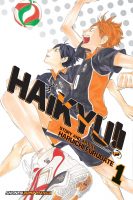
I’m always curious to check out new sports manga, mostly because we tend to get so few licensed over here. Haikyu!! is a shonen volleyball title. I still have fond memories of the shoujo series Crimson Hero, so I was curious to see the world of volleyball manga yet again.

Shoyo Hinata saw a volleyball tournament when he was younger, where a shorter than average player made up for his height with some wonderful athleticism. Shoyo is determined to become an elite volleyball player, and he’s not going to let the fact that he’s the only member of his volleyball club in middle school stop his dreams. Eventually by his third year, Shoyo manages to put together a small team and play in a tournament, where he faces down Tobio Kageyama. Tobio is a star player, and he knows it, yelling at his teammates constantly and trying to win on his own. Shoyo loses, but displays a ton of heart in the process and manages to score some great points.

Fast forward to the following year, and it is no surprise that Shoyo and Tobio are starting on the same volleyball team in high school. The captain Daichi Sawamura immediately sees a problem with the two new rookies and tells them that they can’t even practice until they can work as a team. While undisciplined enthusiasm and athletic snobbery might not be the best thing for the disgraced former champion team of Karasuno High, Daichi thinks that they could be an unstoppable team if they are able to work together. Shoyo and Tobio have to earn their way back to the team by facing off against the other first-years.

hai1

The art in Haikyu!! uses plenty of action and unconventional angles to display the tension of the volleyball game. Shoyo leaps all over the place for the ball, and Tobio tends to lurk around in a gloomy manner, then suddenly strike like a snake. The character designs are well-executed, with a large supporting cast all given distinct looks and personalities, making it easy to navigate the mass introductions that come with reading the first book of every series. I enjoyed getting a glimpse of the upperclassmen on the team, who range from being able to give wise volleyball philosophical advice, to being knuckleheads. The dynamic between Shoyo and Tobio is interesting, because it is so antagonistic but it is clear that there’s a lot they can learn from each other. This first volume mainly served to set up the characters and their long road to a possible championship, but it was definitely entertaining.

Filed Under: REVIEWS Tagged With: Haikyu!!, Shonen, viz media

Manga the Week of 7/6

June 30, 2016 by Sean Gaffney, Ash Brown, Anna N and Michelle Smith 2 Comments

SEAN: July, another big month for manga, because there are no small months for manga anymore. What’ve we got for the first week, aside from a pile of Viz (though we’ll be getting to that as well)?

Kodansha has the 6th volume of Devil Survivor. Is every manga title in Japan somehow based on Shin Megami Tensei?

And an 8th Your Lie in April, sure to be gut-punchingly heartwarming in a horrible way.

ASH: I finally just got caught up with this series! Pretty sure I already know how some things will turn out, but I’m still glad to see music manga being released.

SEAN: Seven Seas gives us a 5th volume of The Ancient Magus’ Bride, and I cannot wait, as it’s one of my favorite titles from them.

ASH: Same!

ANNA: I started the first volume and didn’t finish it for some reason. I should try again!

battlerabbits1

SEAN: Then there is the debut of Battle Rabbits. Judging by the title, you’d expect bad things, but no, this is a Zero-Sum series, so I doubt it’s boobies and fighting. It’s by the authors of 07-Ghost.

MICHELLE: Huh! This wasn’t on my radar.

ANNA: I’m interested, and also feeling guilty for not reading more 07-Ghost.

SEAN: A Centaur’s Life continues to be utterly strange and unpredictable, even as we reach Volume 9.

Vertical gives us a 3rd Nichijou, which is strange and unpredictable in a totally different way. I love it a lot.

MICHELLE: I enjoyed the first two more than I expected to, so am looking forward to this one.

SEAN: Now here’s the Viz. Behind the Scenes!! has a 2nd volume. I’m not used to series starting out caught up with Japan. This feels like it’s been a while since Book 1.

MICHELLE: It really has. I hope I like volume two more than the first.

ANNA: I liked the first one well enough!

SEAN: You’ll never guess who shows up at the end of the 67th volume of Bleach. No one could have predicted… no, wait, everyone did.

The Demon Prince of Momochi House continues Aya Shouoto’s demonic hold on all of North American manga publishing with its 5th volume. (Speaking of which, why hasn’t Kodansha picked up Super Darling?)

MICHELLE: At only two volumes, it definitely would seem to be an easy contender.

ANNA: I like Demon Prince, and thought the 4th volume was really strong.

SEAN: Dragon Ball Full Color Freeza Arc Volume 2. Yes, it’s still being re-released.

haikyu1

The big release this week is Haikyu!!, the new Jump sports manga – remember when that was box office poison? – about a volleyball team. It’s a monthly release, as this has already reached 22+ volumes in Japan. Friendship! Training! Victory!

MICHELLE: YAYYYYY!! Also… new volumes every month!

ASH: It’s an ambitious publishing schedule, but I think it might just pay off.

MICHELLE: Back in the day, this was more common. I want to say the entirely of Rurouni Kenshin came out this way, and there were periods of time in which Fruits Basket, GetBackers (someone rescue this), and InuYasha were all monthly releases, too.

ANNA: I am always stoked for more sports manga.

SEAN: Honey So Sweet has a 3rd volume. I’m hoping for more mild angst and mild romance. And more of that other girl.

And then there’s My Love Story!!, which has Vol. 9. It introduced a rival last time. Will he ruin everything? Will there be angst in my beloved shoujo sweetness?

MICHELLE: I will be snagging both of these.

ASH: I still adore My Love Story!!

ANNA: Looking forward to both titles very much!

SEAN: Naruto has a 15th 3-in-1. Perhaps you’ve heard of it.

And Jump’s most popular harem series continues with Nisekoi 16.

One-Punch Man 7! Has Saitama finally met someone who will take MORE than one punch? It’s looking likely!

ASH: I desperately need to catch up with this series. I really love Murata’s artwork, though.

ANNA: More punching!

SEAN: The other debut from Viz, 7th Garden, comes from Jump Square. From what I hear, it may appeal more to a Seven Seas demographic than a Viz one, as it seems a bit servicey? But hey, demons.

Twin Star Exorcists has a 5th volume, and I understand its anime is still chugging right along as well.

Lastly, there’s an 11th World Trigger.

What manga are you buying? What manga are you tragically breaking up with?

Filed Under: FEATURES, manga the week of

Manga Giveaway: Complex Age Giveaway

June 29, 2016 by Ash Brown

While I’m currently following a more relaxed posting schedule at Experiments in Manga if there’s one thing that you’ll be able to count on it’s the monthly manga giveaway. And as it is now nearing the end of the June, it’s time for another one! This month you all have a chance to win a copy of Yui Sakuma’s Complex Age, Volume 1 as recently published in English by Kodansha Comics. As always, this giveaway is open worldwide!

Complex Age, Volume 1

I reviewed the first volume of Complex Age not too long ago and was surprised by how much I could identify with a manga that focuses on cosplay. Not that I have anything against cosplay. Quite the contrary, I admire the enthusiasm and devotion that so many cosplayers display and enjoy seeing the results of their efforts; it’s just that cosplay isn’t something that I’m personally invested or involved in. Complex Age is one of the few manga I know of in which cosplay has such a prominent role, but I can think of a few others that incorporate it in passing as well. Perhaps unsurprisingly, I tend to enjoy them, but Complex Age was the first to really hit close to home for me.

So, you may be wondering, how can you win a copy of Complex Age, Volume 1?

1) Have you encountered cosplay in a manga? If so, tell me a little about it in the comments below! (If you haven’t, simply mention that.)
2) If you’re on Twitter, you can earn a bonus entry by tweeting, or retweeting, about the contest. Make sure to include a link to this post and @PhoenixTerran (that’s me).

It’s as simple as that. Everyone participating has one week to submit comments and can earn up to two entries each for this giveaway. If you prefer or if you have trouble with the comment form, you can also send your comments to phoenixterran(at)gmail(dot)com and they will be posted here in your name. The winner of the giveaway will be randomly selected and announced on July 6, 2016. Best of luck to you all!

VERY IMPORTANT: Include some way that I can contact you. This can be an e-mail address in the comment form, a link to your website, Twitter username, or whatever. If I can’t figure out how to get a hold of you and you win, I’ll just draw another name.

Contest Winner Announced–Manga Giveaway: Complex Age Giveaway Winner

Filed Under: FEATURES, Giveaways Tagged With: Complex Age, manga, Yui Sakuma

Bookshelf Briefs 6/28/16

June 28, 2016 by Sean Gaffney and Michelle Smith 2 Comments

dbc1-2Don’t Be Cruel, Vols. 1-2 | By Yonezou Nekota | SuBLime – I hated this at first. In the opening scene, one character handcuffs another to a fence and demands sexual gratification, saying, “Don’t get the wrong idea, now. That wasn’t a request. It was an order.” Nemugasa (the victim) is being blackmailed by Maya (the perpetrator), so continues to obey his commands, but their relationship evolves and by the end of the volume, they’re in love. (But not before Nemugasa is roofied by his tutor and given over to someone else for a plaything!) What’s frustrating is that there were glimmers here of something I might’ve liked, moments where the developing dynamic was interesting, but I just couldn’t get over those early scenes and often wanted to throttle the characters, Maya especially. As a result, I can’t really recommend this even though I kind of want to read the next volume. – Michelle Smith

fatezero2Fate/Zero, Vol. 2 | By Gen Urobuchi, Type-Moon, and Shinjiro | Dark Horse – After all the setup of the first volume, most of this second one is devoted to a battle between two servants—or at least, it starts off with just two servants. Saber is, of course, the Arturia we’re familiar with, but Lancer is Diarmuid Ua Duibhne, another Irish mythological hero. Their snark and battle is fun, but gradually everyone starts dropping in—literally, in the case of Iskander—and adding more chaos to the battle. As with the first volume, Iskander’s sheer force of personality, and everyone’s reaction to it, is the highlight—though Gilgamesh’s arrogance comes close. Fate fans should enjoy this, and it hasn’t gotten too dark yet, though I’m sure that will change. – Sean Gaffney

foodwars12Food Wars!: Shokugeki no Soma, Vol. 12 | By Yuto Tsukuda and Shun Saeki | Viz Media – While there is the occasional ship tease (and I remain surprised at how little Erina has done to date, given she’s supposed to be the main heroine—Soma spends most of his off time with Megumi here), for the most part Food Wars! continues to keep its focus reassuringly on food. All three remaining contestants are brilliant, but Soma is particularly impressive because, while he’s confident, he’s not arrogant about it. Indeed, we see him reach out to almost everyone in the dorm trying to find a way to improve his fish dish. Of course, Akira and Ryo are not really villains either, so they’re both just as impressive if not more so. Will Soma win next volume? Probably not. But it’s always fun to see. – Sean Gaffney

kisshim5Kiss Him, Not Me!, Vol. 5 | By Junko | Kodansha Comics – Mutsumi has been the least developed of the four male leads, so it was only a matter of time before we got a volume devoted to him. He seemed to always have Kae’s best interests at heart, and you wondered if he even loved her at all—or is he simply more mature than the others? No, as it turns out, he’s simply never quite examined the feelings of love yet, and we find why when his over-the-top brother shows up. They end up competing in a “famous” card game called Castle Cards, and it’s a game where Mutsumi has never won—but take a wild guess what happens when it’s Kae’s affection on the line. This is still amusing, but it’s a bit less parodic now and a bit more normal. I’ll still read it. – Sean Gaffney

komomo4Komomo Confiserie, Vol. 4 | By Maki Minami | Viz Media – I’d complained about Komomo in the last brief I did of this series, and it’s possible the author heard me, as we get to see a little more fire in her this time around. A rival appears, all the way from France, and given this is a short series, wastes no time behaving in an overtly evil way, even going to the point of having the confiserie vandalized just because she doesn’t get her way. This leads to the best part of the entire volume, in which Komomo channels her inner royalty and absolutely lets her have it, in a truly glorious scene. The second half is not as good, as we meet a friend of Natsu’s whose goal is apparently to push the two together quickly—possibly he knows the series is wrapping up. – Sean Gaffney

magi18Magi: The Labyrinth of Magic, Vol. 18 | By Shinobu Ohtaka | Viz Media – As expected, most of this volume is devoted to a giant battle, with first one side looking like they’re going to win, then the other side having a comeback, etc. Those who enjoy cool moves and epic battles will love it, but it does make things rather difficult in terms of writing a brief. The best part of the volume is probably the end, where Aladdin and Alibaba reunite, and it’s as heartwarming and amusing as you’d imagine, even though it them gets shoved aside to explain more of the plot. I hope Morgiana isn’t too far away either, to be honest. In the meantime, I’m now more concerned about Titus, whose sense of self has been a major part of this arc, and now we’re finding it may all be for naught. Still addictive. – Sean Gaffney

sily14Say “I Love You,” Vol. 14 | By Kanae Hazuki | Kodansha Comics – After so much time devoted to Megumi in France, and her new (and to me suspicious) relationship with a photographer, it was highly jarring to suddenly find that plot mostly dropped and seeing her back in Japan, and looking quite different, makes me wonder if there was a missing volume somewhere down the line. In happier news, the relationship that wasn’t between Kai and Rin lasts about as long as I thought it should, as Kai finds that “go out with me even if you don’t love me” is just not going to work for him. Honestly, I’m still not quite sure where the author is going with Rin and Ren, but given that Mei and Yamato are mostly resolved, it’s onward with the secondary characters, I guess. – Sean Gaffney

Say I Love You, Vol. 14| By Kanae Hazuki | Kodansha Comics – There’s something of a bittersweet mood (plus a touch of foreboding) about this volume, in which the third-year characters look toward their futures (and the goals they strive for with varying degrees of intensity), the first-year Aoi siblings are caught up in the present (and the pain of unrequited love), and second-year Kai is unable to shed the baggage of the past. Of these, I was actually captivated most by Kai in this volume. Despite the fact that he’s tall and strong now, inside he’s “a big lump of insecurities,” and I loved the moment where carefree Rin, who has cajoled him into giving her a chance, comes face to face with the reality of the darkness within him, something she’s not prepared for. It’s rare that a series can continue to be this good even when the focus has drifted a bit from its main couple! – Michelle Smith

Filed Under: Bookshelf Briefs

A Certain Scientific Railgun, Vol. 11

June 28, 2016 by Sean Gaffney

By Kazuma Kamachi and Motoi Fuyukawa. Released in Japan as “Toaru Kagaku no Railgun” by ASCII Media Works, serialization ongoing in the magazine Dengeki Daioh. Released in North America by Seven Seas.

I usually decide which series get full reviews and which ones get a review of the first volume and then shuffled off to the Briefs section fairly quickly, but Railgun muscled its way up over the last several volumes with a combination of dramatic plot, action, and excellent characterization. Sadly, that’s not all the series is. As part of the Dengeki line, there’s a certain amount of otaku pandering in its chapters (the same is true of its parent series, Index, and in fact many of the things I’m going to be complaining about originated there). And Railgun just wrapped up a big plot, and clearly wants to fool around a bit before it gets to the next big one. And so we get a volume like this.

railgun11

I’m still attempting to save my complaints about Kuroko for the review of the 8th Index book in August, which stars her, so I will simply note that Kamachi and Fuyukawa seem to think “lesbian” and “sexual predator” amount to the same thing, and they are oh-so-hilarious. We also see a macguffin introduced here, Indian Poker, which lets you see the dreams of someone else – supposedly with their permission, but of course, horny Academy City teens are already using it to dream-screw the hottie of their choice – including Mikoto and Misaki (who at least get a reasonable amount of revenge here). Much of the last third of the book is devoted to Mikoto and Saiai (from ITEM about 6-7 volumes earlier, in case you’d forgotten) attempting to get a special Indian Poker card that increases your breast size, and many, many bust jokes follow, with the final punchline being that the card DID work but on some bystander. Oh, and to top it off, there’s an entire CHAPTER devoted to Awaki Musujime and her shotacon fetish, which if you haven’t read Index must baffle you (and honestly, even if you have read Index it’s baffling.)

Speaking of Awaki, while one can still read Railgun without being cognizant of what’s going on in Index, it’s becoming more and more difficult, due to both sly continuity cameos and callbacks/callforwards. Some time seems to have passed since the last volume of Railgun, which took place during the athletic festival. The astute Index reader can tell this because ITEM now has a lackey, Shiage Hamazura, who will grow very important as the Index series goes on, but not yet. We’re likely sometime between Index books 13 and 15 (we can’t be after 15, for reasons I won’t spoil). Moreover, the entire volume is filled with Index characters – the guy selling the cards that allow you to dream-screw Misaki and Mikoto is “the blue-haired piercings” friend of Touma’s; Frenda mentions her little sister; Mikoto’s dream of a girl wanting huge breasts is clearly Aisa, the vampire killer girl; and yay, we get more hints of the incestuous relationship between the Motoharu siblings. It’s continuity porn, even if you may not want it.

Amongst all this, there is a serious story in the middle, as Kuroko and Uiharu help a young boy with precognition try to save people from various accidents that he has seen. That said, its placement in between the two Indian Poker storylines reads like it was put in to fill out the page count as the author hadn’t quite decided which direction to go yet, and while it shows off how much of an excellent Judgment member Kuroko is that just makes it all the more frustrating that we get the “pervert” talk as a punchline. Railgun can be excellent when it ditches the cameos and fanservice and is about women kicking ass. This is mostly not that volume.

Filed Under: REVIEWS

My Week in Manga: June 20-June 26, 2016

June 27, 2016 by Ash Brown

My News and Reviews

Not much news to report in regards to Experiments in Manga this past week, though I would like to take to the opportunity to thank everyone for the kind words, encouragement, and support as I work to find some life-work-blog-etc balance. (In case you missed it, I went into more detail in last week’s My Week in Manga.) Currently I’m working on an Adaptation Adventures feature for Mushishi for my horror manga review project, but it’s been delayed (yet again) as I needed to get my DVD player working in order to watch the live-action film. Hopefully, I’ll be able to finish the post up soon!

Elsewhere online, Libre responded responded to Digital Manga’s rather unprofessional announcement that the publishers were parting ways. (Apparently there was a breach of contract; from how Libre’s comments are phrased, I’m assuming it was on Digital Manga’s part.) Digital Manga will stop selling manga that were licensed from Libre on June 30th and posted a list of the discontinued titles on Twitter. Justin at The OASG interviewed Ajani Oloye, one of Kodansha Comics’ manga editors. In licensing news, Bruno Gmünder’s catalog for Fall 2016 lists two new collections from Mentaiko Itto in its Gay Manga line, a poster book and the manga The Boy Who Cried Wolf. (I highly enjoyed Itto’s previous English-language manga collection, Priapus, so this is good news for me.)

Quick Takes

Forget Me Not, Volume 2Forget Me Not, Volume 2 written by Mag Hsu and illustrated by Nao Emoto. While the catalyst behind Forget Me Not is the mystery woman who helped to save Serizawa’s life after he was in a motorcycle accident, so far the series spends most of its time exploring Serizawa’s past and lost loves. One of the most touching incidents in the second volume (at least for me) actually had nothing to do with Serizawa’s erstwhile romances—a classmate confesses to Serizawa that he’s gay and that he has feelings for him. Serizawa handles the situation remarkably well, especially when considering the social disasters so many of his other relationships end up becoming. But even those failed relationships are important for Serizawa’s growth as a person and show that good things actually can come about as the result of struggling with rejection. Serizawa is a much more interesting character than I initially gave him credit for. He’s a believably and realistically flawed person who makes stupid mistakes but isn’t generally acting out of malice. Serizawa does occasionally act like a complete jerk, but for the most part it’s unintentional. I like that the series shows how he matures, and in some cases doesn’t, over time.

Your Lie in April, Volume 3Your Lie in April, Volumes 3-7 by Naoshi Arakawa. It was the series’ emphasis on music that first brought Your Lie in April to my attention, and it’s still one of the thing that I like best about the manga. As a musician, I appreciate the characters’ efforts to express themselves through their art, though as a composer I can’t completely agree with the amount of disregard some of the characters show towards the original score. The more I read of Your Lie in April, the more I realize that while music is an important aspect of the series, at it’s very heart the manga is about messy and complicated love of varying types. Kosei’s relationship with his  mother is deeply intertwined with his relationship to music and everything else in his life stems from that. Everyone in the series seems focused on Kosei. It can all be very melodramatic and at times Your Lie in April narrowly avoids becoming overly sentimental. But then I, too, believe in the power of music. Kosei’s return to playing the piano is traumatic, but ultimately healing for him. Realistically, however, it music shouldn’t be a complete replacement for the emotional and psychological support that he needs to recover from years of abuse and the death of his mother.

Yowamushi Pedal, Omnibus 2Yowamushi Pedal, Omnibus 2 (equivalent to Volumes 3-4) by Wataru Watanabe. I’ve seen a fair amount of the Yowamushi Pedal anime so I know exactly what’s going to happen this early on in the original manga, but I still find the series incredibly enjoyable to read. I think that part of that has to do with the artwork; I really like Watanabe’s style in Yowamushi Pedal. The art is not at all what I would call pretty—in fact many people might even consider its roughness and angularity ugly—but it is very dynamic, energetic, and thrilling. Story-wise, the second omnibus is almost entirely devoted to the inaugural race of the first year members of the road racing club. Most of the team are experienced racers but Onoda, the lead of Yowamushi Pedal, most definitely is not. Since Onoda himself is learning the rules and techniques used in road cycling for the first time, Watanabe is able to take advantage of the opportunity to introduce the same concepts to readers who likewise might not be familiar with them. From time to time it does interrupt the flow of the narrative, but Yowamushi Pedal generally moves along at a good pace. I find the series very entertaining and I’m really looking forward to reading more.

Filed Under: FEATURES, My Week in Manga Tagged With: Forget Me Not, Mag Hsu, manga, Nao Emoto, Naoshi Arakawa, Wataru Watanabe, Your Lie in April, Yowamushi Pedal

Fruits Basket Collector’s Edition, Vols. 1 & 2

June 26, 2016 by Sean Gaffney

By Natsuki Takaya. Released in Japan by Hakusensha, serialized in the magazine Hana to Yume. Released in North America by Yen Press.

If ever there was a series that cried out for a license rescue and re-release, it was Fruits Basket, one of the biggest gateway manga of the 21st century. First released in North America between 2004 and 2009, the story of a young girl and her encounter with a “cursed” family is one of the most beloved shoujo manga of all time over here. It was also big in Japan, and the re-release we’re seeing is based off of the Japanese re-release. I say that because I know some people will be annoyed that the original author’s sidebars are missing – this is very common with re-released manga, simply as the sidebars tend to be very dated – as Takaya herself says in her afterword. We do see new cute SD-art to replace them, but sadly it repeats itself, so we see the same bookmark-ish art over and over. There’s also a new translation, which reads fine, though of course those who have the old one memorized may find it jarring. It feels a bit freer than the Tokyopop one. Worry not, though, we do have honorifics here.

furuba2

As for the content, what is there to say? If you haven’t read this series, do so right away. I will try not to spoil it, though it’s honestly very difficult not to do so, as the fun of re-reading is going back and seeing all the little hints that I never picked up the first time I was reading the series. I’ve made little secret that my favorite character is Shigure, for example, and I recalled his character getting darker and more manipulative as the series went on. But no, there it is as I reread it. He was like that from the very beginning, it’s just we were distracted by the whole “high school girls!” and flirting with Ayame going on. Likewise, Tohru’s relationship with her late mother, which I think the reader is first meant to see as sweet and touching, already shows some of the dark undercurrents to come.

These two volumes show us the first four of the original release, and you can tell right away that no one was quite sure if it would be a hit yet. Takaya’s previous big hit for Hakusensha, Tsubasa: Those With Wings, was only 6 volumes long. And you can see here that Takaya wants to get a lot of the zodiac introduced and show us their deep traumas and tragedies as quickly as possible, just in case it goes the same amount of time. It is almost startling how fast Hatori’s backstory is breezed though, to give an example, or Momiji’s. The exceptions are Yuki and Kyo – as the two male leads, they get the most focus, and we see the development of their characters over the course of both omnibuses – each wants what the other has, and wishes things could be different.

It’s not all sad boys in snow, though. Fruits Basket could be hilarious much of the time, and the humor works very well. Tohru’s friends Hanajima and Uotani contribute the bulk of it, being the sort of girls you;d normally imagine would never hang out with a bright shining object like Tohru but brought together through circumstances we don’t know about yet to form a deep bond. We see how much the two girls care about Tohru, and worry she might be taken advantage of by the Sohma family, even if they seem nice enough. But Tohru needs a place to stay. And, as becomes clear, Yuki and Kyo need Tohru – as does Shigure, who clearly has some scene that requires her to be there and make the others break out of their shells. We see what might be driving that when we get a few glimpses of Akito, the leader of the family, who manages to terrify Yuki in just a few seconds, leading Tohru to physically push him away – something startlingly unlike her.

If you already have Fruits Basket and are wondering whether to get it again, well, it’s a larger trim with new covers and interstitials, and a new translation. Make up your mind from that. If you haven’t, do so at once. The series only gets better as it goes along, and rewards readers who pay attention. A well-deserved classic.

Filed Under: REVIEWS

Manga the Week of 6/29

June 23, 2016 by Sean Gaffney, Michelle Smith, Ash Brown, MJ and Anna N Leave a Comment

SEAN: The word for next week is “spinoff”, boys and girls. Can you say spinoff? I knew you could!

OK, let’s try to plow through. Dark Horse first, as always. Astro Boy Omnibus 4. Everyone loves Astro Boy.

Kodansha gives us the 2nd and final volume of Fairy Tail’s Gray-related spinoff (can you say that, boys and girls?) Ice Trail.

And a 4th Inuyashiki, with far less skintight leather than Gantz had but just as disturbing.

Livingstone has a 3rd volume. I’ve heard it called “quirky”.

And there’s a 3rd Maga-Tsuki as well, for more romantic comedy shenanigans.

jellyfish2

Lastly, and most importantly to the Manga Bookshelf team, Kodansha has a 2nd omnibus of Princess Jellyfish. Remember when getting this license was an impossible dream?

MICHELLE: Yay! I’m looking forward to this a lot.

ASH: Dream the impossible dream! Reach the unreachable star! (And then go buy Princess Jellyfish because it is wonderful.)

MJ: Good news!

ANNA: Still thrilled this is coming out here.

SEAN: One Peace picked up, almost without anyone realizing it, the license to Maria Holic and are re-releasing it in omnibuses. Fans of fake yuri and traps are sure to want to get it.

MICHELLE: If only it had been Maria-sama ga Miteru instead!

SEAN: Seven Seas gives us an 11th volume of A Certain Scientific Railgun, the spinoff (can you say that, boys and girls?) to Index. It’s just finished a serious arc, so I suspect that things will be a lot wackier this time around.

And there’s also a 4th volume of Magika Swordsman and Summoner, which some people clearly enjoy.

Udon has a 3rd volume of Persona 4, the manga spinoff (can you say that, boys and girls?) of the game.

ASH: I liked the first volume, but I’ve already fallen behind. I should correct that.

SEAN: Vertical has a spinoff (can you say that, boys and girls?) novel that I know some people have been waiting for. Attack on Titan: Lost Girls gives focus to two of the most seemingly stoic of the cast, Mikasa and Annie.

They also have a 5th volume of the “totally created by Americans, honest” series Ninja Slayer.

Yen Press has a number of digital releases. New volumes for Aoharu x Machinegun, Black Detective, and Corpse Princess. The final volume of Grim Reaper and Four Girlfriends and Little Witches’ Collier. And a 4th volume of Saki, for the Manga Bookshelf folks.

MICHELLE: Hm. The fanservice was starting to get to me, but I do still have some interest in Saki.

ASH: Saki! Speaking of impossible dreams, I’d still love to see a print release.

MJ: Same here!

SEAN: Yen On releases the 7th volume of A Certain Magical Index. Did you want more Roman Catholics in your Index? More nuns? What about a murderous military nun corps? Have I got good news for you!

Yen proper starts off with the 2nd volume of Akame Ga KILL! ZERO, another spinoff (can you say that, boys and girls?).

And Kaori Yuki shows us beautiful, beautiful death once more with a 4th Alice in Murderland.

Ani-Imo’s bizarre shoujo incestuous mind game antics come to an end with its 7th volume.

Barakamon has an 11th volume. Is Handa really going to have an arranged marriage? Signs point to no.

Black Bullet has a 4th manga volume of child killers and glorious depression.

It seemed like Bloody Cross announced it was ending several years ago, but it continues onward with its 11th volume.

We have a 4th Devil Is A Part Timer! High School!!, with 3 exclamation marks worth of fun. It’s a spinoff (can you say that, boys and girls?).

furuba1-1

The big release this week is a re-release, as Yen is putting out Fruits Basket in omnibus editions. The first two, covering Vol. 1-4, are due out next week. I absolutely cannot wait to read this all over again. Who’s your favorite Souma? I’m partial to Shigure and his black, black heart.

MICHELLE: I am excite, despite already owning most of the series in Japanese and all of it from TOKYOPOP. I love the entire “Mabudachi Trio” very much, but have the warmest, proudest love for Yuki.

ASH: Glad to see this coming back, and in such a nice edition, too. I’m also rather partial to Shigure myself, but there are so many fascinating characters in the series.

MJ: These are absolutely beautiful, and I’m so excited to see them! I checked back into an old 3 Things Thursday to see what I said back then, and apparently I chose Momiji! I’ll stand by that! Looking forward to an epic re-read.

ANNA: Yay! I’m pretty resistant to buying series all over again, but I am so glad that Fruits Basket is back, this series deserves a wide audience, and I’m sure there are people who missed it the first time around.

SEAN: There’s a 3rd Handa-kun, which is the spinoff (can you say that, boys and girls?) to Barakamon.

He’s My Only Vampire is starting to lose me a bit, but I know it ends in a few volumes or so. Here’s Vol. 7.

MICHELLE: Yeah. I’m going to soldier on to the end, though. Hopefully it’ll make more sense than Kiss of the Rose Princess.

SEAN: And a 3rd volume of Irregular at Magic High School spinoff (can you say that, boys and girls?) The Honor Student at Magic High School.

Third volumes galore! Here’s a 3rd for Of the Red, the Light and the Ayakashi.

MICHELLE: I’m looking forward to this one!

SEAN: If you enjoyed the Overlord light novel, why not try the manga (does this count as a spinoff)? The first volume is out next week.

And Rose Guns Days ends its Season One with its 4th volume, although future seasons are coming.

Servant x Service has a 2nd omnibus which wraps up that series. It proved to be a lot more character-focused than I expected for a fluffy workplace 4-koma.

The other debut this week is Space Dandy, which was originally an anime but now has this manga spinoff (can you say that, boys and girls?). If you enjoyed Cowboy Bebop and Samurai Champloo, this is in the same vein.

Lastly, a 2nd volume of Sword Art Online, Mother’s Rosary, which adapts the 7th light novel.

And with that, my running gag has come to an end. What are you getting this week?

Filed Under: FEATURES, manga the week of

Everyone’s Getting Married, Vol. 1

June 23, 2016 by Michelle Smith

By Izumi Miyazono | Published by VIZ Media

egm1I’ve grown a bit wary of josei romances. I’d prefer them not to be smutty, or to derive much of their drama from misunderstandings, or to feature a controlling male lead. Happily, Everyone’s Getting Married avoids all of those things!

Twenty-four-year-old Asuka Takanashi enjoys a successful career as a real estate broker, but what she really wants to do is get married, quit her job, and become a full-time homemaker. I struggled to identify with her at first because of this, but Miyazono does a great job showing how serious a person Asuka is. This isn’t some idealistic fantasy she’s concocted. Asuka works hard at her job, and we soon see that she absolutely will work just as hard to provide a warm environment for her family. Too, the more negative reactions Asuka gets, the more it’s clear for the reader that it’s nobody’s business criticizing her choice.

Unfortunately for her connubial dream, right after Asuka catches the bouquet at a friend’s wedding, her long-time boyfriend breaks up with her, saying, “You’d be happy with anyone who puts a ring on your finger.” Asuka tells herself this isn’t true, but immediately begins attending mixers and matchmaking events, looking for a potential husband. Meanwhile, she keeps running into handsome newscaster Ryu Nanami, who flatly declares, “I’d rather die than get married.” She tries to squash the feelings that are developing, but by the end of the volume they’re going out, even though neither has changed their mind about matrimony.

How refreshing it is to read a story about two adults who are plain-spoken about what they want from life! Nobody does anything spazzy and they are both consummate professionals. I don’t know how they’re going to reconcile their differences—probably we’ll get a happy ending, though I admit I’d be happy if Miyazono took the unconventional route and had them break up. My one complaint is that it’s initially hard to tell whether the conflicting opinions Ryu expresses regarding housewifery (at one point calling it an escape and later a respectable career) represent evolution because of Asuka or just inconsistency. (When he reiterates his respect again towards the end of the volume, it seems much more obviously because of her.) Also, there’s a scene where Asuka berates him, calling him a lowlife and a womanizer, and then just a few pages later he’s praising her for not judging others’ choices. Um…

All in all, this was a nice surprise and I look forward to volume two!

Everyone’s Getting Married is ongoing in Japan, where it is up to five volumes. VIZ will publish the second volume in English in September.

Review copy provided by the publisher.

Filed Under: REVIEWS Tagged With: Izumi Miyazono

Psycome: Murderer in the Flower of Death

June 23, 2016 by Sean Gaffney

By Mizuki Mizushiro and Namanie. Released in Japan by Enterbrain. Released in North America by Yen On.

Achieving the balance between supposedly new and exciting things and using the popular cliches that everyone knows will sell well can be quite difficult. Once you get the basic premise out of the way, you can feel free to roll out the typical gags and characters. The teacher who’s in her mid-20s but looks about 10 years old; the clumsy crying girl; the classic tsundere (combine with the cool beauty for extra points!), and the eccentric ditz. Throw in a hero who manages to rise above the typical harem lead sightly, but still let him crash into large breasts on a regular basis and have a sister with an unhealthy obsession with him. All this can be added, and is fine – but only if you get the premise that draws people in. With Psycome, the author seems to have found their premise, as all this takes place in a school/prison devoted to “rehabilitating” murderers. Which most of the above ‘types’ actually are.

psycome1

Psycome is short for “Psycho Love Comedy”, and they ain’t kidding. Our hero is Kyousuke, who grew to be strong to protect his little sister from being bullied. A bit too strong, in fact, as one day said bullies are all found dead in a warehouse, leading him to be the obvious suspect. He’s sent to the aforementioned prison, where he meets his classmates, also composed of murderers and psychopaths, and their teacher with a hair-trigger temper and no school rules to hold her back. Much of the beginning of the book is devoted to comedy revolving around the premise, with “typical” high school romantic comedy situations made ridiculous by the setting and people doing it. The violence is over the top, but mostly seems to be inflicted on only one person, and you suspect that the majority of the plot of this 6-volume series will be devoted to our hero finding out why he’s been falsely imprisoned and what kind of place this is anyway.

So imagine my surprise when all that’s revealed by the end of the first book. The second half is still amusing, but gets far more serious. The teacher takes her eyes off her usual abuse target to send Eiri (the aforementioned tsundere who tries to be cool) to the infirmary, and we learn that Kyousuke may not be the only one who’s only here on a technicality. Through a series of fights, we also see that Kyousuke has an endurance that’s truly inhuman, which is of course what got him noticed in the first place. And then there’s Renko, the girl in the gas mask on the cover, whose bizarre, over the top genki personality takes a far darker turn when the mask comes off. The fight between her and Kyousuke at the climax is brutal, and the highlight of the book, particularly the resolution being the opposite of what you’d typically expect in this situation.

So yes, another book I expected not to enjoy but did. It’s not perfect – I am very weary with the loli teacher/parent concept, and the fact that Kurumiya appears to be a straight ripoff of Komoe-sensei from Index only evil did not help matters. I’m also not happy we appear to have more brother/sister incest shoehorned in, though at least it’s seemingly one-sided. And then there’s Maina, whose baby-talk way of speaking is grating and irritating, but I’m pretty sure that was deliberate and meant to be the same in Japanese, so I’ll give it a pass. In the meantime, it’s a fairly typical light novel recommendation: if you can deal with the typical romantic comedy cliches, and don’t mind lots of big chested vs flat chested talk, Psycome is an intriguing series, and I look forward to seeing where it goes next.

Filed Under: REVIEWS

Two New Sherlock Holmes Mysteries from Anthony Horowitz

June 21, 2016 by Michelle Smith

Officially sanctioned by the Conan Doyle estate!

The_House_of_SilkThe House of Silk
I have read two other books featuring Holmes and/or Watson that were written by someone other than Arthur Conan Doyle, but I must say that The House of Silk surpasses them both.

Elderly Watson’s health is failing, and he is in a facility where the nurses think writing about his time with Holmes (who died the year before) will be therapeutic for him. As it happens, there is a “monstrous” and “shocking” affair which he had never previously recorded, so he makes plans to send the completed manuscript to a solicitor with the instruction that the package not be opened for 100 years. He then sets about recounting events which began in November 1890, when a man named Edmund Carstairs paid Holmes a visit.

Carstairs is a fine-art dealer who is apparently being menaced by the surviving member of a gang responsible for stealing some valuable paintings on their way to an American client. In the beginning, the book moves rather slowly and it doesn’t seem like there is enough about this case to fill a whole novel. But then one of the Baker Street irregulars that Holmes employs to keep watch over the culprit is brutally murdered, and the resulting investigation ultimately leads to a discovery that is, indeed, suitably shocking.

Horowitz has a good grasp on the characters, and though Holmes is somewhat more human here than elsewhere—castigating himself for the boy’s death, for example—it doesn’t seem out of character. Too, the various pieces of the puzzle fit together in ways that make absolute sense in retrospect but which I never could have guessed. I’m very much looking forward to the follow-up, Moriarty, though Holmes and Watson are apparently absent from that novel.

three_monarchs“The Three Monarchs”
One month before the release of Moriarty, the short story “The Three Monarchs” became available for the Kindle. (It also includes a preview chapter from Moriarty, but I never read those.)

It’s largely inconsequential—Holmes is consulted on a puzzling burglary in which the suspect (shot by an elderly homeowner) was attempting to abscond with three very common ceramic figurines celebrating Queen Victoria’s Golden Jubilee—and seemingly exists only to remind readers of the existence of Inspector Athelney Jones, first encountered in The Sign of Four, who will be playing a large role in Horowitz’s Moriarty. He vows to learn Holmes’ methods, but Watson notes that he soon grows ill and takes leave from the police.

moriarty-usMoriarty
Set just after Holmes and Moriarty’s meeting at Reichenbach Falls, after which both are presumed dead, Moriarty is the story of American criminal ringleader Clarence Devereux, who has come to England with the goal of taking over Moriarty’s organization, and Pinkerton detective Frederick Chase, who teams up with Scotland Yard’s Athelney Jones (back at work after a year-long convalescence) to stop him.

What I liked best was the dynamic established between Chase and Jones. As it turns out, “The Three Monarchs” was not so inconsequential after all, as the shame of having been wrong yet again spurred Jones into fanatical study of Holmes’ methods and treatises, to the point where he’s become quite good at deductions himself, while narration from Chase chronicles his exploits. Though Holmes and Watson technically are absent, their influence, therefore, is palpable.

Unfortunately, the book is rather lacking in the suspense department. That’s not to say I require suspense, but that several scenes that ought to have been suspenseful simply weren’t. For example, Chase and Jones unlawfully infiltrate the American legation and once they are caught, Jones’ career at Scotland Yard is in jeopardy, but it’s all very ho-hum, to the reader and to Jones. Moreover, a plot twist that Horowitz presumably hoped would elicit gasps of surprise instead only compelled me to triumphantly cry, “I knew it!”

I would still recommend these books to a rabid Holmes fan who has devoured everything else, and I’d still read another one if it is published, but I do hope it’s more fun than this one.

Filed Under: Books, REVIEWS Tagged With: Anthony Horowitz, sherlock holmes

Masamune-kun’s Revenge, Vol. 1

June 21, 2016 by Sean Gaffney

By Hazuki Takeoka and Tiv. Released in Japan by Ichijinsha, serialization ongoing in the magazine Comic Rex. Released in North America by Seven Seas.

The arrogant, haughty girl who owns the campus and can destroy your entire life with just a well-placed word. It’s a common sight in fiction for young adults, both here and in Japan, and it’s no surprise that Masamune-kun’s Revenge uses it as a starting point. Makabe Masamune was deeply wounded in elementary school by his crush, Adagaki Aki. Now starting high school, he’s lost the weight she mocked him for, cultivated a ‘handsome male lead’ personality, and is ready to win her heart only to crush it once and for all. Then he will finally have his… well, revenge, as the title implies. This premise sounds almost like one of the fanfics you read by 19-year-old men writing when they dislike the tsundere harem girl, but if handled well could be interesting. In the first volume, the authors handle it pretty well.

masamune

First of all, the narrative seems to be fairly self-aware at how ridiculous and petty Masamune is for carrying his grudge on an 8-year-old for so long. Every smooth move he makes is balanced out by his inner stress about how he looked and how he handled it, just to make it clear that no, he’s really just like you, the reader, honest. Secondly, as the second half of the book shows, he’s hardly the only one who’s devoted his life to messing with Aki. Yoshino is probably the best character in the book, a supposedly meek and put upon followers of Aki’s who in reality is happily manipulating her behind the scenes (and may come from a family of said manipulators). And, of course, he’s beginning to genuinely fall for Aki – if this were JUST about the revenge, there would be no point in reading it. It’s a romance.

As for Aki, I like her. More than I expect I’m supposed to. It’s fairly clear as the volume goes on that much of her arrogance is just as much of an affectation as Masamune’s cool persona. The annoying nicknames are completely lame, but I have to admit, the scavenger hunt she led him on to reject him made me laugh out loud at the payoff. That was well-played. Really, most of the things people hate about her seem to be simple social ineptitude, as she’s shown to have no idea how real life works, being very much a coddled rich girl. I expect in the next few volumes Masamune is going to want to dial back his revenge, and likely external forces will try to stop him. Because honestly, these two would make a pretty good couple if they both stopped putting on an act.

I’m not certain if this is a plain old revenge fantasy or a subversion of same yet, but I hope it’s the latter, as I would find a simple ‘break the haughty’ plot to be far too tedious. But based on the first volume, I think that the authors could pull off something nice. There was also less fanservice than I’d expect from a title like this, that foot fetish cover aside. Fans of guy-oriented romantic comedy might give this a try.

Filed Under: REVIEWS

My Week in Manga: June 13-June 19, 2016

June 20, 2016 by Ash Brown

My News and Reviews

Okay. So I don’t usually get very personal here at Experiments in Manga, but I feel it’s needed this time. Last week I had every intention of posting an in-depth review of Dawn, the first novel in Yoshino Tanaka’s renowned space opera Legend of the Galactic Heroes. But Thursday came along and I’d only managed to write a quarter of it and I finally had to admit to myself that it just wasn’t going to happen. And so while driving to and from taiko rehearsal that evening I took the opportunity to reevaluate some things and to try to find a sustainable solution for Experiments in Manga.

The last year and a half or so has been rough on me. Without going into unnecessary details, I have been under tremendous amount of stress at work, at home, and just in general with more and more responsibilities to take on and less and less time for myself. While my anxiety issues are fortunately mostly in check at the moment, being stressed out feeds directly into my depression which in turn feeds into being stressed out. It’s a miserable cycle that’s difficult to break. And it makes doing all of the things that I want to do nigh impossible, even if I actually had the time to do all of those things (which I don’t).

I can’t do much about the situation at work right now, and my options outside of work are limited, too, but one thing that I have complete control over is my blogging. While there are some very strong arguments to be made for me to completely give up writing at Experiments in Manga, that’s not really something that I’m prepared to do yet. However, I will be drastically changing my approach and will be writing less, at least for the time being. I’m hoping this won’t be permanent, but I will have to see how things go as I try to find some balance in my life.

And so: For now the My Week in Manga feature will continue to be posted as normal, as will the monthly manga giveaways. The Bookshelf Overload feature will still make an appearance every month, too. However, in-depth reviews and other long-form features will by necessity be posted more sporadically and won’t necessarily adhere to a specific schedule. To make up for this somewhat, the Quick Takes section of My Week in Manga will be expanded slightly to include my thoughts on novels and nonfiction works among other things. Even though overall I will be writing less, this means that I’ll be able to read more, and hopefully relax more, which will be very good for me.

Anyway! In happier news, according to the series’ translator, the second volume of Quantum Devil Saga: Avatar Tuner is scheduled for release later this year. (I reviewed the first volume when it was released and liked it so well that it made my list of notable works of 2014.) Kodansha Comics’ most recent creator spotlight features an interview with Akiko Higashimura. The latest manga Kickstarter campaign to launch is a project by Fakku and Toshio Maeda to release a remastered edition of Urotsukidoji: Legend of the Overfiend. Some pretty big news for fans of BL in translation, Japanese publisher Libre has cut its ties with Digital Manga. Sadly, though perhaps not especially surprising at this point, Digital Manga’s press release comes across as very passive aggressive and unprofessional.

Quick Takes

Persona Q: Shadow of the Labyrinth, Side: P3, Volume 2Persona Q: Shadow of the Labyrinth, Side: P3, Volume 2 by So Tobita. I haven’t actually played the Persona Q video game, but from what I hear from others, the manga adaptation remains true to its tone and main storyline. My knowledge of the original Persona Q, as well as my knowledge of Persona 3 and Persona 4 which directly tie into Persona Q, is admittedly cursory. Those who do not have at least some familiarity with the Persona franchise will be at a significant disadvantage when reading Persona Q, especially when it comes to understanding the characters and their personalities. Fortunately, I know enough to be able to appreciate the Persona Q for what it is—a fun and slightly silly adventure with puzzles, labyrinths, and cute artwork (much like the game itself, which I suspect I would greatly enjoy playing). The manga is very clearly an adaptation of an role-playing game as some of the side quests, boss fights, and other elements of gameplay remain quite evident, but the ways in which they are incorporated into the story are generally unobtrusive and make sense within the context of all that is going on.

Red Red Rock and Other Stories, 1967-1970Red Red Rock and Other Stories, 1967-1970 by Seiichi Hayashi. As far as creators of alternative manga go, Hayashi is fairly well represented in English with several volumes of manga available in translation. The most recent is Red Red Rock and Other Stories, a collection of thirteen of Hayashi’s short avant-garde manga as well as an accompanying essay by the volume’s editor and manga historian Ryan Holmberg. Most of the stories come from the influential alternative manga magazine Garo, but two of the selections were actually created for the magazine A Woman’s Self. Out of all of Hayashi’s manga currently available in English, Red Red Rock and Other Stories is probably one of the least immediately accessible. While Hayashi’s imagery can be stunning and appreciated by all, some of the short manga in Red Red Rock and Other Stories will likely be nearly impenetrable for a casual reader. But that’s where Holmberg’s informative essay comes in handy, explaining some of the references and historical context needed to fully understand the collection. I enjoyed the manga in Red Red Rock and Other Stories, but I also appreciated being able to learn more about them.

The Seven Deadly Sins, Volume 12The Seven Deadly Sins, Volumes 12-14 by Nakaba Suzuki. It’s been a while since I’ve read any of The Seven Deadly Sins, but I picked up the series again just in time for a major showdown. Granted, just about any of the fights that occur in The Seven Deadly Sins become epic battles simply because all of the combatants involved are so incredibly powerful. The action sequences are impressive, although sometimes it can be difficult to tell exactly what is going on. Some of the characters move so quickly only the results of their martial techniques are apparent. Occasionally Suzuki absolutely nails these sequences and they can be thrillingly effective, but just as often the action ends up being confusing. Suzuki also seems reluctant to actually kill anyone off which means the stakes don’t seem as high they should be. Well, except for the potential end of the world. At first it seems as though an apocalypse has been averted in these few volumes, but soon it become apparent it that it may have only been delayed. The Seven Deadly Sins still have plenty of fighting left to do, not only for the future of their world but also to overcome their past mistakes.

Legend of the Galactic Heroes, Volume 1: DawnLegend of the Galactic Heroes, Volume 1: Dawn by Yoshiki Tanaka. Thanks to Viz Media’s speculative fiction imprint Haikasoru, Tanaka’s award-winning Legend of the Galactic Heroes novels are finally getting an official English-language release. Although Dawn is largely a standalone novel, it feels even more like an extended prologue to the ten-volume work as a whole, providing an introduction to the setting and the war that is the focus of the series. Much of Dawn is devoted to two opposing factions, the Galactic Empire and the Free Planets Alliance, but there’s also the Phezzan Dominion, a third faction which ultimately isn’t as neutral as it first appears. While the cast of characters in Legend of the Galactic Heroes is fairly large, at this point the most is known about two rival strategists—the reluctant hero Yang Wen-li and the ambitious genius Reinhard von Lohengramm—and their closest cohorts. With strategists as some of the main characters, a fair amount of legitimate battle strategy is included in Dawn which I particularly liked. There’s also a significant amount of politics involved in the story and none of the factions come out of the first volume looking very good with their warmongering ways.

Filed Under: FEATURES, My Week in Manga Tagged With: Legend of the Galactic Heroes, manga, Nakaba Suzuki, Novels, Persona, Seiichi Hayashi, Seven Deadly Sins, Shin Megami Tensei, So Tobita, Yoshiki Tanaka

  • « Go to Previous Page
  • Page 1
  • Interim pages omitted …
  • Page 293
  • Page 294
  • Page 295
  • Page 296
  • Page 297
  • Interim pages omitted …
  • Page 551
  • Go to Next Page »
 | Log in
Copyright © 2010 Manga Bookshelf | Powered by WordPress & the Genesis Framework