• Skip to primary navigation
  • Skip to main content
  • Skip to primary sidebar
  • Home
  • About Us
    • Privacy Policy
    • Comment Policy
    • Disclosures & Disclaimers
  • Resources
    • Links, Essays & Articles
    • Fandomology!
    • CLAMP Directory
    • BlogRoll
  • Features & Columns
    • 3 Things Thursday
    • Adventures in the Key of Shoujo
    • Bit & Blips (game reviews)
    • BL BOOKRACK
    • Bookshelf Briefs
    • Bringing the Drama
    • Comic Conversion
    • Fanservice Friday
    • Going Digital
    • It Came From the Sinosphere
    • License This!
    • Magazine no Mori
    • My Week in Manga
    • OFF THE SHELF
    • Not By Manga Alone
    • PICK OF THE WEEK
    • Subtitles & Sensibility
    • Weekly Shonen Jump Recaps
  • Manga Moveable Feast
    • MMF Full Archive
    • Yun Kouga
    • CLAMP
    • Shojo Beat
    • Osamu Tezuka
    • Sailor Moon
    • Fruits Basket
    • Takehiko Inoue
    • Wild Adapter
    • One Piece
    • After School Nightmare
    • Karakuri Odette
    • Paradise Kiss
    • The Color Trilogy
    • To Terra…
    • Sexy Voice & Robo
  • Browse by Author
    • Sean Gaffney
    • Anna Neatrour
    • Michelle Smith
    • Katherine Dacey
    • MJ
    • Brigid Alverson
    • Travis Anderson
    • Phillip Anthony
    • Derek Bown
    • Jaci Dahlvang
    • Angela Eastman
    • Erica Friedman
    • Sara K.
    • Megan Purdy
    • Emily Snodgrass
    • Nancy Thistlethwaite
    • Eva Volin
    • David Welsh
  • MB Blogs
    • A Case Suitable For Treatment
    • Experiments in Manga
    • MangaBlog
    • The Manga Critic
    • Manga Report
    • Soliloquy in Blue
    • Manga Curmudgeon (archive)

Manga Bookshelf

Discussion, Resources, Roundtables, & Reviews

My Week in Manga

My Week in Manga: August 31-September 6, 2015

September 7, 2015 by Ash Brown

My News and Reviews

A few different things posted at Experiments in Manga last week. First up was the announcement of the Yumi Tamura Giveaway Winner which also includes a list of mangaka whose work the giveaway participants consistently enjoy and follow. For the second post last week, which also happens to be the first in-depth review of September, I took a look at Takeshi Matsu’s second English collection of erotic gay manga Dr. Makumakuran and Other Stories which I quite enjoyed. Overall, I think it may even be stronger than his first collection, More and More of You and Other Stories, which I also liked. Finally, over the weekend, I posted August’s Bookshelf Overload for those of you interested in what sorts of things I’ve picked up recently.

A little over a month ago I posted my responses to a game of manga tag. Well, that game is still making the rounds! Most recently, I discovered that Daiyamanga’s Krystallina took the opportunity to talk about her collection. Elsewhere online, Shojo Beat posted a brief interview with Kimi ni Todoke‘s creator Karuho Shiina. And in licensing news, Seven Seas has picked up three more manga: Nanatsuki Takafumi and Risumai’s I Was Abducted by an Elite All-Girls School as a Sample Commoner, Amemiya Yuki and Ichihara Yukino’s Battle Rabbits, and Takeoka Hazuki and Tiv’s Masamune-kun’s Revenge.

My News and Reviews

An Even More Beautiful LieAn Even More Beautiful Lie by Kei Kanai. It was the lovely, ethereal, and sensuous cover of An Even More Beautiful Lie that initially caught my eye and first brought the boys’ love one-shot to my attention. And, except for the creepy way that Kanai draws some of the characters’ eyes, I really liked the interior artwork as well with its strong inking and solid blacks. I enjoyed the basic premise and setup of the story, too, but ultimately I felt a little betrayed by the manga. Kurosu is a university student studying art. He’s particularly fond of the paintings by Yukari, a fellow student, genius artist, and something of a recluse. Yukari’s life is devoted to painting. Sometimes while in the grip of inspiration he’s so focused on creating that forgets to eat or even sleep. Which is why it’s fortunate that he left his umbrella on the train—returning it gives Kurosu the excuse he needed to talk to Yukari and the two grow close; Yukari now has someone who not only cares about his paintings, but cares about his well-being, too. I wish An Even More Beautiful Lie would have continued in that vein, but instead there’s an abrupt shift in the story’s tone that’s and a horrible, unnecessary rape scene. But at least it’s not between the two leads and their relationship remains intact.
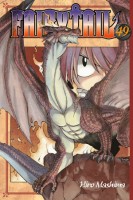
Fairy Tail, Volume 49Fairy Tail, Volume 49 by Hiro Mashima. The forty-ninth volume of Fairy Tail brings to an end the Tartaros story arc while beginning new one. Since Igneel dominates the cover, I was hoping for an epic showdown between dragons. There is a pretty good fight, but sadly it’s over fairly quickly. In fact, the whole Tartaros arc seemed to be wrapped up sooner than anticipated. And indeed, Mashima mentions in the afterword that it was cut short. Even so, it ends in a suitably dramatic fashion and the next arc promises to be very interesting. Of course, Mashima does have to retcon a few things to really pull it off well. That’s one of the things about Fairy Tail that I’m consistently frustrated by—although Mashima claims to have thought out the story well in advance, due to the lack of adequate foreshadowing and what seems like constant rewriting, I’m not convinced. And as the series continues to grow in length (I don’t see Fairy Tail ending any time soon), keeping internal consistency is going to become more and more of a challenge. Even though magic is obviously a major part of Fairy Tail, I think it’s been used one to many times to backtrack the narrative when Mashima has written himself into a corner; major plot and character developments lose their impact if they can so easily be waved away later on.

Prison School, Omnibus 1Prison School, Omnibus 1 by Akira Hiramoto. Some people, like me, may be familiar with Hiramoto as the creator of the acclaimed manga series Me and the Devil Blues, a supernaturally-tinged historical drama about a blues musician. Prison School is a completely different manga that, except for Hiramoto’s tremendous skill as an artist, has very little in common that earlier series. Prison School is an absurdly dramatic and over-the-top comedy. Even though the manga can hardly be taken seriously it will still likely be incredibly offensive and obscene to a large number of readers since the most powerful characters—the young women of Hachimitsu Private Academy’s shadow student council—are also the most sexualized and fetishized. The men in the series are all varying degrees of despicable, and they unapologetically revel in it. And yet, if one can stand the stunningly less-than-flattering portrayal of just about every character in the series, Prison School can be immensely entertaining and engaging. Considering all of the perversion, sadomasochism, nudity, and violence in Prison School, it’s certainly not a series that I would recommend to everyone, though. I expect that Prison School will be a divisive series, but I’m still intensely curious to see how the manga plays out.
Filed Under: FEATURES, My Week in Manga Tagged With: Akira Hiramoto, Fairy Tail, Hiro Mashima, Kei Kanai, manga, Prison School

My Week in Manga: August 24-August 30, 2015

August 31, 2015 by Ash Brown

My News and Reviews

Last week was a bit slow at Experiments in Manga as I decided to take it a little easy on myself, but I did still post a couple of things in addition to the usual My Week in Manga feature. The most recent manga giveaway was posted, for one, and there’s still time to enter for a chance to win a complete set of Yumi Tamura’s shoujo action thriller Chicago. I also posted an in-depth review of Minae Mizumura’s award-winning A True Novel which I absolutely loved. In part it’s a reimagining of Emily Brontë’s Wuthering Heights set in postwar Japan, but it’s not at all necessary to have read Brontë’s novel to appreciate Mizumura’s work.

Elsewhere online, Mangabrog has posted a translation of an interview of Parasyate‘s Hitoshi Iwaaki from 2005. Justin interviewed Sekai Project for Manga Bookshelf about the company entering the manga market. In licensing news, Kodansha Comics has picked up some Fairy Tail and Noragami side stories and Vertical Comics confirmed its acquisition of Maybe’s The Abandoned Sacred Beasts. Also of note, Humanoids will be releasing an anthology in 2016 called The Tipping Point which will include contributions from mangaka Katsuya Terada, Naoki Urasawa, Taiyo Matsumoto, and Atsushi Kaneko in addition to other comics creators from Europe and the United States.

Quick Takes

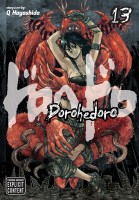
Dorohedoro, Volume 13Dorohedoro, Volumes 13-16 by Q Hayashida. Even though I love Dorohedoro, it’s been a while since I’ve read the series; I like to save up a few volumes to read all at once. The manga is now entering what I believe will be its final story arc. Granted, Dorohedoro tends to be all over the place with all sort of plot lines weaving in and out, so its difficult to identify distinct story arcs, but Hayashida is now bringing it all back together again. She’s even tying in what initially seemed to be extraneous side stories from earlier in the series more cohesively. Dorohedoro is such a bizarre manga, somehow managing to be sweet and charming at the same time it is disgusting and grotesque. Hayashida’s artwork is marvelous, creating horrific, nightmare-inducing images and an atmosphere that’s dank, dirty, and dingy. But the series is also fun and funny, with a quirky sense of humor and a peculiar fixation on food. At this point, though there is still comedy, Dorohedoro is actually getting pretty serious and dramatic. En’s dead and the rest of the family is currently homeless and on the run; the Cross-Eyes have taken over, but they seem to be losing control of the extremely deadly situation.

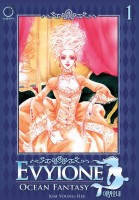
Evyione: Ocean Fantasy, Volume 1Evyione: Ocean Fantasy, Volume 1 by Young-Hee Kim. Back in the day, Udon Entertainment had a line of manwha which, sadly, didn’t end up going very far. Tragically, only the first volume of Kim’s twelve-volume series Evyione: Ocean Fantasy was translated and released. It’s admittedly disappointing that there isn’t more, but the first volume of Evyione serves as a sort of prologue and is well worth checking out even though the rest of the story will likely never be translated. The manhwa is in part inspired by Hans Christian Andersen’s The Little Mermaid except that in the case of Evyione, it’s the king of the sea who has fallen in love with a human princess. The artwork in the series is stunningly gorgeous. The ocean scenes and merfolk are beautiful, sensuous, and slightly disconcerting. There’s a touch of horror to the king’s transformation into a human, keeping with the darker aspects of the original story. On land, Kim pays particular attention to the characters’ clothing and attire, the dresses especially are intricately detailed. Although Evyione is obviously based on The Little Mermaid, it’s not a simple retelling and incorporates political and court intrigue as well as additional plot elements.

Say I Love You, Volume 9Say I Love You, Volume 8 by Kanae Hazuki. I continue to really enjoy Say I Love You. Hazuki’s forthright portrayal of teenage sexuality in particular tends to be handled quite well. After focusing on some of the series’ supporting characters, the eighth volume of Say I Love You largely turns its attention back to Mei. Most of the volume is dealing with a popularity contest being held as part of the school festival that thrusts Mei into the spotlight when she becomes a finalist—some students voting for her because they like her, and some students voting for her in hopes that she will utterly embarrass herself. Yamato is a participant in the contest as well and out of all of the boys he’s expected to win, meaning he’ll be going on an arranged date with whichever girl receives the most votes. All together, this is a very challenging situation for Mei. She doesn’t really want all of the attention and yet she feels compelled to try to win. Hazuki avoids the pitfall of a makeover suddenly changing a person into someone completely unrecognizable. It’s not so much that Mei’s outward appearance is drastically altered, it’s that she’s starting to overcome some of her insecurities and reclaim her femininity for herself.

Filed Under: FEATURES, My Week in Manga Tagged With: dorohedoro, evyione, Kanae Hazuki, manga, manhwa, Q Hayashida, Say I Love You, Young-Hee Kim

My Week in Manga: August 17-August 23, 2015

August 24, 2015 by Ash Brown

My News and Reviews

Last week Experiments in Manga reached its fifth anniversary, so I wrote a somewhat lengthy post about what I’ve been up to online and offline over the last year. Thank you again to everyone who has shown support and encouragement for Experiments in Manga over the years. Apparently, people actually want to see another five years, so I guess I better get to work on that. With that in mind, have two more in-depth reviews! Last week I took a look at Rikao Yanagita’s surprisingly entertaining The Science of Attack on Titan, one of the two non-manga books that Kodansha Comics has released so far. (The other one was related to Attack on Titan, as well.) I also reviewed Baku Yumemakura and Jiro Taniguchi’s The Summit of the Gods, Volume 5, which is the final volume in one of my favorite series. The writing and artwork in The Summit of the Gods is superb; I’m so glad that the entire manga is now available in English.

A few other things caught my eye online last week. Mangabrog has translated an article from 2013 that provides a tour through Inio Asano’s workspace. More information has been revealed about Kodansha’s digital efforts and the publisher is aiming high: digital editions of two thousand volumes translated into English by the end of 2017. Occasionally manga makes its way to NPR (which I believe is how I actually first learned about and became interested in Death Note). Most recently, one of NPR’s contributors featured a few great romantic manga: Kaoru Mori’s Emma, Ichigo Takano’s Orange, and Ai Yazawa’s Nana. I haven’t had a chance to read Orange yet, but considering the quality of Emma and Nana, I’m now looking forward to Seven Sea’s upcoming print release of the series even more. The game of manga tag continues to make it rounds, this time Narrative Investigations’ Helen tackles the questions.

Quick Takes

Castle Mango, Volume 2Castle Mango, Volume 2 written by Narise Konohara and illustrated by Muku Ogura. While I liked the first volume of Castle Mango, I really enjoyed the second and final volume of the series. Castle Mango is an unusual boys’ love manga; most of it doesn’t have anything to do with romance. The close relationship between Yorozu and Togame begins with a terribly manipulative lie, but it eventually develops into something real for both of them. In the first volume, the two men frequently seemed to have an almost father-son sort of vibe, but by the end of the series I was slightly more convinced by their intimacy as boyfriends. It does take a little while to get there though; they spend a large portion of the second volume apart. Togame is trying to give Yorozu space, feeling that it’s in the younger man’s best interest, but he doesn’t really go about it in the best way. Unfortunately, this is happening at the same time that Yorozu is struggling to take care of his little brother and his family’s business (a love hotel) when his mother is hospitalized. Yorozu is in the process of shedding the last of his immaturity and makes some terrible decisions in the process. In many ways, Castle Mango is more about Yorozu’s growth as a person than anything else.

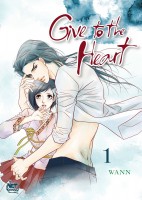
Give to the Heart, Volume 1Give to the Heart, Volumes 1-4 by Wann. After a long period of silence, about a year ago Netcomics quietly began publishing books in print again. Give to the Heart was the first manhwa to be released after the publisher’s hiatus. I was interested in reading the series because I wanted to support Netcomics, but also because it was created by Wann. (I had previously read and thoroughly enjoyed Wann’s collection of short manhwa 9 Faces of Love.) At first Give to the Heart seemed like it was going to largely be fantasy fiction, but as the series progresses, more and more science fictional elements are introduced. The ongoing story is about Sooyi, a young woman who became the wife of Ganok, the demon king who controls all water, but who is now attempting to escape him. Not only that, she is trying to find a way to kill him as well, or at least cause him as much pain as possible even if that means sacrificing her own life in the process. Though it is implied that Sooyi and Ganok were at one point content and happy as a pair, their current relationship obviously has its problems. Actually, considering the extreme imbalance of power between them—Ganok being a cruel god and Sooyi being a human with a strong will—that’s been true from the very beginning.

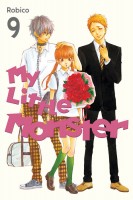
My Little Monster, Volume 9My Little Monster, Volume 9 by Robico. So, Haru and Shizuku are now officially a couple, although not much has actually changed in their relationship. But now that that has been settled, the other romantically interested parties are more or less able to move on with their lives. As a result, the plot of My Little Monster is now able to move along as well. This particular volume includes summer vacations and festivals, which is fairly standard for a high school romance, but Haru’s family drama is starting to come to the forefront of the story again. Underneath the humor of My Little Monster there seems to have been something ominous lurking waiting to be revealed. Haru’s brother Yuzan isn’t as terrifying as he once was, but there is definitely something going on between him and Haru and with Haru’s reluctance to interact with the rest of his family. Haru is trying to keep Shizuku from finding out the details, though eventually he’s really going to need to come clean with her and explain his situation. But, while Shizuku is still in the dark, at least readers get to learn a bit more. I continue to enjoy My Little Monster, especially the series’ quirky characters, and I’m happy to see the manga continue to gain some forward momentum.

Filed Under: FEATURES, My Week in Manga Tagged With: Castle Mango, Give to the Heart, manga, manhwa, Muku Ogura, My Little Monster, Narise Konohara, Robico, Wann

My Week in Manga: August 10-August 16, 2015

August 17, 2015 by Ash Brown

My News and Reviews

Last week was a two-review week at Experiments in Manga. Both reviews were of manga and, more specifically, both reviews were of shoujo manga. First up was the first omnibus of Hiro Fujiwara’s Maid-sama!. The series was originally licensed by Tokyopop, which released the first eight volumes, but the manga was more recently rescued by Viz Media’s Shojo Beat imprint. Though he has his moments, I’m not particularly fond of the male lead Takumi at this point, but I absolutely adore the female protagonist Misaki. If for no other reason, I’ll be reading more of Maid-sama! for her sake. The second in-depth review from last week was of Setona Mizushiro’s After School Nightmare, Volume 5. I continue to find After School Nightmare to be both compelling and highly distressing. The review is part of my ongoing monthly horror manga review project; September’s review will focus on the fifth volume of Yuki Urushibara’s Mushishi.

As for a few other interesting manga-related posts found online last week, Comic Attack has a nice interview with Stacy King, the editor of Udon Entertainment’s Manga Classics line. (I’ve written a little bit about Udon’s Manga Classics in the past.) Also, Mangabrog has posted a translation of an interview of Kiyohiko Azuma, the creator of Yotsuba&!, from 2014. A few weeks ago I posted some random musings about my manga collection as part of a game of manga tag. One of the people who I specifically tagged to participate was Manga Xanadu’s Lori Henderson. She recently posted her own responses to the manga tag questions and Justin at Organization Anti-Social Geniuses took time to provide some answers, too. I really enjoy reading about other manga enthusiast’s collections. If you’re interested, be sure to check the posts out!

Quick Takes

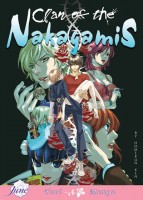
Clan of the Nakagamis, Volume 1Clan of the Nakagamis, Volumes 1-2 by Homerun Ken. Although only two volumes of Clan of the Nakagamis have been released in English, it’s actually a three-volume boys’ love series. It’s unlikely that the third volume will be officially translated, but the manga tends to be fairly episodic. The final volume may be “missing,” but at least the series’ story doesn’t depend on it. Clan of the Nakagamis was brought to my attention due to the fact that Norikazu Akira, whose manga I’ve enjoyed, is somehow related to Homerun Ken. (She’s either one of the members of the two-person creative team or their older sister; I’m not entirely sure which.) Clan of the Nakagamis is intentionally ridiculous, a mashup of all sorts of unrelated tropes that the mangaka found amusing or were particularly fond of, everything from student-teacher relationships, to family conglomerates, to crossdressers. I actually wasn’t particularly impressed by the first volume of Clan of the Nakagamis, finding it to be too chaotic and lacking in cohesiveness, but I did legitimately enjoy the second. I even laughed out loud. It probably helped that it had a more coherent story and improved artwork.

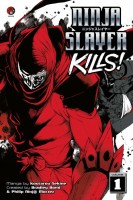
Ninja Slayer Kills, Volume 1Ninja Slayer Kills!, Volume 1 by Koutarou Sekine. Ninja Slayer started as a series of novels, supposedly written by a couple of Americans, that inspired a recent anime adaptation as well as at least three different manga series (two of which have been licensed for English-language release). Sekine’s Ninja Slayer Kills! is the franchise’s shounen manga offering. It’s intended to be approachable and understandable even for readers who aren’t familiar with Ninja Slayer. I’m not sure it’s successful in accomplishing that, though. Very little of the story, characters, or setting is explained beyond broadly establishing a tale of super-powered revenge in a gritty near future. The first volume is mostly battle after battle and not much more. The fight scenes and their setups are marvelously epic, but unfortunately the action itself is difficult to follow so they lose their impact. That’s a significant flaw since so much of the manga is focused on these martial conflicts. On their own, the character designs of the cybernetic ninja are great, but they tend to blend together in the actual manga, which also makes determining what exactly is going on a challenge.

A Silent Voice, Volume 2A Silent Voice, Volume 2 by Yoshitoki Oima. I was greatly impressed by the first volume of A Silent Voice. It was a hard read due to its subject matter, specifically its realistic portrayal of bullying—how utterly cruel kids can be to each other and how adults, whether intentionally or not, can often encourage such behavior. While there is still some tragedy and darkness in the second volume, overall it’s a much lighter read; where the first is heartbreaking, the second makes it seem as though forgiveness and change is possible. Shoya, feeling that it is impossible to redeem himself for his past cruelty, plans to take his own life after apologizing to Shoko for adding so much misery to hers. But when he meets her again they end up forming an unexpected friendship instead. Even more surprisingly, Shoya eventually becomes friends with her younger sibling as well (though he doesn’t known that’s who the kid is at the time). Shoya recognizes that he can’t undo the harm that he’s already caused to Shoko and her family, but he’s slowly doing what he can to make up for it. I still think that A Silent Voice is one of the very best manga to debut this year.

Filed Under: FEATURES, My Week in Manga Tagged With: Clan of the Nakagamis, Koutarou Sekine, manga, Ninja Slayer, Silent Voice, Yoshitoki Oima

My Week in Manga: August 3-August 9, 2015

August 10, 2015 by Ash Brown

My News and Reviews

Okay! In addition to the usual My Week in Manga feature, I managed to post three other things last week. First up was the announcement of the Sparkler Monthly Giveaway Winner, which also includes a list of the current, ongoing series being released in Sparkler Monthly (which is only a fraction of the total content). The other two posts were in-depth manga reviews; I took a look at a couple of Kodansha Comics’ recent releases. The first in-depth review of the month went to Naoshi Arakawa’s Your Lie in April, Volume 2, which I enjoyed. But then again, it’s a music manga, so it’s not too surprising that I like it. I also reviewed Masayuki Ishikawa’s Maria the Virgin Witch, Volume 3. It’s the last volume of the series, although the seque Exhibition is scheduled to be released in English later this year. Maria the Virgin Witch is somewhat uneven, but I still found it to be both intriguing and engaging.

As seems to always be the case nowadays, life was keeping me very busy last week, but I still came across some interesting things  elsewhere online. A translation of an interview of Daisuke Igarashi, for example. Last week also marked the seventieth anniversary of the dropping of the atomic bombs on Hiroshima and Nagasaki by the United States. It’s quite timely then that Last Gasp launched a Kickstarter project to create a hardcover edition of Keiji Nakazawa’s Barefoot Gen with schools and libraries specifically in mind. To coincide with this, Paul Gravett reposted his article “Keiji Nakazawa: Barefoot in Hiroshima”. Barefoot Gen is a tremendous work. One of the Manga Moveable Feasts was even devoted to it back in the day. If anyone is interested in learning more about Nakazawa himself as well as some of the historical context surrounding Barefoot Gen, his autobiography was translated into English several years ago.

Quick Takes

Prophecy, Volume 3Prophecy, Volume 3 by Tetsuya Tsutsui. The first volume of Prophecy is the one that left the greatest impression on me, but in general it’s a very strong series. I didn’t find the second volume to be quite as compelling as the first, but the third provides a mostly satisfying conclusion to the series even though in some ways it felt a little anticlimactic. One of the members of Paperboy tips off the police and soon the Cyber Crimes Division has been able to identify the four terrorists. As the investigators draw closer and closer to capturing the men, they begin to notice what at first seem to be mistakes, slip ups, and inconsistencies in the group’s behavior. However, everything falls into place once Paperboy’s true motivations for committing all of the crimes are revealed. Prophecy is a realistic, smart, and engaging series with the added bite of social commentary. There’s apparently also a Prophecy spin-off series. I don’t think that it has been licensed, or that there are any current plans to do so, but I’d certainly be interested in reading it.

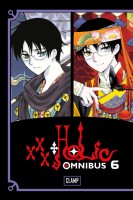
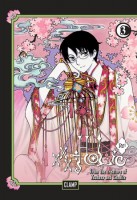
xxxHolic, Omnibus 6xxxHolic, Omnibus 6 (equivalent to Volumes 16-17) by CLAMP. For the most part I have been enjoying xxxHolic since the beginning of the series, but I think this omnibus has been my favorite so far. I really liked its brooding, ominous atmosphere. The humor that was so prevalent earlier in the series is actually almost entirely gone. The comedy in xxxHolic could be fun, but I have a particular penchant for the series’ supernatural angst, and that’s definitely taken the forefront in the last few volumes. I also initially found the crossover between Tsubasa: Reservoir Chronicle and xxxHolic to be intriguing, but I’ll admit that I was happy to see that the other series didn’t intrude too much in this omnibus. Instead, xxxHolic is focusing on how Watanuki and the others are coping now that Yuko is gone. Watanuki takes it especially hard and his tendency to slip in and out of dreams is becoming increasingly dangerous. There’s not much that the people who care about him can actually do except to watch over and support him as best as they can.

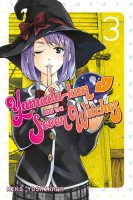
Yamada-kun and the Seven Witches, Volume 3Yamada-kun and the Seven Witches, Volume 3 by Miki Yoshikawa. There really are witches in this series! With its good-natured comedy and gender play, I’ve liked Yamada-kun and the Seven Witches a great deal from the very start. But with the third volume, Yoshikawa has started to really develop the series’ worldbuilding and is diving even further into the details of how the magic works. The relationships between the characters are also becoming more fleshed-out and complicated, which I’m enjoying as well. One of the things that I particularly appreciate about the series is that it seems perfectly okay for a guy to be crushing on another guy. Yes, it’s because there are some strange supernatural powers at work, but it’s also not treated like something gross. The setup also allows kissing to freely occur regardless of gender, which is fun. There’s still plenty of fanservice in Yamada-kun and the Seven Witches, as one would probably expect from a shounen series full of gender- and body-swapping, but I generally find it to be tastefully done.

Filed Under: FEATURES, My Week in Manga Tagged With: clamp, manga, Miki Yoshikawa, Prophecy, Tetsuya Tsutsui, xxxholic, Yamada-kun and the Seven Witches

My Week in Manga: July 27-August 2, 2015

August 3, 2015 by Ash Brown

My News and Reviews

The Sparkler Monthly Year 3 Kickstarter campaign ends tonight, so this is one of my last opportunities to give it a shout-out! I actually spent a lot of last week trying to draw attention to the project and the spectacular work being done by the staff and creators of Sparkler Monthly. For example, my most recent giveaway, which is currently underway, is for the second book in Tokyo Demons (one of my favorite series ever, not just one of my favorite Sparkler series) as well as one additional Sparkler goody of the winner’s choice. And for my final in-depth review for the month of July, I featured Heldrad’s delightful Orange Junk, Volume 1, a romantic comedy strongly influenced by shoujo manga. I also posted July’s Bookshelf Overload over the weekend, which I also managed to briefly tie into Sparkler Monthly.

In publishing news, Bruno Gmünder is adding two more volumes of gay manga to its catalog for the 2015 Fall/Winter season—Takeshi Matsu’s Dr. Makumakuran and Other Stories and Gengoroh Tagame’s The Contracts of the Fall—and Breakdown Press will be releasing Ding Dong Circus and Other Stories, 1967-1974 by alt-mangaka Sasaki Maki. Ryan Holmberg, the collection’s translator and editor, recently wrote about Sasaki Maki for The Comics Journal. Also of note, Kodansha has plans to expand its digital distribution. There were also a couple of interesting interviews posted last week: over at Anime News Network Deb Aoki talked with mangaka Miki Yoshikawa in addition to one of Yoshikawa’s editors, and Organization Anti-Social Geniuses spoke with Marlene First, one of the manga editors at Viz.

Quick Takes

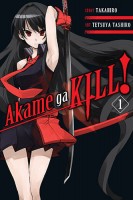
Akame ga Kill!, Volume 1Akame ga Kill!, Volume 1 written by Takahiro and illustrated by Tetsuya Tashiro. It seems as though every dark fantasy manga that has been released in English recently has a similar plot—the current ruling government and upper classes of society are staggeringly corrupt and a small group of exceptionally skilled fighters are battling against them. In many of the stories, the twist is that the “bad guys” are really the “good guys,” though it’s not much of a twist anymore since it’s becoming increasingly common. In Akame ga Kill!, that group is a team of assassins who target high-profile nobles and government officials. It’s a decent premise, but I’m not entirely convinced by Akame ga Kill!. Plot developments seem to occur more out of convenience than anything else, and despite delving into their various backstories the characters don’t yet have much depth to them. Takahiro mentions in the postscript that he finds Tashiro’s action scenes particularly eye-catching. I’m not familiar with Tashiro’s other manga, but when comes to Akame ga Kill! I was actually a little disappointed with the fight sequences. Battles happen so quickly that it appears as though nothing happens at all, and on occasion the action is skipped over completely. This conveys impressive speed, but I’d like to actually see the fights.

Let's Dance a Waltz, Volume 2Let’s Dance a Waltz, Volume 2 by Natsumi Ando. If it wasn’t for the series’ unfortunate focus on Himé’s weight loss, I would be really enjoying Let’s Dance a Waltz. The first volume ends with her losing more than forty pounds after two weeks of intensive dance study. I would be willing to begrudgingly move on from this, except that the second volume never lets the reader forget about it. The manga seems to constantly emphasize that someone has to be slim to be of worth. It really is a shame, because I like so many of the other elements of Let’s Dance a Waltz. I love the dancing in the series and Himé’s developing passion for it as a sport. The second volume includes her first contest, which is partly an effort to compel Tango to compete once again. And I love the delicious melodrama surrounding the competitors and the dynamics of their tangled personal relationships. Yūsei cares tremendously for his dance partner Sumiré, but she seems to have feelings for Tango. They both want to see Tango return dance, but that also means that he will become their opponent in the ballroom. Himé is in love with Tango, too, which introduces tension into her friendships with all three of them. There’s so much to like about Let’s Dance a Waltz, but the handling of the weight issues in the series honestly bothers me.

Filed Under: FEATURES, My Week in Manga Tagged With: Akame ga Kill, Let's Dance a Waltz, manga, Natsumi Ando, Takahiro, Tetsuya Tashiro

My Week in Manga: July 20-July 26, 2015

July 27, 2015 by Ash Brown

My News and Reviews

I posted one in-depth manga review last week, Sengoku Basara: Samurai Legends, Omnibus 2 by Yak Haibara. It’s the final omnibus in the series, collecting the third and fourth volume of Haibara’s Sengoku Basara 2 manga adaptation. I get a huge kick out of Sengoku Basara. It’s incredibly over-the-top but actually does manage to incorporate some legitimate history. Samurai Legends stands fairly well on its own, too, so no previous knowledge of the franchise is necessary. The other post last week (other than the usual My Week in Manga feature, of course) was something a little different: I was tagged in a game of manga tag, so I had an excuse to talk a bit about my collection. It was fun, so I hope others found it interesting.

Otakon was last week and there were some pretty great licenses announced. Viz Media picked up Inio Asano’s Goodnight Pun Pun as well as Takeshi Obata’s artbook Blanc et Noir and Keiko Ishihara’s The Heiress and the Chauffeur. Vertical will be releasing Riichi Ueshiba’s Mysterious Girlfriend X, Ryo Hanada’s Devil’s Line, and Kaori Ozaki’s The Gods Lie. (Ozaki is also the creator of Immortal Rain, which I love, so I’m especially excited for this one.) Kodansha Comics has plans to publish Yui Sakum’s Complex Age, Nao Emoto’s Forget Me Not, and most notably Leiji Matsumoto’s classic manga Queen Emeraldas! Also of note, Sekai Project, which primarily releases visual novels, has a new manga publishing initiative, starting with Satoru Sao, Takumi Yanai, and Daisuke Izuka’s GATE.

Elswhere online, Viz posted an interview with Canadian comics creator Faith Erin Hicks talking about many things, including her love of manga. (Also, her comics are great and well-worth checking out.) Organization Anti-Social Geniuses interviewed Kurt Hassler from Yen Press’ at Anime Expo. (All those manga recently licensed for digital release? There is a possibility we’ll be seeing them in print!) Graham Kolbeins of MASSIVE posted an impassioned but thoughtful explanation of how online piracy negatively impacts creators of gay manga. Deb Aoki has posted the audio and transcript of the gay manga panel from TCAF earlier this year. (It’s was a great panel that I only touched upon briefly in my TCAF roundup, so I’m glad it’s now available for anyone to read/listen to!) Finally, I’d like to draw everyone’s attention to an excellent post by Christopher Butcher about “othering” in the comics industry: Shifts and Living History

Quick Takes

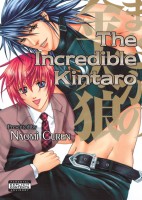
Incredible KintaroThe Incredible Kintaro by Naomi Guren. In Japanese folktales, Kintaro is a young boy with incredible strength who, among other things, runs around in the mountains with his trusty axe wearing nothing but a bib and wrestling bears. Those legends partly inspire The Inncredible Kinato, except that the youth is now a virile bishōnen. He does still spend a lot of time with very little clothing on and his junk hanging out, though. Currently, Kintaro is working as a janitor in order to protect his childhood love and friend Makoto. After his grandfather dies, Makoto is serving as the acting principal at the private high school where he is also a student, becoming a target of all the other men who would like to take control of the institute. And since the school’s motto is “Heart, Lust, Body,” that means it’s his virginity that’s at stake. The Incredible Kintaro is an intentionally ludicrous boys’ love manga. Makoto finds himself in all sorts of dubious situations, the teachers coming up with some rather creative scenarios to win his body if not his heart. The characters are shallow, so The Incredible Kintaro must rely on its bizarre premise and sense of humor to carry the story. Readers will need a high tolerance for the absurd to really enjoy the volume.

Johnny Wander, Volume 1Johnny Wander, Volume 1-3 written by Ananth Panagariya and illustrated by Yuko Ota. I was first introduced to the online comic Johnny Wander through several of the strips devoted to the cats in the character’s lives. They were hilarious and I was hooked. Johnny Wander isn’t always about cats, though. Actually, it really isn’t about anything. Johnny Wander is a sequence of short, one-page, autobiographically-inspired comics. Although there are recurring characters, scenarios, and even the occasional running joke, most of the individual comics stand completely on their own merits. They’re brief glimpses into somewhat nerdy, after-college, daily life and they’re very funny. The cast consists of family, friends, and roommates (and cats). The setting is made up of the various cities and apartments (some of which are kind of sketchy even if they’re fondly remembered) in which they’ve lived. It’s incredibly ordinary and wonderful at the same time. Johnny Wander is entertaining, delightful, and charming, made up of the types of stories and jokes that people who know each other well will reminisce about, and tell and retell over the years. I really do love this series, and it just recently began updating again!

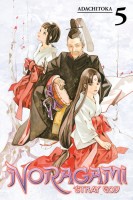
Noragami: Stray God, Volume 5Noragami: Stray God, Volume 5 by Adachitoka. Although it hasn’t completely disappeared, at times I miss the quirky humor that was fairly prevalent in the early volumes of Noragami. But I must say, the drama in recent installments has been increasingly intense and engaging. The fifth volume in particular is an especially excellent addition to the series, and it ends on one heck of a cliffhanger. Although not everything has yet been revealed, the fifth volume delves into the unfortunate history between Yato and Bishamonten, which turns out to be much more complicated than many realize. Importantly, with Bishamonten finding it difficult to control her numerous shinki, it seems as though the two of them are now facing a very similar situation. It didn’t end well the first time, which ignited their current feud and Bishamonten’s desire for vengeance, and it looks like they are now on the brink of another tragedy. Kugaha is manipulating the entire situation, successfully igniting a confrontation between Yato and Bishamonten in the hopes that she will die in the process. The intrigue in Noragami has reached new heights and the battles between gods has become even more perilous; I need to know what happens next.

Filed Under: FEATURES, My Week in Manga Tagged With: Adachitoka, Ananth Panagariya, Johnny Wander, manga, Naomi Guren, Noragami, Yuko Ota

My Week in Manga: July 13-July 19, 2015

July 20, 2015 by Ash Brown

My News and Reviews

Two in-depth reviews were posted at Experiments in Manga last week. The first took a look at Mushishi, Volume 4 by Yuki Urushibara. The review is part of my monthly horror manga review project; next month I’ll be bouncing back to Setona Mizushiro’s After School Nightmare. Mushishi continues to be one of my favorite manga series. The second review was of A Sky Longing for Memories: The Art of Makoto Shinkai, the most recent artbook to be released by Vertical. It’s a gorgeous volume to simply look at, but I also learned a little about art design and digital illustration while reading it, too. Also of note, over at Organization Anti-Social Geniuses, I and six other manga and anime enthusiasts weighed in on the question “What Was the Biggest Announcement at Anime Expo/SDCC?”

There were a few other manga-related posts at OASG last week, too, including some great tips on getting manga for cheap, advice from manga letterers, and an interview with Kodansha’s Ben Applegate from San Diego Comic-Con. A couple of other convention-related articles that I came across: Brigid Alverson talked to Tokyopop’s Stu Levy and Deb Aoki summarizes some of the recent manga news. Also, the audio recordings of some of the SDCC panels, including the Best and Worst Manga panel, have been posted.

In licensing news, Seven Seas announced The Other Side of Secret manga series by Hideaki Yoshikawa. Seven Seas will also be releasing a newly-illustrated omnibus of L. Frank Baum’s The Wonderful Wizard of Oz & The Marvelous Land of Oz. (This will be similar to Seven Seas’ edition of Lewis Carroll’s Alice’s Adventures in Wonderland and Through the Looking-Glass which was quite charming.) Finally, a couple of interesting reads I happened upon: Léopold Dahan wrote about studying the magazine Garo and Kevin Frane discussed gender in Quantum Devil Saga: Avatar Tuner. (Frane is the translator of the series in English, and I really enjoyed the first volume, but I’m looking forward to the following volumes even more now.)

Quick Takes

After I WinAfter I Win by Kaname Itsuki. Out of all the boys’ love manga that I’ve so far read, I think After I Win is the one that is the quickest to reach the all-important love confession. Only three pages into the manga and the leads—the beautiful Hiyori and his underclassman and roommate Kasumi—have admitted their feelings for each other. Granted, it takes most of the rest of the volume for them each to realize that the other young man actually meant what he said. After I Win is probably also the boys’ love manga with the most masturbation scenes that I’ve come across. (In the afterword, Itsuki mentions that it was her intention to feature at least one such scene in every chapter.) Hiyori and Kasumi spend so much time getting it on on their own rather than getting it on together for two main reasons: the aforementioned confusion regarding how seriously they should take each other’s confession, and the fact that Hiyori gets so nervous with anticipation and excitement that he tends to get nauseous. But even considering this, and despite his angelic appearance, Hiyori is very dirty-minded and looks forward to the opportunity to cement his relationship with Kasumi physically. After I Win, perhaps surprisingly, is actually pretty cute.

Alice in the Country of Hearts: My Fanatic Rabbit, Volume 1Alice in the Country of Hearts: My Fanatic Rabbit, Volumes 1-2 by Psyche Delico. After reading and enjoying the first Alice in the Country of Hearts manga series, I asked fellow enthusiasts to recommend which among the multitude of Alice manga I should follow-up with. My Fanatic Rabbit wasn’t mentioned a single time. So why did I tackle it next? Mostly because Psyche Delico was involved. (I loved her other manga released in English, Love Full of Scars.) My Fanatic Rabbit is more or less a retelling of Alice in the Country of Hearts, except that Alice has decided to stay with the Hatter mafia rather than Julius, ultimately falling in love with the March Hare. There are some cute romantic parts scattered throughout the series, especially towards the end, as well as some genuinely funny moments, but overall the manga really isn’t especially strong. It doesn’t stand well on its own and those who have read the first series won’t find much new, either. Maybe in part because it’s a shorter series, neither the characters nor the world have much of chance to develop and simply must be taken as is. My Fanatic Rabbit will likely appeal most to those who want to see Elliot and Alice together.

Aquarion Evol. Volume 1Aquarion Evol, Volumes 1-3 written by Shoji Kawamori, illustrated by Aogiri. Despite taking place twelve thousand years after Genesis of Aquarion, its sequel Aquarion Evol doesn’t make much sense at all to those who aren’t already familiar with the franchise. At least that’s the case for the ongoing manga series; perhaps the anime does a better job of initiating newcomers. Having seen neither of the anime series, I can only say that the story of the Aquarion Evol is a mess and nearly impenetrable at first. By the third volume things begin to be explained a little more coherently, but the manga seems to be taking a lot of shortcuts with the plot and character development. Probably because of my confusion, I generally wasn’t overly impressed with the Aquarion Evol, but there were still some things that I liked about it. The various supernatural powers are interesting (there’s even a music-based one!) as are the somewhat bizarre gender dynamics and curious sexual overtones. The artwork is attractive, too, with exciting action sequences and nice character designs. The mecha are difficult to tell apart at first glance, though. I wonder if I might actually enjoy the Aquarion Evol anime, but I find the manga to be frustrating.

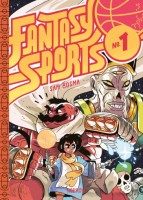
Fantasy Sports, Volume 1Fantasy Sports, Volume 1 by Sam Bosma. Before stumbling upon Fantasy Sports, I hadn’t previously read any of Bosma’s work. I definitely want to read more now because Fantasy Sports was fantastic. It apparently started out as a self-published, black-and-white comic called Fantasy Basketball, but it was later expanded and colored for release by Nobrow and made the first installment in an ongoing series. I absolutely loved the comic and can’t wait to read future volumes of Fantasy Sports. The story follows Wiz, a young magic user and intern at The United and Ancient Order of Mages. Her mentor in the guild is Mug, a hulk of a man who usually solves his problems through brute strength and who doesn’t know a thing about magic. They don’t really get along very well, making their job raiding and searching for treasure even more difficult. During their most recent expedition, they encounter an ancient mummy who they must defeat in a game of basketball if they hope to escape with the fortune and their lives intact. It’s a slim volume, but with great art, great colors, and great characters, not to mention just enough silliness and adventure, the first volume of Fantasy Sports is a tremendous amount of fun.

Filed Under: FEATURES, My Week in Manga Tagged With: Alice in the Country of, Aogiri, Aquarion Evol, comics, Fantasy Sports, Kaname Itsuki, manga, Psyche Delico, Sam Bosma, Shoji Kawamori

My Week in Manga: July 6-July 12, 2015

July 13, 2015 by Ash Brown

My News and Reviews

So, apparently last week was Shark Week, an annual event on the Discovery Channel. I don’t watch much television or pay attention to programming schedules, therefore it was a complete coincidence that both of the manga that I reviewed last week happened to include sharks! First up was my review of the deluxe hardcover omnibus of Junji Ito’s (comedy?) horror manga Gyo: The Death-Stench Creeps. It’s an incredibly gross and absurd manga and will certainly not be to everyone’s taste. I was entertained by its outrageousness, but overall much prefer his earlier work Uzumaki: Spiral into Horror. The second review last week was of The Legend of Kamui, Volume 1, an influential historical drama by Sanpei Shirota. The manga was actually one of the earliest series to be released in English back in the 1980s. Fortunately, it’s still relatively easy to find even though it’s long been out-of-print. I really wish that more of the series had been translated, though; The Legend of Kamui is excellent.

A couple of interesting things that I came across last week: Shojo Beat’s tenth anniversary celebration continues with five questions for Julietta Suzuki and Haikasoru posted a translation of a conversation between authors Paolo Bacigalupi and Taiyo Fujii from 2013. (I recently reviewed Fujii’s debut novel Gene Mapper, and reviewed Bacigalupi’s novel The Windup Girl, which has been very well received in Japan, at my old review blog Experiments in Reading several years ago.) Last week was the San Diego Comic-Con, but most of the news and announcements seemed to be repeats of Anime Expo. However, there was one newly announced license that was huge: Udon Entertainment will be releasing Riyoko Ikeda’s influential shoujo classic Rose of Versailles! Among other good news, Udon rescued Moyoco Anno’s marvelous shoujo series Sugar Sugar Rune, which makes me very happy. (I reviewed Del Rey’s edition of the first volume a couple of years back.) Udon will also be releasing Yomi Sarachi’s Steins;Gate manga. Kodansha has picked up Kousuke Fujishima’s manga series Paradise Residence. Dark Horse will be re-releasing Hiroaki Samura’s epic Blade of the Immortal in an omnibus edition which is great news since some of the individual volumes are out-of-print and hard to find. (The series is also a favorite of mine.) A couple of other interesting SDCC/manga-related posts: myths from the Manga Publisher Roundtable and a summary of 2015’s Best and Worst Manga panel. Oh, and Shigeru Mizuki’s Showa: A History of Japan won an Eisner Award!

Quick Takes

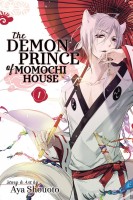
The Demon Prince of Momochi House, Volume 1The Demon Prince of Momochi House, Volume 1 by Aya Shouoto. There were mainly two things that initially drew my attention to The Demon Prince of Momochi House, the beautiful and somewhat provocative cover illustration and the promise of beautiful and somewhat provocative yokai. Himari Momochi unexpectedly inherits a house when she turns sixteen. As an orphan, it’s the only connection that she has to a family that she has never known. But when she arrives, she discovers a couple of complicating factors: the house is a gateway between the human and supernatural realms, and it is already occupied. Honestly, the story’s setup feels a little forced and employs a few well-worn shoujo tropes; it remains to be seen whether or not Shouoto will do anything clever with them. However, the artwork is attractive and I actually really do like the underlying premise of the manga. Although I wasn’t blown away by the first volume of The Demon Prince of Momochi House, I did enjoy it. The series has great potential and the manga certainly delivers on its promise of beautiful spirits. While I’m not in a rush to read the next volume, I’ll likely continue with the series to see if it develops into something really special or if it will merely remain something that is enjoyable in passing.

Dengeki Daisy, Volume 13Dengeki Daisy, Volumes 13-16 by Kyousuke Motomi. It’s been awhile since I’ve read Dengeki Daisy, but it is a manga that I tend to enjoy. Since the final volume of the series was released in English relatively recently, I figured it was about time for me to catch up. Dengeki Daisy isn’t always the most realistic or believable series—frequently things will happen because they’re convenient for the sake of moving the story forward or are being used as a punchline rather than being a convincing development—but it’s still pretty great. The manga also handles the romance between Teru and Kurosaki very well, especially considering the eight-year gap in their ages. Interestingly, while the last volume quickly wraps up the main story, it’s actually mostly devoted to a small collection of side and bonus stories, generally of a humorous nature. The volume also includes Motomi’s debut manga, “No Good Cupid.” It’s kind of a fun send off for the series, especially as the final story arc is focused more on intense action and drama rather than the manga’s humor or the quirkiness of its characters. However, I always find Motomi’s author notes and commentary to be endlessly entertaining. I definitely plan on reading more of her work in the future.

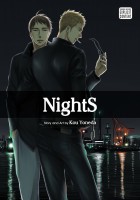
NightSNightS by Kou Yoneda. Only a few of Yoneda’s boys’ love manga have been released in English, but I enjoy her work immensely and would love to see even more of it licensed. NightS is a collection of stories: “NightS,” about a transporter for the yakuza and an older man with whom he becomes entangled (in more ways than one); “Emotion Spectrum,” a high school romance with a bit of a twist on the usual sort of love triangle; and “Reply,” featuring the blossoming relationship between a car salesman and a mechanic. Although the anthology is called NightS, “Reply” is actually the longest and most involved work in the volume. But even the shorter manga feature well-developed stories and characters. They each come across as an individual with a distinctive personality. This is a particularly important aspect of Yoneda’s manga since the plots tend to be very character focused and driven—people and their relationships, romantic or otherwise, are key to her stories. There is a maturity to the storytelling, as well. And a great sense of humor. Though they aren’t comedies, at times the manga collected in NightS can be quite funny. Also, Yoneda’s artwork is excellent; especially impressive is her use of light and shadow to create drama, mood, and atmosphere.

Filed Under: FEATURES, My Week in Manga Tagged With: Aya Shouoto, demon prince of momochi house, Dengeki Daisy, Kou Yoneda, Kyousuke Motomi, manga

My Week in Manga: June 29-July 5, 2015

July 6, 2015 by Ash Brown

My News and Reviews

Once again, I was actually away for most of the week last week. The taiko ensemble I that primarily play with had a series of performances, a mini taiko tour of sorts, so I was traveling. We had a great time; I only wish I that could make my living in music! (Who knows, maybe in the future I’ll be able to make it work. You know, once the mountain of student loans has been paid back.) Although I fell behind in my reading and writing, I did have a few things in queue to post at Experiments in Manga. First, the Assassination Classroom Giveaway Winner was announced. The post also includes a list of manga available in English that feature teachers. I’m a couple of volumes behind in my reviews for the series, but the honor of the first in-depth manga review for July goes to Fumi Yoshinaga’s What Did You Eat Yesterday?, Volume 7. Kenji finally has the chance to meet Shiro’s parents and it’s great. Finally, over the weekend, I posted June’s Bookshelf Overload. Most notably, I found an entire set of the tragically out-of-print Banana Fish that I didn’t have to trade a kidney to obtain!

Because I was away from the Internet for so many days, I didn’t really stumble across any articles that I found particularly interesting. However, Anime Expo was held last week, and there were a ton of licensing announcements. (Manga Bookshelf cohort Sean has a nice roundup.) Kodansha has Akiko Higashimura’s Princess Jellyfish (I’m thrilled!), Shizumu Watanabe and Okushō’s Real Account, and Hoshino Taguchi’s Magatsuki. Haikasoru has the first three novels of Yoshiki Tanaka’s Legend of the Galactic Heroes (hooray!), and Sentai licensed the anime series. Shojo Beat picked up Matsuri Hino’s Shuriken and Pleats and Bisco Hatori’s Behind the Scenes. Seven Seas licensed Angel Beats!: Heaven’s Door. Tokyopop returns to manga publishing in 2016, but no specific titles have yet been mentioned. Vertical will be releasing Keiichi Arawi’s Nichijō, and Kanata Konami’s FukuFuku: Kitten Tales among other things. Yen Press announced a slew of manga and light novel acquisitions, too, including the mahjong manga Saki! (Sadly, it’s currently only a digital release.) I’m sure I’ve missed something, so please let me know what exciting news or reading I should be aware of!

Quick Takes

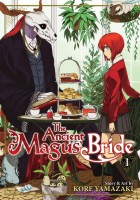
The Ancient Magus' Bride, Volume 1The Ancient Magus’ Bride, Volume 1 by Kore Yamazaki. Apparently, The Ancient Magus’ Bride started as a one-shot doujin before catching the eye of an editor. It’s a curious and atmospheric manga, mostly set in current-day England, albeit it’s a world in which magic and alchemy take their place alongside science. Although magic use seems to be fading away, fae are still very real and a few humans show rare talent for the craft. Chise is one of those humans. Sold into slavery, she is purchased and perhaps rescued by a Elias, a powerful mage who wants her to become his apprentice. He also mentions something about Chise becoming his bride, too, though she can’t quite tell if he’s being serious or not. Granted, it’s a little difficult to read a person with an animal skull for a head. Yokai exist in The Ancient Magus’ Bride as well (they can be seen in the background of some of Chise’s memories), but so far it appears as though the manga will be focusing on Europe’s fantastical and legendary creatures. I enjoyed the first volume of The Anceint Magus’ Bride a great deal and look forward to reading more of the series.

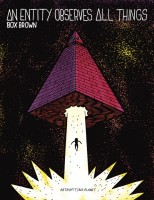
An Entity Observes All ThingsAn Entity Observes All Things by Box Brown. I was already curious about An Entity Observes All Things, but after briefly meeting Brown at TCAF I knew that I wanted to read it. The volume includes nine of Brown’s short, alternative comics, three of which were previously published elsewhere while I believe the other six are new for the collection. Though for the most part the comics are unrelated to each other—they don’t really share characters, plots, or settings and even their color palettes are different—in general, the short works fall into the category of science fiction and deal with themes of exploration, specifically of the world and of the self. They all tend to be fairly quirky, too, and can often be rather humorous without necessarily being comedies. I enjoyed An Entity Observes All Things quite a bit. As with most collections, some of the individual comics worked for me more than others, but overall I found the selections to be engaging. Sometimes funny and sometimes sad, the comics are all somewhat strange, and that’s something that I particularly appreciate about An Entity Observes All Things.

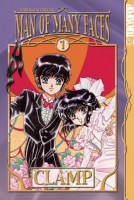
Man of Many Faces, Volume 1Man of Many Faces, Volumes 1-2 by CLAMP. I largely enjoy manga by CLAMP, but if I’m going to be honest, I was primarily interested in Man of Many Faces due to its loose connection to the works of Edogawa Rampo. For the most part, the Rampo references are limited to the characters’ names and roles. There’s the titular “Twenty Faces,” a skilled thief in both Rampo and CLAMP’s creations, a young man by the name of Kobayashi who chases after him, and even Akechi-sensei, although he’s a school doctor rather than a detective in the manga. Man of Many Faces is one of CLAMP’s earliest professional works and it is very, very silly, the more absurd elements being lampshaded and intentionally left unexplained. However, the manga ends up being rather sweet and charming, too. Twenty Faces is a third grader who has taken on the role of the gentleman thief in the absence of his father. Akira steals things according to the whims of his two eccentric mothers in addition to doing all of the cooking and housework. Although the story at first focuses on the various heists, ultimately Man of Many Faces is about romantic love.

Filed Under: FEATURES, My Week in Manga Tagged With: Ancient Magus' Bride, Box Brown, clamp, comics, Kore Yamazaki, Man of Many Faces, manga

My Week in Manga: June 22-June 28, 2015

June 29, 2015 by Ash Brown

My News and Reviews

Last week, the most recent manga giveaway at Experiments in Manga was posted. The winner will be announced on Wednesday, so there are still a couple of days left to enter for a chance to win the first volume of Assassination Classroom. All you have to do is tell me about your favorite teacher from a manga. I also posted two reviews last week. The first review was of Yaya Sakuragi’s boys’ love manga Hide and Seek, Volume 2. The series continues to be one of her strongest; I’m really enjoying it. The second review was of Taiyo Fujii’s novel Gene Mapper, the most recent release from the Haikasoru. Gene Mapper is a great example of realistic near future science featuring thought-provoking information and bio-technologies.

Organization Anti-Social Geniuses has been posting some great manga-related content recently, including a conversation with manga translator Amanda Haley about Book Walker and the translation field. A new manga feature at OASG was announced for the summer as well: Shoujo You Should Know, the first column focusing on CLAMP’s short series Wish. And speaking of shoujo manga, Shojo Beat is celebrating its tenth anniversary. Among other thing, the imprint is posting brief interviews with some of its creators. First up was Maki Minami followed by Yun Kouga. Over at Things We Lost at Dusk, Alicia posted and interesting essay about gender, identity, and language, specifically in regards to Moto Hagio’s manga They Were Eleven.

Last but not least, I would like to draw everyone’s attention to Chromatic Press’ Kickstarter project to help support and fund Sparkler Monthly‘s third year. I am a huge fan of Sparkler Monthly and everything else that Chromatic Press is doing. (Experiments in Manga’s Chromatic Press tag is filled with my love, reviews, and features.) The content, creators, and everyone else involved are all fantastic. So, please check out Sparkler Monthly. Most of the comics, prose, and audio, is currently available for free online. And if you like what you see, please consider pledging to the Sparkler Monthly Kickstarter project if you can. Every little bit helps. The work being done at Chromatic Press is spectacular; I sincerely hope that Sparkler Monthly and the publisher’s other efforts are able to continue.

Quick Takes

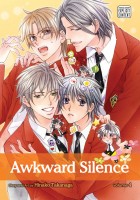
Awkward Silence, Volume 4Awkward Silence, Volume 4 by Hinako Takanaga. Some of the very first boys’ love manga that I ever read we’re by Takanaga. I soon began counting her among my favorite creators working in the genre and so was quite pleased when Sublime licensed Awkward Silence. The fourth volume in the series was actually released in English quite a while ago, but I only recently realized that I hadn’t actually read it yet, probably because Awkward Silence isn’t particularly memorable. It’s not a bad manga, and there are plenty of things that I like about it—Takanaga’s artwork is great, for one, as are some of the characters—but overall, Awkward Silence somehow manages to come across as generic. For the most part it’s enjoyable and sometimes even sweet, but the series just doesn’t stand out. Initially, I was under the impression that the fourth volume was the end, but apparently it’s an ongoing series. Being something of a Takanaga completist I’ll likely read any subsequent volumes, but otherwise I don’t know that I would feel compelled to seek the series out.

Just So HappensJust So Happens by Fumio Obata. Originally published in the United Kingdom in 2014, Just So Happens was recently released in North America. Yumiko is a designer who left Japan to study and work in London. From time to time she returns to Japan to visit her family, but she is largely satisfied with her life in England. But Yumiko’s most recent trip to Japan is different. Her father unexpectedly died in a mountain climbing accident and she wants and needs to be there for his funeral. In part drawing inspiration from the imagery and symbolism of Noh theater, Just So Happens is a beautiful and subtle work about family, grief, identity, and coming to terms with past decisions. Obata’s watercolor illustrations are absolutely lovely and very effective in conveying the work’s quiet, introspective atmosphere. The story itself is fairly simple and is emotionally resonant without being overly dramatic. Much like Yumiko, Obata is himself a Japanese artist who has made England his home, so while the graphic novel isn’t necessarily autobiographical, Just So Happens still feels very personal.


Servamp, Volume 1Servamp, Volumes 1-2 by Strike Tanaka. From my admittedly limited exposure, my impression of manga originating from Comic Gene is that they tend to have a lot of style without necessarily making a lot of sense. So far, that seems to be the case with Servamp as well. The first two volumes are entertaining, even enjoyable, but I’d be hard pressed to actually explain everything that is going on in the manga. Granted, Mahiru, the series protagonist, doesn’t really know what’s going on either, and the characters who do aren’t being particularly forthcoming. Mahiru likes to keep things simple, which basically means that he ends up doing up anything and everything himself rather than involving other people. And so he’s more or less taken on the responsibility of saving the world, or at least saving humans from the vampires who would kill them all. Mahiru does have some help though, namely an exceptionally lazy but supposedly extremely powerful vampire known as Sleepy Ash, as well as a few other allies. Though it has yet to be seen just how far those allies can really be trusted.

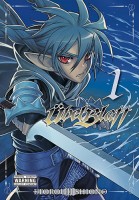
Ubel Blatt, Omnibus 1Übel Blatt, Omnibus 1 (equivalent to Volumes 2-3) by Etorouji Shiono. Although there was a fair amount that bothered me about the initial omnibus of Übel Blatt, the series still showed some potential and I was curious to see where it might go. I am happy to be able to say that the most recent omnibus is an improvement. There’s still gratuitous nudity and sexual content, but it doesn’t seem nearly as out-of-place as it was at the beginning of the series. The fact that many of women are dressed in ridiculously revealing and impractical clothing is even lampshaded at one point when Peepi celebrates the fact that she gets to wear “normal clothes.” In general, the female characters actually are treated a little better and are slightly more developed as individuals in Übel Blatt, Omnibus 1, but sadly not to the extent that I really want to see. To be fair, though, most of the characters seem to lack depth. The action sequences and artwork remain fairly strong, and I do largely like the lead, but for the most part Übel Blatt just isn’t connecting with me. This does surprise me somewhat as I usually really enjoy dark fantasy and tales of revenge.

Filed Under: FEATURES, My Week in Manga Tagged With: awkward silence, comics, Etorouji Shiono, Fumio Obata, Hinako Takanaga, manga, Servamp, Strike Tanaka, Ubel Blatt

My Week in Manga: June 15-June 21, 2015

June 22, 2015 by Ash Brown

 My News and Reviews

I was on vacation last week, much of which was spent in the middle of the woods in the middle of Ohio camping with my family. This meant I had very little Internet access. But even so, I did manage to post two reviews last week. My monthly horror manga review project continued with a review of After School Nightmare, Volume 4 by Setona Mizushiro. This was the first volume in the series that I hadn’t previously read before embarking on the review project. The second review was of Satoshi Wagahara’s prize-winning light novel The Devil Is a Part-Timer!, Volume 1 which is very amusing and silly. But, having watched the anime series last year, I already knew that.

As previously mentioned, I was occupied with other things last week, so I probably missed out on all sorts of interesting reading, news, and announcements. However, there were a few things that came across my radar before I left for Ohio. Kathryn Hemmann at Contemporary Japanese Literature wrote about The Cultural Cross Pollination of Shōjo Manga. And speaking of shōjo manga, Digital Manga’s most recent Tezuka Kickstarter is aiming to publish Storm Fairy. (The project also aims to reprint Unico with better image and color quality, which makes me wonder why Digital Manga didn’t do that for the first printing, but I’ve given up trying to understand Digital Manga’s decision making.) Finally, Udon Entertainment announced a new manga license: Shuji Sogabe’s adaptation of Persona 4.

Quick Takes

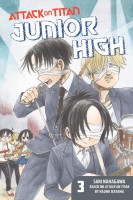
Attack on Titan: Junior High, Omnibus 3Attack on Titan: Junior High, Omnibus 3 (equivalent to Volumes 5-6) by Saki Nakagawa. Out of all the various Attack on Titan spinoffs, Junior High is the one that probably has the smallest audience overall and is the one that is the most uneven for me specifically. Sometimes the manga can be a slog to get through, but sometimes it’s absolutely hilarious. At its best, Junior High can actually make me laugh out loud; I keep reading the series for those moments because when Junior High is funny, it is very funny. The manga continues to be a very weird mix of Attack on Titan and a generic school setting with all of the standard tropes that that entails. Sometimes the combination works better than others. This particular omnibus features the school culture festival, a battle of the bands, eating contests and cooking competitions, club activities, lots of cleaning, and school rivalries among other things. I was very pleased to see that characters and storylines from other Attack on Titan spinoffs like No Regrets are now being incorporated into Junior High as well.

Lies Are a Gentleman's Manners, Volume 1Lies Are a Gentleman’s Manners by Marta Matsuo. Since for whatever reason Digital Manga often seems to be hesitant to include “Volume 1” in the title of a new manga, I didn’t initially realize that Lies Are a Gentleman’s Manners is actually an ongoing series in Japan. The first volume stands well enough on its own, but I do hope that any subsequent volumes will be licensed as well. Despite the fact that neither of the leads in this boys’ love manga are particularly likeable—Jonathan, an unscrupulous medical student selling drugs to his fellow classmates, and Paul, his equally unscrupulous (and married) college professor who uses that fact to blackmail him into a relationship—I actually do want to read more. Though some of the situations are unquestionably unsavory, the manga can also be very funny and even sexy on occasion. One of the most interesting things about Lies Are a Gentleman’s Manners is its setting. The manga takes place on America’s modern East Coast among the country’s wealthy, aristocratic upper class. While certainly a fictional representation, some of the social dynamics ring true.

TowerkindTowerkind by Kat Verhoeven. Originally self-published as a series of mini-comics, Towerkind was recently collected and released by Conundrum Press in a single volume. I was not previously familiar with Verhoeven’s work; Towerkind was a TCAF-inspired impulse buy. I’m very glad that I picked it up though because I’m loving this comic to pieces. Towerkind certainly won’t be to everyone’s liking, but there’s just something about the comic that I find oddly compelling. It’s surreal, strange, chilling, and ominous. Verhoeven effectively uses a small format to create a claustrophobic atmosphere that emphasizes the feeling of impending doom experienced by the characters. The volume opens with a foreword by Georgia Webber explaining the importance of the backdrop of Towerkind—Toronto’s first vertical neighborhood of high-rise apartments St. James Town—which helps to set the stage and tone for the comic itself. Towerkind follows a group of children gifted with unexplainable supernatural abilities who live in the towers of St. James Town while what may be the end of the world approaches.

Welcome to the N.H.K., Volume 5Welcome to the N.H.K., Volumes 5-8 by Kendi Oiwa. Having already read the original Welcome to the N.H.K. novel by Tatsuhiko Takimoto and having already seen the Welcome to the N.H.K. anime series (which, it turns out, was based on both the novel and Oiwa’s manga adaptation), I am already quite familiar with the story and characters Welcome to the N.H.K., but I somehow managed to forget just how dark and hard-hitting it can be. Ostensibly Welcome to the N.H.K. is a comedy, and it can be quite funny in a painful sort of way, but it deals with some pretty heavy subject matter including (but not limited to) drug use, self-harm, suicide, and mental illness. The second half of the series, while at times outrageous, tends to fall on the more serious side of things. Although I’ve always considered Welcome to the N.H.K. to be Satou’s story, the manga also places particular emphasis on Misaki’s story. It’s been a while since I’ve read or watched them, but I believe the manga actually has a unique ending that’s different from both the novel and the anime. All three version of Welcome to the N.H.K. are very good.

Filed Under: FEATURES, My Week in Manga Tagged With: attack on titan, comics, Kat Verhoeven, Kendi Oiwa, Lies Are a Gentleman's Manners, manga, marta Matsuo, Saki Nakagawa, Welcome to the N.H.K.

My Week in Manga: June 8-June 14, 2015

June 15, 2015 by Ash Brown

My News and Reviews

Two reviews were posted last week at Experiments in Manga. First up was my review of the short comic The Ring of Saturn by Kaiju, a creative team made up of Kate Rhodes and Jennifer Xu. I had previously read the comic online at Sparkler Monthly and loved it, but now it’s available in print! The second review was of Takako Shimura’s Wandering Son, Volume 8. The series is an incredibly important one to me, and I’m very glad that it’s being released in English. The eighth volume ends on a bit of a cliffhanger, and I have no idea when the ninth volume will be released, so now I’m doubly anxious.

Elsewhere online, the MASSIVE/Gay Manga tumblr talks a bit about the success of Gengoroh Tagame’s first manga for a general audience, My Brother’s Husband. It sounds like there’s an ongoing effort to license the series for an English-language release, which I really hope happens! Drawn & Quarterly made an interesting licensing announcement of its own, Yeon-sik Hong’s Uncomfortably, Happily. You don’t hear about many new manhwa being released in English these days. (Although Netcomics does seem to be making a quiet comeback.) Frederik L. Schodt spoke briefly on To the Best of Our Knowledge about Osamu Tezuka and his works. Finally, Organization Anti-Social Geniuses continues its Manga Advice series, this time interviewing four manga designers.

Quick Takes

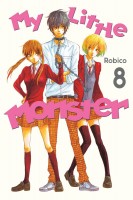
My Little Monster, Volume 8My Little Monster, Volume 8 by Robico. The last volume of My Little Monster got my hopes up as the series seemed to be regaining its momentum. I wouldn’t say my hopes were dashed reading the eight volume since there were plenty of funny and dramatic moments, not to mention the introduction of a new character as well as several confessions of love, but the series still isn’t going anywhere fast. Both Robico and the characters know this, too, and even comment on the fact that nothing has really changed all that much from the beginning of the story. Although, I do suppose that it’s an important development that Shizuku and Haru are now officially a couple. (Except that I thought they already were? Guess I was wrong.) My Little Monster does frustrate me a little with all of its one step forward, one step back approach to storytelling and relationships, and it seems to have forgotten some of the major plot threads that were started earlier, but I do still like the series as a whole. My Little Monster can be very funny at times and the quirky characters continue to amuse me. So, I’ll likely keep reading.

Say I Love You, Volume 7Say I Love You, Volume 7 by Kanae Hazuki. Although Mei and Yamato are clearly the main characters of Say I Love You, large portions of the series are actually devoted to their friends, classmates, and families. After showing the outcome of Mei and Yamato’s date (which his sister crashed before his older brother was able to drag her away) and the result of their first night spent completely alone together, the seventh volume largely focuses on Megumi’s story. After Megumi was rejected by Yamato, who remains devoted to Mei, she has been trying to ruin all of Mei’s new-found friendships. She actually ends up making herself miserable in the process and ends up withdrawing more and more from the people who legitimately care about her. Like many of the characters in Say I Love You, Megumi is dealing with some pretty serious personal issues. Her self-confidence has been destroyed, she doesn’t trust other people, and her relationships are falling apart. As unlikeable as she can be at times, it’s still heartbreaking to see her intense unhappiness. But the growth and development of the characters in Say I Love You is excellent.

Wuvable OafWuvable Oaf by Ed Luce. I was introduced to Ed Luce and his work thanks to TCAF 2014’s Queer Mixer where I learned that Fantagraphics would be releasing a collection of his most well-known creation, Wuvable Oaf. The volume opens with “Music Is My Boyfriend,” the first major Wuvable Oaf story arc which follows the titular Oaf, an ex-pro wrestler who now spends his time crafting handmade dolls (stuffed with his own body hair) and working at Oaf’s Home for Wayward Kitties Who Are Really Cute & Need Lotsa Love, and his relationship with Eiffel, a much smaller and extremely surly fellow who is the lead singer of Ejaculoid, a disco grindcore band. The volume also includes a collection of Wuvable Oaf short stories and “The Official Handbook to the Oafiverse,” which contains detailed (and humorous) character profiles among other things. Oaf himself is adorable and an absolute sweetheart. Although occasionally kind of gross, Wuvable Oaf can be surprisingly sweet and charming, filled with all sorts of marvelous queerness. Wuvable Oaf is also very, very funny. And it just so happens to be a cat comic, too!

Yamada-kun and the Seven Witches, Volume 2Yamada-kun and the Seven Witches, Volume 2 by Miki Yoshikawa. Despite the manga’s title, the witches of Yamada-kun and the Seven Witches have yet to make their presence known, though I’m assuming it’s only a matter of time. I enjoyed the first volume Yamada-kun and the Seven Witches a great deal. I enjoyed the second as well, but it didn’t manage to leave as big of an impression on me. The fanservice seemed a little more forced in the second volume, too. Still, the series is a comedy more than anything else and I continue to find it to be highly entertaining. (But then again, I do have a proclivity towards stories that include body-swapping and gender play.) Yamada has discovered that he has a strange ability that allows him to switch bodies with another person if they kiss. He doesn’t know why he has this power, nor does he completely understand how it works. But even so, he and the few people who know about it are more than willing to use Yamada’s peculiar skill to their advantage, whether it’s appropriate or not. (Often it’s not.) This of course means there’s all sorts of kissing and other antics going on.

Filed Under: FEATURES, My Week in Manga Tagged With: comics, Ed Luce, Kanae Hazuki, manga, Miki Yoshikawa, My Little Monster, Robico, Say I Love You, Wuvable Oaf, Yamada-kun and the Seven Witches

My Week in Manga: June 1-June 7, 2015

June 8, 2015 by Ash Brown

My News and Reviews

Happy June, everyone! I’ve been super busy (I seem to say that a lot, don’t I?) but was still able to post a few things here at Experiments in Manga last week. The winner of the Ema Toyama Twosome manga giveaway was announced. That post also includes a list of manga available in English that feature novelists and other writers. The honor of the first in-depth manga review for the month of June goes to Masayuki Ishikawa’s Maria the Virgin Witch, Volume 2. Ishikawa seems to be trying to do a lot with such a short series (it’s only three volumes), maybe a bit too much. Even if he’s not able to successfully pull everything off, I still find Maria the Virgin Witch to be an intriguing series and want to read the rest of it. Finally, over the weekend I posted the Bookshelf Overload for May. I had a pretty big haul of manga and comics last month; I largely blame TCAF.

Elsewhere online there’s been some interesting reading to be found. Justin interviewed Kate Dacey (aka The Manga Critic) over at Organization Anti-Social Geniuses. Kate was one of my biggest manga blogging inspirations, so I’ve been very happy to see her recent return. Sean Kleefeld brought my attention to a panel on the history of manhwa. Drawn & Quarterly recently released the massive anthology Drawn and Quarterly: Twenty-Five Years of Contemporary Cartooning, Comics, and Graphic Novels. Joe McCulloch specifically looks at the volume’s manga content. Mangabrog has a translation of a conversation between Naoki Urasawa and Hisashi Eguchi. Last but not least, two licensing announcements were made last week that I’m very excited about: Viz Media is finally releasing a print edition of One-Punch Man by ONE and Yusuke Murata and Drawn & Quarterly is releasing more of Shigeru Mizuki’s GeGeGe no Kitaro! (I loved the publisher’s first Kitaro collection.)

Quick Takes

Welcome to the N.H.K., Volume 1Welcome to the N.H.K., Volumes 1-4 by Kendi Oiwa. Originally published in print by Tokyopop, Viz Media recently announced that it would be releasing Welcome to the N.H.K. digitally in the very near future. Tatsuhiko Takimoto’s original Welcome to the N.H.K. light novel was fantastic and I thoroughly enjoyed the anime adaptation, too. It was only a matter of time before I read Kendi Oiwa’s manga adaptation, though I am a little surprised that it’s taken me this long to get around to it. It has been a while since I’ve read or watched the other versions of Welcome to the N.H.K., but so far the manga is closer to the anime than it is to the novel, except that it seems a little more streamlined and perhaps even a little raunchier. Satou is a college dropout and hikikomori who has been targeted by Misaki, a young woman who is determined to rehabilitate him despite her own oddities and personal issues. In some ways, the more recent Watamote is reminiscent of Welcome to the N.H.K. Both series feature protagonists who are extremely socially awkward and both series can be hilarious, but they can also be somewhat depressing and painful to read at times, too. But, I am enjoying the manga version of Welcome to the N.H.K. a great deal.

xxxHolic: Rei, Volume 3xxxHolic: Rei, Volume 3 by CLAMP. Initially, I felt that it wasn’t necessary to have read xxxHolic in order to enjoy xxxHolic: Rei. However after reading the third volume, I feel I need to revise that opinion. It’s still not absolutely necessary to have read xxxHolic, but Rei makes a lot more sense and is much more meaningful if a reader has that background. I’ve actually not finished reading the entirety of xxxHolic, so while I was able to get the basic gist of what was going on in Rei, I did feel I was missing out on some important context while reading the third volume. However, I really like what CLAMP is doing with the series and I’m looking forward to reading the part of xxxHolic where Rei ties in directly. Rei has developed a marvelously ominous atmosphere that has a surreal, dreamlike quality to it. CLAMP’s high-contrast artwork in the series is great, too. At first, Rei felt directionless as though CLAMP didn’t really know what to do with the series, but the third volume begins to bring everything together in a way that actually makes sense. Of course, this also means the Tsubasa: Reservoir Chronicles connection is becoming more pronounced as well, which can sometimes feel forced.

Ze, Volume 7Ze, Volumes 7-9 by Yuki Shimizu. Despite it being a series that I tend to enjoy, it’s actually been a few years since I’ve read any of Shimizu’s supernatural boys’ love manga Ze. Although there is some dubious content (which doesn’t really surprise me much at this point), these three volumes reminded me what it is about Ze that I like so much: Shimizu has a knack for creating fascinatingly intense and complex relationship and power dynamics. The seventh and eighth volumes explore the backstories of Kotoha and Konoe; I was very satisfied with the explanation of their peculiar relationship and personalities. (Granted, most of the characters and relationships in Ze are pretty strange.) Ze, Volume 8 focuses on Shoui and Asari. Most of the story arcs have been two volumes long, but perhaps because their relationship has been developing in the background over the course of the series, the eighth volume is the only one specifically devoted to the couple. These three volumes are also very important in setting up the next and what I believe is the final story arc which will reveal more of Waki’s tragic history. I had forgotten how much of an asshole he can be, so I am curious to find out what made him the person he is.

Filed Under: FEATURES, My Week in Manga Tagged With: clamp, Kendi Oiwa, manga, Welcome to the N.H.K., xxxholic, Yuki Shimizu, ze

My Week in Manga: May 25-May 31, 2015

June 1, 2015 by Ash Brown

My News and Reviews

Last week was the last week of May, which means the most recent giveaway at Experiments in Manga is currently underway. There are still a couple of days left to enter for a chance to win an Ema Toyama Twosome, i.e. the first volume of both Missions of Love and Manga Dogs. I also posted a couple of in-depth reviews last week. The first review was of Yoshikazu Yasuhiko’s Mobile Suit Gundam: The Origin, Volume 8: Operation Odessa, which is the first volume to take place after the series’ extended flashback arc. It’s not my favorite volume in the series, but Kai gets his moment in the spotlight which I was happy to see. The second review was of Kazuki Sakuraba’s award-winning novel Red Girls: The Legend of the Akakuchibas, which I enjoyed immensely. Sakuraba is probably better known as the creator of Gosick, but Red Girls is a fantastic multi-generational epic.

I was actually at a conference for work most of last week, so I wasn’t able to keep up with news and announcements to quite the same extent that I’m usually able to. However, I still did come across some interesting reading. Aya Kanno, for example, has recently had some interviews posted. Over at Barnes & Noble’s Sci-Fi & Fantasy Blog, Brigid Alverson talked with Kanno about defying expectations and Rebecca Silverman’s interview of Kanno was posted at Anime News Network. A couple of weeks ago I reviewed the first volume of Wayward which I quite enjoyed, so I found Katriel Page’s essay about how Rori embodies liminality to be particularly interesting. And over at Organization Anti-Social Geniuses, Justin wants you all to Meet the Man Who’s Translated a Thousand Manga Chapters—Dan Luffey.

Quick Takes

Cipher, Volume 7Cipher, Volumes 7-11 by Minako Narita. Despite being twelve volumes in Japan, for some reason the English-language edition of Cipher was collected in eleven. (It is the complete series, though.) I thoroughly enjoyed the first part of the series, and the sixth volume ends with a fairly dramatic twist, so I was anxious to read the manga’s conclusion. Cipher and Siva, being nearly inseparable growing up and at one point even sharing an identity, are now living apart with the entire country between them. Wracked with guilt, Cipher has moved from New York to Los Angeles, leaving his girlfriend Anise behind along with his twin brother. In general, this second half of Cipher tends to be somewhat more believable than the first, though there are still plenty of parts that aren’t especially realistic. However, Narita does an excellent job of exploring the emotional fallout and the changes in the characters’ relationships with one another that come about as a result of both Cipher and Siva learning to live their lives as individuals and each becoming his own person. New characters are introduced who play a very important role in this evolution, including Cipher’s Los Angeles roommate Hal and Siva’s fellow model Alex. In the end, Anise’s story ends up being secondary to that of the brothers, but she shows growth and development as well.

Cry to the MoonCry to the Moon by Various. I discovered Love Love Hill relatively recently, but the collective releases some great comics, so I’ve been making a point to pick up its anthologies. Cry to the Moon, based on the theme of delinquents and animals, is the most recent Love Love Hill comics anthology. The volume includes contributions from eight different creators. I was especially looking forward to Saicoink’s “To My Dear White Dove: A Quiet Love,” a sort of alternate universe side story to her series Open Spaces and Closed Places (which I absolutely love), but I enjoyed the other works that were collected as well. Cry to the Moon has a nice variety of comics that range from the comedic to the bittersweet to the tragic. Many of the stories are based in reality while a few of them incorporate more fantastical elements. Some are only a few pages while others are more lengthy and involved. But no matter the length or the tone of the story, each of the comics collected in Cry to the Moon exhibits heart. What I love about anthologies is the opportunity to experience the different art styles and storytelling techniques of the creators involved. I also appreciate that the individual creators are given space in Cry to the Moon to write about their influences and inspirations for their stories and how they decided to interpret the anthology’s theme.

The Heroic Legend of Arslan, Volume 3The Heroic Legend of Arslan, Volume 3 by Hiromu Arakawa. I am largely enjoying The Heroic Legend of Arslan, it’s a great fantasy story with exciting battles and interesting worldbuilding, but I do wish that the characters and plot had a little more complexity and nuance to them. By the end of the third volume, I have some hope that this will eventually happen as the series continues to develop, but right now it’s just not quite there. Characterization in the manga tends to be painted with a fairly broad stroke and heavy hand. Some of the humor, while amusing, doesn’t always mesh well with the overall tone of the series, either. However, there are other things that The Heroic Legend of Arslan is doing well. I particularly like the series’ approach to action scenes and battles. There are plenty of examples of extraordinarily strong fighters showing off their incredibly powerful skills, but strategy and tactics are also incredibly important to how a battle plays out in the end. In the third volume, Arslan and his small contingent of supporters face off against more than a thousand soldiers, but thanks to careful planning, psychological manipulation, and effective use of the geographical terrain, for the most part they are able to come through unscathed.

Showa3Showa: A History of Japan, 1944-1953 by Shigeru Mizuki. This third and penultimate volume of Showa: A History of Japan addresses the time period of that era that I already knew the most about—the end of the Pacific War and the following occupation of Japan by Western forces. Even so, there were things that I learned reading the manga that I never knew before. Showa: A History of Japan continues to be told using two closely intertwined narratives. Mizuki outlines the larger developments of the war and Japan’s reconstruction, but he also incorporates the story of his own experiences and the experiences of his family. It’s this personal touch that makes Showa: A History of Japan especially compelling and hard-hitting as it drives home the tragedy of war and the dire circumstances faced by the soldiers and civilians on both sides of the conflict. Part of the third volume deals with some of the same events found in Mizuki’s Onward Towards Our Noble Deaths, so I was already familiar with some of the story, but that didn’t make its impact any less effective. This volume reveals how Mizuki survived during war against all odds as well as how he survived after the war (another difficult feat), including his beginnings as a kamishibai and manga artist.

A Silent Voice, Volume 1A Silent Voice, Volume 1 by Yoshitoki Oima. If the volumes that follow the first are anywhere near as strong, A Silent Voice is likely one of the best series to be released this year. (At least in print; technically, the manga started being officially released digitally on Crunchyroll last year.) The first volume of A Silent Voice is both powerful and heartbreaking. The story follows Shoya, a somewhat unlikeable young man and a terrible bully. He learns that his actions have consequences not only for others but for himself as well when he decides to make Shoko, a deaf transfer student, his next target. A Silent Voice doesn’t sugarcoat school bullying, showing just how vicious and cruel kids can be and how quickly they can turn on one another. Perhaps even more tragic is that some of the teachers do very little to put an end to it or to discourage the behavior. In some cases, they seem to even encourage it, or at least allow the bullying to flourish. There is a stunning lack of empathy from almost every character in the series. The majority of A Silent Voice, Volume 1 takes place during Shoya and Shoko’s middle school years. This actually occurs six years before the start of the manga, establishing the complicated nature of Shoya’s feelings toward Shoko and the exploring developments that led him to become the person he now is.

Filed Under: FEATURES, My Week in Manga Tagged With: Cipher, comics, Heroic Legend of Arslan, Hiromu Arakawa, manga, Minako Narita, Showa: A History of Japan, Silent Voice, Yoshitoki Oima

  • « Go to Previous Page
  • Page 1
  • Interim pages omitted …
  • Page 7
  • Page 8
  • Page 9
  • Page 10
  • Page 11
  • Interim pages omitted …
  • Page 17
  • Go to Next Page »
 | Log in
Copyright © 2010 Manga Bookshelf | Powered by WordPress & the Genesis Framework