• Skip to primary navigation
  • Skip to main content
  • Skip to primary sidebar
  • Home
  • About Us
    • Privacy Policy
    • Comment Policy
    • Disclosures & Disclaimers
  • Resources
    • Links, Essays & Articles
    • Fandomology!
    • CLAMP Directory
    • BlogRoll
  • Features & Columns
    • 3 Things Thursday
    • Adventures in the Key of Shoujo
    • Bit & Blips (game reviews)
    • BL BOOKRACK
    • Bookshelf Briefs
    • Bringing the Drama
    • Comic Conversion
    • Fanservice Friday
    • Going Digital
    • It Came From the Sinosphere
    • License This!
    • Magazine no Mori
    • My Week in Manga
    • OFF THE SHELF
    • Not By Manga Alone
    • PICK OF THE WEEK
    • Subtitles & Sensibility
    • Weekly Shonen Jump Recaps
  • Manga Moveable Feast
    • MMF Full Archive
    • Yun Kouga
    • CLAMP
    • Shojo Beat
    • Osamu Tezuka
    • Sailor Moon
    • Fruits Basket
    • Takehiko Inoue
    • Wild Adapter
    • One Piece
    • After School Nightmare
    • Karakuri Odette
    • Paradise Kiss
    • The Color Trilogy
    • To Terra…
    • Sexy Voice & Robo
  • Browse by Author
    • Sean Gaffney
    • Anna Neatrour
    • Michelle Smith
    • Katherine Dacey
    • MJ
    • Brigid Alverson
    • Travis Anderson
    • Phillip Anthony
    • Derek Bown
    • Jaci Dahlvang
    • Angela Eastman
    • Erica Friedman
    • Sara K.
    • Megan Purdy
    • Emily Snodgrass
    • Nancy Thistlethwaite
    • Eva Volin
    • David Welsh
  • MB Blogs
    • A Case Suitable For Treatment
    • Experiments in Manga
    • MangaBlog
    • The Manga Critic
    • Manga Report
    • Soliloquy in Blue
    • Manga Curmudgeon (archive)

Manga Bookshelf

Discussion, Resources, Roundtables, & Reviews

Features

It Came From the Sinosphere: Fated to Love You

August 21, 2012 by Sara K. 12 Comments

This drama has the distinction of having the highest TV ratings of any idol drama ever. Every Taiwanese person I have asked has seen at least part of this drama. I have gotten middle-aged Taiwanese men who claim that K-dramas are too feminine for them to admit that a) they have seen Fated to Love You and b) that it’s good.

Why is this drama so popular? Maybe this (abridged) scene will give you a clue…

Example Scene

Dylan is playing hide-and-seek with the kids at the church. He decides to hide in the confessional booth.

Chen Xinyi walks in to make a confession. She tells Dylan that she had sex with a stranger … and that it was the first time she ever had sex.

Dylan tells her to go home and tell God “sorry.”

Chen Xinyi then tells her about how she’s been throwing up a lot in the past few days.

Hearing this, Dylan urges her to go buy a pregnancy test – but to do it on the sly.

Chen Xinyi takes his suggestion to heart, and disguises herself so no one will recognize her when she buys the pregnancy test.

By sheer coincidence, there is a robber who disguises herself just like Xinyi, and appears on the news right before Xinyi walks into the store.

The store clerk tells her she doesn’t need to pay. As soon as she leaves, he calls the police.

The police corner her in the bathroom. There’s also a TV news reporter with them.

Right after Chen Xinyi has used the pregnancy test, the police open up the bathroom stall and point guns at her.

She is so startled that she loses hold of the pregnancy test-stick.

The TV news reporter picks up the pregnancy test-stick … and congratulates her. It is announced on television that Chen Xinyi in pregnant. So much for doing things on the sly.

Chen Xinyi’s mother just happens to be watching the news at that moment…

… and the stranger she had sex with notices the news on TV too.

Sara K. Loves Joe Chen

Joe Chen in my favorite actress working in Taiwanese idol dramas.

First of all, she’s versatile. For example, in Prince Turns Into Frog, she plays a girl from a poor fishing village, whereas in My Best Pals she plays a hip teenager from Ximending who jumps off buildings into cars (I am not kidding). Whereas her character in Prince Turns Into Frog dreams of gold-digging her way out of the boondocks, her character in My Best Pals would rather kick than kiss a rich guy’s ass. Joe Chen plays both roles very well.

Obviously, you can’t judge her acting based on the theme songs, but the theme songs of Prince Turns Into Frog and My Best Pals do offer a sense of how the two dramas feel different—and I assure you the characters Joe Chen plays in those dramas are just as different as the theme songs. In addition, Joe Chen has been cast as Dongfang Bubai in the new The Laughing Proud Wanderer TV series, which is a really different role from the others I have see her play (for starters, Dongfang Bubai, having been born with testicles, is not a cis female).

Her role as Chen Xinyi in Fated to Love You is quite different from all of the roles I mentioned above. Chen Xinyi is an office worker with low self-esteem. She is completely convincing in the role. She is extremely true to what Chen Xinyi is feeling, and skillfully demonstrates how Chen Xinyi changes during the course of the story. I think Fated to Love You would have moved me to tears a lot less if they had cast a lesser actress.

Messing With Idol Drama Tropes

If you have seen several other Taiwanese idol dramas, you already know what the story is because it’s the same as 90% of idol drama stories, and just when you are sure what’s going to happen next … Fated to Love You goes in the other direction.

Ha ha ha.

Sure, yes, it does follow the standard idol drama plot. It does so with irreverence. Sometimes it uses the standard tropes, but in a totally silly way. Sometimes it uses the standard tropes, but with a wink in its eye, telling the viewers “Yes, we know you have seen this in five other dramas, but we do it with more flair.” Sometimes it makes the viewers think it’s going to use the standard tropes, but pulls a fast one and does something completely different. And sometimes it uses the standard tropes in a totally straight way, so the viewer doesn’t get too used to the twists.

This is actually why, much as I love this drama, I’m not sure this should be somebody’s first Taiwanese idol drama. If you haven’t seen other Taiwanese idol dramas, you might not always notice it when Fated to Love You sticks out its tongue and makes funny faces. On the other hand, this is one of the best idol dramas ever made, so if you are only going to see one Taiwanese idol drama ever, this might be a good choice.

Let’s Get Serious

Before you get the idea that Fated to Love You is a spoof or a comedy (well, it is a comedy, yet it’s more than that…), I assure you that there is a totally serious story being told here. I probably cry as much laugh when I watch it (notice that I’m using present tense—I’ve seen this drama twice, and I am sure I will watch it again).

In particular, this is a story about Chen Xinyi, who has spent her entire life helping other people instead of herself. During the course of the story she discovers that she has her own distinctive artistic voice.

Actually, all of my favorite idol dramas are about women who are discovering their artistic voice. Maybe that’s a coincidence, or maybe that’s a reflection of my personal tastes, or maybe idol dramas about women discovering their artistic voice are inherently more awesome.

In fact, this is why I consider this idol drama to be feminist. Just as sexism says women are not as important as men, everybody (except her father, who is dead) says that Chen Xinyi is not important. After going through a lot of suffering, it is demonstrated that Chen Xinyi is just as important as every other character in the drama, and that she important purely on the basis of being herself.

Location, Location, Location

I realize that there is so much I want to say about the locations in this drama that it’s better off in a separate post.

Fun with Language

Once again, I realized there is so much I want to say about this that it’s better off in a separate post. (Read Fated to Love You -Special Post.)

Chen Xinyi Talks to Joe Chen

There are a couple scenes where Chen Xinyi talks to Joe Chen.

Wait a minute … isn’t Chen Xinyi played by Joe Chen?

In addition to being an actress, TV host, and writer, Joe Chen is also a model. In fact, right now there are ads featuring her in Taipei train station which say (in Chinese) “[brand name] loves Joe Chen”. Thus it is entirely believable that Chen Xinyi would encounter ads featuring Joe Chen in the hip Xinyi district (note: the “Xinyi” in “Xinyi district” uses different Chinese characters than the “Xinyi” in “Chen Xinyi”). However, the ads featuring Joe Chen have never talked to me.

Music

I generally don’t find the music created specifically for this drama that interesting, but the exception is the song “Wǒ de Kuài​lè​​” (My Happiness). In particular, I appreciate when they play the piano score without the singing. The song is played so much that, even without the singing, the viewer (at least a viewer who can understand Mandarin) can hear the words of the song. It contributes to the mood of the series, and the sadness of the song often counterbalances the sillier scenes.

Availability in English

The good news:

DRAMAFEVER HAS LICENSED FATED TO LOVE YOU.

The bad news:

None of the episodes are available yet. Also, this only helps people who are in North or South America.

Conclusion

Fated to Love You is one of my favorites. Just when I’m wondering why I keep on watching idol dramas, I stumble on a drama like Fated to Love You, and my interest in idol dramas is revived. Finding these dramas makes watching the mediocre ones worth it (and I’ve noticed that even the mediocre dramas are generally improved by the presence of Joe Chen).

I love Fated to Love You so much that there is going to be a special post about it, hopefully on Friday. The purpose of this post is to convince you all (in North and South America) to watch it (when Dramafever makes it available). The purpose of the next post will be to offer commentary for people who are not too familiar with Taiwan and/or the Chinese language. In fact, I suspect one reason why Dramafever is taking so long to release episodes is that some of the things the characters say are really difficult to translate into English. Hopefully, that means that when the episodes are available, the translation will be really good.

Read Fated to Love You (Special Post).

Next regular post: Xuanji Tu (novel)


Sara K. wishes to give whoever is translating Fated to Love You for Dramafever a pat on the back. She understands how frustrating it probably is. She would also like to see Dramafever (or somebody else) legally bring out some of her other favorite idol dramas into English.

Filed Under: Dramas, It Came From the Sinosphere Tagged With: Ethan Ruan, Fated to Love You, idol drama, Joe Chen, taiwan

Manga the Week of 8/22

August 15, 2012 by Sean Gaffney

There’s quite a variety of things coming out next week at Midtown from various sources. Let’s leap right in.

Dark Horse is ready to explode with new releases, which I think have only been delayed once or twice before hitting shops! We have Vol. 24 of Gantz, which you either avoid like the plague or automatically seek out. It’s a pretty polarizing title, but very good at providing what its fans want. There’s also a new Gate 7, CLAMP’s new gig, which continues to mix Japanese historical figures with pretty young men and women in a very CLAMP way. And there’s a new volume of Oh My Goddess, finally free of the reprints and ready to go forward! Unfortunately, in this volume everything’s gone to hell. No, wait, everyONE’s gone to Hell.

Digital Manga Publishing has Volume 9 of Itazura Na Kiss, which I’m hoping continues the excellent character development we saw in the previous chapters. Meanwhile, there’s also some new yaoi titles, including I’ve Seen It All, which I just wrote three different jokes about only to delete them all as being too pornographic, so I’ll just say it’s about a doctor and has one of THOSE covers. For those who like less creepy looking BL, there’s Man I Picked Up, whose title doesn’t do it many favors but whose cover and synopsis (man takes a vagrant guy home and gradually grows closer to him) sound a lot better. Meanwhile, in Countdown 7 Days 3, Onigawara is definitely dead. Well, mostly dead. And Replica hits is final volume, with an action packed finale.

It will be no surprise to anyone who knows me that Dorohedoro 7 gets my cover image. I love this series and its complicated universe more with each volume, and can’t wait to see how much trouble Caiman will get into. There’s also Ikigami Vol. 8, much to the surprise of many folks who thought it had been cancelled, and the 8th volume of the Tenjo Tenge omnibus, which brings us full circle, as Gantz and Tenjo Tenge really serve the same audience.

So what appeals to you this week?

Filed Under: FEATURES, manga the week of

It Came From the Sinosphere: The Celestial Zone

August 14, 2012 by Sara K. 5 Comments

The cover of the English-language edition of The Celestial Zone

Example Scene

A ray of light enters a secluded pool.

I think this page is rather beautiful.

There is Chi Shuang, standing over the pool where her twin sister, Chi Xue, is wading. Meanwhile, Chuyi is bringing Xing Ling to see what is happening with Chi Xue and Chi Shuang. Previously, Xing Ling and Chi Xue were in a nasty fight. Xing Ling’s wounds have already been treated, but Chi Xue was so badly injured that Chuyi did not think she would make it. When Xing Ling said that Chi Shuang had some special method to cure Chi Xue, Chuyi decided an intervention was urgently needed.

Chuyi and Xing Ling approach the chamber where Chi Shuang prepares to heal Chi Xue.

And they see Chi Xue. I should note that Chi Xue is usually veiled and vicious, so to see her exposed and vulnerable is quite a contrast.

Chi Shuang undresses and enters the pool.

This is another lovely page.

Chi Xue is reluctant to be healed by this special method. Perhaps, like Chuyi, she know this healing method’s terrible secret.

Chi Shuang summons fancy light in the water.

And the healing process begins.

Lots of swirly water and wavy hair moves around.

Terrible secret or not, it’s quite lovely.

Lots of pretty waterfalls.

Maybe I Should Start at the Beginning of the Story…

Xing Ling is the finest sword fighter wandering around jianghu. When she’s up against 10+ rogues, it’s bad news—I mean bad news for the rogues. She uses her exceptional skills to bully the bullies and provide relief to the common people.

Xing Ling smiles at a bunch of rogues she just pwned.

One day she encounters an opponent who she can’t cream within minutes. In fact, the fight is actually a struggle for her. She doesn’t understand why her opponent is not being reduced to a pulp. The thing is, all of her previous opponents were human, whereas this opponent is … not.

Xing Ling lets the non-human opponent cut her hair so she can maneuver.

By exhausting all of her strength—and sacrificing her hair—Xing Ling manages to take down this non-human opponent. Then his non-human friends show up.

Just when Xing Ling appreciates the deep shit that she is in, two young men show up—one who mows down the non-human friends in minutes.

Xing Ling talks to the two men.

It turns out that the non-humans—as well as these two young men—come from the celestial zone, where people and creatures develop spiritual powers than ordinary mortals can barely imagine. She is the first ordinary person they ever saw beat a denizen of the celestial zone and … they notice that she is a bit like a certain special person.

Eventually, Xing Ling enters the Celestial Zone herself, cultivates her own spiritual powers, and joins the war between the Righteous Way and the Evil Way.

Background

This manhua is by Wee Tian Beng, who is the most commercially successful manhua artist in Singapore. To the best of my knowledge, no other Singaporean manhua artist has been published in Taiwan (which means it would me much more difficult for me to acquire copies). I have previously discussed Wee Tian Beng’s adaptation of the Jing Yong novel Return of the Condor Heroes.

The Celestial Zone is his signature work. It has attracted fans in many countries and its success has led to two sequels so far.

Female Characters

In a world where gender justice was the default, it would not be remarkable if a fighting/action oriented comic book featured many female characters and consistently gave them as much substance as the male characters, where they feel like they are there for their own sake, not to accompany the male characters. We do not live in a world where gender justice is the default. Therefore it is remarkable that The Celestial Zone is a fighting/action oriented comic book with many female characters who feel like they are there for their own sake and not to accompany the male characters.

This manhua passes the Bechdel test with flying colors. There are lots of female characters, they talk to each all the time, and they talk to each other about spiritual powers, demons, medicine, friendship, battle … in fact, they rarely talk to each other about men.

The one criticism I can make—and this a fairly minor criticism—is that Wee Tian Beng sometimes sexualizes the female characters in ways he does not sexualize the male characters. Nonetheless, even in this he is a mild offender, as he never goes farther in sexualizing the characters than he does in this illustration:

A sexualized picture of a female character.

It’s partially because men like Wee Tian Beng get female characters (mostly) right that I do not give male creators slack for getting female characters wrong. If Wee Tian Beng can get this right, all other male creators can get female characters right too. The question is, do they want to get female characters right?

The Artwork

As I read this manhua, I kept on wondering if Wee Tian Beng would run out of his bag of artistic tricks, and the art which I found so fresh and exciting would be reduced to tired visual tropes.

That did not happen. Right to the last volume, Wee Tian Beng kept on drawing things in new and exciting ways which titilated my visual senses. He does all this while staying true to his own distinct style.

I have found few comic book artists who can so consistently delight my imagination with their artwork.

Can I break this down a bit? Maybe.

First of all, Wee Tian Beng often juxaposes detail with simplicity, such as in the page below. It provides a rest for the eyes, and makes the page more dynamic than if there were merely detailed linework or merely simplicity.

Chi Xue and Xing Ling meet in the snow.

Also, Wee Tian Beng plays a lot with shadows, in different ways. Look at the following pages.

And then there is the way that Wee Tian Beng draws movement. It it utterly graceful. I don’t know how he does it (perhaps that’s why I’m not a visual artist myself). Look at the movement in the following pictures:

He also juxtaposes the action with natural scenery. The way he draws and incorporates nature is very much in the tradition of millennia of Chinese art. See how he uses images of nature in these pages:

As I’ve noted before, he uses panels in a very cinematic way. I love this following page where you can see how the characters expressions change on the beat.

Not to mention these cinematic pages:

Notice how the above page not only demonstrates his cinematic style, it also shows a) shadow play b) the way he draws human movement and c) images of nature.

And … he manages to infuse a solemnity into his compositions. Observe these pages.

And the composition in these following pages makes me squee. Especially the second page—instead of simply have a center panel with the two opponents squaring off in the distance and the side panels showing their faces, Wee Tian Beng combines the three panels together by having the opponents stand like chess pieces on their respective close-ups. Not to mention that a) the diagonal line between the opponents is dynamic and b) the long panels set up a nice set of parallel lines.

While the characters are rarely warm and bubbly (it’s not that kind of story) when warmth and bubbles are called for, he can draw that too.

But, more than anything else, Wee Tian Beng chooses compelling subjects to draw. Such as a dragon’s head suddenly emerging from the water:

Or this special healing technique with candles:

Or one of the baddies suddenly deciding to kiss one of the goodies in mid-fight:

Chinese Culture

This comic is steeped in traditional Chinese culture, especially Taoism (note: I actually do not know much about Taoism). I’ve already mentioned the influence from traditional Chinese paintings. I also learned why the word for “thing” in Mandarin literally is “east-west” (and I am a little curious how they would try to explain that in English, since it would be very difficult to explain to somebody who doesn’t know some Chinese). It does not feel didactic; on the other hand, I can tell Wee Tian Beng cares a lot about this and wants to pass it on to the readers.

More on the Characters

It should be apparent by now that the story has a lot in common with shounen battle manga.

I rather liked the twist on training the newbie hero(ine), in which Xing Ling, who is used to pwning her enemies, has to go back to square one once she enters the Celestial Zone and trains her spirit powers. However, once she got used to the Celestial Zone, I found her character less compelling. Wee Tian Beng sensed this too, as he shifted the story away from her to Chi Xue.

While I generally support using transliterations instead of translations of Chinese names, I almost wish the English language edition had made an exception for Chi Xue since her name, which means “Scarlet Snow,” is even more beautiful in English than in Chinese. “Xue” can also mean “blood”…

Even though Chi Xue is officially with the Righteous Way, she hunts demons so ruthlessly that, on the surface, she doesn’t feel like a good guy. Of course, it turns out that she is extremely tender-hearted, and that she fights so coldly partially because she is heartbroken (her heartbreak, by the way, has nothing to do with a man).

And … Xing Ling and Chi Xue make for a good friendship. Their relationship is opposites-attract, but in a non-romantic way. Xing Ling is generally cheerful while Chi Xue is generally moody, Xing Ling is inexperienced, while Chi Xue has experienced a bit too much … and so forth.

Good stories are generally about characters suffering and growing (or not) from it. Suffering doesn’t stick very well to the upbeat Xing Ling, which is why Chi Xue ultimately ended up being a much more interesting character. Other people must have agreed, because there is a spin-off manhua called The Adventures of Chi Xue.

Availablility

This entire comic has been published in English—in fact the original edition was simultaneously published in English and Chinese. Many volumes of the English-language edition are available at Mile High Comics—unfortunately they don’t have all volumes, but the volumes they do have in stock are reasonably priced.

In Chinese, this comic book has been published in both simplified and traditional characters.

European readers might find it easier to acquire the French edition than the English-language edition.

Conclusion

I would have loved this manhua to pieces as a little girl. I enjoyed action/fighting stories, doubly so if they featured main characters, triply so if it was pretty (it’s worth noting that my gateway to anime was Sailor Moon, and my gateway to manga was Inuyasha).

And, obviously, I do love the artwork in this manhua. And, darn it, artwork is important. Liking comics for the artwork is not superficial, silly, or otherwise to be looked down upon. I didn’t actually become truly visually literate until my college years, but to the extent I was visually literate before then, I can partially thank my father—he would often remark on the artwork in the comic books we read together (or anything else that caught his eye). In the modern world, where people are constantly bombarded with images, visual literacy is important, and visual literacy also makes life more fun. One of the advantages that comic books have over certain other storytelling media is that it can nuture one’s visual literacy. This manhua, in my opinion, is excellent for that.

I am okay with the story. I am not in love with the story. I cannot pick out any major flaws. I was interested in the arcs of some of the characters, and was occasionally moved. Nonetheless, the story did not grab me. I could speculate on why it didn’t grab me … but to be honest, I don’t know why it didn’t grab me.

I do recommend this manhua to people who like fighting comics, particularly if they want fighting comics with good female characters.

Next Time: Fated to Love You (idol drama)


While the topics of Sara K.’s personal blog are mostly not related to Asian culture, Mangabookshelf readers might be interested in reading her latest post: “Language Learning and Perpetual Childhood”.

Filed Under: It Came From the Sinosphere Tagged With: manhua, Singapore, The Celestial Zone, Wee Tian Beng

Manga the Week of 8/15

August 8, 2012 by Sean Gaffney

Sure, wait weeks for manga and then 38 turn up all at once. Midtown finally found all the Viz manga that most of us got this week. See my post on last week for that.

In titles I didn’t talk about last week, Kodansha has a new Air Gear and Cage of Eden, which both fight a war between entertaining folks with awesome shonen battles and pure blatant fanservice. Most of the time it tends to lean more towards the latter, but then they are Shonen Magazine titles. They also list Fairy Tail 12, but I think that’s part of the giant pile of reprints they’re doing this August – all of Fairy Tail, Ninja Girls, Shugo Chara, Wallflower and Parasyte are getting reprints.

It’s rare I use a Korean title for my featured image (in fact, it may have never happened before), but Lizzie Newton Mysteries has gotten a lot of good word of mouth, and might appeal to those who liked Young Miss Holmes. Meanwhile, the other debut from Seven Seas is I Don’t Like You At All, Big Brother!!, which is being released in a 2-for-1 omnibus. The cover art, and blurb saying it’s for fans of He Is My Master, kind of make me want to pull away from my keyboard in horror, but I have been assured that this title is better than it sounds, so will trust in that. And in the title I’m most excited about from this publisher, A Certain Scientific Railgun 5 continues to throw sisters at Misaki. I’m hoping after the cliffhanger horror of the last volume, she won’t completely lose it.

The BL imprint Sublime has two new debuts. Bond of Dream, Bond of Love seems to continue the trend of huge grumpy guy paired with small happy guy, and also has a character from the Tea For Two BL manga (remember Blu?) that came out several years ago from the same artist. Starting with a Kiss has a much saucier cover, but seems to be about the same type of situation, except this time the happy guy is a hotheaded guy. Also, the Japanese imprint for this series was SUPER BBC, with a lightning bolt in between. That’s totally irrelevant to this North American release, but makes me happy, and also wonder if SubLime will ever license some Blake/Avon slash.

Viz is also putting out some titles this week, despite the majority of Midtown’s list appearing elsewhere 8/8. A new Inu Yasha VIZBIG Edition, covering volumes 34-36. Vol. 6 of Itsuwaribito… no, I’m sorry, that’s a lie, it’s not coming out. No wait, I’m lying again, it totally is! And the penultimate volume of Kekkaishi, which given it’s penultimate had better be resolving everything.

Lastly, we have a giant pile of Yen. Bamboo Blade has reached its final volume, and I will be very sorry to see it go. The Betrayal Knows My Name is up to Volume 4, but still has a long way to go – and is still running in Asuka. Bunny Drop 6 is out for what will I’m sure be a smaller but just as dedicated audience of fans who didn’t drop it cold after Volume 5. The Melancholy of Haruhi Suzumiya has a non-spinoff manga, as Vol. 13 is out (and Midtown finally gets the Nagato Yuki the rest of us got last month). There’s new Nabari no Ou and Omamori Himari. There’s the 2nd volume of Magical Girl deconstruc… wait, it isn’t really. Anyway, new Madoka Magica. And Soul Eater hits Vol. 10, and will hopefully be creepier and more striking than Soul Eater Not was.

Even without the Viz blitz that hit Diamond this week, it’s a big week at Midtown. What’re you getting?

Filed Under: FEATURES, manga the week of

It Came From the Sinosphere: The 36th Chamber of Shaolin

August 6, 2012 by Sara K. 3 Comments

The opening title - 'The 36th Chamber of Shaolin'

The 36th Chamber of Shaolin does not have a subtle opening. It wastes no time in telling the audience that this is a kung-fu flick.

Gordon Liu shows off his fists.

The credit showing the screenplay is by 'I Kuang'

Ah, the screenplay is by Ni Kuang. Ni Kuang is an extremely prolific writer of science fiction and wuxia, and a personal friend of Jin Yong. I am sure I will bring him up again in this column, so I’ll postpone giving him a proper introduction.

Gordon Liu punches a curtain of water

All of this has nothing to do with the plot, it’s just assuring the audience that ass will be kicked over the course of the flim.

Gordon Liu strikes a kung-fu post with a red sunset in the background.

Background

Shaw Brothers Studio was the biggest movie company ever based in Hong Kong, and the 36th Chamber of Shaolin is one of their most famous titles. Before their demise in the 1980s, the Shaw Brothers Studio produced over 1000 films. These included titles such as “Hong Kong 73,” “My Name Ain’t Suzie,” “Tropicana Interlude,” “Mr. Funny-Bone Strikes Again” (adapted from a manhua) and “Sexy Girls of Denmark”. However, the Shaw Brothers studio is now best remembered for their martial-arts flicks.

This is the move which launched its lead actor, Gordon Liu, to stardom. In addition to starring in later Chinese-language martial arts flicks, he also performed in the Kill Bill movies as well as in a Bollywood movie.

I admit I am a Shaw Brothers newbie. My explorations are just beginning, and I still don’t completely understand their system of stars and directors. However, I am sure I will review other Shaw Brothers films for this column, so I hopefully will be able to offer deeper insights then.

Story

San Te is a student while the Manchus are oppressing the people. After the Manchu government kills his family, he realizes that book-learning is useless and decides to learn martial arts so he can fight back.

San Te watches his father being assaulted.

So he travels to Shaolin temple to become a monk and learn their martial arts techniques.

San Te arrives at Shaolin Temple in a basket full of vegetables.

Hey, why is there a man in our bok choy? We’re vegetarians.

At the Shaolin temple, he spends a year sweeping leaves before his martial arts training commences. And it is a brutal training regimen. He has to pass through the 35 chambers, each taxing his physical capacities in a new way.

Monks life buckets of water to increase their strength.

This is the 34th “chamber”.

After passing through all 35 chambers, San Te requests permission to create the 36h chamber—a chamber where he can teach laypeople martial arts so they can resist the oppressive Manchus.

The Fighting

The fighting in this moving is essentially dancing. It’s choreographed, it shows off the performers’ physical capacities, it is intended to be visually impressive, and it communicates a message. And it is good dancing.

A shot from a fight scene

It was actually really hard to get decent screenshots of the fight scenes. It’s all about how the actors move, and the screenshots do not show that.

A screenshot from the bamboo stake fight.

For example, there is a really cool fight with bamboo stakes, but it is impossible to convey the coolness in screenshots. What makes it cool is that it doesn’t just show off the actors’ dance stage fight skills, it’s also imaginative. It’s not a generic weapon fight. The bamboo stakes are used in unexpected ways. It builds on the training at the Shaolin temple—letting the audience recognize how elements from different fights fit together is pretty sweet.

Another imaginative fight – San Te fights a bunch of goons with lanterns:

San Te wields lanterns

San Te burns the goons with the lanterns.

On the second viewing, I noticed how much the movie makes use of water. Water is used in many other dance films too.

Splashing Water

If you find the prospect of free tickets to the ballet more exciting than free tickets to a pop concert (me), watched MGM musicals for the dance sequences (me again), or have ever attended a dance film festival (that’s also me), you should try some of these kung-fu flicks.

Gordon Liu’s Performance

The thing which most impressed me about Gordon Liu’s performance was how he portrayed San Te’s development. It is difficult to show the passing of years in a film that is less than 2 hours long, but the way Gordon Liu showed how San Te changed made me feel that years had passed.

This is Gordon Liu as a student:

San Te as a student

I realize you can’t tell from the screenshot, but in the beginning of the film, San Te doesn’t seem like somebody who can kick ass.

This is San Te after he has graduated from the Shaolin training regimen.

San Te the monk talks to somebody after a fight.

Again, you can’t tell from the screenshot, but San Te moves with such stillness (oxymoron, I know) and stands with such poise that I really felt that he had matured a great deal.

The Chambers

This, of course, is the highlight of the movie. The various chambers are even more imaginative than the fights. As a viewer, I learned to look forward to each chamber, wondering what bizarre new training technique I would see next.

San Te stands between two incense sticks.

This is my favorite chamber. San Te has to learn how to move his eyes without moving his head.

The monk moves a candlestick back and forth.

San Te has to keep his eyes on the candles.

San Te's head between two incense sticks.

If San Te moves his head, he will get burned by one of those incense sticks.

Commentary on Contemporary Buddhism

One of the points made in the film is that it’s wrong for the Shaolin temple to hoard its martial arts techniques while the common people suffer outside under the cruel Manchu dynasty. I am no expert on Buddhism, but I know there have been various calls in the past century that Buddhism became too disconnected from the problems real people suffer, and people have tried to reform it to increase the involvement of laypeople and make more concrete efforts to improve the human condition.

The example of this I am most familiar with is the Tzu Chi Buddhist Foundation in Taiwan. It was founded by a Buddhist nun, Cheng Yen, after she saw a poor woman die in childbirth. It is the largest charitable organization in Taiwan, and in addition to providing quality medical care in areas of Taiwan where medical care is otherwise difficult to get, they run recycling centers, provide relief for disasters, and run at least one organic tea plantation which is open to the public (I’ve visited that tea plantation—the views are beautiful).

I don’t know if the filmmakers were consciously putting this message into the film, but I can’t help but think that it is a reflection of modern attitudes towards the religion.

Something Else I Want to Mention

Dropping a lot of flour upon horse riders is cool.

The flour starts to fall from the gate onto the horse riders.

The flour hits the horse riders.

The horse riders are completely covered with flour.

That is all.

Availability in English

It is really easy to get a DVD with English subtitles. This movie is probably better known in the English-speaking world than anything else I have discussed in this column so far. And that observation leads me to my conclusion.

Conclusion

Chinese-language martial arts movies are far more available in English than the novels, TV shows, or manhua. For most people in the English-speaking world, almost all of what they know about Chinese-language martial arts fiction comes from these movies (this, by the way, also applied to me before I started studying Chinese).

Basing one’s knowledge of Chinese martial arts fiction solely on these movies would be like basing one’s knowledge of English-language science fiction solely on blockbuster Hollywood sci-fi movies. Sure, movies such as The Matrix, The Terminator, Forbidden Planet, and so forth certainly represent some of English-language science fiction. But individual 2-hour movies cannot support long, complex plots, nor can they employ the literary devices available to novelists. Even the Star Trek movies don’t demonstrate what makes the Star Trek TV series so outstanding. And blockbuster Hollywood sci-fi movies certainly don’t give viewers a sense of what novels like 1984, The Dispossessed, Dawn, or Diaspora or the short stories of James Tiptree Jr. offer.

This, of course, is not the movies’ fault. But in this column, I certainly hope to poke a hole through the language barrier so English-speakers can peek at just how broad Chinese-language martial arts fiction is.

As for this movie, I actually liked it even more after I saw it for the second time. This is a very good sign. Recommended.

Next time: The Celestial Zone (manhua)


Sara K. thinks it’s a pity that there is no kung-fu musical staring Gene Kelly and Gordon Liu. At least the dream sequence in The Pirate offers viewers a clue what a Gene Kelly kung-fu movie would be like.

Filed Under: It Came From the Sinosphere Tagged With: 36th chamber of shaolin, gordon liu, kung fu, ni kuang, shaw brothers

Manga, and the Olympic Inspiration

August 3, 2012 by Justin Stroman 4 Comments

I’m always kind of waiting for the good news. I’m tired of hearing about athletes getting in trouble and seeing scandals that ultimately question the actual humanity inside of a person. In the case of athletes, there’s always someone at fault and it usually involves the athlete themselves, and I can’t stand it since those who do get in trouble are pretty fortunate: they have a far more secure standing than most, and have made tons of money that they earned due to their talent and day and night training so they can make their living. Now, when the Olympics roll around every four years, I don’t pay attention to all of the sporting events; I especially don’t pay attention to it when NBC decides to tape delay it. However, I’m always up for hearing some great stories involving a participant in the games, and usually, while the Olympics does hold some controversy, there are moments that take place that can make a person and a community smile, just a little bit. And with Kouhei Uchimura’s story, this is one that manages to involve the manga community in its own little way.

While growing up, you’re most likely to have read a work that tells you to shoot for your dreams, and you’re most likely to have watched a cartoon or show with the theme inspiring you to never give up. Then you become an adult, and suddenly realize it’s not feasible to accomplish what you wanted to do as a child. Only a few out of the billions of people on Earth grow up to eventually accomplish what they want to do; Kouhei is part of that few, or more specifically, one of that few to have read a work and let that guide him throughout the 2012 Olympics. Kouhei began taking Gymnastics at his parents’ sports club in Nagasaki Prefecture at the age of 3. In 1994, Shogakukan launched Ganba! Fly High, a manga illustrated by Hiroyuki Kikuta and written by Shinji Morisue in Weekly Shounen Sunday. Ganba! Fly High tells the story of high school gymnast Shun Fujimaki who wants to compete in the 2000 Olympic Games. He eventually is able to rise through the competition and win a gold medal.

What is the correlation you ask? Shinji Morisue happened to be a participant in the Olympic Games—in fact, in the 1984 Summer Olympics, he left Los Angeles with three medals: a bronze in team combined exercises, a silver in vault, and a gold medal in horizontal bar. Uchimura will leave London with the gold in all-around competition. When I saw the original ANN link to the news, I was pretty touched, as it seemed to be right down my alley: an athlete saying how a manga he either read as a child or as a teen was one of his inspirations in making it to the Olympics, and it just so happened the author of the said manga he had read was the last to have won the gold in the same sport’s all-around event. As it turns out (clarified in the news link), Morisue did not win all around gold in 1984—that was a different Japanese gymnast, Koji Gushiken—but it doesn’t really diminish the real story.

The real story involves a manga created and based on what Morisue knew about Gymnastics, and how it managed to inspire an athlete to shoot for gold. Yes it’s kind of cheesy and Uchimura didn’t have to mention it, but he did. In case we might have forgotten inspiration can come from entertainment or literature, this can serve as a reminder. It’s still probably a rare occurrence, but it is certainly possible. The Olympic Games can mean a lot of things, but if there’s one thing people can take from it is that it’s an athlete-driven event that not only has highly paid superstars representing their respective countries, but also high school and college students who love to play their sport and get salaries comparable to a regular day job. It means the stories these athletes have are actually genuine, and worthy of great admiration.

Kouhei Uchimura has won events before, securing wins at numerous competitions prior to the London Olympics, so he has received good money for his accomplishments. I still find it cool to see that there was a manga that inspired him to keep on pushing, as attempting to be an athlete means pushing through all the good times and the bad times. As for Ganba! Fly High, to know of a work that did inspire someone to make a mention of it reminds me of how we always hear manga artists tell us who inspired them to create their works. It also makes me want to see more athletes share their stories in manga form, whether it’s a success story, one that doesn’t end as it should, or another athlete inspired by a manga. We all get inspiration from something, though, so it’s not exclusive to sports. So do you guys have something that inspired you, or have a story that you thought was pretty cool? Do you know of other manga works that athletes have written and shared aside from Ganba! Fly High? And what do you think of Uchimura’s story?

You may check out more of Justin’s work at Organization Anti-Social Geniuses.

Filed Under: FEATURES Tagged With: ganba! fly high, inspiration, manga, olympics

Young King Ours, A Slightly Eccentric Manga Magazine

August 2, 2012 by Erica Friedman 5 Comments

Young King Ours has the tagline (in English) “The Most Eccentric Manga Magazine,” however, as the art is not crazy nor are the stories particularly wacky, the claim is a bit of an overreach. I’d give Manga Erotics F or Comic Beam the wins for eccentricity, but Young King Ours would probably be one of the leaders of the following pack.

Young King Ours is published by Shonen Gahosha Publishing, one of the lesser known publishing companies, and yet many of the titles that ran in the Pages of YKO are well known to western readers. Rikudo Koshi’s Excel Saga called YKO home until it finished its 15-year run at the end of 2011. Kouta Hirano’s Hellsing is another well-known title, as is Yasuhiro Nightow’s Trigun Maximum.

YKO began life in 1993 as a supplement, but became a monthly magazine in it’s own right in 1997. It sells for 550 yen/issue ($7.00 at time of writing) for just around 550 pages. Japanese Magazine Publishers’ data puts YKO monthly circulation at a modest 53, 000 in 2010, down significantly from 2008’s 68,000.  The website is the very opposite of eccentric, as there is little on display other than the titles running that month and a message or two, lumped together as it is with the other Shonen Gahosha publications. No contests or giveaways here.

The stories that run in this magazine are not immune from the power of fanservice, but surprisingly, the characters drive the story far more than sexualized images. The magazine is more likely to appeal to a slightly less…dare I say it…creepy?…audience that does indeed like large breasts but doesn’t seem to need the constant reassurance that the female characters wear underwear that fills the pages of other seinen magazines. Maybe for that reason, it is an eccentric manga magazine after all.

Young King Ours by Gahosha Publishing: http://www.shonengahosha.jp/ours/index.php


Filed Under: Magazine no Mori

Comic Conversion: Cirque Du Freak

August 2, 2012 by Angela Eastman 2 Comments

Cirque Du Freak | Novel: Darren Shan / Little, Brown and Company | Manga: Takahiro Arai / Yen Press

When Darren Shan and his best friend Steve find a flyer for Cirque Du Freak (a circus of freaks) they just have to go. A wolf-man, a snake-boy—what boy wouldn’t love it? But when Mr. Crepsley and his spider, Madame Octa, come on stage, both boys are overcome with desire—Darren, to own the spider, and Steve, to become a vampire! Darren manages to get his hands on the spider, but his control slips and the deadly bug bites his friend. Mr. Crepsley is the only one with an antidote, and he will only hand it over on one condition: Darren must become his assistant.

According to his website, Cirque Du Freak‘s author (confusingly also named Darren Shan) was inspired to write his vampire novels by the combined inspiration of Goosebumps, with its easy-to-read format, and the dark horror of Stephen King novels. Later, manga artist Takahiro Arai was awarded the opportunity to recreate Shan’s story in manga form after winning a contest. Even though the manga adaptation was originally published in Shonen Sunday, thanks to Yen Press’s ties with Little, Brown and Company (the original novels’ publisher) they were able to print the manga in English.

I love creepy stories. I ate up the Goosebumps series as a kid, cringing and wincing at every page and then scrambling for the next book. I’d been eying the Cirque Du Freak novels precisely because of the promise for creepiness, but unfortunately I found myself disappointed. Despite the generally excited tone of the narrator, the descriptions often read with too little emotion to invoke fear or horror, even when a woman’s hand is bitten clean off by a wolf-man. Shan also manages to ruin his tension simply by reminding us of it too much. In the prologue, his narrator reiterates the point that this is a “true story” where bad things can happen—a common enough tactic that beefs up the tension. But then, Shan keeps doing it: “Little did I know that Alan’s mysterious piece of paper was to change my life forever. For the worse!” “If only I hadn’t been so scared of looking like a coward! I could have left and everything would have been fine.” It quickly becomes repetitive, and makes it feel like Shan is trying to force anxiety on the readers.

Despite my dissatisfaction with the creepy tone, the story is still pretty compelling. A boy becomes a vampire not because he wants to or is forced to, but because that’s the price he pays to save a friend from the mistake he made. There are quite a few times where the novel drags. Shan apparently feels compelled to describe all of Darren’s actions—even unimportant ones like the chores he did while waiting to go to the circus—and the chapters set aside to describe all of the freaks take ages. The plot itself is engrossing enough to still qualify the book as a page turner, but it’s tough to ignore all the awkward bits.

Takahiro Arai’s manga adaptation is definitely creepier. This is thanks in large part to the art; particularly with the freaks, the character designs at times take on a surreal, over-exaggerated feel, and his backgrounds of oversized crescent moons and propped up coffins look like scenes out of Soul Eater. Sometimes Arai takes it a little too far with Steve. His wide eyes and sharp-toothed grins are too quick to give away that there’s something messed up about this kid, but even so he feels like more of a threat than he did in the novel. Darren does look much younger than I imagined him (though to be fair, the book never specifies his age), and unfortunately the designs for the side characters are either weak or generic-looking, like the “cute girl” assistants in the freak show.

The manga takes a couple of liberties with the story in both minor and major ways. In the manga, Darren and his friends play soccer for money rather than fun (as they do in the novel), but this streamlines their path between getting cash and buying the tickets. Arai also changes some of Mr. Crepsley’s actions. First, he gives the flyer directly to Darren (rather than someone handing a flyer to a friend’s brother), again streamlining the plot while also making it seem more deliberate than coincidental that Darren was there that night. Then Mr. Crepsley shows up immediately to take back Madam Octa after Steve is bitten—meaning that Darren’s little sister sees him. Having not read the rest of the series, I don’t know if Darren’s family ever makes it back into the narrative, so this could either be foreshadowing that Annie will eventually figure out what happened…or an unfulfilled expectation for the reader.

The sometimes emotionless writing of the book really kills the creepiness that Shan obviously wants to build, and while the pacing is quick there’s a good deal of unnecessary action that still manages to gunk the story up. Arai’s adaptation fixes a lot of these problems, rooting out unnecessary tidbits and making the story just a little scarier. But I think what I like the most about the manga version is that if I had had no awareness of the original book, I probably wouldn’t have been able to pick this out as an adaptation. The manga flows well on its own, and the straight-from-the-text narration is kept at an astonishingly low level. And even though the novel has the strange feeling of being more of a “part one” than its own stand-alone story, the full volume of set up works well in the manga format. The Cirque Du Freak manga has its own issues, but it’s still the better choice.

Filed Under: Comic Conversion, FEATURES, FEATURES & REVIEWS Tagged With: Cirque Du Freak, Darren Shan, Little Brown and Company, manga, Takahiro Arai, Teen Lit, yen press

Manga the Week of 8/8

August 1, 2012 by Sean Gaffney

Midtown and Diamond are conspiring against me. Their list is wrong. It’s missing Viz. Perhaps they will add it later. In the meantime, I’m adding it to mine, as it makes up 3/4 of the list.

Gen manga has a collection of their manga Wolf, which seems to be a boxing manga? Intriguing, though I admit to knowing nothing about it.

Kodansha has the first volume of their new Phoenix wright spinoff manga, this one starring prosecutor Miles Edgeworth. They’ve also got a new Deltora Quest, as well as the 5th Negima omnibus. For those buying for updated translations, they apparently end with Vol. 4, so if you were just double dipping, I think you can safely stop.

Vertical has a power trio of manga finally hitting Diamond’s shops. Volume 2 of creepy high school mind game manga Flowers of Evil; and a 1-2 punch of Onizuka, as he struggles with high school in GTO Early Years 13 and then proves his badass qualities as a teacher in GTO 14 Days in Shonan 4. Be warned, though. There may be a dick joke. Or two.

Given Kaze Hikaru is on Viz’s once-per-year schedule now, I think its release deserves an image. Other shoujo and josei manga coming out includes Ai Ore!, Dawn of the Arcana, A Devil and Her Love Song, the final volume of Haruka Beyond the Stream of Time (sorry about not getting the image, Haruka, but hey), Kamisama Kiss, and La Corda D’oro.

On the shonen side, there’s also plenty to choose from. Two more volumes of Bleach, a new Nura, some Slam Dunk and Tegami Bachi. Toriko hopefully moves past that endless fight and back into food. Ultimo gives you your Stan Lee, manga-style. And Yu-Gi-Oh GX is… still about a card game, right?

Now, it’s possible Diamond won’t ship any of these, in which case I apologize. My shop is at least getting Kamisama Kiss and Nura, though, so maybe some will appear. In any case, I’m just tired of saying ‘another small week’. So, big week! What’re you getting?

Filed Under: FEATURES, manga the week of

Combat Commentary: One Piece (Overview)

July 31, 2012 by Derek Bown 2 Comments

If anyone hasn’t already noticed that One Piece is my favorite manga series of all time, then my upcoming Alabasta Arc special will put any doubts to rest. For now, allow me to focus on discussing the treatment of fighting scenes in One Piece in general, before I get into details later on.

One Piece‘s strength lies in a large variety of different powers. While early on in the series it had to rely on characters with different fighting styles, once the story entered the Grand Line the Devil Fruit powers were expanded upon. The basic idea behind this power is that anyone who eats one of the devil fruits will gain a power tied to the fruit, but lose the ability to swim.

Examples of powers include a body made of rubber, a body that can split apart, the ability to turn into animals, and the ability to turn into any of the classic (and some not classic) elements, such as fire, ice, smoke, etc. Each of these powers bring very different fighting styles to the table, while the powers all originate from the same place, taking care of the problem of having too many different magic systems, or not enough variety to make the fights interesting. It’s a tough line to walk, but One Piece manages to pull it off beautifully.

Accompanying the devil fruit powers are several different fighting styles as well, but they all fit inside the same world. The introduction of Haki is a bit of a concession to the tropes of shonen fighter manga, but it fits into the world Oda created as a whole.

Thanks to these varied powers the fights are not only creative, they can be tense or humorous when necessary. The writing is just top notch, some of the best in the genre. Some series suffer from boring uninteresting fights, One Piece does not have that problem. The fights themselves are what make the manga good, along with other things.

Best of all, the entire cast gets their time to shine. While there is a bit of an emphasis on the men in the main cast, this being a comic for boys, as Oda likes to remind people, the women do still get their moments. In fact, as far as representation of women in shonen manga go, One Piece is one of the best at avoiding allocating its female characters into one-note roles.

But even when I love something so much I will tolerate no ill word spoken about it, I cannot deny that nothing is perfect. Especially in recent arcs One Piece hasn’t had any really strong fights. Or at least it hasn’t had any fights that match the grandeur of past arcs. Most of the fights have been cut somewhat short, and while that works for the story, it does show that Oda has not been as creative with his fights as he was in the past. Nami and Robin have gotten the shaft as well, while before they played big parts in the climactic fights, this time around they stood off to the side and did not get their own opponents to fight. While this is the first arc after the crew got back together, it is still a little disappointing to see after such a strong track record.

The only other main complaint I have about the fights in One Piece is that powerups come out of nowhere. While we do have a two year timeskip to explain where the characters gained their new powers, in the past they’ve pulled new abilities out of nowhere without proper explanation. The biggest examples of this is during the Enies Lobby arc, where Luffy, Zoro, and Sanji each have new final attacks, without any sign that they’d been training or practicing to use these moves. I hate to make the comparison, but I’m reminded of the Uchiha characters in Naruto, each pulling out brand new powers without any indication that they’d been training to unlock these abilities.

But while I will continue to complain about Kishimoto, Oda gets a pass, because every single one of those moments in Enies Lobby was pure awesome. When a manga has so much substance, it can be forgiven for a few moments where style rules supreme. Especially when the rule of cool is applied so hard that it takes several years before you start thinking, “Hey wait a minute…”

In the end, even my complaints don’t add up to much. One Piece is just one of those series that is fun on all levels, but most importantly the fights are just amazing. And while Oda has not yet wowed me with his most recent fights, I have every bit of faith that it’s just a matter of time before I get to see something amazing.

Filed Under: Combat Commentary, FEATURES Tagged With: One Piece

It Came From the Sinosphere: The Fox Volant of Snow Mountain

July 31, 2012 by Sara K. 2 Comments

Cover of the English-language edition of The Fox Volant of Snow Mountain

Brief Story Overview

A group of martial artists find and fight over a treasure chest. Then they get snowed in at a house on top of a mountain, menaced by the vicious “Fox Volant of Snow Mountain.” Having nothing better to do, they tell each other stories, which gradually reveal a long history of family feuding and provide a lot of context for what is going on.

I am not going to try to summarize the whole, complicated backstory—instead, I’m just taking out a slice.

One of the people present in the house, Miao Renfeng, unintentionally killed his good friend Hu Yidao. He does not know what happened to Hu Yidao’s infant son, Hu Fei, but he wishes he could have raised the child himself to compensate for the wrong he did to his friend. Miao Renfeng also did not teach his own daughter, Miao Ruolan (also present in the house) martial arts because he wants the feuding to end with his generation.

[Tangent: in lots of western literature and even sometimes in manga they make a big deal when a female can do well in combat—”ZOMAGOSH she can fight?!!!”—but in wuxia it is taken for granted that females can fight, so generally it’s more shocking when it is revealed that a female does not know martial arts—”ZOMAGOSH she can’t fight?!!! How come she’s still alive??!!”]

Miao Ruolan had felt sorry for Hu Fei ever since she first heard the story of what happened to Hu Yidao, and thought that if, by chance, he was still alive she would want to comfort him for all of the pain he must have endured in his wretched life. I don’t think I’m spoiling anything if I say that Hu Fei is actually still alive. In fact, he has a nickname … “Fox Volant of Snow Mountain.”

Background Information

This novel is by Jin Yong. If you read this column regularly, you already know who he is. If you don’t know who Jin Yong is, read this and this.

The novel was originally serialized in Ming Pao, one of the top newspapers in the Chinese-speaking world. In fact, the first chapter was published in the very first issue of Ming Pao.

A picture of Ady An as Miao Ruolan

Since I’ve discussed Ady An a couple times (The Outsiders 1&2 and Autumn’s Concerto) I feel obliged to say that she was cast as Miao Ruolan in the most recent TV adaptation of this novel. I haven’t seen the adaptation (and probably never will, based on the negative reviews I’ve read) but casting her as Miao Ruolan makes a lot of sense to me.

About the Context

This is unusual for a Jin Yong novel. Most Jin Yong novels span the course of years or decades, but thanks in part to the framing-story device with the various people telling their stories at the house, this novel just takes place within the course of a day. And while Jin Yong stories tend to have people running up and down Jianghu, this story takes place at that building and its vicinity (it’s hard to travel far within a day, especially with all that snow). Thus this story does not have the sense of adventure I associate with Jin Yong. Instead, it feels a bit more like No Exit, where a bunch of characters are stuck together and have to hash out their issues with each other. It’s one of his most “literary” stories, since instead of having characters swashbuckling around, he uses fancy narrative devices and gets nice and psychological in a way that literature professors approve of.

However, while this is unusual for a Jin Yong novel, it is not an unusual wuxia novel. Wuxia comes in many flavors. Jin Yong novels tend to be sweeping, historical, melodramatic adventures, but there are plenty of wuxia novels which emphasize mystery and atmosphere and focus more tightly on a smaller cast of characters (hello, Gu Long). Though I personally prefer epic adventures, even I like variety.

“The Lovers’ Blades” and “White Horse Riding in the West Wind”

Most Chinese-language editions of this novel come with two Jin Yong novellas, “The Lovers’ Blades” and “White Horse Riding in the West Wind.” I do not have anything to say about “The Lovers’ Blades,” but I find “White Horse Riding in the West Wind” interesting because it is the only Jin Yong story in which the main protagonist, Li Wenxiu, is female.

In some ways, Jin Yong treats Li Wenxiu just like most of his other protagonists—she undergoes childhood tragedy, trains in martial arts, and eventually overcomes and compensates for that tragedy. But he treats her differently in that, instead of granting her a (reverse) harem, she gets just one love interest, and [spoiler]she even loses him[/spoiler]. It’s more like a typical Jin Yong tale than The Fox Volant of Snow Mountain. I also happen to like the story.

The illustration for the final chapter of The Fox Volant of Snow Mountain, in which Miao Renfeng sees Hu Fei with Miao Ruolan

The Lady, or the Tiger?

One of the most noteworthy parts of the novel (whether you love it or hate it – many people hate it) is the ending. Thus I have to discuss it. I will try to express my opinion of the ending without saying what happens, but people who are very spoiler-sensitive might still want to skip this section.

I never liked the story “The Lady, or the Tiger” because I know almost nothing about the princess—how am I supposed to know what decision she would make. However, The Fox Volant of Snow Mountain is not a short story. It’s a novel, and it has a prequel (Fēihú Wàizhuàn / Tales of the Young Fox) too. Thus there is a lot more material with which to reveal how the characters would make a tough choice.

Lots of people complain about the “inconclusive” ending of The Fox Volant of Snow Mountain, and Jin Yong has received many requests to write a “fuller” ending. I actually think the ending is sufficiently conclusive. I mean, in “The Lady, or the Tiger?” the outcomes are really different—marry a beautiful woman, or get mauled by a fierce tiger. But in this novel, the choice is between [spoiler]one tragic outcome, and a completely different yet equally tragic outcome[/spoiler]. Yeah, the possible endings are really different … except they are not. No matter what choice the characters make, the general direction is pretty clear to me. And it’s pretty clear what the fallout for each outcome would be, so I don’t think it needs to be spelled out.

The final scene, however, is exquisite in just the same way as one of my favourite scenes in Shēn Diāo Xiá Lǚ. In both scenes, Character A has a very dramatic choice to make; either save Character B’s life, or kill him. Jin Yong writes the stories in such a way that Character A has really compelling reasons to kill Character B … and really compelling reasons to save him. I have rarely been more engaged in story than when I was reading that scene in Shēn Diāo Xiá Lǚ because I really did not know what was going to happen, and it is still one of my most vivid memories in Taiwan. Of course, Shēn Diāo Xiá Lǚ actually had to move on with the plot, so Character A finally does make a choice … and the moment when the choice was made was … powerful stuff. But that was the climax of the scene for me—the remainder of the scene was not special to me. So I do understand why people are frustrated by the ending of The Fox Volant of Snow Mountain—they feel cheated of the promised climactic moment. Yet The Fox Volant of Snow Mountain does not have more plot lying in wait, and is not trying to make a specific point in the same way that Shēn Diāo Xiá Lǚ is. So I think, even if the choice was revealed, it wouldn’t add anything to the novel. The point of the final scene is the charged feelings of the characters and the readers, and I think trying to “complete” the ending would just dissipate that.

In fact, the fact that so many people passionately hate the ending of The Fox Volant of Snow Mountain proves just how effective Jin Yong is at rousing the readers’ feelings.

There is something that really does frustrate me about the ending, but it’s not the finale itself. It’s the build-up to the finale. Under the circumstances, a good father would have asked his daughter how she felt. Not only did Miao Renfeng not ask Miao Ruolan how she felt, but when she tried to tell him, he told her to shut up. If he had bothered to listen to his own daughter for just two minutes [spoiler]the entire tragic dilemma would have been averted and the story would have had a nice happy ending[/spoiler]. Argh.

At least people talk about the ending of this novel. Some Jin Yong endings are not particularly memorable, and I think those endings are actually worse than this ending.

Availability in English

This novel has been published in English. A lot of people criticise the Olivia Moktranslation, but based on the brief excerpt I’ve read, it is actually not so terrible (aside from the way the characters’ names are handled, which is terrible). I don’t know whether it includes the novellas “The Lovers’ Blades” and “White Horse in the West Wind” or not.

Like every Jin Yong novel published in English, it’s not cheap, so I suggest making inquiries at a library near you.

Conclusion

You know what? This novel is recommended.

Reading this novel won’t give you a typical Jin Yong experience. On the other hand, it’s more accessible than some of his other works. This story actually gets to the point quite quickly, unlike Yǐ Tiān Tú Lóng Jì in which Jin Yong spends over 200 pages before bothering to introduce Zhang Wuji (who happens to be the main protagonist).

I would say that, after A Deadly Secret, this is my second favorite of Jin Yong’s shorter works. It’s not as fun as some of his other tales, but the structure works quite well and I got involved in the characters’ mental tangles. I’ve read it twice, and it worked better for me the second time around. I will probably eventually read it a third time.

Next time: The 36th Chamber of Shaolin (movie)


Sara K. has heard rain and fireworks while editing this post. Both sounds are very common in Taiwan.

Filed Under: It Came From the Sinosphere Tagged With: flying fox of snow mountain, fox volant of snow mountain, jin yong, wuxia

Chatting About CLAMP

July 29, 2012 by Michelle Smith

The following discussion contains spoilers.
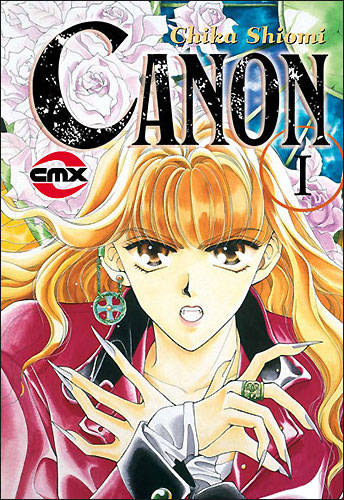
MICHELLE: For this month’s CLAMP Manga Moveable Feast, special guest Karen Peck and I decided to weigh in on couple of the quartet’s shorter works, namely Suki (complete in three volumes) and Legal Drug (unfinished in three volumes, but newly relaunched in Japan under the name Drug & Drop). I’d heard these series were related in some way, too, though that turned out to be little more than a cameo.

Anyway, let’s start with Suki! Child-like Hinata Asahi is a first year in high school who is extremely book smart, but trusting to an excessive degree. She lives alone with two teddy bears, and when the guy who moves in next door turns out to be her substitute homeroom teacher, Hinata takes a liking to him. Shiro Asou is kind of prickly, but does a few things for Hinata that make her feel all warm and fuzzy, like patting her on the head and helping her sweep some leaves in her yard. Hinata’s obvious affection for Asou-sensei troubles her friend, Touko, and it’s Touko’s concern (coupled with hinting about Hinata’s past) that lends a welcome ominous vibe to the story.

KAREN: Ah, Suki! I read this when it first came out, and thought it was a nice little trifle—enjoyable but not especially notable. Hinata is one of those CLAMP heroines who is impossibly sweet and naïve, but it’s forgivable—because she should be a darker, sadder character, what with living alone in an empty house, her father only a distant figure, and having been through some intense events in her past. In Cardcaptor Sakura, you could see where all of [Sakura’s] abundant sweetness comes from—she comes from a world of love and security. That Hinata is still such an innocent, despite her situation, is very interesting.

It’s that ominous vibe you noted, Michelle, that does make this story a little more interesting—I think three volumes of Hinata and teddy bears would have been adorable, but pure fluff. Reading through the series, I also like the ambiguity of Asou-sensei—despite HInata’s affection for him, the story really feels like it’s building him to be another bad thing in Hinata’s life.

MICHELLE: HInata actually reminded me quite a lot of Sakuya from Natsuki Takaya’s Twinkle Stars, both in her demeanor and with the family secrets lurking in the background. (I think the similarity also sprung to mind because it was another case where I was used to reading a creator’s fantasy-infused manga but was now reading something taking place firmly in the real world.) But yes, one has to wonder how she was able to maintain her trusting spirit despite, we later learn, having been kidnapped nine times as a child.

I definitely enjoyed the build suggesting Asou-sensei was going to do something nefarious, and I admit to being disappointed that he merely turned out to be a bodyguard sent by Hinata’s father. The whole setup—lonely, selfless teen falls in love with enigmatic older guy—reminded me a little of Tokyo Babylon, but in the end CLAMP follows a more stereotypically shoujo storyline by offering redemption and a happy ending. It felt like all of the wonderful worrying Touko got up to just kind of petered out into very little payoff.

KAREN: Maybe Hinata maintains her child-like spirit by reading cute books about teddy bears? The book-within-the-book, another Suki, is precious.

I didn’t mind the payoff/ending. Terrible things happened to Hinata—and I’m sure that this kidnapping was a good deal more personal than past ones—but she remains unchanged. Hinata is still the same trusting person she always was, as was foreshadowed in a conversation with Asou-sensei—after he warned her that she would be sorry for living in her dream world, she replied, “No, I won’t. The people around me are all people I love. None of them are bad people. Not now, not ever.” And this plays out in the end—not only does she forgive her kidnappers, she convinces her father to help them. While a dark ending would have been more interesting, this story, for all the hints otherwise, was always going to be sweet. Like in CCS, a kind-hearted girl is tested but not broken, and continues on to share her loving nature with those around her.

MICHELLE: Yeah, you’re totally right. And I guess they can’t all be shocking endings, otherwise they would cease to be shocking!

I did like the book-within-a-book segments, something that we also see a little later in Chobits. If it didn’t involve a lot of physical labor to unearth my copies, I could check to see if the author of those picture books was the same Tomo! But I am lazy.

KAREN: I’ve not even read Chobits, so I’m no help whatsoever!

So my old assessment—that it’s a nice little story, prettily told—remains true for me after this re-reading. Not one of the great classics of CLAMP’s, but enjoyable all the same.

MICHELLE: I can agree with that!

Moving on to Legal Drug… as mentioned in Friday’s Let’s Get Visual post, this is a series that gets compared a lot to xxxHOLiC. Seventeen-year-old Kazahaya Kudo has run away from home and been rescued by Rikuo Himura. Both of the boys are live-in workers at Green Drugstore, managed by the enigmatic Kakei, and also take on the occasional odd job for their employer, which typically involve using Kazahaya’s ability to see visions when he touches people and objects to find various items.

Kazahaya and Rikuo aren’t friends, and fall into the spazzy/stoic dynamic characteristic of the early Watanuki/Doumeki relationship. There seems to be more overt romantic chemistry between them, however, which CLAMP plays up in the third volume, which finds them going undercover at an all-boys’ school.

KAREN: First, on a totally shallow level, I love Tokyopop’s presentation for Legal Drug. Vellum! Color pages! I’m totally a sucker for things like that.

I get the xxxHOLiC comparison; it’s one I’ve used before to describe it. However, Kakei isn’t quite Yuuko, luckily for Kazahaya and Rikuo!

My enjoyment of this series has always been tempered by its unfinished status—I really was wanting more details about the boys’ past which had been teased throughout the entire series. But what did you think of the stories—the “jobs,” Michelle? I think that they tended to be more personal than the stories in xxxHOLiC, which made them a little more central to the story.

MICHELLE: I think that if I had read this previously—before the resumption of the series in Japan—I would’ve been extremely frustrated by the lack of follow-through with the hints and glimpses we get of Kazahaya’s twin sister, Kei, and the mysterious woman in Rikuo’s past, Tsukiko. Now, I can feel more confident that CLAMP will address those story elements, even though there’s no guarantee we’ll ever see Drug & Drop in English.

As for the jobs, it’s been so long since I last read xxxHOLiC that I can’t really compare them, but I do agree about them seeming very central to the story. What first comes to mind is the cat that the boys rescue, who initially seems ordinary, then is revealed to be something supernatural, and then thanks its rescuers by showing them images of Kei and Tsukiko. That’s a perfect example of what you’re talking about, I think.

KAREN: Drug & Drop is now being published in a seinen magazine, so if we ever get to see it here, it will be interesting to see how it changed—will Kazahaya be in a dress as often?

Going back to our first title, there is a cameo by Hinata and Asou-sensei from Suki in volume two (chapter nine) which only shows that sometime after the events of that series, Hinata is still the same girl—who would think that there’s nothing odd about a strange boy asking for her school uniform, and who is able to draw others out. It’s a nice callback for a cameo.

Because the jobs tend to be about objects rather than people, the stories don’t have the larger emotional punch that some of the xxxHOLiC ones do, but that does allow Kazahaya and Rikuo to have more of the focus. I also liked how most of volume three was about one job—and that gave the story of the school and Nayuki room to breathe. It was a little dark at times, and maybe rambling, but it worked…

MICHELLE: I liked that about it, too, though I admit being a little annoyed at how much flailing about Kazahaya seemed to do during that story. It almost seems like the manga takes a sharp turn into generic BL, with the sudden schoolboy dynamic, Rikuo doing a little too well with his pushy seme impersonation, and the random school traditions of voting for a pretty boy to be a “bride” who wears the costume of his fans’ choice, but there were some nice ominous turns to keep it from worrying me too much. I am fairly certain the seinen Drug & Drop will definitely have less of that, though.

KAREN: There was a lot of flailing through the entire series, and I agree with you that it could be annoying. I get it, there’s tension/chemistry. But I like Kazahaya and Rikuo, and Rikuo is never creepy in his pushy seme moments, so I don’t mind it overall. But I don’t like being teased—I hope that running in a seinen mag, the new series can build their relationship with less blushing into something more concrete to where we see some solid character development.

Post-xxxHOLiC, I like Legal Drug less than I remember. Hopefully whatever CLAMP has in store with the characters in Drug & Drop will provide some satisfaction. As Kakei said in the last chapter of volume three, “We’ve been waiting a long time… for that boy and Rikuo to meet,” so hopefully we’ll see where this is all supposed to go.

MICHELLE: Well put! We share the same hopes for this series, it sounds like.

Thank you for joining me in this conversation today!

KAREN: And thank you for the opportunity!

Filed Under: FEATURES Tagged With: clamp

The Shoujo Beauty of X

July 29, 2012 by MJ 5 Comments

Those of you who have followed the evolution of the Manga Moveable Feast, and particularly the way in which subjects for the Feast are currently chosen (unlike the original democratic model, hosts now select topics on their own), have most likely assumed that, as the host of the CLAMP MMF, I’m a big fan of their work. This is a fair assumption, and it’s not exactly wrong, but the truth is a bit more nuanced. Though I count several of CLAMP’s manga among my very favorites (Tokyo Babylon, Cardcaptor Sakura, and xxxHolic are a few I’ve praised vocally over the past few years), my feelings for others range anywhere from general indifference to extreme impatience and even dislike.

One of the titles that originally registered with me somewhere between “impatience” and “dislike” is the very popular and tragically unfinished X (X/1999 when it was originally published in English), the first of CLAMP’s series to officially reach American shores. As a huge fan of Tokyo Babylon, my initial reaction can probably be chalked up to the fact that CLAMP waits several volumes before introducing Subaru into the story. But once I’d finally forgiven X for not being Tokyo Babylon II, I still found myself growing impatient with its sprawling cast, its convoluted plot lines, and its maddeningly repetitive exposition. Fortunately, VIZ’s new omnibus releases of X have not only reintroduced it into the North American market, they’ve also given me a second chance to try to grasp its charms—and grasp them I have, though they haven’t been at all what I expected.

Bloggers like my Manga Bookshelf cohort Kate Dacey have often referenced X‘s gory battles and body count as a major draw for readers. In one of her features for this month’s MMF, in fact, she likens X‘s apocalyptic imagery to the work of Katsuhiro Otomo (Akira), and goes on to conclude, “The battle scenes are kinetic and violent, executed with a gory zest that’s difficult to resist. The dream sequences, too, are suitably shocking: characters are dismembered, crucified, impaled, and engulfed in flames, often right before their loved ones’ eyes. I hesitate to suggest that X‘s body count is a victory for women, but it is a sharp and welcome rebuke to the idea that female readers strongly prefer conversation and character development to butt-kicking and carnage.”

She’s right, of course. X is filled to the brim with bloody battles that don’t shy away from gore. But I admit that my primary reaction to VIZ’s new, larger format omnibus editions has been the realization of how astoundingly, gorgeously shoujo it all is, especially in its imagery.

Here’s a sequence from X‘s first volume, in which burgeoning dreamseer Kotori receives a disturbing dream about her childhood friend, Kamui.

(click images to enlarge)


X, Vol. 1 © 1992-1993 CLAMP, English edition published by VIZ Media

When I look at a scene like this… well, first of all, I think it’s freaking beautiful. With its flowing lines and minimal use of traditional boundaries, CLAMP creates a surreal, dreamlike landscape that manages to be remarkably easy to follow while also completely immersing the reader in Kotori’s state of mind. The evolution of the spherical images in her dream from a whimsical, globe-like ball to an apocalyptic nightmare is a genuinely striking progression, enhanced by the abstract panel placement—a collection of emotional slivers mirrored by the shattering of the earth itself.

That this type of page composition is quintessentially shoujo is no revelation of course. But its emotional resonance as well as its style of imagery reminds me immediately of other shoujo series from the same period.

Kotori’s initial descent into her dream reminds me of this section from Reiko Shimizu’s Moon Child, in which Teruto slides into the depths beneath a city fountain in order to make a deal to save his sibling’s life. Though Teruto’s journey is a waking one, in both cases, there is a sense that the main character of the scene is falling into a state that is both familiar and perhaps dangerous. Teruto’s and Kotori’s bodies are completely relaxed as they descend, while the water and the scattering fish around them create a sense of otherworldliness and tension.


Moon Child, Vol. 3 © 1988 Reiko Shimizu, English edition published by Wildstorm Productions

The second spread of this sequence is dominated by the image of Kamui, holding and standing dominant over a representation of the earth, which reminded me immediately of this scene from Saki Hiwatari’s Please Save My Earth, in which Alice ponders the emotional state of Rin, whose previous incarnation, Shion, is pictured as if holding his world in thrall. Though the POV character in both series here feel love and affection for the subject of these images, there is also a sense that the person being pictured is potentially dangerous and capable of real harm.


Please Save My Earth, Vol. 20 © 1993 Saki Hiwatari, English edition published by VIZ Media

The rapid, stream-of-consiousness images in the third spread of Kotori’s dream bears a similarity to this sequence from Keiko Nishi’s short manga Promise (note: Promise reads left-to-right). I find this particularly interesting given Promise‘s real-world setting, because it demonstrates so clearly how this type of mental imagery is just as much a part of our “real” lives as it is our dreams and fantasies. In both cases, these scattered, tumbling images create a sense of panic and impending emotional danger.


Promise © 1996 Keiko Nishi/Shogakukan, Inc., English edition published by VIZ Media

Though the content of the last bit I’ve chosen from Kotori’s dream bears very little similarity (at least in terms of plot) to what is happening in this spread (again from Please Save My Earth), Kotori’s and Mokuren’s states of mind are quite similar. They’ve both had a sudden realization about a loved one that results in complete horror. Kotori has been hit with the realization that her loved one, Kamui, may destroy her world, while Mokuren has been hit with the realization that she may be taken from the world before she’s able to tell Shion that she loves him in the first place. While the Kotori’s predicament may seem more serious and vital than Mokuren’s, the artwork tells us differently. Whatever the scope of the situations’ consequences, Mokuren and Kotori are equally devastated by their respective realizations.


Please Save My Earth, Vol. 19 © 1993 Saki Hiwatari, English edition published by VIZ Media

This kind of emotional tension combined with abstract imagery is found all over in shoujo from the late 1980s and early 1990s (here’s a beautifully rendered scene from Naoko Takeuchi’s Sailor Moon)—which is part of why it’s become my favorite era for shoujo artwork.


Sailor Moon, Vol. 2 ©2003 Naoko Takeuchi, English translation © 2011 Naoko Takeuchi

Though I’d be remiss if I didn’t mention that the very first scene that came to mind while pondering artwork for this article came from Moto Hagio’s They Were Eleven, which was published in the 1970s (note: these pages read left-to-right). The accelerated tumbling of the elevator buttons at the top of the first page has stuck with me since I first read this manga several years ago, and I immediately associated it with Kamui’s tumbling earth. There’s something about shoujo and circles…


They Were Eleven © 1996 Moto Hagio/Shogakukan, Inc., English edition published by VIZ Media

It doesn’t get better than this, my friends.

Time will tell, of course, if my new infatuation with the shoujo spectacularness of CLAMP’s X will help me weather its narrative messiness in the long-term, but I’m certainly enjoying myself so far. Kudos to VIZ for presenting this unfinished series in a format that finally shows it off to its best advantage. I think I may speak for all fans of 1990s shoujo when I say, “Thank you. I thank you with all my heart.”

Let’s hope this becomes a trend.

Filed Under: FEATURES Tagged With: clamp, Manga Moveable Feast, MMF

Chobits: Deconstructing the Love Story

July 29, 2012 by Brett Stockmeier 9 Comments

Chobits is usually one of the more divisive of CLAMP’s series. Mankind’s interactions with the advanced technology of the setting has the potential to spark important philosophical (as well as moral) debate. Unfortunately, not everyone is able to appreciate the finer details of the plot as many find the story of Chobits, that is to say, the romance, distasteful. Part of this has to do with CLAMP’s target audience. Despite their often attributed ability to appeal to both genders, CLAMP has often been classified as a Shoujo manga circle, writing with the intention of appealing to girls. Chobits marked an experiment for the group with the intention that the work be classified as seinen, meant to appeal to young men. Because of this departure from their traditional market/genre, I believe many fans of the group were alienated by the content and progression of the plot, and some of the questions raised by the work may be overshadowed by the antipathy it garners.

It was only recently that I came to the realization that what first appears to be one of the most tasteless and tacky love stories can also be viewed as a commentary on the visual novel genre, harem romance stories, the mythical magical girlfriend, and seinen romance as a whole.

CLAMP themselves waste no time setting Chobits up according to standard visual novel cliches: The protagonist is a young adult male, a ronin (he failed to get accepted into college), has lived a sheltered life in the country away from such luxuries as computers and the big city of Tokyo. He has no girlfriend, and is very vocal about his sexual frustration (he’s a virgin). Basically, he’s a bit of a loser, and he fits the mold perfectly for the protagonist of most visual novels and seinen romance stories. He’s remarkable only for the fact of being unremarkable, and on paper, the only trait he has going for him is you can say he’s a nice guy (though as the manga itself is quick to point out, not the guy who gets the girl).

These are common traits for a seinen protagonist because often these stories are marketed towards users that view themselves in much the same way: as being hapless, unfortunatate or lacking redeeming qualities to put it bluntly. Such stories offer a world and a narrative where they, stepping into the shoes of a main character, can suddenly have a complete reversal of fortune, giving them the chance to experience a life different from the one they perceive in the real world. One where perhaps a chance event or encounter can enable them to be successful and have a pretty, doting girlfriend (or a selection of the to choose from). It’s a genre primarily made up of wish-fulfillment.

Okay, so we have an unremarkable protagonist, but there’s always a catalyst that sets him on the journey that changes his fortunes from bad to good. Often, this happens with the chance meeting of a magical girlfriend archetype. Maybe she’s just a spunky and free-spirited classmate he happens to run into (usually quite literally) on the way to school, maybe she’s an alien from outer space and he’s just the first native human being she happens to encounter. Or maybe she’s a discarded robot set out with the trash.

Hideki, being poor, and by this point shown to be envious of those fortunate enough to own persocoms, doesn’t let the opportunity slip by, and he hurries to take his new possession home. Possession is also a common theme in seinen romance: in the popular Ah! My Goddess!, a young college student binds a goddess to him with a wish to the goddess hotline. (Ah! My Goddess! isn’t harem romance to my knowledge, but it is wish-fulfillment.)

Hideki at this point only thinks of Chi as a machine, albeit a cute one (the one you’re destined for is never who you first suspect, is it?), and so he’s already picturing the things he can do with Chi. Email, chat, web browsing, but mostly porno websites. (and if he knew a little more about persocoms and their standard capabilities, he might have been expecting to lose his virginity as well)

He appears initially to be entirely self-serving. He gleefully thinks on his good luck and conjures up references to figures like Doraemon, a character from a popular Japanese children’s cartoon that typically starts adventures and bestows gifts to a particularly unlucky Japanese boy. “It’s like a story”, he thinks to himself. And it seems like it really might be: the persocom he picked up for free from the garbage is repeatedly hinted at being a legendary persocom… one of the Chobits series, which is rumored to have programming so advanced it faithfully recreates real human emotions, technology on a level we can only dream about today.

A magical girlfriend that can do things no ordinary human girl can do? An ageless robot body in the form of a cute young girl? Real human emotions? And you own her?! I don’t doubt that many young men don’t have to look very deep to know this situation is a dream come true in more than one aspect.

Of course a common feature, and indeed the sole distinguishing characteristic of the “harem” genre is that it features multiple women who may serve as a match for the hero, and Chobits once again has that covered in the most cliche manner CLAMP could think of, relying on handful of the most overused “types” of women common to the seinen genre. You have the bubbly high school kohai Yumi, the mature and sexy teacher Shimizu-sensei, and the cute, doting young landlady Chitose Hibiya. Upon first meeting each of these women, Hideki’s mind races with the possibilities of a life with each of them. And for their part, the girls are each suprisngly tolerant of Hideki’s perverse habits. Yumi, prompted by his staring, casually gives out her bra size without hesitation. Shimizu-sensei dismisses his pornography as him being a boy after all (I guess boys are all seen as being sex-crazed in Japan?), and Hibiya constantly overlooks his audibly perverse inner monologue.

Indeed, the story itself actually seems to endorse each of these women as a potential match for Hideki with a number of events between that seem to deepen his relationship with each of them. Yumi takes the initiative to invite Hideki out on a date, Miss Shimizu shows up out of the blue to stay the night, and Hibiya… well she’s just a doting landlady, giving Hideki perhaps more attention than is usual of her guests. It’s easy to see why Hideki might get the wrong impression.

Outside the unexceptional cast filled with Seinen romance tropes, the rest of the story remains faithful to standard form: the “comedy” of this romantic comedy comes primarily from awkward ero situations and Hideki’s over-the-top reactions. There’s plenty of fanservice and straight-up soft-core pornography. The outfits Chi and the other persocoms take on often titillate with nearly exposed panty shots and Minoru’s vast collection of persocoms exclusively wear maid uniforms. In the anime, entire filler episodes were added devoted exclusively to panties and a trip to the beach that somehow manages to include the show’s entire cast of available women (in swim suits of course), disconnected though they might be.

So CLAMP spent a good chunk of Chobits setting up a cast and characters that would fit right into any seinen romance, and I think a lot of people, especially when drawing from CLAMP’s audience would be put off by that. There’s a notable lack of any strong female characters like Sakura, Hokuto, or Misaki. (That isn’t to imply the females are necessarily weak, but all of them seem to start the series slightly broken, suffering deep emotional scars) Instead we get to see a cast of stereotypes focusing on a main character that hasn’t really earned the attention he gets. It all seems incredibly un-CLAMP and indeed the traditionally shoujo group hadn’t really tried to market itself to a male audience until that point. It seems natural to assume that their established primarily female audience might lose interest or even be offended and denounce Chobits for its the content. I might have been included with CLAMP’s alienated fan base if CLAMP didn’t work to tear down and undermine the stereotypical seinen romance narrative they had created as quickly as (and even before) they had built it.

Things get off to a rocky start for Hideki right from the first time he activates Chi, as he quickly realizes there was a reason he found her in the garbage. The magical girlfriend-figure he had pictured is disappointingly incapable of the tasks he had planned for it, and initially can only mimic his movements and speak only “chi”. This is in stark contrast to the goddesses from Ah! My Goddess! who can magically procure an empty house the size of a small mansion when the protagonist of that series is evicted from his dormitory. Chi on the other hand seems unable to even connect to the internet, and is rarely or never seen to consciously do anything remotely computer like, as you never see her being used as Hideki originally intended: as a tool, able to open the way to the wonders of the internet and computers. Instead, she behaves closer to that of an ordinary human girl, reading and learning from picture books rather than the internet, which should be readily available to any persocom. In fact, there are a lot of things Chi seems unable to do as a computer, though eventually she’s perfectly able to learn the same way any human being can, and can even achieve some level of independence from Hideki, taking on a job and responsibilities apart from him. Even there, as a human being, she is limited, and a crucial capability of both human and persocom is denied to her… that is, the ability to have sex.

It seemed as though Hideki might have gotten a dud when it came to his legendary persocom: rather than stumbling onto a super human devoted to making him happy, he instead finds himself with a burden and responsibilities he is not sure he can afford, quite litterally. Even Chi’s being a legendary Chobit turns out to be irrelevant or a disappointment in the context of human relationships: her “legendary programming” able to replicate human thought patterns and emotions on par with a real human being is nothing but a myth, and her only real magical feature, the ability to affect other persocoms has no practical applications in the realm of a relationship.

With the illusion of the powerful wish granting girlfriend shattered, CLAMP then proceeds to move through the list of other potential candidates in Hideki’s would-be harem and systematically remove them as potential matches. The cute young kohai with the big boobs that invited you out that one time in a maybe date? She’s been hung up on her old boyfriend since long before we came into the story. The sultry teacher that stayed over at your place in her underwear late that one night? A married woman having an affair running away from the pressures of her relationships. The doting land lady? Well, hooking up with Hideki was the last thing on her mind.

The side characters in Hideki’s harem may not have stood out initially as being incredibly liberated or strong (they’re actually all kind of broken really) like CLAMP’s other notable characters, but they (both the characters and CLAMP) deserve recognition for having a life/story/purpose outside of competing for the affections of Hideki, while traditionally interest in the protagonist is all consuming for the harem in seinen romance. Likewise, Hideki deserves some credit for his demeanor in the rejection of his fantasies. When he found out the truth of Yumi and Ueda’s past, he spoke up in the defense of the people he knew to be good, honest and kind. He listened without judgement to the confessions of an adulterer, and showed genuine regret that he was unable to lend his friend more support when he became involved with her. And he was happy, rather than bitter that these people found happiness, despite the fact that once he imagined himself playing a more active part. Lots of characters are described as being “nice guys”: Hideki is the only one in my opinion to ever take true ownership of that title in a story like this.

With the standard narrative built-up only to be summarily torn down, the universe seems to have delivered a grim shot of reality to Hideki. That persocom he found in the garbage really was broken, and yet it was also something that could become very special to him if he puts in the work required (which is true of anything really). The idea of a legendary persocom (the magical girlfriend stand-in) is in actuallity a myth, just as the idea is a myth in real life. The concept of a machine with real emotions is actually just wish-fulfillment, in a cold allusion to reality and the entire market of wish-fulfillment. It isn’t real, and exists only in the minds of those who desire and dream of such things.

But while Chi may not be a magical persocom, she is still a persocom: beatiful, ageless, and capable of many things an ordinary woman (or man. also could be a man) just can’t do or compete with. But CLAMP even here dismisses the magical girlfriend myth with their repeated insistence that there are just the same some things that only a real flesh-and-blood human being can do that persocom just can’t. Supporting this, persocoms, once portrayed as being almost superhuman, also have their vulnerabilities revealed and discussed in length. They can be easily manipulated through their programming, their cherished memories can be erased with a few computer commands, and just like human beings, they can break beyond repair and die. As an interesting side-note, these problems are also very real ailments that can afflict human beings, and thus by making persocoms imperfect, they are shown to be more like human beings than ever before, with the similarities running far beyond our shared humanoid features.

The women in his life he was focusing in on as it turned out all had lives of their own, and really never gave Hideki a second thought, if they gave him any thought as a potential match at all. What’s more astounding is that CLAMP perfectly mirrors real life when they reveal to both the reader and Hideki that he doesn’t necessarily know everything that’s going on around him. The story doesn’t stop being told just because Hideki isn’t around, and indeed it was being told even before he entered into the picture. Before even the first chapter of Chobits. And while the story follows Hideki, Shimbo, his best friend lucky enough to gain the eye of his teacher, is in the middle of his own story, and in contrast to standard form, doesn’t exist merely to root for Hideki on the sidelines: he has his own cares and his own concerns, and like the people around you in real life he can choose not to enlighten you to them. Chobits drives home the message perhaps the best in any of CLAMP’s work that you are not special. Your story is not the only one that his being told, and everybody is dealing with their own issues that may be every bit or more frustrating than your own.

This is the exact opposite of the message communicated by a visual novel where you can win anybody or anything based solely on the effort you put in and the knowledge you possess. Of course there is some truth to this world view as well, but a visual novel system exaggerates the amount of control a person has over his own life and the universe: there will always be some things you just can’t do. A visual novel also cannot take into account the fact that other people are living their own stories right along side you. Perhaps a true Chobits visual novel would be massively multi-player (and be called “real life, but with persocoms”, except that’s not very catchy).

The coup de grace though comes with Chobits‘ simple yet powerful ending when Hideki is confronted with the reality that there are some things Chi just can’t (and for all we know, never will be able to) do. Not just procreation, but sex itself, which has been a driving motivation throughout Chobits. While Hideki hasn’t exactly been on the prowl looking to lose his virginity through the series, it’s safe to say he’s always been self-conscious of his status as a virgin. The universe itself sees fit to remind him with the casual acceptance and reactions in the face of sexuality displayed by the people around him, and the gentle teasing Hideki endures by his friends Shimbo and Minoru (of all people! How can someone as young as Minoru be more sexually mature as someone as old as Hideki? Actually I might have some theories) More evidence is seen in the number of times pornography makes an appearance in the story. Porno websites dominates his fantasies of the advantages of owning a persocom, and it’s clear he has a sizable collection erotic magazines. And it must be a sexually liberated world when Manager Ueda can casually relay the story of his marriage to a persocom, and the fact that there are many people that, yes, have gone so far as to have sex with their persocoms.

Thus to be confronted with the reality that in order to be with Chi, he will never be able to be “with” Chi is a major revelation, especially given that human persocom relations aren’t really that unheard of at all. The very real possibility exists that Hideki will die a virgin, never getting to experience one of life’s greatest pleasures to be shared by two people in love. Sex has always played a large role in a seinen romances, and yet Hideki, the supposed protagonist of such a story, is being asked to live a life of abstinence. In my opinion it’s a marvelous way to draw a distinction between Chobits and other romantic comedies in the genre, and even Chobits‘ own early story, in order to show just how much the story has evolved.

I could not comfortably bring this essay to a proper close if I didn’t mention the inherent contradictions in my ideas, the most prominent of which come to light from two official Chobits sources (regardless of whatever input CLAMP had in their production). The first is the anime, which has a vastly different ending from the manga. In the anime, key plot details are changed, which fundamentally alter who/what Chi is, even if her personality remains the same. The anime Chi really is a legendary and powerful persocom, with programming advanced enough to faithfully recreate the complexity of human emotions. This new Chi completely undermines my theory that CLAMP intended to undermine the myth of the magical girlfriend by making their own character incredibly ordinary and even defective compared to other persocoms.

Furthermore, anime Chi and Hideki then undergo a trial where Chi has her memory erased, yet is able to recover the deleted data somehow through the power of the love she and Hideki feel for each other, with little in the way of a technical explanation given: it’s just a miracle of love! What’s more, after this, Chi proceeds to update every other persocom in existence so that they might all share the advanced programming she posesses. And so while the message of the manga seems to reinforce the complexity and complications of real life, the anime reinforces the myths and ideals of the magical girlfriends and that miracles do exist and all you need is love and everything will be happy in the end. Fluffy, traditional shoujo ideals, but something CLAMP has always shied away from (and been stronger for, in my opinion)

The other element that undermines my ideas is the existence of a licenced Chobits visual novel, completely typical for the genre. The user is free to pursue and win other women outside of Chi in exactly the way I have been alluding to throughout my essay.

I have reservations about declaring CLAMP set out with Chobits to debunk these visual novel universes and their tropes. From what I have glimpsed of the group and their unique way of creating, it’s impossible to say what their goal was in its creation. It may be that their intent was more innocent: to bring a touch of shoujo to the seinen market. Chobits just may have been the unique product spawned by this fusion. On the other hand, if they might possibly have had no involvement with the visual novel and the changes to the anime (as has been suggested to me), it could be that I have glimpsed a small part of their intentions in creating Chobits. I understand why the story might put off their traditionally female dominated audience, but I do believe plot itself (and not just the philosophical questions it brings up) has serious merit to it, and I hope that my ideas may help to redeem the series in the eyes of others.

I’d like to thank you for taking the time to read my thoughts, and unknownusername for taking the time to give me input while I was writing this.


To submit your contributions to the CLAMP MMF for inclusion in this month’s archive, please send your links by email to mj@mangabookshelf.com or via Twitter to @mjbeasi. If you would like your contribution(s) to be hosted at Manga Bookshelf, please email them to MJ, along with any included images.


Filed Under: FEATURES Tagged With: clamp, Manga Moveable Feast, MMF

Let’s Get Visual: A Tale of Two Series

July 28, 2012 by Michelle Smith and MJ

MICHELLE: You didn’t think we were going to let a CLAMP MMF go by without devoting a special Let’s Get Visual column to it, did you? (Insert a Hokuto Sumeragi “ho ho ho” laugh here.) It’s an absolute must for a group like CLAMP, whose output is so diverse, not merely in the realms of story and demographic, but also artistically speaking. In fact, I had a pretty tough time choosing which images to talk about today. How about you, MJ?

MJ: Yes, there’s so much to choose from! Though CLAMP is nearly always clearly distinguishable as CLAMP, they manage to do that while also significantly varying their style from series to series, especially when they’re writing for different demographics.

MICHELLE: I wish I had the artistic vocabulary to really thoroughly describe these subtle variations, but I’m afraid I don’t. Still, this diversity inspired MJand I to compare two CLAMP series with different art, but similar stories. Legal Drug has been described as a prototype for xxxHOLiC, as it features a hyper protagonist (Kazahaya) and his more stoic companion (Rikuo) who are asked to perform various odd, supernatural-related jobs by the precognitive manager of a store (Kakei). Kazahaya is quick to proclaim that they’re not friends, but is forced to begrudgingly thank Rikuo for several timely rescues. This is a setup very similar to the initial relationship between Watanuki and Doumeki in xxxHOLiC.

MJ: Personally, I think you could even make an argument for Kakei’s companion Saiga as a weird prototype for Mokona.

MICHELLE: Yeah, I guess he does spend the majority of his time either sleeping or pulling off surprising domestic tasks.

Anyway, how about you start us off with the pages you’ve chosen?

MJ: Sure! I’ve picked out a couple of different scenes from volume twelve, and the reason I chose that volume is that it’s really where Watanuki’s reality starts to fall apart. At first, he’s simply having a series of strange dreams, but by the end of the volume, dreams and reality are melding into each other, one after the other, to the point where it’s impossible for him to tell the difference between them.

(Click on images to enlarge.)

xxxHOLiC, Vol. 12, Pages 30-32 (Del Rey)

The first scene I’ve chosen comes in early in the volume, and it’s very obviously a dream world. The ever-present blossoms in the wind, Yuuko’s train of butterflies, the wind in the air, and even just the sense of space feels entirely like a dream–like something clearly outside our waking reality. It’s beautiful, but it’s expected, and even when there’s a sense of eeriness, it feels friendly and familiar.

xxxHOLiC, Vol. 12, Pages 138-141 (Del Rey)

The second scene, on the other hand, comes in much later, when Watanuki is being shuttled from dream to dream to dream, never knowing if he might finally be awake. The scene starts out simply with the kind of lunch picnic he might have with Himawari any day of the week. The backgrounds are sparse and the panels sort of matter-of-fact. The only hint at first that something might be off, is the hole Watanuki notices in the wall behind Himawari. And even though the scene becomes comedic, with the scaly hand popping out of the hole to steal Watanuki’s sherbet, it feels very sinister to me–not just because Himawari never notices what’s happening, but because it’s intruding on what feels to Watanuki like normal life, letting him know that he’s somehow *still* not awake. Unlike the earlier dream scene, which feels so perfectly dreamlike, this one reads as something more like madness, which is much scarier to me as a reader.

MICHELLE: My first reaction when I saw the scaly hand stealing the sherbet was to deem it “cute” but that’s because it’s been so long since I read xxxHOLiC that I had utterly forgotten the context of this scene. Now that you’ve informed me, I read it as sinister. It’s definitely something that could look like “Watanuki’s everyday life” to the casual reader as much as to Watanuki himself, at first.

MJ: I probably am letting the context influence me, which maybe makes this not the greatest example for a Let’s Get Visual column! But I do think it’s interesting how differently CLAMP treats these two scenes, when they’re both representations of Watanuki’s dream world.

MICHELLE: Oh, I think they’re fine examples! What you’re basically showing here is that in xxxHOLiC, or at least in these scenes, CLAMP draws the supernatural in a way that blends in with the everyday world. It’s a very simple approach, free of some of the bells and whistles that my images from Legal Drug possess.

MJ: Well, let’s take a look at those, then!

Legal Drug, Vol. 2, Pages 40-43 (TOKYOPOP)

MICHELLE: These pages are from a scene in the second volume of Legal Drug. Kazahaya and Rikuo have just rescued a magical kitty, and in gratitude, the kitty has led them to the park where its powers are strongest and transformed into the images of the person each boy wants to see most.

What struck me strongly here is the way the kitty begins to unravel. Seriously, the fact that it’s just one little toe of his little paw really gets to me somehow. Somewhat like xxxHOLiC, there’s that feeling of “You thought things were normal, but really they are not.” As the transformation is underway, we get several reaction shots from the boys (with a bevy of speedlines), resulting in a page layout far busier than xxxHOLiC. The two-page spread is quintessential CLAMP: two slim and lovely ladies with long flowy hair speckled with white ink. The tight panels of the boys’ eyes include more speedlines to help convey their shock.

Honestly, besides the slightly more ornate style here, it’s the speedlines that really convey the biggest tonal difference between these series to me. It’s presumptuous to declare that CLAMP “matured” between the two series, but it really does feel as though they realized they no longer needed to rely on such tricks to convey the protagonist’s feelings. Less is more!

MJ: Well, I think it’s probably worth bringing up the fact that Legal Drug ran in a shoujo magazine, where those kinds of flourishes might have been expected, unlike xxxHolic, which had to fit in to the style of a seinen magazine. I mean, CLAMP is always CLAMP, but there’s always a clear sense of what demographic they’re drawing for–even in two series as similar as these.

MICHELLE: That’s a good point. I certainly don’t mean to disparage the style of Legal Drug or insinuate that it’s inferior, but in terms of personal preference, I simply like the cleaner, restrained style of xxxHOLiC more. I mean, just check out how the panel shapes themselves are different. It’s really neat to compare them!

MJ: Oh, I completely agree! And though I also have a preference for the artwork in xxxHolic, I do appreciate the shoujo flourishes for their classic flair. More and more, I find the differences fascinating, and I was really surprised, actually, at how easy it was to tell which demographic CLAMP was writing for simply by looking at the artwork of their series in preparation for this Feast. I don’t think I expected it to be so obvious.

MICHELLE: I wouldn’t have, either. But going forward I’ll be making a special point to notice how they adapt their style to the magazine!

Filed Under: FEATURES, Let's Get Visual Tagged With: clamp

  • « Go to Previous Page
  • Page 1
  • Interim pages omitted …
  • Page 82
  • Page 83
  • Page 84
  • Page 85
  • Page 86
  • Interim pages omitted …
  • Page 115
  • Go to Next Page »
 | Log in
Copyright © 2010 Manga Bookshelf | Powered by WordPress & the Genesis Framework