• Skip to primary navigation
  • Skip to main content
  • Skip to primary sidebar
  • Home
  • About Us
    • Privacy Policy
    • Comment Policy
    • Disclosures & Disclaimers
  • Resources
    • Links, Essays & Articles
    • Fandomology!
    • CLAMP Directory
    • BlogRoll
  • Features & Columns
    • 3 Things Thursday
    • Adventures in the Key of Shoujo
    • Bit & Blips (game reviews)
    • BL BOOKRACK
    • Bookshelf Briefs
    • Bringing the Drama
    • Comic Conversion
    • Fanservice Friday
    • Going Digital
    • It Came From the Sinosphere
    • License This!
    • Magazine no Mori
    • My Week in Manga
    • OFF THE SHELF
    • Not By Manga Alone
    • PICK OF THE WEEK
    • Subtitles & Sensibility
    • Weekly Shonen Jump Recaps
  • Manga Moveable Feast
    • MMF Full Archive
    • Yun Kouga
    • CLAMP
    • Shojo Beat
    • Osamu Tezuka
    • Sailor Moon
    • Fruits Basket
    • Takehiko Inoue
    • Wild Adapter
    • One Piece
    • After School Nightmare
    • Karakuri Odette
    • Paradise Kiss
    • The Color Trilogy
    • To Terra…
    • Sexy Voice & Robo
  • Browse by Author
    • Sean Gaffney
    • Anna Neatrour
    • Michelle Smith
    • Katherine Dacey
    • MJ
    • Brigid Alverson
    • Travis Anderson
    • Phillip Anthony
    • Derek Bown
    • Jaci Dahlvang
    • Angela Eastman
    • Erica Friedman
    • Sara K.
    • Megan Purdy
    • Emily Snodgrass
    • Nancy Thistlethwaite
    • Eva Volin
    • David Welsh
  • MB Blogs
    • A Case Suitable For Treatment
    • Experiments in Manga
    • MangaBlog
    • The Manga Critic
    • Manga Report
    • Soliloquy in Blue
    • Manga Curmudgeon (archive)

Manga Bookshelf

Discussion, Resources, Roundtables, & Reviews

Features

It Came from the Sinosphere: The Wushe Incident

May 14, 2013 by Sara K. 3 Comments

A Seediq warrior throws a weapon, with his cape billowing up to his right.

Practically everybody in Taiwan knows about Seediq Bale, the most expensive Taiwanese movie ever made. During my entire time in Taiwan, not a single other movie, Taiwanese or not, has made as much of a stir as that one. What few people know is that it was adapted from a manhua, The Wushe Incident (台灣第一部霧社事件歷史漫畫), which is gratefully back in print thanks to the success of the movie.

The Story

Deep in the central mountains of Taiwan, 1930, the Japanese relentlessly inflict suffering on the Seediq people. Many young Seediq men are anxious to strike back at the Japanese, but their leader, Mona Rudao, stops them, and always placates the Japanese whenever a young Seediq man loses his temper. Of course, Mona Rudao himself hates the Japanese, as they killed his father, ruined his sister’s life, and continue to exploit his people. However, Mona Rudao has also travelled to Japan, and personally witnessed just how powerful the Japanese military is, so he dares not provoke the Japanese … before there is a good opportunity.

Background

If I had to sum up Taiwan in two words, those two words would be “mountain island.” Those two words alone explain a great deal about Taiwanese culture, history, politics, geography, agriculture, economy, weather, etc.

For example, Taiwan is difficult to conquer/unify because it’s a mountain island. That’s why the indigenous peoples speak over 20 different languages – travel was so difficult that most people would never went far from their birthplace.

During my various trips to Taiwan’s mountains, when I didn’t have to deal with road closures, landslides, fog so thick that the driver can’t see more than a meter or two ahead, buses that got cancelled because the road collapsed, etc., I was lucky. To read about the condition of what until recently was one of Taiwan’s most important mountain roads, click here. Right now, I reckon at least half of the major mountain roads in Taiwan are closed or have major obstruction, and there hasn’t even been a typhoon recently. This is why Taiwan has been politically united for less than a hundred years.

Conifers and high-mountain grasses are cloaked in lots of fog.

I took this photo near Wushe, where the story takes place.

Astonishingly, some of the “Japanese” mountain trails are still intact. I’ve been on a couple sections of the former Japanese Hehuanshan trail, which is one of the trails used by the Japanese to send reinforcements to Wushe. Along the trail there are the remains of Japanese police stations, schools to teach the indigenous children how to be more Japanese, and the graves of Japanese police/soldiers who died along the trail (most of them were killed by Mother Nature). Here is a description of an epic Japanese mountain trail running through Taiwan.

The manhua starts with a set of detailed color drawings showing various scenes of Seediq life.

The manhua starts with a set of detailed color drawings showing various scenes of Seediq life.

The creator of the manhua, Qiu Ruolong, got stranded in Wushe (which is near Wuling pass, Taiwan’s highest mountain pass which is car-accessible – though I personally wouldn’t want to drive through it) when his vehicle broke down. While he was stuck in Wushe, he stayed with the local Seediq people, who gradually shared their history with him. This is how he first learned of the Wushe incident, and it fascinated him so much that he did more and more research – for example, he spent six months sewing traditional Seediq clothing. Eventually, he made this manhua.

The Wushe incident is historically significant as the last act of armed resistance to Japanese rule in Taiwan.

The Artwork

I love it.

A page depicting high-mountain scenery.

First of all, Qiu Ruolong manages to capture a bit of the majesty of Taiwan’s high mountains. Just flipping through the pages brings up memories of my trips to the mountains.

It’s not just that he draws spectacular scenery – he populates it with the characters, making both the people and the scenery look solemn and magnificent.

Seediq men carry logs on the left side, while a river flows from a high mountain on the right side.

Sometimes, I just have stop and let my eyes rest on a page for a while.

Mona Ludao walks through a forest as sunlight comes through.

I love that halo of light around Mona Ludao as he walks through the dark forest, as the diagonal rays of sunlight frame him from above.

Which brings me to another point – Qiu Ruolong is great a compostion.

wushe09

Take this page, for example. Here, Qiu Ruolong explains the way the Japanese treated Seediq women. These two pages can be split into about four parts – in the top-right, we see the Seediq women in their native village before any Japanese men bother them, in the bottom-right, we see the Seediq woman marrying the Japanese man and adopting a Japanese hairstyle (she does not look overjoyed), in the top-left we see the Japanese husband beating her, and in the bottom-left we see the Seediq woman weeping, isolated in the midst of Japanese architecture. Notice that the last section is the biggest, and the image of the weeping woman is the single biggest thing on these two pages. That makes that the center of this scene, and all of the other, smaller drawings are supports which explain the existence of this central image.

In the picture below, notice how all of the Seediq warriors with their backs facing the reader circle around Mona Rudao, whose front faces the reader.

wushe11

And in this picture (below), notice how the simple image of the stare, surrounding by black, contrasts with the detailed drawings around it.

wushe05

Qiu Rulong is a master of drawing violence. The way the Seediq warriors chop off Japanese heads is both silent and chilling.

wushe12

However, possibly the best part of the artwork is he really brings the Seediq people (and to a lesser extent the Japanese people) to life. This is partially because the drawings are so detailed, but it’s mainly because he puts a human in every figure.

Seediq people dance at a wedding.

This is How You Make a Historical Graphic Novel

One of my biggest criticisms of In the Fires of 2/28 is that it didn’t focus on any specific characters, so it didn’t make the historical events feel personal. Qiu Ruolong does not make this mistake. While he often goes into digressions about Seediq life, historical background, etc., he centers the story around Mona Rudao and his family. Watching their personal journeys makes the story that much more powerful.

wushe04

That said, I would have liked to have seen a bit more about the Seediq characters who adopted a Japanese lifestyle. The graphic novel shows just enough about them to intrigue me.

Exploited Resource vs. Sovereign Agent

While the Japanese did various bad things to the Seediq people, all of the awful behavior stems from a single root – the Japanese regarded the Seediq people as a resource to be exploited, not as agents with which one should establish mutually beneficial relationships. Some people would phrase this as “the Japanese did not see the Seediq as fully human.” which would be accurate … but I’d like to emphasize that the Japanese had the exact same attitude towards the Seediq people as they did to the other “resources” in the mountains. For example, the Japanese saw the mountain forests as a way to make money quickly (that was one of the main reasons the Japanese wanted to control the mountains), rather than as an ecosystem to steward and preserve.

wushe03

The Seediq people knew that the Japanese were treating them as objects, not as agents. They could feel it. The Japanese were constantly rubbing it in. And passively accepting it was destroying their psyche.

The graphic novel does an excellent job of getting the readers to understand why the Seediq act as they do. First, the manhua patiently describes humiliation and humiliation suffered by the Seediq at the hands of the Japanese, making the reader angry. The worst is when the Seediq have to bow their heads and plead for forgiveness from the Japanese, even when it was the Japanese whose behavior was wrong. It’s like a rubber band slowly being stretched until it … snaps.

wushe14

The Seediq knew that they were not strong enough to drive out the Japanese and restore their independence. But they felt they had to attack anyway. They had to prove to the Japanese, and to themselves, that they have some agency, and that they could not be oppressed without consequences. Suicidal action which proved they still had some power was better than powerlessly submitting to the Japanese.

Availability in English

This manhua is totally unavailable in English. And that’s a shame. This is a downright excellent graphic novel, and it’s only about 300 pages long – would somebody please publish it in English?

Conclusion

This manhua definitely exceeded my expectations. It brings out so many feelings … from relatively benign nostalgia of my trips to the mountains, to the horror of the humiliation and violence, to passionate desire of the Seediq people to assert power over their lives.

Though the Seediq did not drive out the Japanese, they did shatter the Japanese perception that they were just passive objects to be used however the Japanese pleased. And today, the Japanese are long gone, while the Seediq are still there.

This manhua would not have been possible, or at least not as good, without Qiu Ruolong’s passion for the subject. I know the film Seediq Bale has been criticized for historical and cultural inaccuracies, and I cannot judge to what extent this manhua is or is not accurate. Accurate or not, it is clearly something that Qiu Ruolong cares about deeply.

Next Time: Khóohái Lúsînliông (TV show)


Sara K. has had far more fantasies about living in the mountains that living by the beach. She is upholding the San Francisco tradition of disliking beaches (the beaches in San Francisco are at best unpleasant, and at worst life-threateningly dangerous). She is no doubt also influenced by her family – her father, who was born and raised in southern Florida, also has a distaste for beaches, as does her mother, who grew up on the coast of the Mediterranean. That said, it is still good for her to go to beach instead of the mountain once in a while. Heck, last week she went *swimming* for the first time in over five years.

Filed Under: It Came From the Sinosphere Tagged With: manhua, Seediq Bale, taiwan

It Came from the Sinosphere: Hear Me

May 10, 2013 by Sara K. 1 Comment

hearme03

The Story

Tiankuo, who works for his parents’ eatery, delivers some lunch boxes to a training session for a deaf swimming team. There, he meets a pretty young woman called Yangyang. Yangyang is there for her sister, Xiaopeng, who hopes to participate in the Deaflympics (note: the Deaflympics 2009 happened in Taipei, the same year the film came out). Tiankuo happens to be proficient in Taiwanese Sign Language (henceforth referred to as TSL for brevity), so he can chat with Yangyang … but will their relationship go in the direction that Tiankuo hopes for?

Some Background

This was the most popular Taiwanese film of 2009. That same year, the Deaflympics happened in Taipei.

Ivy Chen, who plays Yangyang, also starred in Black and White, and Michelle Chen, who plays Xiaopeng, starred in You Are the Apple of My Eye.

hearme07

TSL is the dominant sign language in Taiwan, and is closely related to Japanese Sign Language and Korean Sign Language (this is because the Japanese established formal Deaf education in Taiwan). TSL has also been influenced by Chinese Sign Language.

I have encountered a lot more users of sign language in Taiwan than I did in the United States. I can think of three explanations for this:

1) Sheer coincidence
2) Deafness may be more prevalent in Taiwan
3) Deaf people may be more integrated into general Taiwanese society

I don’t know which of the above explanations is correct.

Why Didn’t They Cast a Deaf Actress?

I really think they should have cast a deaf actress in this film. Okay, maybe, just maybe, there aren’t any pretty young deaf women in Taiwan with good acting skills … but I would have preferred casting a deaf actress from Korea or Japan over casting a hearing Taiwanese actress to play a deaf Taiwanese woman (actually, Xiaopeng doesn’t even have to be played by a pretty actress, but I’ll give the producers a pass on that one). And don’t tell me there isn’t a single competent pretty young deaf actress in Taiwan/South Korea/Japan combined – the population is too big for there not to be one.

hearme06

Now, I myself know almost nothing about TSL, so I can’t tell whether the actors worked so hard that in the film they pass for natives in TSL, whether they actually are natives in TSL, or whether people fluent in TSL find the actors’ TSL laughably bad. If the actors did not master TSL well enough to pass for native (well, I suppose Eddie Peng doesn’t need to pass as native since his character, Tiankuo, isn’t native in TSL), then that’s simply disrespectful to deaf people. But even if they do pass for native in the film, I think that casting a hearing actress to play Xiaopeng was wrong.

Why?

Fairness.

I bet that there there are deaf women in East Asia who love acting. This was a rare chance for one to get cast in a major East Asian film … and that chance was handed to a hearing actress who has a lot of other opportunities.

In the United States – and I suspect this is true in Taiwan too – deaf people are much poorer than their hearing counterparts, and one reason for this is employment discrimination. Casting a hearing actress to play a deaf woman is employment discrimination.

A Quiet Film

I’m not referring to the lack of spoken dialogue – though of course much of the dialogue is in TSL – but to the lack of melodrama in the film.

Nice boy meets nice girl, boy is nice to girl, girl is nice to her sister. Nice boy of course does get worked up and nervous about how nice girl feels about him, and nice boy and nice girl even get into a petty conflict at one point in the film, but it’s pretty mellow.

hearme08

The most melodramatic event is when there is a fire which causes Xiaopeng to lose consciousness, go to the hospital, and messes up her breathing, which affects her swimming ability.

And that brings me to another point – the most intense relationship in the film is not the relationship between Tiankuo and Yangyang, but between Yangyang and Xiaopeng.

Tiankuo is insecure because he doesn’t really know Yangyang that well, and it’s implied that he has little experience with romance. Yangyang and Xiaopeng, however, have spent their lives as sisters, and the love and bitterness in their relationship comes from knowing each other too well.

But while intense, it’s a quiet thing.

hearme02

Or maybe it seems quiet to me because of the sign language after all. After all, now that I’m trying to describe the events of the film, they seem more dramatic than I remembered. Since I don’t know TSL, I had to read the subtitles, which meant I was not paying the fullest attention to the actors’ bodies, and I didn’t hear any voices supplying aural emotional cues.

Then again, it could be the acting. The acting does not seem as vivid and animated as the work I’ve seen by American Deaf actors when using ASL. That might be because the actors in this film aren’t native in TSL … or maybe Taiwanese deaf culture does not encourage emotional expressiveness as American Deaf culture..

hearme05

But whatever it is which makes the film seem ‘quiet’ to me, I like the quietness. Maybe I simply read/watch too many operas of various sorts (soap operas, sword operas, etc.) but letting the character feel as they feel rather than milking the pathos feels very genuine to me right now.

And of course, I love the sense of play throughout the film, such as when we discover what Yangyang’s job is.

Respect

There are two words in Mandarin, kàn​de​qǐ​ (respect / think well of) and ​kàn​bu​qǐ (not have respect for / look down on), which are so useful that I find it frustrating that English does not have any direct equivalent for these words.

The current running under this film is that many people kàn​bu​qǐ deaf people, a fact that Yangyang, Tiankuo, and especially Xiaopeng is very sensitive to. They are always concerned about people whether or not others will kàn​bu​qǐ them. For example, Tiankuo is worried about his parents accepting Yangyang.

hearme09

[Spoiler warning for this paragraph] The core of Xiaopeng’s resentment for her sister Yangyang is that she suspects, deep down, Yangyang, who is actually a hearing person, kàn​bu​qǐs her. When Yangyang insists that she respects Xiaopeng, Xiaopeng responds that she wants to be independent, she doesn’t want Yangyang to constantly sacrifice herself to care for her ‘pitiful’ deaf sister. And finally, if Yangyang really has respect for deaf people, why won’t she go out and become Tiankuo’s girlfriend (at the time, they both thought Tiankuo was deaf).

I am not deaf, but I understand how Xiaopeng feels.

As a non-Asian, the default assumption is that I can’t understand written or spoken Chinese. I can’t blame Taiwanese people for assuming this, since most of them don’t encounter enough foreigners to figure out that foreigners who live outside of Taipei/Kaohsiung probably know some Chinese. Even I have had to train myself, when I see another non-Asian, to not immediately assume that they need language help.

However, even after I have demonstrated my degree of Chinese ability, some people still continue to act like I don’t understand Chinese, or that I don’t know what I’m doing, even in situations when it turns out I was better informed than most of the other people present. They sometimes make things harder for me, and I would have been better off if they had completely ignored me, but usually, it just feels like they kàn​bu​qǐ me. Getting away from this is one of the things I look forward to on that future day when I leave Taiwan.

hearme01

And what I’m describing is extremely minor compared to what Xiaopeng faces. I am merely irritated by various strangers. Xiaopeng is dealing with her own sister. Most importantly, my Chinese ability is not as deep into the core of my identity as being deaf is for many deaf people. Therefore, the cut goes in that much deeper.

And the irony is that Yangyang gets into a quarrel with Tiankuo when she assumes that he kàn​bu​qǐs her.

For some people, the cute love story between Tiankuo and Yangyang may be the main point of the film. But to me, the relationship between Xiaopeng and Yangyang is what stands out.

Alas, the film undermines its own point by failing to cast a deaf actress. If the film-makers really believed that deaf people are competent, capable people, wouldn’t they have cast one to play a deaf character?

hearme04

Availability in English

This movie is available on DVD with English subtitles.

Conclusion

I have mixed feelings about this film. I would love to learn something about Taiwanese deaf culture – heck, I’d like to learn more about American Deaf culture (I would like to learn some ASL if I ever get a good opportunity to do so). And it’s clear that there was some input from the deaf community, since many of the ideas presented in the film are similar to ideas expressed by deaf people. It’s also a good movie from an entertainment point of view. But ultimately … it’s a film made by hearing people, about hearing people, and for hearing people.

hearme10

I obviously don’t have a problem with movies made by, about, and for hearing people, since that describes about 100% of the movies I watch. But most movies are not supposed to represent deaf people. This movie could have been a great cultural bridge between deaf and hearing people, but to me, it feels like a lop-sided conversation with the hearing people mostly talking to each other while occasionally bothering to listen to what the deaf people say.

That includes me by the way – I did not find any opinion of the movie by any Taiwanese deaf person (if you know of one online, in Chinese or English, PLEASE PLEASE PLEASE share the link), so this entire post has zero input from the Taiwanese deaf community. And I feel bad about not getting any input from Taiwanese deaf people in the writing of this post, since that means I’m doing the exact thing that I am criticizing this movie for doing – not having more deaf people directly involved.

Next Time: TBD (though I know it will be a manhua)


To learn what some people with various different disabilities think, last week was Blogging Against Disablism Day, which in previous years has included contributions from Taiwanese people (though not, IIRC, deaf Taiwanese people). On a completely different note, Sara visited the fort depicted in Cheerful Wind, which is related to why this post is so late. She met a Korean who was travelling all over the Penghu Archipelago by public ferry. She wishes she had enough spare time to do that, because she suspects that would be more fun than island-hopping by tour boat.

Filed Under: It Came From the Sinosphere

Manga the Week of 5/15

May 9, 2013 by Sean Gaffney, Michelle Smith, MJ and Anna N 5 Comments

SEAN: This will be a shorter post than last week, partly as there’s less manga coming out, and partly as I’m out of my brain on the 5/15.

MICHELLE: (smack)

SEAN: Ow.

bluemorningFirst of all, last week I forgot all about Dance in the Vampire Bund, which had Vol. 14 come out. I can only put that down to the fact that I just don’t read it. Does it have a Young Miss Holmes crossover yet?

A new series from SubLime, Viz’s BL imprint, Blue Morning features viscounts and butlers, and the summary sounds oddly like Black Butler with the fantasy removed and the BL actually consummated. Certainly the cover indicates this won’t be a laff riot.

MJ: I’m usually open to trying new BL. I guess we’ll see? Hm.

SEAN: As for the cover for Bond of Dreams, Bond of Love 4, I regret to say it’s not quite as laughable as Vol. 3’s cover, though we do see a return of the ever popular GIANT SEME HANDS. Now there’s a post that needs to be done for BL Bookrack: Yaoi Misproportions I Have Known.

MJ: IT SHALL BE DONE.

MICHELLE: I think there’s a tumblr dedicated to yaoi misproportions, actually.

SEAN: Reminding me they don’t just do artbooks these days, Udon has the first volume of Disgaea 3: School of Devils. I believe it’s based on a game of some sort.

The rest of our week is Viz. 07-GHOST reaches Vol. 4, and is looking angstier and bishier than ever.

MICHELLE: I’m looking forward to catching up with this series!

jormungand11ANNA: I think most people should have one angsty bishie series in rotation. 07-Ghost is more than sufficient to fill out that category, and I’m happy to overlook the occasional lapses of coherence for the pretty art.

MJ: Ditto on all counts!

SEAN: We’re still not done re-releasing Takahashi’s Inu Yasha into big omnibuses, though the fact that this is Vol. 15 means we’re well over halfway there.

MICHELLE: Yep! Entering the home stretch.

SEAN: Another seinen series bites the dust, as we have come to the 11th and final volume of Jormungand. Action-filled gun-running has never been so exhilarating, well, if you haven’t already read Black Lagoon. Now that the series is over, I should go back and catch up on it.

Lastly, Neon Genesis Evangelion releases its third omnibus, containing Vols. 7-9. Asuka’s on the cover, but if I recall correctly, it’s the arrival of someone else a little earlier than in the anime that causes the most fuss.

What manga makes you care more than you should?

Filed Under: FEATURES, manga the week of

Manga the Week of 5/8

May 2, 2013 by Sean Gaffney, Michelle Smith and MJ 11 Comments

SEAN: This week gives us a variety of titles to choose from. Let’s delve right into them.

Midtown’s list said that they’re getting in Fantagraphics’ Wandering Son Vol. 4 right as Fantagraphics solicited 5 (for August) noting that 4 was running a bit late. I’ve no idea who is correct, but I’ll lean towards Midtown, as Fantagraphics tends to ship to comic shops long before Amazon and other related stores. It’s a must buy whenever it comes out.

MICHELLE: Yeah, it’s too bad releases of this one aren’t more reliable. I’ve fallen somewhat behind because of that.

MJ: I’ve had this volume on preorder for a very long time, so I’ll be very happy when it finally turns up. I’ll believe it when I actually see it, though.

SEAN: For those who enjoyed Negima from Kodansha Comics but felt that it would be even better if all the girls were 5 years old and Negi was their preschool teacher, well, Negiho! is the title for you! For the rest of us, I’m hoping it comes across as amusing and cute rather than, as I fear, creepy and vaguely illegal.

MICHELLE: Ugh.

MJ: What she said.

zeros1

SEAN: Seven Seas has another huge omnibus, this one containing the first three volumes of Zero’s Familiar. All I know about this series is that the lead girl is worse than Shana, Taiga and Nagi combined, and there’s a lot of ‘comedic violence’. If you write ‘xxxxx gets a spine’ fics, then, this may be your kryptonite.

MICHELLE: See above re: ugh.

MJ: Indeed.

SEAN: Viz, naturally, has a giant pile of stuff. Bakuman is almost done, which means that he must be close to hooking up with that girl, right? At least that was the plot back when I was still reading Bakuman… In any case, Vol. 19 is filled with Jump goodness.

MICHELLE: At this point, I’m just stockpiling Bakuman until the final volume comes out, then I’m gonna marathon it. I think that might be fun.

MJ: I’ve been keeping up so my anticipation is high!

SEAN: I fear that I’m sounding cranky all of a sudden in these descriptions, and unfortunately Black Bird 16 will not change that. Man, it sells great, though. I like to think its sales help pay for all the poor-selling stuff I like.

MICHELLE: That’s a good way of looking at it.

MJ: If one must look at it.

SEAN: Bleach has its 5th omnibus, which is right in the middle of its strongest arc. Anyone who wonders why everyone is still paying attention to (and complaining about) such a slow-paced behemoth needs to check out these pacey, funny and heartwarming volumes.

MJ: You’re really making me want to go back and re-read Bleach!

SEAN: Claymore has gotten much praise from friends I trust, and I keep meaning to go back and grab it. Till then, here’s Vol. 22 for said friends.

MJ: I’m looking forward to this, too! I have a couple of volumes to catch up on, so I plan to read them all together.

SEAN: Dengeki Daisy has gotten much praise from me, and I can’t wait to see Vol. 12. This is the anti-Black Bird, being a shoujo thriller that respects its female characters and kicks eight kinds of ass. May I note that it and Black Bird run in the SAME DAMN MAGAZINE? Now that’s variety.

MICHELLE: I’m behind on this one, too, but intend to catch up in the coming weeks.

SEAN: How did Hunter x Hunter get to 30 volumes? Does that mean it’s also had 30 hiatuses? Still, its ability to return from long breaks over and over again must mean it’s a damn fine series, and so here we are, Vol. 30.

corda17

Ah, the final volume of La Corda D’oro! Sadly, it fell victim to “the sales suck, but we’re not allowed to cancel it, so let’s put it out as slow as possible instead.” A quiet, sometimes overly frustrating reverse harem about a girl and her violin, this LaLa series already has a sequel in Japan. Don’t expect that. Enjoy this, though.

MICHELLE: Someday I will read this. I own practically the whole thing.

MJ: I’ve enjoyed this series consistently, despite its flaws, so you can count me in here.

SEAN: Naruto also has Vol. 5 of its omnibuses releases, and I think it’s towards the end – at last – of the exam stories. This is also Naruto towards the height of its powers, I believe, so definitely recommended.

And we also get Naruto 61, which has Sasuke and Itachi’s tearful, loving reunion. D’aww…

Otomen 15 looks to focus on Tomomine, at least to start, and his being torn between what his parents want and his love of makeup. I am still basking in my love of Vol. 13, so as long as Ryo still appears once or twice, I’m fine with it.

Psyren has made it to 10 volumes, and I believe is at the point where he finally get some mysteries solved in addition to all the angst and action.

MICHELLE: Otomen and Psyren are two more I’m aiming to catch up with soon.

SEAN: Strobe Edge continues to try to work with its love polygon and make it realistic, keeping everyone sympathetic. Will that keep lasting with Vol. 4? Let’s find out…

MICHELLE: I hearts it.

SEAN: Tegami Bachi: Letter Bee delivers its 13th series of letters. Sorry, I got nothing on this series. Anyone want to chime in who reads it?

MICHELLE: I’m pretty behind on it. I like the world and the art, but sometimes the humor is very… shounen.

wewerethere16

SEAN: Speaking of final volumes, We Were There has run out of manga, therefore I assume Vol. 16 must run out of ways to make everyone as sad as possible and comes up with a happy ending. Yay!

MICHELLE: It’s a great ending!

MJ: Agreed! I plan to talk about this shortly on the site.

SEAN: Lastly, not technically manga, but Yen Press has the first New Moon Graphic Novel, which will sell well enough to let them pick up some more series similar to Thermae Romae. I hope.

MICHELLE: Me, I’m hoping for manhwa.

MJ: I’m with Michelle. I’m also steeling myself to read New Moon. I’ve never been able to get up the gumption to read the novels, but these at least move quickly.

SEAN: So what titles give you feels this week? (Is this Tumblr?)

Filed Under: FEATURES, manga the week of

It Came from the Sinosphere: Datang Shuanglong Zhuan

April 30, 2013 by Sara K. 1 Comment

pe012

The best English translation of the title I recall encountering is Tang Dynasty Dragon Duo, but it just sounds better is Chinese, which is why many people use the Chinese title even when discussing the book in English.

The Story

The story is set at the end of the Sui dynasty, which is on the verge of collapse. Everybody sees this as an opportunity to grab power.

Xu Ziling

Xu Ziling

Enter two orphans living on the street, Kou Zhong and Xu Ziling. They only have their wits and each other. They just happen to get the precious martial arts manual Changsheng Jue, which makes them targets. They are rescued by Fu Junzhuo, a martial artist from Koguryo (Korea), and they accept her as their mother … then she dies.

Kou Zhong

Kou Zhong

Kou Zhong and Xu Ziling study the Changsheng Jue, and become martial artists themselves – but more dangerous than their martial arts are their cleverness and capacity for strategic thinking. Xu Ziling ambition is to merely get revenge for their mother (Fu Junzhuo), take care of their sister Susu, and have fun wandering around. Kou Zhong, on the other hand, wants to … how can I say it in English … “take over the world”?

pe007

And therein lies conflict. Kou Zhong and Xu Ziling, closer than brothers, are the most important people to each other in the world. Xu Ziling wants to do what’s right for the common people of China, and deep down, he suspects that Kou Zhong’s ambitions are not in the common people’s best interests. In the medium term, they are united by their desire to get revenge for Fu Junzhuo and care for Susu. Yet Kou Zhong does not want to give up his dream of demonstrating his might to the world, Xu Ziling does not want to let Kou Zhong cause suffering to the common people, and neither wants to destroy their relationship. In the long run … something has to give.

Background

This is Huang Yi’s longest and most popular novel, in fact, it’s probably the most popular wuxia novel of the 1990s. Right around the time that wuxia was ‘dying’, Huang Yi’s fiction appeared, and became very popular in Hong Kong and Taiwan. For an interesting take on Huang Yi, go to the Science Fiction Encyclopedia.

Datang Shuanglong Zhuan has been adapted into two TV shows, Twin of Brothers (2004/Cantonese) and Twin of Brothers (2011/Mandarin), and there are more planned. There is also a manhua adaptation by Tony Wong.

pe004

This novel is so popular that, when I mention that I’ve read it to Taiwanese men, the most common reaction is ‘oh, that’s a good book, I’ve read it too’. The fact that almost every general bookstore in Taiwan has a copy on hand speaks literally volumes – (the Taiwanese revised edition contains twenty volumes, which takes quite a bit of shelf space).

Female Characters

pe017

First, look at the illustrations of the Dramatis Personae throughout this post. Do you notice a pattern?

I do. The female characters are all showing off skin and/or their figures, in other words, there is an emphasis on their sex appeal. None of the male characters are showing off their skin or figures, so while they are not unattractive, they are not primarily being shown as sex objects.

I find it particularly implausible that Li Xiuning, who as a princess has to follow lots of rules about social propriety, would ever been found in a pose like this (except maybe in the private company of her husband)

I find it particularly implausible that Li Xiuning, who as a princess has to follow lots of rules about social propriety, would ever been found in a pose like this (except maybe in the private company of her husband)

To some extent, this reflects how the novel depicts the characters. Female characters are frequently noted for their beauty, so much so that I sometimes had trouble distinguishing Super-Beautiful-Woman 1 from Super-Beautiful-Woman 2. Meanwhile, there is little to no comment on male beauty. Yes, I know this is typical in wuxia, but this novel takes it further than most.

That said, women aren’t just considered romance/sex objects. Kou Zhong and Xu Ziling want to get revenge for their mother because she cared for them, not because of her romance/sex appeal. Then their is their sister, Susu, who they value simply for being herself (and she is one of the few young women who is not described as being super-beautiful).

pe016

The female characters, of course, to the greatest extent they can, are active agents, organizing attacks and manipulating the situation to further their own goals … but that goes without saying. While wuxia fiction has plenty of sexism, at least it’s taken for granted that female characters will set their own agendas, and do what they can to make their agendas happen, and that if they have tools, they can do a lot. The same is, alas, not a given in English-language speculative fiction.

Kou Zhong and Xu Ziling’s Relationship

90% of what kept me flipping the pages is the relationship between Kou Zhong and Xu Ziling, in other words, I was waiting for the other shoe to drop.

In particular, watching Kou Zhong was fascinating. He wishes he were light Light Yagami in Death Note so he could pursue his ambitions without his feelings getting in the way … but unfortunately (fortunately?) for him, he’s got a big, squishy, sentimental heart.

pe015

To Kou Zhong’s credit, when he falls in love, instead of trying to kill his feelings, he makes himself vulnerable and makes a sincere effort to be a good lover. That’s why it’s so heartbreaking when he fails, and concludes that he must redouble his efforts to take over China since he cannot find any other meaning in his life.

For much of the novel, I thought it was a bit like Death Note, but with casting Light Yagami and L as brothers who are closer to each other than anyone else in the world. Both stories focus a lot on tactics and strategies for outsmarting one another (though Kou Zhong and Xu Ziling usually work together, not against each other). Towards the end, though, I realized that this story is actually more in the spirit of Basara than Death Note. Kou Zhong and Xu Ziling have a brotherly, not romantic, relationship, and they know each others’ identities, but their fundamental struggle is similar to Sarasa and Shuri’s.

pe005

It is a beautiful, deep relationship, and though Kou Zhong and Xu Ziling make friends, lovers, and even gain a mother and sister, it’s clear that nothing can replace the experience of relying on each other for survival as children in the street when everybody else ignored or abused them. That’s why the possibility of the relationship being shattered is so … dramatic.

One of the most moving parts of the story is when Kou Zhong says something to Xu Ziling. I don’t remember what Kou Zhong literally says, but I remember how Xu Ziling understands what Kou Zhong means: Kou Zhong’s love for Xu Ziling is so deep that, even if Xu Ziling betrays him, Kou Zhong would still love him.

The Length of the Novel

After I told someone how long this novel he, he replied ‘it’s like War and Peace‘. I replied ‘No, it’s not like War and Peace. War and Peace is less than 2000 pages long. The Taiwanese revised edition of Datang Shuanglong Zhuan is about 7000 pages long.’

Yes, this is the longest novel I have ever read.

pe003

I don’t think I could have marathoned it. Instead, I would read a few hundred pages, then read something else, then pick this up again and read another few hundred pages. I did, however, marathon the last 1500 pages or so.

Most readers know that a story which is only 7 pages long feels very different from a story which is 70 pages long. While they may have the same plot structure, a 70 page story can pack in a lot more detail and nuance. Furthermore, a 700 page story feels very different from a 70 page story.

Now, I can say, that the difference between a 700 and 7000 page story is just as great at between a 70 and 700 page story. I am not even sure the label ‘novel’ still applies to a 7000 page story. There is simply much more richness, depth, and subtlety possible with those extra pages.

pe011

As such, I feel like I’m misrepresenting this novel. Even though I’m focusing on Kou Zhong and Xu Ziling, who are the core of the novel, I still feel that I’m oversimplifying them because they evolve so much and show so many different facets of themselves during the course of the story.

And this feels woefully incomplete without saying more about the complex web of relationships that Kou Zhong and Xu Ziling are in (they sure don’t live in a vacuum). For example, I’ve managed to get this far in this post without mentioning Li Shimin, one of the most important characters.

Li Shimin

Li Shimin

However … the whole point of writing something 7000 pages long is that the story does not lend itself to brevity.

This work feels very different from anything else I’ve read, and I think I’d either need to read another super-long novel, or read a series of novels with the same characters which was as long as a super-long novel, to have this kind of experience again.

pe010

My Take on the Ending (spoiler-free version)

First of all, it was not the ending I expected. Okay, even I know enough about Chinese history that I knew who was going to end up emperor of China, but otherwise … not what I was expecting.

And I was disappointed.

pe013

After reflecting on it, it’s not the ending itself which disappointed me. It actually could have been a great ending. What let me down was the execution of the ending. And that’s about as much as I can say without spoilers.

Availability in English

The novel: ha Ha ha hA HA HA HA Ha ha ha HA!

pe006

The TV shows: The 2004 TV show is available on region-free DVD with English subtitles (for sale at YesAsia.com). The 2011 TV show, as far as I know, is not available anywhere with English subtitles. I haven’t seen either show, so I cannot comment on the quality.

The manhua: As far as I know, it’s also completely unavailable in English..

Conclusion

Well, though the ending was a let-down for me, this novel was still worth it for the journey. I’d like to read another super-long novel some day, though finding the time to do so is a challenge…

pe008

For me, at least, this was a novel about how to set one’s priorities for life. Do you just try to have fun? Do you try to make the world a better place? Should you dream big? Who should be the important people in your life, and how important should they be? Should you abandon your ambition for the sake of personal relationships, and just how much wrong would the important people in your life have to commit before you would turn your back on them?

The novel makes the point that, if you have to ruin your relationships with the people closest to you to make your grand dream come true, your dream will become a nightmare.

Next Time: Hear Me (movie)


Last week, Sara K. hiked up Syueshan Main Peak, which is the second highest mountain in East Asia (aside from the Kamchatka peninsula).

Filed Under: It Came From the Sinosphere Tagged With: Huang Yi, Novel, Tang Dynasty, wuxia

The CMX Project: Cipher

April 26, 2013 by Michelle Smith and Karen Peck

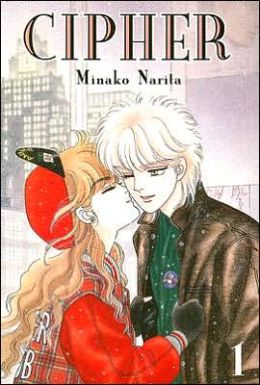
cipher1MICHELLE: Hello, and thanks for joining us for the second installment of The CMX Project, in which we turn our attention to Cipher! (Please kindly overlook the fact that this column was promised for February; life has a nasty habit of upending one’s plans.) This month we’ll also have a special guest, but before the big reveal, how about another of your fabulous summaries, Karen? (Since you did so well with
Land of the Blindfolded!
)

KAREN: Goodness, Michelle, all that praise is going to go to my head!

This month we have Cipher, by Minako Narita. Published by Hakusensha, it ran in Lala and Lala DX in the early/mid-’80s. Narita began working in the ’70s, with an eight-volume series (Alien Street) coming before Cipher. She would later go on to do a sequel to Cipher, Alexandrite, and her current work is Hana Yori Mo Hana No Gotoku, coming out very slowly in the bimonthly magazine Melody.

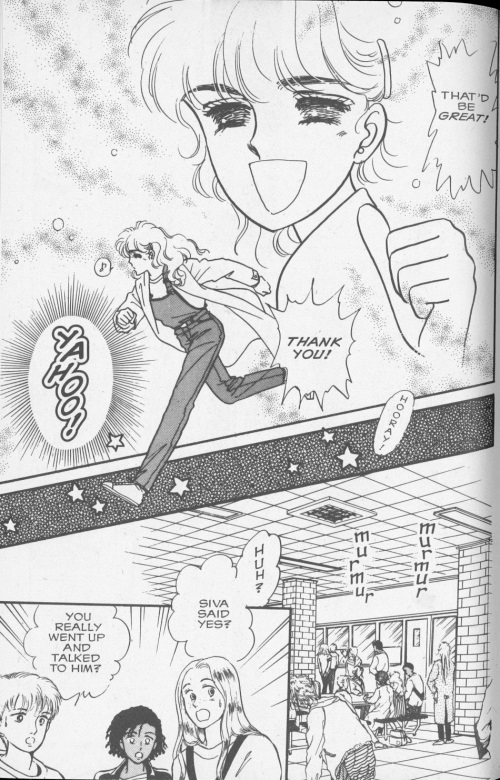
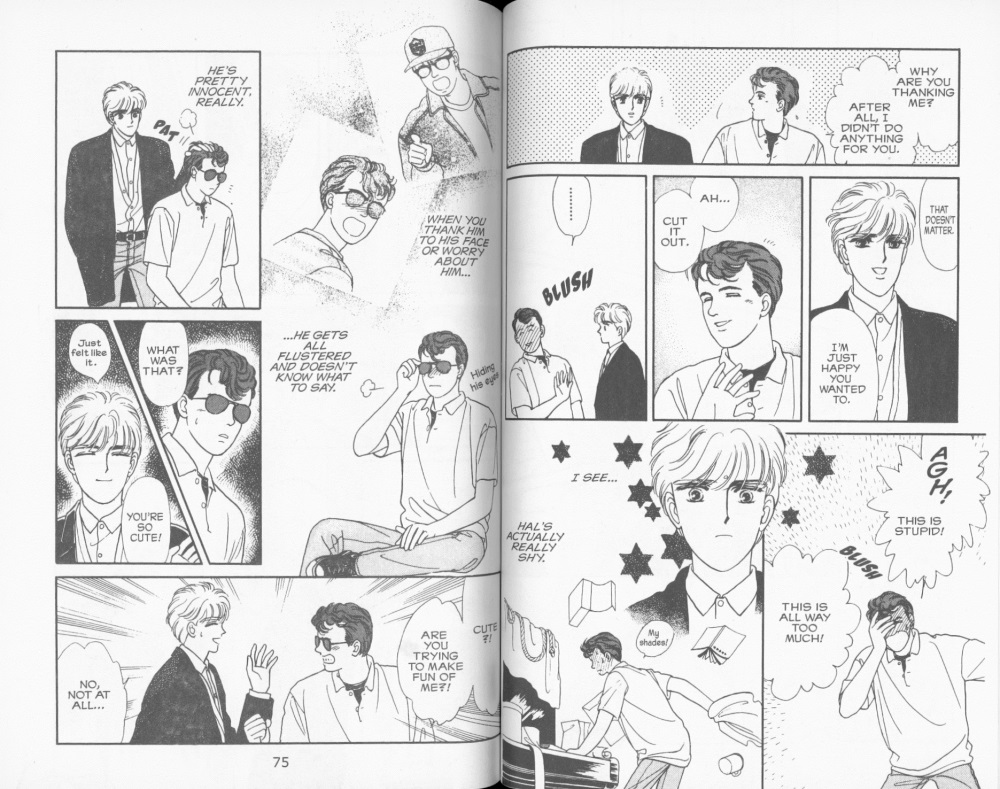
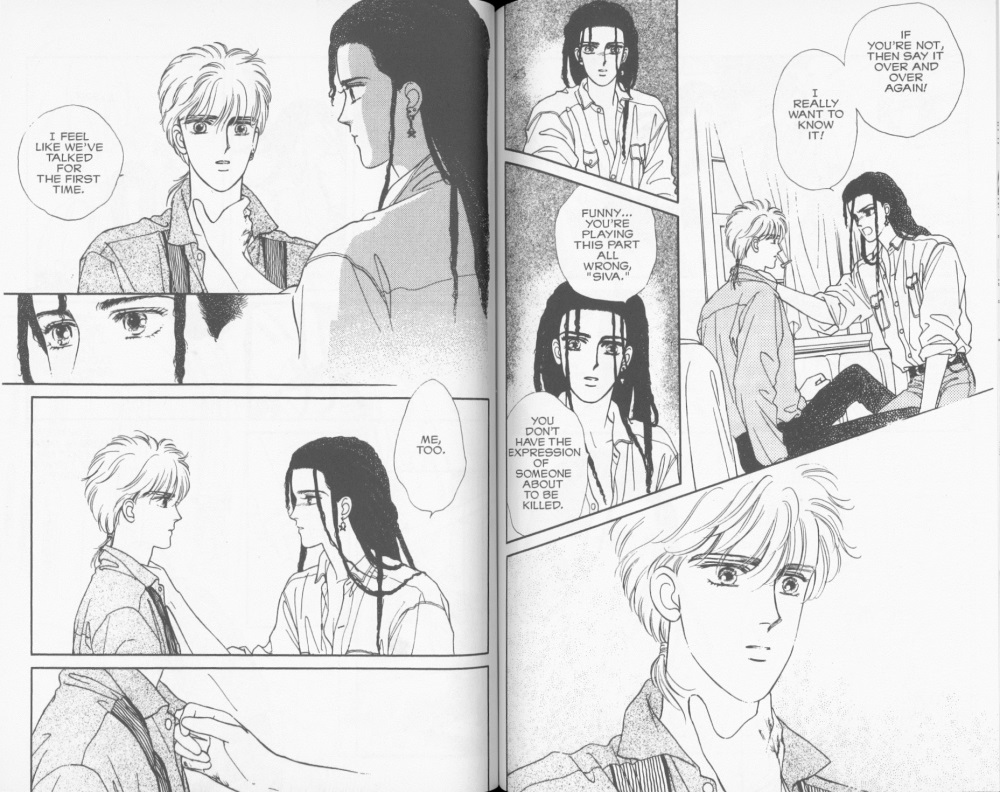
Cipher is the story of Anise, a girl in high school in New York City in the 1980s, and how she pursues a friendship with former child star Siva, breaking through his cool detachment with the force of her personality. Through Siva, she meets his twin brother Cipher, and discovers a mystery surrounding the brothers—that they’ve been changing places with each other for years. Which one is which? And why do they do this? I feel as if I’m not crafting a summary that does the story justice; instead, I hope our conversation will unfold just like the story—there’s a lot of layers to peel back, but I found the effort to do so very worth it.

But before I start going on and on, Michelle, please tell us about our special guest this month!

resized1MICHELLE: Well, I have the good fortune to be Facebook friends with none other than Asako Suzuki, who was director of manga at CMX from 2006 until its untimely death! I shared our Land of the Blindfolded column with her, and when she mentioned that her favorite CMX series was Cipher, I invited her to join us!

Welcome, Asako!

ASAKO: Hi Michelle and Karen! Thank you for having me, and thank you VERY much for this wonderful project remembering CMX! I am honored and excited to be with you today to talk about my favorite manga series, Cipher!

Cipher is a very special manga series to me, and I have lost count of how many times I read it. In fact, I have just read the entire series (of course in Japanese) not long ago.

MICHELLE: Can you tell us how Cipher came to be licensed and published by CMX?

ASAKO: Actually, I inherited Cipher with some other early acquisitions when I joined CMX. That being said, before I joined CMX, I assisted the acquisition team and made some suggestions. Cipher (and [a] few other titles that were eventually published) was one of the titles I recommended, but I didn’t know if DC Comics had acquired it or not until I started my position. When I saw it on our production schedule, I was very happy!

KAREN: Wow, Asako, that must have been a great surprise to come into CMX and see Cipher there!

resized3Now that I’m past the awesome summary-writing part, I can give my opinion—that I loved this title. I went in with preconceived notions—that this was That ’80s Manga. And while yes, it is very much set in the ’80s, it’s not done with artifice. It’s clear that Narita adored American pop culture—she even mentions doing a Thompson Twins doujinshi!—and it’s all done so lovingly. Real teens are a part of the music, movies, and current events, and it’s only in hindsight that the ’80s seem so cheesy. She also doesn’t gloss over some of the gritter aspects of the times—New York was still recovering from a terrible ’70s. Ironically, Cipher and Siva’s apartment is now in a very trendy area!

What surprised me was how the story was very much a coming of age tale—and not just for the heroine, Anise, but for the boys as well. At times, especially in the second half, she’s much more in the background, but her role seemed to be as much as a catalyst to make the bigger, darker story of the twins happen. Anise is still very childish at 16—there’s the very funny part where it’s pointed out that she really, really needs to start wearing a bra—despite her maturity and insight in some areas, she’s having a hard time seeing herself as growing up.

And then we have our former-child-star twins, Siva and Cipher (whose real names are Jake and Roy, respectively). Michelle and Asako, what’s your take on them? And do you still love the ’80s?

MICHELLE: Similar to Land of the Blindfolded, this is another case where focus drifts from the heroine and onto the two boys in her life, who each have past trauma to deal with. Anise isn’t as perpetually sunny as Kanade, but she’s still much less interesting than the twins. Or, rather, I felt like Narita-sensei was less interested in exploring her as a character. It was especially odd to me that we never learn what her focus is at the performing arts school! She narrates in volume one that “lots of people come to this school hoping to become painters, dancers, musicians, or actors.” So, which is Anise? What is her ambition for being there? As someone who actually attended a performing arts school, your “major” was vitally important.

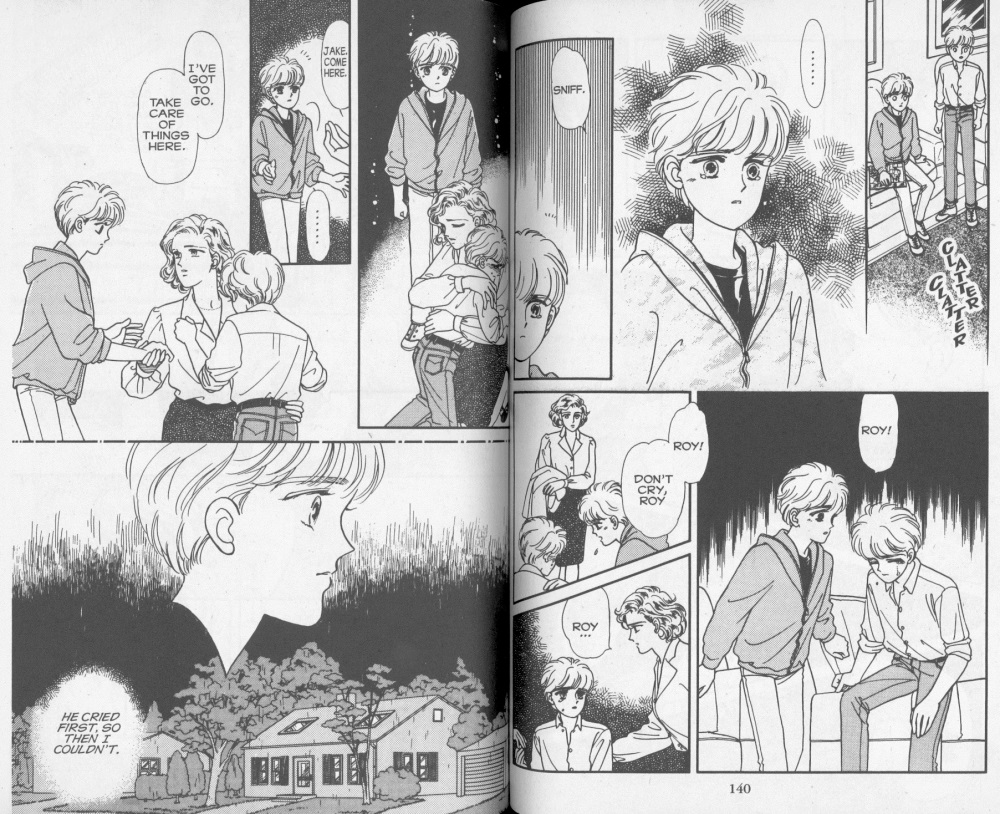
So, that said, I feel a little grumpy that the boys got so much more love, but can’t deny that they’re pretty fascinating. I especially like when the story begins to focus more on Siva and we see events from his perspective that we later see again from Cipher’s perspective. Siva felt that Cipher’s openness made him more easy for his parents to love, while Cipher felt that Jake’s reliability made his own behavior seem childish in comparison. I also really liked how the friends they make while they’re apart affect them.

resized6

ASAKO: I am a huge fan of Anise; she was my hero! The reason why I wanted to come to the United States was because I wanted to be like, and live like her. To me, Anise was more realistic and easy to relate to compared to other manga protagonists, thanks to Narita-sensei’s amazing psychological descriptions throughout the series.

Narita-sensei is an amazing writer; I can easily tell how much she loved her characters, and she treated each differently. The way she shifted focus from one character to another was just incredible. I actually had a deep conversation with one of the manga editors in Japan (can’t say who!) about Cipher and how talented Narita-sensei is!

See, Narita-sensei introduced Cipher and Siva to us through the eyes of Anise and once we got to know the twins better with Anise, we were able to learn more about them individually through the twins’ perspectives. If Anise stayed as the center of the story the whole time, the story would have been shallow. With appearance of Dana, the focus was subtly shifted to Jake, and we got to know the secret of the twins and why Jake was protective yet envious of Roy. Then we learn more about Roy in LA… I really enjoyed the multi-dimensional story telling.

resized7

Speaking of details, have you noticed of the characters’ mix-and-match wardrobes? That’s amazing!

Also, there is something I have always wanted to know and never understood… can I ask you both a question? When you say “manga from the ’80s,” what does that mean? How do you distinguish the manga from the ’80s from the recent ones and why would you get less excited about manga from the era? That always puzzled me…

KAREN: Michelle—I wondered that too! I was really hoping she would have some great talent that drove her to commute all the way in from Queens!

I missed Anise during the second half of the series when the twins separated. She was still there, but the second half was really about the twins apart, and each making friends on their own, without having the other to hide behind. I don’t understand why some places categorize this as a shounen-ai title, the only love is friendship and the twin’s kissy-kissy… is anything but that.

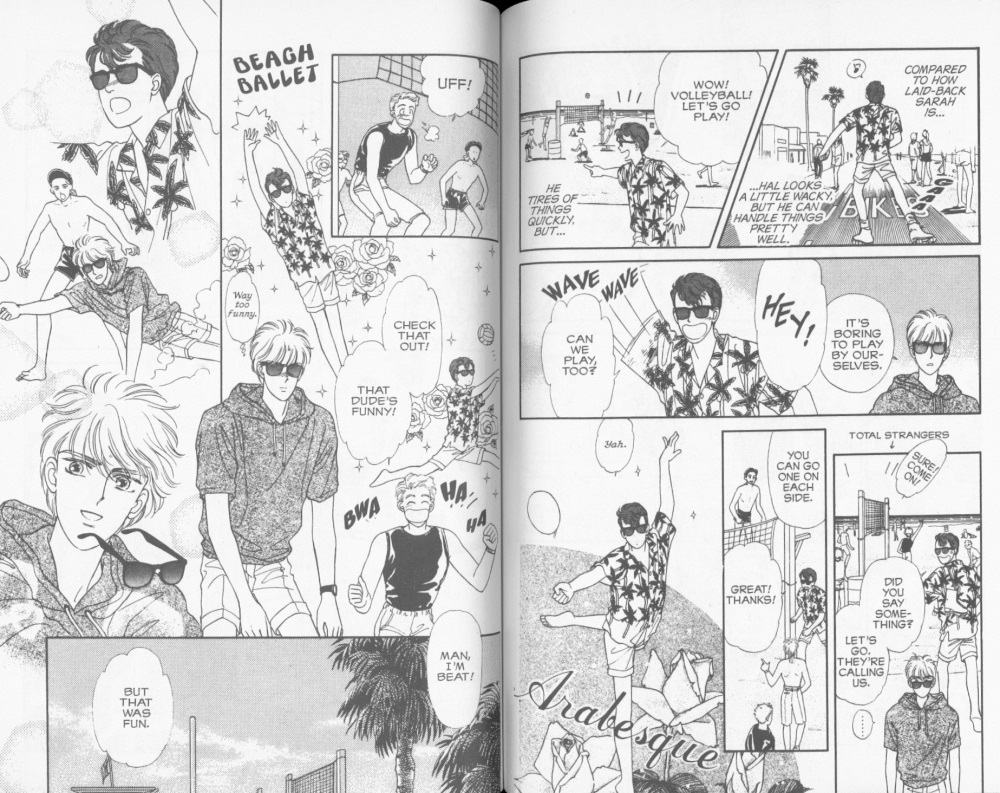
There’s a lot of subtle tonal shifts in the story—the Dana storyline being one of them—a beautiful, talented young girl on the verge of falling in love and being loved is tragically, suddenly killed, and it has a way of breaking apart the entire premise of the story. The twins don’t just grow apart, they fly apart—Roy quite literally to the West Coast, leaving Anise behind. The ruse of one twin playing another will never work again, so they had to be apart, and make friends on their own terms, and the switching between coasts feels like two different stories but… they mirror each other, like Cipher and Siva did. Alexandra and Hal are different people, but they carry their own insecurities and pasts into their friendships—friendships they needed as badly as Jake and Roy did.

resized11

I didn’t notice the wardrobes, except that I loved how detailed they were. Narita-sensei must have been importing magazines! It stuns me about the accuracy of the details—reading this series sent me into a flurry of research (yes, with the extensive use of Google Maps) and it’s amazing that she did this in the pre-internet era—unless she was here herself? Asako, do you know any of that background? She did three series set in the US so it really seems she had a feel for the place.

To answer your question, Asako, and “’80s manga” generally means the style of art that I think is viewed as rather old-fashioned—not as extreme as ’70s manga, but it still looks “dated.” However, Narita-sensei’s art doesn’t suffer as much in comparison, and I think the rep that this title has for being an ’80s manga has is because it’s set in the 1980s, and references to George Michael and Hall and Oates are funny to a modern reader who looks at it all through a lens of nostalgia. I personally adore older manga, and wish there was more of it, but sadly publishers have said it doesn’t sell—that’s one thing I loved about CMX was that they brought out Swan and Cipher.

Speaking of art, I found it very well done, and I really want to hunt down one of those out-of-print artbooks now!

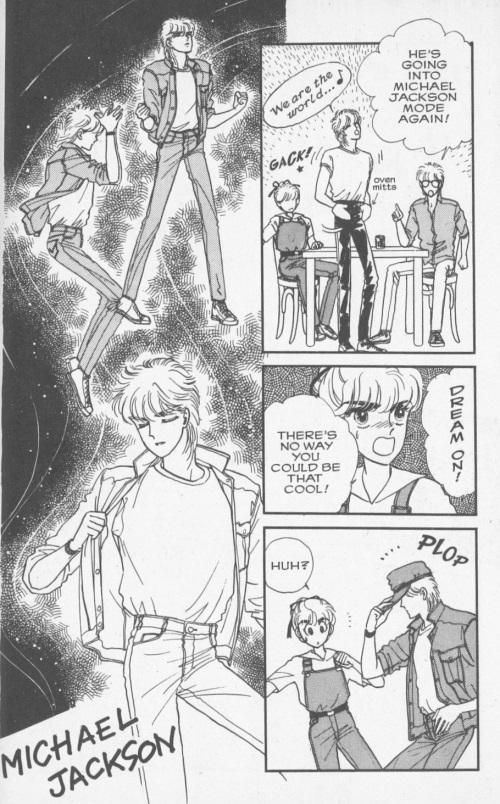
MICHELLE: I think there’s a general sense of affectionate amusement about most things coming out of ’80s culture, really. I love ’80s manga, personally, but yes, I did find it pretty funny when a dancing Cipher is deemed to be as cool as Michael Jackson, or when Narita-sensei professes in the comments, “The source of my strength, just like always, has been The Thompson Twins.”

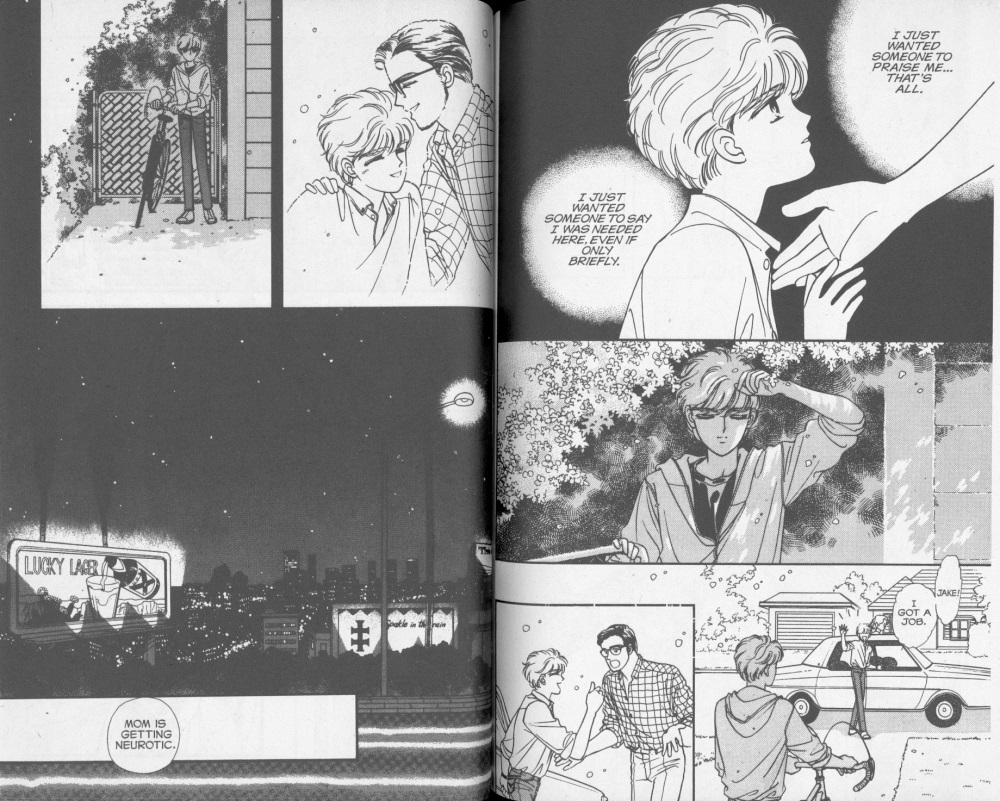
Asako, you make a great point about Narita’s layered storytelling. I didn’t think of it like that—introducing us to the twins first through Anise’s eyes, then widening the story’s scope with a purposeful sequences of events. I really loved each brother’s relationship with his newfound friend. We learn that Roy felt that he behaved childishly in his past, and so perhaps he had tried to grow up too fast and hadn’t enjoyed some of the simpler pleasures that Hal makes it his mission to introduce him to. Jake felt he always had to be the reliable one—in fact, he wanted to be needed—but then he makes friends with Levine (aka Alex, Alexandra), who is sensitive but also resilient and tough.

resized14

When Jake first meets Levine, he can’t bear to think of Roy and Dana at all, but gradually he allows himself to think about them, and then to talk about them. When one of Dana’s relatives has a baby and names it after her, Jake instantly adores the girl, and ends up breaking down a barrier with his mother for her sake. It all seems to happen very naturally. Too, I love that when everyone meets up again at the end, Hal and Levine are completely baffled that anyone could’ve ever mistaken one twin for the other.

And I, too, appreciated the details that Narita-sensei got right. I was delighted to note that, in one scene, characters are eating an Old El Paso dinner kit of some sort.

resized12

ASAKO: In the first volume of the Tankobon edition, Narita-sensei talks about her trip to NYC, and she shares some pictures that she took during the trip. It sounds like she toured different neighborhoods to choose the neighborhood where twins and Anise should live. I thought it [was] funny but I was impressed at the same time that Narita-sensei even took pictures of TV commercials she watched in her hotel room. (Did you notice Cipher was watching a Betty Crocker’s new cake mix commercial?!) Very detailed artist.

Ah, thank you for explaining about the ’80s manga. To be honest, I have never thought of manga [as] “dated.” Well, in retrospect, I did notice different printing/layout techniques and art style. Maybe I am more comfortable with the ’80s manga because that’s what I grew up reading. Haha.

Back to Cipher, may I ask who is your favorite character(s) and why? I’m curious.

KAREN:That’s great to know some of the background of the creation! I think we’re all so spoiled with just being able to Google everything that people forget how hard it was to do research on such mundane topics—like cake commercials—in those days.

Asako, since you’ve had the advantage of seeing the Japanese versions, I had two questions—what is volume 12 of Cipher about? I’ve seen it listed on information sites and on Amazon.jp—is it side stories or does it add something? Also, have you read the Alexandrite sequel series—how is it in relation to Cipher?

My favorite character in Anise. She’s the entry to the world, and even when she’s in the background, she plays an important role. For all of the ways that she seems a little less mature, she shows such kindness and understanding, and that’s what breaks the shell around the twins. She can tell them apart at the end of the “challenge” but chooses not to—but she’s already opened up their world. I like her spirit, and watching her mature through the course of the series. It may not be as dramatic as what happens to Roy and Jake, but she becomes an important part to helping Jake discover his new life and gives Roy the space he needs until a reconciliation can happen.

I also like Hal—he’s so goofy at first but turns out to be so endearing.

resized13

MICHELLE: I really like Hal, too, but I’d have to say my favorite is Siva. I like his complexity in that he’s the reliable one who is secretly dependent upon being depended upon, and I like how experiencing love (for both Danas, the original and her namesake) frees him to become his own person and to begin to understand the pain of others.

ASAKO: To be honest with you, I don’t remember what was in the twelfth volume. As soon as the bunko edition came out, I gave my tanko edition to my best friend (here in the US). That was long, long time ago. I vaguely remember it was about Levine, but I am not entirely sure. I’m sorry!

Dealing with the difference between tanko edition and bunko edition was a challenge for CMX. We had to make the English edition of the original tanko edition off of the bunko edition—does that make sense?? (:D). The pagination and proportion differences required a lot of effort on our end, and what’s more, cover materials were provided in transparencies (positive films), so they had to be scanned, cleaned and color corrected before we could use on the covers. It happened many times for other CMX books, too, but some of the cover images were not available from the licensor, so we had to scan art books or whatever the resources we could find (and of course, with Licensor permission and extensive approval process) to come up with something.

KAREN: That’s great information, Asako—but I think CMX did a great job, the covers especially were very pretty. Other companies seemed to have problems reformatting the Hakusensha-style “box on the cover” design to something that works in the American market, but this was very well done. Speaking of artbooks, I’m going to have to chase down that out-of-print artbook that came out way back when.

Cipher is thankfully one of those titles that’s easy to collect—it’s all out-of-print, of course, but most volumes go for well below cover, and a couple of others are above cover but nothing crazy—it’s an easy one to collect, so that shouldn’t be a deterrent to hunting down and enjoying this title. Yeah, it’s set in the ’80s, but there’s so much more to it than that.

MICHELLE: We hope we’ve inspired you to check it out, and would also like to extend our very sincere thanks to Asako Suzuki for joining us for this conversation!

ASAKO: Thank you for having me! Looking forward to more CMX reviews in the future!

MICHELLE: You’re in luck, because Oyayubihime Infinity is up next!

Filed Under: FEATURES, The CMX Project Tagged With: cmx, Minako Narita

Manga the Week of 5/1

April 25, 2013 by Sean Gaffney, Michelle Smith and MJ 2 Comments

Tagame-cover-sketch-1SEAN: Given that most companies regard 5/1 as 4/31, it’s no surprise that there’s not a lot of stuff this week. Trust me, that giant pile of Viz will be waiting for you on 5/8. In the meantime, let’s turn our attention to other offerings.

It has to be said, the most anticipated book for this week is definitely not for the kids. That said, the buzz for The Passion of Gengoroh Tagame: The Master of ‘Bara’ Manga is really high. This is not cute BL with pretty androgynous boys manga. This is MANLY gay manga, with lots of MANLY bondage and discipline. In fact, it’s quite violent and filled with sadism, I hear. But if you want a taste of something different, and don’t mind explicit stories, Picturebox has the collection for you.

MICHELLE: Sometimes one can be glad something exists without really wanting to check it out for themselves. This is one of those times.

MJ: I might check this out, though my threshold for sadism is relatively low.

SEAN: Vertical’s lone print offering this week is Vol. 4 of the Stan Lee penned Heroman, which is a must for manga fans who also love Stan Lee.

twinspica1MICHELLE: I do have to wonder how many such fans exist.

MJ: I wish I could like this, just for Vertical’s sake. I really do. Does that count for anything?

SEAN: The big news from Vertical is digital, though, as three of their series are available on Kindle and Nook as of April 30th. 7 Billion Needles is gripping sci-fi horror, Drops of God is a wine lover’s dream, but the big news for me is the now out-of-print series Twin Spica getting its first two volumes out. Twin Spica is the brilliant and heartwarming epic about a girl who yearns to be in space, and it never did as well here as I’d hoped. Here’s hoping that a digital release will give it new fans!

MICHELLE: That’s a hope I can share!

MJ: Now, this is something to cheer about. It makes the whole week, really!

SEAN: So what’s your kink this week?

Filed Under: FEATURES, manga the week of

Comic Conversion: The City of Ember

April 24, 2013 by Angela Eastman 3 Comments

The City of Ember | Novel: Jeanne DuPrau / Yearling | Graphic Novel: Dallas Middaugh & Niklas Asker / Random House Children’s Books

The City of Ember CoverOver 200 years ago, the City of Ember was created by the Builders, and now the citizens exist in a perpetual darkness only broken by the electric lights in their homes and lining the streets. But the lights keep going out, and the city’s power source, an ancient generator that no one understands, is constantly failing. Twelve-year-old Doon is determined to find the solution and save the city, but keeps hitting dead ends until his friend Lina finds a strange paper inside a lock box. Thanks to her baby sister, the words—written with the strange, typed script of the Builders—are only half-legible, but she can make out one: Instructions. Certain these are instructions for an exit, Lina and Doon set to deciphering the words so they can follow the directions out of Ember. But with everyone so certain that there is no escape, they find more resistance than they bargained for.

Released in 2003, Jeanne DuPrau’s The City of Ember gave us a teen dystopian novel before The Hunger Games was even a thing. There have since been three sequels and a 2008 movie adaptation, but it wasn’t until September, 2012 that Random House published a graphic novel adaptation. Adapted by Dallas Middaugh and illustrated by Niklas Asker, the comic takes DuPrau’s deeply shadowed world and attempts to bring it to life.

The City of Ember has an immediately interesting premise: two children in a city with perpetually depleting supplies who together find a way to save their people. The characters don’t know why they are there, and they don’t even know why it is always so dark (though readers will probably make their own accurate guess about that). The characters are also much more layered than expected. Doon wants to figure out the answer and save everyone, but it’s partly because he wants the glory of being Ember’s hero so his father, a kind man, can be proud of him. He’s also plagued with a volatile temper that often hinders him. Lina has fewer of these problems—too busy taking care of her sister, a toddler, and her ill grandmother. But she is sometimes overcome with desires—the best job, a pack of colored pencils (rare), a can of pineapple (rarer)—that she momentarily loses sight of important things, like Doon’s concern or her sister. These all add up to make Doon and Lina more sympathetic, as we see pieces of ourselves in them, and even increase our anxiety and investment, as we see how they’ve gotten in their own way before they even realize.

The big problem I had with the novel was the pacing. While the opening gets us right into the story with the choosing of jobs and Doon’s concern over the power and food supply, it’s mostly a slow buildup of information until about a third of the way through the book, when Lina finally finds the Instructions. And after that things move slowly as Lina struggles over each word and tries to get others to help her, like the mayor or her flighty friend Lizzie, who obviously don’t care about her discovery. Things do pick up once Doon gets involved and they start to solve the puzzle. Also, the anxiety does build up at the end as we see how Doon and Lina messed up in their decision to wait on revealing their discovery, and find themselves on the run.

The City of Ember GNAsker did a decent job portraying the darkness of this world in the graphic novel, even filling the gutters with black, and his detailed sketchings of rooms and buildings display the drabness of everything: the cluttered rooms, and clothing and items drained of color from their multiple uses. Asker also understands the importance of silence as he draws out moments like Doon’s exploration of the Pipeworks, and seems to know that narration is entirely unnecessary if his art and panel order are clear, such as when Lina discovers her grandmother has died in the darkness of night.

Dallas Middaugh must have noticed similar issues with the pacing when he adapted the story. Very quickly we see that he cut things out to keep the story from coming too much to a pause, like Lina’s friend Clary (whose important actions are performed by Mrs. Murdo) and even Lina’s failed attempts to show the Instructions to people other than Doon. Trimming the plot helps the pace of the story, but it also alters the emotional effect many of the novel’s scenes had. One big example, which seems very small, is when Lina goes to buy colored pencils from the shop. First, because we missed the prior scene of her aching to just go look at them, we don’t get Lina’s experience of coveting something that others don’t have, which becomes important when Lizzie and then the mayor are discovered to be hoarding rare food. This also diminishes our perception of Lina’s guilt when she loses her sister, Poppy, because she’s too busy debating on whether or not to buy the pencils. So while Asker does an excellent job of showing us a stricken Lina as she watches Poppy sleep later that night, we don’t have as clear of a sense that this is her fear combining with her own extreme guilt.

Jeanne DuPrau’s original novel has a fascinating premise that is riddled with anxiety from the first pages. Its slow trek towards the point keeps it from being as immediately exciting as something like The Hunger Games, but DuPrau starts to make up for this in the faster-paced climax. Middaugh and Asker’s adaptation moves the plot along more quickly and manages to convey enough background information through invented dialogue. But certain things are lost—Lina’s guilt, Doon’s temper, and the panic of other citizens that causes some to run out into the the darkness in hope of finding light—that diminish the characters, flatten them, and turn them into people we’re just not quite that invested in. So while The City of Ember graphic novel effectively gets the story across, it just doesn’t have enough feeling to put it on par with the novel.

Filed Under: Comic Conversion, FEATURES, FEATURES & REVIEWS Tagged With: Dallas Middaugh, Jeanne DuPrau, Niklas Asker, Teen Lit, The City of Ember

It Came from the Sinosphere: Yanyu Mengmeng (TV Drama) Part 2

April 23, 2013 by Sara K. 1 Comment

yymm27

Pouring Sugar on Stakes Thrust through the Heart, or TV Drama vs. Novel

The plot between the novel and this TV adaptation is mostly the same, aside from the addition of new characters (the Li family, Keyun, Du Fei, Ji Yao), and expanded roles for Erhao, Mengping, and Fangyu.

However, the feeling is significantly different. The TV drama does a lot of sugar-coating. For example…

[HUGE SPOILER WARNING + TRIGGER WARNING FOR SEXUAL VIOLENCE / SUICIDE, skip to “End Trigger/Spoiler Warning” if you want to avoid spoilers and/or triggers]

In the novel, Mengping is gang-raped and gets pregnant. When she can’t identify the father, her father stop treating her as his daughter, or even as a human being. After a back-alley abortion gone wrong, Mengping spends most of the novel in the hospital, out of sight. By the time she gets out of the hospital, her mother is in prison, her father and sister are dead, her younger brother is in an orphanage, and she has to live with her older brother, who is penniless.

She is also gang-raped, emotionally discarded by her father, and gets injured in an abortion in the TV Drama. But in the TV drama, her loving sister cares for her after the rape, and her boyfriend agrees to marry her even after he knows what happened. Furthermore, her boyfriend tracks down the rapist and personally punishes them, with some help from Mengping’s father, who starts treating her as his daughter again once a man (her boyfriend) agreed to marry her. Mengping and her boyfriend (later, husband) live happily ever after.

Then there is Ruping.

Mengping and Ruping

Mengping and Ruping

In the TV drama, Ruping commits suicide. After the suicide, all of the characters are heartbroken, blame each other for her suicide, blame themselves, and pour out all of the love they felt for Ruping but didn’t express properly while she was alive.

In the novel, when Ruping commits suicide, the characters either a) hardly notice or b) are upset because her death inconveniences them. None of the characters are depicted being sincerely sad that she is dead (well, maybe He Shuhuan is sincerely sad … to some extent).

In the TV drama, Ruping is mistaken to think that nobody loves and cares about her. In the novel … she is mostly correct.

[END TRIGGER/SPOILER WARNING]

Though the plot is mostly the same, these little differences add up to a very different message. In the novel, the message is “What goes around, comes around.” Since what goes around is pain and abuse, what comes around is not pretty. By contrast, the message in the TV drama is that, deep down, everybody loves each other, they just don’t know it, and that love can get you through everything. That is a VERY different message.

Why Was the Message Changed

So … why does the TV Drama sugar-coat the story?

I have some ideas.

First, the novel was written in the 1960s. Many people in Taiwan, including most of the characters and Chiung Yao herself, had been in China during the Chinese Civil War, and were still recovering from the aftermath. The rest of the population had experienced WWII under Japanese rule and the 2/28 Incident, which was also very traumatic. The novel was also published during the height of the “White Terror,” when Taiwan’s authoritarian government practised strict censorship and imprisoned anybody who was inconvenient to the people in power.

yymm26

By contrast, the 1980s was a much more forgiving era. The economy was booming and standards of living had risen. Taiwan was already moving towards democracy, and in 1987, just a year after this drama aired, martial law was lifted. things didn’t seem so bad.

Then there is Chiung Yao’s own personal circumstances. At the time she wrote the novel, she was a young mother, and had either just ended her first marriage or was about to end it (I couldn’t find a timeline to double-check the order of events), but in any case, ending a marriage while caring for a young child is stressful. She relied on the money she made by writing to make ends meet, so if she had stopped writing, or if her writing hadn’t sold well, she would have been in trouble.

yymm28

By contrast, in the 1980s, she was financially secure and independent, had well-established and extremely successful writing career, and had been happily married to her second husband for years. Chiung Yao herself says that she couldn’t have written the novels she wrote as a young woman at a later age because she had stopped experiencing such sharp, forceful feelings.

It’s entirely possible that a TV drama faithful to the spirit of the novel would not have been allowed to air in the 1980s. I think that Taiwanese TV nowadays wouldn’t produce a TV show with even the 80s drama adaptation’s level of emotional harshness. Audiences would not receive it well.

In fact, based on the reviews I’ve read, the 2000 adaptation of Yanyu Mengmeng is even sappier than the 80s version.

Why I Hate This Story

For starters, I hate most of the characters … Yiping, Ruping, He Shuhuan, Lu Zhenhua, Xueqin, etc. In the novel, just about the only significant characters I didn’t hate were Fu Wenpei (Yiping’s mother) and Fang Yu. I don’t hate any of the new characters (Keyun, Du Fei, etc.) who were added to the story in the TV adaptation.

Yiping has ulterior motives for going out with Erjie.

Yiping has ulterior motives for going out with Erjie.

Okay, I did feel more sympathetic to Yiping in the TV drama, so I suppose I don’t hate TV!Yiping, but that’s mainly because I felt everybody else was treating her unfairly. Everybody was telling her that she should set aside her hatred for the Lu family, that she was their daughter, and that she should learn to love them. I, on the other hand, felt that not only was Yiping entitled to resent the Lu Family, but I was advising her to cut off contact with them as soon as feasible. Her father abused and neglected her for more than ten years, and her siblings either contributed to the abuse/neglect, or refused to offer any help to Yiping … and never ONCE in the entire drama do they apologize to Yiping and admit to her that they were wrong (his father quasi-apologizes to her mother). If any reconciliation is to happen, I think the Lu family (particularly his father) is responsible for the first move, and before there is a clear and sincere apology, nobody should tell Yiping to let go of her bad feelings about the family.

That’s not to say that I approve of Yiping’s actions – on the contrary, I advised her (in my head) to forget revenge so she can get the Lu family as much out of her life as possible. I also advised her to dump He Shuhuan, particularly considering how inclined he is to use physical force to control her in the drama (at least in the novel he’s not physically abusive). Yiping needs a sassy gay-friend, not a self-centered borderline-abusive boyfriend like He Shuhuan (I personally think Yiping was doing Ruping a favor when she ‘stole’ He Shuhuan, but I know Ruping disagrees with me).

When Yiping wants to get away from Shuhuan, he grabs her, carries her as she's kicking and screaming, and pins her to a fence.  What a charming boyfriend.

When Yiping wants to get away from Shuhuan, he grabs her, carries her as she’s kicking and screaming, and pins her to a fence. What a charming boyfriend.

And how could I hate Ruping? Mainly because she seems very passive-aggressive to me. She repeatedly claims that she loves Yiping like a sister but … well, it never translates into her actions. When Yiping needs help, Ruping does nothing (and I don’t buy that Ruping doesn’t have enough courage, because she certainly has enough courage when her other siblings get in trouble). And when Yiping is going through some really terrible things, Ruping is caught up in her own selfish concerns. Yiping, at least, is honest about the fact that she is not looking out for Ruping, and even tells Ruping so.

Ruping needs a cool-old-lady friend.

What’s worse, Yiping, Shuhuan, and Ruping are all bookworms. To Yiping, novels are like water, and reading is one of her main mechanisms for getting through the day. Shuhuan has a large library. Yiping loves 19th century European novels – Tolstoy, Bronte sisters, etc., while Shuhuan enjoys contemporary foreign literature. Ruping is a fan of popular Chinese-language literature, particularly romance and wuxia (I find it intriguing that she is an wuxia fan, considering that she’s a total doormat who wouldn’t hurt a fly). I also identify as a bookworm, and I suspect most people who read the novel are bookworms to some extent, so this makes the characters more like the readers.

In Shuhuan's library.

In Shuhuan’s library.

And that brings me to the crux of why I hate the story – I can see myself in the characters, and it’s an awful part of myself. My family is much more functional than the Lu family – but even I know something about the resentment which builds up between family members, and how it can drive people (myself included) to do terrible things. You could say that I am Yiping’s daughter (my mother as a young woman had some things in common with Yiping). In the TV show, and especially in the novel, I could feel that a) what the characters were doing was wrong and b) understand why they were doing it because, under similar circumstances, I would have the same impulses.

I hate being shown that I can be an awful person.

I seriously considered not watching the TV drama because I hate the novel that much.

My Reaction to the Drama

This is hands down the most addictive TV drama I’ve seen in Chinese, and one of the most addictive things I’ve watched in my life. Even though I already knew the story, I simply had to keep going. As soon as one train-wreck has happened, it’s possible to see the next train coming to pile on the damage.

yymm30

In some ways, the TV drama is much better written than the novel – many supporting characters are much more fully realized, and the suspenseful elements are more deftly crafted.

And the tears. Oh the tears. In my mind, I’ve re-titled the drama “River of Tears” because of the effect it had on me.

But towards the end of the TV drama, I stopped engaging with it because it started to seem a little false to me. The story wants to go to awful places, but somebody puts on the brakes, assuring the audience, ‘no, it’s not really that awful’.

The ending of novel feels profoundly sad because it feels true. The more optimistic ending of the TV drama does not feel true to me.

Availability in English

Currently, this is not available in English, and since it’s a Taiwanese drama from the 1980s, I am not going to hold my breath. Still, if any Taiwanese drama from the 1980s has a chance of being licensed by a streaming service with English subtitles, it’s this one, or another one of the 80s Chiung Yao dramas.

Conclusion

yymm24

Nowadays, before I pick up a Chiung Yao novel, I have to ask myself whether I am ready to tear out my heart and put it through the washing machine for cycle. I’ve read that Yanyu Mengmeng is the rawest of them all, but based on some of the summaries I’ve seen, I suspect some of Chiung Yao’s other novels might wrench me even more. She is a genius of pressing emotional buttons.

For a heart-warming Chiung Yao story, read Princess Pearl. Otherwise, beware!

Next Time: Datang Shuanglong Zhuan (novel)


Why is it that Sara K. only found out that the Takarazuka Revue was coming to Taiwan AFTER the tour was over????? Now she’ll actually have to go to Japan to see them perform live. Oh well, if she ever has the chance to see them in Japan, it will probably be better than seeing them in Taiwan.

Filed Under: Dramas, It Came From the Sinosphere Tagged With: chiung yao, Love in the Rain, taiwan, TV, Yangyu Mengmeng

Manga the Week of 4/24

April 18, 2013 by Sean Gaffney, MJ and Michelle Smith 6 Comments

SEAN: It’s a healthy fourth week of the month here at Manga the Week of Central, with something for everyone. Let’s delve deeper.

Dark Horse gives us lucky Vol. 13 of Bride of the Water God, which is manwha, so I defer to those who know it better than I do.

MJ: This series is incredibly beautiful to look at. I’m behind a few volumes at this point, but it’s one of those I absolutely try to keep up with in print, just because it’s so pretty. It’s a keeper.

SEAN: There’s also Vol. 27 of Gantz, where bad things continue to happen to everyone, but at least they’re all in rubber lycra outfits.

MICHELLE: *snerk*

unico

SEAN: Unico has shipped to most of its Kickstarter backers by now, but it finally hits retail next week. I have a review out that gives a deeper opinion, but suffice to say it’s cute, sad, and a little bit weird, like the best of Tezuka. Also, although there are lots of Pink Lady refs, be assured there is no Jeff Altman.

MJ: Children’s manga is rarely my thing, but your description is pretty compelling.

MICHELLE: Yeah, “cute, sad, and a little bit weird” sounds like a winning combination to me.

SEAN: Kodansha seems to have indicated that sales for Bloody Monday are meh, so I suspect this may be the penultimate volume over here. It’s still filled with action, intrigue, and lots of dead folks.

MJ: I dropped this early on, not because it wasn’t interesting, but because it wasn’t interesting *enough* to earn my money, volume after volume. I guess it’s not just me.

MICHELLE: I bought a couple of volumes but then never read them. I like the creative team, but just never found the time.

SEAN: Fairy Tail is a quarter of the way to 100 now, as Vol. 25 continues the S-class battles, with Fairy Tail fighting itself to see who is strongest. I suspect a third-party will get involved and ruin everything, myself…

negima38

The last of Del Rey Manga’s four debut series reaches its end, albeit at Kodansha Comics. Negima hits Vol. 38, with an ending that, um, well, it’s certainly something people talk about! Aheh. I’ll have more to say in my review, but let’s just say: Fandom *hates* Where Are They Now? endings.

MICHELLE: Even though I’m not a Negima! fan, it’s still something of an achievement that it’s finally complete in English.

SEAN: And then there’s Yen. The latest Alice spinoff, My Fanatic Rabbit, ends with its second volume. I really liked the balance between romance and psychosis, and hope it stays even in Vol. 2, though I admit I’m not optimistic.

Another lucky 13, with Black Butler. Though given the sheer power of its cast, I don’t think they really need to worry about black cats. I understand this volume has some nice Sebastian revelations.

MJ: I wish I could like this series. I would really like to like it. But every time I try, it’s a complete failure.

MICHELLE: I’m planning to talk about this volume soon on Off the Shelf, so I look forward to hearing about your attempts. For me, this is a series I kind of like, or at least find easy to read, but have no intentions of rereading.

SEAN: Ah, Bunny Drop has hit Vol. 8. I think this means that the matter of “that spoiler” may now be discussed. And may I say I’m almost relieved? In any case, I’m sure it will be SAFE AND FUN.

MJ: I’m really looking forward to seeing how this plays out! I have a lot of faith in the mangaka.

MICHELLE: I’m a bit more dubious, but will certainly be finishing out the series.

doubt1

SEAN: A new series, in handy omnibus form! Yen has the first 2 volumes of Doubt, whose cover has everyone wearing bunny heads, but trust me, Bunny Drop this ain’t. It’s another survival game title, where you learn not to get too attached to anyone at all.

MJ: I suspect this may not be for me, but I fully intent to give it a try! These omnibus releases are great for that, because you get a really substantial go at it.

MICHELLE: Maybe it’ll turn out to be kinda fun, like BTOOOM!.

SEAN: Is This A Zombie? 4… yeah. Moving on.

Kieli has its 8th novel published. The story of a girl who can see ghosts, and her relationship with a man named Harvey. Who is not a 6-foot-tall pink rabbit, though it would fit with this week’s accidental theme.

The Melancholy of Haruhi Suzumiya 15 continues to adapt the 7th novel, and has steadily improved, though not to the point where I can say “you don’t have to read the book”. Because you do.

Pandora Hearts is also at 15, and I think I will yield to MJfor this one.

MJ: Oh, Sean… as you know, this series basically owns my soul. I’m expecting an enormous amount of drama in this volume, given where we left off. I’m expecting at least one heartbreaking loss. And I just can’t wait. Expect a flustered review of some kind to show up over the next week. I think this one’s gonna be a doozy.

MICHELLE: I’m a few volumes behind with Pandora Hearts. Clearly, I must rectify this.

SEAN: Lastly, there’s the 8th novel of Spice & Wolf, a title that always reminds me of Playboy Magazine, in that people always say they read it for the economics.

Getting anything interesting this week?

Filed Under: FEATURES, manga the week of

3 Things Thursday: Wishful Thinking

April 18, 2013 by MJ 11 Comments

Today, as the Battle Robot chatted about next week’s new manga (see Sean’s post later this evening), a title came up that is one I have tried hard to like, but failed utterly to do so. My desire to “like” is large, in general. I’m a liker. I like to like things. My ability to “like” is a major contributor to my quality of life. This may diminish my worth as a manga critic, but in the big picture I’m okay with that if it means that, above all else, I get to deeply enjoy the medium I spend so many hours with. Obviously I don’t like everything, and I’m not afraid to complain loudly and often, especially when it comes to genres directed at my gender, like BL, shoujo, and josei manga. (Yes, Black Bird, I’m looking at you.) But I always approach a new series with the desire to like it (even love it, if possible), and I’m occasionally heartbroken when that desire bears no fruit.

So, with that in mind…


3 manga series I wish I could like:

blackbutler41. Black Butler | By Yana Tobaso | Yen Press – Though I’ll admit I gave up many volumes ago, I initially tried hard to like Black Butler. I’ll usually give any series at least three volumes to grab me, and I gave this one five, but my efforts were in vain. Why did I want so much to like Black Butler? I suppose it’s a longing for connection. With its enormous female fanbase and significant slash fandom, it crosses over heavily into circles I once called my own, and my lack of ability to connect lends itself to a sort of (mild) identity crisis. Furthermore, the series runs in my pet “shounen” magazine GFantasy, home of many series I do like (and even love), such as Gestalt, Nabari no Ou, and my beloved Pandora Hearts. Is it just me? I fear it may be.

alice-omnibus2. Alice in the Country of Hearts | By QuinRose & Soumei Hoshino | Yen Press – My desire to like this series has a name, and that name is “Michelle.” Normally, I’d feel no alarm or sadness at all over my inability to like a reverse-harem series based on a game. In fact, I’d consider any positive reaction to be more of a pleasant surprise. In this case, however, Michelle’s enjoyment of the series (and her oft-stated hope I might share in her enjoyment) raises the stakes considerably, and I’m rather sad and ashamed to admit that after reading through two of Yen Press’ new omnibus volumes I just can’t quite get there. I’m so sorry, Michelle. I really, really wanted to like this. Can you forgive me?

saiyukireload43. Saiyuki Reload | By Kazuya Minekura | Tokyopop – Of all of these, I think Saiyuki Reload makes me saddest of all. Those who know me must be aware of my fervent love for the works of Kazuya Minekura, especially her unfinished BL noir-action series Wild Adapter, which Michelle, David, and I have spent much time praising to high heaven (or the non-theist equivalent of same). Wild Adapter, in fact, is one of the few topics capable of compelling me to discuss things like industry news. Somewhat less beloved by me, but still thoroughly enjoyed, is Minekura’s nine-volume shounen fantasy-adventure Saiyuki, which was extended into a shoujo series for Comic Zero Sum called Saiyuki Reload.

I originally borrowed all the then-available volumes of Saiyuki and Saiyuki Reload from a friend, and it’s telling that afterwards I made it my business to acquire my own copies of the former and not the latter. I don’t know what it was—maybe the increased indulgence in the characters’ hotness and BL subtext demanded by a shoujo magazine—but something about the continuation just didn’t click. Though I’ll admit that, were it possible to get my hands on these volumes again, I’d be open to giving it a second chance. License rescue, anyone?


Readers, what manga series do you wish you could love? And why?

Filed Under: 3 Things Thursday Tagged With: alice in the country of hearts, black butler, saiyuki reload

Manga the Week of 4/17

April 11, 2013 by Sean Gaffney, Michelle Smith, MJ and Anna N 3 Comments

SEAN: After a relative deluge the last two weeks, it’s much quieter this week. So what have we got here?

I admit that I’ve never been able to get into Animal Land, the shonen series that Makoto Raiku started up when he left Shogakukan loudly and angrily and moved over to Kodansha. But then I was never into Zatch Bell either. That said, I know some people who really enjoy this series about humans, animals, and families. And it’s still going in Japan, so don’t expect Vol. 7 to be the last.

MICHELLE: I read volume one and wasn’t sure what to make of it. I liked some things, but the art was ugly and there was lots of pooping and in the end I could never convince myself to read a second volume.

SEAN: I had actually thought that Arisa ended with Volume 10, but it turns out that it has two more volumes after this. Presumably the manga has not finished its advanced course on psychological drama and twin switches. Not that I’m complaining, it’s good stuff, even if I’ve fallen way behind.

MICHELLE: I’m several volumes behind, too, but I’ve been really looking forward to catching up when volume ten comes out.

kanokon_vol1-2_full

SEAN: Drawn and Quarterly have said that despite Amazon saying their Kitaro collection is out next week, this is not the case – May is the date being given. But if you want yokai, only about 20 times more moe, why not try Seven Seas’ Kanokon omnibus? It features a busty fox girl yokai, and is also a classic harem with meek male lead. I suspect the crossover audience between D&Q’s yokai title and Seven Seas’ is zero, myself. But these series do pretty well for the publisher, as we found out in this interview.

Vertical gives us two of the hotter new series out there. Flowers of Evil hits Vol. 5, and people are certainly talking about it now that it has an anime adaptation! Hey, all publicity is good publicity. Plus it’s still a riveting psychodrama, no matter what the characters look like.

MJ: I’m not a big anime person, but I’ve been quite a fan of this manga series, so I’ll always look forward to more.

SEAN: There’s also Vol. 2 of Knights of Sidonia, which MJjust praised earlier today. I expect to see lots of space battles, lots of angst, and probably not a lot of humor. But hey, these sorts of series have surprised me before. Perhaps more bears?

MJ: Probably this goes without saying, given my post earlier, but YAY! I really can’t wait.

MICHELLE: I enjoyed volume one very much, and can’t wait for the second installment!

ANNA: I am looking forward to this as well!

SEAN: Speaking of series getting closer to their end, Bokurano: Ours must be running out of characters to kill off, as it only has 3 volumes to go after this. I admire the plot of the story and what the author is trying to say, but oh, so not for me.

MICHELLE: It *is* very depressing, but I still like Bokurano: Ours a lot. I think it’s the grim horribleness of the truth behind what’s happening that really hooks me.

SEAN: Dorohedoro, on the other hand, is not ending anytime soon, possibly to Viz’s chagrin. Still, I am pleased they’re still churning it out, as it remains my absolute favorite Ikki series, and it has the RIGHT kind of nihilism for me to get into (even if, yes, it also kills off a lot of its cast).

inouegaudi

And it’s not manga, but it’s probably the most anticipated release of the week. Pepita: Takehiko Inoue Meets Gaudi is, in Viz’s own words, “Half travel memoir, half art book, all beauty.” Given the love folks have for Vagabond/Slam Dunk/Real, and the love many manga and non-manga fans have for Antoni Gaudi, this has all the hallmarks of a seriously impressive book. I hope to be amazed.

MJ: This is definitely my most-anticipated release for this week. I’m thrilled about the existence of a book like this in English, and I can’t wait to read it!

MICHELLE: I love architecture and I love Takehiko Inoue, so I don’t know how I could fail to love this book.

ANNA: This and Knights of Sidonia are honestly the only things I’m excited about this week. I plan to check it out!

SEAN: What are you buying this week? Also, doesn’t “God’s Architect” sound like the title of a Stephen Chow movie?

Filed Under: FEATURES, manga the week of

3 Things Thursday: First Quarter Favorites

April 11, 2013 by MJ 5 Comments

Now that we’re getting into April, it seems natural to look back at the first three months of the year with a view towards understanding the year to come. And despite some real tragedy in the English-translated manga industry, I am surprised to note just how good things look from here. Brigid Alverson posted a great article on the state of the industry at Publishers Weekly—a must-read if any of you missed it—but as usual, I’m better equipped to offer a personal take.

When I looked back at the first quarter of the year, what I mainly notice is just how many new and continuing manga being currently released (and re-released!) are truly catering to my tastes. So with that in mind, let’s talk about…


3 beloved first quarter manga releases

heartofthomas1. The Heart of Thomas | By Moto Hagio | Fantagraphics – The Heart of Thomas was my most eagerly anticipated manga of the year, and while its January release date set the bar perhaps unfairly high for the year to come, I can’t bring myself to be sad about that. Michelle and I discussed the book at length in our first BL Bookrack column of the year, and every moment spent with it was a true pleasure. My concluding thoughts from that column: “In case it isn’t obvious to anyone reading this, I loved this manga with my whole heart. And I’ll admit that’s not exactly what I expected. I expected to find it visually beautiful and worthy as a classic, but I also expected it to be very dated and I thought the story might not appeal to my tastes as a modern fan. Instead, I found it to be both beautiful and emotionally resonant to an extent I’ve rarely experienced—especially in BL manga. This is a book I’d wholeheartedly recommend to any comics fan, without reservation. It’s an absolute treasure.” Yeah. That.

tokyobabylon12. Tokyo Babylon | By CLAMP | Dark Horse Comics – 2013’s first quarter was incredibly strong for MJ-friendly re-releases, the most spectacular of these being Dark Horse’s new edition of CLAMP’s Tokyo Babylon, a long-time favorite now back in print with a fresh English adaptation and gorgeous print production. I previewed the first omnibus for Off the Shelf in March, and I couldn’t be happier. From that column: “… Dark Horse’s English adaptation is noticeably different, presumably thanks to the hand of its new editor, Carl Horn. Carl has a gift for making English dialogue really come alive, and his influence is apparent immediately … I really do recommend the new adaptation. Plus, if the trim size is as promised, it’s going to be gorgeous. I’m hoping they’ve used really nice paper, too.” And yeah, they have. It’s beautiful. Don’t miss it.

knights13. Knights of Sidonia | By Tsutomu Nihei | Vertical, Inc. – One new favorite that really snuck up on me is Tsutomu Nihei’s Knights of Sidonia, the first volume of which appeared in early February. Never having read the author’s well-known title Blame!, I didn’t know what to expect from this series. But apparently it’s just my thing! Michelle and I took at look at it for Off the Shelf, and it easily charmed us both with its intriguing characters and wonderfully detailed artwork. From that column: “… while there is still a lot of mystery still for readers (as well as for Nagate) at the end of the first volume, that sense of the unknown is far from overwhelming. I’ll admit that I had to read the book twice in order to feel that I really understood it, but I honestly don’t consider that a negative in any way. I’m a fast reader, but it’s not too often that a single volume captures me so easily that I’m really happy to re-read it immediately afterwards, just to catch more of its details.” I’ve re-read it again since, too. It’s that interesting.


Special shout-outs too, to Viz Media’s new digital re-release of From Far Away and Archie Comics’ charming OEL series Sabrina the Teenage Witch: The Magic Within. It’s a great year so far, really.

Readers, any special favorites in the first quarter of 2013?

Filed Under: 3 Things Thursday Tagged With: knights of sidonia, the heart of thomas, tokyo babylon

It Came From the Sinosphere: Burning Moon

April 9, 2013 by Sara K. Leave a Comment

A wallpaper made for Burning Moon

It’s about time I said something about Selina Lin, one of Taiwan’s most popular female manhua artists. Though she’s sometimes called the “queen” of girl-oriented Taiwanese manhua, all of her works are quite short. Burning Moon, her longest work, is only five volumes long.

The cover of Volume 5.

The Story

The emperor’s concubine wants to maintain her status by bearing a son. The problem is that she bore a girl, so she wants to swap her newborn daughter with her sister’s newborn son, Duan Chengfeng. To prevent him from getting kidnapped, Duan Chengfeng’s mother poisons him. His father intervenes, but to fend off future kidnapping attempts, Duan Chengfeng has to live as a sick child.

Duan Chengfeng gets pretty tired of this, so as a boy he sneaks out to experience a bit of freedom. That’s how he meets a girl called Yue Shuchan. Realizing that their son doesn’t want to live the rest of his life with his freedom confined, his parents decide to drop the illness ruse and arrange a marriage for him…

Background

All of the explicitly girly manhua I’ve covered so far came from Star Girls magazine. That’s because it’s the only magazine dedicated exclusively to girly manhua put out by a major publisher. However, there is also Mon-mon magazine (the name in Mandarin is “mèng​mèng​,” and “mèng​” means “dream”). Most of the comics which run in Mon-mon magazine are shojo manga translated from Japanese, but they also publish original material from local artists, of whom the most popular is Selina Lin.

The latest issue of Mon-mon.

The latest issue of Mon-mon.

Selina Lin’s work has been translated into quite a few languages, but the only two works that I could find which have been officially published in English are:

1) White Night Melody (the first volume was published by Tokyopop, and I suspect this will never be license-rescued)
2) Manga Tarot, which technically is a card deck, not a comic book.

This was originally supposed to be only three volumes long, but readers felt that the original ending was too tragic, so Selina Lin wrote two more volumes set in the present day, featuring the reincarnations of the original characters, and made a happy ending.

The Art

I do not like the art style of shoujo manga currently coming out of Japan, unless it’s retro, and that’s one of the reasons my interest in current shoujo is … limited. What I love is a) Showa 24 group artwork and b) late 80s-90s shoujo artwork.

Selina Lin’s art is very much like current shoujo styles in Japan … but somehow, she gets me to actually like it.

burning1

Take this picture for example. Though it features the “cute” glass-eyed look which I dislike, it’s got lots of nice round curves, with nice crisp folds in the dress and dark ribbons to add some visual structure. I can dig this.

And even when it’s being “cutesy,” it also manages to have a bit of a crystal quality a well—the pearl-like roundness, the crisp patterns—which neutralizes my usual distaste for this style.

This would look better if it weren't for my low-end camera.

Of course, in a storytelling medium, it’s not enough for art to look nice; it also has to tell a story. Is the artwork a little too busy? Perhaps. However, I think it does a good job of letting the characters express themselves, such as in the following picture:

burning3

I can feel the warm, light-hearted joy.

Now, speaking of the storytelling…

Underdeveloped Storytelling

One of the reasons I’ve waited so long to discuss Selina Lin is, well, I think her stories are boring. I was hoping that, as her longest work, this might be better, but …. well, it’s not much better.

It’s not that the ideas are bad. For example, Duan Chengfeng could have been a really, really interesting character—someone who is forced to pretend to be ill for his own safety as he itches for adventure can be the basis of a really engaging story. However, this potential was wasted. The manhua covers too much plot in too few pages, so there’s no room to explore the inherent conflict in Duan Chengfeng’s situation. As soon as the love triangles come into the story, Duan Chengfeng’s problem with having to feign illness get dropped, which makes it seem like it wasn’t important in the first place.

And the romance … I actually do believe that love at first sight can happen (or at least, that people can fall in love with each other at lightning speed). But even when the bond is established instantly, it still has to grow and evolve. In all of the romantic relationships in this story, I felt there was no growth. Instead, the storyteller just said, “Okay, these people are in love with each other,” and didn’t offer much more. That makes the whole romance angle of the story feel empty to me.

Normally, I would have been stubborn and read all five volumes. However, considering my previous disappointments with Selina Lin, I did not feel inclined to read beyond Volume 3. After reading a plot summary of Volumes 4-5, I feel even less inclined to finish the series.

I don’t know much about how Mon-mon magazine works, so perhaps there are editorial constraints which make Selina Lin limit most of her manhua to three volumes. But even if the length of her work is being limited by her editors, she should tell a story which fits a three-volume length, instead of telling a story with much plot and little substance.

Availability in English

Well, it’s never been licensed in English… and to be honest, I don’t think it should be.

Conclusion

Selina Lin makes me like an art-style which usually turns me off, which is an accomplishment. That said, I dearly wish her storytelling was as good as her drawings. Her stories aren’t even bad, they’re just poorly executed.

I don’t get why she’s so popular. Sure, the art is nice, but her manhua simply bores me.

Maybe she should team up with somebody who is a much better storyteller.

Next Time: Love in the Rain / Yanyu Mengmeng (TV drama), which most certainly is NOT boring


Since her last post at Manga Bookshelf, Sara K. has soaked in one of the only three mud hot springs in the world, visited a bat cave, walked a trail with a 60 degree gradient (downhill, thank goodness), seen fireflies for the first time in her life, had her blood sucked by wild leeches, seen trees that are over 2000 years old, visited the “forgetting sorrow” bamboo grove, saw a wild male Swinhoe’s pheasant, went to Taiwan’s highest automobile-accessible mountain pass, dealt with her computer going haywire, bought her first new computer in over two years, went hiking above 3000 meters with someone who grew up in Soviet Russia and someone from South Africa, learned how to play Perudo, ate a wonderful meal of mountain vegetables she had never knew existed at a restaurant over 2700 meters above sea level, saw a bunch of beautiful waterfalls and forested hills, saw the beginning of the Matsu Pilgrimage (with over a million participants, it’s one of Asia’s biggest religious pilgrimages), and much more. It was way, way, WAY more interesting than this manhua.

Filed Under: It Came From the Sinosphere Tagged With: manhua, Selina Lin

Manga the Week of 4/10

April 4, 2013 by Sean Gaffney, MJ, Michelle Smith and Anna N 5 Comments

excelsaga25SEAN: Yes, that’s right, after catching up digitally this week, next week will see the debut of Excel Saga 25! Both digitally and in print! We’re close to the end, folks! There’s only two volumes to go after this one! With Excel go back to her body? Will Watanabe win Hyatt’s heart? Will Misaki be tsundere or simply have a nervous breakdown? Will Elgala continue to be Elgala? We’ll find out next week! Can you stand the excitement?

So, what are you buying this week?

MJ: Ahem.

SEAN: Hm? Did I forget something?

MJ: (glares)

SEAN: OK, OK, it’s possible there’s a few more things coming out next week…

Speaking of series that have been going on seemingly forever, Oh My Goddess hits Volume 44. Forty-four! That’s as many as four elevens. And that’s fantastic. We’re still trawling through hell, meeting mini-boss after mini-boss, and this is still looking an awful lot like the series may wrap up after this arc. But we shall see.

As I noted in my Pick of the Week, some folks got their copies of DMP’s Unico a bit early. But it hits retail shops next week, and is a great Tezuka title for kids (in the same way that, say, Book of Human Insects isn’t). That’s not to say it doesn’t have sad or dramatic moments, but it’s definitely all-ages fun. And in full color!

MJ: I missed backing the Kickstarter for this, so I’m looking forward to picking it up.

SEAN: Kodansha is putting out Volume 3 of Missions of Love, a title I’ve enjoyed. I suspect the love triangle will get ramped up quite a bit, given the cliffhanger from last time…

MICHELLE: I read volumes 1-2 fairly recently, and it’s probably not a good sign that I utterly forgot the series even existed until just now.

SEAN: Seven Seas has the 7th volume of A Certain Scientific Railgun, one of my favorite titles of theirs. We just wrapped up a dramatic arc, and glancing at the cover, I expect that we’ll see a lot of cute comedy and quasi-romance here to make up for it. Should be fun.

crimsonempireThe other series is a debut, though fans of Alice in the Country of Hearts may find it awfully familiar, as it shares the same author and is based off a similar series of Otome Games. Crimson Empire 1: Circumstances to Serve a Noble may sound like it’s straight out of Harlequin with that title, but it features hot assassin maid bodyguard action!

ANNA: I am somewhat tempted by this, just because I enjoy the Alice franchise much more than I expected to. And I love romance stories with insanely long titles.

MICHELLE: Wow, the cover for Crimson Empire looks very much like a BL cover with a random girl on it.

SEAN: SubLime offers us Vol. 4 of Punch Up! Unfortunately, I can’t find cover art anywhere, so can’t do my usual schtick of talking about BL with the cover as my only guide. So, I got nothin’.

MJ: For what it’s worth, this title is a favorite of Michelle’s, so I’m inclined to give it a thumbs up, with or without a cover.

MICHELLE: Yeah, it has really grown on me.

SEAN: Viz has Case Closed 46, in which I’m pretty sure some sort of mystery will be solved, and Conan… um, Jimmy will still be trapped as a little kid. Call it a hunch.

Itsuwaribito got to Vol. 8 before I even realized it, and it’s still running in Japan. This apparently features the cast arriving on an island and a character named Kuroha, but is not a Princess Tutu crossover. At all.

Loveless has another omnibus, collecting Vols. 5-6. Apparently it’s even more angst-filled than the previous two omnibi. If that is realistically possible.

tigerbunny1ANNA: I have the first omnibus of Loveless sitting on my shelves and keep meaning to get to it.

MJ: Given my post last week, it should come as no surprise to anyone that I’m eagerly anticipating this volume. This has been one of my most enjoyable recent discoveries. Tension is really ramping up, too, so this installment should be pretty intense.

SEAN: Lastly, there’s the debut of Tiger & Bunny, whose anime has been insanely popular over here, so it’s no surprise that Viz would license the manga, which comes out in Kadokawa’s Newtype A. I’m not entirely sure what the series is about myself, except “superheroes” and “this BL fandom is so large it’s not even funny”, so look forward to seeing exactly WHY it’s insanely popular.

MJ: Michelle and I will be reading this for our next installment of Off the Shelf, and I’m looking forward to digging in!

SEAN: Oh yes, Midtown strangely has the first volume of No Matter How You Look At It, It’s You Guys’ Fault I’m Not Popular! out next week, which is a bit of a stretch, given Yen announced it Saturday with an October street date. I expect that’s a glitch.

So, aside from the obvious (Excel Saga!), what are you getting this week?

Filed Under: FEATURES, manga the week of

  • « Go to Previous Page
  • Page 1
  • Interim pages omitted …
  • Page 73
  • Page 74
  • Page 75
  • Page 76
  • Page 77
  • Interim pages omitted …
  • Page 114
  • Go to Next Page »
 | Log in
Copyright © 2010 Manga Bookshelf | Powered by WordPress & the Genesis Framework