• Skip to primary navigation
  • Skip to main content
  • Skip to primary sidebar
  • Home
  • About Us
    • Privacy Policy
    • Comment Policy
    • Disclosures & Disclaimers
  • Resources
    • Links, Essays & Articles
    • Fandomology!
    • CLAMP Directory
    • BlogRoll
  • Features & Columns
    • 3 Things Thursday
    • Adventures in the Key of Shoujo
    • Bit & Blips (game reviews)
    • BL BOOKRACK
    • Bookshelf Briefs
    • Bringing the Drama
    • Comic Conversion
    • Fanservice Friday
    • Going Digital
    • It Came From the Sinosphere
    • License This!
    • Magazine no Mori
    • My Week in Manga
    • OFF THE SHELF
    • Not By Manga Alone
    • PICK OF THE WEEK
    • Subtitles & Sensibility
    • Weekly Shonen Jump Recaps
  • Manga Moveable Feast
    • MMF Full Archive
    • Yun Kouga
    • CLAMP
    • Shojo Beat
    • Osamu Tezuka
    • Sailor Moon
    • Fruits Basket
    • Takehiko Inoue
    • Wild Adapter
    • One Piece
    • After School Nightmare
    • Karakuri Odette
    • Paradise Kiss
    • The Color Trilogy
    • To Terra…
    • Sexy Voice & Robo
  • Browse by Author
    • Sean Gaffney
    • Anna Neatrour
    • Michelle Smith
    • Katherine Dacey
    • MJ
    • Brigid Alverson
    • Travis Anderson
    • Phillip Anthony
    • Derek Bown
    • Jaci Dahlvang
    • Angela Eastman
    • Erica Friedman
    • Sara K.
    • Megan Purdy
    • Emily Snodgrass
    • Nancy Thistlethwaite
    • Eva Volin
    • David Welsh
  • MB Blogs
    • A Case Suitable For Treatment
    • Experiments in Manga
    • MangaBlog
    • The Manga Critic
    • Manga Report
    • Soliloquy in Blue
    • Manga Curmudgeon (archive)

Manga Bookshelf

Discussion, Resources, Roundtables, & Reviews

Features

Manga the Week of 6/11

June 5, 2014 by Sean Gaffney, Michelle Smith, MJ, Ash Brown and Anna N Leave a Comment

SEAN: After this week’s deluge, the six books coming out next week feel like a mild summer breeze in comparison. Makes me feel fine.

MICHELLE: Okay, Seals.

sayiloveyou2

SEAN: Kodansha has the second volume of Say “I Love You”. It runs in Dessert, which is technically shoujo in the same way that Shoujo Comic is technically shoujo, but there really is an awful lot of nudity and sex in this volume, so it really edges towards josei a lot more than My Little Monster (which runs in the same magazine).

MJ: I haven’t delved into this series, but I’m interested. Though I can’t decide whether all the nudity and sex is a plus or a minus. :D

MICHELLE: I liked the first volume, and I have a feeling the second will wring all the dramatic potential out of its sex scenes. So… probably a plus. :)

ASH: I also liked the first volume and am interested in seeing where it leads.

ANNA: This series hasn’t been on my radar before, but now I find myself intrigued.

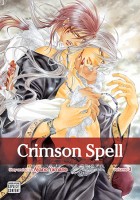
SEAN: SubLime has quieted down a bit, but they’re still giving us some top quality BL. Vol. 4 of Crimson Spell has almost the same cover situation as Vols. 1-3, and I like to imagine that the entire title is just 800 pages of one man slowly taking the shirt off of his lover and nothing else. With many stern, dangerous looks passing between them.

ASH: I need to catch up with Crimson Spell now that we’ve made it past what was previously released in English. I suspect more happens than just a loss of a shirt, though.

ANNA: I keep meaning to check this out. One day!

arata18

SEAN: There’s Vol. 18 of Arata the Legend, which is now in terms of length Watase’s most successful series, though I suspect it has a ways to go before it catches up to Fushigi Yuugi’s obsessive fanbase.

And there’s Vol. 3 of Deadman Wonderland, whose cover is trying to exude cool, but isn’t quite getting there for me.

MJ: Same here, though I’m still giving it a chance.

SEAN: Magi has Vol. 6, and has barely begun to mine The Arabian Nights for characters and plots, so we are no doubt in for a long ride. Can’t wait.

MJ: I’ve finally caught up on some of this series, so I’m looking forward to more!

MICHELLE: Whereas I am somewhat behind, but I really did like the first couple of volumes.

SEAN: Lastly, Tiger & Bunny 5 catches us up with Japan, which means the next one could be a while. That said, this fandom knows how to create its own content, so I suspect they’ll be fine.

What manga is blowing through the jasmine of your mind?

MICHELLE: *snerk*

Filed Under: FEATURES, manga the week of

My Week in Manga: May 26-June 1, 2014

June 2, 2014 by Ash Brown

My News and Reviews

Last week was a slower week at Experiments in Manga, which is just as well because I spent a long weekend with my family in Ohio for my youngest sister’s high school graduation. I was pretty busy with things there, but I was still able to post a few things here. The most recent manga giveaway, for example. There are still a couple of days left to enter for a chance to win Oishinbo, A la Carte: Japanese Cuisine, too. All you have to do is tell me a little about your favorite food manga (if you have one). May’s Bookshelf Overload was also posted. Interestingly enough, I think I actually bought more comics last month  than manga. (I largely blame TCAF for that.) As for reviews, I took a look at Yoshikazu Yasuhiko’s Mobile Suit Gundam: The Origin, Volume 5: Char & Sayla. Char happens to be one of my favorite Gundam characters, so it probably shouldn’t be too surprising that this volume is one of my favorites in the series thus far.

There were a few things that I found to read online last week that were particularly interesting, too: Manga Therapy is writing and hosting a series of posts for Mental Health Month, including Lauren Orsini’s article about Mushishi as a metaphor for mental illness. FanboyNation had an interview with Tokyopop. Brigid Alverson interviewed Akira Himekawa for Comic Book Resources. And finally, Revealing and Concealing Identities: Cross-Dressing in Anime and Manga, Part 3 was posted at The Lobster Dance. I’m sure there were plenty of other interesting articles and new to be found last week, but as I mentioned I was rather occupied with traveling, helping out at home, and visiting with family. If I missed anything major, please do let me know!

Quick Takes

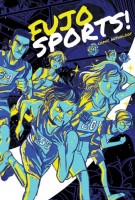
Fujosports!Fujosports! by Various. The most recent anthology from the Love Love Hill collective, Fujosports! collects six sports-themed comics with a female-gaze. These aren’t necessarily the sports you might be expecting, though: logging competitions, roller derby, free-form rollerblading, Turkish oil wrestling, field hockey, and competitive dodge-ball. All of the stories tend to be generally upbeat and optimistic, but the artists’ styles are distinct. As might be expected from the “fujo” in the title, the anthology includes a bit of bromance and boys’ love potential, but there’s some girls’ love, too, and plenty of general team bonding. Each comic is followed by a short freetalk by the creators, which is a very nice addition and makes the stories even more personable Fujosports! is a cute, sweet, and humorous collection. Every contribution in the anthology left me with I huge grin on my face, or at least a smile. Simply put, Fujosports! is a lot of fun; I’m really glad that I picked it up.

Gangsta, Volume 2Gangsta, Volume 2 by Kohske. I enjoyed the first volume of Gangsta so much that I immediately went out and preordered the second. The series is quickly becoming one of my favorite manga currently being released. Gangsta has plenty of action in addition to a wide range of interesting characters (both women and men, young and old), many of whom have dark, tragic pasts. More characters are introduced in the second volume, some of them even manage to survive to the end of it, and the larger, overarching plot continues to develop. The Three Laws binding the Twilights (should they actually choose to follow them) are directly lifted from Asimov’s Three Laws of Robotics, nearly word-for-word. While this certainly emphasizes the inhuman characteristics of the Twilights, I did find it to be an odd choice. Still, the Three Laws provide excellent narrative frameworks for robot and android stories, so I’m willing to reserve my judgement and wait to see how Kohske uses them Gangsta.

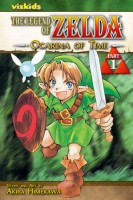
The Legend of Zelda: Ocarina of Time, Volume 1The Legend of Zelda: Ocarina of Time, Volumes 1-2 by Akira Himekawa. After meeting Akira Himekawa at TCAF, I realized that although I was familiar with some of their work, I hadn’t actually read much of their manga. Granted, only The Legend of Zelda has been licensed for print release in English so far. I actually happen to be a fan of the Zelda video games, so I wasn’t surprised that I’m enjoying the manga series, too. Ocarina of Time was the game which inspired Himekawa to pursue The Legend of Zelda manga. The Ocarina of Time manga is accessible even to those who haven’t played the game, but those who have will be able to appreciate the nods to the original more. The manga follows the same basic plot as the video game, though Himekawa adds a few touches of their own. The Ocarina of Time manga is definitely an adventure story aimed at younger readers, there’s more action than there is nuanced character or plot development, but it’s fun.

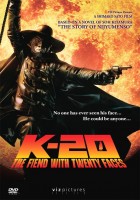
K-20: The Fiend with Twenty FacesK-20: The Fiend with Twenty Faces directed by Shimako Satō. K-20 is a live-action film based on the novels of Soh Kitamura (which sadly haven’t been translated into English) which were in turn inspired by the works and characters of Edogawa Rampo, specifically his famous detective Akechi Kogorō and his nemesis “Twenty Faces.” Akechi’s young assistant Kobayashi also has a role to play. It was because of this Rampo connection that I decided to watch the film in the first place, but even those unfamiliar with the references will be able to enjoy the movie. Packed with action and stunts, a little bit of romance, a great cast, and a large dose of humor, K-20 was extremely entertaining. The film is set in the late 1940s in an alternate history in which the Second World War was never fought but in which a strict hierarchical class structure is enforced. The story follows Endo Heikichi, an acrobat who is arrested for being the master thief K-20 after being set up, and his attempts to prove his innocence, basically by becoming as skilled as K-20 himself.

Filed Under: FEATURES, My Week in Manga Tagged With: Akira Himekawa, comics, film, Gangsta, Kohske, Legend of Zelda, manga

Manga the Week of 6/4

May 29, 2014 by Sean Gaffney, Ash Brown, Anna N, MJ and Michelle Smith 1 Comment

SEAN: Are we ready? Deep breaths, everyone. Here we go. BUY ALL THE THINGS!

newlone

Dark Horse gives you the first volume of New Lone Wolf & Cub, in case you had finished all of the Old Lone Wolf & Cub.

ASH: I’m certainly interested in this one! (Confession: I actually haven’t finished reading the original yet…)

ANNA: I’m glad this is being translated! I only read a few volumes of the original series!

MJ: Count me in!

SEAN: Drawn & Quarterly is releasing the 2nd volume of Shigeru Mizuki’s Showa, this one covering the Pacific War (Japan’s term for WWII), 1939-1944. Ending with a major cliffhanger, it’s amazing how so much dry description of battle and history can be so riveting and involving. I reviewed it here.

ASH: Showa is excellent! The second volume covers history that I’m more familiar with, so I’m curious to see what Mizuki does with the material.

ANNA: I feel like I should read this but I’m too distracted by the piles of shoujo manga I need to read to invest the time in it.

MJ: I wish I’d read the first volume. I need to make a commitment here.

SEAN: DMP has the fourth volume of Private Teacher, which I like to imagine has its own USA Up All Night-esque tag lines. “He’ll give you tutoring… in gay.”

Given we’re being buried in Alice spinoffs, it’s always nice to see a new volume of Circus and Liar’s Game, which I consider to be the best of the sequels. Vol. 5 lands next week.

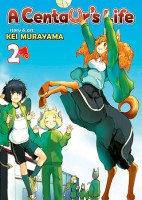
A Centaur’s Life has been getting more slice-of-lifey and less creepy, which is a good thing, as its weird worldbuilding is the main reason to get it. Vol. 3 is out next week.

ASH: The worldbuilding in A Centaur’s Life really is interesting.

panzer1

SEAN: If you like girls and tanks, then Girls Und Panzer is the series for you. Set in a universe where tank warfare is a martial art and done at high schools, it looks to be in the Strike Witches tradition, but with less anthropomorphism and I am hoping fewer panty shots.

MJ: Is it weird that I might consider reading this?

SEAN: Vertical has the 9th Knights of Sidonia volume, and I hope will not be killing off another likeable cast member.

MICHELLE: I have fallen a few volumes behind on this one, somehow. Must catch up!

ASH: Yes, you must!

ANNA: Me too! I will catch up! I do enjoy this series!

MJ: I’m always happy to see a new volume of this series!

SEAN: Everything else is Viz. Dengeki Daisy continues to try to balance thrilling suspense and its odd February/May romance. It’s top-of-the-line shoujo in my book.

MICHELLE: Or not-so-thrilling suspense, as the case may be. But the Teru/Kurosaki stuff is good!

ASH: I’m a few volumes behind, but Dengeki Daisy is a series I really enjoy.

ANNA: Dengeki Daisy is the best.

SEAN: There is the 5th Dragon Ball 3-in-1 omnibus, because why not?

dbcolor3

We also have the 3rd Dragon Ball Full Color book, which I think is actually Z, but I’m still not sure. In any case, want some color in your manga? Here you go.

We’re halfway through Happy Marriage?!, so things are bound to get fluffier and more lovey-dovey for our lead couple. Right?

ANNA: Viz is a champ for bringing out more commercial josei romance. That’s all I have to say.

MJ: Agreed!

SEAN: We’re almost halfway through this list, by the way. How’s everyone doing? Need a break?

ASH: A break from manga? Never!

MJ: Maybe a small one? Hold on… okay, I’m good.

SEAN: Kamisama Kiss 15 is likely to stay stuck in the past, but that’s not a bad thing with this series, as it’s giving us tons of backstory.

ANNA: I love the character designs and the wandering yet interesting storyline in this series. I’m actually looking forward to a binge reread of this series. I tend to read each volume as it comes out, but I think it might be more fun to read 3 or 4 at a time.

SEAN: Kimi ni Todoke remains completely adorable and heartwarming, and I do not expect that to change merely because we’ve gotten to Vol. 19.

MICHELLE: Seriously, is basically EVERY Shojo Beat series (except Skip Beat!, alas) releasing a volume on June 3rd?!

ANNA: So adorable. So much blushing and teenage awkwardness.

milsnow3

SEAN: It’s been so long since the last volume of Millennium Snow, which got sidelined by the huge success that was Ouran High School Host Club, that Viz has decided to re-release the first two volumes as an omnibus, followed by the 3rd volume (which is new). Find out why we enjoyed the series when it first appeared 7 years ago!

MICHELLE: I look forward to seeing how this series is different now.

ANNA: I liked the first two volumes back in the day!

MJ: I missed this series originally, so I’m looking forward to going back for the first two volumes.

SEAN: Natsume’s Book of Friends is doing its best to make me very happy with its 16th volume, as my OT3 is on the cover! I wonder if they’ll be in the actual volume as well…

MICHELLE: <3

MJ: Here’s hoping!

SEAN: Nura: Rise of the Yokai Clan continues to attempt to kill absolutely everybody we care about in horrible ways, and luckily has been failing so far. Will Vol. 21 be different?

One Piece is at Vol. 71. Really, what more is there to say? Only that it’s still one of the best shonen titles out there.

MICHELLE: Yep.

ANNA: I’ve only read the first 6 or so volumes and it was great, but I’m sort of terrified of a 70+ volume long shonen series. If only Glass Mask was this universally popular.

seraph1

SEAN: In case you were unaware of this, here’s the 9th One Piece 3-in-1, which I think is up to the Skypeia volumes.

And let’s have another shonen manga debut! Seraph of the End, I feel I should tell everyone, has vampires in it. But it’s in Jump Square, so I’m not sure how pretty they will be.

ASH: I’m not sure either, but I have heard good things about the manga.

MJ: After reading Derek’s columns, I’m looking forward to seeing this for myself.

SEAN: After all this manga, I’m feeling very hungry, so I am gratified that we are now at the 22nd volume of Toriko.

And at last, we are done, as Viz has the 5th volume of Voice Over: Seiyu Academy, which has far less denseness than the author’s previous series S.A., but there’s still enough denseness to satisfy.

MJ: Denseness ftw?

SEAN: Buy *all* the things? :/

Filed Under: FEATURES, manga the week of

Manga Giveaway: Oi, Oishinbo!

May 28, 2014 by Ash Brown

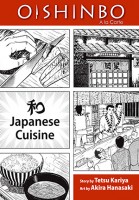
May seems to have gone on forever for me and I’m really ready for it to be over. I’ve been traveling so much recently that all I really want to do is to curl up at home for a good, long manga binge. Happily, the end of May finally is approaching, which means it’s time for me to help someone else out by providing manga to read. For this month’s giveaway I offer you a chance to win a copy of Tetsu Kariya and Akira Hanasaki’s Oishinbo, A la Carte: Japanese Cuisine. As always, the giveaway is open worldwide!

Oishinbo, A la Carte: Japanese Cuisine

With Vertical’s release of Fumi Yoshinaga’s What Did You Eat Yesterday?, I’ve recently been thinking quite a bit about food manga. And when I think about food manga (which, like food, I love) I think about Oishinbo–the long-running, award-winning series by Tetsu Kariya and Akira Hanasaki. In fact, just a few weeks ago I brought the series up in my random musings about sake. (Also, Oishinbo specifically and food manga in general were the subjects of May 2012’s Manga Moveable Feast two years ago. There were some great posts, so I encourage you to check it out!) Oishinbo made headlines not too long ago, too: it’s publication was suspended due to the controversy over its depiction of health issues in the Fukushima area. It’s not the first time that the manga has made political or social commentary, either. I’m actually rather fond of Oishinbo. The series hasn’t and probably never will be released in its entirety in English (it’s already over 110 volumes long in Japan), but seven A la Carte volumes have been published by Viz Media. Basically, these are thematic, “best of” collections. Oishinbo, A la Carte was the first of these to be released in English and it makes a great introduction to Japanese food culture as well to Oishinbo itself.

So, you may be wondering, how can you win a copy of Oishinbo, A la Carte: Japanese Cuisine?

1) In the comments below, simply tell me a little about your favorite food manga. (If you don’t have one, or haven’t read any, you can simply mention that.)
2) If you’re on Twitter, you can earn a bonus entry by tweeting about the contest. Make sure to include a link to this post and @PhoenixTerran (that’s me).

There you go! Each person can earn up to two entries for this giveaway and has one week to submit comments. If you have trouble leaving a comment, or if you would prefer, entries may also be submitted via e-mail to phoenixterran(at)gmail(dot)com. (The comments will then be posted in your name.) The giveaway winner will be randomly selected and announced on June 4, 2014. Bon appétit!

VERY IMPORTANT: Include some way that I can contact you. This can be an e-mail address, a link to your website, Twitter username, or whatever. If I can’t figure out how to get a hold of you and you win, I’ll just draw another name.

Contest winner announced–Manga Giveaway: Oi, Oishinbo! Winner

Filed Under: FEATURES Tagged With: Akira Hanasaki, manga, Oishinbo, Tetsu Kariya

Sailor Moon, Episodes 1-4

May 26, 2014 by Anna N

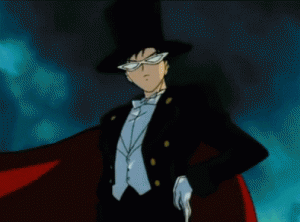
I think one could easily write about Viz streaming the original Sailor Moon again with just four paragraphs of the word “SQUEE” and have that be a perfectly serviceable review, but having enjoyed watching the first few episodes of the series, I thought I would write about it a little bit. I’ve read some (but not all) of the Sailor Moon manga. I encountered the franchise first in the old Tokyopop editions, but I haven’t watched the anime that extensively before. I probably caught a few episodes of the dub when it was on TV before, and I’m quite fond of Tuxedo Mask animated gifs.

tuxedo-mask-sailor-moon-25225153-498-370

I haven’t watched the anime in order in subtitle format at all before, so I was quite happy that it was now available. The first four episodes firmly establish the character of Usagi/Sailor Moon, who starts out as a clumsy crybaby, and then becomes a clumsy crybaby with magical girl powers thanks to the intervention of the magical talking cat Luna. The clumsy girl who turns out to have extraordinary abilities is a very typical character type in both anime and manga, but Usagi manages to be a very appealing example of the type due to her inability to study for school, her devotion for naps, and her single-minded devotion to taking the easy path whenever possible. The first few episodes of the series follow the story elements of the manga fairly closely, as Usagi investigates the evil forces that seek to destroy the balance of the universe by capturing human energy through costume jewelry. Seriously the villains of Sailor Moon might have hit on something by appealing to the weak aspects of human nature, but they are surprisingly ineffective. Also, the balance of the universe often seems to be centered on struggles that take place very near Usagi’s neighborhood.

One thing that I enjoyed much more than I thought I would were the musical cues in the series. It is hilarious that whenever Mamoru/Tuxedo Mask makes an appearance, he brings with him the distant sound of castanets. I was also amused by the fact that Usagi’s crying sometimes acts like a sonic weapon. The first four episodes were fun to watch, but I find myself growing a bit impatient for the appearances of the other Sailor Guardians. Just as in the manga, there are references here and there to Sailor V, and I’m hoping that Mars and Mercury will show up very soon. I have a subscription to Hulu, so that’s where I’ve been watching Sailor Moon, but you can also watch it for free on Viz’s Neon Alley. I feel like Viz has kicked off the summer season by giving everyone a huge present, and I know I’m going to be looking forward to Mondays when new episodes are released!

Filed Under: FEATURES Tagged With: sailor moon

My Week in Manga: May 19-May 25, 2014

May 26, 2014 by Ash Brown

My News and Reviews

After a week full of random musings comes a week full of reviews. Well, that is if you consider two reviews “full.” Either way, there were two reviews posted at Experiments in Manga last week. First up was Lucy Birmingham and David McNeill’s Strong in the Rain: Surviving Japan’s Earthquake, Tsunami, and Fukushima Nuclear Disaster. Originally released in 2012 as a hardcover, it is now available as a trade paperback. The volume is very approachable and makes an excellent overview of many of the aspects of the March 2011 disaster. As promised, I also reviewed the first omnibus of Takashi Ikeda’s yuri manga series Whispered Words. So far, I’m really enjoying the series (it even has karate in it!), but One Peace Books’ edition is rather disappointing in regards to quality control. Check out the review’s comments for more specific details.

As for other interesting things online: Oishinbo has certainly made some political and social commentary in the past, but the manga recently managed to get suspended amidst nuclear furor. The latest ANNCast features the return of the super manga pals Deb Aoki and Rebecca Silverman. The Gay Manga tumblr has a great post about how language impacts the way that sexuality is thought and talked about, looking at the terms “bara” and “gei” among other things. (The discussion reminded me quite a bit about my random musings on translation and queer theory.) Another fantastic post (well, series of four posts) is Revealing and Concealing Identities: Cross-Dressing in Anime and Manga over at The Lobster Dance. So far, Part 1 and Part 2 have been posted.

Quick Takes

Bunny Drop, Volume 10Bunny Drop, Volume 10 by Yumi Unita. Oh, Bunny Drop. I love parts of the series while other aspects frankly piss me off. I personally don’t mind incest plotlines in my fiction (and technically there’s no incest in Bunny Drop), it’s just that it was handled so incredibly poorly. It’s been a while since a manga has gotten such a visceral reaction from me. But even though Bunny Drop left me seething, I was still looking forward to reading the tenth volume–a collection of short side stories as well as an extensive interview with Unita about the series and its anime adaptation. Most of the volume is devoted to when Rin and Kouki were small (including the story of how he got the scar on his forehead), which I enjoyed. I also rather liked the story that focused on Rin’s mother and the man who would become her husband. However, the final story takes place sometime after Rin and Daikichi are married–a development that I continue to be completely unconvinced by, a sentiment this final story does nothing to alleviate.

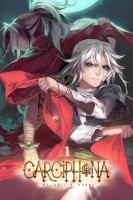
Carciphona, Volume 1Carciphona, Volumes 1-4 by Shilin Huang. Another splurge purchase from TCAF, Carciphona is a self-published manga-style series of graphic novels which are also available to read online. It was Huang’s spectacular artwork that caught my eye. (Her artbook Toccata is simply gorgeous.) Though the interior art isn’t as stunning as the series’ covers, it is still excellent. Huang considers herself more of an illustrator than an comics artist; though it was fairly strong to begin with, her storytelling improves greatly from volume to volume. Occasionally Carciphona falls prey to infodumps in order to establish the setting, especially early on in the series, but the worldbuilding and characters are interesting. Carciphona is high fantasy with magic and religion, assassins and political intrigue, and tension between races. The story follows Veloce Visrin, a young, powerful sorceress living in a world where common magic–magic which relies on demonic spirits–has been prohibited. Her life has not been an easy or happy one, so she’s a bit surly (and understandably so), but she is also very loyal and protective of those who become her friends.

Devils and Realist, Volume 1Devils and Realist, Volume 1 written by Madoka Takadono and illustrated by Utako Yukihiro. William Twining comes from a prestigious family and has done everything he can to meet, and surpass, all expectations so as not to disgrace his family’s name. He’s brilliant and at the top of his class…and recently lost most of his wealth due to his uncle’s bankruptcy. Perhaps even more problematic is that he’s somehow also responsible for selecting the next ruler of hell, despite being scientifically minded and refusing to believe in the demons right in front of him who are trying to bribe him. The artwork in Devils and Realist is attractive, though the more action-oriented sequences, while pretty, can be somewhat difficult to follow. It was amusing to see many of the demons introduced become transfer students at William’s school, but personally I’d like to see the story focus less on school antics and more on the struggle for control of hell. Then again, I actually did enjoy the sillier aspects of the manga. Devils and Realist has some potential; I’ll probably be giving it at least one more volume to see which direction it takes.

I've Moved Next Door to YouI’ve Moved Next Door to You by Fuhri Misasagi. There were two things that particularly appealed to me about I’ve Moved Next Door to You and which led me to pick up Misasagi’s boys’ love one-shot: the somewhat “reversible” nature of the characters and their polyamorous relationship. At least it’s described as being a polyamorous relationship–it’s really more of a pseudo-love triangle. Sadly, neither of those things could save this manga for me. With the aid of his secretary Kamoshida (who is in love with him), Takumi has recently moved into a rundown apartment after leaving his company. Up until now he’s led a very privileged and sheltered life and so has no idea how to live on his own. However, his new neighbor Renji is more than happy to help him out, which apparently also includes sexually harassing him any chance he gets. Even though the manga is supposed to be a comedy, tragic backstories are also added to the mess of unbelievable characters and plot. I’ve Moved Next Door to You isn’t sexy or romantic, and it’s not even very funny, though it does try very hard to be all of those things. I can’t say that I enjoyed the manga much at all.

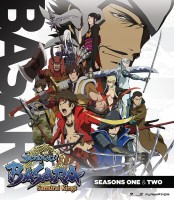
Sengoku Basara: Samurai KingsSengoku Basara: Samurai Kings, Season 1 directed by Itsuro Kawasaki. A little to my surprise, I enjoyed the Sengoku Basara: Samurai Legends manga so much that I decided to track down more of Sengoku Basara. I still haven’t gotten around to playing any of the video games, which is where the franchise started, but I have been happily watching the Samurai Kings anime. Sengoku Basara is based on the actual historic figures and events from Japan’s Warring States period, but it is delightfully irreverent and over-the-top with its portrayals. Honestly, Sengoku Basara is ridiculous and doesn’t at all take itself too seriously, but because of that it’s also a tremendous amount of fun. I mean, it has literal battle auras, impossible feats, absurd amounts of damage, nearly indestructible warriors, epic battles, and constantly shifting alliances, not to mention a healthy dose of improbable technology and anachronisms. I get a kick out of it all, though, and find Sengoku Basara to be highly entertaining. Samurai Kings might not be a series that I’ll watch over and over again, but I’ll definitely be checking out the second season.

Filed Under: FEATURES, My Week in Manga Tagged With: anime, bunny drop, Carciphona, comics, Devils and Realist, Fuhri Misasagi, Madoka Takadono, manga, Sengoku Basara, Shilin Huang, Utako Yukihiro, Yumi Unita

Should Bookstores Categorize Manga By Genre/Demographic?

May 23, 2014 by Justin Stroman 19 Comments

Something tells me this image fits this post perfectly. Don't know what it is though...

Something tells me this image fits this post perfectly. Don’t know what it is though…

The basis of this post is much, much thanks to Deb Aoki of Manga Comics Manga & The Comixverse’s Zedric Dimalanta. It’s a simple question to ask: should bookstores start categorizing manga by genre/demographic?

…

Read More

Filed Under: FEATURES Tagged With: Buying from bookstores, buying manga, manga bookstores

Manga the Week of 5/28

May 22, 2014 by Sean Gaffney, Ash Brown, Michelle Smith, Anna N and MJ 3 Comments

SEAN: Do you like stuff? Of course you do. Let’s look at some stuff!

colossal

ASH: I like stuff! I like lots of stuff!

MICHELLE: Stuff and junk and stuff!

ANNA: Stuff is awesome!

MJ: Bring on the stuff!

SEAN: If you’d wondered what the fuss was all about with Attack on Titan, and also wanted something heavy enough to beat small children to death with, have we got the release for you! Attack on Titan: Colossal Edition collects the first 5 volumes of the series into one massive, thousand-page TOME. And of course, it apparently has some added content so that obsessives must buy the whole thing again. If you haven’t seen this series before, get ready to see what all the fuss is about and ask “why is the art so crappy?”

ASH: This thing is going to be a HUGE monster of a book. I’m happy with my individual volumes, but I would be curious to see the the Colossal edition in person.

MICHELLE: Ugh. I must say the thought of hefting this thing doesn’t entice me to catch up on the series.

ANNA: I’m sort of tempted by this, since I bought the first book when the kindle version was on mega sale but haven’t gotten the subsequent volumes.

MJ: Hmmm… I’m tempted here. Kind of. Not sure I have a shelf big enough.

SEAN: Cage of Eden trundles along with Vol. 14. Will this be a monsters eating people volume? A fanservice-laden nude girls volume? A ‘I really liked Lost and want to rewrite it with Japanese students’ volume? Who can say? Most likely all three, I suspect.

mlm2

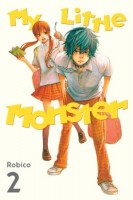
My Little Monster was a lot of fun, even if I had issues with the male lead being a manic pixie dream guy to a certain degree, and I look forward to seeing how he and our heroine develop.

ASH: I rather enjoyed the first volume of My Little Monster. Plus, there’s a pet chicken!

MICHELLE: I love the pet chicken with every fiber of my being.

MJ: Pet chicken! How did I not buy this?

SEAN: Remember back in February when I discussed Wallflower 32 and they bumped it back to May without telling me? Well, here it is, still in May for now.

I apologize to Tokyopop. The fact that their one Japanese series is only available via Right Stuf now means I forget to add it to these lists, EVEN WHEN IT IS SITTING NEXT TO ME AS I MAKE THEM. Aheh. Anyway, Hetalia Axis Powers 6 was out last week.

ASH: I really do wonder how well this partnership between Tokyopop and RightStuf has been doing, and what other projects we might see because of it.

ANNA: Demon Sacred! Shinobi Life! Sky Blue Shore! Oh, how I miss you, but I have no hopes of reading you in English.

MICHELLE: Silver Diamond!

MJ: *sigh*

SEAN: BTOOOM! continues to make me count the number of O’s in its title, even now that Vol. 6 drops.

And now I want to add a third o to Goong, whose 15th volume is out, to the delight of the rest of the Manga Bookshelf team.

MICHELLE: Yay!

ANNA: Woo hoo!

MJ: Me me me me me me me!!

highschooldd

SEAN: In general, I have a better record with Yen than Seven Seas when it comes to otakubait series. And yet High School DxD – with its harem plot, promises of fanservice, and ‘angels and demons’ fantasy worldbuilding – seems to worry me. I’m watching you warily, Vol. 1.

MJ: That sounds… well, probably not for me.

SEAN: Jack Frost 10! Wow, how many decapitations have happened by now?

Kadokawa has decided they don’t want the manga to come up with new content that the novel hasn’t covered (bar the odd original short chapter), so The Melancholy of Haruhi Suzumiya will be ending its manga version soon while they wait for the next novel to appear. Here’s Vol. 18, featuring new character Yasumi on the cover.

Kazumi Magica has been one of the longer franchise spinoffs of the Puella Magi-verse, but it comes to an end here with Vol. 5. Will it have a happy ending? Our good friend Kyubey says he’s very happy!

Soul Eater has gotten up to Vol. 20, and I think is getting closer to its massive final arc. More to the point, this volume contains one of the scariest manga chapters I’ve ever seen – full stop, any series.

MJ: Really? Hm. Maybe I should check it out.

SEAN: Triage X has hit Vol. 6. See above about why I can’t always trust Yen when it comes to fanservice-laden series. At least I don’t think this is based on a series of light novels…

Lastly, we get another omnibus of Until Death Do Us Part, which features characters named Mamoru, Haruka, and Wiseman, yet is not actually like Sailor Moon at all.

MICHELLE: I need to catch up on this. I liked what I read of it.

SEAN: Stuff? Stuff!

Filed Under: FEATURES, manga the week of

My Week in Manga: May 12-May 18, 2014

May 19, 2014 by Ash Brown

My News and Reviews

Well, it was my intention to review the first omnibus of Whispered Words by Takashi Ikeda last week, but then Sean reviewed it the day before I was planning to post my review. So, to avoid making the Manga Bookshelf front page look a little strange, I decided to bump my Whispered Words review to later this week. But never fear, I had other posts in reserve! First up was my Toronto Comic Arts Festival 2014 recap, which is very, very long. If you don’t feel like reading the whole thing, that’s fine, but I do want people to know that TCAF is an amazing festival. A month or so ago I had the opportunity to attend a presentation given by Natsuki Kikuya, a sake sommelier and from a centuries-old family of sake brewers in Tōhoku, about the brewing of sake, its history, and current trend in the industry, so I posted some random musings about that as well–Cultures of Japanese Sake. I was quite pleased to discover that I actually had already had a strong introduction to the subject from reading manga, specifically Oishinbo, A la Carte: Sake and Moyasimon.

Now, going back to TCAF for a moment: Heidi MacDonald has an excellent summary of the festival at Publishers Weekly; the Beat has audio for a selection of the panels available for listening; and Okazu’s Erica Friedman has a great recap of the est em panel, which she moderated. Unrelated to TCAF, but still worth reading: Marvel, Yen Caught in Amazon-Hachette Crossfire; an interview with Leyla Aker, the editor at Viz Media responsible for Kohske’s Gangsta series; and Tokyo Government Declares Imōto Paradise! 2 Manga Unhealthy. Also, Deb Aoki has started updating her site Manga Comics Manga with some interesting new material, including Japanese to Spanish Manga Translation: Readers Speak Out and What Would Make Manga More Appealing to Comics Fans? + 24 Manga for New Readers.

Quick Takes

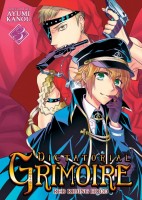
Dictatorial Grimoire, Volume 3: Red Riding HoodDictatorial Grimoire, Volume 3: Red Riding Hood by Ayumi Kanou. The first volume of Dictatorial Grimoire, as ridiculous as it was, entertained me. The second volume was no less ridiculous, and it had some great moments, but I was frustrated by how trope-based it was. Fortunately, the series’ originality largely returns in the third volume and Dictatorial Grimoire once again becomes a glorious mess. The plot actually starts to make a little more sense and even becomes somewhat interesting, but just as things start to really get going the story is quickly brought to an end. It feels very abrupt and truncated, as if the series was initially supposed to be much longer. Still, I think the third volume of Dictatorial Grimoire was actually my favorite in the series. The demon from which the story Red Riding Hood comes is thoroughly introduced and he’s pretty great–a mix of the Wolf, Hunter, and Red. (He’s actually a decent guy once he gets his werewolf problem under control.) I also get a kick out of Snow White’s animal companions. Instead of the cute woodland critters that might traditionally be expected, he always has some poisonous creatures hanging about. Dictatorial Grimoire is far from the best manga out there, but it can be fun in all of its ridiculousness.

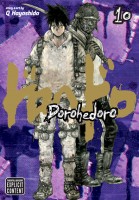
Dorohedoro, Volume 10Dorohedoro, Volumes 10-12 by Q Hayashida. I continue to enjoy Dorohedoro immensely. It’s a strange, weird manga, and one that I find difficult to coherently explain to people. Dorohedoro is bloody, violent, and grim and yet at the same time it is also incredibly endearing, charming, and funny. It can even be heartbreaking from time to time. Occasionally something feels a little bit off about Hayashida’s artwork in the series–body proportions don’t always seem to be quite right–but for the most part I really enjoy the gritty look and feel of Dorohedoro. I was particularly impressed by how effectively dizzying and disconcerting the artwork could be when Aikawa’s magic comes into play. There’s quite a bit of plot development in these volumes and several of the characters have their backstories filled out–more is learned about the pasts of Nikaido, Asu, and the various members of the Cross-Eyes. There’s plenty of action in this part of the series, too, including excellent fight sequences and brutal battles. There are some significant deaths, as well, though it’s never certain that someone will stay completely dead in Dorohedoro. There are seven more volumes to go in the series; I really hope that Viz will be able to stick with it through to the end.

Hotblood!: A Centaur in the Old West, Volume 1Hotblood!: A Centaur in the Old West, Volume 1 by Toril Orlesky. While at TCAF, I made the point to pick up a few things that I hadn’t heard about before or was otherwise unfamiliar with. One of those random splurges was Orlesky’s Hotblood!, a webcomic that currently updates twice a week on Tuesdays and Thursdays. I am absolutely loving it–the characters, the art, everything. The first print volume collects the series’ prologue and the entirety of its first chapter, as well as an exclusive appendix and other additional bonus material. Tremendous thought and care has been put into the worldbuilding of the comic–a sort of alternative history–especially in regards to the relationships and interactions between humans and centaurs and their cultures. The story begins in Wyoming in 1873 with James Rook, the titular centaur, and Asa Langley a steel magnate on the run as wanted men. It then jumps back two years in time to when they first met. In the prologue the two are obviously very close, but at the beginning of their relationship they didn’t get along much at all. Langley is a bit of a jerk, frequently making jokes in poor taste at Rook’s expense, but Rook needs a job so he puts up with it. He has been assigned to be Langley’s secretary; neither one of them is particularly happy about it, though.

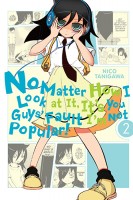
Watamote2No Matter How I Look at It, It’s You Guys’ Fault I’m Not Popular!, Volumes 2-3 by Nico Tanigawa. Overall, I do enjoy WataMote, but I will be the first to admit that it can be a harsh and uncomfortable read. (I get the feeling that the creators largely didn’t enjoy their high school years and that they don’t have many fond memories of that time in their lives.) WataMote can be very funny, but it’s not always very pleasant. So far the series has been fairly episodic, which is both an advantage and a disadvantage, but a few characters have been introduced in these volumes which may change that. I would like to see some actual character development in the series, though. Right now it seems as though Tomoko, her family, and classmates are stuck in a rut. This works in terms of the series’ premise–Tomoko is a misfit to put all other misfits to shame–but it’s a little painful and sad to not see her learn from her mistakes and experiences. Which, I suppose, is actually probably one of the points of the manga. Tomoko can be endearing in her extreme awkwardness, but that awkwardness can also be fairly alarming and embarrassing. WataMote is definitely not a series that everyone will be able to enjoy or even appreciate, but I do plan on following it further.

Filed Under: FEATURES, My Week in Manga Tagged With: Ayumi Kanou, comics, Dictatorial Grimoire, dorohedoro, Hotblood, manga, Nico Tanigawa, Q Hayashida, Toril Orlesky, Watamote

Random Musings: Cultures of Japanese Sake

May 16, 2014 by Ash Brown

Cultures of SakeI enjoy sake. I don’t have the opportunity to drink it very often, and I don’t really know much about it, but I do enjoy it and have an interest in it. Fortunately, I recently had the opportunity to hear Natsuki Kikuya, the founder of Museum of Sake, give her presentation “World of Sake: How It’s Created, and Where It’s Going.” Kikuya is from a family of sake brewers which is part of a collective in the Tōhoku region of northern Honshū. She currently works with chefs in the United Kingdom as a sake sommelier and is in the process of developing a sake documentary; her personal mission is to introduce and promote sake across Europe and the rest of the world. The craft and culture surrounding sake and sake brewing is broad and deep. A comparison can easily be made with wine culture, but Kikuya has found that in the West a “translator” is often needed for sake. Whereas wine has an extensive vocabulary already established to describe it, traditionally sake has had only two descriptors: dry and sweet.

SakeSo, what is sake? In Japanese, “sake” is a word that simply means “alcoholic beverage.” However, when the term is used in English, generally it is specifically referring to what is known in Japan as nihonshu. Sake is a fermented and filtered alcoholic beverage that is no more than 22% alcohol by volume. Typically, sake is brewed using only four ingredients: rice, water, yeast, and koji. Approximately 1% of Japan’s total rice production is devoted specifically to the brewing of sake. Though still edible, the rice used in sake is very different from table rice meant for consumption. When making sake the outside of the grains of rice is polished away, leaving behind the starches. In the highest quality sake, more than half of the rice is polished away. (In one exceptional case, only 7% of the rice remained after polishing.) Water is a particularly important ingredient as sake is made up of around 80% water. Water from different sources can significantly change the taste of the sake; generally water with softer qualities is desired. Up until the 20th century, sake production primarily relied on wild yeast, however more than 90% of sake fermentation now uses cultivated yeast. Koji is sake’s “magical ingredient”–a type of mold spore that transforms the starches in the rice into sugars for the yeast to ferment. Sake is often described as being “grown in breweries”; its quality very much depends on the human techniques involved and there is less emphasis placed on vintage as a result.

During her talk, Kikuya outlined a brief history of sake and its development in Japan. Sake had its beginnings over 2,500 years ago, originating as the “drink of the gods” and was associated with Shinto shrines. Between the 7th and 12th centuries, sake came under control of the court. During that time there were thirteen different grades of sake appropriate for the different ranks of nobility. In the Middle Ages the center of sake production moved to Kōfuku-ji in Nara and other Buddhist temples. At this point in history distilled spirits from abroad began to be introduced to Japan as well. The Edo period saw the rise of brewing specialists and the center of sake production once again moved, this time to Itami and Edo. Previously sake had been made year-round, but as the brewing techniques were refined during the Edo period it became a winter-specific process. The Edo period also saw the establishment of izakaya and the culture of eating outside of the home; sake was no longer just for nobles. Homebrewing was prohibited in 1899, mostly for tax reasons, and so sake brewing became more of a corporate affair during the Meiji era.

Sake Aisle

Oishinbo, A la Carte: Sake

The 20th century brought the “era of synthetic sake.” When rice was not readily available (during times of war, for example), techniques were developed to compensate for this lack, such as the introduction of syrups. The quality of the results were not always particularly good. And then there is sake industry today, which is focusing on modernization, localization, and globalization. This includes the creation of “new gen” sake, such as sparkling sake and sake with low alcohol content, as well as the use of sake in mixed drinks. At one point there were over 4,000 breweries in Japan. Sadly, the industry is dying and only around 1,200 breweries currently remain. Of those, the top twenty account for 80% of the sake production in Japan, however local breweries are beginning to gain increased support. There are several theories as to why interest in sake is declining in Japan: the continued Westernization of the country, the aging and shrinking of the population, and the fact that younger generations simply don’t seem to be drinking sake. Although the sake industry is still dominated by men, Kikuya knows of at least ten women heads of breweries. Interestingly enough, in addition to Japan, the United States is also a leading producer of sake and currently has seven to eight breweries of its own.

Prior to the Kikuya’s talk, my knowledge of sake had primarily been gleaned from what I myself had tasted as well as from manga like Tetsu Kariya and Akira Hanasaki’s Oishinbo (especially the volume Oishinbo, A la Carte: Sake) and Masayuki Ishikawa’s Moyasimon. I was quite happy to discover that those series have actually provided me with a fairly strong introduction to and basic understanding of sake and the sake industry, including some of the more unusual and interesting historical tidbits. So, even if you don’t have the chance to take advantage of the knowledge of a sake expert, picking up a copy of Oishinbo, A la Carte: Sake and following it up with a bit of Moyasimon (the manga or the anime) is not a bad place to start. (Toko Kawai’s short boys’ love series The Scent of Apple Blossoms also features a sake brewer, though I haven’t read it yet to be able to say how educational the manga might be.) For those interested in learning more about sake, Kikuya’s Museum of Sake is also worth a look, as is Discovery UK’s series Discovering Sake. And sometimes the best way to learn about something is to simply experience it for yourself. Have a taste!

Filed Under: FEATURES Tagged With: Akira Hanasaki, Masayuki Ishikawa, Moyasimon, Oishinbo, Tetsu Kariya

Manga the Week of 5/21

May 15, 2014 by Sean Gaffney, Anna N, MJ, Michelle Smith and Ash Brown 3 Comments

SEAN: Some newer series, some old favorites, and some back from the dead in Week 3 of the month of May.

DMP is releasing print volumes again, including two of their old non-BL series. Takasugi-san’s Obento gets a 2nd volume, and continues to charm readers and make Bunny Drop fans stare at it warily.

ANNA: I liked the first volume a lot, and I really hope it doesn’t go into Bunny Drop territory.

MJ: Agreed!

itazura10

SEAN: And we have at last the return of Itazura Na Kiss, everyone’s favorite bitter black coffee of the shoujo manga world. Will its leads ever stop being so… themselves? Probably not, but here’s more of it, and I can’t wait.

MICHELLE: Yay yay yay yay yay!

ASH: I’ve heard nothing but good things about Itazura Na Kiss; I really should get around to reading it one of these days!

ANNA: A classic! I’m so glad to see more print volumes coming out from DMP. I need to order this!

MJ: Nice to see this back!

SEAN: Kodansha has the 3rd Air Gear omnibus, with 3 more volumes of the roller blading superhero-ish manga for your perusal.

They also have the 5th volume of Ghost in the Shell: Stand Alone Complex, which I should really try to catch up on.

ASH: It’s actually a pretty decent adaptation.

SEAN: Seven Seas has a pair of titles for their readers who prefer the more ecchi-oriented catalog of Seven Seas. Dragonar Academy has Vol. 2, and still reminds me of Zero’s Familiar too much – the annoying points of Zero’s Familiar.

Meanwhile, Kanokon has a 3rd omnibus, which ends the manga release. And thank goodness, as this is the last time I will have to avoid saying something about it.

MICHELLE: Nothing for me here.

yesterday2

SEAN: If I had to drop a series after Vol. 1 merely as I found the lead unlikeable, I’d never be reading a lot of series. Thus I will look forward to Vol. 2 of Vertical’s What Did You Eat Yesterday? and its very prickly lead guy – being a good cook only gets you so far with the reader, though.

MICHELLE: Yay yay yay yay yay!

ASH: I’m excited to see this one, too!

ANNA: My shopping list is growing this week! So excited for more great foodie manga!

MJ: MORE MORE MORE.

SEAN: Lastly, Vol. 2 of Gangsta drops, and I’m hoping it keeps to the high standard set by Vol. 1, as I enjoyed the debut volume quite a bit.

ASH: I really enjoyed the first volume of Gangsta and so look forward to reading more soon!

ANNA: I’ve read this already and enjoyed it! Gangsta is rapidly becoming one of my new favorite ongoing series.

SEAN: What manga are you rebelling against?

Filed Under: FEATURES, manga the week of

Random Musings: Toronto Comic Arts Festival 2014

May 14, 2014 by Ash Brown

TCAF 2014 Poster

©Michael DeForge

Last year I attended the Toronto Comic Arts Festival (TCAF) for the very first time. It was an event that I had wanted to go to for years and I had such a fabulous time that I immediately began planning to return. TCAF is the only comics festival that I have ever been to so I can’t really compare it to others, but it is fantastic and I can’t recommend it enough. I certainly plan on going every that I possibly can at this point.

Last year I was only there for the main festival on Saturday and Sunday, but this year I pulled into Toronto on Thursday evening which gave me plenty of time to explore the city itself. After figuring out how to use Toronto’s streetcar system (I’ve never ridden a streetcar before) my “early” arrival allowed me to attend the opening reception of Toshio Saeki’s art exhibition at Narwhal Projects. Saeki is described as the “Godfather of Japanese Eroticism.” The gallery was a showing of a selection of his original drawings and silkscreen prints. They were beautiful, disconcerting, erotic, and surreal works. I’m very glad I had the opportunity to see them in person.

Friday was my “free” day in Toronto. While I was wandering all over the city, I made sure to make my way down to The Beguiling Books & Arts. Last year I got there a few minutes before it closed, so I was looking forward to spending a more reasonable amount of time exploring the store this year. The Beguiling is one of the best comic stores I’ve ever been to. It has a fantastic selection of materials and a marvelous staff. I highly recommend anyone visiting Toronto to check it out. The event that I was looking forward to on Friday was the Manga Mixer Night hosted by Sparkler Monthly at the TRANZAC Club. I sadly missed out on the gathering last year, and one of my TCAF goals for this year was to overcome some of my anxieties and to try to be a little more social, so to the mixer I went! And I’m glad that I did. I had a good time and Kuriousity‘s Lissa Pattillo and I were beautiful wallflowers together. We had a very nice conversation about manga, blogging, and TCAF.

Over the course of the festival I had the opportunity to briefly meet several other of my online friends in person: manga translator and all around awesome person Jocelyne Allen, my fellow Manga Bookshelf cohort Sean Gaffney, and the great A-run Chey who somehow managed to pick me out of a crowd. I certainly made some progress this year in the socialization department, but I still didn’t have the nerve to introduce myself to Deb Aoki and Erica Friedman, who were both kept very busy moderating various panels, or to Vertical’s Ed Chavez even though I was standing next to each of them at some point during the festival. Next time I’ll make it happen! I know there were at least a few other manga and comics bloggers at TCAF—like Brigid Alverson and Alexander Hoffman, among others—but I missed them, too.

Ureshidaruma

“Ureshidaruma” by Toshio Saeki

Saturday was when the main festival actually began. Last year I didn’t get to spend as much time in the exhibitor area as I would have liked, so I got up bright and early on Saturday in order to visit as many artists and publishers as I could first thing in the morning. This turned out to be a good decision, because the exhibitor area seemed to only get busier and busier throughout the day. I couldn’t see everything before the Saturday panels started, but by the end of the day I managed to visit most of the tables that I wanted. Sadly, there were a few things that I was hoping to get that were sold out by the time I was able to make my way to the artists’ respective tables. But at least that meant that the creators were doing well, and I was very glad to see their success. While I went into TCAF knowing there were certain things that I wanted to pick up, I also allowed myself the opportunity to splurge on a few random items that I hadn’t even heard of before and discovered some great comics in the process. And of course, I also managed to compile a rather lengthy list of things that I wanted to check out later, too. I continue to be very impressed by both the quality and variety of creators and art at TCAF.

I attended four panels on Saturday. “What Do Women Want? Writing Comics for a Female Audience,” was moderated by Chromatic Press’ Lianne Sentar and featured Laura Lee Gulledge, Kate Leth, Joan Reilly, and Noelle Stevenson. It was an excellent panel looking at men and women and masculinity and femininity in comics and the North American comics industry. Generally, comics readers are assumed by the industry to be both male and straight and so that audience is the one that has traditionally been catered to. There have always been female readers but recently there have been more demands for a wider variety in comics, perhaps due in part to what the panelists called the “Sailor Moon Generation.” These are the women, and men, who were exposed to female-friendly Sailor Moon when they were younger and who are now old enough to create the types of comics that they want to see or are in the position to support and encourage other upcoming creators who want something more than the industry’s default. The key to the discussion was the importance of variety in comics and that great stories will attract all sorts of readers regardless of their intended audience.

“Comics Design and History” focused on the physical design, production, and presentation of graphic novels. The panel was moderated by Chris Randle and included designers Tracy Hurren from Drawn & Quarterly, Fawn Lau from Viz Media, and Chip Kidd, who has designed books for Vertical and PictureBox among many other publishers. They each chose three book designs to discuss and talked about some of the decisions that go into the design process. For example, one of the first steps when a comic is being translated into another language is to determine whether the original cover is suited for the new demographic. Unflipped manga has the potential to be accidentally displayed with the back cover as the front, so Kidd very deliberately created a design for Bat-Manga!: The Secret History of Batman in Japan that was interesting and informative regardless of which direction the book was facing. One of the series that Lau discussed was Taiyo Matsumoto’s Sunny, talking about the choices that went into its deluxe presentation. One of the biggest challenges in book design is achieving a balance between production values and the budget, and then finding a printer that can actually produce it.

Queer Mixer presented by MASSIVE

TCAF 2014 Queer Mixer presented by MASSIVE

Considering the fantastic lineup—Jess Fink, Michael DeForge, C. Spike Trotman, HamletMachine, Graham Kolbeins, Katie Skelly, Ryan Sands—I should have known that “Contemporary Erotic Comics” was going to be a popular panel. It was held in one of the smallest venues and was completely packed, but it was absolutely worth squeezing into the crowd. Chris Randle was the moderator for this panel as well. The panelists discussed their first experiences with erotic comics (manga and doujinshi were frequently cited), the challenges of working in and making a living off of pornography, and some of the current trends in sex comics as a genre. The panel’s emphasis on the need for variety and different perspectives dovetailed nicely with parts of the “What Do Women Want?” discussion. Kolbeins, who has been critical to the efforts to bring gay manga to English-reading audiences, was able to provide fascinating insights into some of the difference between Japanese and Western porn comics industries. In Japan, pornography is often meant to exclusively be pornography; adding any sort of message or social commentary can be seen as watering it down. On the other hand, in the West sex comics often allow creators to address issues other than sex; as long as certain plot requirements are met, they are more or less free to do whatever they want with their comics.

The last panel that I attended on Saturday, moderated by Deb Aoki, was “Women in Manga!” The panel included all of this year’s mangaka who were featured guests at TCAF: Moyoco Anno, est em, and Akira Himekawa (A. Honda and S. Nagano, a two-women team). All four of them admitted that they brought their work along with them on the trip; they may be traveling, but they still had deadlines to meet. Even though they are women, they said that they are largely treated the same as their male counterparts when working in seinen. (In many cases, readers don’t even realize that they are women!) However, working in shounen used to present more hurdles, though it’s not as difficult now as it once was. In the end, readers care more about the content than the mangaka’s gender. Regardless of the genre or demographic that they are working in, the panelists normally receive respect. The exception to this would be boys’ love which is somewhat looked down upon. est em felt this was because that instead of the more usual manga contests which award the creators with a series, boys’ love mangaka often become professionals through their doujinshi and this is seen as a sneaky, backdoor way of breaking into the manga industry.

One of the heartbreaking things about TCAF is that there is so much great programming that it’s impossible to attend it all and hard decisions must be made. Sadly, “Women in Manga!” conflicted with the “Queering Comics – LGBTQ identity in comics and graphic novels” panel which I really wanted to attend. Since I couldn’t make it to the queer comics panel, I decided to show up for the TCAF Queer Mixer at Buddies in Bad Times Theatre instead. Now, I don’t generally go to things like parties and mixers, but I was enticed by the promise of on-stage presentations and interviews. And I wasn’t disappointed. Anne Ishii of MASSIVE made a fabulously entertaining host and more than a dozen of the queer creators who were at TCAF this year were spotlighted as part of the event. I was already familiar with some of them and their work, but others were new to me. And I’ll admit, it was pretty awesome to just be in the same room with a bunch of other amazing queer folk. One of the best things about TCAF is how marvelously inclusive it is, and the annual Queer Mixer is representative of that.

TCAF 2014 Haul

My 2014 TCAF haul

Then came Sunday, the last day of the main festival. Also known as “Ash’s day of manga.” I made it to three events, each one focusing on the festival’s featured mangaka. First thing in the morning was Moyoco Anno’s Spotlight with Ed Chavez. Probably not too surprisingly, Vertical’s releases of Anno’s manga—Insufficient Direction, Sakuran, and the soon to be published In Clothes Called Fat—were used as a jumping off point for the discussion. Anno talked about her approach to writing seinen, choosing to focus on what she as a woman can bring to the demographic rather than trying to compete in the same areas where men could do just as well. As for shoujo, she doesn’t feel that it has changed much over the last twenty years; it still follows the same unrealistic tropes, especially in regards to love. She feels that the large gap between real relationships and how they are portrayed in manga can sometimes be problematic for readers. When asked, she sweetly replied that her favorite character to draw was Director-kun, her husband Hideaki Anno (who also happened to be in attendance).

Those who stayed for the entire Moyoco Anno Spotlight were at a slight disadvantage when it came to the signing that immediately followed. I was the first person put in the rush line for her signing, but sadly I still didn’t get the chance to personally meet Anno. However, this did mean that I had time to walk over to Toronto’s Japan Foundation in time for Akira Himekawa in Conversation. The two women, who are best known for their Zelda manga, are celebrating their thirtieth year of collaboration and were being interviewed by Deb Aoki. They were both incredibly engaging and enthusiastic about their work. I actually haven’t read very much of Himekawa’s manga, but I’ll certainly be making a point to now. And after seeing examples of some of their current series, I really hope that more of their manga will be licensed in English in the future. I love the Zelda franchise, but Himekawa’s recent work, much of it in full-color, simply looks gorgeous. While I was at the Japan Foundation, I was also able to see the Seiji Ozawa Photography Exhibition—a showcase of archival materials focusing on the young, Japanese music director of the Toronto Symphony Orchestra from 1965 to 1969—which was great.

The Japan Foundation also sponsored an interview with Yohei Sadoshima, whose literary agency represents Moyoco Anno among many other creators, about the future of the manga industry. Unfortunately this conflicted with the est em Spotlight. As a huge fan of est em, there was no way I was going to miss her panel. Erica Friedman was the moderator and it actually ended up being one of the best interviews that I attended at TCAF this year, making it a great way to end the festival. est em got her start as a professional mangaka through boys’ love after being approached by an editor who was intrigued by her doujinshi. Interestingly enough, she hadn’t actually read much mainstream boys’ love, which may partly explain why her manga tends to be somewhat unusual. Although est em is probably best know for her atypical boys love manga, her current series—Golondrina and Ippo—are both seinen manga. I think that Viz is probably my only hope, but someone please license Golondrina for a print release! est em explains that the reason her work is quirky is because it incorporates what she personally finds to be beautiful or interesting. She especially enjoys exploring and working with themes that address the spaces in between two opposing forces. (Over at Okazu, Erica recently posted an excellent and much more thorough write-up of the est em Panel at TCAF.)

So there you have it! And that’s just scratching the surface of this year’s festival experience. In short: TCAF 2014 was phenomenal. The guests were amazing. The programming was fantastic. I hope that I’ll be able to go again next year. That’s the plan, anyway!

Filed Under: FEATURES Tagged With: Akira Himekawa, comics, est em, manga, Moyoco Anno, TCAF

My Week in Manga: May 5-May 11, 2014

May 12, 2014 by Ash Brown

My News and Reviews

Last week was a busy week for me, especially as I was travelling to and from Canada for the Toronto Comic Arts Festival, but I still managed to post a few things. The Fullmetal Alchemist Giveaway Winner was announced, for one. The post also includes a select list of some shounen and seinen manga written and/or illustrated by women mangaka. I reviewed Hinoki Kino’s No. 6, Volume 6 which is a particularly important volume in the series as it starts to approach its climax. And I also reviewed The Battle Royale Slam Book: Essays on the Cult Classic Novel by Koushun Takami, the first nonfiction book to be released by Haikasoru. I thought it was pretty great.

No links this week as I have been completely preoccupied with TCAF and all its goings-on. I’ll have a lengthy write-up about it later this week, but I’ll just say now that I absolutely adore TCAF. Since est em was one of the featured guests, I spent quite a bit of time with her manga last week. The quick takes below feature most of her manga that are currently available or have been licensed in English. (Granted, some are out of print now.) I hope that there will someday be even more est em manga translated; I really love her work. Plus, having now met her, I can say that she’s a very cool and interesting person, too!

Quick Takes

Age Called BlueAge Called Blue by est em. Originally released online in English and then in print by NetComics, Age Called Blue is also now available digitally from Digital Manga. Most of the volume focuses on Billy and Nick who are bandmates, roomates, friends, as well as something a bit more. Age Called Blue further develops the story and characters introduced in the manga “Rockin’ In My Head” which is included in est em’s earlier collection Seduce Me After the Show. I love the music connection in Age Called Blue. Their band, The Idiots, is something that is incredibly important to Billy, but Nick is incredibly important to him as well. Unfortunately, Nick isn’t the most responsible person and is constantly disappearing or getting into some sort of trouble, which threatens to tear the band apart just as they have the opportunity to make something of themselves. With all of the chaos caused by Nick, Billy struggles with his feelings for the other young man which can be at odds with his passion for his music. Also included in Age Called Blue is the story of how the two of them first met, which is incredibly charming. Two unrelated stories are also collected in the volume, both exhibiting their own sorts of passion.

Kine InKine In! by est em. The first est em release by Digital Manga Guild, the main story in Kine In! is about Ken and Mari, who are twins, and their neighbor and close friend Joe. The three of them share an interest in films and film-making and so frequently go to the movies together. However, things become a little awkward for them after a couple of love confessions are made–Mari admits to her brother that she likes Joe, Joe tells Ken that he likes him, and Ken isn’t sure how to respond to either of them. And so he chooses to figure out his feelings and express himself by making his own film with Joe and Mari’s help. Three shorter one-shot manga are also included in Kine In! One of the themes that is prominent throughout the volume has to do with familial love and the importance of those family bonds. Many of the families shown in Kine In! are unusual in some way. “The Salvia and the Barber” features another trio of friends whose relationship goe beyond friendship while “The Scenery of that Summer” follows a young man meeting his step-brother for the first time after his father dies. “Mixed Juice,” which focuses on the relationship between a college student and his professor, is the only story that breaks from this thematic pattern.

Red Blinds the FoolishRed Blinds the Foolish by est em. Although I have always enjoyed est em’s manga tremendously, it’s Red Blinds the Foolish that made me absolutely fall in love with her work. The main story in this volume is about Rafita, a brilliant young bullfighter, and Mauro, a butcher who processes the bulls killed in the arena. The two of them become intimately and passionately involved which has dramatic repercussions. Bullfighting is a crucial part of the manga and of their relationship; it is used to explore the paradoxes, complexities, and nuances of the connection between the two men. est em’s artwork is exquisite and the details she puts into the matador’s costumes are especially gorgeous. Even when dealing with heavier subjects like death and violence, Red Blinds the Foolish is beautiful and sensual. The afterword of Red Blinds the Foolish is a short travelogue of est em’s research trip to Spain to see the bullfights. Two of the other stories collected in the volume, “Baby, Stamp Your Foot” (about a novelist and his lover who makes shoes by hand) and “Tiempos extra” (about a violent soccer fan and a security guard), were actually first released in a gay men’s manga magazine as opposed to a boys’ love magazine. I particularly appreciate est em’s manga because of this crossover appeal.

Seduce Me After the ShowSeduce Me After the Show by est em. Seduce Me After the Show was est em’s professional debut in Japan and was likewise the first of her manga to be licensed in English. The volume was my introduction to her work, and I’ve been collecting her manga ever since. Even so early in her career est em’s storytelling was already very sophisticated and mature. Her artwork is beautifully expressive, elegant, and sensuous. It suits the main story, which features a dancer, particularly well. Backgrounds are either simple or nonexistent which makes the characters and their relationships the focus of the short manga collected in the volume. There’s no overarching plot connecting the stories found in Seduce Me After the Show but atmosphere-wise many of the manga share a sense of melancholy and loss. However, this doesn’t necessarily mean that they are sad or depressing, though they are thoughtful and contemplative. Another similarity is that most of the characters in Seduce Me After the Show are artists of one sort or another–dancers, actors, painters, musicians, and so on. Also of note: “I Saw the Blue”, the prequel to the story “Café et Cigarette” in Seduce Me After the Show, is collected in Age Called Blue.

Tableau Numéro 20Tableau Numéro 20 by est em. The most recent est em manga to be released in English is her collection Tableau Numéro 20, which includes five unrelated boys’ love, or boys’ love-esque, stories. Like many of her other manga, the stories in Tableau Numéro 20 frequently feature music, art, and dance. The titular manga and its related story “Le Visiteur” include a beautiful man who literally emerges from a painting, making them the most fantastical manga by est em that I’ve read. So much of her work and all of the other stories in Tableau Numéro 20 are based in reality, so it was interesting to see another side of est em’s creativity. Perhaps because both est em and I share an interest in Spanish culture, my favorite manga in Tableau Numéro 20 was “Rasgueado” which is about a flamenco dancer and guitarist. I’m always impressed by est em’s artwork and how expressive it is. The passion and energy on the page is almost palpable. Even when there is no dialogue there is a narrative being told through the characters’ body language and facial expressions. In “Rasgueado” in particular there are sequences of music and dance that are completely wordless that are brilliantly effective.

UltrasUltras by est em. Along with Red Blinds the Foolish, as a whole Ultras is one of my favorite manga collections by est em. Currently it’s only available digitally, but I really do hope that it gets a print release sometime in the future. (As unlikely as that may be.) The titular “Ultras” is a story about Alfonso and Leon, two soccer fans who, after a drunken night of celebration when Spain wins the European Championship, end up in bed together. This wouldn’t necessarily be an issue except that it turns out that they are hardcore supporters of rival local teams. It’s refreshing to have a story where the plot’s anxiety isn’t about the characters being gay;  in this case it’s the problem is that they’re fans of the “wrong” team. I also appreciate that the characters are well-developed and have lives outside of their relationship and soccer (though those are indeed both very important things in the manga). Al, for example, is actually an elementary school teacher and it’s adorable. And when Leon’s grandfather finds out about the two of them it’s simply one of the best scenes ever. “Ultras” and the related “Tiempos Extra” are my favorite manga in Ultras, but I enjoyed the other four stories as well. They all have a contemporary, modern sort of feel to them.

Filed Under: FEATURES, My Week in Manga Tagged With: est em, manga

My Week in Manga: April 28-May 4, 2014

May 5, 2014 by Ash Brown

My News and Reviews

I was in Texas for much of last week, attending a conference for work, but I was still able post a few things here at Experiments in Manga. The most recent manga giveaway is underway, for one. This month you all have a chance to win the first omnibus of Hiromu Arakawa’s Fullmetal Alchemist. All you have to do is tell me a little about some of your favorite women mangaka. April’s Bookshelf Overload was also posted; there were all sorts of great releases last month. And finally, the first in-depth manga review of May goes to the very recently released Vinland Saga, Omnibus 3 by Makoto Yukimura. Vinland Saga is one of my favorite series currently being published in English. The entire series is epic and third omnibus is awesome.

Because I was traveling and caught up in conference goings-on, I may have missed some news. (If there’s something that caught your interest last week, do let me know!) However, I did come across a few things that made for good reading. I particularly enjoyed Tony Yao’s post at Manga Therapy, The Ambiguously Amazing Hange Zoe which discusses things like Attack on Titan, gender, and ambiguity. I recently reviewed Jen Lee Quick’s Off*Beat, Volume 2 in preparation for the release of the third and final volume. The series’ editor Lillian Diaz-Przybyl offers some Editorial Thoughts on the End of Off*Beat, one of Chromatic Press’ flagship titles. RocketNews24 offers a list of the twenty most popular manga in Japan, based on publication numbers. Justin Stroman interviews Eric Eberhardt (Viz Media’s Director of Digital Publishing) about Viz’s new digital imprint VIZ Select.

And for those of you in the Toronto area next week and weekend, do be sure to check out the Toronto Comic Arts Festival! There will be some phenomenal programming and incredible creators in attendance (including Moyoco Anno, Est Em, and Akira Himekawa among many, many more), and it’s free! TCAF is the only comic festival/conference that I go to and I highly, highly recommend it.

Quick Takes

Constellations in My PalmConstellations in My Palm written by Chisako Sakuragi and illustrated by Yukine Honami. I happen to really enjoy Honami’s artwork–a somewhat softer style with light but expressive lines–so I’ve slowly been getting around to reading the various boys’ love manga that she’s worked on. As far as I know, Constellations in My Palm is the only manga that Sakuragi has written. It’s a fairly realistic romance and tends to be somewhat quiet and subdued. It’s narrated by Mizuho, a college student, whose younger cousin Enji moves in with his family as he is about to start college, too. When they were younger they were very close, but it’s been seven years since they’ve been in contact with or seen each other. Mizuho and Enji both care about each other, but their relationship has become awkward and strained. Constellations in My Palm has some wonderful moments in it, but I was largely frustrated by the manga. So much of the story is driven by misunderstandings, and many of them aren’t even the result of miss-communication. Generally, it’s Mizuho who’s the culprit–even when he’s told something straight to his face, repeatedly, he simply can’t or chooses not to believe it. As Mizuho has some self-esteem issues this does fit his character, but it doesn’t make it any less exasperating.

The Flowers of Evil, Volume 7The Flowers of Evil, Volumes 7-9 by Shuzo Oshimi. I’ve been waiting for the entirety of the third arc of The Flowers of Evil to be released before reading it. I’m glad that I did, because once I started I didn’t want to put the manga down. After the resolution of the incident at the summer festival, there is a timeskip of three years. Kasuga and his family have moved to a different town in order to start over, but he is still haunted by his past. His relationship with his parents is broken and almost nonexistent. His new classmates tolerate him, but he remains distant and disconnected (and understandably so). But then he meets and, despite his weirdness and strange behavior, is befriended by Tokiwa–a popular and attractive girl whom all of the boys have a crush on. Like Kasuga, she’s hiding parts of herself from others, too. On the surface, the third arc is almost tame when compared to what came before it, but it is still extremely effective. It has a very different sort of intensity than the previous arcs. The story has become more subtle but retains a constant undercurrent of dread. Even when good things happen it seems as though they could only possibly be a prelude to some sort of disaster. The Flowers of Evil is an incredibly engaging series and just keeps getting better and better.

Say I Love You, Volume 1Say I Love You, Volume 1 by Kanae Hazuki. I didn’t really know much about Say I Love You before reading the first volume; I was vaguely aware of the series because of its recent anime adaptation (which I haven’t seen yet), but that’s about it. There’s not really much of a “hook” per se in Say I Love You. The characters are fairly normal. The story isn’t particularly unusual. The the two leads are Mei Tachibana–who although she avoids making friends is very aware of others and their feelings–and Yamato Kurosawa–whose popularity stems from his good looks but who otherwise is extremely average. So far the manga is simply about a group of teenagers living out their high school years. This includes all of the cliques and the bullying, the stress caused by interpersonal relationships, the self-consciousness and the issues of self-esteem. But that realism is probably the series’ strength. Say I Love You has some humorous moments, but I wouldn’t really describe it as a comedy at this point since in general Hazuki takes a more serious approach with the series. I’m actually very curious to see how Mei and Yamato’s relationship continues to develop, as well as how the relationships between the other characters evolve as well.

Wolfsmund, Volume 3Wolfsmund, Volumes 3-4 by Mitsuhisa Kuji. At first Wolfsmund seemed to me as though it was going to be an episodic series, but with the third and fourth volumes the manga has focused in on an overarching narrative. However, the bleakness and brutality that has been present from the very start of Wolfsmund remains constant. These volumes see the beginning of the Swiss rebellion against the Austrian occupation and all of the violence and death that entails, including the incredible siege of the Wolf’s Maw at Sankt Gotthard Pass. The uprising has been in the planning stages for quite some time, but now the rebels finally have the opportunity to take action. 14th-century warfare is not pretty. There are very good reasons why attacking an overtaking a fortress are difficult tasks to accomplish–they are built to withstand assault and are designed to allow defenders to wreak havoc on invading forces and to cause tremendous amounts of damage. The rebels must face skilled soldiers, traps, fire, molten lead, boiling water, and more. And on top of that Wolfram, the bailiff of the Wolf’s Maw, is a vicious and sadistic leader who is not above torture. In fact, he seems to delight in it. Wolfsmund continues to be a dark and intense manga that is definitely meant for maturer audiences.

Filed Under: FEATURES, My Week in Manga Tagged With: Chisako Sakuragi, Flowers of Evil, Kanae Hazuki, manga, Mitsuhisa Kuji, Say I Love You, Shuzo Oshimi, Wolfsmund, Yukine Honami

Love to Be Love

May 5, 2014 by Erica Friedman 1 Comment

BeLove9We’ve talked a lot here on Magazine no Mori about what manga salarymen in Japan read. Today, we’re going look at a magazine with an adult female homemaker readership, Be Love magazine, from Kodansha. It’s a truism that Josei manga rarely does well as anime.

Stories in most magazines for adult women follow career, family, romance, all of which make pretty “meh” anime, but are often very successful as live-action TV dramas.Be Love magazine includes a very notable exception to the rule – Tsuetsugu Yuki’s extremely popular game manga series, Chihayafuru (which was ran as an anime TV series, original DVD animation and a Light Novel series.) It’s not terribly surprising, then, that on the tail of Chihayafuru‘s success, Be Love has another Karte-related series, as well, “Houkago Karte.” Also following up a popular series, the creator of Chi’s Sweet Home, Konami Kanata, has another domestic cat series, “Fukufuku Nyaan” that runs in Be Love.

First published in 1980, Be Love now has a monthly circulation of 120,405 according to the Japanese Magazine Publisher’s Association. It sells for 460 yen ($4.49 at time of writing) an issue, for approximately 420 pages. An indication of the audience for this magazine being homemakers are the contest prizes and giveaways from the magazine, which include items like microwaves, vacuum cleaners and matching pot sets, making this magazine the manga equivalent of afternoon soap operas.

Be Love does have a website, with a focus on purchasing released volumes of manga (with a rather lovely search for titles “like this” and “in the same genre,” as well as sample chapters from various manga series, series news, character intros, messages from the creators, and downloads like computer wallpapers.

As a whole, it is very hard to put a single label on the magazine.It has manga about adults and about children and adults with children; the stories tend to be realistic with an edge of fantasy, rather than purely fantastic. The magazine has decidedly less focus on romance than other Josei magazines, but makes up for it with other complex emotional situations. Be Love, from Kodansha: http://kc.kodansha.co.jp/magazine/index.php/02766

Filed Under: Magazine no Mori

  • « Go to Previous Page
  • Page 1
  • Interim pages omitted …
  • Page 63
  • Page 64
  • Page 65
  • Page 66
  • Page 67
  • Interim pages omitted …
  • Page 114
  • Go to Next Page »
 | Log in
Copyright © 2010 Manga Bookshelf | Powered by WordPress & the Genesis Framework