• Skip to primary navigation
  • Skip to main content
  • Skip to primary sidebar
  • Home
  • About Us
    • Privacy Policy
    • Comment Policy
    • Disclosures & Disclaimers
  • Resources
    • Links, Essays & Articles
    • Fandomology!
    • CLAMP Directory
    • BlogRoll
  • Features & Columns
    • 3 Things Thursday
    • Adventures in the Key of Shoujo
    • Bit & Blips (game reviews)
    • BL BOOKRACK
    • Bookshelf Briefs
    • Bringing the Drama
    • Comic Conversion
    • Fanservice Friday
    • Going Digital
    • It Came From the Sinosphere
    • License This!
    • Magazine no Mori
    • My Week in Manga
    • OFF THE SHELF
    • Not By Manga Alone
    • PICK OF THE WEEK
    • Subtitles & Sensibility
    • Weekly Shonen Jump Recaps
  • Manga Moveable Feast
    • MMF Full Archive
    • Yun Kouga
    • CLAMP
    • Shojo Beat
    • Osamu Tezuka
    • Sailor Moon
    • Fruits Basket
    • Takehiko Inoue
    • Wild Adapter
    • One Piece
    • After School Nightmare
    • Karakuri Odette
    • Paradise Kiss
    • The Color Trilogy
    • To Terra…
    • Sexy Voice & Robo
  • Browse by Author
    • Sean Gaffney
    • Anna Neatrour
    • Michelle Smith
    • Katherine Dacey
    • MJ
    • Brigid Alverson
    • Travis Anderson
    • Phillip Anthony
    • Derek Bown
    • Jaci Dahlvang
    • Angela Eastman
    • Erica Friedman
    • Sara K.
    • Megan Purdy
    • Emily Snodgrass
    • Nancy Thistlethwaite
    • Eva Volin
    • David Welsh
  • MB Blogs
    • A Case Suitable For Treatment
    • Experiments in Manga
    • MangaBlog
    • The Manga Critic
    • Manga Report
    • Soliloquy in Blue
    • Manga Curmudgeon (archive)

Manga Bookshelf

Discussion, Resources, Roundtables, & Reviews

Blog

Off the Shelf: Three from JManga

February 2, 2013 by MJ and Michelle Smith 1 Comment

MJ: Good morning, Michelle!

MICHELLE: Good morning! I’m fixin’ to eat some corn chex!

MJ: That sounds delicious! Any manga to share this week along with your corn chex?

MICHELLE: As a matter of fact, yes!

dropsSo, you might remember that in a BL Bookrack column from a year ago, I praised Yuiji Aniya’s Men of Tattoos. When JManga recently acquired another one-shot of hers, DROPS, I knew I had to read it. (I do note, however, that there’s no BL in this volume at all.)

Like Men of Tattoos, DROPS is a collection of interconnected short stories, this time about the members of the Matsuno family. The first, “A Taste of First Love” stars the youngest Matsuno, grumpy and chubby 15-year-old Shizuku, as he realizes that his first love has feelings for his pervy friend (and as he is utterly oblivious to the feelings another girl has for him). Subsequent chapters focus on Shizuku’s four older sisters and their romantic lives, while Shizuku himself grows older in the background. There’s a chapter about the twins, Kaede and Momiji, who are in search of a man they can share. One about Tsubaki, the rebellious second-oldest sister who has finally found a reason to stay at home. And one about Hisagi, the responsible eldest sister, who finally gets the chance to be selfish and irresponsible. By the time the final chapter rolls around, Shizuku is a 22-year-old hottie attending his friends’ wedding.

It’s probably Hisagi’s story I like best, as Aniya likens her life—slowly brewing, but becoming more delicious—to sake, but each is pretty entertaining in its own right. I like Aniya’s omniscient narration and some of the over-the-top comedy, and though there are quite a few sexual situations, they’re all light-hearted and character-driven. Also, I simply must share these panels from Tsubaki’s story, because they’re just so silly and awesome.

love_express

Ultimately, this was quite a fun read and one that probably didn’t have much chance of making it as a print edition. It’s very much a comedy, but one with thoughtful moments, too. I think I am officially a Yuiji Aniya fan.

MJ: I never read Men of Tattoos, and now I’m regretting that even more. This sounds like exactly my kind of short manga! I’m not a big fan of short manga in general, as you know, but interconnected stories are much more attractive to me, and I’m loving the sound of these. Also, those panels are delightful!

MICHELLE: These may be short stories, but as a whole they form something satisfying, so they don’t feel as skimpy as they otherwise might. I do think you’d like them! Join me on the Aniya bandwagon!

Anyhoo, I suspect you’ve got some manga you’d like to talk about, too!

MJ: I do, though my experience wasn’t nearly as satisfying!

pochi-tamaNormally I’d save this for BL Bookrack, but I have a pretty full docket this month, so since we’re all about JManga this week, I thought I’d talk about it here. After discussing the cute cover a few weeks ago, I decided to check out Pochi and Tama, a recent BL one-shot from Libre Publishing, created by Fumiko Shusai and Yura Tamaki.

Tama and Pochi have been a couple for six years, and they’re finally taking the big step of moving in together. They’ve been calling each other by the names “Tama” and “Pochi” since the very first time they were introduced, thanks to their cat and dog-like natures, respectively. Domestic life has its challenges—mainly Tama’s concern that Pochi is always taking care of him (and their apartment) without receiving any help from him—but mostly they’re a sweet, happy couple whose biggest worry is whether one of their womanizing friends might try to hit on Pochi’s refined little sister, Kana.

And… really, that’s it. Though I’m generally a fan of the rare variety of BL manga that focuses on established relationships over first love, without any significant conflict or some other catalyst for real character development, there’s just a bit too little going on to make this a satisfying story. Tama and Pochi are adorable, Pochi’s sister is adorable, and even the womanizing friends (who, in true BL form, end up having a thing for each other in the end) are pretty close to adorable, but there’s not much more to say about any of them. The most interesting moments in the whole manga are the one or two brief appearances by Tama’s awesomely straightforward female friend Mariko, which gets the book off to a strong start. Unfortunately, things peter out shortly after her exit from the page. Also, on a perplexing note, though the authors make much of the characters’ cat and dog-like personalities—a not-uncommon theme in BL manga— here in Pochi and Tama, it seems to be all talk. Neither of them displays any significant characteristics of these animals that I’m familiar with, making the whole theme of the thing feel very much on the surface.

I realize it sounds here like I hated Pochi and Tama, and that’s really not true. It is a perfectly pleasant manga filled with perfectly pleasant people, and there are some genuinely cute moments. But I’ll admit, I hoped for more.

MICHELLE: Oh, that’s too bad. It definitely looked really cute, but maybe it’s too cute, not enough substance. Because the characters have been in a relationship for a while before the story begins—and because of the kitty references—I wonder if you were expecting something as great as My Darling Kitten Hair.

MJ: You know, I might have been. And probably that’s unfair to Pochi and Tama, given how much I love My Darling Kitten Hair, but I can’t deny that I was disappointed.

So, would you like to introduce our mutual read for this week?

MICHELLE: Sure!

hanjukuOne of the many good things about JManga is their commitment to releasing yuri series. This week, MJand I read the debut volume of one of the most recent—Akiko Morishima’s Hanjuku Joshi, which seems to translate into “soft-boiled girls/women.”

Yae Sakura and Chitose Hayami are first-years at an all-girls high school. Without any boys around, the atmosphere there is quite relaxed and the first time we meet Chitose, she’s casually topless in the classroom. In contrast to boyish, uninhibited Chitose, Yae doesn’t like herself. She’s frustrated with her girly hobbies and feminine appearance and this results in her not seeming to enjoy herself much at school. Seeing this, Chitose decides to take Yae under her wing and help her have a bit more fun.

Friendship pretty quickly turns into chest aches and warm feelings, and after a promiscuous upperclassman accuses Yae and Chitose of merely playing at love, things start to get more serious between them. From this point on, the girls’ progressing physical relationship—and, indeed, it’s mostly physical, as when conflicts arise they’re swiftly resolved so that the making out can resume—is intercut with scenes of the upperclassman getting it on with a prim teacher.

I didn’t dislike Hanjuku Joshi or anything, but it’s not exactly emotionally subtle or complex yuri.

MJ: You know, I think I had the same reaction as you did for about the first half of the manga, but I actually really appreciated the second half, which delved more deeply into both relationships—that between Yae and Chitose and that between the teacher and the upperclassman, whose relationship is made more complicated by the men in their lives and the upcoming wedding of the teacher’s first love (also a woman). The teacher’s story is particularly poignant, as she comes to terms with the fact that, unlike her first love, she’s simply never going to be happy with a boyfriend. Fortunately, her new lover feels the same way, and though their relationship was first based on only sex, there’s obviously much more potential there.

The older characters (especially the teacher) are also openly envious of the two freshman, whose lives have not been complicated yet by the expectation that they’ll pair off with boys, and I felt like the juxtaposition of these two primary relationships is what made this particular yuri series feel to me like it’s written for women rather than solely as fanservice for men. Sure, there are a lot of sexy scenes in Hanjuki Joshi, but there’s also some real exploration of the characters’ actual sexuality and what it means for them in their lives.

On a personal note, I also really appreciated Yae as a character for her discomfort with her feminine traits—both physical and personality-wise. It’s something I struggled with myself a lot at her age, and it’s not something I’ve seen addressed often in fiction. You see “tomboy” characters all the time, but rarely girls who are something less neatly defined. Probably that alone was largely responsible for my enjoyment of this manga.

MICHELLE: You know, for all of its steamy scenes, I also never got the feeling that they were written purely for a male audience. And I too identified a lot with Yae and her body issues.

So even while it seems you liked this more than I did, I still liked it enough that I plan to read the second volume when it comes around.

MJ: Count me in for that as well!

Filed Under: OFF THE SHELF

Pretty Guardian Sailor Moon, Vol. 9

February 2, 2013 by Sean Gaffney

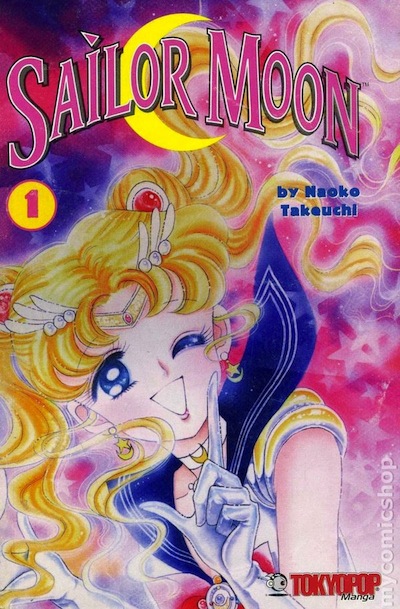
By Naoko Takeuchi. Released in Japan as “Bishoujo Senshi Sailor Moon” by Kodansha, serialized in the magazine Nakayoshi. Released in North America by Kodansha Comics.

I have so many things to say about this volume of Sailor Moon that I’m not even sure where to begin, so please forgive me if I start to ramble. For those of you wondering what’s going on, the Senshi are dealing with the Dead Moon Circus and Chibi-Usa’s getting visions of a pegasus who’s looking for the Legendary GOLDEN Crystal. Meanwhile, all the senshi have found themselves unable to transform and are wondering if this means their duties are over… and whether they can start to follow their dreams.

sailormoon9

The volume opens with each of the four Inner Senshi discussing their dreams of the future. Ami wants to follow in her mother’s footsteps and become a doctor, Rei likewise wants to succeed her grandfather (who I’d forgotten looks nothing like his anime counterpart) at the shrine. Makoto wants to be a wife and baker; and Minako of course dreams of being an idol singer. As we move on, it’s not limited to just them. Not only do the Outer Senshi find themselves living in a small bubble of ‘perfect happy family’ that seems like a dream, but even the Amazoness Quartet, this arc’s minor villains, use the same language – getting their freedom to move in the real world is referred to as their dream.

The first three chapters also remind us that many of the senshi have family issues. Ami’s mother is really too busy to give her the care she needs (though notably she seems to show remorse about it, unlike a lot of ‘education mama’ portrayals of Ami’s mother I’ve seen), and her father essentially ran away and divorced them a few years prior. Rei’s mother died soon after she was born, and her dad is a government minister who has no time for his daughter and has sent her off to live at the shrine. (As we’ll find in a later short story, he *is* as unpleasant as he sounds.) And Makoto’s parents are both dead, and she’s living on her own with the traditional manga “where the hell does she get the money to afford that place” apartment.

The Amazon Trio (who, this being the manga, are barely characterized and killed off right away) thus have no trouble finding ways to get into the girls’ heads and try to tempt them away from their true calling. Preying on Ami’s loneliness and abandonment issues, Rei’s sense of duty and how oppressive that can feel, and Makoto’s indecision and feelings of being weak. Naturally, in the end, each finds the inner strength to go on (in Jupiter’s case, MONSTER STRENGTH, a line that had me laughing hard) and are able to transform, power up, gain new attacks, and wipe out the enemy. (Though not, notably, the Quartet, who always get away. Maybe it’s because they always work in a group, rather than on their own like the previous minor villains. You’d almost think they were friends…)

And then there’s Minako, who has issues of her own. She’s supposed to be the leader of the Inner Senshi, after all (something the anime quietly dropped), and is rather upset that they can all now transform and she still cannot. What’s more, the other three are all mentioning the Outers more and more – how inspirational they find them, the good advice they received from them, and how it would be great if they could show up to help everyone out. This makes Minako even more annoyed, as she never really bonded with them the way the others did, and is unable to offer advice as she’s still powerless. We see in the previous chapters each Inner thinking of advice from their Outer mentor – Ami with Setsuna, Rei with Michiru and Makoto with Haruka. Clearly that would leave Hotaru for Minako, but as she’s a baby right now that doesn’t really happen.

(Speaking of which, when did all these chats and bonding with the Outers actually happen? Between S and SuperS, or in the bits we didn’t see between S? Also, I know that Minako and Hotaru is quite a popular fanfic crack pairing, and I wonder if this might be a reason why.)

In many ways, this parallels an episode of the S anime, where Minako is frustrated that she’s the only one who hasn’t been attacked by the enemy. Here she charges forward into the enemy’s trap (and yes, she’s quite aware it’s a trap) in an attempt to make herself power up through sheer force of will. Unfortunately, what this leads to is her being dropped off of a tall platform, and the only thing holding her up is Artemis. Ignoring the physics of that for a moment, this resonates the best of the four Inner Senshi stories. Ami and Makoto had tiny little versions of themselves gibing them pep talks, and although Rei and Phobos and Deimos turn human briefly, we’d never seen her interact with her crows in quite the same way. But Minako and Artemis are partners (in a way that Usagi and Luna will never be), and when Minako thinks he’s been killed she’s heartbroken.

Artemis’s transformation into a white-haired handsome bishie would likely be less startling to those who read the manga when it first came out (they’d already seen a side-story where Luna did the same, which was adapted into the S movie), and it’s presented as sort of a powerup, much as the senshi go from Planet Power or Star Power to Crystal Power, Artemis is now strong enough to turn human in times of need. This is turn allows Minako to find the strength to make her own transformation.

In the meantime, as I noted, the Outers are living an idyllic life in a mansion somewhere. Haruka’s racing idiots on the highway, Michiru’s recording CDs (and getting hit on), Setsuna is doing important research, and Hotaru… now seems to be about 5 years old. And is quoting Yeats. The Senshi of Destruction quoting The Second Coming is never a good sign. She has her memories as Hotaru, her memories as Saturn, and these new memories of growing up with the Outers all in her head, and it’s turned her into quite the little prodigy. Of course, she also has her deep bond with Chibi-Usa, and knowing that she’s in trouble leads to her age up, again (this time to about 12, it seems), and unite the other Outers to do the same. It’s the sort of scene you want to see set to music, and is beautiful, inspiring, and a bit scary all at once.

In the meantime, what of our leads? Well, poor Mamoru is once again suffering by being the one who is always targeted. This time it’s shadows on the lung, which then becomes coughing up black blood – and even worse, it seems to be contagious, something we find at the very end of this volume when Usagi starts to cough as well. The ‘swapped bodies’ cliffhanger from last time is resolved fairly quickly (though not before Usagi tries to cuddle up with Mamoru in her chibi body, and finds that though he likes ’em young, that’s a little *too* young). Most of the book has Chibi-Usa trying to figure out what’s going on with Pegasus, which is a combination of ‘I want to save him from the bad guys’ and ‘he transformed into a hot guy what are these feelings in my heart?’. This, by the way, leads to the other big funny moment in the volume, where Chibi-Usa imagines talking about her unicorn wannabe-boyfriend with the other Inners, and quickly realizes Makoto is the only conversation that wouldn’t be a disaster.

I seem to have gone on a bit. Suffice to say this book was basically everything I wanted it to be, gave me tons of character stuff to analyze (giving lie to the anime fans saying the manga characters are too dull), and had huge roles for Minako and Hotaru, my two favorite senshi. And, if I recall, the next volume is just as good, and will wrap up the SuperS arc. Get it!

Filed Under: REVIEWS Tagged With: sailor moon

JManga the Week of 2/7

February 1, 2013 by Sean Gaffney, MJ and Michelle Smith 1 Comment

SEAN: 3 new volumes next week, two of which are my own pets so… First of all, Vol. 4 of The Lucifer and Biscuit Hammer (yes, yes, Hoshi no Samidare), which, like Viz’s recent license One-Punch Man, seems to me to be an attempt to do Western-style superhero drama. Its combination of friendship and nihilism is quite addicting.

MJ: You make that sound oddly alluring.

MICHELLE: Indeed.

wonder3

SEAN: I’ve reviewed both volumes of Wonder! to date, and will no doubt be reviewing this one as well, as it has one of the absolute best qualities of any manga series: the ability to make me talk and talk at length about it. I do wonder if it will pick up the slight bombshell dropped at the end of Vol. 2, but suspect that may be another “Oh, Japan…” moment.

MJ: Well, now I feel like I should read it, too! I do like to talk.

MICHELLE: We could make it one of our tandem reads for a future Off the Shelf.

SEAN: Lastly, those first two series come out once in a blue moon, whereas we’ve already had 3 volumes of Crime and Punishment: A Falsified Romance in two months. This one’s on the fast track, and I suspect is a publisher favorite. Not sure if that’s JManga or Futabasha, though.

MJ: There are several series I’d like to see come out a bit faster at JManga—generally long shoujo or BL epics that inspire in me the urge to marathon. I suppose that isn’t the smartest way to put things out, but I wish they’d hit the fast track as well.

MICHELLE: I’m really grateful about the ones I follow that are on that track, but yeah, I am waiting on updates for some as well.

SEAN: Short but sweet. What are you downloading (or is it clouding)?

Filed Under: FEATURES & REVIEWS, manga the week of

Game Review: Yedo

February 1, 2013 by Paul Beasi 3 Comments

Curry favor with the Shōgun–or maybe assassinate him!
Bits & Blips: Manga Bookshelf Edition

Every October from several thousand kilometers away I try to live vicariously through others’ accounts of Internationale Spieltage SPIEL, the largest board gaming convention in the world, also known simply as Essen after the German city in which it is held. Hundreds of games are unveiled publicly for the first time here, some of which will eventually be released worldwide within weeks or months. But some of the games released might never make their way to United States except through importers, and since getting heavy games across the ocean is an expensive endeavor, the cost to obtain these games can be significant. That means limiting myself to one or two of them and that means research. There were a lot of new games with significant buzz coming out of Essen ‘12, but most of them were slowly getting released here. One that particularly caught my eye was a game from a pair of designers from Belgium called Yedo published by eggertspiele / Pegasus Spiele. It didn’t have a lot of buzz, had no US release planned, and it was the designers’ first effort, but the people who played it really seemed to like it and it looked stunning. I decided to take a chance on it.

Best. Decision. Ever.

In Yedo, a worker placement/auction style game, each player is a Clan Elder trying to curry favor with the new Shōgun who rules Japan from the city of Yedo (also known Edo–see this designer diary for information on the name–which is modern day Tokyo). This is primarily accomplished by completing missions to earn money and prestige points (PP). The player with the most prestige points at the end of the game is the winner.

Gameplay:

Yedo lasts for 11 rounds (unless someone assassinates the Shōgun). There are two versions of the game: Geisha and Samurai. For this review, I will cover the more challenging Samurai version. I’ll discuss the differences at the end.

cardsAt the beginning of the game, players will each receive some money, two disciples, an action card, four missions, and a favor. Players will use the disciples to gather the various items needed to complete missions and can acquire more disciples during the course of the game in order to accomplish more in a single turn. The action cards grant the owners special, usually powerful single-use abilities that can be used at various points throughout the game. The favor grants the owner a special starting bonus which could include money, cards, or even a blessing. Each favor’s bonus is unique, however after collecting the bonus players flip the card over and may use it once during the game as a blackmail card or keep it for 2 PP at the end of the game.

The missions are the crux of the game. They come in four colors which are indicative of their difficulty to complete. Green missions are the easiest, followed by yellow, red, and the high scoring but extremely hard black missions. Early on players will need to complete some of the easier missions in order to be able to collect the items needed for the harder missions. There are also five mission types: Warfare, Kidnapping, Theft, Espionage, and Assassination.

greenmission redmission

Once the game begins, players may bid in an auction on various assets: Action cards, Bonus Cards, Weapons, Annexes, Geisha, Disciples, and Mission cards. The assets are divided up into three color groups; in two and three player games, players bid on one of these color groups and in a four or five player game players bid on a specific asset. The starting bidder will make an opening bid on one group or asset equal to the minimum bid printed on the board. In player order, everyone participating in the auction will have a chance to increase the bid or pass. Finally, the person who started the auction has one more chance to increase the bid or pass and then the auction ends. The winning bidder places her bid token there, collects her asset (and in some instances 2 PP), and that color group or asset is now blocked for the remainder of the bidding round. This continues until everyone has had an opportunity to acquire an asset or drop out.

Next comes the event phase which starts with upkeep of the weapons market and ends with an event. The events can be good, relatively benign, inconvenient, or downright disastrous. The most devastating ones can really wreck players’ plans, possibly causing them to lose an entire annex, a disciple, a geisha, money, or a weapon–or more than one of these! Sometimes the really bad events can be somewhat mitigated by returning your blessing. There is a full deck of 27 events and since only one is used per round, not all events will be encountered offering variety from game to game.

After the event phase, the assigning phase begins. I’m not going to go over everything here as there is a lot that can be done, but this is where players will send their disciples to the various districts or their personal annexes. The districts include the Gates, Tavern, Harbor, Red Light District, Market, Temple, and Castle. Each district has a number of available spaces (depending on the number of players) where players may place their disciples to perform actions or to complete missions. Each district has multiple actions which can be performed ranging from acquiring new annexes, geishas, weapons, blessings, or missions to buying or selling PP, changing the turn order, or performing foresight (looking at the top three cards of one of the decks and with the exception of events replacing them in any order), among other things.

board

Completing missions will require players to have one or more disciples in specified districts and may include other requirements such as specific weapons, geishas, annexes, blessings, or even a competing clan member to assassinate. The green cards are easier with fewer requirements, but the black cards will require a lot of planning to have everything needed and disciples in the right places. This phase is only for placement of disciples; performing the actions occurs later.

After all disciples have been placed, the watch patrol will move. Players know ahead of time where the watch is going to be based on the color and current location of the watch patrol marker on the board. Action cards can be used to influence the movement of the guard. If there are any disciples in the district where the watch patrol ends its movement, those disciples are arrested! Any disciples there are returned either to the reserve if the player owns more than two with the remaining going back to the player Clan House. This can be devastating! Luckily, Actions cards can be used to influence whether or not a player’s disciples are arrested. Also, the Blackmail card can be turned in to save one disciple one time, giving up the 2 PP the card would be worth at the end of the game.

After the watch patrol has been resolved, players in the Market District may freely trade weapons and/or money. Then, players in the Tavern District may freely trade weapons, money, bonus cards, action cards, geishas and/or uncompleted missions. Disciples, annexes, blessings, and completed missions may not be traded. Also, players cannot reveal what is on any card that they trade; they may only state that they believe the card would be useful to the other person. Honesty is not a requirement!

In the final phase, players will begin activating their disciples to perform the actions available in the district or to complete missions. Mission cards have two halves; the top half is the Standard reward which must be completed and the bottom half is a Bonus reward which is optional. For the Standard reward, a disciple in one of the required districts will be returned to the Clan House in order to complete the mission. Any other disciples required for the Standard reward or Bonus reward may remain on their locations meaning they will be able to complete other missions or perform actions. Thus, the order in which actions are resolved can be very important.

blackmissionAt the end of this phase, the next round will begin until 11 rounds have been played. That is, unless one player has completed the Kill the Shōgun black mission! If this happens, the game ends immediately at the end of the round.

At the end of the game, players will score any accumulated bonus cards (which I didn’t mention in the review but they score PP based on a variety of end game conditions) and their Blackmail card if they didn’t use it. The Clan with the most Prestige Points wins!

Theme and Artwork:

This game is dripping with theme and I love it! The mission cards all have wonderful flavor text and the requirements generally make thematic sense. Combined with with the absolutely stunning, colorful artwork this game really puts you in 16th century Japan.

The only extremely minor issue with the artwork is that the annexes are all similar looking and when trying to figure out which is which on the mission cards, you have to pay extra attention. But this is only barely a quibble worth mentioning. All of the art is lovely. It’s one of the most striking games I have in my collection and it always gets complimented when I introduce it to people.

Rulebook and English Translation:

I have a lot of board games and therefore a lot of rulebooks. The number of problematic rulebooks far outweighs the number of good ones. This is true whether or not the game was translated from English or was written by a native English speaker, but adding translation certainly can introduce more problems. I am happy to say that both the quality of the instructions and the quality of the translation are best in class. In fact, if I didn’t know that this wasn’t a game designed by native English speakers I would never have guessed it.

The rulebook is laid out in a very well organized manner. After reading through the rules, I had almost no questions about how to play. On the back page, there is a table that summarizes what things are, where to get them, what to do with them, and important notes. The player board lists all of the phases, all of the annex functions, and all card and weapon limits. The action cards clearly indicate in which phase they can be used.

That said, there were two misprints in the English edition of the game: The Tavern and Market districts on the back page were labeled incorrectly and a couple of the yellow Assassination mission cards were misprinted as Kidnapping. Mistakes like these are common in first printings of any game and neither causes a major problem, although some of the bonus cards do rely on the types of missions completed and players will have to make sure that if a mission is labeled Kidnapping but the flavor text says to Assassinate someone that they remember that it is an Assassination mission.

Still, those mistakes aside I consider the manual the gold standard of what game manuals should be like. The translation was perfect and the rules were complete, clear, and concise.

Conclusion:

If you haven’t figured it out already, I absolutely love Yedo. It scales very well for two to five players and is a solid tactical game. This game is what Lords of Waterdeep wishes it could be. While I found that game enjoyable enough, it was an extremely dry extrapolation of Dungeons and Dragons. This is the opposite of that. The theme shines in this game. It’s really hard to explain without just experiencing it, but everything looks beautiful and the missions are highly thematic.

I mentioned earlier that there are two versions that you can play. The Samurai version includes all of the action cards and all of the events. The action cards can be very confrontational and the events can be extremely cruel. I will admit that this game has flared tempers between players and if you don’t like confrontation or having your plans utterly wrecked by the turn of a card, you will NOT want to play this version of the game. However to accommodate this there is the Geisha version of the game. In this version, the most evil event and action cards are removed from the game. Also, the watch patrol is removed completely for the 11th round of the game. These changes will not make Yedo that much easier but may make it more palatable for some, especially younger players.

I really hope that this game finds a US distributor because it deserves to be played by everyone. Yedo is easily the best game I acquired in 2012 and definitely one that will find its way to the table often. There may be a few retailers who still have leftover import copies such as Funagain Games, but otherwise you’ll have to order this directly from Germany.

If you get the chance to play, take it! You won’t regret it.

Age: 14+
Length: 120-180 mins
# of players: 2 to 5

Designers: Thomas Vande Ginste and Wolf Plancke
Pubisher: eggertspiele / Pegasus Spiele.
Artist: Franz Vohwinkel

Filed Under: Bits & Blips Tagged With: board games, Yedo

Dawn of the Arcana, Vol. 8

January 31, 2013 by Anna N

Dawn of the Arcana continues to be an entertaining fantasy series in a subtle and well-executed way. This volume has our adventurers in the desert kingdom of Lithuanel. Nakaba is caught up with a struggle between the princes Akhil and Azhal. They encounter a new type of ajin in the form of a group of terroristically inclined snake-people. Caesar has to prepare to return to his own country, and he attempts to push Nakaba away in an attempt to protect her from getting hurt. Nakaba has grown into a much more confident woman, and she’s not afraid to invoke her power when she needs to in order to help her friends.

One of the things I’m always wanting from this series is more Loki. Nakaba’s devoted dog-like ajin protector has always seemed to have hidden depths and motivations and Nakaba’s power shows her a series of visions that demonstrate just how far Loki is willing to go to to protect her. Nakaba gains a new appreciation for how much information he shielded her from when she was younger and more innocent. Eight volumes in, and I’m still appreciating the clarity of Toma’s art. The paneling had really developed well to showcase both action sequences and the inner feelings of the characters. Seeing a younger Nakaba in flashbacks makes the reader appreciate the bond between her and Loki, and appreciate how far she’s come since she became Caesar’s princess.

Filed Under: REVIEWS Tagged With: dawn of the arcana, shojo beat

Introducing Drama Bookshelf

January 31, 2013 by MJ Leave a Comment

drama-bookshelfI’ve talked about this a bit on Twitter, but I think it’s time to officially point you all to our new drama-specific landing page, featuring all our regular columns in East Asian TV dramas, including It Came from the Sinosphere, Bringing the Drama, and the new Drama Diary.

For regular readers of the site, nothing is changing. These columns will show up on the main front page as always. But if you’ve got a special interest in Korean, Taiwanese, and other East Asian TV dramas, our new landing page will make it easy to see what’s new in dramas with just a glance. We’ll have more drama content to come!

If this new page seems to work well for people, I may be creating topic-specific landing pages for other things as well, so be sure to let me know what you think!

Check it out: Drama Bookshelf.

Filed Under: UNSHELVED Tagged With: announcements, drama bookshelf

Manga the Week of 2/6

January 31, 2013 by Sean Gaffney, Michelle Smith, MJ and Anna N 6 Comments

SEAN: I knew there would be a pile this week, and indeed there is a pile. I already talked about the Kodansha stuff last week, as I anticipated this, so to sum up: Fairy Tail 23, the third and final Genshiken omnibus, the last Miles Edgeworth: Ace Attorney Investigations, the penultimate Negima, and a new and fantastic Sailor Moon.

Meanwhile, that still leaves a lot. Dark Horse has Vol. 26 of Gantz, which no doubt is filled with latex, boobs, and blood-soaked gore. I like one of the author’s other works a whole lot, but this series just never grabbed me.

MICHELLE: I was kept away from this one by reviews, and will probably be staying away.

MJ: Same here. It’s sad, too, because I generally like to support Dark Horse manga. I wish I thought I could like it.

SEAN: Udon has a title that is not via Capcom (to my knowledge), but still seems to be video-game based: Sengoku Basara: Samurai Legends Vol. 2. It’s like Son Goku, only with an e! And… probably not a lot like the shoujo manga Basara at all.

MICHELLE: Probably not.

MJ: Heh.

SEAN: Vertical has Vol. 7 of GTO: 14 Days in Shonan, which is now in its last third. The twins arc may be wrapped up here, but that doesn’t mean things are back to normal. In fact, we may be getting even more serious than before.

MICHELLE: I am several volumes behind on this now. Bad me.

MJ: My eyes are filled with little hearts as I read this. Oh, GTO: 14 Days in Shonan, how I love thee! Thankfully, my crush on Eikichi Onizuka is slightly less embarrassing than the one I had on Morimoto Rockstar.

aiore8

SEAN: And the rest is GIANT PILE O’ VIZ. First off, Vol. 8 of Ai Ore!. The series apparently doesn’t end here, but as Mayu Shinjo is busy with many other projects, it’s on hold right now, so this will be the last for a while.

MICHELLE: Oh, really? Crap. I was hoping I could be finished with it once and for all.

MJ: Some nightmares never end.

ANNA: I feel like the lone apologist for Ai Ore!, but really the later volumes of the series that I’ve read have been pretty funny. And Demon Love Spell is a hoot. I seriously wish more Mayu Shinjo titles were translated over here. Oh! Maybe Viz will put Sensual Phrase on the iPad, that would be awesome.

SEAN: I generally like Ai Ore more the more that it comically abuses its hero. As for Sensual Phrase, I suspect it’d get M-rated off the tablet devices, unfortunately.

Bleach has an omnibus of Vols. 10-12, which if I recall are right in the middle of the Soul Society arc, so should be a lot of fun.

MJ: Oh, I really miss those days!

SEAN: Bleach also has Vol. 55 of its current run, which is the start of this current arc, I think. Kubo said a while back this would be the last arc, but that doesn’t mean he’s not taking his own sweet time about it as always.

Dawn of the Arcana hits Vol. 8, meaning I’m farther and farther behind. Ah well. At least digital manga doesn’t go out of print. (Yet – I don’t want that thrilling new trend anytime soon.)

MICHELLE: I’m planning to get caught up on Dawn of the Arcana this week, as a matter of fact.

MJ: I’ve suddenly gotten hooked on this series, so I’m quite happy about this!

ANNA: I like the way Dawn of the Arcana seems to be a bit more concerned with world building and geopolitics than romance, it makes it a little different from the average shoujo title.

SEAN: Devil and Her Love Song 7 its right in the exact middle of the series, and so things are clearly only going to get worse for our heroine. I do hope Anna sticks around, though, as I know there’s a good friendship with Maria buried somewhere deep deep DEEP down in there.

MJ: This is also a shoujo series I can’t seem to get enough of, though of course it’s very different.

ANNA: Always good to see another volume of this quirky series!

SEAN: Kamisama Kiss hits a dozen volumes, twice that of Karakuri Odette! This one’s still going strong, though, and apparently features cutie Himemiko, who finds dating is even harder when you’re a yokai.

MICHELLE: Here are a couple more shoujo series that I like but am behind on.

ANNA: Yay! Kamisama Kiss is one of my never-fail feel good shojo reads.

SEAN: Naruto also has a 3-in-1 with Vols. 10-12, which I’m sure I will catch up with ANY DAY NOW.

And as for Naruto 60, well, Sasuke’s back. That pretty much sums it up. Talk amongst yourselves.

Nura: Rise of the Yokai Clan left a lot of things hanging last time, and this volume… at least gets a little closer to them. Don’t expect the arc to end here, though. Shiibashi is no Kubo, but he’s still slow.

One Piece is one omnibus ahead of its fellows, as we get Vol. 13-15, which is starting the Baroque Works arc. These volumes have Mr. 3 and Miss Golden Week, two of my favorites from that group of villains. As well as Vivi, of course.

Pokemon Diamond and Pearl Platinum has hit 7 volumes, and I still know nothing about it.

And Skip Beat! has hit Vol. 30! Does this make it the longest running shoujo series from Viz? Red River was only 28… In any case, the danger of method acting rears its ugly head again.

MICHELLE: Nope. Boys Over Flowers was 37 (including Jewelry Box).

MJ: I can’t believe I read the whole thing…

ANNA: I do not regret reading 37 volumes of Boys Over Flowers and I will not regret reading 30+ volumes of Skip Beat!

SEAN: Do you realize there are only 6 more volumes of Slam Dunk to go? How has this snuck up on us all?

MICHELLE: I am all too aware of it! I like to save the series up and read it in chunks, so when I finished volume 26 for last week’s briefs I realized that the next chunk would also likely be the last chunk! I’m already going through withdrawal.

steppingonroses9

SEAN: Stepping on Roses has come to a close with Vol. 9. One day I will get an awesome shoujo manga series about a girl who is forced to chose between two men and shogi, and chooses shogi. This is not that day.

MICHELLE: Oh, I forgot about this one! It’s pretty dumb, but I might as well finish it.

MJ: I gave this series up ages ago, and I don’t regret a thing! I am sad to hear, however, that it never turned into a shogi manga.

ANNA: I am sad that Stepping on Roses wasn’t as good as Tail of the Moon, because I love that series so much.

SEAN: Tegami Bachi: Letter Bee adds Volume 12 to its arsenal, and I add another shonen series I never really kept up with to my long, long list.

MICHELLE: I have a bunch of volumes I intend to read one of these days.

SEAN: Tenjo Tenge hits is final omnibus with Vol. 11, meaning it’s finally completely out uncensored. Though I suspect most of the guys who complained about CMX are merely clutching their scanlations to their bosoms and muttering “But the font wasn’t the right type! BOYCOTT!”

MJ: This seems certain.

SEAN: Lastly, Vol. 14 of Toriko introduces a new pretty boy into the cast – one who’s really good with knives! There’s something a bit strange about this pretty boy, though…

MICHELLE: …. aaaaand the same thing I said about Tegami Bachi applies to Toriko as well.

SEAN: Isn’t that a lot of manga? What’s in your pile?

Filed Under: FEATURES, manga the week of

Drama Diary 1-30-13: Guy #2

January 30, 2013 by MJ 17 Comments

If you’re a fan of romance, you know the guy I mean. He’s the primary rival of the story’s cold, brooding, and/or unreliable romantic hero—the guy who is kinder, more understanding, and who offers significantly more emotional security than Guy #1. He is also undeniably, irretrievably doomed to lose the girl. He is Shin Woo in You’re Beautiful or (for manga fans) Takeuchi in We Were There. And though sometimes his story may be more nuanced (Nobu/NANA) or perhaps even genuinely satisfying (Yuki/Fruits Basket), Guy #2’s lack of potential as leading man material is predetermined from the start.

As romance tropes go, I have a sort of hate/slightly-more-hate relationship with the fate of Guy #2. For one thing, I’ve never personally gone for the cold, brooding, and/or unreliable type, and not even a lifetime of devotion to romantic fiction has succeeded in changing that fact. Kindness, understanding, and emotional security ftw! Yet, with rare exception (sorry, I still root for Duckie every single time), a good storyteller can win me over to Guy #1, slowly but surely, right alongside the story’s heroine.

Then came Fated to Love You.

I was introduced to the Taiwanese drama Fated to Love You by the incomparable Sara K., whose post on the series promised me a smart, irreverent romantic comedy with a genuinely moving story—and indeed it has delivered on those promises in every way. But I’ll admit that, ten episodes in, I’m having some real difficulty with the heroine’s obvious romantic trajectory.

Meet Guy #1:

cunxi

Cun Xi is the wealthy, young director of Magic Cleaner Enterprises, a corporation that makes soap and other cleaning products. He’s also the company’s sole heir. He lives with his overbearing grandmother and wears shiny suits. Though Cun Xi has at times been both kind and tender towards our adorable, selfless heroine, Xin Yi, he has also spent much of the series’ first ten episodes whining, throwing tantrums, yelling at women, taking calls on his cell phone at inappropriate moments, threatening layoffs, and playing golf.

And yes, he has the ability to look both handsome and mature, but this expression is not as rare as one might hope.

Meet Guy #2:

dylan

Dylan is renowned expert in Chinese ceramics whose unassuming personality (and one wacky misunderstanding) initially leads Xin Yi to believe he is a priest. Despite his self-made fortune, he spends most of his free time caring for children at the orphanage that raised him and teaching them how to paint. He is insightful and soft-spoken, while also being a total badass. He was last seen (as of episode ten) urging our heroine to believe that she could actually be a strong, whole person, independent of a man. He’s the only person in the entire series who has demonstrated that he values Xin Yi for something other than her future as a mother, wife, or perpetual doormat. And seriously, you guys, HE TAKES CARE OF ORPHANS.

Guy #1 who??

Though it’s absolutely clear, even less than halfway through, that Xin Yi’s heart belongs to shiny-suited Cun Xi, it’s going to take a herculean effort on the storytellers’ part to get me there with her. And at the moment, all I wish for is that Xin Yi would cast off her attachment to Cun Xi’s emotional torture (it’s a long, spoilery story and his position is not unsympathetic, but man does he torture her) and run off to Shanghai with Dylan. (Please do not tell me if this actually happens.)

Oh, Guy #2, I’m on Team You. If only you had a chance. Who’s with me?

Watch now at DramaFever!

Filed Under: Drama Diary, FEATURES & REVIEWS Tagged With: Fated to Love You

Harlequin Manga: Angus’s Lost Lady and The Seduction Bid

January 30, 2013 by Anna N

Although I’ve read a bit of manga on the Kindle app for my iPad, I haven’t actually read any manga on my newest toy – a Kindle Paperwhite. When I discovered that there were actually several Harlequin manga for sale for .99 cents on amazon, I wasted no time in purchasing them. I was particularly interested in these two titles, because I’d previously read another title adapted by Kazuko Fujita, Sale or Return Bride. I tend to assume that the art for these Harlequin adaptations is going to be fairly rushed, but either Fujita’s art is among the best that I’ve seen in a Harlequin manga. Her character designs are attractive, and she manages to convey a great deal of nuance in their facial expressions, with the end result that she ends up elevating the stories in these volumes. Backgrounds are sparse, and if you read Fujita’s manga one after the other you will notice that she only draws one basic hero, but she does draw him very well.

Buying Harlequin manga on the Kindle is a bit confusing because there are multiple editions for each title, but I’m linking to the editions that I bought and read here.

Angus’s Lost Lady by Kazuko Fujita and Marie Ferraella

Angus’s Lost Lady is the story of a PI and single father named Angus who is surprised to see a woman with with a lost shoe and amnesia on his doorstep. The only clue to her identity is the fact that she’s clutching his business card, but she hasn’t met him before. She has a head injury as a result from being grazed by a bullet. Since this is a romance manga Angus promptly moves the lost woman into his apartment, introducing her to his daughter Vikki and trying to jog her memory by giving her a phonebook to read. The woman decides to adopt the name Rebecca. Rebecca and Angus investigate her accident and missing memories, and along the way struggle with their attraction for each other. The old “woman in danger with amnesia” is not a novel plot device, but Fujita does a good job portraying the chemistry between Angus and Rebecca, and Rebecca isn’t as simpering and weak as many Harlequin amnesia ladies usually are.

The Seduction Bid by Kazuko Fujita and Amanda Browning

Perhaps it is due to my own anger management issues, but I generally enjoy it when women in romance manga yell a lot. In this case, the heroine of The Seduction Bid barges into an office and starts to chew out an incredibly handsome man who she thinks is an unscrupulous reporter for a local tabloid. Carrie is determined to defend one of her friends from scandal. While she is momentarily distracted by the stormy grey eyes of the man she is yelling at, she ends up storming out of the office ranting about “garbage journalism”. The man with the mysterious grey eyes decides that he wants to be yelled at forever and vows to marry her. Later, as Carrie is hanging out at the house belonging to the parents of her late husband she is introduced to the object of her rant and he turns out to be Lance, cousin of the gutter journalist. Lance then proceeds to relentlessly pursue the reluctant Carrie, and his charm gradually begins to wear down her well developed defense mechanisms.

The attractive art makes these volumes a pleasure to read, and the stories are basically what you’d expect from Harlequin. Reading these on the Kindle was fine – the size of the manga to fit the Kindle screen is about what you’d see in a Japanese tankobon, and since the backgrounds of the manga weren’t particularly detailed, the smaller reading size for the manga didn’t make much of a difference. At only a dollar a pop, buying these is a no-brainer for anyone who enjoys Harlequin manga.

Filed Under: REVIEWS Tagged With: harlequin manga

Weekly Shonen Jump Recap: January 28, 2013

January 30, 2013 by Derek Bown 5 Comments

CoverThere’s a topic that I feel might need to be addressed, and while I do talk about it on this week’s episode of Manga^3, I think it wouldn’t be out of place to at least take a few lines to talk about it here. As you all know, Weekly Shonen Jump has started publishing chapters simultaneously with Japan. So, some may wonder why exactly scanlation sites seem to have the next set of chapters up just two days after WSJ is published. Some may think that we have been lied to—that in fact we are not actually simultaneous. After having to explain why this is not the case to a friend, I figured I should put this information out there where others can see it.

The fact of the matter is that scanlation sites get their hands on the chapters well before they are actually released in Japan. There is no way for VIZ, or anyone, to publish those chapters you see on the scanlation sites until next Monday because they have not been legally released.

I know the old excuse, “I read scanlations because how else am I going to get these chapters?” And I’m not about to pass a judgement call on whether one should or should not read scanlated manga. In my personal opinion the most important thing is that the creators get paid for their efforts.

Where this excuse stops working is when it morphs into, “I’m paying for WSJ, but those new chapters are right there, nobody will care if I read them now.” That becomes problematic because, well, people will care. Those chapters should not have been released yet. The paying Japanese audience has not even had a chance to read them yet. This goes beyond providing manga that has no other outlet, and goes straight into outright stealing intelectual property before it has been officially released.

I assume most of you would not watch a low quality leak of a movie before it has even hit theaters, so please, do the same for manga, and no matter how tempting it may be to read those scanlated chapters, please wait for the official release wherever such a release is possible. After all, the more success WSJ has in its digital format, the more likely other companies might be to attempt something similar. You want to read Fairy Tail day and date as it is released in Japan? Let the publishers know that you are willing to pay the money for an official digital magazine. And for those series that are being published in WSJ, please show your support by reading them only as they become officially available.

And that took a lot longer than I thought, but it’s an issue that needed to be addressed. There is literally no way for us to get chapters legally faster than they are being published in Japan. So please, have some patience, and enjoy your manga.

Toriko Ch. 219
While I would have preferred to see more of the cooking competition, after this chapter I find myself at least pleasantly resigned to seeing this war play out. The chapter sets up the standard one-on-one fights we’ve come to expect in shounen series, while managing to pull off several excellent scenes. I still question the motives behind this attack. While I can imagine that it’s the easiest place to kidnap cooks since they are all gathered in one place, it does seem like the hardest place to kidnap cooks since they are all gathered in one place and to a man they are all supreme badasses. I doubt this is the final battle, or even the lead in to said final battle, so I expect we can’t do much more than sit back and wait to see what the ultimate goal is here.

Toriko

One Piece Ch. 696
I sometimes feel bad for how much praise I lather on One Piece. But then I remember that One Piece has done everything it can to deserve said praise. It’s not One Piece‘s fault that the other manga can’t keep up. That being said, while I know this series isn’t for everyone, I still stand by the assertion that even a slow chapter like this, with little to no action, is the crown jewel of WSJ. Anyone who hasn’t put the time into reading this series is doing themselves a serious disfavor.

There are plenty of entertaining moments throughout the chapter, and they are executed in such a way that I even forgive Oda once again for not actually killing off any of the characters he apparently killed during the arc. We get a great pair of scenes for Sanji and for Nami, with Sanji actually reminding us that people wasting food is one of his berserk buttons. And Nami’s scene where she is talking about Tashigi and reminiscing about her own mother is a great character piece in a cast that at times does run the risk of stagnating.

While I do love this series, it does constantly run the risk of Luffy’s crew becoming irrelevant. Especially in recent arcs the focus has been on new characters, rather than developing those that we have become comfortable with. Everything past the Shabaody arc has demonstrated that Oda may be growing tired of using the same cast constantly, as I can easily see him removing the crew from the story as him using a chance to play around with some new characters. I hope this is not the case, and that we get some deeper scenes with the crew, and not just a constant barrage of “Look how powerful they are now”.

One Piece

See, I can be harsh even with my favorite series. And speaking of harsh…

Naruto Ch. 617
I’ve made no secret that Naruto is not exactly one of my favorite series. And it wasn’t until recently that I found out why this is. A friend and I were discussing overarching plots in manga, and whether it’s better for a series to just have them go on adventures, or if they need an overarching goal even if the resolution of said goal won’t happen for decades.

It was because of this discussion that I finally figured out why I haven’t been nearly as excited about Naruto as I once was. The simple matter of the fact is that when I started reading, Naruto had one goal, namely to become Hokage so that people would accept him. If you strip away the part about becoming Hokage, we are left with the desire for people to accept him. And the best parts of the series were Naruto fighting against the perception that he is a screwup. For me that was the driving force of the narrative.

Unfortunately that goal can’t be stretched out too long without becoming stale. And with the Invasion of Pein arc Naruto finally achieved his goal. He is not yet Hokage, but he has been accepted and admired by his entire village. For me that was the climax I had been waiting for.

And then the series kept going. Granted Naruto still needs to bring Sasuke back, but I neither care about that plot, nor do I think it would have been very out of place had it been addressed and concluded right after the Pein arc. The problem is that Kishimoto introduced many elements that need to be resolved. Without those elements the series could have been completed satisfactorily with the defeat of Pein. Since that point the series has felt like it has been meandering, and most of the events that I have not cared for have happened during the period after said arc. The last time I was really excited about Naruto was just before and during that arc. Since then the series has been lacking a clear goal that I’ve yet to care about, all because what I perceived as the ultimate goal has already been accomplished.

Oh yes, and why was Sakura missing from this chapter? I know a lot of people don’t like her, but I’ve actually liked her character arc through the series. If she’s been completely dropped from the series—and do remember that she used to be the female lead for the series—then I honestly can’t say that Naruto is still the series I once loved. I know a lot of people are enjoying the current arc, and while it is big and epic, it is still missing every single element that I ever loved about the series, leaving it feeling stale beyond belief and not nearly close to something that I would feel comfortable recommending to anyone with similar tastes to mine.

And here I started this part of the column, with the intention of being nicer this week. But I’m afraid that might not be possible until Naruto gives me a reason to start liking it again. And the chances of that are slim considering my complaints for the series.

Nisekoi Ch. 59
In the hands of a good writer, give me single chapter stories any day. And even when Nisekoi branches out into longer stories, there is still plenty for me to enjoy. I thought that when Chitoge realized her feelings for Rakku the series would start to go downhill, since my favorite part of the series was the uncertainty of who Rakku would be with. Even though Chitoge has almost certainly been decided as being the girl he will fall in love with, I still find myself entertained week by week.

Chitoge’s mother is the typical scary mother, but somehow Nisekoi manages to take common tropes in romantic comedies and make them feel fresh. While I do question Chitoge’s father, given how young his wife is, I find myself not thinking about potential squicky relationships by how terrified he is of her. Nisekoi always manages to put me in a good mood.

One Punch Man Ch. 2
I was a bit surprised that this series is going through from chapter one onward rather than skipping to the most recent. And I applaud the editorial staff for making this decision. One of the biggest weaknesses with publishing weekly series is that there is no feasible way to publish everything that has happened since the first chapter to the most recent. But since One Punch Man is a monthly series there is plenty of time to play catch up.

This was the chapter that had the biggest effect on me. If nothing else, the gruesome way in which Saitama dispatches the crustacean monster stands out as being both incredibly nasty and the most effective way to defeat a monster.

While we don’t get anything on Saitama’s training, I love the straightforward approach this manga is taking to telling its story. Rather than wasting time, everything important about his backstory is taken care of in a single chapter.

Bleach Ch. 524
Did anyone else get the image of Kenpachi pinning for Unohana throughout the rest of the series? I can’t help but imagine him thinking, “Please notice me, Senpai” and the image made me enjoy this chapter a lot more than I probably should have.

To be fair, this was a pretty good chapter. Bleach has always lacked a clear overarching goal, so I’ve grown used to the meandering feeling I get from series that don’t have a clear final goal. So it’s best to enjoy each arc on its own, and each chapter on its own. Which is why it’s a shame that not much happens chapter to chapter.

I enjoyed the fight, though I have to question how exactly just fighting is supposed to teach Kenpachi to use two hands. I suppose Unohana needs to beat it into him? Either way, Kenpachi and Unohana have been favorites of mine for a while, and even though I don’t quite like this development from Unohana I have to admit it is the most interesting thing she’s done in the entire manga.

Bleach

Cross Manage Ch. 18
I think this chapter solidifies the idea that it isn’t about the sport. Cross Manage is entirely a shoujo manga disguised as a shounen manga. And I quite like it for that. Sure I would love to see some hot-blooded shounen sports action, but there’s a place for manga like this. The question is how long that place will remain open.

Hayami manages to be an endearing, entertaining character, despite being the rival love interest. it feels more real that she is perfectly likable, and not an antagonist at all, compared to series where all love rivals are scheming shrews. It certainly makes for a much more entertaining manga.

Kintoki
I like Dragonball Z, I really do. The anime version may be infamous in its execution, but the manga really was something special. I won’t say it’s my favorite of all time, but it’s pretty high up there. That being said, getting a new Toriyama manga, even if it is just a one-shot is special. Unfortunately I can’t say that it was necessarily anything groundbreaking. It was essentially more Toriyama, which works perfectly well for anyone who wanted nothing but to wax nostalgic, but for anyone looking for something as groundbreaking as Dragonball was, chances are this one-shot will come off as a bit of a disappointment.

Its biggest downside is the fact that a lot of Toriyama’s weaknesses shine through. The villain of the story, for example, emphasizes that Toriyama was not exactly one for nuanced villains. He created great characters, but his villains never really got beyond the “I have power so I will mess things up” stage. In such a short format we get that essence distilled so far that it exposes flaws in prior villains Toriyama has written.

Despite that major flaw in the story, I have to say that I would have most definitely read this had it been turned into a series. While ending a one-shot or a failed manga run by saying “there were more adventures but I won’t tell them to you” is a trope I’m not entirely fond of, I have to say that I believe Toriyama would have spun an interesting web out of the premise. On its own it’s more of the same, but it’s overall a good same, so I can’t complain about anything else.


If you want to hear more, check out Manga^3 at Burning Lizard Studios for old podcast episodes. For last week’s episode check out, Episode 032 – Shounen Hero Asexuality.

Filed Under: FEATURES & REVIEWS, WSJA Recaps Tagged With: bleach, naruto, nisekoi, One Piece, one punch man, toriko

  • « Go to Previous Page
  • Page 1
  • Interim pages omitted …
  • Page 693
  • Page 694
  • Page 695
  • Page 696
  • Page 697
  • Interim pages omitted …
  • Page 1048
  • Go to Next Page »
 | Log in
Copyright © 2010 Manga Bookshelf | Powered by WordPress & the Genesis Framework