• Skip to primary navigation
  • Skip to main content
  • Skip to primary sidebar
  • Home
  • About Us
    • Privacy Policy
    • Comment Policy
    • Disclosures & Disclaimers
  • Resources
    • Links, Essays & Articles
    • Fandomology!
    • CLAMP Directory
    • BlogRoll
  • Features & Columns
    • 3 Things Thursday
    • Adventures in the Key of Shoujo
    • Bit & Blips (game reviews)
    • BL BOOKRACK
    • Bookshelf Briefs
    • Bringing the Drama
    • Comic Conversion
    • Fanservice Friday
    • Going Digital
    • It Came From the Sinosphere
    • License This!
    • Magazine no Mori
    • My Week in Manga
    • OFF THE SHELF
    • Not By Manga Alone
    • PICK OF THE WEEK
    • Subtitles & Sensibility
    • Weekly Shonen Jump Recaps
  • Manga Moveable Feast
    • MMF Full Archive
    • Yun Kouga
    • CLAMP
    • Shojo Beat
    • Osamu Tezuka
    • Sailor Moon
    • Fruits Basket
    • Takehiko Inoue
    • Wild Adapter
    • One Piece
    • After School Nightmare
    • Karakuri Odette
    • Paradise Kiss
    • The Color Trilogy
    • To Terra…
    • Sexy Voice & Robo
  • Browse by Author
    • Sean Gaffney
    • Anna Neatrour
    • Michelle Smith
    • Katherine Dacey
    • MJ
    • Brigid Alverson
    • Travis Anderson
    • Phillip Anthony
    • Derek Bown
    • Jaci Dahlvang
    • Angela Eastman
    • Erica Friedman
    • Sara K.
    • Megan Purdy
    • Emily Snodgrass
    • Nancy Thistlethwaite
    • Eva Volin
    • David Welsh
  • MB Blogs
    • A Case Suitable For Treatment
    • Experiments in Manga
    • MangaBlog
    • The Manga Critic
    • Manga Report
    • Soliloquy in Blue
    • Manga Curmudgeon (archive)

Manga Bookshelf

Discussion, Resources, Roundtables, & Reviews

Blog

Manga the Week of 3/19

March 13, 2014 by Sean Gaffney, Michelle Smith, Ash Brown, Anna N and MJ 1 Comment

SEAN: There are no quiet weeks for the month of March, each week having a surprisingly robust group of manga coming out. Here’s what’s next week.

Genshiken returned after a hiatus, never a good sign, and with a ‘next generation’ cast that almost immediately brought back the previous generation, an even worse sign. Despite this, it’s been incredibly entertaining, always remembering to focus on the people rather than the otaku. Vol. 4 of Season 2 comes out next week.

MICHELLE: Will I lose my manga badge if I admit I’ve never read Genshiken?

ASH: I only got around to it after the omnibuses were released, but I’m glad that I did. I’m enjoying the second season, too.

ANNA: I will have to lose my manga badge too, because I have never read it either.

MJ: I’ve had this on my “to read” list forever. Perhaps I can finally start picking up the omnibus release.

uqholder

SEAN: Speaking of returning after a hiatus with a next-gen cast, UQ Holder is Ken Akamatsu’s new work for Kodansha after the abrupt end of Negima. The series takes place in 2086, and magic is now known to the world after the events of Negima. The main cast (with perhaps one exception) is not from Negima, however, but a new crew getting ready for some adventure. Expect action, humor, and gratuitous nudity.

And while CLAMP has indeed gone back to the well and restarted their old series xxxHOLIC, we aren’t getting that new run yet. Instead, here’s the first omnibus putting back into print the old series that came out 11 years ago – an eternity in manga boom years! – from Del Rey Books, who also published Negima. And Genshiken.

MICHELLE: Ooh! I somehow missed out on buying the last couple of volumes of the first run of xxxHOLiC, and now they’re pretty expensive. Maybe I’ll pick up the final omnibus instead.

MJ: This makes me very happy!

SEAN: Seven Seas reminds manga bloggers who don’t follow the series that casual readers who don’t follow manga bloggers can’t get enough of Dance in the Vampire Bund. The spinoff The Memories of Sledge Hammer has Vol. 2 arrive, and still does not star David Rasche.

MJ: Heh.

SEAN: They are also bringing you Vol. 5 of Mayo Chiki, which is what it is, and no amount of my wishing it was more like Railgun or Toradora will change that.

And there’s another Witch Buster omnibus on the manwha front, as Vols 9-10 are due out next week.

marchstory5

On the Viz front, we have the final volume of March Story, which is not quite manwha – the creator is Korean, but the story itself ran in the Japanese Sunday GX, home of Black Lagoon. I never did get around to reading it, but always heard good things.

MJ: I’m looking forward to this! I’ve enjoyed it from the start!

SEAN: Lastly, it has been a full year since the last volume of Vagabond, so Vol. 35 had better be worth the wait. Oh wait, it’s still an Inoue manga, of course it is.

MICHELLE: Someday, I will read more Vagabond. I just seem to prefer basketball!Inoue, though I know Anna disagrees with me! :)

ASH: I adore Inoue’s work and Vagabond is fantastic. I’ve actually read the novel that the series is based on, too. They’re both epic, and I love Inoue’s interpretation.

ANNA: Vagabond is the best. I pine for more VizBig editions of this excellent series.

SEAN: Sadly, there are no Irish manga this week, just Japanese (and Korean). What are you getting?

Filed Under: FEATURES, manga the week of

Indian Summer

March 12, 2014 by Ash Brown

Indian SummerAuthor: Mieko Kanai
Translator: Tomoko Aoyama and Barbara Hartley
U.S. publisher: Cornell University East Asia Program
ISBN: 9781933947556
Released: August 2012
Original release: 1988

My introduction to Mieko Kanai was through her short novel Oh, Tama!, the second volume in her Mejiro series. I enjoyed it so much that I wanted to read more of her work, which is how I came to pick up Indian Summer. Although Indian Summer was Kanai’s first novel to be released in English, and only the second volume of hers to be translated (the first being the short story collection The Word Book), it’s actually the third book in the Mejiro series. Each novel in the Mejiro series, though they share some of the same characters, settings, and events, largely stands on its own. While it isn’t necessary to read one novel to enjoy another, it may add some additional depth. After being serialized between 1985 and 1987, Indian Summer was collected into a single volume with some slight modifications in 1988. The English translation of Indian Summer by Tomoko Aoyama and Barbara Hartley, published by Cornell University’s East Asia Program as part of its New Japanese Horizons series in 2012, is based on the later 1999 Japanese edition of the novel.

Momoko is a new student at a university in Tokyo. She’s looking forward to leaving her home in the country behind and setting out on her own in the city. Unfortunately, her overbearing mother isn’t about to let her nineteen-year-old daughter live unsupervised and plans for Momoko to stay with her aunt Chieko instead. The arrangement is meant to be temporary. In a year, Momoko’s younger brother Jun’ichi is also expected to be attending a Tokyo university and their mother intends for them to live together so that Momoko can look after him. Momoko isn’t at all interested in either of these plans, but happily she and her novelist aunt get along fairly well with each other. Chieko has her quirks, as does Momoko, but the two of them are doing what they can to make the best out of a rather awkward situation and to appease Momoko’s mother. Although the arrangement isn’t ideal, life does go on for Momoko as she beings university, makes friends (her classmate Hanako just so happens to be a huge fan of Chieko’s writing), and deals with any of the other curveballs that are thrown her way.

The structure of Indian Summer is particularly interesting. The novel is primarily told from Momoko’s point of view, but her narration is interspersed with the essays and stories that her aunt has written. Generally they are somehow related to whatever is currently going on in the story, but they do break it up somewhat. Much as in Oh, Tama!, Kanai frequently makes references to other works of literature as well as cinema in Indian Summer. Although I know there were some references that I didn’t recognize, I was delighted by those that I did, such as an homage of sorts to Nobuko Yoshiya’s Hana Monogatari. However, enjoyment of Indian Summer doesn’t depend on familiarity with the works being referenced, some of which are Kanai’s own. In Oh, Tama!, Kanai mentions that the characters in her Mejiro series are all based on real people. Indian Summer makes it fairly clear that she herself is at least partly if not primarily the inspiration for Chieko.

In Oh, Tama!, Momoko, Hanako, and Chieko were side characters. In Indian Summer, their roles are very much center stage. Momoko makes a genuinely appealing lead. She’s self-aware, a bit headstrong, forthright, and very capable of speaking her mind. Indian Summer, like Oh, Tama!, is lighthearted and humorous, focusing more on the characters themselves rather than on a complicated or involved plot. Not much actually happens in the novel. Mostly it’s about a young woman expressing herself and even venting a little as she deals with the very normal events in her life. Granted, while the actual events aren’t particularly unusual, the characters in Indian Summer all tend to be rather eccentric in one way or another. As Momoko begins to experience life away from home, the novel explores themes of family, interpersonal relationships, sexuality, and gender roles in a very amusing manner. Indian Summer was a wonderfully delightful and witty read. I can only hope that more of the Mejiro series will be translated in the future.

Filed Under: REVIEWS Tagged With: Mejiro Series, Mieko Kanai, Novels

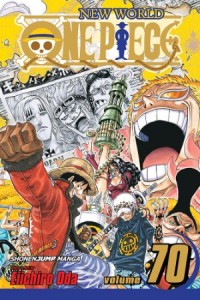
One Piece, Vol. 70

March 11, 2014 by Sean Gaffney

By Eiichiro Oda. Released in Japan by Shueisha, serialization ongoing in the magazine Weekly Shonen Jump. Released in North America by Viz.

Sometimes you’re reading a manga and you get to one page, or even just one particular panel, that makes you grin so hard and flail around because it perfectly encapsulates everything about that series into one compressed image of fabulous. For One Piece 70, it was, believe it or not, Law giving his sandwich preferences. After everyone is setting sail again, Luffy demands food, which Sanji notes will be sandwiches today. The crew start giving their preferences, and Law briefly joins in, noting how he doesn’t want bread. He them stops and gasps, horrified. THEY’VE SUCKED HIM IN.

onepiece70

Once again we see in this volume how Luffy and his crew are different from the norm. They’re contrasted with the other pirates elsewhere in the world, particularly Donflamingo. They don’t want power as such (Luffy wants to beat the Four Kings, but it’s not so that he can take their domain away, it’s for the thrill). They don’t abuse, kill, or sexually assault anyone. They are the idealized kid version of a pirate, only actually making it happen. As the Marines note, they have to constantly belittle them and talk about how evil they are, as if they didn’t the Straw Hats would be far too easy to love.

This volume wraps up Punk Hazard, so as you’d expect there’s a lot of sections where the crew does awesome things. Usopp and Nami both get to show off (it’s even lampshaded, as Law talks about how they don’t have time to fool around, then later shows his grudging respect after they both do exactly what they bragged they would), Zoro gets to cut things, and of course Luffy gets to punch Caesar Clown into next week. As I sort of expected, the deadly poison gas is not quite as immediately deadly as it looks, so we were even able to rescue the marines who were hit by it. It calls for an arc-ending giant party, this time with Straw Hats and Marines, however grudgingly.

There’s a nice scene here where Tashigi begs Nami to be allowed to take care of the recovering children, and Nami agrees to it, noting she has a soft spot for ‘lady sailors’. I like that Bellemere and her upbringing is still very much a part of her life, and it helps to make sense of some of Nami’s maternal attitude during this arc – we’re not sure of all the details about her early childhood, but she and Nojiko were adopted, so seeing these kidnapped children probably spoke to her on that level.

So now we’re off to a new adventure, this time on the island of Dressrosa. Law and the captured Caesar are coming with the crew, however, and this is an island that Donflamingo already controls. We also get a harrowing shot of him beating Smoker nearly to death (hello, Aokiji cameo! Please arrive in the nick of time more) just to show how badass he is. Is the combination of Luffy and Law enough to stop Donflamingo? Well, yeah, probably. But can it stop… a TOURNAMENT ARC? (shudder)

Filed Under: REVIEWS

Pick of the Week: Shounen & Seinen

March 10, 2014 by Ash Brown, Anna N, Sean Gaffney, Michelle Smith and MJ Leave a Comment

potw-3-10-14ASH: There’s a fair amount of manga being released this week, and quite a few titles that I’m particularly interested in. In the end though, I think my pick of the week will have to go to the third volume in Kohta Hirano’s Drifters. The last volume was released in 2012, so it’s been quite a while since I’ve read any of the series. However, I distinctly remember being highly entertained by Drifters. It doesn’t always make a lot of sense and it can be fairly over-the-top, but the battles are engaging and I do get a kick out of series as a whole. It does help to have at least some passing familiarity with the historical figures that Hirano borrows for his story, though.

ANNA: I’m going to have to go with the reissue of Ranma 1/2 as I have fond memories of the manga and anime way back in the 90s.

SEAN: Given I’ve already reviewed all three of Kodansha’s debuts this week, I feel safe in agreeing with Anna. Ranma 1/2 is ingrained deep into my bones, for good and for bad, and reading it again will no doubt fill me with memories, horror at how flat the characterization is, amusement at the amazing stupidity of every flat character, and pain as I remember all the shipping wars and Akane bashing. It’s 1996 all over again, folks!

MICHELLE: While I have a modicum of interest in My Little Monster and Arata: The Legend, add me to the Ranma 1/2 train. For some reason, I’ve never read this manga, despite ample opportunities to do so, so it’s kinda nice getting to do so from the start with unflipped art, which I was a bit too early to benefit from where Inu-Yasha was concerned. My expectations for it are pretty low; I’m just going in to enjoy a classic.

MJ: Though I have some interest in everything that’s been mentioned here so far, there’s nothing that compels me quite as strongly as the latest 3-in-1 edition of Fullmetal Alchemist. Volumes 19-21, which are contained in this omnibus, are particularly dramatic and revealing (and in the context of a series like Fullmetal Alchemist, that says a lot), and show off Arakawa’s skills as a storyteller extremely well. Fullmetal Alchemist is one of those series where I found myself continuously re-evaluating what I thought the story was about as Arakawa slowly revealed its core, and the experience was thrilling. If you haven’t yet treated yourself to this experience, I urge you to start now!

What looks good to you this week?

Filed Under: PICK OF THE WEEK

My Week in Manga: March 3-March 9, 2014

March 10, 2014 by Ash Brown

My News and Reviews

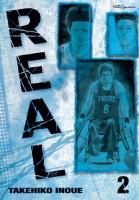
Last week the Smuggler Giveaway Winner was announced. As usual, I took the opportunity to compile a list. In this case, I pulled together some of the manga licensed in English that feature assassins. And speaking of assassins, last week I reviewed Hiroaki Samura’s Blade of the Immortal, Volume 28: Raining Chaos which focuses on the confrontation between the remnants of the Ittō-ryū and the Rokki-dan warriors and the Mugai-ryū assassins. There isn’t much plot development in the volume, but there are some great battle sequences. I also reviewed Real, Volume 2 by Takehiko Inoue, which features battles of an entirely different sort. Real is a mix of human drama, tragedy, and hope as its characters deal with events in their lives beyond their control. It’s a truly fantastic series.

There was quite a bit of manga industry news and analysis last week. I’m particularly excited that Moyoco Anno will be a featured guest at TCAF! ICv2 interviewed Dark Horse’s manga editor Carl Horn (Part 1, Part 2). Deb Aoki took a look at the state of digital manga for Publishers Weekly. Vertical’s licensing survey is currently underway. Vertical also posted a little more information about past surveys and how they’ve been used. Sean Gaffney rounds up some of the recent licensing announcements at A Case Suitable for Treatment. Not directly related to the current state of the manga industry but still worth a read is Dan Mazur’s post about early shōjo manga.

Quick Takes

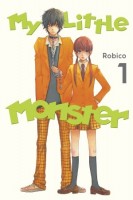
My Little Monster, Volume 1My Little Monster, Volume 1 by Robico. On the first day of school, Haru was suspended and he hasn’t been back since. As a favor to a teacher, Shizuku agrees to bring him his homework which Haru interprets as a sign of friendship. Now, much to Shizuku’s dismay, the two of them have become nearly inseparable. Because of Haru’s propensity towards violence and his almost complete lack of understanding as to what is socially appropriate behavior, some of the situations in My Little Monster can be extremely uncomfortable and worrisome. However, although they are often used as a source of humor, I was very happy to see that Haru’s actions were not romanticized. His tendency to lash out and physically intimidate others, whether out of fear or for some other reason, was not generally portrayed as a desirable characteristic. It’s completely understandable that some people are afraid of him. However, Haru’s naivety and earnestness can be very endearing. Shizuku, one of the few people who can seem to handle the volatile Haru, is an interesting character in her own right with both flaws and strengths. They are both social misfits in their own ways; I’m very curious to see how their relationship continues to develop.

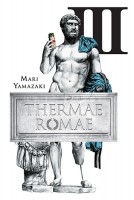
Thermae Romae, Omnibus 3Thermae Romae, Omnibus 3 by Mari Yamazaki. If it seems like it’s been a long time since the last Thermae Romae omnibus was released, that’s because it’s been almost a year. Thermae Romae is a series that started out more like a gag manga, following the exploits of the Roman bath engineer Lucius as he somehow time travels to modern-day Japan and back after repeated near-drownings. With the second omnibus, the series shifts into a romantic comedy when Lucius meets Satsuki after becoming stuck in Japan. That ongoing plot continues through the rest of the series. Although there is still plenty of humor in the third omnibus, Thermae Romae takes a decidedly more serious turn when it looks like Satsuki and Lucius will be torn apart. Satsuki’s grandfather, an incredibly skilled massage artist (as well as a man who should definitely not be trifled with), plays an increasingly important role in the story. Thermae Romae is a great deal of fun. It has drama and romance and comedy, not to mention great art. The ending does feel a little abrupt, but Yamazaki notes that she hopes to write additional Thermae Romae stories that address some of the lingering questions that readers may have about the series and its characters.

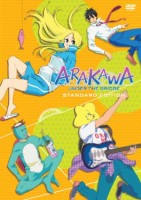
Arakawa Under the BridgeArakawa Under the Bridge, Season 1 directed by Akiyuki Shinbo. The Arakawa Under the Bridge anime series is based on an ongoing manga by Hikaru Nakamura. Kou Ichinomiya lives his life following one very simple rule that has been instilled in him by his father: never be indebted to another person. So when Nino, a rather strange young woman living on the banks of the Arakawa River, saves him from drowning, Kou wants to repay the favor and move on as quickly as possible. Except, the only thing that she wants is for him to stay with her and so Kou finds himself obligated to move in under the bridge. There he meets the other residents of the Arakawa River, all of whom are not just a bit peculiar and strange. Though Kou is supposedly the “normal” one, it quickly becomes obvious that he fits right in and is just weird as the rest of them. I found Arakawa Under the Bridge to be highly entertaining and enjoyable in all of its absurdity. The series doesn’t have much of an ending, which makes some amount of sense seeing as there is a second season (which I’ll definitely be watching), but the anime tends to be fairly episodic so I wouldn’t necessarily expect it to have a definitive conclusion, either.

Like Father, Like SonLike Father, Like Son directed by Hirokazu Kore-eda. Ryota and Midori Nonomiya are stunned when they discover that their son Keita isn’t related to them biologically. Six years ago at the hospital where he was born, Keita was somehow switched with Ryusei, the son of Yudai and Yukari Saiki. Now the two families must decide how to handle the situation and whether blood ties are stronger than those of time. Ryota, who has his own father issues to work out and whose relationship with Keita wasn’t especially strong to being with, is having a particularly difficult time, but his wife is struggling tremendously as well. The members of the Saiki family tend to be a little more easy-going in comparison, but the situation is a challenge for them as well. And caught up in the whole mess are Keita and Ryusei, who have very little say in the matter. The revelation of the two boys being switched at birth disrupts both families, resulting in both joy and heartbreak as they grow to know each other better. Like Father, Like Son is a beautiful film about parental and familial love as Ryota learns what is important in life and what it really means to be a father.

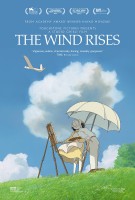
The Wind RisesThe Wind Rises by Hayao Miyazaki. The anime film The Wind Rises is historical, biographical fiction, following the life of Jiro Horikoshi, an aeronautic engineer who designed fighter planes for Japan during World War II. Almost as much of the film takes place in Jiro’s dreams as it does in his waking life. At first, the designs of the planes in The Wind Rises are very fantastical but as the film progresses they become more and more realistic as Jiro makes his dreams a reality. There is an emphasis placed on the beauty of design and creativity, but this is contrasted with the ugly, destructive forces of war and the terrible applications of those innovations. His planes may have been beautiful, but their purposes were not, which begs the question–how much responsibility do artists hold over their creations and their use? The Wind Rises‘ answer to that question is left ambiguous. As with many of Miyazaki’s other films, The Wind Rises has gorgeous flight sequences and an anti-war sentiment. Some of the time skips were a little difficult to follow at first, and I think the film was a little longer than it really needed to be, but overall The Wind Rises was well done. It’s far from my favorite Miyazaki film, though.

Filed Under: FEATURES, My Week in Manga Tagged With: anime, Arakawa Under the Bridge, film, manga, Mari Yamazaki, My Little Monster, Robico, Thermae Romae

Bookshelf Briefs 3/10/14

March 10, 2014 by Sean Gaffney and Michelle Smith Leave a Comment

This week, Sean and Michelle check out recent releases from Viz Media and Kodansha Comics.

midnight4Midnight Secretary, Vol. 4 | By Tomu Ohmi | Viz Media – This is a volume of two halves. In the first part, with Kaya and Kyohei separated from each other, they’re both at their best, and she even gets a very tempting marriage proposal – one which, as she turns it down, she notes would likely be better for her than her current situations. Then once she does come back to Kyohei’s side, things turn sour, as his staff think she’s a paid mistress, and a vampire acquaintance reminds her of her place in the hierarchy as a human. To give Kaya credit, she’s able to figure out right away that Kyohei’s vampire pride is getting between them – and we have the added bonus of knowing it’s also due to his growing love for her, and the disbelief that comes with that. At the midway point of this series, it’s still an excellent read for those who enjoy more mature titles. – Sean Gaffney

missions6Missions of Love, Vol. 6 | By Ema Toyama | Kodansha Comics – I have to hand it to Toyama. Most series that begin with prickly, hard to deal with characters have them soften up fairly quickly as circumstances come along. Not Yukina, who six volumes in remains incredibly frustrating to read about. She’s also frustrating for Shigure to deal with as well, as he finds it impossible to get her to accept his feelings even when he asks her straight out. Things are not helped by a) Mami and Akira, who continue to plot to drive the couple apart even as they grow closer, and b) Yukina herself, whose new order for a forced kiss leads to some very uncomfortable areas – something lampshaded by Shigure himself. All in all, however much you want to strangle its heroine, this remains a compelling potboiler of a manga. – Sean Gaffney

oresamateacher16Oresama Teacher, Vol. 16 | By Izumi Tsubaki | Viz Media – This is a darker, more serious volume of Oresama Teacher. Oh, there’s still plenty of laugh-out-loud humor, rest assured. But the presence of Momochi as the Student Council’s latest lancer in their attempts to destroy the Public Morals Club is far more frightening than any of its previous comedic types. The club is broken apart so easily that you worry, and it’s quite notable that Hayasaka’s blackmail letter is never actually revealed – I suspect his background will be at the end of the while series. Yui is also learning the danger of having real friends when you have to betray them – you feel horrible about it. It’s a good thing that Aki and Komari’s plot wrapping up is so cute, as it helps to lighten a funny but dark darker volume. – Sean Gaffney

ranma1Ranma 1/2 2-in-1 Edition, Vol. 1 | Rumiko Takahashi | Viz Media – Somehow, I have missed out on Ranma 1/2 up until this point. I knew it was an episodic sitcom-esque sort of series, which aren’t really my thing, but as it turns out, I enjoyed this one quite a bit! I’m honestly surprised and I have no choice but to conclude it’s because Takahashi is at the helm. How else to explain that the bickering leads with the occasional glimpse of genuine feeling—Ranma and his unwilling fiancée Akane—do not bother me nearly as much as the bickering leads with the occasional glimpse of genuine feeling in Nisekoi? I also found myself giggling more than expected. Not at the multitudinous conveniently placed bodies of water that trigger Ranma’s gender transformation, but at some of the dialogue. “She’s really a very sweet girl. She’s just a violent maniac.” is a particular favorite. All in all I’m left to wonder why I waited so long. – Michelle Smith

strobe9Strobe Edge, Vol. 9 | By Io Sakisaka | Viz Media – I warn you that you will end up very angry at a group of thugs who make their appearance halfway through this volume. Not only do they beat up one of the main characters, but they also ruin the romantic resolution that was so tantalizingly close. And so, with one volume left to go after this, Ninako and Ren are farther apart than ever, even as they both come to terms with their true feelings. Luckily, there’s more to this series than just its two leads. I’ve remarked before on the compelling side characters this story has, and one drama bomb dropped by Ninako’s friend Toda, who in the space of two pages reveals a manga story that I’d love to see and then vanishes from the narrative. Strobe Edge comes to an end next volume, and I hope that Ninako, who has finally learned what love really is, can find happiness. – Sean Gaffney

Filed Under: Bookshelf Briefs

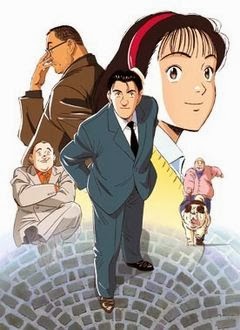
Viz to publish Naoki Urasawa’s Master Keaton

March 10, 2014 by Brigid Alverson

Master Keaton

Master Keaton

Here’s a big announcement from Viz: They have licensed Naoki Urasawa’s Master Keaton. Zainab Akhtar explains why that’s awesome. And there’s more: They also announced Assassination Classroom (“A humorous and action-packed story about a class of misfits who are trying to kill their new teacher – an alien octopus with bizarre powers and super strength!”) and Naoki Serizawa’s Resident Evil, as well as a print edition of Akira Toriyama’s Jaco the Galactic Patrolman, which has been running in Shonen Jump. Lori Henderson talks about all the recent license announcements in her latest Manga Dome podcast at Manga Xanadu.

ICv2 has an in-depth interview with Dark Horse manga editor Carl Horn (part 1, part 2), in which they cover the health of the manga market, which Dark Horse titles have done well, the difficulties of selling manga that don’t have an anime associated with them, and much, much more.

Volumes 1 and 11 of Attack on Titan top the New York Times manga best-seller list, with the first volume of Deadman Wonderland coming in third.

At Organization Anti-Social Geniuses, manjiorin tackles the question of different trim sizes in manga. Also: Justin Stroman interviews a number of manga letterers all at once and then one more for good measure.

Khursten Santos files her con report on the fujoshi event Room 801.

News from Japan: The nominees for the Osamu Tezuka Cultural Prize have been announced; they include Attack on Titan, Animal Land, and Hiromu Arakawa’s Silver Spoon.

Reviews: The folks at Organization Anti-Social Geniuses don’t just review vol. 1 of Deadman Wonderland, they devote an entire roundtable to it.

Ken H on vol. 28 of Blade of the Immortal (Comics Should Be Good)
Lesley Aeschliman on vol. 11 of Bleach (Lesley’s Musings… on Manga)
Ken H on vol. 1 of Brave 10 (Comics Worth Reading)
Naru on vol. 1 of Brave 10 (Organization Anti-Social Geniuses)
TSOTE on vol. 24 of C.M.B. (Three Steps Over Japan)
Alice Vernon on Durarara!! Saika Arc (Girls Like Comics)
Kristin on vols. 3 and 4 of Happy Marriage?! (Comic Attack)
Sean Gaffney on Insufficient Direction (A Case Suitable for Treatment)
Lesley Aeschliman on vol. 18 of Naruto (Lesley’s Musings… on Manga)
Matthew Warner on vol. 1 of Nisekoi (The Fandom Post)
Ken H on vols. 3 and 4 of No. 6 (Comics Should Be Good)
Angela Sylvia on vol. 17 of Nura: Rise of the Yokai Clan (The Fandom Post)
Erica Friedman on vol. 12 of Pure Yuri Anthology Hirari (Okazu)
Kate O’Neil on vol. 20 of Pandora Hearts (The Fandom Post)
Ash Brown on vol. 2 of Real (Experiments in Manga)
Johanna Draper Carlson on vol. 4 of Sherlock Bones (Comics Worth Reading)
Sarah on vol. 16 of Soul Eater (nagareboshi reviews)
Justin on chapter 2 of Stealth Symphony (Organization Anti-Social Geniuses)
Johanna Draper Carlson on vol. 9 of Strobe Edge (Comics Worth Reading)
Leroy Douresseaux on vol. 16 of Tegami Bachi (The Comic Book Bin)
Matt Cycyk on vol. 3 of Thermae Romae (Matt Talks About Manga)
Sean Gaffney on vol. 6 of Toradora (A Case Suitable for Treatment)
Ken H on vol. 2 of Vinland Saga (Comics Should Be Good)

Filed Under: MANGABLOG

Real, Vol. 2

March 9, 2014 by Ash Brown

Real, Volume 2Creator: Takehiko Inoue
U.S. publisher: Viz Media
ISBN: 9781421519906
Released: October 2008
Original release: 2002
Awards: Japan Media Arts Award

Although I wouldn’t necessarily consider myself to be a sports fan, I have come to the realization that I really enjoy sports manga. Out of all of the sports manga that I’ve so far read, Takehiko Inoue’s wheelchair basketball series Real is the one that stands out for me the most. (Actually, Real happens to be one of my favorite manga series in general.) But it’s really more than just a sports manga. Yes, basketball is an important part of the series, but to an even greater extent Real is about challenges faced in life and how people deal with them. It’s a mix of human drama, tragedy, and hope that earned Inoue a Japan Media Arts Award Excellence Prize in 2001. The second volume of Real was first published in Japan in 2002 while the English edition was released in 2008 by Viz Media under its Signature imprint. Real, Volume 1 did a fantastic job of introducing the series’ main characters and establishing some of the themes that the manga begins to explore more deeply in the second volume and those that follow.

After his accident, Takahashi no longer has the use of his legs. Confined to a hospital bed and with very few visitors he has had to come to terms with his condition largely on his own. He had good grades and excelled at whatever he applied himself to, becoming the captain of his high school’s basketball team with ease. No longer having the ability to walk is a devastating blow to Takahashi and how he is viewed by others and by himself. It won’t be an easy process to compensate for what he has lost. It’s been five years since Togawa lost one of his legs to bone cancer and that’s something he continues to struggle with. He still has most of his mobility, but having a leg amputated brought his dream of becoming the fastest sprinter in Japan, if not the world, to an abrupt end. An extremely competitive athlete he has redirected his ambitions towards wheelchair basketball, now one of the few things in his life for which he has any enthusiasm. Nomiya has a strong love for basketball as well, but as a high school dropout he currently has no outlet for that passion.

A large portion of Real, Volume 2 is devoted to Togawa and part of his backstory. The series turns to his middle school days as he is discovering his love of running, struggling with his relationship with his father, and developing strong, lasting friendships. Immensely talented, it is crushing to know that Togawa will never achieve his dream even as everything seems to be going his way. Just as Takahashi is now being forced to admit his limitations, Togawa also had to deal with events in his life that were beyond his control. The interplay between their two stories in Real is handled extraordinarily well. The two young men have never met, their only direct connection at this point is that they both know Nomiya, but Inoue draws on the parallels between their experiences to great effect. Takahashi is at the beginning of his recovery while Togawa has made years of progress, but the challenges that they face are very similar. Their personalities and how they handle things are very different, though.

Parallels also exist between Togawa and Nomiya. They are both very focused and intense, taking any and all opportunities that they can to practice and improve their game. Even when Togawa, Nomiya, and Takahashi’s stories don’t directly intersect, they are all still very closely tied together. The second volume of Real is very much about beginnings and endings. After originally leaving his basketball team, Togawa has found new drive and inspiration that brings him back. Nomiya doesn’t have the option of returning to his old team and can only watch from the sidelines as his former teammates play their last game. As for Takahashi, he can’t even do that. His denial is slowly turning into agonizing despair as he comes closer to admitting to himself that his life will never be the same. Inoue captures all three of their struggles in a very realistic way. The story is emotionally intense without being melodramatic and the artwork is fantastic, making Real and incredibly effective series.

Filed Under: REVIEWS Tagged With: Japan Media Arts Award, manga, real, Takehiko Inoue, viz media, VIZ Signature

Insufficient Direction

March 9, 2014 by Sean Gaffney

By Moyoco Anno. Released in Japan as “Kantoku Fuyuki Todoki” by Shodensha, serialized in the magazine Feel Young. Released in North America by Vertical.

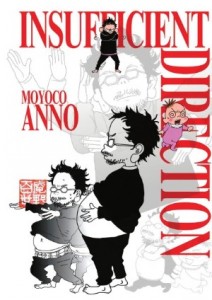
The North American market has been enjoying Moyoco Anno’s manga for years now, be it Happy Mania, Sugar Sugar Rune, or Sakuran. Hideaki Anno has also been a favorite over here, mostly for Evangelion but also for cult classics like Gunbuster and Nadia: The Secret of Blue Water. (And also infamous for the Kare Kano anime… and, well, Evangelion.) As a result, a volume such as this one, which is a biographical look at their married life with an otaku slant, is one that can actually be released over here and gather some interest. The book itself is a lot of fun, though it did go in a direction I wasn’t quite expecting…

direction

Of course, this is deliberate. Moyoco Anno frames the story to set up my expectations of a normal Japanese woman overwhelmed by her insane otaku husband. The first chapter shows her avatar, Rompers (so called as she draws herself as a baby in a sleeper outfit), stepping on Gigantor toys left around the house like they were a child’s Lego toys. And yet throughout this book, the message we get is somewhat different: Moyoco is a lot like him. It’s very easy for her to get drawn into the otaku lifestyle, and she’s a lot less ‘normal’ than she may pretend to be. As for Director-kun, his sense of self and peace with being a giant weirdo is so great that he ends up being the calm and collected one a lot of the time. It really reads like a great relationship.

A word of warning: there are a LOT of translator notes for this volume. The Anno life is cluttered with 60s Japanese TV series, be it familiar ones such as Ultraman and Star Blazers or untranslated works like A Karate-Crazy Life. And, like many obsessed fans (including myself), the couple tend to speak to each other in terms of the media consumed. Even an argument about proper use of Japanese is referencing Dragon Ball and Galaxy Express 999. This is not something that a casual reader should pick up, though if they do they can at least be reassured that there are lots of notes telling them the importance super sentai shows and George Akiyama.

I note that this series ran in the josei magazine Feel Young, and its presence there was not all that unusual. Most josei magazines (and many seinen ones as well) have these slice-of-life biographical “and here’s what my husband/child/cat did the other day” comics running through them, usually in short 5-6 page bursts in between the larger serialized stories. (And indeed, the chapters in Insufficient Direction are all about that length.) It’s a type of story we’ll almost never see over here, partly due to cultural translation issues but mostly because there’s not really a market for it – North American anime and manga fans tend to prefer their slice-of-life looking more like K-On!. As such, this title is not only an amusing look at the otaku lifestyle of the author and her husband, but also a glimpse into a genre that we are rarely privileged to witness. It’s a lot of fun.

Filed Under: REVIEWS

Toradora, Vol. 6

March 8, 2014 by Sean Gaffney

By Yuyuko Takemiya and Zekkyo. Released in Japan by ASCII Media Works, serialization ongoing in the magazine Dengeki Daioh. Released in North America by Seven Seas.

Given how impossible it is for most mass media to avoid cliches and tropes, the question often becomes “how well does this work manage the cliche”? This volume of Toradora! handles this in both a comedic and serious fashion. The Culture Festival rears its ugly head, and though thoughts of a maid cafe drift through our male classmates’ heads, what we end up with is far sillier, particularly after it’s subverted midway through. It’s the more serious plotline that folks will take with them, however – Taiga’s father is back in her life again, and wants her to come live with him. Something which a projecting Ryuuji can’t help but assist with.

toradora6

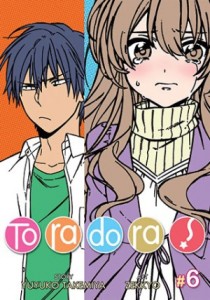
Ryuuji is not helped by the cover art for the volume, showing a tear-filled Taiga and Ryuuji looking askance. This clues the reader in that we are meant to be in her side in the matter. Things are not helped by the appearance of her father himself, who seems far too contrite and meek to be true. Of course he’s playing right into Ryuuji’s hands, though I don’t think that it’s deliberate on his part – her father isn’t genuinely evil, he’s just monumentally selfish. What he doesn’t know, but we do, is that Ryuuji’s lack of a father figure looms incredibly large in his life. And so naturally Ryuuji is going to move heaven and earth to see Taiga and her father reunite, just as he can never do.

On the other side we have Taiga and Minori, who have experience with her father doing all this before and know the truth. Crucially, however, neither of them tell Ryuuji that full truth. In meta terms, this is because the plot has to happen. In the story itself, though, Taiga is more understandable. She gets the reasons why Ryuuji wants this to happen, she’s in love with Ryuuji and doesn’t want to disappoint him, and she really does love her father despite everything, so she opens herself up to him one more time. Minori, though, I’m rather disappointed in, as you’d think she’d be the one to sit Ryuuji down and say ‘Hey, let me give you a timeline of the times this guy has tried this with Taiga before.’ Instead, she just gets angry, saying it’s obvious he’s being a selfish ass. And so they fight, which, Ryuuji still having lingering feelings for Minori, devastates him.

Luckily, Ami is there to be the voice of reason and get Ryuuji out of his funk. Unluckily, Taiga’s dad *is* everything they say he is, and therefore things come to a head at the culture festival with a devastating text sent to Ryuuji. And, once Ryuuji sees for himself what’s going on, he gets it all IMMEDIATELY – a sign of his maturity, even as he backslides here. Sadly, resolution will have to wait – this is the end of the volume, and so we get the horrible cliffhanger with Taiga’s appearance on stage waiting for parental acknowledgement that will never come. How is this going to be resolved? Well, Toradora! comes out about every year and a half in Japan, so we’ll likely have to wait till summer 2015 to find out. See, and folks wonder why publishers don’t want to catch up to Japan…

Filed Under: REVIEWS

  • « Go to Previous Page
  • Page 1
  • Interim pages omitted …
  • Page 618
  • Page 619
  • Page 620
  • Page 621
  • Page 622
  • Interim pages omitted …
  • Page 1048
  • Go to Next Page »
 | Log in
Copyright © 2010 Manga Bookshelf | Powered by WordPress & the Genesis Framework