• Skip to primary navigation
  • Skip to main content
  • Skip to primary sidebar
  • Home
  • About Us
    • Privacy Policy
    • Comment Policy
    • Disclosures & Disclaimers
  • Resources
    • Links, Essays & Articles
    • Fandomology!
    • CLAMP Directory
    • BlogRoll
  • Features & Columns
    • 3 Things Thursday
    • Adventures in the Key of Shoujo
    • Bit & Blips (game reviews)
    • BL BOOKRACK
    • Bookshelf Briefs
    • Bringing the Drama
    • Comic Conversion
    • Fanservice Friday
    • Going Digital
    • It Came From the Sinosphere
    • License This!
    • Magazine no Mori
    • My Week in Manga
    • OFF THE SHELF
    • Not By Manga Alone
    • PICK OF THE WEEK
    • Subtitles & Sensibility
    • Weekly Shonen Jump Recaps
  • Manga Moveable Feast
    • MMF Full Archive
    • Yun Kouga
    • CLAMP
    • Shojo Beat
    • Osamu Tezuka
    • Sailor Moon
    • Fruits Basket
    • Takehiko Inoue
    • Wild Adapter
    • One Piece
    • After School Nightmare
    • Karakuri Odette
    • Paradise Kiss
    • The Color Trilogy
    • To Terra…
    • Sexy Voice & Robo
  • Browse by Author
    • Sean Gaffney
    • Anna Neatrour
    • Michelle Smith
    • Katherine Dacey
    • MJ
    • Brigid Alverson
    • Travis Anderson
    • Phillip Anthony
    • Derek Bown
    • Jaci Dahlvang
    • Angela Eastman
    • Erica Friedman
    • Sara K.
    • Megan Purdy
    • Emily Snodgrass
    • Nancy Thistlethwaite
    • Eva Volin
    • David Welsh
  • MB Blogs
    • A Case Suitable For Treatment
    • Experiments in Manga
    • MangaBlog
    • The Manga Critic
    • Manga Report
    • Soliloquy in Blue
    • Manga Curmudgeon (archive)

Manga Bookshelf

Discussion, Resources, Roundtables, & Reviews

Blog

Should Bookstores Categorize Manga By Genre/Demographic?

May 23, 2014 by Justin Stroman 19 Comments

Something tells me this image fits this post perfectly. Don't know what it is though...

Something tells me this image fits this post perfectly. Don’t know what it is though…

The basis of this post is much, much thanks to Deb Aoki of Manga Comics Manga & The Comixverse’s Zedric Dimalanta. It’s a simple question to ask: should bookstores start categorizing manga by genre/demographic?

…

Read More

Filed Under: FEATURES Tagged With: Buying from bookstores, buying manga, manga bookstores

Weekly Shonen Jump Recap: May 12, 2014

May 23, 2014 by Derek Bown 1 Comment

Sometimes the difference between mediocrity and perfection manga is just a single page. One perfect page can tip the scale from “good” to “brilliant”. Don’t know what I mean? Well let me show you.

NisekoiNisekoi Ch. 121
The hardest part of any harem series is legitimizing another romantic interest later on in the game. I’ve found that most other series either don’t bother, or half-heartedly do so. Nisekoi manages to show once again that it is at the top of the pack of harem series. Yui not only works as a legitimate romantic interest, she is characterized enough to the point where her addition to the cast improves the series rather than denigrating it. For an example of a new character later in the the game that does not improve the series look no further than the introduction of Haru.

Slowly we’re getting to the truth of what happened ten years ago, but as curious as I am to finally learn what actually happened, Nisekoi has been enjoyable enough that I would rather we don’t reveal the big mystery just yet, especially if it means the series continues for a couple more years.

All You Need Is Kill Ch. 014
I’m sure fans of coffee appreciated the opening of this chapter, but all I could really think about while Rita was going on about how good the coffee she has is, was how terrible the stuff smells to me. There are things other people enjoy that I don’t particularly care for, but I can understand why someone would like it. Coffee is not one of those things. It smells so bad that I can’t believe anyone actually likes it. Imagine if people went around grinding up rabbit pellets and making a drink out of them. That’s how I feel whenever someone goes on about how good coffee is. You’re all crazy.

It’s always fun to read characters of one’s own nationality when written by someone that does not share said nationality. For example, Americans in old british shows tend to be just a few steps away from an insulting stereotype. Conversely, seeing Americans written by manga authors is always good for a laugh. In this case Rita is probably one of the most realistic Americans in manga, but I have to chuckle at how often she expresses genuine interest or admiration for Japanese products and culture. I’m going to just come out and say it, most Americans would not go around complimenting Japanese glass. In fact we would be more likely to begrudgingly admit that the glass is adequate, and then extol the virtues of Made in the USA glass. We would then put on an American flag like a cape and ride a giant bald eagle into battle. Since we’re dealing in stereotypes here.

Needless to say, whenever an American character compliments Japanese craftsmanship I can’t help but feel like it’s a bit of wish fulfillment on the part of the author. “Look how great Japanese workmanship is, even Americans admit it.” Normally I wouldn’t point that out, but it’s so oddly out of place and not something that anyone I know would ever say so it pulls me out of the story just a little bit. And once I’m distracted no amount of alien monsters can bring me back.

All You Need Is Kill

Toriko Ch. 276
I hope eating creatures with human faces doesn’t become too common here. I know a lot of vegans refuse to eat anything with a face, while I don’t ascribe to that I do draw the line at anything that has a human face and can talk. Nonetheless, Toriko has managed to be about as bizarre as it has ever been with this first step into the gourmet world. So I think we can all look forward to an extended “Whaaaa…?” as my review every week.

Toriko

Seraph of the End Ch 018
I like chapters where I learn something new. Seraph has the issue of having to fight against my initial impression, and while I still don’t care for the series I have found as of these most recent chapters that the characters are much more tolerable than before, and I’m slowly becoming interested in the series. Maybe it’s just me? I tend to hate the first several chapters of any new series in Jump, so maybe they’re actually just fine and I’m just a bitter, jaded jerk of a manga reviewer.

While that may possibly be true for other series, I stand by my conviction that Seraph of the End was not a good series. It’s interesting now, but I wouldn’t go so far as to say it’s a good series. The backstory intrigues me, but the characters only just manage to escape me hating them completely.

Seraph of the End

One Piece Ch. 746
This was the chapter I was talking about earlier when I said a single page can be the difference between a good chapter and a great chapter. In this case it’s actually two pages. The entirety of the chapter is awesome. But it’s those two pages where Doflamingo assigns the bounties that make this one of my favorite chapters in a long time. Which is fortunate, since this is still a bit of a setup chapter for the finale of the arc. It looks like we will be spending longer in Dressrossa than we thought, which works just fine for me, it’s been a good arc and I like a good long arc.

One Piece

Naruto Ch. 675
Sometimes I feel silly for how much I can rant about manga that I hate. Then I remind myself that storytelling in any form matters to me, and played a big part of growing up for me. So to see something that is flagrantly doing a terrible job at telling a story kind of rubs me the wrong way. For example, it is bad writing if you have a character who has one sole purpose in the story, and to then give that character’s ability to someone else. I used to hate when people would hate on Sakura, but now I can’t help but agree. She has become completely useless, and it kinda pisses me off that Kishimoto has taken her one ability and made Naruto better at it. I’ve read a lot of manga that does a terrible job with its female cast, but Naruto somehow manages to be the worst at it while not being so flagrantly awful. Sure the women aren’t constantly damsels in distress, but they also contribute nothing useful to the story. Cut Sakura out and the story doesn’t change one bit. Except that I wouldn’t spend so much time getting angry at what is apparently meant to be a touching love story between her and Sasuke but in reality is a terrifying example of how abusive relationships start.

I’ve never understood how Kishimoto could ever seriously want to pair Sasuke and Sakura up. From the very beginning he has been portrayed as the kind of character that would grow up to be abusive at best. And yet even the fact that he tried to murder her is just used as a sign of how “devoted” she is. Sakura has been universally reviled for her selfish crush throughout a good chunk of the readership. It doesn’t help her one bit to suddenly say “she is so devoted” without actually showing how she is any different now than she was ten years ago.

And to make matters worse, the entire climax is relying on a powerup that is based on a concept we only just knew existed in the Naruto world. Up until the past few months we never knew reincarnation was even a thing here, and suddenly the big bad is going to be defeated thanks to the sudden existence of reincarnation? That’s just bad writing! And I don’t see how anyone could possibly think it’s anything but. I’m not even being rhetorical here. I’m sincerely confused. Someone please tell me why this series is still so popular!

One-Punch Man Bonus Chapter
What can I say about this extra chapter? It really was to short for me to have any indepth opinion of it.

Bleach Ch. 579
Well, it was fun while it lasted. But I think we all knew that a fight with a character who could create anything he could imagine would not end well. And yet somehow I feel disappointed that his undoing was that he imagined Kenpachi’s power too well, but couldn’t imagine a stronger body for himself. There literally was no way the end of this fight wouldn’t be cheap, so I chose to remember it as a one of a kind fight, and then just forget the ending ever happened.

World Trigger Ch. 059
World Trigger has been quite good at portraying strategic combat. This chapter was as good as any of the past ones, but when too many chapters are good I find myself without anything that stands out enough to be commented on. So it was good, but not amazing. I enjoyed it, but don’t necessarily have anything to talk about. Though I will mention that we’re getting into the C List cast here and I can’t remember who any of these people are. Which goes to show that the manga can get me invested even in characters I can’t quite remember. And that’s just fine by me.

World Trigger

Stealth Symphony Ch. 011
I have to admit I’m intrigued. The ending of this chapter gave me that little extra something I needed for a mediocre series like Stealth Symphony to attract my attention. I’m certainly curious to see where the story will go from here, and am hoping that we go the unconventional route with this one. Though I have been noticing a worrisome trend where new characters are designed with maximum fanservice in mind. It’s rarely a good sign when a manga starts relying on that.

Blue Exorcist Ch. 057
I’m not the kind of person to cry “Sexism” at every little opportunity. I think that some people are a bit sensitive where that topic is concerned. But when a mangaka just comes out and says that a character needs saving because she is a girl, then I can’t help but nervously glance at the big red “Sexism Alert” button I’ve installed on my computer. The only thing stopping me from pressing it is because I’m too confused by the fact that the author of Blue Exorcist happens to be a woman. Does that still count as sexist? Is it even my place to say anything if a woman wants to say girls need saving? Or is this a case where I need to separate the author and the character more? Is Yukio just a sexist? Because if that’s the case I didn’t exactly need another reason to dislike him.

That aside, the fights are quite entertaining. Miwa managing to escape thanks to his brains is a lot more interesting than the “Hulk Smash!” style of shonen battles. And even Yukio incapacitating his foe thanks to the zombie’s regeneration being too aggressive was a lot of fun. So overall a good chapter, but the beginning distracts me with some very worrisome implications. Oh well, at least next month I get to look forward to a bazooka battle.

Blue Exorcist


If you want to hear more, check out the Manga^3 Podcast Archives.

Filed Under: FEATURES & REVIEWS, WSJA Recaps Tagged With: bleach, blue exorcist, Dragon Ball Z, naruto, nisekoi, One Piece, one punch man, Seraph of the End, toriko, world trigger

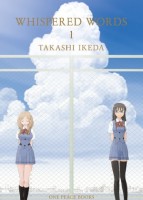
Whispered Words, Omnibus 1

May 23, 2014 by Ash Brown

Whispered Words, Omnibus 1Creator: Takashi Ikeda
U.S. publisher: One Peace Books
ISBN: 9781935548454
Released: May 2014
Original release: 2007-2008

Whispered Words is a nine-volume yuri manga series by Takashi Ikeda published in Japan between 2007 and 2011. It’s probably his most popular work, or a least his best-known work, and the early part of the manga was even adapted as a thirteen-episode anime series in 2009. Despite my interest in yuri manga and the series’ following, I actually didn’t know much about it until I discovered that One Peace Books had licensed the work for English release. Whispered Words, Omnibus 1, released in 2014, collects the first three volumes of the series originally published in Japan between 2007 and 2008. Considering that comparatively few yuri manga have been released in English, I was happy for the opportunity to read more in translation. Because of the excited murmuring from fans surrounding the licensing of the series, I was particularly glad for the chance to read Whispered Words. And, except for some poor editing and lettering by One Peace Books, generally I was not disappointed. Plus, it even has karate in addition to yuri!

Sumika “Violence” Murasame, a high-school first year, is in love with her classmate and best friend Ushio Kazama. Ushio likes girls, too, but the problem is that she only likes “cute” girls. Unfortunately, Sumika has come to the conclusion that she is decidedly un-cute. She’s taller than most people, athletically and academically gifted, and a genius at karate (which is what earned her her nickname). But Sumika would gladly give all of that up to become small, delicate, and cute in order to fit Ushio’s type. That’s not really a possibility, though. So instead of admitting her feelings to Ushio and potentially ruining their friendship, Sumika has chosen to keep them to herself. It’s difficult and can be painful at times, but more than anything else Sumika wants Ushio to be happy. Eventually, other classmates become aware of Sumika’s feelings for Ushio, so it seems that it’s only a matter of time before they become obvious to Ushio as well.

Although at its heart Whispered Words has a fairly serious story about friendship and unrequited love, there is also a very strong comedic element to the series. Personally, I found the silliness of the manga and the characters themselves all to be very charming. For the most part, the underlying story and relationships in Whispered Words are actually fairly realistic. However, Ikeda regularly throws in something completely outrageous, such as an impeccably timed exploding SUV or indulging in his penchant for finding any excuse to dress everyone up in maid costumes. Whispered Words can admittedly be a bit ridiculous at times, but it’s not necessarily a bad thing. Ikeda strikes an excellent balance between the series’ humor and its more serious aspects, making for a read that is both entertaining and heartfelt. Ikeda’s artwork also reflects this duality. He effectively captures the more emotional moments–the tears, the pining, and the heartbreak, as well as the happiness and joy–but he can just as easily slip into a more comedic mode with over-the-top reactions, dynamic expressions, and exuberant poses.

The characters in Whispered Words are what really make the series work for me–not only the two leads, but their friends, families, and classmates, too. I am particularly fond of Sumika and her development, though. She so desperately wants to be something the she’s not, but it’s when she allows herself to really be who she is that she shines. This growth and the evolution of her relationship with Ushio is explored in stages in Whispered Words, often through her relationships with other characters. Tomoe Hachisuka and Miyako Taema, with whom she becomes friends, are a couple that show a lesbian relationship is not something to be ashamed of. Akemiya Masaki and Azusa Aoi are classmates who prove that others already think that Sumika is cute and admire her. The petite Charlotte Munchausen is devoted to karate, follows Sumika’s guidance, and provides an example that strength and cuteness aren’t inherently mutually exclusive. Even when played for laughs, all of these relationships are incredibly important to Sumika and are what allow her to grow as a person and will hopefully allow her to grow even closer to Ushio.

Filed Under: REVIEWS Tagged With: manga, One Peace Books, Takashi Ikeda, Whispered Words, Year of Yuri

Manga the Week of 5/28

May 22, 2014 by Sean Gaffney, Ash Brown, Michelle Smith, Anna N and MJ 3 Comments

SEAN: Do you like stuff? Of course you do. Let’s look at some stuff!

colossal

ASH: I like stuff! I like lots of stuff!

MICHELLE: Stuff and junk and stuff!

ANNA: Stuff is awesome!

MJ: Bring on the stuff!

SEAN: If you’d wondered what the fuss was all about with Attack on Titan, and also wanted something heavy enough to beat small children to death with, have we got the release for you! Attack on Titan: Colossal Edition collects the first 5 volumes of the series into one massive, thousand-page TOME. And of course, it apparently has some added content so that obsessives must buy the whole thing again. If you haven’t seen this series before, get ready to see what all the fuss is about and ask “why is the art so crappy?”

ASH: This thing is going to be a HUGE monster of a book. I’m happy with my individual volumes, but I would be curious to see the the Colossal edition in person.

MICHELLE: Ugh. I must say the thought of hefting this thing doesn’t entice me to catch up on the series.

ANNA: I’m sort of tempted by this, since I bought the first book when the kindle version was on mega sale but haven’t gotten the subsequent volumes.

MJ: Hmmm… I’m tempted here. Kind of. Not sure I have a shelf big enough.

SEAN: Cage of Eden trundles along with Vol. 14. Will this be a monsters eating people volume? A fanservice-laden nude girls volume? A ‘I really liked Lost and want to rewrite it with Japanese students’ volume? Who can say? Most likely all three, I suspect.

mlm2

My Little Monster was a lot of fun, even if I had issues with the male lead being a manic pixie dream guy to a certain degree, and I look forward to seeing how he and our heroine develop.

ASH: I rather enjoyed the first volume of My Little Monster. Plus, there’s a pet chicken!

MICHELLE: I love the pet chicken with every fiber of my being.

MJ: Pet chicken! How did I not buy this?

SEAN: Remember back in February when I discussed Wallflower 32 and they bumped it back to May without telling me? Well, here it is, still in May for now.

I apologize to Tokyopop. The fact that their one Japanese series is only available via Right Stuf now means I forget to add it to these lists, EVEN WHEN IT IS SITTING NEXT TO ME AS I MAKE THEM. Aheh. Anyway, Hetalia Axis Powers 6 was out last week.

ASH: I really do wonder how well this partnership between Tokyopop and RightStuf has been doing, and what other projects we might see because of it.

ANNA: Demon Sacred! Shinobi Life! Sky Blue Shore! Oh, how I miss you, but I have no hopes of reading you in English.

MICHELLE: Silver Diamond!

MJ: *sigh*

SEAN: BTOOOM! continues to make me count the number of O’s in its title, even now that Vol. 6 drops.

And now I want to add a third o to Goong, whose 15th volume is out, to the delight of the rest of the Manga Bookshelf team.

MICHELLE: Yay!

ANNA: Woo hoo!

MJ: Me me me me me me me!!

highschooldd

SEAN: In general, I have a better record with Yen than Seven Seas when it comes to otakubait series. And yet High School DxD – with its harem plot, promises of fanservice, and ‘angels and demons’ fantasy worldbuilding – seems to worry me. I’m watching you warily, Vol. 1.

MJ: That sounds… well, probably not for me.

SEAN: Jack Frost 10! Wow, how many decapitations have happened by now?

Kadokawa has decided they don’t want the manga to come up with new content that the novel hasn’t covered (bar the odd original short chapter), so The Melancholy of Haruhi Suzumiya will be ending its manga version soon while they wait for the next novel to appear. Here’s Vol. 18, featuring new character Yasumi on the cover.

Kazumi Magica has been one of the longer franchise spinoffs of the Puella Magi-verse, but it comes to an end here with Vol. 5. Will it have a happy ending? Our good friend Kyubey says he’s very happy!

Soul Eater has gotten up to Vol. 20, and I think is getting closer to its massive final arc. More to the point, this volume contains one of the scariest manga chapters I’ve ever seen – full stop, any series.

MJ: Really? Hm. Maybe I should check it out.

SEAN: Triage X has hit Vol. 6. See above about why I can’t always trust Yen when it comes to fanservice-laden series. At least I don’t think this is based on a series of light novels…

Lastly, we get another omnibus of Until Death Do Us Part, which features characters named Mamoru, Haruka, and Wiseman, yet is not actually like Sailor Moon at all.

MICHELLE: I need to catch up on this. I liked what I read of it.

SEAN: Stuff? Stuff!

Filed Under: FEATURES, manga the week of

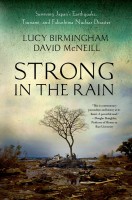
Strong in the Rain

May 21, 2014 by Ash Brown

Strong in the RainAuthor: Lucy Birmingham and David McNeill
Publisher: Palgrave Macmillan
ISBN: 9781137278944
Released: April 2014
Original release: 2012

Lucy Birmingham and David McNeill’s Strong in the Rain: Surviving Japan’s Earthquake, Tsunami, and Fukushima Nuclear Disaster was initially released as a hardcover volume by Palgrave Macmillan in 2012, a little more than a year and a half after the country’s threefold crisis that began on March 11, 2011. Both Birmingham and McNeill were established correspondents based in Tokyo who covered the March 2011 disaster–Birmingham writing for Time and McNeill writing for The Independent, Irish Times, and The Chronicle of Higher Education. Strong in the Rain, deriving its title from a poem by Kenji Miyazawa which became something of an anthem for the country and the disaster’s survivors, was later released as a trade paperback in 2014. It was this edition that I had the pleasure of receiving for review through LibraryThing’s Early Reviewers program. I had heard very good things about the original release of Strong in the Rain and so was looking forward to finally reading the work.

On March 11, 2011 an extraordinarily powerful earthquake occurred off of the northeast coast of Japan. Later estimated to have registered at at least a magnitude of 9.0, the earthquake was extremely violent. It moved the main island of Japan as much as eight feet in some areas and shifted the Earth’s axis. Aftershocks from the quake continued to be felt years later. However, the tsunami that was triggered by the earthquake accounts for much of the immediate damage associated with the March 2011 disaster. It wiped out entire communities along the coast and reached much further inland than anticipated. Japan has been subject to massive earthquakes and tsunami in the past, but what made the events of March 2011 particularly devastating was the resulting meltdown of the Fukushima Daiichi Nuclear Power Plant, culminating in one of the world’s worst nuclear crises. Japan’s recovery continues to this day; the country will have to deal with the impacts of the disaster for years to come.

Strong in the Rain is an excellent volume touching on many different parts of the March 2011 disaster. It’s written in an incredibly engaging manner but without sensationalizing the subject matter. Birmingham and McNeill incorporate their own personal experiences and have also conducted a great deal of research and investigative journalism. The narrative of what happened during and after the earthquake, tsunami, and nuclear disaster relies heavily on their interviews with six survivors: Katsunobu Sakurai, mayor of the coastal city of Minamisoma, who would become one of the most publicly recognized figures following the disaster; Kai Watanabe, a pseudonym of one of the maintenance workers at the Fukushima plant; Yoshio Ichida, a fisherman from Soma; David Chumreonlert, an American elementary school English teacher in Higashi-Matsushima; Setsuko Uwabe, a cook at a public nursery school; and Toru Saito, a recent high school graduate who was looking forward to attending Tohoku University that following April.

In addition to the personal accounts of the events surrounding Japan’s threefold disaster, Strong in the Rain also provides a scientific, historic, and cultural context for the catastrophe. The volume includes charts, maps, photographs, as well as a helpful index. Told in ten chapters (in addition to a prologue and epilogue), Strong in the Rain addresses many of the aspects and complexities of the March 2011 disaster: the quake, tsunami, and nuclear crisis themselves, but also the failure of the floodgates and other protective measures, the reaction of the imperial family, how news coverage was handled domestically and by the international media, the evacuation of foreign citizens, rescue and recovery efforts, how survivors dealt with the tragedy and death tolls, and the spirit and resilience of those living in the affected Tohoku region. Strong in the Rain forms a comprehensive overview of the March 2011 disaster and its ongoing effects. Even years after it was initially published, Strong in the Rain remains an approachable and informative work.

Thank you to Palgrave Macmillan for providing a copy of Strong in the Rain for review.

Filed Under: REVIEWS Tagged With: David McNeill, Lucy Birmingham, Nonfiction

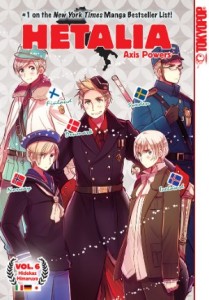
Hetalia Axis Powers, Vol. 6

May 20, 2014 by Sean Gaffney

By Hidekaz Himaruya. Released in Japan by Gentosha, originally serialized as an online webcomic, then in Comic Birz. Released in North America by Tokyopop in association with Right Stuf, Inc.

I’ve generally enjoyed each volume of Hetalia I’ve read, and this new one is no exception. This is the first time, however, that I finished it with the feeling that the creator may have taken the concept as far as he can really go. After a brief resurgence last time, we already have less WWII than ever here, and while many would argue that’s a good thing it does sort of make the book feel a bit light. Discussion of tanks and battles has given way to discussions of customs and what the characters would look like as cats. It’s still fun, but something does seem missing here.

hetalia6

The Nordics are on the cover, and they also get most of the early and late pages in this volume. They’re not as well-defined as the other nations, however, with Denmark in particular finding it hard to separate himself from ‘Prussia’ clone every time I see him. I do think that focusing on Iceland’s self-consciousness was a good way to show off everyone at their best, though. A more interesting chapter is the one where Sealand tries to unite all the other micronations and make friends with them. This not only includes Wy, who we’d met before, but obscure places like Molossia and Hutt River.

We do get an African nation introduced as well, but oddly, we don’t know which country she is! Seychelles gets a visit from a fellow African nation, who seems to be landlocked, but that’s about all we can glean from her. I wonder if she’s meant to be a country like the Congo or Sudan, where Himaruya might want to err on the side of caution. (She can’t be Cameroon, we’ve seen him.)

As for the rest of the cast, most of the regulars get something to do, even if there’s little ongoing plot here, even from chapter to chapter. My favorite gags include Hungary trying to sing Prussia a lullaby (Gloomy Sunday, the famous depressing Hungarian song); Spain’s reaction on finding out he’s NOT getting the 2020 Olympics; Berlusconi being so appalling even Italy is ashamed to be talking about him (another ‘isn’t this supposed to be in World War II?’ moment); and of course seeing all the characters as cat personifications, which is not quite as adorable as it wants to be, but is still cute.

Still, at the end of the volume one wonders how much is really left in the tank. I know that we have more genderbending Hetalia coming our way soon, and the series still runs in Comic Birz, though it’s been far more irregular lately. But honestly, the original webcomic has the most obvious plotline to collect – the continuation of Buon San Valentino, and Germany possibly remembering his past – and has not adapted it at all beyond the first section. This could be partly as it’s more ‘obvious’ about its BL than we normally see in Hetalia, but it could just be that that story would lead to a natural ending, and I can’t see Hetalia ending anytime soon, given its cash-cow popularity. But where is it going from here?

Filed Under: REVIEWS

Bookshelf Briefs 5/19/14

May 19, 2014 by Sean Gaffney, Michelle Smith and Anna N Leave a Comment

This week, Sean, Michelle, & Anna look at recent releases from Seven Seas, Viz Media, and Kodansha Comics.

alice-thornsAlice in the Country of Hearts: Love Labyrinth of Thorns | By QuinRose and Aoi Kurihara | Seven Seas – This is a standard Alice volume in many ways, but it also seems a bit… dialed down? Like it was supposed to run in Ichijinsha’s magazine for 7-year-olds, so they made it more kid-friendly? The at seems slightly more ‘cute’, there’s no sex like we’ve seen in several of the other series, Ace is being relatively nice and considerate (for Ace… he does almost kill Alice here, but we can’t have everything). Even Nightmare is acting in pure mentor mode, allowing Alice and Julius to recognize their feelings by way of manipulation and tricks. It’s Alice Lite, but in its own way it wouldn’t be a bad one-shot to get a newbie to the series. Even with the implied Julius/Ace shipping. – Sean Gaffney

nisekoi3Nisekoi, Vol. 3 | By Naoshi Komi | Viz Media – Most of this volume is, to be honest, harem-by-numbers. But it’s a decently written harem-by-numbers. There’s fanservice, but it’s not to the point that it gets disturbing. Our hero gets trapped in a women’s bath, but manages to avoid the comedy beating I was expecting. Tsugumi is having trouble dealing with both her gender and her unrecognized crush on Raku, but it’s mostly pretty cute. Where Nisekoi excels is in the way that it draws faces. A harem comedy tends to live and die by its expressions of embarrassment, terror and arousal, and all three of these get shown off here, particularly in the card game scene. All this plus Chitoge may be advancing the plot… next time around. This is fluffy fun. – Sean Gaffney

natsume16Natsume’s Book of Friends, Vol. 16 | By Yuki Midorikawa | Viz Media – I admit upfront that I am positively besotted by this series. It’s rare that an episodic series charms me so thoroughly, but I really do love everything about this one. The chapters in this volume find Natsume acting as an intermediary between his friends and yokai—in the first story, yokai are lost in his classmate’s home, and in the second, an sweet old lady in one’s friend’s past turns out to have been a yokai all along—and being asked to keep the yokai’s secret when full disclosure is feared to lead only to pain and rejection. As ever, the yokai are endearing, and I admire how the series can be consistently sweet but never sappy. With another series, I might be annoyed by the lack of purposeful plot direction, but I never tire of Natsume’s Book of Friends. – Michelle Smith

otomen18Otomen, Vol. 18 | By Aya Kanno | Viz Media – Oh, Otomen. Even to the end, you alternate delighting and frustrating me. The first hanfl of this is a wonderful conclusion to the series (I loved how Ryo’s face was hidden till the dramatic climax) and everyone got to be awesome. Then suddenly the publisher realized they had 100 more pages to go till the volume ended, so we insert a ridiculous amnesia arc that almost had me throw the book across the room, complete with derailing of the main villain of the series, Asuka’s mother. Sigh. Oh well, at least I got a nice wedding finale out of it. And they actually waited 10 years till they were both settled into their chosen careers. Despite aggravations, I did enjoy Otomen, Ryo especially. More of Ryo as the best cop ever. – Sean Gaffney

psyren16Psyren, Vol. 16 | By Toshiaki Iwashiro | Viz Media – I understand that Psyren ended suddenly, as many series in Shonen Jump are wont to do, and it does show a bit, as this volume seems a bit crammed and rushed. At the same time, I was just about ready for this series to end, so this is still a good stopping place, and no gaping plot holes seem to be unaddressed. I did wonder if they were going to torch that ‘fourth future’, as they seemed to imply they would, but in the end even that gets a happy ending. Things are good. Bad guys are defeated, many superpowers are shown off, our hero didn’t die of brain damage, and he gets the girl. To be continued in the Psyren novel, which I suspect will only come out in Japan, but this is a good stopping place anyway. – Sean Gaffney

say1Say I Love You., Vol. 1 | By Kanae Hazuki | Kodansha Comics – So, imagine a plot kind of like Kimi ni Todoke, except that the lead girl is pricklier and the lead guy more experienced with the ladies. Mei Tachibana has sworn off having friends after being betrayed, but ends up capturing the interest of Yamato Kurosawa, the most popular boy in school. She’s resistent to his overtures of friendship at first, but when he actually comes through for her in a scary situation, she decides that maybe it’s okay to trust him a little. The story moves swiftly from there, and not only have she and Yamato become a couple by the end of the volume, but she’s also made a good female friend and they independently challenge those who talk trash about the other. It’s kind of great. I do wonder how this concept has thus far been sustained over twelve volumes, but I am definitely curious to see where this goes. – Michelle Smith

voiceover4Voice Over! Seiyu Academy, Vol. 4 | by Maki Minami | Viz Media – I thought the first volume of the series was more enjoyable than I expected, although it didn’t totally win me over. The fourth volume continues to be amusing, even if it isn’t laugh out loud funny. Hime, the cute girl with the “Princely” voice struggles with her first big professional gig, with even more to battle against as the entire cast and the director absolutely resents her. While she can now produce a lovely voice when she has a certain pair of spectacles as a prop, her next challenge is to combine her voice with building a character. She continues to drop in on the aloof Senri Kudo, and seeing his wordless and gruff overtures to her was quite entertaining. Reccomended if you need some light and fluffy shoujo. – Anna N

Filed Under: Bookshelf Briefs

Pick of the Week: Shoujo & Seinen

May 19, 2014 by Sean Gaffney, Michelle Smith, Anna N, Ash Brown and MJ Leave a Comment

potwSEAN: My pick of the Week is definitely the 10th volume of DMP’s Itazura Na Kiss. I know it’s bad for me. I know I will spend half the volume asking why Kotoko can’t think before she acts or apply herself to any chosen path. And I will spend the other half wondering how Naoki plans to be a doctor when he has all the empathy of a rock, and has the complete inability to understand how people with emotions might function. I will get annoyed and frustrated. But I don’t care. It’s Shoujo Manga Classic time.
MICHELLE: I don’t know how I could possibly describe the joys and frustrations of Itazura na Kiss better than Sean has done, so please allow me to say “me too, all the way!”

ANNA: I’m really torn, because this is one of those weeks where a ton of great manga is coming out! I’m happy to see Itazura Na Kiss being released in print again! Gangsta is becoming slightly addictive for me whenever I want a seinen fix. But since Itazura Na Kiss seems to be getting plenty of love I’m going to have to go with Volume 2 of What Did You Eat Yesterday?.

ASH: I’m torn this week, too, but since Anna chose What Did You Eat Yesterday? (which I’m looking forward to a great deal) I’ll pick Gangsta to make sure it gets on the list. It’s not so often you get a manga with such a diverse cast in addition to interesting characters and plenty of action. I enjoyed the first volume immensely.

MJ: I’ll go with Anna this week, because though I’m interested in these other series, there is really no option for me that could eclipse the second volume Fumi Yoshinaga’s What Did You Eat Yesterday? I finally picked up a copy of the first volume a week or so ago, and I’ll never wait that long again (yes, I pre-ordered volume two). This series is an amalgamation of everything I love best about Yoshinaga’s work—lovingly-written dialogue, charmingly believable relationships, and FOOD. This is a book I will likely consume the second it hits my front porch. It’s absolutely my week’s must-buy manga.

What looks good to you this week?

Filed Under: PICK OF THE WEEK

My Week in Manga: May 12-May 18, 2014

May 19, 2014 by Ash Brown

My News and Reviews

Well, it was my intention to review the first omnibus of Whispered Words by Takashi Ikeda last week, but then Sean reviewed it the day before I was planning to post my review. So, to avoid making the Manga Bookshelf front page look a little strange, I decided to bump my Whispered Words review to later this week. But never fear, I had other posts in reserve! First up was my Toronto Comic Arts Festival 2014 recap, which is very, very long. If you don’t feel like reading the whole thing, that’s fine, but I do want people to know that TCAF is an amazing festival. A month or so ago I had the opportunity to attend a presentation given by Natsuki Kikuya, a sake sommelier and from a centuries-old family of sake brewers in Tōhoku, about the brewing of sake, its history, and current trend in the industry, so I posted some random musings about that as well–Cultures of Japanese Sake. I was quite pleased to discover that I actually had already had a strong introduction to the subject from reading manga, specifically Oishinbo, A la Carte: Sake and Moyasimon.

Now, going back to TCAF for a moment: Heidi MacDonald has an excellent summary of the festival at Publishers Weekly; the Beat has audio for a selection of the panels available for listening; and Okazu’s Erica Friedman has a great recap of the est em panel, which she moderated. Unrelated to TCAF, but still worth reading: Marvel, Yen Caught in Amazon-Hachette Crossfire; an interview with Leyla Aker, the editor at Viz Media responsible for Kohske’s Gangsta series; and Tokyo Government Declares Imōto Paradise! 2 Manga Unhealthy. Also, Deb Aoki has started updating her site Manga Comics Manga with some interesting new material, including Japanese to Spanish Manga Translation: Readers Speak Out and What Would Make Manga More Appealing to Comics Fans? + 24 Manga for New Readers.

Quick Takes

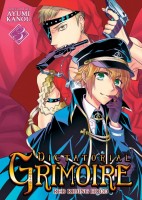
Dictatorial Grimoire, Volume 3: Red Riding HoodDictatorial Grimoire, Volume 3: Red Riding Hood by Ayumi Kanou. The first volume of Dictatorial Grimoire, as ridiculous as it was, entertained me. The second volume was no less ridiculous, and it had some great moments, but I was frustrated by how trope-based it was. Fortunately, the series’ originality largely returns in the third volume and Dictatorial Grimoire once again becomes a glorious mess. The plot actually starts to make a little more sense and even becomes somewhat interesting, but just as things start to really get going the story is quickly brought to an end. It feels very abrupt and truncated, as if the series was initially supposed to be much longer. Still, I think the third volume of Dictatorial Grimoire was actually my favorite in the series. The demon from which the story Red Riding Hood comes is thoroughly introduced and he’s pretty great–a mix of the Wolf, Hunter, and Red. (He’s actually a decent guy once he gets his werewolf problem under control.) I also get a kick out of Snow White’s animal companions. Instead of the cute woodland critters that might traditionally be expected, he always has some poisonous creatures hanging about. Dictatorial Grimoire is far from the best manga out there, but it can be fun in all of its ridiculousness.

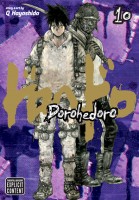
Dorohedoro, Volume 10Dorohedoro, Volumes 10-12 by Q Hayashida. I continue to enjoy Dorohedoro immensely. It’s a strange, weird manga, and one that I find difficult to coherently explain to people. Dorohedoro is bloody, violent, and grim and yet at the same time it is also incredibly endearing, charming, and funny. It can even be heartbreaking from time to time. Occasionally something feels a little bit off about Hayashida’s artwork in the series–body proportions don’t always seem to be quite right–but for the most part I really enjoy the gritty look and feel of Dorohedoro. I was particularly impressed by how effectively dizzying and disconcerting the artwork could be when Aikawa’s magic comes into play. There’s quite a bit of plot development in these volumes and several of the characters have their backstories filled out–more is learned about the pasts of Nikaido, Asu, and the various members of the Cross-Eyes. There’s plenty of action in this part of the series, too, including excellent fight sequences and brutal battles. There are some significant deaths, as well, though it’s never certain that someone will stay completely dead in Dorohedoro. There are seven more volumes to go in the series; I really hope that Viz will be able to stick with it through to the end.

Hotblood!: A Centaur in the Old West, Volume 1Hotblood!: A Centaur in the Old West, Volume 1 by Toril Orlesky. While at TCAF, I made the point to pick up a few things that I hadn’t heard about before or was otherwise unfamiliar with. One of those random splurges was Orlesky’s Hotblood!, a webcomic that currently updates twice a week on Tuesdays and Thursdays. I am absolutely loving it–the characters, the art, everything. The first print volume collects the series’ prologue and the entirety of its first chapter, as well as an exclusive appendix and other additional bonus material. Tremendous thought and care has been put into the worldbuilding of the comic–a sort of alternative history–especially in regards to the relationships and interactions between humans and centaurs and their cultures. The story begins in Wyoming in 1873 with James Rook, the titular centaur, and Asa Langley a steel magnate on the run as wanted men. It then jumps back two years in time to when they first met. In the prologue the two are obviously very close, but at the beginning of their relationship they didn’t get along much at all. Langley is a bit of a jerk, frequently making jokes in poor taste at Rook’s expense, but Rook needs a job so he puts up with it. He has been assigned to be Langley’s secretary; neither one of them is particularly happy about it, though.

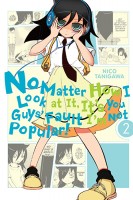
Watamote2No Matter How I Look at It, It’s You Guys’ Fault I’m Not Popular!, Volumes 2-3 by Nico Tanigawa. Overall, I do enjoy WataMote, but I will be the first to admit that it can be a harsh and uncomfortable read. (I get the feeling that the creators largely didn’t enjoy their high school years and that they don’t have many fond memories of that time in their lives.) WataMote can be very funny, but it’s not always very pleasant. So far the series has been fairly episodic, which is both an advantage and a disadvantage, but a few characters have been introduced in these volumes which may change that. I would like to see some actual character development in the series, though. Right now it seems as though Tomoko, her family, and classmates are stuck in a rut. This works in terms of the series’ premise–Tomoko is a misfit to put all other misfits to shame–but it’s a little painful and sad to not see her learn from her mistakes and experiences. Which, I suppose, is actually probably one of the points of the manga. Tomoko can be endearing in her extreme awkwardness, but that awkwardness can also be fairly alarming and embarrassing. WataMote is definitely not a series that everyone will be able to enjoy or even appreciate, but I do plan on following it further.

Filed Under: FEATURES, My Week in Manga Tagged With: Ayumi Kanou, comics, Dictatorial Grimoire, dorohedoro, Hotblood, manga, Nico Tanigawa, Q Hayashida, Toril Orlesky, Watamote

Anime update: Viz gets Sailor Moon, Disney grabs Doraemon

May 19, 2014 by Brigid Alverson

I’m back from a couple of crazy weeks that included travels to C2E2 and TCAF as well as a bunch of personal and day-job stuff, and I’m jumping back in with some big anime news: Disney has licensed the Doraemon anime for its Disney XD channel and Viz got the license for all the Sailor Moon anime—the original series, including the episodes that have never been licensed in North America, plus three movies and the new Sailor Moon Crystal anime that will debut in July. Since both these anime started as manga, we can expect some strong synergy. Kodansha Comics’ Sailor Moon manga was already a chart-topper, but perhaps we will see new readers picking it up; as for Doraemon, right now it’s available only digitally, via Amazon, but the time may have come for a print release.

Keeping with that anime theme, co-author Helen McCarthy announces the third edition of The Anime Encyclopedia.

OK, enough of that. Back to manga news. At Organization Anti-Social Geniuses, Justin Stroman interviews Leyla Aker, the editor of Gangsta (and also Viz’s vice president of publishing), and he also talks to Eric Eberhardt, director of digital publishing marketing, about the new Viz Select imprint for digital-first releases.

Manga was prominently featured at this year’s Toronto Comic Arts Festival (TCAF), with guest appearances by Moyoco Anno, est em, and the two-woman team of Akira Himekawa. Deb Aoki reports in on the “Future of Manga Publishing” panel she moderated, which featured manga editor and literary agent Yohei Sadoshima, and she also presents a Twitter conversation with fans about what would make manga more appealing.

Erica Friedman posts her con report on TCAF, along with a list of books she bought and why they are awesome. Ash Brown reports in as well. And here’s my take, at Robot 6.

Laura is back blogging again at Heart of Manga, after some harrowing health problems, and she has a look at the shoujo manga that will be coming out this month.

News from Japan: Drops of God will come to an end in the June 12 issue of Kodansha’s Morning magazine; three more volumes of tankoubon will be released, for a total of 44. Death Note and Bakuman writer Tsugumi Ohba is working on a new story, Skip Yamada-kun, a one-shot that will run in “Jump” meets “Girl” SPECIAL COMIC, a special issue of Shukan Young Jump. Robico, the creator of My Little Monster, will do the art.

Reviews

Joe Iglesias on vol. 5 of Battle Angel Alita (Eastern Standard)
Justin on vol. 1 of Gangsta (Organization Anti-Social Geniuses)
Kristin on Insufficient Direction (Comic Attack)
Alice Vernon on Inu x Boku SS (Girls Like Comics)
Sean Gaffney on vols. 3 and 4 of Ranma 1/2 (A Case Suitable for Treatment)
Sean Gaffney on Showa 1939-1944: A History of Japan (A Case Suitable for Treatment)
Maggie on solanin (Organization Anti-Social Geniuses)
Manjiorin on vols. 1 and 2 of Sweet Rein (Organization Anti-Social Geniuses)
Kristin on vol. 2 of Sweet Rein (Comic Attack)
Lesley Aeschliman on vol. 17 of Tsubasa: Reservoir Chronicle (Lesley’s Musings… on Manga)
Johanna Draper Carlson on vol. 1 of xxxHoLIC: Rei (Comics Worth Reading)

Filed Under: MANGABLOG

  • « Go to Previous Page
  • Page 1
  • Interim pages omitted …
  • Page 606
  • Page 607
  • Page 608
  • Page 609
  • Page 610
  • Interim pages omitted …
  • Page 1048
  • Go to Next Page »
 | Log in
Copyright © 2010 Manga Bookshelf | Powered by WordPress & the Genesis Framework