• Skip to primary navigation
  • Skip to main content
  • Skip to primary sidebar
  • Home
  • About Us
    • Privacy Policy
    • Comment Policy
    • Disclosures & Disclaimers
  • Resources
    • Links, Essays & Articles
    • Fandomology!
    • CLAMP Directory
    • BlogRoll
  • Features & Columns
    • 3 Things Thursday
    • Adventures in the Key of Shoujo
    • Bit & Blips (game reviews)
    • BL BOOKRACK
    • Bookshelf Briefs
    • Bringing the Drama
    • Comic Conversion
    • Fanservice Friday
    • Going Digital
    • It Came From the Sinosphere
    • License This!
    • Magazine no Mori
    • My Week in Manga
    • OFF THE SHELF
    • Not By Manga Alone
    • PICK OF THE WEEK
    • Subtitles & Sensibility
    • Weekly Shonen Jump Recaps
  • Manga Moveable Feast
    • MMF Full Archive
    • Yun Kouga
    • CLAMP
    • Shojo Beat
    • Osamu Tezuka
    • Sailor Moon
    • Fruits Basket
    • Takehiko Inoue
    • Wild Adapter
    • One Piece
    • After School Nightmare
    • Karakuri Odette
    • Paradise Kiss
    • The Color Trilogy
    • To Terra…
    • Sexy Voice & Robo
  • Browse by Author
    • Sean Gaffney
    • Anna Neatrour
    • Michelle Smith
    • Katherine Dacey
    • MJ
    • Brigid Alverson
    • Travis Anderson
    • Phillip Anthony
    • Derek Bown
    • Jaci Dahlvang
    • Angela Eastman
    • Erica Friedman
    • Sara K.
    • Megan Purdy
    • Emily Snodgrass
    • Nancy Thistlethwaite
    • Eva Volin
    • David Welsh
  • MB Blogs
    • A Case Suitable For Treatment
    • Experiments in Manga
    • MangaBlog
    • The Manga Critic
    • Manga Report
    • Soliloquy in Blue
    • Manga Curmudgeon (archive)

Manga Bookshelf

Discussion, Resources, Roundtables, & Reviews

Blog

Bookshelf Overload: November 2014

December 7, 2014 by Ash Brown

Once again, November mostly brought preorders and a few review copies to my doorstep, but I also made a point of picking up some first volumes of older series that I’ve been meaning to try, like Pandora Hearts, Bakuman, and Oresama Teacher. As for the preorders I was particularly happy to see arrive, there was the penultimate volume of Blade of the Immortal by Hiroaki Samura, Kaoru Mori’s A Bride’s Story, Volume 6, and Takehiko Inoue’s Real, Volume 13. I also picked up a couple of alt-manga releases: Akino Kondoh’s Nothing Whatsoever All Out in the Open and Masahiko Matsumoto’s The Man Next Door. It was a good month for fans of Fumi Yoshinaga, too; both Ōoku: The Inner Chambers, Volume 10 and What Did You Eat Yesterday?, Volume 5 are now available. But the release that I was probably most excited about in November wasn’t actually even manga. The Early Cases of Akechi Kogoro by Edogawa Rampo, a collection of four stories featuring one of Rampo’s most famous characters, has been published by Kurodahan Press!

Manga!
Ani-Imo, Volume 1 by Haruko Kurumatani
Assassination Classroom, Volume 1 by Yusei Matsui
Attack on Titan: No Regrets, Volume 2 by Hikaru Suruga
Barakamon, Volume 1 by Satsuki Yoshino
Bakuman, Volumes 1-2 written by Tsugumi Ohba, illustrated by Takeshi Obata
Blade of the Immortal, Volume 30: Vigilance by Hiroaki Samura
A Bride’s Story, Volume 6 by Kaoru Mori
Clamp School Detectives, Volumes 1-3 by CLAMP
Devils and Realist, Volume 3 written by Madoka Takadono, illustrated by Utako Yukihiro
Food Wars!: Shokugeki no Soma, Volume 3 written by Yuto Tsukuda, illustrated by Shun Saeki
Gangsta, Volume 4 by Kohske
The Garden of Words written by Makoto Shinkai, illustrated by Midori Motohashi
Genshiken: Second Season, Volume 5 by Shimoku Kio
Love in Hell, Volume 1 by Reiji Suzumaru
Lucifer and the Biscuit Hammer, Omnibus 1 by Satoshi Mizukami
The Man Next Door by Masahiko Matsumoto
Manga Dogs, Volume 1 by Ema Toyama
Missions of Love, Volumes 8-9 by Ema Toyama
No Matter How I Look at It, It’s You Guys’ Fault I’m Not Popular!, Volume 5 by Nico Tanigawa
Nothing Whatsoever All Out in the Open by Akino Kondoh
Ōoku: The Inner Chambers, Volume 10 by Fumi Yoshinaga
Oresama Teacher, Volume 1 by Izumi Tsubaki
Pandora Hearts, Volume 1 by Jun Mochizuki
Prophecy, Part 1 by Tetsuya Tsutsui
President Momoi-Kun by Higashi Nishida
Real, Volume 13 by Takehiko Inoue
Sense and Sexuality by You Higashino
Showa: A History of Japan, 1944-1953 by Shigeru Mizuki
Tale of the Waning Moon, Volume 1 by Hyouta Fujiyama
Terra Formars, Volume 3 written by Yu Sasuga, illustrated by Ken-ichi Tachibana
Ubel Blatt, Omnibus 0 by Etorouji Shiono
Yukarism, Volume 1 by Chika Shiomi
What Did You Eat Yesterday?, Volume 5 by Fumi Yoshinaga

Manhwa!
Milkyway Hitchhiking, Omnibus 1 by Sirial

Comics!
Hotblood!: A Centaur in the Old West, Volume 2 by Toril Orlesky
Oglaf, Book Two by Doug Bayne and Trudy Cooper
Open Spaces and Closed Places, Parts 1-6 by saicoink
Outwards by Elephant Wendigo
The Tribute Album: An Authorized Less Than Epic Adventures of TJ & Amal Fan Artbook

Collections!
The Early Cases of Akechi Kogoro by Edogawa Rampo
Season of Infidelity: BDSM Tales from the Classic Master by Oniroku Dan

Filed Under: Bookshelf Overload, UNSHELVED

Showa 1944-1953: A History of Japan

December 7, 2014 by Sean Gaffney

By Shigeru Mizuki. Released in Japan as “Comic Shouwashi” by Kodansha. Released in North America by Drawn & Quarterly.

I was somewhat deceived by the cliffhanger in the last volume, where I felt that I’d gotten to the incident that caused Mizuki to lose his arm. In fact, it’s yet another breathtaking escape from the jaws of death, and the arm is lost much later in the narrative, when he lies delirious from malaria in the camp hospital. It’s fascinating how often he was nearly killed – indeed, it’s especially amazing given how often his squad was sent on suicide marches. He was the only survivor from his original squad, and this is looked upon as extremely shameful by the officers – why didn’t he die nobly? As ever, though, Mizuki seems not to think too hard about all of this, and is mostly concerned with food. At least, the Mizuki we read about here. The author knows very much what he’s saying in this volume, condemning the Japanese higher-ups for needless sacrifice.

showa3

The story continues to shift back and forth between Mizuki’s account of his own experiences during and after the war and the historical narrative being presented by Nezumi Otoko (who is briefly joined by two other yokai from the Kitaro series, possibly as Mizuki wanted to distract from some especially dry history). In the earlier volumes, I was more riveted by the history than I was my Mizuki’s biography, but here my interest began to shift, and I found myself wanting to learn more about this man and his determined survival traits, which again are consistently portrayed as being due to happenstance rather than any cunning or intelligence. Mizuki drifts through life during and after the war, and his creation of Kitaro – then known as Graveyard Kitaro – doesn’t even merit a panel, instead being framed as part of the larger narrative of his inability to succeed – Kamishibai, the style he’s trying, is on its way out, and manga is the brand new thing that may actually work out.

This is not to discount the history, of course, which remains excellent. Mizuki is very good at showing multiple sides of each situation, being sure to mention the heroic moments in the Pacific War along with the atrocities, and pointing out how the occupation post-War did help the economy recover (mostly due to the Korean War) while noting how hypocritical and unrelenting MacArthur and the GHQ could be in their promotion of democracy and search for communists. There’s a scene where the students are reading a book talking about the freedoms of Western capitalism which is heavily censored with black magic marker to remove references to Japanese patriotism. It helps to raise a generation of cynics.

As this volume ends, things are looking a little better for both Shigeru Mizuki and the people of Japan. The last volume, due out in the spring, will take us to 1989, the final year of Showa. I look forward to it greatly, but hope it will be a bit less harrowing than this one, which does not flinch in its portrayal of Japanese commanders sending their troops towards “noble deaths”, and one man’s ability to drift through life allowing him to survive that conflict – though not without sacrifice.

Filed Under: REVIEWS

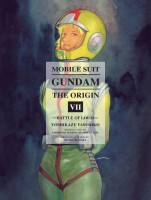
Mobile Suit Gundam: The Origin, Vol. 7: Battle of Loum

December 5, 2014 by Ash Brown

Mobile Suit Gundam: The Origin, Volume 7: Battle of LoumCreator: Yoshikazu Yasuhiko
Original story: Yoshiyuki Tomino and Hajime Yatate

U.S. publisher: Vertical
ISBN: 9781939130679
Released: September 2014
Original release: 2011

Battle of Loum is the seventh volume in Yoshikazu Yasuhiko’s manga series Mobile Suit Gundam: The Origin, a reimagining of the original 1979 anime series Mobile Suit Gundam which launched the massive Gundam franchise. The Origin provides an excellent entry point into the rather daunting Gundam universe for those who don’t know where to start with it. I’d even recommend the manga to readers who don’t have a particular interest in Gundam but who are looking for a great military science fiction series or space opera. Generally, I would consider myself a part of that latter group, though after reading The Origin I find that I am more curious about Gundam as a whole than I previously was. I have thoroughly been enjoying Vertical’s deluxe release of the The Origin which is based on the Japanese collectors’ edition. The seventh volume, originally published in Japan in 2011, was released in English in 2014 and includes additional commentary from Mamoru Nagano as well as the extra chapter “On the Eve” as bonus content.

After the Republic of Munzo declared itself the independent Principality of Zeon, political tensions continued to mount between it and the Earth Federation until an all-out war between the two groups ignited. Some of the other space colonies rally under Zeon’s flag, demanding their autonomy and freedom from the Federation’s rule. Others support the Federation and its efforts to keep humanity united. Neither side of the conflict is entirely in the wrong, but as the war continues so do the crimes against innocent civilians and colonists, many of which are manufactured by members of Zeon’s ruling House Zabi who would use the war for their own designs. There are warmongers to be found among the Federation’s ranks as well, though. But then Zeon does something unconscionable. Supposedly in an effort to end the war quickly and decisively, an entire space colony is crashed into the planet and the effects are devastating.

Battle of Loum recounts two of the most pivotal events of the war between the Federation and Zeon. The first chapter or so is devoted to the colony drop of Side 2 and the massacre of the colonists that precede its ultimate destruction. It is an appalling tragedy and the number of casualties is enormous, both of Side 2’s residents and the worldwide population of Earth. Yasuhiko’s stunning portrayal of the colony drop is extraordinarily effective. In addition to the showing astonishing damage inflicted, he explores the motivations behind it, the controversy and doubt surrounding the act, and how individuals respond and react to the plan and its execution. The colony drop is nothing short of an atrocity. It’s chilling to see the propaganda touting the glory of war contrasted with the very grim reality and horror of it all. The images of the colony breaking apart and smashing into Earth and the resulting devastation and loss of life are haunting.

As can be assumed by the title of the seventh volume, the Battle of Loum is the other major incident of the war upon which Yasuhiko turns his attention. Although the Federation has the advantage of numbers and resources, it is outmatched strategically and technologically as Zeon proves just how powerful and versatile the newly developed mobile suits can be. The Battle of Loum is a turning point in the war. Neither side comes out of it unscathed, but the Federation suffers a major defeat. The seventh volume of The Origin is very dramatic, with intense space battles and devious political machinations. There are those who honestly desire peace, but there are also those on both sides of the conflict who seek war. The inclusion of “On the Eve” brings the narrative full circle to the events that begin the series. The Origin is a magnificent piece of science fiction. It’s scope is epic, but Yasuhiko never forgets the very personal human drama that underlies it all.

Filed Under: REVIEWS Tagged With: Gundam, Hajime Yatate, manga, vertical, Yoshikazu Yasuhiko, Yoshiyuki Tomino

VIZ Nabs New Junji Ito Manga

December 5, 2014 by Katherine Dacey

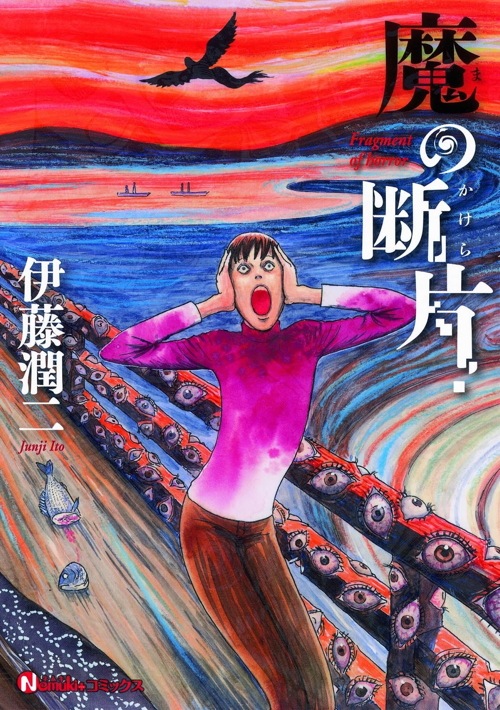
fragments_of-Horror-itoExciting news: VIZ will publish Junji Ito’s latest manga, Fragments of Horror, in 2015. VIZ promises that Fragments has something for everyone, “from the terrifying to the comedic, from the erotic to the loathsome.” Look for a hardcover edition next summer.

The latest volume of Monster Musume edges out Attack on Titan for the top spot on this week’s New York Times Manga Bestseller list.

Toshi Nakamura thinks the new Parasyte movie doesn’t stack up against the manga.

But wait–there’s more! Masashi Kishimoto sits down for another interview about Naruto, this time with Mezamashi TV.

Deb Aoki files a report from the 2014 International Manga Festival in Tokyo, while Khursten Santos posts an in-depth look at the Manga Futures conference, which was held at the University of Wollongong last month.

Organization Anti-Social Geniuses is looking for a Manga Features Writer.

To help shojo fans get into the Christmas spirit, Anna N. is giving away volumes 1-3 of Sweet Rein.

Which new Seven Seas titles are you eagerly anticipating? Lori Henderson offers her two cents on the company’s latest acquisitions.

Librarian Mikhail Koulikhov discusses the pros and cons of using Google Scholar to research anime and manga topics.

News from Japan: Mayumi Azuma (Elemental Gelade) and Tatsuro Nakanishi (Crown) have teamed up for Amadeus Code, a new series for Monthly Comic Garden.

Reviews: Anime News Network officially retires its Right Turn Only!! column this week with mini-reviews of Afterschool Charisma, From the New World, and Whispered Words. Elsewhere at ANN, Jason Thompson looks at Japan Sinks, a natural disaster story from the 1970s.

Alice Vernon on Are You Alice? (Girls Like Comics)
Sakura Eries on vol. 3 of Aron’s Absurd Armada (The Fandom Post)
Sean Gaffney on vol. 1 of Assassination Classroom (A Case Suitable for Treatment)
Matt Wilson on Batman: The Jiro Kuwata Batmanga (Comics Alliance)
Sarah on vol. 62 of Bleach (nagareboshi reviews)
Kate O’Neil on vol. 52 of Case Closed (The Fandom Post)
Megan R. on Hatsune Miku: Unofficial Hatsune Mix (The Manga Test Drive)
Allen Kesinger on vols. 1-4 of Judge (No Flying No Tights)
Leroy Douresseaux on vol. 4 of Millennium Snow (Comic Book Bin)
Lori Henderson on vols. 15-21 of Pokemon Adventures: Ruby & Sapphire (Good Comics for Kids)
Matthew Warner on vol. 3 of Puella Magica Madoka Magi: The Different Story (The Fandom Post)
Scott Cederlund on vol. 13 of Real (Panel Patter)
Mad Manga on chapters 1-26 of Salty Studio (Cartoon Geek Corner)
Ken H. on vols. 3-4 of Say I Love You (Sequential Ink)
Megan R. on The Seven Deadly Sins (The Manga Test Drive)
Mad Manga on chapters 2-3 of Takujo no Ageta (Cartoon Geek Corner)
Lesley Aeschliman on vol. 8 of Voice Over! Seiyu Academy (Lesley’s Musings on Anime & Manga)

Filed Under: MANGABLOG Tagged With: Junji Ito, viz media

Manga the Week of 12/10

December 5, 2014 by Sean Gaffney, Ash Brown, MJ, Anna N and Michelle Smith Leave a Comment

SEAN: The second week in December brings us a wide variety of manga for perusing, but is already dominated by something that Fantagraphics released THIS week and I am therefore behind on.

massive

Massive is an anthology of gay manga that, from what I hear, can be judged very well by its cover: if the idea of large, muscley men having sex with each other intrigues you, then this is an absolute must buy. It’s always great to see this sort of manga over here.

ASH: The release date kept moving around for this one, so don’t feel too bad. I’m thrilled that it’s finally here, though! Massive is one of my most anticipated releases for 2015. It includes manga, interviews, essays, and more. I can’t wait to get my hands on a copy!

MJ: Same here.

ANNA: I probably won’t be reading this, but I think it is very cool that it is being published.

SEAN: Kodansha has a third volume of Attack on Titan: Before the Fall. This is the manga, not the novel, for those who may be confused.

There’s also a fifth Battle Angel Alita: Last Order omnibus.

Seven Seas hopes you still like Wonderland (not to be confused with the Country of Hearts) with the 2nd volume of I Am Alice: Bodyswap in Wonderland.

Vertical gives us two types of supernatural action manga. The 2nd volume of Ajin possibly has less romantic comedy than I expect Witch Craft Works 2 will have, though I’ve been wrong about that sort of thing before.

ASH: I think you’re probably right this time.

SEAN: Arata the Legend has reached 20 volumes, which means if it weren’t licensed already, it would be totally unlicensable by now. But it is! Rejoice, Arata fans.

MICHELLE: I do like Arata, but I kind of can’t believe it’s gone on longer than Fushigi Yuugi. I guess that’s what happens when it’s shounen.

ANNA: I do have a deep and unwavering affection for Fushigi Yuugi. Sorry Arata!

dw6

SEAN: Deadman Wonderland has its sixth volume next week as well.

ASH: Tokyopop only made it to five volumes; Viz is starting to get into new material, now.

MICHELLE: Yep! I always think of this series in the same thought as the other final straggly releases TOKYOPOP managed to get out, including a volume of The Stellar Six of Gingacho. Probably no one will ever rescue that one, so I has a sad.

MJ: I’ve been kinda iffy on this series, but I am pretty happy that TP series’ are getting picked back up, so I consider it a win.

ANNA: I will pause to evoke the late, lamented series Demon Sacred and Sky Blue Shore

And there’s a 13th Itsuwaribito, and I begin to despair about this long string of worthy Viz shonen I don’t really follow.

And I am rewarded with a 9th volume of Magi, which I do follow, and which is excellent.

MICHELLE: It is. We need to start a campaign to get MJto read it.

MJ: Heh.

ANNA: I am hoarding stray volumes of this and do mean to read it one day.

SEAN: Are you getting a massive amount of manga next week? Or just Massive?

Filed Under: FEATURES, manga the week of

Assassination Classroom, Vol. 1

December 4, 2014 by Sean Gaffney

By Yusei Matsui. Released in Japan by Shueisha, serialization ongoing in the magazine Weekly Shonen Jump. Released in North America by Viz.

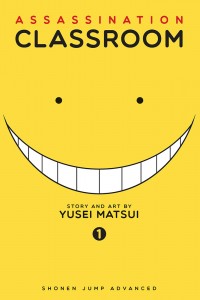
A few years back, when Weekly Shonen Jump was just getting started in North America, there was a rumor that one of the series brought over would be the quirky, somewhat popular Majin Tantei Nōgami Neuro. Unfortunately, what it ended up being was one of the first examples of those “mid-range” Jump titles that get to 15-25 volumes in Japan but never quite garner enough success to come over here. After a break of a couple of years, however, the author came back with an even larger hit: Assassination Classroom, the story of an alien teacher and the misfit kids who have to kill him to save the Earth. Initially thought unlicensable due to the basic premise, it’s now reached double digit volumes and an anime is on the way, so Viz is releasing it as a Shonen Jump Advanced title.

assclass1

There’s another good reason why Viz decided to license this title after all: it’s fantastic. Technically the story is about the kids trying to find ways of murdering their teacher – attempts are made every single chapter, after all – but what this *really* is is another in the genre of ‘oddball teacher comes into class full of misfits and shows them they are all better than they think they are’. Think GTO, Gokusen, or Hell Teacher Nube. The background regarding Koro-sensei’s decision to blow up the Earth at the end of the school year unless he is killed is kept deliberately vague, though various hints suggest he may have been human once. It’s more a plot widget to allow for the killings, which range from deadly serious to hilarious.

Technically the other protagonist of this series is Nagisa, a bishonen-looking young man who’s good at research and analysis but apparently bad enough at school to be in class 3-E. So far he’s mostly there to be the narrative voice, but I sense that there’s more coming in the next few volumes. The series clearly has something to say about bullying and the Japanese educational system, even if it’s filtered through a SF-comedy vein. The regulations against 3-E are designed deliberately so that the children are scapegoats for the rest of the school, and that once there it’s very difficult to climb back out. Indeed, the only person on their side seems to be the alien they have to kill.

Matsui got his start as an assistant on Bobobobo-bobobo, and the influence can sometimes be seen in the sheer loopy surrealism of Koro-sensei’s remarks and attitudes. This isn’t a gag manga, though, and the kids have very real problems – a bully hunter who was betrayed by a teacher has lost all faith in the profession; a baseball pitcher who imitates his favorite player finds he can’t move forward; and a girl who’s good at chemistry but poor at speaking finds you can’t simply kill someone by asking them to die nicely. These are good lessons Koro-sensei is teaching, and the kids are beginning to realize what a great teacher he really is. Shame he plans to destroy the Earth.

Speaking of which, not *everything* is left to these kids (who I suspect are meant to be scapegoats to the entire world if their mission fails). A Ministry of Defense employee becomes their gym teacher, and teaches the kids genuine assassination techniques. And there seems to be another assassin being sent to kill Koro-sensei at the cliffhanger to this volume, and she gives quite a first impression. It’s going to be another two months til the next volume, but this is a terrific debut from Jump, and I cannot wait to see what happens next.

Filed Under: REVIEWS

Bookmarked: Satoshi Kon-a-thon

December 3, 2014 by Katherine Dacey

It’s not every day that an American publisher releases a manga by the late, great Satoshi Kon, so Brigid and I decided to mark the occasion with a roundtable discussion. Joining us is David Brothers, one our favorite comics journalists. David has written for Comics Alliance, Pop Culture Shock, Publisher’s Weekly, Wired, and The Atlantic Monthly, and currently works in the comics industry.

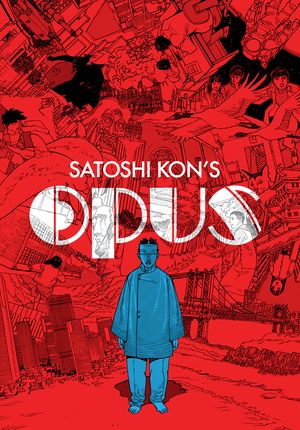
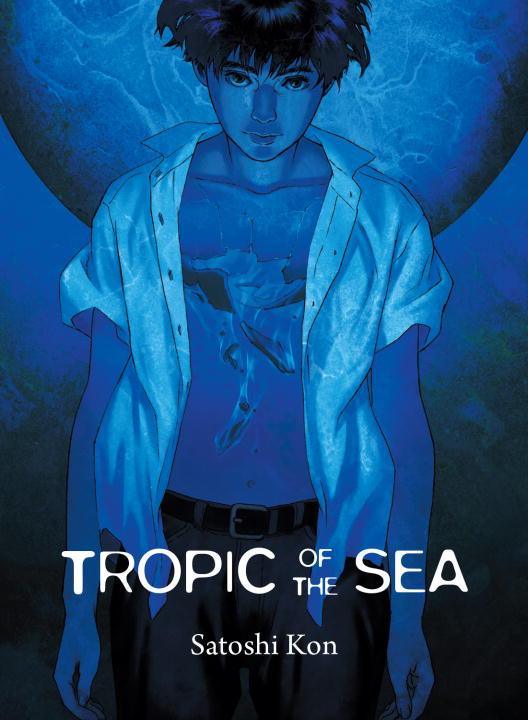
On our plate: Tropic of the Sea, which was published by Vertical Comics in 2013, and OPUS, which arrives in comic book stores today courtesy of Dark Horse. Both works date to an early stage of Satoshi Kon’s career, but explore themes present in such films as Perfect Blue, Millennium Actress, and Paprika–most notably the boundary between reality and imagination.

KATE: Let’s start the conversation with a basic question: which did you enjoy more, OPUS or Tropic of the Sea, and why?

OpusDAVID: I definitely liked OPUS a lot more than Tropic of the Sea, I think owing to the fact that while both are stories in well-worn genres, OPUS is way more up my alley in general, since it was at least partly about storytelling as a creator. Tropic of the Sea felt fairly pat, with precious few surprises all the way down to the last panel. OPUS follows the blueprint of other stories in its genre, but it’s also funnier and warmer somehow, I suppose because it’s about the nature of free will and humanity, and to tackle those points you kinda have to have characters that are entertaining to watch.

I actually read these books back-to-back the first time I read both, Tropic of the Sea and then OPUS, with a break for cooking and dinner in-between. OPUS did a great job of sparking my imagination. I think it’s cool that the story works as both how we read it, as the story of a creator in his creation, and also a crazy deus ex machina ending for the manga Resonance. Tropic of the Sea sorta is what it is, which is a well-executed story to be sure, but OPUS goes places I really enjoy.

I’m focusing on OPUS, but I didn’t dislike Tropic of the Sea. It’s good, but it’s just not quite my bag. How was it for you two?

BRIGID: Wow, I’m actually feeling the opposite: I really liked Tropic of the Sea because I thought that it was very well done, even if the story had been done before. I’m finding OPUS much harder to follow, though. Maybe I’m just not good with action stories, but it seems like things are constantly exploding and flying apart without any visible cause. And right at the end of chapter 1 there’s this weird non-sequitur where Satoko’s leg is trapped under a stone column and then, without anything changing in the panel that I could see, she just pushed it off and jumped up. On the one hand, this manga has a pretty sophisticated sense of space, but on the other hand, I’m having a lot of trouble following the motion of people and things within that space, and in particular, why things are blowing up. As I write this, I haven’t finished the manga, so maybe there’s a resolution or explanation I’m not seeing yet, but right now it’s pulling me out of the story to have to stop and figure out what just happened. It’s weird, too, because you would expect an animator to be tighter about that kind of thing.

tropic-of-the-sea-cover
KATE: My experience tracks with yours, David: I liked OPUS more than Tropic of the Sea. I found the premise of Tropic of the Sea a little too familiar, in large part because the characters were all such obvious types–the skeptic, the unscrupulous developer, the wise old-timer–that none registered as individuals. The story’s length was also a contributing factor, as Kon didn’t have enough space to flesh out the cast beyond their specific plot functions. It’s a shame that the script wasn’t better, as the illustrations create a palpable sense of place.

As for OPUS, it irresistibly reminded me of the a-ha video for “Take on Me” and the Will Farrell/Emma Thompson flick Stranger Than Fiction, with a pinch of AKIRA for seasoning. I normally find these kind of meta-exercises tedious, but Kon infuses the story with a sense of playful urgency that thwarts the urge to deconstruct every page. (For me, at least; your mileage may vary.)

DAVID: Oh, I’m definitely knee-deep in that urge to deconstruct. Resonance feels like the anime and manga that was around when I was getting into this stuff, something halfway between Ryoichi Ikegami’s ’80s realism and Masamune Shirow’s willingness to blend weird tangents into his hard sci-fi worldbuilding. The haircuts, the fashion, the motivations, the poorly thought-out backstories, and somehow even the fourth wall breaking action are all my bag. Which I think is a big part of why I share the constant feeling of Things Are Happening All Over with you, Brigid, but have a different response to it. The story-in-the-story is something I know well and have read often (the cop mentor, the thug friend, the weird way the heroine keeps getting rescued instead of rescuing!), so I buy into that, and through that the rest of the story, maybe a little harder than others would. This feels a lot like a lost chapter of a comic I never read as a kid, from late enough in the story that doing a daring metafictional “let’s talk about comics stories by way of being in a comics story!” tale was not just feasible, but something you could dedicate 300+ pages to.

KATE: I agree with Brigid that the draftsmanship in Tropic of the Sea is crisper–in fact, I think that’s part of the reason that I’m so focused on the creakier aspects of the story. The illustrations are almost… well, “invisible” isn’t quite the right word, but they don’t call attention to themselves in the same way that the illustrations in OPUS do. I don’t always respond well to flashy artwork, but I found OPUS engaging enough that I didn’t linger on the busier images.

As for the story, I’m with you, David: OPUS is a fun throwback to the kind of manga that Dark Horse and VIZ were publishing in the 1990s, right before the Sailor Moon/InuYasha revolution. OPUS isn’t as gonzo as some of the Koike/Ikegami manga from that era, but it still has that same breathless, hyperbolic quality. I’m kind of surprised that I liked it better than Tropic of the Sea, actually, as Tropic seems like it would be more in my wheelhouse. But I thought the script was too on-the-nose–a little ambiguity would have made the ending more satisfying, and more in keeping with Kon’s mature work. (An aside: I wondered what Rumiko Takahashi could have done with the premise of Tropic of the Sea… sigh.)

Switching gears, how did you react to the ending? Was Dark Horse right to include Kon’s unfinished sketches, or should the manga have been left incomplete?

DAVID: I came into OPUS cold, not even knowing it was unfinished, so I was both surprised, disappointed, and glad to see them. Surprised at the lack of an ending, disappointed at the same, but glad there was some kind of resolution, even if it’s just a metafictional one. For a story about stories to end with “Welp, and I guess I just didn’t finish this one, but I might one day!” is the kind of serendipity you can’t plan for, but is sometimes thematically correct for the work. It worked here, and I especially liked to see the pages Kon did with no faces. I thought that was a cool and creepy touch, and when combined with the rest of the backmatter, it made for a satisfying, though not all the way satisfying, ending.

Filed Under: MANGABLOG Tagged With: Dark Horse, Satoshi Kon, Vertical Comics

Manga Giveaway: Seven Seas Sampler Winner

December 3, 2014 by Ash Brown

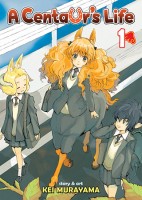
A Centaur's Life, Volume 1Dictatorial Grimoire, Volume 1: Cinderella
Gakuen Polizi, Volume 1Kashimashi: Girl Meets Girl, Omnibus 1

And the winner of the Seven Seas Sampler manga giveaway is…Karen Swartz!

As the winner, Karen will be receiving A Centaur’s Life, Volume 1 by Kei Murayama; Dictatorial Grimoire, Volume 1: Cinderella by Ayumi Kanou; Gakuen Polizi, Volume 1 by Milk Morinaga; and Kashimashi: Girl Meets Girl, Omnibus 1 written by Satoru Akahori and illustrated by Yukimaru Katsura. Over the last couple of years, Seven Seas has really taken off, adding more licenses than ever before and diversifying its catalog. So, for this giveaway, I asked people tell me a little about some of their favorite manga released by Seven Seas. I’ve compiled a list below (those with an asterisk were mentioned by more than one person), but be sure to check out the Seven Seas Sampler comments for more details.

Some favorite Seven Seas titles:
Afro Samurai by Takashi Okazaki
Alice in the Country of created by Quin Rose
Amazing Agent Luna written by Nunzio DeFillippis, Christina Weir, illustrated by Shiei
Blood Alone by Masayuki Takano
Boogiepop created by Kouhei Kadono
A Centaur’s Life by Kei Murayama
A Certain Scientific Railgun written by Kazuma Kamachi, illustrated by Motoi Fuyukawa
Citrus by Saburouta
*D-Frag! by Tomoya Haruno
Dance in the Vampire Bund by Nozomu Tamaki
*Devils and Realist written by Utako Yukihiro, illustrated by Madoka Takadono
Dragonar Academy written by Ran, illustrated by Shiki Mizuchi
Freezing by Kwang-Huyn Kim
Gakuen Polizi by Milk Morinaga
*Girl Friends by Milk Morinaga
*Gunslinger Girl by Yu Aida
*Haganai: I Don’t Have Many Friends written by Yomi Hirasaka, illustrated by Itachi
Haven’t You Heard? I’m Sakamoto by Nami Sano
Hayate X Blade by Shizuru Hayashiya
Inukami! written by Mamizu Arisawa, illustrated by Mari Matsuzawa
Kisses, Sighs, and Cherry Blossom Pink by Milk Morinaga
Kokoro Connect written by Sadanatsu Anda, illustrated by CUTEG
*Lizzie Newton: Victorian Mysteries written by Hey-jin Jeon, illustrated by Ki-ha Lee
Love in Hell by Reiji Suzumaru
*Lucifer and the Biscuit Hammer by Satoshi Mizukami
Magical Girl Apocalypse by Kentaro Sato
Strawberry Panic written by Sakurako Kimino, illustrated by Takuminamuchi
*Toradora! written by Yuyuko Takemiya, illustrated by Zekkyou
Witch Buster by Jung-man Cho
*Young Miss Holmes by Kaoru Shintani
Zero’s Familiar written by Noboru Yamaguchi, illustrated by Nana Mochizuki

Thank you to everyone who participated in the giveaway and shared some of your favorites; I hope to see you all again for the next one!

Filed Under: UNSHELVED Tagged With: Ayumi Kanou, Centaur's Life, Dictatorial Grimoire, Gakuen Polizi, Kashimashi, Kei Murayama, manga, milk morinaga, Satoru Akahori, Yukimaru Katsura

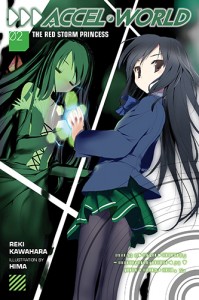
Accel World: The Red Storm Princess

December 2, 2014 by Sean Gaffney

By Reki Kawahara and Hima. Released in Japan by ASCII Mediaworks. Released in North America by Yen Press.

Much as I’m enjoying Sword Art Online, it was very much complete in one novel, and the subsequent second volume ended up being a series of world-building short stories that filled time while the author regrouped (or so it seemed to me, I know this series began as an online web fiction). Accel World seems to be more planned in advance, and so its second light novel can delve right into fallout from the first: Haruyuki hitting a wall in his gaming and feeling pathetic and useless about it; Takumu and Chiyuri not quite broken up but no longer really together; and Kuroyukihime trying to be a guide and mentor for Haruyuki while attempting to convey that she has feelings for him (she succeeds in only one of these things, of course).

aw2

The main thrust of the arc, though, is a new character, Yuniko. She’s only 11, and reminds us how young everyone in this cast is (our hero and heroine are 13 and 14, respectively). That’s by design – the Accelerated technology is designed so that only people below a certain age have the possibility of using it – but you do occasionally wish for some adult supervision in amongst all this gaming, particularly as the effects of the gaming world can seep out psychologically into the real world. The plot involves Yuniko, the “Red King” and a Level 9, teaming up with Kuroyukihime’s team to try to stop an armor that possesses its wearer and drives them insane.

Haruyuki remains the most fascinating character in these books. The bullies have been removed from his school, and he’s dating (well, sort of not really) the school “Princess”, so you’d think he would feel better about himself. But that’s not how minds work, particularly when one was bullied for years as he was. Haruyuki is now desperately afraid of failing Kuroyukihime, and sets up masochistic VR games in order to grow stronger that mostly just serve to beat him up. It’s depressing, and you are relieved that when Kuroyukihime eventually finds out he’s doing this she screams at him. The disconnect between ‘it’s just a game’ and ‘but it’s MORE than a game’ isn’t as obvious here as it is in Sword Art Online, but it’s still a major theme of the books.

The second half of this novel is almost entirely devoted to one big fight, and it’s very well done, filled with action and betrayals and the like. There’s a minor villain, the Yellow King, who’s designed to be hated by the reader, and succeeds very nicely. (He’s reminiscent of the villain from Fairy Dance, only a bit less obvious.) We get a flashback of the scene where Kuroyukihime put in motion the events that led to her being hunted, and it’s both informative and shows us how much succeeding in this game requires strength of will. Which is why, despite all his whining and terror, Haruyuki gets to save the day. (Well, apart from the cliffhanger that suggests he may become possessed and evil in the future…)

For gamers, fans of light novels, and those who like heroes that are a bit out of the ordinary, Accel World is a great read, and a nice contrast with Kawahara’s other series.

Filed Under: REVIEWS

The Problem with Doraemon

December 1, 2014 by Brigid Alverson

OpusZainab Akhtar posts a preview of Satoshi Kon’s Opus, which is due out this week from Dark Horse.

At Eeeper’s Choice, Phillip weighs in on Digital’s new Tezuka Kickstarter, which is considerably more modest than the last one.

Doraemon is the most iconic children’s character in Japan, if not all of Asia, so why have publishers been so slow to bring him over here? Roland Kelts looks at the problem, with input from translators Matt Alt (who is translating the manga, which is being released digitally), and Matt Thorn.

This week’s Pick of the Week at Manga Bookshelf comes down to two very different manga.

Erica Friedman recommends the digital magazine Sparkler Monthly.

Laura looks at this month’s new shoujo manga releases at Heart of Manga.

At Organization Anti-Social Geniuses, Justin and Manjiorin discuss five fears they have about buying manga. Any dedicated manga reader will relate!

A Library Girl notes a mini-revolt going on in the Crunchyroll forums because the company did not offer its traditional Black Friday discount on the All Access pass. Why are we writing about this on a manga blog? Because the All Access pass is what you use to read manga; if a substantial number of customers drop their subscriptions or convert to the anime-only service, it could hurt their digital manga program.

Peking University in Beijing, China, has opened a manga library.

News from Japan: This year’s best selling manga were One Piece, with 11,885,957 volumes sold, and Attack on Titan, with 11,728,368, but the numbers drop off quickly after that; Naruto, in the number six slot, had only half the sales of One Piece. Princess Resurrection manga-ka Yasunori Mitsunaga has a new series, Kako to Nise Tantei (Kako and Detective Nise), set to debut in the next issue of Young Jump.

Reviews: The Manga Bookshelf bloggers round up some quick takes on recent releases in the latest edition of Bookshelf Briefs. Ash Brown sums up a week’s worth of manga reading at Experiments in Manga. At Brain Vs. Book, Jocelyne Allen reviews Fumiko Fumi’s Memento Mori, which hasn’t been translated into English. Johnanna Draper Carlson takes a look at the how-to book Kawaii Manga: Adorable! at Comics Worth Reading.

Ash Brown on All You Need Is Kill (Experiments in Manga)
Leroy Douresseaux on vol. 2 of Black Rose Alice (The Comic Book Bin)
Erica Friedman on the September issue of Comic Yuri Hime (Okazu)
Sakura Eries on vol. 6 of GA: Geijutsuka Art Design Class (The Fandom Post)
TSOTE on Heureka (Three Steps Over Japan)
Johanna Draper Carlson on vol. 1 of Manga Dogs (Comics Worth Reading)
Sean Gaffney on vol. 14 of Neon Genesis Evangelion (A Case Suitable for Treatment)
Leroy Douresseaux on vol. 16 of Rin-ne (The Comic Book Bin)
A Library Girl on vols. 7-9 of The Story of Saiunkoku (A Library Girl’s Familiar Diversions)

Filed Under: MANGABLOG

  • « Go to Previous Page
  • Page 1
  • Interim pages omitted …
  • Page 572
  • Page 573
  • Page 574
  • Page 575
  • Page 576
  • Interim pages omitted …
  • Page 1048
  • Go to Next Page »
 | Log in
Copyright © 2010 Manga Bookshelf | Powered by WordPress & the Genesis Framework