• Skip to primary navigation
  • Skip to main content
  • Skip to primary sidebar
  • Home
  • About Us
    • Privacy Policy
    • Comment Policy
    • Disclosures & Disclaimers
  • Resources
    • Links, Essays & Articles
    • Fandomology!
    • CLAMP Directory
    • BlogRoll
  • Features & Columns
    • 3 Things Thursday
    • Adventures in the Key of Shoujo
    • Bit & Blips (game reviews)
    • BL BOOKRACK
    • Bookshelf Briefs
    • Bringing the Drama
    • Comic Conversion
    • Fanservice Friday
    • Going Digital
    • It Came From the Sinosphere
    • License This!
    • Magazine no Mori
    • My Week in Manga
    • OFF THE SHELF
    • Not By Manga Alone
    • PICK OF THE WEEK
    • Subtitles & Sensibility
    • Weekly Shonen Jump Recaps
  • Manga Moveable Feast
    • MMF Full Archive
    • Yun Kouga
    • CLAMP
    • Shojo Beat
    • Osamu Tezuka
    • Sailor Moon
    • Fruits Basket
    • Takehiko Inoue
    • Wild Adapter
    • One Piece
    • After School Nightmare
    • Karakuri Odette
    • Paradise Kiss
    • The Color Trilogy
    • To Terra…
    • Sexy Voice & Robo
  • Browse by Author
    • Sean Gaffney
    • Anna Neatrour
    • Michelle Smith
    • Katherine Dacey
    • MJ
    • Brigid Alverson
    • Travis Anderson
    • Phillip Anthony
    • Derek Bown
    • Jaci Dahlvang
    • Angela Eastman
    • Erica Friedman
    • Sara K.
    • Megan Purdy
    • Emily Snodgrass
    • Nancy Thistlethwaite
    • Eva Volin
    • David Welsh
  • MB Blogs
    • A Case Suitable For Treatment
    • Experiments in Manga
    • MangaBlog
    • The Manga Critic
    • Manga Report
    • Soliloquy in Blue
    • Manga Curmudgeon (archive)

Manga Bookshelf

Discussion, Resources, Roundtables, & Reviews

Blog

My Neighbor Seki, Vol. 1

January 15, 2015 by Sean Gaffney

By Takuma Morishige. Released in Japan by Media Factory, serialization ongoing in the magazine Comic Flapper. Released in North America by Vertical Comics.

By all rights, I shouldn’t really love this title as much as I do. At heart, it’s a variation on a standard Japanese comedic trope: a) person does funny thing; b) Other person says “WAIT ARE THEY DOING FUNNY THING?”; c) person seemingly has explanation for funny thing; d) Ah, OK, so it’s ____; e) Person does even funnier thing; f) Other person says “WAIT ARE THEY DOING EVEN FUNNIER THING?” Rinse and repeat. And yet My Neighbor Seki is a wonderful series, because the things are genuinely funny and strange, the chapters are short enough so that each one is just about the right amount of time devoted to one situation; and there’s a surprising amount of character development given that this is, at its heart, a series about two people at adjoining desks.
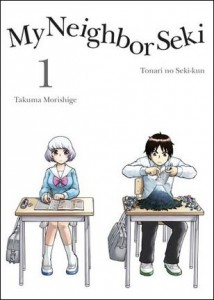
seki1

Basically, Yokoi is a “normal” middle-school student attempting each day to pay attention and study what the teacher’s saying, but can’t because the boy next door, Seki, keeps distracting her by doing… odd things. Elaborate domino setups, shogi with trapdoors, knitting cactuses… Seki’s imagination is topped only by the impossible nature of some of the tasks he performs. Seki himself is silent (and honestly Yokoi is much of the time as well)… we only get how elaborate Seki’s imagination is by Yokoi narrating everything he does and filling it in with her own interpretations. Which of course should clue us in that Yokoi is not really all that normal a girl after all.

The majority of this manga consists of Seki’s setups and Yokoi’s reactions, but it’s fun seeing how it occasionally dips its toe outside the box. The rest of the class apparently are fully aware of what Seki is doing; when he sets up his note-passing post office in one chapter, Yokoi is really the only one surprised by it; the rest of the class merely thinks “Cool!”. Of course, they’re not sitting near him, so he’s not the annoyance he can be to Yokoi. During a fire drill, we see (but don’t hear) Seki being normal and outgoing with other male students, and realize how much of his life we have filtered through Yokoi’s perceptions. And when another, clueless, classmates interrupted his Ouija board shenanigans, we see why he HAS to be filtered through her.

The art is fairly simple (just look at that cover), but highly expressive, and the main reason to read this in the end may be Seki and Yokoi’s facial expressions. They’re both so immature, in ways that only teenagers can pull off, even as they show amazing flights of fancy. You wonder at times if this is some demented form of courtship (Yokoi leaving notes in Seki’s locker after school really isn’t helping deny that), but this isn’t a romance. Yokoi gets punished several times through the series – for being distracted, for getting caught doing something Seki was doing, etc. – but it’s always her own fault for getting too involved, so she’s not really a total victim. Seki avoids getting discovered by anyone but Yokoi, but this means she’s the one who punishes him. They’re becoming rather codependent.

Basically, I enjoyed this as a funny comedy, but was surprised at how much depth it had. Of course, like Yokoi, I could be reading too much depth into it. But I’m absolutely buying more to see if I’m right, and you should as well.
Filed Under: REVIEWS

New Licenses from Kodansha

January 14, 2015 by Katherine Dacey

Kodansha just announced a large slate of new manga for 2015, including more Attack on Titan products–no, really!–as well as an interesting assortment of seinen, shojo, and shonen series. Here is a brief round-up of the eight titles that will be coming to a bookstore near you this year:

tumblr_ni5kk1d8tK1s7mwd3o1_1280

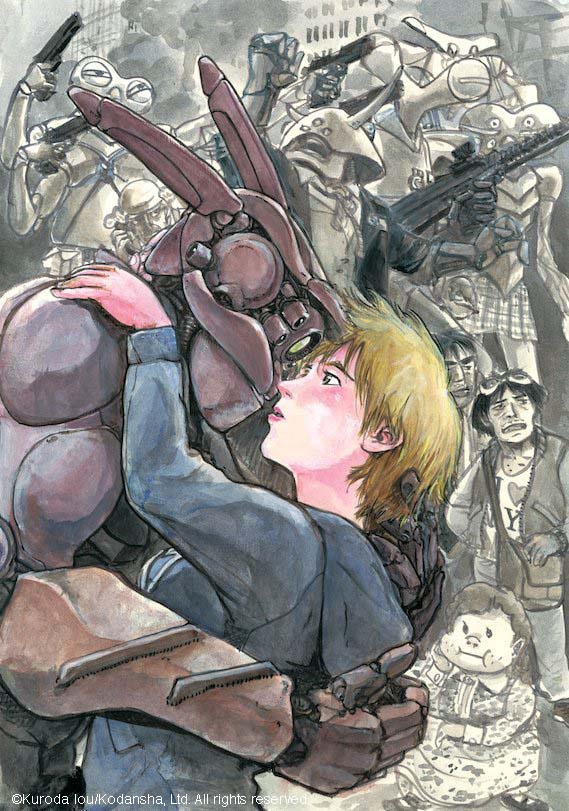
Kuroda Iou’s Appleseed Alpha. (Fall 2015)

Appleseed α (Masamune Shirow and Kuroda Iou): A prequel to Masamune Shirow’s sci-fi classic Appleseed, set in 22nd century New York City. Sexy Voice and Robo artist Kuroda Iou provides the illustrations. (Fall 2015)

Attack on Titan: Colossal Edition, Vol. 2 (Hajime Isayama): An oversized omnibus collecting volumes 6-10 of everyone’s favorite series. (September 2015)

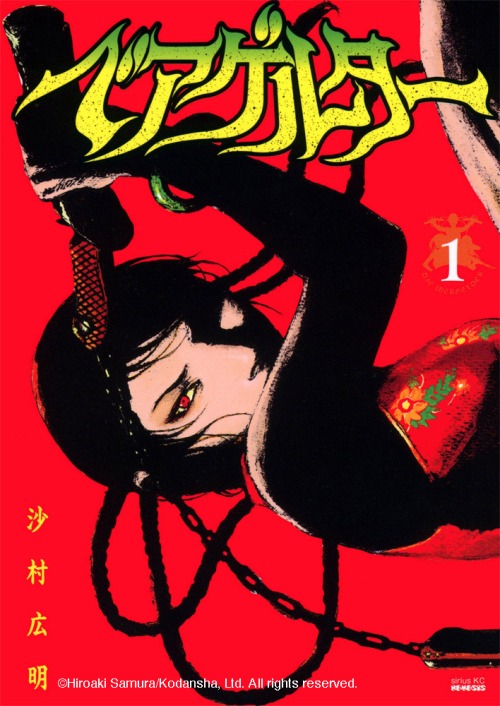
Die Wergelder (Hiroaki Samura): A seinen title from Blade of the Immortal creator Hiroaki Samura, featuring three women who kick ass, take names, and really, really want their stuff back. (Fall 2015)

Fairy Girls! (Hiro Mashima and BOKU) Yet another Fairy Tail spin-off; this one chronicles the further adventures of Erza, Wendy, Lucy, and Juvia. (Fall 2015)

Kiss Him, Not Me! (Junko): A shojo comedy about a fujoshi who just wants her male classmates to make out with one another, dammit… (Fall 2015)

Livingstone (Jinsei Kataoka and Tomohiro Maekawa): A supernatural story featuring artwork by Deadman Wonderland manga-ka Jinsei Kataoka. Expect gorgeous illustrations and a lot of earnest discussion about the weight of human souls. (Fall 2015)

Maria the Virgin Witch Exhibition (Masayuki Ishikawa): A one-volume sequel to Maria the Virgin Witch. Both manga have been licensed by Kodansha; both manga feature a young witch who uses her magic to alter the course of the Hundred Years’ War. (August 2015)

The Science of Attack on Titan (Rikao Yanagita and Hajime Isayama): A generously illustrated text that answers all your burning questions about giant anatomy, intellect, and powers. Guaranteed to be 100% free of any actual science, or your money back. (June 2015)

tumblr_ni5juwfv3P1s7mwd3o1_500

Hiroaki Samura’s Die Wergelder (Fall 2015)


Filed Under: MANGABLOG Tagged With: Kodansha Comics

Bookmarked! The Best Manga of 2014

January 14, 2015 by Katherine Dacey

File this week’s Bookmarked! column under the heading Better Late Than Never. Brigid and I sat down this week to review our favorite manga of 2014, from swashbuckling Viking sagas to goofy shojo comedies. We also chatted about the series we thought we’d love but didn’t, and looked ahead to potential candidates for the Best Manga of 2015.

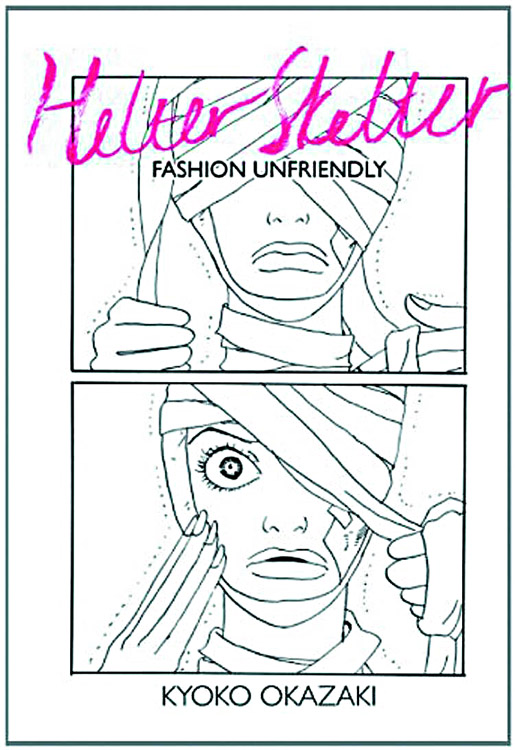
JUN131345 Brigid: When I was compiling my best of the year list for Robot 6, I mentioned three manga—Kyoko Okazaki’s Helter Skelter, Moyoco Anno’s In Clothes Called Fat, and Inio Asano’s Nijigahara Holograph—but I’m smacking my head because I somehow spaced on Vinland Saga. Even though Kodansha Comics has temporarily put the series on hold, it’s well worth a read. It’s a really well done story with a complex plot—lots of double-crosses and surprises—and some interesting characters. It’s also beautifully drawn, and Kodansha Comics has gone the extra mile in terms of production quality, with double-size hardback volumes and some little touches that make it feel really special. I simply disappeared into these books over the Fourth of July, and now I want to go back and read all the way through Volume Five.

Kate, what was your standout pick for the year?

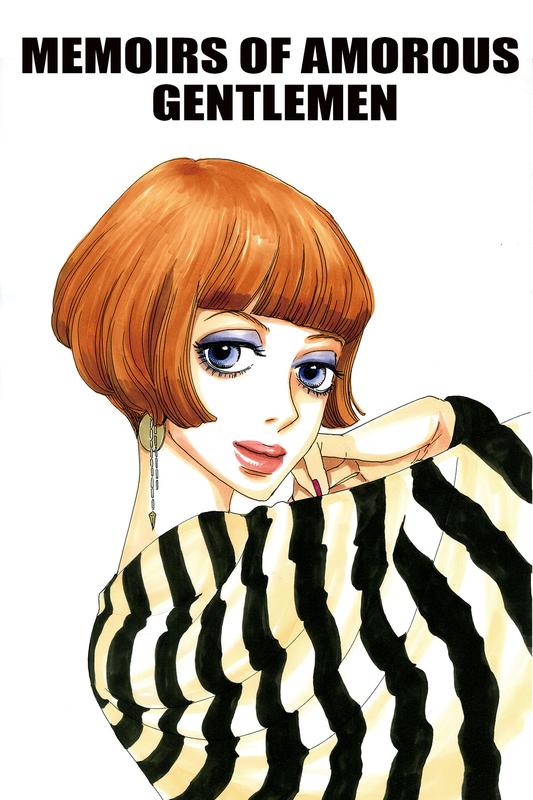
974d10d54b54987b252eb2fece9827d4_1394065624_full_a3d4c3086a7e1d355a3b27f0c4f2091cKate: I’m also a Moyocco Anno fan, though I preferred Memoirs of Amorous Gentleman. I found Anno’s depiction of Colette, the prostitute-heroine of Memoirs, less mean-spirited than her depiction of Noko, the binge-eating heroine of In Clothes Called Fat; when I read Noko’s story, I had a difficult time distinguishing the author’s feelings about Noko from the other characters’. The other reason I liked Memoirs better: the artwork! The story takes place in a fin-de-siecle brothel in Paris, which provides Anno with a swell excuse to draw extravagant clothing, accessories, and lingerie. Her attention to detail doesn’t end with the clothing, either; the character designs are more soft and sensual than in her earlier series like Flowers & Bees.

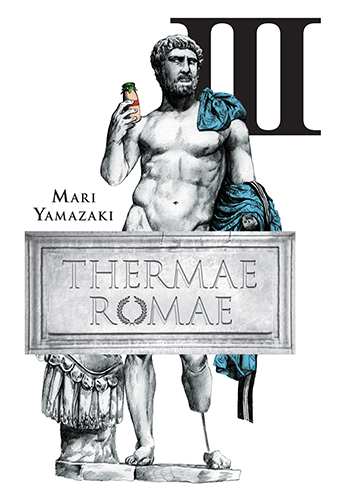
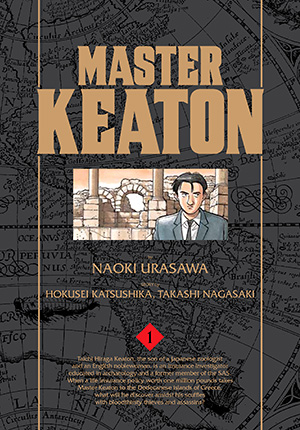
Other titles making my best-of list would include Batman: The Jiro Kuwata Batmanga, which DC Comics has presented in a smart-looking, unflipped edition; Master Keaton, an older Naoki Urasawa title about a globe-trotting, crime-solving insurance agent; My Love Story!!, a goofy shojo comedy that offers a teenage boy’s perspective on first love; and OPUS, a manga-within-a-manga by the late animator Satoshi Kon. Honorable mention goes to the final volume of Thermae Romae, which managed to wring a surprising amount of story from a slender premise.

If you could only pick one of the titles from your list as “the best manga of 2014,” which one would it be?

Yamazaki_ThermaeRomae_V3_HCBrigid: I think Vinland Saga truly was the best manga of the year, but let me go back to your honorable mention of Thermae Romae. It’s hard to give that the best-manga tag, because the art is a bit odd and the story wobbled all over the place, yet there’s something really wonderful about that manga. I think it reflects our own reality in a way, because just like Lucius, we are taking artifacts from Japanese culture and making them our own—only for us, it’s manga, not bathrooms. I thought this was an amazing series and kudos to Yen Press for publishing it in such a beautiful edition.

Attack on Titan hardly needs a boost from me, but I have to say it was one of the series I turned to when I just wanted to relax and enjoy a good story. I also really liked Nisekoi in the same way—it’s not deep, just a fun read.

Were there any series you were reading just for fun?

Kate: VIZ tends to be my go-to label for fun series. I already mentioned My Love Story!!, which usually makes me laugh out loud, but I also enjoyed the first volume of Assassination Classroom. I won’t make any grand claims for Classroom; the story has a sentimental streak a mile wide, even though the premise is subversive. Koro-sensei’s preposterous assignments, dedication to his craft, and super-human grading skills, however, provide a reliable stream of chuckles even when the author loses his nerve and goes for the “awwww” moment instead of risking offense.

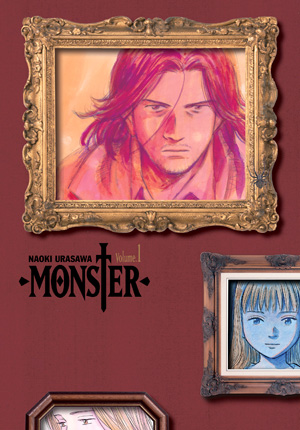
142156906XAnother series in my “just for fun” pile was Naoki Urasawa’s Monster. When VIZ began reissuing Monster last year, I dusted off my old set and revisited it for the first time since 2008. I was pleasantly surprised to discover that the series was almost as good as I remembered. The crack pacing and twisty plots held my attention, as did the plight of the enormous cast of supporting characters. (And oh, those characters! No one draws a nose, a brow, or a paunch with the same elan as Urasawa.) The only thing that disappointed was the ending, which felt more suitable for an episode of Scooby-Doo than the conclusion of a thriller exploring the underbelly of the former Soviet bloc.

I was certain that Fumi Yoshinaga’s What Did You Eat Yesterday? would be on my “fun” list, too, but I’ve found it oddly unengaging. The problem, for me, lies with the ratio of interpersonal to culinary shoptalk. Though Shiro and Kenji’s travails as a middle-aged couple are compelling, the endless panels of recipes, food preparation, and grocery shopping are too run-of-the-mill to hold my attention, even if some of the ingredients are exotic from an American’s perspective. I liken it to reading a manga about household chores: unless the character has a talking robot vacuum cleaner or uses depth charges to clear a messy bedroom, it’s hard to make such routine tasks interesting on the printed page.

What series didn’t live up to your expectations?

1421575892Brigid: Shockingly, Naoki Urasawa’s Master Keaton. I really loved his other series (although I agree with you about the end of Monster), so I was really looking forward to this one. The setup is great: The main character is an archaeology professor who moonlights as an insurance investigator, which gives him plenty of excuses to solve mysteries, but the plots have holes you could drive a Mack truck through. Still, Urasawa on his worst day is better than most other creators on their best. His art is great, although not quite as sophisticated as in his later books, and his lead character, who is sort of a combination of Sherlock Holmes and McGyver, is fun to watch.

Another manga that I felt was solid but didn’t quite live up to its hype was Barakamon. The premise is solid: A talented calligrapher punches the wrong guy and exiles himself to a remote island to hone his craft in solitude, but the locals keep intruding into his life. The city-boy-in-the-country humor works, and Satsuki Yoshino does a nice job of establishing a sense of atmosphere with the backgrounds and settings. The weak point was the way figures were drawn—they often looked like piles of clothes with no structure underneath. Also, while I understand the decision to have the locals speak in dialect, I don’t really agree with it. It makes the story hard to read. I think this series is just hitting its stride, though, and I have the second volume queued up on my reading stack.

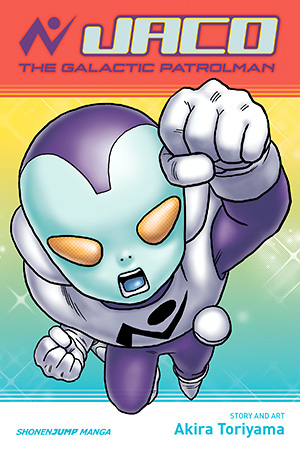
Jaco 1To end on an up note, though, I already have a favorite manga of 2015, and it’s one I had low expectations for: Jaco the Galactic Patrolman. It’s a one-shot by Akira Toriyama, the creator of Dragon Ball, which is not really my kind of book, so I didn’t have high expectations, but I was really impressed by the art. Toriyama knows how to set a scene, with clear lines and just the right amount of detail. All his characters looked very different, with strong personalities of their own. The plot is a ridiculous pileup, but Toriyama pulls it off, and his earnest but vain galactic patrolman is a perfect foil for the cranky Omari and the spunky Tights. (Yes, that’s her name.) There is a bit of a Dragon Ball crossover, plus a bonus Dragon Ball story at the end, but you don’t have to have read that series to enjoy this book. It was a real treat, and I highly recommend it for one of those gray winter days when you just need a laugh.

*  *  *  *  *

Now we turn the floor over to you: what were your favorite new manga of 2014? What titles disappointed you the most? Inquiring minds want to know!

Filed Under: MANGABLOG

Manazuru

January 14, 2015 by Ash Brown

ManazuruAuthor: Hiromi Kawakami
Translator: Michael Emmerich
U.S. publisher: Counterpoint
ISBN: 9781582436005
Released: August 2010
Original release: 2006
Awards: Art Encouragement Prize, Japan-U.S. Friendship Commission Prize

My introduction to the work of Hiromi Kawakami was through the annual literary journal Monkey Business: New Writing from Japan which regularly features her short fiction. In fact, her quirky series of vignettes, “People from My Neighborhood,” is one of the recurring selections that I most look forward to from issue to issue. Recently I was reminded that some of her long form work had also been translated, most notable her award-winning novels The Briefcase and Manazuru. Of the two, Manazuru was the first to be released in English. The novel, originally published in Japan in 2006, was selected for the Japanese Literary Publishing Project and has also been translated into several other languages, including French, German, and Russian. Michael Emmerich’s English translation of Manazuru was published by Counterpoint Press in 2010 and received a Japan-U.S. Friendship Commission Prize. Manazuru was also very well received in Japan; Kawakami was awarded an Art Encouragement Prize from the Ministry of Education for the novel’s literary achievements.

Over a decade ago, Kei Yanagimoto’s husband Rei disappeared without a trace. No one seems to know what happened to him or where he went, why he abandoned Kei and their three-year-old daughter Momo, or if he is alive or dead. But life continues on for Kei. She and Momo now live together with her aging mother and she’s even having an affair with Seiji, a married man she met through her work as a freelance writer. But she still misses Rei tremendously and she feels his absence daily. As Momo grows older and matures she becomes more distant and Kei is afraid that she may lose her daughter as well. Kei has yet to come to terms with Rei’s disappearance and struggles to remember and to forget at the same time. When Kei discovers “Manazuru” written in a diary that Rei left behind she finds herself compelled to return to that seaside town again and again, chasing after some sort of long-lost memory. Manazuru holds meaning for Kei, for her past and for her future, if only she can open herself to discover it.

Manazuru is a poetic and atmospheric novel with a touch of the surreal. The narrative is told entirely from Kei’s perspective in an almost stream-of-conscious fashion as she moves from moment to moment in her life and from memory to memory. There is an intense sense of longing present in Manazuru. It is very clear that Kei loves and adores Rei. His disappearance is difficult for Kei to accept but even more difficult is not knowing the reasons why he is gone; Kei’s internal self is understandably in turmoil. As the novel progresses, and as Kei searches her very soul for answers and remembers more and more about herself and about her husband, what is real and what is imagined begin to increasingly blur together. Kei’s perception of the truth unravels and frays, lending a dreamlike quality to Manazuru, only to be woven together again as she forms a new understanding and acceptance of everything that has passed.

Overall, Manazuru is quiet, ethereal, and melancholic. The slow and subdued drive of the novel comes almost exclusively from Kei’s thoughts and feelings rather than from outside of herself. More than it is about an action-heavy plot, Manazaru is about Kei’s relationship with and to others, especially her family and her lover, but that doesn’t mean that the novel is lacking in drama. Kei’s mother never liked Rei to begin with; Momo starts to look more and more like her father; Seiji is Rei’s complete opposite, but that only serves to repeatedly remind Kei of her husband. Although Rei is missing, he is very much the largest presence in Kei’s life, a shadow that haunts her and that obscures the people around her. The more Kei tries to remember the more she forgets and the more she tries to forget the more she remembers. Manazuru is a meditation on memory, loss, and letting go. It’s a beautifully poignant and moving work.

Filed Under: REVIEWS Tagged With: Art Encouragement Prize, Hiromi Kawakami, Japan-U.S. Friendship Commission Prize, Novels

One Piece, Vol. 73

January 13, 2015 by Sean Gaffney

By Eiichiro Oda. Released in Japan by Shueisha, serialization ongoing in the magazine Weekly Shonen Jump. Released in North America by Viz.

I’ve talked about the disparate chaos going on in this One Piece storyline for a couple of volumes now, and while it doesn’t decrease in this new volume there seems to be a purpose behind it. The Tontatta Army states its intended objective – turn all the toys back into humans, give everyone their memory back – and then point out they realize this could lead to an outcome even worse than what they have, but they want to leave that up to the people – a sort of controlled, directed chaos. That type of chaos is seem throughout here, as we get a lot of explanations about what’s been going on, both here and through the series.

onepiece73

It’s not just order vs. Chaos either – the reveal that the old king of Dressrosa is still alive allows the series to contrast his rule of peace with Doflamingo’s suppressive, violence-led style. Like Crocodile, he comes into the kingdom as its supposed savior, having first set up the circumstances where he can do so. He talks about the heritage of his ancestors, but I’m not sure he actually cares about that, and a more telling speech is seen when he’s yelling at the melee fighters who tried to run away during their match, saying that taking a hit and getting bloody was better than any act of cowardice. It’s not just chaos, Doflamingo loves brutality.

We get a little more revealed about the past of One Piece’s universe, in what for Oda is a giant block of exposition, as the disgraced fighters bring each other up to date. I’m not particularly surprised that it ends up having royalty and aristocracy as the villains – the cruel rule of the powerful over the oppressed has been one of this series’ top themes, with Alabasta being such an exception that they actually had to single it out here as being different so as not to paint Vivi and company with the same brush as the others. In addition to that, there’s a strong anti-terror message here in seeing the reaction of everyone to the King’s demand for ransom money – pacifism is a noble intent, but unless one realizes that there’s a limit to it, it may lead to an even bigger tragedy, because people can be bastards.

Through all this, we have the ongoing adventures of our heroes. Sanji gets a few moments to try to look cool, which I would enjoy more if they weren’t so telegraphed and obvious. Nami has an inspiring speech used as a comedic undercut, which made me facepalm, but she redeems herself a bit with a better rousing speech towards the end. As for Luffy, he mostly spends this volume just watching everyone, but we do get a dramatic revelation as a cliffhanger. It’s presented as a mystery (indeed, Viz’s ‘next volume’ blurb has us wonder who the mystery stranger is), but anyone who recalls the flashbacks to Luffy’s childhood will have guessed it by now. It’s nice to see confirmed what most already expected.

So after as much exposition as I think we’re going to get, I expect Vol. 75 to be a series of giant fights. Should be fun. One Piece: Still Excellent.

Filed Under: REVIEWS

Kiss of the Rose Princess Vol 2

January 13, 2015 by Anna N

Kiss of the Rose Princess Volume 2 by Aya Shouoto

I enjoyed the first volume of this series, but it was a bit on the light and fluffy side. When I finished reading this volume, I felt much more invested in this series because this volume BROUGHT THE ANGST! And while a funny paranormal manga might be a disposable distraction, I find myself much more intrigued by a funny paranormal manga that is also serving up a side dish of emotional trauma.

All along there were some hits of something dark in the first volume of this series, as Anise’s anxiety about losing her rose necklace and her memories of her father threatening to punish her seemed a bit extreme. This volume fills in the background of the Rose Princess and her Knights, introduces a new character/romantic rival, and establishes that Anise’s father is indeed very evil. So many shoujo manga set in high school get livened up with the the addition of a new transfer student, and in this case it is Haruto, and old acquaintance of Anise’s from Osaka who announces that he’s transferred to her school because she is the perfect foil to team up with in a comedy duo tournament. Reverse harem shenanigans ensue, as Anise’s Rose Knights end up challenging Haruto. Unfortunately Haruto is somewhat unscrupulous and poisons Kaede with an expired juice box.

Horrible things seem to happen to the Rose Knights after Haruto comes to town, most notably Mizuki being mysteriously attacked. It turns out that Haruto is the yellow rose of jealousy. It turns out that the Rose Knights of the past used the yellow rose as a sacrifice to seal away a demon lord, and now the seal needs to be redone. Anise’s father and Haruto are clearly on the side of evil, but the angst comes in when one of Anise’s knights decides that it is his role to serve as the new sacrifice.

This volume alternated between comedic high school shenanigans involving goofy contests and giving classmates chocolate, but there were a few good moments of character development along the way. Kaede is always steadfast, the reader gets a peak into Mizuki’s point of view, and Anise is growing stronger and stronger, determined not to give in to a predetermined destiny that was placed on her with the role of Rose Princess. This second volume was more entertaining than the first, so I’m hoping that this trend continues in future volumes!

Filed Under: REVIEWS

Bookshelf Briefs 1/12/15

January 12, 2015 by Sean Gaffney, Michelle Smith and Anna N 1 Comment

This week, Sean, Michelle, & Anna look at recent releases from Kodansha Comics and Viz Media.

monster6My Little Monster, Vol. 6 | By Robico | Kodansha Comics – Two things stood out the most for me in this volume of My Little Monster. The first was Sasayan, who has been filling the ‘Haru’s male friend’ role since the start, and has had a mild interest in Asako, but whose status as an ‘insider’ – a normal outgoing guy who gets along with everyone – puts him on the wrong footing among this screwed up cast. The second is Shizuku’s mother, whose absence is more telling than her eventual presence. She seems to be a lot like Shizuku, but that’s led to her daughter being starved for affection, and she’s not resented in a good light here. It does allow her to bond more with Haru, though, and as always it’s the character interaction that keeps you coming back to this series.-Sean Gaffney

mylovestory3My Love Story!!, Vol. 3 | By Kazune Kawahara and Aruko | Viz Media – This series continues to be charming, episodic fun. Some of the more amusing highlights of the volume include Takeo and Yamato trying to make sure Sunakawa has a fun birthday, group ice skating (Takeo is a natural), and studying for a mock entrance exam. Takeo’s over-the-top reactions are always great, and I’m really growing fond of Yamato, too. My favorite parts of the series, though, are the more introspective ones. Yamato is painfully yanked out of her blissful reverie with Takeo when she learns that she isn’t his first love, and though he vows to devote himself only to her, he can’t help but help other people (or kitties stuck in traffic) when they are in need. Too, I love that even though Sunakawa sometimes cracks up at his friend’s blunders, he nonetheless respects him deeply. Man, I love this manga. – Michelle Smith

nisekoi7Nisekoi, Vol. 7 | By Naoshi Komi | Viz Media – Speaking of mothers that are just like their daughters, this volume of Nisekoi shows off Chitoge’s workaholic mother, whose fierce, take no prisoners attitude leads everyone to be terrified of her – including her daughter, who calls her “Mother Dearest”, in a nice translation joke by Viz. Luckily, Raku is there to beat some sense into both mother and daughter. The other new character, Paula, a fellow assassin friend of Tsumugi’s, makes less of an impression, possibly as she doesn’t fall for Raku. And Ruri’s growing feelings of… something for Shu are getting more and more obvious. Nisekoi continues to handle its standard harem comedy elements very well, though the ‘balance’ definitely swings towards Chitoge here.-Sean Gaffney

one-punch3One-Punch Man, Vol. 3 | By One and Yusuke Murata | Viz Media – This volume shows loner superhero Saitama and his pupil the cyborg Genos becoming official after taking the Hero Certification Exam. Genos gets a perfect score and is assigned class S while Saitama aces the physical exam and tanks the written portion, getting a minimum qualification of class C. One-Punch Man’s casual attitude towards the superhero business get him in a bit of trouble with his new colleagues. I’m happy to see a bit more world building in this volume, as the reader gets a flashback to the days when Saitama still had hair and was yet to assume his superhero identities. Seeing new hilarious heroes like Spring Mustachio and a training session between Saitama and Genos brings jokes and rampant descruction that are trademarks of this manga. – Anna N

sayiloveyou5Say I Love You., Vol. 5 | By Kanae Hazuki | Kodansha Comics – It occurs to me that Say I Love You. features many stock shoujo scenarios—Valentine’s Day, the male lead enjoying a brief career as a popular model, a scheming rival, and the new first year with a thing for the heroine—but deploys and develops them in a more genuine way than is usually the case. I especially like seeing Yamato’s insecurities come to the fore when it turns out that Mei is able to talk to his old middle school friend, Kai, about some things that she hasn’t yet discussed with him. True, I could entirely due without Megumi and her mean-girl antics, but at least her reign of tyranny was short-lived as Kai’s advice helped Mei to stop falling victim to Megumi’s machinations. I’m looking forward to volume six! – Michelle Smith

Filed Under: Bookshelf Briefs

Pick of the Week: My Neighbor Seki

January 12, 2015 by Ash Brown, Sean Gaffney, Michelle Smith, MJ and Anna N 1 Comment

seki1ASH: There may not be many manga shipping out this week, but one of those volumes just so happens to be the debut of a series that I’m particularly looking forwad to–My Neighbor Seki. If I recall correctly, Vertical was initially planning on releasing “best of” collections, but happily plans changed and we should get to see the entire series. The anime adaptation was marvelous, so I’m very glad to get a chance to read the original manga.

SEAN: SekiSekiSekiSekiSekiSekiSeki…

MICHELLE: Couldn’t have said it better myself, Sean.

MJ: I’m in complete agreement with everyone here. Seki all the way.

ANNA: I have to agree with everyone! Seki sounds like the most interesting title by far shipping this week.

What looks good to you this week?

Filed Under: PICK OF THE WEEK

My Week in Manga: January 5-January 11, 2015

January 12, 2015 by Ash Brown

My News and Reviews

Well, last week unintentionally became a week filled with gay-themed manga here at Experiments in Manga, not that that’s something I’m going to complain about. But, first things first, the WataMote manga giveaway winner was announced. The post also includes a list of otaku manga available in English for anyone looking for something to read in that sub-genre. And now, back to the gay manga! I posted two in-depth manga reviews last week. The first review was of Takeshi Matsu’s English-debut More and More of You and Other Stories, a collection of gay erotic doujinshi. It’s both a fun and funny volume, so I hope to see more of Matsu’s work translated in the future. Over the weekend, I also posted a review of What Did You Eat Yesterday?, Volume 5 by Fumi Yoshinaga. I continue to really enjoy the series’ mix of food and contemporary gay life. The sixth volume was actually released last week, so I’m a little behind in my reviews, but it’s still a great series.

Elsewhere online, Digital Manga launched its first non-Tezuka Kickstarter project, an effort to reprint and restock the first six volumes of Ayano Yamane’s Finder boys’ love series. (Like many of Digital Manga’s recent Kickstarter projects, I have mixed feelings about this one.) In licensing news, Seven Seas and Yen Press announced quite a few new titles on social media. Sean has a nice roundup of the licenses over at A Case Suitable for Treatment. For those who are interested in the history of manga or are more academically inclined, be sure to check out Ryan Holmberg’s most recent What Was Alternative Manga? column, “The Fukui Ei’ichi Incident and the Prehistory of Komaga-Gekiga” at The Comics Journal and the second part of Nicholas Theisen’s manga studies essay “Takeuchi Osamu and Manga Expression” at Comics Forum.

Quick Takes

Alice in the Country of Hearts, Omnibus 2Alice in the Country of Hearts, Omnibuses 2-3 (equivalent to Volumes 3-6) by Soumei Hoshino. I was taken by surprise by how much I enjoyed the first omnibus of Alice in the Country of Hearts and so soon found myself tracking down the rest of the series. I became a little less enamored with the manga the more I read, but in the end I still thoroughly enjoyed the series and I definitely plan on picking up some of the spinoffs. Because Alice in the Country of Hearts is based on a romance adventure game, it’s not too surprising that Alice is eventually paired off with one of the multitude of people who have expressed intense interest in her. However, I didn’t really like who it was she ended up with in Alice in the Country of Hearts because he’s a violent jerk. Granted, I can say that and not really spoil too much since so many of the guys in the series are violent jerks–they feel so strongly for Alice that more than one of them actually wants to, or even tries to, kill her. This certainly adds to the ominous atmosphere of Alice in the Country of Hearts, which is one of the things I particularly like about the series. What I was hoping to see and what the manga doesn’t quite deliver on was more explanation about the world itself and about the “game” that is being played. I suspect some of the other Alice series may expand on this, though.

Citrus, Volume 1Citrus, Volume 1 by Saburouta. I know quite a few people who were very excited for Citrus, Seven Seas’ most recent yuri acquisition. I didn’t know much about the series, but I’m always interested in seeing, and reading, more yuri in English. Yuzu is boisterous young woman whose life has been thrown into turmoil after her mother remarries. She has a new name, a new high school, and even a new sister. Mei and Yuzu don’t really get along that well and their relationship gets even more complicated when Mei suddenly kisses Yuzu, but not out of any sort of true affection. Yuzu’s not entirely sure what’s going on with her new sibling, but after the kiss she can’t get her out of her mind and begins to develop non-sisterly feelings for Mei. Quite a few things in the first volume of Citrus strained my suspension of disbelief–I cannot and will never be convinced that Yuzu’s mother completely failed to mention before they all actually moved into the same household together that as part of her remarriage Yuzu would be gaining a stepsister–but it is an intriguing start to the series. The manga has great potential for melodrama. Mei is somewhat of a mystery at this point, and I’m curious to learn more about her. She puts up a good front for most people, but she’s incredibly manipulative and Yuzu’s one of very few people who knows about and has seen that side of her.

Orphan BladeOrphan Blade written by M. Nicholas Almand and illustrated by Jake Myler. After previewing some of Myler’s work in progress for Orphan Blade, I was really looking forward to reading the graphic novel. Unfortunately, while there were some aspects of the comic that I really appreciated (it’s nice to see a gay protagonist), overall I was disappointed with Orphan Blade, especially since it had such great potential. The setting is an alternate-universe, 17th-century Japan in which the world was overrun with kaijū. But now that most of the monsters have been destroyed, humans are once again at war with each other. Particularly coveted are Artifacts, weapons of immense power fashioned out of the bodies and bones of the defeated kaijū. Hadashi is a young man who comes into possession of one of those Artifacts, but it possesses him in return. For the most part, Myler’s artwork is excellent. The monster and character designs, while lacking cohesiveness, are great and I love the colors. Orphan Blade is surprisingly violent, bloody, and gruesome. There are plenty of dynamic battles, however the action is frequently confusing and difficult to follow which is particularly problematic since a large part of the graphic novel is devoted to fight sequences. I like the world and basic premise of Orphan Blade, but the story feels inexpertly cobbled together in places, which may be explained by the fact that Almand sadly passed away before the comic’s completion.

Filed Under: FEATURES, My Week in Manga Tagged With: Alice in the Country of, Citrus, comics, Jake Myler, M. Nicholas Almand, manga, Saburouta, Soumei Hoshino

VIZ Rescues More CLAMP Titles

January 12, 2015 by Katherine Dacey

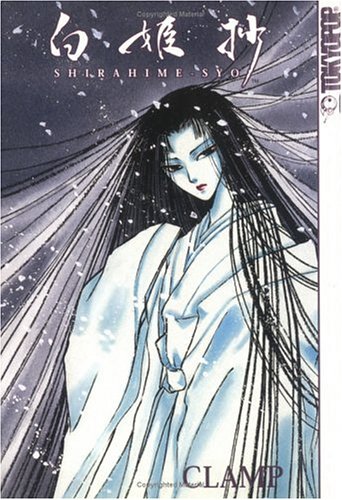
shirahime-syoPull up a chair and pour yourself a strong cup of coffee–today’s super-sized post rounds up the best news stories, manga reviews, and personal essays from around the web!

VIZ is reissuing two CLAMP titles from the Tokyopop catalog: Duklyon: CLAMP School Defenders and Shirahime-Syo: Snow Goddess. As with VIZ’s other Tokyopop license rescues, Duklyon and Shirahime-Syo will be digital-only releases.

Sean Gaffney reports on the latest licensing news from Seven Seas and Yen Press, from light novels to 4-koma novelties such as Merman in a Tub. 

Over at Organization Anti-Social Geniuses, Justin Stroman interviews former Tokyopop editor Lillian Diaz-Pryzbyl about her experiences in the manga industry.

Manga scholar Ryan Holmberg posts a lengthy essay on Osamu Tezuka’s Manga Classroom, a how-to series that appeared in Manga Shonen from 1952 to 1954.

Unofficial Hatsune Mix tops this week’s New York Times Manga Bestseller list, followed by the first volume of Assassination Classroom and the second volume of Attack on Titan: No Regrets.

What’s arriving in comic book stores this week? The Manga Bookshelf gang lists the good, the bad, and the ho-hum.

Erica Friedman shares the latest yuri manga news at Okazu.

Khursten Santos has compiled a handy list of “the most dangerous BL titles of 2015,” complete with charts, cover art, and analysis.

Charles Pulliam-Moore explores the world of bara, manga by and for gay men.

In case you missed it: Chris Randle interviews translator Anne Ishii about her experience working on the new anthology Massive: Gay Erotic Manga and the Men Who Make It.

Using Tokyo Ghoul as a jumping-off point, Tony Yao explores Japanese fans’ changing taste in manga.

Wondering what josei fans are reading in Japan? Heart of Manga explores the current issue of Cookie magazine, from Rin Saito’s Back Alley Animal Clinic to Miho Obana’s Honey Bitter.

On Wednesday, January 14th, Kodansha Comics USA will be holding a special event at the midtown Manhattan Kinokuniya. Expect licensing announcements, manga giveaways, and Q&A with the Kodansha editorial staff.

Manga n00b Christina Negroni files a report on her visit to the Kyoto Manga Museum. While some of her reactions are stereotypical–who knew there was smutty manga?–her discussion of the museum’s collection is worth a read.

News from Japan: As part of its efforts to promote the Kindle platform in Japan, Amazon just launched a new service that gives customers free access to manga magazines via smart phones, tablets, and laptops. Kodansha is also getting into the e-manga game with simultaneous digital and print editions of Monthly Shonen Magazine, Weekly Shonen Magazine, and Young Magazine.

When asked, Which manga series would you most like to see end this year?, Japanese fans overwhelmingly cited Kochira Katsushika-ku Kamearikouen-mae Hashutsujo, which began serialization in 1976, and Detective Conan (a.k.a. Case Closed), which began serialization in 1994. And speaking of final volumes, the following series will be posting their last chapters in 2015: Ai Morinaga’s Kirara no Hoshi, which currently runs in Bessatsu Friend; Ryoichi Ikegami’s Tenshi wa Maiorita, which currently runs in Weekly Manga Times; Mako Kamao’s Ange Verge Linkage, which currently runs in Dragon Age; and Tsutomu Mutsuki’s Is This Girl for Real?!, which currently runs in Comic High!

Reviews: Shaenon Garrity devotes the latest House of 1000 Manga column to Massive: Gay Erotic Manga and the Men Who Make It. Here at Manga Bookshelf, Michelle Smith, Anna N., and Sean Gaffney offer pithy assessments of D-Frag!, Knights of Sidonia, and other recent releases.

Ken H. on vol. 2 of Ajin: Demi-Human (Sequential Ink)
Rebecca Silverman on vol. 1 of Ani-Imo (ANN)
Leroy Douresseaux on vol. 1 of Assassination Classroom (Comic Book Bin)
Rebecca Silverman on vol. 1 of Assassination Classroom (ANN)
Julia Smith on vol. 2 of Black Rose Alice (The Fandom Post)
Matthew Warner on vol. 12 of Blue Exorcist (The Fandom Post)
Chris Kirby on vol. 10 of Bunny Drop (The Fandom Post)
Leroy Douresseaux on vol. 14 of Dengeki Daisy (Comic Book Bin)
Sean Gaffney on vol. 1 of Drug & Drop (A Case Suitable for Treatment)
Kate O’Neil on Garden of Words (The Fandom Post)
Kory Cerjak on vol. 2 of Honey Blood (The Fandom Post)
Katie Skelly on In Clothes Called Fat (The Comics Journal)
Joseph Luster on vol. 12 of Knights of Sidonia (Otaku USA)
Sean Gaffney on Legal Drug Omnibus (A Case Suitable for Treatment)
Rebecca Silverman on vol. 1 of Love at Fourteen (ANN)
Kathryn Hemmann on Marshmallow Bungaku Girl (Contemporary Japanese Literature)
Leroy Douresseaux on vol. 1 of Master Keaton (Comic Book Bin)
Laura on vol. 1 of Meteor Prince (Heart of Manga)
Sean Gaffney on vol. 1 of Meteor Prince (A Case Suitable for Treatment)
Johanna Draper Carlson on vols. 1-2 of Monster: Perfect Edition (Manga Worth Reading)
Ash Brown on More of You and Other Stories (Experiments in Manga)
Matthew Warner on vol. 6 of Nisekoi: False Love (The Fandom Post)
Ken H. on vol. 1 of Norigami (Sequential Ink)
Jessica Chautin on vol. 1 of Phantom Thief Jeanne (No Flying No Tights)
Johanna Draper Carlson on vol. 1 of Prophecy (Manga Worth Reading)
Joseph Luster on vol. 1 of Prophecy (Otaku USA)
Rebecca Silverman on vol. 1 of Prophecy (ANN)
Erica Friedman on vol. 16 of Rakuen Le Paradis (Okazu)
Julia Smith on vol. 1 of Resident Evil: The Marwha Desire (The Fandom Post)
Matthew Warner on vol. 16 of Rin-ne (The Fandom Post)
Chris Kirby on vol. 21 of Toriko (The Fandom Post)
Megan R. on Tsubasa: Reservoir Chronicles (The Manga Test Drive)
Ash Brown on vol. 5 of What Did You Eat Yesterday? (Experiments in Manga)
Lori Henderson on vol. 1 of xxxHolic Rei (Manga Xanadu)

Filed Under: MANGABLOG

  • « Go to Previous Page
  • Page 1
  • Interim pages omitted …
  • Page 565
  • Page 566
  • Page 567
  • Page 568
  • Page 569
  • Interim pages omitted …
  • Page 1049
  • Go to Next Page »
 | Log in
Copyright © 2010 Manga Bookshelf | Powered by WordPress & the Genesis Framework