• Skip to primary navigation
  • Skip to main content
  • Skip to primary sidebar
  • Home
  • About Us
    • Privacy Policy
    • Comment Policy
    • Disclosures & Disclaimers
  • Resources
    • Links, Essays & Articles
    • Fandomology!
    • CLAMP Directory
    • BlogRoll
  • Features & Columns
    • 3 Things Thursday
    • Adventures in the Key of Shoujo
    • Bit & Blips (game reviews)
    • BL BOOKRACK
    • Bookshelf Briefs
    • Bringing the Drama
    • Comic Conversion
    • Fanservice Friday
    • Going Digital
    • It Came From the Sinosphere
    • License This!
    • Magazine no Mori
    • My Week in Manga
    • OFF THE SHELF
    • Not By Manga Alone
    • PICK OF THE WEEK
    • Subtitles & Sensibility
    • Weekly Shonen Jump Recaps
  • Manga Moveable Feast
    • MMF Full Archive
    • Yun Kouga
    • CLAMP
    • Shojo Beat
    • Osamu Tezuka
    • Sailor Moon
    • Fruits Basket
    • Takehiko Inoue
    • Wild Adapter
    • One Piece
    • After School Nightmare
    • Karakuri Odette
    • Paradise Kiss
    • The Color Trilogy
    • To Terra…
    • Sexy Voice & Robo
  • Browse by Author
    • Sean Gaffney
    • Anna Neatrour
    • Michelle Smith
    • Katherine Dacey
    • MJ
    • Brigid Alverson
    • Travis Anderson
    • Phillip Anthony
    • Derek Bown
    • Jaci Dahlvang
    • Angela Eastman
    • Erica Friedman
    • Sara K.
    • Megan Purdy
    • Emily Snodgrass
    • Nancy Thistlethwaite
    • Eva Volin
    • David Welsh
  • MB Blogs
    • A Case Suitable For Treatment
    • Experiments in Manga
    • MangaBlog
    • The Manga Critic
    • Manga Report
    • Soliloquy in Blue
    • Manga Curmudgeon (archive)

Manga Bookshelf

Discussion, Resources, Roundtables, & Reviews

Blog

Bookshelf Briefs 4/14/15

April 14, 2015 by Sean Gaffney, Michelle Smith and Anna N Leave a Comment

This week, Sean, Michelle, & Anna look at recent releases from Seven Seas, Yen Press, and Viz Media.

arpeggio4Arpeggio of Blue Steel, Vol. 4 | By Ark Performance | Seven Seas – A step down from the previous volumes, mostly as we take a brief break from the thrilling action scenes to focus on a) a naval captain having erotic dreams about a 17-year-old girl, and b) the fetishization of Takao, who’s even using phrases like “I’ll let you see my engine’. Thankfully, the majority of the volume remains excellent. In particular, the odd friendship between Haruna and Makie, as the former realizes that they have far more in common than you’d expect. Meanwhile, we see something happen to Gunzou that we hadn’t expected – he’s defeated, and it doesn’t sit well with him at all. Oh, yes, and is his childhood friend not quite dead? Despite the fanservice, still very recommended. – Sean Gaffney

foodwars5Food Wars!: Shokugeki no Soma, Vol. 5 | By Yuto Tsukuda and Shun Saeki | Viz Media – Tempted as I am to have this review simply say ‘Note: Food Wars! is a cooking manga’, I will add that this is quite a strong volume. We see Soma learn the value of TPO (Time, Place, Occasion) in his cooking and survive the hotel contest. We see him return to his old restaurant and get help from his childhood friend (remember her? from Chapter 1?) and Ikumi to take down a fast-food chain. And perhaps most importantly, we see Megumi Tadoroko: Ping Pong Goddess. It does sound as if we’re going to head into a longer arc starting with the next volume, though, complete with a new arrogant jerk for Soma to take down. All this, and Erina was in it as well. Remember her? The supposed heroine? – Sean Gaffney

Food Wars!: Shokugeki no Soma, Vol. 5 | By Yuto Tsukuda and Shun Saeki | Viz Media – It’s perhaps the highest compliment I can give a series to say, “I could happily marathon fifty volumes of this series,” and that is precisely how I am feeling about Food Wars!. While I liked the chapters in which Soma helped his hometown neighborhood market compete with a fried-chicken chain, what I liked best was the conclusion to the intense cooking camp, which saw timid Megumi achieving greater confidence, and actually performing better than Soma in a grueling challenge. Yes, we saw him rise to the occasion and pull out an impressive win, but I liked that he easily admitted that he’d made a mistake and was determined to learn from it. And then he reflected that he was glad he’d come to culinary school after all. You guys, the cock protagonist is evolving! This is hitting my sports manga buttons, big time, and I love it. – Michelle Smith

vampire2He’s My Only Vampire, Vol. 2 | By Aya Shouoto | Yen Press- As this series is coming out concurrently with Shouoto’s Kiss of the Rose Princess, I am unable to resist comparing them. I’d have to say that, despite my vampire fatigue, this one is far superior. It’s a later effort from Shouoto—a bit darker (though the tone veers a bit lighter in this second volume), more mature (earning an OT rating), and better plotted, with several story threads in play from the start. It does still seem to be shaping up to be a male harem sort of series, but the introductions of new guys are better paced. Too, Shouoto seems to have developed a better sense for comedy, and I encountered no jarring goofy gags disrupting dramatic moments. Okay, yes, there are some standard shoujo tropes, and Aki’s possessiveness of Kana is plenty creepy, but there’s enough about this series to recommend it. Consider me pleasantly surprised. – Michelle Smith

mylovestory4My Love Story!!Vol. 4 | By Kazune Kawahara and Aruko – Every time I pick up this manga, I’m reminded that intense soap opera plots and meanness aren’t necessary ingredients for a captivating shoujo manga. Ai comes back home with Hayato, a friend from school who is determined to learn the identity of the Takeo Goda that she has a crush on. Hayato then encourages her to confess her feelings to Takeo, so she will get some closure. Takeo and Yamato’s relationship is too strong for any attempts at breaking them up, and they are both too naive to pick up on the undercurrents of emotion surrounding them. Later, there are more problems when Takeo’s assumption that he’s unpopular turn out not to be true. There’s something that is just so sweet about the unlikely love story portrayed in this manga, and the humor contrasted with the bits of drama that only serve to make Takeo and Yamato more and more in love with each other ensures that My Love Story!! makes me smile whenever I read a volume. – Anna N

skipbeat34Skip Beat!, Vol. 34 | By Yoshiki Nakamura | Viz Media – Lory’s Love Me group isn’t there to help his wannabe actresses find true love, it’s there to help them realize that they can’t simply shut off that part of themselves and expect their acting to reach the next level. As a result, his confrontation with Kyoko about her love for Ren feels more like a catharsis than anything else, and it’s beautifully done. Of course, his plotting and scheming is about to be taken down by one thing he is unaware of, which is the past that Kyoko has with “Corn”. While I have some issues with Ren taking advantage of her naivete about fairies to keep his identity a secret, this can’t help but be utterly adorable – or should I say corny? Still top-tier shoujo. – Sean Gaffney

Filed Under: Bookshelf Briefs

One Piece, Vol. 74

April 14, 2015 by Sean Gaffney

By Eiichiro Oda. Released in Japan by Shueisha, serialization ongoing in the magazine Weekly Shonen Jump. Released in North America by Viz.

It has to be said, Oda is perfectly fine with repeating himself provided that it makes a good story. And as long as we’re still highly entertained, I think that’s fine. Certainly the Usopp sections of this volume were my favorite part, even if their basic shape felt a little familiar. We see Usopp in over his head, talking about how he’s a hero while having no idea what to do. We see him attempting to run away, only to return because of his guilty conscience. and we see his “victory”, as it’s a truly grotesque face that makes miniboss Sugar pass out and save the day – not unlike what happened with Perona in Thriller Bark. But of course this is how Usopp grows stronger, and I expect big things from him soon. He’s not allowed to start beating up bad guys or anything, due to Oda’s desire to always have that basic ‘type’ on the crew, so you need moments like this.

op74

Meanwhile, you absolutely need Sugar to pass out, because the danger has been ramped up as Robin was turned into a toy. It actually happens so casually amidst the chaos that it’s a surprise when we see her Raggedy Anne body, and we see her desperation as she realizes that her fate is totally in Usopp’s hands now, even if he doesn’t remember her. The concept of the toys in general, and who they used to be, is a grotesque sort of horror even for Oda, and it’s almost a relief when we finally learn what we’ve suspected for some time now, which is that the Tin Soldier who’s tried to protect Rebecca is in fact her father. As I said, the beats may be similar to other storylines, but they’re good beats.

On the lighter side, Oda has occasionally done mild shout-outs to other Jump artists in the past – I’m thinking of the big giant ‘shock faces’ he’s used from Enel on down, which are a straight rip of Bobobo-bo Bo-bobo – and so I have to think that the minor villain whose minions go on about him being too hardboiled is a reference to Gintama, which sadly I think most readers will miss given its cancellation here in North America. Other than that, though, there’s not a lot of room for humor in this volume. Things are turning even more deadly than before, and our mystery savior who’s helping Luffy by taking his place in the arena can’t even stop to reveal who he really is (we all know who he really is, but let me keep up the pretense.)

This is not a perfect volume – Scarlet’s backstory was rather sexist, something Oda’s at least made attempts to avoid in the past, even though he’s been backsliding a lot lately. And of course, being in the middle of 11 chapters that are just ‘a giant fight happens’, the plot moves forward only incrementally. Still, now that Usopp has scared the bejabbers out of Sugar, we should start to see things get cleared up. Unless of course it leads to even wider chaos. But this is One Piece, what are the chances of that happening?

Filed Under: REVIEWS

My Week in Manga: April 6-April 12, 2015

April 13, 2015 by Ash Brown

My News and Reviews

I posted two reviews last week at Experiments in Manga that featured some of Kodansha Comics’ newest series: Masayuki Ishikawa’s Maria the Virgin Witch, Volume 1, released back in February, and Naoshi Arakawa’s Your Lie in April, Volume 1, which will be released later this month. The main reason I picked up Maria the Virgin Witch was because Ishikawa was the creator of Moyasimon. I really wasn’t expecting to like it as much as I did, but now I’m very interested in reading the rest of the series. Your Lie in April caught my attention because it’s a music manga. It has the potential to become rather melodramatic, but I did enjoy the first volume and plan on reading more.

Last week also saw the release of Gamon Sakurai’s Ajin: Demi-Human, Volume 4 from Vertical. I’m actually quoted on the back cover, a blurb taken from my review of the first volume. This is all very exciting, although my legacy will now probably be that of an ignorant reviewer who spouts nonsense about production values and the quality of paper. Although I thought it looked nice, it turns out Ajin is actually printed on one of the cheaper, thinner stocks used by Vertical. Anyway. Lesson learned! I also discovered that a much more flattering quote of mine from a quick take last year was used for the final volume of Tetsuya Tsutsui’s Prophecy, except that it was credited to Manga Bookshelf. So it goes!

Elsewhere online, Lori of Manga Xanadu has recently been putting together some interesting lists of manga. A few weeks ago she featured sewing and fashion manga and last week focused on manga which include books with great power. Organization of Anti-Social Geniuses posted the transcription of the panel with Abigail Blackman on manga editing, lettering, and Japanese nuance. from the Castle Point Anime Con. Geeks OUT! has an exclusive interview with Jiraiya (one of the creators featured in the Massive gay manga anthology) from his recent North American tour. And Zero Comprehension has a brief guide to the official releases of the Golgo 13 manga in English.

In licensing-ish news, Digital Manga has launched another Tezuka Kickstarter for Clockwork Apple and is making plans for its next yaoi Kickstarter. Unrelated, there’s also a Kickstarter project for an original-English boys’ love anthology that looks quite good—Boy, I Love You. Viz Media has licensed the Yo-Kai Watch manga series for its Perfect Square imprint. I don’t often mention anime licenses, but I was very excited to learn that Discotek Media will be releasing Library Wars and Dororo. Finally, Sparkler Monthly has added the reboot of Jennifer Doyle’s excellent webcomic Knights-Errant. (Also, the most recent Sparkler Podcast talks about josei manga and the differences between the Japanese manga industry and the North American comics industry, among other topics.)

Quick Takes

Genshiken: Second Season, Volume 4Genshiken: Second Season, Volumes 4-6 by Shimoku Kio. For some reason, I don’t find the second season of Genshiken to be as engaging as the original manga series. I haven’t quite been able to identify why yet, though I suspect it may be because most of the newer characters haven’t seen much development in the recent volumes and the characters from the first “season” feel like they’re invading the new series. I think Genshiken works best for me with an ensemble cast. While there are still plenty of characters in the manga as well as regular plot tangents, lately the story has primarily focused on just a few. Admittedly, the two characters who are getting the most attention, namely Madarame and Hato, happen to be my favorites in the series. Hato in particular is marvelous. He’s going through some significant personal turmoil over his cross-dressing and love of boys’ love, which has a tremendous impact on the rest of the story and characters. And apparently just about everyone is in love with Madarame. But as interesting as the increasingly convoluted relationships in the series are, at this point what I really want is to know more about the other club members.

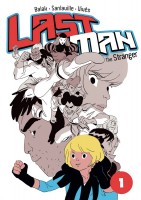
Last Man, Volume 1: The StrangerLast Man, Volume 1: The Stranger by Bastien Vivès, Michael Sanlaville, and Balak. Despite France being one of the world powerhouses of comics creation, relatively few French comics have been translated into English, especially when compared to the number of manga available. Last Man, which is in part inspired and heavily influenced by shōnen battle manga, has been very well received in France. And now, thanks to First Second, it’s available in English. (I believe Last Man may actually the first comic in translation that has been released by First Second.) Adrian is a young boy who has been training hard for his first fighting tournament, but when his teammate gets sick, it looks like he won’t be able to compete. Enter Richard, the titular stranger and a physically imposing man, who also needs a partner in order to compete. They make a peculiar pair: Adrian hasn’t quite mastered the magic and special techniques of his martial style, and Richard relies completely on his fists and strength. He also doesn’t appear to actually know the rules of the tournament, which poses a bit of a problem. So far, Last Man is delightfully engaging; I’m really looking forward to reading more of the series.

Missing RoadMissing Road by Shushushu Sakurai. Before quietly disappearing, DramaQueen released two final manga by Sakurai, Junk! and Missing Road. What particularly caught my attention about these two manga was the fact that they were science fiction—a genre that I’ve rarely seen in translated boys’ love manga. Missing Road specifically was described as “an epic sci-fi adventure of love, loss, and redemption.” Sadly, although some of Sakurai’s ideas certainly had great potential and I did like the setting, Missing Road doesn’t quite live up to that promise. The manga would have been more successful from a narrative standpoint if Sakurai could have expanded the story over the course of multiple volumes. As it is, she tries to cover too much ground in a single installment and many of the manga’s elements feel underdeveloped or truncated as a result. There are important close and intimate relationships, but Missing Road isn’t really a love story and is instead more about brutal war and revenge. Most of the sex is of a violent nature and rape occurs on several different occasions. The English-language edition was actually censored (with permission from Sakurai) for fear of United States child pornography laws.

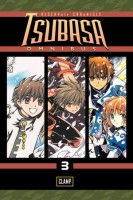
Tsubasa: Reservoir Chronicle, Omnibus 3Tsubasa: Reservoir Chronicle, Omnibus 3 by CLAMP. With this omnibus, I have entered into territory that I previously didn’t have the opportunity to read before Tsubasa originally went out-of-print in English. At this point, I’m still enjoying the series. It’s not always the most emotionally compelling manga (although admittedly it can sometimes be heart-wrenching), but Tsubasa is definitely a solid adventure tale. The manga’s premise allows CLAMP to very creative and develop world after world, each one different from the ones preceding and following it and each with its own challenges and dangers to be faced. Nods to other CLAMP manga and characters are still prevalent, and I assume this will likely be true for the entire series. This particular omnibus prominently features RG Veda, which I haven’t actually read, so I probably don’t appreciate the references as much as someone who has. It looks like the alternate version of Seishirō from Tokyo Babylon and X will be an important antagonist in Tsubasa as well. The series Tsubasa most directly crosses over with is xxxHolic. This connection actually works very well for Tsubasa, but I find it somewhat distracting when reading xxxHolic.

Filed Under: FEATURES, My Week in Manga Tagged With: Balak, Bastien Vivès, clamp, comics, Genshiken, Last Man, manga, Michael Sanlaville, Shimoku Kio, Shushushu Sakurai, tsubasa

Accel World: The Twilight Marauder

April 12, 2015 by Sean Gaffney

By Reki Kawahara and Hima. Released in Japan by ASCII Mediaworks. Released in North America by Yen Press.

This was a good volume of Accel World, though I think I enjoyed it a bit less than the other two. It can be exhausting to read for extended periods. Kirito may rub people the wrong way, but at least in game he’s fairly matter of fact and confident in himself. Haruyuki’s issues – his self-hatred, the bullying he’s endured and can’t reveal, his desperation to keep his friends safe and keep their friendship, and his tortured love for Kuroyukihime, who he still holds up on a giant pedestal – permeate his narrative voice, and while that’s excellent in a realistic way – are visceral and explain the actions he takes, and you understand why he despairs or does seemingly stupid things. But as escapism, you’re left wanting a bit. Particularly as this book has a cliffhanger.

aw3

It doesn’t help that Kuroyukihime is conveniently absent from this volume, off to Okinawa and sending Haruyuki adorable videos of herself in a bikini. (I do like that her friends whipped off her hoodie to reveal the bikini, showing that they seem to be supporting the love between the two of them far more than the rest of the school – or indeed Haruyuki himself – might.) So the new threat is dealt with by our trio of childhood friends, one of whom is brand new to Brain Burst, and given this is volume one of a two-volume set (something that Kawahara is very fond of, as SAO fans are aware), they fail rather miserably. (The cliffhanger involves the seeming betrayal by one of said friends, but I suspect that absolutely no one is actually fooled by this. (checks TV Tropes page) No, wait they were. Sigh.)

As for the new characters, Nomi will hopefully gain more depth in the fourth book, as he’s very much the sneering, posturing villain here, determined to bully Haruyuki (who is very quick to accept this, as if nothing else it must feel familiar) and keep Chiyuri as a “pet” (more casual sexism, though given Nomi is about 11 years old at least there aren’t any rape threats like in SAO.) He’s there for readers to hate and root for our heroes to destroy, that’s about all. I liked Sky Raker a lot better, who gets to be the one who trains and inspires Haruyuki in Kuroyukihime’s absence, but who also seems to have an intense backstory involving trying to rise above a disability – and how it can fail despite all your best efforts. I’d like to see that scene someday.

Of course, much of her story is there to give inspiration to Haruyuki – he’s the hero, and that means that most of what goes on is for his benefit. This can be tragic, like with everything that happens with Nomi, but it can also be hilarious, as with the return of Ash Roller, who will not stand for this meek, uncool and despairing Silver Crow, and proceeds to take him on the bike ride from hell just to pep him up. I suspect I’ll enjoy this volume more, though, once the next one comes out and completes it.

(Also, can we get an embargo on any story involving a boy trapped in the girls’ shower? Even if it’s for dramatic reasons?)

Filed Under: REVIEWS

Vinland Saga Is Back; Licensing News Galore

April 10, 2015 by Katherine Dacey

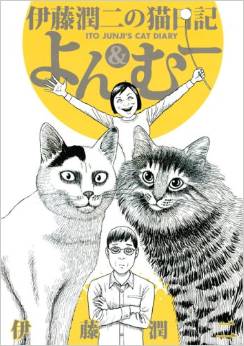
cat_diaryIf you’ve been anxiously waiting to learn the fate of Vinland Saga, we have good news for you: Kodansha confirmed that the critically lauded series would be returning from hiatus in September. Kodansha also unveiled an interesting line-up of new titles that includes Devil Survivor and Ninja Slayer Kills. TCJ regular Joe McCulloch explains why Kodansha’s decision to license Cat Diary: Yon & Mu is especially awesome. (Hint: the man on the cover is Junji Ito.)

Last week, Yen Press made news at Sakura-Con with five new manga acquisitions: Sakura no Himegoto, Dragon’s Rioting, Monthly Girls’ Nozaki-Kun, Yowamushi Pedal, and Aldnoah Zero Season One. Yen also revealed that it would be offering digital editions of eight Square Enix titles that have never been released in English.

VIZ has been quietly adding more Tokyopop titles to its digital line-up. New this month are Red Hot Chili Samurai and Grenadier, both of which will be available on April 21st. VIZ also announced a new print acquisition, Noriyuki Konishi’s Yokai Watch, a kid-friendly series that’s currently running in Coro Coro.

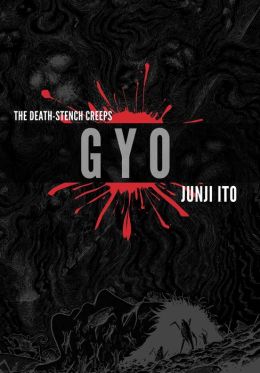
GyoBrigid rounded up some new April manga releases at the Barnes & Noble Sci-Fi/Fantasy blog; they include the last volume of Blade of the Immortal, the first volume of Your Lie in April, and a nice new one-volume edition of Junji Ito’s Gyo.

And speaking of new releases, the Manga Bookshelf gang looks at next week’s arrivals, from Kuroneko to My Neighbor Seki.

Another week, another Kickstarter campaign: DMP began fundraising for a print edition of Osamu Tezuka’s Clockwork Apple, a collection of horror, fantasy, and sci-fi stories.

In his latest House of 1000 Manga column, Jason Thompson sings the praises of Kazuhiko Shimamoto, author of the untranslated Blazing Transfer Student.

Justin Stroman interviews Dark Horse editor Brendan Wright about the forthcoming edition of Planetes, and Yen Press editor Abigail Blackman about the challenges of lettering, translating, and editing manga.

Are US publishers licensing less shojo manga? Johanna Draper Carlson investigates.

YaoiCon will be hosting prolific manga-ka Makoto Takeno, author of Yellow, Happy Boys, Blue Sheep Reverie, and A Murmur of the Heart.

The Nepali Times reports that young adults in Kathmandu are discovering manga, thanks to entrepreneurs such as Wataru Ram Shrestha, proprietor of Nepal’s first manga bookstore, and Shalini Rana, Kavin Shah, and Krishant Rana, founders of Nepal’s first manga magazine.

News from Japan: The latest volume of One Piece, volume 77, has a print run of fewer than 4 million copies for the first time in four years. Publisher Shueisha attributes the drop to the increased popularity of digital manga. Kodansha has announced the nominees for the 39th Annual Kodansha Awards; they include Knights of Sidonia, The 7 Deadly Sins, and Kiss Him, Not Me. Japanese newspaper The Christ Weekly is using manga to educate readers about Christian fundamentals.

If you ever thought Death Note would be improved with a few song-and-dance numbers, you’ll be happy to learn that a musical version of Tsugumi Oba and Takeshi Obata’s perennially popular manga debuted in Tokyo on April 6th.

Reviews: Ash Brown posts a thoughtful review of Your Lie in April, a new drama from Kodansha Comics, while Sean Gaffney gives us the low-down on another eagerly anticipated title, Yamada-Kun and the Seven Witches. The Manga Bookshelf gang offers a concise round-up of the latest volumes of Assassination Classroom, Dengeki Daisy, and UQ Holder!

Leroy Douresseaux on vol. 5 of Food Wars! Shokugeki no Soma (Comic Book Bin)
Kristin on vols. 4 and 5 of Gangsta (Comic Attack)
Lori Henderson on The Garden of Words (Manga Xanadu)
Jocelyn Allen on Henshin (Brain vs. Book)
Erica Friedman on vol. 5 of Himawari-san (Okazu)
Erica Friedman on vol. 2 of Kampfer (Okazu)
Sean Gaffney on vol. 1 of Let’s Dance a Waltz (A Case Suitable for Treatment)
Leroy Douresseaux on vol. 13 of Library Wars: Love & War (Comic Book Bin)
Alice Vernon on vol. 1 of Love at Fourteen (Girls Like Comics)
Johanna Draper Carlson on vol. 3 of Manga Dogs (Comics Worth Reading)
Ash Brown on vol. 1 of Maria the Virgin Witch (Experiments in Manga)
Sheena McNeil on vol. 18 of Oresama Teacher (Sequential Tart)
Rebecca Silverman on vol. 1 of Requiem of the Rose King (ANN)
Wolfen Moondaughter on vol. 17 of Rin-ne (Sequential Tart)
Megan R. on School Rumble (The Manga Test Drive)
Nick Smith on Seraphim: 266613336 Wings (ICv2)
Sarah on vol. 24 of Soul Eater (Nagareboshi Reviews)
Karen Maeda on vol. 5 of Terra Formars (Sequential Tart)
Tony Yao on Time Killers (Manga Therapy)
Khursten Santos on Yatamono (Otaku Champloo)
Anna N. on vol. 2 of Yukarism (Manga Report)

Filed Under: MANGABLOG

Your Lie in April, Vol. 1

April 10, 2015 by Ash Brown

YourLieApril1Creator: Naoshi Arakawa
U.S. publisher: Kodansha
ISBN: 9781632361714
Released: April 2015
Original release: 2011
Awards: Kodansha Manga Award

Your Lie in April is the first and so far only manga series by Naoshi Arakawa to have been released in English. Arakawa is still fairly early on in his career—Your Lie in April was only his third major work—but the series earned him a Kodansha Manga Award in 2013 for Best Shōnen Manga. The first volume of the eleven-book series was originally published in Japan in 2011. In English, the manga was released by Kodansha Comics in 2015. The entirety of Your Lie in April was adapted into an anime series between 2014 and 2015, which is how I first learned about the manga. My interest in the series primarily stems from the prominent role that music has to play in the manga. Music is something that is incredibly important to me and continues to be a major part of my life. Probably unsurprisingly, I tend to enjoy music manga. And so, I was particularly happy to receive an early copy of Your Lie in April from Kodansha for review.

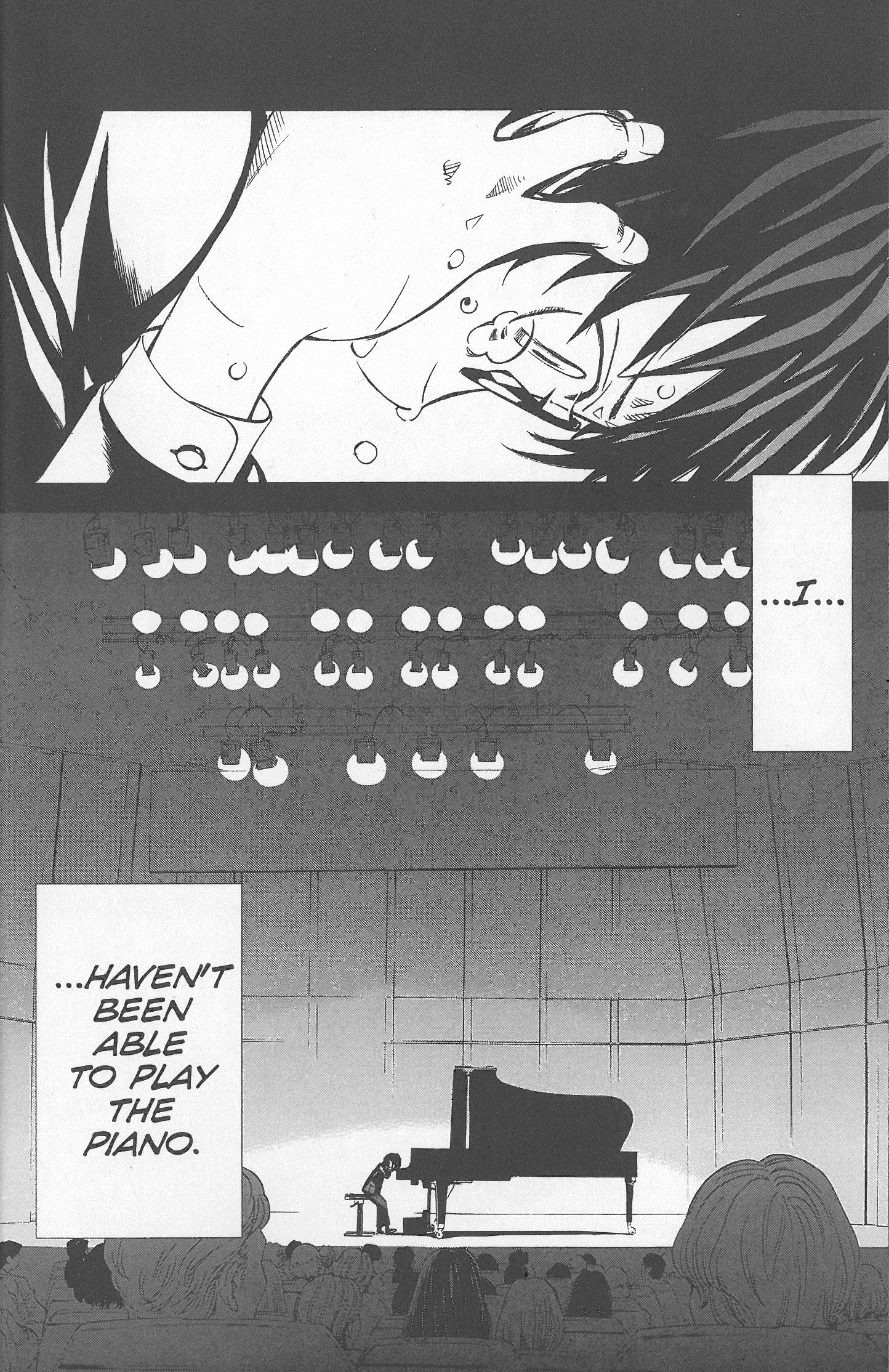
Kosei Arima was a child prodigy, admired for his skill and success as a pianist, winning competition after competition. But ever since his mother died and he had a breakdown in the middle of a performance on stage when he was eleven, he hasn’t been able to play the piano. Not for others and not even for himself. Piano was such an integral part of Kosei’s life that he seems to be somewhat lost without it and he hasn’t been able to completely let music go. Several years have passed since then, leaving Kosei a rather withdrawn and gloomy young man. But then he meets Kaori Miyazono, an extremely passionate violinist who attends the same middle school that he does. Kaori plays the way that she wants to play, disregarding traditional interpretations and technique to make the music her own. Though he is still reluctant and hesitant, watching Kaori’s enthusiastic, free-spirited performances has reignited something within Kosei and she and his friends are determined to see him play once again.

Your Lie in April, Volume 1, page 6A particular challenge faced by music manga like Your Lie in April is expressing sound in a visual medium. It takes more than simply throwing notes on the page to effectively convey the feeling of music in a comic. For the most part, Arakawa handles this aspect of the series quite well. The music itself isn’t heard, but the expressions and reactions of the listeners and musicians, the impact created by the music, can readily be seen. Perhaps the best example of this in Your Lie in April, Volume 1 is Kaori’s performance during a violin competition. The violinists before her are poised and fairly reserved in their playing, but Kaori uses her entire body to emote and express the music. This and the stunned faces of the audience members make it very clear that her invigorated style is drastically different and unexpected. But while music is obviously an important part of Your Lie in April, the real focus of both the artwork and the storytelling is on people’s experiences of that music.

Kosei’s relationship with music, and specifically with playing the piano, is a complicated one. He is struggling with intense psychological distress and it is revealed very early on in Your Lie in April that his mother physically, and very likely emotionally, abused him as well, trying to force her own dreams onto her son. Whether he is aware of it or not, Kosei’s feelings towards music and the piano are very much tied up with his feelings towards his mother. Underneath a relatively calm exterior is a turmoil of conflicting emotions that includes both love and hatred and even some fear. Deep down, Koesi does still seem to have the desire to continue playing the piano, though he denies it to himself and to others. It’s something that he will have to face head-on eventually, but Kaori’s influence threatens to make it something that he will have to deal with sooner rather than later, perhaps even before he’s really ready. I am very curious to see how Your Lie in April continues to develop and the steps Kosei may take to overcome his trauma.

Thank you to Kodansha for providing a copy of Your Lie in April, Volume 1 for review.

Filed Under: REVIEWS Tagged With: kodansha, Kodansha Comics, Kodansha Manga Award, manga, Naoshi Arakawa, Your Lie in April

Manga the Week of 4/15

April 9, 2015 by Sean Gaffney, Ash Brown, Anna N, Michelle Smith and MJ Leave a Comment

SEAN: Welcome to a wonderful week of manga here on Manga the Week of. For those of you who don’t like variety, there’s variety!

kuroneko

Dark Horse has the first volume of Oreimo spinoff Kuroneko, for those remaining fans who weren’t completely put off by the ending of the main series.

Does anyone remember Aquarion? Anyone? Anime, around 2005? Well, for those who yearned for a sequel in manga form, One Peace is giving us Aquarion Evol. It’s a Comic Gene title, so expect weirdness.

ASH: I like weirdness!

ANNA: I think I watched the first episode of the show and thought that there were too many orgasms when the robots combined.

SEAN: 12 Beast is a new Seven Seas series. It runs in Dragon Age. It’s from the creator of Monster Musume. It sounds radioactive to me, but I know others love this.

Gakuen Polizi is more up my alley, though I wish it was a bit less inconsequential. The 2nd and final volume is next week.

And if you don’t like ecchi fantasy or fluffy lesbians, well, there’s a third Magical Girl Apocalypse, which should at least give you gore.

The title The World’s Greatest First Love may not mean much to BL fans, but if I said it was Sekai-ichi Hatsukoi, I’m sure you’d know exactly the series I mean. SubLime has the long-awaited first volume.

MICHELLE: Ah, now this is one I’ve actually heard of!

ASH: As have I!

MJ: Count me in!

worlds1

SEAN: I loved My Neighbor Seki even more than I thought I would, and am delighted to see a 2nd volume next week from Vertical.

MICHELLE: I regret to say I haven’t gotten around to reading the first volume, but I definitely will one of these days!

ASH: You definitely should, My Neighbor Seki is absolutely delightful.

ANNA: This is on my list of things I need to read!

MJ: Mine, too!

SEAN: Case Closed still has more mysteries, and Shinich… sorry, Jimmy is still a little kid, even as we hit the 54th volume.

We’ve passed the halfway point in Deadman Wonderland, and Vol. 8 comes out from Viz next week.

And Itsuwaribito, a series that has a much longer run than I really expected, has Vol. 14.

Lastly, a new volume of Magi is always welcome. Next week we have Vol. 11.

MICHELLE: <3

ANNA: I have been stockpiling stray volumes of this here and there. One day I shall read them!

SEAN: And for those of you who don’t like manga… well, why are you reading this?

Filed Under: FEATURES, manga the week of

Let’s Dance a Waltz, Vol. 1

April 9, 2015 by Sean Gaffney

By Natsumi Ando. Released in Japan as “Waltz no Ojikan” by Kodansha, serialized in the magazine Nakayoshi. Released in North America by Kodansha Comics.

Natsumi Ando’s back again, this time with a shorter series – this is only three volumes long, I believe. Which is good, as I felt the pacing was very rapid for a shoujo manga like this – it would only make sense if it was going to be wrapping up fairly quickly. I’m not sure if this was deliberate or not – her previous series, Kitchen Princess and Arisa, were both double digits. But short doesn’t necessarily mean it’s a failure, and there’s much to like about Let’s Dance a Waltz, with its grumpy hero held back by an incident in his past, and a self-deprecating heroine with an unfortunate first name.

waltz1

First off, a word of warning: the moment I saw that our heroine, Hime, was overweight and a bit frumpy, I thought “she’s going to lose all the weight and be gorgeous by the end of this volume, isn’t she?” And sure enough, that’s exactly what happens. She too has a tragic backstory, as her mother, who was the one who named her (Hime means princess, something that gets hammered home quite a bit in this series) passed away from tragic backstory disease when she was just a little girl. (This is a common disease befalling young women in manga – young men tend to have dads disappear (the scum), not die off.) Still, the mother may have had good intentions, but it’s left Hime teased her entire life thanks to the wonderful world of Japanese schools, whose bullying is always important for character development.

Our hero, Tango (no, I’m not making these names up), is dealing with similar peer pressure problems, but from the opposite direction – he’s handsome and popular, and in accordance with his name actually is an amazing dancer. But he doesn’t dance competitively anymore due to a mistake he made in his childhood that haunts him, and prefers to be the class clown, breakdancing and avoiding any mention of the fact that his mother runs a dancing school (because dancing is not “cool”, and kids turn on cool kids who are now uncool faster than anyone except perhaps girls with the name ‘princess’. Tango can be quite the jerk through this volume, but we know he just needs his true love to make him straighten up.

Though there were a few times I was surprised through the first volume – secondary couple Yusei and Sumire, who have no issues whatsoever (possibly as they have standard Japanese first names) are dedicated to helping the two wannabe lovebirds rather than, say, getting jealous, which is what I was suspecting of Sumire when I first saw her – but for the most part this is a manga that runs on timeworn cliches. But this is fine – Ando is an expert at this sort of thing, and it’s nice to sit back and just let a skilled artist take you where she wants to go. At three volumes, this seems like exactly the right length for a sweet manga about a couple who can connect to each other though the wonders of ballroom dancing.

Filed Under: REVIEWS

Maria the Virgin Witch, Vol. 1

April 8, 2015 by Ash Brown

Maria the Virgin Witch, Volume 1Creator: Masayuki Ishikawa
U.S. publisher: Kodansha
ISBN: 9781632360809
Released: February 2015
Original release: 2010

I’ll admit, when I first heard about the manga series Maria the Virgin Witch, I was more than a little skeptical. I’m not particularly interested in witches, which seem to be nearly as common as vampires in translated manga these days, and the emphasis placed on the heroine’s virginity seemed like it could be a little suspect. But then I realized that Maria the Virgin Witch was by Masayuki Ishikawa, the creator of Moyasimon, a quirky manga about microbes and fermentation that I enjoyed immensely. (Sadly, only two volumes of Moyasimon were ever released in English.) If for no other reason, I wanted to give Maria the Virgin Witch a chance because of my love for Moyasimon. I’m very glad that I did; the first volume turned out to be a very promising and intriguing start to the short series. Maria the Virgin Witch, Volume 1 was initially published in Japan in 2010 while the English-language edition was released by Kodansha Comics in 2015.

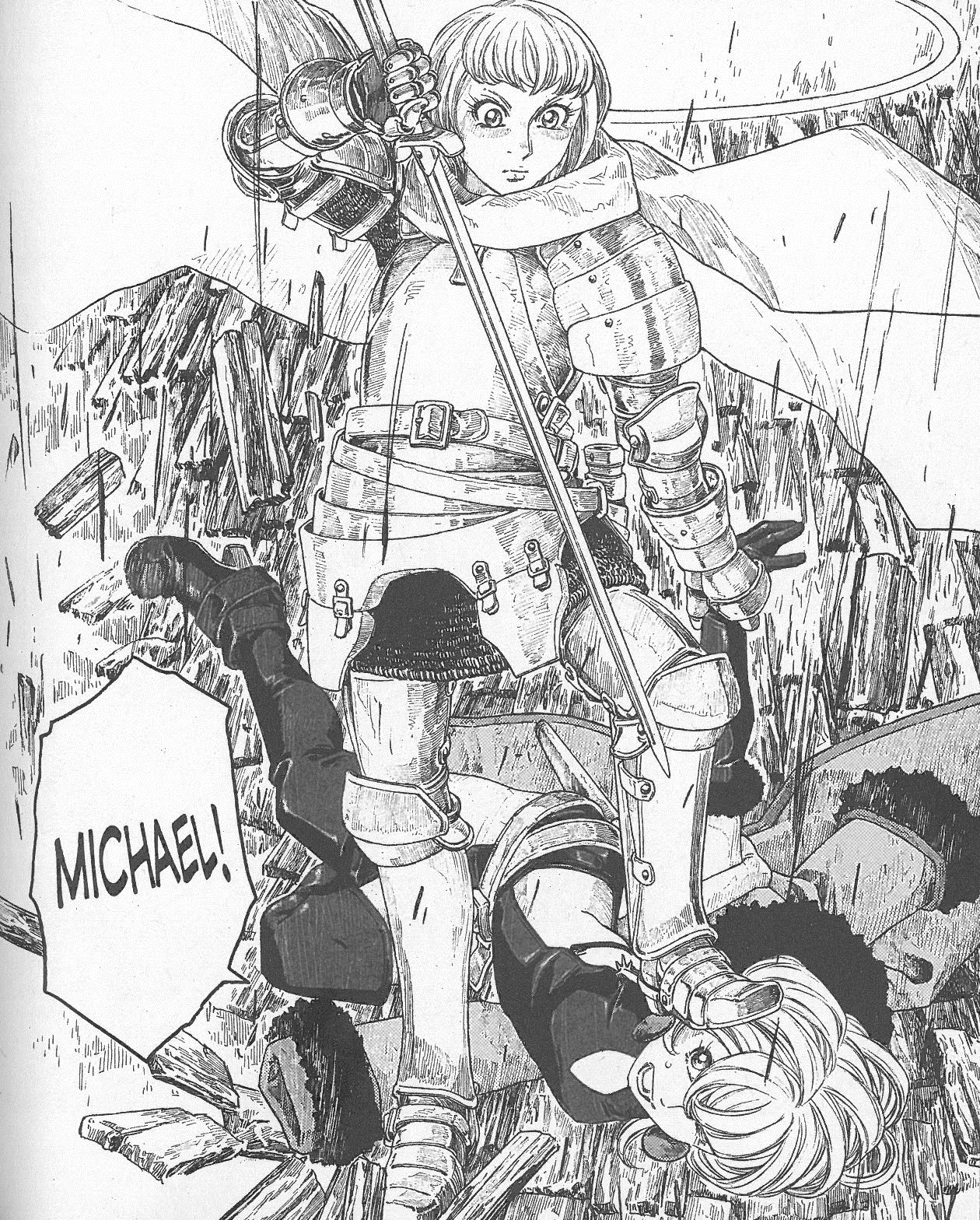
During the first half of the fifteenth century, England and France were still locked in the Hundred Years War, many of the battles being waged on French soil. Maria is a powerful but young witch living in France. She abhors the killing and senseless violence and so does what she can to disrupt the conflict and protect the villages and people who live near her woods. She has discovered one particularly effective method: by sending an owl familiar in the form of a succubus among the leaders of the armies on the eve of major battles, they often lose their will to fight or their interest in the impending confrontation. However, sometimes more direct action is required and Maria will summon great beasts to wreak havoc and chaos on the battlefield. But causing such a spectacle carries with it the danger of drawing the attention of Heaven and the risk of incurring the wrath of the Archangel Michael. There is a proper order to the world, and Maria poses a threat to it.

Maria the Virgin Witch, Volume 1, page 118 Maria’s outlook on life (as well as her and her familiars’ character designs) does tend to be more contemporary than the rest of the manga’s setting, but I really like her as a character. She has strong convictions, and she is prepared to act on them, doing what she can to right the injustices she sees in the world. Michael and others criticize her for her interference and audacity; Maria is very forthright with her feelings and opinions. She is young, and perhaps a little naive, but I admire her earnestness. Despite her anger and frustration, she has yet to become embittered by the world.  Maria honestly and wholeheartedly cares about people, especially those who are powerless or taken advantage of. Though some of her methods might not be considered to be particularly respectable by most, she and the people she protects believe her to be a force for good. Even so, Maria is considered to be a heretic by the Catholic Church, an institution for which she quite obviously holds no love.

Although Maria the Virgin Witch explores some fairly serious subjects—religion, morality, power dynamics, sexuality—the manga also includes a good deal of humor. Much of the comedy has to do with sex in one way or another, but some of it simply relies of the quirkiness of the characters. Maria, for example, is old enough to be curious about sex, but is still completely embarrassed at even the mere thought of seeing a man naked. As a result Priapus, the incubus she creates, is rather indistinct where it counts and is generally just put in charge of cooking and running errands. The first volume of Maria the Virgin Witch can be a bit crass at times (personally, I could have done without the repeated “cry for me like a little whore”-type comments), but overall the manga is a surprisingly layered work. The more I think about it, the more it grows on me, and the more I want to read the rest of the series. So far, Maria the Virgin Witch is a very interesting mix of historical fiction and fantasy that can be both entertaining and sobering.

Filed Under: REVIEWS Tagged With: kodansha, Kodansha Comics, manga, Maria the Virgin Witch, Masayuki Ishikawa

Cocoa Fujiwara RIP

April 8, 2015 by Brigid Alverson

Fujiwara_INUxBOKUv6_TP

Cocoa Fujiwara, the creator of Inu x Boku SS, has died. Although she was only 31 years old, she had a number of manga credits: The short story “Calling,” which was published when she was just 15, Stray Doll, Watashi no Ookami-san, dear, Ojousama to Youkai Shitsuji, Inu x Boku SS, and her current series, Katsute Mahō Shōjo to Aku wa Tekitai Shiteita, which ran in Young Gangan, as did Inu x Boku SS. According to her Wikipedia page, she was friends with fellow Square Enix artists Jun Mochizuki (Pandora Hearts) and Yana Toboso (Black Butler).

Filed Under: MANGABLOG

  • « Go to Previous Page
  • Page 1
  • Interim pages omitted …
  • Page 550
  • Page 551
  • Page 552
  • Page 553
  • Page 554
  • Interim pages omitted …
  • Page 1049
  • Go to Next Page »
 | Log in
Copyright © 2010 Manga Bookshelf | Powered by WordPress & the Genesis Framework