• Skip to primary navigation
  • Skip to main content
  • Skip to primary sidebar
  • Home
  • About Us
    • Privacy Policy
    • Comment Policy
    • Disclosures & Disclaimers
  • Resources
    • Links, Essays & Articles
    • Fandomology!
    • CLAMP Directory
    • BlogRoll
  • Features & Columns
    • 3 Things Thursday
    • Adventures in the Key of Shoujo
    • Bit & Blips (game reviews)
    • BL BOOKRACK
    • Bookshelf Briefs
    • Bringing the Drama
    • Comic Conversion
    • Fanservice Friday
    • Going Digital
    • It Came From the Sinosphere
    • License This!
    • Magazine no Mori
    • My Week in Manga
    • OFF THE SHELF
    • Not By Manga Alone
    • PICK OF THE WEEK
    • Subtitles & Sensibility
    • Weekly Shonen Jump Recaps
  • Manga Moveable Feast
    • MMF Full Archive
    • Yun Kouga
    • CLAMP
    • Shojo Beat
    • Osamu Tezuka
    • Sailor Moon
    • Fruits Basket
    • Takehiko Inoue
    • Wild Adapter
    • One Piece
    • After School Nightmare
    • Karakuri Odette
    • Paradise Kiss
    • The Color Trilogy
    • To Terra…
    • Sexy Voice & Robo
  • Browse by Author
    • Sean Gaffney
    • Anna Neatrour
    • Michelle Smith
    • Katherine Dacey
    • MJ
    • Brigid Alverson
    • Travis Anderson
    • Phillip Anthony
    • Derek Bown
    • Jaci Dahlvang
    • Angela Eastman
    • Erica Friedman
    • Sara K.
    • Megan Purdy
    • Emily Snodgrass
    • Nancy Thistlethwaite
    • Eva Volin
    • David Welsh
  • MB Blogs
    • A Case Suitable For Treatment
    • Experiments in Manga
    • MangaBlog
    • The Manga Critic
    • Manga Report
    • Soliloquy in Blue
    • Manga Curmudgeon (archive)

Manga Bookshelf

Discussion, Resources, Roundtables, & Reviews

Blog

Bookshelf Briefs 5/26/15

May 26, 2015 by Sean Gaffney, Michelle Smith and Anna N 1 Comment

This week, we play catch-up, as Sean, Anna, & Michelle look at a slew of recent titles from Seven Seas, One Peace Books, Kodansha Comics, Yen Press, Dark Horse Comics, Vertical Comics, and Viz Media.

marchharerevolutionAlice in the Country of Clover: The March Hare’s Revolution | By QuinRose and Ryo Kazuki | Seven Seas – As you’d expect for a franchise with this many side-manga, there is a certain sameness that’s starting to crop up here. We see Alice realizing she’s falling in love yet reluctant to accept it, trying to come to terms with the violent ways of the Hatter Family, and occasionally yearning to go home and having nightmares about her sister Lorina, yet in the end she chooses to stay and accepts her love. The only difference here is in the male lead, so if you like Elliot, this book might interest you. But even then, I think My Fanatic Rabbit is a better book. At least it’s complete in one volume, and not padded out with extra stories. For completists only. – Sean Gaffney

aquarionevol1Aquarion Evol Vol. 1 | By Aogiri and Shoji Kawamori | One Peace Books – I watched the first episode of the Aquarion anime a long time ago, and didn’t particularly care for it, although I suppose with all the ecstatic expressions the pilots of combining robots were displaying, the franchise should get credit for making subtext text. This manga opens with Amata Sora, a boy with air elemental powers meeting Mikono Suzushiro, a girl whose previous response to growing up in a world filled with robot battles, elemental powers, and random kidnappings was to become a shut-in. Sora and Mikono end up in being caught up in a battle, and Sora forces the male and female Aquaria to merge to find their ultimate Aquarion form. Sora and Mikono end up in a gender segregated pilot training academy. The art for this volume was solid and the character designs were attractive, and the production values for the manga were also good. I think fans of the Aquarion franchise will enjoy this book, but at only 150 pages, this is a fairly slim volume. – Anna N

attack-juniorhigh-3Attack on Titan: Junior High, Vol. 3 | By Saki Nakagawa | Kodansha Comics – As we reach the third omnibus of this gag comic, both Saki Nakagawa and Ben Applegate are beginning to relax and stretch out a little. The author not only uses some of the later characters such as Kenny for humor value, but also adds references to the spinoffs, as Isabel and Furlan have major roles here. Meanwhile, the adaptation gets even broader, with nothing really sacred (there are a few lines here that don’t just border on filthy, they scamper right over it) and lots of insults to the entire main cast, particularly Eren. If you like Attack on Titan and worry this title may not take it seriously enough, stay far away. If you like a good belly laugh, pick it up. – Sean Gaffney

barakamon4Barakamon, Vol. 4 | By Satsuki Yoshino | Yen Press – Despite the fact that over half of this volume is ‘let’s watch Handa deal with small town life and get intensely frustrated or screw up’, he really is getting a lot better at this. Going computerless might be a good thing for him, as it allows him to focus more on his calligraphy – a focus he’s going to need, as he’s already starting to overthink things for the next competition. As for the rest of the cast, Naru is actually growing a bit as well, and is slightly less Yotsuba-like. And Tama continues to be the most awkward fujoshi ever. This is a nice, leisurely, relaxing read. It’s never the next thing out in the months it comes out, but it’s always worth picking up. Also, Handa not knowing how to use a rotary phone made me feel so, so old. – Sean Gaffney

devil1The Devil Is a Part-Timer!, Vol. 1 | By Satoshi Wagahara, Akio Hiiragi, and 029 (Oniku) | Yen Press – Let it never be said that I’m unwilling to occasionally wander outside of my comfort zone! The Devil Is a Part-Timer! is a thoroughly shounen comedy (think scenes of the female lead in the shower, boobs with “sproing” sound effects, etc.) with a fun premise: while fleeing a losing battle, the devil king lands in modern-day Tokyo. Now he’s working part-time at MgRonald’s, aiming to conquer the world by becoming a full-time employee. (“Before long, I will wield enormous powers, forcing massive armies to grovel before me!”) It’s not a bad start, and there are some mysteries to be explained going forward, but it’s just really not my thing. If only I could’ve found it funny—like I do the not-entirely-dissimilar Blood Lad—then maybe I’d be willing to continue, but as it is, I just can’t summon the desire. – Michelle Smith

littlemonster8My Little Monster, Vol. 8 | By Robico | Kodansha Comics – At long last, 7 volumes after a confession, Haru and Shizuku finally manage to deal with their own emotional issues and start to be an official couple. Of course, this doesn’t solve everything – for one, Yamaken confesses as well, and Shizuku has no idea how to deal with someone she doesn’t have romantic feelings for locing her. There’s also the start of a new year, which means the arrival of a new girl – Iyo, Yamaken’s little sister. Kodansha actually goes the extra mile by translating her third person speaking, which shows off her affected cuteness and also self-centeredness. She’s hilarious, though, so I welcome her. I don’t welcome Haru’s brother, whose appearance on the final pages makes Vol. 9 a scary place to be. – Sean Gaffney

pantystockinggarterbeltPanty & Stocking with Garterbelt | By Gainax and TAGRO | Dark Horse Comics – I’ve never seen the anime that this manga is based on, but after reading this manga I suspect that it’s likely very close to its source material. This means, of course, that it’s filthy, and I’d give it an M for Mature rating. The basic premise involves two fallen angels who theoretically team up to fight evil, but spend most of their time having sex (Panty), eating (Stocking), or screaming vituperative insults (both of them). The result is comedy that works quite well for me, being disgustingly funny without actually getting creepy or disturbing. It helps that the chapters are also pretty short, as is the manga itself, which is done in this fairly short volume. Very amusing, but not for the kids. – Sean Gaffney

sayiloveyou7Say “I Love You”, Vol. 7 | By Kanae Hazuki | Kodansha Comics – That strange expression you see on Mei’s face on the cover of this volume is a smile. It’s taken a while for her to not look like she’d rather be anywhere else, but I’m glad to see it. As for the volume itself, we continue to get fallout regarding Megumi and the backlash against her passive-aggressive bullying. It will surprise no one that she had a troubled childhood, but it was nice seeing her friend Momo as well as Kai and Yamato standing by her even as she fell apart. We even get to see an Important Haircut at the end. Of course, this doesn’t mean Megumi has gone away, and I suspect things will continue to be difficult for Mei. Also, the festival chapter was completely adorable. – Sean Gaffney

trinityseven1Trinity Seven, Vol. 1 | By Kenji Saito and Akinari Nao | Yen Press – In general, I am against judging books by their covers, but I will admit that if you see the cover of Trinity Seven and are put off, then the content will not give you any cause for hope. It’s a pretty perverse fantasy manga, with lots of talk of breasts, pseudo-incestual feelings, and walking in on girls naked, as well as a scene where no less than three heroines are trapped in a sealed room and need to pee. Despite this, the actual premise looks fun and interesting, and the overconfidence and bluntness of the hero is refreshing in an era of modest overpowered guys. I don’t recommend this to anyone but its general target audience, but said audience should absolutely love it. – Sean Gaffney

whatdidyoueatyesterday8What Did You Eat Yesterday?, Vol. 8 | By Fumi Yoshinaga | Vertical, Inc. – It seems like this series is becoming more and more about the healing power of food. When Kenji grows jealous of Shiro’s awestruck reaction to meeting an actress, Shiro proves his devotion by spending money and time making an elaborate oden stew. And when Shiro is dismayed by a client’s miserable marriage, he consoles himself by making a meal of all his favorites. Even in happier times, food plays a starring role in Shiro’s attempts to provide Kenji the romantic moments he knows his partner dreams of. Every chapter is a show-don’t-tell masterclass in depicting the love between these men. I want to give special praise to the chapter in which they visit Kyoto, especially the scene when some public handholding in the dark shocks Kenji so much he thinks Shiro must secretly be dying. It’s a laugh-out-loud moment, but also sad commentary. Really, just all-around brilliant. – Michelle Smith

yamada-kun2Yamada-kun and the Seven Witches, Vol. 2 | By Miki Yoshikawa | Kodansha Comics – Still no witches yet, in case anyone was wondering. Instead, we focus on the actual body transfer power, and the pluses and minuses that come with it. In the tradition of “when all you have is a hammer”, Yamada and to a lesser extent the others are starting to use the swap as a way to solve any problem, and it starts to bite them back here. It helps that with the exception of Shiraishi, the cast is very much of the ‘think first, realize how dumb this is later’ school of thought. As for Miyabi, she didn’t really make much of a villain, quickly becoming part of the main group. I have a feeling the new girl introdced here, Nene, will be a much tougher nut to crack. Slow, but still worth reading. – Sean Gaffney

yukarism2Yukarism, Vol. 2 | By Chika Shiomi | Viz Media – I’m happy to report that all of the mild reservations I voiced about volume one of Yukarism have disappeared in volume two! Furthermore, I begin to suspect all those so-called “flaws” were intentional on Shiomi’s part. We didn’t get a strong feel for characters besides Yukari because Yukari had never before tried to get to know and understand another person. But now he’s interested in Mahoro, so we get a healthy dose of background information for her. And Mahoro’s puzzling differences from her former self turn out to have a fascinating explanation. And “low-key”? I called the mystery low-key?! The story is moving briskly now, and I am deeply invested in learning what exactly transpired in the characters’ past lives. I’m very sorry I doubted you, Yukarism. I can has volume three? – Michelle Smith

Filed Under: Bookshelf Briefs

Pick of the Week: Taniguchi & More

May 26, 2015 by Ash Brown, Michelle Smith, Sean Gaffney and MJ Leave a Comment

potwASH: Although there are some great manga being released this week, I’m actually (and probably unsurprisingly) going to pick the most recent volume of Wandering Son. I suppose it was technically released last week since it suddenly appeared without notice, but I’m always happy to see a new volume whenever it arrives. And I’m still thrilled that this series is even being released in English at all!

MICHELLE: Speaking of wandering, I reckon I’ll go for Jiro Taniguchi’s Furari this week. I tend to like Taniguchi’s works a lot, though it’s been a long time since I read one, and having a stroll through Edo with someone equipped with an “inexhaustible capacity for wonder” sounds pretty wonderful!

SEAN: I’m going to go with A Silent Voice this week. Yes, I may have disliked most of the cast, but that was the point for a series like this, where the entire plot is about how difficult it can be to redeem yourself after doing something truly loathsome, and if it’s even possible. It’s also a good look at disabilities that shows how difficult it can be for a child with hearing loss to fit into a peer group.

MJ: I’m very happy to see the latest volume of Wandering Son and I’m definitely interested in A Silent Voice, but I’ll throw my vote in with Michelle’s this week for Jiro Taniguchi’s Furari. These treats from Fanfare-Ponent Mon are so rare and wonderful, it’s hard to let one slip by without making a fuss. So consider this my fuss. Gimme, gimme.

What looks good to you this week?

Filed Under: PICK OF THE WEEK

Aya Kanno Interview; New Licenses from Dark Horse; Free Manga from Viz

May 26, 2015 by Brigid Alverson

Aya KannoI interviewed Aya Kanno, creator of Otomen and Requiem of the Rose King, for the Barnes & Noble blog. Although her work is published in shoujo and josei magazines, Kanno originally wanted to do seinen manga, and she apprenticed with a shonen artist. But the first manga she ever drew was a shoujo manga:

What is the first comic you ever made? Not the first comic that was published, the first comic you made for yourself.
It was probably when I was in elementary school, grade three maybe—I was about eight or nine years old. I don’t even know why I wrote this, but the usual shoujo—the way things played out with shoujo—I was really kind of in opposition to, I was like “Ah, I hate this,!” but the details were very shoujo: This girl falls in love with her senpai [an older student], but he is moving away, so she knits him a scarf. That is the first thing I drew.

giganto-maxiaDark Horse announced some new licenses at its Anime Central panel: Giganto Maxia, by Berserk creator Kentarou Miura; RG Veda, by CLAMP (originally licensed by Tokyopop back in the day); Danganronpa: The Animation, by Spike Chunsoft and Takashi Tsukimi; and I Am a Hero, by Kengo Hanazawa. Lori Henderson covers the panel, which was apparently a surprise appearance.

Want some free digital manga? Viz is offering the first chapters of All You Need is Kill, Bleach, Food Wars, Naruto, and One Piece on their vizmanga.com platform.

The Manga Bookshelf team looks at this week’s new releases.

Lori Henderson looks at the latest manga best-seller lists from the New York Times and Amazon.

Erica Friedman brings us up to date with the latest edition of Yuri Network News at Okazu.

Reviews: Ash Brown reports in on the week in manga at Experiments in Manga.

Matthew Warner on vol. 15 of 07-Ghost (The Fandom Post)
Kate O’Neil on vol. 15 of Attack on Titan (The Fandom Post)
Erica Friedman on the May issue of Comic Yuri Hime (Okazu)
Anna N on His Virgin Mistress and Night of Love (Manga Report)
Matthew Warner on vol. 4 of Little Battlers Experience (The Fandom Post)
Sean Gaffney on vols. 15 and 16 of Ranma 1/2 (A Case Suitable for Treatment)
Matthew Warner on vol. 17 of Rin-ne (The Fandom Post)
Ken H on vol. 1 of A Silent Voice (Sequential Ink)
Lori Henderson on vol. 1 of Your Lie in April (Manga Xanadu)

Filed Under: MANGABLOG

Ranma 1/2, Vols. 15 & 16

May 26, 2015 by Sean Gaffney

By Rumiko Takahashi. Released in Japan by Shogakukan, serialized in the magazine Shonen Sunday. Released in North America by Viz.

Takahashi has settled into a groove by now, and it shows in these two volumes, which have some of the strongest combinations of comedy and action in the entire series. Unlike the last omnibus, there’s no real serious plotline here – indeed, several of the plotlines are best known for their complete and total ridiculousness. But that just allows Takahashi to mine them for ridiculous and hysterical comedy, and show you why she had such an amazing reputation back in the 1990s. And it also shows off a bit more Ranma and Akane not-romance, for those who watch for that.

ranma15

We start with ludicrous right off the bat, in the form of the Gambling King. (Well, OK, there’s a story with Kuno getting a sword that grants wishes, but it’s the weakest in the book, so let’s skip it.) The King is not unlike your typical Ranma one-shot villain – grossly egotistical, somewhat thick, tends to cheat in order to gain temporary victories – but of course what makes the comedy truly work is that he looks exactly like the King on a deck of playing cards, and therefore there’s always a comedy visual dissonance when he interacts with anyone. Add to this Ranma’s laughably awful attempts at a poker face, and you have a definite winner. (It was also nice to see Nabiki take on the King – she was winning handily till he cheated – though she’ll need to wait for the next omnibus to finally get her turn in the spotlight. It’s also fantastic whenever Kasumi and Nabiki emit ‘giant scary auras’, which they both do here.)

Next we see why Ranma always has his hair tied in a pigtail, and it again involves comedy villains (more pathetic than anything else) who look ridiculous – this time they all look like dumplings. This has some nice Ranma and Akane interaction, but also plays up a man’s vanity for laughs. The strongest story in the volume, though, involves a Hot Spring Resort that is doing a contest, the winner of which can travel to any spring in the world – including Jusenkyou. If you guessed this content involved an increasingly ridiculous series of obstacles that can only be defeated by martial artists, you are 100% correct. We also have the three ‘main’ fiancees present and correct (sorry, Kodachi), and they’re all thoroughly pissed off at Ranma, while also trying to help him. Even at this point, still not quite halfway through the series, everyone unconsciously knows if Ranma is cured, life will move on and he’ll have to decide who he likes once and for all. Takahashi’s final joke, of course, being that this never happens.

Possibly the most terrifying of the stories here – if only for the grotesque faces – sees Ranma taking on Picolette Chardin II, a master of martial arts eating, helped along by the fact that his family all have giant, stretchy mouths. Again, in a situation where the laughs come from the premise, all you really have to do is drop the cast – here Ranma, Akane, and their two fathers – into it and have them be themselves. So Ranma is stubborn and determined to be the best at this because it is a martial art, Soun is determined to ensure that Ranma remains engaged to Akane by the end of it, Akane stands to the side making deadpan wisecracks and occasionally helping when Ranma doesn’t insult her, and Genma eats.

So, for Ranma fans, this is pretty much the classic period. It maintains its high quality next volume, too, as we see Nabiki finally emerge as the amoral shyster she remains the rest of the series, and are introduced to possibly *the* most bizarre enemy of Ranma’s ever, Pantyhose Tarou.

Filed Under: REVIEWS

My Week in Manga: May 18-May 24, 2015

May 25, 2015 by Ash Brown

My News and Reviews

Well, it was a little later than I initially intended, but I finally finished writing and posted my random musings on TCAF 2015 last week! It’s a long post which includes some of my general thoughts as well as write-ups of the panels that attended while at the festival. Even considering its length, people still seem to like it or at least find parts of it interesting, which makes me happy. Tangentially related to TCAF, I also posted and in-depth review of Wayward, Volume 1: String Theory, the first collection in an ongoing comic series created by Jim Zub and Steve Cummings. (Zub was one of the exhibitors at TCAF, though I picked up Wayward long before that.) The comic is heavily influenced by stories about yokai, but it definitely has its own modern twist on Japan’s myths and legends. String Theory is a great start to the series and I’m looking forward to reading the next volume.

Last week seemed to be oddly quiet on the news and licensing front. I’m sure there must have been some interesting things posted, but at least I didn’t come across very many. However, speaking of yokai, The New York Times recently published the article “Reviving Japan’s Dreaded and Beloved Ghosts” (or, “Pokémon’s Spooky Ancestors” if you try to look it up in the print edition) about some of the recent and forthcoming books being released in North America about the creatures. Vaguely related, Seven Seas announced that it has licensed Yoshihiko Inui’s Tomodachi x Monster, a dark parody manga series about kids and their pet monsters. Otherwise, if I’ve missed some particularly good reading, please do let me know!

Quick Takes

NimonaNimona by Noelle Stevenson. Originally an award-winning webcomic, Nimona was recently released as Stevenson’s debut graphic novel. The comic has been slightly revised for the print edition and additional content, including a new epilogue, has been collected in the volume as well. Nimona is one of my favorite comic releases so far this year. In the beginning it’s silly and very funny. But, while it never loses its humor, the comic does become more serious and even heart-wrenching as it progresses after some of the characters’ personal struggles and backgrounds are fully revealed. Nimona is a young shapeshifter who has decided that she will become the sidekick of Lord Ballister Blackheart, a supervillain whose plans are always being foiled by his arch-nemesis Sir Ambrosius Goldenloin. (The two men share a history together and deeply care about each other.) Nimona does manage to convince Blackheart to allow her to join his team, but finds his strict code of ethics frustrating to deal with. Likewise, he often frowns upon her excessively wild nature and propensity towards violence. Despite their differences, over time the two of them grow very close to each other. Nimona is an incredibly delightful and charming comic. I look forward to reading more of Stevenson’s work in the future.

Noragami: Stray God, Volume 4Noragami: Stray God, Volume 4 by Adachitoka. Even though Noragami seems to have been doing fairly well for Kodansha Comics, I haven’t really heard many people talking about the series. Initially I thought that Noragami was primarily going to be a comedy but the last few volumes, though they have their moments of levity, have actually been pretty serious. The fourth volume largely focuses on the plight of Bishamonten, a warrior god (technically goddess in Noragami). Though outwardly very strong and aggressive, she is having difficulty controlling and supporting the numerous shinki under her care. This does strike me as a little strange since Tenjin also has a large number of shinki without there seeming to be any negative consequences, but perhaps Bishamonten’s group is significantly bigger. It is interesting to see the differences in the relationships between the shinki and their respective gods in Noragami. After some strife in the last couple of volumes, Yato and Yuki have managed to forge an impressive partnership. Probably most importantly, they are at a point in their relationship where they can be honest with each other, airing their grievances and sharing their pain. The same cannot be said of Bishamonten and her shinki, which may be the source of their problems. Even though it is out of concern, hiding their true feelings is actually more damaging in the long run.

xxxHolic, Omnibus 5xxxHolic, Omnibus 5 (equivalent to Volumes 13-15) by CLAMP. I’ve come to the realization that I much prefer xxxHolic when it isn’t being tied down with its association toTsubasa: Reservoir Chronicles. Fortunately, even though its connection to the other series continues to solidify in this omnibus, for the most part this portion of xxxHolic remains its own story without too much interference. Oddly enough, it even becomes a food manga of sorts, which I really wasn’t anticipating. Perhaps it’s not so surprising, though. Throughout xxHOlic Watanuki has always been shown to be cooking, making bento and snacks for the people who are important to him. But in the fifth omnibus of xxxHolic the cooking becomes critical to the story itself rather than just being a part of his character. (CLAMP also has a way of making the most mundane thing extraordinarily melodramatic to such an extent that a character’s very life seems to hang by a thread from it.) Watanuki teaches Kohane to cook because he wants to, but then he is hired out to fulfill the wish of one of the shop’s clients by providing instruction to her, too. Though at first he halfheartedly puts up a fight, he takes this task very seriously, eventually uncovering the woman’s true fears and desires. (All through the power of food!) There is also a sense of ominous foreboding in this volume as the series prepares for its finale.

You & Me, Etc.You & Me, Etc. by Kyugo. After I finished reading You & Me, Etc., I was extremely surprised to note that the boys’ love manga had been rated mature by the publisher. Honestly, nothing more than a few kisses and perhaps a little bit of cuddling happen in the manga. (The fact that it’s between men shouldn’t make a difference.) I believe You & Me, Etc. is the only manga by Kyugo to have been released in English. You & Me, Etc. is not an especially memorable collection of short boys’ love manga—none of the selections really have any sort of “hook” per se—but the stories are executed very well and it’s a very enjoyable volume. The stories included are quieter with a strong focus on the characters’ relationships and interactions. Some of those relationships aren’t even particularly romantic in nature (which will likely disappoint readers expecting or hoping for something a little steamier from a manga with an “M” rating), but nonetheless they are still very important and most often deal with some sort of love or affection. The volume features three couples (broadly defined) who must navigate and develop their relationships in the face of difficult circumstances, whether it be a life-changing accident, a shared secret, or a death in the family. Based on the volume’s strengths, I would certainly be interested in reading more of Kyugo’s work.

Filed Under: FEATURES, My Week in Manga Tagged With: Adachitoka, clamp, comics, Kyugo, manga, Noelle Stevenson, Noragami, xxxholic

Manga the Week of 5/27

May 25, 2015 by Sean Gaffney, Michelle Smith, Ash Brown and Anna N 2 Comments

(This is late. Very late. I’m so sorry.)

SEAN: The final week of May brings us a manageable and tasty selection. If this week is too much manga, next week is juuuuuust right.

ttnge

When the Evangelion Comic Tribute came out, one of the more popular contributing authors was Tony Takezaki, who long-time manga fans may recall from a manga called Genocyber. His take on Evangelion, though, which Dark Horse puts out next week, is pure gag format.

Technically this is out this week rather than next, but as always I never know when a Fantagraphics title comes out till I get a shipping notice. But who cares if it means an 8th volume of Wandering Son, woo hoo!

MICHELLE: I feel like a poseur for saying “Woo!” when I am so far behind, but “Woo!” nonetheless.

ASH: I just got my copy! It makes me so happy that this series is being translated.

ANNA: I will join Michelle in also saying “Woo!” and being behind in reading this very worthwhile series.

SEAN: Kodansha keeps putting out Air Gear omnibuses, here is the 5th.

And there is also an 8th volume of The Seven Deadly Sins.

The big debut from Kodansha, though, is the first volume of coming of age story A Silent Voice. I reviewed the first volume here, and will definitely be reading the whole thing.

MICHELLE: Interesting. I wasn’t aware of this one, at all. Not sure I could stomach that many hard-to-like characters, though.

ASH: I’ve heard very good things about this series.

SEAN: One Peace has a 2nd Aquarion Evol, which is spelled correctly and also not a villain after all.

ANNA: The first one for sure seemed like it would appeal to fans of the anime, but the volumes are a bit slim on the page count.

furari

SEAN: Meanwhile, Ponent Mon has another Jiro Tanaguchi volume, this one set in the Edo period, called Furari. Every Tanaguchi release should be greeted with joy. (I could swear this has come out before in some way, shape or form. Am I wrong? Ponent Mon does tend to re-release…)

MICHELLE: I’m not sure. I know it’s been sitting in my Amazon cart for ages, but possibly that was because it was supposed to come out a while back, but never actually showed as “In stock.” In any case, yay for more Taniguchi!

ASH: I believe it was initially planned to be released last year or the year before and that we’re only now just seeing it after a significant delay. Should be good, though!

SEAN: Seven Seas gives us another Alice volume, this one with the Twins as the boyfriend du jour. I hated the last volume focusing on them; hopefully this will be an improvement.

They also have an 8th volume of gaming fantasy World War Blue.

Vertical has a new Attack on Titan novel, Kuklo Unbound. This one will seem more familiar to those reading the Before the Fall manga.

ASH: Yeah, I’ll probably be reading this one.

SEAN: Lastly, there’s a 6th volume of Cardfight!! Vanguard, still filled with teenage youth and exclamation marks.

What leaps out at you from this list?

Filed Under: FEATURES, manga the week of

A Certain Magical Index, Vol. 3

May 24, 2015 by Sean Gaffney

By Kazumi Kamachi and Kiyotaka Haimura. Released in Japan as “To Aru Majutsu no Index” by ASCII Mediaworks. Released in North America by Yen On.

Index had a good start, but I felt the second novel was a bit rushed and inconsequential. Luckily, there’s no such issues here, as Kamachi puts out one of the strongest books in the Index series, and one with a lot of consequences, not least of which is the inspiration for side-series A Certain Scientific Railgun, which especially in the West has become more popular than its supposed parent. We continue to examine the world our heroes live in, this time entirely on the ‘Science’ side of things, and see just how far researchers will go in the search for knowledge and power, a running theme in this series on both the Science AND Magic sides. And we also meet a few characters who will prove very important down the road, for reasons that I will awkwardly try not to spoil here.

index3

Introduced in this volume: Kuroko Shirai, Misaka 10032 (aka Misaka Imouto) and her clone sisters, Accelerator, Maika Tsuchimikado (who I had forgotten gets introduced before her brother, though blink and you’ll miss her appearance.) For Railgun readers, well, you know this one. In fact, you know more than Index readers, as Railgun expanded this arc greatly.

The series may have as one of its main themes that trying to achieve knowledge for its own sake is a dangerous thing, but I can’t really ignore the fact that the series also has its unironic shonen side to it. This seems to aggravate readers, and not just in Index, as I know a lot of long-running shonen series have fans who keep hoping people will get killed off or the heroes will fail just so that manga can be more like DC Comics. Likewise, Index (who, along with Himegami, barely appears in this volume) is a lazy, hungry ball of moe, and therefore jars with anyone who wants to take A Certain Magical Index seriously. But I think it’s the tension between the two that makes it interesting – Touma goes through a ridiculous amount of hurt here, and the idea that he’s still getting up near the end of the book is laughable – but that’s what you do in shonen. You get back up.

Mikoto gets her first major role here, and I’m amused at the difference between the way she acts around Touma and the way Kuroko says that she is afterwards – dealing with Touma relaxes her, which is important given what she’s been trying to achieve. This isn’t her series, so she doesn’t get to save the day, but it’s her pain, and desire to kill herself if it will help to save her clones, that drives Touma to go beyond the impossible again and save her. She’s a serious girl, who clearly places a lot of weight on the choices she makes, even if she’s ignorant of what they mean. After this book, her popularity skyrocketed even higher, and I imagine Railgun was in development by around the 5th volume of Index.

Kuroko does appear here, but doesn’t do much beyond glomp Mikoto a couple of times and give exposition to Touma. Her lecherous habits will have to wait for a future volume for me to be irritated by them. Accelerator is more interesting. I’d forgotten that he actually had some depth here beyond “I am the villain of this arc”. He’s clearly bored with the entire experiment, demanding from the Sisters that they at least make it worth his while to bother coming out. He also states outright why he’s doing this – to be left alone. Being the most powerful Level 5 in the city means that everyone tries to challenge him all the time. This is why he gets so excited when Misaka Imouto, and later on Touma, actually manage to hurt him a little bit. It elevates the tedium. Unlike Isard from last volume, he’s not mentioned at all in the Epilogue beyond the experiment being suspended. The last we see of him is flying through the air via Touma Airways. I wonder if he’ll be back? (Spoiler: Yes, he will be back.)

This was also the first volume where I didn’t find Kamachi’s writing style difficult to get into. He’s still a very eccentric writer, and his narration can meander much of the time, such as when he’s discussing Japanese baseball pitchers, or explaining the plot of Index Volume 1 because Touma’s lost his memory and Mikoto wasn’t there. But it’s a page turner, even more than the last two, and you really want to find out what happens next. Also, his exposition, though frequent and voluminous, can be quite interesting. Not so much worldbuilding as a world textbook. Yen’s translation is quite good. Note they have a company policy of no honorifics, so Misaka Imouto is Little Misaka, and Kuroko says Big Sister rather than Oneesama. I think this is fine, though don’t be surprised if I tend towards what I’m familiar with in future reviews. More importantly, Misaka Imouto’s eccentric speech pattern is kept intact, which is hopeful news for Last Order fans waiting for Volume 5.

If you haven’t read any Index and want a volume that will show you why it’s popular, skip the first two and get this one. It really is excellent. Also, a reminder that Touma and Index spend the entire volume carrying cats around.

Filed Under: REVIEWS

Harlequin Manga: His Virgin Mistress and Night of Love

May 23, 2015 by Anna N

I recently read several Harlequin manga, and there was not a single kidnapping, secret baby, or case of amnesia in any of the titles! Despite my disappointment, there were a few manga in this batch that were entertaining. I’ll have another Harlequin manga post soon!

His Virgin Mistress by Anne Mather and Kazuko Fujita

This title seems very logistically complicated, or perhaps not very useful, because it seems like having a virgin mistress would be counter to the purpose of having a mistress in the first place. In this case, Joanna has agreed to pretend to be the mistress of a Greek tycoon who is struggling with a horrible illness. He’s returning home for his daughter’s wedding and doesn’t want his family distracted with the knowledge that he’s suffering from an incurable disease, so he decides to distract them with a beautiful young fake English mistress instead. Does he have a handsome son? If you have to ask you have never read a Harlequin romance! Demitri is incredibly perplexed when he meets Joanna, because she seems far too serious and intelligent to be a mistress. He’s instantly attracted to her, and horribly conflicted because he doesn’t approve of his father having a mistress.

The art in this title was a few steps above what I come to expect from a Harlequin manga. The character designs are attractive and distinctive, and Fujita illustrates the interactions between the characters with great fluidity. Demitri stomps around in the throws of angst, and Johanna is much more disposed to dealing with her turmoil inwardly. I’d recommend this title if you enjoy romances with a Mediterranean setting or virgin mistresses.

Night of Love by Diana Palmer and Harumo Sanazaki

I bought this title because the cover made me think that it would be a good example of the 80s manga style Harlequin manga adaption that I find particularly delightful. However, when I started reading I was a bit distracted because all the male characters were strongly afflicted with a case of triangle face. Most of the illustrations of men in this book basically gave them the facial structure of a guitar pick, with insect-like eyebrows. I did find this title entertaining because the heroine Meg was a prima ballerina with an injury who is forced to return home to recuperate. She’s spunky and still carries a torch for Steven, a businessman who she used to be engaged to. Their families conspired to break off the engagement for both of them. There is much emotional trauma when Meg and Steven meet again and their attraction to each other is immediately rekindled. There are many panels of sad people with flowing hair with roses in the background, which always adds that special touch to any Harlequin manga adaptation. There’s a lot of “I hate you but I love you!” in the relationship between Meg and Steven, and they gradually realize that they’ve both been making incorrect assumptions about each other’s feelings. There’s a random prince from the Middle East and a spy-related subplot to add additional suspense to the story. I have to say that I found the ending of this book a bit disappointing, because Meg demonstrates plenty of spunkiness throughout the book, yet towards the end of the book she just decides to give up so many of the things she’s been invested of for so long. This isn’t uncommon in Harlequin titles, but it is a little too old fashioned for my taste.

Filed Under: REVIEWS Tagged With: harlequin manga

Wayward, Volume 1: String Theory

May 22, 2015 by Ash Brown

Wayward, Volume 1Creator: Jim Zub and Steve Cummings
Publisher: Image Comics
ISBN: 9781632151735
Released: March 2015
Original run: 2014

Wayward is an ongoing comic series created by Jim Zub and Steve Cummings and published by Image Comics. Zub, a creator from Canada, is primarily responsible for writing the story while Cummings, currently based in Japan, is the series’ line artist. Along with Tamra Bonvillain, Ross A. Campbell, Josh Perez, and John Rauch, Zub also worked on the comics’ color art with additional flats done by Ludwig Olimba. Wayward was first brought to my attention due to Zub’s involvement—I had previously read and enjoyed some of his other work—but my curiosity was piqued even more when I learned that Zack Davisson was writing bonus material for the series in the form of background information on yokai. It’s not a secret that I have a particular fondness for yokai; I was very interested in seeing what sort of role Japan’s mythological and legendary creatures would play in the comic. The first trade collection, String Theory, was published in 2015. It includes the first five issues of Wayward originally released in 2014 as well as additional essays written by Davisson.

Not long after her parents divorced, Rori Lane left Ireland to be with her mother in Japan. Living with her father just wasn’t working for any of them. Of course, this does mean that Rori will have to start her life over again in a county she’s never even visited. Her mother may be a native Tokyoite, but the city is unlike anywhere else she’s ever been before. For a loner like Rori, and for a young half-Japanese woman such as herself, fitting in and feeling comfortable in Japan and at her new school won’t be an easy task. To complicate matters further, she has a curious but occasionally useful ability that allows her to see the patterns connecting people, places, and events. And to some small extent, she can even control the world around her because of it. By following those threads of destiny, she finds herself drawn to several young people who are also gifted in peculiar ways. It’s good to have found a small group of friends, people around whom she can feel a little more at ease, but it’s not long before they are all pulled into a dangerous power struggle within the city that they don’t even understand.

Wayward, Volume 1, page 4String Theory provides a fantastic start to Wayward, a contemporary fantasy action series with prominent influences drawn from traditional Japanese folklore with modern twists. Rori encounters various yokai throughout String Theory, beginning with a trio of monstrous and extremely dangerous kappa. Although the designs, abilities, and basic natures of the yokai in String Theory are directly inspired by their original counterparts, they are also distinctive to Wayward. It all works very well. The series is action-packed, with dramatic supernatural battles, but it also has more introspective personal conflicts as well. Rori finds herself overwhelmed, thrust into circumstances to which she brings very little knowledge. As String Theory progresses, more and more is revealed about how the world of the series functions as Rori herself begins to piece together how it works. As Rori learns more so do the readers, but there are still plenty of mysteries that have yet to be fully explored.

The worldbuilding in String Theory is excellent. Even with the phenomenal powers of the main characters and the presence of yokai and monsters, the supernatural Tokyo of Wayward looks and feels like a real place. A large part of this is due to Cummings’ wonderful illustrations and the work of the series’ colorists. I love the colors in String Theory. They range from muted and subdued palettes to colors that are flashy and vibrant, almost appearing to glow. String Theory can be violent and grotesque and includes elements of horror, but it is also beautifully illustrated. I also particularly liked the visual representation of Rori’s abilities, reminiscent of the concept of the red string of fate found in Japanese culture. The characters introduced in String Theory are great, too; I’m very curious to see how their fated destinies will continue to weave together. I thoroughly enjoyed the first volume of Wayward—it has chaotic action as well as quiet moments, humor as well as drama—and look forward to the next installment a great deal.

Filed Under: REVIEWS Tagged With: comics, Image Comics, Jim Zub, Steve Cummings, Wayward

The Manga Revue: Phantom Blood and Seraphim 266613336 Wings

May 22, 2015 by Katherine Dacey

Welcome to the first installment of The Manga Revue! I’ll be posting this column on a weekly basis, offering a mixture of reviews and links to manga criticism around the web. This week, I focus on two manly manga, JoJo’s Bizarre Adventure: Phantom Blood, the first installment of Hirohiko Araki’s long-running saga, and Seraphim 266613336 Wings, an unfinished collaboration between Mamoru Oshii and Satoshi Kon.

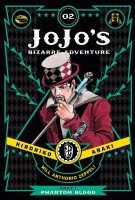
jojo_phantom_blood1JoJo’s Bizarre Adventure, Part 1: Phantom Blood, Vol. 1
By Hirohiko Araki
Rated T+, for Older Teens
VIZ Media, $10.99

Phantom Blood is a prime example of ALL CAPS theater, the sort of manga in which characters boldly declare their intentions on every page, sidekicks materialize whenever a plot twist demands explanation, and villains reveal their true colors by torturing fathers, girlfriends, and faithful pets. If only Phantom Blood was fun! Alas, this origin story is a dud, thanks to its flat characterizations and paint-by-numbers plotting.

The biggest problem is the hero: Jonathan Joestar is a paragon of virtue who suffers so many preposterous setbacks that it tests the reader’s patience. Many shonen heroes share Jonathan’s capacity for punishment, but Jonathan is such a limp rag that it’s hard to sympathize with his anguish over losing favored son status to his adopted brother Dio Brando. Dio is similarly two-dimensional, devoting 97.8% of his waking hours to plotting the Joestar clan’s demise. Although his plan is suitably baroque, Dio’s malevolence is so all-consuming that he, too, lacks any recognizably human traits.

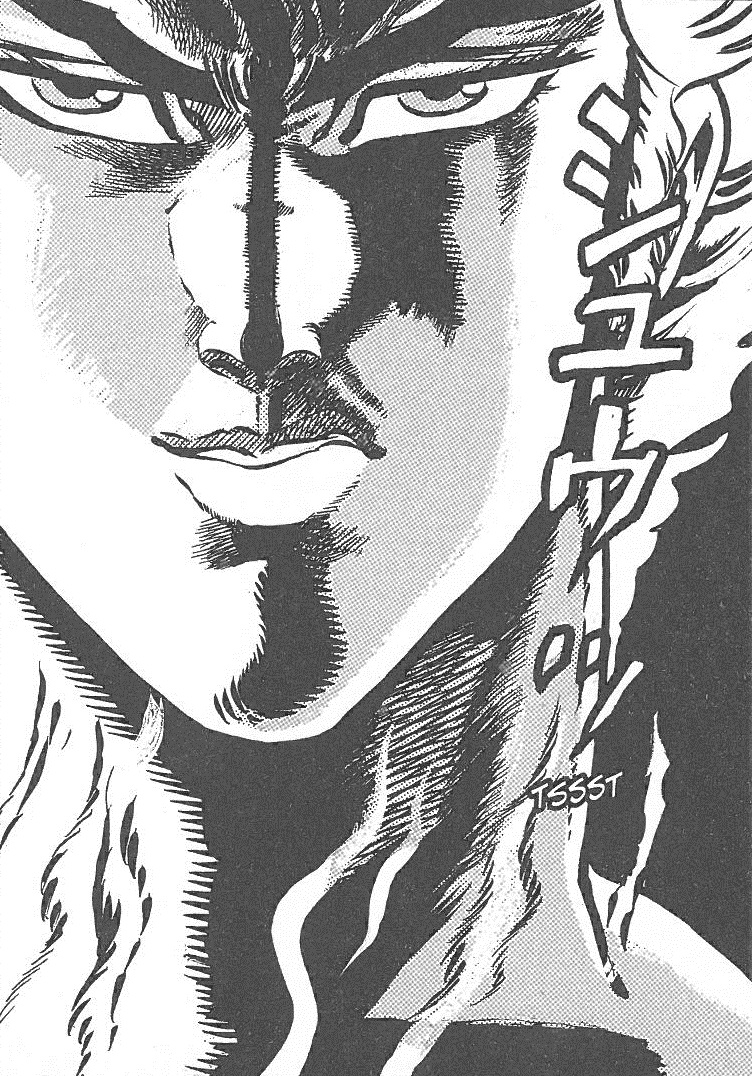
These paper-thin characterizations would matter less if the plot or artwork were more engaging. The main storyline, however, is about as fresh as week-old fish; even if the phrase “bloodthirsty Aztec mask” piques your interest, the mask is so clumsily integrated into Dio’s revenge as to invite comparisons with an episode of Scooby Doo. The artwork is also a disappointment, a collection of lantern-jawed men with cartoonish muscles inhabiting a pseudo-Victorian landscape–it’s Fist of the North Star in 19th century England! At least we know Araki’s draftsmanship and storytelling got better, as fans of the third JoJo arc, Stardust Crusaders, will attest.

The verdict: Unless you’re a die-hard collector, skip it. Folks looking for a good introduction to Araki’s unique talent are better served by Rohan at the Louvre.

seraphimSeraphim 266613336 Wings
By Mamoru Oshii and Satoshi Kon
Rated 16 and up
Dark Horse, $19.99

In 1994, Animage‘s editors faced a dilemma: Hayao Miyazaki’s critically lauded Nausicaa of the Valley of the Wind had come to an end, leaving a hole in the magazine’s line-up. Their solution: invite Patlabor director Mamoru Oshii to create a new series for the magazine. Oshii, in turn, tapped animator Satoshi Kon to illustrate the project, and Seraphim 266613336 Wings was born.

Oshii’s story goes something like this: in the not-too-distant future, Asia is in shambles, devastated by a mysterious plague that reduces its victims to stony, bird-like corpses. Despite the best efforts of the World Health Organization (WHO), no one has successfully determined the disease’s cause or found a cure. In a desperate bid to save humanity, four pilgrims cross the cordon sanitaire into the epicenter of the plague. Their mission: to investigate a mysterious relic that might reveal where and why the “Seraphim” virus spread so quickly.

If certain aspects of the plot feel a little heavy-handed–the WHO, for example, is portrayed as a quasi-religious organization not unlike the Vatican–the execution is brisk and skillful. Oshii and Kon resist the temptation to freight the dialogue with too much exposition, instead relying on Kon’s crumbling landscapes and vivid character designs to convey the pandemic’s toll on society. We see abandoned cities punctuating the desert, refugee camps teeming with feverish, disoriented victims, and isolated military outposts where survivors husband weapons and medicine–all potent (if familiar) symbols of a world plunged into chaos.

Winged imagery, too, plays an important role in Seraphim: planes glide silently through migrating flocks, skies turn black with mobbing birds. In some passages, Kon and Oshii revel in the ambiguity of these images: did the pandemic originate with birds, or are they simply beneficiaries of its effects? In other passages, however, the authors baldly state the story’s themes; characters pontificate about the plague victims’ “angelic” appearance and wonder if these victims are harbingers of mankind’s extinction–or redemption.

We’ll never know the answer. After producing seventeen chapters, Oshii and Kon shelved the project over creative differences. The surviving fragment is a testament to their ability to transcend those differences–if only for a short period–to produce a story that reads like the product of a single, fertile imagination.

The verdict: With its gorgeous artwork and intricate plot, Seraphim 266613336 Wings rewards multiple readings–even if the story lacks a proper ending.

Review Links: Jason Thompson offers a sneak peak at cyber-thriller Inuyashiki, which will debut in print this August, while Serdar Yegulalp revisits old favorite Black Lagoon. At Brain vs. Book, translator Jocelyn Allen discusses Aya Kanno’s Otomen. (Fun fact: Allen is currently translating Kanno’s Requiem of the Rose King for VIZ.) Closer to home, Sean Gaffney posts an early review of The Ancient Magus’ Bride, while Ash Brown weighs in on the latest volumes of Attack on Titan, Fairy Tail, and Love at 14.

Marissa Lieberman on vols. 1-2 of Accel World (No Flying No Tights)
Joseph Luster on vol. 4 of Ajin: Demi-Human (Otaku USA)
Matthew Warner on vol. 1 of Ani-Imo (The Fandom Post)
Megan R. on Apothecarius Argentum (The Manga Test Drive)
A Library Girl on vol. 1 of Aquarian Age: Juvenile Orion (A Library Girl’s Familiar Diversions)
Kate O’Neil on vol. 4 of Attack on Titan: Before the Fall (The Fandom Post)
Tony Yao on Black Butler (Manga Therapy)
Connie on vol. 27 of Blade of the Immortal (Slightly Biased Manga)
Justin Stroman on vol. 1 of Captain Ken (Organization Anti-Social Geniuses)
Ken H. on vol. 5 of Cardfight!! Vanguard (Sequential Ink)
Connie on vol. 3 of Crimson Spell (Slightly Biased Manga)
Sean Gaffney on vol. 15 of Dorohedoro (A Case Suitable for Treatment)
Allen Kesinger on vols. 1-3 of High School DxD (No Flying No Tights)
Allen Kesinger on High School DxD: Asia and Koneko’s Secret Contact?! (No Flying No Tights)
Connie on vol. 23 of Hoshin Engi (Slightly Biased Manga)
Wolfen Moondaughter on vol. 14 of Itsawaribito (Sequential Tart)
Connie on vol. 1 of JoJo’s Bizarre Adventure, Part One: Phantom Blood (Slightly Biased Manga)
Kory Cerjak on vol. 2 of JoJo’s Bizarre Adventure, Part One: Phantom Blood (The Fandom Post)
Anna N. on vol. 4 of Kiss of the Rose Princess (The Manga Report)
Emma Vail on vols. 1-3 of Manga Dogs (Women Write About Comics)
Sakura Eries on vol. 2 of Master Keaton (The Fandom Post)
Erica Friedman on vol. 9 of Morita-san ha Mukuchi (Okazu)
Kristin on vols. 1-2 of My Neighbor Seki (Comic Attack!)
Connie on vol. 2 of Phantom Thief Jeanne (Slightly Biased Manga)
Kory Cerjak on vol. 3 of Prophecy (The Fandom Post)
Erica Friedman on vol. 17 of Rakuen Le Paradis (Okazu)
Rebecca Silverman on vol. 11 of Sankarea: Undying Love (ANN)
Helen on Shirahime-Syo (Organization Anti-Social Geniuses)
Connie on vol. 33 of Skip Beat! (Slightly Biased Manga)
Sheena McNeil on vol. 3 of Spell of Desire (Sequential Tart)
Erica Friedman on vol. 2 of Stretch (Okazu)
Leroy Douresseaux on vol. 6 of Terra Formars (Comic Book Bin)
Greg Hunter on Trash Market (The Comics Journal)
Rebecca Silverman on vol. 3 of Whispered Words (ANN)

If you’re a manga reviewer and would like to see your reviews included in our regular round-ups, please let us know in the comment section.

Filed Under: MANGABLOG, REVIEWS

  • « Go to Previous Page
  • Page 1
  • Interim pages omitted …
  • Page 549
  • Page 550
  • Page 551
  • Page 552
  • Page 553
  • Interim pages omitted …
  • Page 1054
  • Go to Next Page »
 | Log in
Copyright © 2010 Manga Bookshelf | Powered by WordPress & the Genesis Framework