• Skip to primary navigation
  • Skip to main content
  • Skip to primary sidebar
  • Home
  • About Us
    • Privacy Policy
    • Comment Policy
    • Disclosures & Disclaimers
  • Resources
    • Links, Essays & Articles
    • Fandomology!
    • CLAMP Directory
    • BlogRoll
  • Features & Columns
    • 3 Things Thursday
    • Adventures in the Key of Shoujo
    • Bit & Blips (game reviews)
    • BL BOOKRACK
    • Bookshelf Briefs
    • Bringing the Drama
    • Comic Conversion
    • Fanservice Friday
    • Going Digital
    • It Came From the Sinosphere
    • License This!
    • Magazine no Mori
    • My Week in Manga
    • OFF THE SHELF
    • Not By Manga Alone
    • PICK OF THE WEEK
    • Subtitles & Sensibility
    • Weekly Shonen Jump Recaps
  • Manga Moveable Feast
    • MMF Full Archive
    • Yun Kouga
    • CLAMP
    • Shojo Beat
    • Osamu Tezuka
    • Sailor Moon
    • Fruits Basket
    • Takehiko Inoue
    • Wild Adapter
    • One Piece
    • After School Nightmare
    • Karakuri Odette
    • Paradise Kiss
    • The Color Trilogy
    • To Terra…
    • Sexy Voice & Robo
  • Browse by Author
    • Sean Gaffney
    • Anna Neatrour
    • Michelle Smith
    • Katherine Dacey
    • MJ
    • Brigid Alverson
    • Travis Anderson
    • Phillip Anthony
    • Derek Bown
    • Jaci Dahlvang
    • Angela Eastman
    • Erica Friedman
    • Sara K.
    • Megan Purdy
    • Emily Snodgrass
    • Nancy Thistlethwaite
    • Eva Volin
    • David Welsh
  • MB Blogs
    • A Case Suitable For Treatment
    • Experiments in Manga
    • MangaBlog
    • The Manga Critic
    • Manga Report
    • Soliloquy in Blue
    • Manga Curmudgeon (archive)

Manga Bookshelf

Discussion, Resources, Roundtables, & Reviews

Blog

Cosplay Basics

August 23, 2015 by Anna N

Cosplay Basics by by Yuki Takasou, Rumine, and Kashiko Kurobuchi

This is an English translation of a Japanese book that provides an introduction to cosplay with chapters on tips, shopping, and costume construction, interspersed with short manga chapters showing a seasoned cosplayer showing a newbie the ropes. A magical girl character is used as the focus for the whole book, so this will be most useful for folks who are interested in feminine cosplay.

I don’t think anyone would really be able to construct a costume from start to finish with only the information given in this book, as there’s not enough detailed information given about measuring yourself, making patterns, adjusting fit, etc. There are several sections with step-by-step instructions, but I think someone making pattern pieces based on the information in the book would need to do a bit of experimenting on their own to come up with something usable. But like the title suggests, it does provide a basic overview of the topic, and a reader would be able to take the terminology in the book and then look up a more detailed youtube tutorial about placing darts, for example. There are sections dedicated to cosplay specific topics like wig styling, photographing etiquette, posing like your character, and now to retouch your own photos of your cosplay before you post them online.

Cosplay Basics would be a good addition to library collections for libraries that have active anime clubs or other similar programming like ToshoCons. If I had a young teen newbie cosplayer to hand a book to, I would probably combine this volume with another book that had more of a general focus on sewing and construction principles. The short chapters combined with manga make it easy to dip in and out of the book while exploring different aspects of cosplay.

Filed Under: REVIEWS Tagged With: One Peace Books

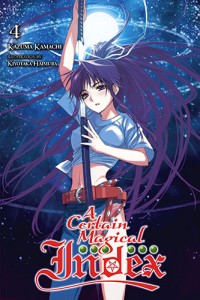
A Certain Magical Index, Vol. 4

August 23, 2015 by Sean Gaffney

By Kazumi Kamachi and Kiyotaka Haimura. Released in Japan as “To Aru Majutsu no Index” by ASCII Mediaworks. Released in North America by Yen On.

The early Index novels tend to follow an unfortunate pattern, which luckily goes away as the series goes on. The odd-numbered books, for some reason, are significantly better and more thought out than the even numbered books. And given that this volume of Index is 4, you can guess how I feel about it. Not that there aren’t great moments in the book, or good characterization. But like the second book, it reads more like the author trying to stall while he figures out to expand his far-more-popular-than-he-expected series into a huge franchise. Also, Kamachi’s attempts at wacky humor are pathetic in every way.

index4

Introduced in this volume: Motoharu Tsuchimikado (who appears much earlier in the anime, to better effect, as he’s sort of out of nowhere here), Touya Kamijou, Shiina Kamijou (looking like Index), Sasha Kreutzev (appearance only), Angel Gabriel (looking like Sasha). For Railgun manga readers, this takes place around when Kongou is introduced (and quickly brought down to earth). For Railgun anime watchers, the anime-original ending to the Railgun S series (with Febrie) is taking place.

The first 30 pages of this volume are almost painful in the forced, unfunny wackiness that ensues. Even after Tsuchimikado and Kanzaki arrive, things still have to wait for comedy at times, as Kanzaki’s desire to kill Touma seems less due to Angel Fall and more due to her being embarrassed about looking like Stiyl. After this, things settle down to what we’ve gotten used to in the Index novels – pages upon pages of explanation of how magic works and the various systems behind it, which is mixed in here with a healthy dose of bizarro Christianity – in case any devout religious fans were still reading Index, I suspect they’ll likely stop here.

And then there’s Jinsaku Hino, the serial killer. As with the 2nd book, the anime decided he was irrelevant and completely cut him. And, as with the 2nd book, I can’t blame them at all, as his plot *is* almost totally irrelevant, serving to pad out the page count till we see who’s really behind Angel Fall and giving us a lot of discussion of split personalities. He’s certainly a creepy psycho, but we never get any sense that he poses a real threat to our heroes, and the main thing his plot seems to have done is show us the Kamijou home and thus show Tsuchimikado who the real culprit is.

Luckily, once we find out who that culprit is, the novel takes a huge upswing, and the 2nd half is much better than the first. Touma’s talk with his father is one of the most heartwarming in the series, as well as a really depressing glimpse back at his horrible childhood. Kanzaki, when she’s not being embarrassed about Touma in general, is also very well done, showing off the fact that she was holding back against Touma in book 1 a lot. Her past is also somewhat tragic, even if she and Touma are meant to be contrasted as polar opposites. As for Tsuchimikado, there’s a bit too much heel-face revolving door here, but you at least get the sense he’s trying to be on the right side, whichever one that may be, and he does get away with a cool (temporary) exit. And I did like him pointing out that Gabriel’s disguise is really obvious to anyone familiar with Russia, as it really, really is.

Yen Press’s translation is decent, though it’s fighting on multiple fronts here. Kamachi’s amazingly wordy prose is simply hard to translate in a way that doesn’t sound like an encyclopedia threw up. Tsuchimikado’s speech quirks are handled pretty well, but his habit of giving everyone nicknames runs up against Yen’s no honorifics policy. So Kamiyan is now Kammy, and Oneechin is now Zaky. Which is OK, but tends to make them sound more like J-pop band members than Index characters.

Luckily, we’re in for a big upswing with Book 5, and the even numbered books get better from here on out. This particular book, though, suffers from a stapled on subplot and bad humor (I did enjoy Misha’s obsession with chewing gum, the most subtle joke and therefore the best). I definitely recommend it for Kanzaki fans, but honestly, the rest might just want to wait till Book 5, where we’ll be discussing another divisive plot twist.

Filed Under: REVIEWS

The Summit of the Gods, Vol. 5

August 21, 2015 by Ash Brown

The Summit of the Gods, Volume 5Author: Baku Yumemakura
Illustrator: Jiro Taniguchi

U.S. publisher: Fanfare/Ponent Mon
ISBN: 9788492444403
Released: July 2015
Original release: 2003
Awards: Angoulême Prize, Japan Media Arts Award

Baku Yumemakura’s novel The Summit of the Gods (which, sadly, hasn’t been translated into English) was published in Japan in 1998 and would go on to win the Shibata Renzaburo Award. In 2000, Yumemakura was paired up with the immensely talented artist Jiro Taniguchi to create a manga adaptation of the novel. The Summit of the Gods manga continued to be serialized through 2003 and was collected as a five-volume series. The manga also became and award-winning work, earning an Angoulême Prize and a Japan Media Arts Award among many other honors and recognitions. In addition to being one of my favorite manga by Taniguchi, The Summit of the Gods is actually one of my favorite manga in general. As such, I was waiting with great anticipation for the publication of the fifth and final volume of the series in English by Fanfare/Ponent Mon. I was thrilled when it was finally released in 2015.

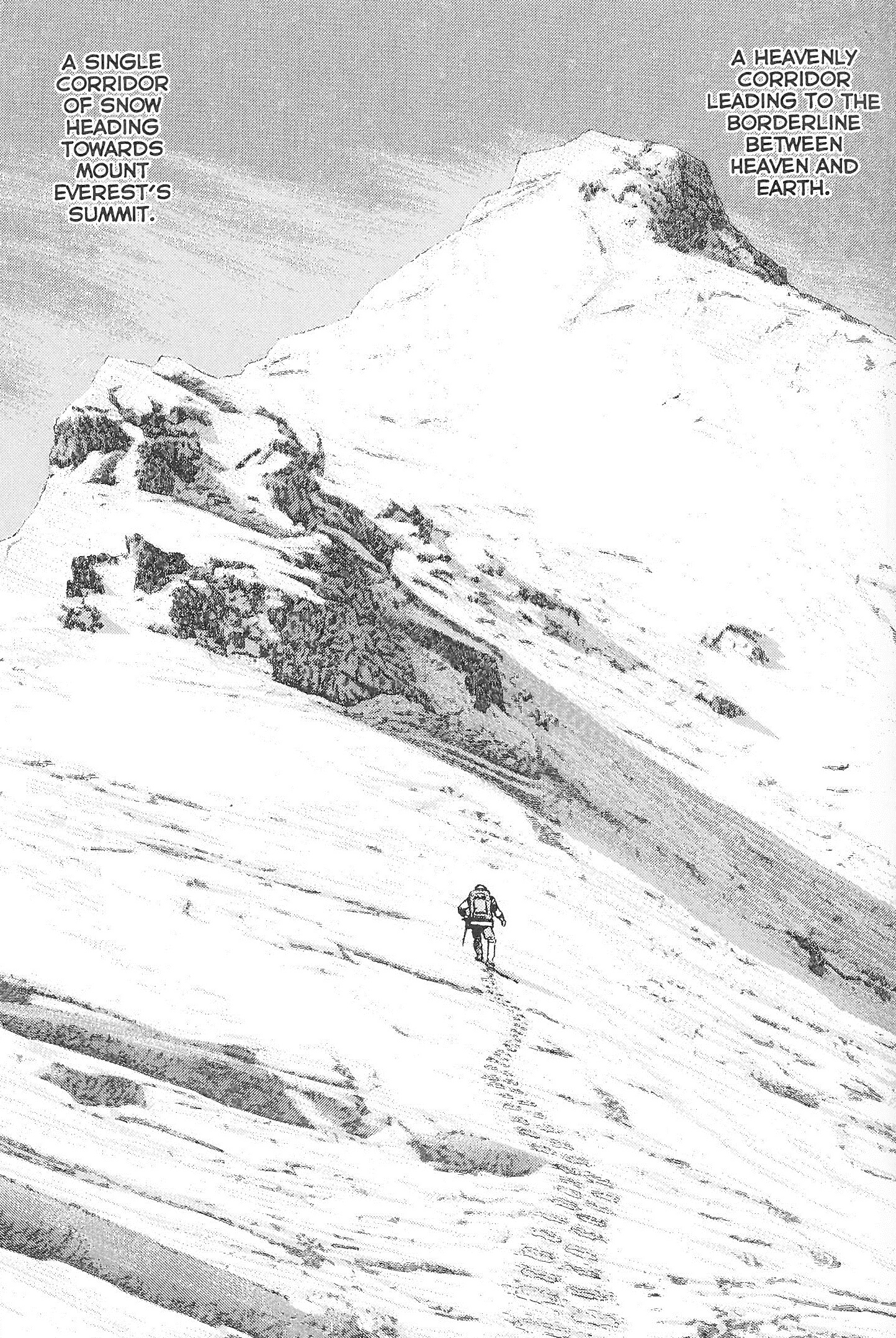
Photographer Makoto Fukamachi followed the legendary climber Jouji Habu to Mount Everest to document one of the most difficult and dangerous ascents to ever be attempted: a solo climb of the southwest face in the winter without oxygen. The agreement between them was that neither one of the men would interfere with the other’s climb no matter what happened. But when Fukamachi’s life is in danger Habu rescues him anyway, putting his own life and the success of his ascent at risk. Fukamachi ultimately survives, returning to Japan to find a media frenzy; not only was Habu an infamous climber, his assault on Everest was an illegal one. And then there’s the matter of the camera that Habu had in his possession. Believed to have belonged to George Mallory, it draws considerable attention once its existence comes to light. Fukamachi’s connection to Habu and to the camera makes him a person of interest as well. Even without the additional scrutiny from the public he would find readjusting to a normal life after his fateful Everest climb to be challenging if not impossible.

Summit of the Gods, Volume 5, page 2013Three stories have become irrevocably intertwined in The Summit of the Gods: the story of George Mallory and Andrew Irvine’s’ final climb and disappearance on Mount Everest, the story of Jouji Habu’s efforts to become the greatest known climber more for himself than for any sort of fame, and the story of Makoto Fukamachi as he strives to untangle his own feelings about climbing and about life by trying to unravel the mysteries surrounding those of the others. The Summit of the Gods can be read in two different ways. It can be approached simply as a compelling tale of adventure and survival or, either alternatively or simultaneously, as a stunning metaphor for any human struggle against seemingly overwhelming odds. Climbing requires great physical and mental fortitude, and life can be just as demanding. The characters in The Summit of the Gods not only pit themselves against nature, they challenge themselves to overcome their own personal weaknesses and limitations.

Facing oneself—being able to objectively recognize the extent of one’s own abilities and admit the possibility of failure—isn’t necessarily an easy thing to do. It can also be a very lonely thing. This, too, is emphasized in The Summit of the Gods through Yumemakura’s writing and Taniguchi’s artwork. Even when working together, the climbers must ultimately rely on themselves and can only trust and depend on others so far. In the end they face the mountain and face their personal demons alone. The characters also show a constant struggle against their own insignificance, a hard-fought battle to find meaning in their lives. Taniguchi’s vistas are gorgeous and sweeping, showing just how small a person is in comparison to the rest of the world. But this also makes the climbers’ perseverance and achievements all the more remarkable. The Summit of the Gods is a phenomenal work with great writing and fantastic art, effectively telling a thrilling drama that also has great depth to it.

Filed Under: REVIEWS Tagged With: Angoulême Prize, Baku Yumemakura, Fanfare/Ponent Mon, Japan Media Arts Award, Jiro Taniguchi, manga, summit of the gods

The Manga Revue: Ultraman

August 21, 2015 by Katherine Dacey

Ultraman made his television debut in 1966, defending Earth from the dual scourge of aliens and giant monsters. What began as a 39-episode series soon blossomed into one of Japan’s most prolific franchises, yielding dozens of sequels, spin-offs, movies, video games–and now a manga, which has been running in Monthly Hero’s magazine since 2011. Today’s column looks at this incarnation of the Ultraman story, which arrived in stores on Tuesday.

For extra insight into Ultraman‘s history, I encourage you to check out Brigid Alverson’s interview with Tomohiro Shimoguchi and Eiichi Shimizu, the creators of the latest Ultraman manga.

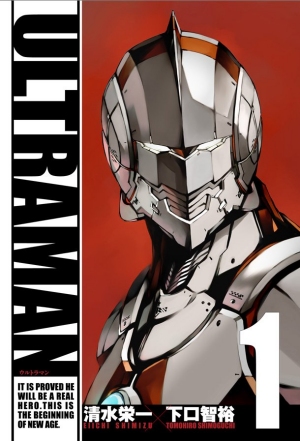
Ultraman_2011Ultraman, Vol. 1
By Eiichi Shimizu and Tomohiro Shimoguchi
Rated T, for teens
VIZ Media, $8.99 (digital edition)

Dusting off a beloved franchise and making it appeal to a new generation is a hazardous undertaking: stray too far from the source material and incur the wrath of purists, but hew too closely to the original and risk camp. Manga-ka Eiichi Shimizu and Tomohiro Shimoguchi have found an elegant strategy for introducing Ultraman to contemporary readers, using the original premise of the 1966 TV show as a starting point for a new chapter in the story.

The prelude to volume one neatly outlines Ultraman’s origins. Shin Hayata, member of the Science Special Search Party (a.k.a. the Science Patrol), unwittingly becomes the host for Ultraman, a powerful alien tasked with ridding Earth of dangerous monsters. Only a few members of the Science Patrol know Ultraman’s true identity–a secret they keep from Hayata, who is unaware that he is the vessel for Ultraman’s powers. The story then leaps forward thirty years: Ultraman has returned to his own world, Hayata has retired from the Science Patrol, and his son Shinjiro is beginning to manifest powers of his own.

In contrast to the introduction, which is a model of economy, the first chapter sags under the weight of too much expository dialogue. The characters relate their histories and concerns in such bald declarations that the entire chapter reads like a rejected Mystery Science Theater 3000 script.  (A sample exchange: “We certainly don’t see much of each other these days.” “Right, even though I work at the Ministry of Defense, too.”) The pace improves with the sudden appearance of Be Mular–one of Ultraman’s old adversaries–who lures the inexperienced Shinjiro into a rooftop battle. Although the script has a familiar rhythm–powerful attacks punctuated by snappy one-liners–the fight choreography is well executed; you can almost feel the force of Shinjiro’s punches. Equally important, the fight’s outcome is not a foregone conclusion: the chapter ends on a cliffhanger just as Shinjiro realizes that he isn’t strong enough to protect his family from Be Mular… yet.

If the 2.0 version of Ultraman sounds like a radical departure from the original series, rest assured that Shimizu and Shimoguchi haven’t strayed too far from the show’s roots. The proof lies in the character designs: they’ve done a nice job of bringing Ultraman and Be Mular’s appearance in line with contemporary seinen aesthetics while preserving the look and feel of the original characters. Ultraman and Be Mular don’t exactly resemble their rubber-suited predecessors, but a long-time fan will recognize them as spiritual descendants–a fair compromise for a series that’s toeing the line between 1960s kitsch and 2010s pop culture.

The verdict: The first chapter is a tough slog, but the combat is staged with enough panache that I’ll be checking out volume two.

Review copy provided by VIZ Media.

Reviews: Here at Manga Bookshelf, Sean Gaffney and Michelle Smith tackle the latest volumes of Black Rose Alice, Citrus, Evergreen, and Food Wars! Further afield, Megan R. takes a nostalgic look at Kare Kano: His and Her Circumstances; Aimee A. deconstructs shojo stereotypes in Skip Beat!!; Seth Hahne praises Ajin: Demi-Human for its “fantastic cat-and-mouse” plotting; and Erica Friedman reviews Manga de Tsuzuru Yurina Hibi, a “non-fiction comic essay” about the relationship between a businesswoman and her girlfriend.

Alice Vernon on Akame ga Kill! (Girls Like Comics)
Wolfen Moondaugter on vol. 22 of Arata: The Legend (Sequential Tart)
Austin Lanari on The Art of Satoshi Kon (Comic Bastards)
Sean Gaffney on vol. 5 of Assassination Classroom (A Case Suitable for Treatment)
Nick Smith on Awkward (ICv2)
Emma Weiler on vols. 1-5 of Crimson Spell (No Flying No Tights)
Lesley Aeschliman on vol. 10 of Deadman Wonderland (WatchPlayRead)
Lori Henderson on vol. 1 of The Demon Prince of Momochi House (Manga Xanadu)
Frank Inglese on vols. 5-6 of Food Wars! Shokugeki no Soma (Snap30)
Sheena McNeill on vol. 7 of Food Wars! Shokugeki no Soma (Sequential Tart)
Johanna Draper Carlson on vol. 10 of Happy Marriage?! (Comics Worth Reading)
Rebecca Silverman on vol. 1 of Haven’t You Heard? I’m Sakamoto (Anime News Network)
Erica Friedman on vol. 2 of Hayate x Blade (Okazu)
Allen Kesinger on vols. 4-5 of High School DxD (No Flying No Tights)
Matthew Alexander on vol. 6 of Judge (The Fandom Post)
Sarah on vol. 2 of Karneval (Anime UK News)
Anna N. on vol. 5 of Kiss of the Rose Princess (The Manga Report)
Austin Lanari on The Kurosagi Corpse Delivery Service Omnibus Edition: Book One (Comic Bastards)
Ian Wolf on vols. 1-2 of Maid-Sama! (Anime UK News)
Kristin on Manga Classics: Emma (Comic Attack)
Ken H. on vol. 1 of My Hero Academia (Sequential Ink)
Ash Brown on The Science of Attack on Titan (Experiments in Manga)
Frank Inglese on vol. 1 of Tokyo Ghoul (Snap30)
Michael Burns on vol. 1 of Tokyo Ghoul (Ani-TAY)
Michael Burns on vol. 2 of Tokyo Ghoul (Ani-TAY)
Julie on vol. 2 of Tokyo Ghoul (Manga Maniac Cafe)
Lesley Aeschliman on vol. 1 of Ultraman (WatchPlayRead)
Elizabeth Lotto on vol. 1 of Ultraman (The Outer Haven)
Nick Lyons on vol. 1 of Ultraman (DVD Corner)
Rebecca Silverman on vol. 9 of What Did You Eat Yesterday? (Anime News Network)
Wolfen Moondaugter on vol. 2 of The World’s Greatest First Love: The Case of Ritsu Onodera (Sequential Tart)

Filed Under: MANGABLOG, REVIEWS Tagged With: Manga Review, Ultraman, viz media

Manga the Week of 8/26

August 21, 2015 by Sean Gaffney, Ash Brown, Anna N and Michelle Smith 1 Comment

SEAN: For a last week of the month, there’s a lot of stuff due out, particularly from Kodansha Comics.

The 16th Attack on Titan comes in a regular edition, and also a Special Edition with a set of AoT-themed playing cards.

ASH: It’ll be interesting to see how the special edition does for Kodansha.

SEAN: And there’s a 5th volume of the prequel Attack on Titan: Before the Fall.

Fairy Tail also has a spinoff, with the first volume of Blue Mistral, which I believe focuses on Wendy.

inuyashiki1

Inuyashiki is the new series running in Evening magazine from the author of Gantz. Its protagonist being an old man is unusual, its science fiction with horror/gore plot is not, at least not for this author.

ASH: Although I didn’t follow Gantz to the end, I am rather curious about Inuyashiki.

ANNA: Huh, I’m cautiously curious about this. Will wait for Ash’s review though!

SEAN: Let’s Dance a Waltz comes to an end with the third and final volume. Less fat-shaming in your next series, please.

MICHELLE: I second that request.

ASH: Yup. Also, I didn’t realize the series was so short!

ANNA: So glad I didn’t read this.

SEAN: Maria the Virgin Witch has an epilogue with Exhibition.

ASH: Maria the Virgin witch was such a quirky little series.

SEAN: Say “I Love You” has volume 9 coming out, and it’s become one of my favorite “shosei” series.

MICHELLE: Mine, too! Looking forward to this one.

ANNA: I need to get caught up! It is very good.

SEAN: And Your Lie in April has a 3rd volume. Lies indeed; it’s August, not April. You can’t trick me, manga!

ASH: Wait, it’s not April?

SEAN: There are a few titles coming out that are not Kodansha. Seven Seas has an Alice book, with White Rabbit and Some Afternoon Tea. After being an antagonist for so long in these books, Peter White finally gets his chance to be the love interest.

ANNA: Is it extra traumatic?

bodacious1

SEAN: I realize the title might put some people off, but Bodacious Space Pirates was a fantastic novel/anime series, and Bodacious Space Pirates: Abyss of Hyperspace is a manga adaptation of the feature film they made. I’m greatly looking forward to it.

ASH: Should hopefully be fun!

ANNA: If nothing else, that title is fabulous.

SEAN: Also greatly looking forward to the 4th omnibus of Lucifer and the Biscuit Hammer. Buy this please. Make Sean proud of you.

ASH: I will make you proud, Sean!

SEAN: Vertical has a 6th volume of Supernatural thriller Ajin. Be warned, it’s caught up with Japan.

And Vertical also has a novel spinoff of Attack on Titan. Harsh Mistress of the City is another one that takes place before the main manga, I believe.

ASH: It’s also illustrated by Range Murata which will be of particular interest to a few people I know.

ANNA: I didn’t know that! Interesting!

SEAN: So what are you getting next week?

Filed Under: FEATURES, manga the week of

Kiss of the Rose Princess, Vol. 5

August 20, 2015 by Anna N

Kiss of the Rose Princess Volume 5 by Aya Shouto

I find myself enjoying this series more and more, mostly because with each new volume my suspension of disbelief grows, and I just kick back and enjoy the ridiculousness of this reverse harem fantasy manga. This volume did a good job balancing out which knights were featured, with a bit more attention given to Tenjo the White Rose Knight. As ever, Kaede the Red Rose Knight lurks around and smolders in a few panels for each chapter.

The first part of this volume picks up at an area that is fraught with terror in most shoujo manga – an amusement park. Meek classmate Mikage with her overwhelming crush on Kaede has been hiding an even worse secret. Even more fake Rose Knights appear, leading to an excess of flower avatar people everywhere! Anise powers up a bit, triggering an awakening in Tenjo the White Rose that allows him to deal with their enemies easily. This throws off the balance of power and changes the dynamics in the group a little bit.

The fake rose idols Rhodecia make a brief appearance again, and there’s an extended comedy bit when Anise, Kaede, and Seiran dress as servants in an attempt to infiltrate Tenjo’s mansion to check up on him. There are plenty of gags involving both maid costumes and the odd decorating habits of the rich. One of the things I enjoy about the series is the way it switches back and forth between more lighthearted scenes and hints of upcoming ominous events. Shouoto’s dramatic art has plenty of flourishes that suit the dramatic and silly situations the protagonists find themselves in. Even though evil fake roses keep popping up, the mystery around Anise’s diabolical father is still touched on briefly with each volume, hinting at larger issues Anise is going to confront eventually. With the Black Rose Mutsuki seeming to take center stage at the end of this volume and I’m assuming the start of the next, it looks like there’s going to be more grim vampirific backstory to look forward to.

Filed Under: REVIEWS Tagged With: kiss of the rose princess, shojo beat, shoujo, viz media

Black Bullet: Those Who Would Be Gods

August 20, 2015 by Sean Gaffney

By Shiden Kanzaki and Saki Ukai. Released in Japan by ASCII Mediaworks. Released in North America by Yen Press.

One of the more difficult things about reading modern Japanese manga and light novels is a certain tendency to follow what’s popular and throw things in that appeal to a certain audience – even if they may not actually be appropriate for the book that’s being written. As an example, Fujino Omori wanted to call their new fantasy novel series Familia Myth, but editorial convinced them to use the ever popular ‘long long title’ in order to get readers, resulting in Is It Wrong To Try To Pick Up Girls In A Dungeon?. Which works OK, because there are other elements of that sort of genre in the books – harems, etc. But when you have a dark, brutal corpse-filled dystopian series about child soldiers, somehow populating it with lolicon jokes and tsundere grumbling seems even more jarring than it normally is.

bb1

There’s a very good dark action thriller in here as well. Rentaro spends most of the book talking about how useless he is, but this makes sense in terms of his characters and allows a genuinely surprising reveal towards the end of the book. Enju, like the other Cursed Children, is a giant bucket of adorable, and unlike most of the other cursed children she generally tends to be happy and upbeat – provided Rentaro is around. The relationship between them when she’s not going on about marrying him or trying to show off her prepubescent body is heartwarming. They’re contrasted well with Rentaro’s dark mirror and the villain of this first novel, Kagetane and his child Kohina. If Rentaro tries to be a big brother to Enju, Kohina sees Kagetane as her father, and he’s raised her, sadly, to be a sociopath. The fights between them are the high points of the volume.

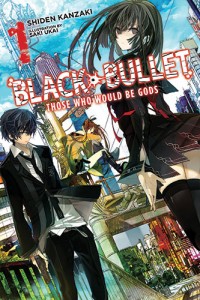
I’d mention Kisara – that’s her on the cover, with a far bigger picture than Enju – except she really has a smaller part in this volume than you’d expect. Indeed, there were points, especially when she arrived in the middle of the council meeting with evidence of a conspiracy, that I really wish the book had a double narrative so that I could see what makes her tick. She seems to be driven by a white-hot anger against her grandfather, but what that is I’m guessing will have to wait till future books. As it is, so far she’s all potential. Oh yes, and Sumire is the classic eccentric weirdo scientist, complete with suggestions of necrophilia and a major role in Rentaro’s past.

If you removed all the elements that appeal to the typical Japanese otaku, this would not be out of place in Viz’s Haikasoru imprint. I know I’ve talked about this sort of thing earlier while reviewing No Game No Life, but that at least is fairly light-hearted and comedic with the occasional dramatic cliffhanger. Black Bullet is a brutal world where all that the heroes can hope for is making the world happy for the Cursed Children in the brief time they have available, and the last couple of pages show that even this rarely works, and that death is all that awaits. I really don’t need “tee hee, Rentaro is a pedophile’ jokes on top of it.

Filed Under: REVIEWS

The Science of Attack on Titan

August 19, 2015 by Ash Brown

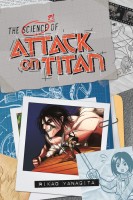
The Science of Attack on TitanAuthor: Rikao Yanagita
Illustrator: Maru Fujishima

Translator: Ko Ransom
U.S. publisher: Kodansha
ISBN: 9781632361851
Released: June 2015
Original release: 2014

Hajime Isayama’s ongoing manga series Attack on Titan has become a worldwide phenomenon, spawning multiple spinoff manga series, anime, live-action films, games, and other media and merchandise. The franchise has been such a resounding success that Kodansha Comics, the manga’s English-language publisher, has even broken its rule of not releasing anything that isn’t manga. The first exception was the Attack on Titan Guidebook: Inside & Outside. More recently, in 2015, Kodansha published Rikao Yanagita’s The Science of Attack on Titan as translated by Ko Ransom (who also happens to the translator for the guidebook and the Attack on Titan: Before the Fall novels, among other things.) Since I’m fascinated by Attack on Titan and its immense popularity, I was particularly glad to have the chance to read a review copy of The Science of Attack on Titan. The volume was originally published in Japan in 2014 and is the first work by Yanagita to have been released in English. Credited as the Senior Researcher of the Sci-F/Fantasy Science Research Institute, Yanagita is a fairly prolific writer who has authored other “The Science of” books as well.

The Science of Attack on Titan is divided into four main sections. The first and longest, “Surprising Titan Fundamentals,” focuses on the Titans, specifically investigating their strengths and weaknesses. Once Titans have been established as the fearsome creatures that they are, in the next section Yanagita asks and answers the question “What Should I Do If Titans Attack?!” Appropriately, this is followed by “Anti-Titan Measures: How Effective Are They Really?,” a section exploring in-series technologies such as the vertical maneuvering equipment. (Also included: an entire chapter devoted to the awesomeness of Levi.) The final section, “Simple Questions about Attack on Titan,” is a sort of catchall for remaining topics that didn’t really fit into the previously established categories. There are also shorter one-page investigations called “Lingering Fantasy Science Questions” scattered throughout the volume. Accompanying the text are relevant panels and pages taken from the Attack on Titan manga as well as additional illustrations by Maru Fujishima that can be quite humorous.

The Science of Attack on Titan, page 17Although the readers who will probably be the most interested in or at least the most likely to pick up The Science of Attack on Titan are those who are already familiar with Attack on Titan as a whole, it is only fair to give the warning that the volume does include spoilers for the franchise. Most are fairly minor, but there are a few major twists that are discussed as well. The Science of Attack on Titan is based on the original Attack on Titan series up through the thirteenth volume in addition to the first volume of the Attack on Titan: No Regrets spinoff manga, the Before the Fall prequel novels, and the Attack on Titan Guidebook. Unless readers are trying to avoid spoilers at all costs, they shouldn’t be too daunted by Yanagita’s thoroughness; only a basic knowledge of Attack on Titan, and its characters and setting is required to enjoy and understand The Science of Attack on Titan. There is no need to be well-versed in all aspects of the franchise in order to follow the book. The Science of Attack on Titan is approachable and friendly for novices in science, too.

The Science of Attack on Titan may be inspired by Attack on Titan, but for the most part Yanagita spends more time discussing real-world physics, chemistry, biology, history, technology, and such than he does Attack on Titan itself. The franchise simply provides an excuse or jumping off point to explore interesting scientific concepts and how they might or might not apply to the series. Unsurprisingly, Yanagita’s analysis shows that many aspects of Attack on Titan could be nothing but fantasy, but it’s very exciting when it appears that something from the series could actually work. The Science of Attack on Titan is written to be both entertaining and engaging, though how funny it is will depend on an individual’s personal sense of  humor. While Yanagita address serious science, he recognizes that Attack on Titan is a fictional work and that subjecting it to such critical scrutiny can be inherently funny. As a result, his approach in The Science of Attack on Titan is informal and comedic, but also informative. Ultimately, the volume’s greatest value is probably in encouraging those who are interested in Attack on Titan to discover just how cool real science can be. Even I learned a few things that I didn’t previously know.

Thank you to Kodansha for providing a copy of The Science of Attack on Titan for review.

Filed Under: REVIEWS Tagged With: attack on titan, kodansha, Kodansha Comics, Maru Fujishima, Nonfiction, Rikao Yanagita

Random Musings: Five Years of Experiments in Manga

August 18, 2015 by Ash Brown

As of today, Experiments in Manga is now five years old! In some ways it feels like I’ve been writing here forever, and in other ways it seems like I’ve just started. When I first began Experiments in Manga, I had no idea how long it was going to last (honestly, I still don’t know), but I am rather pleased that I’ve been able to keep it going for so many years. And I find it especially impressive when I stop to consider all of the other things going on in my life right now.

What are some of those other things, exactly? Well, I and my partners all managed to survive our first year of parenthood, for one. (As did the little one, whose first birthday was last week.) That has certainly been a huge change in my life. I’m incredibly busy at work of late, too, since my supervisor retired in December and I’m still filling in for that position on top of my regular one. Another significant development is that I am now part of the leadership team for a new taiko performance group and I’ve more or less become an alternate for another semi-pro ensemble. I’ve actually been doing some teaching and composing for taiko, too. It’s all been rather exciting. And extremely challenging. And a bit exhausting.

There really doesn’t seem to be such a thing as “free time” anymore for me, and since Experiments in Manga is something that I do in my free time… Well, this past year is the first year that I’ve posted fewer things than I did in the year immediately preceding. Although I have been able to maintain a regular schedule, overall I’m reading less, and I’m writing less, too. I miss both things terribly (the reading especially), but I might have to cut back even more in the coming year depending on how things continue to progress and for the sake of my own sanity.

For example, I’ve decided to quietly retire the Discovering Manga and Finding Manga features. I enjoyed writing them, but I’m just not posting them frequently or regularly enough. (Which I then end up feeling guilty about.) But although I may be saying goodbye to those particular features, last year I actually introduced a new one that seems to be rather popular: Adaptation Adventures. I’ve only posted two so far—Udon Entertainment’s Manga Classics (which incidentally was one of my top posts from the last year) and The Twelve Kingdoms—but I’m hoping and looking forward to writing more.

Speaking of top posts, my Spotlight on Masaichi Mukaide was very well received. In fact, it wasn’t just one of the top posts from last year, it’s one of Experiments in Manga’s most frequently visited pages ever. It probably helped that the spotlight made the rounds on general comics sites in addition to catching the attention of manga enthusiasts. That single post may very well be the most noteworthy thing that I’ve ever written. Likely, I’ll never be able to top it. I’dbe lying if I tried to say that I wasn’t at least a little proud of it.

The most popular (or at least most frequently viewed) manga reviews at Experiments in Manga from the last year included the anthology Massive: Gay Erotic Manga and the Men Who Make It, Aki’s The Angel of Elhamburg, Mentaiko Itto’s Priapus, Aya Kanno’s Requiem of the Rose King, Volume 1, and Yaya Sakuragi’s Hide and Seek, Volume 1. (On a personal note, I am rather pleased that all five of those manga to one degree or another have a queer bent to them.)

As for my top non-manga reviews from the past year there was The World of the Shining Prince: Court Life in Ancient Japan by Ivan Morris, Haikasoru’s anthology Phantasm Japan: Fantasies Light and Dark from and about Japan, Frederik L. Schodt’s Manga! Manga!: The World of Japanese Comics, Seven Seas’ edition of Alice’s Adventures in Wonderland and Through the Looking-Glass by Lewis Carroll with illustrations by Kriss Sison, and Yu Godai’s Quantum Devil Saga: Avatar Tuner, Volume 1.

I’m actually pretty happy to see Avatar Tuner on that list; the novel was one of the books published in 2014 that left the greatest impression on me. As was Massive, for that matter. Last year was actually only the second time that I compiled a list of notable manga, comics, and prose, but I’ll likely compile another one for 2015 since I had so much fun putting together the first two. Plus, other people seem to enjoy them. That goes for my TCAF posts, too, which remain popular. As long as I attend TCAF, and as long as I’m still writing at Experiments in Manga, I plan on rounding up my experiences at the festival.

Another feature of sorts that I’ve continued to work on is my monthly manga review project—a recurring set of reviews that focuses on a specific series or genre. In November, I wrapped up my second project, “Year of Yuri”, a series of reviews featuring manga and comics with lesbian themes. For the following review project, I was feeling in the mood for some horror manga. But while I picked the genre, I let readers of Experiments in manga pick the series. It ended up being a tie between Setona Mizushiro’s After School Nightmare and Yuki Urushibara’s Mushishi, so I decided to review both series, alternating between them each month. At the moment, I’m about halfway through the project.

I still maintain that I write Experiments in Manga for myself, but it does give me great satisfaction and joy to know that other people read and appreciate it as well. Over the last year several readers have let me know that they’ve given a particular manga, comic, or novel a try simply because I wrote about it. I and Experiments in Manga have started to be referenced and cited in Wikipedia as well as other places online as well, including an Italian comics website. (Admittedly, while very cool, I also find this kind of terrifying.) As always, I would like to thank everyone out there who reads and supports my efforts here at Experiments in Manga. It’s truly appreciated. I hope that I can continue to improve and continue to provide content that is useful or at least occasionally interesting. Here’s to another year!

Filed Under: UNSHELVED Tagged With: Experiments in Manga

Pick of the Week: Big Week, Small Picks

August 17, 2015 by Sean Gaffney, Michelle Smith, Ash Brown and Anna N 1 Comment

emma2SEAN: I have gotten used to the fact that when Yen Press puts out 19-20 titles in one go, I get all excited about at least half of them and the rest of the Manga Bookshelf team tends to shrug their shoulders. So let me start this week off. There’s a pile coming out I love – new Wallflower, new Dorohedoro, new Emma. For a pick, I’ll go with the new Sword Art Online novel, if only as I want to see if the author even tries to justify why there are still MMORPGs after the disaster that was cause of the first four books.

MICHELLE: I’m guilty of shrugging, but if I didn’t already own the complete CMX run of Emma, I would surely be excited about Yen’s omnibus editions! As it is, I’m very happy that others have the chance to experience this lovely series.

ASH: There is so much to choose from this week! I’ll definitely be picking up Emma since I missed it the first time and Yen’s hardcovers are gorgeous, but I think I’ll throw my official pick towards the most recent volume of Dorohedoro. I’m thrilled that Viz continues to publish the series; it’s just so bizarrely charming.

ANNA: I’ll go with Emma. I’ve already read it, but it is a delightful series that deserves new readers. I’m glad it is coming back into print with Yen’s excellent production values.

What looks good to you this week?

Filed Under: PICK OF THE WEEK

  • « Go to Previous Page
  • Page 1
  • Interim pages omitted …
  • Page 529
  • Page 530
  • Page 531
  • Page 532
  • Page 533
  • Interim pages omitted …
  • Page 1049
  • Go to Next Page »
 | Log in
Copyright © 2010 Manga Bookshelf | Powered by WordPress & the Genesis Framework