• Skip to primary navigation
  • Skip to main content
  • Skip to primary sidebar
  • Home
  • About Us
    • Privacy Policy
    • Comment Policy
    • Disclosures & Disclaimers
  • Resources
    • Links, Essays & Articles
    • Fandomology!
    • CLAMP Directory
    • BlogRoll
  • Features & Columns
    • 3 Things Thursday
    • Adventures in the Key of Shoujo
    • Bit & Blips (game reviews)
    • BL BOOKRACK
    • Bookshelf Briefs
    • Bringing the Drama
    • Comic Conversion
    • Fanservice Friday
    • Going Digital
    • It Came From the Sinosphere
    • License This!
    • Magazine no Mori
    • My Week in Manga
    • OFF THE SHELF
    • Not By Manga Alone
    • PICK OF THE WEEK
    • Subtitles & Sensibility
    • Weekly Shonen Jump Recaps
  • Manga Moveable Feast
    • MMF Full Archive
    • Yun Kouga
    • CLAMP
    • Shojo Beat
    • Osamu Tezuka
    • Sailor Moon
    • Fruits Basket
    • Takehiko Inoue
    • Wild Adapter
    • One Piece
    • After School Nightmare
    • Karakuri Odette
    • Paradise Kiss
    • The Color Trilogy
    • To Terra…
    • Sexy Voice & Robo
  • Browse by Author
    • Sean Gaffney
    • Anna Neatrour
    • Michelle Smith
    • Katherine Dacey
    • MJ
    • Brigid Alverson
    • Travis Anderson
    • Phillip Anthony
    • Derek Bown
    • Jaci Dahlvang
    • Angela Eastman
    • Erica Friedman
    • Sara K.
    • Megan Purdy
    • Emily Snodgrass
    • Nancy Thistlethwaite
    • Eva Volin
    • David Welsh
  • MB Blogs
    • A Case Suitable For Treatment
    • Experiments in Manga
    • MangaBlog
    • The Manga Critic
    • Manga Report
    • Soliloquy in Blue
    • Manga Curmudgeon (archive)

Manga Bookshelf

Discussion, Resources, Roundtables, & Reviews

Blog

Kodansha, Kishimoto, and more!

October 19, 2015 by Brigid Alverson

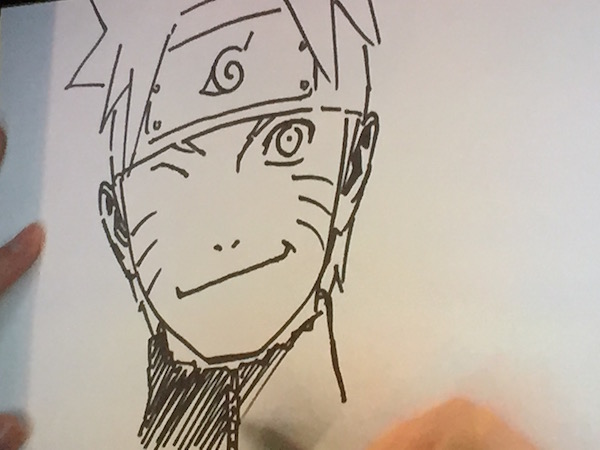
Masashi Kishimoto live-sketching Naruto at his New York Comic Con panel

Masashi Kishimoto live-sketching Naruto at his New York Comic Con panel

This was the most manga-heavy New York Comic Con I’ve been to in years; the presence of Masashi Kishimoto and the announcement of the Attack on Titan anthology were both huge, but there was a lot of other stuff going on as well, some of it behind the scenes.

I was fortunate enough to be one of the 2,200 or so people at the Masashi Kishimoto panel, which was amazing. The crowd was totally amped up, but Kishimoto was totally relaxed and looked like he was having a good time. [Comic Book Resources]

Here’s my writeup of the Kodansha Comics panel, where Noragami editor Yohei Takami did a great show and tell about how a manga goes from thumbnails (name) to inks. This was the panel where Kodansha announced two new licenses, I Am Space Dandy and Spoof on Titan, as well as the news that Faith Erin Hicks will do a gag manga for volume 7 of Vinland Saga. [Comic Book Resources]

Attack on Titan manga-ka Hajime Isayama talks about his influences and his struggle to find a publisher in a video interview. [BBC News]

A student in a Nashua, New Hampshire, high school is in trouble after officials found a “Death Note” notebook. [Anime News Network]

The Manga Bookshelf team discusses their Pick of the Week. [Manga Bookshelf]

Erica Friedman posts the latest edition of Yuri Network News. [Okazu]

If you read French, here’s a treat: An interview with Blood Lad creator Yuki Kodama. [Manganews]

I can’t say I agree with this article, but I’m posting it anyway so you can read his arguments for yourself: Justin discusses when and why he reads scanlations. [Organization Anti-Social Geniuses]

In the opposite corner is Zach Logan of the One Piece Podcast, explaining how scanlations actually can ruin your manga reading experience. [The One Piece Podcast]

Reviews

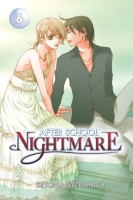
Ash Brown on vol. 6 of After School Nightmare (Experiments in Manga)
Connie on vol. 3 of Alice in the Country of Joker: Nightmare Trilogy (Slightly Biased Manga)
Connie on vol. 3 of The Betrayal Knows My Name (Slightly Biased Manga)
Johanna Draper Carlson on vol. 2 of Emma (Comics Worth Reading)
Lori Henderson on vols. 1-4 of Fire Inspector Nanase (Manga Xanadu)
Matthew Alexander on vol. 2 of Gou-Dere Sora Nagihara (The Fandom Post)
Johanna Draper Carlson on vol. 5 of High School Debut (3-in-1 edition) (Comics Worth Reading)
Connie on vol. 7 of Junjo Romantica (Slightly Biased Manga)
Connie on vols. 14 and 15 of Kamisama Kiss (Slightly Biased Manga)
Kory Cerjak on vol. 1 of Komomo Confiserie (The Fandom Post)
Matthew Alexander on vol. 3 of Maria the Virgin Witch (The Fandom Post)
Johanna Draper Carlson on vols. 3 and 4 of My Neighbor Seki (Comics Worth Reading)
Connie on Olympos (Slightly Biased Manga)
Kristin on vol. 1 of Rose Guns Days (Comic Attack)
Johanna Draper Carlson on vol. 2 of Secret (Comics Worth Reading)
Johanna Draper Carlson on Showa 1926-1939: A History of Japan (Comics Worth Reading)
Leroy Douresseaux on vol. 7 of Tiger and Bunny (The Comic Book Bin)
Sean Gaffney on vol. 1 of Tokyo ESP (A Case Suitable for Treatment)
Johanna Draper Carlson on vols. 2 and 3 of Yukarism (Comics Worth Reading)


Filed Under: MANGABLOG

Tokyo ESP, Vol. 1

October 18, 2015 by Sean Gaffney

By Hajime Segawa. Released in Japan in two separate volumes by Kadokawa Shoten, serialization ongoing in the magazine Shonen Ace. Released in North America by Vertical Comics.

Sometimes it’s quite pleasant being totally ignorant of a title before digging into it. It’s very much unlike me, as I’m the sort who always spoils himself and reads the endings first, so when I preorder a title there’s usually a certain amount of research done on my part. Tokyo ESP is, I found, by the creator of Ga-Rei, another Shonen Ace volume about ghosts and demons that ran for about a dozen volumes and is available on Bookwalker’s online site. But I didn’t really look into Tokyo ESP much before I read it. It also involves ‘kids with powers’, but in this case they’re full fledged superhero powers. I’m not sure if there has been an uptick in Western-style superhero manga recently, or if we’re just actually seeing the titles licensed over here, but it’s interesting to compare My Hero Academia, which trains people to use their powers in a school, to Tokyo ESP, where the heroes are outcasts and have to hide everything.

tokyoesp1

There’s a lot I enjoyed in this first omnibus volume. The heroine is great throughout. The daughter of a cop who’s fallen on hard times, much of the humor in the title comes from her obsessive penny-pinching and attempts to hold down jobs – attempts which get far more difficult when she suddenly finds she can pass through walls, floors, etc. This turns out to have been the result of her seeing a swarm of flying fish in the sky one evening, one of whom went through her and seemingly gave her said powers. Now she teams up with an eccentric but handsome guy who seems to have a tragic past (and who can teleport) to fight off villains who want to become supervillains, and mysterious girls who want to change the world, in a totally ominous way.

There’s a lot of humor in this volume, as I said before. The art helps – much of the fun comes from watching the goofy reaction faces that Rinka and the other characters put on. Sometimes the humor slips over into outright parody, such as when the Ghostbusters show up to attempt to capture the penguin you see on the cover, who’s also involved in this to a degree. And by that I mean the actual cast – they’re clearly drawn to be Harold Ramis and Dan Ackroyd (the Bill Murray likeness is less clear.) And there’s also the usual hijinks based humor you’d expect in a title like this – the superpowers can be hilarious, particularly Rinka’s dad, who winds up causing chaos due to his being able to attract things to him – i.e., cars.

That said, there’s a lot of death in this volume as well, and I would not be surprised if this is one of those series that gets darker the further it goes on. But it’s a solid series to start with, particularly if you enjoy supernatural action-adventure type stories. The action is well-handled as well, as Rinka’s been trained in various martial arts which she uses in addition to her superpowers, and there’s lots of fire and explosions too. I look forward to seeing what faces Rinka makes in the next volume.

Filed Under: REVIEWS

The Manga Revue: The Complete Chi’s Sweet Home and Tokyo ESP

October 16, 2015 by Katherine Dacey

The theme of this week’s column: New(ish) Titles from Vertical Comics. Up for review: The Complete Chi’s Sweet Home, an omnibus treatment of Konami Kanata’s beloved cat comic, and Tokyo ESP, a new series about mutant teens with superpowers who want to save the world.

chi_complete_v_1The Complete Chi’s Sweet Home, Part One
By Konami Kanata
No rating; Suitable for all ages
Vertical Comics, $24.95

When I first reviewed Chi’s Sweet Home in 2010, I described it as “a deceptively simple story about a family that adopts a wayward kitten.” I argued that “Chi is more than just cute kitty antics; it’s a thoughtful reflection on the joys and difficulties of pet ownership, one that invites readers of all ages to see the world through their cat or dog’s eyes and imagine how an animal adapts to life among humans.”

Revisiting Chi’s Sweet Home five years later, I stand by my original assessment. I still found Chi’s behavior adorable — or should that be adowable? — and her family’s amused and exasperated reactions true to my own experiences as a cat owner. At the same time, however, I appreciated the opportunity to read more of Chi’s story in one sitting, as Konami Kanata does a fine job of recreating the day-to-day rhythm of living with a kitten or puppy, from the obvious — accidents, clawed furniture — the to subtle — mastering the art of jumping onto a table or chair, examining strange new objects. As an added bonus, the Complete edition includes a sprinkling of chapters from Kanata’s first big hit, FukuFuku: Kitten Tales, and a larger trim size that gives Kanata’s playful, charming watercolors more room to breathe.

The verdict: Chi is an indispensable addition to any animal lover’s bookshelf. Look for Part Two (which collects volumes 4-6) on January 16, 2016.

tokyoesp_v_1Tokyo ESP, Vol. 1
By Hajime Segawa
No rating; Suitable for older teens
Vertical Comics, $15.95

On paper, Tokyo ESP sounds like The X-Men or The Fantastic Four: a group of Tokyo residents begin manifesting cool new powers — teleporting, walking through walks — after exposure to a supernatural phenomenon. Some ESPers embrace the criminal possibilities of these gifts, while others vow to use them for good, pitting the two groups against each other in epic fashion.

Perhaps mindful of the similarities between his creation and Stan Lee’s, Hajime Segawa makes a game effort to individualize his creation with an abundance of quirky details: a flying penguin sidekick, a night sky filled with glowing fishes. As a result, long stretches of Tokyo ESP feel more like a spaghetti-throwing exercise than genuine world-building; the reader is never certain if there’s an underlying logic that would explain what we’re seeing, or if Segawa is making it up as he goes along. By the end of volume one, you may remember the flying penguin more clearly than anything that actually happened in those first nine chapters, as the plot is standard shonen fodder: super-powered teens saving the world.

The verdict: Your mileage may vary; some readers will undoubtedly find the sleek character designs and out-of-left-field plot developments appealing, while others will find the storytelling too frenetic to be engaging.

Reviews: Sean Gaffney takes a fond look at the final volume of Oh! My Goddess, which arrived in stores this week. Over at Comics & Cola, Zainab Akhtar reviews the fifth and final volume of Taiyo Matsumoto’s bittersweet Sunny.

Sarah on vol. 2 of The Ancient Magus’ Bride (Anime UK News)
Lori Henderson on vol. 1 of Assassination Classroom (Good Comics for Kids)
Matt Brady on vols. 2-4 of Assassination Classroom (Warren Peace Sings the Blues)
L.B. Bryant on vol. 6 of Assassination Classroom (The Otaku Review)
L.B. Bryant on vol. 1 of Black Bullet (ICv2)
Justin Stroman on vol. 1 of Bodacious Space Pirates: Abyss of Hyperspace (Organization Anti-Social Geniuses)
Connie on vol. 8 of Cross Game (Slightly Biased Manga)
Connie on vol. 16 of Dengeki Daisy (Slightly Biased Manga)
Connie on vol. 11 of Dorohedoro (Slightly Biased Manga)
Helen on Fuuka (Organization Anti-Social Geniuses)
Ash Brown on vol. 3 of Hide and Seek (Experiments in Manga)
Ian Wolf on vol. 1 of Komomo Confiserie (Anime UK News)
Austin Lanari on vol. 10 of Lone Wolf and Cub Omnibus (Comic Bastards)
Megan R. on Neon Genesis Evangelion: Angelic Days (The Manga Test Drive)
Steve Bennett on vol. 1 of One-Punch Man (ICv2)
Dustin Cabeal on vol. 2 of One-Punch Man (Comic Bastards)
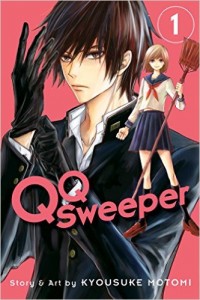
Anna N. on vol. 1 of QQ Sweeper (The Manga Report)
L.B. Bryant on vol. 1 of Rose Guns Days: Season One (ICv2)
Jocelyn Allen on vol. 1 of Shashinya Kafka (Brain vs. Book)
Sean Gaffney on Showa 1953-1989: A History of Japan (A Case Suitable for Treatment)
Alice Vernon on Sword Art Online: Progressive (Girls Like Comics)
Erica Friedman on vol. 4 of Tsuki to Sekai to Etoile (Okazu)

Filed Under: MANGABLOG, REVIEWS Tagged With: chi's sweet home, Manga Review, Tokyo ESP, Vertical Comics

After School Nightmare, Vol. 6

October 16, 2015 by Ash Brown

After School Nightmare, Volume 6Creator: Setona Mizushiro
U.S. publisher: Go! Comi
ISBN: 9781933617480
Released: January 2008
Original release: 2006

The sixth volume of the manga series After School Nightmare, an intense and dark psychological drama by Setona Mizushiro, was originally published in Japan in 2006. The English-language edition of After School Nightmare, Volume 6 was released by Go! Comi in 2008. Go! Comi is no more, so the entire series has gone out-of-print, but the manga still seems to be relatively easy to find. After School Nightmare is a series that honestly disturbs me, which isn’t necessarily a bad thing since in part it’s a horror manga. But while I find After School Nightmare to be disconcerting, I also find it to be oddly compelling. Mizushiro deals with some heavy issues in the series, including emotional, psychological, and physical abuse, trauma, and violence. The search for personal identity and the roles that gender and sexuality play in defining who a person is are major themes as well. In fact, it was those themes that first drew After School Nightmare to my attention.

Despite some lingering doubts, Mashiro made the decision to give up on his feelings for Sou in favor of his feelings for Kureha. Sadly for him, things aren’t turning out how he would have liked at all. Tying his masculinity to her insecurities, Mashiro wanted to feel needed by Kureha, to become her white knight and protector. But now Kureha is beginning to feel more confident in herself and trying to rely less on Mashiro. Suddenly finding himself without an acceptable role to play in their relationship, and no longer being able to meet the established though self-imposed requirements of what it means to be a man, Mashiro is thrown into turmoil. In the past he presented himself as a prince who would rescue those who were weaker than him, but it’s help that is no longer wanted nor needed. Just when he thought that he had everything finally figured out, Mashiro finds his relationships falling apart because they were built on his own insecurities and fears. He is desperate to be seen as a man by others and at the same time is terrified by the fact that he also yearns to express his femininity.

After School Nightmare, Volume 6, page 184Most of After School Nightmare takes place in one of three settings: the school grounds, the dormitories associated with the school, and the shared nightmares of the students participating in the special after school class required for their graduation. Granted, it’s not graduation in the usual sense. The students who successfully complete the course completely disappear from the campus and from the memories of those left behind, almost as if they never existed at all. The mysteries surrounding what it really means to graduate combined with the story’s limited settings create a marvelously ominous and claustrophobic atmosphere. As a result, when the series breaks from that narrow focus, it can be especially unsettling. In the sixth volume, for what I believe is the first time in After School Nightmare, a truly significant scene occurs away from the school entirely, which serves to emphasize Mashiro’s reluctance to deal with his issues head on. But it’s a moment of false freedom; he won’t be able to run away from his problems indefinitely without there being negative consequences.

The nightmares in After School Nightmare are intended to be an environment in which the students can work through their personal traumas and fears, but the participants are simultaneously stripped of many of their defenses and left incredibly vulnerable within the dreams as well. In theory, what happens in the dreams is meant to remain private and not to carry over into the waking world, but in practice that is rarely ever the case. Even so, most of Mashiro’s growth and maturation is thanks to those nightmares. It’s not until After School Nightmare, Volume 6 that he’s forced to really begin to recognize outside of them how selfish and self-centered his relationships with other people have been, how he’s using them to make himself feel better about himself, and how his actions affect others. In many ways, Mashiro’s waking life is just as much of a fantasy as the dreams he is made to share with his classmates, and both reality and nightmares can be troubling and traumatic. However, it’s the nightmares that are the more truthful and honest even though they can also be highly symbolic and strange. In the end, as horrifying as the dreams are, the denial and insidious falsehoods of reality may ultimately be the more damaging.

Filed Under: REVIEWS Tagged With: after school nightmare, Go! Comi, manga, Setona Mizushiro

Oh My Goddess!, Vol. 48

October 16, 2015 by Sean Gaffney

By Kosuke Fujishima. Released in Japan by Kodansha, serialized in the magazine Afternoon. Released in North America by Dark Horse.

It’s going to feel very strange living in a world where no new Oh My Goddess is coming out. As I’ve said before, this was only my second manga series ever after Ranma, and I’ve been following it in various formats for as long as I’ve been in the fandom. And now it’s over, with an ending that’s a bit rushed, to be honest, but gives us one last look at our favorite gods, goddesses, and (one) human (more on that later), seeing them escape Hell and return to yet another completely destroyed temple in time to have a pseudo-wedding. No, there’s no kiss or honeymoon – this isn’t the Oh My Goddess of Vol. 1. Even if their sexy times limiters are now turned off, K1 and Belldandy are still incorruptibly pure pureness personified.

omg48

In a series this long, there are certain things that we not only expect to see, but which are brought out to help wrap the plot up – character development come full circle. This includes Skuld’s kludged-together improvements having self-destruct mode at the most opportune times, and Lind’s hilarious inability to repair anything being used in order to allow the gang the time to escape at the last second. There’s a lot of fast-paced action and chatter from the usual suspects, which don’t really include Keiichi and Belldandy – let’s be honest, their big emotional wrap up happened in the last couple of volumes. Hild and Ansuz also have a very interesting discussion on the nature of love and what is and isn’t appropriate to sacrifice for it, something that I think filters down into how their daughters were raised.

Everything ends with a wedding, but unfortunately it’s an impromptu one involving only the goddesses that have formed around Keiichi (and demons – Mara is still used here for comedy relief, as she has been for 48 volumes or so). While this is sweet and looks nice, I do wish we’d gone an extra chapter and shown K1 and Bell getting married among their friends and family. The human cast has at one time or another been just as important in the series as the goddesses,and while Belldandy has a token mention of some of them earlier in Hell, it would have been nice to see them. Certainly I imagine Megumi will have words with her brother about getting married without their parents or his sister involved.

And so the series comes to a close, and Fujishima has moved on to his next project,which debuts over here in 2016. I’m not sure how successful someone would be in getting new fans addicted to Oh My Goddess the way us old-school fans are – so much of what defines the series has been mined for other anime and manga over the years that you don’t really realize how influential it really was. There’s also the frustration of the main relationship being so static and sexless for so long, something unfortunately also highly influential in harem comedies, though at least Fujishima hammered on an explanation at the last minute. Have a happy marriage, Keiichi and Belldandy. We’ll miss you.

Filed Under: REVIEWS

Manga the Week of 10/21

October 15, 2015 by Sean Gaffney, Michelle Smith, Ash Brown, MJ and Anna N 2 Comments

SEAN: Even though this is the quietest week of a big month… it’s still fairly big.

Dark Horse has a third volume of Oreimo: Kuroneko, for those who wanted a better ending than the canonical one, i.e. everyone.

ldk1

Kodansha has the debut of a new shoujo series, L♥DK. It’s the sort I describe as a ‘potboiler’, and I think it will do well with those who love soap opera situations.

MICHELLE: I will be checking this one out. If it’s cracktastic, I hope it’s in a good way!

ASH: Soap opera situations? I am intrigued.

MJ: Who doesn’t love a good soap opera?

ANNA: I know I do!

SEAN: One Peace has a 2nd light novel for Rise of the Shield Hero.

Seven Seas caters to its fanbase with a second volume of Magika Swordsman and Summoner.

And also has a 3rd volume of Nurse Hitomi’s Monster Infirmary, which has monster girls and more ecchi antics.

And we round off our trio of otaku titles with Pandora in the Crimson Shell: Ghost Urn 2, which is drawn by Rikdo Koshi as if he never left the world of hentai doujinshi, and is written by Masamune Shirow as if he didn’t either.

Udon gives us the first volume of the Kill La Kill manga, which, if even one-tenth of the folks who gush about the anime on the internet purchase it, will sell like hotcakes.

ASH: I hope it does! Udon always does an excellent job with its manga; I’d like to see the publisher offer more.

ninjaslayer1

SEAN: Vertical has the first of the Ninja Slayer manga (not to be confused with the Kodansha-licensed spinoff Ninja Slayer Kills) by the possibly imaginary American team of Bradley Bond and Philip “Ninj@” Morzez.

ASH: I wasn’t enamored with the spinoff, but I do plan on giving this series a try.

SEAN: If you always wanted to read Claymore but were waiting for a way to get all 27 volumes in one box set, Viz is the answer to your prayers.

MJ: Ooooooh, nice!

SEAN: And there’s also a 6th volume of the Special Edition of Monster, possibly with added depressing bits.

MICHELLE: I didn’t realize that these special editions had bonus material!

ASH: Do they?!

SEAN: They don’t, I was being silly. :)

MICHELLE: Oh, good!

SEAN: Lastly, there’s 3rd volume of runaway zombie hit Tokyo Ghoul.

Which of these varied titles most appeals to you?

Filed Under: FEATURES, manga the week of

Hide and Seek, Vol. 3

October 14, 2015 by Ash Brown

Hide and Seek, Volume 3Creator: Yaya Sakuragi
U.S. publisher: Viz Media
ISBN: 9781421579689
Released: March 2015
Original release: 2014

Yaya Sakuragi has had quite a few of her boys’ love manga translated and released in English: Tea for Two; Hey, Sensei?; Stay Close to Me; Bond of Dreams, Bond of Love; and, most recently, Hide and Seek. Hey, Sensei? was actually my introduction to boys’ love, and I tend to enjoy Sakuragi’s work, so I’ve made a point to read and collect it all. As for Hide and Seek, the third and final volume was originally published in Japan in 2014. The English-language edition was released in 2015 by Sublime Manga, the boys’ love imprint associated with Viz Media. Hide and Seek is technically a spinoff of Bond of Dreams, Bond of Love, but it stands completely on its own. However, readers familiar with Bond of Dreams, Bond of Love will likely appreciate the references made to the earlier series. Tea for Two is even more distantly related to Hide and Seek, the connection between the two being made indirectly through Bond of Dreams, Bond of Love. It’s not at all necessary to have read Tea for Two or Bond of Dreams, Bond of Love to enjoy Hide and Seek, but I do like how all three series are linked together.

It has been years since Shuji has been in a serious relationship. Although he’s still on good terms with his ex-wife, his marriage was a failure and he hasn’t done much more than casually play around since the divorce. But now, somewhat unexpectedly, Shuji finds himself in what may very well become something more long-term, and with another man no less. The relationship between Shuji and the young doctor Saji has had a few bumps along the way, and both of the men still occasionally feel insecure, but for the most part they’ve been able to move past the major drama. That doesn’t mean everything has been completely worked out, though. As grown adults, Shuji and Saji each have their own family responsibilities and careers to take into consideration. Shuji has his daughter Chii to look after and the business at his candy store isn’t as good as it once was while Saji is having a difficult time convincing his grandfather to allow him to take over the family’s local clinic. So, there are still a few matters that Shuji and Saji will need to address before their relationship can go much further.

Hide and Seek, Volume 3, page 68Although Hide and Seek tends to be more serious, mature, and realistic, especially when compared to its immediate predecessor Bond of Dreams, Bond of Love, at the same time there is still plenty of humor and lightheartedness to the series. For example, the major dilemma in the first chapter of Hide and Seek, Volume 3 revolves around Shuji “manning up” in order to cuddle, with delightful results. Shuji’s love of costume and roleplay comes up again, too, which has been something of a running joke in both Bond of Dreams, Bond of Love and Hide and Seek. I’ve really enjoyed seeing the relationship between Shuji and Saji develop as the series has progressed; they’re adorable and surprisingly sweet together, even considering (or perhaps even because of) their drastically different personalities. It’s obvious that they each care tremendously for other person. What makes their relationship work, and one of the things that I particularly love about Hide and Seek, is their willingness to push through their initial fear and embarrassment over expressing themselves and actually communicate with each other.

Seeing as I had enjoyed Sakuragi’s earlier works, I was fairly confident that I would like Hide and Seek, too. What I didn’t anticipate was just how much the series would end up appealing to me; I think it may now even be my favorite Sakuragi manga. I find this to be a little surprising because, although Saji is a type of character that I’m usually fond of, in general Shuji wasn’t. But over the course of Hide and Seek I came to really like and care about him. He has evolved from simply being supporting comic relief in Bond of Dreams, Bond of Love into a fully fledged, well-developed character in his own right. Much of Hide and Seek, Volume 3 is devoted to his family circumstances, which are revealed to be a little different than readers (and Saji, for that matter) were initially led to believe. Chii’s mother and her current boyfriend play a greater role, but the series implies and is open-ended enough that there is room for Saji, Shuji, and Chii to form a trio as well. Perhaps it’s optimism and wishful thinking on my part, but it makes me extremely happy that by the end of Hide and Seek, Chii may very well have gained two caring families.

Filed Under: REVIEWS Tagged With: Hide and Seek, manga, Sublime Manga, viz media, Yaya Sakuragi

QQ Sweeper Vol. 1

October 13, 2015 by Anna N

QQ Sweeper Volume 1 by Kyousuke Motomi

I’m generally excited for any debut series in the Shojo Beat line, but I was particularly interested in reading the first volume of QQ Sweeper because I enjoyed Dengeki Daisy so much. Motomi’s slightly offbeat and cynical sense of humor makes her series stand out, and I was curious to see how the paranormal and cleaning would come together in this title.

Motomi does cranky heroes well, so I thought the male lead of the series was quite promising. Kyutaro Horikita is a member of the beautification committee at his school, and he’s introduced in the first chapter as a bit of a loner who is obsessed with cleaning. He comes across a girl sleeping in an abandoned room in his school. Fumi Nishioka is a new transfer student who is homeless, trying to hide evidence of how poor she is, and on a mission to become a real life Cinderella by snagging a rich guy. This doesn’t sound like the most flattering character description, but Motomi also is able to easily create sympathetic yet quirky heroines. Motomi’s slightly offbeat humor is on display in the first few panels, when Kyutaro seems to rely on threatening people with cucumbers a bit too much, and Fumi enters into a dangerous fugue state when she’s assessing the material possessions of a male student/mark.

I don’t even find shoujo cliches all that annoying when Motomi is executing them. In very quick order, Fumi finds herself interviewing for and getting a position as housekeeper for her school principal, who just happens to be Kyutaro’s older brother. Fumi quickly discovers that Kyutaro’s obsession with cleaning extends to cleansing the spiritual plane, and she also has the ability to help him. Motomi packs a great deal of plot and character development into this single volume, setting up the relationships between the characters, and establishing the background for the supernatural aspects of the manga. This is a very solid addition to the Shojo Beat lineup, and I’m very much looking forward to Motomi’s slightly twisted take on the supernatural romance genre in future volumes.

qqsweeper1

Filed Under: REVIEWS Tagged With: QQ Sweeper, shojo beat, shoujo, viz media

Showa 1953-1989: A History of Japan

October 13, 2015 by Sean Gaffney

By Shigeru Mizuki. Released in Japan as “Comic Shouwashi” by Kodansha. Released in North America by Drawn & Quarterly.

This was always going to be the trickiest volume of Showa. First of all, the span it’s covering is a good three times that of the other books. And secondly, the buildup and fallout from World War II, and the War itself, were amazing dramatic narratives. The rest of the Showa period has its interesting points, but there’s a struggle here to make it as exciting as the other three books. This might be why we see so much about murders and scandals, even more than the previous books. There’s also a constant reminder of the economic injustice in Japan, even as the country itself grows more prosperous. Again, having Nezumi Otoko as the narrator (though he’s at his most subdued here) helps. The success of postwar Japan is balanced by failures.

showa4

That cover image, by the way, has changed since its prerelease – the book I have has the bottom image replaced with a drawing of a bustling city with freeways surrounding it. Much of the final volume of Showa deals, in one way or another, with money. Companies get richer, politicians accept bribes, and at one point a man finds 100 million yen taped randomly to a bridge. As for Mizuki himself, we see him at the start just as poor as he’s always been, pawning everything he owns and eating food past its sell-by date. As time goes on, though, his desire to keep the ‘hopeless guy’ caricature starts to fail him, as we do see Mizuki doing better. He gets married in an arranged way, but seems reasonably happy about it, and has two kids. His yokai manga start to sell, and we see (but don’t really hear about) his improving circumstances. He’s even able to return to the South Seas a couple of times to meet the islanders who saved him in WWII.

There are also some highly disturbing fantasy sequences in this volume, reminding us that Mizuki makes his living writing horror, even if it can be goofy horror at times. One sequence where he has his soul stolen by a doppelganger and goes to the afterlife is surreal and cruel, as he narrates aloud that the “replacement” Mizuki has been living his life ever since that day. A funnier bit, but the humor is black as pitch, has a shyster talk Mizuki and his wife into a sort of ‘swingers’ arrangement where they get to choose from various girls-for-hire stacked up like cordwood on a boat. Mizuki asks what happens if the spouse gets cold feet, and we see a shot of his wife getting drugged and flash frozen in the back seat of a car. Mizuki’s sense of humor can be a bit beyond the pale at times, and I am pleased that the sequence sort of petered out after this.

There are many other reasons to enjoy this volume – I liked seeing the real-life visual inspirations for Nezumi Otoko and Kitaro here. And even though the story of Japan’s last 36 years of Showa is not the compelling narrative force of the first 27, this still remains one of his most important books. The final chapter ends with an inspiring rant against the evils of war, and how he hopes this history will show why it’s crucial to prevent it. An amazing series of books.

Filed Under: REVIEWS

Bookshelf Briefs 10/12/15

October 12, 2015 by Sean Gaffney, Michelle Smith and Anna N Leave a Comment

Sean, Anna, and Michelle present a smattering of briefy goodness.

demonprince2The Demon Prince of Momochi House, Vol. 2 | By Aya Shouoto | VIZ Media – At first, I thought this must be a short series, since Himari and Aoi already have feelings for each other by chapter four, but it’s not especially so. Thankfully, the pace slows down a little more toward the end of the volume, as Himari transfers into a new school. Curious classmates follow her home to her notoriously haunted house, and after a bit of comedic drag by the bishounen occupants, we learn that one of the visitors is already dead. It’s a nice bit of creepiness that will carry over into the next volume, hopefully boding well for more stories of a similar nature down the pipeline. Too, I liked the too-short bonus story of how Aoi came to reside within Momochi House. I am intrigued and will continue to follow this series! – Michelle Smith

foodwars8Food Wars!: Shokugeki no Soma, Vol. 8 | By Yoto Tsukuda and Shun Saeki | Viz Media – I leave out contributor Yuki Morisaka in these briefs for reasons of space, but it’s fairly clear that she’s a second food expert on this title. The addition of the recipes makes sure that the series doesn’t get too ridiculous with its culinary competitions—when Alice uses liquid nitrogen to prepare her bento meal, it’s lampshaded that the bento recipe provided is a “super-easy” version of same. As for the contest, after Megumi’s spotlight last time, this time it’s Soma that gets to move on—though Megumi does have a not-so-shocking realization about her feelings for him. The question is not whether Soma will get past Alice—the nature of the title is not going to have him lose here. It’s how that makes us want more. – Sean Gaffney

sidonia14Knights of Sidonia, Vol. 14 | By Tsutomu Nihei | Vertical Comics – Perhaps it’s an understatement to say that things are not looking good for the crew of the Sidonia. Spurred into the offensive against a huge cluster ship by the fact that it will only get bigger if they wait, two attack fleets are dispatched without injured ace Tanikaze and soon more gauna materialize to destroy half of them. Still more gauna threaten the Sidonia and, oh yeah, there’s a rogue crazy hybrid out there to contend with, as well. It’s a tense volume and I love that I can actually believe that Nihei really will allow humanity’s last hope to perish. My sole quibble is that when the captain tells Tanikaze about his origins and seemingly attempts to seduce him he has basically no reaction to the former and we never see response to the latter. You’d better not cheat on Tsumugi, you jerk! – Michelle Smith

libwars14Library Wars: Love & War, Vol. 14 | Original Concept by Hiro Arikawa, Story and Art by Kiiro Yumi | Viz Media – As ever, the basic premise of Library Wars is essentially ridiculous, and as a result it’s pretty hard to care about all the plotting the gang is doing to get an author whose freedom of expression is being denied to a foreign embassy so that he might defect. And yet, this setup does result in some terrific moments, like Shibazaki being omniscient (to anyone familiar with Suits, Shibazaki is the manga equivalent of Donna), Iku slinging an injured Dojo over her shoulder like a sack of potatoes, and the impossible-not-to-love two-page spread depicting a certain couple’s first kiss. Library Wars is very far from deep, but it is fun, and I expect that the next and final volume will offer up some satisfying resolution. Wonder if VIZ will release the sequel! – Michelle Smith

monster10My Little Monster, Vol. 10 | By Robico | Kodansha Comics – Remember just one volume ago, where sweetly, slowly developing high school romance reigned supreme? Quite adeptly, Robico turns things on their head in volume ten. It’s Yuzan’s birthday, and his scandal-prone famous father is adamant that Haru attend the party for the sake of public appearances. He goes, and it’s awful, but before then we get some much-needed insight into Yuzan’s perspective. All along, I kind of thought Haru’s effortless academic superiority was just a throwaway attribute, but it turns out that it’s the source of all his problems. Young Yuzan envied Haru so much that he contrived to get him thrown out of their father’s house, and when Haru learns that Shizuku is jealous too, he can’t take it. It’s an excellent, though upsetting, volume and I absolutely love feeling that a happy ending is not a foregone conclusion. Even more strongly recommended than previously! – Michelle Smith

seraph6Seraph of the End: Vampire Reign, Vol. 6 | by Takaya Kagami and Yamato Yamamoto | Viz Media – This volume continues to show a bit of world building and backstory as Yu and Kimizuki face the demons inside their cursed weapons to gain yet another level of power. The political machinations in the Japanese Imperial Demon Army and the vampire nobility are also explained a bit, as Yu and Mika are set up for yet another confrontation. I enjoy the blend of character development and demonic weapon vs vampire action in Seraph of the End, mostly because there’s are more interesting storylines in this manga than the typical shonen action title. – Anna N

toriko30Toriko, Vol. 30 | By Mitsutoshi Shimabukuro | Viz Media – I do wonder if the reason for the big romance advancement this volume in a series where romance, let’s face it, is way way down on the list of importance was to dial back the series’ burgeoning BL fandom in Japan. Jump often gets accused of pandering to BL fans. Toriko isn’t Gintama, but they too can’t quite resist making fun of it—when Toriko accepts Rin’s proposal, Sunny straight up asks what about Komatsu? And Komatsu has dinner with a cute, like-minded chef not long after that. I think it would have more impact if Rin had been given a larger role in the story to date, but it’s still pretty heartwarming, particularly as it’s not the “I have no idea what I just agreed to” proposal acceptance I was assuming. – Sean Gaffney

Filed Under: Bookshelf Briefs

  • « Go to Previous Page
  • Page 1
  • Interim pages omitted …
  • Page 520
  • Page 521
  • Page 522
  • Page 523
  • Page 524
  • Interim pages omitted …
  • Page 1049
  • Go to Next Page »
 | Log in
Copyright © 2010 Manga Bookshelf | Powered by WordPress & the Genesis Framework