• Skip to primary navigation
  • Skip to main content
  • Skip to primary sidebar
  • Home
  • About Us
    • Privacy Policy
    • Comment Policy
    • Disclosures & Disclaimers
  • Resources
    • Links, Essays & Articles
    • Fandomology!
    • CLAMP Directory
    • BlogRoll
  • Features & Columns
    • 3 Things Thursday
    • Adventures in the Key of Shoujo
    • Bit & Blips (game reviews)
    • BL BOOKRACK
    • Bookshelf Briefs
    • Bringing the Drama
    • Comic Conversion
    • Fanservice Friday
    • Going Digital
    • It Came From the Sinosphere
    • License This!
    • Magazine no Mori
    • My Week in Manga
    • OFF THE SHELF
    • Not By Manga Alone
    • PICK OF THE WEEK
    • Subtitles & Sensibility
    • Weekly Shonen Jump Recaps
  • Manga Moveable Feast
    • MMF Full Archive
    • Yun Kouga
    • CLAMP
    • Shojo Beat
    • Osamu Tezuka
    • Sailor Moon
    • Fruits Basket
    • Takehiko Inoue
    • Wild Adapter
    • One Piece
    • After School Nightmare
    • Karakuri Odette
    • Paradise Kiss
    • The Color Trilogy
    • To Terra…
    • Sexy Voice & Robo
  • Browse by Author
    • Sean Gaffney
    • Anna Neatrour
    • Michelle Smith
    • Katherine Dacey
    • MJ
    • Brigid Alverson
    • Travis Anderson
    • Phillip Anthony
    • Derek Bown
    • Jaci Dahlvang
    • Angela Eastman
    • Erica Friedman
    • Sara K.
    • Megan Purdy
    • Emily Snodgrass
    • Nancy Thistlethwaite
    • Eva Volin
    • David Welsh
  • MB Blogs
    • A Case Suitable For Treatment
    • Experiments in Manga
    • MangaBlog
    • The Manga Critic
    • Manga Report
    • Soliloquy in Blue
    • Manga Curmudgeon (archive)

Manga Bookshelf

Discussion, Resources, Roundtables, & Reviews

Blog

A Girl on the Shore

March 16, 2016 by Ash Brown

A Girl on the ShoreCreator: Inio Asano
U.S. publisher: Vertical
ISBN: 9781941220856
Released: January 2016
Original release: 2011-2013

Several of Inio Asano’s manga have been released in English in the past—Solanin, What A Wonderful World!, and Nijigahara Holograph—and I’ve read every one. While they all left a significant impression on me and can be difficult works, Nijigahara Holograph in particular floored me, further convincing me to seek out more of Asano’s manga. Vertical Comics published one of Asano’s more recent manga series A Girl on the Shore in early 2016. While the English-language edition of A Girl on the Shore is complete in a single omnibus, in Japan the series was originally released in two volumes which were published in 2011 and 2013. I didn’t actually know much about A Girl on the Shore before picking it up beyond the fact it was by Asano, but I rightfully anticipated that it would be a fairly challenging read in addition to being beautifully drawn.

Junior high can be a trying time for anyone as students become more aware of themselves and each other while hormones and the intense desire to belong complicate relationships and they make decisions that will greatly influence their futures. Koume has a crush on her upperclassman Misaki, but he turns out to be something of a playboy, taking advantage of her interest by receiving sexual favors with no intention of returning her feelings. In order to cope, Koume turns around and does the same thing to her classmate Keisuke who she had previously rejected after he confessed that he liked her. Keisuke and Koume both know that they’re manipulating and using each other, but that doesn’t stop their increasingly intimate relationship from evolving and their feelings from changing. Both of them are searching for some deeper connection and meaning in their lives. For a time, having sex together seems to satisfy that need, but in the end the physical relationship only obscures their underlying emotional crises.
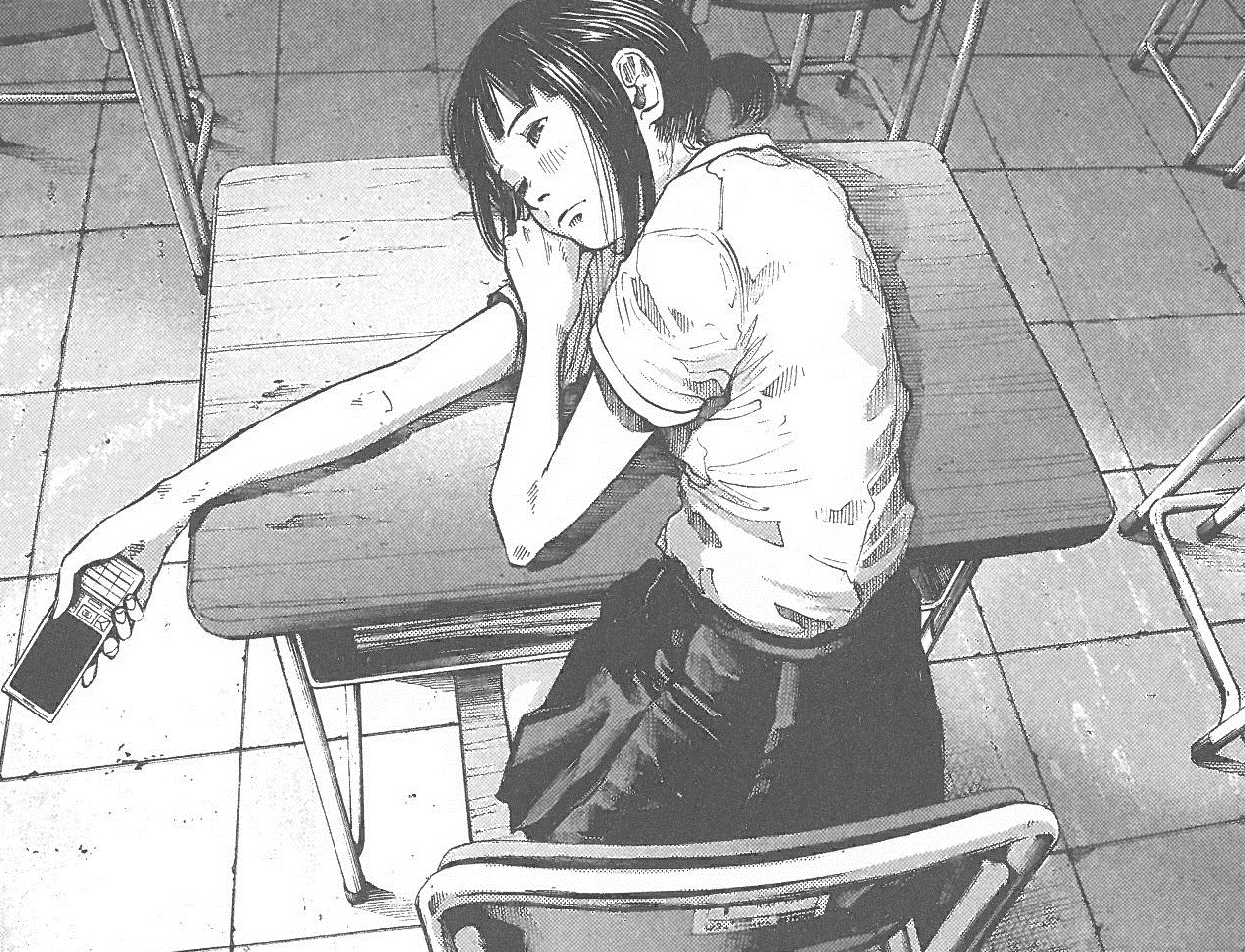
A Girl on the Shore, page 147A Girl on the Shore contains numerous and frank depictions of teenage sex. However, the sexual content of the volume is integral to the story that Asano is telling and carries meaning beyond titillation. In fact, A Girl on the Shore provides a deliberately uncomfortable and voyeuristic reading experience, often showing events and personal encounters unfolding directly from the characters’ perspectives. Sex isn’t romanticized or idealized in the manga and carries with it significant repercussions. Koume and Keisuke’s relationship has consequences not only for them both, but for the others around them as well. Physically the two are intimate and daring, but there continues to be a separation between them and they remain emotionally distant. Their relationship is an incredibly important one and their feelings and needs become progressively intertwined, but they are never quite able to completely and truly connect with each other.

Asano’s works tend to be emotionally intense and A Girl on the Shore is no exception. The manga is filled with discontent and sadness that occasionally erupts in physical or psychological violence. A Girl on the Shore is coming-of-age story that can be brutally unsettling and hard-hitting. Koume finds herself drawn more and more towards Keisuke and the complicated power dynamics of their intimacy, seemingly oblivious of the toll that the relationship is taking on them both. Independent of that, Keisuke is also dealing with some heavy family matters and emotional issues of his own. Ultimately, one of the most prominent themes of A Girl on the Shore is loneliness and isolation even in the midst of a relationship. This is beautifully emphasized by Asano’s artwork in which detailed backgrounds, dramatic perspectives, layout and use of space form settings in which people seem set apart not only from others but the world around them as well. At times A Girl on the Shore can tend to be overwhelmingly bleak and tragic, but there is a deliberate narrative purpose and intent behind the pain and pessimism.

Filed Under: REVIEWS Tagged With: Inio Asano, manga, vertical, Vertical Comics

Skip Beat! Vol. 36

March 15, 2016 by Anna N

Skip Beat Volume 36 by Yoshiki Nakamura

I feel like most reviews of Skip Beat could just be summed up as, “Skip Beat, long-running shoujo series, continues to be relentlessly excellent,” but as I was reading the latest volume there were several specific things that struck me about it. I absolutely loved the Heel siblings plot, and while the manga has to move on from Ren and Kyoko being forced to be in close proximity to each other as they pretend to be gothic semi-incestual siblings in order to further Ren’s acting career as he acts in a drama while pretending to be an entirely different actor than “Ren” which is itself a totally different persona from his genuine personality, I’m glad that this volume eases out of the story line gently, with Kyoko getting one last big scene as Setsu.

Early in this volume I was reminded at how good Nakamura is at drawing Kyoko in freak-out mode, as she suffers agony in telling Ren that she kissed her long-lost fairy prince Corn (who is also Ren). Ren is pushing Kyoko a bit to get an emotional reaction from her, but he also is genuinely grateful for her help as they part and she heads back to Japan to resume her own acting career. Kyoko has matured so much as an actress and a person, and while she’s handling a crisis on her new show, things get complicated fast when Sho visits her home.

A settled and stable shoujo heroine doesn’t make for much drama, and now in addition to Sho’s reappearance, Kyoko is confronted with the specter of her long-absent horrible mother. Just when she starts to get a bit of emotional equilibrium, something happens to throw things off!

Lettering Skip Beat! must be a fun and challenging job, as there are different fonts used for Kyoko when she’s beset by the angry demon side of her personality, when she’s yelling at Sho, and when she’s calmly giving advice to a fellow actress. All in all, this was a very entertaining volume helping Skip Beat! transition away from one story line into a new direction, and I’m looking forward to seeing what happens next.

sb36

Filed Under: REVIEWS Tagged With: shojo, shoujo, Skip Beat!, viz media

Bookshelf Briefs 3/15/16

March 15, 2016 by Sean Gaffney and Michelle Smith Leave a Comment

Beware the Ides of Briefs!

barakamon9Barakamon, Vol. 9 | By Satsuki Yoshino | Yen Press – As this volume of Barakamon was going on, Yoshino was also beginning the Handa-kun spinoff series (also available from Yen), so it’s not surprising that we start to see the two blend together, as a former high school classmate with a grudge shows up for the annual intervillage athletic event. Handa being Handa, he doesn’t actually remember any of this, and is more concerned with prosaic matters, such as sleeping off the all-nighter he put in. That said, we see his true nature at the very end: he doesn’t actually care about personal victories if the overall victory is lost. That’s why people like him, and why folks like Hiroshi and Tama use him as an example even as they go through their own failures. – Sean Gaffney

evergreen4Evergreen, Vol. 4 | By Yuyuko Takemiya and Akira Gaskabe | Seven Seas – Since this is the final volume of Evergreen, we need to pack all the plot revelations and angst into one volume, and it can get kind of exhausting after a while. To give the manga credit, though, unlike many other “you’re brother and sister, oh wait no you aren’t after all” manga I could name (Marmalade Boy), this one does not pull back that punch, and as a result, the heartwarming romance we’ve seen developed this whole time falls apart appropriately. Which is good, but does leave you a bit dissatisfied—On-chan and Sora’s epiphany on a bus just isn’t quite the same. So in thie end, this was filled with many good ideas, but I don’t think worked as well as the author’s novels. – Sean Gaffney

idol2Idol Dreams, Vol. 2 | By Arina Tanemura | Viz Media – The problem with Idol Dreams is that the things that I think make the series more interesting—the disturbing romance between a 31-year-old in a 15-year-old’s body and her fellow idols, the adult male lead clearly showing he’s still desperately in love with her despite having a girlfriend, the unfortunate return of the guy who set this all up in the first place—are all things that I have no confidence that the author is actually going to handle properly, particularly given the interview at the back. That said, I always enjoy reading it in the moment, and I think, like Love at Fourteen, I’ll continue to enjoy it and call it problematic at the same time every review. – Sean Gaffney

nozaki2Monthly Girls’ Nozaki-kun, Vol. 2 | By Izumi Tsubaki | Yen Press –A rather strange thing happens while I read Monthly Girls’ Nozaki-kun. Although I never laugh at any of the 4-panel punchlines—and, indeed, sometimes find them deeply unfunny—positive feelings gradually build up as I read to the point where I end up enjoying the volume overall anyway. I do wonder if I like the wrong things, though. For example, my favorite aspect of this volume is the firm guidance Nozaki’s new editor gives him, spurring Nozaki to try to put himself into the shoes of his characters. Could this series actually incorporate his growth as a mangaka without changing his oddball personality? I rather doubt it. Even if that never happens, though, I will probably keep reading. – Michelle Smith

onepunch5One-Punch Man, Vol. 5 | By ONE and Yusuke Marata | Viz Media – One of the many good things about One-Punch Man is showing off the variety of character types we get in the super-powered folks. We see the overdramatic drama queens, the shirkers who use it to further their other career, and the painfully earnest ones who want to help and save people but really don’t have enough power to fight the ridiculous monsters this series can throw at you. Saitama notices, though, and he continues to take the bullet for the greater good, pretending that he’s selfish and evil to make the other heroes stand out as that much more noble. I think this is eventually going to come back and haunt him, but for now all is well, and things continue to be wiped out in one punch. – Sean Gaffney

sily12Say I Love You., Vol. 12 | By Kanae Hazuki | Kodansha Comics –After an eventful day volunteering at a kindergarten, Mei reflects that what she most wants is to be needed. Whether she knows it or not, she fulfills this role twice in this volume, first by arranging a meeting with a photographer who helps Yamato figure out why his recent photos haven’t been making him happy, and secondly by giving some good advice to Len, whose preference for online friends (who don’t know about his famous sister) backfires due to his own enigmatic fame in the world of online gaming. I wasn’t entirely sold on the Aoi siblings last volume, but for some reason, Len’s plight in particular really earned my sympathy this time. Mopey otaku or not, he’s a captivating character and I appreciate the chance to see how much Mei has grown in the way she deals with him. As always, I’m looking forward to the next volume! – Michelle Smith

skipbeat36Skip Beat!, Vol. 36 | By Yoshiki Nakamura | Viz Media – We were always going to end up here, right from the very first chapter. There was simply no way that Kyoko’s mother was not going to end up in the middle of her life, no matter how much either of them deny it. And so while I’m relieved to see that it’s time for that particular gun to be fired, I worry intensely that it is going to excuse her mother’s abuse—as so many other Japanese series have done in the name of showing off how good parents are really. Meanwhile, Box R has debuted, and unfortunately it’s not the success that Dark Moon was. Can Kyoko’s career take a failure this early? Ironically, though, the best scene in the volume is between her and Sho, two people who simply can’t accept how well they know each other. – Sean Gaffney

Skip Beat!, Vol. 36 | By Yoshiki Nakamura | VIZ Media – After a heartfelt thank-you from Ren, the Heel siblings arc comes to a close. Kyoko returns to work in Tokyo, where Box R has debuted to lackluster ratings. While she helps mentor a costar with rage issues of her own, a far more interesting plot is brewing: Kyoko’s mother now knows where she is and is making inroads into her world. She’s serving as a consultant on Moko’s new show, and has been in contact with Sho’s parents, too. This leads to the volume’s best scene, in which Sho is not only legitimately worried about Kyoko, but also encourages her not to let her mother sway her from her goals. I hadn’t realized how much I had missed their scenes, and seeing Sho recognizing her talent and respecting her ambition shows some real growth. I never thought I’d clamor for more Sho, but now I kind of am! – Michelle Smith

socute5So Cute It Hurts!!, Vol. 5 | By Go Ikeyamada | VIZ Media –While I still think this series is painfully unfunny and unashamedly generic, the fact remains that I don’t hate it as much as I used to. In fact, I even kind of like that Mitsuru had his heart broken, and instead of ending up with the girl he feels compelled to protect, it’s looking like romance is in the air with a fearless girl he sees as his equal. That was unexpected. I’m also a sucker for retrospective narration, so when some turned up at the end of volume four, hinting ominously about Aoi’s past, I was doomed. Oh, I have very little faith that the big reveal will be worth the investment of time or resolved in any way that doesn’t rely heavily on Shoujo Heroine Optimism, but I’ll still read at least far enough to find out what the big secret is. Grumble grumble. – Michelle Smith

Filed Under: Bookshelf Briefs

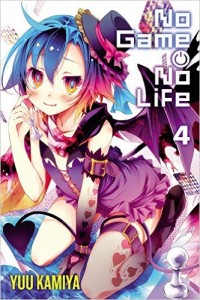
No Game No Life, Vol. 4

March 15, 2016 by Sean Gaffney

By Yuu Kamiya. Released in Japan by Media Factory. Released in North America by Yen On.

It’s always dangerous when a title that you enjoy despite its many glaring flaws has a subpar volume. Suddenly there isn’t enough to enjoy to justify wading through everything. It doesn’t help that this volume was delayed two months for unknown reasons (possibly as the translator got burnt out – it did have a 3-month schedule before this). And it’s unfortunate that this is the first volume that wasn’t adapted into an anime, so will presumably have a lot of new readers trying to see what happens next. But yes, there’s no getting around this – this is just not a great volume of No Game No Life.

ngnl4

Everything seems to be just that little bit tired, starting with Sora and Shiro, who in the first volume were hideously broken people who just happened to be crazy otaku, but here the otaku part is in full swing and were it not for a few casual mentions in the text, you’d never even remember how codependent they are on each other’s presence. This is the first of a two-parter again, so it’s possible the next volume will up the ante, but it also has to be said that nothing really seems to threaten our heroes. Sure, they initially refuse to play the datesim simply because it’s just like that anathema, real-life romance, but once they’re in it, merely avoiding any love points seems to be fine with them. Sora and Shiro have been shown to be invincible, and that’s ALL they are here.

The other characters don’t fare much better. There are the usual NGNL levels of perversion, this time around involving the fantasy vampires and mermaids we see here. The fact that the dhampirs can suck bodily fluids other than blood is (pardon me) milked for all it’s worth, and the Sirens are succubuses whose lack of foresight and intelligence had better be undercut when we reach Volume 5 or I’m going to be pissed off. You don’t right an entire race of bimbos anymore just because it’s fun. And then there’s Ino, the old Werebeast grandpa, whose response in regards to winning the datesim was… memorable, but I’m not sure I get the manly part, and he was also used as a sexual gag regarding all the women he’d bedded over the years.

There is one bright spot in this volume, and that was the first scene with Steph, who has been left behind to deal with the kingdom while Sora and Shiro are negotiating with the Shrine Maiden. Having been forced to play against the two for thousands of games, and losing every single time, Steph has actually become scarily good at games, particularly the card games we saw her failing at in the very first volume. Of course, she’s not aware of this – she’s constantly trying to compare herself to Sora and Shiro, rather than, say, the average citizen. We are also reminded why Sora and Shiro left her there in the firt place – she’s really good at running a country, something they would be terrible at. Sadly, she then goes back to being a figure of mockery for most of the book, but that one brief shining moment was excellent.

It’s possible the next volume will turn this around. As I said, it is a two-parter of sorts. But I must admit that after reading this volume of NGNL I just felt tired.

Filed Under: REVIEWS

Pick of the Week: Real or Surreal?

March 14, 2016 by Sean Gaffney, Michelle Smith, Ash Brown, MJ and Anna N 3 Comments

real14SEAN: Though I sometimes regard reading Inio Asano as being like that required 19th century literature book in 8th grade – you know it’s worthy, but you’d rather something slightly less bleak – I have to admit that Goodnight Punpun has me intrigued, as even for Asano fans this one has more buzz than usual. And it’s a big omnibus, so good value for money.

MICHELLE: It’ll be a while before I am ready for more Asano — which is a compliment, really, given the impact A Girl on the Shore left with me, so I’m looking elsewhere. I’ll be picking up Paradise Residence, I think, but probably it’s no surprise that my real squee lies with volume 14 of Takehiko Inoue’s Real.

ASH: One way or another, it’s Viz that’s getting my pick this week. Like Sean, I am intrigued by the debut of Goodnight Punpun, and like Michelle, I am very excited for the most recent volume of Real. I don’t think I can bring myself to pick just one!

MJ: I’m pretty much where everyone else is this week! I can’t possibly turn down more Asano, so I’m definitely going for Goodnight Punpun, but a new volume of Real? That’s such a gift! I gotta get both.

ANNA: Goodnight Punpun and Real coming out in the same week is an embarrassment of riches. I can’t pick just one either!

Filed Under: PICK OF THE WEEK

My Week in Manga: March 7-March 13, 2016

March 14, 2016 by Ash Brown

My News and Reviews

I was finally able to post February’s Bookshelf Overload at Experiments in Manga last week, a few days later than I originally intended, but at least it’s up. I’ve been intentionally decreasing the number of new manga and other things that I’m buying at the moment, which means that I’ll be happily digging into my backlog and catching up on older series. I also posted an in-depth review last week, though perhaps it’s more of a summary. Either way, Mechademia, Volume 10: World Renewal contains some interesting material for those looking for a more scholarly approach to the study of manga, anime, and other Japanese popular culture. The volume also includes “Nanohana,” a short manga by Moto Hagio, and a story by Tomoyuki Hoshino called “Good Morning.” I am very fond of both creators’ work, so that made me especially happy to see.

Interesting things found online last week: Viz Media will apparently be releasing a new volume of Haikyu every month after it’s debut in July until the English edition catches up with the Japan’s releases, which is rather impressive. Yokai scholar and manga translator Zack Davisson wrote a great piece for The Comics Journal called Confessions of a Manga Translator. (Some of the comments are worth reading, too.) VICE has an interview with Gengoroh Tagame, who will also be participating in the Queer Japan documentary. (The Kickstarter campaign for the project ends very soon and could use some additional support; if it at all interests you, please consider contributing!) Graham Kolbeins, the filmmaker behind the documentary was recently interviewed as well.

Quick Takes

Alice in the Country of Clover: Cheshire Cat Waltz, Volume 1Alice in the Country of Clover: Cheshire Cat Waltz, Volumes 1-4 by Mamenosuke Fujimaru. With the extraordinary number of retellings, spinoffs, and sequels to Alice in the Country of Hearts, it can be somewhat daunting to know where to start. Fortunately, I have people looking out for me; Cheshire Cat Waltz was one of the series that was repeatedly recommended by multiple individuals. Although it still has the same vaguely ominous atmosphere (which I like), the Country of Clover is actually a slightly different setting than the Country of Hearts. Even the personalities of the characters that are shared between the two are somewhat changed as they adapt to their modified roles. I found Boris, the Cheshire Cat, an especially interesting character in the first manga series, so it probably makes sense that I would enjoy a series where he plays a leading role. Admittedly, the pairings in the various Alice in the Country of manga that I’ve read certainly shouldn’t be lauded as examples of healthy relationships. Boris, as sweet and considerate as he can sometimes be, is also very possessive. The story is engaging, though, and Cheshire Cat Waltz is surprisingly steamy as well.

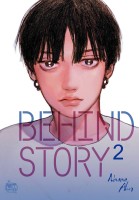
Behind Story, Volume 2Behind Story, Volumes 2-3 by Narae Ahn. I enjoyed the first volume of Behind Story more than I thought I would, so I wanted to be sure to read more of the boys’ love manhwa. At the time, I didn’t even know how long the series was, and I wasn’t able to find out much about the creator, either. It turns out Behind Story is only three volumes, was Ahn’s debut series, and was originally published online. The final two volumes of Behind Story take place three years after the first. Johann has survived his teacher’s attempted murder-suicide, but his life is still a complicated mess; he’s more or less forced transfer out of school, leaving Taehee—one of the very few people who legitimately cared for him and his well-being—behind with no way to contact him. Eventually the two of them do reunite, but they’ve both changed over the years and neither are sure what direction their relationship will take in the future. Behind Story is a fairly solid debut with interesting characters and a story that, for the most part, moves beyond the genre’s standard tropes. The series’ ending does perhaps wrap up a little too quickly and nicely and could have used a little more development, but overall the manhwa is enjoyable.

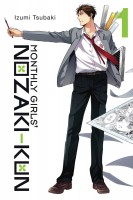
Monthly Girls' Nozaki-kun, Volume 1Monthly Girls’ Nozaki-kun, Volume 1 by Izumi Tsubaki. I absolutely loved the anime adaptation of Monthly Girls’ Nozaki-kun, so I was very happy when Yen Press announced that it would be releasing the original manga series. The success of four-panel manga can be rather hit-or-miss in the North American market as their comedy is often firmly situated within a Japanese sense of humor and context. A few of the jokes in the first volume of Monthly Girls’ Nozaki-kun I may not have immediately understood if I hadn’t already seen the anime (which was able to more fully expound on things due to its format) but overall the manga and its gags are largely accessible and very funny. The series revolves around Nozaki—a relatively successful shoujo mangaka who has a difficult time convincing many of his high school classmates of that fact due to his large stature and seemingly stoic nature—and the various students who become his assistants or the inspiration for his characters. The manga is good-natured fun, much of the humor the result of the differences between the characters’ personalities and how most other people actually perceive them. I especially appreciate the series’ willingness to play with gender roles and expectations.

Filed Under: FEATURES, My Week in Manga Tagged With: Alice in the Country of, Behind Story, Izumi Tsubaki, Mamenosuke Fujimaru, manga, manhwa, Monthly Girls' Nozaki-kun, Narae Ahn

Manga Sales are Up

March 14, 2016 by Brigid Alverson

tenshi kamoshirenai 01For the first time in her career, manga-ka Moto Hagio is collaborating with an artist. Hagio is writing the story for a new series, Tenshi Kamoshirenai (Might be an Angel), which will run in Shueisha’s YOU magazine, and Yū Hatano will draw it. [Anime News Network]
Are manga sales increasing? Signs point to yes, according to Justin Sevakis, who looks at some recent sales reports and discusses some possible reasons. [Anime News Network]

The Manga Bookshelf team discusses this week’s new releases. [Manga Bookshelf]

The fifth volume of One-Punch Man tops the New York Times manga best-seller list, with vol. 8 of Yu-Gi-Oh! Zexal coming in second and vol. 66 of Bleach in third place. [New York Times]

How much money is lost to anime piracy? GoBoiano writer JenBae does some rough calculations, and the results are eye-opening. [GoBoiano]

French manga scholar Xavier Hebert is about to publish his own manga. [Asahi Shimbun]

Akita Shoten has plans to release all its magazines digitally (in Japan) as well as in print. [Anime News Network]

Kamisama Kiss is coming to an end. [Anime News Network]

Reviews: Ash Brown reviews Mechademia, volume 10: World Renewal, a collection of essays about manga, at Experiments in Manga.

Matthew Alexander on vol. 7 of Assassination Classroom (The Fandom Post)
Erica Friedman on the January 2016 issue of Comic Yuri Hime (Okazu)
Sean Gaffney on vol. 1 of Demonizer Zilch (A Case Suitable for Treatment)
Helen on Futaba-Kun Change! (The OASG)
Katherine Parker on vol. 4 of He’s My Only Vampire (The Fandom Post)
A Library Girl on vols. 3 and 4 of His Favorite (A Library Girl’s Familiar Diversions)
Muse on vol. 1 of Honey So Sweet (The OASG)
Anna N. on vol. 2 of Idol Dreams (Manga Report)
Erica Friedman on Junsui Adolescence Perfect Edition (Okazu)
Leroy Douresseaux on vol. 3 of My Hero Academia (The Comic Book Bin)
Matthew Warner on vol. 4 of So Cute It Hurts! (The Fandom Post)
Leroy Douresseaux on vol. 5 of So Cute It Hurts! (The Comic Book Bin)
Matthew Warner on vol. 2 of Ultraman (The Fandom Post)
Sean Gaffney on vol. 12 of Umineko: When They Cry (A Case Suitable for Treatment)
Helen on vols. 1-5 of Vinland Saga (Narrative Investigations)
Leroy Douresseaux on vol. 4 of The World’s Greatest First Love (I Reads You)

Filed Under: MANGABLOG

Legend of the Galactic Heroes: Dawn

March 13, 2016 by Sean Gaffney

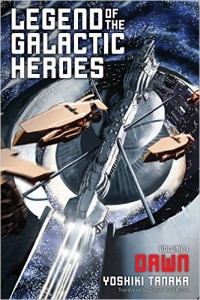
By Yoshiki Tanaka. Released in Japan as “Ginga Eiyū Densetsu” by Tokuma Shoten. Released in North America by Haikasoru.

It’s rare to see a book that was first published in 1982 get so much excitement, but that’s exactly what happened when Viz’s SF imprint Haikasoru announced they had the first three volumes of this legendary series. The announcement was very much meant for old-school fans, those who are now in their early 40s and grew up with questionable translated fansubs of the 100-episode OAV that adapted the books (which has also recently been licensed). Why the excitement? Because it’s a really good story, showing off epic space battles and cool military tactics while at the same time showing us why constant warfare is something we should always strive to avoid. If the title sounds grandiose and over the top, it should. That’s what we’re going for here.

logh1

The first novel divides itself fairly equally between two sides of a long-running war. The Empire are a bunch of not-quite-Germans, whose lead character is Reinhard von Lohengramm, a young, handsome and brilliant tactician who is motivated by hatred and revenge after having his sister taken as mistress to the Emperor several years ago. Luckily, he has the standard sensible best friend with him, who occasionally reminds him to not go too far. On the side of the republic, we have Yang Wen-Li, who reminds me far too much of Tylor except that Yang came first. Yang desperately wants to be a historian and not get involved in the war at all, but sadly he’s an equally amazing military tactician, so he slides upwards through the book to full Admiral, mostly by virtue of being sensible, not lusting for glory and honor, and the occasional bout of clever genius.

The book begins with a long prologue showing how the Empire came to be, with the rise of Rudolf, a Hilter expy who shows off how much worse the Empire used to be. The sympathy of the Western reader, I admit, definitely resides with Yang over Reinhard, at least at the start. As the book goes on, though, and you see the very familiar corrupt democracy who think nothing of starting a war to get votes, you realize that neither side are really able to claim to be the good guys, and there are a bunch of inept generals and foolhardy glory hounds who show off the bad sides of both groups. Halfway through the book the Empire suffers a grievous military loss, and at the end an even worse political one. The Alliance shoots itself in the foot badly and is seen at the end licking its wounds. Even worse, there’s a hint that there are other parties trying to play both sides against the middle… led by the Church. (The Church, in stories like this, is almost always evil, unless it’s run by nuns.)

Haikasoru did a good job with the translation, I feel. It’s pompous and overly formal much of the time, but that’s exactly what the author is going for, I believe – much of the volume reads like a history book, and informality would miss the point. As I said earlier, the title is not just for show. This is not a light novel – it’s an epic legend, along the lines of Wagnerian opera. The anime, in fact, used a LOT of Mahler as the background music, which is highly fitting. If you enjoy military tactics books, as well as political infighting along the lines of Game of Thrones, then this is definitely the series for you. Haikasoru has promised two more volumes (the rest depends on sales) and I will absolutely be getting them.

Filed Under: REVIEWS

Mechademia, Volume 10: World Renewal

March 11, 2016 by Ash Brown

Mechademia, Volume 10: World RenewalEditor: Frenchy Lunning
Publisher: University of Minnesota Press
ISBN: 9780816699155
Released: November 2015

Mechademia, one of the few academic journal’s in English specifically devoted to the study of manga and anime, began publication in 2006. Since then, under the editorial guidance of Frenchy Lunning, a new thematic volume has been released every year and the journal has grown to include research and analysis of other areas of Japanese popular culture, such as film, television, games, novels, and fandom. I’ve previously read individual articles published in Mechademia, and even own several of the volumes, but I’ve never actually read one of the annuals from cover to cover until now; I had the happy opportunity to receive a review copy of Mechademia, Volume 10: World Renewal from University of Minnesota Press. It’s an aptly themed volume, signalling the end of one era and ushering a in a new one for the journal—World Renewal, released in 2015, is the last volume with Lunning serving as editor-in-chief.

After Lunning’s acknowledgements and introduction, World Renewal is divided into four main sections which collect articles, essays, stories, and even a short manga. The first part of the volume, Passages of As Not, uses the March 2011 Tōhoku earthquake, tsunami, and nuclear disaster as a touchstone. Akira Mizuta Lippit’s “Between Disaster, Medium 3.11” examines the experience of disaster, time, and space through Koreda Hirokazu’s film After Life. Similarly, “The Land of Hope: Planetary Cartographies of Fukushima, 2012” by Christophe Thouny uses Sion Sono’s film The Land of Hope to discuss fictionalized portrayals of disaster and changing landscapes. Sabu Kohso’s “Tokyo Apparatus (Version 1.0)” looks beyond the Tōhoku disaster towards the 2020 Tokyo Olympics. The section concludes with a translation of Tomoyuki Hoshino’s “Good Morning: A Postdisaster Palm-of-the-Hand Story” which I was particularly happy to see as I find Hoshino’s works in general to be especially powerful.

While as a whole I found World Renewal to be interesting and rewarding, the second section, Positions of What If, dealing with alternate histories, presents, and futures, was perhaps my personal favorite. I especially liked Andrea Horbinski’s “Record of Dying Days: The Alternate History of Ōoku” which explores one of Fumi Yoshinaga’s most tremendous manga series. Susan W. Furukawa’s “Deconstructing the Taikō: The Problem of Hideyoshi as Postwar Business Model” is a fascinating analysis of the various interpretations of Hideyoshi Toyotomi in Japanese popular culture of the 1950s, ’60s, and ’70s. (Eiji Yoshikawa’s Taiko from the 1940s is also mentioned in passing.) Matthew Penny presents a fictional essay outlining a future history of Japan based on the ideals of the political far right in “A Nation Restored: The Utopian Future of Japan’s Far Right” which was a remarkably effective technique. I was also extraordinarily pleased to discover that Moto Hagio’s short manga “Nanohana” was included in this section as well.

World Renewal continues with the third part, Worlds of As If, which collects three case studies investigating possible emerging worlds through an examination of evolving methods of creation, experience, and engagement. Satomi Saito uses Sword Art Online, Vampire Hunter D, and The Melancholy of Haruhi Suzumiya as examples of the varying and changing approaches used in the development of cross-media franchises in “Beyond the Horizon of the Possible Worlds: A Historical Overview of Japanese Media Franchises.” Sandra Annet’s “What Can a Vocaloid Do? The Kyara as Body without Organs” in part focuses on how fans use, reuse, and reimagine official characters and narratives to create their own media. The third section closes with “A World Without Pain: Therapeutic Robots and the Analgesic Imagination” by Steven R. Anderson which discusses Oriza Hirata’s dramatic play Sayonara and Katsuhiro Otomo’s Roujin Z anime among other works.

The final and fourth section of World Renewal, Loops of Just Then, largely deals with parallel narratives, worlds, and temporal loops. In “The Girl at the End of Time: Temporality, (P)remediation, and Narrative Freedom in Puella Magi Madoka Magica,” Forrest Greenwood compares the anime’s narrative structure to those that are commonly used in visual novels. Pamela Gossin delves into the complexities and connections between Hayao Miyazaki’s life and work in “Animated Nature: Aesthetics, Ethics, and Empathy in Miyazaki Hayao’s Ecophilosophy.” The Higurashi franchise forms a platform for Brett Hack’s examination of Japanese news coverage and media commentary on youth violence in “Ominous Image of Youth: Worlds, Identities, and Violence in Japanese News Media and When They Cry.” Finally, World Renewal concludes with “Parallel Universes, Vertical Worlds, and the Nation as Palimpsest in Murakami Ryū’s The World Five Minutes from Now” by Kendall Heitzman, an analysis of Murakami’s dystopic alternate history novel which I would love to one day read in translation.

Overall, I found World Renewal to be a thought-provoking and intellectually stimulating volume. Some of the essays can be fairly dense—this especially seemed to be true of those included in the first section—so the volume is difficult to recommend to a casual reader in its entirety, but there are also essays that are more readily accessible. For most people, picking and choosing among the various submissions according to their own particular interests will likely be the most satisfying approach to take. Personally, while I enjoyed reading about some of my own favorite series and creators in World Renewal, I greatly appreciated the analysis of works that I was less familiar with. In fact, my curiosity has been piqued and I’m much more interested in experiencing first hand some of the media examined in World Renewal that I had previously passed over or was unaware of. I also particularly liked the thematic nature of the volume which allows for a wide variety of material to be explored while still retaining some focus and cohesiveness. World Renewal understandably tends towards the academic which will at times prove challenging for a general audience, but the topics and material discussed are fascinating and many of the ideas expressed are quite interesting.

Thank you to University of Minnesota Press for providing a copy of Mechademia, Volume 10 for review

Filed Under: REVIEWS Tagged With: anime, film, manga, Mechademia, Nonfiction

Umineko: When They Cry, Vol. 12

March 10, 2016 by Sean Gaffney

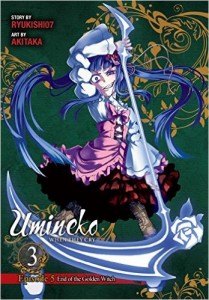
Story by Ryukishi07; Art by Akitaka. Released in Japan in two separate volumes as “Umineko no Naku Koro ni: End of the Golden Witch” by Square Enix, serialized in the magazine Gangan Joker. Released in North America by Yen Press.

This review is quite late, mostly as I didn’t really want to read this volume, at all, even though I also really did. Umineko can be very difficult to read and enjoy for fun, especially if you are someone who empathizes with the pain of others. While Higurashi dealt with abuse in one of its plotlines, every single page of Umineko is about abuse on a grand scale. The daily contempt and grinding down that drives Natsuhi to the brink long before the series even begins. Erika’s joyful cruelty in removing every last shred of denial and hope in Natsuhi’s heart. And of course Bernkastel, whose loving adoption of Erika as her daughter is contrasted with the hate-filled rage seen when Erika fails, as of course she does, because there’s more of this series to go. A lot more.

umineko12

As I said above, the reader is meant to empathize with Natsuhi, because the writing impels us to do so, but saying that she’s the best of the parents isn’t saying much. Besides her emotional abuse of Shannon, we find here that she is in fact a murderer herself, having been driven to it by expectations of women in the 1960s and a general sense of self-loathing pushed outwards. She gets by in life due to the poorly expressed but genuine love her husband and daughter have for her (which Erika destroys as well – note to readers, never keep a diary filled only with bad things) and a denial of reality that feels very familiar five arcs into this series. Erika destroys that as well, of course, showing us that no, Kinzo always hated her.

It’s Erika’s supposition that Natsuhi was having an affair with a deluded Kinzo that feels like one piece of sourness too many though, a further blow that is entirely unnecessary. But that’s Erika for you. There’s also Beatrice, who does finally seem to be killed off here – twice – as befits the title. She dies broken as well, as Battler still – still! – has no idea what she’s talking about with a promise that he broke, and finally begs for death. I am aware that this is the low ebb of the series, and that future arcs, while dark and depressing, have more light than this. But even for Umineko this is just hard to take.

Thankfully Battler finally comes to the rescue, a bit too late for Beatrice, but at least he gets another chance to try again. He has finally realized what Beatrice was trying to tell him, though naturally he doesn’t tell the reader that, in case there are folks who still haven’t guessed. I felt his last battle against Dlanor was a bit rushed, to be honest – it felt like they underestimated the pages needed. (This likely led to the last two arcs having EVEN MORE volumes to play around in.) And now Battler is in charge of the game board, and the next arc – Dawn of the Golden Witch – will show us how he plans to honor Beatrice’s memory.

This is a great series to read intellectually, and if you like horror and Higurashi faces (TM) it’s also excellent, but I don’t think I’ve seen a series as emotionally exhausting as Umineko in quite some time. The break between volumes is welcome.

Filed Under: REVIEWS

  • « Go to Previous Page
  • Page 1
  • Interim pages omitted …
  • Page 497
  • Page 498
  • Page 499
  • Page 500
  • Page 501
  • Interim pages omitted …
  • Page 1049
  • Go to Next Page »
 | Log in
Copyright © 2010 Manga Bookshelf | Powered by WordPress & the Genesis Framework