• Skip to primary navigation
  • Skip to main content
  • Skip to primary sidebar
  • Home
  • About Us
    • Privacy Policy
    • Comment Policy
    • Disclosures & Disclaimers
  • Resources
    • Links, Essays & Articles
    • Fandomology!
    • CLAMP Directory
    • BlogRoll
  • Features & Columns
    • 3 Things Thursday
    • Adventures in the Key of Shoujo
    • Bit & Blips (game reviews)
    • BL BOOKRACK
    • Bookshelf Briefs
    • Bringing the Drama
    • Comic Conversion
    • Fanservice Friday
    • Going Digital
    • It Came From the Sinosphere
    • License This!
    • Magazine no Mori
    • My Week in Manga
    • OFF THE SHELF
    • Not By Manga Alone
    • PICK OF THE WEEK
    • Subtitles & Sensibility
    • Weekly Shonen Jump Recaps
  • Manga Moveable Feast
    • MMF Full Archive
    • Yun Kouga
    • CLAMP
    • Shojo Beat
    • Osamu Tezuka
    • Sailor Moon
    • Fruits Basket
    • Takehiko Inoue
    • Wild Adapter
    • One Piece
    • After School Nightmare
    • Karakuri Odette
    • Paradise Kiss
    • The Color Trilogy
    • To Terra…
    • Sexy Voice & Robo
  • Browse by Author
    • Sean Gaffney
    • Anna Neatrour
    • Michelle Smith
    • Katherine Dacey
    • MJ
    • Brigid Alverson
    • Travis Anderson
    • Phillip Anthony
    • Derek Bown
    • Jaci Dahlvang
    • Angela Eastman
    • Erica Friedman
    • Sara K.
    • Megan Purdy
    • Emily Snodgrass
    • Nancy Thistlethwaite
    • Eva Volin
    • David Welsh
  • MB Blogs
    • A Case Suitable For Treatment
    • Experiments in Manga
    • MangaBlog
    • The Manga Critic
    • Manga Report
    • Soliloquy in Blue
    • Manga Curmudgeon (archive)

Manga Bookshelf

Discussion, Resources, Roundtables, & Reviews

Blog

Manga the Week of 1/18

January 12, 2017 by Sean Gaffney, Ash Brown, Michelle Smith, Katherine Dacey, MJ and Anna N 2 Comments

SEAN: Mid-month, and it’s a mostly quiet time in manga land. Some series end, but others carry on regardless. What’ve we got this time around?

ASH: Wow! It’s been a while since we’ve had a week this quiet.

SEAN: Kodansha has a 2nd volume of Interviews with Monster Girls, whose first volume I found pretty good. It’s more on the ‘cute’ than ‘sexy’ end of the spectrum.

ASH: Hopefully the recent anime adaptation will encourage people to try the manga, too.

SEAN: And there’s an 18th volume of The Seven Deadly Sins.

One Peace gives us an 8th volume of yuri trap manga Maria Holic.

.

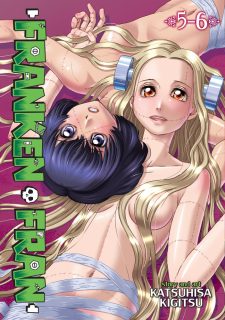
Seven Seas has one of my favorite horrible guilty pleasure series come to an end with the 4th and final omnibus of Franken Fran. I understand it wasn’t a big seller, which is a shame, but its over-the-top horrible horror and humor always tickled my funny bone. Or made my jaw drop.

ASH: I’ve been thoroughly enjoying Franken Fran. It’s sad to hear it hasn’t done especially well, but I’m glad to have it on my shelves.

SEAN: How to Build a Dungeon also made my jaw drop, but not in a good way. Vol. 2 is out. Buyer beware.

My Girlfriend Is a T-Rex also has a 2nd volume, and I found the first, like Interviews with Monster Girls, cute and ‘pretty good’. This is a mild recommendation.

And Non Non Biyori’s 6th volume, a series that takes slice of life to such extremes you may fall asleep just reading the synopsis.

Vertical gives us a 7th volume of Ninja Slayer, which has ninjas, who possibly slay.

Viz has the 20th volume of Dorohedoro, and I could not be more delighted. I look forward to this series every time a new volume comes out.

ASH: Yes! I love Dorohedoro.

SEAN: And there is a 16th Terra Formars as well.

Lastly, Tokyo Ghoul has a 2nd novel based on the popular series, this one called Void.

MANGA? It’s what’s happening. What are you getting?

MICHELLE: Uhhh… nothing, apparently.

KATE: That makes two of us, Michelle! There’s a whole lotta “Whoa!” and “No!” in this week’s shipments as far as I’m concerned.

MJ: Same! Is it sad that I’m somewhat relieved to finally have disembarked the Seven Seas train? Sorry, Seven Seas.

ANNA: There is nothing that appeals to me this week, which is good because I can hopefully get caught up reading other things!

Filed Under: FEATURES, manga the week of

Bookshelf Overload: December 2016

January 12, 2017 by Ash Brown

Well, December happened, as I knew it would. I took advantage of a large number of holiday and end of year sales and made good use of coupons and gift cards, so my wallet is happier than it would have been otherwise, but I still managed to pick up an absurd number of things. This includes an unusual amount of anime for me, such as the Amazon-exclusive limited edition of Cowboy Bebop which was on super sale at one point. (This will replace the bootleg copy I unintentionally bought when I was much younger and didn’t know any better or how to tell the difference.) Probably the manga release I was most excited for in December was the return of Makoto Yukimura’s Vinland Saga. (I’ll hopefully have a review of the eighth and most recent omnibus to share in the near future.) I’m also especially happy to have the deluxe edition of Junji Ito’s Tomie and the conclusion of The Ghost and the Lady by Kazuhiro Fujita on my shelves. And, of course, more of Inio Asano’s Goodnight Punpun, Haruichi Furudate’s Haikyu!!, and Izumi Tsubaki’s Monthly Girls’ Nozaki-kun are always welcome. Fans of Mentaiko Itto will also want to be aware of the poster collection recently released by Bruno Gmünder. It’s labeled as “1,” so there may very well be more to come. (Ahem.) As for comics, Reindeer Boy by Cassandra Jean is a lot of fun and I recently read and highly recommend The One Hundred Nights of Hero by Isabel Greenberg.

Manga!
Aoharu X Machinegun, Volume 1 by Naoe
Blood Blockade Battlefront, Volumes 1-7 by Yasuhiro Nightow
Bungo Stray Dogs, Volume 1 written by Kafka Asagiri, illustrated by Sango Harukawa
Dragon Voice, Volumes 1-10 by Yuriko Nishiyama
Fruits Basket, Omnibus 1 by Natsuki Takaya
Gangsta: Cursed, Volume 1 written by Kohske, illustrated by Syuhei Kamo
The Ghost and the Lady, Volume 2 by Kazuhiro Fujita
Giganto Maxia by Kentaro Miura
Goodnight Punpun, Omnibus 4 by Inio Asano
Haikyu!!, Volume 7 by Haruichi Furudate
Happiness, Volume 2 by Shuzo Oshimi
He’s My Only Vampire, Volumes 1-3 by Aya Shouoto
Holy Corpse Rising, Volume 1 by Hosana Tanaka
Hunter x Hunter, Volumes 1-8 by Yoshihiro Togashi
Kiss of the Rose Princess, Volumes 1-2 by Aya Shouoto
Magi: The Labyrinth of Magic, Volumes 1-2 by Shinobu Ohtaka
Monthly Girls’ Nozaki-kun, Volume 5 by Izumi Tsubaki
New Lone Wolf and Cub, Volume 6 written by Kazuo Koike, illustrated by Hideki Mori
One-Punch Man, Volume 10 written by One, illustrated by Yusuke Murata
Ōoku: The Inner Chambers, Volumes 11-12 by Fumi Yoshinaga
Pandora Hearts, Volumes 20-22 by Jun Mochizuki
Persona 4, Volumes 4-5 by Shuji Sogabe
The Prince and His Dark Days, Volume 2 by Hico Yamanaka
Seven Princes of the Thousand Year Labyrinth, Volume 1 by Yu Aikawa
Sweetness and Lightning, Volume 3 by Gido Amagakure
Tomie by Junji Ito
Vinland Saga, Omnibus 8 by Makoto Yukimura
Welcome to the Ballroom, Volume 2 by Tomo Takeuchi

Comics!
Babybel Wax Bodysuit by Eric Kostiuk Williams
Battles by Jenn Woodall
Canopy by Karine Bernadou
Centralia 2050, Chapters 1-2 by Michelle Stanford
A City Inside by Tillie Walden
Diesel Ignition by Tyson Hesse
Dirty Diamonds, Issue 7: Imagination edited by Claire Folkman and Kelly Phillips
The End of Summer by Tillie Walden
Forest Dew by Heldrad
Hot Dog Taste Test by Lisa Hanawalt
I Love This Part by Tillie Walden
Little Kinano by Yeehun
Mondo by Ted McKeever
Oath: An Anthology of New (Queer) Heroes edited by Audre Redpath
The One Hundred Nights of Hero by Isabel Greenberg
Panther by Brecht Evens
RAV, Volume 2 by Mickey Zacchilli
Reindeer Boy by Cassandra Jean
Rosalie Lightning by Tom Hart
Small Town Witch written by Alex Singer, illustrated by Jayd Aït-Kaci
Somthing Terrible by Dean Trippe
Spidersilk, Volume 1 by Pamela Kotila
SuperCakes by Kate Leyh
That Which Wills: Virgo Rising, Book 1 written by Alex Singer, illustrated by Jayd Aït-Kaci

Artbooks!
BLKBT by C Lijewski
Burl & Furl edited by Irene Koh, Ricardo Bessa, Paul Reinwand, and Kevin Jay Stanton
Poster Book 1 by Mentaiko Itto

Novels!
The Borrowed by Chan Ho-Kei
Memoirs of a Polar Bear by Yoko Tawada
Moshi Moshi by Banana Yoshimoto
Orochi no Yaiba written by Itoshi, illustrated by Aldaria
Outlet by Randy Taguchi

Anime!
Cowboy Bebop directed by Shinichirō Watanabe
Detroit Metal City directed by Hiroshi Nagahama
My Love Story directed by Morio Asaka
Natsume’s Book of Friends, Seasons 3-4 directed by Takahiro Omori
The Perfect Insider directed by Mamoru Kanbe
Persona 4: The Animation directed by Seiji Kishi
Terror in Resonance directed by Shinichirō Watanabe
Yurikuma Arashi directed by Kunihiko Ikuhara
Young Black Jack directed by Mitsuko Kase

Filed Under: Bookshelf Overload, UNSHELVED

Welcome (Back) to The Manga Critic!

January 12, 2017 by Katherine Dacey


Welcome! My name is Kate Dacey, and I’ve been writing about comics since 2006 for sites like PopCultureShock, The School Library Journal, and MangaBlog. Though I’m passionate about comics in general, my first love is manga. I count Rumiko Takahashi, Katsuhiro Otomo, Kaoru Mori, Fumi Yoshinaga, Naoki Urasawa, and Osamu Tezuka among my favorite artists, as their work showed me the full potential of the comics medium.

I first created the Manga Critic in 2009. Back then, TOKYOPOP, CMX, and Del Rey were actively publishing material, Yen Press was the new kid on the block, and the New York Times was just beginning to acknowledge manga sales in its weekly bestseller lists. It was an exciting time: some weeks yielded as many as 50-60 new volumes of manga, and important artists — Hayao Miyazaki, Moto Hagio — were making the rounds at San Diego and New York Comic-Cons.

Though there were an astonishing number of manga-themed websites, blogs, and LiveJournals, many of these sites catered to self-professed otakus. For someone who primarily identified as a reader, I found the conversations at these sites unwelcoming, as I was more invested in the quality of the stories I read than in the fine details. I hankered for an online community where the hardcore fan and the occasional reader would feel equally welcome — and equally entitled to their opinions. When I didn’t find such a space, I set out to make one, and the Manga Critic was born.

For three years, I had a blast. I got shout-outs at the New Yorker and New York Times’ websites, a re-tweet from Roger Ebert that nearly crashed Manga Bookshelf, and enough passionate reader comments to fill a football stadium. (There are *still* a few people who are sore about my review of Blood Alone.) Then I hit the wall: I’d reviewed one too many books about teenage ninjas, wacky afterschool clubs, ruthless assassins, sexy robots, and vampire Romeos, and it showed. I put the Manga Critic in mothballs, and stopped blogging for almost two years.

In the immediate aftermath of shutting down my site, I felt relief: no more volumes of Highschool of the Dead to review! No more comments from infuriated teenaged boys! At the same time, however, I missed discussing and discovering new manga with thoughtful readers, an experience that I couldn’t fully replicate through Twitter or Tumblr feeds. So after several years of deliberation — and a few sporadic posts at MangaBlog — I decided that 2017 was the right time to bring back the Manga Critic.

HOW TO NAVIGATE THE SITE

If you’re new to manga, you’ll find several ways to discover new series and artists at the Manga Critic, from the Year in Review, an archive of my annual best-and-worst lists, to Recommended Reading, a series of articles highlighting different types of manga (e.g. horror, shojo). If you’re already a serious manga reader, you’ll find features that cater to your interests as well, including Manga Artifacts, an occasional column exploring Japanese comics published before 2000, and The Best Manga You’re Not Reading, a column highlighting great series that aren’t getting the attention they deserve. I also post occasional capsule reviews on Mondays — Bookshelf Briefs, a joint effort among the six Manga Bookshelf bloggers — and round-ups of manga industry news.

If you’re new to this site, I’ve compiled a short list of articles from the original Manga Critic (2009-2012). These essays provide a good introduction to my writing and reviewing style:

  • Ayako
  • The Best Manga You’re Not Reading: Benkei in New York
  • Manga Artifacts: Love Song
  • The Manga Hall of Shame: Wounded Man
  • My Favorite Shojo Manga: Kaze Hikaru
  • On Criticism: The 7 Deadly Sins of Reviewing
  • Rumiko Takashi’s Rumic Theater
  • Sexy Voice and Robo and Harriet the Spy
  • Summer, Fireworks and My Corpse

You’ll also find a wealth of sources on manga, manhwa, and comics for kids, all of which can be accessed through the Resources menu.

Going forward, I anticipate posting one major article each month, and one short review or news story each week. To stay abreast of what’s happening here at the Manga Critic, you can subscribe to my Twitter feed or the Manga Bookshelf Facebook page.

A WORD OF THANKS

Last but not least, I wanted to acknowledge three people for their encouragement and support: Brigid Alverson, who graciously gave me a place to hang out while The Manga Critic was on hiatus; Claire Dacey, who created the site’s funky new banner; and MJ, who played a major role in making the site functional and attractive. Thank you, ladies!

Filed Under: Manga Critic

I Saved Too Many Girls And Caused The Apocalypse, Vol. 1

January 11, 2017 by Sean Gaffney

By Namekojirushi and Nao Watanuki. Released in Japan as “Ore ga Heroine o Tasukesugite Sekai ga Little Mokushiroku!?” by Hobby Japan. Released in North America digitally by J-Novel Club. Translated by Adam Lensenmayer.

To a certain extent, a lot of light novels in Japan have a certain level of knowing irony built into their very frame. You don’t have a genre with that many long-winded over-dramatic series titles and not know that your tongue is planted firmly in your cheek, though by now, a few years out, I suspect many of the imitators may have bypassed the irony in favor of “long titles sell”. But if you do understand, and your audience does as well, there’s a lot you can make fun of. Especially in the so-called “harem” genre, something which has been around in North America since the dawn of manga here (see Ranma 1/2 for only one example) and is even more rife in Japan. Jealous childhood friends, wishy-washy male leads, cripplingly shy yet adorable girls who always enthrall the male audience yet never actually win… we all know the type. It’s ripe for being made fun of.

Our hero is a young man who only wishes to live a normal life. Sadly, Rekka is told by his father on his 16th birthday that he’s inheriting the birthright of being the “final hero” – i.e., when a crisis is happening somewhere and a hero is needed but has not actually materialized, died, or failed, Rekka will be called to action to get the girl, kill the baddies, and save the entire planet. The keywords here being “get the girl”. Shortly after this, a young girl from the future, R, pops up to tell Rekka that he made too many girls fall in love with him doing this, and his inability to settle down and pick one has led to a future apocalypse. R is here to help prevent this. And right after this, the hero stuff keeps pouring in. His childhood friend is secretly a mage, an alien princess wants to marry him, and a shy sorcerer needs hims help to defeat the Demon Overlord. The conceit is that this all happens at the same time.

I must admit, my expectations were somewhat low for this release. The dire but similar “My Little Sister Can Read Kanji” release by J-Novel was so bad I wasn’t even able to finish (or review) it. But it looked lighthearted at least, and I was in the mood for something that wasn’t just dour overpowered male leads staring at the charred remains of all they once loved. And luckily, this ended up being a quite readable treat. It’s not great art, and overstays its welcome (something that is worrying given how long the series is in Japan). But it knows what it’s mocking and does it very well. Some of the jokes actually made me laugh out loud, a rarity for light novels. Its one big drawback is that it peaks too soon. Rekka and Harissa battling the Demon Overlord, complete with “you fools! This isn’t even my final form!” is the absolute highlight of the entire book, and the rest couldn’t dream of topping it.

The basic premise is actually quite clever: Rakka would normally be taking care of these things one by one, and likely not doing a great job. But with them all happening at once, he’s able to use resources from one heroine route to fix another. And they aren’t necessarily easy fixes, either – I knew the moment that he left Harissa right after defeating the Demon Overlord handily that it wouldn’t be that simple, and sure enough she’s soon on the chopping block to be executed. As for Rekka himself, he’s amusingly dense, but he’s not an incompetent clumsy idiot like a lot of harem heroes – you actually get why these girls fall for him. The heroines themselves are all obvious types, designed to win over whichever pleases the reader best, and none are too annoying. Best of all is R, who is invisible to all but Rekka and is thus able to float around him at all times making dry, sarcastic remarks about his incompetence. “I now understand the difficulty of my mission in my heart and not just in my head” was wonderful. (I also hope that she does not become part of the harem in future books.)

Overall, I’m pleasantly surprised at what a light, breezy read this was. Don’t read it if you can’t tolerate harems, of course. And like many light novels, I suspect it’s something I’d find far more aggravating as an anime or manga with more visual fanservice. But if you want something funny and cheeky, this is a good series to get.

Filed Under: REVIEWS

Bookshelf Briefs 1/9/17

January 9, 2017 by Michelle Smith and Sean Gaffney Leave a Comment

Cells at Work!, Vol. 2 | By Akane Shimizu | Kodansha Comics – Given that this is about anthropomorphic blood cells, it can sometimes be a surprise when the series packs an emotional and weighty punch. But that is, after all, the purpose of the anthropomorphism—Red Blood Cell and White Blood Cell are memorable because of their eccentricities and human foibles. Here we learn they’re apparently also forgotten childhood friends… sort of. There’s also discussion of Eosinophil, which is more specialized and therefore less powerful against things a normal White Blood Cell can do, and a surprisingly poignant treatment of a cancer cell, which is after all only trying to survive. A good second volume, and I like these cells. Are there ship wars yet? – Sean Gaffney

He’s My Only Vampire, Vol. 9 | By Aya Shouoto | Yen Press – The pieces begin to fall into place in this, the penultimate volume of He’s My Only Vampire. Unfortunately, Kana is thrust almost entirely into the background, despite a couple of revelations about her past (well, one is not entirely confirmed, but the hinting is so heavy-handed, it might as well be), as the looming confrontation between Aki and Eriya means the hunt for stigma is ramping up. Aki currently has three with a fourth at his disposal, once Jin deems the time is right, but Eriya soon claims his second. The cliffhanger ending involves the manifestation of the final stigma as well as a diary of significance. So far, this is hanging together better than Kiss of the Rose Princess, even if it isn’t 100% coherent. I’ll definitely be reading the conclusion! – Michelle Smith

Honey So Sweet, Vol. 5 | By Amu Meguro | VIZ Media – There are no fewer than five great big beaming smiles in this volume. Nao and Taiga plan to have a solo date on Christmas, but their friends quickly co-opt the evening for a party. This, in turn, leads to Nao meeting Taiga’s mom, who doesn’t seem to like her much, and then sleeping over and forgetting to notify Sou, who is very upset. Even though there is much going on here that is sweet and sunny—my favorite moment is actually Yashiro giving Valentine’s Day chocolates to Misaki—I actually really liked seeing Nao get angry for once and vow to be rebellious, and then seeing Tai lose his patience with the whole situation and intervene to get Nao and Sou reconciled. Like they themselves conclude in the story, it makes you closer with someone when you can be honest how you feel. And I honestly adore this series. – Michelle Smith

The Honor Student at Magic High School, Vol. 5 | By Tsutomu Sato and Yu Mori | Yen Press – My relief at the novels having caught up to the spinoff didn’t last long, as this volume of Miyuki’s adventures breezed through the third book in only 70 pages or so, leaving the rest of the plot as part of book four, not out here until April. So I’m spoiled by the spinoff again. There’s some good stuff here, in amongst the setup for the next volume or two. Shizuku in particular benefits in this book, becoming more than Honoka’s fiend and deadpan support and gaining character and awesome moments in her own right. As for Miyuki herself, I suspect she’s damaged by the aforementioned setup, as she doesn’t do quite as much here. Still good stuff. – Sean Gaffney

Of the Red, the Light, and the Ayakashi, Vol. 5 | By HaccaWorks* and nanao | Yen Press – Well, the story is certainly moving swiftly along! So swiftly, in fact, that the final four volumes of this series are certain to be action-packed. In this particular installment, we learn a little more about the meal, as well as the fact that Yue’s small and cute fox companion, Kurogitsune, is due a meal of his own and potentially thinks that Yue seems pretty tasty. Yue, for his part, is feeling disinclined to partake of a meal if it means one of his friends will disappear and is seeking a way out of the obligation, but the head honcho of the shrine aims to take the decision out of his hands and kidnaps Tsubaki when he has the opportunity. All sorts of forces are at play now, and I can definitely see the potential for a straight-through reread once the ninth and final volume finally arrives. – Michelle Smith

One-Punch Man, Vol. 10 | By ONE and Yusuke Marata | Viz Media – Tornado of Terror is on the cover, and she gets a significant chunk of the book as well. And you can see why—more than any of the other female characters we’ve seen in the series, she’s a match for Saitama, possibly as she’s also a lot like Saitama—she gets a lot of simplified faces, emotionless stares, and superdeformed art just as he does. Her sister also gets a nice chapter showing how difficult it can be to not worry about others when you’re constantly striving to get stronger than your betters. Among all that, the further adventures of Garo don’t pack quite as much of a punch—indeed, Saitama takes him out handily as always. This continues to be top-tier shonen and top-tier shonen parody. – Sean Gaffney

Yowamushi Pedal, Vol. 4 | By Wataru Watanabe | Yen Press – I was right that the second years were unable to beat out the first years, who are of course the protagonists so have the writer on their side. That said, I wasn’t expecting so nasty a finish, as they end up giving themselves significant injuries that will take them out of the action for some time. As for Onoda, he’s near his limits, and close to failing, but he gets another reward to give him even more speed—cleats—and that proves to be all the difference. So now we’re ready for the tournament itself, which promises to be grueling, and which features a flashback to the last one, which ended badly for all parties concerned. Is revenge in the offing? Excellent sports manga. – Sean Gaffney

Filed Under: Bookshelf Briefs

Pick of the Week: Manga from the Other Side

January 9, 2017 by Sean Gaffney, Michelle Smith, Katherine Dacey, Anna N, Ash Brown and MJ 2 Comments

SEAN: There’s a significant amount of stuff I’m getting this week, but I’m going to go with Seven Seas again, as my pick is for The Girl From the Other Side: Siúil, A Rún, because it’s winter and I therefore want more moody fantasy.

MICHELLE: This week, that Wolf-boy will be mine!

KATE: I second Sean’s pick: The Girl From the Other Side looks like the kind of Seven Seas title that a grown woman could read in public without raising too many eyebrows. That cover is swoon-worthy! The Midtown Comics website indicates that we can expect 4″ – 8″ of new VIZ product on Wednesday, so there’s temptation in that pile, too. I liked the first two volumes of Bisco Hatori’s Behind the Scenes!! enough to pick up the third. I’m also still enjoying One-Punch Man–miraculously, it hasn’t gotten stale–so I’ll probably pick up volume ten.

ANNA: There are some great manga coming out this week, but The Girl From the Other Side seems most interesting to me. I don’t normally pick up many Seven Seas titles, but I am very intrigued.

ASH: The Girl From the Other Side is easily my pick this week as well. The series has been on my radar ever since it was reviewed at Brain Vs. Book, so I’m thrilled to finally be able to read its English-language debut.

MJ: Am I really picking a Seven Seas title for the second week in a row? Wow, I really am. The Girl From the Other Side is by far the most interesting of this week’s prospects to me. Well played, Seven Seas, well played.

MICHELLE: Ash, that link of yours has convinced me to defect! To the Other Side!

Filed Under: PICK OF THE WEEK

My Week in Manga: January 2-January 8, 2017

January 9, 2017 by Ash Brown

My News and Reviews

Last week at Experiments in Manga the winner of the Kuroko’s Basketball giveaway was announced. The post also includes a list of some of the tournament and competition manga that has been licensed in English. As per usual these days, there wasn’t much else from me, but there is some other very exciting Manga Bookshelf news: The Manga Critic is back! Be on the lookout for some great content from Kate Dacey. Last week I also read Makoto Yukimura’s eighth Vinland Saga omnibus which was, as expected, excellent. (I highly recommend the series as a whole.) However, you won’t find a quick take of it below because I’m going to try to write up a full-length review of it instead. We’ll see how it goes!

Elsewhere online, The OASG has started a new series called How Fans Can Help the Anime & Manga Industries Grow in which industry folk share their experiences an thoughts on the subject. So far, the responses from Charlene Ingram, Viz Media’s senior manager of marketing, and Charis Messier, lead translator at Cross Infinite World, have been shared. Another interesting read courtesy of Sakuga Blog is a translation of a roundtable with three manga editors (Tatsuya Kusunoki, Katsuyuki Sasaki, and Ryouji Takamatsu) discussing the growth of the yuri genre. As for boys’ love, Khursten at Otaku Champloo takes a closer look at the Dangerous BL Manga list for 2017.

Quick Takes

Firefighter! Daigo of Fire Company M, Volume 2Firefighter! Daigo of Fire Company M, Volumes 2-10 by Masahito Soda. I enjoyed the first volume of Firefighter! well enough to seek out the rest of the manga (while the entire series is now available digitally, most of the individual volumes are well out-of-print) and I am so incredibly glad that I did. I’m only halfway through, but Firefighter! is fantastic. It has exciting action, compelling drama, and engaging characters. The titular Daigo is a rookie firefighter who, although he seems to have good instincts, has a lot to learn. Each rescue he’s a part of is more audacious than the last and he frequently ends up in the hospital as a result. Daigo hasn’t lost anyone yet, but his unorthodox ways, disregard for direct orders, and tendency to go overboard puts his own life and the lives of other rescue workers at risk. It seems like it’s only a matter of time before tragedy will strike, but no one can deny that he has saved people who would have otherwise died. Firefighter! is intense and thrilling, but it actually has a fair amount of humor as well. (For all his bravery, Daigo is kind of a goofball.) I’m definitely looking forward to reading the series’ second half.

Horimiya, Volumes 2-4 written by Hero, illustrated by Daisuke Hagiwara. While I wasn’t quite as taken with these few volumes as I was with the first, I am still enjoying Horimiya a great deal. After accidentally discovering each other’s secrets, Miyamura and Hori have developed a close friendship which is slowly evolving into something more. It takes some time, but eventually they’re able to recognize their feelings and actually act on them. In large part, Horimiya is a manga about relationships of all types. Friendship and family are just as important, and are sometimes even more important, than the series’ romance. It’s also a manga which excels in depicting the characters’ multifaceted natures, showing how they behave differently depending on who is present. As more characters are introduced (including Hori’s father and some of Miyamura’s friends from middle school), the social dynamics in the series naturally change. Horimiya isn’t a manga that has me on edge desperate to know what will happen next, but the characters are tremendously endearing and I do want to see things work out for all of them.

Warning! Whispers of LoveWarning! Whispers of Love by Puku Okuyama. So far, only two of Okuyama’s boys’ love manga have been released in print. I had previously read and wasn’t overly impressed by the more recent Caramel despite liking some of the manga’s individual elements (in fact, overall I can’t really say that I enjoyed it much) but I already had a copy of Warning! so I figured I should at least give it a try. I’m happy to say that I enjoyed Warning! much more than I did Caramel. It’s a collection of rather silly boys’ love stories ranging from the subtly amusing to the overtly goofy. They tend to be fairly cute as well and generally any physical intimacy that is shown is limited to a few kisses and chaste embraces. Most of Warning! is devoted to the story of Hajime, a first year at an all-boys school, and the incredibly awkward relationship that develops between him and an upperclassman who seems to want nothing more than to clean the wax from Hajime’s ears. It’s easily the most ridiculous setup in the entire volume but it can be legitimately funny–all the boys’ love tropes and jokes that would typically be applied to sex are applied to ear cleaning instead and it’s surprisingly effective.

Wandering SonWandering Son directed by Ei Aoki. Takako Shimura’s manga Wandering Son is an incredibly important series to me personally, so I was greatly saddened when Fantagraphics stopped releasing it in English. Initially I wanted to read the entire manga before watching the anime adaptation but, seeing as the rest likely won’t be available any time soon, I finally gave in. The Wandering Son anime is a lovely series. It’s not an exact adaptation of the manga, but it is faithful to the original story and characters. In general, the narrative style of the anime tends to be a little more linear than that of the manga. However, both series provide an empathetic exploration of gender identity, following a group of middle school students who are learning who they are. It’s a fairly realistic portrayal, meaning that society isn’t always the most accepting which can be absolutely heartbreaking. However, seeing the characters become more confident in their selves even when that goes against what is expected of them is exceptionally validating. The anime only adapts a portion of the manga and doesn’t provide much of a resolution (though it does go beyond where Fantagraphics left off), but it is still very well done and well-worth watching.

Save

Filed Under: FEATURES, My Week in Manga Tagged With: anime, Daisuke Hagiwara, Firefighter, Hero, Horimiya, manga, Masahito Soda, Puku Okuyama, Wandering Son

Is It Wrong To Try To Pick Up Girls In A Dungeon?, Vol. 7

January 9, 2017 by Sean Gaffney

By Fujino Omori and Suzuhito Yasuda. Released in Japan as “Dungeon ni Deai o Motomeru no wa Machigatte Iru Darou ka?” by Softbank Creative. Released in North America by Yen On. Translated by Andrew Gaippe.

Writing books can be difficult. In addition to actually making sure that you have a decent plot, characterization, action scenes, etcetera, there’s always so much that can go wrong when your target audience is reading it. Maybe they don’t like a new character you introduced to be loved, or perhaps that scene you thought was really romantic is seen as a bit creepy when talked about by others on the internet. There is also page creep, a little-known malady that affects many long series, in which each successive book seems to get longer and longer, till you suddenly realize that you don’t so much have a book as you have a tome. That’s the case with the latest DanMachi, which is so long that you could fit three Kagerou Daze novels inside it. That said, it doesn’t feel all that padded or overdone. Sadly, it does have two major issues.

But first let’s talk about what did work. The new volume manages to build on the events of the last one while also undercutting it, as for a moment it looks like everyone wants to join the Hestia Family… till they hear about Hestia’s huge debt for the knife she bought for Bell, and all that just vanishes. Bell’s strength is less easy to hide, and things get even more difficult when Ishtar, the goddess in charge of the city’s prostitutes, discovers what Bell’s secret really is – she sees the stats on his back. Ishtar is a good villain, suffering from an obvious case of second best syndrome and overcompensating because of it. She’s second best here as well, as Freya simply wipes the floor with her. In fact, this book is packed with fights and chase scenes, and they’re all done quite well, and are what make the book so long. Mikoto finally gets a chance to shine, and she’s awesome, even if she reminds me a bit too much of Kyuubei from Gintama. And we also meet Haruhime, the newest addition to the cast, with her tragic past, terrible secret, amazing power, and self-hatred that’s more powerful than all of those.

I have two issues with this book, one small, one large. The first is more “I hate this cliche” than anything else: Ishtar’s prostitutes are all tall, strong, gorgeous Amazon warriors… except the strongest of them, who is a frog-faced crone who goes on about her beauty while making everyone around her shudder. Phyrne is a giant pile of “ugly = evil”, and that’s one stereotype I’d love to see end. The other is far more vexing. This novel revolves in many ways about prostitutes and virginity. Bell is, of course, a pure, virgin hero, and this purity is so blinding that he can even resist the charms of a goddess – in fact, it’s part of his basic nature. (This of course only makes them want him all the more.) And Haruhime tells Bell that she’s was bought and forced to work as a prostitute, and is therefore not worth saving. Bell rejects this, saying that even if she *is* a prostitute, she still deserves to be rescued as much as anyone. I liked this. It’s possibly the major theme of the book. So then WHY would you have the reader be told at the last minute “Oh, she was such a bad prostitute that she always fainted, so is still a virgin?” Why would you undercut Bell’s entire point? It is a really, really terrible moment.

But apart from those two things, this is a solid entry in the franchise. I believe that the next volume is short stories, so we may have to wait a bit to see what the fallout from this book is. Worth a pickup, but you may grind your teeth towards the end.

Filed Under: REVIEWS

Sakura Hime Volumes 1-4

January 8, 2017 by Anna N

Sakura Hime Volumes 1-4 by Arina Tanemura

One of my reading goals over winter vacation was to make some headway into some of the series that I’ve been hoarding but not finishing. The main ones I’ve had around the house are 07-Ghost, Magi, and Sakura Hime. Since Sakura Hime is the shortest, I decided to start with that. Also, for someone that genuinely loves Arina Tanemura manga as much as I do, it is just plain weird that I haven’t finished the series before now. I didn’t reach my goal of reading the entire series during winter vacation but I hope to whittle away at it over the next couple months.

Sakura is a 14 year old princess from the moon who is engaged to Prince Oura, the son of the emperor. She is extrmely unhappy about her upcoming marriage. Hanging out in a tree in protest, she falls into the arms of Aoba, a handsome and obnoxious emissary who has come to escort her to her new husband. They immediately start bickering in that “I hate you because I’m secretly attracted to you!” way that so often happens in shoujo romance. And in a not very great surprise, Aoba is actually Oura.

Sakura and Aoba are fighting from the start, as he thinks that she has the potential to turn into an evil demon due to her moon heritage, while Sakura is determined to protect humans. Demons called youko attack Sakura if she looks directly at the moon, and she is able to manifest magical girl powers when she calls on the somewhat cranky sword Chizakura. One interesting aspect of this manga is that each character has a unique soul symbol that defines their lives. Sakura’s is “Destroy” which highlights the tension between her otherworldly nature and her desire to protect humanity. It also feeds into Aoba’s worries that Sakura is dangerous.

A large supporting cast is introduced at a quick pace in the first few volumes, including the tiny mononoke Asagiri, who is a companion to Sakura. Sakura is also joined by a spunky ninja protector named Kohaku, who has a companion frog named Hayate who is actually a handsome ninja boy with an unfortunate curse. The Priestess Byakura serves in the role of mystical advisor. Lord Fujimurasaki shows up to hint at love triangle possibilities, and just be generally fabulous with a tendency to compose random poems as commentary on whatever is happening around him.

One thing I was surprised about as the story unfolded is that the relationship between Aoba and Sakura ends up evolving greatly in the first few volumes, as based on patterns in other Tanemura series, I expected the “I hate you, no I love you” dynamic to continue for at least 6-7 volumes. Sakura grows in capabilities and confidence as she continues to reclaim her heritage as a princess from the moon. It wouldn’t be a Tanemura series if the heroine wasn’t spending a great deal of time stressing out over a man so since the situation with Aoba is quickly resolved, Sakura’s long-lost brother Enju appears and takes her away.

Tanemura does a good job juggling the character relationships with such a large cast, and in the first few volumes she has moments of levity balanced with some serious mystical creepiness. The moon is a creepy, creepy place. Sakura’s good human companions are balanced out by Enju’s followers, and I’m looking forward to the coming conflict in the rest of the series. I had to laugh when I was reading one of the authors’ notes, as Tanemura commented that she was using less screentone, and I have to say I can’t see it. The combination of historical setting, magical girl hijinks, and moon people ensures that all the flowing ribbons and fluttering flower petals that Tanemura fans would expect are present in this series. After reading the first few volumes, I’m enjoying it very much.

Filed Under: REVIEWS Tagged With: sakura hime, shojo beat, shoujo, viz media

Scum’s Wish, Vol. 1

January 7, 2017 by Michelle Smith

By Mengo Yokoyari | Published by Yen Press

I admit that I initially judged this book by its cover, assuming that it was on the smutty side and aimed at a decidedly male audience. While it is true that Scum’s Wish is seinen, the mangaka (Mengo Yokoyari) is female, and the end result (for me, at least) feels more like dark shoujo.

Hanabi Yasuraoka has been in love with Narumi Kanai, a family friend, since she was little. He was around when her mother couldn’t be (Hanabi’s dad is out of the picture), and promised to always be there for her when she’s lonely. Now, Hanabi is in her second year of high school and Kanai has just started his first teaching job… as her homeroom teacher. Pretty quickly, he becomes smitten with another young teacher, pretty Akane Minagawa, and Yokoyari-sensei masterfully conveys through facial expressions just what Hanabi thinks about that. Soon, she meets Mugi Awaya, a boy who is in love with Minagawa (she used to be his tutor) and they strike up an odd sort of friendship as they hang out together, pining for their unrequited loves.

Eventually, through boredom, loneliness, and hormones, Hanabi and Mugi end up making out, each envisioning that the other is actually the one that they love. While there are a couple of bosom closeups during this part of the story, there are such complex emotions being felt in the scene that it doesn’t feel at all salacious. Ultimately, they decide to publicly become a couple so that they can fulfill each other’s physical desires as needed, though one of the rules they establish is that they won’t be having sex, so I’m assuming this arrangement leads to a great deal of frustration.

The concept of a young couple in a purely physical relationship reminded me of A Girl on the Shore, but happily there’s no disturbing power imbalance between Hanabi and Mugi. No one is merely accepting what they can get from someone who belittles them. They have a lot in common and there’s an inkling, too, that something more might develop (even though they made a rule forbidding that, too), with Hanabi thinking that Mugi has never let her down, unlike Kanai, and feeling possessive of him.

As the scope of the story widens, we meet other characters who are in love with the leads. In addition to a boy who hasn’t received a name yet, Hanabi’s admirers include a girl named Sanae Ebato, who appears for the duration of one chapter and has yet to be mentioned again. Mugi’s overly enthusiastic admirer is Noriko Kamomebata, who has worked very hard to become a princess worthy of him, and gives the impression of a newly hatched chick who imprinted on him.

The introduction of Noriko—who prefers the name Moka, for “most kawaii”—does lead to my one complaint about this volume. Although I’ve presented the story of Hanabi and Mugi in a linear fashion, it’s actually largely told through flashbacks. I followed all of these fine until Noriko is introduced, at which point she refers to herself and Mugi as both being first years. In the first chapter, though, Mugi and Hanabi are both confirmed to be seventeen years old, they discuss their scores on a test, and Hanabi clearly mentions being in the second year of high school. So, is Mugi a second year like her or is he a first year? The timing of when Noriko arrives and objects to their relationship, therefore, is fuzzy and confusing.

All in all, though, Scum’s Wish was far better than I had originally assumed. I have no idea where the story will go from here, so I am very curious to see how it develops.

Scum’s Wish is ongoing in Japan and seven volumes are available so far. Yen Press will release volume two in English later this month.

Review copy provided by the publisher.

Filed Under: REVIEWS

  • « Go to Previous Page
  • Page 1
  • Interim pages omitted …
  • Page 472
  • Page 473
  • Page 474
  • Page 475
  • Page 476
  • Interim pages omitted …
  • Page 1068
  • Go to Next Page »
 | Log in
Copyright © 2010 Manga Bookshelf | Powered by WordPress & the Genesis Framework