• Skip to primary navigation
  • Skip to main content
  • Skip to primary sidebar
  • Home
  • About Us
    • Privacy Policy
    • Comment Policy
    • Disclosures & Disclaimers
  • Resources
    • Links, Essays & Articles
    • Fandomology!
    • CLAMP Directory
    • BlogRoll
  • Features & Columns
    • 3 Things Thursday
    • Adventures in the Key of Shoujo
    • Bit & Blips (game reviews)
    • BL BOOKRACK
    • Bookshelf Briefs
    • Bringing the Drama
    • Comic Conversion
    • Fanservice Friday
    • Going Digital
    • It Came From the Sinosphere
    • License This!
    • Magazine no Mori
    • My Week in Manga
    • OFF THE SHELF
    • Not By Manga Alone
    • PICK OF THE WEEK
    • Subtitles & Sensibility
    • Weekly Shonen Jump Recaps
  • Manga Moveable Feast
    • MMF Full Archive
    • Yun Kouga
    • CLAMP
    • Shojo Beat
    • Osamu Tezuka
    • Sailor Moon
    • Fruits Basket
    • Takehiko Inoue
    • Wild Adapter
    • One Piece
    • After School Nightmare
    • Karakuri Odette
    • Paradise Kiss
    • The Color Trilogy
    • To Terra…
    • Sexy Voice & Robo
  • Browse by Author
    • Sean Gaffney
    • Anna Neatrour
    • Michelle Smith
    • Katherine Dacey
    • MJ
    • Brigid Alverson
    • Travis Anderson
    • Phillip Anthony
    • Derek Bown
    • Jaci Dahlvang
    • Angela Eastman
    • Erica Friedman
    • Sara K.
    • Megan Purdy
    • Emily Snodgrass
    • Nancy Thistlethwaite
    • Eva Volin
    • David Welsh
  • MB Blogs
    • A Case Suitable For Treatment
    • Experiments in Manga
    • MangaBlog
    • The Manga Critic
    • Manga Report
    • Soliloquy in Blue
    • Manga Curmudgeon (archive)

Manga Bookshelf

Discussion, Resources, Roundtables, & Reviews

Blog

Accel World: Armor of Catastrophe

September 27, 2016 by Sean Gaffney

By Reki Kawahara and Hima. Released in Japan by ASCII Mediaworks. Released in North America by Yen On. Translated by Jocelyne Allen.

Accel World is about a group of elementary and junior high school students fighting battles to the death, and the novels are not afraid to show you the emotional fallout from such a situation. In fact, the first quarter of this book is devoted to a giant flashback to several years prior (when the best you could do is Level 5), where a young couple who have fallen in love in the Brain Burst world (despite not knowing who their real life identities are – oh, and she’s dying in real life as well) discover one of the seven Big Powerups in the game, and as a result are quickly turned on by their supposed friends and fellow players. It’s played for maximum tragedy and drama, and helps to explain why the Disaster Armor currently infecting Haru has a mind of its own.

aw7

And these are kids, even if they supposedly have more emotional maturity from all the time they spend in accelerated time. Nowhere is that more clear than with the confrontation Haru has with Takumu at the end of the book. Takumu’s jealousy of Haru was, of course, part of the plot of the very first volume, and it’s actually good to see that it did not magically go away, because those sorts of things don’t. It’s also not being helped by the new ISS pseudo-Disaster program, which is corrupting him so it’s hard to tell if these are his own thoughts or not. But you also see it with Haru, who is also still just a kid, and whose desire to punch hope into Takumu somehow is shown in the end to be just as foolish and short-sighted in a world where nothing is ever quite as easy as you expect. Which of course, means this is not a two-book series, but an arc, and we’ll see what happens next time.

Elsewhere in the book, Haru and Utai manage to at least get closer to escaping from the Imperial Palace world they’re still stuck in in the Unlimited section, helped along by a mysterious samurai-type who happens to have been in the section all along but refuses to tell them how he got there. It’s fairly clear this young boy is supposed to be a member of the Imperial Family (which explains why he’s there – he lives there), but Kawahara is being very coy about it for reasons that are also fairly clear. And Haru and Kuroyukihime get some nice shippy moments, much to the frustration of Chiyuri and Fuko, which leads to probably the book’s funniest moment (and also makes me think that Fuko is more interested in Kuroyukihime than Haru). And of course Haru remains marked for death, both from the Kings and from a group that has put a bounty on his head, as we realize that the flashback we see at the start of the book may come full circle.

This is mostly a setup book that will likely pay off with big fights in the next volume, but as always it’s eminently readable, and for once the cover is not something you have to hide from the outside world. And there should be less of a wait for the next one – the series seems to be shifting to four times a year.

Filed Under: REVIEWS

Idol Dreams, Vol. 3

September 26, 2016 by Anna N

Idol Dreams Volume 3 by Arina Tanemura

Well, I spent the first two volumes really hoping that Tanemura would be able to pull off the inherently problematic premise of a 30 year old heroine with arrested development suddenly being given the chance to relive her teen years through magic teen idol pills, but as the various love triangles start to develop with Chikage’s two personas I found myself wishing that the series would wrap up quickly before it starts to head into some uncomfortable territory.

One part of this volume that I liked very much is more time spent with Chikage as an adult. She runs into her long-lost crush Haru and they start to reconnect. Tokita keeps interfering in any situation where Haru and Chikage might become more intimate, even though he doesn’t really have a logical excuse for his actions. Haru has been a bit too mysterious so far, so it was good to get some of his backstory filled in, and see how it is clear that he really did care for Chikage when they were teenagers and he still has feelings for her. It was fun to see the teenage bonds of friendship resurface between Chikage and the two men as they hang out as a trio for the first time in years. Haru is very observant, and seeing how Tokita keeps reacting to Chikage, he decides to step back, but this is only temporary. What is more problematic is that Chikage really can’t relate to anyone intimately as an adult, and she reacts like a flustered teenager to Haru’s overtures. At this point, I’m convinced that she needs therapy more than magic teen idol pills.

Chikage’s adventures as Akari in this volume were a bit more dynamic as she has to manage babysitting duties and breaking into a school in disguise. However, what I was hoping wouldn’t happen in this series happened, as Akari decides to date a 16 year old. I find this more creepy than anything, and I hope this is really short-lived. I’ve enjoyed Arina Tanemura series so much in the past, but now I’m wondering if I should just fill in some of the gaps in my Sakura Hime manga collection and going back and reading that instead. I’m still firmly team Tokita, as he’s clearly the only man that Chikage can actually relax around and be herself with. I hope that the romance swings more that way in future volumes.

idoldreams3

Filed Under: REVIEWS Tagged With: idol dreams, shojo beat, shoujo, viz media

Pick of the Week: Ballroom Blitz

September 26, 2016 by Michelle Smith, Sean Gaffney, MJ, Ash Brown and Anna N Leave a Comment

ballroom1MICHELLE: There are three Kodansha titles that have been in my Amazon cart for at least a week now: the second volume of Sweetness & Lightning and the debut volumes of The Prince in His Dark Days and Welcome to the Ballroom. I am legitimately excited for all three, particularly the debuts, but given my enduring penchant for sports manga, it’s probably no surprise that it’s Ballroom that really has my curiosity piqued!

SEAN: There’s a pile of things I’m interested in next week. Franken Fran introduces my favorite character, Youth Romantic Comedies go Wrong (as I often appreciate), and there’s a new Umineko to read and grind my teeth at the irritation that is Erika Furudo. But yes, the pick this week has to be Welcome to the Ballroom. It’s won the Manga Taisho award, it’s filled with shonen spirit, but most importantly, it’s a ballroom dancing manga. You had me at that. (Just… no magical weightloss plots like the last dancing manga, OK?)

MJ: Welcome to the Ballroom! Welcome to the Ballroom! Welcome to the Ballroom! And that other stuff sounds interesting, too.

ASH: Kodansha Comics definitely has my eye (and wallet) this week, especially with its trio of debuts. I’m immensely curious about The Prince in His Dark Days, but like everyone else I can’t seem to resist the allure of shonen ballroom dancing. And so Welcome to the Ballroom it is!

ANNA: I didn’t realize that Welcome to the Ballroom is coming out, but now that I have that knowledge it is the only possible pick for me!

Filed Under: PICK OF THE WEEK

My Week in Manga: September 19-September 25, 2016

September 26, 2016 by Ash Brown

My News and Reviews

Last week at Experiments in Manga I posted an in-depth review of Human Acts, an incredibly beautiful, tremendously powerful, and absolutely devastating novel by South Korean author Han Kang. (Some may recognize Kang as the author of The Vegetarian which has earned her a fair amount of international attention and acclaim.) Human Acts is one of the best books that I’ve read in quite some time, but it’s a chilling and challenging read due to its subject matter. The book focuses on the violent Gwanju Uprising and its long-lasting aftermath, however it’s not at all necessary to be familiar with that particular incident to understand and appreciate the novel.

Elsewhere online, there was some very exciting licensing news: Pantheon Books will be releasing Gengoroh Tagame’s My Brother’s Husband! The impending English-language release has been hinted at, but now it’s official and I’m absolutely thrilled. Digital Manga’s Juné imprint also had a few licensing announcements from Yaoicon: Velvet Toucher’s Eden’s Mercy, the third volume of Yoneda Kou’s Twittering Birds Never Fly, and Junko’s The Prince’s Time. And over the weekend Yen Press slipped in an announcement for the acquisition of Tsukumizu’s Shojo Shumatsu Ryoko. A few other interesting things that I came across last include a video of Viz Media’s SDCC 2016 Panel, the Comic Book Resources feature “20 Years Ago, Dragon Ball Z Came to America to Stay,” and Otaku Champloo’s BL Manga Starter Kit. Also, a couple of recent queer comics Kickstarters caught my eye: Ngozi Ukazu’s already massively successful campaign to release Check Please!, Year Two and a project to raise funds for the final volume and omnibus edition of Jennie Wood’s Flutter.

Quick Takes

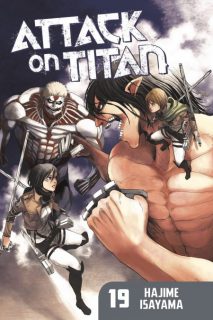
Attack on Titan, Volume 19Attack on Titan, Volume 19 by Hajime Isayama. For a while there I was starting to become a little weary of the sheer number of plot twists in Attack on Titan. Instead of renewing my interest in the story, I started to lose confidence in it. However, the more recent volumes of the series have regained some focus. The story developments and turns in the story are more exciting because of it, even if there are still a few major mysteries which have yet to be fully explained. The nineteenth volume of Attack on Titan is an exciting one as a massive confrontation between a contingent of intelligent Titans and the decimated Survey Corps begins. Eren, Mikasa, Armin, and the rest will have to directly face off against the Armored Titan and the Colossus Titan, knowing that the humans controlling them were once their comrades. It’s a kill-or-be-killed situation with very little room for negotiation. The action sequences in the nineteenth volume are dramatic and well-done, but the most notable aspect of the manga is probably the psychological impact that the battle for survival against one-time friends has on the characters. Also, for Attack on Titan fans who are interested in Levi and Erwin, the special edition of the nineteenth volume comes along with the second and final part of the No Regrets OVA anime adaptation. I haven’t had a chance to watch it myself yet, but I am glad that it’s available and am looking forward to seeing it.

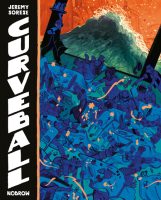
CurveballCurveball by Jeremy Sorese. Although I’m only now finally getting around to reading Curveball, I’ve actually been meaning to for a while now. The comic was first brought to my attention when it became a finalist for the 2016 Lambda Literary Award for best LGBT Graphic Novel. And then at TCAF 2016 I had the opportunity to hear Sorese talk about Curveball specifically and queer science fiction in general. There are two things in particular that I especially love about Curveball. The first is the inherent queerness of the characters and worldbuilding. Numerous genders are represented in the comic and relationships, romantic and otherwise, occur in a multitude of combinations. The main character, Avery, is non-binary and there are a fair number of others who are genderqueer or genderfluid as well. This isn’t at all a big deal in the comic, it’s simply a natural and unobtrusive part of the setting. The second thing that I particularly enjoyed about the comic is Sorese’s use of color. The illustrations in Curveball are primarily grayscale except for the use of an extraordinarily vibrant and literally fluorescent orange to represent technology, and more specifically energy. The effect is very striking. Curveball is mostly about relationships, but the characters are also dealing with a developing energy crisis. The fluorescent orange and the occasional lack thereof is a constant visual reminder of this.

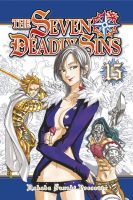
Seven Deadly Sins, Volume 15The Seven Deadly Sins, Volume 15 by Nakaba Suzuki. The stakes can’t get much higher than they are at the moment in The Seven Deadly Sins seeing as the fate of the entire world is in grave peril now that the extraordinarily powerful demons known as the Ten Commandments have been released. Granted, just about everyone and everything in The Seven Deadly Sins is extraordinarily powerful, so it’s sometimes difficult to get a good feel for the grand scale of the series; the shock and awe is frequently lost. Despite the tremendous abilities that everyone has and despite the massive amounts of damage dealt to both people and property, it ends up coming across as common rather than impressive. Recently Suzuki has resorted to having Hawk actually announce the combat classes and magic levels of the various characters are, but that just seems superfluous when there is effectively no difference between a class level of 3,370 and 5,500 on the page. Even so, the fight scenes and battle sequences somehow still manage to be engaging and entertaining and are honestly one of the best things about the series. The fifteen volume of the manga sees the Seven Deadly Sins starting to fight off the Ten Commandments on two separate fronts. First they must try to fend off the Commandment’s minions and are largely successful, but eventually one of the demons appears to confront them directly. By the end, things aren’t looking good for the Deadly Sins.

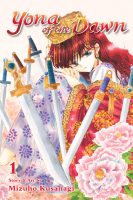
Yona of the Dawn, Volume 1Yona of the Dawn, Volume 1 by Mizuho Kusanagi. Even if it wasn’t for the fact that I tend to enjoy epic fantasy series with strong female leads, the amount of excitement surrounding the anime adaptation and the licensing announcement for the original manga series in English would have been enough for Yona of the Dawn to catch my attention and interest. Admittedly, Yona spends a large part of the series’ first volume in shock and barely able to function. The reason is understandable–she has witnessed the murder of her beloved father the king at the hands of one of the people she most loved and trusted in the world. The unexpected betrayal leaves her stunned; the only reason she avoids a similar fate is that her personal guard whisks her away from the palace. However, the very beginning of the volume implies that Yona will take control of her own destiny. That’s the story that I really want to read. I want to see Yona overcome her tragic circumstances, to find the strength to protect herself and those she loves. If the manga is able to deliver its promise (and I suspect that it will), Yona of the Dawn will indeed be a series well-worth following. While Yona comes across as weak and helpless for a significant portion of the first volume of Yona of the Dawn, showing Yona at her lowest does provide the necessary setup required for dramatic story and character developments. I’m definitely looking forward to reading more of Yona of the Dawn.

Save

Save

Filed Under: FEATURES, My Week in Manga Tagged With: attack on titan, comics, Hajime Isayama, Jeremy Sorese, manga, Mizuho Kusanagi, Nakaba Suzuki, Seven Deadly Sins, yona of the dawn

Bookshelf Briefs 9/26/16

September 26, 2016 by Sean Gaffney and Michelle Smith 2 Comments

arpeggio8Arpeggio of Blue Steel, Vol. 8 | By Ark Performance | Seven Seas – Last time I asked if Yamato would get involved, and sure enough that’s what happens here, as we get several new revelations that answer many questions we’ve had since the first volume. Some are less surprising than others (Amana Kotono’s identity has been something I’ve expected for ages). There’s also some lovely heartwarming stuff here between Haruna and Makie, both of whom are desperate to see the other happy even if it means sacrificing everything. Luckily, it all works out, at least for now. As we get further into the series, the mystery behind these “mental models”—i.e., why the battleships are cute girls—deepens and deepens. That said, I’ll betcha next time we get more sea battles. – Sean Gaffney

complexage2Complex Age, Vol. 2 | By Yui Sakuma | Kodansha Comics – Many years ago, I wrote fanfiction under my own name, because I was young and stupid. One of my worst nightmares is that my workplace finds some of the stuff I wrote, which was also young and stupid. As such, I identified a bit too much with Hayama, who Nagisa found was also a secret cosplayer, but who is discovered at work and, while not fired, is basically embarrassed to the point that she quits. It’s depressing and highly realistic. As for Nagisa, she’s having more trouble at home, where her mother is furious that she’s still doing this at her age—mostly as her mother seemed to do the same thing back in the day and has lingering regrets. This series is well-written and intensely painful at the same time. – Sean Gaffney

egm2Everyone’s Getting Married, Vol. 2 | By Izumi Miyazono | Viz Media – After a first volume where the issue was the differing relationship goals of the lead couple, this second volume’s plot is more prosaic, although equally relatable—how to find time to do couple things when you’re in a state of constant busyness. This is something especially prevalent in the entertainment industry, as Ryu finds himself taking on more and more work and having less and less time for Asuka. Luckily, they finally manage to get together by the end of this book. As for Asuka, she’s stopped worrying so much about marrying Ryu and has started to accept their relationship as it is, though has been told to think about why he’s so adamant. A nicely mature romance, in the best sense of the word. – Sean Gaffney

Everyone’s Getting Married, Vol. 2 | By Izumi Miyazono | VIZ Media – Asuka Takanashi, a successful career woman who really wants to get married, and Ryu Nanami, a popular newscaster who’d rather die than tie the knot, have fallen in love and started a relationship. We soon learn that Asuka believes she is going to be able to persuade Nanami to see things her way. How I wish the story would not end with her succeeding, but I suspect that it will. For now, we get a bunch of interrupted sexy times, busy schedules leading to canceled dates and hurt feelings, a tiny glimpse of Asuka being competent at work and a whole chapter on Nanami doing the same, and, finally, consummation of their relationship. I might sound critical, but I really do enjoy this series. – Michelle Smith

idoldreams3Idol Dreams, Vol. 3 | By Arina Tanemura | VIZ Media – When Idol Dreams revolves around adult Chikage, it can be almost interesting. For the first half of this volume, we focus on her attempts to get some kind of relationship going with Haru and she finally is able to confess that she has loved him all this time. Only, Haru has noticed how Chikage lights up when she talks about Tokita, and how the latter looks at her, and concludes that Chikage actually has no idea what love really is. As he backs off, Chikage takes her pills and transforms into Akari, whereupon two different guys (these being teenagers) are competing for her affections. This mousy dingbat has four love interests?! Anyway, she decides the best way to learn about relationships is to start dating a fifteen-year-old she doesn’t love, because that couldn’t possibly screw him up or anything. Still frustrating and creepy. – Michelle Smith

knt25Kimi ni Todoke: From Me to You, Vol. 25 | By Karuho Shiina | VIZ Media – Much like Skip Beat!, Kimi ni Todoke is another long-running shoujo title that is just consistently good. I love everything to do with Chizu and Ryu here, and when she finally decides to support his baseball dreams (even if it means him leaving her behind for a few years) and begins to cheer at his game and pray for victory, I got all verklempt. And then the sweet scene between them afterwards made me full on bawl. You did it again, Shiina-sensei. As if this volume weren’t good enough, it ends with a pretty powerful fight between Sawako and Kazehara. We’ve never seen her be so honest and straightforward about her feelings and complaints, and it’s pretty exhilarating to feel, even if briefly, that their relationship might really be in jeopardy. It’ll be a long wait for the next volume. – Michelle Smith

ntr1NTR: Netsuzou Trap, Vol. 1 | By Kodama Naoko | Seven Seas – Let’s face it, most yuri titles out there are not meant to appeal to lesbians, or even to women at all. They are there for young men (or, if we’re being honest, older boys) who think that girl-on-girl is hot. Netsuzou Trap is definitely for the latter—the prefix, NTR, is the Japanese abbreviation for “cheating,” and tends to be used to humiliate or shame the woman. And that is, to a degree, what happens here, as a girl is trying to go further with her boyfriend but keeps getting interrupted by her best friend, who is apparently trying to both help and seduce her. The melodrama is obvious, the yuri is non-consensual for the most part, and I can’t recommend this to anyone but 18-21 year old guys. – Sean Gaffney

nichijou4Nichijou: My Ordinary Life, Vol. 4 | By Keiichi Arawi | Vertical Comics – First of all, it has to be said: my favorite character is barely in this, as Mai gets only one panel in the entire volume. (It does show her trolling, if that helps.) Instead, we have three types of storylines here: Yukko and Mio being silly and hyperactive, Nano and the Professor being cute and immature, and the rest of the cast, which expands to include a young teacher who has an obsession with finding out how Nano ticks, but also has the worst luck in the world. (She’s female, by the way—the artist has drawn her very androgynously). Even without Mai, though, Nichijou has it where it counts—the humor is still excellent, and the plots are still weird, as the author starts to use repeated gags to great effect. Tremendous fun. – Sean Gaffney

Nichijou: My Ordinary Life, Vol. 4 | By Keiichi Arawi | Vertical Comics – Last time I wrote that I was having doubts about Nichijou, and would give it one more try. I’m glad I did, because there was a lot to like this time around. My favorite parts involved Sakamoto, the talking cat who lives with Nano and the professor, especially his adorable proficiency at karuta. There were a few other amusing visual gags, flights of fancy, and funny punchlines, along with not-so-amusing gags, punchlines, etc. Still, it all balanced out into something enjoyable. I still loathe the professor, which I feel weird saying since she’s a little kid, but since all of her scenes this time involved Sakamoto, it was okay. More Sakamoto! – Michelle Smith

yamada10Yamada-kun and the Seven Witches, Vol. 10 | By Miki Yoshikawa | Kodansha Comics – This is the longest arc we’ve had to date, and as a result we’re allowed to do things like not resolve the cliffhanger ending at all, mostly as Shiraishi is promptly removed from the board, causing Yamada and company to have to try to think of something else. That something involves Leona, still refusing to go to school but apparently far more connected to the Student Council President than was once thought—in fact, it’s a sweet and depressing story. There’s also some sweet and depressing in Odagiri’s subplot, as she’s offered Yamada on a silver platter but won’t sell him out as she knows he loves someone else. An excellent combination of romantic comedy and fantasy thriller. – Sean Gaffney

Filed Under: Bookshelf Briefs

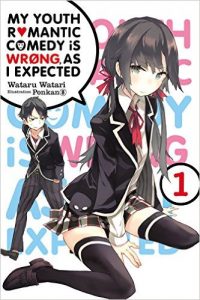
My Youth Romantic Comedy Is Wrong, As I Expected, Vol. 1

September 25, 2016 by Sean Gaffney

By Wataru Watari and Ponkan 8. Released in Japan by Shogakukan. Released in North America by Yen On. Translated by Jennifer Ward.

This is a highly anticipated light novel title, for many reasons. First, the anime proved quite popular in the West, and people wanted to see how the original was, particularly as the anime apparently compressed 11 books into 26 episodes. Secondly, Shogakukan has a number of popular light novel titles, but haven’t really licensed to the West before now except maybe via Viz. But most importantly, this series does not feature anyone trapped in a fantasy world, or trapped in a fantasy game, or anyone acquiring amazing superhero-like powers, or immortals, or dullahans. Heck, there’s not even a girl who eats books. No, instead we get something a bit more down to Earth: a Japanese high school where a cynical and belligerent young man with a sullen face is ordered to join a club devoted to helping others.

oregairu1

Of course, just because there’s no fantasy content does not mean that this series is not going to remind long-time anime and manga fans of other series. The retorts between Hachiman and Yukino may remind readers of the caustic relationship between Araragi and Senjougahara in the Monogatari series. And the idea of the club itself, as well as it consisting mostly of people who have difficulty interacting, is a lot like Haganai. But the title of the book si not wrong, at least not right away. Araragi starts off pseudo-cynical but quickly drops that as he gets swept up by events. Kodaka may have the face of a thug and the social kills of a newt, but he is fundamentally a nice guy. Hachiman, on the other hand, is an obnoxious dick throughout much of this book. He spends much of his time disparaging the people around him, including his teacher, his sister, and even the cute popular girl who seems to have taken a liking to him, who he refers to as a “slut” when they first meet. Enjoying this series requires getting over the very difficult hurdle of the hero’s mentality.

If you can get past that, though, there’s much to enjoy. Because the series is (at least at this point, no doubt it will change later) avoiding any serious romantic interaction, we can sit back and enjoy Hachiman, Yukino and Yui spit venom at each other (well, the two girls seem to like each other, they save their venom for him). The insults and comebacks here are very amusing, and don’t rely as much on the obvious ‘tsukkomi shouting’ as some other series. And of course there’s the fact that underneath his obnoxious, caustic front Hachiman does actually seem to want to help people, as he does throughout this book, usually complaining all the while. He’s not rewarded for it, as that would defeat the purpose. But there’s a spark that will no doubt catch fire as the series goes on. Till then, enjoy the fact that the most romantic tension he has in the whole book is with the cute bishie guy, who he can’t stop thinking about.

I suspect this is the sort of series that will reward more as it goes along, much like many series that begin with unlikable protagonists. Till then, I will at least enjoy these somewhat broken high school students snipe their way through their day, while also helping others along the way. And the fact that, at least through one volume, the youth romantic comedy is indeed kept on the back burner.

Filed Under: REVIEWS

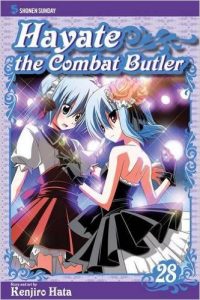
Hayate the Combat Butler, Vol. 28

September 24, 2016 by Sean Gaffney

By Kenjiro Hata. Released in Japan as “Hayate no Gotoku!” by Shogakukan, serialization ongoing in the magazine Shonen Sunday. Released in North America by Viz. Translated by John Werry.

It is not uncommon for long-running harem comedy series to introduce a new girl who quickly captures the hearts and minds of fans who have grown weary of the natural staticness of a typical harem plot. Indeed, it’s not uncommon for Hayate the Combat Butler iteslf, as Athena grew quite popular when she was introduced, but she was part of Hayate’s tragic backstory, and also heralded a certain amount of drama. With Ruka Suirenji, a pop idol who apparently likes to sell doujinshi on the side, we get something more akin to the typical Hayate heroine, and much of the first half of this volume is about showing off how cute she is and how much chemistry she has with Hayate. Who she thinks is a girl, something that I’m sure will go bad for him later on.

hayate28

Of course, this doesn’t mean that the old favorites are getting ignored. To no one’s surprise, Athena has returned, though only for a brief cameo before we get introduced to Alice, a cute young girl who looks just like Athena did when she and Hayate were kids – a fact not lost on him, and clearly there’s some magic age-regression going on here. This ends up leading to some ship tease with Hinagiku after Alice (Athena’s child form) decides that Hayate and Hina are her mama and papa. (Best joke of the volume has Hayate wondering if it was that time when–and getting cut off by Hina with a sword to the head, as jokes about her chastity are a bit much even for her.) And even Maria, who’s been so absent from the manga lately that she’s slipped to 5th in the popularity poll (Athena is second, for the curious) gets a sweet ‘let’s go to the public baths’ scene with Hayate, who for once does not get accused of peeping.

This volume sees Hata starting to balance out his ongoing storylines and his desire to write gag comedy a little better than he has before. Aika appearing as Alice’s minder ensures there will always be a snarky comment handy, and even though she regresses a bit, Nagi is still able to see what a really dedicated writer of bizarre incomprehensible doujinshi can do. And there’s still room for one-shots, such as a typical day in the apartments implying that Hayate survives on one hour of sleep a night, or a drunken Yukiji winning the attention of manga artist Ashibashi (who we now see is actually named Koji as if it wasn’t obvious enough who Hata based him on). Rest assured that things are still funny, even as the plot grows more complex.

By now I highly doubt that Hayate is winning new readers, and its die-hards likely support the manga while also reading the scans online, which are about five years ahead of Viz’s release. But it is worth supporting This is a funny title that also has doses of sentiment and even a bit of action. It remains an underrated treat.

Filed Under: REVIEWS

Manga the Week of 9/28

September 22, 2016 by Sean Gaffney, Ash Brown, MJ, Michelle Smith and Anna N Leave a Comment

SEAN: Duck and cover, folks.

Kodansha gives us a 3rd Colossal Edition of Attack on Titan, which no doubt still remains a potent blunt instrument as well as a good way of catching up.

ASH: These volumes truly are colossal.

SEAN: And a 56th volume of Fairy Tail, which had one of my pairings become canon recently, and apparently other stuff is happening as well.

happiness1

The first of three debuts from Kodansha next week, Happiness is from the creator of Flowers of Evil (and Inside Mari, and Drifting Net Café, for those who want to be reminded that there are iffy things the author has done too). It seems to combine school bullying and vampires, and runs in Bessatsu Shonen Magazine.

ASH: I’m not especially interested in vampires, but I’ll definitely be checking out this series.

MJ: I’d give this a look.

SEAN: The Prince in His Dark Days is an Aria title, so file it under shoujo-ish. This seems to involve some gender bending, and the author is better known for her BL. We’ll see what it’s like.

MICHELLE: This is already in my Amazon cart!

ASH: I’m very curious about this series!

ANNA: I’m curious too, but I will wait until you guys read it.

MJ: I’m absolutely on board for this!

SEAN: Sweetness and Lightning may have just finished its anime, but the manga goes in, with Vol. 2 coming out next week.

And Welcome to the Ballroom is from Weekly Shonen Magazine, and from what I can tell may be a sports manga, only the sport is ballroom dancing. Of the three debuts, this one excites me the most.

MICHELLE: And so are both of these!

ASH: It’s a strong week for Kodansha debuts; I want to read them all.

ANNA: BALLROOM DANCING MANGA! I am amazed.

MJ: So excited!

SEAN: Franken Fran has an omnibus of Vol. 5 & 6. It’s not for everyone, as many have discovered, but I do love its combination of excessive horror and excessive humor.

ASH: As do I.

And there’s a 7th volume of Servamp, which… OK, look, there’s a LOT of vampire titles this week. I have to save my bad jokes for other vampire titles down the list.

And Vertical has a 3rd volume of Devil’s Line. See what I mean? It’s just awash with vampires around here.

Yen Press takes up the rest of this list, but trust me, we aren’t almost done. First, there’s the digital line, with 6th volumes for Aphorism, Crimson Prince (not vampires, but demons), and Sekirei.

Yen On time. The 7th novel of Accel World will hopefully involve the nasty cliffhanger from the last volume, but will we really be free of the constant threat of the corrupting armor? And will Haru get actual self-confidence?

Since the last volume of Kagerou Daze was delayed, that means we get this 5th volume sooner than expected. This one should explain how Shintaro’s dead not-quite-girlfriend, Ayano, is connected to all this.

oregairu1

At last, we have the debut of Yen On’s first light novel series with no fantasy elements, My Youth Romantic Comedy Is Wrong As I Expected. You can tell it’s a light novel by that wordy title, just call it OreGairu. It comes highly recommended, I will see what the fuss is about.

MJ: I will check this out as well.

SEAN: And a 2nd volume of Overlord, as we continue to see how ‘trapped in a game’ works if you’re a villain.

And there is a 4th volume of Strike the Blood, which I continue to find very generic but enjoyable despite that.

On to Yen Press proper. We get a 3rd volume of Akame Ga KILL! preview ZERO.

And we get the final volume of Aldnoah Zero First Season. The Second Season is not yet licensed, as far as I can tell.

There’s a 2nd volume of the manga adaptation of The Boy and the Beast.

As you might guess from the cover, A Bride’s Story 8 will be focusing on Pariya, our favorite tsundere, and her own marriage – assuming she does not blush herself to death first.

ASH: Looking forward to seeing more of A Bride’s Story on my shelf.

MJ: This, always.

SEAN: Chaika the Coffin Princess is also ending with its 5th and final volume.

And if you like fanservice, have a 2nd volume of Demonizer Zilch.

There’s also a 5th volume of the heartwarming and sometimes creepy First Love Monster.

Fruits Basket’s collectors Edition gives us 2 more volumes with its 5th omnibus, and a new zodiac, of course, of course.

MICHELLE: And a nice Ayame pic on the back cover!

MJ: These are so beautiful, I could not be happier.

SEAN: He’s My Only Vampire has ended in Japan, but still continues here with Vol. 8.

Now that I’ve read its source, I expect The Honor Student at Magic High School’s 4th volume to make 100% more sense.

And speaking of LN adaptations, there’s the 2nd My Youth Romantic… I’m not typing that out again.

ayakashi4

Of the Red, The Light, and the Ayakashi is adapting a game, but still intrigues me as we hit Volume 4. I’m in it for the savvy little sister.

MICHELLE: I’m intrigued, as well.

SEAN: Overlord’s 2nd manga is coming out the same day as its 2nd light novel. That’s never not confusing!

And Space Dandy wraps up with a 2nd volume. This is the trouble with anime tie-ins.

Strike the Blood has a 4th manga volume, coming out the same day as… see my entry on Overlord.

Triage X may be up to a 12th volume, but on the bright side, we’ve caught up with Japan.

Ubel Blatt has a 6th omnibus that is really its 7th. Still bitter.

ASH: Understandably so.

SEAN: And lastly, Erika Furudo continues to RUIN EVERYTHING as we get a 2nd Umineko: Dawn of the Golden Witch omnibus. Can we get a happy ending with Battler controlling things? Don’t bet on it.

Are you buried under the weight of all of this? If not, what are you getting?

Filed Under: FEATURES, manga the week of

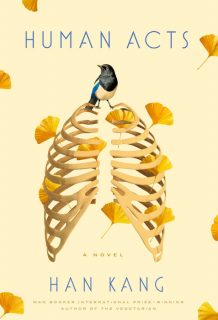
Human Acts

September 22, 2016 by Ash Brown

Human ActsAuthor: Han Kang
Translator: Deborah Smith
U.S. Publisher: Hogarth Press
ISBN: 9781101906729
Released: January 2017
Original release: 2014
Awards: Manhae Literary Prize

Over the last few years South Korean novelist Han Kang has gained a fair amount of international attention. Of particular recent note, her second novel to be translated into English, The Vegetarian (which I’ve been meaning to read for quite some time now), was awarded the Man Booker International Prize in 2016 after being met with great acclaim. Kang isn’t a stranger to awards–her work, while at times controversial, is well-regarded and has earned her many honors and accolades both in South Korea and abroad. Human Acts is Kang’s third novel to receive an English translation. The book was originally published in Korea in 2014 (under a title that more closely translates as The Boy Is Coming) and won Kang the Manhae Literary Prize. Deborah Smith’s English translation of and accompanying introduction to Human Acts was first published in Great Britain in 2016 and is scheduled to be released in the United States in early 2017.

After the assassination of South Korean president Park Chung-hee in 1979, the political climate of the country became increasingly perilous. The student demonstrations calling for democracy and the protests against the government which began during Park’s rule when he implemented authoritarian policies and martial law continued even after his death. In 1980, in the southern city of Gwanju, one such demonstration was engulfed in violence when a group of citizens supporting the students’ efforts was attacked and killed by government forces. The protest in Gwanju quickly escalated into an uprising involving thousands. The incident only lasted a few days–ultimately the civil militias were defeated by the government troops–but the uprising and accompanying massacre would deeply impact South Korea and its people for decades to come, leaving a wound that has yet to completely heal.

Human Acts focuses on the aftermath of the Gwanju Uprising and the personal costs, pain, and suffering of the people involved. The novel unfolds in seven parts told from seven different perspectives. It begins in the midst of the uprising itself in 1980 and ends in 2013 with its lingering influence. Human Acts opens with the story Dong-ho, a middle school student working in a gymnasium which had been hastily converted into a temporary morgue in order to accommodate the tremendous number of casualties. There he helps to care for and identify the bodies. After he himself is killed during the uprising, Dong-ho becomes the touchstone which ties the disparate parts of the novel together. In addition to Dong-ho, Human Acts contains the accounts of the soul of his friend who also lost his life, two of the women who worked in the morgue with him, a protestor who witnessed his death and who was later arrested, imprisoned, and tortured, his mother, and the writer who retells their stories.

Human Acts is a beautifully written novel, the translation is elegant and at times even poetic, but the subject matter is horrific and tragic and Kang doesn’t shy away from that fact. The story, based on truth, is filled with death, brutality, and violence. Human Acts is extraordinary though it certainly isn’t light reading; it can be a very difficult, affecting, and haunting read. The text slips in and out of a second-person narrative which draws the reader directly into the story. The technique is surprisingly effective and disconcerting, helping to turn the novel into something that’s akin to both a eulogy and a denunciation. While Human Acts focuses on a specific historical event, its themes are universal, exploring the lasting changes that the past has on the present and how people as individuals cope with the trauma that has been experienced. Human Acts is an intensely personal, political, powerful, and devastating work and is honestly one of best novels that I have read in a long while.

Thank you to Hogarth Press for providing a copy of Human Acts for review.

Filed Under: REVIEWS Tagged With: Han Kang, Novels

Lord Marksman and Vanadis, Vol. 1

September 22, 2016 by Sean Gaffney

By Tsukasa Kawaguchi and Nobuhiko Yanai. Released in Japan by Media Factory, serialization ongoing in the magazine Comic Flapper. Released in North America by Seven Seas. Translated by Elina Ishikawa. Adapted by Rebecca Schneider.

I’ve mentioned before that Media Factory publishes both my nemesis and my weakness. They put out two magazines for young men, basically sister publications. Comic Alive and Comic Flapper. Comic Alive tends to produce series, usually based on a popular franchise, that I can’t abide, with the worst otaku pandering, fanservice-laden drivel. Comic Flapper also, of course, publishes series based on popular franchises, but it tends to skew a bit weirder and less mainstream than Alive. And as a result, despite some problematic things, I usually find myself enjoying a Flapper series. Lord Marksman and Vanadis is a fantasy series based on a light novel with a cool hero and a bunch of girls, so I admit I was a bit wary. But sure enough, Flapper wins again. This was a good start, and I want to see more of it.

vanadis1

Now don’t get me wrong, there is service here. We get not one but two ‘walk in on someone bathing’ scenes, a ‘we are fighting and I accidentally grope your boob’ scene, and another nude scene when the childhood friend of the hero cleanses herself to go to the temple and pray for him. But the series, at heart, is grounded in its plot and worldbuilding, which is always the way to win me over and get me to read your harem series starring your really cool guy. Tigre is a young Count called on to fight in a territorial war for his lord against a rival kingdom who have a Vanadis with them – who are apparently young women who can fight with amazing weapons. We find out how amazing when Tigre’s group is almost completely wiped out (honestly, I thought it was a complete massacre bar him, but a couple of the named characters show up later). He’s subsequently captured and brought to the Vanadis, who wants to test his skills, given his archery actually caused her to make an effort in the battle.

Our heroes are types that you will see in most fantasy manga and light novels, but they hew towards the ‘sensible’ end of the spectrum. (The exception is the bodyguard, Lim, who is allowed to be the tsundere hair-triggered temper girl that Elen herself cannot be because she is the Vanadis. Also, we need SOME comedy in here.) Tigre’s capture, as well as the death of his lord in the battle, leads to real consequences as various territories vie to see who can gain the most power, and decide that Tigre’s village is the perfect one to raze off the map to do so. I knew he was going to have to escape to deal with that, and also knew that he would be stopped. I’m impressed that he actually asked his captors to help him defend his village, though – it’s the sort of ballsy decision that makes you see why Elen likes him so much.

So there’s not much original here, but it’s well told, and avoids most of the wretched cliches of such genres while skating past the ones it can’t quite avoid. Our hero is cool and amazing in archery, but is shown to be useless in most other forms of combat. As for Elen, well, it’s only the first book, I’m sure we’ll find out her weaknesses later. If you enjoy this genre, it’s a very good start.

Filed Under: REVIEWS

  • « Go to Previous Page
  • Page 1
  • Interim pages omitted …
  • Page 471
  • Page 472
  • Page 473
  • Page 474
  • Page 475
  • Interim pages omitted …
  • Page 1048
  • Go to Next Page »
 | Log in
Copyright © 2010 Manga Bookshelf | Powered by WordPress & the Genesis Framework