• Skip to primary navigation
  • Skip to main content
  • Skip to primary sidebar
  • Home
  • About Us
    • Privacy Policy
    • Comment Policy
    • Disclosures & Disclaimers
  • Resources
    • Links, Essays & Articles
    • Fandomology!
    • CLAMP Directory
    • BlogRoll
  • Features & Columns
    • 3 Things Thursday
    • Adventures in the Key of Shoujo
    • Bit & Blips (game reviews)
    • BL BOOKRACK
    • Bookshelf Briefs
    • Bringing the Drama
    • Comic Conversion
    • Fanservice Friday
    • Going Digital
    • It Came From the Sinosphere
    • License This!
    • Magazine no Mori
    • My Week in Manga
    • OFF THE SHELF
    • Not By Manga Alone
    • PICK OF THE WEEK
    • Subtitles & Sensibility
    • Weekly Shonen Jump Recaps
  • Manga Moveable Feast
    • MMF Full Archive
    • Yun Kouga
    • CLAMP
    • Shojo Beat
    • Osamu Tezuka
    • Sailor Moon
    • Fruits Basket
    • Takehiko Inoue
    • Wild Adapter
    • One Piece
    • After School Nightmare
    • Karakuri Odette
    • Paradise Kiss
    • The Color Trilogy
    • To Terra…
    • Sexy Voice & Robo
  • Browse by Author
    • Sean Gaffney
    • Anna Neatrour
    • Michelle Smith
    • Katherine Dacey
    • MJ
    • Brigid Alverson
    • Travis Anderson
    • Phillip Anthony
    • Derek Bown
    • Jaci Dahlvang
    • Angela Eastman
    • Erica Friedman
    • Sara K.
    • Megan Purdy
    • Emily Snodgrass
    • Nancy Thistlethwaite
    • Eva Volin
    • David Welsh
  • MB Blogs
    • A Case Suitable For Treatment
    • Experiments in Manga
    • MangaBlog
    • The Manga Critic
    • Manga Report
    • Soliloquy in Blue
    • Manga Curmudgeon (archive)

Manga Bookshelf

Discussion, Resources, Roundtables, & Reviews

Blog

My Week in Manga: October 10-October 16, 2016

October 17, 2016 by Ash Brown

My News and Reviews

I was a little preoccupied last week, dealing with some unexpected developments at work and home, so I wasn’t online much at all. However, I did still manage to post September’s Bookshelf Overload in which I reveal the manga, comics, books, and anime that I picked up last month. Also, a few weeks ago I mentioned the short story “The Mud God” which is tangentially related to a commission that Jenn Grunigen wrote for me. Well, it’s now freely available to read online!

Quick Takes
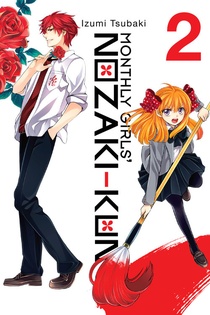
Monthly Girls' Nozaki-kun, Volume 2Monthly Girls’ Nozaki-kun, Volumes 2-4 by Izumi Tsubaki. My introduction to Monthly Girls’ Nozaki-kun was through the anime series which I adored. Because I loved the anime, it only made sense for me to seek out the original manga as well. Unsurprisingly, I enjoyed the first volume immensely. Despite that, it’s actually been quite a while since I’ve read any of Monthly Girls’ Nozaki-kun, which just means that I had the chance to fall in love with the series all over again. And I did, wholeheartedly. The series’ comedy is largely based on the characters and their personalities. The characters themselves are all a little odd but they are also incredibly endearing. Monthly Girls’ Nozaki-kun plays around with expectations, so the personality quirks of the characters intentionally defy stereotypes and are deliberately unexpected. In part, Monthly Girls’ Nozaki-kun is also a romantic comedy. The cast is fairly large and there could be any number of couples among the members except for the fact that most of the characters are completely oblivious of or misinterpret their own feelings. No one is actually together in the sense that they are dating in Monthly Girls’ Nozaki-kun (at least not yet), but in many cases they might as well be. The various relationships in Monthly Girls’ Nozaki-kun are close ones and are yet another major source of the manga’s good-natured humor.
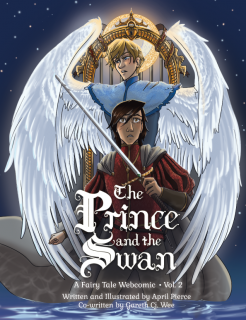
The Prince and the Swan, Volume 2The Prince and the Swan, Volumes 1-2 by April Pierce and Gareth C.J. Wee. Pyotr Ilyich Tchaikovsky’s ballet Swan Lake, itself based on Russian folklore, has been the inspiration and basis for countless other works. One of the more recent retellings that I’m aware of is the webcomic The Prince and the Swan which began in 2013. I discovered the comic while at the 2016 Toronto Comics Arts Festival where the second print volume was making its debut; I couldn’t pass up Swan Lake reimagined as a queer fairytale. Knowledge of the ballet’s story isn’t at all necessary to enjoy The Prince and the Swan although readers who are familiar with it will be in a better position to appreciate the changes made for the comic. The basic premise of the story remains the same, but in the case of The Prince and the Swan Odette is now Odet, a prince who suffers from a curse that transforms him into a swan during the day. The other lead character in the comic is Prince Siegfried who is reluctantly preparing for his coronation and marriage as king. A chance encounter between the two men will change the course of both of their lives. The pacing of The Prince and the Swan seems a little slow at first, but the artwork, characterization, and storytelling quickly improve and gain confidence as the comic progresses. I look forward to seeing how The Prince and the Swan continues to develop.
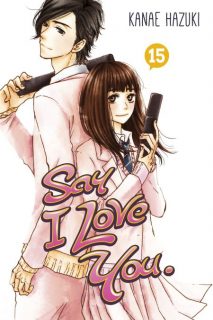
Say I Love You, Volume 15Say I Love You, Volume 15 by Kanae Hazuki. One would think that after fifteen volumes Say I Love You would no longer surprise me, but I continue to be impressed by its honesty and authenticity. I do wonder if the recently introduced Aoi twins will continue to play a role in the series as most of the main characters are graduating high school in pursuit of their individual futures. While I was initially a little unsure of the addition of prominent new characters so late in the series, I ended up really liking them and their story arcs–I’d now hate to see them discarded so soon. (Granted, Kai still has another year to go before he graduates, so I wouldn’t be surprised if the twins will continue to make appearances.) The fifteenth volume of Say I Love You would have been a natural ending point for the series. As many of the characters are preparing to go their separate ways, either by immediately entering the workforce or by continuing their education, a fair amount of time is devoted to introspection and reflection on the past. Mei in particular has changed significantly since the beginning of the series, but all of the characters have grown and matured as individuals. The characterization in Say I Love You has always been one of the series’ strong points. It will be interesting to see where the manga goes from here as both the story and characters move beyond high school.

Run, Melos! and Other StoriesRun, Melos! and Other Stories by Osamu Dazai. I forget exactly when it was that I first learned of Dazai’s short story “Run, Melos!” but it’s more or less a staple of the Japanese education system so references to the work are fairly common in Japanese popular culture. I’ve been wanting to read to story for quite some time but was under the mistaken impression that it wasn’t actually available in English. However, I recently discovered that it had indeed been translated as part of the Kodansha English Library series… which was only ever released in Japan. Thanks to the power of inter-library loan, I was finally able to read “Run, Melos!” along with six of Dazai’s other works of short fiction: “A Promise Fulfilled,” “One Hundred Views of Mount Fuji,” “Schoolgirl,””Cherry Leaves and the Whistler,” “Eight Scenes of Tokyo,” and “One Snowy Night.” I had previously read another translation of Schoolgirl but the other stories were all new to me. Normally when I think about Dazai it’s his tragic novel No Longer Human that immediately comes to mind; I had actually forgotten how humorous some of his stories can be. Even though there is still a fair amount of melancholy to be found, this humor is much more apparent in Run, Melos! and Other Stories. Overall, the volumes a charming collection of stories mostly set in early twentieth-century Japan (the exception to that being “Run, Melos!” itself) with surprisingly relatable characters.
Save

Save

Filed Under: FEATURES, My Week in Manga Tagged With: April Pierce, comics, Gareth C.J. Wee, Izumi Tsubaki, Kanae Hazuki, manga, Monthly Girls' Nozaki-kun, Osamu Dazai, Prince and the Swan, Say I Love You

Fruits Basket Collector’s Edition, Vol. 5

October 16, 2016 by Sean Gaffney

By Natsuki Takaya. Released in Japan by Hakusensha, serialized in the magazine Hana to Yume. Released in North America by Yen Press. Translated by Sheldon Drzka.

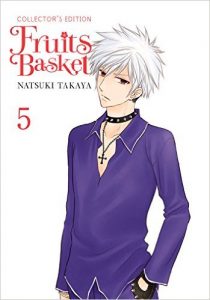
Fruits Basket is, in large part, about a family and its cycles of abuse, and how it makes everyone suffer and endure. That’s why it’s so nice to see, in this omnibus, that there are at least one or two of the main characters whose families are not torn apart by physical abuse, hatred, neglect, suicide, or death. Hanajima during her childhood is, unlike what I talked about with Hiro last time, going through something that the reader is not going to understand, and she really needs to have someone that’s in her corner besides her little brother. I love the fact that immediately after Hana decides to be friends with Tohru and Uo, despite the fact that she may hurt them, she gains control over her powers, as if a switch is flipped. And then there’s Hiro’s mother, who is not only the one Sohma who unreservedly loves her child, but is also pregnant again, which makes everyone happy because the kid can’t be cursed, as all the Zodiac exist already. (More on this later.)

furuba5

There’s actually quite a lot of setup for future plots and pairings here, as clearly Takaya has been told that this is a big enough hit that she can take as much time as she wants. (Ironically, this is also where she hurt her hand, so a long hiatus came between the last volume and this one. The art style will eventually be greatly affected by this, but not just yet.) We meet another Sohma, but not via Tohru and her all-loving heart – this time it’s Uotani, who runs into a handsome yet absentminded young man in her part-time job and seems to fall for him immediately. (The fact that she says he reminds her of Tohru does not help Furuba’s yuri fans at all.) But Kureno seems to be more attached to Akito than the other Sohmas are, and therefore nothing really happens with it.

And then there’s Mayu, who we’ve met as the teacher of Tohru’s class, and were also told was close friends with Kana, Hatori’s lost love. Here we learn that she was in love with Hatori herself, but was so determined not to get in the way that she ended up dating Shigure, even though they’re clearly toxic for each other. (I suspect Shigure enjoyed this more… he seems to love toxic relationships.) Hatori is the stoic type who’s unable to grieve, and so Mayu is the one that grieves for him, for the life that he was never able to live. And Shigure is the manipulator who enjoys both messing with people for the lulz and also giving hem a push whether they want it or not. It’s quite interesting that this arc ends with a flashforward that shows Hatori and Mayu, many years later, together – things will change soon.

There is, of course, drama here as well, most of it stemming from the trip to the beachhouse the Sohmas take during their vacation. (We do meet Kyo’s father, and it is important to Kyo’s character, but he’s so unpleasant and awful I’d rather just not talk about him.) Hiro continues to lash out at things he finds annoying, and Tohru, who is effortlessly close to Kisa in a way he can’t seem to manage, is the biggest thing. It’s quite telling that Hiro is upset at Tohru’s obsession with her late mother – he’s the only one in the entire group who’s always had a warm and loving mother, and so he can’t possibly understand why she would be like this. Kyo, whose mother, it is heavily hinted, killed herself, gets Tohru far better, and immediately figures out that a) Tohru isn’t her usual self, and b) it’s probably because Hiro was rude. He’s maturing rapidly.

The book ends on an ominous note: Akito has followed the Sohmas and is at a neighboring beachhouse, and they all have to go visit – bar Tohru, who is thankfully not invited, and Kyo, who’s always excluded. Kisa being thankful Tohru won’t be there as she worries that Akito will abuse her is one of the saddest moments in the entire book, and will carry over directly into the next omnibus, where Akito decides to pay Tohru a visit after all. Again, if you haven’t read Furuba before, do so, and if you have, these omnibuses are a good opportunity for a reread.

Filed Under: REVIEWS

Manga the Week of 10/19

October 13, 2016 by Sean Gaffney, Ash Brown, Michelle Smith and Anna N Leave a Comment

SEAN: You thought this week might be lighter than the others? Ha! You fool!

Dark Horse has an anthology of works based on Oreimo. Unlike the anthology I’m about to talk about, it’s Japanese creators. It should be cute and incestuous, like its source.

anthology

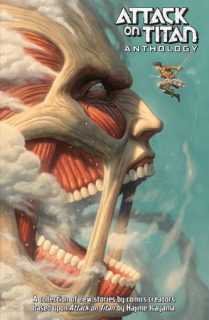
Attack on Titan’s Anthology, a collection of works by Western creators based on the manga, has been the most anticipated title of the year. I reviewed it here, and it does not disappoint. Must buy.

ASH: It really is great!

SEAN: Kodansha also has the 3rd volume of Fairy Girls, which is not as exciting as the Attack on Titan Anthology, but probably has more nudity.

ASH: Fairy Girls is probably my least favorite Fairy Tail spin-off; a shame because the basic premise had such potential.

SEAN: There’s a 5th Inuyashiki, from the Gantz creator.

And a 7th L♥DK, still trying to give us its bad boy love.

And a 10th Tsubasa Reservoir Chronicle omnibus. Didn’t this end? Is it eternal? Am I buying a cursed book?

Somehow, Rise of the Shield Hero has become The Rising of the Shield Hero. Still from One Peace, and this is the 5th manga volume.

Seven Seas has a 2nd volume of Magical Guy series Battle Rabbits.

kobayashi

Their first debut this week is Miss Kobayashi’s Dragon Maid, another in a long line of monster girl works which permeate our world today. It runs in Manga Acton from Futabasha, which is at least not Comic Alive. The author has several works adapted to anime, including Miss Komori Can’t Decide and I Can’t Understand What My Husband Is Saying. I expect it will fall on the ‘goofy’ end of the scale, rather than ‘porn-ey’.

ASH: I am actually a little curious about this one.

SEAN: A 4th Mushoku Tensei: Jobless Reincarnation defies my ability to say anything about it.

I do enjoy My Monster Secret, though, and so a 4th volume is welcome. See? Not all monster girl titles make me sarcastic!

The other new Seven Seas title is complete in one omnibus. Tokyo Undead is part of a smaller trend Seven Seas has picked up on – zombie horror with lots of gore. It ran in Akita Shoten’s Play Comic. Don’t expect cuteness.

Also not cute is the 8th volume of Ajin, though I don’t know, given Japan’s current trends, we could get a high school AU Ajin 4-koma spinoff soon.

ASH: Ha!

SEAN: Viz has another gorgeous Miyazaki artbook coming out, with The Art of Castle in the Sky. AKA Laputa, dropped from the title for reasons that should be obvious.

Tokyo Ghoul 9 gives us additional zombies, and we also get…

Tokyo Ghoul: Days, a prose short story collection about the “everyday lives” of the cast.

Is this enough for you?

MICHELLE: I am literally not buying any of these things. Not even the Attack on Titan anthology.

ANNA: This is one of those weeks where I’m glad I’m not interested in anything, because it gives me some time to catch up on all my other unread manga.

Filed Under: FEATURES, manga the week of

Bookshelf Overload: September 2016

October 13, 2016 by Ash Brown

Normally manga far outweigh the other types of comics that I acquire in any given month, but in September there wasn’t much of a difference between the two. I also picked up more anime than I usually do and my artbook collection continues to steadily increase. Anyway, probably the most exciting thing that I’ve read so far from September was the  Attack on Titan Anthology, an excellent collection of Western comics inspired by Hajime Isayama’s Attack on Titan. (Granted, the anthology’s official release date was in October, but I was fortunate to get my hands on an early copy.) It was also a good month for omnibuses such as the final volume of Kaoru Mori’s Emma (technically released at the very end of August, but I picked up my copy late), the most recent volume of Inio Asano’s Goodnight Punpun, and Wataru Watanabe’s third Yowamushi Pedal omnibus among others. As for series that debuted in September, I’m particularly interested in and looking forward to reading the first volumes of The Prince in His Dark Days by Hico Yamanaka and Welcome to the Ballroom by Tomo Takeuchi.

Manga!
Blame!, Omnibus 1 by Tsutomu Nihei
Boyfriend in Heat by Sakria
The Demon Prince of Momochi House, Volume 6 by Aya Shouoto
Don’t Rub Yourself Against My Ass by Sakira
Emma, Omnibus 5 by Kaoru Mori
Franken Fran, Omnibus 3 by Katsuhisa Kigitsu
Goodnight Punpun, Omnibus 3 by Inio Asano
Haikyu!!, Volume 3 by Haruichi Furudate
Happiness, Volume 1 by Shuzo Oshimi
The Heroic Legend of Arslan, Volume 4 by Hiromu Arakawa
Hey, Class President!, Volumes 2-3 by Kaori Monchi
Kuma Miko: Girl Meets Bear, Volume 1 by Masume Yoshimoto
Mr. Mini Mart by Junko
One-Punch Man, Volume 8 written by One, illustrated by Yusuke Murata
Persona 3, Volume 1 by Shuji Sogabe
The Prince in His Dark Days, Volume 1 by Hico Yamanaka
Sailor Men by Sakira
Welcome to the Ballroom, Volume 1 by Tomo Takeuchi
Wild Boyfriend by Sakira
Yowamushi Pedal, Omnibus 3 by Wataru Watanabe

Comics!
Acid Monday by Lucid
Agents of the Realm: Semester 1, Volume 1 by Mildred Louis
Attack on Titan Anthology edited by Ben Applegate and Jeanine Schaefer
Avialae, Chapter 2 by Lucid
From Under Mountains written by Claire Gibson and Marian Churchland, illustrated by Sloane Leong
Mirror: The Mountain written by Emma Ríos, illustrated by Hwei Lim
Mooncop by Tom Gauld
My Car’s a Spaceship, and My Spaceship’s a Boy! by Kris Mukai
Princess Princess Ever After by Katie O’Neill
Someone Please Have Sex With Me by Gina Wynbrandt
Soulless, Volumes 1-3 written by Gail Carriger, illustrated by Rem
Spider-Man/Deadpool, Volume 1: Isn’t it Bromantic written by Joe Kelly, illustrated by Ed McGuinness
Trying Not to Notice by Will Dinski
Turning Japanese by MariNaomi
The Usagi Yojimbo Saga, Omnibus 5 by Stan Sakai
Virus Tropical by Powerpaola
Vixen by Danielle Keller

Artbooks!
10: Illustrations, 2006-2016 by Tomoko Yamashita
The Art of Jo Chen Illustration Collection by Jo Chen
Space Beside: Selected Illustrations, 2014-2016 by Loika
Yoshitaka Amano: Illustrations by Yoshitaka Amano

Novels!
The Dark Forest by Cixin Liu
A Riot of Goldfish by Kanoko Okamoto

Anthologies!
Red Roofs and Other Stories by Jun’ichirō Tanizaki

Anime!
Black Jack directed by Osamu Dezaki
Black Jack: The Movie directed by Osamu Dezaki
Cardcaptor Sakura: The Movie directed by Morio Asaka
Doukyusei directed by Shouko Nakamura
The Eccentric Family directed by Masayuki Yoshihara
Otogi Zoshi directed by Mizuho Nishikubo

Filed Under: Bookshelf Overload, UNSHELVED

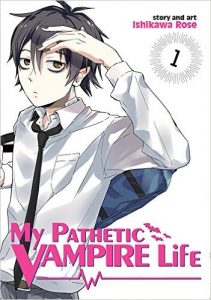
My Pathetic Vampire Life, Vol. 1

October 13, 2016 by Sean Gaffney

By Ishikawa Rose. Released in Japan as “You no Ataranai Koide-kun” by Futabasha, serialization ongoing in the magazine Monthly Action. Released in North America by Seven Seas. Translated by Amber Tamosaitis. Adapted by Carol Fox.

This is, of course, one of the most inevitable titles ever. Japan loves vampire manga. Japan also loves its laid-back school comedies where nothing happens over the course of several volumes. Why not combine the two? But this particular title I think leans a bit too hard against the latter rather than the former. A complete lack of conflict, despite creating many obvious points where conflict could be achieved, makes this manga seem very underwhelming, as if it’s content to simply ride along on its premise: what if a couple of vampire bros had to live the same year in school, over and over again?

pathetic1

Koide is the main character here, a vampire who is governmentally mandated to stay in high school, since he’s still 16 years old. It’s just that this is the 150th year in a row he’s been 16. And of course, being a vampire, just being near the sun is enough to make him collapse. Luckily, he has a few things going for him. His friend Miura is three times his age, so you’d think would be suffering even more, but seems to have come to terms with it. (He’s a bishonen, which helps – Koide has more of a “I just got out of bed” look.) This could be Koide’s year, though – his classmates seem less concerned than usual about his being a vampire (put politely – put impolitely, they’re a bunch of clueless idiots), he has a couple of girls who seem to like him (though he’s mostly completely indifferent to them), and his teachers are there to help him out (even if the school nurse is a bit creepy). What’s not to love?

You know a slice-of-life title is having trouble when I keep wishing that it would turn darker and more serious. There’s lots of ways this series could have done that. The mere fact that there’s a government crackdown on vampires is a fascinating backstory that’s mostly just used as an expositional gag for why they can’t turn the nurse (who desperately wants to become a vampire, as he’s part of “the Haruhi generation” and would like more excitement). You’d think a lot of the plot would revolve around keeping their true nature hidden from the class, but no, the entire class knows they’re vampires, and are totally cool with it. Even Miura’s somewhat serious backstory of being beaten by farmers in the middle ages is used for humor value.

There are certainly amusing moments throughout – I like Koike’s accidentally antagonistic relationship with the girl who sits next to him, as keep depressing each other without meaning to. The class rep’s attempts to have the class get to know Koike are both well-meaning and awful in the best way, and the ‘i have never seen a photograph of myself for obvious reasons’ chapter has a terrific punchline. But I cannot help wanting to shake the author and say “you could have done so much more with this!” It’s a perfectly acceptable slice-of-life comedy that is content to coast.

Filed Under: REVIEWS

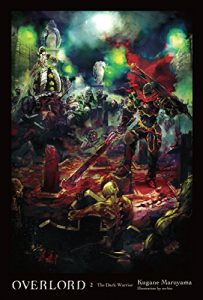
Overlord: The Dark Warrior

October 11, 2016 by Sean Gaffney

By Kugane Maruyama and so-bin. Released in Japan by Enterbrain. Released in North America by Yen On. Translated by Emily Balistrieri.

When we left Ainz at the end of the first novel, he was resolving to find out more about his world he’d been transported into, which was sort of kind of like his old game but not quite, and his evil minions had decided that his wishes amounted to total world conquest. Conquest is put on hold for the moment, though, as Ainz takes one of his minions and disguises himself as a common adventurer. “Common” is perhaps the wrong term, though, as Ainz mostly wants to show off how awesome he is so that his adventurer persona can acquire a reputation. Of course, this would be easier if he could read or write the language. And the minion he takes with him has no social skills whatsoever and regards humanity as worms. Oh yes, and there’s also the evil cult trying to turn an entire city into zombies…

overlord2

As with the first book, Overlord works best when it’s making fun of either Ainz or the world he’s in. Not only is he from modern Japan as a player, but even as Ainz, he sees the world completely differently from someone who actually lives in it. This comes to a head when he has to battle The Wise King of the Forest. He defeats it easily, and the party he’s with, as well as the residents of the city, are shocked and amazed at his badassery. Which is fine, except the Wise King is a giant hamster. Ainz is forced to ride around the city on to prove that he has “tamed” it. He feels a bit foolish, because from our perspective, it’s totally ridiculous. Likewise, his constant frustration with Narberal, who isn’t even attempting to pretend that Ainz is anything other than her lord and master, is equally hysterical.

Sadly, we’re also seeing a bit of what I worried about while reading the first book. As Momon, his adventurer persona he takes on, Ainz is able to cut an ogre in two with his sword just by strength alone. He hands out amazing unseen-before healing potions whose creation flummoxes even the best humans. He chews his way through endless undead with ease, and takes out the smug villain who desperately needs taking out by simply crushing her to his skeletal chest until she breaks. Ainz is not remotely challenged throughout the book. Even as Momon, when he thinks to himself that he was actually slightly damaged or somesuch, we’re quick to recall this is because he’s not using any of his skills as the Undead King, but attempting not to go outside the skill set of an average human. Basically, Ainz is too powerful, and in a book when the rest of the cast is human, it becomes more apparent.

That said, if you get past it, the book is still well written, with evocative descriptions. I liked the way that it tied into the village from the first book (and hey, the one guy in Momon’s party who survived turns out to be the childhood friend (and presumed future love interest, although for once it’s the girl who’s clueless) of the girl Ainz saved in Book 1, who’s still got her goblins. And when it is mocking Ainz and the D&D world he lives in, it can be very funny. There’s a cliffhanger leading into Book 3, which promises less pretending to be an adventurer. I look forward to it.

Filed Under: REVIEWS

Bookshelf Briefs 10/10/16

October 10, 2016 by Michelle Smith and Sean Gaffney 1 Comment

honey4Honey So Sweet, Vol. 4 | By Amu Meguro | VIZ Media – It’s hard to believe this charming series is already halfway over! Onise’s friend, Futami, makes good on his promise to confess to Nao, and after he’s rejected is surprised to find that Onise is still willing to be his friend. Awesomely, Onise had completely trusted Nao the whole time, and then he sings a song of friendship. No, really. After he and Nao achieve first-name status, the focus shifts to fleshing out their friends. I welcomed the opportunity to learn more about Yashiro, who has been lonely her whole life and who clung to her ne’er-do-well boyfriend until she realized she deserved something more. I really appreciated that he wasn’t depicted as pure evil and did care enough about her to let her go. Whether she and Misaki will eventually become a couple is up in the air, but I suspect the answer is yes. – Michelle Smith

kamisama-22Kamisama Kiss, Vol. 22 | By Julietta Suzuki | VIZ Media – Kamisama Kiss continues towards its conclusion and benefits from the increased focus. This volume finds everyone in the Land of the Dead, having followed Kirihito there as he searches for Akura-Oh’s body. Tomoe thinks he’s going to be able to kill him, but he can’t, and later helps the lost spirit of a little girl, which seem to be signs that his heart is softening towards humans and that he, therefore, will eventually succeed in becoming one. Meanwhile, Nanami has been hiding the fact that she’s only got six months to live, and we get a great (though lamentably brief) scene where Mizuki is prepared to sacrifice someone else just to save her. She stops him, of course, and finally tells Tomoe what’s going on. He’s upset that she didn’t rely on him, but claims there’s a way to save her. Three volumes to go! – Michelle Smith

kuroko3-4Kuroko’s Basketball, Vols. 3-4 | By Tadatoshi Fujimaki | VIZ Media – Seirin has steadily progressed through the Inter-High qualifiers, but now they must play two tough opponents on the same day. First, they face off against Seiho, who took them out of contention the prior year, and it was great to see the second-year characters get the chance to shine as they got payback. Seirin next advances to the match against Shutoku, a team with one of the Miracle Generation players on it. It’s a super-exciting game, in which Kagami gets perilously close to the “I can win on my own” line until Kuroko snaps him out of it. One of the great things about these two-in-one editions is that one volume-ending cliffhanger is nullified, but the buzzer-beater cliffhanger at the end of volume four is inescapable. Argh! Now I am good and hooked. – Michelle Smith

ofthered4Of the Red, the Light, and the Ayakashi, Vol. 4 | By nanao and HaccaWorks* | Yen Press – After an event-filled third volume, this new book seems to be spinning its wheels a bit, I’m afraid. This is always the difficulty with adapting visual novels, which fans buy knowing that there will be piles and piles of dialogue, only some of which may be relevant to the plot. Focusing on what interested me, then, the revelation that Tougo’s mother was abducted by a man in a fox mask right in front of him puts a chilling spin on current events. And I always enjoy seeing the two cute yet slightly insane yokai girls, who get a side-story cameo here and I wish did more. As for the main plot, I’m hoping things will pick up in the next book. – Sean Gaffney

prince1The Prince in His Dark Days, Vol. 1 | By Hico Yamanaka | Kodansha Comics – I always do enjoy it when the first volume of a new series sets a mood, but it can be difficult when that mood is ‘horribly bleak and depressing.’ Atsuko is poor, her father is drunk, she’s doing compensated dating and it is suggested she’ll be doing prostitution soon. Luckily, she’s kidnapped by a group of rich young men, at first because the family heir wants to dress up in her clothing, and secondly when said heir disappears, and they ask her to dress up as him for a while. Most series with that premise would play it for laughs, but this is dead serious, and even the young hot bodyguards have tragic backstories and hidden secrets. A good start, but I’d hate to binge read something this heavy. – Sean Gaffney

Filed Under: Bookshelf Briefs

Pick of the Week: More Kitaro

October 10, 2016 by Michelle Smith, Sean Gaffney, Ash Brown and Anna N 1 Comment

kitanuraMICHELLE: This is the part where I’d normally pick Magi, but I’ll switch things up this time and go with volume sixteen of Say I Love You. The gang is moving on past high school and I’m very interested to see how the series evolves as a result.

SEAN: Gotta be the new Kitaro for me. Mizuki is the master for a reason.

ASH: Same here! I’m absolutely loving the new English-language release of Kitaro and can’t wait to get my hands on the next volume.

ANNA: I have the first volume of Kitaro sitting around in my to-read stack. I’m still going to pick the second volume to highlight, just because it seems like the most important release of the week.

Filed Under: PICK OF THE WEEK

My Week in Manga: October 3-October 9, 2016

October 10, 2016 by Ash Brown

My News and Reviews

Last week at Experiments in Manga, the Yona of the Dawn Giveaway Winner was announced. The post also includes a list of a variety of shoujo fantasy manga available in English that have compelling female leads. That was about it from me last week other than the usual My Week in Manga post, but I am currently working on a feature for Ichigo Takano’s Orange and a review of Are You an Echo?: The Lost Poetry of Misuzu Kaneko which I should hopefully be ready to share soon.

In licensing news, Viz Media will be releasing Yuhta Nishio’s After Hours yuri manga and has announced the acquisition of Sui Ishida’s Tokyo Ghoul:Re, Matsuri Hino’s Vampire Knight Memories, and Satoru Noda’s Golden Kamuy (which is the one I’m most interested in). Kodansha Comics announced a whole slew of licenses at New York Comic Con: Regarding My Reincarnation as a Slime by Fuse, Fairy Tail: Rhodonite by Shibano Kyouta, Kigurumi Defense Squad by Lily Hoshino, Kiss Me at the Stroke of Midnight by Rin Mikimoto, Waiting for Spring by Anashin, Love and Lies by Musawo Tsumugi, Ahogaru: Clueless Girl by Hiroyuki, Wake Up, Sleeping Beauty by Mei Morino, Frau Faust by Kore Yamazaki (the creator of The Ancient Magus’ Bride, so I’ll definitely be trying the series), and Land of the Lustrous by Haruko Ichikawa.

As for Kickstarter projects, Digital Manga announced that Under the Air and The Crater will be part of it’s upcoming Osamu Tezuka project, though I’m not sure when that will actually take place. As for a few projects that are currently underway that have caught my eye there’s the contemporary comics essay zine Critical Chips, the Johnny Wander omnibus Our Cats Are More Famous Than Us, and the second volume of O Human Star, which is a fantastic science fiction comic with queer themes.

Quick Takes

Attack on Titan AnthologyAttack on Titan Anthology edited by Ben Applegate and Jeanine Schaefer. While I wouldn’t consider myself to be a diehard of Hajime Isayama’s Attack on Titan, I do largely enjoy the series. One of the things that I actually find most interesting about the series is how it has become a worldwide phenomenon. Attack on Titan Anthology is a prime example of that, bringing together works by numerous Western comics creators which explore the world and characters of Isayama’s original Attack on Titan. There are some pretty big names among the contributors from both mainstream and independent comics. The result is spectacular and even better than I expected. I love the variety found in the works included in Attack on Titan Anthology. The stories range from darkly comedic to deadly serious (Asaf and Tomer Hanuka’s “Memory Maze” actually almost made me cry), and each work is different from the others in both style and tone. Some take place directly in the world that Isayama has created while others parody or completely reimagine it. Attack on Titan is an exciting and engaging collection. As someone who is a fan of both Western and Japanese comics, I greatly enjoyed seeing some of my favorite creators tackle Attack on Titan in their own unique ways. I suspect the anthology will appeal most to people who are already familiar with Attack on Titan, but others might be drawn to it simply due to the specific creators involved. Either way, Attack on Titan Anthology is simply fantastic. The volume’s production-quality is probably the best that I’ve seen from Kodansha Comics, too.

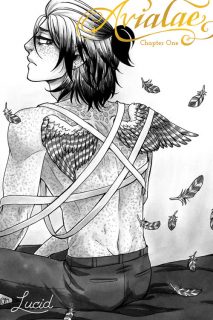
Avialae, Chapter 1Avialae, Chapters 1-2 by Lucid. Every once in a while, I pick up a comic knowing nothing about it other than the fact that I really like the cover art. That’s how I came to find out about Avialae–I saw the first chapter at the Toronto Comics Arts Festival in 2016 and had to read it. Avialae is actually a webcomic, the second chapter of which was just recently released in print. The artwork in the series is absolutely gorgeous, easily on par with the cover illustrations, and is able to effectively convey both body horror as well as erotic encounters as demanded by the story. The comic follows Gannet, a gay high school student who suddenly, and quite painfully, grows a pair of wings. Initially his next-door neighbor and classmate Gilbert is the only one who knows about Gannet’s transformation. As a result, their relationship undergoes some significant changes, too, and eventually becomes rather intimate. As far as sex goes, the first chapter is fairly tame while the second is much more explicit, easily earning the comic its 18+ rating. Avialae is marvelously sex-positive, the steamy scenes are entirely consensual, the sex is loving, and there’s plenty of communication between those involved. I find both Gannet and Gilbert to be endearing and I’m enjoying seeing how their relationship develops both physically and emotionally. Actually, all of the characters and their relationships, whether familial, romantic, or platonic, are incredibly well-realized  in Avialae. Also, much to my delight and surprise, Avialae includes a transguy and his portrayal is excellent.

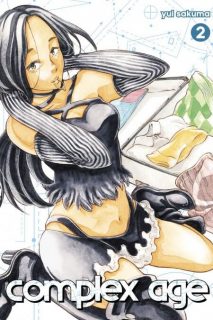
Complex Age, Volume 2Complex Age, Volume 2 by Yui Sakuma. The first volume of Complex Age surprised me. Since I don’t have a particular interest in cosplay which is a major part of the manga’s premise, I was completely taken aback by how much I was able to identify with the series and Nagisa, its main character. Complex Age is about cosplay and reading the manga has even been somewhat educational, but to an even greater extent the series is about adult fans who have hobbies that many people feel are more suited to a younger age group. It’s about women in fandom and about keeping up appearances. It’s about finding a balance between work, family and friends, and personal interests and happiness. The first volume of Complex Age also included the Sakuma’s original one-shot manga “Complex Age” which deals with similar themes. It wasn’t initially clear exactly how or if the series would tie into the original. I was very happy to discover in Complex Age, Volume 2 that the one-shot and the series actually are directly related to one another–Sawako (from the one-shot) is in fact Nagisa’s mother. I’m excited to see Sawako’s story explored more in Complex Age. It’s interesting, and in some ways a little heartbreaking, to see the impact her decision to let go of her hobby has had on her life. Now that Nagisa knows more about her mother as a person I wonder how the knowledge of Sawako’s past will influence Nagisa’s own decisions in regards to her pursuit of cosplay. Complex Age continues to surprise and impress me; I’m looking forward to reading more.

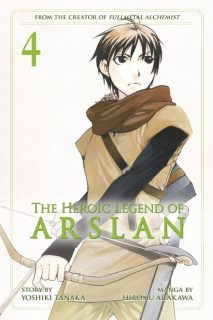
The Heroic Legend of Arslan, Volume 4The Heroic Legend of Arslan, Volumes 4-5 by Hiromu Arakawa. Neither the characters or the story of The Heroic Legend of Arslan are especially nuanced and they come across as fairly standard for the genre, but the series is nevertheless engaging and the battles are exciting. That and I’ll always glad to see more work by Arakawa (and in this case by proxy Yoshiki Tanaka) available in English. At this point in the series, Arslan and his small group of allies are fighting for their lives as they try to reach what remains of the Parsian forces along the border hoping to find reinforcements. They must face the Lusitanian invaders, confront Parsians with dubious loyalties, and contend with unknown powers working against them from the shadows. Not only that, the legitimacy of Arslan’s claim to the throne has been called into question. I enjoy historical fantasies which incorporate court and political intrigue, and The Heroic Legend of Arslan certainly has plenty of that. The forces of both Pars and Lusitania are fragmented and suffer from betrayals and infighting. The chaos this causes makes the situation increasingly dangerous and unpredictable; it is difficult know exactly what will happen next as alliances are made only to fall apart again. The Heroic Legend of Arslan can actually be pretty brutal–death, whether from battle or assassination, is a frequent occurrence. Arakawa’s artwork, while not being overly grotesque or gruesome, does still show enough blood carnage that there’s no question as to what is happening. The horses have a very rough time of it, too.

Filed Under: FEATURES, My Week in Manga Tagged With: attack on titan, Avialae, comics, Complex Age, Heroic Legend of Arslan, Hiromu Arakawa, Lucid, manga, Yui Sakuma

NYCC 2016, Day 4

October 10, 2016 by Sean Gaffney

The final day of New York Comic-Con 2016 dawned with much rain and wind. I am somewhat relieved it waited to the final day for this. Luckily, I had an umbrella, so made it over to the Javits in order to catch my first panel, which was about how books are turned into audiobooks. It had 3 actors who narrate audiobooks as well as two authors of said audiobooks. (They hadn’t met each other before, which says a bit about the way the business is conducted.)

On the author side, we had John Scalzi, famed for his many science fiction novels, and R. A. Salvatore, best known for the Forgotten Realms series. On the narration end we had Fred Berman, who has narrated The Walking Dead audiobooks among other things; Allyson Johnson, an actor and singer best known for narrating the Honor Harrington series; and Victor Bevine, an actor who has also written his own works (one of which he did the audiobooks for), who has done Salvatore’s books and also Dan Simmons’ Hyperion books.

There was a lot of great discussion at the panel. Both Scalzi and Salvatore say they now think of how the audiobook will sound when they write, which was not in their heads at all at the start of their careers. Scalzi added that overusing the word ‘said’ – which in prose is fine, as a reader won’t really notice it – becomes more of a problem when the narration hammers in the repetition. All three narrators agreed they noticed when an author repeated words. Scalzi has a forthcoming short story that is in interview format, with Q and A, and will have to ask the audio team for multiple actors to carry that off.

The authors don’t really get much say in who narrates their books, though it sometimes happens. That said, they trust their publisher to get someone solid, as of course the publisher does not want to ruin the audiobook. Bevine said that he once won a fan competition to narrate an audiobook. It then got into the technical process of how they prepare to read the book – Johnson used to make notes on filecards and annotate the books so that as she read them she wouldn’t have to worry about things like where to pause for a breath; it would all be marked out. (These days she uses a spreadsheet for some things.)

They also discussed name pronunciation. All three work in a genre where there can be weird alien or fantasy creature names, and sometimes that means asking the author how a name is pronounced. R.A. Salvatore has fun with this – his most famous character is named Drizzt, and he says that he doesn’t like to confirm how it’s pronounced because he enjoys watching people argue about it. Scalzi, who is close friends with one of his narrators, William Dufris, once wrote a character named (and I approximate here) Btbtbtbtbtbt, and then said it should be pronounced like the finger between the lips insane pose from old cartoons. Once Salvatore was surprised to find one of his short stories narrated by Ice-T, who did not appreciate the difficult names i n the least. Still, as authors, they don’t have to pronounce their own names!

There are many ways to narrate, and this was gone into as well. Some narrators strive for clarity and some for effect; neither are wrong, but you should know which one would be most effective for your book. Some narrators use their own voice throughout the book, some try to use different voices for different speaking characters. Fantasy and SF gives the narrators an ability to stretch out – Bevine asked Salvatore if he could voice his dwarfs as drunken Irishmen, which delighted the author. Johnson says that she comes from a musical background, so pays close attention to the rhythms of the book, comparing it to a symphony.

They talked about the difference between one narrator and a book with a full cast; it’s more than just “you don’t get to read all the parts”. The narrators agreed that you need a strong leader for those books to pull the cast together, but that doesn’t always happen, so frequently the actors are seen comparing notes to ensure that it is as smooth as possible. Fred Berman also discusses the difference in style between his night job as a theatre actor (he’s in The Lion King on Broadway at the moment) and his day job doing narration. In theater you have to hit the back of the house, whereas narration is up close to the mic. (I loved that they all praised Bing Crosby for being the first recording artist to use the mic as a tool.) And they also listen to their own narration as they do it via headphones at times, both to see how it comes across and to fix mistakes in post-production so that it’s not jagged.

There are more female fantasy and SF authors than there were in the past, which all agreed was a great new development – Salvatore also said there were more diverse fans as well, thinking back to his signings in the 1980s which were all teenage white boys. Johnson had never read science fiction till she began to narrate – she has a low alto, so thinks they like that she can do “male” voices as well, though sometimes this can backfire – Honor Harrington is a soprano, something that book mentions a lot, so using a different register there can be tough. It was asked how they remember the voice of a character – the authors find it quite easy to slip back into an old character’s speech style, though Johnson said she keeps an index of all speaking characters for series she does, in case they show up six books later.

It was asked if they ever rejected doing any books? Bevine said he had once rejected a couple for being too sexually explicit, but for the most part the answer was no – if they don’t like a work, they can use a pseudonym. And they still put their heart into it, as even if they don’t like the book, they know there are fans who will. You focus on something that you like in the book. And of course they talked about the current boom in audiobooks – it used to be they were all in one section in the bookstore, competing for space, and would go out of print quickly. With the advent of new technology, that’s not happening. Best of all, audiobooks don’t cannibalize the market for regular books – the two mesh well with each other, and a good audiobook can sell as well as a hardcover.

The question and answer period had a few people thank them for making books available to those with difficulty reading – either because of losing their sight or for dyslexia, etc. Someone asked the narrators what scenes they found difficult to do, and they said that while big battle scenes were fun to read, they could be hard to narrate. The authors all agreed that a lot of the fun of narration is seeing how the book is interpreted by someone else, and urged authors not to try to micromanage the audiobook narrator. Someone asked how long the recording process takes, and it seems to average about twice the length of a book – in other words, if your book takes 10 hours to read, the recording process will be about 20 hours. This also includes going back to fix any errors in post-production. They also take it in sections, of course, no one reads the whole book though.

It was a terrific panel all around. I didn’t have anything else for a bit, so decided, as I often do, to go to the panel before the one I wanted to see. This was a great decision, as it was the panel devoted to the 10th anniversary of First Second Books, the alternative comics publisher who have put out 160 books in that span. Present were Mark Siegel, the founder and president; Scott Westerfeld, author of The Uglies and Leviathan, who is doing a new graphic novel with First Second; Pénélope Bagieu, who has written Exquisite Corpse and is doing a new book about the life of Mama Cass before she joined the Mamas and the Papas; Box Brown, who did a book on the life of Andre the Giant, and whose new book is on Tetris; and Sara Varon, author of Robot Dreams and other masterpieces.

They discussed what’s different about the market since First Second began; it’s very different. Back in 2006 booksellers were reluctant to stock graphic novels by First Second, and it was only after their books won multiple awards that they began to soften up. These were the days when newspapers would have the standard “Hey, comics aren’t for kids anymore!” article, which made everyone ill. They did have a big group in their corner, however; librarians, who were big champions of their works. In fact, the last bastion of “why are you reading that garbage” is parents, who still tend not to regard comics as real books. That said, they’ve already lost the battle, they just aren’t aware of it yet.

Westerfeld mentioned the manga explosion leading to a whole new readership, as mainstream comics weren’t all that welcoming. The explosion has died off a bit now, but there are still those readers out there to be won with good quality graphic novels. First Second gives their artists creative freedom to do what they’d like, without worrying about things like “Are the heroine’s boobs big enough?” as with Marvel or DC. Everyone agreed that comics need more badass women – real badass, not a male fantasy of a badass woman. Bagieu admitted she didn’t read comics growing up in France, as Tintin and the like were all very male-oriented. She wouldn’t even have considered writing a book in the comic medium till First Second.

There was discussion on how to make people realize comics can also be literature. A good comparison was made – what if all movies were James Bond movies? You’d get people saying “Oh, I just don’t like movies”. And comics offer a way to tell stories that other mediums can’t match – in Westerberg’s story he’s currently working on, a young woman is the narrator, but we also have her sister, who doesn’t speak – except, as the comic reader can see, she talks in thought bubbles with the doll she carries around. This isn’t something you could carry off in a prose book without awkward shoehorning, but in comics it’s easy to convey.

Comics and graphic novels in North America are compartmentalized a lot more than they are in Europe – Bagieu had to learn about this, as in France they have no issues with comics being for everyone. Whereas here we have librarians getting into huge arguments about whether a book belongs in the adult or children’s section of the library – vehemently. Indeed, until cost became an issue, illustrations accompanied books all the time, simply as part of the work. Can we bring that back? A fun panel, and all agreed that they greatly look forward to seeing what First Second does in 2017.

My final panel of the con was one I had been excited about all weekend. Denis Kitchen of Kitchen Sink Press was here to discuss the next volume in their Essential Harvey Kurtzman collection, which was dedicated to Trump Magazine (not related to the Donald, I promise), which Hugh Hefner financed as he loved Mad Magazine and wanted a similar one for the Playboy brand – with an unlimited budget, which was a big reason why Kurtzman agreed, as he’d been begging Gaines to let him print in color, and hadn’t gotten anywhere. On the panel, besides Denis and John Lind, the other editor of the book, were legendary cartoonists Arnold Roth and Al Jaffee. I knew of Jaffee from Mad Magazine, of course, where I grew up with his fold-ins, Snappy Answers to Stupid Questions, and somewhat terrifying grinning self-portrait pasted on all his books. As for Roth, his varied career includes work for TV Guide, Sports Illustrated, Playboy, a long time contributor to the British Punch magazine, and editorial cartoonist at The Progressive. Though no spring chickens (Roth is 87, Jaffee 95), both were highly entertaining and talkative throughout.

They began with a brief discussion of Kitchen Sink Press, and how it managed to survive the shuttering of many other underground comics publishers. It’s done Eisner reprints, a reprint of L’il Abner, and many Hurtzman titles. The first Essential Kurtzman was The Jungle Book, A collection for adult readers that features four long-form satirical works. Trump will be the second such collection. Trump only lasted two issues, with a third in production when it was cancelled. Roth suggested that, rather than Hefner’s joking answer that it was because Kurtzman overspent his unlimited budget, that it was simply because a LOT of magazines died in the 1950s, with the advent of television. Even Colliers folded at that time.

Kurtzman began with a title called Hey Look!, which was included as filler pages in Timely Comics, for which Stan Lee was the editor. Nobody was doing what Harvey was, and whenever he would drop off a comic everyone would rush to see it. Jaffee admitted it was the same when they were all in school together – he and Will Elder were at the High School of Music and Art, learning painting as cartooning was absolutely forbidden. They did it anyway. Then one day someone told them to “look to their laurels” as this new freshman just posted a cartoon on the bulletin board that was amazing. If was, of course, Kurtzman, who had drawn a parody of the Freshman Boat Race which blew them both away. Kurtzman later met both of them and said one day he wants to hire them to work for him. Kurtzman was 15 at the time.

When Kurtzman left Mad Magazine to start Trump, he asked Jaffee to join him. But Jaffee was working on Patsy Walker at Timely Comics, and didn’t really have the financial stability to quit and go work on a newbie humor project. Since his titles weren’t filled with violence, the new Comics Code, which cause Mad to become a magazine rather than a comic, didn’t affect him either the way they had Kurtzman. And Playboy was still a new title at the time. Arnold Roth discusses a party he went to with various highbrow men belittling the magazine, while also showing off how much they must have read it closely in order to belittle it so well. Roth answered them by saying that Playboy was the first magazine to take a stand against nuclear proliferation – no one had a good response to that.

As for Trump itself, Roth learned about it through of all people, Paul Desmond, the alto sax player with the Dave Brubeck Quartet! They were friends, and the musicians apparently read Mad while on the road. Kurtzman, of course, was also a good talent spotter. Since Trump had a budget, adn also worked in color, it was attracting artists who might not otherwise have signed on. Jaffee, after a joking argument with Stan Lee that led him to realize that he genuinely wanted to move on, also ended up with Kurtzman, saying that “Harvey was a mensch”, and was much better at establishing good relationships than actual business sense.

Jaffee was asked about the color paintings he had in Trump, which went into far more depth and detail than his other works. He admits he learned that type of art in school. A parody of one of life magazine’s ‘gatefold’ pictures was shown, which Trump magazine gamely parodied, complete with folding out the pages to see the entire piece. Jaffee later with Mad thought about the opposite, a fold-in, where you folded the page in order to see the true picture. He handed it in as a joke, and says “Don’t publish it, because kids will ruin the magazine when they buy it!” Bill Gaines, who always had terrific business sense, said “Absolutely publish it – they’ll buy a second one to replace it.” The second one he did had Rockefeller and Goldwater debating, asking who the winner would be – of course, when folded in, Richard Nixon was the answer. Jaffee is still doing those fold-ins for the magazine, even to this day!

Trump Magazine had very minimalist covers for its two issues – Hefner wanted it to look “sophisticated”. That said, the third issue, had it ever come out, featured a parody of a Saturday Evening Post Rockwell cover, showing grandparents looking on fondly in their garden as a young boy feeds a frog to a Venus Flytrap. In fact, by the third issue they were going to be parodying magazines more – this was something you could really do well with color pages, and a Sports Life magazine parody had a chilling yet amusing picture of a “bullet POV” which showed the photographer’s terrified face in the reflection of the bullet.

Roth and Jaffee both delivered work to Kurtzman differently. Roth liked to turn in finished product, and hated rough sketches. Kurrtzman usually accepted these, and when he did ask for corrections, Roth would usually abandon it and deliver a completely new piece. Jaffee, on the other hand, was constantly getting many, many corrections and suggestions, which would be far more irritating if they didn’t always, always make everything better and funnier – Kurtzman’s eye for detail was simply stunning. He worried about perspective, how things would fall naturally, etc. He also has a box of nipples in the attic, which I think is so amusing out of context I won’t bother to give it any.

The panel ended with a reveal of what the next Essential Kurtzman would be – a collection of Hey Look, the comics that first made Kurtzman a big name, at least among other cartoonists. And with that I had finished with what I wanted to see, and made my way back outside, where the rain had just ended, to head home. Despite a few hiccups, mostly (as always) bathroom related, it was a great con. Every year I find something new to enthuse over, as those who see how long I’ve been going on can tell. Trust me, it’s not just a giant ‘come see the stars’ media event – there’s gold to be found.

Filed Under: NYCC/NYAF, UNSHELVED

  • « Go to Previous Page
  • Page 1
  • Interim pages omitted …
  • Page 468
  • Page 469
  • Page 470
  • Page 471
  • Page 472
  • Interim pages omitted …
  • Page 1048
  • Go to Next Page »
 | Log in
Copyright © 2010 Manga Bookshelf | Powered by WordPress & the Genesis Framework