• Skip to primary navigation
  • Skip to main content
  • Skip to primary sidebar
  • Home
  • About Us
    • Privacy Policy
    • Comment Policy
    • Disclosures & Disclaimers
  • Resources
    • Links, Essays & Articles
    • Fandomology!
    • CLAMP Directory
    • BlogRoll
  • Features & Columns
    • 3 Things Thursday
    • Adventures in the Key of Shoujo
    • Bit & Blips (game reviews)
    • BL BOOKRACK
    • Bookshelf Briefs
    • Bringing the Drama
    • Comic Conversion
    • Fanservice Friday
    • Going Digital
    • It Came From the Sinosphere
    • License This!
    • Magazine no Mori
    • My Week in Manga
    • OFF THE SHELF
    • Not By Manga Alone
    • PICK OF THE WEEK
    • Subtitles & Sensibility
    • Weekly Shonen Jump Recaps
  • Manga Moveable Feast
    • MMF Full Archive
    • Yun Kouga
    • CLAMP
    • Shojo Beat
    • Osamu Tezuka
    • Sailor Moon
    • Fruits Basket
    • Takehiko Inoue
    • Wild Adapter
    • One Piece
    • After School Nightmare
    • Karakuri Odette
    • Paradise Kiss
    • The Color Trilogy
    • To Terra…
    • Sexy Voice & Robo
  • Browse by Author
    • Sean Gaffney
    • Anna Neatrour
    • Michelle Smith
    • Katherine Dacey
    • MJ
    • Brigid Alverson
    • Travis Anderson
    • Phillip Anthony
    • Derek Bown
    • Jaci Dahlvang
    • Angela Eastman
    • Erica Friedman
    • Sara K.
    • Megan Purdy
    • Emily Snodgrass
    • Nancy Thistlethwaite
    • Eva Volin
    • David Welsh
  • MB Blogs
    • A Case Suitable For Treatment
    • Experiments in Manga
    • MangaBlog
    • The Manga Critic
    • Manga Report
    • Soliloquy in Blue
    • Manga Curmudgeon (archive)

Manga Bookshelf

Discussion, Resources, Roundtables, & Reviews

Blog

Manga Giveaway: Tokyo ESP Giveaway

February 22, 2017 by Ash Brown

The end of February is almost here which means it’s yet again time for another giveaway at Experiments in Manga. This month everyone will have the opportunity to win the first omnibus of Hajime Segawa’s manga series Tokyo ESP. (Published in English by Vertical Comics, the omnibus collects the first two volumes of the original Japanese edition.) As always, the giveaway is open worldwide!

Tokyo ESP, Omnibus 1

Growing up I absolutely loved stories about psychic powers. (Did anyone else read The Girl with the Silver Eyes Willo Davis Roberts? That was a favorite of mine and I frequently reread it.) I no longer deliberately seek out that particular subgenre in the same way that I used to, but I do continue to enjoy stories with ESP as a prominent feature. At one point in time, it actually seemed like it was impossible to get away from manga series revolving around characters with psychic powers. While they don’t seem to be nearly as common as they once were, manga with psychics and espers are still regularly released in English, Tokyo ESP being just one example

So, you may be wondering, how can you a copy of the first Tokyo ESP omnibus?

1) In the comments below, tell me a little about one of your favorite psychics or espers from a manga. (If you don’t have a favorite or don’t know of any, simply mention that.)
2) If you’re on Twitter, you can earn a bonus entry by tweeting, or retweeting, about the contest. Make sure to include a link to this post and @PhoenixTerran (that’s me).

That’s pretty straightforward, right? Everyone participating has one week to submit comments and can earn up to two entries for the giveaway. Comments can also be sent directly to phoenixterran(at)gmail(dot)com if needed or preferred. Those entries will then be posted here in your name. The giveaway winner will be randomly selected and announced on March 1, 2017. Good luck, everyone!

VERY IMPORTANT: Include some way that I can contact you. This can be an e-mail address in the comment form, a link to your website, Twitter username, or whatever. If I can’t figure out how to get a hold of you and you win, I’ll just draw another name.

Contest winner announced–Manga Giveaway: Tokyo ESP Giveaway Winner

Filed Under: FEATURES, Giveaways Tagged With: Hajime Segawa, manga, Tokyo ESP

Konosuba: God’s Blessing on This Wonderful World!: Oh My Useless Goddess!

February 22, 2017 by Sean Gaffney

By Natsume Akatsuki and Kurone Mishima. Released in Japan as “Kono Subarashii Sekai ni Shukufuku o!: Aa, Damegami-sama” by Kadokawa Sneaker Bunko. Released in North America by Yen On. Translated by Kevin Steinbach.

In the current light novel boom that North America has been experiencing, there have been many novels that fall under the broad category of ‘funny’. They either take a relatively serious plot and give it a funny touch (The Devil Is a Part-timer!), expand on a completely ludicrous situation (Psycome), or are an outright parody (I Saved Too Many Girls And Caused the Apocalypse). KonoSuba’s first volume is most like the latter of these options, but I have to say as I was reading it that I can’t think of a single series, even Little Apocalypse, that was as dedicated to wringing as many laughs out of everything as KonoSuba is. Never mind plot complications or depth of characterization. This series is damned funny, and that’s why you should read it.

The archetype being parodied will be most familiar to readers of the manga Mushoku Tensei. A young man who is something of a loser dies performing one noble act, and is given an option to reincarnate in a fantasy world so he can be a hero. Except here, Kazuma’s death turns out to be so pathetic that even the doctors who tried to save him and his own parents laughed when they heard about it, and the young goddess who wants to send him to a fantasy world seems to be doing it so that she can fill her quota more than anything else. She’s so annoying, in fact, that Kazuma, rather than wishing for a fantastic sword or unbeatable magic powers to go along with him into this world, wishes for… the goddess herself. Fans of Oh My Goddess will be especially amused, showing that the subtitle of the first volume isn’t just for show. Kazuma and Aqua could not be more different than Keiichi and Belldandy, though, and when they both arrive in Generic Fantasy world X, he finds this goddess to be a lot less help than he’d hoped.

Everything that follows amps up the comedy, as it should be. Kazuma, because he didn’t pick an insane superweapon but a useless goddess, as average stats and minimal weapons to defeat a giant demon king. He has luck… but that merely seems to allow him to use thief abilities to steal girl’s panties. (Yeah, sorry about that, it’s still written for guys.) We meet Megumin, a teenage overdramatic girl who likes explosions and not much else. We meet Darkness, a knight with elite defensive powers who can’t hit the side of a barn door with her sword, and who seems to get off on just about anything. Together, these four take on giant frogs (which I won’t spoil), supposedly evil lichs (another great scene), and in the end a demon general who is a dullahan (were these always in anime even before Celty, or is their resurgence all Ryohgo Narita’s fault?). And what’s more, they win!

It’s tricky to review this, because I don’t want to give away the best gags. I will note that, while I’m sure this will change, I was pleasantly surprised at the utter lack of romance in this first book. Kazuma and Aqua act like bratty siblings, Megumin is too young for him, and while Darkness is basically what he finds attractive, her masochism creeps him out. That plus his tendency to yell at everyone and everything makes this party dynamic more family than harem, and I appreciated that. But when all is said and done, you read this book because it will make you laugh. Even if you aren’t familiar with the tropes of isekai and reincarnation novels, you’ll still like this.

Filed Under: konosuba, REVIEWS

Bookshelf Briefs 2/20/17

February 20, 2017 by Michelle Smith and Sean Gaffney Leave a Comment

Kamisama Kiss, Vol. 23 | By Julietta Suzuki | Viz Media – As we get ever closer to the ending, everything is getting ramped up a notch, and we’re seeing the true villain of the series is not Akura-Oh. Indeed, the humanity that Akura-Oh has inherited by Kirihito leads to some of the best scenes in the book, as the young girl lost in the Underworld turns out to be someone far more important than we thought. And then there’s Nanami, who continues to be told what to do and then just does what she wants to anyway, and usually ends up turning out all right. Best of all, though, is Yatori, who’s always been awful but really goes above and beyond to become a truly hateful villain, the sort you really want to see Tomoe and Nanami destroy. Which will have to wait for next time. – Sean Gaffney

Magi: The Labyrinth of Magic, Vol. 22 | By Shinobu Ohtaka | VIZ Media – It continues to impress me how complex Magi has become. In this volume, Alibaba learns about the Kou Empire’s plan to achieve peace through domination and homogenization, and is pressured into an alliance for the sake of Balbadd. When the world’s leaders gather at a conference, Aladdin finally reveals what happened on the world of Alma Tran, with direct parallels to what Kou is trying to achieve. It’s an affecting tale, with an adorable kitty beast, but what I liked best about the volume was Alibaba learning about and reacting to the terrible things Kou and Sinbad have done to others in pursuit of their goals. Both use essentially the same line about having to get their hands dirty in order to protect their countries, and one wonders how far Alibaba’s own ideals will be compromised for the same reason, especially given his new allegiance. Fascinating stuff! – Michelle Smith

Maid-sama!, Vols. 13-14 | By Hiro Fujiwara | Viz Media – Continuing from my last brief, it’s not just me—Misaki’s sister is definitely sweet on Hinata, which I suspect will pay off nicely next time in a “Pair the Spares” way. And you can tell the next omnibus will wrap things up, as we’re definitely headed towards an endgame, defined in part by Usui deciding to stop fighting against everything and transfer schools. The big reason that you can tell things might be ending, though, is that we finally get the confession from Misaki, and it’s as awesome as you’d expect. Misaki may still struggle with maturity and the fact that everything seems to embarrass her, but she’s come a long way. Maid-sama! has had issues, but I’m pleased we are getting the chance to read it to its finish. – Sean Gaffney

My Hero Academia, Vol. 7 | By Kohei Horikoshi | Viz Media – We wrap up one arc and begin another here, so there’s a bit of shifting gears and some cute school scenes in between. The kids learn the value of secrecy and propaganda, especially when it applies to schoolchildren who have technically broken the law. They also move on to midterm exams, which involve a practical portion that involves battling their teachers in sets of two. Naturally, Midoriya and Bakugo are paired up, because everyone has noticed Bakugo seemingly can’t stand Midoriya. Expect lessons to be learned, as this fight is definitely going to carry over into the next book. But most importantly, the chief of police in the city appears to be McGruff the Crime Dog. I approve. – Sean Gaffney

My Love Story!!, Vol. 11 | By Kazune Kawahara and Aruko | Viz Media – This volume continues the development from the last one, as Yamato spends a lot of time trying to gently get through to Takeo that she is, in fact, OK with it if he tries to go further physically in their relationship. He gets it in the end, but we don’t really have them go any further—this continues to be one of the purest shoujo series ever, so I’m not surprised. Instead we introduce a new rival, but it’s not another love rival this time around. It’s a new transfer student who immediately seems to bond with Suna… in fact, it looks like he’s doing it on purpose. Could the new guy be using Suna? I’m definitely looking forward to the next book to find out, as Suna’s motivations fascinate me. – Sean Gaffney

Please Tell Me! Galko-chan, Vol. 2 | By Kenya Suzuki| Seven Seas – This is not quite as much fun as the first volume, and when it attempts to add new characters you can sort of hear the gears turning loudly in the author’s head. It’s at its best when it focuses on our core trio and their adorable if somewhat overly awkward interrelations. My favorite part was probably Ojou’s concert recital, where she really shines, and also manages to show off that she actually has friends from school. It’s also adorable when we see her get pissed off for never arguing with Galko or Otako, if only as it means she actually changes expression. And there’s still a bit of sex talk but not nearly as much as the first volume. It’s a fun gag series, and the colors are fantastic. – Sean Gaffney

Re:Monster, Vol. 2 | By Kogitsune Kanekiru and Haruyoshi Kobayakawa| Seven Seas – I’m not entirely sure why I kept reading this after the first volume, and if I want to be honest I’m still not sure after getting through volume two. Its flaws are many and obvious—it is a massive overblown male power fantasy, the narrative is unemotional and stoic (though to be fair this sometimes works, usually when Gob-Rou is required to be clueless about women), and the idea of “it’s not rape if they’re drugged into horniness” is appalling in every way. But I dunno, there’s still a compulsive readability to this, and given the large numbers of what amount to orgies in the series it could have been even less tasteful. If you’re going to read a screwed-up male power fantasy, this isn’t a bad choice. Also, T for Teen, Seven Seas? Really? – Sean Gaffney

A Springtime with Ninjas, Vol. 1 | By Narumi Hasegaki | Kodansha Comics (digital only) – Sometimes, a shoujo series asks its readers to swallow a ludicrous premise but rewards them with solid characters and emotional arcs. Not so, here. Benio Kasugami is the sheltered daughter of the richest family in Japan, which has the tradition that she will have to marry the first guy who can get past her ninja bodyguards and steal a kiss from her. She rails against her confinement, but naturally, the moment she steps outside she is insta-kidnapped and nearly kissed before her protector (and childhood first love, naturally), Tamaki Kageshita, swoops in for the rescue. Rinse, repeat. There are quite a few clichés here, but the real issue impacting my enjoyment was Benio herself, who is equal parts clueless and reckless, which gives me no reason to root for her. I’ll be passing on the rest of this series. – Michelle Smith

Ten Count, Vol. 3 | By Rihito Takarai | SuBLime – Volume three was to be the deciding factor in whether I’d continue reading Ten Count. I had hoped that more subtle and insightful characterization would be forthcoming, but alas, it was not to be. In her author’s note, Takarai makes it clear that she sees what Kurose and Shirotani are doing as a “dom” training his “sub,” and the result walks a line between run-of-the-mill smutty BL and an icky erosion of the notion of consent. What does it say when in one panel Shirotani is declaring “no means no” and a few panels later, is shown to be willing after all? Kurose continues to be baffling, too, showing concern for Shirotani and pride in his efforts to conquer his OCD one moment, and telling him that if they were lovers, he’d “do even more things to you that would make you cry” in the next. I’m done. – Michelle Smith

Filed Under: Bookshelf Briefs

Chihayafuru Vol. 1

February 20, 2017 by Anna N

Chihayafuru Volume 1 by Yuki Suetsugu

Around a month ago, there were a few things I knew about Chihayafuru. It was a josei title about a Japanese card game. It has had an anime adaptation. I was interested in reading this, but I was convinced it would never be licensed. I have also been living under a rock, or at least totally unaware of what Kodansha was doing because I didn’t realize until several days ago that Chihayafuru was being released in English albeit just in digital format. I clicked the preorder button so quickly!

Chihayafuru is a josei manga, but it also is a sports manga centered around karuta, a poetry matching game that requires literary knowledge, memorization, quick reflexes, and strategy. From the start, the reader gets a few panels of the middle of an exciting game. Then the manga catapults into the past, to six years earlier. The main character is Chihaya, a girl who has buried her ambitions in supporting her older sister’s dream of becoming a supermodel. While Chihaya doesn’t seem to have any goals for herself, it is clear that she’s kind and a bit of tomboy at school. When a new kid arrives in her classroom and is promptly bullied, Chihaya sticks up for him. Wataya might talk funny and be poor, but he is a master at the game karuta, which the class plays from time to time. Wataya’s first enemy is Taichi, a popular boy who is dedicated to his studies and comfortable always winning the school kuruta tournament.

Wataya is a genius level kuruta player, and when he gets put at a disadvantage in a challenge match because his glasses were stolen, Chihaya substitutes herself for him. She doesn’t have all the poems memorized, but she has an incredibly dynamic and aggressive playing style that when combined with her reflexes enables her to eke out a win. She becomes inspired to pursue kuruta as her own interest. Taichi, Wataya, and Chihaya end up forming an odd friend group centered around kuruta, even visiting a local club to play practice matches and learn from a local teacher. The personalities of the three main characters create an interesting dynamic and dramatic tension.

I’m assuming with the flashback opening to this volume, the characters will be shown at their current ages soon, but the reader is set up to being able to feel all nostalgic when the trio gets together again outside of middle school. Chihayafuru reminds me of Hikaru No Go in the best way, because it takes a topic that might seem overly cerebral and invests it with a great sense of pacing and action. Chihaya’s dynamic personality and habit of slapping down cards whenever she gets a sudden insight makes everything exciting. Suetsugu’s paneling using multiple perspectives as angles on the game action also creates plenty of visual interest. I also liked the way romanized Japanese was presented along with the translations for the poems, because it was easier to get a sense of the rythm of the game, and how the players greet matched poems as “old friends”. In a digital release I suppose one can’t expect too many extras, but if print volumes of this series ever come out, it would be fun to have some of the poems and cards featured in more depth in notes at the back of each volume.

Filed Under: Manga Reviews, REVIEWS

Pick of the Week: Erased and Others

February 20, 2017 by Sean Gaffney, Ash Brown, Anna N, Katherine Dacey, Michelle Smith and MJ Leave a Comment

SEAN: There’s quite a few titles I’m getting this week, but I’m not sure any of them really set themselves up above the rest as a Pick. As such, I think I’ll go with an old favorite and pick the 10th omnibus of Fruits Basket, which has Shigure’s nastiest speech to Tohru, and is therefore fascinating.

MICHELLE: I’m definitely all aboard for Fruits Basket, but after reading more about it, Erased sounds really interesting! Plus, it’s been nominated for all sorts of awards. I think I’ll be optimistic and pick it this week.

KATE: I’m torn between the latest volume of Dimension W and the first volume of Erased. I’m leaning ever-so-slightly towards Dimension W, if only because Yuji Iwahara draws manga like nobody’s business. Every detail on the page pops, and the characters are drawn with flair. And his world-building! You could read Dimension W just for the elaborate cityscapes. The story isn’t quite as engrossing as the art, but it’s fundamentally impossible to dislike an adventure in which Nikola Tesla’s research is frequently referenced.

ASH: I’m glad that Michelle picked Erased (which I will definitely be reading) because that means I can mention Magia the Ninth without feeling guilty. I can’t say it’s a great series–at times it’s barely coherent an I suspect that it was ended earlier than the creator originally intended–but I enjoyed the first volume immensely. I find it hard to resist the combination of music, magic, and historical references. The manga is absolutely ridiculous, but I’m getting a huge kick out of it and it makes me smile. Sometimes, that’s exactly what I need.

MJ: I have eternal love for Fruits Basket, of course, and I’m also interested in Dimension W. But I was absolutely thrilled to see Erased on the list, and that’s unambiguously my pick for the week. My husband and I watched the anime adaptation last year, when it was released for streaming in the U.S., and it was absolutely enthralling. This is a release I will not miss!

ANNA: I agree with many of my colleagues that Erased certainly sounds like the most interesting thing coming out this week. Looking forward to it!

Filed Under: PICK OF THE WEEK

My Week in Manga: February 13-February 19, 2017

February 20, 2017 by Ash Brown

My News and Reviews

Hooray! I managed to write and post another in-depth review at Experiments in Manga. Even if I’m not writing as much as I once was, it still feels pretty good to get back into the (slow) swing of things. Anyway, last week I took a look at Jen Lee Quick’s dark fantasy Western Gatesmith, Volume 1. The comic is off to an intriguing start though it can also be a little frustrating. The series is currently on break, but I hope that there will be more soon.

As many people are probably aware, the prolific and versatile mangaka Jiro Taniguchi passed away earlier this month. Despite not being particularly well known in English, a fair number of his manga have been released in translation. Kate Dacey of The Manga Critic has a nice guide to Taniguchi’s work for those interested in what is currently available. At The Comics Journal, Taniguchi was the subject of a recent article by Joe McCulloch and an obituary written by Zack Davisson. Other comic sites like The Beat have recently honored Taniguchi as well. I’ve read most but not quite all of Taniguchi’s work in English, my personal favorites being A Distant Neighborhood and his collaboration with Baku Yumemakura The Summit of the Gods. Way back when there was a Manga Moveable Feast devoted to Taniguchi, too. Some of the links are no longer work, but many of the features can still be tracked down.

In happier news, SuBLime announced three new licenses last week: Akane Abe’s Am I In Love or Just Hungry? (digital-only), Scarlet Beriko’s Jackass!, and Tsuta Suzuki’s A Strange and Mystifying Story. (I’m very curious about Jackass! and I’m very happy about A Strange and Mystifying Story which is actually a license rescue. The first three of seven volumes were originally published in English by Digital Manga; I remember quite liking them.) The Toronto Comic Arts Festival has started announcing its featured guests for the year which will include Gengoroh Tagame among other fantastic creators. The OASG talked to Kodansha Comics about the licensing of Chihayafuru. While still probably unlikely, a print edition of the series isn’t completely off the table. As for Kickstarter campaigns for queer comics that have recently caught my attention, Megan Lavey-Heaton has launched a project to print the third volume of Namesake.

Quick Takes

Blood Blockade Battlefront, Volume 1Blood Blockade Battlefront, Volumes 1-7 by Yasuhiro Nightow. I wasn’t initially planning on reading Blood Blockade Battlefront–I wasn’t a huge fan Nightow’s Trigun–but I kept hearing great things about the anime adaptation and then I came across a “complete” set of the manga on super sale, so I picked it up. The series is actually ten volumes long; supposedly Dark Horse has plans to release the final three at some point. In general the manga tends to be fairly episodic, so even if the rest of the series isn’t translated at least readers aren’t left with an unresolved story. It wasn’t until partway through the second volume of Blood Blockade Battlefront that the series started to click with me, but once it did I found myself really enjoying the manga. Its mix of goofy everyday life and action-heavy sequences actually reminded me a bit of Cowboy Bebop. The manga is essentially about a semi-secret group of monster hunters working in what used to be New York before it was destroyed by the sudden appearance of an interdimensional portal. The character designs of the main cast are sadly simple and plain compared to the series’ fantastic setting and creatures, but their distinctive personalities mostly make up for that.

The Box ManThe Box Man by Imiri Sakabashira. The North American manga industry is primarily focused on publishing more popular, mainstream works, but occasionally an alternative or independent work is released as well. The Box Man was originally serialized in Ax, an alternative manga magazine in Japan which was the basis for the Ax: Alternative Manga English-language anthology. Examples of Sakabashira’s work can be found in that anthology and in the earlier collection Sake Jock, but The Box Man is his first long-form work to be translated. Granted, there’s very little dialogue that actually needs to be translated–for the most part the manga is an entirely visual experience. Even the story is fairly limited in scope. The narrative follows a kappa-like cat accompanying a man on a scooter who is transporting a box which turns out to contain something rather peculiar. The strangeness of The Box Man doesn’t end there, but the point of the manga seems to be less about telling a story and more about creating a visual spectacle. The artwork incorporates popular culture references (some of which I’m sure I completely missed) and at times can be rather bizarre, violent, or erotically-charged.

Giganto MaxiaGiganto Maxia by Kentaro Miura. Though it certainly has its problems, Miura’s Berserk is one of my favorite series. I have been significantly less enamored with the other manga by Miura that have been released in English–specifically his collaborations with Buronson Japan and King of Wolves–but I was still very curious about Giganto Maxia. Whether it’s intentional or not, the dark fantasy manga shares some similarities with Attack on Titan and Terra Formars and also appears to be heavily influenced by professional wrestling. Miura’s artwork in Giganto Maxia is tremendous but the story, while it isn’t awful, struggles to match the caliber of the illustrations. I almost wonder if Giganto Maxia was originally intended to be longer than a single volume since so much about the manga’s world and characters are left unexplained in the end. Giganto Maxia does more or less tell a complete story, but it feels like a single episode taken from the middle of a larger narrative. At one time a slave forced to battle to the death in a gladiatorial arena, Delos is now fighting against the empire itself. Joining forces with Prome, a powerful spirit who takes the form of a young girl (and who is constantly trying to get him to drink her “nectar” ), Delos can transform into the mythic titan Gohra in order to do battle.

Lake JehovahLake Jehovah by Jillian Fleck. Lake Jehovah, Fleck’s debut graphic novel, first came to my attention due to the fact that Jay, the comic’s protagonist, is genderqueer. While themes of identity, gender, and sexuality are integral to the comic’s story they aren’t the primary focus of Lake Jehovah. Instead, the comic is about the end of the world, both literally and figuratively. Human civilization has already succumbed to multiple apocalypses but Jay unexpectedly becomes the prophet for the next impending disaster while dealing with even more personal and existential crises. Jay struggles with intense depression and anxiety which slowly destroys xis relationship with xis fiance. Eventually she leaves, no longer able to cope with Jay’s instability, and Jay is left recover and come to terms with everything alone. Lake Jehovah actually handles the topic of mental illness better than many other comics I’ve read. It’s an emotionally tumultuous work, tempering despair with humor as the characters search for meaning in their lives even while everything is falling apart around them. Some turn to sex or drugs while others find comfort in poetry or art. Lake Jehovah is a somewhat strange but undeniably compelling comic.

Filed Under: FEATURES, My Week in Manga Tagged With: Blood Blockade Battlefront, comics, Imiri Sakabashira, Jillian Fleck, Kentaro Miura, manga, Yasuhiro Nightow

Paying to Win in a VRMMO, Vol. 1

February 20, 2017 by Sean Gaffney

By Blitz Kiva and Kuwashima rein. Released in Japan as “VRMMO wo Kane no Chikara de Musou suru” by Hobby Japan. Released in North America digitally by J-Novel Club. Translated by Elizabeth Ellis.

You would think after reading all of the light novels currently out in North America about games, either with people trapped in them, transported to them, or having worlds based on them, that I would be used to things by now, but Paying to Win in a VRMMO reminds me once again: I’m not really a gamer. I get the aggressiveness of microtransactions due to playing Candy Crush Saga, but that’s as far as it goes. And while it’s refreshing to actually see a book where people play a game they can actually log out of at the end of the day, it also means that more than the usual amount of prose was expended in regards to items, levels, attack names and types, and the like. Don’t get me wrong, the fights were exciting, especially the final one, it’s just hard for me to get into it as much when I’m seeing “he swiped his inventory to grab another sword”. But I suppose that’s VR for you.

Our hero is the man on the right, Ichiro, a young obscenely rich man who is also a genius, having graduated Harvard at age 13 (which is the usual requirement for fictional geniuses). Sadly, the fact that he can easily do anything has led him to be bored by almost everything. Then his second cousin Asuha asks for his help with a problem she has, one that needs to be solved by playing the popular VRMMO “Narrow Fantasy Online”. Ichiro has no reason to refuse, so agrees, pays an obscene amount of money to get an arcade version of the game put into his highrise penthouse, pays an obscene amount of money to get the cool character traits he wants, and pays an obscene amount of money to level up to obscene levels. He does all this rather coolly and stoicly, with the occasional bemused grin. Luckily, he finds something in the game that, for the first time perhaps ever, really challenges him. That someone… is Kirito.

Pardon me, my apologies. That someone… is Kirihito, one of many gamers who base their stats and appearance on “a certain famous light novel hero”. The main reason to get this book is probably for the almost-litigious-but-not-quite parodies of Sword Art Online, which keep coming fast and furious – the idea that most newbies play as Kirihito (this book’s version of WcDonald’s), the high-level Kirihitos who team up and become a sentai team, complete with pose (the illustration alone is worth the price of the book), all the way to “King Kirihito”, who may not like that nickname, but is the only other person in this game who can challenge Ichiro, and is also the source of the problem that Asuha would like to solve. (Also, if you’re going to be broadly satirizing SAO that much, perhaps choose a name other than “Asuha”, maybe?)

To be honest, while I enjoyed the book somewhat, I found the characters wanting. Kirihito’s real-life self was probably the most interesting, and I approve of the author leaving it up to the reader to choose their gender. Ichiro unfortunately grates a little too much with his “I earned this money myself, so can use it to solve all life’s problems and none can complain” ways, which get called out a bit in-book, but are mostly shrugged off. Asuha is very passive throughout the book, which is very frustrating given that one of the major cores of the book is getting her to stop being so passive – I didn’t really feel the satisfaction I was supposed to. And the otaku maid just wasn’t over the top enough for me to find amusing. The writing is good, and the jokes are excellent, but Paying to Win needs some better character development stat.

Filed Under: paying to win in a vrmmo, REVIEWS

Captive Hearts of Oz, Vol. 1

February 19, 2017 by Sean Gaffney

By Ryo Maruya and Mamenosuke Fujimaru, loosely based on the novel “The Wonderful Wizard of Oz” by L. Frank Baum. Released in North America by Seven Seas. Translated by Angela Liu. Adapted by Lianne Sentar

One of the big sellers about 5-6 years ago on the late lamented New York Times Manga Bestseller charts was Alice in the Country of Hearts and its 87 billion spinoffs, based on a number of otome visual novels by creator QuinRose. In fact, one might argue that for a while the market was a bit glutted with Alice manga. Sadly, when QuinRose’s business went under, so did the rights to her series, and therefore we’re not seeing any more Alices over here. That said, they were a big hit for Seven Seas in particular, and they decided to reach out to the most popular artist for the series, Mamenosuke Fujimaru, and ask her if she could create a similar styled manga based on the Oz series by L. Frank Baum, which Seven Seas had recently done a version of with manga-style illustrations. And so we have this new manga, in which Dorothy finds herself in a mysterious new world and is soon surrounded by handsome men.

The strengths of this book are somewhat similar to Fujimaru’s Alice titles. Her art is excellent, and the pacing and action flows very well. The characters are mostly likeable if not all that fleshed out yet, as is typical for Volume Ones. We get the addition of a brother-sister team of Crows, who have a complicated tsundere-ish relationship with the scarecrow that I quite liked, and led to the best moment of the book, in which Dorothy pretends to be an evil villain in order to lure them out. Best of all is the hint that one of the witches, Locasta (you know, the one who no one remembers) is trying to change the way that the story goes, and we get the suggestion that the Land of Oz is something that runs on rules of storytelling rather than logic, in a very similar way to the Alice books.

The weaknesses of the book also crop up. It’s wearing its heart on its sleeve, frankly – we can’t do Wonderland, so here’s Oz with very similar attempts at dark themes and a harem of young guys. Unfortunately, the premise, at least so far, seems to lack the Alice series’ caustic and complicated heroine. While she has her moments, Dorothy is simply too nice and sweet, and you’re reminded that the best Alice books showed us the truth behind everything in the world – that the world was created as an escape to help her run away with a reality too tragic to deal with. I’m not entirely sure whether something similar is going on here, but if so, there need to be more hints that Dorothy is more than what she seems, rather than just Oz being more than what it seems.

That said, this is still the first volume, and I’m perfectly happy to get the next one to see how things developed. In the meantime, Alice fans will definitely enjoy this, I think, even if it feels a bit “lite” compared to its inspiration.

Filed Under: captive hearts of oz, REVIEWS

My Big Sister Lives in a Fantasy World: The Half-Baked Vampire vs. the Strongest Little Sister?!

February 18, 2017 by Sean Gaffney

By Tsuyoshi Fujitaka and An2A. Released in Japan as “Neechan wa Chuunibyou” by Hobby Japan. Released in North America digitally by J-Novel Club. Translated by Elizabeth Ellis.

The second volume of a series like this one was always going to be tricky. The seeming big reveal of the first book was that Yuichi, the supposed “average high school student” protagonist you get in these sorts of harem stories, was not remotely average. In fact, given the oddballs we saw in the first book, I had mentioned that the closest we had to a normal person in the cast was Aiko, who happened to be a vampire but was otherwise the fairly typical “shy cute girl” stereotype. Of course, as we find in this second volume, Aiko is far from normal either, even if she towers over the other eccentrics in her family in that regard. “Half-Baked Vampire” is your first impression, and the book tries hard to make it stick at the end, but I’m not buying it.

I’d argue this book isn’t as good as the first. The character of Yuichi’s younger sister Yoriko seems to be added for the sole reason that series like these always have little sisters who love their big brother just a little too much, and she doesn’t play any role in the plot besides getting jealous of Aiko and being too clingy. (You’d think she was the “Little Sister” in the second part of the subtitle, but no, as we find out, that is not the case.) There’s a lot of rambling discussion of the nature of murder and various other thought experiments by Mutsuko, whose tendency to exposit whenever it’s needed is her worst character trait. Girl who likes isekai continues to get so little to do that I can’t even remember her name. And poor Natsuki, the villain of the first book, is now reduced to playing the straight man role that Aiko played in the first book, as Aiko is too busy being the heroine.

Where the book succeeds is in analyzing the plot and character tropes you find in “Middle School Syndrome” types and, if not exactly deconstructing them, at least making you think about them in a different way. Honestly, much of the time the book reads as if it was written by Mutsuko herself, being the sort of self-insert you get from first time fanfic writers in their teens. Mutsuko may be the most interesting character in the series, which is fitting given she’s in the main title. I loved her discussion with Natsuki of those downbeat endings that seek to be dark for the sake of gritty realism, and how much she hates them – I agree 100%. At the same time, as Natsuki gradually realizes just what training Mutsuko has given her little brother, and how little it occurs to her to wonder if this is actually abusive or insane, we begin to see a dark core to Mutsuko, which I’m not sure if the author intends or not. She gets the final scene to herself, taking out the “power behind the throne” villain with a literal railgun, as suits her personality. She’s horrible and fascinating, which is fitting given that she’s an expy of Haruhi Suzumiya, who was the same.

In the end, this is still a silly harem series, but I enjoy it best when it’s taking a look at the stereotypes of such series, or asking us to examine the characters further to see how seriously we’re supposed to take them.

Filed Under: my big sister lives in a fantasy world, REVIEWS

Manga the Week of 2/22/17

February 17, 2017 by Sean Gaffney, Anna N, Ash Brown and Michelle Smith 1 Comment

SEAN: Not only is next week a Yen Press week, but the other publishers have a bunch of stuff too. Get ready to be buried again.

J-Novel Club has three titles. Grimgar of Fantasy and Ash has a 2nd volume, and continues to be the “trapped in another world” title that is SERIOUS BUSINESS.

The debut this week is How a Realist Hero Rebuilt the Kingdom, which could be good but whose title makes me very wary. Realist Hero sounds only a few story steps from a Dark!Grey!Independent!Harry fanfic.

And we get the 2nd and (so far) final volume of Occultic;Nine, from the creators of other badly punctuated works.

Kodansha is doing a mass re-release of the Ghost in the Shell manga, featuring Ghost in the Shell 1, 1.5, and 2. No, it doesn’t have the hardcore lesbian sex scene, as I know someone will ask. The creator requested it be removed. It’s still good. Get it if you don’t have it.

ASH: It’s been a long time since I first read the original Ghost in the Shell manga! Along with Message to Adolf and Blade of the Immortal, it was actually one of the first manga that I ever read.

SEAN: And they have a 6th Inuyashiki as well.

Seven Seas has a quartet of titles, beginning with a second volume of Magia the Ninth.

ASH: The first volume of Magia the Ninth was absolutely ridiculous but I couldn’t help enjoy myself. I’ll definitely be picking up the second and final volume.

SEAN: There’s also a 6th volume of Magica Swordsman and Summoner, one of those titles that I sort of stick my fingers in my ears and go ‘lalala’ when I see it.

The debut is Magical Girl Site, another in a genre I am so sick of it’s beyond belief. If you like the 8th iteration of cute young girls dying in violent ways, here it is. Again.

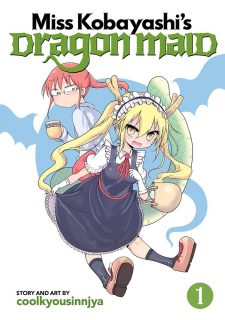
And in the complete opposite direction, we have the 2nd volume of Miss Kobayashi’s Dragon Maid, which remains yuri-ish despite the best efforts of the English dubbers of the anime.

ASH: I was surprised by how much I enjoyed the first volume.

SEAN: Vertical has a 5th volume of Devil’s Line.

Viz gives us a 2nd Mobile Suit Gundam Thunderbolt, one of the newer Gundam iterations.

ANNA: I still need to read all the volumes of Gundam: The Origin that I hoarded.

ASH: I’m ashamed to say that there are a few volume of The Origin that I have left to read, too.

SEAN: And an 11th Tokyo Ghoul, which should outsell everything else on this list combined.

And there’s also a 7th Ultraman.

And then there’s Yen Press. As with previous months, we get most of their titles except one or two which are delayed a week (so don’t panic, Nozaki fans). Yen On has the 10th A Certain Magical Index. Will the entire world be forced to be Roman Catholic? Naruto never had cliffhangers like that.

Is It Wrong to Try to Pick Up Girls in a Dungeon? has the 2nd volume of its side story based on Aiz Wallenstein, Sword Oratoria.

Yen On’s debut is KonoSuba: God’s Blessings on This Wonderful World!, an abbreviation of Kono Subarashii Sekai ni Shukufuku o! (which I am happy to never type again). It’s a “trapped in another world” novel, but as you can see by its first volume subtitle, Oh My Useless Goddess!, it’s a broad parody of such titles.

And a 3rd volume of Psycome, in which the protagonist’s somewhat obsessed little sister joins the cast.

Oh yes, and three more Spice & Wolf volumes digitally, as the catchup really takes off.

Yen’s manga releases begin with the third Aoharu x Machinegun. Will we finally get the gender reveal that is probably long overdue?

ASH: Another series that surprised me with how much I enjoyed the first volume; I should probably catch up and see if I continue to like it.

SEAN: Onward and Onward and Onward goes BTOOOM!, now up to Vol. 16.

Corpse Party: Blood Covered has a 4th omnibus, and must be running out of corpses for the party. Someone will have to run down to the store.

MICHELLE: Hee! And that is the most amused I’ve ever been by Corpse Party!

SEAN: And we get a 5th Volume of Dimension W.

ASH: I’m still not sure if Iwahara can tell a coherent, cohesive story, but I did enjoy the first couple of volumes of Dimension W.

SEAN: Erased makes its debut, and it’s a hardcover omnibus. Dark time-travel thriller, from what I understand.

ASH: Now this I am very interested in reading.

SEAN: Fruits Basket has a 10th omnibus. We are rocketing towards the climax!

MICHELLE: After ten months, you’d think I’d be accustomed to the speed of this release, but you’d be wrong.

ANNA: Nice!

SEAN: KonoSuba, mentioned above, also has its 2nd manga volume.

Believe it or not, there are still Madoka Magica spinoffs, though they’re slowing down. Puella Magi Oriko Magica: Sadness Prayer’s 2nd volume sounds like the rest of the genre the main series inspired: bleak.

Rose Guns Days Season 2 Volume 2 is still not as good as Higurashi or Umineko.

I know very little about Smokin’ Parade except it runs in Kadokawa’s Young Ace and looks grim.

Spirit & Cat Ears is from my old nemesis, Comic Alive, so expect fanservice and cuteness, in that order.

Lastly, we get an eighth volume of Trinity Seven.

With the Manga Bookshelf team breathing a sigh of relief that at least there’s a Fruits Basket they can use for Pick of the Week, what will you be getting?

ANNA: Apparently, all of Kodansha’s josei and shoujo digital releases from last week!

Filed Under: FEATURES, manga the week of

  • « Go to Previous Page
  • Page 1
  • Interim pages omitted …
  • Page 462
  • Page 463
  • Page 464
  • Page 465
  • Page 466
  • Interim pages omitted …
  • Page 1065
  • Go to Next Page »
 | Log in
Copyright © 2010 Manga Bookshelf | Powered by WordPress & the Genesis Framework