• Skip to primary navigation
  • Skip to main content
  • Skip to primary sidebar
  • Home
  • About Us
    • Privacy Policy
    • Comment Policy
    • Disclosures & Disclaimers
  • Resources
    • Links, Essays & Articles
    • Fandomology!
    • CLAMP Directory
    • BlogRoll
  • Features & Columns
    • 3 Things Thursday
    • Adventures in the Key of Shoujo
    • Bit & Blips (game reviews)
    • BL BOOKRACK
    • Bookshelf Briefs
    • Bringing the Drama
    • Comic Conversion
    • Fanservice Friday
    • Going Digital
    • It Came From the Sinosphere
    • License This!
    • Magazine no Mori
    • My Week in Manga
    • OFF THE SHELF
    • Not By Manga Alone
    • PICK OF THE WEEK
    • Subtitles & Sensibility
    • Weekly Shonen Jump Recaps
  • Manga Moveable Feast
    • MMF Full Archive
    • Yun Kouga
    • CLAMP
    • Shojo Beat
    • Osamu Tezuka
    • Sailor Moon
    • Fruits Basket
    • Takehiko Inoue
    • Wild Adapter
    • One Piece
    • After School Nightmare
    • Karakuri Odette
    • Paradise Kiss
    • The Color Trilogy
    • To Terra…
    • Sexy Voice & Robo
  • Browse by Author
    • Sean Gaffney
    • Anna Neatrour
    • Michelle Smith
    • Katherine Dacey
    • MJ
    • Brigid Alverson
    • Travis Anderson
    • Phillip Anthony
    • Derek Bown
    • Jaci Dahlvang
    • Angela Eastman
    • Erica Friedman
    • Sara K.
    • Megan Purdy
    • Emily Snodgrass
    • Nancy Thistlethwaite
    • Eva Volin
    • David Welsh
  • MB Blogs
    • A Case Suitable For Treatment
    • Experiments in Manga
    • MangaBlog
    • The Manga Critic
    • Manga Report
    • Soliloquy in Blue
    • Manga Curmudgeon (archive)

Manga Bookshelf

Discussion, Resources, Roundtables, & Reviews

Blog

Manga the Week of 5/3/17

April 27, 2017 by Sean Gaffney, Anna N, Ash Brown, Michelle Smith and MJ Leave a Comment

SEAN: It’s May, and a young man’s thoughts turn to … well, hopefully things other than manga. But if you want manga, we have you covered.

ASH: I always want manga.

SEAN: We also have light novels covered. J-Novel has the debut of Arifureta: From Commonplace to World’s Strongest. It’s one of the most popular “isekai” titles out there, and unlike most examples of the genre we’ve seen lately, I think it plays it perfectly straight, for good or ill.

I was blown away by the readability of In Another World With My Smartphone, though I would not remotely call the book good. Vol. 2 is out next week, and I expect to be equally entertained.

ANNA: Well, things don’t have to be good to be entertaining!

SEAN: Kodansha has some more old Del Rey titles out digitally. Alive 14, Pumpkin Scissors 12, Yokazura Quartet 10… and sadly we can’t count down by 2s any more.

In new Kodansha digital releases, we have the 3rd All-Rounder Meguru and the 3rd (and final?) Museum.

In addition, Kodansha schnookered me with a last-minute title. The 3rd Wave, Listen to Me! is already out. I was not able to inform you a week ahead of time. I am filled with shame.

MICHELLE: But a hearty “Yay!” anyway.

ANNA: Arrgh, haven’t even read the first volume.

SEAN: And in print Kodansha news, a 4th volume of Cells at Work!.

ASH: This series is ridiculous fun. And informative, too.

SEAN: I’ve been waiting for this one since it was announced. Pantheon has the debut omnibus of My Brother’s Husband, a manga by Gengoroh Tagame about a Japanese man whose brother passes away, and the brother’s Canadian husband then moves in with him and his young daughter. It runs in Fuitabasha’s Manga Action, and I believe just announced it’s finishing with 4 volumes, meaning we should get a 2nd omnibus at some point. Go get this release.

MICHELLE: So excited for this one.

ANNA: Sounds great!

ASH: This is absolutely one of my most anticipated releases for this year. I’ve been collecting the Japanese volumes, but I’m so excited that it’s being translated and will definitely be picking up the English-language edition.

MJ: So very much on board with this!

SEAN: Seven Seas has a quartet of titles, starting with the 10th Arpeggio of Blue Steel.

Dreamin’ Sun is their first debut, and any other week it’d be the title I’m most excited about. It’s by the creator of orange, and is the title she had success with before that one. It ran in Bessatsu Margaret, a Shueisha title. Yay, shoujo!

MICHELLE: !!!! How did I miss this?! I loved orange and usually love things that rain in Margaret or its offshoots.

ANNA: Woo hoo for shoujo!

ASH: I loved orange, so I’m looking forward to giving Dreamin’ Sun a try.

SEAN: Another Hatsune Miku spinoff comes out, as we get Vol. 1 of Bad End Night. This seems to be Hatsune Miku meets Alice in the Country of, and it ran in Zero-Sum Online.

And there is a 2nd volume of Magical Girl Site, no doubt featuring more dead young girls, because that’s what kids like these days.

Vertical has an 8th volume of Nichijou, and this is the volume where the plot really starts kicking in… OK, not really.

And the rest is Viz. Anonymous Noise gets a second encore… I mean volume.

ANNA: I find this title both entertaining and frustrating, but I keep getting drawn in by the stylish cover art.

ASH: I feel much the same.

MJ: Yep. I guess we’ll see if it gets less frustrating, eventually.

SEAN: Bleach has a 19th 3-in-1.

Guess what’s back from the dead? That’s right, D.Gray-Man, with its 25th volume out a mere 2 and a half years after its 24th.

And speaking of necromanced properties, we begin the release of Dragon Ball Super, taking place sometime after Z but before its epilogue, and apparently being more of a tie-in to the anime than anything else. Which is to be expected given it runs in tie-in paradise V-Jump.

It’s not a Viz release party without a Haikyu!!. Here’s Vol. 11.

MICHELLE: Woot.

ANNA: Woo hoo vollebyall!!!!

ASH: Yeah!!

SEAN: JoJo’s Bizarre Adventure continues its hardcover release of what is becoming its most boring arc, though I’ll keep trucking along. Have the 3rd Stardust Crusaders book.

ASH: Just you wait, Sean, things will start to pick up again.

SEAN: Last time I said we got the penultimate Maid-sama! omnibus, showing I can’t count. Instead THIS is the penultimate volume, and I expect we’ll get the last in August.

MICHELLE: Actually, I had it in my head that the series was 16 volumes long, too, so you’re not alone.

SEAN: The 8th My Hero Academia will show off more Superhero School, as they try to pass their finals in the most awesome way possible.

Speaking of penultimate volumes, here’s the 2nd to last My Love Story!!. Just typing that is making me sad.

MICHELLE: Me, too.

ANNA: NO, IT MUST NEVER END!!!!!

ASH: My Love Story!! has been such a treasure. I love the series so much.

SEAN: Nisekoi continues to trundle towards its ending as well with Vol. 21.

One Piece’s 82nd volume will hopefully tell us what’s going to happen to Sanji, though knowing Oda no doubt it will be drawn out.

Toriko has ended in Japan, and its schedule is slowing down here. This is the 38th volume.

MICHELLE: Someday I really will read this.

SEAN: And what would a list of Viz releases be without a Yu-Gi-Oh volume at the end? This is the 10th 3-in-1.

Do you feel the PASSION pouring through your veins? BUY SOMETHING FROM THIS LIST!
Filed Under: FEATURES, manga the week of

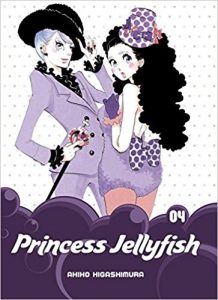
Princess Jellyfish, Vol. 4

April 27, 2017 by Sean Gaffney

By Akiko Higashimura. Released in Japan in two separate volumes as “Kuragehime” by Kodansha, serialization ongoing in the magazine Kiss. Released in North America by Kodansha Comics. Translated by Sarah Alys Lindholm.

I’ve mentioned before that I read this book more for Kuranosuke than Tsukimi, mostly as I keep waiting for everything to come crashing down on him and it just hasn’t yet. Kuranosuke is a giant whirling ball of poor impulse control, and while most of the time this is channeled in a good direction, and I do like that he’s helping the others in his own way, I always grit my teeth a bit when the moral seems to be “consequences are for other people!”. We get a bit of backstory as to how he came to the mansion as a child, and a bit more insight into the relationship he has with his older brother. I liked this, it makes sense for the character. Best of all, though, we have several moments, especially in the second half of the book, where Kuranosuke is thrown off his game, and forced to actually deal with unplanned things. He really shines then.

Speaking of the second half of the book, Nisha is a highly welcome breath of fresh air, and provides a dose of reality to the series that is desperately needed, as Kuranosuke has his head in the clouds just as much as Amars seems to. In particular, they are reminded that if they expect to make any money at all, Tsukimi’s jellyfish dresses need to be priced as haute couture, which is to say way, way above anything that the Amars crew could ever afford. We get a visit to an outlet store for expensive clothing, and while Tsukimi remains horrified, it really is a good object lesson in how the other half lives. She is not the target market for her dresses – people like the rick old ladies who came to the fashion show are. It will be interesting to see how well the dresses succeed in future books.

As you’d expect, there’s also lots of other things going on in these two volumes. Tsukimi and Shu get closer, even as she still has tremendous trouble dealing with a man AS a man (Kuranosuke dressing as a woman helps), and the residence is still very much on the chopping block, which gives Inari a chance to give a magnificently villainous speech tearing down Tsukimi – it’s cliched by design, and after all, if it does what it intended, why not use the cliche? That said, I think Tsukimi will be fighting back soon thanks to her fellow neighbors, who now that they know the strength of their resolve are prepared to bring them in to the protest fold.

There’s more tiny little character moments – I loved Jiji agreeing to run operations for the newly minted Jellyfish fashion business, if only as it gave her something to do for the first time in the entire series. Essentially, Princess Jellyfish’s fourth volumes shows the work of an assured manga artist continuing to draw us into the world of fashion and introverts, and you eagerly read on to see what happens next.

Filed Under: princess jellyfish, REVIEWS

The Girl From the Other Side: : Siúil, A Rún Vol. 1

April 26, 2017 by Anna N

The Girl From the Other Side: Siúil, A Rún Volume 1 by Nagabe

This title from Seven Seas is totally the opposite of what I tend to expect from the publisher. The Girl From the Other Side is a fascinating dark fairy tale that has overtones of a philosophical thought experiment, while still presenting the reader with compelling art and characters.

Shiva lives with her teacher, a man with an affliction who appears to be half-man, half beast. They live in a house and venture out to an abandoned village to forage for food and household items. Shiva thinks that her aunt is going to appear soon to pick her up, but she’s actually been abandoned and her teacher can’t bring himself to tell her. There’s a divide between the remains of humanity, who seem to have retreated behind walls, and the land overtaken by “The Others”, people who have been cursed or perhaps contracted some sort of disease that robs them of their humanity.

Shiva’s teacher attempts to keep some sort of regular routine, and while Shiva runs around like the extremely resilient little girl that she is, the reader is filled with a growing sense of unease as more and more of her world is filled in. Is food going to run out at some time? Why are The Others, or anyone suspected of being in contact with them hunted down and killed? Is Shiva’s teacher different from the rest of The Others, and how did that manage to happen? How has Shiva even managed to survive up until this point? I haven’t read a manga before that manages to blend heartwarming slice of life moments with supernatural horror, but The Girl From the Other Side pulls it off masterfully. I’m not actually sure yet if The Others should be dreaded quite as much as the humans who are attempting to defend their society from them though.

The art in The Girl From the Other Side fits the themes of the story perfectly. Instead of a more generic or commercial style, Nagabe’s illustrations are filled with dark cross-hatching and tones that give the panels a feeling of an antique woodcut. Shiva is rendered almost entirely in white, providing a visual counterweight to the dark backgrounds. Shiva’s teacher is rendered in darkness, with the details of his face difficult to discern, making the condition of “The Others” seem more mysterious and frightening.

There’s an all ages rating on this manga, which I find odd. While there might be no sexual content and not much overt violence, the themes of the manga are both grim and emotionally challenging, and it isn’t a manga I would recommend for all audiences. That being said, this is one of the most unique and well-executed manga that I’ve read in quite some time, and I highly recommend it.

Filed Under: Manga Reviews, REVIEWS

Manga Giveaway: Queen Emeraldas Giveaway

April 26, 2017 by Ash Brown

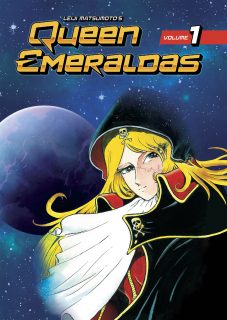
It’s that time again! The end of the month is fast approaching which means another giveaway at Experiments in Manga is now underway! This month’s giveaway features Queen Emeraldas, Volume 1 by Leiji Matsumoto as published in English by Kodansha Comics. (It’s a hardcover!) The second and final volume of the series will be released later this year (I believe it’s scheduled for July), so this giveaway is a great opportunity for a chance to win the first volume to give the series a try. And, as always, the giveaway is open worldwide!

Queen Emeraldas, Volume 1

I have been a long-time fan of speculative and science fiction of all types, but I do seem to particularly fond of those that somehow involve space. Taking that into consideration, it probably shouldn’t be too surprising that manga about space travel and exploration especially tend to appeal to me. When Leiji Matsumoto’s Queen Emeraldas was licensed it immediately caught my attention. Not only does it take place in space, it’s also a series from the 1970s. “Classic” manga aren’t frequently released in English (unless they’re by Osamu Tezuka), so that aspect of Queen Emeraldas interested me, too. And indeed, I enjoyed the first volume a great deal.

So, you may be wondering, how can you a copy of the Queen Emeraldas, Volume 1?

1) In the comments below, tell me about your favorite manga set in space. (Don’t have a favorite or have never read one? Simply mention that instead.)
2) If you’re on Twitter, you can earn a bonus entry by tweeting, or retweeting, about the contest. Make sure to include a link to this post and @PhoenixTerran (that’s me).

And there you have it. Everyone participating in the giveaway can earn up to two entries and has one week to submit comments. If needed or preferred, entries can also be sent directly to me at phoenixterran(at)gmail(dot)com. The comments will then be posted here in your name. The giveaway winner will be randomly selected and announced on May 3, 2017. Good luck!

VERY IMPORTANT: Include some way that I can contact you. This can be an e-mail address in the comment form, a link to your website, Twitter username, or whatever. If I can’t figure out how to get a hold of you and you win, I’ll just draw another name.

Contest winner announced–Manga Giveaway: Queen Emeraldas Giveaway Winner

Filed Under: FEATURES, Giveaways Tagged With: Leiji Matsumoto, manga, Queen Emeraldas

Sword Art Online, Vol. 10: Alicization Running

April 26, 2017 by Sean Gaffney

By Reki Kawahara and abec. Released in Japan by ASCII Mediaworks. Released in North America by Yen On. Translated by Stephen Paul.

If the 7th Sword Art Online novels felt rushed because we weren’t used to the pace of a single volume story, then this book has the opposite issue. Alicization Running is filled with cool scenes, exposition, and character development, but it is the very definition of “Part 2 of 10” – it doesn’t stand on its own as a novel, really. For those who expected we’d see Kirito and Eugeo reuniting with Alice in this book, she’s barely even mentioned except as a goal, because to get to her they have to become Knights, which means winning a tournament, which means going through sword training school, which means winning ANOTHER tournament. Kawahara is stretching this out, for good or ill. Fortunately, it’s partly good – this is still readable, and by now I hope the average Sword Art Online reader takes Kirito’s success with a sword for granted and does not grind their teeth at it.

The other good news is that the first third or so of this book is devoted to Asuna in the real world, who is trying to figure out what happened to Kirito, who is not, as we may have expected, in a hospital but has instead completely vanished. We do eventually find out where he is, with a lot of seeming villains who are really helping out heroes and the like. We also get more of one of my least favorite things in Sword Art Online – praising Akihiko Kayaba, the villain of the first arc who condemned thousands to death, but is really just a misunderstood man with a dream, something that even Asuna says she can respect, which just makes me shake my head. Unfortunately, the rest of Asuna’s section is taken up with huge swaths of technobabble as Kikuoka explains what they’re trying to do here, why they’re trying to do it, and why Kirito is here. Some of those explanations are a bit disturbing – the author even has to remind us in the afterword that he does not necessarily agree with his characters (I’m guessing he’s meaning the use of DELICIOUS TASTY BABY SOULS).

Meanwhile, Kirito’s having an adventure, and while he does think of Asuna and the others, and misses them, his focus is on getting to the central capitol. This involves a lot of showing off, because this is Kirito after all, as well as forging him an amazing weapon that can be the equal of the sword Eugeo possesses (which is a black blade almost identical to his Aincrad one). He also gets to face off in a battle with the #1 swordsman at the school… who sadly is not the young woman on the cover. She’s the second strongest swordsman, and the plot is set up to build to a final battle against her that never happens. I’d like to say it’s not just because she’s a woman, but let’s be honest, it probably is. As always, Kirito is at his most interesting when he’s upset or something goes wrong, such as when his classmates’ petty bullying and destruction leads him to the literal power of prayer to fix things (fortunately, this is a gaming world, so it succeeds).

I wish we had more of Eugeo, who’s a nice sweet kid but not much else – he got far more development last time. As for the regulars who aren’t Kirito or Asuna, well, Leafa and Sinon get to have a confab with Asuna at the start of the book, but Lisbeth and Silica are reduced to begging on the back cover. Yui actually fares better than they do – her discussion of AIs, and how in the end she isn’t the amazingly self-aware fairy daughter she appears to be, is well-written and also chilling. This is a necessary volume of Sword Art Online if you want to read more of Alicization, but by itself it’s a bit frustrating. Recommended for fans of the series, but I’m hoping for a bit of a Turning point next time…

Also, Kirito spends most of the book being protected by invisible sentient head lice, who I can’t help but picture as Jiminy Cricket. I just want to throw that out there.

Filed Under: REVIEWS, sword art online

Flying Witch, Vol. 1

April 25, 2017 by Katherine Dacey

If you’ve dipped a toe in the online dating world, you’ve undoubtedly arranged a date with someone who turned out to be pleasant, polite, and attractive, but not terribly interesting. I had a similar experience with volume one of Flying Witch, a manga that looked promising but lacked the necessary spark of weirdness or wit to make it worth a second chance.

Flying Witch has a simple but fertile premise: Makoto Kowata, a teenage witch-in-training, moves from Yokohama to her cousins’ farm and enrolls in the local high school. Though Makoto’s parents warned her not to reveal her true identity to other people, Makoto blithely confesses her avocation to peers and strangers alike, almost always without prompting.

That running gag is indicative of what works — and what doesn’t — in Flying Witch. In the manga’s best scenes, artist Chihiro Ishizuka wryly juxtaposes the banality of the setting with the strangeness of Makoto’s witchcraft, whether Makoto is test-driving brooms at the local supermarket or pulling up a mandrake from an abandoned field. In these moments, Makoto’s enthusiasm overwhelms her desire to escape detection; she’s astonished that her classmate Nao recoils from the noisy, squirming mandrake, and begins regaling Nao with a list of its medicinal uses in an effort to explain why mandrakes, are in fact, awesome gifts.

In other scenes, however, the punchline is toothless, coming at the end of a long monologue about witchcraft or a chance encounter with a villager who isn’t the least bit scandalized by Makoto’s true calling. Makoto’s blushing and stammering is overplayed to diminishing returns; any reasonable person would wonder why Makoto hasn’t realized that her big secret isn’t a big deal. The same is true for other recurring “jokes” about Makoto’s terrible sense of direction, which are as unfunny on the third or sixth iteration as they were on the first.

The artwork, like the script, is lackluster. Though Ishizuka’s lines are clean and her layouts easy to read, the characters’ blank faces do little to sell the jokes. Chinatsu, Makoto’s ten-year-old cousin, is one of the few characters to register any emotional response to Makoto’s behavior, reacting with a mixture of saucer-eyed fear and astonished exuberance. The rest of the characters drift through the story without much purpose, functioning more like props or set decoration than actual people. Only cameo appearances by the aforementioned mandrake root and the Harbinger of Spring inject the proper note of piquant strangeness to the proceedings, reminding us that Makoto’s existence straddles the fence between the ordinary and the supernatural.

I wish I liked Flying Witch more, as it has all the right ingredients to be a quirky, fun series. Alas, reading Flying Witch is like having dinner with a handsome bore who collects vintage lunch boxes or builds crystal radios; you just know there’s a good story there, but it never comes across in the telling.

FLYING WITCH, VOL. 1 • BY CHIHIRO ISHIZUKA • VERTICAL COMICS • NO RATING (SUITABLE FOR ALL AGES)

Filed Under: Manga, Manga Critic, REVIEWS Tagged With: Chihiro Ishizuka, Comedy, Flying Witch, Vertical Comics

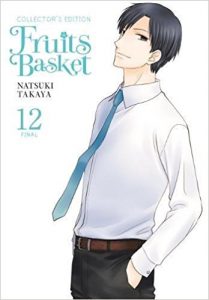
Fruits Basket Collector’s Edition, Vol. 12

April 25, 2017 by Sean Gaffney

By Natsuki Takaya. Released in Japan by Hakusensha, serialized in the magazine Hana to Yume. Released in North America by Yen Press. Translated by Sheldon Drzka.

At last we come to the end of one of the most influential manga series out there, at least in North America. Fruits Basket brought so many new people into the fandom, and also made so many more want to create. It was almost like lightning in a bottle – Takaya’s two series after this are good but did not have nearly the same amount of popularity, and the less said about Fruits Basket Another the better. But Fruits Basket itself is compulsively re-readable, incredibly emotional, and thoroughly satisfying, even if it is also flawed, as this last volume so amply shows. The curse is now broken, but the aftermath still needs to be dealt with, and nothing is going to be the same again.

My favorite moments in the book were the things that didn’t quite happen, even though they should have in order to provide closure. Akito attempts to apologize to the rest of the zodiac, but can’t quite pull off the words, instead giving what amount to exit interviews to most everyone as she deals with her tortured feelings for Shigure, who is at last willing to reciprocate them, since they’re entirely on his own terms now. The Shigure/Akito relationship is easily the most problematic of the series, and trust me that’s saying something. It leaves me with a vague sense of emotional dissatisfaction, even as it makes the most sense in story terms. Takaya even says she felt a bit uncomfortable with it. Meanwhile, Rin is looking at everyone else smiling and moving on and wondering why she’s still filled with rage and hatred. Healing is something that happens different ways for everyone, and it doesn’t have to happen overnight, especially when you’ve been abused as much as Rin has. And the Sohma’s head maid is offered a chance to help Akito forge a new path with the Sohma Family… and walks away from it, unable to let go of the past, in one of the starkest and best moments in the volume.

As for the main cast, everyone gets a brief few pages to show how they’ve changed and grown, and also to show that almost everyone is now romantically paired. You have to feel bad for Momiji and Kagura – if you’re going to pair everyone up in the most cliched way possible, why not simply go all the way? In general, the more attention paid to the couple during the manga itself, the better the scene – Kyo and Tohru get the bulk of the pages, obviously. Some pairings are a bit last minute hookup, like Hatori and Mayu. And some pairings feel like a gag taken one step too far, like Kazuma and Hanajima, where you get the sense that Takaya simply finds the idea of this too funny to not go through with, even though it doesn’t really work. It’s also nice to see Shigure’s editor happy at last, but again, this reads like connecting the dots. Fruits Basket works best when the romance is focused on Kyo and Tohru.

The second half of the omnibus, as predicted, was a sort of combination of various parts of the two fanbooks, showing off favorite scenes/pairings/characters along with some discussion of clothing and the like. There’s also an interview with Takaya that was done recently, where she looks back at the series. I don’t think the extra content is worth buying in and of itself. But if you want to upgrade your old Tokyopop paperbacks, and don’t mind that the series has a noticeably different translation (“you did your best”, FYI) , you should absolutely get this, and relive a magical shoujo classic. Also, the second to last chapter still makes me cry every single time.

Filed Under: fruits basket, REVIEWS

Bookshelf Briefs 4/24/17

April 24, 2017 by Michelle Smith and Sean Gaffney 1 Comment

D-Frag!, Vol. 11 | By Tomoya Haruno | Seven Seas – I keep emphasizing in these reviews that D-Frag! is a comedy first and foremost, and that’s still true. That said, there’s no denying that there are some romantic undertones in the series—Takao and Funabori most obviously, but also Roka more subtly loves Kenji. So it’s no surprise that we end up with both of them having to live at Kenji’s house for a bit—Roka due to a meteor strike (yes, really), and Takao simply due to fretting over having Roka get the drop on her. Thankfully, D-Frag! knows that its tsukkomi is always more important than its rom-com, and the jokes still fly fast and furious. Also, bonus points at the start of the book for remembering this is a school and there are actual grades involved. Great fun. – Sean Gaffney

Horimiya, Vol. 7 | By Hero and Daisuke Hagiwara | Yen Press – Last time I noted how little losing their virginity changed the lead couple in this series, and that’s still the case, but more interestingly, we get to explore consensual kinks in this volume. To be precise, Hori is turned on by Miyamura being forceful towards her—she’s not sure why, but her father’s explanation for it likely fits the bill. That said, it makes Miyamura uncomfortable, so I’m not sure how far they’ll take it in the future. In the meantime, Yuki takes the stage for most of this volume, as she asks Tooru to be her pretend boyfriend in order to help answer a guy’s confession. Only the guy quickly becomes a member of the main cast, and what’s more, the fake boyfriend thing is going to completely torpedo Sakura’s love. Will this end well? Probably not. – Sean Gaffney

Kiss Him, Not Me!, Vol. 10 | By Junko | Kodansha Comics – I suppose, given this has become one of the more popular Kodansha shoujo titles and therefore is not ending anytime soon, that we were due for a new rival. He’s a tough one, too—not only is he a voice actor who plays Kae’s latest obsession, but he and Kae were childhood friends—in fact, they were both fat at the time! It’s actually Kae’s weight that drives a lot of the plot—Takeru finds out about her harem, and due to some misunderstandings thinks that they only care about her thin, cute, busty self. (In fact, the main cast went through this several volumes ago, and (mostly) concluded it didn’t matter.) So now he’s kidnapped her and seems to be force-feeding her, as he’s also a bit evil. Fun, but highly variable. – Sean Gaffney

Liselotte & Witch’s Forest, Vol. 4 | By Natsuki Takaya | Yen Press – It is becoming more apparent that the shot we saw in volume one of Liselotte taking up arms against her brother is not what actually happened, and in fact the more we find out about her the more we realize that she’s another of Takaya’s favorite kind of heroine, the plucky Pollyanna with the hideously broken past. That said, there are a few signs that her brother isn’t completely evil here. We also get a lot more information on witches, including the fact that Vergue and Hilde were once human, and clearly becoming a witch was something very painful and isolating to both of them. There’s still some shots of light humor—Anna is shaping up to be a smiling villain in the best way—but for the most part things take a turn for the serious here. – Sean Gaffney

Liselotte & Witch’s Forest, Vol. 4 | By Natsuki Takaya | Yen Press – Liselotte is attempting to live a peaceful life with her friends, sewing frilly shirts and tending to her vegetable garden. The back cover promises an attack by the witch Vergue, and though it’s true that he ends up significantly damaging her house, he’s also driven away simply by her shoujo heroine powers of empathizing with his rejection of humanity in favor of a place he belongs with the witches. The most interesting parts of this volume are actually the flashbacks the Vergue situation evokes, as Liselotte recalls more of what happened with her brother, who maybe isn’t actually her biological sibling, and who seemed to be giving her the chance to get away from the capitol and find happiness. That’s far more intriguing than a straight-up villain, so I hope we learn more about him in the next volume! – Michelle Smith

Tokyo Tarareba Girls, Vol. 2 | By Akiko Higashimura | Kodansha Comics (digital only) – After her unexpected hookup with hot model and younger man Key, Rinko struggles to figure out what it means. With the help of her pals, both real and hallucinated, she ultimately concludes that it was just a spur-of-the-moment whim on his part, but that doesn’t keep her from being curious about him, especially when she learns that a woman he loved passed away. Meanwhile, we get some very welcome chapters from the points of view of Kaori and Koyuki, Rinko’s friends. I love that, in time, they too start experiencing hallucinations, although it’s pretty heartbreaking that they both end up in sexual relationships without love or future prospects. This series is funny and whimsical, but also fairly bleak and depressing. I do love it, but it’s probably best in small doses. – Michelle Smith

Welcome to the Ballroom, Vol. 4 | By Tomo Takeuchi | Kodansha Comics – Fujita learns some important lessons in this book—actually, the entire book is filled with important lessons. For Fujita, it’s that he’s still a beginner and has a long way to go, and that until he grows he’s going to come last. For Mako and Gaju it’s that they weren’t really observing the other person when they danced, and they want to reunite in order to compete properly. For Shizuku it’s that she can still feel jealousy over someone being judged to be more beautiful than she is—and also hate herself for having those feelings. Even Hyodo is beginning to rediscover a passion for dancing that has been cooled by his injury. But most importantly, there is the dancing, and the art conveying the dancing, and that is still amazing. – Sean Gaffney

Yowamushi Pedal, Vol. 5 | By Wataru Watanabe | Yen Press – The Inter-High race begins! Before we get to that, though, we have to establish what some of the rivalries are. Kinjou will face off against Fukutomi again, the rider who caused his defeat the previous year, while Imaizumi is up against creepy Midousuji. We’ve been hearing about Midousuji since the beginning, but this is the first time he’s actually appeared and he looks and acts like some deranged creature from a horror manga. After that, though, the race is on and it’s a mad rush for the sprinters to claim the top spot at the first checkpoint. As usual, it’s riveting and the enormous volume goes by too quickly. The climbers take center stage next time, but we’ll sadly have to wait until August for that. – Michelle Smith

Filed Under: Bookshelf Briefs

Pick of the Week: Happiness Will Prevail

April 24, 2017 by Sean Gaffney, Ash Brown, Anna N, Katherine Dacey, Michelle Smith and MJ 1 Comment

MICHELLE: I’m both excited and grateful for more digital josei from Kodansha, but of course it’s sports manga that gets me stupidly excited, which is the case for Tuesday’s debut of Days.

SEAN: I’ll go with the 3rd Bakemonogatari novel, which promises to dig into Tsubasa Hanekawa’s psyche at long last, as well as metatext, annoying sexualized scenes, and more insults hurled with love than you can shake a stick at.

KATE: I only have eyes for one title this week: Shuzo Oshimi’s Happiness. For my money, Happiness is the best title Kodansha is publishing right now: it’s smartly drawn, expertly paced, and meticulously plotted, with a memorable, sympathetic lead character and a well-rounded cast of supporting players. More impressive still is that the horror elements feel fresh and surprising; this isn’t just another teen vampire manga. If you do give it a try, be prepared to squirm or cringe from time to time — not because it’s gory, but because it captures the special awfulness of being fifteen in vivid detail.

ASH: I’m with Kate. I don’t have much to add after such an eloquent description, but Happiness is definitely the manga release which commands my attention this week.

ANNA: OK, Happiness wasn’t on my radar before, but now it certainly is! This week would be much smaller without Kodansha’s digital releases, they are bringing back older unfinished series and producing more and more digital josei, which is a very good thing. My pick of the week is Kodansha’s digital program in general. I hope it inspires other publishers to bring out more titles that might be too noncommercial for print release.

MICHELLE: At the risk of sounding like a broken record…. Like 7SEEDS?!?!

ANNA: 7SEEDS!!!!!!!

MJ: So, first I have to decide whether I can forgive my co-bloggers for momentarily making me think that someone had actually licensed 7SEEDS. If I ever manage that, or indeed manage to recover from that brief moment of excitement, I will pick… something else? I haven’t started Happiness, but it sounds like I should.

Filed Under: PICK OF THE WEEK

My Week in Manga: April 17-April 23, 2017

April 24, 2017 by Ash Brown

My News and Reviews

Well, I didn’t manage to post my in-depth manga review for April last week after all. Today I’m starting in a new position at a different library, meaning that last week I spent most of my time tying up as many loose ends as possible at my previous job. This included writing a lot of documentation. And since I was doing so much writing for work, by the time I got home I didn’t want to do anything but read, so that’s what I did. (Which goes to explain why I ended up finishing Cixin Liu’s excellent novel The Three-Body Problem much sooner than I had originally anticipated.) But never fear, I’ll be posting my review of Nagabe’s The Girl from the Other Side later this week in addition to the monthly manga giveaway.

In other news, Seven Seas continued its string of licensing announcements, adding Orikō Yoshino and Z-ton’s light novel series Monster Girl Doctor, Kazuki Funatsu’s Yokai Girls manga, and Saki Hasemi and Kentaro Yabuki’s To Love Ru and To Love Ru Darkness manga to the slate. Recent announcements from Viz Media included Sankichi Hinodeya’s Splatoon manga, a Hello Kitty coloring book, picture books of Hayao Miyazaki’s Castle in the Sky and Princess Mononoke, as well as the My Little Pony: The Movie artbook. Kodansha Comics had a couple of announcements to make recently, too, such as the upcoming release of full-color hardcover edition of Gun Snark’s Attack on Titan: No Regrets (I’ve previously reviewed the series’ first English-language release) and a hardcover omnibus edition of Yukito Kishiro’s Battle Angel Alita. (The series was originally published in English by Viz Media but has been out-of-print for quite some time.)

I also came across a few other interesting things last week: Over at The OASG, Justin interviewed Mariko Hihara and Kotoyo Noguchi, two independent manga creators in Japan. Noguchi also had some questions to ask in return. Frederik L. Schodt (whose work I greatly enjoy) was recently profiled at Nippon.com. The article takes a look at his involvement as an ambassador for manga over the last four decades. Caitlin from I Have a Heroine Problem presented a panel called “Is This Feminist or Not? Ways of Talking about Women in Anime” at Sakura Con 2017 and has made her slides available. A very nicely designed site called Persona Problems offers criticism of Persona 5‘s English localization and delves into translation theory and practice that even people who don’t play the game may find interesting. Finally, the author and designer Iku Okada has started a series of autobiographical essays called Otaku Girl and Proud which explores Japanese gender inequality and identity and how popular culture can impact that experience.

Quick Takes

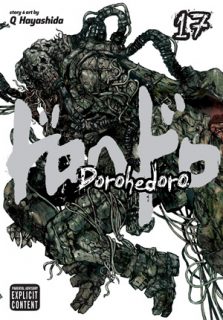
Dorohedoro, Volume 17Dorohedoro, Volumes 17-20 by Q Hayashida. Despite being one of my favorite ongoing series currently being released in English, I seem to somehow always forget how incredibly much I love Dorohedoro. I tend to forget how tremendously horrific the manga can be, too, mostly because it simultaneously manages to be surprisingly endearing. Hayashida’s story and artwork is frequently and stunningly brutal, gut-churning, and grotesque, but Dorohedoro also carries with it a great sense of humor. Granted, the comedy in Dorohedoro tends to be phenomenally dark. Lately, as Dorohedoro continues to steadily progress along what I believe will be it’s final major story arc, the series has become fairly intense and serious, but it remains exceptionally weird and has yet to completely lose its humor. The plot of Dorohedoro does meander a bit and because it’s been so long since I’ve read the previous volumes I’m sure that I’ve forgotten a few important details as the story takes multiple convoluted turns along the way. Ultimately, it doesn’t seem to really matter though since the world and characters of of Dorohedoro follow and operate under their own peculiar sort of logic; Dorohedoro doesn’t need to make a lot of sense in order to be bizarrely enjoyable.

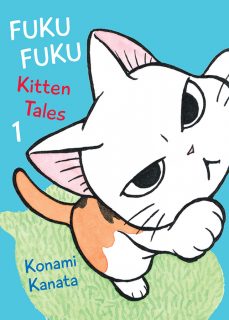
FukuFuku: Kitten Tales, Volume 1FukuFuku: Kitten Tales, Volumes 1-2 by Kanata Konami. Before there was Chi’s Sweet Home there was FukuFuku Funyan, Konami’s cat manga which started in the late 1980s. The series featured an elderly woman and her cat FukuFuku. More recently, Konami created FukuFuku: Kitten Tales, a spinoff of FukuFuku’s first series which, as can be accurately assumed by the manga’s title, shares stories from the loveable feline’s youth. While Konami’s artwork in FukuFuku: Kitten Tales is black-and-white rather than being full-color and the manga is only two-volumes long rather than being twelve, the series is otherwise very similar in format to Chi’s Sweet Home. It’s actually been quite a while since I’ve read any of Chi’s Sweet Home, but FukuFuku: Kitten Tales feels like it might be a little more episodic as well. However, it is still an incredibly cute series. Each chapter is only six pages or so but manages to tell a complete story, accurately portraying the everyday life and antics of a kitten. FukuFuku: Kitten Tales isn’t especially compelling or creative as far as cat manga goes, but it is an adorable series which consistently made me smile and even chuckle from time to time.

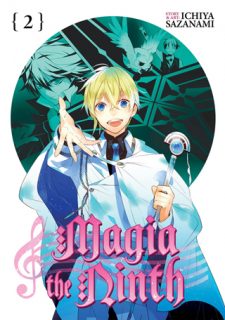
Magia the Ninth, Volume 2Magia the Ninth, Volume 2 by Ichiya Sazanami. I enjoyed the first volume of Magia the Ninth immensely. I’m not really sure I could call it a good manga per se, and I don’t think I would necessarily recommend it broadly, but personally I got a huge kick out of it. That being said, I can’t say that I’m surprised that the series only lasted two volumes. (I don’t know for certain, but I get the feeling that Magia the Ninth was cancelled.) What did surprise me was how well Sazanami was able to pull everything together to conclude the manga in a coherent (and almost satisfying) fashion when obviously it was intended to be a series on a much grander scale. To be honest, Magia the Ninth probably would have done much better for itself if the manga had had that level of focus from the very beginning. Magia the Ninth is a strange and somewhat goofy little series about demons, magic, and music. While the series wasn’t always the most comprehensible, it’s stylishly drawn, has tremendous energy, and even manages to effectively incorporate legitimate music history into the story. Magia the Ninth may not have lived up to its potential, but I had fun with it.

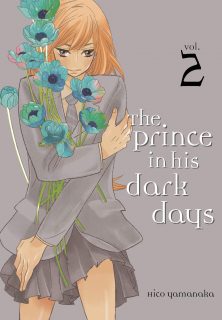
The Prince in His Dark Days, Volume 2The Prince in His Dark Days, Volumes 2-3 by Hico Yamanaka. More and more of The Prince in His Dark Days seems to revolve around Itaru, but at this point I would still consider Atsuko, who is serving as Itaru’s double, to be the real lead of the manga. Unfortunately, Atsuko is casually threatened with sexual violence on a regular basis in the series which frankly makes me uncomfortable. In general, the power dynamics in The Prince in His Dark Days tend to be fairly disconcerting. It doesn’t really help when other characters’ try to play it off as a joke, either. If anything, it only seems to emphasize the fact that so many of them are unrepentant jerks. I know that I’m supposed to empathize with some of their personal struggles, but I find it difficult to spare a lot of sympathy for entitled assholes. However, the themes that Yamanaka explores in The Prince in His Dark Days are of tremendous interest to me, most notably those of gender expression and sexual identity. I also appreciate the manga’s melancholy mood and the slow blossoming of love in unexpected places. There’s only one volume left in The Prince in His Dark Days and despite some of my reservations about the series I am curious to see how it ends.

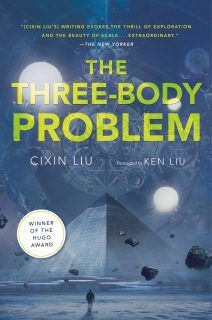
The Three-Body ProblemThe Three-Body Problem by Cixin Liu. If my memory serves me right, The Three-Body Problem is actually the first contemporary Chinese novel that I’ve read. It initially came to my attention when it became the first work in translation to win the Hugo Award for Best Novel. Interestingly, when The Three-Body Problem was translated into English by Ken Liu, the order of the chapters was restored to what the author originally intended and a few additional changes were made in consideration of some of the real-world scientific advances that had developed since the novel was first published in China. As a novel that leans heavily on hard science, I found The Three-Body Problem to be fascinating. (At one point in my life, I actually considered going into theoretical physics.) But what makes The Three-Body Problem so compelling are the social aspects of the narrative. In particular, China’s Cultural Revolution and the characters’ responses to it play a critical role in the story’s development. The Three-Body Problem is the first book in a trilogy, Remembrance of Earth’s Past, and so while largely being a satisfying novel on its own, it’s obviously only the beginning of a larger work. I definitely plan on reading the rest.

Filed Under: FEATURES, My Week in Manga Tagged With: Cixin Liu, dorohedoro, FukuFuku, Hico Yamanaka, Ichiya Sazanami, Konami Kanata, Magia the Ninth, manga, Prince in His Dark Days, Q Hayashida, Remembrance of Earth's Past

  • « Go to Previous Page
  • Page 1
  • Interim pages omitted …
  • Page 434
  • Page 435
  • Page 436
  • Page 437
  • Page 438
  • Interim pages omitted …
  • Page 1048
  • Go to Next Page »
 | Log in
Copyright © 2010 Manga Bookshelf | Powered by WordPress & the Genesis Framework