• Skip to primary navigation
  • Skip to main content
  • Skip to primary sidebar
  • Home
  • About Us
    • Privacy Policy
    • Comment Policy
    • Disclosures & Disclaimers
  • Resources
    • Links, Essays & Articles
    • Fandomology!
    • CLAMP Directory
    • BlogRoll
  • Features & Columns
    • 3 Things Thursday
    • Adventures in the Key of Shoujo
    • Bit & Blips (game reviews)
    • BL BOOKRACK
    • Bookshelf Briefs
    • Bringing the Drama
    • Comic Conversion
    • Fanservice Friday
    • Going Digital
    • It Came From the Sinosphere
    • License This!
    • Magazine no Mori
    • My Week in Manga
    • OFF THE SHELF
    • Not By Manga Alone
    • PICK OF THE WEEK
    • Subtitles & Sensibility
    • Weekly Shonen Jump Recaps
  • Manga Moveable Feast
    • MMF Full Archive
    • Yun Kouga
    • CLAMP
    • Shojo Beat
    • Osamu Tezuka
    • Sailor Moon
    • Fruits Basket
    • Takehiko Inoue
    • Wild Adapter
    • One Piece
    • After School Nightmare
    • Karakuri Odette
    • Paradise Kiss
    • The Color Trilogy
    • To Terra…
    • Sexy Voice & Robo
  • Browse by Author
    • Sean Gaffney
    • Anna Neatrour
    • Michelle Smith
    • Katherine Dacey
    • MJ
    • Brigid Alverson
    • Travis Anderson
    • Phillip Anthony
    • Derek Bown
    • Jaci Dahlvang
    • Angela Eastman
    • Erica Friedman
    • Sara K.
    • Megan Purdy
    • Emily Snodgrass
    • Nancy Thistlethwaite
    • Eva Volin
    • David Welsh
  • MB Blogs
    • A Case Suitable For Treatment
    • Experiments in Manga
    • MangaBlog
    • The Manga Critic
    • Manga Report
    • Soliloquy in Blue
    • Manga Curmudgeon (archive)

Manga Bookshelf

Discussion, Resources, Roundtables, & Reviews

Blog

So I’m a Spider, So What?, Vol. 8

April 11, 2020 by Sean Gaffney

By Okina Baba and Tsukasa Kiryu. Released in Japan as “Kumo Desu ga, Nani ka?” by Kadokawa Books. Released in North America by Yen On. Translated by Jenny McKeon.

I’ve discussed before that the world that this book takes place in is a really horrible world to live in, but I don’t think any book to date has hammered that home quite like this volume, which shows us again and again the downside of “everyone is morally grey trending towards black”. On the surface, the plot of this book involves Ariel, White (Shiraori is used sparingly here, so I’ll stick with White for now) and company slowly moving towards the demon lands, only to be halted by the presence of an ogre/oni who is terrorizing everyone and everything in their way. White’s narration is seen less than ever before, and flips back and forth with the ogre’s narration, with cameos from Vampy, Potimas and a few humans. Those cameos are important, though, as they remind us that one person’s practical decision is another’s life-breaking horrible tragedy. And the reader may not agree with the practicality.

There’s actually a timeskip involved here: the book takes place two years after the end of the last one. Unfortunately for White, she’s no closer to being able to use any of her powers than she was before – she may be a God now, but in terms of fighting ability she’s as weak as a kitten. In her head, she spends most of the book whining and moaning about it. Of course, in reality she’s as silent as ever. Fortunately, by the end of the book she’s in enough of a life-or-death crisis that she’s able to regain a bit of her powers. This is the light part of the book, as, deadly danger aside, Ariel’s group is a lot of fun, and the danger they’re in never feels too lethal. It’s the slice-of-life camping trip part of the book.

And then there’s the rest of the book. The countryside is being plagued by a series of infants being kidnapped,l and as we’ve read the early books we know exactly who and what is behind that, but here we see how it’s affecting the families who are destroyed, and it’s heartbreaking. Ronandt, who was so much fun as a goofy old man obsessed with our spider, has been demoted as he’s lost all sense of what is harsh training and what is abuse. The adventurers in this book almost all die like dogs, and those that don’t ponder just giving up and going back to their farm. The ogre is a walking ball of rage half the time (we’ve seen him in earlier books as well, but here he’s getting his “official” intro) and the half that he isn’t is depressing and bleak… then horrific and disturbing. Lastly, Buirimas, the man presented throughout the book as a noble warrior who died without ever seeing his wife and infant… is also shown to have done something so mind-numbingly inhumane that I have no words. Again, when you don’t think of others as people, you lose the ability to make correct moral judgments.

So overall this was a good book, but the mood shifts are a pain in the neck, and by the end I was very glad it was coming to a stop. Next time hopefully they’ll hit the demon land, and perhaps another timeskip can put us closer to where we left off with Shun and company? Oh, and Potimas is still the worst. I really hate him.

Filed Under: REVIEWS, so i'm a spider so what?

Bookshelf Briefs 4/9/20

April 9, 2020 by Ash Brown, Sean Gaffney and Michelle Smith Leave a Comment

The Dorm of Love and Secrets, Vol. 2 | By Nikki Asada | Kodansha Comics (digital only) – Five years ago, an elite and a laidback high school combined, resulting in a new school where relations between “high-class students” and “no-class students” are horrendous. Asahi Suzumori is a member of the normal class, and when her dorm catches on fire, she accepts an offer from Tsukigase, the capricious student council president, to masquerade as a high-class student and live in their dorm, where she meets and falls in love with Yokaze Takagi, a kind boy with a sad past. Volume two mostly consists of them growing closer, but with Yokaze holding back because of a deal he made with Tsukigase that will enable him to regain something precious if he follows certain rules. The leads are okay, if a trifle bland, but I do enjoy manipulative Tsukigase and Asahi’s protective friend, Sho. The series is complete in four volumes, which feels right. – Michelle Smith

Fire in His Fingertips, Vol. 1 | By Kawano Tanishi | Ghost Ship – There’s a subtitle as well, but this is only a brief. Ryo and Souma are childhood friends. Both are very bad at communicating. After rescuing her from an apartment fire, she goes to his place and, despite some reluctance/consent issues, they have sex. And indeed they do that the rest of the book as well—this is a josei title, but still firmly within the Ghost Ship mission statement. Ryo manages to be a strong enough character to make this work and show us her latent attraction to Souma. Souma is a little more annoying, as his refusal to admit his own, clearly deep, feelings for Ryo is what leads to all the consent issues in the first place. Cautiously recommended to those who like sex and firefighting. – Sean Gaffney

Gal Gohan, Vol. 2 | By Marii Taiyou | Seven Seas – I’m not sure why this series is not pinging my “be careful, teacher/student romance” radar. I mean, it clearly is going to be. There’s no way that this series is going to pair Miku off with anyone other than her reluctant cooking professor. If anything, the series is going in the opposite direction, seemingly adding at the end a third person to the club (and no doubt adding a new romantic rival). There’s plenty of busty fanservice, and suggestive teasing (both from and of Miku). But, as I noted in my review of the first book, the whole thing is written so wholesomely that you end up accepting all of it. It’s the sweetest title about a big-breasted gal who wants to date her teacher you’ll ever read. -Sean Gaffney

Given, Vol. 1 | By Natsuki Kizu | SuBLime Manga – Since I’m always looking for good music manga and I’m always looking for good BL manga, it really was a given that Given would appeal to me. Ritsuka is a self-taught guitarist who has lost touch with his passion for music, but that missing spark eventually reignites after a schoolmate asks him for lessons. While Mafuyu’s past and personality are both mysterious, he does seem serious about wanting to learn, ultimately winning Ritsuka and the rest of his band over. Although it’s Mafuyu’s presence that really drives the story at this point, it’s the thoughtfulness that Kizu has put into the characterization of the entire cast—both leads and supporting roles—that really makes the manga work for me. How the characters all relate to one another is beautifully expressed not only through words but through Kizu’s artwork. I am definitely looking forward to reading more of Given. – Ash Brown

Guilty, Vol. 5 | By Ai Okaue | Kodansha Comics (digital only) – Man, Guilty sure has evolved since its first volume! It initially seemed like a soap opera about unfaithful spouses, and it still is that to some degree, but has morphed into psychological suspense at this point, as Sayaka begins to put the pieces together about why Rui has been so intent on ruining her life and for how long she’s been manipulating events. Kazu is a target, as well, but his sins are far worse than Sayaka’s, and he finally seems to appreciate as much here. Sayaka exhibits grit in the face of devastation, Rui is an unhinged (yet not wholly unsympathetic) antagonist, and the main ship for readers is Sayaka’s relationship with her first love, Akiyama, who is seemingly happily married with an adorable child. Complicated! The plot might verge on melodramatic at times, but it never crosses over into ridiculous. Looking forward to the next installment! – Michelle Smith

Knight of the Ice, Vol. 1 | By Yayoi Ogawa | Kodansha Comics – I didn’t realize, before I read Knight of the Ice, how hungry I was for a manga about figure skating! Our two leads are a pair of childhood friends who are on the verge of becoming something more. Petite Chitose Igari works for a magazine while closet otaku Kokoro Kijinami is a world-class figure skater whose star is on the rise, but only if Chitose continues to cast a spell on him from his favorite magical girl anime. The tone is fun and I like the characters, both main and supporting, a lot. My one complaint so far is… I wish there were more skating! There’s a fabulous glossary that explains all about scoring and the various jumps, but I wish we would actually see that in the manga. Perhaps it’s yet to come. – Michelle Smith

Laid-Back Camp, Vol. 8 | By Afro | Yen Press – It turns out we didn’t have to wait at all for the next camping trip, as the whole cast goes to Izu in this volume. Well, they get there about halfway in, and it will continue next time. We see Rin bonding with her family (and getting extra equipment for her scooter, which she chooses to drive rather than get in the big van with the others), pranking Nadeshiko into thinking she slept through the entire camping trip, getting caught in horrendous traffic jams, and, when they finally arrive, finding a site that is not closed because of the time of year after all. Basically, all the things that can go wrong or right on a camping trip. There’s also setup for some birthday parties, but we’ll have to wait for book nine for those. Peaceful and wonderful. – Sean Gaffney

A Sign of Affection, Vol. 1 | By Suu Morishita | Kodansha Comics (digital only) – As expected from this author, this is cute as a bug’s ear. Itsuomi is a student who speaks many foreign languages (and travels to many foreign countries—this may be the first manga I’ve seen where “I’m going to Laos” is a genuine apology and not a desperate excuse) and then he meets our heroine, Yuki, who is deaf. They hit it off immediately, and have some great chemistry, making him want to learn a new language so that he can talk to her better. There’s some romantic rivalry on both sides—Yuki has a childhood friend, clearly in love with her, that she’s oblivious to, and Itsuomi is surrounded by girls a lot because he’s hot. Despite that, I want to see these two grow closer. Excellent debut. – Sean Gaffney

UQ Holder, Vol. 19 | By Ken Akamatsu | Kodansha Comics – This serves to give us even more pactios (Karin, Kirie at last, and even the two hangers-on, Shinobu and the other one), remind us that Tota is a deadpan playboy as opposed to Negi’s unwitting playboy (and also that Kirie is still one up on everyone else in that department), wrap up Karin’s backstory with most tsundere Judas Iscariot shenanigans, introduce a new Big Bad, and throw in some truly fantastic fights, reminding us that Akamatsu may love fanservice and tease, but he also really loves battle sequences. We also see who Karin was not around during the events of Negima. As such, the story seems prepared to move in a new direction, and I assume it will do so next time. Fans should be happy. – Sean Gaffney

Filed Under: Bookshelf Briefs

Manga the Week of 4/15/20

April 9, 2020 by Sean Gaffney, Michelle Smith, Ash Brown, Anna N and MJ 1 Comment

SEAN: Mid-April, and manga shipments are still, mostly, normal.

ASH: I appreciate some normalcy, these days.

MJ: God, same.

SEAN: J-Novel Club has a debut, and it’s an odd one. This was a doujinshi published by 6 light novel authors, including the creators of Tanya the Evil and Re: Zero. The Hitchhiker’s Guide to the Isekai is as silly as it sounds, I hear, and is complete in one volume.

ASH: That sounds like it could be fun.

SEAN: Also out next week is By the Grace of the Gods 2, In Another World with My Smartphone 19, Otherside Picnic 3, and Seirei Gensouki: Spirit Chronicles 9.

Kodansha, in print, has Attack on Titan 30 and Hitorijime My Hero 7.

ASH: It’s been a while since I’ve thought about Attack on Titan.

ANNA: I generally don’t think about Attack on Titan.

MJ: Honestly, I try not to think about Attack on Titan.

SEAN: Digitally, the debut is The Hero Life of a (Self-Proclaimed) “Mediocre” Demon (Jishou! Heibon Mazoku no Eiyuu Life: B-kyuu Mazoku na no ni Cheat Dungeon wo Tsukutte shimatta Kekka). Yes, it’s based on a light novel, no this is not the novel. It runs on NicoNico Seiga, and is about a young demon going to a magic school… and is not, amazingly, The Greatest Demon Lord Is Reborn As a Typical Nobody *or* The Demon Sword Master of Excalibur Academy, both of which seem to have very similar premises.

MICHELLE: If we’re going to get a story about a demon school, why can’t it be Mairimashita! Iruma-kun? (I realize that’s Akita Shoten and not Kodansha; I’m just whining.)

SEAN: And there is also (deep breath) All-Out!! 13, Domestic Girlfriend 24, The Dorm of Love and Secrets 3, Farewell My Dear Cramer 9, My Boyfriend in Orange 9, My Roomie Is a Dino 2, Ran the Peerless Beauty 7 (I have to catch up!) and You Got Me Sempai! 8.

MICHELLE: Some good stuff here, but especially Ran the Peerless Beauty!

SEAN: One Peace has a debut with The New Gate. Yes, it’s based on a novel, no, that’s not licensed. It’s an Alpha Polis series about a guy trapped in a game who wins and frees everyone… but lingers a bit too long, and now is caught in the same game 500 years later.

Three debuts from Seven Seas. The first is a digital-first light novel, Adachi and Shimamura. This yuri series has been long requested, and fans should be happy. I believe its plot is Story A.

Fragtime is a done in one omnibus, which ran (oh dear) in Akita Shoten’s Champion Tap! (which I guess is when your work is not good enough for Champion Red) and is about (oh dear) a girl who stops time to look at her classmates’ panties. It’s hard to have lower expectations for this than I do.

MICHELLE: Ugh. Although, if they’re licensing Akita Shoten titles, maybe I should whine at them about Iruma-kun…

MJ: Seven Seas has really come a long way. This feels like old times, and not in a great way.

SEAN: Goodbye My Rose Garden (Sayonara Rose Garden) easily wins the “if I can only buy one yuri title” sweepstakes this week, and ran in Mag Garden’s MAGxiv. A young noblewoman begs her maid to kill her, and they grow closer as a result. It sounds quite good.

ASH: This one seems more up my alley.

ANNA: Sounds interesting!

MJ: Sign me up!

SEAN: Also out from Seven Seas: Ghostly Things 2, Himouto! Umaru-chan 9, the 6th light novel of How a Realist Hero Rebuilt the Kingdom (print), Mushoku Tensei’s 5th light novel (print), and My Room Is a Dungeon Rest Stop 2.

Square Enix debuts My Dress Up Darling (Sono Bisque Doll wa Koi wo Suru), a Young Gangan title about a reclusive boy and a Gal who end up bonding over their hobbies. This actually sounds interesting. That said, I’ve heard it’s also servicey.

ASH: I can think of a few cute but servicey series I’m enjoying; maybe this manga will join the group.

MJ: I’d consider myself cautiously interested.

SEAN: SuBLime’s debut is Secret XXX, which ran in Shinshokan’s Dear +. It’s a story of hot boys and rabbits.

ASH: Oh, there really are rabbits! (I had to double-check – hot boys I expected.)

MJ: I’m… maybe there for the rabbits?

SEAN: They’ve also got The World’s Greatest First Love 13.

Vertical gives us a 5th Knights of Sidonia Master Edition.

Viz has no debuts, but does have Case Closed 74, Komi Can’t Communicate 6, the 2nd Persona 5, and Sleepy Princess in the Demon Castle 11.

ASH: I’m behind a few volumes, but Sleepy Princess in the Demon Castle is consistently delightful.

ANNA: I agree, getting caught up on Sleepy Princess in the Demon Castle might be a nice stress-busting activity.

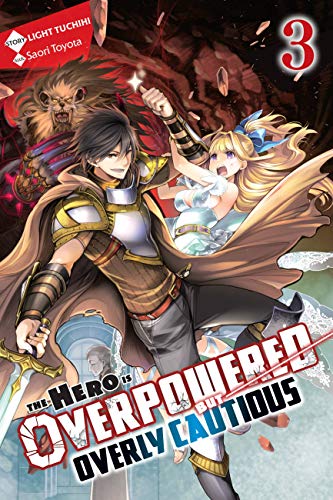
SEAN: Yen time. Fresh off its anime and its cameo in Isekai Quartet, The Hero Is Overpowered But Overly Cautious has a 3rd volume that hopes to answer why this went more than two volumes.

Lastly, the final volume, and I can’t believe I finally get to say that, of BTOOOM!. In fact, it’s two volumes, as it comes in “Light” and “Dark” versions, which I assume have happy and sad ends. Honestly, the mere fact I don’t have to type its name anymore is a happy end. We’ll miss you, bomb-bouncing-off-boob manga.

MICHELLE: I won’t.

ASH: Okay, having two different final volumes is kind of clever… but it’s probably still not a series for me.

ANNA: No thank you!

MJ: I suppose I can celebrate the fact that it’s finally over.

SEAN: Anything tickling your fancy?

Filed Under: FEATURES, manga the week of

The Engagement of Marielle Clarac

April 9, 2020 by Sean Gaffney

By Haruka Momo and Maro. Released in Japan as “Marielle Clarac no Konyaku” by Ichijinsha Bunko Iris NEO. Released in North America by J-Novel Club. Translated by Philip Reuben.

As we’re getting a bunch of new ‘light novels for young women’ in a row lately, it makes sense that some of them tend to fall along the same lines, particularly given they’re mostly in the ‘romance novel’ template. So I expect those who are keeping up with J-Novel Club’s releases of these series will feel a certain familiarity when they see a book-loving eccentric noble whose intelligence is vastly underrated dealing with her engagement with a noble from a much more prestigious family. Fortunately, this book and Bibliophile Princess don’t share much more similarity than that. Marielle feels more like a Jane Austen heroine: savvy, intelligent, always observing, and content to stay out of the limelight. Unfortunately, like most protagonists of this sort, she has one big blind spot, which is her own self and her love life. And she has one big flaw: she’s a fangirl who can’t stop thinking about her beloved and his friends in trope-like situations and outfits. Oh yes, and she secretly writes bestselling romance novels.

This relatively large book is divided into two sections. The first deals with Marielle getting engaged to Simeon, the heir to an earldom and friend to the Crown Prince. From her perspective, it’s rather baffling, and she assumes it’s been arranged by her family somehow, but she goes along with it mainly because Simeon, while handsome, has a rather severe face and wears glasses – in other words, she loves his type rather than him. That said, it turns out that he’s observed her far longer, and knows far more about her true self, than she is aware. The second, longer chunk of the book is essentially a mystery novel, as Simeon and Marielle go to an estate to help the young heir to an earldom (a different earldom) who is being attacked by hostile relatives. Oh yes, and the Mysterious Thief Lutin is also around, stealing from nobles. Will they run into him? And will Simeon hold that riding crop that Marielle loves so much?

For the most part I greatly enjoyed this book, so let’s start with a few flaws. The identity of the villain is glaringly obvious, though I suspect the reader is supposed to know who it is as well. For a mystery, there isn’t much guessing. Also, both Marielle and the author of the Marielle Clarac series like BL fantasizing to a certain point, but prefer straight romances and reassure their partner/readers that there’s no actual BL here, which can be annoying. That said, for the most part the book is excellent. Marielle is a delight, being both very smart and observant while also at times being a shockingly naive 18-year-old. Simeon is exasperated by her but also brings it on himself a bit by being unable to confess his true feelings to her (Marielle doesn’t realize her own feelings till late in the book, so she has an excuse.) There’s a subplot with Marielle befriending some sex workers which does not denigrate the profession at all, and they turn out to be her closest allies. And while the mystery is easy to solve, as a thriller it works fine, with some great set pieces near the end, including a mutual confession, which is good, as I did not want “do they really love me?” to be an ongoing plot point.

This is an ongoing series, but the volumes each have a different title a la Haruhi Suzumiya. If you like romance novels with a 19th century feel to them, I would absolutely give it a try.

Filed Under: marielle clarac, REVIEWS

Primitive Boyfriend, Vol. 1

April 8, 2020 by Sean Gaffney

By Yoshineko Kitafuku. Released in Japan as “Genshijin Kareshi” by Hakusensha, serialized in the magazine LaLa. Released in North America by Seven Seas. Translated by Amanda Haley. Adapted by David Lumsdon.

The beauty of manga debuting in a magazine is that sometimes you can hide the gimmick in a way that you can’t necessarily when you’re coming out in volume format. When this debuted in LaLa (or more likely it debuted in LaLa DX and then shifted later) the opening color page had the heroine surrounded by all the hot high school boys we see at the start of the chapter, with the actual “boyfriend” a mere shadow in the background. As the plot goes on and you see Mito travel back in time via the blessings of a rather flighty goddess, the reader is probably conditioned to expect perhaps a caveman-ey but still human looking guy coming to her rescue, possibly looking like one of the boys we’d seen before (it’ll be the sullen brunet. It’s always the sullen brunet). And then we get the reveal and… her savior is Australopithicus Garhi, and he looks far more ape than man. But read this in volume format… and the whole thing is spoiled on the cover.

Mito is a farmer’s daughter with great skin, a bodacious bod, and any number of guys trying to be her boyfriend, of various types and varieties. She’s not interested in any of them, really, and feels they’re all far too soft and weak. Then, while farming and complaining about the lack of good men in her life, she meets Spica, goddess fo the Harvest, who suggests she cross space and time to find her man. Suddenly she’s in prehistoric times, being menaced by any number of predators. To her rescue comes the titular man, who she names “Garhi” after the species name. They bond and grow closer in a cute (and thankfully non-sexual) way, but suddenly, while being attacked, and with Garhi seemingly dead defending her, she’s back in her own time! Was it all a dream? Can she return to find Garhi?

There’s an obvious reach here: the reader has to accept that Mito, a modern Japanese girl, is falling hard for Garhi, who is, as she says herself, more ape than man. Their relationship is emotionally driven but also based very much on a constant crisis, and does not really have much time to jell. And there’s also that cliffhanger… As for modern times, I appreciated that the boyfriends all introduced around her all felt like they could be the star of a different shoujo manga… but not this one. Mito’s lack of interest in them is a constant draw, as is her dedication to not being anything other than herself (her friend tells her “you’re girling WRONG again!”). It made the title a lot more interesting than I expected, though I’m still grateful this will only be three volumes. I can’t see this as a long-runner.

There’s a longish short story at the end, as is often the way in shoujo manga, about a girl who’s been trying ballet for years but continues to be bad at it, and how her perseverance helps when she meets a much more talented performer. The afterword talks about how the editor told her to focus more on ballet and less on the cooking boyfriend, and the editor was absolutely correct. As for Mito… I’m ready for the next book.

Filed Under: primitive boyfriend, REVIEWS

I Shall Survive Using Potions!, Vol. 4

April 7, 2020 by Sean Gaffney

By FUNA and Sukima. Released in Japan as “Potion-danomi de Ikinobimasu!” by K Lanove Books. Released in North America by J-Novel Club. Translated by Hiroya Watanabe.

To a degree this volume of Potion Girl is not as interesting as the other three, mostly because the author has settled down and found Kaoru’s voice. There’s absolutely no danger of her going to the extremes we’ve seen before, starting from the beginning of the book when she goes to a new town and starts up a perfectly ordinary convenience store. Of course, there’s still the one-two problem that most isekai people have: she’s not well-versed in the products of this world, and she’d ludicrously overpowered. As a result, suddenly it comes out that she has access to incredibly rare medicine (that she created out of thin air) and is once again saving the lives of mobility (who are starting to learn not to talk when a girl with scary eyes comes by). It’s a lot of fun, and Kaoru’s combination of practicality and exasperation is mined for good humor. It’s just a bit more predictable.

The other characters, as if to contrast Kaoru getting more normal, are getting a bit more eccentric. Belle’s desire to sacrifice her life for Kaoru turns out to have been driven by Francette (the two give me a Pearl-and-Connie sort of vibe), and Francette herself seems to be far less interested in taking advantage of her regained youth to be with Roland and far more “obsessed with Kaoru to a terrifying degree”, though thankfully it’s not the sexual kind of obsession. Indeed, poor Roland is starting to realize that his fiancee is very likely to abandon him and run off with their benefactor, much to his dismay. (As with most FUNA books, the woman are awesome and the men tend to be schmucks, and if this bothers you you’d do well to read a different author.)

Two other major events are in this book: first, Kaoru uses her ability to talk to animals to help to solve the murder of a noble family and the punishment of the man who did it. This is probably the strongest chapter in the book, with lots of funny revenge stuff (as with many light novels, the villain is just a horrible man you don’t sympathize with him even a little bit) and Kaoru being goofy (she even fixes her eyes to be droopy so no one recognizes her). We then get her party going to a hot spring, where they are tricked into helping a far-off village defend itself against an attack by bandits. This helps to show off Kaoru’s brutal practicality, which is another way that she distinguishes herself from the more amiable Mile. Kaoru is not here to save your village for you. You’re going to have to save yourself.

The artist has a lot of tiny interstitial art here, which helps to add to the illustration count. The illustrations are also getting more and more ‘cartooney’ by the volume, delighting in evil grimaces and the like. This isn’t going to amaze anyone with plot twists of shocking character swerves anymore, but it gives us a healthy dose of what FUNA does best: super powerful young women having fun.

Filed Under: i shall survive using potions!, REVIEWS

Pick of the Week: Princes and Nobles

April 6, 2020 by Michelle Smith, Sean Gaffney, Ash Brown, Anna N and MJ 1 Comment

MICHELLE: I don’t know what to expect from Prince Freya, as I haven’t read either of the creator’s series that have been published in English so far. The “impersonate the prince” plot could go wrong, but similar plots have occasionally gone very right for me (Hello, Basara!). Mostly, then, I am picking it on the strength of its cover, which is frickin’ gorgeous.

SEAN: If Prince Freya is like Basara that would be fantastic, though I suspect it may be more along the lines of the author’s other series. I’m definitely looking forward to it. That said, I’m picking The Engagement of Marielle Clarac from J-Novel Club. Tagged as ‘josei’ on their site, the tale of a woman who is too busy seeing her fiance in terms of a fandom ‘type’ sounds right up my alley.

ASH: I’m totally with Michelle this week. I’m fairly certain I haven’t read any of the creator’s other titles, so am not entirely sure what to expect, but Prince Freya is definitely the debut that has piqued my curiosity the most.

ANNA: I’m most intrigued by Prince Freya as well, count me in!

MJ: I will admit that the kind of crossdressing story I expect from Prince Freya, which always seems to end up with cishet romance in the end, has become much less of a draw for me over the years. I generally think, “Well, I’d rather just re-read Basara.” But in difficult times I’m willing to give it a shot. Sign me up for Prince Freya!

Filed Under: PICK OF THE WEEK

Full Metal Panic!: Dancing Very Merry Christmas

April 5, 2020 by Sean Gaffney

By Shouji Gatou and Shikidouji. Released in Japan by Fujimi Fantasia Bunko. Released in North America by J-Novel Club. Translated by Elizabeth Ellis.

Well, this is, to a certain extent, somewhat lighter in tone than the previous book. But only just, and the author apologizes afterwards for having far fewer wacky hijinks than he promised last time. That said, we also get a funeral in this book, as Tessa’s chances in the romance sweepstakes finally die as Sousuke says to her face that he loves Kaname and likes her more than Tessa. Note he does not actually say this to Kaname – they’re edging closer to being a couple, and have what may be the sweetest ending in the series to date, but this is not really about Kaname (birthday: Christmas Eve), it’s about Tessa (birthday: Christmas Eve), who may share Kaname’s brain at times thanks to the Whispered but cannot be her. Which honestly is all for the best, as seeing her try to help on this cruise ship mission and be the sad dojikko in snow is really pathetic. Hopefully getting rejected by Sousuke can allow her to relocate her inner badass.

Kyoko is on the cover, and to be fair gets a little more to do than usual. The class, after their school trip got hijacked by terrorists, have been invited on a Christmas Eve banquet about a luxury cruise ship. Meanwhile, Sousuke and MITHRIL are trying to track down AMALGAM based on Gauron’s last words, which (after a nice action sequence where Sousuke takes a missile to the chest) leads them… to the same cruise ship, which it turns out is a giant trap to capture Kaname, who really has had a series of very bad days in these books so far. Especially given it’s her birthday. To stop things, MITHRIL pretend to be terrorists attacking the boat themselves. Unfortunately, various things go wrong, from a gung-ho wannabe hero to robot killer weapons to Tessa getting captured and taken away by plane. Fortunately, Sousuke has reconciled with Al… mostly… and is here to save the day again.

The book’s strengths are many. It really is, despite the drama, far more upbeat than the downer of the previous two. Kaname beats up Sousuke once, but otherwise is starting to think before she acts, and is also starting to use her Whispered abilities far better to help the others. The action sequences are top notch, crying out to be animated (sadly, it wasn’t, being the only early volume to get an audio CD adaptation) and helping the reader gloss over some of the more ludicrous aspects by having Sousuke and Al refer to “Christmas miracles”. It has a stunning cliffhanger, which I won’t spoil, and shows off the seemingly nebbish Mardukas as a hidden badass. The books one big flaw is Killy B. Sailor (a Navy man!), who not only has the most ludicrous name in all of anime, but is also an idiot who should not be rewarded for his extremely stupid actions. He’s a parody of action heroes, but I felt he was one part of the book that wasn’t funny.

Despite that, this is a strong volume in the series, and definitely recommended to anime fans as they won’t have seen it, and light novel fans, as it’s the first FMP! novel not done by Tokyopop 10 years ago.

Filed Under: full metal panic!, REVIEWS

Owarimonogatari: End Tale, Part 01

April 4, 2020 by Sean Gaffney

By NISIOISIN and VOFAN. Released in Japan by Kodansha BOX. Released in North America by Vertical, Inc. Translated by Ko Ransom.

Yes, I know. This came out in mid-December, and here it is the following April. Part of it is that it’s still print-only (Kodansha is doing e-books for the series, but not right away), part of it is that it’s a long book even in a series with many other long books. But mostly it’s the subject matter. Monogatari in general has been a series that tends to be overdramatic and over the top, be it Araragi’s narration or the events involving a bunch of vampires, ghosts, cat demons, snake demons, devils, corpses and Senjogaharas. And, let’s face it, Ogi Oshino, who is all over this book, is not simply going to end up being Meme’s precocious niece. No, the real star of this book is a brand new character, who arrives and leaves all at the same time – Sodachi Oikura. She loves math and hates Araragi, but there’s so much more to her story than that. And it’s that story that is told here, in excruciating three-part detail.

The first story, Ogi Formula, sees Ogi at last get a proper introduction – she’s been around since the 8th book, but always after the fact; here we get the context of her meeting Araragi for the first time, and the two of them getting trapped in his old first-year classroom, which helps set up Sodachi’s story but more importantly tells us exactly how and why Araragi went from a mostly well-adjusted kid to the “I don’t need other people” guy we met in Kizumonogatari. Sodachi Riddle then shows Sodachi returning to school after a two-year absence, and (after a brief fight with Senjogahara which is probably the highlight of the book) Ogi and Araragi then go back to an abandoned house to see how he met her in middle school and had forgotten it. Then, in Sodachi Lost, after Araragi recalls he also met her even earlier… and also forgotten it… he and Hanekawa try to get Sodachi to return to school while battling her own family past and the even-more-annoying-than-usual Ogi.

The stories told here are strong, don’t get me wrong, and I liked some of the writing. The characters, though, just make me miserable. Araragi, when he’s around Ogi, is a pale shadow of his usual self, and ends up being almost as pathetic as she makes him out to be until right at the end. Ogi is designed to be thoroughly irritating, of course, but so far the series has used her sparingly – here she’s in the entire book, and we are thoroughly irritated. (Her petty rivalry with Hanekawa is probably the highlight, as it turns her smug glibness into actual childish nastiness.) And Sodachi is a child of abuse who has gone through far too much, but is also thoroughly unpleasant in very explainable ways. I can’t blame her, but I admit I’m quite happy she’s not returning. Hanekawa comes off best here… but she announces she’s leaving the country, probably to investigate Ogi, who she finds 8000% more suspicious than Araragi does.

This is a necessary book, as the series has been setting up Ogi to be the villain, and this does a whole lot to advance that. It’s also a reminder that when it comes to actual real-life issues, as opposed to oddities, there’s little Araragi can do. But man, reading this book is like eating your beets. Next time we’ll go back to that incredibly busy four-day period in August – already seen in Tsubasa Tiger, Mayoi Jiangshi, AND Shinobu Time – for the one untold story we still have – what were Kanbaru and Araragi up to back then? Fortunately, as I dawdled reading this book, I can start that one right away.

Filed Under: monogatari series, REVIEWS

Outbreak Company, Vol. 13

April 3, 2020 by Sean Gaffney

By Ichiro Sakaki and Yuugen. Released in Japan by Kodansha Light Novels. Released in North America by J-Novel Club. Translated by Kevin Steinbach.

Harem comedies can be immensely frustrating for the reader, especially if they’ve picked the girl they like and would like the author to end the series with their choice please, OK, thanks. But harem comedies are also popular because everyone reads it to see who will be picked, and so that is drawn out forever. You think you’ve reached an end point… and then it backs away again. There are very good reasons for this – much to the frustration of North American companies, harem comedies that have a resolution in Japan see sales in the West drop off precipitously once they know who wins (not their girl). Or it has “no ending”, leaving everyone angry. But again – fans love these sorts of books and read them in great numbers AT FIRST. So they keep happening. And that’s how we get to Outbreak Company, which last time had Shinichi finally realize that Myusel and Petralka are both in love with him. How does he handle it? Unfortunately, like a harem protagonist.

There is a plot here, which is so ridiculous I hesitate to type it up. The kingdom is going through its armory, which includes various mind-controlling weapons and such, and find five boxes of armor with lettering on them that seems to be Japanese. While having our heroes examine it, through various wacky accidents, Myusel, Petralka and Elvia all end up inside one of the artifacts, which are essentially powered suits (powered by fanservice, if the pictures are any indication). The armor removes some inhibitions (meaning they can all yell at each other about how Shinichi likes the other two more than them) and also was military in use, meaning it allows them to attack each other – potentially fatal news for Myusel and Elvia if they hurt Petralka. How do they get out of the armor? Well, the objective has to be fulfilled. Sadly, the objective is “have Shinichi choose a girl”.

I’ve gradually come to realize that I’ve been giving a bit more depth to Shinichi than the author has really intended. I’ve said before how Shinichi’s own self-hatred would make it hard for him to genuinely love anyone, and there’s a bit of that here, notably in the harrowing opening nightmare that he has. But for the most part Shinichi acts like any shonen harem lead would… he whines, he wusses, he says he likes all of them equally, he says he doesn’t want to hurt any of them. That last is perhaps the real reason – he got rejected when he confessed back on Earth, and doesn’t want the others to suffer like he did. And so, inevitably, he arrives at a solution that is very harem manga-like – he gets the girls to resolve their fight by beating him up instead. By the end of the book the feelings are still out in the open, but we seem to be back to “status quo”.

There’s some foreshadowing towards the end, notably in terms of where the armor came from in the first place. But for the most part this is the most harem-like of the books to date, and therefore suffers most of the weaknesses of that genre. The next volume is short stories, so we likely won’t see any forward movement there either. Which suits the author fine.

Filed Under: outbreak company, REVIEWS

  • « Go to Previous Page
  • Page 1
  • Interim pages omitted …
  • Page 267
  • Page 268
  • Page 269
  • Page 270
  • Page 271
  • Interim pages omitted …
  • Page 1048
  • Go to Next Page »
 | Log in
Copyright © 2010 Manga Bookshelf | Powered by WordPress & the Genesis Framework