• Skip to primary navigation
  • Skip to main content
  • Skip to primary sidebar
  • Home
  • About Us
    • Privacy Policy
    • Comment Policy
    • Disclosures & Disclaimers
  • Resources
    • Links, Essays & Articles
    • Fandomology!
    • CLAMP Directory
    • BlogRoll
  • Features & Columns
    • 3 Things Thursday
    • Adventures in the Key of Shoujo
    • Bit & Blips (game reviews)
    • BL BOOKRACK
    • Bookshelf Briefs
    • Bringing the Drama
    • Comic Conversion
    • Fanservice Friday
    • Going Digital
    • It Came From the Sinosphere
    • License This!
    • Magazine no Mori
    • My Week in Manga
    • OFF THE SHELF
    • Not By Manga Alone
    • PICK OF THE WEEK
    • Subtitles & Sensibility
    • Weekly Shonen Jump Recaps
  • Manga Moveable Feast
    • MMF Full Archive
    • Yun Kouga
    • CLAMP
    • Shojo Beat
    • Osamu Tezuka
    • Sailor Moon
    • Fruits Basket
    • Takehiko Inoue
    • Wild Adapter
    • One Piece
    • After School Nightmare
    • Karakuri Odette
    • Paradise Kiss
    • The Color Trilogy
    • To Terra…
    • Sexy Voice & Robo
  • Browse by Author
    • Sean Gaffney
    • Anna Neatrour
    • Michelle Smith
    • Katherine Dacey
    • MJ
    • Brigid Alverson
    • Travis Anderson
    • Phillip Anthony
    • Derek Bown
    • Jaci Dahlvang
    • Angela Eastman
    • Erica Friedman
    • Sara K.
    • Megan Purdy
    • Emily Snodgrass
    • Nancy Thistlethwaite
    • Eva Volin
    • David Welsh
  • MB Blogs
    • A Case Suitable For Treatment
    • Experiments in Manga
    • MangaBlog
    • The Manga Critic
    • Manga Report
    • Soliloquy in Blue
    • Manga Curmudgeon (archive)

Manga Bookshelf

Discussion, Resources, Roundtables, & Reviews

Blog

The Invincible Shovel, Vol. 2

July 16, 2020 by Sean Gaffney

By Yasohachi Tsuchise and Hagure Yuuki. Released in Japan as “Scoop Musou: “Scoop Hadouhou!” (`・ω・´)♂〓〓〓〓★(゜Д゜ ;;) .:∴DOGOoo” by MF Bunko J. Released in North America by Seven Seas. Translated by Elliot Ryoga.

It should not come as too much of a surprise to find that this second volume is not quite as funny as the first. The Invincible Shovel has a few choice gags that it hammers on with the subtlety of a truck hitting an isekai protagonist, And so the element of surprise is gone here. That said, this ended up being funnier than I expected, particularly as it went along. We meet a couple more heroines who add themselves to the uninterested Alan’s not-quite-harem, including a ditzy sage and a sheltered princess, everyone misunderstands things in a sexual way due to the use of ‘shovel’ to mean absolutely everything, and we get somewhat incrementally closer to finishing the quest, as there’s a mid-range boss to defeat and we get a glimpse of the big bad. And then there’s Lithisia, who definitely levels up in this book… in both good and bad ways. Alan may be the OP hero, but in the end Lithisia is the most terrifying.

I’d mentioned in my review of the first volume that the word ‘shovel’ was used 703 times, and in this second book it’s 880. Note that we don’t really get variations – at one point an illustration shows Lithisia is clearly holding a trowel, but it’s referred to as a shovel, and we don’t see spade or other types either. This is deliberate, both for the comedy – the overuse of the word, especially from Lithisia inventing new words including it, is ridiculous – but it’s also meant to be exhausting, to leave the reader so drowning in shovels that they just learn to let it roll over them. We feel much like Catria, the sole voice of reason in this title, who wants things to make sense but is constantly cursed by Alan using his shovel to make instant tunnels through gigantic mountains, remove a memory block to help someone recall their past, and force the villain to confess his evil deeds by literally digging his own grave.

As for Lithisia, I will admit that I did get very tired of her constant horniness, which ends up carrying over to the other characters. The idea of ‘shovel’ meaning sex… or, frequently in this book, masturbation, as Alan says that they can learn to shovel better by themselves, is the sort of thing that’s mostly interesting to 15-year-old boys. Fortunately, there’s more to her than that… in a somewhat scary way. Lithisia devoting herself to the Way of the Shovel is funny, but Lithisia being able to brainwash others to the same vision is alarming. The shovel is gaining more and more followers, though as a worried Alan notes, they don’t actually have the shovel superpowers that she assumes come with the job. This actually has a serious core at its deluded center: she’s afraid that when the quest is over, Alan will leave her, and so vows to TAKE OVER THE WORLD! to ensure she remains by his side. It’s… sweet? In a way?

As I said earlier, your enjoyment of this title may end up being how tolerant you are of the word ‘shovel’ and the female cast being horny on main most of the time. But it’s still gloriously silly enough that I’ll be shoveling the next book. Um, reading. I meant reading. Shovel.

Filed Under: invincible shovel, REVIEWS

A Wild Last Boss Appeared!, Vol. 1

July 14, 2020 by Sean Gaffney

By Firehead and YahaKo. Released in Japan by Earth Star Novels. Released in North America by J-Novel Club. Translated by Kevin Chen.

Sometimes you get books where the concept is drab and you’ve seen it before, but the execution is excellent, and sometimes you get novels with a great concept that can’t quite pull it off. This comes closer to the second type, which may surprise readers given that it’s another “Japanese gamer is pulled into his game world” sort of book. But there are intriguing things going on here. It’s sort of reminiscent of Overlord, in that we have a gamer who arrives in his game world as the villain he created, complete with minions (most of whom have to be tracked down, admittedly) and whose self of self is being somewhat overlaid with the character. That said, this book does not seem to be nearly as dark as Overlord gets. It’s just Lufas getting used to being back in the world (which is 200 years later), getting used to being a woman (the gamer who created her was male), and getting used to being far, far more powerful than everyone else. Does it work? Somewhat.

As noted, our hero is a gamer who played a fun MMORPG (she’s the blonde on the cover, not the blue-haired girl), taking on a character who ended up playing the role of the villain. She was taken down by seven heroes in a massive battle (which the gamer was totally in on, this was a controlled event) and killed off. Suddenly the gamer finds himself in what appears to be that world, two hundred years later, summoned as part of a botched spell to summon a hero. Lufus has no interest in dealing with the folks who summoned her (the character is a woman, something that actually has a lot less relevance than you’d expect) and so goes back to her old Dark Tower, which she finds is rather decrepit but still standing. It also has her minion and expodump girl Dina, who Lufas created as an NPC and then forgot about, but who can helpfully explain what’s happened since Lufas’ death. She decides to round up her twelve monster companions, which first involves talking one of them down from his roaring rampage of revenge.

There are interesting things going on here. The gamer’s memories and Lufas’ have sort of melded together, and as the book goes on the relevance of “this is a game I played in Japan” lessens, which is interesting. To my surprise, the book also has virtually no fanservice at all, and in fact Lufas notes that she doesn’t really feel any desires for women anymore – or men, for that matter. This does, admittedly, make you wonder why the gender bender was conceived of to begin with, except that Lufas looks really beautiful. There’s also some foreshadowing that one of the characters is not what they seem, and it’s handled very deftly. I am rather relieved that the book slowly starts to drop the gamer stuff as it goes along, as the gamer sometimes uses vocab and ideas that make me suspect he was one of those basic sexist Japanese guys. More to the point, while I appreciate that it has a long game in mind, the book meanders. It’s not meant to be a slow life title, but sure feels like one at times, especially when Lufas is doing things like making Golem Winnebagos.

So I’d say that the series has not quite gelled yet. That said, it’s interesting enough that I’ll read more, and folks who (have I said this a lot in my reviews lately?) don’t mind overpowered heroes will find something to enjoy here.

Filed Under: a wild last boss appeared!, REVIEWS

Pick of the Week: Love and Cats

July 13, 2020 by Sean Gaffney, Michelle Smith, Anna N, Katherine Dacey, Ash Brown and MJ Leave a Comment

MICHELLE: Despite not loving The Wize Wize Beasts of the Wizarding Wizdoms as much as I’d hoped to do, I am still really looking forward to Nagabe’s Love on the Other Side short story collection. Perhaps the inclusion of the word “poignant” on the back cover blurb indicates there will be fewer disturbing stories. Not that disturbing stories are a bad thing, but given the state of the world at present, it’s sweetness that I crave.

SEAN: Not too hard for me: the 2nd volume of A Man and His Cat is definitely my pick this week. I want to see if it can keep up the balance between man and cat.

ANNA: I’m also curious about Nagabe’s Love on the Other Side, so that’s my pick!

KATE: I also have a bad case of A Man and His Cat-scratch fever this week.

ASH: I enjoyed the first volume of A Man and His Cat, and I’m also really looking forward to the next installment of Blank Canvas, but I’m thrilled that more of Nagabe’s work is being released, so my pick this week goes to Love on the Other Side.

MJ: I’m ashamed to say I still haven’t read the first volume of A Man and His Cat, so though I’m sure I’d love it, I can really only give my pick to Love on the Other Side. It’s nice to find myself interested in multiple titles this week, though, which has been happening less and less often.

Filed Under: PICK OF THE WEEK

Outbreak Company, Vol. 14

July 13, 2020 by Sean Gaffney

By Ichiro Sakaki and Yuugen. Released in Japan by Kodansha Light Novels. Released in North America by J-Novel Club. Translated by Kevin Steinbach.

Short stories here, two starring Shinichi and one Hikaru, of varying quality. The three together do remind you that this series has been sort of coasting ever since the Japan arc. The author says that he plans to end it in three more volumes (it ended up being four), so they at least have an endgame in mind, but there is very much the sense of “killing time” here. That said, at least the stories, for the most part, avoid the worst of Shinichi’s otaku qualities. The first one is a continuation of the prior volume, and offers us our hero hiding in his room to avoid seeing the girls in love with him. The second one involves Brook and Cerise hatching a family, and Shinichi trying to bond with the new lizard baby, who unfortunately sees him as food. And in the final story, another magical maguffin is found that ends up turning Hikaru into a girl for real.

The first story is the weakest. For all that the series has seen Shinichi achieve a lot of things and even save the world once or twice, there has been little to no actual maturity in his character. That’s really been emphasized in the last couple of books, as he’s totally unable to deal with the idea that more than one girl might be in love with him. Seeing him deal with this by hiding in his room and reading manga/playing games is totally in character but also 100% annoying to a reader who sort of wants him to grow up. That said, there was some nice suspense writing here as the team uses an obvious but effective lure to get him out. As for the second story, it shows Shinichi in a slightly better light. He could have simply given up and avoided the new baby, but he’s stubbornly determined to make it like him. This shows off the qualities Myusel and Petralka see in him.

The final story is the most interesting, though it loses a bit when the author admits the editors gave him the idea. It’s actually a sex-change slime, discovered in the caves and turning out to be yet another piece of long-lost technology. It fastens onto Hikaru and essentially leaves his real body there while putting his consciousness in a female body. The rest of the cast have some discussion of how Hikaru identifies – Shinichi discovers that he wears real bras and panties rather than male underwear, and they discuss how much he might identify as a woman. That said, Hikaru’s own POV narration is more matter of fact about it – he thinks of himself as a man, and is attracted to women, but dresses as a girl for reasons of family upbringing. Probably the most interesting part of the story is seeing Elvia forcibly bathe Hikaru, who realizes that getting involved in wacky harem comedy “I saw your boobs!” scenes is easier than it seems.

There weren’t really any big missteps taken here, and it’s certainly pleasant enough. That said, it’s not a good sign when, after each volume finishes, you’re thinking “When will this series come to an end?”.

Filed Under: outbreak company, REVIEWS

The Way of the Househusband, Vols. 2-3

July 11, 2020 by Katherine Dacey

The Way of the Househusband has the rhythms of a good sitcom: it has a simple, well-defined premise, a few lead characters with strong personalities, and an episodic formula that’s flexible enough to create endless opportunities to tell the same joke in new and surprising ways. In the first volume, for example, almost every storyline revolved around Tatsu’s fanatical dedication to his role as stay-at-home spouse, whether he was bargain hunting at the grocery store or racing to the train station with his wife’s lunchbox. The mere sight of him in an apron, track suit, and aviator glasses was a good sight gag made better by Tatsu’s sheer cluelessness; he never seemed to realize that people were staring at him in the checkout line and the butcher’s shop.

Volumes two and three find Tatsu in equally incongruous situations. In chapter 10, for example, he joins the neighborhood housewives’ aerobics class, flashing his terrifying yakuza sneer every time the instructor commands her charges to “smile,” while in chapter 16, Tatsu demonstrates a hidden talent for spiking and setting when he joins the ladies’ volleyball team. The volleyball game is a great variation on the series’ best running joke. Though most civilians find him a terrifying oddity, the neighborhood ladies’ association looks at Tatsu as one of their own; they include him in activities, offer him tips on how to run his household more efficiently, and even help him impress a former boss with an impromptu display of culinary prowess.

Perhaps the most important development in volumes two and three, however, is the introduction of Tatsu’s old enemies, all of whom are genuinely bewildered by his retirement from the knee-capping business. These exchanges thrum with the comic energy of a Damon Runyon story as Tatsu schools his fellow yakuza on stain removal and dessert making. That Tatsu discusses his career change without apology or explanation is a nice touch, as it throws his opponents off their game and reinforces the idea that he likes being a stay-at-home husband.

My only concern about The Way of the Househusband is that Tatsu’s wife is more a collection of moods and preferences than a fully persuasive character. Miku is marked by extremes: she has an intense, child-like obsession with Poli-Cure, an anime whose core fanbase is about ten years old, but is also a fierce workaholic whose resists Tatsu’s efforts to pamper her with scented candles and scalp massages. Though the gags built around her personality usually land, it sometimes feels like they’d be funnier if we understood a little more about how Miku and Tatsu met, or what keeps them together. From time to time, author Kousuke Oono hints the two have more in common than meets the eye–Miku is handy with a knife and a bat, too–but a little more attention to her character would be welcome.

That said, The Way of the Househusband remains consistently funny three volumes into its run, offering a fresh take on that most timeless of sitcom premises: the fish out of water. Recommended.

VIZ Media provided a review copy of volume two.

THE WAY OF THE HOUSEHUSBAND, VOLS. 2-3 • STORY AND ART BY KOUSUKE OONO • TRANSLATION BY SHELDON DRZKA AND AMANDA HALEY, ADAPTATION BY JENNIFER LEBLANC • VIZ MEDIA, LLC • RATED T+, FOR OLDER TEENS (SUGGESTED VIOLENCE, YAKUZA JOKES)

Filed Under: Manga, Manga Critic, REVIEWS Tagged With: Comedy, VIZ, VIZ Signature, Way of the Househusband, Yakuza

Bookshelf Briefs 7/11/20

July 11, 2020 by Ash Brown, Sean Gaffney and Michelle Smith Leave a Comment

How Do We Relationship?, Vol. 1 | By Tamifull | Viz Media – This title has a lot of things going for it, once you get past the “draw them in with sex” opening pages. It’s a college-aged relationship, still rare enough to be notable. The pair get together very quickly, but navigating being a couple is different for both of them—they have different experiences in lesbian relationships, different comfort levels in being “out,” and different ideas of when they can move forward in terms of intimacy. It’s a push-pull that feels more realistic than a lot of the yuri manga that end when the couple get together, and I’m not entirely sure that this series will end with the couple together. There’s also one really weird friend who can’t keep her mouth shut—I liked her. Want to see where this goes. – Sean Gaffney

How Do We Relationship?, Vol. 1 | By Tamifull | VIZ Media –Miwa Inuzuka knows that it’s totally normal that she loves women, but she still lacks romantic experience, despite her physical attractiveness. Just when she’s about to come out to the first friend she makes upon starting college, upbeat and unabashed Saeko, Saeko beats her to the punch. And since they’re the only lesbians they know, they decide to try dating. This is kind of an unromantic start, but I still really enjoyed this first volume. Miwa’s and Saeko’s personalities come through clearly, and all of the hurdles in their relationship come from who they are as people. The one thing that bugged me is that twice Tamifull cuts away from a scene of conflict and picks back up after apologies have been rendered off-camera. That’s kind of unsatisfying. On the whole, though, I’m really looking forward to volume two. – Michelle Smith

Kaguya-sama: Love Is War, Vol. 15 | By Aka Akasaka | Viz Media – There is a good amount of humor in this volume—Ice Kaguya’s desperately obvious attempts to do couple things, and Shirogane’s equally hilarious denseness, is a highlight, as is the Christmas party. But for the most part the drama is more interesting, as “Ice” Kaguya is in charge but her headstrong and blunt approach merely sends a stressed-out Shirogane into the hospital. Their views are polar opposites (she doesn’t want to hide her real self, he desperately does) but talking things out helps a lot, and their second kiss is quite sweet. There’s still a lot more ground to cover in this title (Ishigami’s love life, Kaguya’s awful upbringing, what’s the deal with Hayasaka, etc.), but at least the main premise of “when will they confess” has been put to bed. They’re a couple. – Sean Gaffney

Little Miss P: The Second Day | By Ken Koyama | Yen Press – The second volume of this manga that teaches people about periods has stories that are a lot more long-form than the first. A young couple’s relationship can’t survive a vacation with Little Miss P; two people who don’t match their gender norms deal with periods and a zombie manifestation; an elementary school has a co-ed discussion of periods; an alien couple are trying to get pregnant; a middle schooler who’s been bullied into not attending school worries about her future; a manga editor deals with something that ISN’T her period; an ovarian cyst; and an idol competition is filled with periods and various remedies. This may be better than the first book; it has more variety, and is very well done. – Sean Gaffney

Magus of the Library, Vol. 3 | By Mitsu Izumi | Kodansha Comics – This series is very pretty and likable, but it has to be said it’s not really breaking any new ground. There’s a lot of standard shonen beats here, and you can easily guess what will be happening next. Theo has to learn to work together with another woman who is arrogant and haughty, and does so. He has to think that he’s done horribly at one part of the test and become convinced he’s failed (he hasn’t). He has to meet a random crotchety old woman and befriend her, only for her to turn out to be much more than she seems—check. That said, provided you don’t mind not being surprised, this is good stuff, helped along by the lush, expansive art and the occasional action sequence. It’s a good series that I think we’re already caught up on, but hopefully more soon. – Sean Gaffney

Requiem of the Rose King, Vol. 12 | By Aya Kanno | Viz Media – Every time Richard and Buckingham are on the page together I want to drop this. I really dislike their relationship and the power dynamics that it shows off. And yes, I know it’s not meant to be a good thing, but that does not change the fact that I hate it. That said, there’s always one woman being awesome at some point in this series, and for this volume it’s Anne, who is given a fine chance to kill her husband and get away with it, but finds the idea that everyone she is surrounded by being a horrible person rather appalling. As such, she chooses the devil she knows, but does it with BADASS panache. Meanwhile, the War of the Roses continues apace, though we’ve wandered far from Shakespeare here. A problematic fave. – Sean Gaffney

Something’s Wrong with Us, Vol. 2 | By Natsumi Ando | Kodansha Comics – I mentioned last time that I wasn’t ready for the author accelerating immediately to ‘everything is awful’ quite so fast, and that doesn’t let up here, as things go from bad to worse with Nao. She’s banned from the kitchen, the family HATES her with varying degrees of “I want her literally dead” to “I want her to simply go away,” and even Tsubaki, her husband, indicates that if “Sakura” ever appeared to him again, he’d make her disappear. Really, it’s amazing Nao is able to concentrate on sweets at all. That said, Tsubaki may want Sakura to disappear, but he’s slowly falling for Nao, and she for him. They consummate their marriage at the end of this book, but… are things going to get worse and worse? – Sean Gaffney

Toilet-bound Hanako-kun, Vol. 3 | By AidaIro | Yen Press – While the first two volumes firmly established Hanako as an enigma, some of that mystery begins to unravel with the third. Up until this point, much of Hanako’s past was only hinted at. But with the introduction of important new characters in this volume come distressing new revelations about who he really is (or was, considering he’s currently a ghost). The comedic aspects of Toilet-bound Hanako-kun and the goofiness of many of its characters keep the series from becoming overwhelmingly oppressive, but there are still some pretty dark elements. Both Nene and Kou—the closest things to friends that Hanako has had in a long while—wanted to know more about him than he himself had revealed; now they have to come to terms with what they’ve learned and how it will impact their friendships. I look forward to seeing how Toilet-bound Hanako-kun continues to develop a great deal. – Ash Brown

Witch Hat Atelier, Vol. 6 | By Kamome Shirahama | Kodansha Comics – It’s hard not to make the entire review “OMG GORGEOUS,” because so much of what I love about this series is the artwork, which never gets tiring no matter how much you reread it. There’s more to it than the art, though. The girls’ test was interrupted, and they’re brought to one of the Big Witches in this world, who demands as a make-up test that they simply surprise him with magic. This doesn’t go well at first, but after realizing that they should work together to do this, they come up with a brilliant idea (Coco) and execution (the others) to win him over. Even the translation is great, with some hilarious wordplay around Agott’s name. This is one of the best manga releases out there right now. – Sean Gaffney

Filed Under: Bookshelf Briefs

The Beloved of Marielle Clarac

July 11, 2020 by Sean Gaffney

By Haruka Momo and Maro. Released in Japan as “Marielle Clarac no Saiai” by Ichijinsha Bunko Iris NEO. Released in North America by J-Novel Club. Translated by Philip Reuben.

I enjoyed the first Marielle Clarac series while noting a couple of flaws, and I’m pleased to say that this second book at least does a good job fixing one of them. (The “BL tease but no more” aspect is, I fear, not going away anytime soon.) But the mystery/thriller aspect of the book works even better than the first, keeping us guessing as to the motivations of the antagonist (who is not really a villain) and switching immediately to the thriller aspect the moment things are revealed. There’s also a good helping of elements of the first book I greatly enjoyed: Marielle and her tendency to see everything in terms of romantic ‘shipping’ tropes, who gets to simultaneously be very clever and good at reading people and also capable of the most shockingly dumb moves when trying to chase after a lead. She’s not quite an amateur detective, but it’s on the verge of that genre. And the relationship between her and her fiancee Simeon is fantastic.

It’s wintertime, so all the garden parties are inside. More importantly, the Crown Prince (Simeon’s best friend) is being forced to step up his attempts to find a bride now that Simeon and Marielle are engaged. Marielle recommends, in possibly the best scene in the book, the girl who had been bullying her in the past, because she’s clearly not concealing any hidden side and would stop doing it if her husband demanded it. The prince, however, falls for Michelle, a shy and withdrawn young woman who would rather be anywhere but at this party but who reluctantly opens up to the prince anyway. The Prince invites Simeon and Marielle to Michelle’s estate to basically be on his side, and they discover that the family seems to treat her with contempt, or at least treats her as a pawn rather than a daughter. What secrets does Michelle hold? And why is Lutin here and pretending (IS he pretending) to be an Earl?

Marielle and Simeon may have admitted their love to each other in the last book, but that doesn’t mean that they’re not still filled with doubts and misgivings. Marielle has a tendency to describe herself as plain and dull so often that it would come across as self-loathing if she weren’t so confident – it’s practicality turned inward and twisted, and I’m glad Simeon tries to get her to see that she can in fact be attractive. Marielle also has a tendency to get herself into trouble, and while I doubt that’s going away she does at least understand how much it’s panicki8ng him when she does this. The last third of the book has a number of excellent chase scenes, and shows that the author is just as good at action as they are at mystery and romance. As for Michelle’s secret, it’s relatively obvious (Marielle guesses it), but also not quite as obvious (Marielle is stunned), and is handled slightly better than I expected.

It’s suggested that the wedding might be in the next book, though given the subtitle for the third volume is The Temptation of Marielle Clarac that may not happen. But I’m definitely going to be reading more in any case. These are a fun addition to the J-Novel Heart line, and will interest any romance readers, even those not interested in Japanese light novels.

Filed Under: marielle clarac, REVIEWS

Blue Flag Vol. 2

July 9, 2020 by Anna N

Blue Flag Volume 2 by KAITO

This second volume continues to be strong entry in slice of life high school stories, as everybody gears up for an unexpected performance at a school sports day. They’re doing all the typical things teenagers do in spring, hanging out, getting gelato, and discussing everyone’s love life. Apparently Masumi is dealing with a string of short-lived boyfriends, which Toma finds quite startling. Toma gets peer-pressured into being cheer team captain in addition to being anchor on the relay team, and he agrees on the condition that Taichi and Futuba be on the cheer team too as vice-captains. Taichi is characteristically reluctant, but agrees to go along with Toma’s plan. Toma’s charm is key in winning his friends over. Taichi and Futuba diligently practice together while Toma is busy.

Taichi finds out from Futuba that Toma isn’t planning on going to college, and he’s startled because when he and Toma were childhood friends, this was the type of thing that they’d talk about. Friendships shift and develop in new ways, even though Taichi still has feelings for Futuba. There’s a general air of wistfulness throughout this volume as Taichi wonders what’s going to happen as his friends transition away from high school. KAITO’s illustrations set Toma apart from everyone around him, and while this emphasis on his hulking size shows how athletic he is, it also serves as a way of visually distancing him from everyone else. Taichi and Masami also get some one-on-one time, where he shows he’s not very capable at picking up what she’s talking about when she asks him what it is like to experience being attracted to the opposite sex. Taichi’s pondering about Toma’s future also cause him to question his own aimless nature.

It is a pleasure to see this new friend group come together in Blue Flag. While there is certainly drama to be had, it is also somewhat uncomplicated so far which makes it a relaxing read. This volume ends on a big cliffhanger though, so I expect much more drama ahead.

Filed Under: Manga Reviews, REVIEWS Tagged With: Blue Flag, viz media

Manga the Week of 7/15/20

July 9, 2020 by Sean Gaffney, Michelle Smith, Ash Brown, Anna N and MJ Leave a Comment

SEAN: It’s still hot, there’s still manga.

ASH: I’m glad for one of those things.

SEAN: Apologies to Kaiten Books, who I forgot to add last week. They had Loner Life in Another World 2 come out digitally.

Denpa has the second volume of Pleasure and Corruption.

J-Novel Club’s debut is A Wild Last Boss Appeared! (Yasei no Rasubosu ga Arawareta!), a fantasy series where the Overlord has returned after being defeated years ago in a game world. A guy playing the game now finds himself in the Overlord’s body, and has to deal with her return after 200 years. Yes, her. This could be fun or awful, not sure which.

They also have the 2nd volume of The Extraordinary, the Ordinary and SOAP!; Lazy Dungeon Master 11; and Sorcerous Stabber Orphen 7.

Kodansha’s digital debut is Cells at Work again: Platelets! (Hataraku Kesshouban-chan). This runs in Shonen Sirius, and is basically “adorable grade schoolers” in the Cells at Work vein.

ASH: The platelets were pretty cute to begin with in the original manga.

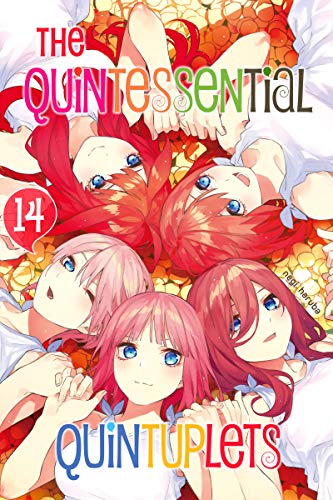
SEAN: In print, we get The Quintessential Quintuplets 9. In digital, we get The Quintessential Quintuplets 13, the second to last volume, and find out once and for all which Quint is the winner.

Also out digitally: Ace of the Diamond 27, Giant Killing 21, Grand Blue Dreaming 11, Hitorijime My Hero 8, I’m Standing on a Million Lives 9, Sailor Moon Eternal Edition 8, The Hero Life of a (Self-Proclaimed) “Mediocre” Demon! 4, and Tokyo Revengers 16. Some of those will get print later, some will not.

MICHELLE: I’m a few volumes behind on Giant Killing. I expect catching up to be a great deal of fun.

ASH: I would pick this series up in a heartbeat if it ever gets a print release; I enjoyed the anime adaptation a great deal.

SEAN: One Peace has the 17th volume of The Rising of the Shield Hero.

Seven Seas has the print debut of Adachi and Shimamura, the popular yuri light novel series.

Also debuting in print is Love on the Other Side, a short story collection from the author of The Girl from the Other Side, which promises to be heartwarming and creepy in about equal measure.

MICHELLE: Woot!

ASH: Very excited for this volume!

ANNA: Nice, me too!

MJ: This sounds great!

SEAN: There is also Blank Canvas 5, A Certain Scientific Railgun: Astral Buddy 3, Dance in the Vampire Bund: Age of Scarlet Order 2, Grimgar of Fantasy and Ash 13, and Uzaki-chan Wants to Hang Out! 3. Most of those we discussed when the digital version came out.

MICHELLE: I really, really need to read Blank Canvas.

ASH: It is so, so good.

MJ: I also need to get around to this.

SEAN: Out early digitally is the 2nd Buck Naked in Another World, and let’s just leave that there.

Square Enix has, in print, the 2nd A Man and His Cat and the debut of the Wandering Witch manga.

MICHELLE: I am so there for A Man and His Cat.

ASH: I really enjoyed the first volume.

MJ: I need to catch up!

SEAN: Debuting digitally first for Square Enix is The Strongest Sage with the Weakest Crest (Shikkaku Mon no Saikyou Kenja – Sekai Saikyou no Kenja ga Sara ni Tsuyokunaru Tame ni Tensei Shimashita). Fantasy, harem, magic academy, strong guy who is supposedly weak, etc.

SuBLime has a debut called Jealousy, from Scarlet Beriko, the author of Jackass!. It’s a yakuza BL title, and looks pretty serious.

ASH: I’ll expect that I be checking this one out at some point. I liked Jackass!, though this manga sounds to be in quite a different vein.

MJ: I’ll cautiously consider.

SEAN: Vertical gives us the 6th volume of My Boy.

Viz’s debut is a spinoff, Splatoon: Squid Kids’ Comedy Show. I have no idea, really.

They also have Case Closed 75 (good lord), the 3rd Persona 5, Radiant 12, Record of Grancest War 7, and RIN-NE 34.

What manga cools you off?

Filed Under: FEATURES, manga the week of

Bleach: Can’t Fear Your Own World, Vol. 1

July 9, 2020 by Sean Gaffney

By Ryohgo Narita and Tite Kubo. Released in Japan by Shueisha. Released in North America by Viz Media. Translated by Jan Cash.

There have been several Bleach novels released in Japan, but I believe this is the first one to be licensed for the West. Previous books either tended to be novelizations, tie-ins to games, or… well, no, I don’t know why they didn’t pick up We Do (Knot) Always Love You, except shipping reasons. This trilogy, though, is explicitly a direct sequel to the main manga, exploring aftermaths that Kubo couldn’t get to because they cancelled Bleach a bit earlier than expected. Moreover, it’s written by a known name to English-speaking readers: Ryohgo Narita, the creator of Baccano! and Durarara!!. Narita’s series are also known for their huge, hard to wrangle casts and slow-burn plots that end in explosions. Moreover, unlike Kubo, Narita actually knows how to pace. So it makes sense that this is the first novel we see of Bleach over here, and fortunately it’s a good choice, wrapping up several things while introducing a new villain to the piece. And boy howdy, Narita also knows how to write villains. This guy is smug scum who makes you long for Aizen.

Aizen is in this book briefly, and he gets to be smug as well. That said, as the cover might suggest, the star of the book is Hisagi, who is in his capacity as roving reporter for the Soul Society’s newspaper. The newspaper, as you might imagine, was not being published during the last, oh, 30 volumes of Bleach, but it’s starting up again, and he’s trying to interview the participants in the Thousand Year War, figuring that it’s best to get opinions now while it’s fresh than years from now. Unfortunately, a new story inserts its way into the narrative: there’s a new head of one of the Four Great Noble Clans. He’s paying to have the newspaper talk all about him. Oh yes, he’s also a known murderer. Of his wife. Who was Tosen’s best friend. This is not a spoiler, he pretty much admits it. And he has a plan to install a new King in Soul Society. Fortunately, this plan MOSTLY does not involve Ichigo.

The “main” cast of Bleach are pretty much absent from this book, and you get the feeling that will be the case for the other two books as well. Narita seems to have two goals in this book. The first is to wrap up Bleach proper, as we see a lot of the aftermath of Hueco Mundo (including several people I was sure were dead who are, in fact, not dead) and the Sternritter (including several people I was sure were dead who are, in fact, not dead). If you dislike the fact that Jump tends not to kill off characters, this volume may annoy you. The other goal of this book seems to be saying “screw the class system”, and I’m behind that. We’ve seen before that Soul Society has a lot of skeletons in its closet, but here we really get a sense of what it means to be privileged. The villain is absolutely over the top, not in a laughing crazy way but in a smug snake way, and he reminded me not a little bit of another villain Narita has written in his series. I assume he and Hisagi will eventually confront each other.

In the end, I’d say this book succeeds in that it made me interested in Bleach again. I’ll definitely be getting the second in the series. And there’s no romance at all in it, so even shippers can buy it without fear. Maybe Kubo should hire out a writer and just plot his next work. Then again, that did not work very well for Naruto’s creator…

Filed Under: bleach, REVIEWS

  • « Go to Previous Page
  • Page 1
  • Interim pages omitted …
  • Page 255
  • Page 256
  • Page 257
  • Page 258
  • Page 259
  • Interim pages omitted …
  • Page 1047
  • Go to Next Page »
 | Log in
Copyright © 2010 Manga Bookshelf | Powered by WordPress & the Genesis Framework