• Skip to primary navigation
  • Skip to main content
  • Skip to primary sidebar
  • Home
  • About Us
    • Privacy Policy
    • Comment Policy
    • Disclosures & Disclaimers
  • Resources
    • Links, Essays & Articles
    • Fandomology!
    • CLAMP Directory
    • BlogRoll
  • Features & Columns
    • 3 Things Thursday
    • Adventures in the Key of Shoujo
    • Bit & Blips (game reviews)
    • BL BOOKRACK
    • Bookshelf Briefs
    • Bringing the Drama
    • Comic Conversion
    • Fanservice Friday
    • Going Digital
    • It Came From the Sinosphere
    • License This!
    • Magazine no Mori
    • My Week in Manga
    • OFF THE SHELF
    • Not By Manga Alone
    • PICK OF THE WEEK
    • Subtitles & Sensibility
    • Weekly Shonen Jump Recaps
  • Manga Moveable Feast
    • MMF Full Archive
    • Yun Kouga
    • CLAMP
    • Shojo Beat
    • Osamu Tezuka
    • Sailor Moon
    • Fruits Basket
    • Takehiko Inoue
    • Wild Adapter
    • One Piece
    • After School Nightmare
    • Karakuri Odette
    • Paradise Kiss
    • The Color Trilogy
    • To Terra…
    • Sexy Voice & Robo
  • Browse by Author
    • Sean Gaffney
    • Anna Neatrour
    • Michelle Smith
    • Katherine Dacey
    • MJ
    • Brigid Alverson
    • Travis Anderson
    • Phillip Anthony
    • Derek Bown
    • Jaci Dahlvang
    • Angela Eastman
    • Erica Friedman
    • Sara K.
    • Megan Purdy
    • Emily Snodgrass
    • Nancy Thistlethwaite
    • Eva Volin
    • David Welsh
  • MB Blogs
    • A Case Suitable For Treatment
    • Experiments in Manga
    • MangaBlog
    • The Manga Critic
    • Manga Report
    • Soliloquy in Blue
    • Manga Curmudgeon (archive)

Manga Bookshelf

Discussion, Resources, Roundtables, & Reviews

Sean Gaffney

Manga the Week of 4/11

April 4, 2012 by Sean Gaffney

THERE IS ONLY ONE MANGA OUT THIS WEEK. BUY EXCEL SAGA 23. THAT IS ALL.

…OK, there are a *few* other manga besides Excel Saga. Hrmph.

Dark Horse has the sequel to Magic Knight Rayearth, with our heroines returning to a Cephiro much changes. Expect ship wars between Ascot and Clef fans, lots of cute fluffy romance between Fuu and Ferio, and one of the few workable threesomes in all of manga with Hikaru. Guaranteed to be good CLAMP-y fun! In the genuine way, not the postmodern ironic CLAMP fun way

DMP seems to finally be releasing the 8th volume of Itazura na Kiss, with … did Vol. 7 ever come out via Diamond? They skipped it, didn’t they? God. Anyway, enjoy your favorite shoujo couple be prickly and worried at each other. There’s also another mini-manga of Moon and Blood. And for yaoi fans, Vol. 2 of Countdown 7 Days and Vol. 2 of Replica.

Kodansha has the 7th volume of shoujo thriller Arisa, and the 14th – and possibly final – volume of Sayonara, Zetsubou-sensei. Please don’t Gintama this series on me, Kodansha. I will nag you hard.

NBM is releasing a single volume manga called Rohan at the Louvre, which I know nothing about but which I hear has some amazing art.

Udon is releasing the first volume of Sengoku Basara Samurai Legends, which sounds like it’s related to the series of video games based around feudal Japan.

Aside from EXCEL SAGA 23, Viz is releasing a bunch of other stuff. We get the penultimate volume of Cross Game, which I understand may have some baseball in it. A new Case Closed, a new Itsuwaribito, a new Kekkaishi. The final volume of Maoh: Juvenile remix (this last volume remixed by Junior Vasquez) (hey, if you’re going to tell a joke, tell it all). Vol. 8 of Nura, which did not ship last week for some weird reason. And Vol. 20 of 20th Century Boys, which no doubt will confuse some bookstores.

So, yeah, some other stuff. But mostly EXCEL SAGA 23.

Filed Under: FEATURES

The Drops of God, Vol. 3

April 4, 2012 by Sean Gaffney

By Tadashi Agi and Shu Okimoto. Released in Japan as “Kami no Shizuku” by Kodansha, serialization ongoing in the magazine Weekly Morning. Released in North America by Vertical.

The third omnibus of Drops of God sees the first major plot advancement in the series. After spending so long trying to guess which wine was described in the will, one of our heroes finally gets it right. Of course, that does leave eleven more. And there’s still a few other problems to solve along the way…

(Incidentally, my cover for V. 3 is different from the one above. Last minute change? Or multiple designs?)

Once again, we have a plotline about how wine is far more than just an alcoholic beverage. We left off at the end of the last volume with an amnesiac woman who only had a description of wine to link her to her forgotten past. The trouble is, she’s now married – and both she and her husband are worried that if she recovers her memories, she’ll remember she was in love with someone else. Even though it relied on a contrived coincidence (two car accidents in the past leading to tragedy?), I really enjoy the way the authors used this, showing that it doesn’t necessarily take amnesia to avoid the past. And indeed, that the future can also shape the past – when Kaori recovers her memories and discovers her old love, we see that she and her husband are not the only ones whose lives are shaped by the tragedy. Throughout this plot, wine comes into play, acting almost as a mnemonic in order to be a gateway to prior events.

We then get the battle for the first apostle, which comes down to a very interesting point: these are not ‘the 12 best wines’ that Shizuku’s father has been describing, but 12 wines that he wanted to describe. This means that the first apostle revealed here depends on it not being an outstanding wine, but rather a wine that you have to work at to enjoy. Not only can I empathize with this, but of course it opens the playing field of wine even more to the cast. As with previous volumes, we get lovingly detailed depictions of the scene they’re imagining (and that his father described), which allow you to see the similarities and differences between the two wines picked, which differ only in the year made. It’s a good scene.

Characterization of the regulars continues to be the weak part of the series, but to be fair this is a manga about wine, not about Shizuku and Miyabi. We do get a little more development of her character here, showing her first love from high school returning and shocking her by being a cold businessman, but honestly I thought the best part of the manga for her was her superdeformed jealousy of Shizuku having lunch with Sara. Any love story that happens in this series will take even longer than Oishinbo’s did (and that took 47 volumes!), mostly as when it comes to love Shizuku seems to be thick as a brick. Something lampshaded by the other cast members. Speaking of the rest of the cast, the Italian wine snob, Chosuke, gets a rather sweet little backstory showing why he dislikes French wine so much.

The volume ends with the first half of the story I mentioned above with Miyabi’s old love. It involves trying to show that brand name doesn’t always mean quality, but to do that they have to note that in terms of wine, it frequently does. Lafite and Rothschild aren’t the top names in wine just due to marketing and publicity. They’re the cream of the crop, and I liked the scenes where Shizuku and Miyabi realize what a big hurdle they have to overcome. In the meantime, they’re also searching for the second apostle. Given this is a manga series, I have a sneaking suspicion Shizuku is going to fail hard at finding it, but we shall see.

This continues to be a good solid foodie manga. The broad points (p;lot, characters) are cliched, but the writing is what makes them stand out, and shows the work of two long-standing professionals. Definitely one for your shelves… though maybe the drinks cabinet instead?

Filed Under: REVIEWS

Pick of the Week: Drops, Devil, & more

April 2, 2012 by MJ, Katherine Dacey, Michelle Smith and Sean Gaffney 3 Comments

The selection of new manga is wide at Midtown Comics this week. See the Battle Robot’s picks below!


KATE: My liver and I agree: this week’s must-read manga is volume three of The Drops of God. The genius of Drops is that it reads like a shonen tournament manga but has the soul of a Food Network show. Each volume manages to impart information about the world’s finest and rarest wines while delivering plenty of drama and adventure; it’s as if someone crossed Naruto with Oishinbo, and the results are totally, utterly entertaining, even if the characters spend a lot of time waxing rhapsodic about terroir and vintage. Really, what’s not to like about a series that dares to compare a 2001 Chateau Mont-Perac with Freddie Mercury’s singing?

SEAN: My pick this time is the 2nd volume of A Devil And Her Love Song, Viz’s new shoujo series for those of us who like our heroines with bite. However, leaving Maria aside, I’m also enjoying the way that the manga is giving us the traditional shoujo cliche of the happy blond guy and his more serious brunet friend. Maria manages to deconstruct the two of them almost right out of the box, and I look forward to seeing whether they plan to develop beyond the cliche. (I do expect the cliche to stay the same in one, way – serious guy is going to win the girl.) And, as ever with series where the girl is hated by her female classmates but surrounded by hot guy friends, there’s a hope for other sympathetic females.

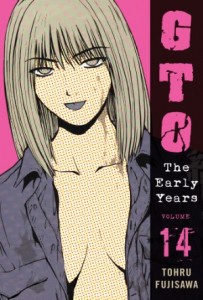
MICHELLE: Oh man, this is a difficult week! I am definitely eager to read both Drops of God volume three and A Devil and Her Love Song volume two, but Kate and Sean advocated for them so eloquently that I’ve nothing left to add! I think, therefore, that I’ll go for volume two of GTO: 14 Days in Shonan. I knew nothing about the series going in, yet found it easy to follow and though it does have a little too much gross-out humor for my taste, it’s also got a lot of heart. It’s nice reading about a generally goofy protagonist who is also legitimately good at something. Recommended.

MJ: I’m anxious to read both the second volume of A Devil And Her Love Song and The Drops of God (I’m behind on GTO), but since these have already been mentioned, I’ll give my nod to the third volume of Rei Toma’s Dawn of the Arcana. Though at its core, it is a pretty typical shoujo love triangle, volume three finally manages to make the heroine’s supernatural ability interesting and introduces a new, fairly intriguing character as well. Even the political angles of the story are finally taking on some real heft. Though my enthusiasm for this series is still in-progress, this is beginning to look like a series I’ll enjoy following to completion. If you haven’t already, I’d say now is the right time to pick it up!


Readers, what looks good to you this week?

Filed Under: PICK OF THE WEEK

Bookshelf Briefs 4/2/12

April 2, 2012 by MJ, Sean Gaffney and Michelle Smith 3 Comments

This week, Sean, MJ, and Michelle look at recent releases from Viz Media, Yen Press, Kodansha Comics, and SuBLime Manga.


Bamboo Blade, Vol. 12 | By Masahiro Totsuka and Aguri Igarashi | Yen Press – There’s a lot of silly fun in this volume, and most of it requires you to be familiar with the sentai genre. North American fans would best think of Power Rangers. Given that, there’s some hysterical mocking of it here, as well as some great poses. Most of the volume, though, serves two purposes: giving Usra a reason to return to kendo (which is not the “oh, wait, I love kendo all along” reason everyone thought it would be), and giving Tamaki a genuine challenge. We’ve seen TV savant Erina set up to be good at anything she does, so the cliffhanger shouldn’t be surprising, but we were all expecting Tamaki vs. Ura, so it is anyway. Everything is set up for the big finale, but will it be the finale we were expecting? Recommended to fans of sports manga and fun comedy.-Sean Gaffney

Cage of Eden, Vol. 4 | By Yoshinobu Yamada | Kodansha Comics – We have slightly less fanservice in this volume – which still means more fanservice than almost any other manga on the market, mind you – but that’s probably because things take a darker turn here, and the body count starts to pile up. There’s murder, attempted murder, rape, attempted rape, and more murder in these pages, which have more of a Lord of the Flies feeling than ever. Unlike Lord of the Flies, though, the adults on the island can be just as mercenary and villainous as the teenagers. In the end, though, it comes down to Akira – shonen hero extraordinaire, thinking on his feet and protecting the others – vs. Kohei, who panicked under pressure and is now sliding further and further into darkness in order to cover that up. It’s violent and servicey, but still a riveting thriller.-Sean Gaffney

Dawn of the Arcana, Vol. 3 | By Rei Toma | Viz Media – Visitors from a neighboring kingdom bring Princess Nakaba some new inter-palace strife, but they’re also responsible for the introduction of an enigmatic new character who so far provides more genuine intrigue than either of Nakaba’s current love interests. Furthermore, both Nakaba’s heritage and her supernatural ability are finally gaining some real dramatic traction, and even the story’s royal politics have begun to be interesting. Though the series’ romantic trajectory still remains pretty much standard, its plot and characterization have now taken the lead—never a problem for this reader. I described volume two as “tentatively recommended,” but I’m happy to report that this recommendation has now become more solid. – MJ

A Devil and Her Love Song, Vol. 2 | By Miyoshi Tomori | Viz Media – Following up on a strong first volume, A Devil and Her Love Song catapults from “good” to “great” here, as “Devil” Maria struggles with both a desire to reach out to her evolving circle of friends and her inability to gauge the impact of her own words on the brave few willing to stand with her. It’s refreshing to read a modern shoujo manga in which everyone is truly, deeply flawed, and no amount of “doing their best” can fix it. Even better, mangaka Miyoshi Tomori manages to do this while deftly avoiding both the syrup and cynicism that alternately pervade stories about high school “mean girls.” Happily, too, Tomori’s supporting characters continue to be just as interesting as her lead, including passive classmate Tomoyo, whose emerging backbone offers the promise of some awesome female friendship—one of my very favorite elements in shoujo manga. Definitely recommended. – MJ

Devil’s Honey | By Isaku Natsume | Published by SuBLime – Tasked by his superiors with reigning in a gang of punks at the school where he teaches, Toshimitsu Sugaya is surprised to learn that their leader, Yoshino, has not only been unfairly judged, but is also willing to obey his instructions without any argument. Turns out that a few years before, Sugaya inspired a runaway Yoshino to return home and stay out of trouble, and Yoshino has regarded him as a hero ever since. This being BL, these feelings become love soon enough, and after some token resistance due to the teacher-student taboo, the two get together. Honestly, there’s not a whole lot here that’s out of the ordinary, but that doesn’t stop it from being a pleasant read. It also seems to be one of the tamer offerings from VIZ’s new SuBLime imprint, if that’s more your speed. – Michelle Smith

Fairy Tail, Vol. 18 | By Hiro Mashima | Kodansha Comics – I wasn’t as enamored with Fairy Tail 17 as I have been of the series in the past, and while 18 suffers from some of the same problems – Mashima’s battles just don’t excite me as much as they should – this is still a definite improvement, mostly due to the concentration on character relationships. Natsu and Lucy get some excellent scenes together (and some ship tease too, even lampshaded), the villains get a bit more development, and even Leo and Aries get to be cute yet angsty. Best of all, though, is Erza, dealing with Jellal back before her eyes and amnesiac to boot. Her angry exhortation that it is better to live with the pain and guilt than taking the easy way out via death. Which, of course, she knows from personal experience. Still not sure where this is going, but it’s picked up again. –Sean Gaffney

The Melancholy of Suzumiya Haruhi-chan, Vol. 5 | By Puyo and Nagaru Tanigawa | Yen Press – One of the best reasons for Haruhi fans to read these gag comics is that the character suffer great humiliation in ways that really only Mikuru seems to in the original. Seeing Haruhi so flummoxed by cats and crows, to the point of tears, is fantastic. Even better is the bodyswap episode, which gives us an opportunity to see Yuki acting like Haruhi. But best of all is the sheer lunacy of seeing Koizumi, off on an enforced vacation, being replaced by Arakawa-san and getting away with it. From the start, as he quickly turns the entire SOS Brigade into his disciples, to the ending parodying uber-serious 70s anime, it’s things like this that make me come back to this series over and over. Still better than the manga adaptation it’s parodying.-Sean Gaffney

Phoenix Wright: Ace Attorney, Vol. 4 | By Kenji Kuroda and Kazuo Maekawa | Kodansha Comics – Despite being comedic, the original Phoenix Wright games all revolved around murder, and could get quite dark and depressing at times. So here we have a story of a daughter accused of killing her father, and she’s shown to have endured a life of abuse – we see her father hitting her in the head with a kendo sword, and it’s shown that she wears a head bandage constantly. That being said, there’s some real mood dissonance here, also very common in the original series – the actual way that the father was murdered is so silly it almost undercuts the entire story. The second case, which we only get half of here, has fewer high points but also fewer moral ambiguities. Fun fluff for fans of the games, but not recommended otherwise.-Sean Gaffney

Pretty Guardian Sailor Moon, Vol. 4 | By Naoko Takeuchi | Published by Kodansha Comics – You know, I think this might just be the best volume of Sailor Moon yet. Not only do we meet a new guardian in the form of Sailor Pluto, we also learn a little bit more about Sailor Jupiter’s daily life and watch as Sailor Venus gets frustrated trying to figure out the enemy and starts actively seeking answers. Various secrets and enemy motives are revealed, and though the majority are familiar to a long-time fan like me, there were some surprises, too, as I had completely forgotten that, in the manga, Tuxedo Mask has, like, actual powers! Even some awkward dialogue and a sigh-inducing “it’s” instead of “its” could not mar my enjoyment. At least they fixed “Sparkling Wide Pressure!” – Michelle Smith

Psyren, Vol. 3 | By Toshiaki Iwashiro| Viz Media – This series is probably never going to be in anyone’s list of top Jump properties, mostly due to it relying on hitting the basic shonen points. At the same time, those basic shonen points are the equivalent of eating beef stew – it’s not glamorous, but it fills you up. So we get a villain who is actually someone that Hiryu knew from before, now supposedly betraying them. We also get a volume filled with battle, as we’re back in the Psyren world for virtually the entire volume. People’s psychic powers are awakening, because that happens. And our hero and heroine get a chance to be badass and capable, which is always enjoyable. Honestly, there’s nothing here that will convince me this is great, but it’s not mediocre enough that I want to stop reading it. It’s good at what it does.-Sean Gaffney

Filed Under: Bookshelf Briefs

Is This A Zombie?, Vol. 1

April 2, 2012 by Sean Gaffney

By Sacchi and Shinichi Kimura. Released in Japan as “Kore wa Zombie desu ka?” by Kadokawa Shoten, serialization ongoing in the magazine Dragon Age. Released in North America by Yen Press.

Now, let’s be fair. I knew I wouldn’t like this title when I ordered it. As I’ve noted before, I sometimes get things I hate in order to bring more ‘balance’ to my blog – see my review of Qwaser of Stigmata as an example. And honestly, any title that ran in Dragon Age is guaranteed to get me looking at it warily, similar to Champion Red. Sadly, though, Is This A Zombie? is merely bad, and not laughably bad.

This is essentially one of those manga where the premise is ‘guy living with lots of cute girls of various tyes’, but the author can’t really be bothered to give us much backstory on them. character development for Haruna and Sera in particular is minimal, with the two of them fulfilling the usual moe fetish tropes – Haruna is the loli tsundere, and Sera is the violent kuudere. Amazingly, by the way, this is not actually the worst of the adaptations – there’s an ‘alternate universe’ manga running in Comp Ace called ‘Yes, She’s Your Bride’ that is basically this only with less monster fighting and more naked harem antics. The mind boggles.

There is meant to be a certain amount of self-parody here, I suspect, but it’s the kind that’s done by people who think putting ‘ironic’ in quotes is ironic. The sleazy fanservice winks at you, but wants to have it both ways so the wink doesn’t fulfill its function. There’s also our hero’s magical girl outfit – excuse me, ‘magikewl’ girl (Yen explains why they translated it that way, and I agree it works, but I still hate it) – which of course is designed for laughs. Even the layout of the manga itself screams ‘self-aware comedy!’. It’s just not very good at that.

This is actually a shame, as there are a few moments in the manga where it briefly gets serious, and they show a definite leap in quality. These tend to revolve around the third girl, Eu, who is the quiet Rei Ayanami-esque character. She’s the one who resurrected Ayumu and turned him into a zombie in the first place, and like many other emotionless girls in anime/manga, her emotionless state is actually a plot point. Ayumu’s advice to her, and his decision to take whatever fate throws at him in order to make her life easier, is about the only time in the entire volume I liked him (he is otherwise a sarcastic pervert, one of the new breed of harem leads who are a reaction against the nebbish “Tenchi” type, but seeing a perverse guy not sleeping with all the women chasing after him is even more irritating than seeing a ‘pure-hearted’ type not do so).

Yen’s translation is fine for this type of series – it’s very colloquial, and at times read like a dub, but the original was no doubt just as colloquial. There’s lots of sentai and giant robot references, all explained in Yen’s copious endnotes. Sadly, absent from the endnotes is an explanation of why they licensed this at all. Admittedly, it *has* an audience here, unlike Sasameke. This title will appeal very much to the harem-anime-downloading, body-pillow-buying, waifu-proclaiming males out there. For everybody else, read pages 130-145, realize that the rest of the manga is nothing like that, and find something else.

Filed Under: REVIEWS

Pretty Guardian Sailor Moon, Vol. 4

March 31, 2012 by Sean Gaffney

By Naoko Takeuchi. Released in Japan as “Bishoujo Senshi Sailor Moon” by Kodansha, serialized in the magazine Nakayoshi. Released in North America by Kodansha Comics.

The fourth volume of Sailor Moon, and Jupiter gets the cover! Unfortunately, we’re also in the middle of a ‘have the senshi get abducted one by one’ arc, so she gets the first chapter and not much else. As with the Mercury and Mars chapters, we see Jupiter bonding with a friend of hers, this one male. It seems pretty platonic, though, at least on her end. We also get the revelation that her parents are both dead from a plane crash, so she lives on her own in a swank apartment. No idea where she gets the money… Rich relatives? Settlement from the crash? Honestly, most of the senshi are well-off. Even Usagi and Minako, the two most likely to be whining about not having any money, don’t seem to be hurting.

But in any case, soon Jupiter joins her friends in ‘captured off screen’ land. Venus is theoretically the next chapter, but honestly she’s not in it much. Presumably as Minako had an entire manga series devoted to her own personal life, she didn’t need a chapter that shows who her friends are and what she does on her days off. What we’re more concerned with is Chibi-Usa and the new enemies (who I will just start calling the Black Moon Clan, as that’s who they are). Chibi-Usa is settling in nicely in the past, and has even made a new friend (Momo will be Chibi-Usa’s designated friend till Hotaru basically replaces her in SuperS and Stars). But she’s still in denial about what’s going on, and actually seems to have some sort of PTSD (and with good reason, as we shall find). So Usagi is worrying about that, to the point where Naru and Umino are concerned. Remember them? Naru here even admits she knows Usagi is part of “another world that she can’t enter”. True enough, Naru, the author will forget you again soon.

Venus is abducted as we expected… but this time Usagi and Mamoru get there in time, and Mamoru gets a bit of powerup (albeit a ridiculous one: Tuxedo La Smoking Bomber is not in the anime, which tended to make Mamoru less powerful and more jerkassish). So Venus gets to stick around and help question Chibi-Usa, who has finally broken down and admits the truth: she’s from 1000 years in the future. And the future is in danger from the same folks abducting senshi. So, after a brief stop at Mamoru’s to get it on… oh, yeah, about that. Chapter 19 has Chibi-Usa basically terrified, so she wants to stay at Mamoru’s apartment. Usagi goes along, and after discussing things and various reassurances, they start to kiss and fall onto his bed. Then it’s the next morning, and Chibi-Usa is looking out the window. Usagi and Mamoru come in, Usagi wearing the same dress she had on last night and Mamoru’s dress shirt. So, nothing may have happened… or something may have happened. Most fans of Usagi and Mamoru’s romance think of this as their ‘first time’.

So we’re off to the 30th Century, something which is basically forbidden. So forbidden, in fact, that another senshi arrives to stop them! Yes, Sailor Pluto debuts here, though at this point in the story she’s still basically trapped in one place, at the Gates of Time. She’s devoted to stopping intruders, even if that means Sailor Moon and company (which makes no sense, but we’ll assume it’s some preventing paradox thing). Luckily, Chibi-Usa shows up, and it’s revealed that she and Pluto are close. In fact, the 30th Century, for all its crystal utopia, seems to be a very lonely place, as Chibi-Usa is mocked for being relatively powerless by the other children (she’s also 902 years old, something so gratuitously broken I don’t even want to get into it. Pretend that line doesn’t exist.), and Pluto’s stoic duty is only relieved by visits from Chibi-Usa (who she dotes on) and Endymion (who she seems to have a small crush on, as noted by her blushes here.)

Ah yes, Endymion. Arriving at the desolate wasteland of corpses that is the 30th Century, we meet King Endymion, aka Mamoru, who is a phantom but can at least interact with the others. We also meet, encased in crystal, Neo-Queen Serenity, aka Usagi, the future ruler of the planet. This is not really a surprise today, and honestly I don’t think it was meant to be back then either. Chibi-Usa is their daughter, and we also meet Luna and Artemis’s daughter Diana. Unfortunately, Usagi is still having difficulty with the whole ‘Mamoru loves his daughter more than me’ thing, and runs off to get captured.

I haven’t talked much about the Black Moon Clan here, but Prince Demande deserves a special mention here as being a loathsome creep. He’s not the true big bad in this arc… that would be Wiseman, who gets the cliffhanger for this volume… but he’s the equivalent of Beryl, and it seems appropriate that he has an obsession with Usagi the way that Beryl did with Mamoru. He even forces a kiss on her, much to her horror. (One note about the odd continuity here. After going to the future and getting told the plot, the senshi quickly go back to their home era… only to pretty much immediately have to return after Usagi storms off and gets captured. Why bother going back at all? No wonder Pluto gets annoyed when they arrive… the Time Gate must be a revolving door.)

We end this volume with Cibi-Usa being the one doing the running off, and running into a fortune-telling black cloud of evil called Wiseman. As with all black clouds of evil in Sailor Moon, this is not going to prove to be a good thing. Not for our heroes, not for Chibi-Usa, and especially not for Pluto. But that’s for Volume 5.

Filed Under: REVIEWS

Manga the Week of 4/4

March 28, 2012 by Sean Gaffney

It’s a first week of the month at Midtown, and we’ve got the usual Viz suspects, some Kodansha runoff from last month courtesy Diamond, some new Vertical titles (also a week late, also courtesy Diamond), and… two very odd releases.

Bandai may be dead, but it apparently had quite a backlog of titles to keep releasing. Thus we get Vol. 5 of both of their Code Geass doujinshi anthologies – Queen for the male readers, and Knight for the female ones. I’m going to take a wild guess that these are the final volumes we’ll see from Bandai here.

Kodansha has another volume of the Negima re-release, which updates the translation with its current version provided by the Nibley twins. This volume has Vols. 10-12 of the original, covering a great deal of the tournament battle, which, unlike many shonen tournament battle arcs, was really where Akamatsu came into his own. There’s some great stuff here.

I didn’t get a chance to use GTO as my featured image when Vol. 1 came out, so it goes here. The second volume of 14 Days in Shonan is almost nonstop action, and really packs a kick. As does its hero. There’s also the 3rd omnibus volume of Drops of God, containing the original Vol. 5 and 6. It looks as if we may finally get to see the First Apostle. As well as lots more wine.

Then there’s the huge pile o’ Viz. A Devil and Her Love Song got the image last time instead of GTO, but Vol. 2 excites me just as much as Vol. 1 did. There’s also a new Dawn of the Arcana, Kamisama Kiss, Sakura Hime, and Skip Beat!, giving you lots of shoujo goodness. If shonen is more your thing, well, this is Jump week. New Bakuman, new Bleach (still not at all caught up with the online releases), new Blue Exorcist (man, this and Kamisama Kiss come out FAST), A new Rosario + Vampire Season 2, a nicely retro new Slam Dunk Vol. 21, and the 9th Toriko. Lastly, they also have the first volume of that Voltron Forge graphic novel to excite sentai fans.

As an aside, this is my 100th post tagged ‘Manga The Week Of’. I hope it’s proven of interest to you, as it’s mostly just an excuse for me to geek out, and also keep track of what’s been coming out when. What whets your appetite to read over the Easter weekend?

Filed Under: FEATURES

Bunny Drop, Vol. 5

March 27, 2012 by Sean Gaffney

By Yumi Unita. Released in Japan as “Usagi Drop” by Shodensha, serialized in the magazine Feel Young. Released in North America by Yen Press.

Quick note: Please do not write spoilers about this series in your comments. They will be deleted.

When we last left our heroes, Rin was a cute 6-year-old, enjoying school, and starting to come into her own. Daikichi was still bumbling along, but generally had gotten the hang of being a good parent and was making inroads on getting closer to single mother Nitani. And so we come to Volume 5… where ten years have passed.

Yes, it’s a giant time skip, and Rin and Kouki are now in high school. Well, I had said that the series needed to shake itself up a little, and this certainly does that. More to the point, however, it manages to shift things to an entirely different place. The basic premise is still the same… we’re seeing Rin grow and Daikichi parenting. But Daikichi has raised Rin to be a self-sufficient, strong young lady. She can take care of the cooking and cleaning when necessary. No, being the parent of a teenager brings fresh new issues. Like romance.

It is fairly obvious throughout this volume that Kouki is completely in love with Rin, and that it seems to be mostly one-sided. Not that she doesn’t like Kouki, but they get compared to brother and sister, and Rin doesn’t think that’s far off. Plus, in some of the gap filling we get in this volume, Kouki apparently has an ex-girlfriend who was not very fond of Rin, and this seems to have soured her opinion of Kouki and romance a bit. Rin is at a point where she’s not sure what she’s feeling. Honestly, the person she’s closest to is still Daikichi, whom she asks for advice. His advice is not particularly helpful, but it’s from the heart. Which sometimes is all that matters.

Then there’s Daikichi and Nitani-san. I had noted in early volumes that I wanted them to hook up, and now ten years later it hasn’t happened. This is quite frustrating to the reader. And to Kouki. And indeed to Daikichi and Nitani-san, both of whom clearly have feelings for each other. We get a flashback in the last chapter to a moment a few years back, where Nitani-san is trying to deal with Kouki acting up and being a delinquent (he’s gotten better by the present day). This scene is one of the most awkward, heartfelt yet also heartbreaking things I’ve ever seen in manga, an encapsulation of everything that doesn’t go right in romance. Sometimes even when everyone wants to… you simply can’t quite make that final leap. There’s several volumes to go, but after this, I honestly no longer expect these two to get together. Which is a shame.

When this series began, we had four volumes of cute, which fit very well with cute little six-year-old Rin. But now Rin is a teenager, which means we’re at that awkward period. And true to form, this entire volume is filled with awkward. People not quite saying the right thing, not getting their point across, unsure of how to handle something. And this is the entire cast, not just the actual teenagers. Bunny Drop has grown with its heroine, and now asks that you stick around while she deals with all these pesky feelings. I suspect I may cringe on the fallout from all of this, but I’ll be riveted nonetheless.

Filed Under: REVIEWS

Pick of the Week: Dororo, Kurosagi

March 26, 2012 by MJ, Michelle Smith and Sean Gaffney 4 Comments

It’s a slower week at Midtown Comics, but MJ, Michelle, and Sean have no trouble making their picks. See below!


MJ: Though I know I need to be reading Kurosagi Corpse Delivery Service (Help me out here, Dark Horse, would ya? I need some digital action on this title. ETA: My apologies to Dark Horse, I’ve been informed they do have this on their iPad app—don’t know how I missed it!) my thoughts this week are all Dororo all the time. I fell in love with this title back when I was still scared to approach Tezuka and nothing could make me happier than to see it get an omnibus release. This is a fairly creepy, action-packed title, but what really drew me in is how freaking moving it is, which was absolutely not what I expected at the time. If you missed this title when it was first released, don’t miss it again. It’s a must-read for any manga fan.

MICHELLE: I’ll chime in to second the Dororo recommendation, and probably for similar reasons: most Tezuka available prior to Dororo daunted me with its Importance, but this shounen adventure story was completely approachable, and therefore a perfect introduction to Tezuka’s oeuvre. I’m happy to see it get a new release!

SEAN: Gosh, what could my pick be? Ahem. My pick this week is the 12th volume of Dark Horse’s horror manga The Kurosagi Corpse Delivery Service. As with most horror manga I read, there’s another reason besides ‘scares’, and that’s the cast. Everyone in this cast is appealing, even the characters with less depth, and they all have a great sense of humor, something needed when you are dealing with corpses all the time. That said, there are a lot of graphically unsettling images in this series as well. It’s not a wacky horror comedy, it’s a wry horror manga with occasional funny lines. As you may have gathered by the fact that it’s been 18 months since the last volume, this is not as best-selling as Gantz or Berserk. Let’s change that, it deserves more love.


Readers, what looks good to you this week?

Filed Under: PICK OF THE WEEK Tagged With: dororo, kurosagi corpse delivery service

Hana-Kimi, Vols. 1-3

March 26, 2012 by Sean Gaffney

By Hisaya Nakajo. Released in Japan as “Hanazakari no Kimitachi e” by Hakusensha, serialized in the magazine Hana to Yume. Released in North America by Viz.

Yes, I know, Viz is drawing me in again. Another long series I haven’t read that Viz teases me with easy to collect omnibuses of. And yes, I am aware that after the 3rd omnibus Viz will stop and tell me to find the rest in backorder. And I won’t, as I am lazy like that. Still, this is a shoujo series that I had never really gotten around to when it first came out, so I thought I would give it a try.

At the time this first came out in North America, it must have been a lot more original to readers than it seems now. Girl dressed as a boy… love triangles with perky blond and serious brunet guys… what are these strange feelings in my chest… attempted rapes (I wish that last wasn’t a cliche). But a good 7-8 years on, we have to sort of retrofit our brain and read Hana-Kimi as something that influenced a lot of other shoujo manga doing similar things. And to be fair, as I read Hana-Kimi I kept thinking to myself “Wow, this reminds me of Here Is Greenwood”, a series that ran in Hana to Yume ten years before Hana-Kimi.

There are a few notable things that make Hana-Kimi stand out. First of all, to the delight of female readers no doubt, there’s a lot more “queerness” in this manga than you tend to find in most cross-dressing shoujo manga. Sure, Oresama Teacher and Ouran High School Host Club tease that people think that their alter egos are gay, but it’s almost entirely used for comedy, and is basically brought up then forgotten about. Here the theoretical homosexuality of the characters is right up front, and a constant presence. The school’s doctor is perhaps the only genuine gay character, but Nakatsu is hopelessly confused about his feelings for Mizuki. Still mostly used for comedy, but having it out there and in your face a lot is rather refreshing. I wonder if we’ll see any genuine gay relationships in the future?

The other guy in this triangle, by the way, becomes aware almost immediately that Mizuki is a girl. However, he doesn’t actually tell her. This leads to an interesting tension – Mizuki is constantly trying to hide her gender, and Izumi is trying to hide from her that he is aware of it, thinking that she basically must have a good reason and will tell him when she’s ready. This makes things a lot of fun, though I do note that this series is 23 volumes long, and I’m not sure how much fun it will be if they’re still doing this dance by the end of the series. In any case, Izumi is the serious young man with the (relatively) tragic past, and matches well with Mizuki – as with most love triangles in shoujo, the actual couple is never in doubt. Especially as Nakatsu is always used in comedic situations.

There’s a lot of ‘old school’ 90s Hana to Yume style in this series, which was familiar to me from my reading of I Hate You More Than Anyone!. It’s not as messy as Hidaka’s early work, but you still see a lot of extraneous text outside bubbles, etc. Despite that, this is a fairly easy read, and I finished it fairly quickly. If you enjoy breezy shoujo comedies with a focus on gender blending… and don’t mind that Viz is likely to end this re-release at Vol. 3… then you should pick up this omnibus.

Filed Under: REVIEWS

Going Digital: March 2012

March 25, 2012 by MJ and Sean Gaffney 6 Comments

Welcome to the latest Going Digital, Manga Bookshelf’s monthly feature focusing on manga available for digital viewing or download. Each month, the Manga Bookshelf bloggers review a selection of comics we’ve read on our computers, phones, or tablet devices, to give readers a taste of what’s out there, old and new, and how well it works in digital form.

This month, MJchecks in on the iPad manga scene, while Sean takes a look a a recent JManga release for your web browser. Device, OS, and browser information is included with each review as appropriate, to let you know exactly how we accessed what we read.


iOS

Manga on the iPad: 18 month check-in

It’s been a year and a half since New York Comic Con 2010, where Yen Press announced the launch of their new iPad app. Viz followed soon after, and quickly rose to the head of the class thanks to their quickly growing catalogue and significantly lower pricing. Fast forward to NYCC 2011, where Kodansha USA finally joined the game, followed by Digital Manga Publishing a few months later.

For me, the success (or failure) of any manga app can be boiled down to three basic components: functionality, selection, and price. So now, 18 months after manga first began trickling onto the iPad, how are publishers faring on these three key issues?

Functionality

All four of the major manga apps began with strong functionality right out of the gate. Their (very similar) layouts are all fairly intuitive, with easy access to each publisher’s catalogue as well as the user’s own library of purchased manga. Each app offers high-quality images, and the ability to read in single or double page-view, as well as the ability to zoom in on (and out from) any single panel with ease. Of these apps, only Kodansha Comics’ displayed any functionality issues at launch time, with its progressive images that stall readability from page to page. Unfortunately, this issue appears to remain unresolved at the time of this writing, making Kodansha Comics’ app the least visually attractive of the manga apps to-date.

It’s worth noting here, too, that while both Viz and DMP both have browser-based stores as well, so far only Viz’s app allows for cross-platform purchases, while eManga customers must buy again to read their purchased volumes on the iPad.

Selection

Viz far outshines its mainstream competitors in this category, with over fifty titles available to-date (and more being added all the time), including super-popular titles like Naruto and One Piece, as well as more eclectic fare like House of Five Leaves and Saturn Apartments. Though I’m still hoping to see some of Viz’s out-of-print shoujo licenses show up here one day (e.g. Please Save My Earth, Banana Fish, Basara) there’s no denying that Viz is blowing everyone else away when it comes to selection on this platform. Recent additions like Hikaru no Go suggest that Viz indeed views its various digital platforms as a means for introducing long-running, completed series to new readers, and I certainly hope to see that continue.

DMP started out with a very strong catalogue, particularly for fans of its Juné and Digital Manga Guild imprints, but new additions have stalled since their recent issues with Apple censors, and it’s difficult to know at this point what the future of their app might be. BL fans can still pick up over fifty different titles (several with multiple volumes) at the time of this writing, ranging from newer releases like An Even More Beautiful Lie, Seven Days, and Blue Sheep Reverie, to older titles like Maiden Rose and Il Gatto Sul G. Though many more DMP/DMG titles are currently available to iPad readers by way of Amazon’s Kindle app (which has had its rocky moments, too), issues like image quality and reading direction make this option less than ideal.

While Yen Press’ catalogue is relatively small (25 titles as of this writing), it does have the advantage of being the only real source for Korean manhwa among these publishers to-date. Manga Bookshelf favorites like Time and Again and 13th Boy are both being released by Yen Press on this platform, and I certainly hope this will be a continuing trend. Though Yen’s manhwa licensing seems to have come to a halt over the past year or so, it would be a real treat to see series like Forest of Gray City or Very! Very! Sweet make a reappearance on the iPad so that they can be discovered by new readers. OEL series are another highlight of Yen’s app, including critical successes like Nightschool and Soulless: The Manga. Yen’s manga selection is less impressive, with titles Yotsuba&! and The Melancholy of Haruhi Suzumiya standing as its heaviest hitters.

Bringing up the rear in this category again is Kodansha Comics, whose catalogue has still not expanded beyond the four series it launched with (Arisa, Fairy Tail, Sayonara, Zetsubou-Sensei, and Until the Full Moon) even after six months.

Price

Here, again, Viz leads the pack, with prices starting at $4.99 a volume for Shonen Jump and Shojo Beat series, $5.99 for IKKI and Signature series, and between $6.99-$8.99 for oversized or omnibus releases. Though I still think that $5 a volume is too high to encourage real bulk purchases, it remains the best price out there for manga on the iPad. Kodansha Comics’ volumes sell for $4.99 apiece as well, though it’s worth mentioning that they ran a $2.99 special for Fairy Tail when the app first launched—a price I absolutely would pay for bulk purchases of a series I had interest in reading.

Both Yen Press and DMP lag in this category, with single volumes going for $6.99-$8.99 apiece—sometimes significantly more than print prices online—and $12.99 for larger volumes. Though BL readers, in particular, are accustomed to paying more for their habit, thrifty shoppers who are willing to put up with the downsides of the Kindle app can pretty much always get the same books for less by going that route—and have their purchase available on their other compatible devices as well, including their computers. I will admit that though I was fairly depressed not to be able to purchase Keiko Kinoshita’s You & Tonight through DMP’s far superior iPad app, it’s awfully nice to have it available on both my iPad and my laptop via Amazon’s Kindle app.

Bottom Line

Viz is the clear winner on the iPad overall, performing well in all three categories of functionality, selection, and price. DMP’s app is promising, and should they manage to resolve their issues with Apple and find a way to better serve cross-platform customers, they could become a digital powerhouse for BL fans, despite a significantly less attractive price point. Yen Press’s app lags in both selection and price, though it does hold a particular allure for manhwa fans. (Will we ever see NETCOMICS in the iPad app game?) And though Kodansha Comics does well when it comes to pricing, its dinky selection and less-than-optimum readability diminish its worth significantly.

What do you suppose this year’s New York Comic Con will bring? – MJ


Web Browser

Anesthesiologist Hana Vol. 2 | By Nakao Hakua and Kappei Matsumoto | Futabasha, Manga Action | JManga.com | Windows XP, Firefox 11.0
Volume Two of this medical series continues to pummel our heroine with exhausting daily living. I’d say crises, but she’s an anesthesiologist, so to a certain degree this is what she does. She has professors teaching a class putting her on the spot to embarrass her, the hospital changing to more of a trauma unit center (meaning longer hours), and most of all a new doctor in the unit, Hiura, who is a complete and utter jerk to her He’s constantly yelling at her and forcing her to step up her game, and is rude to her other colleagues… especially Dr. Kobayakawa, the troubled young doctor Hana hit it off with last volume. Of course, those familiar with this type of manga will know immediately that he is the sort of person that doesn’t suffer fools gladly. He dislikes Kobayakawa for his fear and wasted potential, and is so hard on Hana because of her increasing skills and pluck – he teaches by rudeness, basically.

He also, in yelling at Hana, basically notes that her breasts are big, something this manga never really allows us to forget. There’s no gratuitous shower scene here, but instead we get a new trauma doctor, Kenshi, who simply walks up, marvels at her breasts, and starts to fondle them. My jaw dropped briefly, and I am once again reminded of the huge sexual harassment gulf between here and Japan, in that Hana didn’t slug him. Yes, this is supposed to take place in the mid-90s rather than the time it was written, but sheesh. This doctor later gets a nice moment where he tries to teach Hana a basic truth – patients die, and that doctors simply have to accept this and try to save the next one just as hard – but he can’t read her as well as Hiura, so it doesn’t really take. In any case, if his schtick of groping Hana becomes his running gag, I can’t say I’ll be too fond of him.

There’s a lot of medical stuff going on here, and like the first volume if the reader doesn’t want to wade through some jargon they may be in trouble..That said, it’s not too difficult, and the basic premise remains the same – a doctor’s life is very hard, and every day is a struggle to wonder if it’s worth it. Especially given that these are anesthesiologists, so they don’t have the ‘these are my life-saving hands!’ aspect that, say, heart surgeons would. Hana, like the heroine of Nao Go Straight, can be too empathic at times – something contrasted with the new trauma doctors introduced towards the end. The best chapters were the two-parters, one dealing with the patient who loses his life, as I’d mentioned, and the other with how anesthesiologists have immense trouble with morbidly obese people. Hiura wants to harness Hana’s passion, and avoid having her become like Kobayakawa. Can he do it? To be continued! -Sean Gaffney


Disclosure: MJ is currently under contract with Digital Manga Publishing’s Digital Manga Guild, as necessitated for her ongoing report Inside the DMG. Any compensation earned by MJin her role as an editor with the DMG will be donated to the Comic Book Legal Defense Fund.

Filed Under: FEATURES, Going Digital Tagged With: DMP, iPad, JManga, Kodansha Comics, VIZ, yen press

Young Miss Holmes, Casebook 1-2

March 25, 2012 by Sean Gaffney

By Kaoru Shintani. Released in Japan as “Christie High Tension” by Media Factory, serialized in the magazine Comic Flapper. Released in North America by Seven Seas.

I will admit, when I first saw that Seven Seas had licensed Young Miss Holmes I was looking at it with a wary eye. Being a longtime fan of the original stories by Watson (via Arthur Conan Doyle), I was not especially looking forward to something that sounded like “Sherlock Holmes gets outsmarted by his ten-year-old niece.” Of course, the fact that it was written by Kaoru Shintani should have clued me in. Being a old and established mangaka, famous in many countries (except, of course, North America, where Area 88 utterly failed to take off for Viz), he was not about to let this become some cutesy story about a precocious brat, nor would he forget that this is Sherlock Holmes, brilliant detective. What we get instead is a nice balance, using the Holmes stories to tell the story of a child who is indeed very smart and precocious, but who still can be realistically childish and whom Sherlock can still out-think.

I will leave it to those unfamiliar with the Sherlockian canon to discuss how these stories work for those who are not familiar with the basic plots. Given I read this volume with my copies of Leslie Klinger’s New Annotated Sherlock Holmes sitting about 6 feet from me, I am not that person. Suffice to say that this first omnibus features five stories from the canon. Two are generally considered to be among Watson’s best: The Red-Headed League and The Dancing Men. Two more are not in the top pantheon, but do have elements to recommend them: Thor Bridge and The Sussex Vampire. And one is generally simply considered bad, to the point where scholars sometimes try to say it was not canon, and that rather than being a Watson tale it was actually written by Conan Doyle, based off of a play he wrote: The Mazarin Stone.

The manga essentially uses the adventures as basic templates: the events are much the same, and sometimes the outcomes are the same as well. But it is not wedded to Watson’s story either. It can’t be, given that the whole point is to insert Christie, Holmes’ precocious niece, into every story and have her attempting to solve the mystery as well. Sometimes that’s all the story basically does: the events of two of the tales play out much as the originals, with added Christie. A third simply has Holmes “on another case elsewhere”, and has Christie taking the role of the detective. And two of the stories actually end up being altered from the original. The alterations, while occasionally stretching credulity, did not make me toss the book away in frustration, so I would have to say they are a success.

As for Christie, she’s a lot of fun, but I admit I was more taken in by her supporting cast. Holmes and Watson are reasonably canon, once you accept the fact that Holmes is given a precocious niece, meaning he spends a fair amount of time being exasperated by her more than would seem appropriate. That said, in the stories he appears he figures out the solution almost immediately – must to the consternation of Christie, who can see he knows but not HOW he got there. And he doesn’t like to explain, which is totally in character. Watson is also treated with respect, though he has a smaller role in this manga. This is not the “Jam!” Watson from poor adaptations. Speaking of Watsons, Christie cleverly gets her own after the second story: Grace Dunbar, the wrongly accused governess in Thor Bridge, is hired by Christie’s (unseen) parents to be her own governess, and for the rest of the book takes on a Watson role to Christie’s Holmes. Fans of Thor Bridge may find this amusing.

And then there are the two maids. First off, before he got his big break with Area 88, Shintani was an assistant of Leiji Matsumoto’s. (No doubt this is why his art style remains very “70s shoujo’, even when he’s writing for adult men.) He’s also quite influenced by Osamu Tezuka, as 99% of manga artists tend to be. And so he also has what Tezuka fans have nicknamed a “star system”: he reuses character designs and personalities in different series, renaming and reconfiguring them. Thus Nora, the uneducated but wisecracking maid we meet in the first chapter, will be recognizable to Shintani fans as Irene from Suna no Bara (“Desert Rose”), a 15-volume manga he wrote for Hakusensha’s Young Animal in the early 90s about a female anti-terrorist group. And Ann-Marie, the prim and ladylike maid with a surprising knack for guns, is based on Helga from the same series. (Speaking of which, Grace Dunbar may be from the original canon, but Shintani’s design is Tina from his manga series Cleopatra DC.)

Secondly, I love Nora. Basically everything about her was designed to appeal to me personally: wisecracking street-smart woman who wields a whip, beats up would-be rapists and has ‘bedroom eyes’, aka droopy eyelids. I will admit I’m not as sure about Nora’s ‘Texan’ accent (I suspect it was thick Osakan in the original), but as I’m not entirely sure of her origins (which will be revealed in the 2nd omnibus, along with Ann Marie’s), I’ll let it slide till then.

Speaking of Nora’s whip, I note that Seven Seas has this volume rated at ‘All Ages’. I see their point – it’s hard not to sell a series about a young girl solving mysteries and not try to hit that market – but there is a certain amount of violence in this series, including corpses, head wounds by gunshot, and Nora’s gleefully whipping her attackers, complete with blood dripping from her whip handle. (You can certainly see why Christie’s parents hired Ann Marie and Nora – they’re as much bodyguards as they are maids.) Looking at the second omnibus, which will not only feature The Hound of the Baskervilles (!), but also The Five Orange Pips (!?!), I honestly don’t see this level dropping soon. It’s not overtly gory – this isn’t Hellsing – but was enough to make me notice it. So be aware that parents may want to review the series to see if it’s too violent.

Lastly, it’s best to mention the crossover. Despite what Seven Seas’ own manga site says, this series is *not* a spinoff from Dance in the Vampire Bund, the very popular vampire manga that also runs in Comic Flapper, the magazine Young Miss Holmes runs in. Dance in the Vampire Bund is also Seven Seas’ best-seller. It’s tempting to say the series was licensed for the crossover, but I doubt it. More likely Media Factory said ‘Hey, we have this 7-volume series, and it SO HAPPENS it crosses over with your big hit.” In any case, Mina appears where you would expect her to, in the Sussex Vampire story. While you’d expect that this would alter the whole point of the story, it manages to fit Mina’s vampirism in without distorting the original solution (and also gives the writer an excuse to make Christie a quick healer, though thankfully not a vampire.) Vans of DitVB should find it fun. (And yes, yuri fans, Mina is clearly attracted to Christie, but nothing comes of it. She’s ten.)

Given the sheer amount of research I did after reading the first volume, I think by now you can guess that I greatly enjoyed Young Miss Holmes. I expect it will be 3 big omnibuses here, as it’s 7 volumes in Japan. (A new series has recently begun in the same magazine, showing Christie as a young woman, still dealing with Holmes cases.) Unfortunately, the 2nd one is not scheduled till November, meaning we’re in for a long wait. I definitely recommend it to fans of good manga. Hardcore Holmes fans may gripe a bit, but they should also be able to enjoy it. I’d give it more of a T rating, though.

Filed Under: REVIEWS

Manga the Week of 3/28

March 21, 2012 by Sean Gaffney

A nice array of stuff this week, as… wait, what… could this be?

Legend speaks of an ancient and mysterious manga series, that detailed the exploits of a team of heroes whose job it was to embrace the dead and take on their causes for the betterment of all. Long thought to be a mere myth, the volumes were passed down from generation to generation in hopes that one day… ONE DAY their children’s children might someday see it. And now, that day is here! From Dark Horse, you thought it was gone, you thought it was sitting next to Translucent Vols. 4 and 5, YOU WERE WRONG!

Assuming that you are all buying this (You *are* all buying this, right?), there is actually SOME other stuff coming out next week. Gen Manga has Vs. Aliens, a collection of this series in complete form, and a great way to check out the alternative manga publisher if you haven’t already.

Kodansha has a trio of series. There’s Volume 4 of Animal Land, Vol. 5 of Deltora Quest, and the 3rd volume of cute 4-koma adventures of Shugo Chara-chan! None of which I follow. So, um, insert witty quip here!

When I looked at Midtown’s list about 1:30pm, they had listed the re-releases of Drawn & Quarterly’s three Tatsumi books: The Push Man, Abandon the Old in Tokyo, and Goodbye. Now that I look at it at 7pm, those releases were removed. So perhaps they are getting re-released next week… or not.

Lastly, Vertical gives comic shops its new re-release of Dororo, now in giant-sized brick format. Impress your girlfriends with how well you can bench press Dororo! To really show off, put A Drifting Life in your other hand!

So that’s it. Aside from Kurosagi Corpse Delivery Service 12, what appeals to you?

Filed Under: FEATURES

Kodoku no Gourmet, Vol. 1

March 21, 2012 by Sean Gaffney

By Masayuki Qusumi and Jiro Taniguchi. Released in Japan by Fusosha, serialization ongoing in the magazine Weekly Spa!. Released in the United States by Fusosha on the JManga website.

It’s Jiro Taniguchi month at the Manga Moveable Feast, and I thought I would contribute (as I’m sure many are) by looking at his new title released on the JManga website, a foodie manga called Kodoku no Gourmet, which translates as ‘Solitary Gourmet’ (I have been told JManga is working on getting permission to actually translate titles, but it hasn’t happened yet). This is a collaboration between Taniguchi (providing the art) and another writer, and this is probably a good thing, as the repetitive nature of this series (like a lot of foodie manga, honestly) would likely be overbearing were it not for Taniguchi’s impeccable craft.

Our hero has a name, but it’s only used once in the entire volume, and I had a tendency to refer to him as “Sad Sack’ due to his general demeanor. He’s an importer of foreign goods who spends half of his time moving heavy objects in warehouses, and the other half selling them to interested parties. This leaves him a) in very good shape, and b) hungry a lot of the time. As a result, whenever he’s wandering around various neighborhoods all over Japan, he’s constantly on the look out for something to eat. Not necessarily a new exciting taste sensation – this has gourmet in the title, but is not about rare and unusual foods. Instead, he’s after the staples of Japanese diet, and each chapter shows him at a different eatery, getting different food and taking it in by himself.

There’s a backstory that we only get a tiny hint of here. The character, as the title would suggest, is always eating by himself, and though he’s not necessarily glum or depressed, there’s a consistent air of despondency about him. His work seems to be his life, and the occasional relationships he’s had in the past are shown to be long since ended. Taniguchi really captures the essence of the man in his art, with the few smiles we see from him mostly being wry self-effacing grins. He is very passionate about food, I will admit – clearly the huge amount of heavy lifting he does for his job is the only thing keeping him from ballooning up. Well, that and the judo practice. He also has no tolerance for folks who interrupt the serenity of his meal, as we see in the most startling chapter of the book. I hope as the series goes on that we discover more about his past, though given it apparently has one volume that came out in 1997 and nothing since, I may be out of luck.

As for Taniguchi’s art, as always I find it a tactile experience more than an intellectual one. Food serves him well here, though as you’d expect we also see a lot of our protagonist walking around and looking at the sites. Taniguchi’s art inspires me to remember smells and tastes in what it shows, and I think that’s deliberate – he works with the writer to make sure that each menu choice in each neighborhood evokes a different mood from the reader. Sometimes it’s nostalgic, such as when he returns to a scenic view he’d been to with a girlfriend long ago. Sometimes it’s informative, as when he goes to an industrial section of Tokyo he’d never seen before, and we see a lot of the built up factories. Taniguchi’s works in general, and this one in particular, are not something that you simply read with your eyes – you need to use all five senses to give the best impression, or else it will become dull.

JManga’s translation is pretty decent – as with most foodie manga, it’s hard to screw up folks reacting to the dishes. I wish I had a physical copy to read, but then I also wish I had a pony, so digital is probably as good as I can get right now. As for Kodoku no Gourmet, even if we never get a 2nd volume, I’m pleased we got this. The writer gives us a melancholy yet comforting story, and Taniguchi’s art is the perfect complement. Just like a good meal, in fact.

Filed Under: REVIEWS

Bookshelf Briefs 3/19/12

March 19, 2012 by Katherine Dacey, Michelle Smith and Sean Gaffney Leave a Comment

This week, Kate, Michelle, & Sean take a look at recent releases from Yen Press, VIZ Media, Seven Seas, and Kodansha Comics.


13th Boy, Vol. 11 | By SangEun Lee | Yen Press – Reviewing the penultimate volume of a series is always a challenge. Divulge too little, and long-time readers might wonder if the story is building to a satisfying conclusion; divulge too much and incur the wrath of the Spoiler Police. I’ll try to find a middle ground here by saying that SangEun Lee uses volume eleven to explore the relationship between Whie-Young and Hee-So in greater depth — a relationship that may come at a price too great for Whie-Young, Hee-So, and the long-suffering Beatrice, who owes his existence to Whie-Young’s magic. The major plot developments of volume eleven are related with Lee’s customary mix of slapstick humor and sentiment; few writers can tack between the two extremes with such grace as Lee, who uses those sudden tonal shifts to underscore her characters’ emotional volatility. I have no idea if the story will turn out the way I want it to, but I’m confident that whatever happens in volume twelve will feel like the right outcome for this odd, magical manhwa. -Katherine Dacey

Ai Ore!, Vol. 4 | By Mayu Shinjo | VIZ Media – This is the point in the series where Mayu Shinjo had her big falling out with Shogakukan, and as a consequence Ai Ore! moved to Kadokawa Shoten, starting to serialize in their magazine Asuka. Asuka not being nearly as porn-oriented as Shoujo Comic can get, there’s a definite change in mood. Akira has continued his slide towards being less horrible, which is a good thing. His relationship with Mizuki has also gotten far more chaste – they’re back to hand-holding. In its defense, the humor is just as sharp as prior volumes, and the best parts show a mangaka not taking anything seriously. (Mizuki in a cage will make you boggle.) On the down side, Mizuki continues to be the weak part of this series, even needing to be rescued here. But then, by now no one is reading the series for Mizuki anyway. Still sort of recommended-ish.-Sean Gaffney

A Certain Scientific Railgun, Vol. 3 | By Kazuma Kamachi and Motoi Fuyukawa | Seven Seas – First off, we get the end of the battle between Misaki and Harumi, and it’s as brutal as you’d imagine. The backstory given is heartbreaking, especially since it involves children, and one hopes that this is not the last we see of it. Railgun is at its best doing serious and exciting action sequences – both with this and with the flashback showing a younger Kuroko in training – and given this is the majority of this volume, that makes it easily the best volume to date. Especially given the suggestion of more to Misaki’s destiny than she’s likely to be comfortable with. (Uiharu is also fantastic, lest I forget her.) I still think Kuroko is at her best when nowhere near Misaki, but that’s a minor point by now. Great action packed thriller manga.-Sean Gaffney

Mardock Scramble, Vol. 3 | Created by Tow Ubakata, Manga by Yoshitoki Oima | Kodansha Comics – If you asked me to summarize my response to volume three of Mardock Scramble, my one-word answer would be “grim.” (My two-word response: “really grim.”) Rune Balot plays cat-and-mouse with four of Boiled’s henchmen, dispatching each with gory zest. Though the plot flirts with moral complexity in later scenes — Balot seems to be enjoying her new-found powers in unexpected ways — that ambiguity feels unearned; Balot is such a flat, affectless character that her transformation feels too abrupt to be genuinely persuasive. A few startling images breathe life into the action scenes, but on the whole, volume three is so relentlessly brutal that few readers will want to continue with the series. -Katherine Dacey

Nabari No Ou, Vol. 9 | By Yuhki Kamatani | Published by Yen Press – Sometimes a volume of manga is good simply because it furnishes one with long-sought-after information. Volume nine of Nabari No Ou is just such a case, as it focuses primarily on Yukimi’s efforts to find out more about Yoite’s past. The momentum of the story is such that I was untroubled by that feeling I sometimes get with this series that it never quite manages to coalesce, and just simply enjoyed the revelations as they came. I still really don’t care about the search for five scrolls of secret ninja arts, but there are some good character moments in this volume that exemplify why I keep reading the series. The final pages are especially nice. Also, what I thought was going to be a depressing encounter with a malnourished kitten turned out to have a happy outcome. So, bonus points for that. – Michelle Smith

Rin-Ne, Vol. 8 | By Rumiko Takahashi | VIZ Media – By now readers should know that this is a manga where plot developments, if they happen at all, happen on a glacial scale. Shoujo writers, when they semi-retire, seem to gravitate to family stories in josei magazines for housewives. Takahashi seems to prefer going back to her roots, as this volume is filled with comedic one-to-two parters regarding Rinne and Sakura and their wacky soul-reaping adventures. We do get a longer arc involving Shoma, a young brat in the best Takahashi tradition (hi, Jariten), and this gets briefly serious when genuine innocent souls appear to be headed to hell. But for the most part, this manga is as calm and placid as its heroine, and is for fans who have read Takahashi for so long that they really have to keep reading her.-Sean Gaffney

Soul Eater, Vol. 8 | By Atsushi Ohkubo | Yen Press – It needs to be said right off the bat – if you hate snakes, or hate mental violation of children, do not read this volume of Soul Eater. Medusa’s takeover of Rachel is easily the most creepy and disturbing scene we have seen in the entire manga to date, and may honestly give nightmares. That said, Medusa and Arachnae’s confrontation is top-notch, and makes you want to see more of the two villains fighting for supremacy. Otherwise, it’s a fairly sedate volume of Soul Eater. Black*Star grows by tiny increments, and Crona discovers the warmth of friendship – very, very briefly. I’ve come to like this series for more than its art style, but it still leaves a weird feeling in your head as you read it – a sense that too much exposure might leave you ask insane as most of its characters. Recommended to those not easily squicked.-Sean Gaffney

Filed Under: Bookshelf Briefs Tagged With: 13th boy, a certain scientific railgun, Ai Ore!, mardock scramble, nabari no ou, rin-ne, Soul Eater

  • « Go to Previous Page
  • Page 1
  • Interim pages omitted …
  • Page 368
  • Page 369
  • Page 370
  • Page 371
  • Page 372
  • Interim pages omitted …
  • Page 388
  • Go to Next Page »
 | Log in
Copyright © 2010 Manga Bookshelf | Powered by WordPress & the Genesis Framework