• Skip to primary navigation
  • Skip to main content
  • Skip to primary sidebar
  • Home
  • About Us
    • Privacy Policy
    • Comment Policy
    • Disclosures & Disclaimers
  • Resources
    • Links, Essays & Articles
    • Fandomology!
    • CLAMP Directory
    • BlogRoll
  • Features & Columns
    • 3 Things Thursday
    • Adventures in the Key of Shoujo
    • Bit & Blips (game reviews)
    • BL BOOKRACK
    • Bookshelf Briefs
    • Bringing the Drama
    • Comic Conversion
    • Fanservice Friday
    • Going Digital
    • It Came From the Sinosphere
    • License This!
    • Magazine no Mori
    • My Week in Manga
    • OFF THE SHELF
    • Not By Manga Alone
    • PICK OF THE WEEK
    • Subtitles & Sensibility
    • Weekly Shonen Jump Recaps
  • Manga Moveable Feast
    • MMF Full Archive
    • Yun Kouga
    • CLAMP
    • Shojo Beat
    • Osamu Tezuka
    • Sailor Moon
    • Fruits Basket
    • Takehiko Inoue
    • Wild Adapter
    • One Piece
    • After School Nightmare
    • Karakuri Odette
    • Paradise Kiss
    • The Color Trilogy
    • To Terra…
    • Sexy Voice & Robo
  • Browse by Author
    • Sean Gaffney
    • Anna Neatrour
    • Michelle Smith
    • Katherine Dacey
    • MJ
    • Brigid Alverson
    • Travis Anderson
    • Phillip Anthony
    • Derek Bown
    • Jaci Dahlvang
    • Angela Eastman
    • Erica Friedman
    • Sara K.
    • Megan Purdy
    • Emily Snodgrass
    • Nancy Thistlethwaite
    • Eva Volin
    • David Welsh
  • MB Blogs
    • A Case Suitable For Treatment
    • Experiments in Manga
    • MangaBlog
    • The Manga Critic
    • Manga Report
    • Soliloquy in Blue
    • Manga Curmudgeon (archive)

Manga Bookshelf

Discussion, Resources, Roundtables, & Reviews

Sean Gaffney

Pick of the Week: Boy, Bunny, & Bride

March 19, 2012 by MJ, Michelle Smith, Sean Gaffney and Katherine Dacey 1 Comment

There’s a wealth of new manga shipping in to Midtown Comics, including popular titles from Kodansha Comics, VIZ Media, and Seven Seas. But it’s Yen Press who manages a clean sweep of the Battle Robot’s picks this week.


MJ: This week is really brutal on the pocketbook, or at least it is on mine. I see several must-buys on the list, including the latest volumes of favorites like House of Five Leaves, Bunny Drop, Sailor Moon, and Pandora Hearts, none of which I’d be willing to miss. And A Bride’s Story, for heaven’s sake! I couldn’t possibly pass that up! But for my pick this week, I’ll continue on in my endless crusade for SangEun Lee’s supernatural romance manhwa 13th Boy. I’ve followed this series rabidly since the beginning, and now that we’ve reached its penultimate volume, I’m bursting with anticipation. Though the series’ romantic destination has been clear (to me, anyway) from the start, the journey has always been the point, and I’m dying to see how Lee plans to take us there. I wouldn’t miss it for the world.

MICHELLE: I’m in the same boat! I’ve touted both Sailor Moon and 13th Boy in the past, and love both with equal fervor. The tie-breaking factor, then, must come from how awesome the story is in each series at the present moment. Sailor Moon has just embarked on a new arc while 13th Boy is approaching its end, with all sorts of attendant drama. Put in that perspective, I think 13th Boy is the clear, “can’t miss” winner.

SEAN: I think we can all basically toss up a picture of Sailor Moon every time it comes out, and then say “in addition to this”. For me, my “in addition” is the 5th volume of Bunny Drop, the heartwarming josei manga about single parenthood. I’d noted when reviewing Volume 4 that I felt the series needed to shake things up a bit, and clearly Unita agreed with me – as the cover and back copy both note so no complaints – and so this volume timeskips ahead ten years to find Rin in high school, and Daikichi… well, just as single as he was. We’re going to have a whole new host of questions to wonder about and things to talk about. Hopefully this series can continue to keep the same high quality that has greeted us every time, even with this new development.

KATE: Tempting as those other titles are, my heart belongs to the third volume of A Bride’s Story. Kaoru Mori’s manga is awesome on many levels: it’s meticulously researched and meticulously drawn. It boasts a diverse, compelling cast of female characters who range in age from thirteen to seventy. And it has some of the funniest, weirdest omake of any series on the US market. (Seriously! Mori’s omake might be even better than Yellow Tanabe’s delightfully self-deprecating strips.) What really sold me on this title, however, is Mori’s ability to suggest the rhythm of daily life in nineteenth-century Central Asia; yes, the drama is compelling, but damned if I don’t find those chapters on weaving and bread-baking just as entertaining as the Big Confrontations.


Readers, what looks good to you this week?

Filed Under: PICK OF THE WEEK

Sayonara, Zetsubou-sensei, Vol. 13

March 19, 2012 by Sean Gaffney

By Koji Kumeta. Released in Japan by Kodansha, serialization ongoing in the magazine Weekly Shonen Magazine. Released in North America by Kodansha Comics.

It was recently announced that Zetsubou will be ending in Weekly Shonen Magazine in about two months, making it a total of 28-29 volumes long. As a result, this volume manages to not even be halfway through the series, something that I’m sure worries Kodansha Comics here in North America more than it does the average reader. Still, let us read on to see what we can glean from this volume.

Indeed, the last short gag comic in this volume talks about the fact that, after the anime has aired, the cast has lost all motivation to continue to excel. Lots of cute little gags here – we see Kiri and Matoi in regular school uniform, and Nozomu in a T-shirt, as they just can’t be bothered to care. Naturally, this is a reflection of Kumeta-san’s own misgivings. He had been tortured back when Katteni Kaizo was running with the promise of an anime… which never materialized (at least not then.) Now that Zetsubou has gotten an anime series, he’s at a loss for what to wish for now. As the manga demonstrates, a live-action series would probably simply be ridiculous – for one thing, the violence would have to be toned way down.

Speaking of violence, for a while it seemed as if Chiri was slacking a bit in her role as Zetsubou’s favorite psycho. Luckily, she’s back on top form here, as she kills the cast and buries them under the floor in one chapter (then returns home to parents it’s hinted she’s also killed…) and in another chapter simply incites the rest of the girls to slaughter a number of prison guards in order to rescue their teacher. Kafuka has lost a bit of focus as the series has gone on, with Chiri’s stronger, more insane personality becoming more popular. But as ever, Kafuka shows who’s really in control of events here – I’m positive that’s her dressed as the girl giving Nozomu a love letter.

Another consequence of the series getting an anime is that it led to the manga getting new readers that would likely not have picked it up before – the otaku fan. Indeed, going to pixiv, a Japanese art site, shows a truly staggering number of questionable art of Kiri Komori, who was quickly singled out as the most ‘moe’ of the cast. Kumeta attacks these types of fans with even more vitriol than usual, especially in the chapter devoted to ‘honey traps’. Whether it be the average watcher of Haruhi and Lucky Star, or the man who buys character sheets and body pillows, no one is spared. Of course, as Kafuka cynically undercuts, they’re perfectly happy to have fans buying Zetsubou-sensei merchandise.

Chapter 129 has one of the stranger endings of the entire series, and even though Joshua Weeks (congratulations on lasting more than four volumes, Josh!) does endnote it, it’s worth looking at. Kumeta got his start at Shogakukan’s Shonen Sunday, and worked there for years. His most popular series there was Katteni Kaizo, which ran from 1998 – 2004… the period right before Zetsubou-sensei. Indeed, it was an argument with Shogakukan about the series (and the anime that never seemed to happen) that led to him leaving for Kodansha. (His assistant, Kenjiro Hata, elected to stay at Shogakukan, and was given his own series, Hayate the Combat Butler. Needless to say, ‘friendly rivalry’ doesn’t begin to describe things…)

Katteni Kaizo is a high-school gag manga about a boy who is convinced that he is a cyborg, his friend Umi who knocked him onto his head as a child, and their many,m many insane friends. When Kumeta deliberately cut it short, he decided to end it by showing Kaizo and Umi waking up in a mental hospital, where they had been imagining the entire series. Now “cured”, they go out into Tokyo to start life anew. The fan reaction was basically “…”, as you might imagine. One of the minor characters, Yoko, had, towards the end of the series, sealed herself in a wall by accident (something that is quite typical of this character). Whether Kumeta did this deliberately in order to write this precise chapter of Zetsubou-sensei 7 years later is unknown (I tend to doubt it), but it ends up looking quite clever.

I’m not sure what the future of Zetsubou-sensei is in North America. Vol. 14 is scheduled for April, but after that Kodansha’s schedule (up through November on Amazon) does not show it. You might argue “but it’s a New York Times bestseller!”, but aside from the fact that the NYT list frequently bears no resemblance to reality, the question is whether Zetsubou’s sales are worth the stress of having to translate this monster. More jokes than ever before in this volume are simply “this is funny if you’re Japanese, trust us” jokes, and the minimal endnotes only help a little. On the other hand, it could simply be that the series is taking a short break, possibly for the translator to recover his frazzled mind, and will continue down the road. Obviously I’m hoping for the latter. In any case, this is another solid volume of the series.

Filed Under: REVIEWS

Poor Poor Lips, Vol. 1

March 16, 2012 by Sean Gaffney

By Hayako Goto. Released in Japan by Takeshobo, serialization ongoing in the magazine Manga Life. Released in the United States by Takeshobo on the JManga website.

The first thing that struck me about this series, a title that I knew something of coming in thanks to Erica Friedman’s reviews on Okazu, is how appropriate it is that the word ‘poor’ is repeated in the title. In fact, if it had been called Poor Poor Poor Lips I wouldn’t have blinked an eye. More than a series about cute girls doing cute things, or about a growing love between two young women, this is a manga about a very, VERY poor girl, and what her life is like to the people around her. Mako isn’t homeless or anything. But she’s constantly on the knife edge of it, and deals with things like never having the money to buy clothes… or furniture… or even food beyond the meanest variety. It’s actually quite impressive the sheer amount of humor the author can wring out of Nako’s desperate poverty.

In contrast to this we have Ren, the woman who runs the shop that Nako comes to work for. Ren is an interesting character right off the bat, as she tells prospective employees point blank that she is a lesbian – something you rarely get in Japanese manga, even ones that do deal with actual relationships between two girls. Usually the closeness between the two gets some “it’s just because it’s you” lip service that manages to dance around the actual lesbian identity. So it’s refreshing to see Ren be so blunt about it, even if it is mostly to scare off people who can’t put up with her. Nako, of course, is not going to let anything like that stop her from work that might give her money to live, so she gets hired and the manga shows the two becoming friends.

This is a cute 4-koma manga, so the rest of the volume tends to involve a lot of cute 4-koma situations. We follow Nako’s staggeringly ridiculous poverty, and start to realize how it is she keeps ending up that way (a naivete that manages to remain innocent and charming while still making you slap your head); we see her interactions with an old male friend from high school, who clearly is interested in her but can’t quite get that across; and we see Ren, who has already told Nako that she’s ‘not her type’, begin to fall for Nako anyway. The two contrast very well, with Nako’s blithe matter-of-factness contrasting well with Ren’s occasional tendencies towards being overwrought. Ren, of course, would like to give Nako more money and help, but it’s hard to simply DO that, so she has to be subtle about such things.

The yuri in this first volume is mild – Ren clearly is interested in Nako, but this is different from the usual sort of relationship – and girl – she’s had before, so she’s still trying to figure out what to do. Meanwhile, Keiki is a relatively sympathetic male co-star considering it’s a yuri manga. He and Ren don’t get along, but you clearly see things from his side as well, and they both share a concern that Nako will one day simply be kidnapped off the street. Nako, being fairly oblivious about such things, is not particularly helping either of them. But then, this manga is meant to be more than one volume long, so that’s only to be expected.

This was a lot of fun. It uses the 4-koma style well, being a series of slice-of-life events without ever giving off that feeling of ‘nothing will ever happen’ you get from many similar series. The characters are funny and likeable, and you want Nako to better her situation while realizing that her situation is what drives all the comedy and plot. And the translation, done in collaboration with ALC Publishing, is excellent, showing none of the over-literal awkwardness that sometimes plagues JManga titles. The one drawback to the series is that Nako is yet another of those girls who’s 21 but looks to be about seven years old. Japan loves this, but I really wish they’d learn to write about adult women who look like adults. Still, Poor Poor Lips is an excellent addition to JManga’s library, and Vol. 2 is already available as well, with 3 coming out next week. Give it a shot – you likely can afford it more than Nako could.

Filed Under: REVIEWS

The Earl & the Fairy, Vol. 1

March 15, 2012 by Sean Gaffney

By Ayuko, from the light novels by Mizue Tani. Released in Japan as “Hakushaku to Yousei” by Shueisha, serialized in the magazine The Margaret. Released in North America by Viz.

Generally I try to give most Volume 1s a big review here, rather than pouring them into the ‘quick paragraph’ reviews I do with my colleagues for Bookshelf Briefs. That said, some Vol. 1s give me more to talk about than others. Let’s see what I can get out of The Earl & the Fairy, Viz’s new romantic fantasy shoujo?

3

The thing that struck me most while reading this first volume was how surprised I was that the author was Japanese. This reads like one of the Harlequin manga adaptations we see so much of on JManga these days. Pretty, spunky heroine abducted by handsome guy, rescued by another handsome guy, both linked by tragic, dark secrets… and fairies. OK, I admit, the fairies would probably be vampires if this were a genuine Harlequin adaptation. But still, there’s very much a sense of ‘romance novel’ in this series, as even the names are Western (which is a given, since it takes place in England.) This actually works quite well, giving it some variety that’s a long way from ‘girl in high school is trying to win over the boy she likes’ that tends to pigeonhole so much shoujo.

That said, while I’m not sure I’d go so far as my colleagues in calling it ‘a bit of a mess’, I do agree that the plot and characterization can be fairly unfocused at times. There’s a lot to lay out here involving Lydia, her family and her strange abilities, who Edgar is and his own past, the twin servants he has, who Huxley is and what his part in all this is, and still find enough time to have the heroine start to fall for the hero. Not to mention her magical animal familiar. (Oh please don’t let her power up into a magical girl, I beg you.) The pace is fast – some might say breakneck – but we haven’t really had time to breathe, and I sense that this volume will be best appreciated after the other three are out.

The author has done her research, though. There’s some interesting fairy lore here, and I liked the fact that the heroine considers her red-haired, green-eyed looks to be plain and unattractive – it’s the mid 19th century, when that type isn’t in style the way it is today. She manages to walk a fine line through the volume, being a damsel in distress much of the time, but manages to try to be independent anyway, and I like her banter with Edgar.

This manga is not really going to be much of a surprise to anyone who’s read Barbara Cartland or Amanda Quick. That said, it is somewhat of a change of pace for shoujo manga we’ve seen here (at least aside from the Harlequin adaptations of Western romances), and promises some intrigue in future volumes. I do worry that the twins will turn out to be evil, because that’s what tends to happen in these sorts of things. Still, a decent first book, and recommended for those who kept waiting for Edgar to be more of a pirate.

Filed Under: REVIEWS

Manga the Week of 3/21

March 14, 2012 by Sean Gaffney

After a somewhat sedate 2nd week, things heat up once again thanks to our friends at Kodansha, Seven Seas, Viz and Yen. And wait, could Yen have a SPOILER on their cover? (Well, yes, but I think we can blame Shodensha for that.)

First off, Kodansha has a new volume of Sailor Moon. Last we left our heroes, Mercury and Mars had been abducted by the enemy! Can Jupiter and Venus avoid the same fate? And what of Chibi-Usa? We also see what I believe is the final volume of Ninja Girls, which no doubt will end with our hero making a definitive choice of one girl and the series having a nice, definitive ending. (attempts to control laughter) Lastly, there’s another volume of Phoenix Wright, which is still only for fans of the games, but if you are a fan of the game, there’s plenty here for you to love.

It may not be there if you look under the ‘manga’ category at Midtown, but Young Miss Holmes has been misplaced under Independents! No doubt due to the title – I told Seven Seas they should keep calling it Christie High Tension! Wait, that might have been misplaced as well. In any case, the first omnibus of this Comic Flapper series collects Vols. 1 and 2 from Japan. Even if it wasn’t about Sherlock Holmes’ niece solving mysteries (which it is), it’s a Comic Flapper title, so deserves all our love. Seven Seas also has the 4th Gunslinger Girl omnibus, for those who are looking for something with a few more guns with your lolis.

Viz is down to just one Signature release a month, it seems lately. This month sees the 6th volume of House Of Five Leaves. The plot may move at the pace of a turtle who’s broken both legs, but if you can cope with that there’s some gripping drama here.

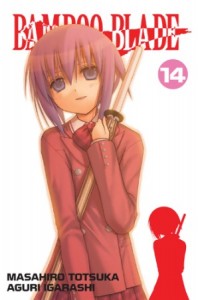
At the end of my review of Vol. 4 of Bunny Drop, I asked if Vol. 5 would bring something new to the table. And behold! Everyone’s favorite warm and fuzzy single dad series is moving onward. Will it still be able to carry the same heft with the heartstrings? Also out from Yen this week: a new Bamboo Blade (sports manga 4tw!), the 3rd volume of Bride’s Story (so pretty…), the 5th volume of wacky 4-koma antics of Haruhi Suzumiya-chan, the 9th volume of Pandora Hearts (can I take a series with the name Alice Baskerville seriously?), the 6th volume of economic dissertation Spice & Wolf, an 11th volume of Korean manwha 13th Boy for my fellow Manga Bookshelf colleagues… (sigh) and yes, the first volume of harem crossdressing comedy Is This A Zombie?, which does not get the cover pic this week as I have some self-respect left.

So what’s appealing to you?

Filed Under: FEATURES

Twin Spica, Vol. 12

March 13, 2012 by Sean Gaffney

By Kou Yaginuma. Released in Japan as “Futatsu no Spica” by Media Factory, serialized in the magazine Comic Flapper. Released in North America by Vertical.

In Japan, this was released in two volumes, but it’s probably best for my heart that they came out here in this thick book. After seeing these characters bond and grow over the course of the series, we finally get the fruits of all their labors. After so much tragedy and blame and heartbreak… Japan is returning to space, and our heroes are graduating.

So much of this volume deals with the joy and sorrow of parting – even though they know that they’ll always be friends, the nature of the space school, and the fact that there will be only one student advancing to the final year, means that the idyllic school life that brought them all so close together is gone. We see everyone – even Marika – struggle with this, and trying to see how to go forward in life while still treasuring what they have. This includes, of course, Asumi, who is the student that gets chosen. (Sorry if that spoils you, but come on – she’s the heroine.)

This is not to say that Marika, Kei and Fuchuya don’t get a lot of attention. Not getting one’s dream does not necessarily mean abandoning it, and they all need to find a way to move forward on different paths while still remaining true to their desires to go to space. Whether it be Fuchuya’s preparing to take over the family business and trying to find ways to do fireworks in space; Kei’s love of photography and her pictures of the stars; or even Marika simply trying to find a cure for herself and others like her, this is a cast that has grown tremendously since we started. (The teacher talking about how much Kei’s enthusiasm meant to the class was possibly my favorite moment of the entire volume – that ogre!)

And so Asumi goes to space. And it’s as amazing as it sounds, so I won’t dwell too much on it. Surprisingly, the manga does not end there. Or rather, it’s not that surprising after all – the emotional climax of this series has never been ‘will Asumi get to space’, but about the relationship between Asumi and Mr. Lion. And now that she’s returned and has decided on a teaching career while waiting for the next mission (it’s not like they send a rocket up every 2 weeks, you know), Mr. Lion has realized that at last, there’s nothing really keeping him here. It’s a tough realization – we see a lot of Mr. Lion just sort of bumming around aimlessly here, even more than usual. But he says goodbye to Asumi, and it’s as heartwrenching as it sounds. But beautiful. Like the majority of this series.

In the end, things don’t necessarily end happily ever after for everyone – because this isn’t an ending, their lives will continue. Marika is still struggling with her illness, and we’re not sure if she’ll be able to discover a cure. Fuchuya still hasn’t really confessed to Asumi (who, as a time capsule towards the end reveals, was pretty much hung up on Mr. Lion anyway) so there’s no romantic resolution. But it’s still a great ending. In this cast we have hope not just for their own futures, but for the children of Japan. Seeing all the kids wanting to join the school after seeing Asumi go to space just puts a big grin on your face.

Twin Spica has been quite the journey, and I’ll miss it. Combining realistic depictions of what a space school might be like with the fantastic realism that comes with Marika and Mr. Lion (well, OK, Marika is merely sci-fi extrapolation, but…), and of course the gut-wrenching emotional tugs that are the core of this series. Every time you read it, you want to tear up – both happy tears and sad tears. It’s wonderful to see a series this affecting in North America. I wish Asumi and her friends the best on their outward journeys.

Filed Under: REVIEWS

Pick of the Week: Twin Spica & Young Miss Holmes

March 12, 2012 by Sean Gaffney, MJ, Katherine Dacey and Michelle Smith 8 Comments

It’s an uneven week at Midtown Comics but the Battle Robot presents a nearly-united front on this week’s must-buy. See below!


SEAN: Well, there’s not quite as much going on with the list this week as there was last week. But we do get a final volume of a series I really enjoyed… and also tended to avoid. Twin Spica was very well written, emotional, and had wonderful character development, but I always kept putting off reading the volumes when I got them. Possibly as I knew they would be such an emotional wrench – the series is not depressing overall, but its lows can be quite low, and its highs always seem to be fleeting. But it has a fantastic likeable heroine in Asumi, and in the end I’m glad that Vertical took a chance on the series, even if it didn’t sell quite as well as hoped. In this final volume we’ll get to see who – if any – will be going to space. And whether Mr. Lion can finally find peace.

MJ: I’m definitely with Sean this week. Twin Spica has been a consistent high point over the past couple of years. It made my Best Of list with its debut in 2010, and has never once disappointed me over the entire course of its run. Twin Spica 12 is absolutely this week’s must-buy manga.

KATE: My votes also goes to Twin Spica, a series that hasn’t yet found the wide audience it so richly deserves. The artwork is clean and unfussy, yet very expressive; the characters are as interesting, complex, and contradictory as real people; and the science fiction elements are handled with skill and knowledge. (Anyone who’s read about the Mercury or Apollo programs will nod their head in recognition during the astronaut training sequences.) Kou Yaginuma even manages to introduce elements of magical realism into the story without compromising the serious tone. In short, Twin Spica is utterly heartfelt, speaking directly to adolescent fears and hopes, but is crafted with enough skill to sustain an adult’s interest. If you haven’t yet tried it, what are you waiting for?

MICHELLE: I concur on the Twin Spica front, though I’m lamentably behind in the series, but I am going to award my pick of the week to something that’s not on this list but which, according to Amazon, is coming out this week and that’s Young Miss Holmes, Casebook 1-2 from Seven Seas. I have a soft spot for mystery manga, and when you make it a seinen historical fiction mystery manga starring the niece of Sherlock Holmes, I surely cannot resist. I love that Seven Seas is packaging the series—now up to volume seven in Japan—in lovely two-volume chunks, as well!


Readers, what looks good to you this week?

Filed Under: PICK OF THE WEEK Tagged With: twin spica

Bookshelf Briefs 3/12/12

March 12, 2012 by Michelle Smith, Sean Gaffney, Katherine Dacey and MJ 1 Comment

This week, Michelle, Kate, MJ, & Sean take a look at new releases from VIZ Media and Vertical, Inc.


Arata: The Legend, Vol. 9 | By Yuu Watase | VIZ Media – By now, I should probably be immune to such shounen staples as “hero’s weapon gets larger to signify an increase in power,” but I still always find it cool, and when it happens in this volume of Arata, it’s no exception. The first half of the book is mostly fighting, with a little bit of heartstring-pulling thrown in that is still affecting, even though it felt like Watase was ticking things off a checklist in a very business-like manner. The relationship angst ramps up a little in the final chapters, as Arata learns that not only is he the successor to a powerful king, but also that he will create a new world with a “chosen woman” by his side. I really like the overall tone of this series, and though it offers few surprises or innovations, it still consistently entertains me. – Michelle Smith

Blue Exorcist, Vol. 6 | By Kazue Kato | VIZ Media – There’s a lot going on in this volume, despite it being mid-arc. The plot regarding the stolen eyes, and the revelation about a traitor in the cast. Shiemi’s inability to get past her knee-jerk reaction to Rin’s background, which is contrasted with a cute short story showing how well the two work together with Yukio, both in exterminating evil and in being his conscience. But mostly this volume is about Bon, and what it means to have a father that you can’t respect. Or rather, Bon *wants* to respect his father, but everyone else’s attitude, plus his father’s own ambiguous attitude, make it next to impossible. This is the meat of the story, and makes the conflict with Rin (who also has father issues) very powerful. This is an excellent manga, even if you aren’t a Jump fan. – Sean Gaffney

GTO: The Early Years, Vol. 11 | By Toru Fujisawa | Vertical, Inc. – The first volume of GTO: 14 Days in Shonan was a pleasant surprise, a raucous comedy about an earnest but slightly dim homeroom teacher who wants to make a difference in his students’ lives. Given how much I enjoyed my introduction to the world of Great Teacher Onizuka, I thought volume 11 of GTO: The Early Years would deliver more of the same. Alas, I found it a crude cousin to the later series, with rough, uneven artwork and jokes that repeatedly fell flat. Vertical, Inc. has done a better job of packaging this series than Tokyopop did back in the mid-2000s, with a snazzy cover and a snappy translation that conveys some of the sexual chemistry between the characters, but even Vertical’s first-rate presentation can’t transform this sow’s ear into a silk purse. -Katherine Dacey

Kamisama Kiss, Vol. 8 | By Julietta Suzuki | VIZ Media – I want to like Kamisama Kiss: it’s got a memorable hook, an appealing cast of supporting characters, and enough yokai intrigue for two Shojo Beat series. As I’ve dutifully read each volume, however, I’ve come to the conclusion that Julietta Suzuki has no real plan for how her story will end. Nanami doesn’t seem wiser or stronger than she was in the very first chapters of the book, while her relationship with Tomoe, the crotchety shrine guardian, has fallen into an irritatingly predictable holding pattern that offers few rewards for the loyal reader. Volume eight does little to dispel the sense of futility; even a detour into the underworld seems more a demonstration of how inept Nanami remains than an inspired subplot. Strictly for fans of supernatural romance. -Katherine Dacey

Kimi ni Todoke, Vol. 13 | By Karuho Shiina | VIZ Media – While Kazehaya and Sawako remain the stars – and seeing her meet his family is probably the cutest part of this volume – this focuses more on the group, which I appreciate now that the main romance has moved from ‘will they or won’t they’ to ‘so what now?’. Chizu is dealing with a rather attentive Ryu, who’s becoming more obvious – possibly by design. Meanwhile, Ayane is not only dealing with Kento finding her interesting (something which she seems to be ignoring, possibly as she doesn’t understand him as easily as she does everyone else), but with her own ideas of what love and dating are, which are not as ‘pure and innocent’ as her two friends. She agrees to go out with a guy who confesses to her near the end of the book, but I honestly can’t see it ending well. Also, terrific cover art. – Sean Gaffney

No Longer Human, Vol. 3 | By Usamaru Furuya | Vertical, Inc. – Though it’s no secret that I’ve been a fan of Usamaru Furuya’s inspired adaptation of Osamu Dazai’s classic novel from the beginning, as the rather unrelentingly optimistic type that I am, even I find this a bit surprising. Hopelessness has been assured far before cracking open Furuya’s final volume, yet it’s impossible to resist the need to follow Yozo’s journey to the end. Though this heartbreaking volume is remarkable on both dramatic and artistic levels, what I found perhaps most compelling were Furuya’s own notes at the end, describing his personal connection with Dazai’s work and how he came to write the adapation. Complete in three volumes, this series is a must-read for any grown-up manga fan. Highly recommended. – MJ

Oresama Teacher, Vol. 7 | By Izumi Tsubaki| VIZ Media – Another highly variable volume – I love this series, but the author still has issues with focus and pacing. At its best, we get chapters like the first one, where we learn about Takaomi’s motives. It’s good to see his character gain some depth, and you really begin to see how driven and goal-oriented he is – and how that inspires Mafuyu. Meanwhile, the ‘summer vacation’ chapters get progressively worse, with Mafuyu’s festival with Sakurada being quite funny, but the ‘haunted house’ chapter being possibly the worst we’ve seen this series – so confusing I had trouble telling who was who from panel to panel. Ah well. Hopefully she’ll get that out of her system soon and we’ll be back to school, where Mafuyu fares much better – as does the mangaka. At least we get plenty of silly faces. – Sean Gaffney

Filed Under: Bookshelf Briefs Tagged With: arata: the legend, blue exorcist, gto, kamisama kiss, kimi ni todoke, no longer human, oresama teacher

One Piece, Vol. 61

March 12, 2012 by Sean Gaffney

By Eiichiro Oda. Released in Japan by Shueisha, serialization ongoing in the magazine Weekly Shonen Jump. Released in North America by Viz.

There was a joke going around fandom when Chapter 597 first came out in Japan that on the last page it would say “One Piece – end of Prologue.’ It’s not quite that ridiculous, but the timeskip we see does give us a lot to talk about – and finally, FINALLY reunites Luffy with his crew and his ship. It is appropriate that the cover of this volume is a mirror to Volume 1’s cover.

Before the timeskip comes some nice stuff, though. Having seen the crew bolt from their rescuers in order to reunite with their captain and console him after Ace’s death, it’s somewhat odd to see them immediately turn around and go back. It’s handled beautifully, though, with each crew member getting a flashback that shows just how much Luffy impacted their lives. They really would do anything for their captain, and it shows. Luffy, meanwhile, gets to train with Rayleigh on the island of amazingly dangerous animals, and we learn a little bit more about haki – though really, it still amounts to ‘magic charisma’ when you get right down to it.

(I was vaguely irritated that, in the shot of the Supernovas all encountering danger in the new world, Bonney is the one that’s captured and subdued (twice!). Oda is miles ahead of other Jump authors when it comes to his female characters, but they still tend to get into peril when the situation calls for it. Still, I suppose Akainu and Blackbeard menacing, say, Apoo wouldn’t have had quite the same feel.)

Then, as noted, we jump forward two years, and see what our crew is up to as they reunite on Sabaody. This leads us, inevitably, to the Fakehats. It’s not particularly surprising that someone would be trying to imitate Luffy and friends given their amazing reputation – in fact, it’s a wonder we hadn’t seen it before now. But I wasn’t expecting it to be as funny as this is. The Fakehats are gloriously awful, amounting to not even a bad parody of the people they’re trying to imitate. (Naturally, Luffy, Usopp and Chopper are taken in right away – just because there’s a timeskip doesn’t mean that the characters are THAT different. Everyone keeps their comedic flaws.)

As for the actual crew, so far they seem mostly the same. Which is reassuring. Franky has modified his body to look even more ridiculous. Zoro is missing an eye. Luffy has a scar on his chest. Nami has long hair. Usopp is more muscular. Robin has a new hairstyle. And then there’s Sanji. Who now has his hair… covering his other eye! Oda is delightfully deadpan about this in comments, but it’s also a good sign that he’s still enjoying One Piece more than anybody else.

As the Straw Hat Pirates prepare to go to Fishman Island at last, the Marines are coming out in force to stop them. But hey – allies of the pirates (many of whom are former enemies) come out to help, as we get some more great cameos. Hancock was a given (and is still a glorious parody of shippers – Luffy’s constant “I’m not marrying you” is a stitch), but it was a surprise to see Perona show up to lead Zoro to his crew. And hey, she is all grown up! (I totally ship Zoro/Perona, in a ridiculous way.) Luffy and company are ready to pave the way for a new age of pirates – and everyone wants to see them to it. It’s very heartwarming, especially when compared with Rayleigh’s flashbacks of Gold Roger.

And so – at last – we’re headed for Fishman Island and a new arc. Will it top Impel Down and Marineford? Probably not. But that doesn’t really matter. Just having the crew back together again is enough. We’ve seen how Luffy survives without his crew. Now we’re ready to see them work as a unit again. Bring on the next 60 volumes.

Filed Under: REVIEWS

Dengeki Daisy, Vol. 9

March 8, 2012 by Sean Gaffney

By Kyousuke Motomi. Released in Japan by Shogakukan, serialization ongoing in the magazine Bessatsu Comic (“Betsucomi”). Released in North America by Viz.

I haven’t done a full review of Dengeki Daisy in a while. It’s been a very rough stretch recently too, as Kurosaki’s past has finally come out and things have taken a relatively dark turn. It may be disquieting for those who were enjoying this manga for its wacky romantic comedy and physical and verbal abuse of the leads. Luckily, this volume not only wraps up the dramatic arc (while leaving room for more in the future, of course), and gives us plenty of laughs.

Sticking with the dramatic for a moment, I liked how this was resolved. The dramatic thrust wasn’t “how will Kurosaki stop the bad guys all by himself”, it was “how will everyone get Kurosaki to stop destroying himself with guilt”. I was therefore not particularly surprised when I saw that a deus ex machina (or rather, deus ex Akira) had taken care of most of what they had to do. This allows Kurosaki and Teru to return to some form of normalcy. In particular, their reunion is pitch perfect, bringing some comedy back to the series at last, and giving some real heart – you really wish Teru was older so that these two lovebirds could finally get together.

As Teru notes, she *can’t* forgive Kurosaki – because right now, he can’t forgive himself, and as long as he can’t, there’s no point in other people doing so. However, he at least now knows that separating himself from everyone is not the answer, and if anything his love for Teru is even stronger. (In a purely platonic sense, of course – this is lampshaded by Riko, who tells him to give Teru physical comfort without giving her physical comfort, if you know what I mean.)

This leads to the second half of the volume, which might be fairly frustrating for those who were expecting that we were nearing the end of the series. After a brief fight/misunderstanding regarding Teru’s emails, the two decide that they will email each other as themselves from now on, and ‘retire’ Daisy – while at the same time realizing what Daisy did for both of them. It’s really sweet. However, when Riko notes that Kurosaki still hasn’t confessed to her, he notes that after everything that happens, it feels like they’re starting over, and he wants to take his time and get closer to her again. This is known as the “your series is very popular, let’s find some new subplots to add” syndrome. Still, I’m not opposed to it when the cast is as fun as these guys are.

I’ve occasionally compared this series with Black Bird, which also features a heroine who seems to be in constant peril, but could not be more different from Teru. Here in North America, you’d have to actively seek out both series to compare and contrast them, so the chance of a crossover audience is smaller. In Japan, though, both run in the same magazine – Betsucomi. This might make it easier to read both of them – you get Black Bird’s sensuous guilty pleasure for 40 pages or so, then you can flip to Dengeki Daisy’s more dynamic heroine as an antidote. (And then they can read We Were There for crushing despair! Though that ended this month.)

Dengeki Daisy is a riveting romance, with lots of emotional rollercoasters, a great sense of humor, and a heroine who rises above her peril to be strong and likeable. Not to mention a handsome, admirable (if grumpy) hero, who is only called a lolicon about 6 times in this volume, which may be a record low. (It’s in fun, trust me.) Highly recommended.

Filed Under: REVIEWS

Manga the Week of 3/14

March 7, 2012 by Sean Gaffney

After an insane week this week, the manga world has decided to take pity on us. Well, mostly. Except for this giant pile of BL. Let’s start with that.

There’s a bunch of stuff from DMP out next week. There’s a volume of short stories by prolific artist Minase Masara, released under the title Ambiguous Relationship. Beast & Feast has smoking hot police officer on yakuza love (or is it the other way around?), as well as a great title. Blue Sheep Reverie hits Vol. 5. (It used to run in Betsuhana! Honest! Can you picture it next to Otomen? Well, yes, actually…) Depression of the Anti-Romanticist also has a great title, and I think that it needs to have a cage match with Beast & Feast to see who’s best. Lastly, we have another volume of the novel series Yashikiden Demon Princess, which I know little of except it’s by the Vampire Hunter D author.

Kodansha Comics wraps up a series, as we get the final volume of Monster Hunter Orage, from the Fairy Tail creator. We also get the 18th volume of Fairy Tail, which I hope to like more than the 17th.

Vertical has a final volume as well, with Vol. 12 of Twin Spica. This contains Vols. 15 and 16 of the Japanese series, and means I finally get to decide once and for all if it’s heartwarmingly uplifting or crushingly melancholy. I suspect I’m going to pick the former. If you don’t get this series, you missed out on something special.

Viz has two Pokemon volumes. I know I give these short shrift here, but… if you like Pokemon, get these! That’s about all I can say.

Lastly, in non-manga news, Fantagraphics is finally releasing the first in a series of collections of the comic strip Nancy, by Ernie Bushmiller. This isn’t the first chronologically – like Carl Barks, they’re picking and choosing what years to begin with – but that doesn’t really matter. The comic we all thought was even duller than Garfield as a kid turns out, when our parents were kids, to have a certain zen brilliance that’s hard to sum up in words. If you like classic comic strips, check this out and be amazed what one artist did with just minimalist art and vaudeville gags.

So what would Sluggo buy this week?

Filed Under: FEATURES

The Lucifer and Biscuit Hammer, Vol. 1

March 6, 2012 by Sean Gaffney

By Satoshi Mizukami. Released in Japan as “Hoshi no Samidare” by Shonen Gahosha, serialized in the magazine Young King OURS. Released in the United States by Shonen Gahosha on the JManga website.

First of all, I should note that the JManga site lists this under its original Japanese title. Despite the fact that the English title is PRINTED ON THE FRONT COVER. Given none of Shonen Gahosha’s titles have been translated to date, I will assume this is some stupid business rule, but I wish it would change. In any case, when you look for this book, look for it as Hoshi no Samidare. And you definitely should look for it.

At first glance, this may seem no different from many other shonen titles. A young man, Yuuhi, it woken late at night by an animal mascot, who tells him that he must join with other allies to defend his Princess and protect the Earth. It almost sounds like it could fit right in with several Western-type superhero plots you’d see over here. Sure, the animal mascot is a lizard, but that’s probably just an eccentricity of the author. We’re in for rollicking action and fun times. Friendship, Training, Victory, right? Well, not quite. This manga isn’t in a shonen magazine, but a seinen one. The very eccentric Young King OURS, home of Excel Saga, Trigun and Hellsing. And Yuuhi is not your typical shonen hero.

I wouldn’t go so far as to say that Yuuhi is a nihilist, but certainly he is a young man who does not wish to interact with life. Likewise, the heroine, who is the aforementioned Princess, has declared that it is her desire to destroy the world – rather than save it. And it is *this* – the appeal of simply ending everything – that causes Yuuhi to suddenly gain a purpose in life and pledge his allegiance to her. It’s not really a stretch to say that the conscience of the manga, at least in this first volume, is the lizard (often horrified at Yuuhi’s thoughts) rather than the two leads.

Muxch of this first volume is setting up for what will no doubt be a larger cast – indeed, we see one of them, Hangetsu, show up in the final chapter, and he’s a complete contrast to the pessimistic and grumpy Yuuhi. Most of the time, though, we deal with Yuuhi and his own demons. Yuuhi spent most of his childhood being abused, mentally and emotionally (as well as physically, I’d suggest, given the chains). I would go so far as to say that he’s at his most tragic when he’s smiling, as it reveals to us the fragile facade he’s built up. In my favorite part of the volume, Yuuhi calmly relates the death of his father, his mother’s abandonment, and his grandfather’s abuse, and then simply grins. Neu, the lizard familiar, stares in horror, for he is able to visualize what it must have been like.

As for Samidare, we don’t get as much of a look into her own life – she blithely states she doesn’t want the world to survive after her own death, which is why she plans to destroy it, but that’s not really telling us motivation. After hearing about his past, we can see why Yuuhi wants everything to end. Indeed, he’s very matter-of-fact about it, telling Samidare (in a dream, which the two of them share almost from the start), that he’s binding himself to her so he can free himself from his grandfather’s chains – he’s still bound. It’s not all dark and tortured misery, mind you – Yuuhi’s meeting with his grandfather gives us some hint that there is still compassion inside of him, even if there is no forgiveness yet. What’s more, his determination to be someone who can protect his lady (Yuuhi is an unathletic normal guy, while Samidare seems to have super strength) is admirable, and reaches a peak towards the end in a fantastic action sequence against one of the golems sent to kill him.

The series is 10 volumes long, so we’ve only really just gotten started. It was a cult hit online, and while I had heard some companies making noise about licensing it (Dark Horse and Vertical both said they were aware of the title), the current market really didn’t seem to fit its tone. I’m very happy that Shonen Gahosha and JManga have brought it over. It isn’t perfect – the translation suffers from awkwardness at times, like many JManga titles, and the art style is best defined as ‘striking’ rather than ‘pretty’ – but it’s a fun, gripping read. If you like superhero comics with a kick to them – or you want shonen that’s a little more grown up – give The Lucifer and Biscuit Hammer a try. One of the best licenses yet from JManga.

Filed Under: REVIEWS

Pick of the Week: decisions, decisions

March 5, 2012 by Michelle Smith, Sean Gaffney, Katherine Dacey and MJ 5 Comments

We’ve got an embarrassment of riches coming in this week at Midtown Comics. Check out picks from Michelle, Sean, Kate, & MJbelow!


MICHELLE: Decisions, decisions! I am definitely keen to read quite a few of the volumes on this week’s Midtown Comics release list, but ultimately I’m going to have to cast my vote for volume 61 of Eiichiro Oda’s masterful One Piece. They say absence makes the heart grow fonder, and “they” must be on to something, because I’m really eager to see the rest of the crew again after the past few volumes, which featured Luffy on a solo quest to save his brother, Ace. Not only that, we’re about to embark upon the current arc of the series, which is very exciting indeed!

SEAN: We do indeed have an embarrassment of riches this week. My pick goes to Vol. 9 of Dengeki Daisy. A lot of Betsucomi manga tend to have their heroines in constant peril, and indeed that’s exactly what happens in Dengeki Daisy. What makes it work is that Teru does not whimper and wonder why all this keeps happening to her – she’s a very active Penelope, so to speak. This series has been in the middle of an ongoing very serious arc, which has been disconcerting to those who loved the comedic antics between Teru and Kurosaki. But the action and drama has also been skillfully handled, and you keep hoping that all this intrigue will end well so that the leads can live happily – if abusively – ever after.

KATE: Oh, the dilemma! I’m tempted by the first volume of The Earl and the Fairy, even if it sounds like a forgotten Lawrence Olivier/Marilyn Monroe movie, and I’m delighted to see that VIZ is re-releasing the early volumes of Skip Beat! as an omnibus. The title that most excites me, however, is the King City trade paperback. You may remember King City from the days when TOKYOPOP had a robust line of OEL comics. Though widely praised, Brandon Graham’s sci-fi comedy wasn’t a particularly good fit with the rest of TOKYOPOP’s catalog; the humor was too weird and subversive, and the art didn’t strike readers as particularly “manga-esque.” TOKYOPOP put the series on hiatus in 2007, then allowed Graham to bring the series to Image Comics. The TPB collects the entire series — 400+ pages — in a tidy, economical package. If you missed it the first time around, it’s definitely worth a look.

MJ: Wow, it really is a tough choice this week! It’s hard not to go for the final volume of No Longer Human, Usamaru Furuya’s adaptation of the classic novel, which Michelle & I fawned over in a recent installment of Off the Shelf. There’s also a new installment of Chi’s Sweet Home, and this week’s new omnibus release of Skip Beat! finally gives me a chance to get into that long-running series. In the end, though, I guess I’ll be the one to go for The Earl & the Fairy, artist Ayuko’s adaptation of the light novel by Mizue Tani, out this week from Viz. I’m always a sucker for a new shoujo series, and this one looks intriguing. I haven’t always been a fan of light novel adaptations, but having been so thoroughly won over by last year’s The Story of Saiunkoku, and eager to give this one a try!


Readers, what looks good to you this week?

Filed Under: PICK OF THE WEEK

GTO: The Early Years, Vol. 11

March 1, 2012 by Sean Gaffney

By Toru Fujisawa. Released in Japan as “Shonan Jun’ai Gumi” by Kodansha, serialized in the magazine Weekly Shonen Magazine. Released in North America by Vertical.

It’s been a while, hasn’t it? Tokyopop released the first 10 volumes of the SJG omnibuses, but then stopped 3 years ago (they seem to have stopped before they folded, in fact, so we can ascribe it to mediocre sales more than anything else, I expect). Luckily, Vertical has picked up where they left off, and say that if sales are good they may go back and re-release the first 10. That said, this is not GTO: 14 Days in Shonan, where you can simply hop right into the story with minimal info. The series was up to Vol. 21 and 22 in Japan (the volumes collected here), and it shows. New readers are advised to go here to catch up on the characters so as not to be confused.

That said, it’a not impossible to read this without huge knowledge of what has gone before. I had fallen way behind in my SJG reading, but was able to pick up where I left off with minimal confusion, mostly as this is a delinquent manga, and so just expect lots of people hitting other people. When Onizuka was in GTO, and even 14 Days, he still gets into tons of fights, but at least there he’s slightly more successful at not wanting to get involved in them. Here, in high school, there’s simply not enough impetus (beyond “getting laid”, still his primary motivation) to not be the leader of a gang. Mostly as Onizuka and his best friend Ryuji are *really good* at being gang leaders. They don’t do evil stuff, they inspire loyalty, and they protect the weak. They’re the gang you only see in Japanese manga like this.

Of course, Onizuka is still recognizable even if he’s younger (though, being that it’s school, be prepared for everyone to say Eikichi more than Onizuka – it is his first name, after all). Mostly in his complete inability to score with the opposite sex. By now we’re far along enough in the series that his friend Ryuji is living with his girlfriend, the sweet (at least sweet NOW) girl Nagisa, but Onizuka still strikes out, for the exact same reasons as in GTO: he’s an absolute idiot about it. And just like in GTO, there are girls who are clearly in love with him and would be happy to be with him if he’d only get a clue. Chief among these being Shinomi Fujisaki, who clearly likes him but is also far too similar to him for things to work out. (It doesn’t help that he sees her as a little sister.) I like the girls in GTO, who come in many different types and varieties, and the gang aspect of the plot means we get a lot who can kick any guy’s ass. Shinomi is, along with Azusa and Urumi from GTO, one of the most important women in Onizuka’s life. Expect to see more of her.

There’s also some terrific comedy here – the author likes to break up all the gang fights with one-shot chapters that are hilariously silly. Here we have two opposing tough guys trying to outbluff each other, only to have everything completely ruined by the escalating war between their respective girlfriends. Possibly the funniest chapter, though, was seeing Golgo 13-esque huge guy Usagi and his family, who are all named after Sailor Moon characters – and all look like they stepped out of Fist of the North Star. Despite having a punchline that you can see from space, it still works beautifully.

Be warned – with GTO and 14 Days in Shonan, you can sit through the manga without necessarily being a fan of big, epic fights. (well, just about.) That’s not something you can do here. GTO The Early Years shows us how Onizuka came to be the guy we know, and that means a lot of gang wars, fights, and blood. No one is killed – this still runs in Shonen Magazine, after all – but it’s a manga about young kids who get into a lot of fights. If you can respect that, there’s a lot to love here. Well, except maybe Onizuka’s hair. He did himself a big favor when he lost the perm.

Filed Under: REVIEWS

Manga The Week of 3/7

February 29, 2012 by Sean Gaffney

First week of the month, which means it’s a landslide. As always.

Midtown lists Zetsubou-sensei 13 from Kodansha, which I got today. It also has Cage of Eden 4, which I didn’t get today, and Air Gear 22, which I simply don’t get. In many ways. (Two very fanservicey titles, and Zetsubou-sensei. Which I suppose has service this volume as well, but… it’s not really the same.)

Vertical has the 3nd and final volume of Usamaru Furuya’s manga adaptation of No Longer Human, which promises to bring things to an appropriate finish. That means no picket-fence and two-car garage, I’m reckoning. You may have a better chance of getting that in Chi’s Sweet Home 8, which is not drawn by Furuya. (Though the mind reels at how he’d draw a chapter of it…)

Then there is the terrifying pile of Viz. Let’s start with shoujo, as we have another debut this month. The fantasy romance The Earl And the Fairy, based on a series of light novels, debuts. It looks very pretty, but I’ve heard good things about it anyway. There’s a new Black Bird, which is apparently wrapping up soon, having possibly run out of new ways to appall me. Dengeki Daisy should wrap up this current arc with an epic finish (I think… maybe? Long arc, anyway.) Kimi ni Todoke is almost caught up with Japan, but not quite, as we get lucky Vol. 13 here. La Corda D’Oro hits Vol. 15 with a new release (perhaps it’s speeding up now that it’s over in its home country). Oresama Teacher is apparently still not satisfying everyone, but I still adore it. Stepping on Roses is STILL NOT ABOUT SHOGI. And we get some re-releases of two of Viz’s most popular series, with 3-in-1 omnibuses of Hana-Kimi and Skip Beat!.

As for shonen? Bleach has a 2nd character book, showing that its fans are devoted enough to actually make a character book sell – quite a rarity in North America. There’s new Naruto and One Piece to slam into the bestseller charts. And new Psyren, which… well, probably won’t, but is still interesting. In Sunday manga, there’s new Rin-Ne and Arata. (Speaking of which, what ever happened to Sunday’s digital initiative? Did the weekly chapters die for the non-Takahashi stuff now as well?)

Lastly, there’s a new Volume of Fluffy Fluffy Cinammonroll, which just makes me hungry.

That’s a lot of manga. Is there anything you can’t live without?

Filed Under: FEATURES

  • « Go to Previous Page
  • Page 1
  • Interim pages omitted …
  • Page 369
  • Page 370
  • Page 371
  • Page 372
  • Page 373
  • Interim pages omitted …
  • Page 388
  • Go to Next Page »
 | Log in
Copyright © 2010 Manga Bookshelf | Powered by WordPress & the Genesis Framework