• Skip to primary navigation
  • Skip to main content
  • Skip to primary sidebar
  • Home
  • About Us
    • Privacy Policy
    • Comment Policy
    • Disclosures & Disclaimers
  • Resources
    • Links, Essays & Articles
    • Fandomology!
    • CLAMP Directory
    • BlogRoll
  • Features & Columns
    • 3 Things Thursday
    • Adventures in the Key of Shoujo
    • Bit & Blips (game reviews)
    • BL BOOKRACK
    • Bookshelf Briefs
    • Bringing the Drama
    • Comic Conversion
    • Fanservice Friday
    • Going Digital
    • It Came From the Sinosphere
    • License This!
    • Magazine no Mori
    • My Week in Manga
    • OFF THE SHELF
    • Not By Manga Alone
    • PICK OF THE WEEK
    • Subtitles & Sensibility
    • Weekly Shonen Jump Recaps
  • Manga Moveable Feast
    • MMF Full Archive
    • Yun Kouga
    • CLAMP
    • Shojo Beat
    • Osamu Tezuka
    • Sailor Moon
    • Fruits Basket
    • Takehiko Inoue
    • Wild Adapter
    • One Piece
    • After School Nightmare
    • Karakuri Odette
    • Paradise Kiss
    • The Color Trilogy
    • To Terra…
    • Sexy Voice & Robo
  • Browse by Author
    • Sean Gaffney
    • Anna Neatrour
    • Michelle Smith
    • Katherine Dacey
    • MJ
    • Brigid Alverson
    • Travis Anderson
    • Phillip Anthony
    • Derek Bown
    • Jaci Dahlvang
    • Angela Eastman
    • Erica Friedman
    • Sara K.
    • Megan Purdy
    • Emily Snodgrass
    • Nancy Thistlethwaite
    • Eva Volin
    • David Welsh
  • MB Blogs
    • A Case Suitable For Treatment
    • Experiments in Manga
    • MangaBlog
    • The Manga Critic
    • Manga Report
    • Soliloquy in Blue
    • Manga Curmudgeon (archive)

Manga Bookshelf

Discussion, Resources, Roundtables, & Reviews

Sean Gaffney

Can Someone Please Explain What’s Going On?! ~A Sign-on-the-Line Wedding Story~, Vol. 4

December 17, 2020 by Sean Gaffney

By Tsuredurebana and Rin Hagiwara. Released in Japan as “Dareka Kono Joukyou wo Setsumei Shite Kudasai! ~Keiyaku Kara Hajimaru Wedding~” by ArianRose. Released in North America by J-Novel Club. Translated by Mattias Hirsch.

Despite the fact that we’re only at Vol. 4 of 9, it is sometimes difficult to remember how far Cersis has come since the start of the series. Let’s recall the premise: he asks Viola to become his wife on paper so he can continue to fool around with a dancing girl. It’s hardly a surprise that, having fallen in love with Viola instead, she does not really believe he’s all that serious. (Viola’s amazing self-worth issues don’t help, though thankfully there’s far less of that in this particular book.) That said, we’ve slowly seen him grow and change, both as a commander and as a somewhat clueless husband. It should therefore not come as too much of a surprise when, towards the end of this new volume, he admits to his past faults and is resolving to become the best duke he can be, everyone is staring with their jaw dropping. Including Viola. He now has to prove that he means it.

the first half of the book wraps up the war storyline, with our gallant soldiers returning home victorious, and Viola forced to go to the palace to have the King welcome everyone back. (Which he does. At length.) The King gives all the soldiers a two-week vacation, and Cersis decides to use the time to take Viola on a tour of his duchy, starting with the manor that his parents normally stay in when they aren’t doting over Viola. Everyone and their brother are calling this the honeymoon that she and Cersis never actually had, and are expecting them to spend most of it trying to conceive some children. Everyone except Viola, of course, who is far more interested in the town scenery and the local shops. Fortunately, Cersis by now has sort of figured out how much of a job he has ahead of him, and just rolls with it. Unfortunately, the duchy, thanks to the war, is in more dire straits than expected…

I’m going to be honest, I was among the people who were boggling at Cersis’s change of heart at the end of the book. I was expecting that the conflict in the Town that he got into was arranged by him for Viola’s sake… though perhaps not the kidnapping attempt. But credit to him, he is trying hard, taking note of the issues that lead to the unrest, and taking Viola’s suggestions on how to handle things based on what she did in her much poorer Earldom, where they can’t afford a constant fleet of guards to keep the peace. It is also very in character of the series so far that, even after directly confessing his love to her – again – Viola’s response is still “sorry, I’m still just not really that into you”. Romance is a foreign nation to her. That said, this is going to change, and now that Cersis is no longer the bumbling doofus husband (much), I look forward to seeing how he wins her over. I will warn, though, there’s one scene where where Viola narrates a fight between her would-be kidnappers and Cersis, and there is a repeated use of the word “fatso” which, while I’m sure was also bad in the Japanese, might have been replaced with something else.

This is one of those shoujo light novels that feels the most like a Western romance, with a definite lack of magic, past lives, or villainesses. Even Calendula, the dancer and former beau of Cersis who kicked this all off, is a relatively nuanced and sympathetic woman. Definitely checking out more.

Filed Under: can someone please explain what's going on?!, REVIEWS

Bookshelf Briefs 12/17/20

December 17, 2020 by Ash Brown and Sean Gaffney Leave a Comment

Chainsaw Man, Vol. 1 | By Tatsuki Fujimoto | Viz Media – It’s a little hard to live up to the hype that this title has gotten on social media, and I admit this first volume did not wow me as much as I’d expect. It seems to run on gonzo and gore, and (from what I’ve heard) gets better as it goes along. That leaves us with this volume, where a young man trying to pay off his father’s debt gets nearly brutally murdered, only to fuse with a chainsaw dog, making him the titular character. He’s taken in by an agency whose head seems so deeply, deeply suspicious I’ll be very surprised if she turns out not to be evil. It’s OK, though, because it means he might one day squeeze her chest! I might have liked this better in a different year, but I will give it another shot with volume two. – Sean Gaffney

The Invincible Reincarnated Ponkotsu, Vol. 1 | By Reona Umitsuki | Kodansha Comics (digital only) – This may be one of the dumbest manga I’ve read since the halcyon days of Sasameke. That said, it’s not trying to be anything else—ponkotsu means “airhead,” but apparently not the same way a tennen is. Our protagonists get reincarnated into heroes. Sanae has absolute brute strength, but only when used by accident. Shota has supposed high defense, but he keeps ending up near death anyway. And Kana can heal Shota (because she has a crush on him)… but only with her boobs. It’s deliberately over-the-top and silly, and sometimes I did crack a smile, but mostly I just sighed, especially towards the end when it briefly tried to be serious. For hardcore ponkotsus only. – Sean Gaffney

Komi Can’t Communicate, Vol. 10 | By Tomohito Oda | Viz Media – I was running behind when I reviewed volume nine, so I got to read volume ten straight away. And it’s a big sea change—there’s a new year and new classes, and most of Komi’s friends are not in her new class. Fortunately, Tadano is, so she’s not completely alone. (Also fortunately, this means Yamai is now elsewhere, though we see her once or twice.) In their place we get Rumiko Manbagi, who is a hardcore gyaru with tons and tons of makeup, who is also suffering from her friends now being in another class. The makeup doesn’t last, but she and Komi bond more than any other friend Komi’s had except for Tadano. Speaking of Tadano, Manbaki is acting awfully tsundere with him. A great addition to the Komi cast. – Sean Gaffney

Mujirushi: The Sign of Dreams | By Naoki Urasawa | Viz Media – I primarily picked up Mujirushi for two reasons: (1) Urasawa is one of those creators whose manga I will always try and (2) the volume is part of the “Louvre Collection,” a series of comics commissioned by the Louvre highlighting the museum and its art. Considering these two things, as well as the somewhat ominous cover image, I really was not expecting Mujirushi to be as much of a comedy as it is. (I also wasn’t expecting masks reminiscent of President Trump’s face to come into play multiple times.) In addition to the Louvre, Mujirushi is also inspired by Fujio Akatsuka’s Osomatsu-kun. In particular, Iyami, a character from that franchise, is pivotal to Urasawa’s story. The real star of the show for me, though, is the whip-smart Kasumi on the cover. Mujirushi is an entertainingly absurd caper, featuring an art heist which is certainly not to be taken too seriously. – Ash Brown

Practice Makes Perfect, Vol. 2 | By Ui Hanamiya | Kodansha Comics (digital only) – There’s a sweet romance going on here, as our two protagonists realize that they’re not really content with this just being practice after all, and I enjoyed the big press conference at the end of the book after they’re found out, where both admit—on air—to being virgins. I read this title more for the hilarious aspects of treating sex as another Olympic sport like volleyball or judo. The two shouting at each other about training harder is great, but I think the top moment of the title was when (pardon me, it is a mature manga) Takaya tries to get advice on how to use his fingers to pleasure Nohara, and whines “they’re going to cramp up!” Still better than I expected. – Sean Gaffney

Shikimori’s Not Just a Cutie, Vol. 1 | By Keigo Maki | Kodansha Comics – This did not really go in the direction I expected. Shikimori is indeed cute, and does show off that side of her to her boyfriend. Sadly, he has bad luck and is pretty weak, so essentially needs saving constantly, which inevitably makes her more cool than cute. Of course, he loves that too, but Shikimori is a fragile young woman, and would much rather be cute. There’s no real ‘are we going to break up’ dangers here, and indeed they start the book already together. The reason to read this is Shikimori’s embarrassed blushes and cool poses, which is exactly the same reason that her boyfriend loves her. It’s not the best romantic comedy in the world, but it’s pretty damn cute. I mean cool. – Sean Gaffney

Spy x Family, Vol. 3 | By Tatsuya Endo | Viz Media – There is so much wonderful comedy in this series. Yuri’s huge sister complex, Anya and the dodgeball game (complete with Bazooka Bill!), and everything about the “extra chapter,” where Yor gets shot in the ass during an assassination and has to endure the pain with a massive frown on her face. But there’s also a lot of heartwarming family stuff here as well—Yor doubting her skills as a wife, Anya getting upset whenever Lloyd and Yor aren’t getting along, even that same extra chapter, which is very funny but also has Anya tell an enemy agent to hang it up and go keep his girlfriend happy instead. It’s that balance that makes this one of the breakout hits of the last two years. – Sean Gaffney

UQ Holder, Vol. 20 | By Ken Akamatsu | Kodansha Comics – There’s a lot going on here—flashbacks (or is it flashforwards?), training arcs, lots of big old battles, and, for once, surprisingly minimal perverse antics. (Akamatsu is in shonen fight mode rather than harem nudity mode.) The general question we see in this book… and really the entire series… is “is being immortal a good thing?” Especially if it comes at the expense of a great deal of the solar system. Touta continues to show off how much he’s not like Negi—unfortunately, that makes him far more normal, and there’s less to distinguish him from other idiot heroes. I still enjoy reading UQ Holder, but, as with all of Akamatsu’s series, it feels like it should have ended a while earlier and is coasting a bit. – Sean Gaffney

Filed Under: Bookshelf Briefs

The Angel Next Door Spoils Me Rotten, Vol. 1

December 16, 2020 by Sean Gaffney

By Saekisan and Hanekoto. Released in Japan as “Otonari no Tenshi-sama ni Itsu no Ma ni ka Dame Ningen ni Sareteita Ken” by GA Bunko. Released in North America by Yen On. Translated by Nicole Wilder.

It couldn’t last forever, even though it seemed like it would. After a few years of the trend being “light novels will only get licensed if they have some sort of fantasy or gaming element”, we are finally starting to see a few series being licensed that are old school high school romances. Credit to this no doubt can be given to the one-two punch of My Youth Romantic Comedy Is Wrong As I Expected (which has had three seasons of anime) and Bottom-Tier Character Tomozaki (whose anime is forthcoming), which has helped to open the door to other series whose premise is not “I ended up in another world with superpowers and a bunch of girls who fall in love with me because I am nice to them.” Well, OK, this is MOSTLY not that. The Angel Next Door Spoils Me Rotten may not be an isekai, and our protagonist doesn’t have a sword, but it’s still a classic male fantasy.

Amane is a well-off kid living on his own in a big apartment, but he’s got classic teenage boy problems. His skin is pallid from not eating healthy, he’s a complete slob, and he’s somewhat unsociable, at least compared to his friend Itsuki. Then one day he comes across the class “angel” sitting in a park in the rain. She’s gorgeous, smart, athletic, etc. He’s not sure why she’s sitting getting soaked and looking depressed, but he gives her his umbrella. And then he promptly gets a terrible cold. Fortunately for him, not only does Mahiru live right next door to him, but she wants to thank him for the umbrella, so she makes him some nice porridge. And forces him to clean his apartment. And begins to cook for him every day. They’re not a couple, but… isn’t she just spoiling him?

This is a well-written book, and the characters are likeable. If there’s one big negative it’s the actual premise – it is right upfront about “seeming loser guy gets waited on by his amazingly beautiful high school classmate and neighbor” being the plot going forward, and it can be a bit much. This being a standard Japanese romcom, Amane doesn’t take advantage of this, and in fact is perfectly happy to tell himself he’s not falling in love with her, even though we can see that isn’t true. Likewise, Mahiru slowly warms up to him, showing off her natural personality rather than the “good girl” she perfects at school. It’s implied her relationship with her parents is poor, but he doesn’t pry. Actually, I take that back, this isn’t a romcom. While there are funny moments, for the most part it’s a plain serious romance, with two awkward introverts slowly realizing that they’re basically living like a married couple half the time.

By the end of the first volume they’re still just good friends, but that’s to be expected. It’s also very much a ‘small world’ here – the only characters in the book are the two leads, Amane’s overbearing mother, Amane’s friend Itsuki, and Itsuki’s girlfriend Chitose, who is outgoing, loud and bubbly and therefore quite jarring compared to our Angel. If you can get over its premise, this is a quiet, easy read.

Filed Under: angel next door spoils me rotten, REVIEWS

Saving 80,000 Gold in Another World for My Retirement, Vol. 2

December 15, 2020 by Sean Gaffney

By FUNA and Touzai. Released in Japan by K Lanove Books. Released in North America by Sol Press. Translated by Lukas Ruplys.

When I reviewed the first volume of this light novel… 19 months ago… I remarked that it was relatively mild in terms of the eccentricities of its author, FUNA, and their other works, I Shall Survive Using Potions! and Didn’t I Say to Make My Abilities Average!. I regret that now. This, the second novel in the 80,000 Gold books, is absolutely bananas. Mile and Kaoru wish they were this overpowered. Our heroine stops a war using modern artillery, gains a domain of her own to rule, and sets about ruling it, all the while flitting back and forth between this fantasy world and modern-day Japan. Can she keep it a secret? LOL. Not at all, and by the end of the book dragons are now “real” and Mitsuha is telling readers about the conflicts between Russia and Ukraine. The good news is that the book remains a lot of fun provided you don’t believe in gritty realism, and Mitsuha has toned down her fourth-wall breaking tendencies… somewhat… so is a far more tolerable narrator.

When we last saw Mitsuha she was running her little shop that sells shampoo and other luxury items. But that’s more a job for the heroine of her other book; Mitsuha has bigger things to do, even if she really doesn’t want to. She befriends the princess, who is a cutie and also loves to escape her guards, and from there the king. This means that she’s also called in when the country goes to war, and after an assassination attempt wounds her and mortally wounds Alexis, Mitsuha decides to stop holding back and calls out her friendly mercenary friends to destroy the enemy army (with has orcs, ogres, and teenage dragons) with modern-day tanks and rocket launchers. Her reward for all this is becoming a viscountess and gaining her own territory, which she spends most of the rest of the book sprucing up. And if that means bringing in experts from Japan to help her with the harder stuff… and indeed just selling the rights to the world in auction… well, that’s how Mitsuha rolls.

In the first book there was a great scene where Mitsuha, talking with her “newly adopted” family, suddenly remembers her dead parents and starts to cry without realizing it. There’s a similar scene here, after Mitsuha is shot with a crossbow and Alexis ends up taking several other crossbow bolts to defend her, where she just has a complete freakout. The author is good at this sort of scene (Potions has also used them), and it helps to un-smug Mitsuha, which is occasionally needed because most of the time she is pretty smug. I was rather startled at how fast her “I can travel to a fantasy world and back” thing became public, though at least she’s managed to hide that it’s “Mitsuha Yamano” who is doing thing. (This also leads to the funniest joke in the book, where the merc squad nicknames her Nanoha, because there’s no kill like overkill.) In between these parts there’s a lot of ‘building my little fiefdom’ sections, which are not as exciting but are fun for those who like Realist Hero and its ilk.

The other good news is between the first volume and this one, Sol Press learned to format digital books properly. As a result, there are no issues with the interstitial art and everything looks fine. As for the book itself, again, if overpowered – LUDICROUSLY overpowered – heroines annoy you, stay well away. But I found it relaxing, goofy fun, despite the very high body count. Mitsuha may be nicknamed Nanoha, but she’s not “befriending” her enemies.

Filed Under: REVIEWS, saving 80000 gold in another world

Pick of the Week: Horror, Pets, and Tragic Backstories

December 14, 2020 by Michelle Smith, Katherine Dacey, Sean Gaffney and Ash Brown Leave a Comment

MICHELLE: I am looking forward to bicycle boys and creepy planets of doom, but I was so totally charmed by the first volume of With a Dog AND a Cat, Every Day is Fun, that I must make the second volume my pick of the week.

KATE: I never say no to pet manga, but the idea of Junji Ito in space is just too irresistible for me, so my pick is Remina. (May it erase the memory of Ito’s adaptation of No Longer Human…)

SEAN: Baccano! fans have been waiting for this novel more than any other since the series was first licensed. The second part of Huey Laforet’s tragic backstory, Baccano! 1710: Crack Flag is my pick this week.

ASH: I’m with Kate this week in picking Remina! I’m curious to see Junji Ito tackle a work that leans at least a little (if not a lot) more towards science fiction than some of his other horror manga.

Filed Under: PICK OF THE WEEK

Slayers: The Ghosts of Sairaag

December 14, 2020 by Sean Gaffney

By Hajime Kanzaka and Rui Araizumi. Released in Japan by Fujimi Fantasia Bunko. Released in North America by J-Novel Club. Translated by Elizabeth Ellis.

Like virtually every English-speaking fan, I was exposed to Slayers via the anime long before Tokyopop put out the novels way back when, and also long long before J-Novel Club rescued them. This means that more than anything else, I am surprised at how short and plot-heavy these books are, having absolutely no time for anything that would count as a breather. The author’s afterword in this book talks about the fact that he frequently sketches out hints of backstory that he then never gets into, because doing so would “make the world smaller”. Which is a very fantasy author way of thinking, I suppose, but it also means that character development and depth take a backseat. No one suffers more from that here than Sylphiel, the newly introduced priestess, who gets to be nice, have a seeming crush on Gourry, and that’s about it. Now, to be fair, that’s all she was in the anime too, but at least it took 8-9 episodes to show us that.

The book starts badly, in misogynist fantasy “of Gor” territory, with Lina and Gourry captured by some goons who decide to rape her, and Gourry convincing them not to by implying Lina has syphilis. It’s meant to be funny, but isn’t. It turns out that EVERYONE is after them lately, as there’s a wanted poster with their faces, as well as Zelgadis, on it… and the bounty for their capture is being paid by Rezo the Red Priest. Which is a surprise to Lina, who killed him in the first book. Getting of the bottom of things takes them to the woods outside Sairaag, a city that was destroyed in the legendary past but has now recovered and is a bustling metropolis. They meet up with Lantz (remember Lantz? From Book 2?) and a bounty hunter named Eris, as well as Sylphiel, who Gourry had met previously in an adventure that is frustratingly never explained to us. Can they escape the Red Priest again? And is this really him?

There are some strengths here. Sometimes the humor does work – there’s a wonderful part where Lina and Gourry fend off a fishman by simply changing their clothes, as Lina says they can’t tell humans apart… then she fails to recognize Lantz because he now has a beard. Rezo – if that is who this really is – makes a suitably creepy villain, especially at the end, and the artwork showing him off is horrifying. And the reveal of another villain is pretty well handled and surprising. Unfortunately, the book’s shortness as well as its deliberate avoidance of depth means that other things meant to be tragic and horrifying just aren’t. Our heroes never enter Sairaag or see anyone in it, so its destruction – again – lacks any impact, especially as Sylphiel recovers pretty fast from the loss of everything she’s ever known. It desperately needs fleshing out, something that anime actually did… well, not much, but at least they actually go to the city!

Basically, more modern fantasies have spoiled me for character depth, and Slayers can sometimes seem lacking as a result. This is the danger of iconic series who have been imitated a bit too much. In the meantime, for those anime viewers wondering where Amelia was during all this, well, the anime swapped book 4 and 3. Which means next time we get to see both Amelia AND Phil, something that makes me happy no matter how short and outline-ish the book ends up being.

Filed Under: REVIEWS, slayers

Tearmoon Empire, Vol. 3

December 13, 2020 by Sean Gaffney

By Nozomu Mochitsuki and Gilse. Released in Japan as “Tearmoon Teikoku Monogatari” by TO Books. Released in North America digitally by J-Novel Club. Translated by David Teng.

When we last left Mia, it appeared that she had managed to avoid her dreadful fate – indeed, the author says what we all guessed in the afterword of this book – it was supposed to be two volumes originally. But the series grew to be quite popular (there’s even a live-action stage musical coming out in Japan), and so Mia’s story lives on! Because Mia may have avoided the guillotine as a young bratty princess, but that doesn’t mean she can’t later be killed off as an adult! And so we now get Mia’s granddaughter Bel, who has traveled back in time to avoid her own horrific fate, because 50 years on or so, the whole of Tearmoon Empire has gone to hell again. There’s only one way to fix this and keep Mia from a horrible fate… she has to defeat the Saint, Rafina, and become Student Council President!… wait, what?

Most of the book has what made the first two books so much fun. Mia trying to act selfishly and failing; Mia’s actions being completely misinterpreted by everyone around her. The snarky narrator is there but does not seem quite as mean or nasty to Mia this time around. That said, Mia is not magically a good and noble-hearted person; she’s still growing up and trying to mature, and it’s a slow process because she doesn’t want to. When it’s suggested that she can use negative campaigning to win the election against Rafina, she’s thrilled, as the idea had never occurred to her! Of course, this is then balanced out by her realization that this sort of thing was also done against her in his first life, and she absolutely hated it. As a result, she refuses. She also has an excellent memory for names… we see her groping to recall someone’s name a few times in this book, but unlike other heroines of this type, she always gets it right. Her instincts usually steer her correct.

As for the rest of the cast, I was rather surprised at how little an effect Bel had on the plot. As Mia’s granddaughter, you’d expect her to be taking over having to replace the timeline, but she is there mostly as she ran away rather than to fix things, and she’s also four years younger than Mia. As a result, she’s there to be cute, occasionally tell Mia what life was like in the future, and be cute. (Yes, I said cute twice.) The other major character here is Rafina, and the reader gradually realizes, before Mia, why Mia’s winning the election is so important – Rafina is stretched too thin and has no one she can trust as a friend. In the future, this leads to tragedy and hardens her heart. Here (again via misunderstanding Mia… stay on brand, Tearmoon) she realizes what Mia is trying to do and acquiesces. There’s also a sneering villain sort of character (no, the book really describes him as this) who gets taken down by Mia, almost accidentally, immediately. Both he and Rafina benefit from having “please forgive me for my own mistakes” be thought of as “please forgive OTHERS for their own bad choices”.

Another thing I really enjoy about this series its its forays into the ‘Bad End’ pasts (or rather futures) of the characters. Anne visiting Mia in prison is a short story that is truly sweet and tearjerking. And Dion gets most of the last fifth of the book – first in the second bad future, showing him fighting to the death so Bel can escape to allies, and then in the present, as he delivers a missive to Mia and also has her show him around the city. It’s a good reminder that, while Mia is usually pretty good at covering up her airheadedness, not everyone is 100% under her spell – Dion does misinterpret her actions, but he also thinks that her face is that of someone “not thinking anything at all”. This also leads to the other tearjerking moment in the book, when Bel hugs Dion and thanks him for saving her, something which he is rather nonplussed by (as he hasn’t done it yet). Tearmoon Empire can be hilarious, but I also love the sweet heartfelt bits.

This is not quite as top-tier as the second book in the series, but it’s definitely a solid read, with well written and translated prose. The fourth book suggests Mia’s school she set up in Book 2 is not going as well as hoped. The good news is that we only have to wait three months rather than 5 for the next volume. Highly recommended.

Filed Under: REVIEWS, tearmoon empire

Neon Genesis Evangelion: Anima, Vol. 4

December 12, 2020 by Sean Gaffney

By Ikuto Yamashita. Released in Japan as “Shin Seiki Evangelion Anima” by Kadokawa Shoten, serialized in the magazine Dengeki Hobby. Released in North America by Seven Seas. Translated by Michael Rachmat. Adapted by Peter Adrian Behravesh.

I will be honest, midway through this volume I was getting exhausted, and not in the good way. Fortunately things turned around, but let me tell you, you can only draw out an apocalypse so far before it grows wearying. To be fair, things were not helped by current events – a large part of the book features a series of earthquakes, and it was written about the same time as Japan was also dealing with deadly earthquakes, so things had to be delayed. As such, a large, large portion of this book is the main cast all having a giant fight on top of a chunk of the moon headed for Earth. This includes Shinji (who is now in the Torwachter that stole his heart – don’t ask, it’s convoluted – and about to start Third Impact, three different Reis, Asuka, who is finally becoming herself again, and Mari, who isn’t. The result is fantastic if you love mecha battles and nothing else.

The biblical imagery in the book is still there, but it feels more like Star Trek technobabble than anything else. What’s important is that, by three quarters of the way through the book, Shinji is .83 seconds from dying – and him dying will bring about Third Impact. For reasons that are somewhat murky but likely involve the late Rei Cinq, who seems to also be Yui, most of the cast end up at the old high school classroom, dressed in uniforms from Yui’s time, possibly so that the illustrator can draw the Reis in a different uniform style than the usual. Shinji, unfortunately, is perfectly happy to be there, though others soon vanish. What’s needed is a strong, forceful presence to get Shinji out of his dream sequence torpor. And fortunately for the readers, she’s back and she’s pissed off.

I cannot emphasize enough how much having Asuka back to her old self means for this series. Aside from a couple of amusing parts during Rei Six’s adventures on the moon, where she honestly sounds like Little Orphan Annie, this was a book seriously devoid of snappy dialogue. Asuka can fix that. The best bit involves Mari, who was trying to either add Asuka to her pack. She’s now lost the pack and is dealing with not being a feral child as best she can – mostly by sobbing. Asuka’s response is to save her, so that she could “see what being around me is *really* like”. This is funny stuff! She also gets to be badass – after hearing about Shinji’s dream sequence school, she promptly shows up (with her hair cut short!), saunters into the room like a model, and smashes his reality to bits. I love her.

The next volume is the final one in the series, and it’s due. I hope that we get a slightly better ending than Shinji and Asuka strangling each other on a beach, but this is Evangelion, so who knows? Till then, enjoy your fearsome mechs and headscrewing philosophy.

Filed Under: evangelion, REVIEWS

Manga the Week of 12/16/20

December 11, 2020 by Sean Gaffney, Anna N, Michelle Smith, Ash Brown and MJ Leave a Comment

SEAN: As we get closer to the holidays, we get more and more books being published.

ASH: This turn of events pleases me.

MJ: And me.

SEAN: Cross Infinite World has a new title, I Reincarnated As Evil Alice, So the Only Thing I’m Courting Is Death!. Our heroine dies and is reincarnated in an otome game, and she *is* the heroine this time… but the game is notorious for having almost all bad ends. Expect a lot of Alice in Wonderland vibes here as well.

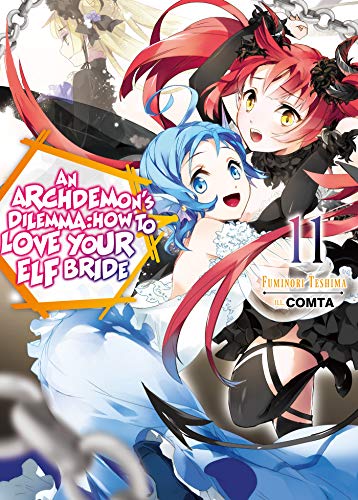
No debuts for J-Novel Club, but a heaping helping of ongoing digital light novels. We get An Archdemon’s Dilemma 11, Arifureta 11, I Refuse to Be Your Enemy! 4, The Intrigue of Marielle Clarac (Book 5 in that series), Slayers 4, and The Sorcerer’s Receptionist 2. Phew!

Kodansha has some print. We get Drifting Dragons 7, Fairy Tail: 100 Years Quest 6, Gleipnir 8, the 2nd Magic Knight Rayearth manga box set, which will finish the series, and also has a bonus artbook. That Time I Got Reincarnated As a Slime 15 and UQ Holder 21 are also out.

ASH: I’ve really been enjoying Drifting Dragons. I’ve also somehow never actually read Magic Knight Rayearth yet.

SEAN: Digitally the debut is I Guess I Became the Mother of the Great Demon King’s 10 Children in Another World (Isekai de Saikyou Maou no Kodomo-tachi Juunin no Mama ni Nacchaimashita), which sounds like your standard isekai but is also by Ema Toyama, author of Missions of Love and other shoujo classics. This is not shoujo: it runs in Shonen Sirius. A girl whose mother has died plays the game the mother never finished… and finds herself in another world.

ASH: Ema Toyama, you say? That piques my interest a bit more than just the title alone.

MJ: I don’t read much digitally, but this intrigues me as well, almost entirely because of the author.

SEAN: There is also Dolly Kill Kill 9, Dr. Ramune -Mysterious Disease Specialist- 2, GE: Good Ending 12, Heroine for Hire 4 (the final volume), Kakushigoto 10, Orient 9, Shaman King: The Super Star 2, Shojo FIGHT! 14, and The Writer and His Housekeeper 3.

MICHELLE: I really, really need to get caught up on Shojo FIGHT!.

SEAN: One Peace has a 3rd manga volume for The Reprise of the Spear Hero.

Debuting from Seven Seas is Didn’t I Say to Make My Abilities Average in the Next Life?! Everyday Misadventures! (Watashi, Nichijou wa Heikinchi de tte Itta yo ne!), the 4-koma spinoff of Mile’s antics that everyone wanted. It runs in Comic Earth Star.

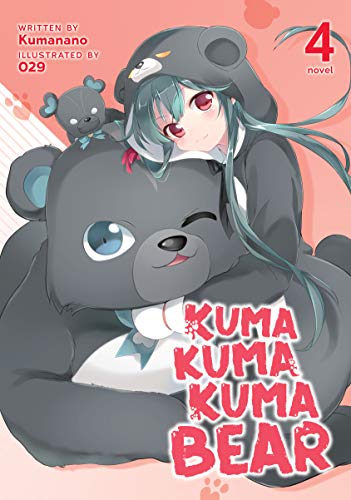
Also out from Seven Seas: Goodbye My Rose Garden 3 (the final volume) and Kuma Kuma Kuma Bear’s 4th novel (digital-first).

MICHELLE: I wouldn’t say Goodbye, My Rose Garden was an amazing series, but it was certainly good enough to read the third and final volume.

ASH: I still need to read the second volume (and now soon the third), but I found the first volume to be enjoyable.

SEAN: Sol Press, after what seems like 80,000 years, has the second Saving 80,000 Gold in Another World light novel.

Tokyopop has the 2nd and final volume of No Vampire, No Happy Ending.

Vertical gives us the 4th Katanagatari omnibus digitally (I will keep repeating this till it’s correct), Kino’s Journey 7, and With a Dog AND a Cat, Every Day is Fun 2.

MICHELLE: I really liked the first volume of With a Dog AND a Cat, Every Day is Fun and am eagerly anticipating the second.

MJ: Always here for Kino’s Journey, too.

SEAN: They also have Zoku-Owarimonogatari, the final, absolutely the last, no take backs, Monogatari Series novel. Unless they license the others that came after this.

Viz’s debut is Remina, another helping of Junji Ito just in time for winter. This is sci-fi, but still just as terrifying. It ran in Big Comic Spirits.

MICHELLE: I am down for this sci-fi/horror blend!

ASH: Yup! I’m here for this one, too.

MJ: Yes!

SEAN: Also from Viz: Blue Flag 5, Golden Kamuy 19, Levius/est 7, Maison Ikkoku Collector’s Edition 2, and No Guns Life 8.

ANNA: Glad that Maison Ikkoku is being rereleased and looking forward to Blue Flag.

MICHELLE: What Anna said.

ASH: I should actually read Maison Ikkoku now that it is readily available again.

MJ: I should be buying them, since I never managed to acquire a full collection of the original release!

SEAN: Yen On has a truly terrifying number of light novels coming out. The first debut is The Angel Next Door Spoils Me Rotten (Otonari no Tenshi-sama ni Itsu no Ma ni ka Dame Ningen ni Sareteita Ken). We’ve seen a mini-rebirth of the non-fantasy romcom in recent licenses, and this falls into that category. A guy lends his neighbor his umbrella one day, she offers to help around his house in return, and a relationship blossoms.

The second debut is a spinoff, Goblin Slayer Side Story 2: Dai Katana. This apparently goes into the past of Sword Maiden.

There is also (deep breath): Accel World 23, The Alchemist Who Survived Now Dreams of a Quiet City Life 5, Baccano! 15, The Demon Sword Master of Excalibur Academy 2, The Devil Is a Part-Timer 18, The Genius Prince’s Guide to Raising a Nation Out of Debt (Hey, How About Treason?) 5, Suppose a Kid From the Dungeon Boonies Moved to a Starter Town 4, and Torture Princess 6.

ASH: That is a fair number of light novels!

SEAN: On the Yen Press side, there’s even more. Debut #1: 86, the manga adaptation of the grim military fantasy light novel series. It runs in Young Gangan.

Carole and Tuesday runs in Young Ace, and I believe is the rare case where the anime comes first and the manga follows. Girls who want to be musicians… on Mars!

ANNA: I watched half of the anime….

ASH: I do like musicians… and Mars…

MJ: I… kind of want it. Though I’m not sure how to interpret the fact that Anna only watched half of the anime.

SEAN: Not quite a debut, but we do see Overlord: The Complete Anime Artbook.

Strawberry Fields Once Again (Strawberry Fields wo Mou Ichido) is a yuri romance that seems to have a twist to it. It ran in Mediaworks’ @ vitamin.

And Wolf & Parchment is the manga adaptation of the sequel to Spice & Wolf.

Also from Yen: ACCA 13-Territory Inspection Department P.S. 2, The Devil Is a Part-Timer! 16, Goblin Slayer 9, King of Eden 2, KonoSuba 11, Lust Geass 2, No Matter How I Look at It, It’s You Guys’ Fault I’m Not Popular! 17, Plunderer 6, Rascal Does Not Dream of Petit Devil Kouhai (another omnibus), Re:ZERO -Starting Life in Another World-, Chapter 3: Truth of Zero 11 (the final volume of this arc), Reborn As a Polar Bear 4, The Saga of Tanya the Evil 12, A Witch’s Printing Office 4, and Yowamushi Pedal’s 16th omnibus.

MICHELLE: I am fixin’ to have a YowaPeda catch-up spree and am very happy about that.

ASH: Same! And I always look forward to reading Natsume Ono’s manga, so I plan on picking up the ACCA continuation as well.

SEAN: Any presents from this list you’re giving out?

Filed Under: FEATURES, manga the week of

Last Round Arthurs, Vol. 3: The Snow Maiden & The King Who Killed Arthur

December 10, 2020 by Sean Gaffney

By Taro Hitsuji and Kiyotaka Haimura. Released in Japan by Fujimi Fantasia Bunko. Released in North America by Yen On. Translated by Jan Cash.

I must admit up front: I did not enjoy this book as much as the last two. There’s a big reason for that: Luna, who is probably the best reason to read the book, spends most of it sidelined by the latest villain, and the series is simply far less fun when she’s not around being the Big Dumb Girl With A Good Heart. The other reason is an odd one, as the afterword explicitly lays it out for me: Rintarou changes over the course of the book, becoming far more of a shonen hero-type of character rather than the grumpy cynic he’d been so far. The author says this is a common development in manga and light novels, but I’m not sure it’s as common as he thinks, and I’m not sure it fits the character well. I don’t really want to see Rintarou become Touma. Other than that, though, the book is doing what it does best: lots of Arthurian backstory, lots of big shonen battles, and lots of betrayal.

The titular snow maiden is Nayuki Fuyuse, who readers may have forgotten was introduced in Book 1 as Rintarou’s mysterious classmate. The fact that she’s part of all this is not that much of a surprise. The fact that she’s secretly in love with him is also not that big a surprise. What *is* a surprise is that Rintarou, who is usually fairly clever, does not immediately realize who she is when she says the one thing she can’t do is tell him who she is. All he has to do is think of the person who betray4ed Merlin back in the day and bing! There’s your answer. In any case, she’s more support here. The actual King candidate is a whiny young creep named Hitoshi, his Jack Sir Tristan, and a mysterious young woman named Reika, who seems to be a mass murderer but there’s more to her than we think. And, as always, Elaine is pulling all the strings.

Apologies for spoiling a bit, but to be fair, it is in the book’s subtitle: the best part of this book is the subplot with Mordred. There is rare subtlety in the writing at her portrayal, and I particularly liked her own Jack, Sir Dinadan, casually mentioning that all the King candidates she’s supposedly murdering are not actually dead yet. It also reminds us of the story’s Arthurian background, and the fact that Arthur basically fell from grace, as it were. Unfortunately, there’s one more big minus in this book, and that’s the villain, Hitoshi. If Last Round Arthurs is a Fate ripoff, then here’s Shinji, whining, demanding, and threatening to rape the cast. What is it with light novel writers and their desire to make all the villains super, super, SUPER bad?

This is still a quick, easy read, and I might get the next volume, if only to see if Kay (barely in this book) will do anything at all. But I must admit this volume is no more than a C+.

Filed Under: last round arthurs, REVIEWS

My Youth Romantic Comedy Is Wrong As I Expected, Vol. 10

December 9, 2020 by Sean Gaffney

By Wataru Watari and Ponkan 8. Released in Japan as “Yahari Ore no Seishun Rabukome wa Machigatte Iru” by Gagaga Bunko. Released in North America by Yen On. Translated by Jennifer Ward.

This may be a first for this series. For the first time, I got through an entire volume without wanting to throw Hachiman out a window. This isn’t to say that he’s all smiles and warm fuzzies, but his cynical “this is what teenage life is really ,like it’s a jungle out there man” monologues are kept to a minimum and his attempts to solve the problem of the book involve actually talking with people about the problem rather than, say, throwing himself under the bus again. This volume was adapted into the final chunk of Season 2, so also is probably the calm before the storm that will be the final arc of the series. Things are moving pretty slowly – you can tell the author wants to wrap this up before they become third years – but we are starting to think about the future, which in Japan means what “track” will the kids be taking, arts or sciences?

Haruno is on the cover, and actually has a significant presence in the book as the “not quite evil but close” antagonist. The main focus of the book, though, is Hayama, who is the perfect boy that everyone wants to hang out with/date, but he’s refusing to say whether he’s taking the arts or sciences track, which has thrown his group into turmoil. Particularly Miura, who has a crush on him but is also concerned for his well-being – nearly everyone by now can see that Hayama is wearing a mask to hide his real self. She asks our heroes to find out what his choice is, which proves to be a very tough nut to crack, and mostly involves Hachiman doing a lot of detective work. In the interim, though, there is an ominous cloud on the horizon, and we see part of that cloud here, as we meet Yukino and Haruno’s mother, who is exactly what you’d expect she would be like. Oh yes, and there’s a rumor that Hayama and Yukino are going out which has spread like wildfire.

It’s pretty clear that Yukino’s family issues are gonna be the series’ endgame (which is bad news for Yui, and indeed she once again doesn’t have much of a role here – this love triangle is a bit imbalanced). For the moment, though, we’re dealing with Hayama, whose feelings for Hachiman are very conflicted – at one point he holds out hope that Hachiman is concerned about him as a friend, only to realize that it’s for his Service Club after all. It comes to a head in the school’s marathon, where Hayama bluntly talks about how he hates Hachiman, who may be Hayama’s opposite but also has managed to draw people to his actual self, crappy though that self may be. I was also very amused at the discussion of arts vs. sciences, some of which is “what am I best at” but a lot of which is also “how can I improve my social image?”.

So yes, this was a strong volume in the series, and I also really love the brother/sister relationship between Hachiman and Komachi, which is realistic and sweet. I am totally ready for Book 11. Sadly, the author is not, so get ready for 10.5, more short stories, next time.

Filed Under: my youth romantic comedy is wrong as i expected, REVIEWS

Pick of the Week: Food and Mystery

December 7, 2020 by Sean Gaffney, Michelle Smith, Ash Brown, Anna N, MJ and Katherine Dacey Leave a Comment

SEAN: I generally try not to double dip light novels and manga, and the novel this manga is based on is coming out in two months from J-Novel Club. But The Apothecary Diaries has gotten so much good buzz that I feel I have to make an exception. A pharmacist is kidnapped and taken to the Imperial harem. She tries to live quietly and not get into trouble, but constantly finds herself drawn into mystery and politics I’m down.

MICHELLE: The combination of mystery and politics in manga will never not appeal to me, so I’m definitely planning to try out The Apothecary Diaries, but even more up my street is Manly Appetites: Minegishi Loves Otsu, with its BL/food combo. I love What Did You Eat Yesterday?, I loved Our Dining Table… I hope I love this, too.

ASH: I’m absolutely with Michelle on this one – I simply cannot resist BL food manga, so Manly Appetites gets my pick this week. That being said, I’m also really looking forward to the debut of The Apothecary Diaries and reading more of How Do We Relationship? among other releases!

ANNA: I agree, Manly Appetites and The Apothecary Diaries both sound great.

MJ: Like Michelle, despite a number of alluring releases this week, I’m going to let my track record of satisfaction with foodie BL tip me towards Manly Appetites: Minegishi Loves Otsu. Though I’ll admit the title gives me the slightest pause.

KATE: I just finished season four of The Crown and am still jonesing for a little more palace intrigue, so I’m picking The Apothecary Diaries. (I was going to make a bad joke about “curing what ails me,” but… 2020.)

Filed Under: PICK OF THE WEEK

I’ve Been Killing Slimes for 300 Years and Maxed Out My Level, Vol. 8

December 7, 2020 by Sean Gaffney

By Kisetsu Morita and Benio. Released in Japan as “Slime Taoshite 300 Nen, Shiranai Uchi ni Level MAX ni Nattemashita” by GA Novels. Released in North America by Yen On. Translated by Jasmine Bernhardt.

There are many times during my reading of the Killing Slimes for 300 Years series that I realize that not only are the characters treating this world as an excuse to relax and do inconsequential things, but so is the author. The author has many, many light novel series under their belt, some of them running simultaneously via different publishers, and you get the sense that this series is the one where the author can just kick back and not have to worry too hard about plot or characterization. It’s essentially a short story collection. The biggest thing that happens in this book is that Beelzebub has finally gotten the side stories that appeared in Books 5-7 farmed out to her own official spinoff (which has already been licensed over here for the spring) and so the last sixth of the book or so is devoted to Halkara, who gets a spinoff, seemingly set before the main series, where she… reviews restaurants. Don’t expect this to get spinoff novels anytime soon.

A breakdown of this book: Sandra goes through a Flowers for Algernon-style transformation after some super fertilizer turns her into a teenager with a high IQ (that said, there’s zero angst here); Pondeli invites the cast to the new Demon Arcade that she’s opening, whose games are hit-or-miss; the hippie pine spirit who does weddings finds that the flaky God who brought Azusa over is muscling in on her territory; that same God tries to reason with a fellow, more traditional God in order not to lose followers (and Azusa ends up leveling up EVEN MORE); they return to the ghost nation’s temple and tell ghost stories, most of which have a familiar bent; Azusa gets stranded on a desert island and meets what she thinks is a native tribe; a strange butterfly woman insists of staying with Azusa a week for no reason whatsoever and not because The Crane repays A Debt or anything; and Pecora starts a Youtube stream service from the demon world.

That last one may drive home the point that, aside from having elves, dragons, and slimes, this series is absolutely uninterested in building its own world, but would much rather leech off of Japan’s own past and present. The ghost stories Azusa tries to tell, common ones from Japan, are also very well known here. the cuisine Halkara samples is essentially variations on what you can get in any mid-sized town, complete with a conveyor belt sushi place. It’s… very low bar, to be honest, but it’s also relaxing for the reader, who might get a bit annoyed at streamers being a thing in this land of Gods and demons, but will likely quickly get over it. The stories are all basically about the same – cute – though I might have critiqued the desert island one more had it not ended how it did. (At least the natives did not go “unga bunga bunga’ a la Bugs Bunny.)

It’s cute, it’s fuzzy, and you will forget about it the moment that you finish it. And sorry, yuri fans, Azusa still insists that her house is home to family, and not, and I quote, “a special, gay dimension”.

Filed Under: i've been killing slimes for 300 years, REVIEWS

Banner of the Stars: The Screech of Space-Time

December 6, 2020 by Sean Gaffney

By Hiroyuki Morioka and Toshihiro Ono. Released in Japan by Hayakawa Bunko. Released in North America by J-Novel Club. Translated by Giuseppe di Martino.

In the Afterword for this book, published in Japan in 2004, the author apologizes for taking so horribly long to write it (the previous book had come out in 2001). Which makes me wonder how the next book, which came out in 2013, is going to top that. It’s also been a while since the last volume came out in English, but that’s OK, because the reader is dropped right back into one of the main features of Banner of the Stars: Epic Space Battles. Sadly, that is a mark against it for me, as I’ll be honest: I find a lot of the space battle writing in this book tedious. It is no doubt more realistic than, say, the ‘let’s fall out of our chairs’ battles in Star Trek, but there is a certain sterility to it all. Actually, this volume has quite a few marks against it. Jin and Lafier end up playing smaller roles, which is a shame as they’re the reason I read the books. More to the point, the Abh are still just not that likeable.

As I said, a lot of this book is space battles, as it reminds us that the Abh are at war with the various human federations that vie against them. But that might change soon – one of the minor players on the other side wants to negotiate a deal that might actually shift the tide and lead to the end of the war. This is good news, despite all the Abh talking about how much they love being in battle. That said, can the deal really be trusted? It helps that the idea for the deal came about watching the way that Jint handled his own planet recently, giving everyone ideas. As for Jint and Lafier, as I said, they don’t get as much time together as before, and what little there is is more down to showing off how Jint is still trying to assimilate and not quite making it. That said, given the cliffhanger the two of them will soon have much bigger things to worry about.

As I said, I like Jint and Lafier, and I like their scenes together here, but there are simply too few of them. We get a long stretch devoted to the current Empress and her discussions with aides on whether to accept the offer they’re being handed. It’s good f you like political realism, but again shows us that the Abh, in general, are simply too blase and matter of fact about everything, and it does not make for the most scintillating writing. It reminds me of bad Star Trek books that tried to write Vulcans but fell too hard on the “logical” side. At least there’s banter, and we’re reminded that the Abh basically run on it, but that’s sometimes not enough, especially when it’s not really clear if we’re meant to see them as the enemy or the protagonists.

Fortunately, we do not have a nine-year wait for the next book to come out. Unfortunately, I get the feeling I’ll be seeing a lot more space battles in it, given the events towards the end of this book. In the meantime, more Jint and Lafier being an obvious couple but never doing anything about it, please.

Filed Under: banner of the stars, crest of the stars, REVIEWS

Is It Wrong to Try to Pick Up Girls in a Dungeon?, Vol. 15

December 5, 2020 by Sean Gaffney

By Fujino Omori and Suzuhito Yasuda. Released in Japan as “Dungeon ni Deai o Motomeru no wa Machigatte Iru Darou ka?” by GA Bunko. Released in North America by Yen On. Translated by Paul Starr.

This volume is similar to Volume 8, in that it is essentially a short story collection with wraparounds. The stories are all (almost) on a basic premise, which is “let’s lay out the backstories of how everyone arrived in Orario and how their lives have improved 8000% now that they have family and friends”. As such, there is an air of melancholy to this book, as while we do admire how far everyone has come, we’re seeing a depressed Bell, a rejected Hestia, an abused Lilly, a disillusioned Eina, a frustrated and angry Welf, a bitter Lyu, and… well, we’ve mostly gone into Mikoto and Haruhime’s stories already, so theirs is the exception to the rule. And then there’s Aiz, who doesn’t show up till the end, but who provides the perfect capper to the book, even if it leaves you with an ominous feeling. After several volumes in a row that are just dungeon fights, this one also seems happy to give everyone a chance to rest.

Bell and Hestia are on the cover, and they get the first flashbacks, as they (independently) recall how they arrived in the city. Their stories are downbeat, but end on a high note as they meet each other. There’s a later mirror of them with Lyu’s story, which features similar beats – she really needs to join a Familia, but her preconceptions and prickly nature are driving everyone away. Lilly’s story was a high point – showing off how wretched her life has been from the moment of her birth (sorry, Soma, giving Lilly potato puffs once does not make me forgive you) while contrasting it with the glee and happiness she feels as Hestia tells her that she’s gone up to Level 2. That said, when it comes to her past, she’d still prefer to deal with it indirectly rather than confront it head on. Which is her own choice, of course.

Welf’s story is fairly predictable, and Haruhime and Mikoto’s suffers from being the ‘light’ story in the book (though it is nice to see Haruhime slowly try to get herself out of “clumsy foxgirl” status – the maid stuff really doesn’t help). The epilogue, though, is the true best part of the book. It features the one day a year when the city mourns all its fallen, something that has to be explained to Bell (who, we are reminded, has not even been there a year yet). Seeing the funeral elegy being sung by everyone – even those such as Freya – was hauntingtly beautiful. That said, Bell and Aiz are not headed down the same path, and this epilogue serves to underscore that. Aiz is not here to be anyone’s hero. And, while Sword Oratoria readers already have a good inkling of her past secrets, here Bell finally connects the dots, and is stunned.

Unfortunately, the 16th volume only came out in Japan two months ago, so we may have another long wait. And, given the cover to 16 has Syr and Freya on it, Aiz may not even be the focus. Still, for a collection that was written as “take the short stories from the anime releases bonus DVDs and create wraparound material”, this is surprisingly solid.

Filed Under: is it wrong to try to pick up girls in a dungeon?, REVIEWS

  • « Go to Previous Page
  • Page 1
  • Interim pages omitted …
  • Page 146
  • Page 147
  • Page 148
  • Page 149
  • Page 150
  • Interim pages omitted …
  • Page 378
  • Go to Next Page »
 | Log in
Copyright © 2010 Manga Bookshelf | Powered by WordPress & the Genesis Framework