• Skip to primary navigation
  • Skip to main content
  • Skip to primary sidebar
  • Home
  • About Us
    • Privacy Policy
    • Comment Policy
    • Disclosures & Disclaimers
  • Resources
    • Links, Essays & Articles
    • Fandomology!
    • CLAMP Directory
    • BlogRoll
  • Features & Columns
    • 3 Things Thursday
    • Adventures in the Key of Shoujo
    • Bit & Blips (game reviews)
    • BL BOOKRACK
    • Bookshelf Briefs
    • Bringing the Drama
    • Comic Conversion
    • Fanservice Friday
    • Going Digital
    • It Came From the Sinosphere
    • License This!
    • Magazine no Mori
    • My Week in Manga
    • OFF THE SHELF
    • Not By Manga Alone
    • PICK OF THE WEEK
    • Subtitles & Sensibility
    • Weekly Shonen Jump Recaps
  • Manga Moveable Feast
    • MMF Full Archive
    • Yun Kouga
    • CLAMP
    • Shojo Beat
    • Osamu Tezuka
    • Sailor Moon
    • Fruits Basket
    • Takehiko Inoue
    • Wild Adapter
    • One Piece
    • After School Nightmare
    • Karakuri Odette
    • Paradise Kiss
    • The Color Trilogy
    • To Terra…
    • Sexy Voice & Robo
  • Browse by Author
    • Sean Gaffney
    • Anna Neatrour
    • Michelle Smith
    • Katherine Dacey
    • MJ
    • Brigid Alverson
    • Travis Anderson
    • Phillip Anthony
    • Derek Bown
    • Jaci Dahlvang
    • Angela Eastman
    • Erica Friedman
    • Sara K.
    • Megan Purdy
    • Emily Snodgrass
    • Nancy Thistlethwaite
    • Eva Volin
    • David Welsh
  • MB Blogs
    • A Case Suitable For Treatment
    • Experiments in Manga
    • MangaBlog
    • The Manga Critic
    • Manga Report
    • Soliloquy in Blue
    • Manga Curmudgeon (archive)

Manga Bookshelf

Discussion, Resources, Roundtables, & Reviews

Ash Brown

The Summit of the Gods, Vol. 5

August 21, 2015 by Ash Brown

The Summit of the Gods, Volume 5Author: Baku Yumemakura
Illustrator: Jiro Taniguchi

U.S. publisher: Fanfare/Ponent Mon
ISBN: 9788492444403
Released: July 2015
Original release: 2003
Awards: Angoulême Prize, Japan Media Arts Award

Baku Yumemakura’s novel The Summit of the Gods (which, sadly, hasn’t been translated into English) was published in Japan in 1998 and would go on to win the Shibata Renzaburo Award. In 2000, Yumemakura was paired up with the immensely talented artist Jiro Taniguchi to create a manga adaptation of the novel. The Summit of the Gods manga continued to be serialized through 2003 and was collected as a five-volume series. The manga also became and award-winning work, earning an Angoulême Prize and a Japan Media Arts Award among many other honors and recognitions. In addition to being one of my favorite manga by Taniguchi, The Summit of the Gods is actually one of my favorite manga in general. As such, I was waiting with great anticipation for the publication of the fifth and final volume of the series in English by Fanfare/Ponent Mon. I was thrilled when it was finally released in 2015.

Photographer Makoto Fukamachi followed the legendary climber Jouji Habu to Mount Everest to document one of the most difficult and dangerous ascents to ever be attempted: a solo climb of the southwest face in the winter without oxygen. The agreement between them was that neither one of the men would interfere with the other’s climb no matter what happened. But when Fukamachi’s life is in danger Habu rescues him anyway, putting his own life and the success of his ascent at risk. Fukamachi ultimately survives, returning to Japan to find a media frenzy; not only was Habu an infamous climber, his assault on Everest was an illegal one. And then there’s the matter of the camera that Habu had in his possession. Believed to have belonged to George Mallory, it draws considerable attention once its existence comes to light. Fukamachi’s connection to Habu and to the camera makes him a person of interest as well. Even without the additional scrutiny from the public he would find readjusting to a normal life after his fateful Everest climb to be challenging if not impossible.
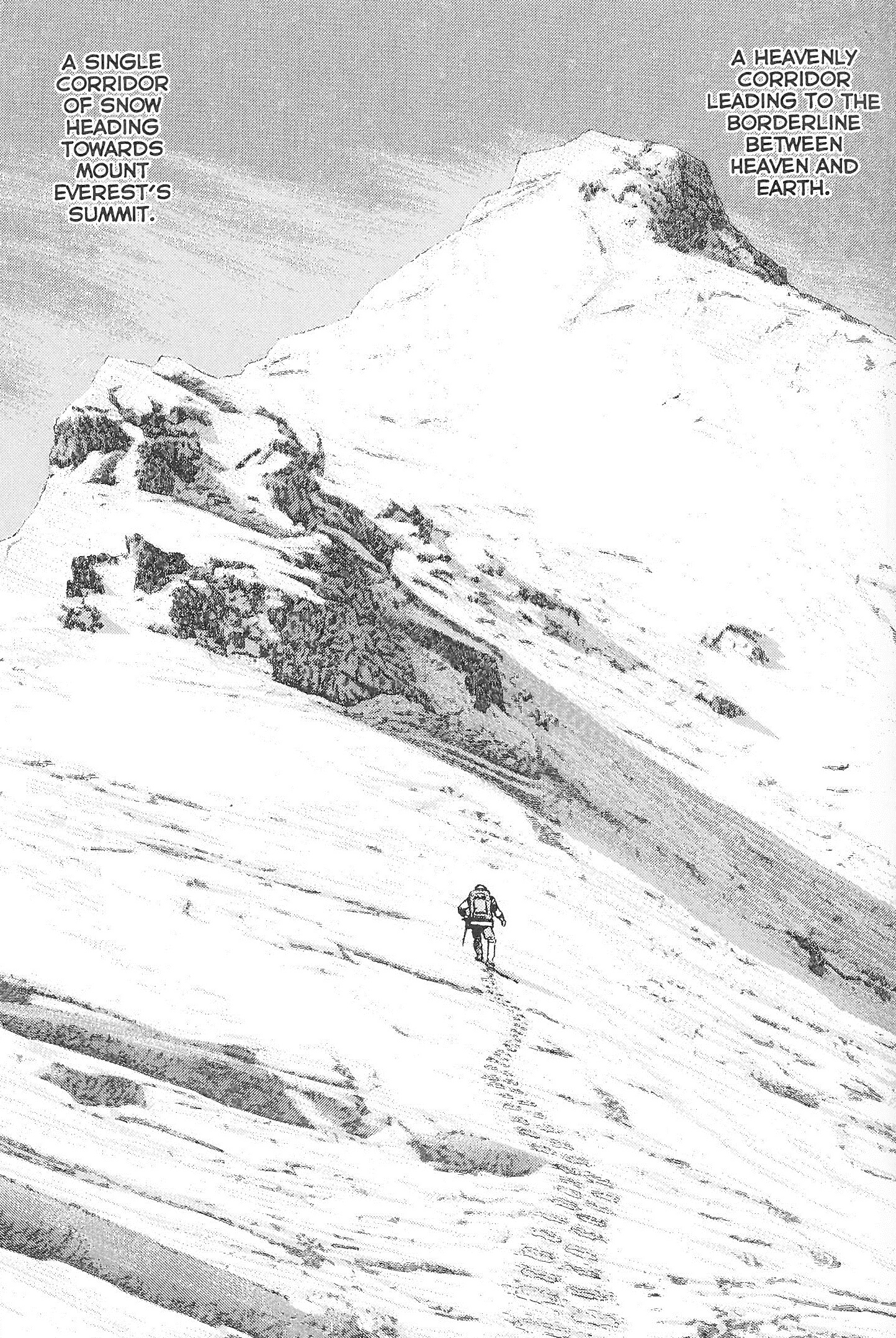
Summit of the Gods, Volume 5, page 2013Three stories have become irrevocably intertwined in The Summit of the Gods: the story of George Mallory and Andrew Irvine’s’ final climb and disappearance on Mount Everest, the story of Jouji Habu’s efforts to become the greatest known climber more for himself than for any sort of fame, and the story of Makoto Fukamachi as he strives to untangle his own feelings about climbing and about life by trying to unravel the mysteries surrounding those of the others. The Summit of the Gods can be read in two different ways. It can be approached simply as a compelling tale of adventure and survival or, either alternatively or simultaneously, as a stunning metaphor for any human struggle against seemingly overwhelming odds. Climbing requires great physical and mental fortitude, and life can be just as demanding. The characters in The Summit of the Gods not only pit themselves against nature, they challenge themselves to overcome their own personal weaknesses and limitations.

Facing oneself—being able to objectively recognize the extent of one’s own abilities and admit the possibility of failure—isn’t necessarily an easy thing to do. It can also be a very lonely thing. This, too, is emphasized in The Summit of the Gods through Yumemakura’s writing and Taniguchi’s artwork. Even when working together, the climbers must ultimately rely on themselves and can only trust and depend on others so far. In the end they face the mountain and face their personal demons alone. The characters also show a constant struggle against their own insignificance, a hard-fought battle to find meaning in their lives. Taniguchi’s vistas are gorgeous and sweeping, showing just how small a person is in comparison to the rest of the world. But this also makes the climbers’ perseverance and achievements all the more remarkable. The Summit of the Gods is a phenomenal work with great writing and fantastic art, effectively telling a thrilling drama that also has great depth to it.

Filed Under: REVIEWS Tagged With: Angoulême Prize, Baku Yumemakura, Fanfare/Ponent Mon, Japan Media Arts Award, Jiro Taniguchi, manga, summit of the gods

Manga the Week of 8/26

August 21, 2015 by Sean Gaffney, Ash Brown, Anna N and Michelle Smith 1 Comment

SEAN: For a last week of the month, there’s a lot of stuff due out, particularly from Kodansha Comics.

The 16th Attack on Titan comes in a regular edition, and also a Special Edition with a set of AoT-themed playing cards.

ASH: It’ll be interesting to see how the special edition does for Kodansha.

SEAN: And there’s a 5th volume of the prequel Attack on Titan: Before the Fall.

Fairy Tail also has a spinoff, with the first volume of Blue Mistral, which I believe focuses on Wendy.

inuyashiki1

Inuyashiki is the new series running in Evening magazine from the author of Gantz. Its protagonist being an old man is unusual, its science fiction with horror/gore plot is not, at least not for this author.

ASH: Although I didn’t follow Gantz to the end, I am rather curious about Inuyashiki.

ANNA: Huh, I’m cautiously curious about this. Will wait for Ash’s review though!

SEAN: Let’s Dance a Waltz comes to an end with the third and final volume. Less fat-shaming in your next series, please.

MICHELLE: I second that request.

ASH: Yup. Also, I didn’t realize the series was so short!

ANNA: So glad I didn’t read this.

SEAN: Maria the Virgin Witch has an epilogue with Exhibition.

ASH: Maria the Virgin witch was such a quirky little series.

SEAN: Say “I Love You” has volume 9 coming out, and it’s become one of my favorite “shosei” series.

MICHELLE: Mine, too! Looking forward to this one.

ANNA: I need to get caught up! It is very good.

SEAN: And Your Lie in April has a 3rd volume. Lies indeed; it’s August, not April. You can’t trick me, manga!

ASH: Wait, it’s not April?

SEAN: There are a few titles coming out that are not Kodansha. Seven Seas has an Alice book, with White Rabbit and Some Afternoon Tea. After being an antagonist for so long in these books, Peter White finally gets his chance to be the love interest.

ANNA: Is it extra traumatic?

bodacious1

SEAN: I realize the title might put some people off, but Bodacious Space Pirates was a fantastic novel/anime series, and Bodacious Space Pirates: Abyss of Hyperspace is a manga adaptation of the feature film they made. I’m greatly looking forward to it.

ASH: Should hopefully be fun!

ANNA: If nothing else, that title is fabulous.

SEAN: Also greatly looking forward to the 4th omnibus of Lucifer and the Biscuit Hammer. Buy this please. Make Sean proud of you.

ASH: I will make you proud, Sean!

SEAN: Vertical has a 6th volume of Supernatural thriller Ajin. Be warned, it’s caught up with Japan.

And Vertical also has a novel spinoff of Attack on Titan. Harsh Mistress of the City is another one that takes place before the main manga, I believe.

ASH: It’s also illustrated by Range Murata which will be of particular interest to a few people I know.

ANNA: I didn’t know that! Interesting!

SEAN: So what are you getting next week?

Filed Under: FEATURES, manga the week of

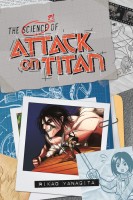
The Science of Attack on Titan

August 19, 2015 by Ash Brown

The Science of Attack on TitanAuthor: Rikao Yanagita
Illustrator: Maru Fujishima

Translator: Ko Ransom
U.S. publisher: Kodansha
ISBN: 9781632361851
Released: June 2015
Original release: 2014

Hajime Isayama’s ongoing manga series Attack on Titan has become a worldwide phenomenon, spawning multiple spinoff manga series, anime, live-action films, games, and other media and merchandise. The franchise has been such a resounding success that Kodansha Comics, the manga’s English-language publisher, has even broken its rule of not releasing anything that isn’t manga. The first exception was the Attack on Titan Guidebook: Inside & Outside. More recently, in 2015, Kodansha published Rikao Yanagita’s The Science of Attack on Titan as translated by Ko Ransom (who also happens to the translator for the guidebook and the Attack on Titan: Before the Fall novels, among other things.) Since I’m fascinated by Attack on Titan and its immense popularity, I was particularly glad to have the chance to read a review copy of The Science of Attack on Titan. The volume was originally published in Japan in 2014 and is the first work by Yanagita to have been released in English. Credited as the Senior Researcher of the Sci-F/Fantasy Science Research Institute, Yanagita is a fairly prolific writer who has authored other “The Science of” books as well.

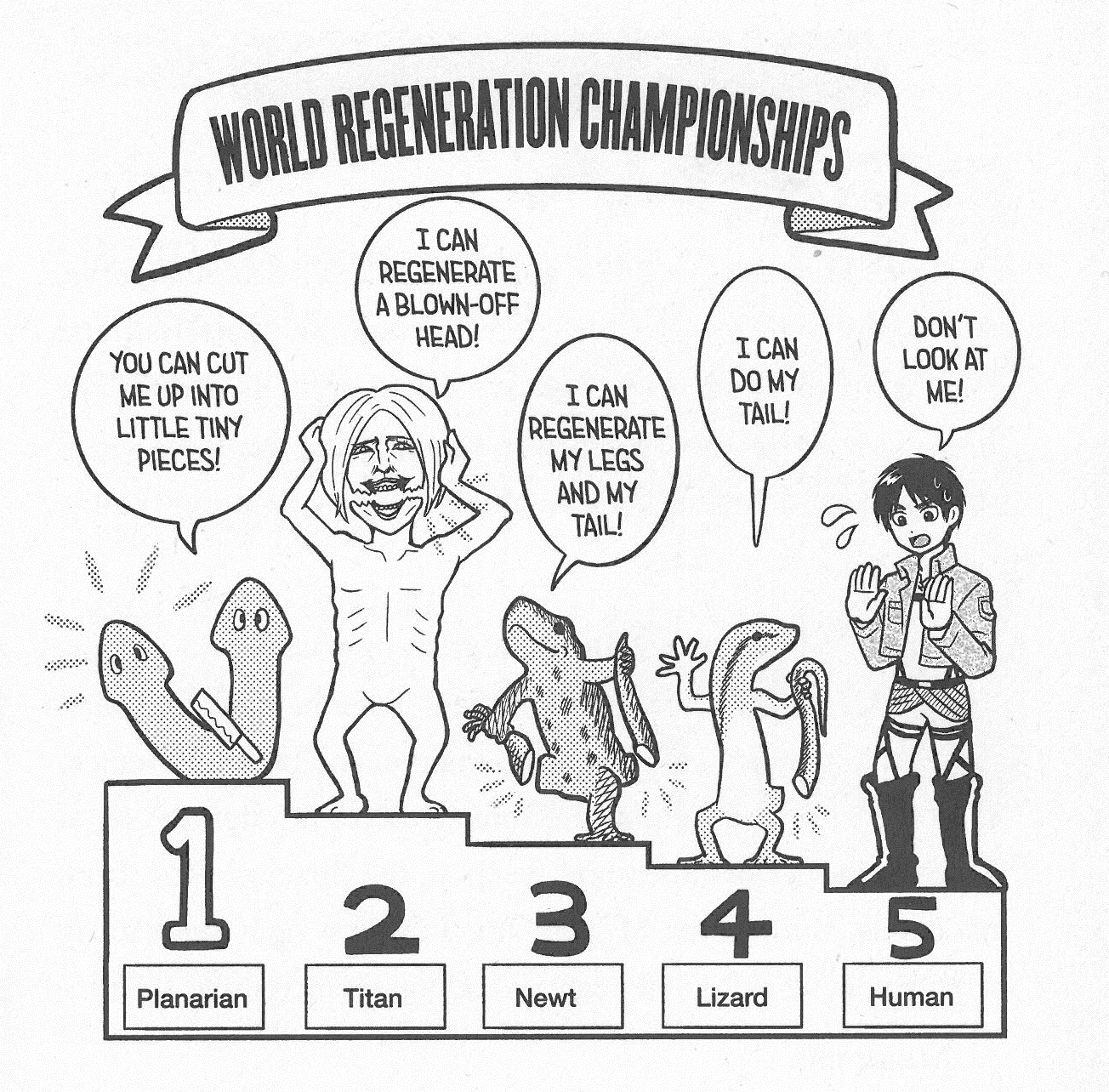
The Science of Attack on Titan is divided into four main sections. The first and longest, “Surprising Titan Fundamentals,” focuses on the Titans, specifically investigating their strengths and weaknesses. Once Titans have been established as the fearsome creatures that they are, in the next section Yanagita asks and answers the question “What Should I Do If Titans Attack?!” Appropriately, this is followed by “Anti-Titan Measures: How Effective Are They Really?,” a section exploring in-series technologies such as the vertical maneuvering equipment. (Also included: an entire chapter devoted to the awesomeness of Levi.) The final section, “Simple Questions about Attack on Titan,” is a sort of catchall for remaining topics that didn’t really fit into the previously established categories. There are also shorter one-page investigations called “Lingering Fantasy Science Questions” scattered throughout the volume. Accompanying the text are relevant panels and pages taken from the Attack on Titan manga as well as additional illustrations by Maru Fujishima that can be quite humorous.

The Science of Attack on Titan, page 17Although the readers who will probably be the most interested in or at least the most likely to pick up The Science of Attack on Titan are those who are already familiar with Attack on Titan as a whole, it is only fair to give the warning that the volume does include spoilers for the franchise. Most are fairly minor, but there are a few major twists that are discussed as well. The Science of Attack on Titan is based on the original Attack on Titan series up through the thirteenth volume in addition to the first volume of the Attack on Titan: No Regrets spinoff manga, the Before the Fall prequel novels, and the Attack on Titan Guidebook. Unless readers are trying to avoid spoilers at all costs, they shouldn’t be too daunted by Yanagita’s thoroughness; only a basic knowledge of Attack on Titan, and its characters and setting is required to enjoy and understand The Science of Attack on Titan. There is no need to be well-versed in all aspects of the franchise in order to follow the book. The Science of Attack on Titan is approachable and friendly for novices in science, too.

The Science of Attack on Titan may be inspired by Attack on Titan, but for the most part Yanagita spends more time discussing real-world physics, chemistry, biology, history, technology, and such than he does Attack on Titan itself. The franchise simply provides an excuse or jumping off point to explore interesting scientific concepts and how they might or might not apply to the series. Unsurprisingly, Yanagita’s analysis shows that many aspects of Attack on Titan could be nothing but fantasy, but it’s very exciting when it appears that something from the series could actually work. The Science of Attack on Titan is written to be both entertaining and engaging, though how funny it is will depend on an individual’s personal sense of  humor. While Yanagita address serious science, he recognizes that Attack on Titan is a fictional work and that subjecting it to such critical scrutiny can be inherently funny. As a result, his approach in The Science of Attack on Titan is informal and comedic, but also informative. Ultimately, the volume’s greatest value is probably in encouraging those who are interested in Attack on Titan to discover just how cool real science can be. Even I learned a few things that I didn’t previously know.

Thank you to Kodansha for providing a copy of The Science of Attack on Titan for review.

Filed Under: REVIEWS Tagged With: attack on titan, kodansha, Kodansha Comics, Maru Fujishima, Nonfiction, Rikao Yanagita

Random Musings: Five Years of Experiments in Manga

August 18, 2015 by Ash Brown

As of today, Experiments in Manga is now five years old! In some ways it feels like I’ve been writing here forever, and in other ways it seems like I’ve just started. When I first began Experiments in Manga, I had no idea how long it was going to last (honestly, I still don’t know), but I am rather pleased that I’ve been able to keep it going for so many years. And I find it especially impressive when I stop to consider all of the other things going on in my life right now.

What are some of those other things, exactly? Well, I and my partners all managed to survive our first year of parenthood, for one. (As did the little one, whose first birthday was last week.) That has certainly been a huge change in my life. I’m incredibly busy at work of late, too, since my supervisor retired in December and I’m still filling in for that position on top of my regular one. Another significant development is that I am now part of the leadership team for a new taiko performance group and I’ve more or less become an alternate for another semi-pro ensemble. I’ve actually been doing some teaching and composing for taiko, too. It’s all been rather exciting. And extremely challenging. And a bit exhausting.

There really doesn’t seem to be such a thing as “free time” anymore for me, and since Experiments in Manga is something that I do in my free time… Well, this past year is the first year that I’ve posted fewer things than I did in the year immediately preceding. Although I have been able to maintain a regular schedule, overall I’m reading less, and I’m writing less, too. I miss both things terribly (the reading especially), but I might have to cut back even more in the coming year depending on how things continue to progress and for the sake of my own sanity.

For example, I’ve decided to quietly retire the Discovering Manga and Finding Manga features. I enjoyed writing them, but I’m just not posting them frequently or regularly enough. (Which I then end up feeling guilty about.) But although I may be saying goodbye to those particular features, last year I actually introduced a new one that seems to be rather popular: Adaptation Adventures. I’ve only posted two so far—Udon Entertainment’s Manga Classics (which incidentally was one of my top posts from the last year) and The Twelve Kingdoms—but I’m hoping and looking forward to writing more.

Speaking of top posts, my Spotlight on Masaichi Mukaide was very well received. In fact, it wasn’t just one of the top posts from last year, it’s one of Experiments in Manga’s most frequently visited pages ever. It probably helped that the spotlight made the rounds on general comics sites in addition to catching the attention of manga enthusiasts. That single post may very well be the most noteworthy thing that I’ve ever written. Likely, I’ll never be able to top it. I’dbe lying if I tried to say that I wasn’t at least a little proud of it.

The most popular (or at least most frequently viewed) manga reviews at Experiments in Manga from the last year included the anthology Massive: Gay Erotic Manga and the Men Who Make It, Aki’s The Angel of Elhamburg, Mentaiko Itto’s Priapus, Aya Kanno’s Requiem of the Rose King, Volume 1, and Yaya Sakuragi’s Hide and Seek, Volume 1. (On a personal note, I am rather pleased that all five of those manga to one degree or another have a queer bent to them.)

As for my top non-manga reviews from the past year there was The World of the Shining Prince: Court Life in Ancient Japan by Ivan Morris, Haikasoru’s anthology Phantasm Japan: Fantasies Light and Dark from and about Japan, Frederik L. Schodt’s Manga! Manga!: The World of Japanese Comics, Seven Seas’ edition of Alice’s Adventures in Wonderland and Through the Looking-Glass by Lewis Carroll with illustrations by Kriss Sison, and Yu Godai’s Quantum Devil Saga: Avatar Tuner, Volume 1.

I’m actually pretty happy to see Avatar Tuner on that list; the novel was one of the books published in 2014 that left the greatest impression on me. As was Massive, for that matter. Last year was actually only the second time that I compiled a list of notable manga, comics, and prose, but I’ll likely compile another one for 2015 since I had so much fun putting together the first two. Plus, other people seem to enjoy them. That goes for my TCAF posts, too, which remain popular. As long as I attend TCAF, and as long as I’m still writing at Experiments in Manga, I plan on rounding up my experiences at the festival.

Another feature of sorts that I’ve continued to work on is my monthly manga review project—a recurring set of reviews that focuses on a specific series or genre. In November, I wrapped up my second project, “Year of Yuri”, a series of reviews featuring manga and comics with lesbian themes. For the following review project, I was feeling in the mood for some horror manga. But while I picked the genre, I let readers of Experiments in manga pick the series. It ended up being a tie between Setona Mizushiro’s After School Nightmare and Yuki Urushibara’s Mushishi, so I decided to review both series, alternating between them each month. At the moment, I’m about halfway through the project.

I still maintain that I write Experiments in Manga for myself, but it does give me great satisfaction and joy to know that other people read and appreciate it as well. Over the last year several readers have let me know that they’ve given a particular manga, comic, or novel a try simply because I wrote about it. I and Experiments in Manga have started to be referenced and cited in Wikipedia as well as other places online as well, including an Italian comics website. (Admittedly, while very cool, I also find this kind of terrifying.) As always, I would like to thank everyone out there who reads and supports my efforts here at Experiments in Manga. It’s truly appreciated. I hope that I can continue to improve and continue to provide content that is useful or at least occasionally interesting. Here’s to another year!

Filed Under: UNSHELVED Tagged With: Experiments in Manga

Pick of the Week: Big Week, Small Picks

August 17, 2015 by Sean Gaffney, Michelle Smith, Ash Brown and Anna N 1 Comment

emma2SEAN: I have gotten used to the fact that when Yen Press puts out 19-20 titles in one go, I get all excited about at least half of them and the rest of the Manga Bookshelf team tends to shrug their shoulders. So let me start this week off. There’s a pile coming out I love – new Wallflower, new Dorohedoro, new Emma. For a pick, I’ll go with the new Sword Art Online novel, if only as I want to see if the author even tries to justify why there are still MMORPGs after the disaster that was cause of the first four books.

MICHELLE: I’m guilty of shrugging, but if I didn’t already own the complete CMX run of Emma, I would surely be excited about Yen’s omnibus editions! As it is, I’m very happy that others have the chance to experience this lovely series.

ASH: There is so much to choose from this week! I’ll definitely be picking up Emma since I missed it the first time and Yen’s hardcovers are gorgeous, but I think I’ll throw my official pick towards the most recent volume of Dorohedoro. I’m thrilled that Viz continues to publish the series; it’s just so bizarrely charming.

ANNA: I’ll go with Emma. I’ve already read it, but it is a delightful series that deserves new readers. I’m glad it is coming back into print with Yen’s excellent production values.

What looks good to you this week?

Filed Under: PICK OF THE WEEK

My Week in Manga: August 10-August 16, 2015

August 17, 2015 by Ash Brown

My News and Reviews

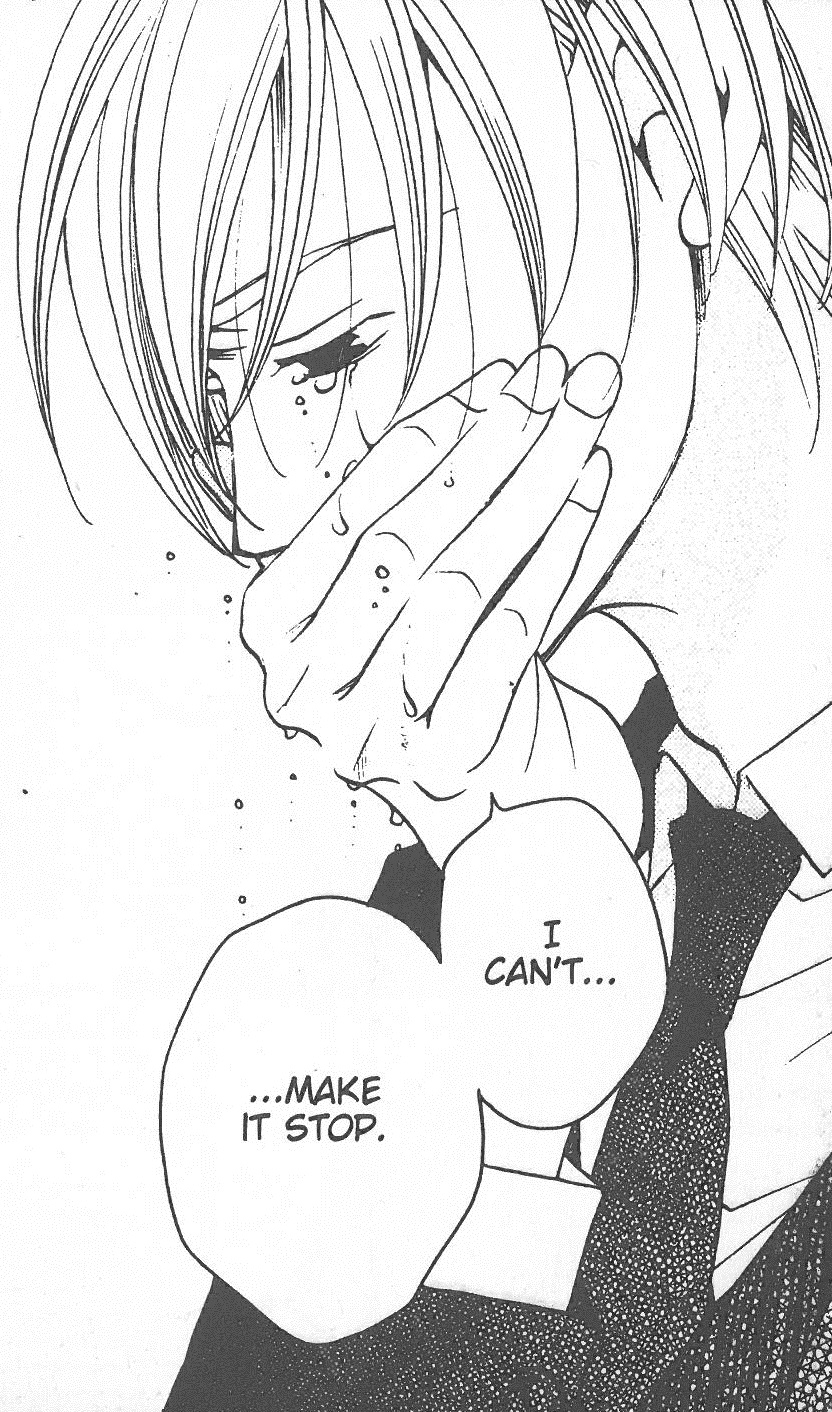
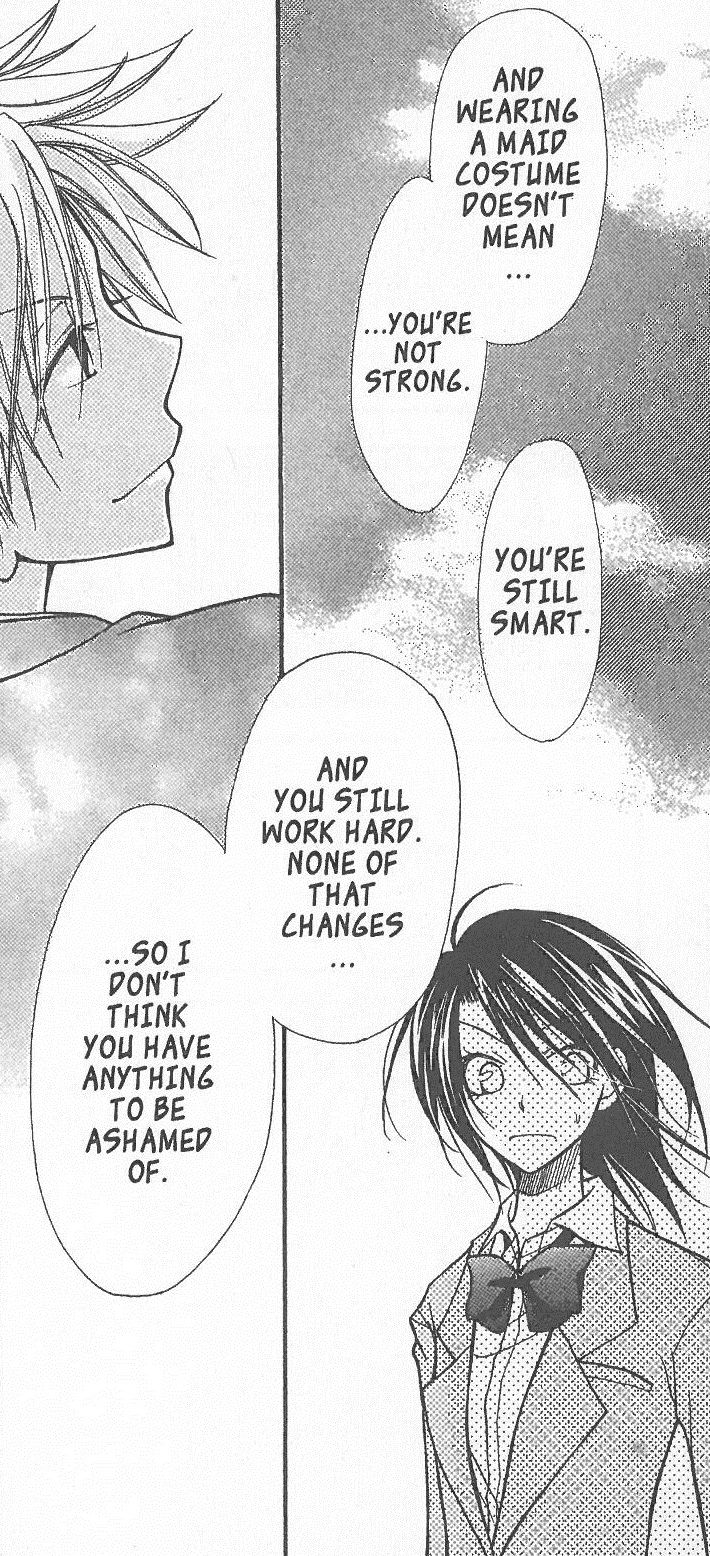
Last week was a two-review week at Experiments in Manga. Both reviews were of manga and, more specifically, both reviews were of shoujo manga. First up was the first omnibus of Hiro Fujiwara’s Maid-sama!. The series was originally licensed by Tokyopop, which released the first eight volumes, but the manga was more recently rescued by Viz Media’s Shojo Beat imprint. Though he has his moments, I’m not particularly fond of the male lead Takumi at this point, but I absolutely adore the female protagonist Misaki. If for no other reason, I’ll be reading more of Maid-sama! for her sake. The second in-depth review from last week was of Setona Mizushiro’s After School Nightmare, Volume 5. I continue to find After School Nightmare to be both compelling and highly distressing. The review is part of my ongoing monthly horror manga review project; September’s review will focus on the fifth volume of Yuki Urushibara’s Mushishi.

As for a few other interesting manga-related posts found online last week, Comic Attack has a nice interview with Stacy King, the editor of Udon Entertainment’s Manga Classics line. (I’ve written a little bit about Udon’s Manga Classics in the past.) Also, Mangabrog has posted a translation of an interview of Kiyohiko Azuma, the creator of Yotsuba&!, from 2014. A few weeks ago I posted some random musings about my manga collection as part of a game of manga tag. One of the people who I specifically tagged to participate was Manga Xanadu’s Lori Henderson. She recently posted her own responses to the manga tag questions and Justin at Organization Anti-Social Geniuses took time to provide some answers, too. I really enjoy reading about other manga enthusiast’s collections. If you’re interested, be sure to check the posts out!

Quick Takes

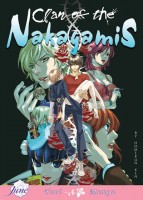
Clan of the Nakagamis, Volume 1Clan of the Nakagamis, Volumes 1-2 by Homerun Ken. Although only two volumes of Clan of the Nakagamis have been released in English, it’s actually a three-volume boys’ love series. It’s unlikely that the third volume will be officially translated, but the manga tends to be fairly episodic. The final volume may be “missing,” but at least the series’ story doesn’t depend on it. Clan of the Nakagamis was brought to my attention due to the fact that Norikazu Akira, whose manga I’ve enjoyed, is somehow related to Homerun Ken. (She’s either one of the members of the two-person creative team or their older sister; I’m not entirely sure which.) Clan of the Nakagamis is intentionally ridiculous, a mashup of all sorts of unrelated tropes that the mangaka found amusing or were particularly fond of, everything from student-teacher relationships, to family conglomerates, to crossdressers. I actually wasn’t particularly impressed by the first volume of Clan of the Nakagamis, finding it to be too chaotic and lacking in cohesiveness, but I did legitimately enjoy the second. I even laughed out loud. It probably helped that it had a more coherent story and improved artwork.

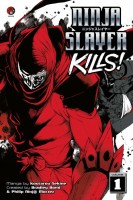
Ninja Slayer Kills, Volume 1Ninja Slayer Kills!, Volume 1 by Koutarou Sekine. Ninja Slayer started as a series of novels, supposedly written by a couple of Americans, that inspired a recent anime adaptation as well as at least three different manga series (two of which have been licensed for English-language release). Sekine’s Ninja Slayer Kills! is the franchise’s shounen manga offering. It’s intended to be approachable and understandable even for readers who aren’t familiar with Ninja Slayer. I’m not sure it’s successful in accomplishing that, though. Very little of the story, characters, or setting is explained beyond broadly establishing a tale of super-powered revenge in a gritty near future. The first volume is mostly battle after battle and not much more. The fight scenes and their setups are marvelously epic, but unfortunately the action itself is difficult to follow so they lose their impact. That’s a significant flaw since so much of the manga is focused on these martial conflicts. On their own, the character designs of the cybernetic ninja are great, but they tend to blend together in the actual manga, which also makes determining what exactly is going on a challenge.

A Silent Voice, Volume 2A Silent Voice, Volume 2 by Yoshitoki Oima. I was greatly impressed by the first volume of A Silent Voice. It was a hard read due to its subject matter, specifically its realistic portrayal of bullying—how utterly cruel kids can be to each other and how adults, whether intentionally or not, can often encourage such behavior. While there is still some tragedy and darkness in the second volume, overall it’s a much lighter read; where the first is heartbreaking, the second makes it seem as though forgiveness and change is possible. Shoya, feeling that it is impossible to redeem himself for his past cruelty, plans to take his own life after apologizing to Shoko for adding so much misery to hers. But when he meets her again they end up forming an unexpected friendship instead. Even more surprisingly, Shoya eventually becomes friends with her younger sibling as well (though he doesn’t known that’s who the kid is at the time). Shoya recognizes that he can’t undo the harm that he’s already caused to Shoko and her family, but he’s slowly doing what he can to make up for it. I still think that A Silent Voice is one of the very best manga to debut this year.

Filed Under: FEATURES, My Week in Manga Tagged With: Clan of the Nakagamis, Koutarou Sekine, manga, Ninja Slayer, Silent Voice, Yoshitoki Oima

After School Nightmare, Vol. 5

August 14, 2015 by Ash Brown

After School Nightmare, Volume 5Creator: Setona Mizushiro
U.S. publisher: Go! Comi
ISBN: 9781933617473
Released: October 2007
Original release: 2006

After School Nightmare by Setona Mizushiro is a manga series that I honestly find disconcerting, so much so that even though I also find it compelling, I could never bring myself to read past the first few volumes until recently. The manga is a dark and intense psychological drama dealing with issues of abuse, gender, and personal identity. Despite being a series that is quite obviously fantasy-horror, some of the themes actually hit fairly close to home for me. Mizushiro has skillfully crafted a chilling setting and ominous atmosphere for After School Nightmare in which to explore both nightmares and reality. The ten-volume series was published in English by the now defunct Go! Comi and so is sadly out-of-print, but it seems to still be fairly easy to find. After School Nightmare, Volume 5 was first published in Japan in 2006 while the English translation was released in 2007. The series reaches its halfway point with this volume, but the intensity of the drama and psychological horror shows no sign of letting up anytime soon.

After having let his feelings be pulled one way and then another, Mashiro has made his decision: In order to live as a man he has rejected Sou and his aggressive advances in favor of his girlfriend Kureha. Mashiro tells himself that it’s because Kureha is the one who needs him the most, never considering that Sou might need him, too. Ultimately though, Mashiro’s decision is a selfish one and not nearly as gallant as he would like to believe or portray. Although he has been living as a boy for most of his life, he is still incredibly insecure in his gender identity, mostly due to the fact that his body has both male and female characteristics. By dating Kureha and by becoming her self-proclaimed guardian and protector, Mashiro hopes to unequivocally establish his masculinity for himself and for others, something he doesn’t believe would be possible if he recognized having feelings for another guy. But even though Mashiro has made his decision, he still has lingering doubts.

After School Nightmare, Volume 5, page 52Many of the characters in After School Nightmare are broken, damaged, or incomplete individuals who are attempting to put the pieces of their lives together to form, or reform, some sort of whole. That is part of the purpose of the titular after school nightmare—a special class that, through shared dreams, forces them to confront their greatest fears and in the process reveal them to the other students as they all try to determine who they really are as people. It can actually be quite painful and heart-wrenching to witness the events unfold both within the nightmares and outside of them; truly terrible and horrifying things occur that strongly influence the characters’ physical, mental, and emotional well-being. At this point in the series Mashiro’s personal struggles and torments are the ones about which the most is known, but After School Nightmare, Volume 5 begins to reveal more about Sou’s tragedies which previously had largely only been hinted at.

From the beginning of After School Nightmare, Sou has been shown to be one of the strongest and most assertive characters in the series which is why seeing him in such a vulnerable state in the fifth volume is especially distressing. Sou is an unlikeable person in many ways—among other things showing a shocking lack of respect for Mashiro, the person he supposedly loves—but I can’t help but feel some empathy for him as he is caught up in multiple extremely unhealthy and manipulative relationships. And he’s not always the one doing the manipulating; his relationship with his sister and the control she seem to have over him is particularly troubling. Mashiro’s rejection hits Sou hard, too, certainly much harder than either of them really expected. At first Sou reacts in anger, but ultimately he tries to lives in forced denial of his feelings. Considering how the rest of After School Nightmare has progressed so far, I don’t anticipate that this method of coping will turn out well for any of the people involved.

Filed Under: REVIEWS Tagged With: after school nightmare, Go! Comi, manga, Setona Mizushiro

Manga the Week of 8/19

August 13, 2015 by Sean Gaffney, Ash Brown, Michelle Smith and Anna N 5 Comments

SEAN: (flat stare) OK, I have not seen this much manga coming out in one week in about 7-8 years. This is getting completely ridiculous.

If you somehow have missed bloggers banging the drum for the Kurosagi Corpse Delivery Service over the last several years, there is a good chance to catch up now, as an omnibus of the first 3 volumes is out next week from Dark Horse. Seriously, this series is ridiculously good, y’all. (note: this may not be out everywhere next week, check your Diamond listings)

ASH: I’m glad to see this series getting some more love from Dark Horse again.

SEAN: Kodansha has an 18th volume of Cage of Eden, coming ever closer to the end of the series, where surely it will answer all the questions we have so far! (cough)

And there’s a 6th volume of the increasingly popular series Noragami.

ASH: There was quite a cliffhanger at the end of the fifth volume, so the sixth is on my reading list.

wallflower35

SEAN: Lastly, the penultimate 35th volume of The Wallflower, a series that many thought would never end! Will it romantically resolve anything? Don’t hold your breath. I wouldn’t hold your breath in Vol. 36 either.

MICHELLE: I certainly thought it would never end!

ANNA: I am amazed.

SEAN: One Peace Books has a 3rd volume of Aquarion Evol.

And also a light novel, which I think might have an associated manga later, though I’m unsure. It’s called The Rising of the Shield Hero, and as you can guess, is fantasy-based.

ASH: Yup. One Peace Books is planning to release the manga as well.

SEAN: Seven Seas gives us a 3rd volume of yuri potboiler Citrus.

And a 2nd of Clay Lord: Master of Golems, which I found more interesting than I’d expected.

Vertical has a 6th volume of popular fantasy series Witchcraft Works.

Viz gives us new Dorohedoro, which always makes me happy, and always makes me want to do a giant reread. This is the 16th volume, meaning it easily wins the SigIkki wars for supremacy.

ASH: Dorohedoro! I’m long overdue for another binge read.

SEAN: And if you prefer zombies to… well, I guess Dorohedoro has zombies as well, sort of, but if you prefer more traditional zombies, there’s a second Tokyo Ghoul.

ASH: I haven’t read any of Tokyo Ghoul yet, but the series seems to be doing quite well for Viz.

SEAN: The new manga reboot of Ultraman is so amazing that it actually runs in a magazine called “Monthly Hero’s”. You may expect… Tokusatsu shenanigans, I would expect.

MICHELLE: Ugh, that apostrophe bugs me.

bb1

SEAN: Yen On has a whopping six new titles for us, including the debut of Black Bullet, a future dystopia series. If you enjoyed the ‘young man with loli not-quite-sister’ aspect of No Game No Life but wished it were more depressing, this may be for you.

The fourth volume of A Certain Magical Index reintroduces us to Kaori Kanzaki, the girl with huge sword from the first volume, and also shows us Touma’s parents for the first time… sort of.

The Devil Is A Part-Timer! has Volume 2, as we start to see where we go now that the forces of good and evil are pretty much settled on Earth and dedicated to minor squabbles.

ASH: This series amuses me greatly.

SEAN: Is It Wrong To Try To Pick Up Girls In A Dungeon? has a 3rd volume, and the anime has now passed it, so we get to see what was left out of the adaptation.

Spice & Wolf has ended in Japan, I think, apart from side stories. But it’s still chugging away here in North America with its 15th volume.

And Sword Art Online has a 5th volume. Now that everyone is finally free from the game of death and their lives are back to normal, surely they’ll never play another MMORPG again, right? Hah.

Yen Press has several digital-only releases coming out as well. The 3rd Handa-kun continues to elaborate on the high school years of the Barakamon protagonist.

We get the first two volumes of Kakegurui – Compulsive Gambler, a Gangan Joker series about a school whose student council base everything around, well, gambling. I know next to nothing about it, so am intrigued.

And the first two volumes of The Royal Tutor, a GFantasy series that has, well, royalty and a tutor for same. It seems to be more lighthearted than serious, and may have BL overtones, given the magazine it’s in and the author’s prior works.

ANNA: Hmmmmmm….

SEAN: And Today’s Cerberus has volumes 3 and 4. Despite having dog girls, cat girls, and wolf girls, I found it more enjoyable than you’d expect.

So, that’s Yen On and Yen Digital sorted out, now for Yen Press proper. We’re about halfway through Ani-Imo with the 4th volume. Is it any less creepy?

Despite Handa returning to the city at the end of the last Barakamon, the series continues on with its 6th volume.

It’s been 11 volumes of BTOOOM!. Can you believe it? 11 volumes.

MICHELLE: Siiiiiiiiiiiiiigh.

dpths1

SEAN: The Devil Is A Part-Timer! High School!! is an alternate universe spinoff of the main series which… well, I’m sure you can guess.

Emma has a 2nd omnibus. What will happen to our heroine now that she’s left to go north? And can William ever find her? And can everyone continue to be repressed?

ANNA: Cheers to Emma being back in print, it is such a special series.

ASH: Cheers, indeed!

SEAN: Our long national nightmare is over with the 4th and final volume of Gou-dere Sora Nagihara.

High School DxD shows us we must stay ever vigilant, however, with a 6th volume and no end in sight.

The 2nd Is It Wrong To Try To Pick Up Girls In A Dungeon? manga volume continues to confuse Amazon’s systems and these lists.

Has Madoka Magica been getting you down? Does your favorite girl keep dying? Try Puella Magi Homura Tamura, a wacky 4-koma version of the series that will probably not remind you of Sunshine Sketch too much.

RustBlaster (no space) is a one-volume manga from the creator of Black Butler, featuring vampires. It may therefore take the new crown of ‘most obvious license ever’.

Lastly, a second volume of Trinity Seven, with slightly less “look, breasts!” on the cover than the first.

I… wow. If you’re not getting SOMETHING next week, we may have to check your pulse.

MICHELLE: I think I may not be getting anything! But mostly ‘cos I already own Emma and Kurosagi Corpse Delivery Service.

ANNA: I’m not getting anything either! I need to whittle down all the stacks of unread manga I already have.

ASH: I… most definitely have a pulse. (And soon to be even more overloaded bookshelves.)

Filed Under: FEATURES, manga the week of

Maid-sama!, Omnibus 1

August 12, 2015 by Ash Brown

Maid-sama!, Omnibus 1Creator: Hiro Fujiwara
U.S. publisher: Viz Media
ISBN: 9781421581309
Released: August 2015
Original release: 2006-2007

Maid-sama! is an eighteen-volume manga series created by Hiro Fujiwara. The series was initially licensed for English translation by Tokyopop, which released the first eight volumes of the manga between 2009 and 2011. More recently, Maid-sama! was rescued by Viz Media. The manga is being released under the Shojo Beat imprint in an omnibus edition, each English-language omnibus collecting two volumes of the series’ original Japanese release. The first Maid-sama! omnibus was published in 2015 and includes the first and second volumes of the manga published in 2006 and 2007 respectively. (The first volume also contains Fujiwara’s earlier short manga “A Transparent World.”) Maid-sama! was Fujiwara’s first major success as a mangaka. However, it wasn’t until Viz’s release of Maid-sama! that the series came to my attention when I noted the enthusiastic response of fans surrounding its return. I was therefore very happy to have the chance to read a review copy of the first omnibus in order to see what the excitement was all about.

Seika High School, previously an all-boys’ school, has only been co-ed for a couple of years. The student population is still largely male—the boys outnumbering the girls four to one—and Seika High still has a bad reputation. And so Misaki Ayuzawa has decided to take things into her own hands, becoming Seika’s first female student council president in order to clean up the school’s act, improve it standing, and create a more welcoming environment for young women. Misaki rules over Seika with an iron fist, though not everyone appreciates her strength and intelligence or the changes she’s making. Because of that, she’s particularly careful to keep the fact that she works part-time at a maid cafe a secret; she doesn’t want to ruin her image or risk losing what little authority she has. But then her classmate Takumi Usui discovers how she’s spending her time after school. Misaki has caught his attention and interest, perhaps even romantically, though understandably she’s not very happy about the awkward turn of events.

Maid-sama!, Omnibus 1, page 34I absolutely adore Misaki. She’s a smart, strong, motivated, hard-working, competent, capable, and highly accomplished individual. She’s not perfect though. Her drive to overachieve and handle everything by herself along with her reluctance to rely on the help of others means that she frequently overextends herself, wearing herself down. Misaki could stand to relax a little, but the believable combination of her strengths and weaknesses make her the most well-developed character in the series. While I love Misaki, I am significantly less enamored with Takumi. Sometimes he can be a great guy, but on occasion he can be an utter creep. His skills and talents match and even surpass those of Misaki, often in superbly ridiculous ways which are admittedly amusing, but he seems to frequently be emphasizing that she’s a girl as if that somehow makes her inferior. I want to see the Takumi who supports Misaki for who she is and who doesn’t feel the need to dominate her. Early on in Maid-sama! it seems this would be a possibility, but the more of the omnibus I read the less likely it appeared that the series would be going in that direction.

Although in part Maid-sama! is a romance, ultimately that particular plot line in the manga is the one that interests me the least. (If I actually liked Takumi more than I currently do, I would probably feel differently.) I enjoy the series most when it focuses on Misaki as she grows as a person. I like seeing her become less of a tyrant as the president as she learns to consider other people and their needs instead of completely overruling them without making an effort to hear their concerns. At first she is disliked by almost all of the students, but as time passes more and more of them, male and female alike, come to admire, trust, and appreciate her and where she is leading Seika High. Although there are certain things about Maid-sama! that bother me—most notably the distinct possibility of Takumi being idealized as a romantic lead—overall I did find the beginning of the series to be entertaining and a lot of fun. And since I do like Misaki so incredibly well, at this point I definitely plan on reading more of Maid-sama!.

Thank you to Viz Media for providing a copy of Maid-sama!, Omnibus 1 for review.

Filed Under: REVIEWS Tagged With: Hiro Fujiwara, maid sama!, manga, shojo beat, viz media

Pick of the Week: Nearly United

August 10, 2015 by Michelle Smith, Sean Gaffney, Anna N and Ash Brown Leave a Comment

magi13MICHELLE: I know I’ve picked Magi at least a half dozen times before, but really it’s just that good. It’s fun, in the way that one expects a shounen adventure to be, but it also prioritizes character growth and world-building. I am really, really enjoying it.

SEAN: Yeah, I’m going to go with Magi as well, which is doing some really great worldbuilding and has some nice smug villains.

ANNA: I will pick Magi too, even though I’m not that far along in reading the series.

ASH: Wow, well, I apparently need to get around to reading Magi at some point! But as for my pick this week, I’m going to go with the third omnibus of Embracing Love. It’s been a while since I’ve read the series, but I’m glad that it was rescued.

What looks good to you this week?

Filed Under: PICK OF THE WEEK

My Week in Manga: August 3-August 9, 2015

August 10, 2015 by Ash Brown

My News and Reviews

Okay! In addition to the usual My Week in Manga feature, I managed to post three other things last week. First up was the announcement of the Sparkler Monthly Giveaway Winner, which also includes a list of the current, ongoing series being released in Sparkler Monthly (which is only a fraction of the total content). The other two posts were in-depth manga reviews; I took a look at a couple of Kodansha Comics’ recent releases. The first in-depth review of the month went to Naoshi Arakawa’s Your Lie in April, Volume 2, which I enjoyed. But then again, it’s a music manga, so it’s not too surprising that I like it. I also reviewed Masayuki Ishikawa’s Maria the Virgin Witch, Volume 3. It’s the last volume of the series, although the seque Exhibition is scheduled to be released in English later this year. Maria the Virgin Witch is somewhat uneven, but I still found it to be both intriguing and engaging.

As seems to always be the case nowadays, life was keeping me very busy last week, but I still came across some interesting things  elsewhere online. A translation of an interview of Daisuke Igarashi, for example. Last week also marked the seventieth anniversary of the dropping of the atomic bombs on Hiroshima and Nagasaki by the United States. It’s quite timely then that Last Gasp launched a Kickstarter project to create a hardcover edition of Keiji Nakazawa’s Barefoot Gen with schools and libraries specifically in mind. To coincide with this, Paul Gravett reposted his article “Keiji Nakazawa: Barefoot in Hiroshima”. Barefoot Gen is a tremendous work. One of the Manga Moveable Feasts was even devoted to it back in the day. If anyone is interested in learning more about Nakazawa himself as well as some of the historical context surrounding Barefoot Gen, his autobiography was translated into English several years ago.

Quick Takes

Prophecy, Volume 3Prophecy, Volume 3 by Tetsuya Tsutsui. The first volume of Prophecy is the one that left the greatest impression on me, but in general it’s a very strong series. I didn’t find the second volume to be quite as compelling as the first, but the third provides a mostly satisfying conclusion to the series even though in some ways it felt a little anticlimactic. One of the members of Paperboy tips off the police and soon the Cyber Crimes Division has been able to identify the four terrorists. As the investigators draw closer and closer to capturing the men, they begin to notice what at first seem to be mistakes, slip ups, and inconsistencies in the group’s behavior. However, everything falls into place once Paperboy’s true motivations for committing all of the crimes are revealed. Prophecy is a realistic, smart, and engaging series with the added bite of social commentary. There’s apparently also a Prophecy spin-off series. I don’t think that it has been licensed, or that there are any current plans to do so, but I’d certainly be interested in reading it.

xxxHolic, Omnibus 6xxxHolic, Omnibus 6 (equivalent to Volumes 16-17) by CLAMP. For the most part I have been enjoying xxxHolic since the beginning of the series, but I think this omnibus has been my favorite so far. I really liked its brooding, ominous atmosphere. The humor that was so prevalent earlier in the series is actually almost entirely gone. The comedy in xxxHolic could be fun, but I have a particular penchant for the series’ supernatural angst, and that’s definitely taken the forefront in the last few volumes. I also initially found the crossover between Tsubasa: Reservoir Chronicle and xxxHolic to be intriguing, but I’ll admit that I was happy to see that the other series didn’t intrude too much in this omnibus. Instead, xxxHolic is focusing on how Watanuki and the others are coping now that Yuko is gone. Watanuki takes it especially hard and his tendency to slip in and out of dreams is becoming increasingly dangerous. There’s not much that the people who care about him can actually do except to watch over and support him as best as they can.

Yamada-kun and the Seven Witches, Volume 3Yamada-kun and the Seven Witches, Volume 3 by Miki Yoshikawa. There really are witches in this series! With its good-natured comedy and gender play, I’ve liked Yamada-kun and the Seven Witches a great deal from the very start. But with the third volume, Yoshikawa has started to really develop the series’ worldbuilding and is diving even further into the details of how the magic works. The relationships between the characters are also becoming more fleshed-out and complicated, which I’m enjoying as well. One of the things that I particularly appreciate about the series is that it seems perfectly okay for a guy to be crushing on another guy. Yes, it’s because there are some strange supernatural powers at work, but it’s also not treated like something gross. The setup also allows kissing to freely occur regardless of gender, which is fun. There’s still plenty of fanservice in Yamada-kun and the Seven Witches, as one would probably expect from a shounen series full of gender- and body-swapping, but I generally find it to be tastefully done.

Filed Under: FEATURES, My Week in Manga Tagged With: clamp, manga, Miki Yoshikawa, Prophecy, Tetsuya Tsutsui, xxxholic, Yamada-kun and the Seven Witches

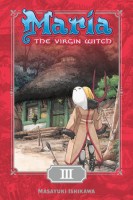
Maria the Virgin Witch, Vol. 3

August 9, 2015 by Ash Brown

Maria the Virgin Witch, Volume 3Creator: Masayuki Ishikawa
U.S. publisher: Kodansha
ISBN: 9781632360823
Released: June 2015
Original release: 2013

Maria the Virgin Witch is a three-volume manga series (four volumes if counting the sequel Exhibition) created by Masayuki Ishikawa. It was actually because the series was by Ishikawa, who is also the creator of Moyasimon (which I enjoy), that it first came to my attention. The first volume of Maria the Virgin Witch intrigued me, and the second ends with the heroine in a rather dire-looking situation, so I was very curious to see how the story would continue to play out in the third. Happily, Kodansha Comics was kind enough to send a review copy along to me. Maria the Virgin Witch, Volume 3 was originally published in Japan in 2013. Kodansha’s English-language edition of the volume was released in 2015. Despite being a short series, the narrative of Maria the Virgin Witch has the tendency to be a little unfocused, but I still find the manga to be consistently engaging. I especially appreciate the quirkiness of the series in general as well as the quirkiness of its characters specifically.

Maria had been warned by the Archangel Michael: If the young witch continued to interfere with the natural order of the world she would be struck down. However, so devoted to ending the long-lasting war between France and England, Maria continued to flaunt her powers, even while in the presence of Michael’s messenger Ezekiel. Now the time has come for her to face the consequences of her actions. She was, however, somehow able to survive what was intended to be a fatal blow from Michael’s spear. But she’s still vulnerable and must rely on the protection of her two owl familiars and the kindness of her fellow witches who don’t necessarily approve of her efforts to force a peace. Maria was at one point alone in the world—the Heavens, other witches, and even some of the humans she was trying to save all standing against her—but over time her earnestness and innocence has earned her some friends, a few of whom could have at one time been counted among her enemies. But even with their support Maria is beginning to lose her naiveté, realizing that bringing happiness to humanity may be more complicated than she initially considered.

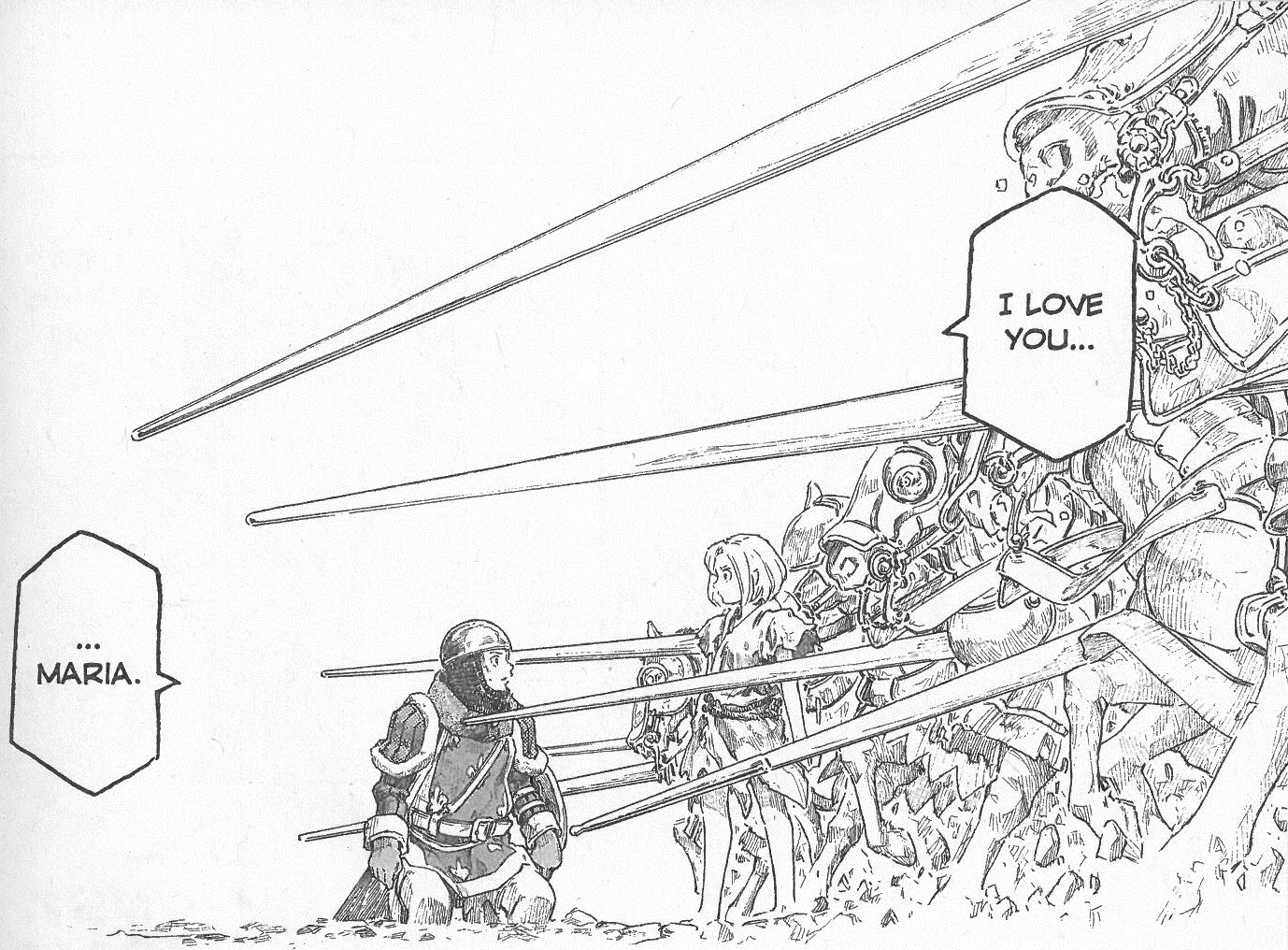
Maria the Virgin Witch, Volume 3, page 154Maria the Virgin Witch has always been a peculiar mix of quirky humor and more serious philosophical and theological reflection. There are a lot of ideas that Ishikawa was able to work into such a short series, although at the same time it’s difficult to thoroughly explore all of them in only three volumes. (It actually makes me wonder if Maria the Virgin Witch was originally intended to be a longer story.) The third volume brings up questions about Maria’s family and backstory without really answering them. Also, apparently many if not all witches are loners, something that wasn’t clearly established until now. Maria’s close friendship with the English witch Viv develops suddenly, and their discussions about the true meaning of happiness and love come across as a little forced. It was as if Ishikawa needed to rush in order to make sure that the heart of the series was addressed and made absolutely clear, paring down the seemingly extraneous elements introduced earlier in the manga.

Although overall the narrative of Maria the Virgin With is somewhat uneven, in the end I did largely enjoy the series and I would like to read Exhibition as well. Since the very beginning of the manga, I’ve been particularly fond of Maria herself. While she and the other witches feel more contemporary in thought and appearance than the rest of the series’ setting, I do appreciated her struggle to come to terms with not only her own position in the world, but also the role of the higher powers of Heaven. It’s a debate that humankind has been wrestling with for ages and is one more link between the manga’s historical backdrop and the present day. Ishikawa explores the answer to this timeless question through Maria’s growth as a character. She begins as a young, determined woman seeking to right the wrongs of the world, becoming wiser and more mature as she is confronted with the often brutal realities of life. But importantly, Maria never loses her ideals or succumbs to despair, which is why so many people come to love her so dearly.

Thank you to Kodansha for providing a copy of Maria the Virgin Witch, Volume 3 for review.

Filed Under: REVIEWS Tagged With: kodansha, Kodansha Comics, manga, Maria the Virgin Witch, Masayuki Ishikawa

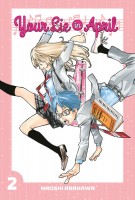
Your Lie in April, Vol. 2

August 7, 2015 by Ash Brown

Your Lie in April, Volume 2Creator: Naoshi Arakawa
U.S. publisher: Kodansha
ISBN: 9781632361721
Released: June 2015
Original release: 2012
Awards: Kodansha Manga Award

Your Lie in April is an eleven-volume manga series created by Naoshi Arakawa that began serialization in Japan in 2011. The manga is one of Arakawa’s earliest professional works. Even so, Your Lie in April would go on to win a Kodansha Manga Award in 2013 and in 2014 the series’ anime adaptation debuted. Although I haven’t actually seen it yet, it was the anime that first brought Your Lie in April to my attention. As a lover of both manga and music (in addition to being a musician myself), the basic premise of Your Lie in April appealed to me a great deal. I was glad that Kodansha Comics licensed the series since I’m always excited to see more music manga released in English. I largely enjoyed the first volume of Your Lie in April and so was happy to receive a review copy of the second as well. Your Lie in April, Volume 2 was originally published in Japan in 2012 while the English translation was released in 2015.

Kosei hasn’t played the piano publicly for years, having tried to give it up after the death of his mother and a disastrous performance in competition. He has become so psychologically distraught that he literally can no longer his own music; the sound seems to disappear when he begins to seriously play. Very few people actually know why Kosei no longer performs or competes, and his closest friends continue to encourage him to play despite his reluctance. Somehow Kaori manages to bully him into serving as her accompanist in the second round of her violin competition at the last minute. She’s a passionate and headstrong musician who other pianists find difficult work with, sometimes even refusing to accompany her. But Kaori wants to be remembered by her audiences and she is convinced that Kosei, who was once well-known as a child prodigy, can help her do that. Except that he’s never been an accompanist before, they’ve never practiced together, and he hasn’t even had the change to study the score.

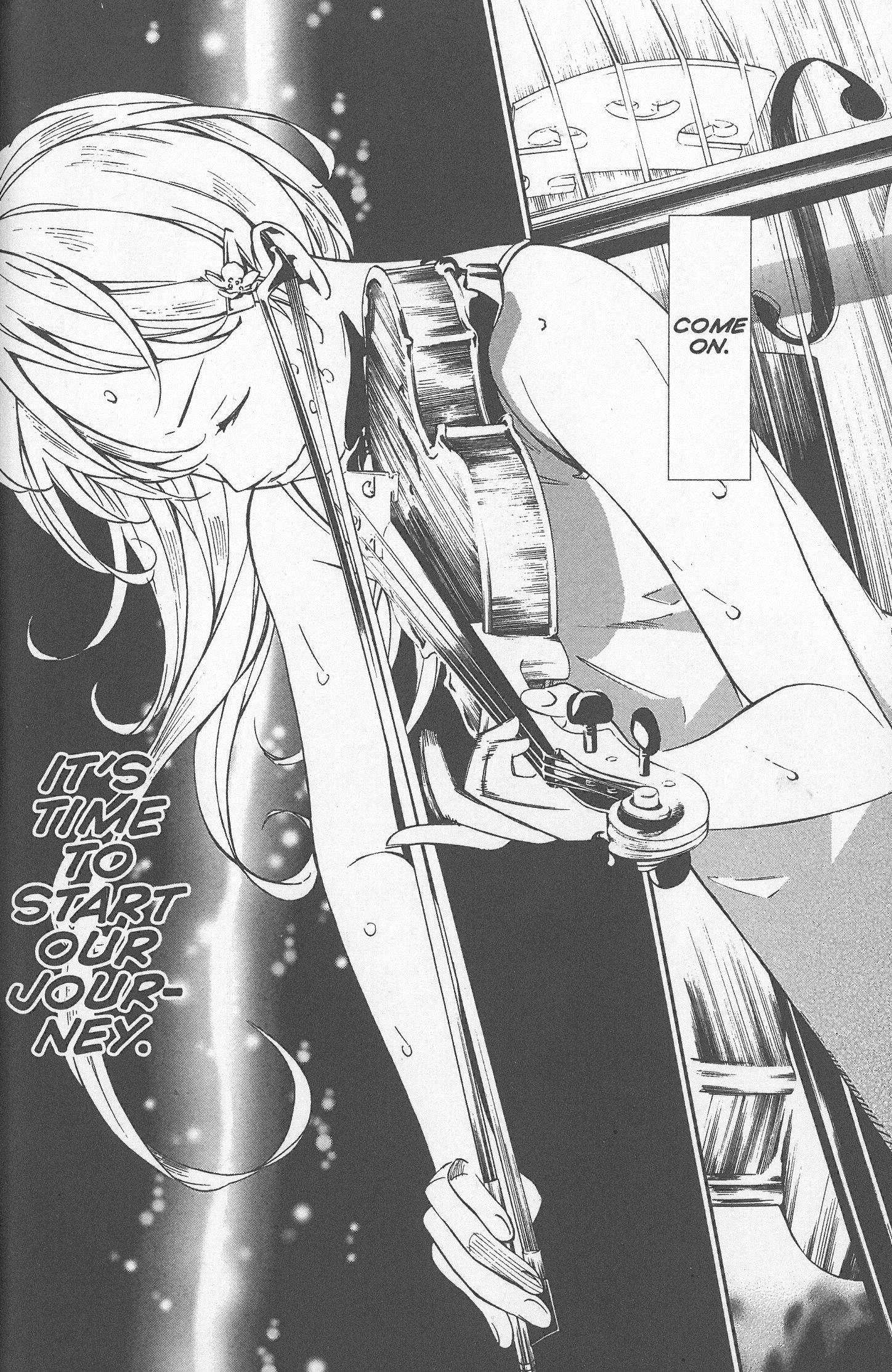
YourLieApril2-68Though Your Lie in April can be somewhat melodramatic at times, I appreciate that Arakawa is leveraging the psychological states of the series’ characters in order to further the story. Kosei being thrust into the spotlight and once again experiencing the thrill of performance doesn’t simply make everything all right or solve his problems. If anything, it actually makes matters more complicated. He continues to be torn between wanting to play and never wanting to touch the piano again. Hovering over Kosei is the shadow of his dead mother, an abusive woman who demanded perfection from him and his playing. But she was also the person who first taught him to love music. By the end of her life she had become cruel, but Your Lie in April, Volume 2 reveals that before she became ill she was much kinder and gentler person. It doesn’t excuse how she eventually treated her son, though it does help to explain in part why Kosei remained and continues to be devoted to her throughout the pain and suffering that was inflicted upon him.

What little is known about Kosei’s mother so far in Your Lie in April provides an interesting counterpoint to what little is known about Kaori. They are both musicians, they both are partly responsible for drawing Kosei into the world of music and, as the second volume of the series shows, they both struggle with physical illness. However, whereas Kosei’s mother became cruel, Kaori’s illness has caused her to devote herself to her music, striving to leave a lasting impression on those around her. No matter what happens in the future, Kosei’s relationship with Kaori, like the one with his mother, will be a formative one. He, at least, will never be able to forget her. She is an inspiration dragging him out of his personal darkness. This is something that is visually reinforced in the manga as well. Kaori is almost always shown in the light, sometimes she even seems to be the source of light, while Kosei is frequently seen in shadow, especially when he is playing. But Kaori is challenging and changing him. The time may come when Kosei will be able to freely stand in the light, too.

Thank you to Kodansha for providing a copy of Your Lie in April, Volume 2 for review.

Filed Under: REVIEWS Tagged With: kodansha, Kodansha Comics, Kodansha Manga Award, manga, Naoshi Arakawa, Your Lie in April

Manga the Week of 8/12

August 6, 2015 by Sean Gaffney, Anna N, Ash Brown, Michelle Smith and MJ Leave a Comment

SEAN: If you want a quiet week with not much manga, next week is pretty much the only week in August you’ll get it, so enjoy.

tsubasa5

Kodansha has its 5th Tsubasa Reservoir Chronicle omnibus, which I think is busying itself by walking around the X continuity.

ANNA: You know what would be nice? If X/1999 walked around its own continuity and actually had an end to the series. That would be nice!!!!!

ASH: YES.

SEAN: X Vol. 19: everyone mysteriously vanishes into a hole in the plot except Nokoru, Suoh and Akira, and the series reboots itself as CLAMP Detectives: The Adult Years. With plenty of Utako as well. …OK, perhaps that’s only *my* version of X.

MICHELLE: I fully support this version. My life needs more grown-up Suoh in it.

MJ: I am probably a rare CLAMP fan in that I’m not super-anxious for them to finish X, but I’m not opposed to Sean’s ending here. :D

SEAN: Seven Seas gives us a 2nd volume of angsty coming-of-age story Evergreen, from the Toradora! author.

And a 7th volume of bestselling, anime-producing monster fetish manga Monster Musume. Watch out for snakes.

Sublime hopes you are still embracing the 3rd omnibus of Embracing Love.

ASH: I certainly am! This omnibus includes part of the series that wasn’t previously released in English.

SEAN: Viz gives us the 10th volume of Deadman Wonderland – are they out of prison yet?

And a 15th Itsuwaribito, which is part of the Shonen Sunday imprint! As is…

Magi, which has its lucky 13th volume. Shonen Sunday! It’s an imprint too! You can see it, next to the Jump and Beat titles. Well, sort of next to them. Down the hall. And a stairway. Next to the boiler room. (Buy Sunday titles.)

ANNA: I need to fill in my collection and read more of this series!

MICHELLE: Yay, Magi! And I concur; the Shonen Sunday imprint has a lot of good stuff, like Kekkaishi, Cross Game, and all of the Rumiko Takahashi!

SEAN: Does anything here tickle your fancy?

Filed Under: FEATURES, manga the week of

Giveaway: Sparkler Monthly Giveaway Winner

August 5, 2015 by Ash Brown

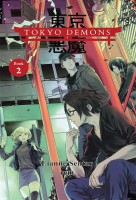
Tokyo Demons, Book 2: Add a Little ChaosAnd the winner of the Sparkler Monthly Giveaway is… AshLynx!

As the winner, AshLynx will get to choose one item from the Sparkler Online Shop in addition to receiving a copy of Tokyo Demons, Book 2: Add a Little Chaos written by Lianne Sentar and illustrated by Rem. I coordinated the giveaway to draw more attention to the Sparkler Monthly Year 3 Kickstarter campaign which I’m very happy to say was successful! I absolutely love the work being done at Chromatic Press and Sparkler Monthly, so I’m glad those efforts will be able to continue for at least another year. For the giveaway, I asked participants to tell me about some of their favorite Sparkler stories. Be sure to check out the Sparkler Monthly Giveaway comments for the detailed responses!

Finally, here’s the list of current ongoing series at Sparkler Monthly that will be able to continue thanks to the campaign’s success:

The Cat Lover’s Circumstances by LAMP and Aiwa
(Geeky Modern Comedy Audio Drama)

Gatesmith by Jen Lee Quick
(Dark Fantasy Western Comic)

Knights-Errant by Jennifer Doyle
(LGBT Historical Drama Comic)

Lettera by Studio Kosen
(Comedy Fantasy Adventure Comic)

Orange Junk by Heldrad
(Shoujo Romantic Comedy Comic)

Skyglass by Jenn Grunigen and Mookie
(Sci-Fi Musician Drama Prose)

Tokyo Demons by Lianne Sentar, Rebecca Scoble, Rem, and Romy-chan
(Urban Fantasy Adventure Drama Prose)

Windrose by Studio Kosen
(Historical Adventure Comic)

Witch’s Quarry by Jen Lee Quick
(LGBT Fantasy Adventure Comic)

The above list is only a selection of Sparkler Monthly‘s total output. It doesn’t include any of the stories that have already been completed or any of the new stories that will be added throughout the coming year. Thank you to everyone who shared their favorite Sparkler stories with me. (Sparkler fans are the best fans!) And if you don’t have a favorite yet, start exploring! With the range of formats, genres, characters, and stories, there’s bound to be something that you’ll find appealing. (And most of it’s free!) Personally, I haven’t been disappointed with anything from Sparkler Monthly and am thrilled that there will be even more content in the future.

Save

Filed Under: Giveaways, UNSHELVED Tagged With: Lianne Sentar, Rem, sparkler monthly, Tokyo Demons

  • « Go to Previous Page
  • Page 1
  • Interim pages omitted …
  • Page 97
  • Page 98
  • Page 99
  • Page 100
  • Page 101
  • Interim pages omitted …
  • Page 140
  • Go to Next Page »
 | Log in
Copyright © 2010 Manga Bookshelf | Powered by WordPress & the Genesis Framework