• Skip to primary navigation
  • Skip to main content
  • Skip to primary sidebar
  • Home
  • About Us
    • Privacy Policy
    • Comment Policy
    • Disclosures & Disclaimers
  • Resources
    • Links, Essays & Articles
    • Fandomology!
    • CLAMP Directory
    • BlogRoll
  • Features & Columns
    • 3 Things Thursday
    • Adventures in the Key of Shoujo
    • Bit & Blips (game reviews)
    • BL BOOKRACK
    • Bookshelf Briefs
    • Bringing the Drama
    • Comic Conversion
    • Fanservice Friday
    • Going Digital
    • It Came From the Sinosphere
    • License This!
    • Magazine no Mori
    • My Week in Manga
    • OFF THE SHELF
    • Not By Manga Alone
    • PICK OF THE WEEK
    • Subtitles & Sensibility
    • Weekly Shonen Jump Recaps
  • Manga Moveable Feast
    • MMF Full Archive
    • Yun Kouga
    • CLAMP
    • Shojo Beat
    • Osamu Tezuka
    • Sailor Moon
    • Fruits Basket
    • Takehiko Inoue
    • Wild Adapter
    • One Piece
    • After School Nightmare
    • Karakuri Odette
    • Paradise Kiss
    • The Color Trilogy
    • To Terra…
    • Sexy Voice & Robo
  • Browse by Author
    • Sean Gaffney
    • Anna Neatrour
    • Michelle Smith
    • Katherine Dacey
    • MJ
    • Brigid Alverson
    • Travis Anderson
    • Phillip Anthony
    • Derek Bown
    • Jaci Dahlvang
    • Angela Eastman
    • Erica Friedman
    • Sara K.
    • Megan Purdy
    • Emily Snodgrass
    • Nancy Thistlethwaite
    • Eva Volin
    • David Welsh
  • MB Blogs
    • A Case Suitable For Treatment
    • Experiments in Manga
    • MangaBlog
    • The Manga Critic
    • Manga Report
    • Soliloquy in Blue
    • Manga Curmudgeon (archive)

Manga Bookshelf

Discussion, Resources, Roundtables, & Reviews

Archives for April 2015

Accel World: The Twilight Marauder

April 12, 2015 by Sean Gaffney

By Reki Kawahara and Hima. Released in Japan by ASCII Mediaworks. Released in North America by Yen Press.

This was a good volume of Accel World, though I think I enjoyed it a bit less than the other two. It can be exhausting to read for extended periods. Kirito may rub people the wrong way, but at least in game he’s fairly matter of fact and confident in himself. Haruyuki’s issues – his self-hatred, the bullying he’s endured and can’t reveal, his desperation to keep his friends safe and keep their friendship, and his tortured love for Kuroyukihime, who he still holds up on a giant pedestal – permeate his narrative voice, and while that’s excellent in a realistic way – are visceral and explain the actions he takes, and you understand why he despairs or does seemingly stupid things. But as escapism, you’re left wanting a bit. Particularly as this book has a cliffhanger.

aw3

It doesn’t help that Kuroyukihime is conveniently absent from this volume, off to Okinawa and sending Haruyuki adorable videos of herself in a bikini. (I do like that her friends whipped off her hoodie to reveal the bikini, showing that they seem to be supporting the love between the two of them far more than the rest of the school – or indeed Haruyuki himself – might.) So the new threat is dealt with by our trio of childhood friends, one of whom is brand new to Brain Burst, and given this is volume one of a two-volume set (something that Kawahara is very fond of, as SAO fans are aware), they fail rather miserably. (The cliffhanger involves the seeming betrayal by one of said friends, but I suspect that absolutely no one is actually fooled by this. (checks TV Tropes page) No, wait they were. Sigh.)

As for the new characters, Nomi will hopefully gain more depth in the fourth book, as he’s very much the sneering, posturing villain here, determined to bully Haruyuki (who is very quick to accept this, as if nothing else it must feel familiar) and keep Chiyuri as a “pet” (more casual sexism, though given Nomi is about 11 years old at least there aren’t any rape threats like in SAO.) He’s there for readers to hate and root for our heroes to destroy, that’s about all. I liked Sky Raker a lot better, who gets to be the one who trains and inspires Haruyuki in Kuroyukihime’s absence, but who also seems to have an intense backstory involving trying to rise above a disability – and how it can fail despite all your best efforts. I’d like to see that scene someday.

Of course, much of her story is there to give inspiration to Haruyuki – he’s the hero, and that means that most of what goes on is for his benefit. This can be tragic, like with everything that happens with Nomi, but it can also be hilarious, as with the return of Ash Roller, who will not stand for this meek, uncool and despairing Silver Crow, and proceeds to take him on the bike ride from hell just to pep him up. I suspect I’ll enjoy this volume more, though, once the next one comes out and completes it.

(Also, can we get an embargo on any story involving a boy trapped in the girls’ shower? Even if it’s for dramatic reasons?)

Filed Under: REVIEWS

Vinland Saga Is Back; Licensing News Galore

April 10, 2015 by Katherine Dacey

cat_diaryIf you’ve been anxiously waiting to learn the fate of Vinland Saga, we have good news for you: Kodansha confirmed that the critically lauded series would be returning from hiatus in September. Kodansha also unveiled an interesting line-up of new titles that includes Devil Survivor and Ninja Slayer Kills. TCJ regular Joe McCulloch explains why Kodansha’s decision to license Cat Diary: Yon & Mu is especially awesome. (Hint: the man on the cover is Junji Ito.)

Last week, Yen Press made news at Sakura-Con with five new manga acquisitions: Sakura no Himegoto, Dragon’s Rioting, Monthly Girls’ Nozaki-Kun, Yowamushi Pedal, and Aldnoah Zero Season One. Yen also revealed that it would be offering digital editions of eight Square Enix titles that have never been released in English.

VIZ has been quietly adding more Tokyopop titles to its digital line-up. New this month are Red Hot Chili Samurai and Grenadier, both of which will be available on April 21st. VIZ also announced a new print acquisition, Noriyuki Konishi’s Yokai Watch, a kid-friendly series that’s currently running in Coro Coro.

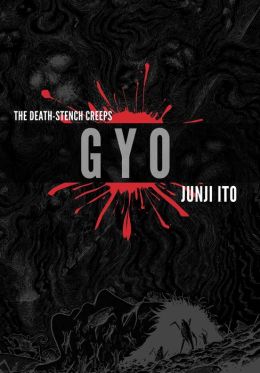
GyoBrigid rounded up some new April manga releases at the Barnes & Noble Sci-Fi/Fantasy blog; they include the last volume of Blade of the Immortal, the first volume of Your Lie in April, and a nice new one-volume edition of Junji Ito’s Gyo.

And speaking of new releases, the Manga Bookshelf gang looks at next week’s arrivals, from Kuroneko to My Neighbor Seki.

Another week, another Kickstarter campaign: DMP began fundraising for a print edition of Osamu Tezuka’s Clockwork Apple, a collection of horror, fantasy, and sci-fi stories.

In his latest House of 1000 Manga column, Jason Thompson sings the praises of Kazuhiko Shimamoto, author of the untranslated Blazing Transfer Student.

Justin Stroman interviews Dark Horse editor Brendan Wright about the forthcoming edition of Planetes, and Yen Press editor Abigail Blackman about the challenges of lettering, translating, and editing manga.

Are US publishers licensing less shojo manga? Johanna Draper Carlson investigates.

YaoiCon will be hosting prolific manga-ka Makoto Takeno, author of Yellow, Happy Boys, Blue Sheep Reverie, and A Murmur of the Heart.

The Nepali Times reports that young adults in Kathmandu are discovering manga, thanks to entrepreneurs such as Wataru Ram Shrestha, proprietor of Nepal’s first manga bookstore, and Shalini Rana, Kavin Shah, and Krishant Rana, founders of Nepal’s first manga magazine.

News from Japan: The latest volume of One Piece, volume 77, has a print run of fewer than 4 million copies for the first time in four years. Publisher Shueisha attributes the drop to the increased popularity of digital manga. Kodansha has announced the nominees for the 39th Annual Kodansha Awards; they include Knights of Sidonia, The 7 Deadly Sins, and Kiss Him, Not Me. Japanese newspaper The Christ Weekly is using manga to educate readers about Christian fundamentals.

If you ever thought Death Note would be improved with a few song-and-dance numbers, you’ll be happy to learn that a musical version of Tsugumi Oba and Takeshi Obata’s perennially popular manga debuted in Tokyo on April 6th.

Reviews: Ash Brown posts a thoughtful review of Your Lie in April, a new drama from Kodansha Comics, while Sean Gaffney gives us the low-down on another eagerly anticipated title, Yamada-Kun and the Seven Witches. The Manga Bookshelf gang offers a concise round-up of the latest volumes of Assassination Classroom, Dengeki Daisy, and UQ Holder!

Leroy Douresseaux on vol. 5 of Food Wars! Shokugeki no Soma (Comic Book Bin)
Kristin on vols. 4 and 5 of Gangsta (Comic Attack)
Lori Henderson on The Garden of Words (Manga Xanadu)
Jocelyn Allen on Henshin (Brain vs. Book)
Erica Friedman on vol. 5 of Himawari-san (Okazu)
Erica Friedman on vol. 2 of Kampfer (Okazu)
Sean Gaffney on vol. 1 of Let’s Dance a Waltz (A Case Suitable for Treatment)
Leroy Douresseaux on vol. 13 of Library Wars: Love & War (Comic Book Bin)
Alice Vernon on vol. 1 of Love at Fourteen (Girls Like Comics)
Johanna Draper Carlson on vol. 3 of Manga Dogs (Comics Worth Reading)
Ash Brown on vol. 1 of Maria the Virgin Witch (Experiments in Manga)
Sheena McNeil on vol. 18 of Oresama Teacher (Sequential Tart)
Rebecca Silverman on vol. 1 of Requiem of the Rose King (ANN)
Wolfen Moondaughter on vol. 17 of Rin-ne (Sequential Tart)
Megan R. on School Rumble (The Manga Test Drive)
Nick Smith on Seraphim: 266613336 Wings (ICv2)
Sarah on vol. 24 of Soul Eater (Nagareboshi Reviews)
Karen Maeda on vol. 5 of Terra Formars (Sequential Tart)
Tony Yao on Time Killers (Manga Therapy)
Khursten Santos on Yatamono (Otaku Champloo)
Anna N. on vol. 2 of Yukarism (Manga Report)

Filed Under: MANGABLOG

Your Lie in April, Vol. 1

April 10, 2015 by Ash Brown

YourLieApril1Creator: Naoshi Arakawa
U.S. publisher: Kodansha
ISBN: 9781632361714
Released: April 2015
Original release: 2011
Awards: Kodansha Manga Award

Your Lie in April is the first and so far only manga series by Naoshi Arakawa to have been released in English. Arakawa is still fairly early on in his career—Your Lie in April was only his third major work—but the series earned him a Kodansha Manga Award in 2013 for Best Shōnen Manga. The first volume of the eleven-book series was originally published in Japan in 2011. In English, the manga was released by Kodansha Comics in 2015. The entirety of Your Lie in April was adapted into an anime series between 2014 and 2015, which is how I first learned about the manga. My interest in the series primarily stems from the prominent role that music has to play in the manga. Music is something that is incredibly important to me and continues to be a major part of my life. Probably unsurprisingly, I tend to enjoy music manga. And so, I was particularly happy to receive an early copy of Your Lie in April from Kodansha for review.

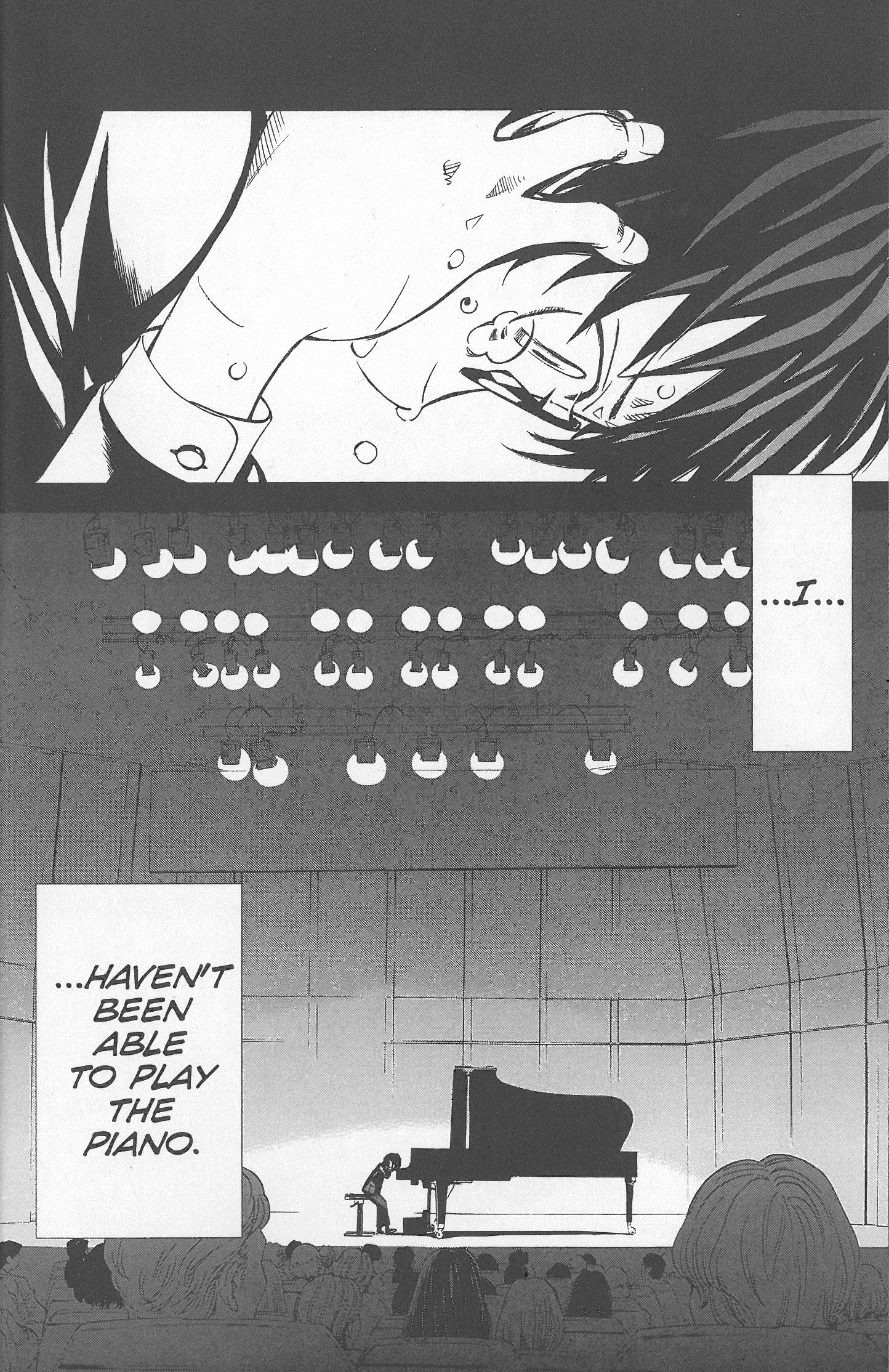
Kosei Arima was a child prodigy, admired for his skill and success as a pianist, winning competition after competition. But ever since his mother died and he had a breakdown in the middle of a performance on stage when he was eleven, he hasn’t been able to play the piano. Not for others and not even for himself. Piano was such an integral part of Kosei’s life that he seems to be somewhat lost without it and he hasn’t been able to completely let music go. Several years have passed since then, leaving Kosei a rather withdrawn and gloomy young man. But then he meets Kaori Miyazono, an extremely passionate violinist who attends the same middle school that he does. Kaori plays the way that she wants to play, disregarding traditional interpretations and technique to make the music her own. Though he is still reluctant and hesitant, watching Kaori’s enthusiastic, free-spirited performances has reignited something within Kosei and she and his friends are determined to see him play once again.

Your Lie in April, Volume 1, page 6A particular challenge faced by music manga like Your Lie in April is expressing sound in a visual medium. It takes more than simply throwing notes on the page to effectively convey the feeling of music in a comic. For the most part, Arakawa handles this aspect of the series quite well. The music itself isn’t heard, but the expressions and reactions of the listeners and musicians, the impact created by the music, can readily be seen. Perhaps the best example of this in Your Lie in April, Volume 1 is Kaori’s performance during a violin competition. The violinists before her are poised and fairly reserved in their playing, but Kaori uses her entire body to emote and express the music. This and the stunned faces of the audience members make it very clear that her invigorated style is drastically different and unexpected. But while music is obviously an important part of Your Lie in April, the real focus of both the artwork and the storytelling is on people’s experiences of that music.

Kosei’s relationship with music, and specifically with playing the piano, is a complicated one. He is struggling with intense psychological distress and it is revealed very early on in Your Lie in April that his mother physically, and very likely emotionally, abused him as well, trying to force her own dreams onto her son. Whether he is aware of it or not, Kosei’s feelings towards music and the piano are very much tied up with his feelings towards his mother. Underneath a relatively calm exterior is a turmoil of conflicting emotions that includes both love and hatred and even some fear. Deep down, Koesi does still seem to have the desire to continue playing the piano, though he denies it to himself and to others. It’s something that he will have to face head-on eventually, but Kaori’s influence threatens to make it something that he will have to deal with sooner rather than later, perhaps even before he’s really ready. I am very curious to see how Your Lie in April continues to develop and the steps Kosei may take to overcome his trauma.

Thank you to Kodansha for providing a copy of Your Lie in April, Volume 1 for review.

Filed Under: REVIEWS Tagged With: kodansha, Kodansha Comics, Kodansha Manga Award, manga, Naoshi Arakawa, Your Lie in April

Manga the Week of 4/15

April 9, 2015 by Sean Gaffney, Ash Brown, Anna N, Michelle Smith and MJ Leave a Comment

SEAN: Welcome to a wonderful week of manga here on Manga the Week of. For those of you who don’t like variety, there’s variety!

kuroneko

Dark Horse has the first volume of Oreimo spinoff Kuroneko, for those remaining fans who weren’t completely put off by the ending of the main series.

Does anyone remember Aquarion? Anyone? Anime, around 2005? Well, for those who yearned for a sequel in manga form, One Peace is giving us Aquarion Evol. It’s a Comic Gene title, so expect weirdness.

ASH: I like weirdness!

ANNA: I think I watched the first episode of the show and thought that there were too many orgasms when the robots combined.

SEAN: 12 Beast is a new Seven Seas series. It runs in Dragon Age. It’s from the creator of Monster Musume. It sounds radioactive to me, but I know others love this.

Gakuen Polizi is more up my alley, though I wish it was a bit less inconsequential. The 2nd and final volume is next week.

And if you don’t like ecchi fantasy or fluffy lesbians, well, there’s a third Magical Girl Apocalypse, which should at least give you gore.

The title The World’s Greatest First Love may not mean much to BL fans, but if I said it was Sekai-ichi Hatsukoi, I’m sure you’d know exactly the series I mean. SubLime has the long-awaited first volume.

MICHELLE: Ah, now this is one I’ve actually heard of!

ASH: As have I!

MJ: Count me in!

worlds1

SEAN: I loved My Neighbor Seki even more than I thought I would, and am delighted to see a 2nd volume next week from Vertical.

MICHELLE: I regret to say I haven’t gotten around to reading the first volume, but I definitely will one of these days!

ASH: You definitely should, My Neighbor Seki is absolutely delightful.

ANNA: This is on my list of things I need to read!

MJ: Mine, too!

SEAN: Case Closed still has more mysteries, and Shinich… sorry, Jimmy is still a little kid, even as we hit the 54th volume.

We’ve passed the halfway point in Deadman Wonderland, and Vol. 8 comes out from Viz next week.

And Itsuwaribito, a series that has a much longer run than I really expected, has Vol. 14.

Lastly, a new volume of Magi is always welcome. Next week we have Vol. 11.

MICHELLE: <3

ANNA: I have been stockpiling stray volumes of this here and there. One day I shall read them!

SEAN: And for those of you who don’t like manga… well, why are you reading this?

Filed Under: FEATURES, manga the week of

Let’s Dance a Waltz, Vol. 1

April 9, 2015 by Sean Gaffney

By Natsumi Ando. Released in Japan as “Waltz no Ojikan” by Kodansha, serialized in the magazine Nakayoshi. Released in North America by Kodansha Comics.

Natsumi Ando’s back again, this time with a shorter series – this is only three volumes long, I believe. Which is good, as I felt the pacing was very rapid for a shoujo manga like this – it would only make sense if it was going to be wrapping up fairly quickly. I’m not sure if this was deliberate or not – her previous series, Kitchen Princess and Arisa, were both double digits. But short doesn’t necessarily mean it’s a failure, and there’s much to like about Let’s Dance a Waltz, with its grumpy hero held back by an incident in his past, and a self-deprecating heroine with an unfortunate first name.

waltz1

First off, a word of warning: the moment I saw that our heroine, Hime, was overweight and a bit frumpy, I thought “she’s going to lose all the weight and be gorgeous by the end of this volume, isn’t she?” And sure enough, that’s exactly what happens. She too has a tragic backstory, as her mother, who was the one who named her (Hime means princess, something that gets hammered home quite a bit in this series) passed away from tragic backstory disease when she was just a little girl. (This is a common disease befalling young women in manga – young men tend to have dads disappear (the scum), not die off.) Still, the mother may have had good intentions, but it’s left Hime teased her entire life thanks to the wonderful world of Japanese schools, whose bullying is always important for character development.

Our hero, Tango (no, I’m not making these names up), is dealing with similar peer pressure problems, but from the opposite direction – he’s handsome and popular, and in accordance with his name actually is an amazing dancer. But he doesn’t dance competitively anymore due to a mistake he made in his childhood that haunts him, and prefers to be the class clown, breakdancing and avoiding any mention of the fact that his mother runs a dancing school (because dancing is not “cool”, and kids turn on cool kids who are now uncool faster than anyone except perhaps girls with the name ‘princess’. Tango can be quite the jerk through this volume, but we know he just needs his true love to make him straighten up.

Though there were a few times I was surprised through the first volume – secondary couple Yusei and Sumire, who have no issues whatsoever (possibly as they have standard Japanese first names) are dedicated to helping the two wannabe lovebirds rather than, say, getting jealous, which is what I was suspecting of Sumire when I first saw her – but for the most part this is a manga that runs on timeworn cliches. But this is fine – Ando is an expert at this sort of thing, and it’s nice to sit back and just let a skilled artist take you where she wants to go. At three volumes, this seems like exactly the right length for a sweet manga about a couple who can connect to each other though the wonders of ballroom dancing.

Filed Under: REVIEWS

Maria the Virgin Witch, Vol. 1

April 8, 2015 by Ash Brown

Maria the Virgin Witch, Volume 1Creator: Masayuki Ishikawa
U.S. publisher: Kodansha
ISBN: 9781632360809
Released: February 2015
Original release: 2010

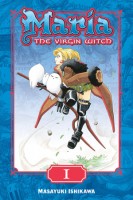
I’ll admit, when I first heard about the manga series Maria the Virgin Witch, I was more than a little skeptical. I’m not particularly interested in witches, which seem to be nearly as common as vampires in translated manga these days, and the emphasis placed on the heroine’s virginity seemed like it could be a little suspect. But then I realized that Maria the Virgin Witch was by Masayuki Ishikawa, the creator of Moyasimon, a quirky manga about microbes and fermentation that I enjoyed immensely. (Sadly, only two volumes of Moyasimon were ever released in English.) If for no other reason, I wanted to give Maria the Virgin Witch a chance because of my love for Moyasimon. I’m very glad that I did; the first volume turned out to be a very promising and intriguing start to the short series. Maria the Virgin Witch, Volume 1 was initially published in Japan in 2010 while the English-language edition was released by Kodansha Comics in 2015.

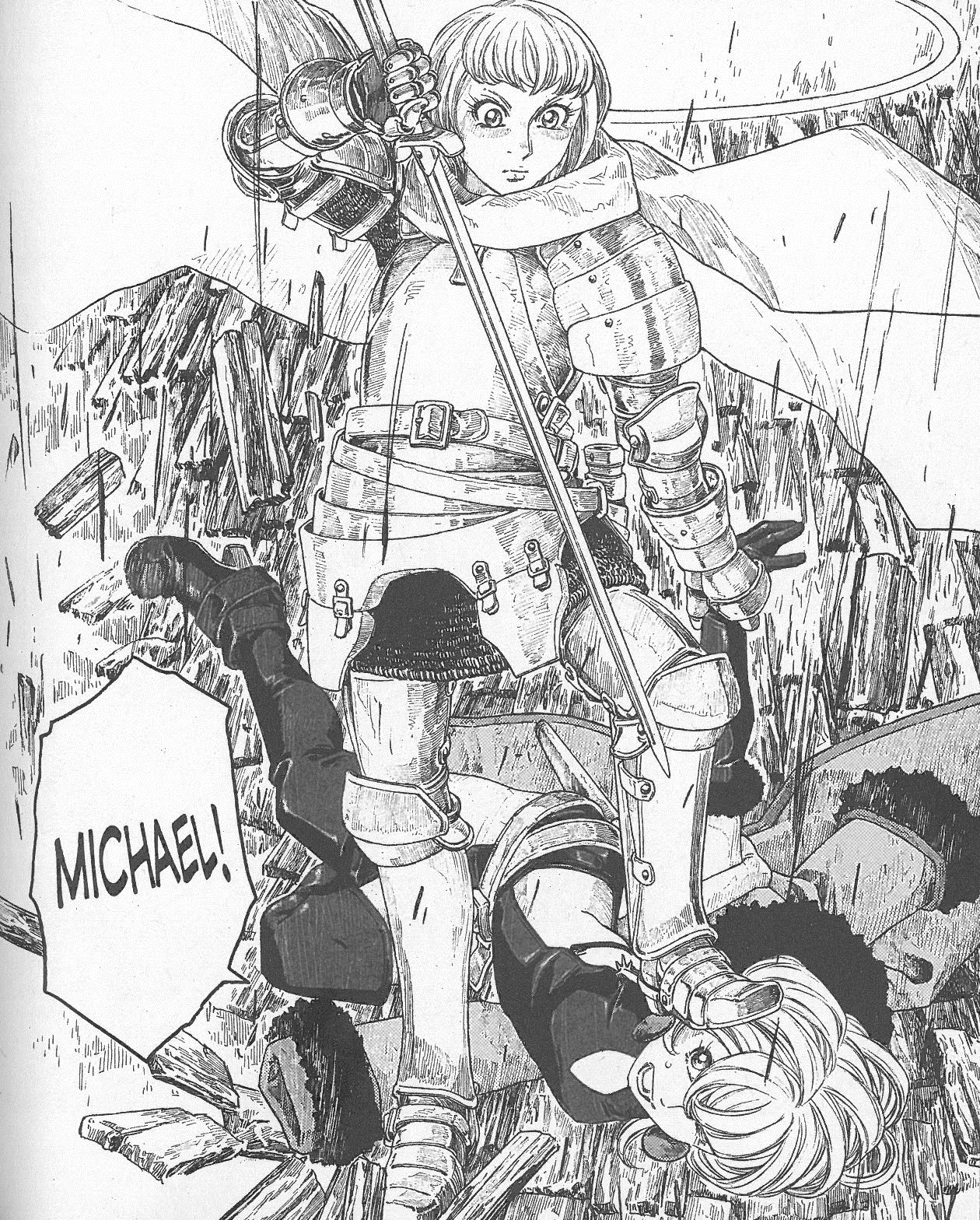
During the first half of the fifteenth century, England and France were still locked in the Hundred Years War, many of the battles being waged on French soil. Maria is a powerful but young witch living in France. She abhors the killing and senseless violence and so does what she can to disrupt the conflict and protect the villages and people who live near her woods. She has discovered one particularly effective method: by sending an owl familiar in the form of a succubus among the leaders of the armies on the eve of major battles, they often lose their will to fight or their interest in the impending confrontation. However, sometimes more direct action is required and Maria will summon great beasts to wreak havoc and chaos on the battlefield. But causing such a spectacle carries with it the danger of drawing the attention of Heaven and the risk of incurring the wrath of the Archangel Michael. There is a proper order to the world, and Maria poses a threat to it.

Maria the Virgin Witch, Volume 1, page 118 Maria’s outlook on life (as well as her and her familiars’ character designs) does tend to be more contemporary than the rest of the manga’s setting, but I really like her as a character. She has strong convictions, and she is prepared to act on them, doing what she can to right the injustices she sees in the world. Michael and others criticize her for her interference and audacity; Maria is very forthright with her feelings and opinions. She is young, and perhaps a little naive, but I admire her earnestness. Despite her anger and frustration, she has yet to become embittered by the world.  Maria honestly and wholeheartedly cares about people, especially those who are powerless or taken advantage of. Though some of her methods might not be considered to be particularly respectable by most, she and the people she protects believe her to be a force for good. Even so, Maria is considered to be a heretic by the Catholic Church, an institution for which she quite obviously holds no love.

Although Maria the Virgin Witch explores some fairly serious subjects—religion, morality, power dynamics, sexuality—the manga also includes a good deal of humor. Much of the comedy has to do with sex in one way or another, but some of it simply relies of the quirkiness of the characters. Maria, for example, is old enough to be curious about sex, but is still completely embarrassed at even the mere thought of seeing a man naked. As a result Priapus, the incubus she creates, is rather indistinct where it counts and is generally just put in charge of cooking and running errands. The first volume of Maria the Virgin Witch can be a bit crass at times (personally, I could have done without the repeated “cry for me like a little whore”-type comments), but overall the manga is a surprisingly layered work. The more I think about it, the more it grows on me, and the more I want to read the rest of the series. So far, Maria the Virgin Witch is a very interesting mix of historical fiction and fantasy that can be both entertaining and sobering.

Filed Under: REVIEWS Tagged With: kodansha, Kodansha Comics, manga, Maria the Virgin Witch, Masayuki Ishikawa

Cocoa Fujiwara RIP

April 8, 2015 by Brigid Alverson

Fujiwara_INUxBOKUv6_TP

Cocoa Fujiwara, the creator of Inu x Boku SS, has died. Although she was only 31 years old, she had a number of manga credits: The short story “Calling,” which was published when she was just 15, Stray Doll, Watashi no Ookami-san, dear, Ojousama to Youkai Shitsuji, Inu x Boku SS, and her current series, Katsute Mahō Shōjo to Aku wa Tekitai Shiteita, which ran in Young Gangan, as did Inu x Boku SS. According to her Wikipedia page, she was friends with fellow Square Enix artists Jun Mochizuki (Pandora Hearts) and Yana Toboso (Black Butler).

Filed Under: MANGABLOG

Pick of the Week: Shoujorama

April 7, 2015 by Sean Gaffney, Michelle Smith, Anna N, Ash Brown and MJ Leave a Comment

potwSEAN: There’s a lot I like this week, but Dengeki Daisy‘s final volume is absolutely my pick of the week.
MICHELLE: I am finding it insanely difficult to pick from amongst quite a few favorites with new volumes out this week. Skip Beat!, Food Wars! and Voice Over! are all must-buys, but I continue to be absolutely charmed by My Love Story!!, so I’ll award its fourth volume my pick of the week. Clearly, exclamation points are the way to my heart. Unless you are BTOOOM!.

ANNA: There are so many good manga coming out this week, but like Sean I’m going to have to go with Dengeki Daisy. It is a heartwarming story about a high school girl and her protective school janitor/hacker. There were plenty of high-stakes thrills along the way, but at the core this is a series about a found family. If you haven’t checked out this series yet, what are you waiting for?

ASH: Well, since Shojo Beat already has a strong showing (I’ll definitely be picking up Dengeki Daisy and My Love Story!), I’ll mix it up a bit with something completely different, the most recent volume of the dark, suspenseful, and and action-packed Ajin: Demi-Human.

MJ: Since I think I liked it better than a lot of other manga bloggers, I will take this opportunity to give a shout for the second volume of Chika Shiomi’s Yukarism. I’m a big fan of the author, and I found the first volume intriguing enough to keep me looking for more. That’s my pick out of this shoujo-heavy week!

What looks good to you this week?

Filed Under: PICK OF THE WEEK

Bookshelf Briefs 4/7/15

April 7, 2015 by MJ, Sean Gaffney, Michelle Smith and Anna N Leave a Comment

This week, Sean, Michelle, & Anna look at recent releases from Viz Media & Kodansha Comics.

arata21Arata: The Legend, Vol. 21 | By Yuu Watase | Viz Media – Arata and company have entered the territory of Ikisu, a gender-indeterminate member of the Six Sho who wields scent-based powers. Ikisu uses these to amplify the inferiority complex Kanate feels towards Arata. They fight, but right after Arata resolves their confrontation with an accepting hug, Kanate submits to Kadowaki. I’m still a little unclear as to why. Is it because, in order to succeed in his mission, Arate’s going to have to harden his heart to Kadowaki and force him to submit? And, therefore, Kanate is sacrificing himself to give Arata a reason to give up on Kadowaki being redeemed? In any case, seeing Arata in prolonged, heightened demon mode—only dispelled when he accidentally injures Kotoha—is pretty cool, and his newfound conviction regarding Kadowaki makes me hopeful that we’re heading towards an ending. I like this series well enough, but would welcome it wrapping up sometime soon. – Michelle Smith

assassination3Assassination Classroom, Vol. 3 | By Yusei Matsui | Viz Media – Much of this volume is meant refining its core plot and building its world. We resolve the kidnapping from the class trip, where we see that Koro-sensei is indeed prepared for ANY eventuality. We get another new transfer student sent to kill the teacher, and see Koro-sensei not criticize her for killing him, but criticizing her for doing it in a way that disrupts the others. And we see that Class 3-E is still the scapegoat for anyone else at the school, and if they try to change that they are brutally put down, so they take their little revenges where they can. It’s all very well-written, funny and enjoyable, and I continue to be amused at the avoidance of “Bitch-sensei”, even when the art itself uses it. Highly recommended. – Sean Gaffney

dengeki16Dengeki Daisy, Vol. 16 | By Kyousuke Motomi| Viz Media – This final volume of Dengeki Daisy is a very good example of what you do when you wrap up your series but still have to fill 150 more pages for the last tankobon. So we get the resolution of last volume’s cliffhanger, followed by several side-stories and epilogues, which are equally great, followed by the author’s debut work, which isn’t as great but that’s not unexpected. We do not get a flash-forward to marriage or children, but oddly do get to see them taking care of a baby due to one last ridiculous plot contrivance in a series full of them. Motomi will be back in the fall with her new series, already licensed, but I’ll miss Daisy, which if nothing else presented a “teacher”/ student romance that no one objected to, really. Funny, heartwarming, and charming. – Sean Gaffney

Dengeki Daisy, Vol. 16 | By Kyousuke Motomi | Viz Media – I was getting pretty seriously weary of the cyberespionage plotline that has dominated recent volumes of Dengeki Daisy, so it’s a relief that it wraps up quickly in this final volume, leaving more time for happy-ever-after character goodness. The official ending is satisfying on its own, but I was actually pleasantly surprised by the bonus chapters. True, there’s a shoujo-tastic episode in which a group trip to a resort is delayed by one of Kurosaki’s neighbors abandoning a baby on his doorstep, but this actually allows us to imagine him and Teru as a married couple. Plus, we get to see more of Soichiro’s past, Akira’s hopeful present, and top student Teru looking toward an ambitious future career with Kurosaki’s full support. I may not always have loved this series, but I’m glad I kept reading until the end. It was definitely a worthwhile endeavor. – Michelle Smith

library13Library Wars: Love & War, Vol. 13 | By Kiiro Yumi and Hiro Arakawa| Viz Media – This was actually a lot more plot-heavy than I expected, continuing to develop the story of Toma’s struggles against censorship and the Library Forces’ attempts to keep him safe. The story here may sometimes require some suspension of disbelief, but I always love that a shoujo manga in LaLa is willing to spend so much time devoting itself to a study of the politics of censorship, the media, and what’s best for Japan. Also, they’re right – Iku’s idea was fantastic, even if it was inadvertent. For those who want romance, it’s mostly low-key here, though Komaki and Marie fans will be happy, as the cover gives away. One of Shojo Beat’s low-key gems, I always look forward to a new volume. – Sean Gaffney

skipbeat34Skip Beat!, Vol 34 | By Yoshiki Nakamura | Viz Media – I’ve thoroughly enjoyed the Heel Siblings arc, but this volume shows signs that Kyoko and Ren may be moving on. Lory decides to pull Kyoko out of her masquerade due to her fragile emotional state, and as Kyoko attempts to talk to the boss of LME without revealing the depth of her feelings to Ren, Nakamura offers up some great examples of lettering, as the tiny speech balloons and short phrases Kyoko uses make it clear just how painful it is to talk about her emotions. Later, Kyoko encounters Ren in as his real self, and her recognition of her childhood friend Kuon/Corn provokes even more emotional catharsis. My only compalaint about this series is that the volumes don’t come out often enough! – Anna N

uq4UQ Holder!, Vol. 4 | By Ken Akamatsu | Kodansha Comics – This is not Akamatsu’s first arc involving time travel and paradoxes, as readers of Negima well know. That said, it seems a lot more intense and dangerous here Possibly it’s because there’s none of the cliched Akamatsu ‘let’s have some fanservice here to satisfy the readers’ pages. But I think it may be due more to the return of one of Negima’s most memorable villains, who makes life next to impossible for our heroes. (There’s also a minor villain who seems to have returned as a cyborg, but I’m not sure – she seems far too sane.) You can read this without having read Negima, but it’s building on that world, and showing that Negi and Asuna’s actions at the end of that series have far-reaching consequences. – Sean Gaffney

Filed Under: Bookshelf Briefs

Yamada-kun and the Seven Witches, Vol. 1

April 7, 2015 by Sean Gaffney

By Miki Yoshikawa. Released in Japan as “Yamada-kun to 7-nin no Majo” by Kodansha, serialization ongoing in the magazine Weekly shonen Magazine. Released in North America by Kodansha Comics.

The debut volume of this series has a war between a plotline I love and a plotline I always find discomforting and embarrassing, and ends up taking it in a rather sedate direction. Of course, this is clearly a slow burner – we’re already a volume in and we have no idea who the seven witches are. But in the meantime we get to see the titular lead, Yamada-kun, make all sorts of amusing faces, and see various high school romantic comedy hijinx. This has been out on Crunchyroll for a while now, so I know that things will ramp up soon, but I was actually surprised at how little happened in this initial volume.

yamada1

Yamada is a delinquent, which I always love, although he’s sort of a sanitized delinquent. Even Onizuka (who appeared in the same magazine 20 years ago) was allowed to have bad habits. Here he’s just a guy with bad grades who sulks around the school wondering why things aren’t more interesting. He also may seem slightly familiar to those who know of Yoshikawa’s former series Yankee-kun to Megane-chan, which also featured a lead delinquent (of a sort) and their supposedly straightlaced female equivalent. The plot kicks in when he accidentally falls down the stairs, dragging a young girl down with him and forcing them to swap bodies, because they fell down the stairs in a high school manga and that is what inevitably happens in these sorts of things.

Urara is more interesting, if only as she takes much of this in stride. While Yamada is busy freaking out, her reaction is more sedate. Of course, she might be quite happy to take a vacation from her body, as we see (through Yamada’s eyes) that she has a lot she has to deal with. She seems fairly stoic, but as she warms up over the course of the volume it becomes apparent that it’s more repressed emotions than anything else. The dynamic between the two of them is interesting but fairly mild, except, of course, for the kisses that allow them to swap bodies at will. As we gain more cast members (Miyamura, whose attempts to convince Urara to continue high education by trying to find blackmail material and ogling her cup size, did not impress me) we will no doubt gain more dynamics.

At the end of this volume, even with the addition of a new girl who promises to make life miserable for everyone, we’re not one step closer to knowing what’s going on. We haven’t met a witch, and we’re not sure why Yamada suddenly can swap bodies with anyone he kisses. Given the author’s success with her prior work, I imagine she has a lot more leeway to develop things the way she wants without the fear of getting cancelled after 15 chapters. Which is fine, but it does lead to a first volume that’s merely average, even as I know it gets better later. Still, if you like school romantic comedies with an emphasis on the comedy, and want to step in before the inevitable harem plot starts up, this is the volume for you.

Filed Under: REVIEWS

My Week in Manga: March 30-April 5, 2015

April 6, 2015 by Ash Brown

My News and Reviews

An interesting variety of things was posted last week at Experiments in Manga. First of all, I had the privilege and opportunity to announce one of Sparkler Monthly‘s most recent additions, Kôsen’s Lêttera, a three-volume comic that was originally published in Spain. The winner of the Yukarism giveaway was announced last week as well. The post also includes a list of manga that feature reincarnation. As for reviews, I took a look at Akira Arai’s debut novel A Caring Man which shared the inaugural Golden Elephant Award grand prize with Fumi Nakamura’s Enma the Immortal. Whereas Enma the Immortal is historical fiction with fantastical elements, A Caring Man is a contemporary crime thriller that by and large is very believable. Finally, over the weekend I posted March’s Bookshelf Overload, which features a slightly less absurd amount of manga than most months.

Elsewhere online, Organization Anti-Social Geniuses has been posting some great manga-related content, including recording of a panel with manga editor and letterer Abigail Blackman from the Castle Point Anime Convention and a quick interview with editor Brendan Wright about Dark Horse’s upcoming release of Makoto Yukimura’s Planetes. (I’m very excited for this license rescue! I already own Tokyopop’s edition of the series, but Dark Horse’s sounds like it will be great, so I’ll most likely be double-dipping.) And speaking of Dark Horse, the final volume of Hiroaki Samura’s Blade of the Immortal was released last week. Robot 6 has an interview with Philip Simon reflecting on the manga’s end. Chic Pixel has a guide on how to import manga cheaply from Amazon Japan. Throughout March, the Comic Book Legal Defense Fund posted a series of articles, Women Who Changed Free Expression, the last of which focused on the influential 24 Nengumi, or the Year 24 Group, as the female progenitors of shoujo manga.

Anime Boston took place over the weekend. Both Yen Press and Kodansha Comics had some pretty exciting announcements to make. Yen Press has licensed thirteen new manga, some of which will be digital-only releases. The two print releases that particularly caught my attention were the omnibus edition of Yowamushi Pedal, particularly surprising since it’s a sports manga that’s nearly forty volumes lone and still ongoing in Japan, and the yonkoma Monthly Girls’ Nozaki-kun which, if it’s anywhere near as good as the anime adaptation, should be fantastic. As for Kodansha’s announcements, Attack on Titan, Volume 16 will have a special edition. New licenses include Ninja Slayer Kills, two video game-related manga—Persona Q and Devil Survivor—and Junji Ito’s Cat Diary, which is the one I’m personally most excited for. Also revealed was the status of Vinland Saga, which had temporarily been suspended. Basically, only two more volumes are guaranteed to be released unless sales for the series improve. Vinland Saga is magnificent; if you haven’t already given it a try, this would be the time to do it!

Quick Takes

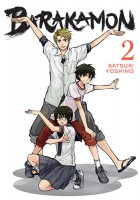
Barakamon, Volume 2Barakamon, Volumes 2-3 by Satsuki Yoshino. While I largely enjoyed the first volume of Barakamon, I wasn’t particularly blown away by it. Still, I was interested in reading more of the series. I’m glad that I did, because it’s really starting to grow on me. Barakamon does have a little bit of a story to it—the once successful and respected calligrapher Seishuu has moved to a remote island to regain his composure and maybe find some inspiration—but mostly the series is about its characters and their interactions with one another. Even though he’s still a city-boy at heart, Seishuu has started to settle in on the island and isn’t nearly as out-of-place as he once was. The humor seems to now be a little less about the differences between country folk and people from more urban areas (although there still is plenty of that, especially when a couple of Seishuu’s friends and admirers from Tokyo show up) and more about the characters’ individuality and quirkiness. I am glad to see Seishuu relax somewhat and lose a bit of his arrogance from the first volume. In general he’s becoming a much more likeable character, which is probably part of the point of the series.

Cage of Eden, Volume 17Cage of Eden, Volume 17 by Yoshinobu Yamada. Finally! The monsters have returned! Well, technically it’s only one monster (not counting the absolutely terrible people), but it’s a pretty big deal. The dinosaurs and creatures are some of the only things I actually like about Cage of Eden; they’ve been largely missing from the last few volumes, so I was glad to see them back in such a dramatic way. Most of the seventeenth volume is devoted to an intense, and most likely deadly, battle against a man-made, genetic monstrosity. Probably best described as a chimera, the creature is formidable and extremely dangerous. The students make some extraordinarily bad decisions when it comes to confronting the beast, which really makes me wonder how they’ve managed to survive for so long. (Granted, the body count in Cage of Eden is pretty high.) The fight hasn’t concluded by the end of the volume, though I suspect it won’t last too much longer. One of the good things about Cage of Eden suddenly focusing on action is there is less opportunity for the more obnoxious fanservice to interrupt the story. Some of the girls even get to put up a decent fight. (At least at first.)

Lucifer and the Biscuit Hammer, Omnibus 2Lucifer and the Biscuit Hammer, Omnibus 2 (equivalent to Volumes 3-4) by Satoshi Mizukami. I wasn’t really sure what to expect from Lucifer and the Biscuit Hammer and reading the first omnibus didn’t help much with that, but I thoroughly enjoyed it. Sadly, I wasn’t nearly as taken with the second omnibus. I still enjoyed it, and I still plan on reading more of the series, but Lucifer and the Biscuit Hammer seems to have lost a little of its spark for me. Maybe I’ve just gotten used to its strangeness, but at the same time that’s also what I enjoy most about the series. Lucifer and the Biscuit Hammer is just so marvelously weird. At times the manga can be surprisingly dark, too, which I also appreciate. In the second omnibus, a slew of new characters are introduced as the identities of the rest of the Beast Knights are uncovered, although some of them are discovered to already be dead. All of them are rather eccentric with pasts that have some significant pain or sadness to them. The mage who plans on destroying the planet makes several appearances as well, and to some extent his motivations are explained, too. Much like the rest of the series, he’s not quite what one might expect.

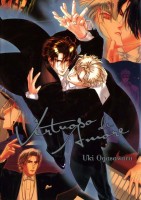
Virtuoso di AmoreVirtuoso di Amore by Uki Ogasawara. I was primarily drawn to Virtuoso di Amore for two reasons, the role that music plays in the boys’ love manga and the fact that it was created by Ogasawara. I enjoyed parts of her short and very smutty series Black Sun, currently the only other manga of hers available in English. (Techincally, Chronicle of the Divine Sword was at one point licensed, but I don’t think it was ever actually published.) Virtuoso di Amore follows Kenzo Shinozuka, a failed classical pianist (mostly due to his volatile temper), who has been hired by an aristocrat to live in his manor and play for him every night. His patron is Lorenzo Carlucci who, it turns out, used to attend the same music school as Kenzo. Lorenzo is determined to help Kenzo remake is name as a musician. I really liked the basic premise of Virtuoso di Amore as well as its dark ambiance and fervent drama, but Ogasawara’s storytelling is unfortunately disjointed and occasionally difficult to follow. For example, Lorenzo and Kenzo fall in love, or at least in lust, very suddenly, which makes me think their relationship at school must have been much more involved than is implied elsewhere in the manga.

Filed Under: FEATURES, My Week in Manga Tagged With: Barakamon, Cage of Eden, Lucifer and the Biscuit Hammer, manga, Satoshi Mizukami, Satsuki Yoshino, Uki Ogasawara, Yoshinobu Yamada

Bookshelf Overload: March 2015

April 5, 2015 by Ash Brown

Compared to most other months, the number of manga that I had to find space for in March was relatively reasonable. I mostly stuck to preorders for manga, the major exception being the set of the now out-of-print City Hunter that I found. There were a few impulse buys when it came to novels and nonfiction, though. I did finally get my hands on Ajin: Demi-Human, Volume 3 by Gamon Sakurai. Technically released in February, my replacement copy arrived in March. (I’m pretty sure the first one that was sent to me was lost in a snow bank somewhere; I never saw it.) As for the manga that were actually released in March, I was particularly happy to see the third and final volume of Yaya Sakuragi’s boys’ love manga Hide and Seek. (I recently reviewed the first volume, which I enjoyed a great deal.) I’m always glad to see a new installment of Fumi Yoshinaga’s What Did You Eat Yesterday?, the seventh volume is the most recent addition to the series in English. But the manga I was most looking forward to in March was Aya Kanno’s Requiem of the Rose King, Volume 1. Actually, I was almost afraid to read it because I was worried that I would be disappointed. Fortunately, I loved the manga and can’t wait for the next volume.

Manga!
Ajin: Demi-Human, Volume 3 by Gamon Sakurai
Alice in the Country of Joker: Circus and Liar’s Game, Volumes 1-5 by Mamenosuke Fujimaru
Aquarion Evol, Volume 1 written by Shoji Kawamori, illustrated by Aogiri
Barakamon, Volume 3 by Satsuki Yoshino
Butterflies, Flowers, Volume 1 by Yuki Yoshihara
Cage of Eden, Volume 17 by Yoshinobu Yamada
Captain Ken, Volumes 1-2 by Osamu Tezuka
City Hunter, Volumes 1-5 by Hojo Tsukasa
The Drifting Classroom, Volume 8 by Kazuo Umezu
Hide and Seek, Volume 3 by Yaya Sakuragi
Knights of Sidonia, Volume 13 by Tsutomu Nihei
False Memories, Volume 1-2 by Isaku Natsume
Maria the Virgin Witch, Volume 1 by Ishikawa Masayuki
Master Keaton, Volume 2 written by Hokusei Katsushika, Takashi Nagasaki, illustrated by Naoki Urasawa
Manga Dogs, Volume 3 by Ema Toyama
Requiem of the Rose King, Volume 1 by Aya Kanno
Seraphim: 266613336 Wings by Mamoru Oshiii and Satoshi Kon
Tsubasa: Reservoir Chronicle, Omnibus 3 by CLAMP
What Did You Eat Yesterday?, Volume 7 by Fumi Yoshinaga
Yamada-kun and the Seven Witches, Volume 1 by Miki Yoshikawa

Comics!
100 Crushes by Elisha Lim
Grey Is…, Volume 1 by dee Juusan
In These Words, Volumes 1-2 by Guilt|Pleasure
Just So Happens by Fumio Obata
Last Man, Volume 1: The Stranger by Bastien Vives, Michael Sanlaville, and Balak
Only Words written by Tina Anderson, illustrated by Caroline Monaco
Sam Zabel and the Magic Pen by Dylan Horrocks
Stallion by Kôsen
Wayward, Volume 1: String Theory written by Jim Zubkavich

Novels!
Ascension by Jacqueline Koyanagi
Genocidal Organ by Project Itoh
I Want to Kick You in the Back by Risa Wataya
The Kappa Child by Hiromi Goto

Nonfiction!
The Book of Yokai: Mysterious Creatures of Japanese Folklore by Michael Dylan Foster
The Fall of Language in the Age of English by Minae Mizumura
How to Take a Japanese Bath written by Leonard Koren, illustrated by Suehiro Maruo
Miyamoto Musashi: His life and Writings by Kenji Tokitsu

Anime!
Dear Brother, Boxes 2-3 directed by Osamu Dezaki

Filed Under: Bookshelf Overload, UNSHELVED

Spring License Roundup: Gekkan Shoujo Nozaki-kun (and others)

April 5, 2015 by Sean Gaffney

There were a pile of announcements made yesterday in regards to manga (no, no light novels. Admit it, they have enough on their plate now). But let’s not fool ourselves, there is one announcement that is head and shoulders above everything else. The excited fan in me is warring with the pedant who says I should cover Kodansha first as their licenses were announced earlier. Sadly, it says a lot about me that the pedant wins.

The Kodansha license that most interests me is Itou Junji no Neko Nikki: Yon & Mu, which is a cute slice-of-life cat manga from the author of famed horror manga. The mangaka also stars, and if you wonder what his style would be like when he’s not drawing terrifying things, this is what you need to read. It’s only one volume, and ran in Magazine Z.

devil1

Devil Survivor runs in Shonen Sirius, and is based on the Shin Megami Tensei video game. Expect action, fantasy, and demons.

Speaking of based on the video game, we not only get Persona Q – Shadow of the Labyrinth – Side: P3 (which runs in Bessatsu Shonen), but also Persona Q – Shadow of the Labyrinth – Side: P4 (which runs in Shonen Sirius). Crunchyroll is doing both of these digitally, but Kodansha has been the publisher most likely to pick up the print license anyway, so that’s fine. As for the manga, haven’t played Persona 3 or 4, so no idea.

Lastly, we have Ninja Slayer Setsu, which is the second Ninja Slayer license in the last couple of months. It ran in the obscure Suiyoubi no Sirius, which I think may have just died, so I’m not sure how many volumes it will be. It looks like it takes its ninjas very seriously indeed.

On to Yen Press, which had a giant pile of licenses (Sakuracon is one of their biggies), the surprise being that several of them are digital only. Let’s run through those first.

Handa-Kun is a prequel to Barakamon, following our hero when he was in high school. It runs in Shonen Gangan.

Kyou no Cerberus is also in Shonen Gangan, and looks to be somewhat silly. One day a boy meets a dog-like girl with three different personalities, who resolves to keep him from harm.

I have no idea what Kominami Shoutarou, Ie o Deru o Hajimemashita is about, but with the NA title Shut-In Shoutarou Kominami Takes on the World, it sounds like it will be awesome. It runs in Big Gangan, a seinen magazine.

service1

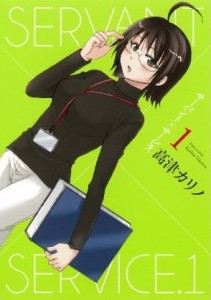
Speaking of Big Gangan, Servant x Service runs there as well. It’s from the creator of Working!, one of those ‘why was this never licensed’ manga with 83 seasons of anime. It seems to be a 4-koma about office life, and also has an anime.

Unknown runs in Shonen Gangan, and yes, that is its title. It’s complete in four volumes, and I’m told reminded many folks of Fullmetal Alchemist.

Mahou Tsukai no Deshi ga Warau Toki is complete in 3 volumes, ran in Shonen Gangan, and looks depressing as hell, to be honest.

Oushitsu Kyoushi Haine runs in GFantasy, and I can’t really tell how fantastical it is, but there’s royalty and things in it, as you may have gathered. The mangaka is better known for the series Sougiya Riddle.

Koukoku no Hiiro is also GFantasy, and may be the most interesting of this whole bunch. Samurai, kendo, time travel… cool things indeed.

So, to reiterate, all those above seem to be Digital Only, with no print plans at this time. What did they license for print? Well…

nozaki1

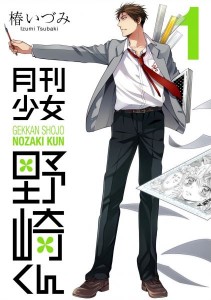
I can’t hold back anymore. They have finally licensed, as we’ve been begging them to, Gekkan Shoujo Nozaki-kun! This amazingly funny 4-koma from Gangan Online is by Izumi Tsubaki, author of Oresama Teacher and The Magic Touch. If you love the facial expressions in Oresama, these are even better. It also mocks every single cliche in the book. It’s basically fantastic, and the convention room exploded when it was announced.

The other major surprise has to be Yowamushi Pedal, an Akita Shoten title from Weekly Shonen Champion. A cycling manga (so technically sports… more myths busted!), it’s at 39+ volumes in Japan. Needless to say, expect this in omnibuses. Between this and Index, I wonder how much Kurt is enjoying seeing what we say is impossible to license, and then just doing it. (The creator, by the way, also adapted one of the many Train Man manga… the CMX one, I believe.)

Hakusensha is not forgotten either, as we get Sakura no Himegoto, a 2-volume LaLa series. I note warily that this involves a girl with debt being “owned” by a rich high school boy, but I’m told it’s not as skeezy as it sounds.

Dragon’s Rioting also makes me wary, mostly as it runs in Fujimi Shobo’s Dragon Age, and thus I expect the breasts to be more important than the plot. It seems to involve a boy who will die if he gets sexually aroused, and surrounding him with women who will no doubt do that very thing.

Lastly, Aldnoah Zero has an anime as well, and runs in Houbunsha’s Manga Time Kirara Forward. It’s a sci-fi mecha series, so I’m fairly sure will end with the entire cast dead. If not the entire Earth.

Aside from Nozaki-kun, which everyone will be buying of course, what license here most interests you?

Filed Under: NEWS, UNSHELVED

A Caring Man

April 3, 2015 by Ash Brown

A Caring ManAuthor: Akira Arai
Translator: Marc Adler
U.S. publisher: Vertical
ISBN: 9781935654179
Released: 2011
Awards: Golden Elephant Award

A Caring Man is Akira Arai’s debut novel and his first book to be translated into English. The novel was brought to my attention primarily because it, along with Fumi Nakamura’s Enma the Immortal (which I absolutely loved), shared the inaugural Golden Elephant Award’s grand prize. A Caring Man and Enma the Immortal are two very different novels, but they are both engaging. Both novels were also released in English by Vertical. The purpose of the Golden Elephant Award was to “produce and publish promising entertainment stories in multiple languages in the global arena.” With that in mind, the jurors from the first award committee were from Japan, the United States, China, and Korea. It was this emphasis on global appeal that inspired Arai, who had previously worked in the music and film industries, to submit A Caring Man. After winning the award, the novel was simultaneously released in 2011 in Japanese and in English with a translation by Marc Adler.

On August 26, 2011, Japan fell victim to an unprecedented tragedy. Without any sort of warning, bombs strategically placed within Tokyo Tower were detonated, bringing the massive structure toppling down, killing and injuring a huge number of people. The special investigation team, a joint operation between the police force’s Criminal Investigation Department and the Public Security Bureau, is treating the incident as a terrorist attack. However, no group has emerged to claim responsibility for the bombing and the team quickly runs out of leads. There seems to be no concrete motive for the attack beyond a perverse desire to destroy for the sake of destroying. Mariko Amo is a freelance photographer working for scandal and gossip magazines who captured the fall of the tower on film, nearly losing her life in the process. Soon after she is given the opportunity to write a feature article on Yoshio Iizuka, a seemingly upstanding young man who recently established the Society of Victims of Abuse for the Prevention of Abuse. Little does she know that he is the very mastermind behind the Tokyo Tower attack.

A Caring Man deals with some very heavy subject matter. In addition to the attacks of terrorism and mass murder, personal killings and more intimate violence, such as child abuse, are also present in the novel. Yoshio himself was a victim of such abuse. Mutilated and abandoned as a newborn infant, he still carries scars on his body. He uses these and his story to gain empathy from others, employing his striking intelligence to manipulate them even further. Yoshio has an odd sort of intensity and charisma; he knows just what to say and how to act to exploit and control other people. A Caring Man, which takes its title from the characters used in Yoshio’s name, in part explores the mind and nature of a psychologically dark, twisted, and damaged young man. Yoshio’s plans are terrifying, and even more frightening is the fact that he has the abilities and influence needed to actually carry them out. The bombing of Tokyo Tower is only intended to be a dramatic prelude to even greater tragedies to come.

The story of A Caring Man is largely seen from three distinct perspectives, although they do intersect at various points in the novel when major players come into contact or become more deeply involved with one another. Those perspectives also reflect the prominent viewpoints of many modern-day crises. Yoshio and the cohort of young men aiding and in some cases nearly worshipping him form one faction as the perpetrators. The detectives, police, and other law enforcement officers are the investigators and protectors, while the third group consists of Mariko and other members of the media and press. They are the observers, chroniclers, and witnesses with the power to influence the opinions of the general public. Overall, A Caring Man is a well-written and engaging novel, particularly impressive as it is Arai’s debut. A few of the plot twists towards the end weren’t as believable or as effective as the rest of the novel, but otherwise A Caring Man is a solid crime thriller with an intense psychological component.

Filed Under: REVIEWS Tagged With: Akira Arai, Golden Elephant Award, Light Novels, Novels, vertical

Yukarism Vol. 2

April 2, 2015 by Anna N

Yukarism Volume 2 by Chika Shiomi

I enjoyed the first volume of this series very much, and was interested to see how the dynamic of gender-swapped past lives would play out in the present for the young novelist Yukari.

I was impressed with the sheer amount of plot and world building Shiomi was able to develop in the first volume, but I was interested to see what would happen in the second volume when character motivations were already established. At first the relationship between Yukari and his female fan Mahoro seemed to mirror the relationship of courtesan Yumurasaki and watchful bodyguard Kazuma. It turns out that the burn mark that Mahoro and Kazuma share across the centuries might be a red herring because when a new character named Satomi appears to act as Yukari’s housekeeper, Mahoro’s fierce possessiveness and sudden magical abilities resemble the Witch Doctor Shizuka. Shizuka was one of Yumurasaki’s most ardent lovers, and Yukari wonders if the Witch Doctor was the cause of his past incarnation’s death.

While much of the first volume focused on established Yukari’s unique time traveling ability and defining his personality as well as Yumurasaki’s, the second volume delves more into the relationships of the people who surround the author/courtesan in the past and the present. Mahoro starts sleepwalking and uttering magical curses when she sees Satomi, and then she switches back to normal with little memory of what she did. The instant antagonism between Satomi and Mahoro is filled with glares and a sense of real menace, since both of them seem to have little control over their actions. Yukari continues to learn more about his past, with a subtle observational approach that fits in well with his personality as an author. Mahoro is falling more and more in love with him, which might make her emotions and connection to her own previous life more extreme. All in all, this was a solid second volume and Yukarism is positioned well to rotate in to fill the paranormal romance slot in your current manga reading list, since a few series in that genre have recently concluded.

Filed Under: REVIEWS Tagged With: Chika Shiomi, shojo beat, shoujo, Yukarism

  • « Go to Previous Page
  • Page 1
  • Page 2
  • Page 3
  • Page 4
  • Go to Next Page »
 | Log in
Copyright © 2010 Manga Bookshelf | Powered by WordPress & the Genesis Framework