• Skip to primary navigation
  • Skip to main content
  • Skip to primary sidebar
  • Home
  • About Us
    • Privacy Policy
    • Comment Policy
    • Disclosures & Disclaimers
  • Resources
    • Links, Essays & Articles
    • Fandomology!
    • CLAMP Directory
    • BlogRoll
  • Features & Columns
    • 3 Things Thursday
    • Adventures in the Key of Shoujo
    • Bit & Blips (game reviews)
    • BL BOOKRACK
    • Bookshelf Briefs
    • Bringing the Drama
    • Comic Conversion
    • Fanservice Friday
    • Going Digital
    • It Came From the Sinosphere
    • License This!
    • Magazine no Mori
    • My Week in Manga
    • OFF THE SHELF
    • Not By Manga Alone
    • PICK OF THE WEEK
    • Subtitles & Sensibility
    • Weekly Shonen Jump Recaps
  • Manga Moveable Feast
    • MMF Full Archive
    • Yun Kouga
    • CLAMP
    • Shojo Beat
    • Osamu Tezuka
    • Sailor Moon
    • Fruits Basket
    • Takehiko Inoue
    • Wild Adapter
    • One Piece
    • After School Nightmare
    • Karakuri Odette
    • Paradise Kiss
    • The Color Trilogy
    • To Terra…
    • Sexy Voice & Robo
  • Browse by Author
    • Sean Gaffney
    • Anna Neatrour
    • Michelle Smith
    • Katherine Dacey
    • MJ
    • Brigid Alverson
    • Travis Anderson
    • Phillip Anthony
    • Derek Bown
    • Jaci Dahlvang
    • Angela Eastman
    • Erica Friedman
    • Sara K.
    • Megan Purdy
    • Emily Snodgrass
    • Nancy Thistlethwaite
    • Eva Volin
    • David Welsh
  • MB Blogs
    • A Case Suitable For Treatment
    • Experiments in Manga
    • MangaBlog
    • The Manga Critic
    • Manga Report
    • Soliloquy in Blue
    • Manga Curmudgeon (archive)

Manga Bookshelf

Discussion, Resources, Roundtables, & Reviews

Archives for August 2014

Vinland Saga, Vol. 4

August 9, 2014 by Ash Brown

Vinland Saga, Omnibus 4Creator: Makoto Yukimura
U.S. publisher: Kodansha
ISBN: 9781612624235
Released: July 2014
Original release: 2009
Awards: Japan Media Arts Award, Kodansha Manga Award

Makoto Yukimura’s award-winning Vinland Saga has quickly become one of the manga releases that I most look forward to each time a new volume is published every few months. The series is thoroughly researched historical fiction with fantastic artwork and incredibly engaging story and characters. I was happy when Kodansha Comics picked up the license, but as the series gets better and better with each passing volume my excitement for the manga grows along with it. Kodansha’s edition of Vinland Saga was the publisher’s first foray into a deluxe release. Each omnibus collects two of the original volumes, retaining the color pages, in a nice hardcover format. Vinland Saga, Omnibus 4, published by Kodansha in 2014, contains the seventh and eighth volumes of the Japanese edition of the series, both of which were released in 2009. The fourth omnibus, like the third, also includes an exclusive question and answer segment with Yukimura about the series which I’ve really been enjoying.

Defying all expectations, Prince Canute has survived his father’s attempt to have him killed in battle and has taken his destiny into his own hands. At one point a gentle young man considered weak by the Viking mercenaries and soldiers, Canute is now resolved to wrest the crown from his father, King Sweyn. He is prepared to use force and any other means necessary in order to gain control of the realm. This change of heart has earned Canute an impressive array of followers who are willing to fight and die for him as he challenges Denmark’s king. Thorkell and his men are known and respected as great warriors to be feared on the battlefield. Most of Askeladd’s troop has been slain, but Askeladd himself is a skilled fighter with an even greater talent for strategy and manipulation. The aid of both men will give Canute distinct advantages in the approaching confrontation, but its conclusion is far from certain. Sweyn  has strong men who are loyal to him as well in addition to the recognized power to rule over the masses. He isn’t about to let the throne slip away so easily.

I continue to be extremely impressed by the characterization in Vinland Saga. The main characters and even the supporting cast all have a tremendous amount of depth. They are complex, with both human failings and strengths, well-developed personalities, and believable motivations. Nothing is as simple as good or bad. Instead the characters are portrayed as real people with complicated pasts that have made them who they are. Up until this point Sweyn has been somewhat of an enigma, a dark shadow hanging over Canute and the territories which he has conquered. But in Vinland Saga, Omnibus 4 he, too, is revealed to be much more nuanced of a character than when he was first introduced. Much like Canute, Sweyn’s actions are informed and driven by his beliefs and his desire to create a prosperous realm. He is a formidable ruler with significant influence, but he is also a man and a tired one at that. Kingship has taken its toll. Sweyn also serves as an example showing that even a person with righteous intentions can become corrupt, a lesson that Canute would do well to take to heart.

Compared to previous installments of Vinland Saga, the fourth omnibus in the series focuses less on all-out battle and more on the political strategies and maneuverings going on behind the scenes. However, the intensity of the series remains and when fights do break out they make an impact. They are incredibly bold and dynamic. Yukimura’s action scenes are epic and extremely well choreographed, but what makes them so effective is the emotional investment of the characters. Askeladd in particular is especially compelling. He has been able to channel his hatred and desire for revenge, controlling those around him with immense skill, but it hasn’t been without personal sacrifice. Askeladd himself is also the target of revenge–Thorfinn holds him responsible for the death of his father. Thorfinn and Askeladd’s relationship is extraordinarily complex. Askeladd doesn’t blame the younger man for seeking his demise. In his own way he actually tries to teach Thorfinn, drawing from his own past experiences. But this omnibus makes it tragically clear that Thorfinn is so obsessed with his quest for revenge that he has thought very little beyond it.
Filed Under: REVIEWS Tagged With: Japan Media Arts Award, kodansha, Kodansha Comics, Kodansha Manga Award, Makoto Yukimura, manga, Vinland Saga

The Twelve Kingdoms, Vol. 4: Skies of Dawn

August 8, 2014 by Ash Brown

The Twelve Kingdoms, Volume 4: Skies of DawnAuthor: Fuyumi Ono
Illustrator: Akihiro Yamada

Translator: Alexander O. Smith
U.S. Publisher: Tokyopop
ISBN: 9781427802606
Released: November 2010
Original release: 1994

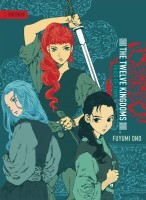
Skies of Dawn is the fourth and sadly final volume of Fuyumi Ono’s eight-volume fantasy novel series The Twelve Kingdoms, illustrated by Akihiro Yamada, to have been released in English. Published in Japan in two volumes in 1994, the novel was released in its entirety in 2010 by Tokyopop under its Pop Fiction imprint, first as a hardcover and then later in a paperback edition. As with the previous volumes of The Twelve Kingdoms, Skies of Dawn was translated by Alexander O. Smith. Interestingly enough, Elye J. Alexander, who frequently collaborates with Smith on translations and who worked with him on the first three volumes of The Twelve Kingdoms, does not appear to have been involved with Skies of Dawn. Though I discovered the series relatively late, I have been thoroughly enjoying The Twelve Kingdoms and Ono’s exceptionally well-developed world and characters. Skies of Dawn is easily the longest of the translated volumes, but that didn’t at all diminish my enthusiasm.

Yoko has become the king of Kei after being chosen by Keiki, the kingdom’s kirin. It’s still early in Yoko’s reign, but it hasn’t been easy for her. Many of the ministers of her court are corrupt and the others have very little trust in Yoko–Kei has had a bad history with lady-kings. Yoko lacks confidence in her rule as well. Having grown up in Japan before being suddenly swept away to the Twelve Kingdoms, her understanding of the world in which she now finds herself is limited and her knowledge of what it means to be king is even more so. Yoko isn’t the only young woman who is struggling with great changes in her life. Like Kei, the kingdom of Hou has also recently lost its ruler and those circumstances have forced its princess Shoukei into exile. Suzu, another girl who was originally from Japan, is unhappy with her lot in life in the Twelve Kingdoms. Though they don’t know each other, the destinies of these three young women will become closely intertwined, changing the direction and fate of Kei, a kingdom still struggling to restore itself after years of turmoil and calamity.

Although Skies of Dawn is technically the fourth volume in The Twelve Kingdoms, chronologically its story follows immediately after the events of the first volume, Sea of Shadow. The two intervening novels–Sea of Wind and The Vast Spread of the Seas–serve as prequels to the series, providing more context as well as back stories for The Twelve Kingdoms as a whole and for its major characters. As with the other volumes in The Twelve Kingdoms, Skies of Dawn actually stands very well on its own as a novel. Though they provide more background, it’s not absolutely necessary to have read the previous volumes in the series to understand what’s happening in Skies of Dawn. Actually, Skies of Dawn is almost like reading three novels contained in one, especially towards its beginning. It takes quite some time for Yoko, Shoukei, and Suzu’s individual stories to come together into a single narrative, but it is very satisfying when they do, especially because it happens in a way that is somewhat unexpected.

Worldbuilding has always been a major component of The Twelve Kingdoms and that hasn’t changed with Skies of Dawn. I do appreciate all of the thought and detail that Ono has put into every aspect of the series. Granted, while it is all very interesting, the worldbuilding does slow down the pacing of the plot a great deal. Much of the first half of Skies of Dawn is devoted to things like rules of governance, taxes, and marriage laws as Yoko learns more about her kingdom and the kingdoms surrounding it. It’s not until the second half of Skies of Dawn when Yoko, Shoukei, and Suzu’s stories begin to converge that events start to quickly escalate as the people of Kei come closer and closer to rebellion. The Twelve Kingdoms is an epic tale of fantasy in which the characters are required to grow and evolve, taking responsibility for themselves and for the changes in the world in which they live. Although it is unlikely that the rest of the series will be translated, Skies of Dawn and the previous volumes are still well worth seeking out.

Filed Under: REVIEWS Tagged With: Akihiro Yamada, Fuyumi Ono, Light Novels, Novels, Tokyopop, Twelve Kingdoms

Manga the Week of 8/13

August 7, 2014 by Sean Gaffney, Ash Brown, Michelle Smith, Anna N and MJ Leave a Comment

SEAN: If there was a quiet week in August, next week would be it, with a mere nine titles.

samurai2

Dark Horse has the 2nd of its Samurai Executioner omnibii, for those who can’t get enough of samurai, manliness, and manly samurai.

ASH: Surprisingly enough, I haven’t actually read any of Samurai Executioner. This would probably be a good time to change that.

SEAN: Kodansha gives us a double shot of Hiro Mashima, with the 41st volume of Fairy Tail (which starts a new arc) and the 2nd volume of Monster Soul (which wraps up).

SubLime has an entry, as the 5th volume of Crimson Spell is out. Listen to them. Crimson. Pff. It’s f**king Red. (Sorry, got caught up in the meme there.)

ASH: Speaking of getting caught up, I believe the fifth volume means we’ve caught up with Japan, too.

SEAN: Vertical has the 5th volume of Wolfsmund, whose cover may not be red but whose contents I expect will at least have a bit of blood.

ASH: I suspect that you’re right.

SEAN: Viz has recently said that Deadman Wonderland is its breakout hit of the last year, so it will please people no end that Vol. 4 is out. Also, clearly this means we need more license rescues. (Kidding, kidding…)

MICHELLE: I never kid about license rescues! Of course, whatever momentum the TOKYOPOP series that I most love(d) had is probably long-dissipated by now, but I can continue to hope that one day, I’ll get to read Silver Diamond in English in its entirety.

loveless12

ANNA: I am pausing a moment to contemplate the lack of an ending in English for Shinobi Life, Demon Sacred, and Sky Blue Shore.

SEAN: We also have the 12th volume of Itsuwaribito, which I still haven’t really read. Anyone?

The 12th volume of Loveless will no doubt generate a bit more excitement from my other Manga Bookshelf colleagues.

ASH: I’m looking forward to it!

MICHELLE: I am positively asquee!

MJ: Okay, yeah, I’m in the middle of production week, but I have to take at least a moment here to say: LOVELESS!!! <3 Oh, happy day.

SEAN: Lastly, we get a 7th volume of the Arabian Nights series Magi, which I enjoy quite a bit.

MICHELLE: I vow that I will finally get caught back up with Magi!

SEAN: Getting something here? Or catching up with the week before?

Filed Under: FEATURES, manga the week of

D-Frag!, Vol. 1

August 7, 2014 by Sean Gaffney

By Tomoya Haruno. Released in Japan by Media Factory, serialization ongoing in the magazine Comic Alive. Released in North America by Seven Seas.

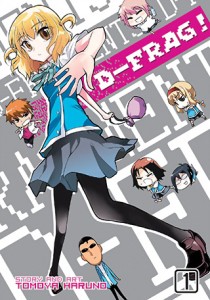
An action manga can get away with a chapter or two with no fighting. A romance manga relies on there being little to no resolution for volumes at a time. But a gag manga has to have gags, or else it runs the risk of failure even after only a chapter. Being funny, on a long-term basis, can be quite difficult. Most writers therefore try to balance out their humorous manga with other elements, such as the aforementioned fighting or romance. When you do see an author that tries to pull off straight-up gag manga, then, it’s an impressive thing. Particularly if it’s been licensed in North America, whose gag manga litter the shores of the river Styx. D-Frag! is not quite PURE gag manga, such as Bobobo-bo Bo-Bobo or Cromartie High School, but it comes pretty damn close.

d-frag1

I’m not exactly sure what the title is supposed to signify, as the manga has nothing to do with defragmenting your hard drive. Instead it’s a variation on ‘straight man guy joins a really weird club’, only without the strong personality of a Haruhi or Kyon. Kazama wants to be a delinquent, but is honestly too nice and well-meaning. He’s tricked into joining the “Game Development Club”, whose members include a thug (who’s also student council president), a jock, a space cadet, and the teaching advisor, who is usually mistaken for one of the students. The plot, such as it is, starts when he finds out there’s already a Game Development Club – the ‘real” one, so to speak – and that the club he’s now joined is a fake offshoot.

If this doesn’t sound like much to hang a plot on, well, you’re right there. The only member of the real club who matters is Takao, who fell out with one of the fake club members and is trying to make up with her by being stubborn and screaming a lot, in the traditional manga way. She also has a large chest which is frequently commented on, lest you worry that Comic Alive had suddenly turned into some other magazine. Seeing her interaction with Roku is nevertheless a highlight of the volume, and leads to the only (very brief) serious moments. Much of the rest of it is the eccentric personalities of everyone involved, and Kazama’s tsukkomi reaction to their antics.

Another impressive aspect of this first volume: there’s little to no romance suggested. Now, this may change, but I greatly enjoyed that this manga is not a harem manga with gag elements, but devoted entirely to being weird and silly. Kazama is far too busy trying to figure out how to deal with anyone to find them attractive (his preferences are apparently towards big breasts, but even this is used as gag fodder), and girls such as Roku seem more content to simply have him around then have an unrequited crush.

This sort of series is dangerous to read, because if it loses its humor and pacing, it could crash very fast. But Vol. 1 is a solid start, and I laughed out loud several times. I’m interested in seeing where it goes.

Filed Under: REVIEWS

Food Wars, Vol 1

August 6, 2014 by Anna N

Food Wars Volume 1 by Yuto Tsukudo and Shun Saeki

This is a potentially engaging battle style foodie manga that I found myself having a difficult time getting into due to the copious amounts of fan service. I do realize that in shonen manga, one has to expect some boobs and miniskirts, just as one might expect scenes of shirtless vampires chained to the wall in supernatural shoujo manga, but I thought the sexual elements in Food Wars didn’t really enhance what might otherwise be a fun food battle manga.

Soma has grown up cooking for his father’s neighborhood restaurant. He’s trying to battle his father for supremacy but still falling short of the mark. The third page of the manga contains a reference to tentacle rape, as Soma pops a bite of a squid food experiment into a girls mouth, only for her to feel horrifically molested by the terrible combination of flavors. The first chapter in the book is a prolog, as representatives of a hostile corporation try to move in on the restaurant, Soma’s father decides to take off and cook in America, and Soma is promptly sent to try out for an elite cooking school called the Totsuki Saryo Culinary Institute.

The female antagonist of Food Wars is Erina Nakiri, a student with an incredibly refined palette, and a gift for metaphor, as she likens an unsatisfactory dish to the sensation of visiting a hot springs only to find out that there is a gorilla staring at her. Full visuals for this scene are of course provided, and it is actually much more funny than some of the other fanservicey scenes that just seem to involve food blowing away peoples’ clothes. Erina judges Soma’s dish and finds it extraordinary despite the fact that he’s making everyday Japanese food instead of something more fancy. She fails him, but he’s let into the school after all when a school administrator tears up the test results after tasting the dish.

I do enjoy food manga, and ordinarily I’d be totally up for reading a few volumes of food battling set in an elite high school. I also liked the theme of contrasting Soma’s expertise in making everyday food with the snobby pretensions of his fellow students. The fan service elements were just a bit too much for me, and there are certainly other examples of food manga that manage to show the transformative experience of eating an excellent dish without resorting to upskirt shots. So for funny food manga, I’d probably recommend that someone with similar tastes as me go with Yakitate Japan or the ridiculous Toriko.

Filed Under: REVIEWS Tagged With: food wars, Shonen, viz media

Manga Giveaway: Mecha Manga Giveaway Winner

August 6, 2014 by Ash Brown

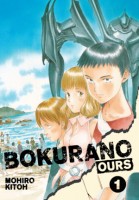
Bokurano: Ours, Volume 1And the winner of the Mecha Manga Giveaway is…Elliot!

As the winner, Elliot will be receiving a copy of Mohiro Kito’s Bokurano: Ours, Volume 1. For some reason, I never think I’m going to enjoy mecha manga, but then I do. And so, as part of this giveaway, I was interested in learning what mecha manga other people had read and enjoyed. There have been a good number licensed in English, though this is only a small fraction of what’s available in Japan. As many of the entrants pointed out in the giveaway comments, sometimes an anime gives the mecha genre a little more oomph, but manga can be enjoyable, too.

Some of the mecha manga licensed in English:
Bokurano: Ours by Mohiro Kito
Broken Blade by Yunosuke Yoshinaga
Code Geass by Goro Taniguchi (and various)
Eureka Seven by Jinsei Kataoka and Kazuma Kondou
Full Metal Panic! written by Shouji Gatou, illustrated by Retsu Tateo
Gurren Lagann by Kotaro Mori
Kannazuki no Miko: Destiny of Shrine Maiden by Kaishaku
Knights of Sidonia by Tsutomu Nihei
Magic Knight Rayearth by CLAMP
Mobile Police Patlabor by Masami Yuuki
Mobile Suit Gundam: Ecole du Ciel by Haruhiko Mikimoto
Mobile Suit Gundam: The Origin by Yoshikazu Yasuhiko
Mobile Suit Gundam Wing by Hajime Yatate and Yoshiyuki Tomino (and various)
Nadesico by Kia Asamiya
Neon Genesis Evangelion by Yoshiyuki Sadamoto
RahXephon written by Yutaka Izubuchi, illustrated by Takeaki Momose
The Vision of Escaflowne by Aki Katsu
The Voice of a Distant Star written by Makoto Shinkai, illustrated by Mizu Sahara

The above list is only a small selection of the mecha manga that have at one point or another been released in English. I was a little surprised to see how much of it has gone out of print. But there are still some great titles like Knights of Sidonia, Mobile Suit Gundam: The Origin, and the various incarnations of Neon Genesis Evangelion that are still going strong. Mecha will still be around for a while, I suspect. And thank you to everyone who shared your favorites with me!

Filed Under: UNSHELVED Tagged With: Bokurano, manga, Mohiro Kito

Comic-Con Hangover

August 5, 2014 by Brigid Alverson

Best and Worst Manga panelists: Deb Aoki, yours truly, David Brothers, and Christopher Butcher

Best and Worst Manga panelists: Deb Aoki, yours truly, David Brothers, and Christopher Butcher

I’m back from San Diego, which was great, as always. I covered a ton of panels for CBR, where I am a contributing writer, and I got to be one of the folks who went up on stage when that site won the Eisner Award for best comics journalism, which was pretty damn awesome. Aside from that, though, one of the best moments was being part of the Best and Worst Manga panel, arranged and moderated by the amazing Deb Aoki. It was held in one of the bigger panel rooms, which I would estimate seats about 300 people, and it was standing room only. This was in contrast to the other comics panels I covered, which were mostly in smaller rooms that were only half full. What’s more, the audience was really engaged, reacting with enthusiasm to all our choices. Clearly, the manga scene is alive and well, at least in San Diego.

Here’s Deb’s writeup of the panel. tl;dr: Read Vinland Saga. Seriously.

Deb also rounded up the manga news from the con. Some highlights:

  • Udon licensed Kill la Kill
  • Kodansha announced two new licenses, including Let’s Dance a Waltz, by Kitchen Princess manga-ka Natsumi Ando
  • Drawn and Quarterly announced Shigeru Mizuki’s Hitler and a collection of short stories by Tadao Tsuge that originally ran in GARO magazine.
  • Artist Katsuya Terada (The Monkey King) was signing at the Dark Horse and Last Gasp panels, promoting two of his books.
  • Viz, Vertical, Yen Press, and Seven Seas didn’t have panels but they all were doing a brisk business at their booths.

Sean Gaffney has his usual astute commentary on the announcements at his blog. Meanwhile, deb, Deb, who was my roommate at the con, has more on the Udon announcements and a video of Terada drawing the Monkey King at her site, Manga Comics Manga.

Lori Henderson rounds up the con news in her latest Manga Dome podcast at Manga Xanadu.

Vertical sold completely out of their newest Moyoco Anno title, In Clothes Called Fat, at the show. I read it before I left and again when I got back, and then I reviewed it for Robot 6.

The ICv2 folks sat down with Viz execs Leyla Aker and Kevin Hamric for a meaty interview (part 1, part 2) about the state of the manga market, print versus digital sales, their rescues of some Tokyopop licenses (including Deadman Wonderland), and whether they will release a Doraemon manga anytime soon (it’s already being published digitally in English by Shogakukan).

Meanwhile, while we were in San Diego, the Japanese government started a new anti-piracy campaign that has two prongs: They are sending takedown notices to pirate sites and directing readers to legitimate online manga sites.

Hiroshi Oti, the creator of Ganbare Goemon, has died at the age of 54.

Reviews

L.B. Bryant on vol. 1 of Black Rose Alice (ICv2)
Sean Gaffney on vol. 5 of Blood Lad (A Case Suitable for Treatment)
L.B. Bryant on vol. 1 of Food Wars (ICv2)
Ash Brown on In Clothes Called Fat (Experiments in Manga)
Lori Henderson on Insufficient Direction (Manga Xanadu)
Sean Gaffney on vol. 4 of Inu x Boku SS (A Case Suitable for Treatment)
Kristin on Les Miserables (Manga Classics) (Comic Attack)
Kristin on vol. 1 of Monster (perfect edition) (Comic Attack)
Rob McMonigal on La Quinta Camera (Panel Patter)
Drew McCabe on The Shadowman (Comic Attack)
Kristin on vol. 1 of Spell of Desire (Comic Attack)
Kristin on vol. 1 of Terra Formars (Comic Attack)

Filed Under: MANGABLOG

Bookshelf Briefs 8/5/14

August 5, 2014 by Sean Gaffney and Michelle Smith Leave a Comment

This week, Sean and Michelle look at recent releases from Viz Media, Kodansha Comics, and Yen Press.

kaze22Kaze Hikaru, Vol. 22 | By Taeko Watanabe | Viz Media – The yearly installment of Kaze Hikaru is here! In this volume, Sei and Okita have made peace with their feelings of love for each other—basically, they are content just to be near and watch over the other, respectively. Saito, however, has achieved no such peace, and spends the volume contending with his mounting lust for Sei’s person. Eventually, he discovers Sei’s secret and decides to get her ousted from the Shinsengumi and then marry her. Problem solved! Okita even endorses this plan. Watanabe makes note that the lack of consideration given a woman’s feelings in the matter was the norm for the day, but that doesn’t mean I want to see characters I like thinking in such a way about someone they claim to love. It would be impossible for Kaze Hikaru to have a bad volume, but I am forced to admit that this one wasn’t one of my favorites. – Michelle Smith

monster3My Little Monster, Vol. 3 | By Robico | Kodansha Comics – I feel so badly for poor Chizuru, who would make an excellent shoujo protagonist in any other series, but is simply too normal and sensible to compete with the weirdos seen on display here. Haru still has immense self-control and temper issues, as well as difficulty with personal space. Shizuku can’t seemingly identify with anyone’s issues and feelings other than her own, and thinks that just telling herself not to think about love will solve everything. And Natsume, while her insecurity is played for comedy at times, has some deep-seated intimacy issues. For a wacky romantic comedy, there’s a lot of depth to the characters if you look deep enough. Possibly enough for 9-10 more volumes.-Sean Gaffney

popular4No Matter How I Look At It, It’s You Guys’ Fault I’m Not Popular!, Vol. 4 | By Nico Tanigawa | Yen Press – It’s gotten to the point where I’m not sure I want Tomoko to continue to try to improve herself, as the consequences are proving almost unthinkable. We see more in this volume of how her own issues and basic personality are now actively hurting other people – in this case her brother. Her one friend seems totally oblivious to not only Tomoko’s issues, but reality, as Yuu seems quite happy to accept that Tomoko still wants to be an arms dealer when she grows up. As for romance, most of it would seem to involve fantasizing about said best friend. Still a deliberate train-wreck, this volume is well-written but makes you wonder how long this can go on.-Sean Gaffney

soulnot3Soul Eater NOT!, Vol. 3 | By Atsushi Ohkubo | Yen Press – Given that this series is never going to have the drama, tragedy, or whacked out art than the main series does, it has to survive based on only two things: its comedy, and the chemistry between the three lead girls. It actually acquits itself quite well in that regard, giving Meme a focus chapter that looks into her spacey personality and providing several cute moments for Kim Diehl as well. There’s mocking of Japanese customs, baseball, and lots of 4-koma stuff. Still, the author admits he put this series on hold while he finished Soul Eater proper, and it shows – there’s no real plot here, as opposed to Vol. 1 and 2. It’s still fun, but it’s spinning its wheels. Luckily, it should wrap up soon.-Sean Gaffney

sweet-rein3Sweet Rein, Vol. 3 | By Sakura Tsukuba | Viz Media – Well, that was anticlimactic. Granted, I didn’t expect a lot from this lightweight series, but the plot did seem to be steering towards something that never quite materialized. In one chapter, it’s suddenly reindeer mating season and perennial 17-year-old Kurumi finds herself bewitched by her reindeer, Kaito, along with all of the other girls and the fans he makes during his brief but sensational modeling career. The feeling doesn’t entirely dissipate after mating season ends, either. Then the appearance of another reindeer who wants to partner up with her nudges Kurumi to declare that Kaito is the only reindeer for her. Surely couplehood is right around the corner! But then… it isn’t. The story just stops, and as far as I know, this is the final volume. I’m left just shaking my head, wondering what the point of it all was. – Michelle Smith

voiceover6Voice Over!: Seiyu Academy, Vol. 6 | By Maki Minami | Viz Media – I am hard-pressed to pinpoint what it is, but there is just something about Voice Over! that makes me like it. It’s not that its heroine, academically challenged yet plucky and potentially very talented Hime, is unique, or that her love interests, kind and refined Mizuki versus sullen and rude (when he’s not being surprisingly thoughtful) Senri, defy expected types. Perhaps it’s simply that the small steps on Hime’s road to success are rewarding, like the inroads she makes with a gruff and demanding sound director, or the sudden competence that emerges when Senri makes a mistake during their practical skills exam. I suppose the small resemblances to Skip Beat! don’t hurt, either. In the end, this has become something of a comfort read for me, and I look forward to the next volume. – Michelle Smith

Filed Under: Bookshelf Briefs

Pick of the Week: Black Rose Alice & more!

August 5, 2014 by Ash Brown, Michelle Smith, Anna N, Sean Gaffney and MJ Leave a Comment

Untitled-1ASH: As is often the case with the first week of the month, there are a good many manga releases hitting the shelves. But, there is one manga that I’m particularly curious about: the debut of Setona Mizushiro’s Black Rose Alice. It’s shoujo horror from the creator of After School Nightmare and I’ve been assured it’s not your typical vampire story.
MICHELLE: I’m really looking forward to Black Rose Alice, and Spell of Desire was enjoyable, too, but I can’t pass up my yearly opportunity to plug Kaze Hikaru. It’s really good, I swear! Thank you, VIZ, for continuing to release it.

ANNA: I was preparing myself for some mental anguish because I love Black Rose Alice, Spell of Desire, and Kaze Hikaru all so much! So I’m glad that Ash and Michelle have picked 2 of my favorites so I can highlight the frothy witchy fun of Spell of Desire. Since Demon Love Spell just concluded and Midnight Secretary is also about to wrap up, I am very happy I have another fun josei supernatural romance to read.

SEAN: Given what everyone’s already picked out, I’ll spotlight the 46th volume of Oh My Goddess!. We now know that the series will end with Vol. 48, and so Fujishima is allowed to pull out all the stops and do the things he had put off doing for twenty years, like plot and character development. I kid, but this volume is touching and heartwarming, as the entire arc has been, really.

MJ: I probably should choose something like Knights of Sidonia, since everyone else has avoided repeats here, but I can’t possibly pick anything this week other than Setona Mizushiro’s Black Rose Alice. I absolutely adore After School Nightmare, and after losing her glorious BL epic Dousei Ai to JManga’s demise, I’m pretty thrilled to finally see something else from her on the shelves. This is my must-buy item for the week!

What looks good to you this week?

Filed Under: PICK OF THE WEEK

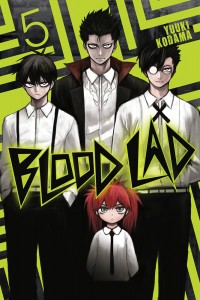
Blood Lad, Vol. 5

August 5, 2014 by Sean Gaffney

By Yuuki Kodama. Released in Japan by Kadokawa Shoten, serialization ongoing in the magazine Young Ace. Released in North America by Yen Press.

I said last time that it was the small character moments that were the best in Blood Lad, and that’s still true. But it can’t be denied, the main plot has become increasingly more readable even as it becomes more deadly. There’s an awful lot going on here, and if it seems to be the sort of thing that you always see happen in manga series like this one, well, there’s a reason for that. Blood Lad not only breaks the fourth wall, but sits around it and examines why it’s a wall at all, with the help of all the lampshades it’s hanging to shed light on the subject. (This tortured metaphor is brought to you by the letter R.)

bloodlad5

At the end of the last volume, we saw the culmination of all of Braz’ clever schemes and manipulations, as he manages to resurrect his dead father to regain the kingdom. Naturally, everything goes completely per-shaped not twenty minutes in, because Braz is not the star of this manga, and therefore the world does not run according to his rules. This is brought home to him over and over again by Staz, who is the star, and discusses the virtues of things like just attacking without thinking in order to save everyone. Blood Lad may run in a seinen magazine, but at heart it’s all shonen.

This leads to the big event of the second half; having been forced to retreat from the big villain, Staz has a clever plan: read his vast collection of manga to find a way to defeat Akim. It’s the sort of twist that makes you groan, even in a manga this meta. But then Staz starts to explain his reasoning for this. Due to the way reincarnation works between the human and magic world, he thinks that manga published in the modern day might be subconscious memories of what actually occurred years ago in the demon world, involving powers and objects now lost. Therefore, it is vitally important to read that 86-volume series.

Actually, my favorite manga-related joke in this volume is everyone getting so worked up over shoujo love comedy Marmalade Boy… sorry, Lemonade Boy. (The covers look identical, so this is just “wait, I don’t write for Shueisha” at work here.) It could be argued that the romance is the weakest part of Blood Lad, mostly as Fuyumi still tends to be a bit of a drip. We’re helped here by focusing on Bell, who’s got it bad for Staz but suffers from the inability to express herself and a colossal case of poor timing, plus (as the reader knows) the fact that Staz loves Fuyumi but isn’t quite aware of it yet. There’s plenty of comedic moments, but her feelings aren’t belittled at all, which I appreciated.

We do still get the small character moments in this book – Liz’s reaction to Braz’s fate, and the followup to it, is wonderful – but there’s no denying that things are getting darker and more deadly. It looks like we’re headed for a major battle in the next volume, which is a shame as it will be a while – Vol. 11 came out in Japan this May, meaning we don’t even have enough for half a release yet. In the meantime, though, we have this volume. There are probably better manga series out there, but there are few series as compulsively readable as Blood Lad.

Filed Under: REVIEWS

My Week in Manga: July 28-August 3, 2014

August 4, 2014 by Ash Brown

My News and Reviews

Another week, another few posts at Experiments in Manga. First up was my most recent manga giveaway. Tell me about your favorite mecha manga (if you have one) for a chance to win the first volume of Mohiro Kito’s Bokurano: Ours. (The winner will be announced on Wednesday, so there’s still time to send in comments!) The first in-depth manga review of August went to In Clothes Called Fat, the most recent manga by Moyoco Anno to have been released in English. I honestly believe it to be one of the best comics of the year. (Well, at least out of those that I’ve read so far.) I also posted July’s Bookshelf Overload over the weekend for those of you who are interested in the manga that I purchase or otherwise receive over the course of a month.

Elsewhere online, Sparkler Monthly is celebrating its first year of publication by offering a free sampler download that includes the first chapter of all of its series–prose, comics, and audio dramas. Deb Aoki has a nice overview of some of the manga happenings at this years San Diego Comic Con over at Publishers Weekly. Jamie Coville has also posted audio for some of the SDCC panels, including a few focusing on manga. (Actually, there are a ton of manga related files on that page from past comic events, too.)

August 1 was 801 Day (aka Yaoi or Boys’ Love Day), and though probably not technically related the most recent Manga Studies column at Comics Forum focused boys’ love research in Japan. (Did you know that Guin Saga‘s Kurimoto Kaoru was also a BL author, editor, and scholar? Now you do!) There have been a few new Fujojocast episodes posted recently, including one specifically for 801 Day. I found episode seven, Give what’s due to Saezuru, which talks about translation, adaptation, and frustrations over publishers’ quality and quality control to be especially interesting. SuBLime made a “new” license announcement–it has gained the digital rights to couple of series that were previously print-only. The announcement is particularly noteworthy because it seems to indicate that SuBLime was able to do this because the Japanese publishers are beginning to trust that fans won’t abuse digital downloads.

Quick Takes

Cowboy Bebop, Volume 1Cowboy Bebop, Volumes 1-3 written by Hajime Yatate and illustrated by Yutaka Nanten. Of the two Cowboy Bebop manga that were released (Cowboy Bebop: Shooting Star being the other), Nanten’s series is the one that is most similar to the anime. This makes a fair amount of sense considering that both the anime and the Cowboy Bebop manga were written by the same group of creators, whereas Shooting Star was really its own thing. The Cowboy Bebop manga is closer in tone to the anime’s more humorous episodes, though there is some seriousness as well. The overarching plot dealing with Spike’s feud with Vicious is largely missing, however the other character’s backstories are all filled in a little bit more. The manga, like the much of the anime, is generally episodic. Most of the stories wouldn’t have been too out-of-place with the anime itself, though for the most part I didn’t find them to be as strong as their televised counterparts. The manga will likely appeal most to those who have seen the anime and would like a chance to spend some additional time with the characters; the manga feels like bonus material and deleted scenes rather than anything substantial.

Deadlock, Volume 1Deadlock, Volume 1 written by Saki Aida and illustrated by Yuh Takashina. Though technically a boys’ love series, not much has happened in the way of romance after the first volume of Deadlock. However, there is a good deal of plot to be found, and I think that it’s a more interesting manga because of that. Yuto Lennix is a drug investigator who was framed for the murder of his best friend and partner. Incarcerated in the Californian state prison system, he has been given the chance to reduce his sentence by helping the FBI to determine the identity of terrorist leader who is believed to be a fellow inmate. That of course is assuming he doesn’t get himself killed first. It’s a somewhat idealized version of prison–everyone is very good-looking for one–but the portrayal of the racial tensions within the system is surprisingly realistic and generally avoids using stereotypes. So far, Deadlock has a fairly large cast. The social dynamics between the prisoners are a very important part of the manga as Yuto learns his place in the hierarchy while he carries out his investigation. Deadlock is currently an ongoing series; I sincerely hope that future volumes will be licensed when they’re released as well.

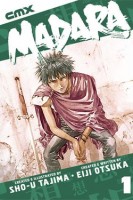
Madara, Volume 1Madara, Volumes 1-5 written by Eiji Otsuka and illustrated by Shou Tajima. Apparently, Madara was one of CMX’s debut manga. I’ve been discovering some fantastic series from CMX. Sadly, Madara is not one of them. I initially became interested in the series because the creators are also responsible for the extraordinarily dark and graphic MPD-Psycho. The premise of Madara also appealed to me–a young man prophesied to be king fighting demons to restore the body that his father tried to destroy–but that’s probably because it’s so similar to Osamu Tezuka’s Dororo. Except that Dororo is actually good. Madara comes across as a fairly generic sword-and-sorcery RPG more than anything else. (The series actually did go on to inspire several video games, and even an anime.) It also seems as though Otsuka and Tajima are just making things up as they go. There’s not much of an ending, either. Small glimmers of Tajima’s stunning art style (which I love) can be seen, especially towards the end of the series, but the illustrations in Madara are tragically lacking in comparison. Granted, it is a much earlier series. Here’s a fun fact about Madara, though: the series was created in a left-to-right format.

Sonny Leads, Volume 1Sonny Leads, Volume 1 written by Richard Mosdell and illustrated by Genshi Kamobayashi. Sonny Leads holds a black belt in karate but he’s unsatisfied with his progress and so has come to Japan to further his training. Unfortunately, he doesn’t know as much as he thinks he does, and he’s in for a bit of a culture shock, too. Both Mosdell and Kamobayashi are karateka and instructors. Their knowledge of and passion for karate definitely comes through in Sonny Leads. I especially like Kamobayashi’s artwork. Particular attention is given to the proper and realistic presentation of karate forms and stances as well as to more subtle details like the appearance of the knuckles developed and used for punches and strikes. As with most of Manga University’s publications, there’s also a strong educational element present in Sonny Leads–it’s possible to learn a bit of Japanese language and culture while reading it. A very interesting essay about high school karate clubs as well as a directory to the various karate organizations in Japan are also included in the volume. I’m not sure that Sonny Leads will have much general appeal, but as a karateka myself I’d be curious to see more of the series.

Filed Under: FEATURES, My Week in Manga Tagged With: Cowboy Bebop, Deadlock, Eiji Otsuka, Genshi Kamobayashi, Hajime Yatate, Madara, manga, Richard Mosdell, Saki Aida, Shou Tajima, Sonny Leads, Yuh Takashina, Yutaka Nanten

Bookshelf Overload: July 2014

August 3, 2014 by Ash Brown

Okay! So, I would consider July to be a fairly reasonable month for manga (and other) acquisitions. (I did pretty well in June, too, so hopefully this is a trend that continues.) I’ve gotten to the point that most of my purchases nowadays tend to be preorders, but there were a couple out-of-print things that I picked up (most notably Minako Narita’s Cipher). I also picked up Animal Land, Volume 9 by Makoto Raiku, which I missed getting when it was first released. Particularly exciting in July was that Flowering Harbour, a newly translated manga by Seiichi Hayashi, was released by the UK-based Breakdown Press. As for other preorders that I was happy to see arrive in July: Moyoco Anno’s In Clothes Called Fat is one of the best comics I’ve read this year (which I reviewed very recently); Fumi Yoshinaga’s What Did You Eat Yesterday?, Volume 3 continues to endear the series to me (I have a review of that one, too); and Makoto Yukimura’s Vinland Saga, Omnibus 4 is fantastic (no review yet, but there should be one soon). You should also expect a review of Jami Lynn Lano’s The Princess of Tennis, a memoir of her time spent as a manga assistant for Takeshi Konomi, in the near future, too.

Manga!
Animal Land, Volume 9 by Makoto Raiku
Anomal by Nukuharu
Cipher, Volumes 1-11 by Minako Narita
Deadlock, Volume 1 written by Saki Aida and illustrated by Yuh Takashina
Flowering Harbour by Seiichi Hayashi
Flowers of Evil, Volume 10 by Shuzo Oshimi
In Clothes Called Fat by Moyoco Anno
Lone Wolf and Cub, Omnibus 5 written by Kazuo Koike, illustrated by Goseki Kojima
Madara, Volume 5 written by Eiji Otsuka, illustrated by Shou Tajima
No Matter How I Look at It, It’s You Guys’ Fault I’m Not Popular!, Volume 4 by Nico Tanigawa
One Is Enough by Love
Sonny Leads, Volume 1 written by Richard Mosdell, illustrated by Genshi Kamobayashi
Terra Formars, Volume 1 written by Yu Sasuga and illustrated by Ken-ichi Tachibana
Vinland Saga, Omnibus 4 by Makoto Yukimura
What Did You Eat Yesterday?, Volume 3 by Fumi Yoshinaga

Comics!
Chaos by Philippe Druillet
Dicebox, Book 1: Wander by Jenn Manley Lee
A Distant Soil, Volume 1: The Gathering by Colleen Doran
Forming II by Jesse Moynihan
Hana Doki Kira by the Year 85 Group
How to Be Happy by Elenor Davis
Pinoy Komiks edited by Adam Pasion and Zon Petilla

Novels!
Seikai: Crest of the Stars, Volume 1: Princess of the Empire by Hiroyuki Morioka

Nonfiction!
A Brief History of Manga by Helen McCarthy
The Princess of Tennis by Jamie Lynn Lano

Anime!
Baoh directed by Hiroyuki Yokoyama
Hetalia, Season 5: The Beautiful World directed by Hiroshi Watanabe
Mononoke directed by Kenji Nakamura
Sengoku Basara: The Last Party directed by Kazuya Nomura
Short Peace directed by Shuhei Morita, Katsuhiro Otomo, Hiroaki Ando, Hajime Katoki

Filed Under: Bookshelf Overload, UNSHELVED

Inu x Boku SS, Vol. 4

August 3, 2014 by Sean Gaffney

By Cocoa Fujiwara. Released in Japan by Square Enix, serialization ongoing in the magazine Gangan Joker. Released in North America by Yen Press.

This is one of those volumes where I recommend that if you enjoy the series and haven’t read it, you avoid reading my review so that you aren’t totally spoiled. Just an FYI. In fact, let’s put an image here to block it off.

inuboku4

Admittedly, much like Higurashi, I suspect that the spoiler of “everyone dies” is something that most fans of the series knew before they picked this up. There is an anime, and it’s the type of series that appeals more to hardcore fans than casual ones, I think. This is not to say this isn’t a good volume – it is pretty good, and I think has done a nice job of telegraphing things. But we now know that this was meant to be a prologue to the main story, which presumably takes place in the future when everyone is reincarnated again. And as such, I think the odd pacing of the first few volumes make sense – the author wanted to have enough volumes so that this had an emotional impact, but didn’t really have enough for everyone to do so stretched a lot out.

It’s not helped that I feel the cast is a bit too big for a series that depends so much on emotional two-hander relationships. Sure, we get lots of time devoted to our leads, but I still can never quite remember the names when they’re all said in a group, particularly as they’re all fancy 4-5 syllable rich and hard to remember names. And we get more people introduced here, as we see the old woman who seems to be in charge of the yokai group, her young assistant, and the evil kid who seems to be behind the attacks that kill everyone off.

This leads to the other issue I had with this volume – the author is much better at either dumb comedy or romantic drama than they are at actual action scenes. The final battle is somewhat confusing and brings in too many elements, and is not helped by it fading out once Soushi dies. This does lead to what I think are the strengths of both this volume and the series – the comedy and the romance. Both are not for everyone – they depend very much on being familiar with and not minding the standard Japanese romance tropes, where the girl is flustered and the boy is smooth and skilled. Better written is the relationship between Watanuki and Carta, where he pleads with her not to give up after she’s found she can’t change out of her skeletal form, and that he loves her no matter what she looks like. It’s my favorite part of the book.

In the end, I expect that how I feel about the first four volumes will be affected by what comes next, i.e. how much do the actions of the past weight on the seemingly reincarnated heroes? Certainly the last few pages play up the fact that reincarnated Ririchiyo is exactly the same as the one we’re familiar with, to the point of using the exact same starting gags. As for Soushi, he now wears glasses, but will he still have the uber-devoted attitude? What changes and what stays the same will make or break a series like this. And while I think it’s flawed, I’m interested enough in Vol. 5 to check it out.

Filed Under: REVIEWS

In Clothes Called Fat

August 1, 2014 by Ash Brown

In Clothes Called FatCreator: Moyoco Anno
U.S. publisher: Vertical
ISBN: 9781939130433
Released: July 2014
Original release: 2002

There is a select group of mangaka whose work I will buy without question or hesitation no matter what it is. Out of those creators, Moyoco Anno is one of my favorites. She works in multiple genres for multiple demographics and I have never failed to have been impressed by her manga. Anno’s work has been in print in English since 2003, first by Tokyopop and then followed by Viz Media and Del Rey Manga. Most recently, Vertical has been responsible for releasing more of Anno’s manga in English with superb editions of Sakuran, Insufficient Direction, and now In Clothes Called Fat. I was thrilled to learn that In Clothes Called Fat had been licensed. Collected in a single volume in Japan in 2002, the manga originally began serialization in 1997. Vertical published the English-language edition of In Clothes Called Fat in 2014, including a few pages of Anno’s color work which is always nice to see.

Noko Hanazawa is a young office worker under a fair amount of stress. She doesn’t get along very well with her coworkers and is frequently criticized by her superiors. There are, however, two things that bring uneasy comfort to Noko: Saito, her boyfriend of eight years, and food. Because Noko eats to alleviate her anxiety, she has also gained a significant amount of weight. Some of the other women in her office, especially Mayumi, bully her for being fat. Men either despise her or fetishize her because of how she looks. Noko eventually convinces herself that all of her unhappiness stems from being overweight and unattractive and that the only solution to her problems is to become skinny. While others urge her not to lose her fat, all for their own selfish reasons, Noko is determined to do anything she has to in order to drop pounds, exchanging one unhealthy relationship with food for another. Unfortunately, weight isn’t the only thing that Noko stands to lose in the process, something that she may only realize after the fact.

Obsession with appearance and the pursuit of happiness, identity, confidence, self-worth and self-esteem are all themes that frequently recur in Anno’s work. In some of her manga, such as Flowers & Bees, they are used for purposes of black comedy. While In Clothes Called Fat isn’t without humor–Vertical calls it a “dark comedy of manners,” which is very apt–Anno’s approach to the themes in the manga is more honest and bleak. It’s the brief moments of dark humor and slight absurdity that make the tragic tale bearable. In Clothes Called Fat is a tough read; there isn’t much happiness to be found in the story or its characters. However, the manga is an extraordinarily compelling and searing work. Noko and her struggles may be the focal point of In Clothes Called Fat, but she isn’t the only person in the manga who is forced to face some very harsh and hard truths about themselves and who they are as people. Some of them are able to eventually cope with reality while others will continue to try to live in denial.

As much as In Clothes Called Fat is about outward appearances, it’s even more about the characters’ internal turmoil and states of mind. Noko and the others use her weight as an excuse. She blames her unhappiness on her size and they torment her because of it, but that’s only an attempt to make themselves feel better and to assuage or avoid their own anxieties. The fixation on weight is merely a symptom of much more problematic underlying issues. Anno’s artwork in In Clothes called Fat emphasizes both the inner and outward conflicts of the characters. Backgrounds tend to be fairly minimal; the focus of the manga is very much on the people themselves: their facial expressions, their interactions with one another, and perhaps most importantly their body language. In Clothes Called Fat explores the extremes of ugliness and beauty, both physical and psychological, in appearance and in action. In Clothes Called Fat is a powerful work and easily one of the best manga–one of the best comics–that I’ve recently read. It can be uncomfortable, but it is also exceptional in its depth.

Filed Under: REVIEWS Tagged With: manga, Moyoco Anno, vertical

  • « Go to Previous Page
  • Page 1
  • Page 2
  • Page 3
 | Log in
Copyright © 2010 Manga Bookshelf | Powered by WordPress & the Genesis Framework