• Skip to primary navigation
  • Skip to main content
  • Skip to primary sidebar
  • Home
  • About Us
    • Privacy Policy
    • Comment Policy
    • Disclosures & Disclaimers
  • Resources
    • Links, Essays & Articles
    • Fandomology!
    • CLAMP Directory
    • BlogRoll
  • Features & Columns
    • 3 Things Thursday
    • Adventures in the Key of Shoujo
    • Bit & Blips (game reviews)
    • BL BOOKRACK
    • Bookshelf Briefs
    • Bringing the Drama
    • Comic Conversion
    • Fanservice Friday
    • Going Digital
    • It Came From the Sinosphere
    • License This!
    • Magazine no Mori
    • My Week in Manga
    • OFF THE SHELF
    • Not By Manga Alone
    • PICK OF THE WEEK
    • Subtitles & Sensibility
    • Weekly Shonen Jump Recaps
  • Manga Moveable Feast
    • MMF Full Archive
    • Yun Kouga
    • CLAMP
    • Shojo Beat
    • Osamu Tezuka
    • Sailor Moon
    • Fruits Basket
    • Takehiko Inoue
    • Wild Adapter
    • One Piece
    • After School Nightmare
    • Karakuri Odette
    • Paradise Kiss
    • The Color Trilogy
    • To Terra…
    • Sexy Voice & Robo
  • Browse by Author
    • Sean Gaffney
    • Anna Neatrour
    • Michelle Smith
    • Katherine Dacey
    • MJ
    • Brigid Alverson
    • Travis Anderson
    • Phillip Anthony
    • Derek Bown
    • Jaci Dahlvang
    • Angela Eastman
    • Erica Friedman
    • Sara K.
    • Megan Purdy
    • Emily Snodgrass
    • Nancy Thistlethwaite
    • Eva Volin
    • David Welsh
  • MB Blogs
    • A Case Suitable For Treatment
    • Experiments in Manga
    • MangaBlog
    • The Manga Critic
    • Manga Report
    • Soliloquy in Blue
    • Manga Curmudgeon (archive)

Manga Bookshelf

Discussion, Resources, Roundtables, & Reviews

Archives for December 2011

The Best Manga of 2011: The Manga Critic’s Picks

December 31, 2011 by Katherine Dacey

The usual gambit for introducing a year-end list is to remark on the abundance of good titles, acknowledge the difficulty in choosing just ten (or five, or three), and comment on the overall state of the industry. And while I certainly debated what to include on my list, I’ll be honest: 2011 yielded fewer contenders for Best Manga than any other year I’ve covered. The dearth of new titles was attributable to publishers’ financial prudence; companies released fewer books, licensed fewer series, and focused on repackaging older content for budget-conscious consumers. And though I selfishly wish that more new material had been released this year, I think manga publishers have done an excellent job of responding to their biggest challenges: a sluggish economy, digital piracy, and Borders’ bankruptcy.

So what titles made my 2011 list? My top ten are below, along with my list of favorite continuing series, favorite finales, and favorite guilty pleasures.

10. Breathe Deeply
By Yamaaki Doton • One Peace Books
Part sci-fi thriller, part coming-of-age story, this engrossing drama examines the relationship between two young men: Sei, who grew up in a world of privilege, and Oishi, a boy from the wrong side of the tracks. Both Sei and Oishi fall in love with Yuko, a sickly girl whose incurable illness inspires her suitors to become medical researchers. In less capable hands, Breathe Deeply might have been a mawkish paean to the purity of young love, but the husband-and-wife team of Yamaaki Doton have a keen ear for dialogue; the interactions between Yuko and her two suitors are tinged with an authentic mixture of adolescent anxiety, sexual longing, and braggadocio. Clean, expressive artwork and well-rounded characters help sell the story, especially in its final pages. One of 2011’s best surprises.
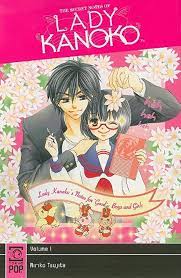
9. The Secret Notes of Lady Kanako
By Ririko Tsujita • Tokyopop
Kanoko, the sardonic heroine of The Secret Notes of Lady Kanoko, is a student of human behavior, gleefully filling her notebooks with detailed observations about her classmates. Though Kanoko would like nothing more than to remain on the sidelines, she frequently becomes embroiled in her peers’ problems; they value her independent perspective, as Kanoko isn’t the least bit interested in dating, running for student council, or currying favor with the alpha clique. Kanoko’s sharp tongue and cool demeanor might make her the mean-girl villain in another shojo manga, but Ririko Tsujita embraces her heroine’s prickly, opinionated nature and makes it fundamental to Kanoko’s appeal. It’s a pity TOKYOPOP didn’t survive long enough to finish this three-volume series, as it’s one of the best shojo titles in recent memory.

8. Wandering Son
By Takako Shimura • Fantagraphics
In her thoughtful review of volume one, Michelle Smith praised Takako Shimura’s deft use of perspective: “The main thing I kept thinking about while reading Wandering Son… is how things that seem insignificant to one person can be secretly, intensely significant to someone else.” Shimura’s ability to dramatize each character’s unique point of view is one of the reasons Wandering Son never feels preachy, even though the topic suggests an Afterschool Special; we are always exquisitely aware of the subtle but important changes in the way each character views herself, as well as her fears and hopes.

7. Princess Knight
By Osamu Tezuka • Vertical, Inc.
What Osamu Tezuka’s New Treasure Island (1946) was to shonen, his Princess Knight (1953-56) was to shojo: both were long-form adventure stories with cinematic flair. Neither could be said to be the “first” shonen or shojo manga, but both had a profound influence on the artists who came of age in the 1940s and 1950s, offering a new storytelling model for them to emulate. Viewed through a contemporary lens, Princess Knight hasn’t aged quite as well as New Treasure Island, as it’s saddled with some woefully antiquated notions of gender. At the same time, however, it’s easy to see why this story appealed to several generations of Japanese girls: Sapphire gets to eat her cake and have it too, having swashbuckling adventures *and* winning the hand of Prince Charming. —Reviewed at Manga Bookshelf on 11/21/11 and The Manga Critic on 12/19/10

6. Tank Tankuro: Gajo Sakamoto, Manga’s Pre-War Master, 1934-35
By Gajo Sakamoto • Press Pop
Almost twenty years before Osamu Tezuka’s Astro Boy took flight in the pages of Shonen Kobunsha magazine, Gajo Sakamoto’s Tank Tankuro enchanted Japanese youngsters with his monster-fighting exploits and cool gadgets. Though the series’ propaganda intent is impossible for contemporary readers to ignore — Tank fights the Chinese, who are portrayed in less-than-flattering terms — Presspop’s new anthology demonstrates that Sakamoto’s artistry has aged more gracefully than his storylines. Sakamoto’s work is packaged in a handsome, hardcover edition that includes thoughtful extras: a contextual essay by translator Sunsuke Nakazawa, an interview with Sakamoto’s son, and an article by Sakamoto himself, discussing the character’s origin.

5. Stargazing Dog
By Takashi Murakami • NBM/Comics Lit
Consider yourself warned: Stargazing Dog is a five-hanky affair. The two interconnecting vignettes that comprise this slim volume explore the bond between Happie, a shiba inu, and Daddy, his owner. When Daddy loses his job, his home, and his family, he and Happie hit the road in search of a new life. Though the outcome of Happie and Daddy’s journey is never in doubt — we learn their fate in the opening pages of the book — Murakami draws the reader into their story with an honest and unsparing look at the human-dog compact that may remind cinephiles of Vittorio de Sica’s Umberto D. —Reviewed at The Manga Critic on 12/23/11

4. Onwards Towards Our Noble Deaths
By Shigeru Mizuki • Drawn & Quarterly
In this blistering indictment of Japanese militarism, Shigeru Mizuki draws on his own experiences during World War II to tell the story of a platoon stationed in Papua New Guinea. The soldiers face a terrible choice: fight a hopeless battle, or face execution for treason. Like many war stories, Onwards Toward Our Noble Deaths documents the tremendous human sacrifice of modern armed conflict: gruesome injuries, senseless deaths, devastated landscapes. What lends Mizuki’s narrative its special potency is his depiction of the senior officers; their perverse dedication to their mission turns them into tyrants, more concerned with saving face than saving their own soldiers’ skins. Essential reading for anyone interested in World War II.

3. The Drops of God
By Tadashi Agi and Shu Okimoto • Vertical, Inc
As Oishinbo handily demonstrated, a skilled writer can fold a considerable amount of educational detail into a story without reducing it to a textbook. The Drops of God follows a similar template, imparting highly specialized information about wine with the same natural ease that Law & Order illustrates the inner workings of a crime investigation. At the same time, however, Drops is a delicious soap opera, filled with domineering fathers, mustache-twirling villains, evil beauties, eccentric oenophiles, and down-on-their-luck restauranteurs. Even if the reader isn’t the least bit interested in wine, he’ll find the drama as irresistible as an episode of Dynasty. —Reviewed at The Manga Critic on 12/16/11

2. A Zoo in Winter
By Jiro Taniguchi • Fanfare/Ponent Mon
Drawing on his own experiences, Jiro Taniguchi spins an engaging tale about a young man who abandons a promising career in textile design for the opportunity to become a manga artist. Though the basic plot invites comparison with Bakuman, Taniguchi does more than just document important milestones in Hamaguchi’s career: he shows us how Hamaguchi’s emotional maturation informs every aspect of his artistry — something that’s missing from many other portrait-of-an-artist-as-a-young-man sagas, which place much greater emphasis on the pleasure of professional recognition than on the satisfaction of mastering one’s craft. Lovely, moody artwork and an appealing cast of supporting characters complete this very satisfying package.  —Reviewed at The Manga Critic on 5/28/11

1. A Bride’s Story
By Kaoru Mori • Yen Press
A Bride’s Story, which takes place on the banks of the Caspian Sea, explores the relationship between Amir Halgal, a nineteen-year-old nomad, and Karluk Eihon, the eldest son of sheep herders. Though their marriage is one of political expedience, Amir is determined to be a good wife, doing her utmost to learn her new family’s customs, befriend the members of their extended clan, and earn her new husband’s respect. Kaoru Mori is as interested in observing Amir’s everyday life as she is in documenting the growing conflict between the Halgal and Eihon clans, yet A Bride’s Story is never dull, thanks to Mori’s smart, engaging dialogue; as she demonstrated in Emma and Shirley, Mori can make even the simplest moments revealing, whether her characters are preparing a manor house for the master’s return or skinning a freshly killed deer. By allowing her story to unfold in such a naturalistic fashion, A Bride’s Story manages to be both intimate and expansive, offering readers a window into life along the Silk Road. —Reviewed at The Manga Critic on 5/24/11

HONORABLE MENTIONS
As in previous years, I had difficulty limiting myself to just ten titles, so I compiled a list of manga that didn’t quite make my best-of list, but were thoroughly enjoyable:

  • Other Awesome Debuts: The Book of Human Insects (Vertical, Inc.), Tesoro (VIZ)
  • Best Continuing Series: 20th Century Boys (VIZ), Bunny Drop (Yen Press), Chi’s Sweet Home (Vertical, Inc.), Cross Game (VIZ), Ooku: The Inner Chambers (VIZ), Twin Spica (Vertical, Inc.)
  • Best New Guilty Pleasure: Blue Exorcist (VIZ), Oresama Teacher (VIZ)
  • Best Reprint Edition: Magic Knight Rayearth (Dark Horse), Pretty Guardian Sailor Moon (Kodansha Comics)
  • Best Manga I Thought I’d Hate: Cage of Eden (Kodansha Comics)
  • Best Finale: Black Jack, Vol. 17 (Vertical, Inc.)

So now I turn the floor over to you, readers: what were your favorite new manga of 2011?

Filed Under: Manga Critic, Recommended Reading Tagged With: Drawn & Quarterly, Fanfare/Ponent Mon, fantagraphics, Gajo Sakamoto, Jiro Taniguchi, Kaoru Mori, NBM/Comics Lit, One Peace Books, Osamu Tezuka, PressPop, Tokyopop, Vertical Comics, yen press

The Best Manga of 2011: The Manga Critic’s Picks

December 31, 2011 by Katherine Dacey 27 Comments

The usual gambit for introducing a year-end list is to remark on the abundance of good titles, acknowledge the difficulty in choosing just ten (or five, or three), and comment on the overall state of the industry. And while I certainly debated what to include on my list, I’ll be honest: 2011 yielded fewer contenders for Best Manga than any other year I’ve covered. The dearth of new titles was attributable to publishers’ financial prudence; companies released fewer books, licensed fewer series, and focused on repackaging older content for budget-conscious consumers. And though I selfishly wish that more new material had been released this year, I think manga publishers have done an excellent job of responding to their biggest challenges: a sluggish economy, digital piracy, and Borders’ bankruptcy.

So what titles made my 2011 list? My top ten are below, along with my list of favorite continuing series, favorite finales, and favorite guilty pleasures.

10. BREATHE DEEPLY (Yamaaki Doton; One Peace Books)

Part sci-fi thriller, part coming-of-age story, this engrossing drama examines the relationship between two young men: Sei, who grew up in a world of privilege, and Oishi, a boy from the wrong side of the tracks. Both Sei and Oishi fall in love with Yuko, a sickly girl whose incurable illness inspires her suitors to become medical researchers. In less capable hands, Breathe Deeply might have been a mawkish paean to the purity of young love, but the husband-and-wife team of Yamaaki Doton have a keen ear for dialogue; the interactions between Yuko and her two suitors are tinged with an authentic mixture of adolescent anxiety, sexual longing, and braggadocio. Clean, expressive artwork and well-rounded characters help sell the story, especially in its final pages. One of 2011’s best surprises.

9. THE SECRET NOTES OF LADY KANOKO (Ririko Tsujita; Tokyopop)

Kanoko, the sardonic heroine of The Secret Notes of Lady Kanoko, is a student of human behavior, gleefully filling her notebooks with detailed observations about her classmates. Though Kanoko would like nothing more than to remain on the sidelines, she frequently becomes embroiled in her peers’ problems; they value her independent perspective, as Kanoko isn’t the least bit interested in dating, running for student council, or currying favor with the alpha clique. Kanoko’s sharp tongue and cool demeanor might make her the mean-girl villain in another shojo manga, but Ririko Tsujita embraces her heroine’s prickly, opinionated nature and makes it fundamental to Kanoko’s appeal. It’s a pity TOKYOPOP didn’t survive long enough to finish this three-volume series, as it’s one of the best shojo titles in recent memory.

8. WANDERING SON (Takako Shimura; Fantagraphics)

In her thoughtful review of volume one, Michelle Smith praised Takako Shimura’s deft use of perspective: “The main thing I kept thinking about while reading Wandering Son… is how things that seem insignificant to one person can be secretly, intensely significant to someone else.” Shimura’s ability to dramatize each character’s unique point of view is one of the reasons Wandering Son never feels preachy, even though the topic suggests an Afterschool Special; we are always exquisitely aware of the subtle but important changes in the way each character views herself, as well as her fears and hopes.

7. PRINCESS KNIGHT (Osamu Tezuka; Vertical, Inc.)

What Osamu Tezuka’s New Treasure Island (1946) was to shonen, his Princess Knight (1953-56) was to shojo: both were long-form adventure stories with cinematic flair. Neither could be said to be the “first” shonen or shojo manga, but both had a profound influence on the artists who came of age in the 1940s and 1950s, offering a new storytelling model for them to emulate. Viewed through a contemporary lens, Princess Knight hasn’t aged quite as well as New Treasure Island, as it’s saddled with some woefully antiquated notions of gender. At the same time, however, it’s easy to see why this story appealed to several generations of Japanese girls: Sapphire gets to eat her cake and have it too, having swashbuckling adventures *and* winning the hand of Prince Charming. –Reviewed at Manga Bookshelf on 11/21/11 and The Manga Critic on 12/19/10

6. TANK TANKURO: GAJO SAKAMOTO, MANGA’S PRE-WAR MASTER, 1934-35 (Gajo Sakamoto; Press Pop)

Almost twenty years before Osamu Tezuka’s Astro Boy took flight in the pages of Shonen Kobunsha magazine, Gajo Sakamoto’s Tank Tankuro enchanted Japanese youngsters with his monster-fighting exploits and cool gadgets. Though the series’ propaganda intent is impossible for contemporary readers to ignore — Tank fights the Chinese, who are portrayed in less-than-flattering terms — Presspop’s new anthology demonstrates that Sakamoto’s artistry has aged more gracefully than his storylines. Sakamoto’s work is packaged in a handsome, hardcover edition that includes thoughtful extras: a contextual essay by translator Sunsuke Nakazawa, an interview with Sakamoto’s son, and an article by Sakamoto himself, discussing the character’s origin.

5. STARGAZING DOG (Takashi Murakami; NBM/Comics Lit)

Consider yourself warned: Stargazing Dog is a five-hanky affair. The two interconnecting vignettes that comprise this slim volume explore the bond between Happie, a shiba inu, and Daddy, his owner. When Daddy loses his job, his home, and his family, he and Happie hit the road in search of a new life. Though the outcome of Happie and Daddy’s journey is never in doubt — we learn their fate in the opening pages of the book — Murakami draws the reader into their story with an honest and unsparing look at the human-dog compact that may remind cinephiles of Vittorio de Sica’s Umberto D. —Reviewed at The Manga Critic on 12/23/11

4. ONWARDS TOWARD OUR NOBLE DEATHS (Shigeru Mizuki; Drawn & Quarterly)

In this blistering indictment of Japanese militarism, Shigeru Mizuki draws on his own experiences during World War II to tell the story of a platoon stationed in Papua New Guinea. The soldiers face a terrible choice: fight a hopeless battle, or face execution for treason. Like many war stories, Onwards Toward Our Noble Deaths documents the tremendous human sacrifice of modern armed conflict: gruesome injuries, senseless deaths, devastated landscapes. What lends Mizuki’s narrative its special potency is his depiction of the senior officers; their perverse dedication to their mission turns them into tyrants, more concerned with saving face than saving their own soldiers’ skins. Essential reading for anyone interested in World War II.

3. THE DROPS OF GOD (Tadashi Agi and Shu Okimoto; Vertical, Inc.)

As Oishinbo handily demonstrated, a skilled writer can fold a considerable amount of educational detail into a story without reducing it to a textbook. The Drops of God follows a similar template, imparting highly specialized information about wine with the same natural ease that Law & Order illustrates the inner workings of a crime investigation. At the same time, however, Drops is a delicious soap opera, filled with domineering fathers, mustache-twirling villains, evil beauties, eccentric oenophiles, and down-on-their-luck restauranteurs. Even if the reader isn’t the least bit interested in wine, he’ll find the drama as irresistible as an episode of Dynasty. –Reviewed at The Manga Critic on 12/16/11

2. A ZOO IN WINTER (Jiro Taniguchi; Fanfare/Ponent Mon)

Drawing on his own experiences, Jiro Taniguchi spins an engaging tale about a young man who abandons a promising career in textile design for the opportunity to become a manga artist. Though the basic plot invites comparison with Bakuman, Taniguchi does more than just document important milestones in Hamaguchi’s career: he shows us how Hamaguchi’s emotional maturation informs every aspect of his artistry — something that’s missing from many other portrait-of-an-artist-as-a-young-man sagas, which place much greater emphasis on the pleasure of professional recognition than on the satisfaction of mastering one’s craft. Lovely, moody artwork and an appealing cast of supporting characters complete this very satisfying package.  —Reviewed at The Manga Critic on 5/28/11

1. A BRIDE’S STORY (Kaoru Mori; Yen Press)

A Bride’s Story, which takes place on the banks of the Caspian Sea, explores the relationship between Amir Halgal, a nineteen-year-old nomad, and Karluk Eihon, the eldest son of sheep herders. Though their marriage is one of political expedience, Amir is determined to be a good wife, doing her utmost to learn her new family’s customs, befriend the members of their extended clan, and earn her new husband’s respect. Kaoru Mori is as interested in observing Amir’s everyday life as she is in documenting the growing conflict between the Halgal and Eihon clans, yet A Bride’s Story is never dull, thanks to Mori’s smart, engaging dialogue; as she demonstrated in Emma and Shirley, Mori can make even the simplest moments revealing, whether her characters are preparing a manor house for the master’s return or skinning a freshly killed deer. By allowing her story to unfold in such a naturalistic fashion, A Bride’s Story manages to be both intimate and expansive, offering readers a window into life along the Silk Road. –Reviewed at The Manga Critic on 5/24/11

HONORABLE MENTIONS

As in previous years, I had difficulty limiting myself to just ten titles, so I compiled a list of manga that didn’t quite make my best-of list, but were thoroughly enjoyable:

  • OTHER AWESOME DEBUTS: The Book of Human Insects (Vertical, Inc.), Tesoro (VIZ)
  • BEST CONTINUING SERIES: 20th Century Boys (VIZ), Bunny Drop (Yen Press), Chi’s Sweet Home (Vertical, Inc.), Cross Game (VIZ), Ooku: The Inner Chambers (VIZ), Twin Spica (Vertical, Inc.)
  • BEST NEW GUILTY PLEASURE: Blue Exorcist (VIZ), Oresama Teacher (VIZ)
  • BEST REPRINT EDITION: Magic Knight Rayearth (Dark Horse), Pretty Guardian Sailor Moon (Kodansha Comics)
  • BEST MANGA I THOUGHT I’D HATE: Cage of Eden (Kodansha Comics)
  • BEST FINALE: Black Jack, Vol. 17 (Vertical, Inc.)

So now I turn the floor over to you, readers: what were your favorite new manga of 2011?

Filed Under: Manga Critic Tagged With: Drawn & Quarterly, Fanfare/Ponent Mon, fantagraphics, Gajo Sakamoto, Jiro Taniguchi, Kaoru Mori, NBM/Comics Lit, One Peace Books, Osamu Tezuka, PressPop, Shigeru, Tokyopop, vertical, yen press

Sailor Moon MMF: Day 5 Links

December 31, 2011 by Sean Gaffney

There’s more activity for Day 5, with several new links.

Ash Brown reviews the first volume of Sailor Moon, and finds the story a bit unfocused, but is charmed by the characters. There’s also a competition at that site to win the first volume!

Animemiz is another long-time fan, and discusses her ongoing love for the series.

Margaret Emma gives us an essay on how Sailor Moon opened life up for her, and the lessons she takes from it on love and friendship.

Crystal Lewis takes a closer look at Usagi, and talks about the anime sometimes exaggerating her bad points.

And speaking of the anime and its influence, I take a look at Mamoru, Chibi-Usa and Rei and the changes they made – some quite significant! – going from page to screen.

Lastly, the Manga Bookshelf team had an ongoing discussion about the first volumes of both Sailor Moon and Sailor V.

Some fantastic articles here. Get to reading!

Filed Under: UNSHELVED

MMF: Manga vs. Anime, or Who Is Hino Rei?

December 31, 2011 by Sean Gaffney

I touched yesterday on the differences between the source manga and its anime adaptation when I discussed villains. Of course, it doesn’t get limited just to them. Any anime adapted from a manga is going to need to expand and add in order to make it viable. 23 minutes of screen time vs. 30-40 odd pages means you need to figure out ways to remain true to your material while exploring new boundaries. And given that the original manga is 52 chapters, and the anime counterpart is 200 episodes… there’s a lot of stuff that can best be categorized as “anime only”. There’s added on plot arcs, like Ail and Ann; there’s changing events to make things more dramatic for television, such as the end of the first arc. And sometimes, there’s changes of the main characters themselves.

Sometimes this cam be small. Usagi cries a lot more in the anime, but this isn’t really that out of character for her. Likewise, Minako’s ditziness gets really ramped up as the series goes on, but you never find yourself thinking “Wait, she’d never do something like that.” There are three characters, however, that I’d argue the anime alters enough so that fan opinion on them changes depending on what people are more familiar with. And let’s be honest, for 95% of Sailor Moon fans, that’s the anime.

Mamoru and Usagi end up falling for each other straight away. And in the manga, despite the occasional ‘being possessed by evil’ that happens to love interests all the time, this is never in doubt. The series is not really about “will they get together or not?”, especially after the second arc shows us the future in Crystal Tokyo. As a result, one main element used to pad out an anime is missing from the manga – romantic tension. Not to worry, though. Simply have Mamoru be far more aloof and unconcerned with Usagi’s feelings, and have Usagi be even more insecure and jealous than she is in the original. Plus throw in a few rivals for their love. Presto! … Of course, the problem is that this makes Mamoru look like a jerk at times. Thus, for those who grew up with the anime, it’s not “wow, look at their beautiful love” but “what does she see in him?”

(I haven’t been able to track down a source, but several folks have noted that the director of Sailor Moon R, S, and Super S, Kunihiko Ikuhara (better known for Utena and Mawaru Penguindrum these days) has openly stated he couldn’t stand Mamoru, and wanted Usagi to end up with Rei.)

Mamoru, of course, is still at heart a “nice guy”, meaning that it’s harder to hammer on his character flaws the way one can with crybaby Usagi or impulsive Minako. Sometimes, though, when a character does have known character flaws, hammering on them TOO much can cause issues. This is what happened, to a certain degree, with Chibi-Usa in the anime. She is, especially in her debut, meant to be a bratty kid who glomps on to Mamoru and doesn’t like Usagi. While this improves in future seasons, like “crybaby Usagi”, her default seems to be “bratty Chibi-Usa”. And fans, as a whole, tend not to like bratty kids that much. She’s a bit bratty in the manga as well, but it makes her shyer as well, and gives her a lot more bonding moments with Usagi. But again, we run into what happens when you have to fill time. Need to have conflict in an episode? Have Chibi-Usa fighting with Usagi. I like to think that the two of them are finally getting less hatred from fandom, but it was quite bad for a time.

Sailor Mars, aka Hino Rei, is quite different. With a few exceptions, she never got the hate that a lot of folks had for Mamoru and Chibi-Usa. Of course, she was also dealing with a different problem. Mamoru and Chibi-Usa were still recognizably their manga characters, just with several negative traits brought to the fore. But Rei… Rei was *changed*. In the manga she may get angry with Usagi at times, but it’s more of a grumpy irritation, and in general Rei epitomizes the “cool and aloof” type. She also shows no interest in Mamoru whatsoever, and in fact notes a few times that she doesn’t like men. (I think that’s meant to be more of a “teenage boys are immature” thing than a yuri thing, not that that’s stopped anyone.) In the anime, however, she’s an angry hothead whose fiery temper matches her element. And she’s the main rival to Usagi for Mamoru’s affection in the first season.

Why the huge change? Again, it could be to add conflict. It’s not as if Usagi was going to get into shouting matches with Ami, after all. And what’s more, Makoto doesn’t show up till episode 25, leaving a lot of space where it’s just Usagi, Ami and Rei. Someone has to offset the others. What’s more, Rei’s loud and angry persona gives her more easily exploitable flaws – it’s shows right off the bat that she and Usagi are more alike than they want to admit – and also allows them to grow closer as friends once this is discovered. Usagi and Rei grow to be best friends in the anime, whereas in the manga I’m not sure that’s the case. (Rei in the manga tends to match up with Minako, who displays many of the same qualities and has the same ability to drive Rei nuts.)

As a lifelong Doctor Who fan, one thing that’s been driven into my head is that canon is fluid, and it’s really best to be able to keep several conflicting realities in your head at once rather than remain wedded to one to the exclusion of everything else. The Sailor Moon anime and manga both have strengths and weaknesses, several of which actually offset each other quite well. But in the end, I think fans are still going to have to clarify when they’re debating a pairing or a plot point, “Are you talking about the anime personality or the manga one?” And let’s not even get into Minako’s changes in the live-action series…

Filed Under: UNSHELVED

Roundtable: Sailors Moon & V, first volumes

December 30, 2011 by MJ, Michelle Smith, Sean Gaffney and David Welsh 2 Comments

MJ: Back in March, the Manga Bookshelf Battle Robot got together to share some squee about Kodansha Comics’ announcement regarding their upcoming re-release of Naoko Takeuchi’s Sailor Moon. nine months later, this re-release is well underway. The debut volumes of of both Pretty Guardian Sailor Moon and its predecessor, Codename Sailor V dominated Matt Blind’s Manga Bestseller charts for months, with preorders of later volumes hitting the top charts well before they’ve been released.

As a newcomer to the series, I’ve been anxious to reconvene the Battle Robot’s original discussion now that I’ve had some real exposure to the series, so I’m quite pleased to say that Michelle, David, and Sean (a newcomer to the Bookshelf since our first go-around!) have agreed to join me once more!

I’ll talk about my impressions of the series in a moment, but first, I’d like to ask the rest of you–all fans of the series previously to one extent or another–how well the series has held up for you since your first experiences with it. Has this re-read stood up to your expectations?

SEAN: Oh, definitely. I’ve always liked the manga better than the anime, even though I’ve enjoyed both immensely. And since I’ve been involved in the fandom since 1996 or so, I did not have any issues with Usagi’s characterization the way that some people have. Honestly, the re-read of Vol. 1 of both Moon and V just made me realize how much I wanted to read the rest.

MICHELLE: I actually liked it *more* than I thought I would, because I was unprepared for what a difference actually reading it in English would make. There’s an immediacy to having understandable words on the page that you just don’t get when looking back and forth between a physical book in Japanese and a translation on a screen. Like Sean, I have loved Sailor Moon for a long time, so Usagi was exactly what I expected her to be at this early stage. It must help having advanced knowledge of her more competent moments!

DAVID: This is actually my first time around with the manga. I’ve seen a lot of the anime, though. This is really rare for me, but I actually like the anime more, and I think it’s because of what Michelle just said about Usagi’s competence. I’m reading a lot of titles right now that feature spunky, can-do heroines, and this early evolution of Usagi strikes me as a huge, can’t-do whiner. Is that blasphemy? I love the other sailors, though.

SEAN: This is an issue that I’ve thought about for some time. I discussed it a bit in my reviews of Teru Teru x Shonen as well. When you have a story where your goal is to take a very flawed heroine and gradually make her grow up and improve, how annoying can you make her at the start without losing your audience? I know with both Sailor Moon and TTxS, I had people tell me, “I don’t care if she gets better, I found her so aggravating I don’t want to read how it happens.” As David noted, the process might be helped here by the addition of the other senshi, who the reader can identify with as well. (Ami was the most popular senshi in many polls in both Japan and North America, for reasons that should be obvious.) It also might not be helped by seeing the Sailor V manga as well, as Minako is flawed in different ways, and I think Western fans approve of ‘shallow ditz’ more than ‘whining crybaby’ by default.

I also read the Super S manga first, so had exposure to Usagi’s epicness before I went back to read the early stuff.

DAVID: I think the comparison with Sailor V definitely doesn’t help, because her reaction to the circumstances feels more natural. She’s excited that she can become glamorous and powerful and, to a lesser extent, help people. If Usagi had something compelling going on in her life, the added responsibilities might actually seem like a burden, but she seems put out because it’s cutting into her nap time. It reminds me of how right Joss Whedon got this dynamic so right with Buffy, whose destiny was really gruesome and dangerous, and Cordelia, who went from being very shallow to really enjoying making a difference. Usagi is a very “Math is hard!” type. I’m looking forward when manga Usagi catches up with anime Usagi, who was a lot more likable and credible.

MJ: This might sound crazy, but I was actually really surprised after I read volume one and then saw everyone describing Usagi as annoying. I get that she’s slow to embrace her destiny and complains about it a lot, but it didn’t affect me the same way. I guess maybe I’m used to working with teens who complain that you’re ruining their lives if you ask them to practice between lessons or enunciate when they sing. By comparison, Usagi’s whining seem pretty reasonable. She doesn’t strike me as overly immature for her age, and I thought her little mental freak-out near the end of the volume over the fact that she’s supposed to be the leader of this group of girls, each to whom she feels stunningly inferior, read as very natural and relatable. I actually kind of…. like Usagi. I wonder what that says about me! Heh.

SEAN: I’m trying to think of comparable heroines… Miaka from Fushigi Yuugi, if I recall, had a similar issue with fans calling her a ‘whiner’. It seems to be far more of an issue here than in Japan… impulsiveness is not as much of a sin as reluctance or running away.

MICHELLE: Oh, maybe consuming the story out of order has a hand in my feelings, too, since my exposure to Sailor Moon was the third season of the anime. I guess all we can really do is assure people that Usagi does mature while still essentially remaining herself.

SEAN: Actually, while we’re discussing the anime, and how some of us saw that first, I wanted to mention the only character who is noticeably different between her anime and manga incarnations: Rei Hino. Rei in the manga tends towards the cool and collected, and might occasionally be grumpy or irritated with people, but for the most part is meant to show ‘aloof’ more than anything else. Rei in the anime, is, well, a hothead, who is contrasted with Usagi – and also compared, as the fights the two of them get into (and the arguments over Mamoru) make us realize their similarities. At least in this first volume, Usagi does not really have this – the other three senshi we meet are all more together or have better attitudes. I do wonder if the manga might be better presented in five huge volumes, one for each arc – I think Usagi grows a LOT in future volumes, and seeing this is easier once you get Vol. 2 and 3 down as well. And as I said earlier, I wonder why Rei was the only one gives major changes for the anime. (You can argue Minako was made flakier, and to an extent that’s true, but Rei’s seems DIFFERENT in a way that Minako does not.)

MJ: I’ve never seen the anime, outside of maybe one episode, so I came to the first volume of the series (and Sailor V too, of course) without really knowing what to expect. Even though Sailor Moon is iconic, I never had a clear sense of why people really loved it, even when friends would try to tell me. So I feel like I came to it with no expectations at all.

Honestly, I was charmed from the very first pages. It helps of course that I adore older shoujo art styles, but it wasn’t just that. There is a sense of, oh… girlish joy woven into the fabric of these books that I haven’t experienced to this extent since my pre-teen years when I was consuming things like Maida’s Little Shop and the Betsy-Tacy books as rapidly as I could acquire them. Of course Maida Westabrook and Betsy Ray weren’t fighting evil, but theirs were the kind of books that, even in their dated settings, seemed to take for granted that girls were brilliant, capable people with nothing to be ashamed of. They could run their own businesses or become famous writers, but they could also angst over friendships and romantic prospects, make mistakes, hate cooking, and leave their family’s religion, without tarnishing their awesomeness as girls in the slightest.

Sailor Moon and Codename: Sailor V are the same kind of books for me. The short skirts and concern over prettiness that I worried might be a problem for me, ultimately are exactly the opposite. These girls are allowed to care about feeling pretty and other typical teen things, but there’s never the sense that they need to care about these things in order to please boys, or for any reason other than because they enjoy it. In a way, this may even be related to why I like Usagi. She doesn’t feel terribly ashamed for wanting to nap instead of being ordered around by a cat with big claims on her destiny, and on some level I’m with her on that.

MICHELLE: MJ, I’m so glad that you love these books. I remember in our first roundtable attempting to reassure you that the girls calling themselves pretty really makes all the difference in the world; it’s like an empowerment thing. As I read your comment, I wondered whether people who approach this manga will fall into two camps: those who love it while spewing copious hearts and those who wonder what all the fuss is about. Is there a middle ground of people who simply kind of like it? I’m not sure.

Sean’s point illustrates why I’d recommend reading the manga and watching the anime. Personally, I like the manga version of Rei a lot more, and her squabbles with Usagi in the anime are kind of irritating. But there’s more humor in the anime, more fleshing out of character relationships (or at least more flirting when Haruka and Michiru come along), and more time for the villains. Several of Queen Beryl’s henchmen are dispatched in the first volume of the manga but stick around for dozens of anime episodes. Some of the villains are fun characters so it’s nice to have the opportunity to spend a little more time with them.

DAVID: I definitely feel like I fall into the middle ground that you theorized about, Michelle. I like a lot of these girls, and I like the fact that they still get to be teen-aged girls with specific lives and interests outside of their shared destiny. I tend to be of the belief that a little vanity and a little glamor should be a universal quality in super-hero fiction, which Sailor Moon certainly is. There should always be moments when the protagonists kind of step back and realize that their lives are pretty fabulously cool in a lot of ways, and I definitely get that vibe here.

I also really like the fact that none of the Sailors, even Usagi, are shrinking violets when the time for battle comes. They might not know exactly what they’re doing yet, but they know it has to be done, and they don’t tremble. After some awkward moments in the first volume of the generally wonderful Princess Knight where Osamu Tezuka seemed to be suggesting that a girl can’t be feminine and tough at the same time, Sailor Moon is definitely a tonic in that regard.

MICHELLE: Your first paragraph reminds me of a great exchange between Buffy and Faith (and for once I am not the first person to inject Buffy into a conversation!) in season seven where they’re commiserating about their dangerous destiny and Faith says, “Thank God we’re hot chicks with super powers.” “Takes the edge off,” Buffy agrees.

That sentiment definitely manifests in Sailor Moon, as I can think of several painful or pivotal moments for Usagi during which she has transformed into a serene and lovely version of herself.

SEAN: That’s a key thing about the series: Mamoru may give encouragement, or tell her not to doubt herself, He never saves her. She’s always the soldier, even when she’s the princess. In fact, that’s the unique thing about this incarnation as opposed to past lives: she *is* a soldier, as well as the princess to be protected. And this is one of the main reasons why they don’t die again (well, OK, they do, but they get better.) Mamoru may be a dashing prince and boyfriend, but he loves her strength. (Also, note how the series shows that a) you don’t need a boyfriend to validate yourself, but also b) if you get one, that having a handsome and understanding boyfriend IS great.)

MJ: So to switch gears a little, let’s talk about Sailor V. I read this first, and though I liked it quite a lot, I did get pretty weary of its string of similar villains, whose only purpose in villainy seemed to be making people their slaves. After a while, it almost seemed like a running joke. Is it just me?

SEAN: Sailor V is a bit schizophrenic simply due to how it was conceived and played out. The magazine it ran in (Run Run) came out, I think, only 6 times a year. This necessitated every single chapter reintroducing the basic plot for new readers. (You see that a lot in some Hakusensha shoujo, such as Natsume’s Book of Friends or S.A.). Then once she was told to create Sailor Moon, she drew V sporadically for the next 7 years. And by sporadically I mean ‘about 5-6 chapters in the entirety of 7 years’. I think as she did this, she realized she wanted to wrap it up in such a way that it could end with V joining the cast of Sailor Moon (as indeed she does). Thus, Volume 2, which comes out everywhere but comic shops this week, has a much stronger plot and is slightly more serious than Volume 1 is.

As for the one-shot villains being a running joke, Takeuchi doesn’t come close to the creators of the anime. How can one top Doorknobdar, for example? XD Most shoujo magical girl genres feature incredibly silly one-shot minor villains, and stronger major villains who are not as silly. We’ll meet Minako’s main nemesis in Volume 2 as well.

MICHELLE: I had forgotten the doorknob one! I remembered “Hurdler,” who is basically a tennis shoe imbued with demonic power who menaces a bunch of runners. Probably I remember that one because it appears in the episode depicting how Haruka and Michiru met which I *may* have watched about four times as often as the rest of the series.

So yeah, I’m not sure if Takeuchi intended the enslavement plot to be a joke or what, but you’re definitely not the only one to wonder what the point of it all was, MJ. Not only that, they’re all singing sensations. Was Takeuchi making a dig at the idol biz?

DAVID: I have to admit that I found myself favoring the low-rent cheese of V. it doesn’t speak well of me, and I can see why Takeuchi was asked to do a proper version of the story, but I just… like it.

MJ: I think Takeuchi’s “low-rent cheese” is some of the most fun I’ve seen, so I can get on board with that, David.

So, other than Usagi’s character development, what should I be looking forward to in future volumes of Sailor Moon?

DAVID: Well, I’m not sure what’s on the horizon exactly, but I know that it will involve lots more Sailors and sidekicks, and, in my book, the more crowded a super-hero book is, the better.

SEAN: As you’d expect, you’ll see Minako and Artemis join the cast. Get ready for a lot of destiny talk, as well as epic fantasy flashbacks. There will also be some bloodshed – Takeuchi is not afraid of violence when it suits her plot. Vols. 2 and 3 will be less episodic and more serious – though there will still be humor. And a very interesting – and controversial – plot will drop in as the first arc ends. Literally.

MICHELLE: Ha. I’d say *that* particular plot is even more controversial than Usagi herself!

I am tempted to squee about the eventual debut of the Starlights (volume eleven), but they’re around so briefly in the manga that I’m not sure you’ll love them as much as I do after prolonged anime exposure. Actually, they bring around a controversial plot in their own way, or at least something that’s controversial among the fandom…

SEAN: Are there still Seiya/Usagi fans? Sheesh…

MICHELLE: Yep. There was some big brouhaha at Ask a Pretty Soldier just recently having to do with that pairing.

MJ: Oh, fandom. I’m not sad to have missed out on all of that.

Thanks to all of you for joining me here. I look forward to reading both series’ second volumes!

Filed Under: FEATURES Tagged With: Manga Moveable Feast, MMF, roundtables, sailor moon

Sailor Moon MMF: Day 4 Links

December 30, 2011 by Sean Gaffney

Another quiet day, but not silent!

Kathryn Hemmann has an excellent article on Sailor Moon and Femininity, and the gap that sometimes seems to exist between examination of the series by feminist critics and love of those same elements by its fans.

And John Walter Biles did a guest post on my blog about pacing in Sailor Moon, and how both the anime and manga have their advantages when it comes to use in fan works.

Filed Under: UNSHELVED

MMF: Pacing, Filler and Fanfiction

December 30, 2011 by Sean Gaffney

Sean here. Today we have a guest post by one of the more popular Sailor Moon fanfiction authors, John Walter Biles. John has been writing Sailor Moon fanfiction for over 15 years now. His most acclaimed stories include the epic Sailor Moon Z and the Arthurian pastiche A Tokyo Senshi in Queen Rei’s Court. John’s stories can be found at his website. Here he discusses in depth something I touched on in my villains essay: the differences between the manga and its anime, and how this affects Sailor Moon fandom.

It cannot be denied that the Sailor Moon manga is better paced than the animation. This is not unusual; even poorly paced manga tend to be outrun by any attempt to animate it at the same time the manga is coming out. Any fan of Japanese animation based on manga soon comes to expect the many tricks used by animated series in order to avoid having to pass the point the manga has reached.

Further, the Sailor Moon manga is tightly paced, especially in comparison to a lot of other manga in which people fight each other or monsters. Compare the disasterous spiral of bloat of the Bleach manga in the Hueco Mundo arc to any of the major manga arcs. (If you enjoy pain, anyway). Each arc lasted roughly a year of real time, setting up a set of interconnected conflicts, resolving them by the end. Indeed, with only 52 chapters, many foes die by the end of the chapter they first appear in.

The strength of this is that you end up with something which is complete in itself, doesn’t wander all over the place, and which does not contain any wastes of time. From a perspective of purely reading,
this is a definite strength.

But we live in an age in which reading (or in the case of TV, watching) is not the only use of media. Increasingly, many fans want to engage with media at a deeper level, whether arguing about the story’s direction on a mailing list or discussion board or Twitter, creating fan art, writing fan-stories, making music videos or other forms of secondary creation. Modern technology greatly facilitates this.

Ironically, for this purpose, the flaws of the animated versions of many manga become strengths. The more holes they are, the more space there is for secondary creators. It’s the series which are problematic which tend to attract the most fan writers, whether to fix the holes or to exploit the additional plotlines which have to be added. There is enough framework for a common fandom and enough room for improvement to inspire people to do so.

The massive army of Sailor Moon fanfics attests to this phenomenon. The flawed structure of the anime opens more room for fanfic, which is among the reasons there are more fanfics based on it than the manga. The fact that in the US, most people have not actually seen all of the anime contributes to this as well, leaving the series essentially open-ended for them (like, for example, Ranma One-Half, another series which launched a thousand fanfics).

Naru, for example, who is ephemeral in the manga, is given enough coverage in the anime’s first season to become a substantial character, then fades away as the show progresses. For many people, this does not please them, leading to a small army of stories about her, whether to make her a senshi, or just to preserve her friendship with Usagi instead of her fading away. (I plead guilty as one of those people, in my fanfic Sailor Moon Z.)

Thus, for those inclined to use a work as a basis for building their own story, something flawed and sprawling may well open doors for their own creativity. Which is not to say I wish Naoko Takeuchi had churned out a never-ending mess like the Bleach manga has become. Frankly, a lot of modern manga authors should be sat down and forced to read something with good pacing.

But the dual existence of the anime and the manga means we can have our cake and eat it too in this regard, having one version of the story to spark creativity especially well and one to deliver a tighter version of the tale for reading enjoyment.

Filed Under: UNSHELVED

Sailor Moon MMF: Day Two and Three Links

December 29, 2011 by Sean Gaffney

After a flurry of links for Day One, it’s been quieter lately, likely as most contributors are recovering from Christmas.

Kate Dacey reviews the first Sailor V manga, finding it suits its intended age group perfectly.

I take a look at the Senshi of Time, Sailor Pluto, and also compare how villains are treated in the anime when compared with the manga.

The MMF is still going on – keep those contributions coming!

Filed Under: UNSHELVED

MMF Sailor Moon Villains

December 29, 2011 by Sean Gaffney

(Hat tip to Animemiz for the topic for today.)

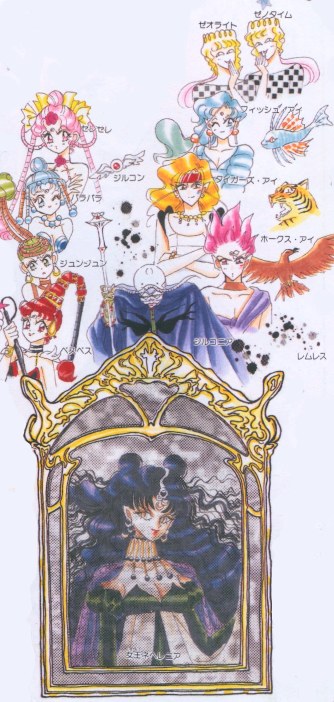
In a later post I’ll be discussing the confusion that sometimes appears in fandom when people discuss plot points or characterizations that are wildly different when seen in the Sailor Moon manga versus the Sailor Moon anime – or even, these days, the Sailor Moon live action series. But I want to talk about the villains separately here, as they get talked about a whole lot, and it’s quite fascinating how differently they’re treated by the various sources.

Naoko Takeuchi’s manga is excellent at giving its main characters well-developed and awesome character arcs. But the villains? Not so much. It’s got a lot to pack into its chapters, and the villains are there to move the plot along to its next point. Not to say there isn’t some thought given to each of them. The Four Generals being Endymion’s old bodyguards from the Silver Millennium was clearly thought out well in advance, and indeed gets brought up long after their deaths in the first arc. As for Super S, I’ll get to that later. But, especially in battle, generally a villain’s job in the manga is to show up, be horrible, threaten a few people, and then get zapped by the senshi (who, unlike the anime, have no issues whatsoever with killing them provided they prove to be monsters and not humans).

The anime had a lot more time to fill in its episodes, and the best way to do it was to flesh out the various villains. And so Nephrite begins to fall for a human, Usagi’s friend Naru, and in the end redeems himself for her even though he dies. (One can argue how acceptable this is, but the anime clearly wants you to feel sorry for him, even if many don’t.) Kunzite and Zoisite are in a relationship (which required the dub to make Zoisite a female, as heaven forbid a kid’s cartoon had suggestions of homosexuality). The Akayashi Sisters in the second arc, who were all complete cannon fodder in the manga, all get ‘redemption’ stories and are purified by Sailor Moon. The same thing happens to the Amazon Trio in the Super S anime – in the manga, they too are killed off. And Professor Tomoe’s story is equally tragic in both versions, but the anime gives him a heart he simply doesn’t have in the manga. It’s not a surprise to see why – Takeuchi made her minions, for the most part, to be funny and entertaining, and the more we see of them the more we got to like them.

(Tomoe’s redemption actually caused a nasty plot hole in the anime that had to be fixed later. This is why Pluto basically shows up at the start of Stars, takes his daughter from him, and proceeds to have her live with the other Outers. Which seems rather cruel of her. No need for this in the manga – he was far more irredeemable, killed off, and Hotaru went to stay with the others out of necessity.)

Of course, not EVERYONE got to enjoy a nice soul-healing redemption. The Witches 5 are just as wacky and fun to watch as prior villains, but they get killed off in ways that range from horrifying to *really* horrifying (hi, Mimete). Likewise, the Sailor Animamates in the final arc got huge expansions of roles (in some cases, they were only in the manga for a brief scene before being offed), but they manage to die all the same. In general, if the anime can manage to save the villain without harming the plot or having it turn too sweet, they might do so. but if the plot is meant to be dark (S, Stars), they’re far less lucky.

Then there’s Super S. The fourth arc in the manga, it’s the one that was changed the most for the anime. The anime, in fact, has a bad reputation, as it upped the cutesy Chibi-Usa scenes and removed the Outer Senshi from the story. It was probably the fluffiest of all the anime seasons. And because of that, it actually manages to redeem TWO sets of villains – not only the Amazon Trio, but also their replacements, the eccentric Amazoness Quartet, who in the anime are purified and become human girls. Now, for once, they Quartet are ALSO saved in the manga… but have a far more interesting role. Sailor Saturn (who, as I noted, was removed from the anime Super S) notices them and begs them to remember who they are. They ignore her, and are (we think) killed by being turned into glass marbles by the main villainess. Saturn grabs these, and once everything is safe and the villain has been vanquished, asks Moon to purify them. She does… and surprise! These four villains are actually SENSHI, Chibi-Usa’s bodyguard team from the future. What’s more, they even show up again in the next arc. This is probably the biggest villain redemption in the series, and it’s surprising that it comes in the manga (though this means it loses some of its impact as the Quartet didn’t appear as much).

This is not to say there aren’t scary and horrible villains. Each arc has its main general below the big bad (the big bad in each arc tends to be a horrible monstrous creature of some sort), and you feel no sympathy at all for them beyond the occasional “My God, What Have I Done?” moment. But in general, for Sailor Moon, it pays to be silly. The sillier the villain, the more likely you are to get out of the series alive. Especially since another of Takeuchi’s favorite techniques is also at play here (you can see it with Jadeite, Prince Diamond, etc.): if you are an asshole, particularly a male one, the heroines will kick your ass from here to Cleveland.

Filed Under: UNSHELVED

Manga the Week of 1/4

December 28, 2011 by Sean Gaffney

Happy new year! At least next week, when you’ll be able to celebrate with a nice stack of manga from Kodansha and Viz! Courtesy the Midtown Comics list, and mostly the same as your friends at Diamond. (I say mostly as Wandering Son still is AWOL.)

Kodansha has two big omnibuses for all you Ken Akamatsu fans who enjoy buying things twice to get new, more accurate translations. Which, let’s face it, is most of you. The second Love Hina omnibus and third Negima omnibus will bring you over 1000 pages of tsundere girls getting embarrassed and hitting the men/boys they love. (Hey, it’s a known buying market. Stick with what you’re good at, that’s what Ken says.) There’s also the third volume of Monster Hunter Orage, for Hiro Mashima fans. (Note that all that was out this week in bookstores. Diamond: where shipping dates go to die.)

About 257 years after the release of the first One Piece artbook, the series has apparently sold well enough that Viz is releasing the second. Oda’s fantastical color pages are filled with imagination and strange animals, and I can’t wait to see what they look like in a larger size.

Meanwhile, the first week of the month always means a healthy dose of Viz’s Shonen Jump and Shojo Beat lines. From the former we have Naruto 54 and One Piece 60, both getting a slight speedup due to Shonen Jump Alpha. (They’re already available digitally.) There’s also Vol. 2 of Psyren. Jump Square gives us the 7th volume of the 2nd series of Rosario + Vampire, and the little-known V Jump, which specialized in video game tie-in manga, gives us Yu-Gi-Oh GX 8, one of the grandest game tie-ins of them all.

Shojo Beat is putting out several of its heavy hitters: Black Bird 12, Kimi ni Todoke 12, and Skip Beat 26. There’s also new volumes of Dengeki Daisy (oh, those cliffhangers…) and Oresama Techer (SUPER-BUN!). Lastly, for Sanrio fans, Viz releases the first volume of the adorable-looking Fluffy Fluffy Cinnamoroll, which is surprisingly printed right-to-left. Well, may as well get the future manga fans reading that direction early on, I suppose.

Filed Under: FEATURES

The 2011 Manga Hall of Shame Inductees

December 28, 2011 by Katherine Dacey

With TOKYOPOP’s untimely demise this year, critics lost one of their most reliable sources of shame-worthy manga. Though I won’t miss reading J-Pop Idol, Dragon Sister, Innocent W, or Zone-00 — to name just a few of the D-list titles that TOKYOPOP foisted on fans — I will miss reviewing them, as they helped me develop my voice as a critic, challenging me to expand my litany of complaints beyond “boring,” “cliche,” and “awful.” Few of the titles on this year’s Hall of Shame list inspired the same level of creative vitriol that TOKYOPOP’s worst titles did, but they do share one important trait with Qwaser of Stigmata: no one will confuse them with such recent gems as A Bride’s Story, Stargazing Dog, or A Zoo in Winter.

So without further ado, I present the 2011 Manga Hall of Shame Inductees:

5. Amnesia Labyrinth
Written by Nagaru Tanigawa • Art by Natsumi Kohane • Seven Seas

For a manga that features incest, murder, and at least one character with a split personality, Amnesia Labyrinth is shockingly dull. That dullness can be attributed to two things: the source material and the hero. As writer Nagaru Tanigawa explains in the afterword to volume one, Amnesia Labyrinth was “based on a story that, while it didn’t have enough to become a full-fledged novel, had been kicking around in my head for years” — in short, a half-baked idea. Worse still, Souji, the lead character, is so passive it’s hard to believe that he’s an athletic superstar, academic genius, and a lady killer; if anything, he seems more like a collection of cool traits than an actual person. Teenage boys may find Souji an appealing surrogate, but older readers will find the series’ main draw — the mystery — too underdeveloped to be interesting, and the characterizations too thin to inspire identification with any of the cast members. —Reviewed at The Manga Critic on 2/8/11

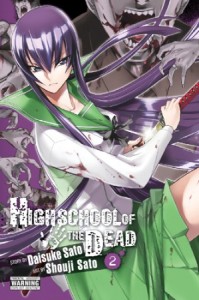
4. High School of the Dead
By Daisuke Sato and Shouji Sato • Yen Press
This slick, violent zombie story plays like a poor man’s Dawn of the Dead, substituting sadism and sex for the social commentary of George Romero’s classic horror flick. Popular as it may be, a quick scan of volume one reveals myriad issues, from poorly staged fight scenes to tin-eared dialogue. The biggest problem with Highschool of the Dead, however, is the endless parade of panty shots and costume failures. The Satos work fanservice into as many scenes as possible, taking full advantage of every stairwell, fight, fall, and female death to expose cleavage — and poorly drawn cleavage, at that. (Hint to aspiring manga artists: large breasts do not resemble grossly distended lemons.) And when the scariest thing about a zombie story is the way the female characters’ bosoms are drawn, it’s safe to say that the creators ought to spend a little more time watching 28 Days or I Am Legend, and a little less time watching Naughty Naked Co-Eds. —Reviewed at The Manga Critic on 12/27/10

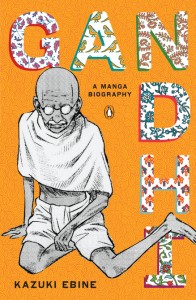
3. Gandhi: A Manga Biography
By Kazuki Ebine • Penguin Books
This slim volume reduces Gandhi’s life to a string of four-page vignettes that do little to reveal who he was or what he believed; important episodes in every stage of his career are drained of historical nuance, preventing the reader from fully appreciating the complexity of the political situations in South Africa or India. Adding insult to injury is the script: the dialogue abounds in awkward sentences, anachronistic sentiments, and cringe-worthy typos that consistently undercut the story’s serious message. (Makes you wonder: did anyone at Penguin Books actually proofread Gandhi?) More disappointing still is the artwork: it’s plain and lifeless, relying too heavily on computer shortcuts and pre-fab backgrounds to create a genuine sense of place or time. My suggestion: skip the manga and rent Richard Attenborough’s 1982 movie of the same name. —Reviewed at The Manga Critic on 10/6/11

2. The Beautiful Skies of Houhou High
By Arata Aki • DMP
In this unfunny comedy about sexual orientation, a gay teen’s mother enrolls her daughter in an all-boys’ boarding school — mom’s idea of a “cure” for lesbianism. A more skillful storyteller might use the set-up to critique homophobia, or the idea that homosexuality is a lifestyle choice, but Arata Aki takes the easy road, using Kei’s dilemma as a pretext for wacky hijinks. Though the theme of gender exploration is extended to include male cast members — several boys in Kei’s dorm exhibit stereotypically feminine behavior and interests — Aki doesn’t do anything particularly interesting with these supporting characters; their antics provide comic relief, not commentary on the fluidity of gender norms. Lame gags and confusing subplots remind the reader at every turn that Houou High isn’t concerned with real human sexuality, but in wringing cheap laughs out of a gay character’s humiliation. In a word: yuck. —Reviewed at The Manga Critic on 2/28/11

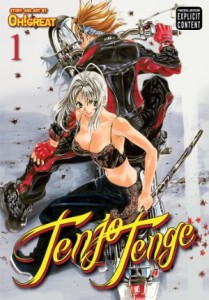
1. Tenjo Tenge
By Oh!Great • VIZ Media
Flipping through the first volume of VIZ’s “Full Contact” edition, it’s easy to see why DC Comics censored the original English print run of Tenjo Tenge. The story abounds in the kind of gratuitous nudity and sexual encounters that make an unadulterated version a tough sell at big chain stores like Wal-Mart and Barnes & Noble. DC Comics’ solution was an inelegant one: they re-wrote the script, drew bras and panties on naked girls, and cut some of the most offensive passages. As an advocate of free speech, I can’t condone the bowdlerization of any text, especially in the interest of a more commercially viable age-rating , but as a woman, it’s hard to celebrate the restoration of a graphic rape scene or images of naked girls throwing themselves at the heroes, especially when the plot is violent and silly. —Reviewed at The Manga Critic on 6/3/11

*  *  *  *  *

So now I turn the floor over to you, readers: what titles made your Worst of 2011 list?

A tip for first-time visitors: you might want to read my Comment Policy before busting out words like “feminazi” in defense of a favorite title. Your comment is much less likely to be deleted if you’re friendly, funny, and logical, as those qualities facilitate dialogue.

Filed Under: Manga, Manga Critic Tagged With: Bad Manga

The 2011 Manga Hall of Shame Inductees

December 28, 2011 by Katherine Dacey 52 Comments

With TOKYOPOP’s untimely demise this year, critics lost one of their most reliable sources of shame-worthy manga. Though I won’t miss reading J-Pop Idol, Dragon Sister, Innocent W, or Zone-00 — to name just a few of the D-list titles that TOKYOPOP foisted on fans — I will miss reviewing them, as they helped me develop my voice as a critic, challenging me to expand my litany of complaints beyond “boring,” “cliche,” and “awful.” Few of the titles on this year’s Hall of Shame list inspired the same level of creative vitriol that TOKYOPOP’s worst titles did, but they do share one important trait with Qwaser of Stigmata: no one will confuse them with such recent gems as A Bride’s Story, Stargazing Dog, or A Zoo in Winter.

So without further ado, I present the 2011 Manga Hall of Shame Inductees:

5. AMNESIA LABYRINTH (Seven Seas)

For a manga that features incest, murder, and at least one character with a split personality, Amnesia Labyrinth is shockingly dull. That dullness can be attributed to two things: the source material and the hero. As writer Nagaru Tanigawa explains in the afterword to volume one, Amnesia Labyrinth was “based on a story that, while it didn’t have enough to become a full-fledged novel, had been kicking around in my head for years” — in short, a half-baked idea. Worse still, Souji, the lead character, is so passive it’s hard to believe that he’s an athletic superstar, academic genius, and a lady killer; if anything, he seems more like a collection of cool traits than an actual person. Teenage boys may find Souji an appealing surrogate, but older readers will find the series’ main draw — the mystery — too underdeveloped to be interesting, and the characterizations too thin to inspire identification with any of the cast members. –Reviewed at The Manga Critic on 2/8/11

4. HIGH SCHOOL OF THE DEAD (Yen Press)

This slick, violent zombie story plays like a poor man’s Dawn of the Dead, substituting sadism and sex for the social commentary of George Romero’s classic horror flick. Popular as it may be, a quick scan of volume one reveals myriad issues, from poorly staged fight scenes to tin-eared dialogue. The biggest problem with Highschool of the Dead, however, is the endless parade of panty shots and costume failures. The Satos work fanservice into as many scenes as possible, taking full advantage of every stairwell, fight, fall, and female death to expose cleavage — and poorly drawn cleavage, at that. (Hint to aspiring manga artists: large breasts do not resemble grossly distended lemons.) And when the scariest thing about a zombie story is the way the female characters’ bosoms are drawn, it’s safe to say that the creators ought to spend a little more time watching 28 Days or I Am Legend, and a little less time watching Naughty Naked Co-Eds. –Reviewed at The Manga Critic on 12/27/10

3. GANDHI: A MANGA BIOGRAPHY (Penguin Books)

This slim volume reduces Gandhi’s life to a string of four-page vignettes that do little to reveal who he was or what he believed; important episodes in every stage of his career are drained of historical nuance, preventing the reader from fully appreciating the complexity of the political situations in South Africa or India. Adding insult to injury is the script: the dialogue abounds in awkward sentences, anachronistic sentiments, and cringe-worthy typos that consistently undercut the story’s serious message. (Makes you wonder: did anyone at Penguin Books actually proofread Gandhi?) More disappointing still is the artwork: it’s plain and lifeless, relying too heavily on computer shortcuts and pre-fab backgrounds to create a genuine sense of place or time. My suggestion: skip the manga and rent Richard Attenborough’s 1982 movie of the same name. –Reviewed at The Manga Critic on 10/6/11

2. THE BEAUTIFUL SKIES OF HOUOU HIGH (DMP)

In this unfunny comedy about sexual orientation, a gay teen’s mother enrolls her daughter in an all-boys’ boarding school — mom’s idea of a “cure” for lesbianism. A more skillful storyteller might use the set-up to critique homophobia, or the idea that homosexuality is a lifestyle choice, but Arata Aki takes the easy road, using Kei’s dilemma as a pretext for wacky hijinks. Though the theme of gender exploration is extended to include male cast members — several boys in Kei’s dorm exhibit stereotypically feminine behavior and interests — Aki doesn’t do anything particularly interesting with these supporting characters; their antics provide comic relief, not commentary on the fluidity of gender norms. Lame gags and confusing subplots remind the reader at every turn that Houou High isn’t concerned with real human sexuality, but in wringing cheap laughs out of a gay character’s humiliation. In a word: yuck. –Reviewed at The Manga Critic on 2/28/11

1. TENJO TENGE (VIZ)

Flipping through the first volume of VIZ’s “Full Contact” edition, it’s easy to see why DC Comics censored the original English print run of Tenjo Tenge. The story abounds in the kind of gratuitous nudity and sexual encounters that make an unadulterated version a tough sell at big chain stores like Wal-Mart and Barnes & Noble. DC Comics’ solution was an inelegant one: they re-wrote the script, drew bras and panties on naked girls, and cut some of the most offensive passages. As an advocate of free speech, I can’t condone the bowdlerization of any text, especially in the interest of a more commercially viable age-rating , but as a woman, it’s hard to celebrate the restoration of a graphic rape scene or images of naked girls throwing themselves at the heroes, especially when the plot is violent and silly. –Reviewed at The Manga Critic on 6/3/11

*  *  *  *  *

So now I turn the floor over to you, readers: what titles made your Worst of 2011 list?

A tip for first-time visitors: you might want to read my Comment Policy before busting out words like “feminazi” in defense of a favorite title. Your comment is much less likely to be deleted if you’re friendly, funny, and logical, as those qualities facilitate dialogue.

Filed Under: Manga Critic Tagged With: Bad Manga

MMF: Sailor Pluto

December 28, 2011 by Sean Gaffney

When I was writing about Makoto, I used her own personal name in the header. We first meet her as a normal teenage girl, and despite becoming Sailor Jupiter and defending justice and the like, the manga follows her life as a normal teenage girl. When we first meet Sailor Pluto, though, in the middle of the second arc of the manga, we see her as the senshi first and foremost. We don’t even realize she has a civilian identity until the third arc, when we finally “meet” Setsuna Meiou. This fits rather well, as Pluto’s arc is time in reverse compared to the others – she’s the no-nonsense soldier of the future, then upon her return she’s allowed to live a (somewhat) carefree life.

We know next to nothing of Sailor Pluto’s actual past. One flashback in the manga shows Queen Serenity telling Pluto the three rules of time that she is never allowed to break. Leaving aside the fact that she has broken all three of them by the end of the manga, what’s striking is that she’s telling this to a Sailor Pluto who looks to be about 7 years old. I mentioned before that these Sailor Senshi are not going to grow up and get married, but grow up and take on their duties as defenders of the Earth. Pluto, on the other hand, seems to have been born to this duty. It’s a rather jarring. What’s more, throughout this first arc we see that Pluto’s life in Crystal Tokyo is a solitary one… her only friends seem to be Endymion and Chibi-Usa. One would imagine even in Crystal Tokyo the other inner senshi all still hang out. Is Pluto’s task really that important?

Speaking of which, why isn’t Pluto’s task actually being the Senshi of Death? There are rumors that Naoko Takeuchi got Pluto and Saturn confused when she was writing the manga, and then gave Hotaru powers equivalent to “death” when she realized it was too late to go back and change it. In any case, guardians of time are not new in the land of fiction, or even manga, and it’s actually more of a surprise that Pluto doesn’t abuse her powers *more*, given the obvious temptation. Then again, Pluto is… well, not exactly a stoic, but her personality definitely tends towards the cooler end of the spectrum. Even when she’s living as Setsuna in present-day Tokyo, we learn very little about her personal life, her likes and dislikes, etc. She has no romantic scenes or pairings, even with the other senshi; the manga hinted she might have a crush on future King Endymion, but even that was mild. It does seem that she’s enjoying her time as Setsuna, at least. Probably the first time she’s had to relax in thousands of years.

We have no real idea how old Pluto is. Her parents are unknown, and she seems to be a young girl in the Silver Millennium when talking with Serenity. Her future is… confusing, given that she dies in Crystal Tokyo and then is reborn into the past to live in the present with Usagi and company as a (presumed) 18-year-old college student. Is she caught in a time loop? I’d like to say she isn’t, given I think that might be a bit too cruel. I imagine the combination of her own powers and Neo-Queen Serenity’s was able to work something out. (In the anime, of course, she doesn’t die in the first place, rendering all of this moot.)

Fan opinion on Pluto is mixed. As I said, there’s a lot of “with great power comes great responsibility” to her senshi powers, and that, combined with her cool and somewhat aloof personality, means that there’s a lot of fanfics and fan opinion portraying her as a manipulator. Heck, I’ve done it myself. In terms of the canon, though, I appreciate Pluto for her role as the Senshi of time, and her ability to show us what duty and sacrifice really are; but I also appreciate just as much her time as Setsuna from the third arc onwards, if only as we do see a teasing and fun side to her, and she’s a devoted parent (along with Haruka and Michiru) to Hotaru. Setsuna is time reversed from the other senshi – we see her as a soldier, then we gradually see her civilian self. As for which is her “true” self, well, that’s a hard question to ask for any of the senshi.

Filed Under: UNSHELVED

Back to work!

December 27, 2011 by Brigid Alverson

Rob McMonigal lists his picks for the best manga of 2011 at Panel Patter. Dave Ferraro posts his top manga list at Comics-and-More, and it skews heavily toward Vertical titles (not that there’s anything wrong with that).

Sean Gaffney posts the links for the first day of the Sailor Moon Manga Moveable Feast.

News from Japan: Foxy Lady manga-ka Ayun Tachibana has a new series in the works, about two girls who trade places, for Manga Time Kirara Forward magazine.

Reviews: Ash Brown discusses a week’s worth of manga reading at Experiments in Manga.

Justin on vol. 1 of 7 Billion Needles (Organization Anti-Social Geniuses)
Nick Smith on vol. 1 of Dawn of the Arcana (ICv2)
Lori Henderson on vol. 18 of Hayate the Combat Butler (Manga Village)
Rob McMonigal on vols. 1-3 of I’ll Give It My All… Tomorrow (Panel Patter)
Leroy Douresseaux on vol. 12 of Kimi ni Todoke (The Comic Book Bin)
Lesley Aeschliman on vol. 1 of Magic Knight Rayearth (Blogcritics)

Filed Under: MANGABLOG

Sailor Moon MMF: Day 1 links

December 27, 2011 by Sean Gaffney

We’ve got some excellent links from Day One of this Manga Moveable Feast!

Aaron Kooienga tells us all why he’s so find of the magical girl genre, and also reviews the second volume of Codename: Sailor V.

Erica Friedman wrote a great article for Hooded Utilitarian a while back about why Sailor Moon was such a huge influence on North America.

Ed Sizemore found that he had issues with Usagi as a heroine in his review of Volume 1, but he was able to get behind Minako more. Ed also did a podcast about the series with Erica and Emily Snodrass.

Erin Jamison gives us a look at what lessons one can learn from Usagi Tsukino.

I’ve reviewed the first two volume of both Sailor Moon and Sailor V here, and I also discussed the character of Makoto Kino/Sailor Jupiter.

And that’s just Day 1! What will other days bring?

Filed Under: UNSHELVED

  • Page 1
  • Page 2
  • Page 3
  • Page 4
  • Go to Next Page »
 | Log in
Copyright © 2010 Manga Bookshelf | Powered by WordPress & the Genesis Framework