• Skip to primary navigation
  • Skip to main content
  • Skip to primary sidebar
  • Home
  • About Us
    • Privacy Policy
    • Comment Policy
    • Disclosures & Disclaimers
  • Resources
    • Links, Essays & Articles
    • Fandomology!
    • CLAMP Directory
    • BlogRoll
  • Features & Columns
    • 3 Things Thursday
    • Adventures in the Key of Shoujo
    • Bit & Blips (game reviews)
    • BL BOOKRACK
    • Bookshelf Briefs
    • Bringing the Drama
    • Comic Conversion
    • Fanservice Friday
    • Going Digital
    • It Came From the Sinosphere
    • License This!
    • Magazine no Mori
    • My Week in Manga
    • OFF THE SHELF
    • Not By Manga Alone
    • PICK OF THE WEEK
    • Subtitles & Sensibility
    • Weekly Shonen Jump Recaps
  • Manga Moveable Feast
    • MMF Full Archive
    • Yun Kouga
    • CLAMP
    • Shojo Beat
    • Osamu Tezuka
    • Sailor Moon
    • Fruits Basket
    • Takehiko Inoue
    • Wild Adapter
    • One Piece
    • After School Nightmare
    • Karakuri Odette
    • Paradise Kiss
    • The Color Trilogy
    • To Terra…
    • Sexy Voice & Robo
  • Browse by Author
    • Sean Gaffney
    • Anna Neatrour
    • Michelle Smith
    • Katherine Dacey
    • MJ
    • Brigid Alverson
    • Travis Anderson
    • Phillip Anthony
    • Derek Bown
    • Jaci Dahlvang
    • Angela Eastman
    • Erica Friedman
    • Sara K.
    • Megan Purdy
    • Emily Snodgrass
    • Nancy Thistlethwaite
    • Eva Volin
    • David Welsh
  • MB Blogs
    • A Case Suitable For Treatment
    • Experiments in Manga
    • MangaBlog
    • The Manga Critic
    • Manga Report
    • Soliloquy in Blue
    • Manga Curmudgeon (archive)

Manga Bookshelf

Discussion, Resources, Roundtables, & Reviews

Archives for April 2011

BL Bookrack: April

April 20, 2011 by MJ 9 Comments

Welcome to the April installment of BL Bookrack, a monthly feature co-written with Soliloquy in Blue‘s Michelle Smith.

This month, we take a look at two offerings from Digital Manga Publishing’s Juné imprint, Love Syndrome and Right Here, Right Now, as well as BLU Manga’s Crimson Snow.


Crimson Snow | By Hori Tomoki | Published by BLU Manga | Rated Mature (18+) | Buy at Amazon – “Crimson Snow,” the three-part title story in this collection, is a compelling character piece, focusing on the surprising bond that grows between two very dissimilar people. When Kazuma, a yakuza gangster, is shot in the act of exacting revenge for the killing of his beloved boss, he has nowhere to go. Pausing for a moment’s rest in the snow, which he stains red with his blood, he is discovered by Yukihiro Shibata, the rich bastard son of a renowned tea ceremony master. Without a moment’s hesitation, Yukihiro takes Kazuma in and begins to nurse him back to health.

This reaction utterly baffles Kazuma. “Don’t you know what kind of person I am?” he inquires. His background makes no difference to Yukihiro or his servants, however, and as Kazuma comes to know his caregivers, he begins to understand why they’re willing to help him. For one thing, one of the servants is himself a reformed gangster, and for another, Yukihiro is so used to accepting only what he is given—a holdover from many disappointments in his relationship with his absentee father—that when he is actually adamant about something, the servants will do anything to make sure he gets it.

Despite the yakuza connection, “Crimson Snow” is actually a quiet kind of story, largely because Kazuma, for the first time in his life, has the opportunity to simply be still and spend time reflecting on his life. He loved his former boss, and loved being by his side, but it did lead him into a life of violence. Life by Yukihiro’s side is different, peaceful, and in time, Kazuma realizes that he must leave in order to avoid bringing ruin upon his friend. (“I don’t know how to protect things I care about. My hands only ever break things and take things away.”)

Awesomely, however, Kazuma makes his decision with a minimum of angst, and with the clear-eyed intent of paying for his crimes. I would have been perfectly happy if the tale had ended here, but the brief and satisfying “Galance” provides some closure to Kazuma and Yukihiro’s story. There are two other stories in the collection, as well. “At First Sight” is a simple and happy love story between two students who follow up on mutual staring with some highly consensual intimacy. “Cry for the Sun” is a little odd—being the story of a young man who falls in love with his father’s former lover—but the premise is interesting.

On the whole, I enjoyed Crimson Snow quite a lot. Hori writes that this was her first foray into BL, and she shows great promise both in storytelling and in art. (Kazuma, in particular, often looks disconcertingly realistic.) I’d love to read more by her someday.

-Review by Michelle Smith


Love Syndrome | By Yura Miyazawa | Published by Juné | Rated Mature (18+) | Buy at Akadot – As a regular reader of boys’ love manga, I’ve developed my share of pet peeves. Romanticization of rape, the excessively tortured uke, demonization of female characters–all are common elements of the genre that invariably make me cringe. The greatest sin of all, however–the one most hurtful and difficult to forgive–is that of the advertised single-volume story that turns out to be an anthology. This is the sin of the publisher, not the title, of course. Yet when reading for review, it’s the poor manga at which I’ll usually direct my wrath. Fortunately, in this case, that wrath is a bit subdued.

Most BL anthologies share a few tragic failings, and Love Syndrome is no exception. Though typically revolving around a common theme (in this case, friends-turned-lovers), the stories are rushed and underdeveloped, forced to a romantic climax (pun intended) by whatever means necessary, with little attention given to minor issues like characterization and basic believability.

Take a look at this volume’s first story, for instance. An unexpected water leak in his apartment building compels college student Serizawa to seek shelter with his old friend, Shinoda. Shinoda agrees, but inexplicably dictates that his guest agree to kiss him every morning. As Serizawa quickly discovers that he enjoys Shinoda’s kisses, he also finds out that Shinoda has been in love with him for years! Now Serizawa’s in love too! Hurray! The end. While the specific circumstances of the volume’s subsequent pairings differ slightly, the general trajectory remains the same throughout. Yura Miyazawa’s characters fall fast, overcome obstacles immediately, and declare their love (with a few panels left over for the suggestion of sex), all in the span of about 30 pages.

With all that in mind, though it would be an overstatement to suggest that Love Syndrome really *succeeds* at anything, it doesn’t completely fail either, thanks in great part to its author’s relentless good cheer. If these stories are obviously spun from the thinnest wish-fulfillment fantasies, they’re also crafted with a genuine delight for those fantasies. Miyazawa’s characters beam with love, creating a sense of real warmth within their hopelessly clichéd world. And in the cold, murky depths of the BL anthology market, a little warmth goes a long way.

-Review by MJ


Right Here, Right Now!, Vols. 1-2 | By Souya Himawari | Published by Juné | Rated Mature (18+) | Buy at Akadot – If I were to describe this two-volume series as a time travel historical romance, probably you’d imagine something a lot more fluffy than what Right Here, Right Now! actually has to offer. Oh, sure, it’s not particularly deep or dramatic, but it also doesn’t gloss over some of the problems with falling in love with a guy who lived over 500 years ago.

On his way home from school one day, Mizuo Yanase decides to shirk his tea ceremony lesson and loiter at the run-down local temple instead. While sitting in the spot where the Buddha altar should be, he is suddenly tranported back in time to the Warring States period, where he is hailed as the living incarnation of Buddha. He is promptly introduced to Takakage, a boy about his age, who wastes no time glomping Mizuo and requesting that he become his “page,” which seems to be a euphemism for “bedmate.”

Mizuo demurs, and spends most of the first volume learning about Yamako, the land in which he finds himself, and taking combat lessons as a way to fend off his own feelings of insecurity because Takakage is so much more manly and mature than he is. After a brief visit home, he turns to find that Takakage has aged six years and become a hardened military general. Too, Takakage’s mother is pressuring him to produce an heir, and when a proposed marriage to an enemy princess seems like the path to peace for the people of Yamako, Mizuo thinks it best to remove himself from the picture, lest he be the cause of Takakage’s refusal and, therefore, the citizens’ suffering.

Mizuo is a bit of a milquetoast protagonist, but I still enjoyed his growth as he becomes more interested in trying his best, thinks of others before himself in a way that isn’t actually annoying, and ultimately resolves that he needs to find a way to contribute if he’s ever going to feel truly at home in the past. His dilemma over whether to stay with Takakage or return to his family is also a nice touch—many such stories give the characters an easy out in this regard, but not this one. The situation with the proposed marriage is also resolved more rationally than I expected, and with a minimum of melodrama.

As a time travel fantasy, therefore, Right Here, Right Now! is pretty decent. It’s in the romance department that things didn’t work for me. Right off the bat, Takakage is eager to get physical with Mizuo, which makes him look more like a horndog than someone actually in love. Mizuo protests for a while, then eventually submits without much enthusiasm. I can totally buy that Mizuo admires Takakage and wants to be by his side, but have a hard time seeing them as a couple.

In the end, Right Here, Right Now! isn’t perfect, but it’s certainly better than expected.

-Review by Michelle Smith


Review copies provided by the publisher.

Filed Under: BL BOOKRACK Tagged With: crimson snow, love syndrome, right here right now, yaoi/boys' love

The Josei Alphabet: L

April 20, 2011 by David Welsh

“L” is for…

Well, it’s for “Love.” Duh.

Love Blog!!, written and illustrated by Akira Fujiwara, originally serialized in Shogakukan’s Petit Comic, three volumes, published in German by Tokyopop. Frustrated with her love life, office lady Eriko takes to the web to blog about her search for romantic fulfillment. There’s a sequel, Love Blog!! Next, and Fujiwara has another “L” josei series, Lost Girl wa Koi o Suru, currently running in Petit Comic.

Love Cruise, written and illustrated by Tomu Ohmi, originally serialized in Shogakukan’s Petit Comic, one volume. This collection of smutty short stories is noteworthy mostly because it’s by the creator of the awesome-or-horrible-sounding Midnight Secretary, which I’ll almost certainly mention again next week.

Love My Life, written and illustrated by Ebine Yamaji, originally serialized in Shodensha’s Feel Young, one volume, published in French by Asuka. Won’t someone please, please, please publish this by-all-accounts gorgeous and moving yuri romance? Please?


Love Vibes, written and illustrated by Erica Sakurazawa, originally serialized in Shueisha’s Young You, one volume. Mako is stuck in a love triangle with her unreliable ex-boyfriend, Shoji, and an alluring bisexual woman named Mika. Another Sakurazawa title in this corner of the alphabet is Lovely!, originally published by Shodensha.

Lovers’ Kiss, written and illustrated by Akimi Yoshida, originally serialized in Shogakukan’s Flowers, two volumes. Everyone’s kissing everyone at this public high school, which promises both shônen- and shôjo-ai.

Licensed josei:

  • Loveless, written and illustrated by Yun Kouga, originally serialized in Ichijinsha’s Comic Zero-Sum, published in English by Tokyopop.

What starts with “L” in your josei alphabet?

Reader reminders and recommendations:

  • Love for Dessert, written and illustrated by Hana Aoi, originally published by Ohzora Shuppan, published in English by LuvLuv, published in French by Asuka.
  • Lady Rin!, written and illustrated by Youko Hanabusa, serialized in Shodensha’s Roma x Puri.

Filed Under: FEATURES

Gatcha Gacha Volumes 7 and 8

April 19, 2011 by Anna N

I’ve procrastinated writing about the last couple volumes of Gatcha Gacha because I didn’t really want this series to end. In a world filled with cookie cutter shoujo, this series is genuinely weird, somewhat endearing, and occasionally disturbing. I’m assuming that based on the long stretches of time between the series debut and the translation of the final volume that this series didn’t do so well in the sales arena, so kudos for Tokyopop for finishing it. While I’m unhappy about so many series being unfinished with Tokyopop shutting down, I’m trying to comfort myself with the idea that at least Gatcha Gacha was finished. There are plenty of spoilers ahead, so be warned.

Gatcha Gacha Volume 7 by Yutaka Tachibana

The seventh volume was the first one where I felt like Tachibana was stalling for time before the end of the series. Instead of focusing on the relationships between the main characters, we get an extended flashback of what happened between Motoko and a girl from her past named Sae. Motoko gets involved in Sae’s life, and while Sae thinks that she’s using Motoko, it is clear that everyone’s favorite tough girl has her own motivations for intervening. The next story arc in this Motokocentric volume touches on the possibility that she has a different family background than everybody previously assumed. It is interesting to see the agony Yuri goes through when confronted with the idea that Motoko might be disappearing from her life. Motoko ends up solving the issue with her customary directness, and it reminded me how much I enjoy reading a manga that features a character that just says whatever she wants without fear. In another series, the situation probably wouldn’t have been taken care of in half a volume, because everyone would sill be sneaking around without saying anything.

Gatcha Gacha Volume 8 by Yutaka Tachibana

The final volume confirms that the great love affair in this manga wasn’t between Yuri and Yabe or Yuri and Hirao, but Yuri and Motoko. Someone with a better background in gender studies than I would probably have a field day with Gatcha Gacha. It certainly shows a quirky yet positive proto-lesbian relationship between Yuri and Motoko, but it also uses gay characters and situations as fodder for soap opera sleaze of the highest order, as the cute girl who has been stalking Hirao is revealed to be a guy with an overprotective brother/gang leader who makes his displeasure known when the male objects of his cross dressing brothers affection reject his advances. The image of Yuri being menaced by a gang member in full gimp costume is one of the most incongruous things I’ve seen in mainstream shoujo, and one of the reasons why I love Gatcha Gacha is that it can be both surprising and weird.

The ending is one of those open-ended conclusions that often seem to plague manga. The characters are all a little different thanks to knowing each other, but all of the ongoing relationship issues are hinted at instead of given a clear resolution. Hirao is still enamored of Yuri, but even as she tries to give their relationship a chance and acts jealous if other girls give him attention, she’s probably slotted him into a non-romantic category in her mind. His emotional sensitivity and generosity has her thinking of him as princess she wants to protect. In contrast, when Yuri needs someone to rescue her, the person she calls for is Motoko. Motoko sweeps in, ready to fight for Yuri. When I first put the volume down I felt a little cheated because the end of the manga didn’t totally feel like a static conclusion. After reflecting a bit, I realized that even though there might not be major changes, the personalities of all of the characters have shifted a little bit just from their interaction over time. Motoko really views friendship with Yuri as something precious. Yuri is able to stand up for herself a little bit. Hirao is still going after Yuri, but he’s aware that it may already be too late. One of the funniest bits in this volume came with the omake at the back where the characters react to the lack of an ending, and Hirao is complaining that everything’s come back to where it started, only to be answered with the comment that “the girls have all grown into strong, sensitive men.” Gatcha Gacha has been one of the quirkiest shoujo manga that I’ve read, and I’ll horde these precious volumes until I die since they’ll be going out of print. I’m already looking forward to rereading the series next year.

Thanks so much to Sean Gaffney for sending me his extra copy of Volume 8!

Filed Under: UNSHELVED

Tokyopop Trio Giveaway

April 19, 2011 by Anna N

I generally donate any review copies I decide not to keep to local libraries, but I figure as a last hurrah I will do a giveaway of spare copies of Tokyopop series:

Butterfly #1
Clean Freak: Fully Equipped #1
Pavane for a Dead Girl #1

Post a comment here listing the Tokyopop series you’ll miss most, and I’ll randomly select a winner next Tuesday.

Thanks for commenting, this giveaway is closed

Filed Under: UNSHELVED

My 10 Favorite TOKYOPOP Titles

April 19, 2011 by Katherine Dacey

Like many other readers who first discovered manga in the mid-2000s, TOKYOPOP played a major role in introducing me to to the medium. Tokyo Babylon was the first TOKYOPOP title I ever read, followed soon after by Legal Drug, The Legend of Chun-Hyang, and — God help me — Model, a manhwa about a Korean art student who lives in a crumbling mansion with two European vampires. (I should add that the vampires are male and the student is female, and both vampires appear to have bought their wardrobes at Hot Topic.) Though I’d be the first to admit that some of the manga I read were terrible, what I remember most about them was their romanticism: these were big, bold stories featuring impossibly beautiful characters in ridiculous situations, and I couldn’t get enough of them.

Over the years, my tastes have changed considerably, but I still feel a special allegiance to TOKYOPOP: its catalog is so large and diverse that I found plenty of other series to read when I outgrew my initial infatuation with overripe shojo. I had a hard time confining myself to just ten titles; I agonized about whether to include Mitsuhazu Mihara’s Doll, and Erica Sakakurazawa’s Between the Sheets, and Kenji Sonishi’s Neko Ramen, and Minetaro Mochizuki’s Dragon Head, all excellent series that still have pride of place in my manga library. In the end, however, I decided I had to put a cap on the number of titles to prevent my list from swelling to unmanageable proportions. Below are my ten favorite TOKYOPOP manga.

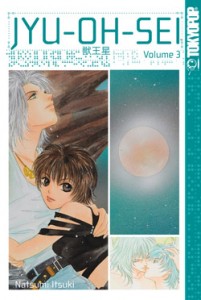
10. Jyu-Oh-Sei
By Natsumi Itsuki
After their parents are assassinated, twin brothers Rai and Thor are exiled to the penal colony of Kimaera, where they discover extreme weather, man-eating plants, and an elaborate tribal system in which women call the shots. Their only hope of escaping the planet’s inhospitable surface is for one of them to fight his way up the social ladder to become The Beast King, or supreme ruler of Kimaera. Like Invasion of the Body Snatchers and District 9, Jyu-Oh-Sei addresses social taboos and scientific issues while serving up generous portions of what audiences crave most: action, romance, monsters, and explosions. Best of all, Jyu-Oh-Sei comes in a neat, three-volume package that’s long enough to allow for world-building and character development but short enough to stay fresh and surprising until the end. —Reviewed at The Manga Critic on 8/14/09

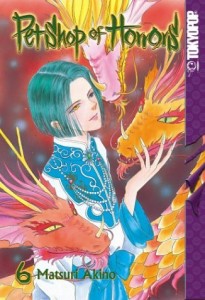
9. Petshop of Horrors
By Matsuri Akino
You won’t mistake Count D’s emporium for PETCO—the animals he sells are, in fact, demons, demi-gods, and shape-shifters who assume various guises. (One of the series’ running jokes is that some pets take human form, arousing the landlord’s suspicions that Count D actually runs a brothel.) Count D selects a pet for each customer that will help its owner realize a long-repressed dream. Of course, Count D’s services don’t come cheap; each character suffers an unexpected and often terrible consequence for seeking a magical solution to her problems. What sets Petshop apart from other examples of comeuppance theater is the writing. The characters’ plights elicit genuine sympathy from the reader; though we want these mothers and writers and lovesick twenty-something to find happiness, we can see that their own wishes are sometimes selfish, unwise, or genuinely harmful. —Reviewed at PopCultureShock on 2/13/08

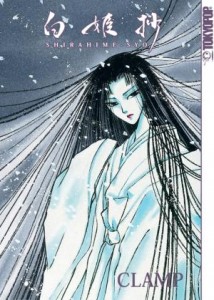
8. Shirahime-Syo: Snow Goddess Tales
By CLAMP
This lovely anthology is a radical departure for CLAMP. Gone are the super-detailed costumes and fussy character designs of their early, post-doujinshi work; in their place are spare, simply-drawn figures that seem consciously modeled on examples from eighteenth- and nineteenth-century scroll paintings. The stories themselves are told directly without embellishment, though CLAMP infuses each tale with genuine pathos, showing us how the characters’ anger and doubt lead to profound despair. As a result, the prevailing tone and spirit are reminiscent of Masaki Kobayashi’s 1964 film Kwaidan, both in the stories’ fidelity to the conventions of Japanese folklore and in their lyrical restraint. My favorite work by CLAMP.

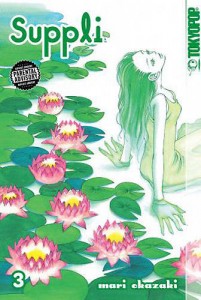
7. Suppli
By Mari Okazaki
After being dumped by a long-term boyfriend, twenty-seven-year-old ad executive Minami carves a new identity for herself, accepting more challenging work assignments, forging friendships with her office mates, and exploring her feelings for two very different men: Ishida, a blunt co-worker with bad-boy sex appeal, and Ogiwara, a Tokyo University grad who looks great on paper, but has some nasty romantic baggage of his own. Suppli vividly and humorously evokes office life, from the unproductive meetings and grueling all-nighters to the horseplay and flirtatious banter between co-workers. The denizens of Minami’s office are colorful, if one-dimensional, characters: a salty old maid, two flamboyant karaoke fiends, and a tart-tongued temp who offers sound relationship advice to her officemates while sleeping with a married man. Anyone who’s watched Ally McBeal, The Office, or Ugly Betty has encountered these types before, but Mari Okazaki breathes fresh life into her scenario with stylish artwork, sharp dialogue, and a heroine who occasionally doubts herself, but isn’t neurotic . —Reviewed at PopCultureShock on 12/5/07

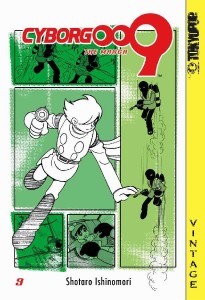
6. Cyborg 009
By Shotaro Ishimontori
Cyborg 009 was one of TOKYOPOP’s few forays into classic manga — a pity, because TOKYOPOP did a solid job translating and packaging Shotaro Ishimonori’s best-known work. For readers unfamiliar with this iconic series, the plot revolves around a group of people who have been kidnapped and brought to the lair of the Black Ghost organization, where surgeons transform them into robot-human fighting machines. The cyborgs soon turn on their creators and escape, intent on preventing armaggedon. I’d be the first to admit that Cyborg 009 is dated: the Black Ghost’s world-domination schemes have the same quaintly outdated ring as Dr. Evil’s, and several characters embody unfortunate gender and racial stereotypes. (As Shaenon Garrity dryly observes, “Cyborg 003 is a French girl with enhanced senses. Her duties are to hold the baby and occasionally hear things.”) Yet Ishimonori’s crisp cartooning, imaginatively staged battle scenes, and fundamental — if fumbling — humanism remain as arresting now as they did when the series first debuted in 1964.

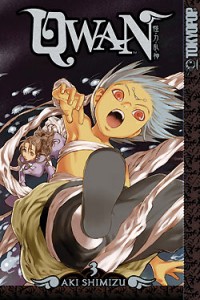
5. Qwan
By Aki Shimizu
Meet Qwan, a child-like figure who possesses super-human strength and speed. Though Qwan realizes he isn’t human, he’s never questioned his origins or abilities — that is, until he meets Shaga, a courtesan who urges him to seek the Essential Arts of Peace, a sutra that will reveal where Qwan came from and why he was sent to live among humans. Questing boys and magical scrolls are de rigeur in fantasy-adventure stories, but Qwan distinguishes itself in two crucial areas: terrific characters and gorgeous artwork. Aki Shimizu’s hero is far more quirky and interesting than the typical shonen lead — Qwan never promises to do his best, or to put friends before himself — while Shimizu’s fight scenes are among the most beautifully choreographed in any licensed manga. TOKYOPOP never finished this one-of-a-kind series, but it’s still worth seeking out, if only to get acquainted with a criminally under-appreciated artist. —Reviewed at The Manga Critic on 3/3/11

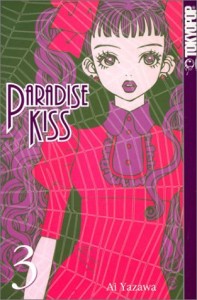
4. Paradise Kiss
By Ai Yazawa
Ai Yazawa knows how to have her cake and eat it, too: though she loves to write stories about such fantasy professions as runway model and rock star, she populates those stories with characters whose relationships and values are firmly rooted in everyday life. Consider Yukari (a.k.a. “Caroline”), the heroine of Paradise Kiss: Yukari becomes the muse for a group of aspiring fashion designers, modeling their clothing at a big design-school show and inspiring their most talented member, George, to new creative heights. In most manga, Yukari and George would bicker like teenage versions of Beatrice and Benedict until they finally admitted their mutual feelings of attraction; in Paradise Kiss, however, Yukari and George’s relationship unfolds in a more haphazard, organic way that reflects the fact that George is far more worldly and romantically experienced than Yukari. For my money, Paradise Kiss is Yazawa’s best work to date.

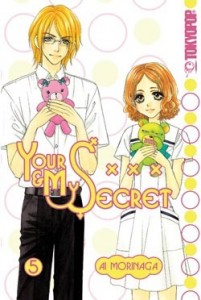
3. Your & My Secret
By Ai Morinaga
Your & My Secret focuses on Nanako, a swaggering tomboy who lives with her mad scientist grandfather, and Akira, an effeminate boy who adores her. With the flick of a switch, Akira becomes the unwitting test subject for the grandfather’s latest invention, a gizmo designed to transfer personalities from one body to another. Nanako revels in her new-found freedom as a boy, enjoying sudden popularity among classmates, earning the respect of Akira’s contemptuous little sister, and discovering the physical strength to dunk a basketball. Akira, on the other hand, finds his situation a mixed bag: for the first time in his life, his sensitive personality endears him to both male and female peers, but many of the things his maleness had previously exempted him from turn out to be much worse than he’d imagined. There are plenty of gender-bending hijinks — and the inevitable blackmail scene in which someone threatens to reveal Akira’s secret — but Morinaga still allows her characters moments of vulnerability and decency, preventing the humor from curdling into pure meanness. —Reviewed at The Manga Critic on 4/25/10

2. Tramps Like Us
By Yayoi Ogawa
Twenty-eight-year-old Sumire Iwaya is frustrated: though she’s a successful journalist with degrees from Tokyo U. and Harvard, she’s hit the glass ceiling at her job and has just been dumped by her fiance. When she discovers a cute but dissheveled young man sleeping in a box outside her apartment, Sumire “adopts” him, allowing Takeshi to stay in her apartment as her “pet.” You don’t need a PhD in manga to guess the outcome of their unusual arrangement, but romantic triangles and workplace intrigue prevent Tramps Like Us from spinning into complete silliness or offensive gender stereotyping. But what really stayed with me was the depiction of Sumire’s romance with her handsome senpai Hasumi; almost every woman I know has had a relationship like theirs — perfect on paper, but stressful and unhappy in practice — and Yayoi Ogawa captures Sumire and Hasumi’s awkward dynamic in pitch-perfect detail. Now that’s good writing.

1. Planetes
By Makoto Yukimura
Planetes is that rarest of manga: a human interest story that just happens to have some sci-fi trappings.Planetes focuses on a motley crew of junk collectors that includes Hachimaki, a young astronaut who aspires to join a pioneering mission to Jupiter; Yuri, a Russian astronaut with a Tragic Past; Tanabe, a sensitive but emotionally resilient trainee; and Fee, the ship’s balls-to-the-wall captain. Makoto Yukimura skillfully uses of each of his principal characters’ personal histories to explore meaty issues such as eco-terrorism, space pollution, and good old-fashioned racism. I know, I know — I’m making Planetes sound like Star Trek: Deep Space Waste Removal Station, but Yukimura is a more graceful storyteller than Gene Rodenberry every was, allowing the characters’ actions to speak louder than their words. Vivid, detailed artwork brings the terrestrial and extra-terrestrial settings to life.

* * * * *

So I turn the floor over to you: which titles were your favorites? Which ones deserve to be rescued and finished by another publisher? Inquiring minds want to know!

POSTSCRIPT, 4/20/11: Readers seeking a list of titles published by TOKYOPOP may wish to consult the ANN database entry on TOKYOPOP, the Comic Book DB entry on TOKYOPOP, or Wikipedia’s list of titles published by TOKYOPOP. I can’t vouch for their accuracy, but a quick glance at all three website suggests that these lists are comprehensive. Special thanks to all the folks on Twitter who pointed me towards these resources: @skleefeld, @yuriboke, @Funkgun, and @andrecomics.

Filed Under: Manga, Manga Critic, Manhwa Tagged With: Ai Morinaga, Ai Yazawa, Aki Shimizu, clamp, Comedy, Matsuri Akino, Natsumi Itsuki, Sci-Fi, Shotaro Ishinomori, Tokyopop

My 10 Favorite TOKYOPOP Titles

April 19, 2011 by MJ 54 Comments

Like many other readers who first discovered manga in the mid-2000s, TOKYOPOP played a major role in introducing me to to the medium. Tokyo Babylon was the first TOKYOPOP title I ever read, followed soon after by Legal Drug, The Legend of Chun-Hyang, and — God help me — Model, a manhwa about a Korean art student who lives in a crumbling mansion with two European vampires. (I should add that the vampires are male and the student is female, and both vampires appear to have bought their wardrobes at Hot Topic.) Though I’d be the first to admit that some of the manga I read were terrible, what I remember most about them was their romanticism: these were big, bold stories featuring impossibly beautiful characters in ridiculous situations, and I couldn’t get enough of them.

Over the years, my tastes have changed considerably, but I still feel a special allegiance to TOKYOPOP: its catalog is so large and diverse that I found plenty of other series to read when I outgrew my initial infatuation with overripe shojo. I had a hard time confining myself to just ten titles; I agonized about whether to include Mitsuhazu Mihara’s Doll, and Erica Sakakurazawa’s Between the Sheets, and Kenji Sonishi’s Neko Ramen, and Minetaro Mochizuki’s Dragon Head, all excellent series that still have pride of place in my manga library. In the end, however, I decided I had to put a cap on the number of titles to prevent my list from swelling to unmanageable proportions. Below are my ten favorite TOKYOPOP manga.

10. JYU-OH-SEI (Natsumi Itsuki)

After their parents are assassinated, twin brothers Rai and Thor are exiled to the penal colony of Kimaera, where they discover extreme weather, man-eating plants, and an elaborate tribal system in which women call the shots. Their only hope of escaping the planet’s inhospitable surface is for one of them to fight his way up the social ladder to become The Beast King, or supreme ruler of Kimaera. Like Invasion of the Body Snatchers and District 9, Jyu-Oh-Sei addresses social taboos and scientific issues while serving up generous portions of what audiences crave most: action, romance, monsters, and explosions. Best of all, Jyu-Oh-Sei comes in a neat, three-volume package that’s long enough to allow for world-building and character development but short enough to stay fresh and surprising until the end. –Reviewed at The Manga Critic on 8/14/09

9. PETSHOP OF HORRORS (Matsuri Akino)

You won’t mistake Count D’s emporium for PETCO—the animals he sells are, in fact, demons, demi-gods, and shape-shifters who assume various guises. (One of the series’ running jokes is that some pets take human form, arousing the landlord’s suspicions that Count D actually runs a brothel.) Count D selects a pet for each customer that will help its owner realize a long-repressed dream. Of course, Count D’s services don’t come cheap; each character suffers an unexpected and often terrible consequence for seeking a magical solution to her problems. What sets Petshop apart from other examples of comeuppance theater is the writing. The characters’ plights elicit genuine sympathy from the reader; though we want these mothers and writers and lovesick twenty-something to find happiness, we can see that their own wishes are sometimes selfish, unwise, or genuinely harmful. –Reviewed at PopCultureShock on 2/13/08

8. SHIRAHIME-SYO: SNOW GODDESS TALES (Clamp)

This lovely anthology is a radical departure for CLAMP. Gone are the super-detailed costumes and fussy character designs of their early, post-doujinshi work; in their place are spare, simply-drawn figures that seem consciously modeled on examples from eighteenth- and nineteenth-century scroll paintings. The stories themselves are told directly without embellishment, though CLAMP infuses each tale with genuine pathos, showing us how the characters’ anger and doubt lead to profound despair. As a result, the prevailing tone and spirit are reminiscent of Masaki Kobayashi’s 1964 film Kwaidan, both in the stories’ fidelity to the conventions of Japanese folklore and in their lyrical restraint. My favorite work by CLAMP.

7. SUPPLI (Mari Okazaki)

After being dumped by a long-term boyfriend, twenty-seven-year-old ad executive Minami carves a new identity for herself, accepting more challenging work assignments, forging friendships with her office mates, and exploring her feelings for two very different men: Ishida, a blunt co-worker with bad-boy sex appeal, and Ogiwara, a Tokyo University grad who looks great on paper, but has some nasty romantic baggage of his own. Suppli vividly and humorously evokes office life, from the unproductive meetings and grueling all-nighters to the horseplay and flirtatious banter between co-workers. The denizens of Minami’s office are colorful, if one-dimensional, characters: a salty old maid, two flamboyant karaoke fiends, and a tart-tongued temp who offers sound relationship advice to her officemates while sleeping with a married man. Anyone who’s watched Ally McBeal, The Office, or Ugly Betty has encountered these types before, but Mari Okazaki breathes fresh life into her scenario with stylish artwork, sharp dialogue, and a heroine who occasionally doubts herself, but isn’t neurotic . —Reviewed at PopCultureShock on 12/5/07

6. CYBORG 009 (Shotaro Ishimontori)

Cyborg 009 was one of TOKYOPOP’s few forays into classic manga — a pity, because TOKYOPOP did a solid job translating and packaging Shotaro Ishimonori’s best-known work. For readers unfamiliar with this iconic series, the plot revolves around a group of people who have been kidnapped and brought to the lair of the Black Ghost organization, where surgeons transform them into robot-human fighting machines. The cyborgs soon turn on their creators and escape, intent on preventing armaggedon. I’d be the first to admit that Cyborg 009 is dated: the Black Ghost’s world-domination schemes have the same quaintly outdated ring as Dr. Evil’s, and several characters embody unfortunate gender and racial stereotypes. (As Shaenon Garrity dryly observes, “Cyborg 003 is a French girl with enhanced senses. Her duties are to hold the baby and occasionally hear things.”) Yet Ishimonori’s crisp cartooning, imaginatively staged battle scenes, and fundamental — if fumbling — humanism remain as arresting now as they did when the series first debuted in 1964.

5. QWAN (Aki Shimizu)

Meet Qwan, a child-like figure who possesses super-human strength and speed. Though Qwan realizes he isn’t human, he’s never questioned his origins or abilities — that is, until he meets Shaga, a courtesan who urges him to seek the Essential Arts of Peace, a sutra that will reveal where Qwan came from and why he was sent to live among humans. Questing boys and magical scrolls are de rigeur in fantasy-adventure stories, but Qwan distinguishes itself in two crucial areas: terrific characters and gorgeous artwork. Aki Shimizu’s hero is far more quirky and interesting than the typical shonen lead — Qwan never promises to do his best, or to put friends before himself — while Shimizu’s fight scenes are among the most beautifully choreographed in any licensed manga. TOKYOPOP never finished this one-of-a-kind series, but it’s still worth seeking out, if only to get acquainted with a criminally under-appreciated artist. –Reviewed at The Manga Critic on 3/3/11

4. PARADISE KISS (Ai Yazawa)

Ai Yazawa knows how to have her cake and eat it, too: though she loves to write stories about such fantasy professions as runway model and rock star, she populates those stories with characters whose relationships and values are firmly rooted in everyday life. Consider Yukari (a.k.a. “Caroline”), the heroine of Paradise Kiss: Yukari becomes the muse for a group of aspiring fashion designers, modeling their clothing at a big design-school show and inspiring their most talented member, George, to new creative heights. In most manga, Yukari and George would bicker like teenage versions of Beatrice and Benedict until they finally admitted their mutual feelings of attraction; in Paradise Kiss, however, Yukari and George’s relationship unfolds in a more haphazard, organic way that reflects the fact that George is far more worldly and romantically experienced than Yukari. For my money, Paradise Kiss is Yazawa’s best work to date.

3. YOUR & MY SECRET (Ai Morinaga)

Your & My Secret focuses on Nanako, a swaggering tomboy who lives with her mad scientist grandfather, and Akira, an effeminate boy who adores her. With the flick of a switch, Akira becomes the unwitting test subject for the grandfather’s latest invention, a gizmo designed to transfer personalities from one body to another. Nanako revels in her new-found freedom as a boy, enjoying sudden popularity among classmates, earning the respect of Akira’s contemptuous little sister, and discovering the physical strength to dunk a basketball. Akira, on the other hand, finds his situation a mixed bag: for the first time in his life, his sensitive personality endears him to both male and female peers, but many of the things his maleness had previously exempted him from turn out to be much worse than he’d imagined. There are plenty of gender-bending hijinks — and the inevitable blackmail scene in which someone threatens to reveal Akira’s secret — but Morinaga still allows her characters moments of vulnerability and decency, preventing the humor from curdling into pure meanness. –Reviewed at The Manga Critic on 4/25/10

2. TRAMPS LIKE US (Yayoi Ogawa)

Twenty-eight-year-old Sumire Iwaya is frustrated: though she’s a successful journalist with degrees from Tokyo U. and Harvard, she’s hit the glass ceiling at her job and has just been dumped by her fiance. When she discovers a cute but dissheveled young man sleeping in a box outside her apartment, Sumire “adopts” him, allowing Takeshi to stay in her apartment as her “pet.” You don’t need a PhD in manga to guess the outcome of their unusual arrangement, but romantic triangles and workplace intrigue prevent Tramps Like Us from spinning into complete silliness or offensive gender stereotyping. But what really stayed with me was the depiction of Sumire’s romance with her handsome senpai Hasumi; almost every woman I know has had a relationship like theirs — perfect on paper, but stressful and unhappy in practice — and Yayoi Ogawa captures Sumire and Hasumi’s awkward dynamic in pitch-perfect detail. Now that’s good writing.

1. PLANETES (Makoto Yukimura)

Planetes is that rarest of manga: a human interest story that just happens to have some sci-fi trappings.Planetes focuses on a motley crew of junk collectors that includes Hachimaki, a young astronaut who aspires to join a pioneering mission to Jupiter; Yuri, a Russian astronaut with a Tragic Past; Tanabe, a sensitive but emotionally resilient trainee; and Fee, the ship’s balls-to-the-wall captain. Makoto Yukimura skillfully uses of each of his principal characters’ personal histories to explore meaty issues such as eco-terrorism, space pollution, and good old-fashioned racism. I know, I know — I’m making Planetes sound like Star Trek: Deep Space Waste Removal Station, but Yukimura is a more graceful storyteller than Gene Rodenberry every was, allowing the characters’ actions to speak louder than their words. Vivid, detailed artwork brings the terrestrial and extra-terrestrial settings to life.

* * * * *

So I turn the floor over to you: which titles were your favorites? Which ones deserve to be rescued and finished by another publisher? Inquiring minds want to know!

POSTSCRIPT, 4/20/11: Readers seeking a list of titles published by TOKYOPOP may wish to consult the ANN database entry on TOKYOPOP, the Comic Book DB entry on TOKYOPOP, or Wikipedia’s list of titles published by TOKYOPOP. I can’t vouch for their accuracy, but a quick glance at all three website suggests that these lists are comprehensive. Special thanks to all the folks on Twitter who pointed me towards these resources: @skleefeld, @yuriboke, @Funkgun, and @andrecomics.

Filed Under: Manga Critic Tagged With: Ai Morinaga, Ai Yazawa, Aki Shimizu, clamp, Comedy, Josei, Matsuri Akino, Natsumi Itsuki, Sci-Fi, shojo, Shonen, Shotaro Ishimontori, Tokyopop

Upcoming 4/20/2011

April 19, 2011 by David Welsh

After you’ve taken a look at the Manga Bookshelf Pick of the Week, we’ll tiptoe through the current ComicList.

Are you back? Great! I’m so excited! Sort of! Also frightened! Because this week sees the arrival of my first chosen-by-committee dubious manga! For those of you who have forgotten, the “winner” was Arata Aki’s The Beautiful Skies of Hou Ou High from Digital Manga. It’s about a girl who likes girls whose mother sends her to an all-boys’ school so that she’ll start liking boys. I’ve tried to refrain from reading early reviews of the book, partly not to color my own opinion and partly to stave off the ominous despair that Wednesday may bring, but even quick glimpses at these analyses suggest that the book is kind of terrible. We’ll soon find out! (Oh, and please help me pick between the two titles left standing in the last round of this exercise in horizon-expanding masochism.)

Perhaps I’ll turn to Digital Manga to recover from that reading experience, as they’re kindly also delivering the fifth two-volume collection of Kaoru Tada’s totally adorable Itazura na Kiss. I’m not quite caught up with this series at the moment, but it’s nice to know that more volumes are out there, waiting to provide the healing power of snarky shôjo romance.

While Midtown is a week ahead of Diamond in terms of new Viz releases, those dependent on the distributor can at least count on the arrival of the 14th volume of Naoki Urasawa’s excellent, Eisner-nominated 20th Century Boys. This is possibly my favorite Urasawa series to be published in English.

What looks good to you?


Filed Under: DAILY CHATTER, Link Blogging

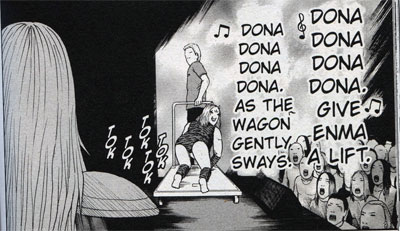
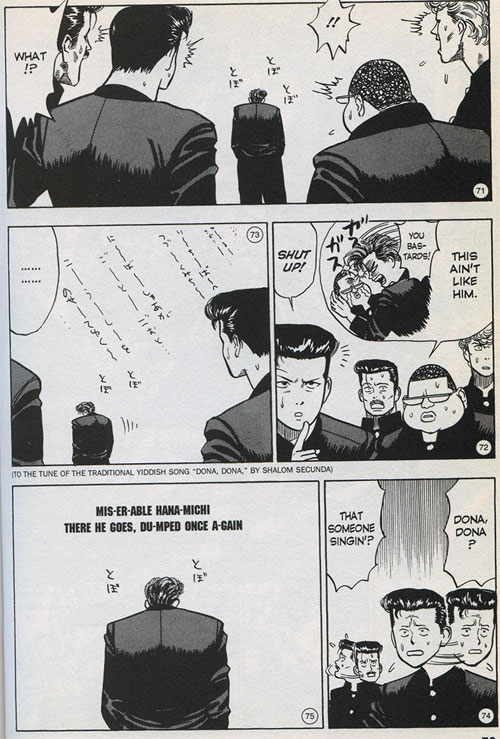
Dona Dona in manga and anime

April 18, 2011 by Anna N

One thing that I’ve always found a little odd the few times I’ve run across it is the occasional reference in manga and anime to the Jewish folk song “Dona Dona.” It generally is used as a shorthand way of referencing certain doom or despair for a particular character. I guess it is because this song that I’ve generally understood as a Holocaust metaphor (based on what I was told in Sunday School) is inexplicably popular in Japanese Elementary schools?

Here are a few references I’ve found, but I’m sure that there are plenty out there that I’ve forgotten or haven’t encountered yet. If you have any more please send them in and I’ll add them to the page. Thanks to ace Dona Dona spotter David Wolkin!

One of the longest and most overt references ever takes place in in Revolutionary Girl Utena, there’s a version of the song used when Nanami transforms into a cow (song kicks in at the end of the clip):

Here’s a panel from Detroit Metal City Volume 7:

And Slam Dunk Volume 1:

Do you have any Dona Dona references to share? Please let me know!

Filed Under: UNSHELVED

Runoff

April 18, 2011 by David Welsh

Recent events force me to hold a runoff in my most recent dubious manga poll. What say you? Drifters (Dark Horse) or Kannagi (Bandai Entertainment)? They tied for second in the first round.


Filed Under: DAILY CHATTER

PotW: House of Five Leaves & other stories

April 18, 2011 by David Welsh, Katherine Dacey, Michelle Smith and MJ 4 Comments

It’s another big week for manga arrivals at Midtown Comics. See below for recommendations from the Manga Bookshelf bloggers and special guest Michelle Smith!


DAVID: My pick for this week is the third volume of Natsume Ono’s Eisner-nominated House of Five Leaves from Viz, and I’m really happy to be able to add that adjectival phrase in front of the title. The series is about an out-of-work samurai who falls in with a gang of kidnappers under the seductive influence of the gang’s charismatic ringleader. Don’t let the warrior protagonist and criminal endeavors fool you: this is a very introspective, character-driven series that looks at the consequences of individual choices. Ono has a wonderfully distinctive style that’s graceful and understated but still forceful. Ono will be a featured guest at the Toronto Comic Art Festival May 7 and 8, and if you want to familiarize yourself with her work before then or just be a fully informed Eisner voter, you should really give this series a try.

KATE: Well, nuts, I was going to name House of Five Leaves my pick of the week as well before David said everything I might have said, only more eloquently. So I’m going to choose the sixth and final volume of AKIRA instead. I’d be the first to admit that Kodansha could have done so much more with the latest edition of this iconic series — unflipped artwork, fancy paper, essays and artist interviews, hardcovers — but I’m glad to see Katsuhiro Otomo’s work readily available again in stores; every other Otomo series that’s been licensed for the US market (Domu: A Child’s Dream, The Legend of Mother Sarah, Memories) is out of print, making it difficult for newer manga readers to discover this seminal artist for themselves. Otomo’s influence on popular culture can’t be understated; his postapocalyptic vision of Tokyo, which has been aped by countless comic artists and film directors, is simply one of the most original, beautiful, and iconic renderings of a city that’s ever been committed to paper.

MICHELLE: I’m certainly happy to see the fourth volume of Udon’s Silent Mobius: Complete Edition appearing on the list of new arrivals at last, but I am going to have to cast my vote instead for the fifth volume of Kaoru Tada’s classic shoujo romantic comedy, Itazura Na Kiss. Tada’s work is extremely different from that of Katsuhiro Otomo, and yet it was perhaps just as influential in its own way. Quite a few shoujo scenarios that we regard today as cliché started with Itazura Na Kiss, but it doesn’t read as dated in any way. In this particular volume, genius male love interest Naoki discovers and abandons his goal in life while ditzy protagonist Kotoko begins to realize that she has no dreams of her own, since she’s been wrapped up in thoughts of Naoki for the last five years. I suppose that might not sound like much, but in the context of this slice-of-life series, it counts as real and important progress. Highly recommended.

MJ: First, let me echo Kate’s sentiment, in that I was fully prepared to name House of Five Leaves, even if it was a repeat on the list, but given how beautifully David recommended it, my vote feels quite unnecessary. With that in mind, I’ll give a shout-out to Jun Mochizuki’s Pandora Hearts. I reviewed the series’ fifth volume in today’s Bookshelf Briefs, and though Mochizuki’s work is not without flaw, it’s also full to overflowing with beauty and real feeling. From the pretty, pretty pages of G Fantasy, the virtues of Pandora Hearts extend far deeper than its attractive surface. If you can only buy one volume of manga this week, buy House of Five Leaves. If you can afford more, take a good look at Pandora Hearts.


So readers, what are your Picks this week?

Filed Under: PICK OF THE WEEK Tagged With: akira, house of five leaves, itazura na kiss, pandora hearts

Bookshelf Briefs 4/18/11

April 18, 2011 by David Welsh, MJ, Katherine Dacey and Michelle Smith 6 Comments

This week, MJ, Kate, David, & Michelle take a look at slew of comics (and one light novel) from Viz Media, Oni Press, Yen Press, and TOKYOPOP.


Book Girl and the Suicidal Mime | By Mizuki Nomura | Yen Press – “Warmly despondent – that’s the kind of story I hope it will be,” Nomura says in this light novel’s afterword. Her hope is fulfilled, and she manages to add healthy doses of humor and suspense along the way. It’s about a high-school literature club that consists of a fetching goblin who literally eats prose and a boy who keeps her in snacks in the form of handwritten stories. They’re drawn into the romantic woes of a classmate, and their efforts to help her take some darkly unexpected turns that force the boy to confront painful events from his own past. It’s a quirky, thoughtful celebration of the power of stories, and it features interesting, well-developed characters with complex problems. I haven’t read many light novels, but I’m looking forward to reading more installments in this series. – David Welsh

Karakuri Odette, Vol. 6 | By Julietta Suzuki | TOKYOPOP – After the introduction of Travis, an advanced robot who wants Odette for his bride, in volume five, I was a little worried about this, the final volume of the series. Happily, I needn’t have been. Manga-ka Julietta Suzuki avoids any semblance of hijinks, framing her story instead around Grace, an earlier model of robot made by Travis’s creator, and the pain she feels over no longer being considered Papa’s precious masterpiece, and the relationship between Odette and her protector and friend, Asao. This leads to many poignant and bittersweet moments, as Odette realizes for the first time that nothing stays the same forever. It’s a lovely end to a lovely series. -Michelle Smith

Nura: Rise of the Yokai Clan, Vol. 2 | By Hiroshi Shiibashi | Viz Media – Until someone licenses GeGeGe no Kitaro for the US market, yokai lovers will have to make do with this solid, if uninspired, story about a teenage boy who’s caught between the demon and human worlds. The second volume finds Rikuo tapping more readily into his yokai powers in order to save his friends — a marked improvement over the first volume, in which Rikuo spent more time trying to deny his abilities than make use of them. Rikuo’s yokai pals also get more screen time in volume two, giving the story a much-needed jolt of humor and weirdness. Much as I like the artwork and the concept, however, I’m still not taken with Nura; the stories follow all-too-predictable predictable patterns, and the main characters — the human ones, at least — aren’t well-rounded enough to be genuinely memorable. -Katherine Dacey

Pandora Hearts, Vol. 5 | By Jun Mochizuki | Yen Press – Everyone knows by now that I think Pandora Hearts is stylish, and to some extent that’s its greatest weakness. Though Jun Mochizuki uses her obvious Carroll/Tennial influence to create much beauty on the page, it is exactly that influence that encourages her least effective impulses. While the story she’s created is wonderfully compelling, she risks losing the thread, time and again, by tangling it up in useless references that don’t serve the series at all. The Cheshire Cat? The Mad Hatter? These names are not only meaningless in the context of her story, but actually harmful to it, making it appear as if she doesn’t trust it to stand up on its own. Fortunately, in volume five, Mochizuki steps back from the Wonderland-heavy muddle and remembers to tell her story, in all its beautifully twisted, heart-rending glory. Still recommended. – MJ

Salt Water Taffy: The Seaside Adventures of Jack and Benny: Caldera’s Revenge Part 1 | By Matthew Loux | Oni Press – If you haven’t treated yourself to any of the previous installments of Loux’s series, I’d recommend you correct that at your earliest convenience. Young brothers Jack and Benny are spending the summer at the deceptively peaceful seaside town of Chowder Bay. A potentially dull family vacation is saved by the fact that Chowder Bay is weirder than Key West and Provincetown combined, with totally true tall tales of giant lobsters, ghosts, and hat-stealing eagles lurking around every corner. This time around, the boys try and help a giant squid reunite with his parents, complicated by the interference of a determined sperm whale and an ominous ghost ship. Loux’s style is a joy, lanky, witty, and evocative, and this chapter is a real treat for anyone who’s having a hard time waiting for their own summer vacation to start. -David Welsh

Stepping on Roses, Vol. 5 | By Rinko Ueda | Viz Media – “I really enjoy drawing Stepping on Roses as it continues to have this stereotypical, melodramatic storyline,” says mangaka Rinko Ueda in her author’s notes for volume four. And, sure, I get where she’s coming from. There’s something cozy and comforting about by-the-book romance that I’m certainly not immune to. There’s a reason why that structure works, and it only takes a single spark of real personality to ignite the fire of heart-pounding romance. Trouble is, there’s no spark here to be found. Ueda has perfected the structure and she draws very prettily indeed, but she fails to make it personal, leaving our hearts to beat quietly on. Volume five has a few interesting moments thanks to a sub-plot involving the Ashidas’ devoted butler, but the series’ primary romance remains as empty as ever. Not recommended. – MJ

Time and Again, Vol. 5 | By JiUn Yun | Yen Press – Exorcist Baek-On is full of haughty scorn when he encounters a farmer who believes that his beautiful new wife is really an angel. When he forces the man to see the truth, it results in the husband killing his wife then belatedly realizing she did truly love him. This outcome leaves Baek-On reeling—was he wrong to interfere? has he been living his life the wrong way?—and sends him to a family friend for some advice. Although the volume is a little light on our main characters and doesn’t provide the same kind of character development as the previous volume, it still fleshes out the world well, filling in bits of Baek-On’s family history while offering twisty takes on traditional Asian folk tales. I’m looking forward to the sixth and final volume very much. -Michelle Smith

Filed Under: Bookshelf Briefs Tagged With: book girl and the suicidal mime, karakuri odette, nura: rise of the yokai clan, pandora hearts, salt water taffy, stepping on roses, time and again

From the stack: Onward Towards Our Noble Deaths

April 18, 2011 by David Welsh

There are several very welcome text pieces in Drawn & Quarterly’s handsome production of Shigeru Mizuki’s Onward Towards Our Noble Deaths – a foreword by Frederik L. Schodt, extensive translation notes, and an afterword by the creator. My favorite extra has to be an interview with Mizuki in which the legendary mangaka is simply not having it.

He’s not being difficult or unpleasant, but he’s not really game for the standard questions that legendary cartoonists generally get asked. His answers tend to be much shorter than the inquiries that triggered them. He won’t play into the “trailblazing artiste” narrative, nor will he won’t deprecate himself. He won’t list his influences, trash commercial comics, or paint the creation of Onward… as an artistic or personal struggle.

Of course, my favorite bit of the interview is when Mizuki is asked which of his works he’s most proud of and would like to see made available in English:

SM: I would have to say GeGeGe no Kitaro.

I would have to agree with him. Grateful as I am to have any of his work licensed and in translation, it feels kind of odd to start with one of his darker works. It would be like if Osamu Tezuka’s Ayako had been licensed before anyone had a chance to read Astro Boy. Of course, GeGeGe no Kitaro is a Kodansha property, some of which was published ages ago in the publisher’s bilingual comics initiative, so that complicates things. It’s also beloved and probably very expensive, so one can’t precisely fault other publishers for not waiting. Of course, Onward… was a Kodansha property as well, originally serialized in Gekiga Gendai, so it’s nice to see the publisher continue to work with other houses rather than keep everything for themselves.

And Onward Towards Our Noble Deaths has numerous merits in its own right beyond being part of Mizuki’s body of work. It’s based on Mizuki’s experiences as a soldier serving in Papua New Guinea during World War II and portrays the hardships and ill use average soldiers endured at the hands of their superiors. These abuses range from routine, almost desultory physical punishment – “New recruits are like tatami mats: the more you beat them, the better they are.” – to the overall military culture that paints surrender as the worst kind of shame and promotes dying in battle, no matter how senseless and futile the effort, as every soldier’s highest calling (aside from victory, obviously).

Mizuki doesn’t need to do much beyond merely portraying this mindset in order to condemn it. His cast of everyman grunts doesn’t pontificate about its fate. They gripe about the shortage of food, the isolation, the grueling routine, the danger and disease. The overarching injustices they face and the ways that these will doom them always loom, and the soldiers are keenly aware of them, but they’re rarely addressed directly in the text. This is welcome, because it keeps subtler, more effective condemnation from becoming an obvious screed, and it’s also natural in a way. It makes sense to me that these powerless people are reluctant to address the fact that their day-to-day suffering is almost certainly for nothing, and that the people responsible for their fate know that and don’t care. As a result, it’s a very straightforward, chronological narrative. The soldiers arrive, conditions deteriorate, they face unthinkable danger and impossible choices, and things end badly. The approach serves Mizuki’s aims well.

The visual style can be jarring at times. Mizuki paints lushly realistic backdrops and peoples them with cartoonish figures. That isn’t problematic by itself, as I’m more than happy to embrace the combination of cartoonish and gruesome in works like Tezuka’s MW and Ode to Kirihito. There are moments when Mizuki’s particular stylization is not just dissonant with his subject matter but directly at odds with it. This is particularly evident in more violent scenes when body parts are flying, and Mizuki’s strict adherence to his character aesthetic sometimes results in panels that look more ridiculous than horrific. He’s also dealing with a large cast, and individuality tends to get lost in terms of design and simple space to develop characters thoroughly. Ironically, it’s the higher-ups who make the strongest impression. Again, that fits, since they’re the ones with the most agency, and it reinforces the brutal expendable status of the rank and file.

It’s an effective piece on the whole, and I’m glad I had the opportunity to read it. The overall level of restrained sincerity is welcome and makes the piece stand out in the field of autobiographic comics. I’m also pleased that Drawn & Quarterly chose to mark the occasion of Mizuki’s proper English-language debut with proper introductory pieces providing an overview of his career and impact. If it doesn’t seem like the ideal piece to use for Mizuki’s reintroduction, it certainly does him credit.


Filed Under: REVIEWS

Fond memories

April 16, 2011 by David Welsh

In the wake of yesterday’s sad news about Tokyopop, I thought I’d use this random weekend question to look back on the positive. Regardless of our individual opinions of the company and our varied reactions to its fate, it published some great comics during its run. So I’d like to ask what your favorite Tokyopop title was?

For me, the answer is surprisingly easy: Ai Yazawa’s Paradise Kiss, a heartfelt and sophisticated look at the lives of budding designers and the girl who serves as their model and muse. This series was among those that really expanded my idea of what comics could be in terms of style, tone, and content, beyond being a wonderful and memorable story in its own right.

How about you? What Tokyopop title stands above the rest in your memory?


Filed Under: DAILY CHATTER

Yaoi Quick Takes from Blumanga – Cute Devil and Blood Honey

April 15, 2011 by Anna N

Cute Devil by Hiro Madarame

Tohru is the strong silent type. He wears glasses and serves in the student council. One day a boy with an angelic face named Fuuta asks if he’ll be his friend. Due to Fuuta’s striking looks, he’s treated like a princess by everyone at school. Fuuta pleads with Tohru with limpid watery eyes, and the two start hanging out together. While Fuuta might look like an angel, he’s actually a sexually rapacious demon and he’s picked Tohru to be his lover. I didn’t care for the story very much, because there wasn’t very time spent on character development. Also, I don’t find the fairly typical in yaoi dynamic of one character forcing himself on the other very entertaining. The chapters in the manga are all fairly similar, as Fuuta and Tohru play out the same dynamic in their relationship over and over again. That being said, Fuuta’s rapid personality shifts were funny and Madarame has some very attractive character designs.

Blood Honey by Sakyou Yozakura

Yuki is a vampire with a very sensible job of working at a blood bank. His favorite blood donor is Mayuzumi, a teacher who seems to enjoy donating blood more frequently than the average person. It turns out Mayuzumi is so hot blooded, he needs to get rid of excess blood so he doesn’t lose his temper. When Yuki is propositioned by his boss, Mayuzumi comes to his rescue and offers to give blood to Yuki for the rest of his life. Blood Honey switches the point of view for various chapters. Yuki’s featured at the start of the volume, Mayuzumi deals with temptation and his feelings for Yuki in the next, and the third story focuses on Yuki’s vampire nephew Kiri. Kiri’s a notorious playboy who keeps trying to insert himself into Mayuzumi and Yuki’s life, so they send him off to live in a temple along with a slightly corrupt priest. Yozakura’s art is simple and a bit on the cartoony side, as Mayuzumi’s temper seems to always show him overreacting to everything. I liked the linked short story format of this volume.
Review copies provided by the publisher

Filed Under: UNSHELVED

Tokyopop Memories

April 15, 2011 by Anna N

Like most other manga fans, I was surprised to read about Tokyopop shutting down. Soliloquy in Blue has a post listing what might be the final volumes of many Tokyopop series. Here are some of the things I’ll miss about Tokyopop:

Josei

Perhaps contributing to low sales, Tokyopop was one of the few companies to publish longer josei series earlier than almost anyone else. Some of the classic josei series they published include:

Happy Mania
Tramps Like Us (Kimi Wa Petto) – One of my favorite Josei series of all time
Paradise Kiss
Suppli

Clamp

Now that Dark Horse seems to have taken over printing many of Clamp’s historic series with new translations, hopefully this means that many of these series won’t go out of print. I’m not counting on anything though, especially with the recent Dark Horse staff layoffs. Tokyopop published Cardcaptor Sakura, Tokyo Babylon, Wish, and more.

Manhwa

This is simultaneously good and bad because the glut of manhwa that Tokyopop pushed out during the boom years probably contributed a lot to financial problems later on. But I’ll always be fond of Queen’s Knight, which was the first Manhwa title I really enjoyed.

Sailor Moon
It seems weirdly cyclical that Tokyopop is shutting down just when the flagship title that touched off the manga craze in the US is going to be published by a different publisher. I previously about how stumbling across the Tokyopop editions of Sailor Moon got me interested in manga again after a long absence.

Some of my favorite completed Tokyopop series include:
Marmalade Boy
Mars
Kare Kano
Karakuri Odette
Gatcha Gacha
Planetes
Fruits Basket

Current series I’ll miss:

Skyblue Shore
Shinobi Life
Stellar Six
Alice in the Country of Hearts
Silver Diamond
VB Rose
Demon Sacred

I thought that recently Tokyopop had been picking up much more interesting shoujo titles, and I’d increased the number of series from them I was actively following. I’m sorry I won’t be able to see the conclusions of many of these series.

Filed Under: UNSHELVED

  • « Go to Previous Page
  • Page 1
  • Page 2
  • Page 3
  • Page 4
  • Page 5
  • Page 6
  • Go to Next Page »
 | Log in
Copyright © 2010 Manga Bookshelf | Powered by WordPress & the Genesis Framework