• Skip to primary navigation
  • Skip to main content
  • Skip to primary sidebar
  • Home
  • About Us
    • Privacy Policy
    • Comment Policy
    • Disclosures & Disclaimers
  • Resources
    • Links, Essays & Articles
    • Fandomology!
    • CLAMP Directory
    • BlogRoll
  • Features & Columns
    • 3 Things Thursday
    • Adventures in the Key of Shoujo
    • Bit & Blips (game reviews)
    • BL BOOKRACK
    • Bookshelf Briefs
    • Bringing the Drama
    • Comic Conversion
    • Fanservice Friday
    • Going Digital
    • It Came From the Sinosphere
    • License This!
    • Magazine no Mori
    • My Week in Manga
    • OFF THE SHELF
    • Not By Manga Alone
    • PICK OF THE WEEK
    • Subtitles & Sensibility
    • Weekly Shonen Jump Recaps
  • Manga Moveable Feast
    • MMF Full Archive
    • Yun Kouga
    • CLAMP
    • Shojo Beat
    • Osamu Tezuka
    • Sailor Moon
    • Fruits Basket
    • Takehiko Inoue
    • Wild Adapter
    • One Piece
    • After School Nightmare
    • Karakuri Odette
    • Paradise Kiss
    • The Color Trilogy
    • To Terra…
    • Sexy Voice & Robo
  • Browse by Author
    • Sean Gaffney
    • Anna Neatrour
    • Michelle Smith
    • Katherine Dacey
    • MJ
    • Brigid Alverson
    • Travis Anderson
    • Phillip Anthony
    • Derek Bown
    • Jaci Dahlvang
    • Angela Eastman
    • Erica Friedman
    • Sara K.
    • Megan Purdy
    • Emily Snodgrass
    • Nancy Thistlethwaite
    • Eva Volin
    • David Welsh
  • MB Blogs
    • A Case Suitable For Treatment
    • Experiments in Manga
    • MangaBlog
    • The Manga Critic
    • Manga Report
    • Soliloquy in Blue
    • Manga Curmudgeon (archive)

Manga Bookshelf

Discussion, Resources, Roundtables, & Reviews

viz media

Good Luck, Yukikaze

January 21, 2015 by Ash Brown

Good Luck, YukikazeAuthor: Chōhei Kambayashi
Translator: Neil Nadelman
U.S. publisher: Viz Media
ISBN: 9781421539010
Released: July 2011
Original release: 1999
Awards: Seiun Award

Good Luck, Yukikaze is Chōhei Kambayashi’s second Yukikaze novel as well as his second novel to be released in English. A sequel to Yukikaze–which was originally written in 1984 before later being revised–Good Luck, Yukikaze was published in Japan in 1999 after being serialized between 1992 and 1999. Like Yukikaze, Good Luck, Yukikaze was translated into English by Neil Nadelman and released by Haikasoru, Viz Media’s speculative fiction imprint. The English edition of the novel was published in 2011 and also includes a concluding essay with commentary by Maki Ohno. The Yukikaze novels are some of Kambayashi’s most well-known and respected works. Yukikaze wold earn Kambayashi a Seiun Award when it was first written and Good Luck, Yukikaze would receive the same honor after its publication as well. I found the first Yukikaze novel to be thought-provoking and so looked forward to reading its sequel. A third volume in the series also exists, Unbroken Arrow, however it has yet to be translated into English.

Despite humanity’s best efforts the war against the JAM, a mysterious alien force, has continued for more than three decades. Although the end of the fighting is nowhere in sight, some progress has been made, especially in regards to the technology, computers, and weapons that humans employ. But those advances could possibly lead to humanity’s obsolescence and are a threat to its existence. Rei Fukai was one of the best pilots in the Special Air Force, but he was left in a coma after his highly advanced fighter plane Yukikaze took the initiative and ejected him during battle against his will. Eventually he awakens, bu he continues to suffer from the immense psychological blow–Yukikaze was the only thing beyond himself that he trusted and he was betrayed and discarded; he struggles to come to terms with all that has happened to him. Meanwhile the war goes on, as does Rei’s personal battle against the JAM. Like it or not, he and Yukikaze have caught the invaders’ attention.

When I read Yukikaze it took a few chapters before the novel was able to completely engage me, and so I wasn’t initially concerned when Good Luck, Yukikaze failed to immediately grab my attention. I kept waiting and waiting for the moment when it would finally all come together for me, but that moment never seemed to arrive. In fact, I found myself growing more and more frustrated with Good Luck, Yukikaze as a novel the more that I read. If I hadn’t already had some investment in the story and characters from reading the previous novel, I’m not sure Good Luck, Yukikaze would have been something that I would have been interested in–at least as fiction. The problem was that, despite a few intense action scenes, very little actually happens in Good Luck, Yukikaze. The characters seem to spend most of their time talking in circles, over and over again, interrupting the flow of the narrative. I approached Good Luck, Yukikaze expecting a novel, not a philosophical treatise.

Even though Good Luck, Yukikaze can be a bit of a slog at times, and even though I didn’t particularly enjoy it as a fictional narrative, the tremendous ideas, concepts, psychologies, and philosophies that Kambayashi explores through the novel are undeniably fascinating and thought-provoking. Good Luck Yukikaze challenges the characters’ and readers’ understanding of the nature of reality and what it means to exist. In the novel, Kambayashi examines the often tumultuous relationship humanity has with the technology and it has created, and speculates on the direction that relationship is taking as humans struggle to maintain control and autonomy. Computers have become so incredibly advanced that the line between true consciousness and artificial intelligence is blurring. One of the central questions posed by Good Luck, Yukikaze is if it even matters if there is or isn’t a difference between the two, or if functionally it’s simply the next logical evolutionary step.
Filed Under: REVIEWS Tagged With: Chōhei Kambayashi, Haikasoru, Novels, Seiun Award, viz media, Yukikaze

Master Keaton Vol 1

January 19, 2015 by Anna N

Master Keaton Volume 1 by Naoki Urasawa, Takashi Nagasaki, and Hokusei Katsushika

I don’t have the best track record of finishing Naoki Urasawa series. I own all of 20th Century Boys and mean to read it all the way through again. I’ve checked out a couple volumes of Pluto and the first few volumes of Monster. One of these days I will finish an Urasawa series! This failing on my part didn’t stop me from trying out Master Keaton, and I enjoyed the first volume, even though there were a few aspects of the manga that didn’t quite come together for me.

Taichi Hiraga Keaton is a half Japanese half British archaeologist, apathetic professor, and insurance investigator with a unique set of survival skills due to his background in the SAS. He bounces between giving lectures and handling cases for Lloyd’s of London. Many reviewers have referred to Keaton as a mash-up between Indiana Jones and Macgyver, and that’s a good way to sum up the series. Keaton seems to have a bit more inner turmoil than a action hero though, and that’s what makes this series entertaining. We’re introduced to Keaton when a man named Leon Pappas with a substantial life insurance policy dies in Greece. Keaton is dispatched to investigate the murder, but he only has a certain number of days he can allocate to the task, since he has to get back into the classroom the following week.

Keaton’s sensitivity towards antiquities and his excellence in creating weapons out of random kitchen implements are showcased in this story, as he uncovers more facts about the subject of his investigation when he meets Pappa’s girlfriend and manages to fend off some unscrupulous and armed business associates. The rest of the volume is a bit meandering, as different chapters have Keaton explore new mysteries, deal with his teenage daughter, and confront a significant figure from his own past. Aspects of the story here and there are a bit didactic, as the reader is informed about illegal weapons trade, aspects of art forgery, desert survival tactics, and the opium trade. I enjoyed the way the manga skipped around from topic to topic, but I generally enjoy manga with infodumps more when there is some genuine enthusiasm behind conveying all the information. I would happily read chapters upon chapters of a Fumi Yoshinaga where the characters discuss nuances of vegetable chopping, but in Master Keaton I have to admit I found my attention wandering at times.

Keaton’s personality is so reserved and unaffected for the most part. He tends to create a random gadget that saves the day very casually, which is amusing, but it is difficult to see how his adventures are having any impact on him personally. I was glad when his daughter showed up and drew him into an adventure protecting an archeological site, and Keaton’s odd reflexive anxiety about his ex-wife getting married again hints at some deeper emotions. While Urasawa’s art isn’t as polished as his later works, the character designs are all unique and enjoyable and the action scenes are all capably handled. Early Urasawa art is way above the quality of what most artists could aspire to. The over ized deluxe signature edition is really nice, with color pages and a sound effects glossary in the back. I’m curious to see what the next volume of this series is like. In some ways, I liked the shift in focus from unraveling a mystery to family, back to a thriller type story dealing with the drug trade, but at the same time I’m wondering how well that will pan out if the plot continues to skip around like that too much in subsequent volumes.

I’m giving away a copy of this volume, so you can check it out yourself!

Filed Under: REVIEWS Tagged With: Master Keaton, viz media

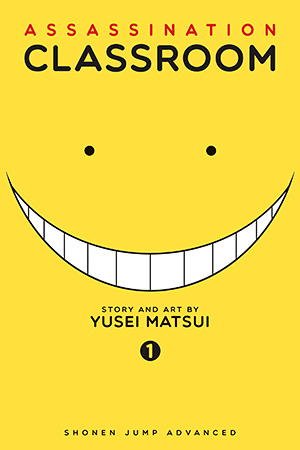
Assassination Classroom Vol 1

December 26, 2014 by Anna N

Assassination Classroom Volume 1 by Yusei Matsui

To be perfectly honest, I would have bought this manga for the title alone. The fact that it is a story about a mysterious tentacled alien teacher looking after a classroom of misfit teenage assassins is just a bonus. The premise of the manga is set up in an effective way, with some elements explained and others just left for the reader to simply accept and move on with the story. The manga opens as the happy face octopus stands in front of the classroom wearing an academic hood and gown. As the day opens the entire class leaps up from their desks with guns and begins to fire away. Their assassination attempts are fruitless, because their teacher can move at super speed and has amazing healing abilities. The assassination classroom is a room full of misfits held in the annex of a normal middle school. One day their teacher showed up, disintegrated a large portion of the moon and said that he would do the same to Earth in one year. Kuro Sensei inexplicably wants to spend a year educating the youth of Earth before he destroys it. The government has offered up a bounty to the member of class 3-E who succeeds in killing their teacher.

Assassination Classroom is filled with humorous elements interspersed with dynamic scenes of assassinations being foiled with ease. For poetry class, Kuro Sensei requires everyone to end their poem with the word “tentacles” and he is always using his supersonic flying power to randomly buy himself treats from around the world. The standout student is Sugino, who spends his days making careful observations of his teacher, slowly gathering intelligence that might eventually lead to a successful assassination. As the volume progresses, more members of the class 3-E are introduced, all of whom have unique abilities. The most amusing aspect of the volume is the fact that for all Kuro Sensei plans on wiping out all of humanity in a year, he is really dedicated to being an excellent teacher. He intervenes in the lives of his troubled students and actually does manage to teach them some useful life lessons. The uplifting aspects of the manga contrast with Earth’s imminent doom in an interesting way. The art is well-executed but somewhat generic. It is amusing to see the variety of expressions on Kuro Sensei’s face, and the unexpected ways his alien powers manifest. I think this series would really appeal to fans of Death Note. So far, Assassination Classroom seems like an ideal pick for people who enjoy manga with a healthy side of dark cynicism on the side.

Filed Under: REVIEWS Tagged With: assassination classroom, Shonen, Shonen Jump, viz media

Honey Blood Volumes 1 and 2

December 21, 2014 by Anna N

Honey Blood Volumes 1 and 2 by Miko Mitsuki

Two volume manga series are a bit tricky sometimes. They tend to be series that are canceled because they were not entirely successful, and sometimes have unfinished or rushed endings as a result. Sometimes there are two volume series that do end up telling a story satisfactorily, but most of the time when I read them, I either end up acknowledging that I just read a manga that was never going to work or I find myself wishing for just one more volume.

Hinata is a normal high school girl going about her daily life, slightly mystified about the vampire novels that are taking her school by storm. At the same time there have been cases of young girls who are the victims of mysterious attacks in her city. When she comes home one day after school, she bumps into a strange young man in traditional Japanese clothing. He’s accompanied by a clinging female editor. It turns out that he’s Junya Tokinaga, the writer of the novels that Hinata thinks of as ludicrous. Hinata has a tendency to burst out with whatever is on her mind and her first encounter with the famous author has her musing how the central plot point of a vampire giving up immortality to die with the person he loves is difficult to understand. Junya ends up acting bizarrely flirtatious around Hinata while she keeps making comments like “I can’t stand guys like you!”

The neighborhood attacks continue, and Junya saves Hinata from a man who almost assaults her when she is walking alone at night. She begins to be more fascinated with her next door neighbor, and he continues to demonstrate his interest in her. Hinata begins to suspect that Junya is a vampire, and it turns out that Junya’s novels describing a situation where a vampire who kisses a mortal is bound only to her until they both die is based on the conditions of his own vampirism. I thought the art in this series was attractive, but the storyline ended up shoving Hinata and Junya together a little too quickly to be believable. By the end of the first volume, they are almost a couple with Hinata pursuing Junya while he attempts to hold back details of his life from her. The continued vampire attacks make the reader a bit uneasy, as it is unclear if Junya is feeding on other women, or if in fact there are other vampires around.

I think the second volume shows the author throwing a bunch of ideas out to see if anything would stick. Hinata and Junya embark on their unconventional romance. The reader gets a bit of back story when it is revealed that Junya’s long lost love was one of Hinata’s ancestors. Hinata and Junya’s overly solicitous editor get into a conflict of personalities. A rival vampire named Setsuna shows up to complicate the situation further. I liked the romance better in the second volume when Hinata and Junya were an established couple. I also enjoyed the blend of vampire angst and little moments of humor, like when Hinata picks out modern clothes for Junya only for him to promptly become a target for aggressive modeling scouts. As the second volume wrapped up, I found myself wishing that the author had a bit more time to develop the series before launching it in the first place. It seemed like it was starting to get a bit more interesting only to be cut short. If a longer series by Mitsuki gets licensed, I would be interested in reading it, because I’d be curious to see what she could do with more space to develop a series. As it is, I’d recommend Honey Blood for vampire manga collections, or for people who don’t mind reading short manga with abrupt endings.

Filed Under: REVIEWS Tagged With: honey blood, shojo beat, shoujo, viz media

Review: Assassination Classroom, Vol. 1

December 18, 2014 by Katherine Dacey

1421576074Assassination Classroom, Vol. 1
By Yusei Matsui
Rated T+, for Older Teens
VIZ Media, $9.99

Americans steadfastly believe that all students need to succeed are a few good teachers—think of how many movies you’ve seen about an unorthodox educator who helps a group of misfits, losers, or underachievers realize their full potential against all odds. Perhaps that’s why American publishers hesitated before licensing Assassination Classroom, a comedy that outwardly conforms to the tenets of the genre while poking fun at its hoariest cliches.

Assassination Classroom‘s star teacher is Koro-sensei, a super-powered alien who can wipe out an army with a swish of a tentacle. His students are class 3-E, the troublemakers and flunkies of Kunugigaoka Junior High School. Instead of studying calculus or Shakespeare, however, Koro-sensei’s charges are learning how to kill him and save Earth in the process—in other words, it’s To Sir With Lethal Force.

If the script isn’t quite as edgy as my summary suggests, Assassination Classroom scores points for the sheer ridiculousness of the premise. Koro-sensei’s relentless enthusiasm and high standards match those of other fictional educators—Michelle Pfeiffer in Dangerous Minds, Robin Williams in Dead Poets Society—but are applied to such activities as shooting and stabbing. He gives the same kind of inspirational speeches that you’d find in those movies, too, reminding his charges that he specifically requested the job because he knows the students’ true potential.

In one scene, for example, timid student Okuda presents Koro-sensei with three deadly potions, imploring him to sample them. “I’m not good at surprise attacks!” she tells him. “But I love chemistry! And I really put my heart and soul into this!” Koro-sensei cheerfully obliges, offering to help Okuda “research a poison that can kill me.” When Okuda proves more skillful at mixing chemicals than persuading her target to drink them, Koro-sensei reminds her that “in order to kill someone, you need to understand how they feel,” skills that she can cultivate through—what else?—reading and writing.

The exchange between Okuda and Koro-sensei is complemented by some of the best visual gags in volume one. One of the poisons, for example, neutralizes Koro-sensei’s Cheshire grin into a flat line, prompting a student to exclaim, “You look like an emoticon!” Although Koro-sensei’s face is the essence of simplicity—a circle with pin-dot eyes and a toothy smile—this subtle tweak of his appearance yields a big pay-off laugh-wise.

At the same time, however, the poison episode illustrates Assassination Classroom‘s biggest flaw: Yusei Matsui wants to have his cake and eat it, too, soft-pedaling the humor with an uplifting, awwww-worthy moment in almost every chapter. Students unironically vow to do their best after Koro-sensei points out the flaws in their technique, saves them from harm, or gives them a pep talk. None of the students harbor a grudge against him—at least not for very long—or question the value of Koro-sensei’s lessons. (Makes you wonder: is Koro-sensei guilty of grade inflation?)

Still, I enjoyed volume one enough to continue with the series, even if Matsui’s efforts to express the Shonen Jump dictum of “friendship, effort, victory” sometimes blunt the edge of his satire.

Filed Under: MANGABLOG, REVIEWS Tagged With: Shonen Jump, viz media

Seraph of the End: Vampire Reign Vol 3

December 8, 2014 by Anna N

Seraph of the End Volume 3 by Takaya Kagami, Yamato Yamamoto, and Daisuke Furuya

One of the reasons why I like this shonen vampire dystopian series so much is that each volume propels the hero forward to a different stage of development and a different setting. In the third volume, brash yet unexpectedly capable hero Yuichiro has his demon possessed weapon, and now he’s about to become an official vampire hunter when he heads out with his squad to aid other soldiers in Shinjuku. Yuichiro’s new squad consists of the sarcastic and subversive Shinoa, earnest Yoichi, and his cranky new friend Shiho. The balance in the group is upset a bit with the arrival of Mitsuba, an abrasive girl who doesn’t understand why she’s been saddled with a rookie unit.

Yuichiro’s habit of rushing into battle causes tension with the group, since he doesn’t respect the standard tactical formations they are supposed to hold in order to make sure that the entire team is protected. They have a few skirmishes with vampires and survive more due to individual luck than coordinated effort. I have to say, I enjoy Shinoa’s leadership style because she makes pronouncements like “Let us be off on another fun-filled, vampire-slaughtering excursion!” While Yuichiro might be reckless, he’s also just as likely to risk himself to save one of his teammates as he is to charge ahead to fulfill his desire for revenge against vampires.

The reader gets a further glimpse into the life of Yuichiro’s adopted brother turned vampire Mikaela, and it seems like he will be meeting Yuichiro very soon. The combination of good world building, dynamic action scenes, and sarcastic quips makes me confident that Seraph of the End will continue to be very entertaining.

Filed Under: REVIEWS Tagged With: Seraph of the End, Shonen, viz media

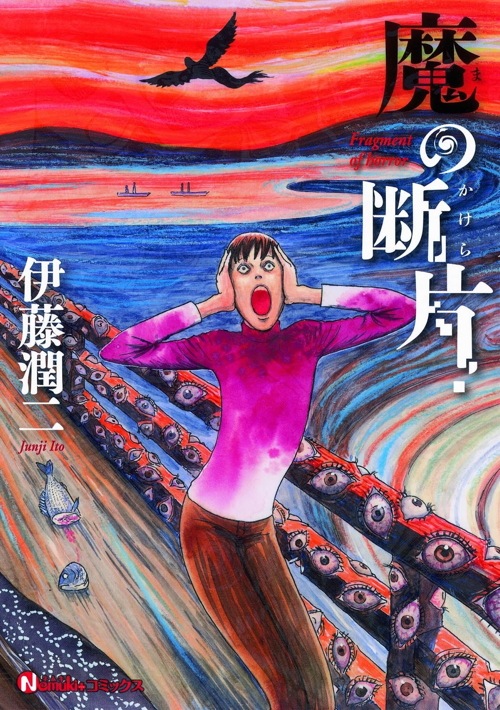
VIZ Nabs New Junji Ito Manga

December 5, 2014 by Katherine Dacey

fragments_of-Horror-itoExciting news: VIZ will publish Junji Ito’s latest manga, Fragments of Horror, in 2015. VIZ promises that Fragments has something for everyone, “from the terrifying to the comedic, from the erotic to the loathsome.” Look for a hardcover edition next summer.

The latest volume of Monster Musume edges out Attack on Titan for the top spot on this week’s New York Times Manga Bestseller list.

Toshi Nakamura thinks the new Parasyte movie doesn’t stack up against the manga.

But wait–there’s more! Masashi Kishimoto sits down for another interview about Naruto, this time with Mezamashi TV.

Deb Aoki files a report from the 2014 International Manga Festival in Tokyo, while Khursten Santos posts an in-depth look at the Manga Futures conference, which was held at the University of Wollongong last month.

Organization Anti-Social Geniuses is looking for a Manga Features Writer.

To help shojo fans get into the Christmas spirit, Anna N. is giving away volumes 1-3 of Sweet Rein.

Which new Seven Seas titles are you eagerly anticipating? Lori Henderson offers her two cents on the company’s latest acquisitions.

Librarian Mikhail Koulikhov discusses the pros and cons of using Google Scholar to research anime and manga topics.

News from Japan: Mayumi Azuma (Elemental Gelade) and Tatsuro Nakanishi (Crown) have teamed up for Amadeus Code, a new series for Monthly Comic Garden.

Reviews: Anime News Network officially retires its Right Turn Only!! column this week with mini-reviews of Afterschool Charisma, From the New World, and Whispered Words. Elsewhere at ANN, Jason Thompson looks at Japan Sinks, a natural disaster story from the 1970s.

Alice Vernon on Are You Alice? (Girls Like Comics)
Sakura Eries on vol. 3 of Aron’s Absurd Armada (The Fandom Post)
Sean Gaffney on vol. 1 of Assassination Classroom (A Case Suitable for Treatment)
Matt Wilson on Batman: The Jiro Kuwata Batmanga (Comics Alliance)
Sarah on vol. 62 of Bleach (nagareboshi reviews)
Kate O’Neil on vol. 52 of Case Closed (The Fandom Post)
Megan R. on Hatsune Miku: Unofficial Hatsune Mix (The Manga Test Drive)
Allen Kesinger on vols. 1-4 of Judge (No Flying No Tights)
Leroy Douresseaux on vol. 4 of Millennium Snow (Comic Book Bin)
Lori Henderson on vols. 15-21 of Pokemon Adventures: Ruby & Sapphire (Good Comics for Kids)
Matthew Warner on vol. 3 of Puella Magica Madoka Magi: The Different Story (The Fandom Post)
Scott Cederlund on vol. 13 of Real (Panel Patter)
Mad Manga on chapters 1-26 of Salty Studio (Cartoon Geek Corner)
Ken H. on vols. 3-4 of Say I Love You (Sequential Ink)
Megan R. on The Seven Deadly Sins (The Manga Test Drive)
Mad Manga on chapters 2-3 of Takujo no Ageta (Cartoon Geek Corner)
Lesley Aeschliman on vol. 8 of Voice Over! Seiyu Academy (Lesley’s Musings on Anime & Manga)

Filed Under: MANGABLOG Tagged With: Junji Ito, viz media

All You Need Is Kill

November 30, 2014 by Ash Brown

All You Need Is KillAuthor: Ryosuke Takeuchi
Illustrator: Takeshi Obata
Original story: Hiroshi Sakurazaka

U.S. publisher: Viz Media
ISBN: 9781421576015
Released: November 2014
Original release: 2014

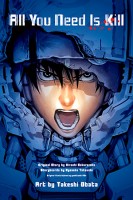
It’s been a few years since I’ve read Hiroshi Sakurazaka’s novel All You Need Is Kill but I distinctly remember enjoying it, perhaps even more than I initially thought that I would. And so, I was very excited to learn that Takeshi Obata would be working on the manga adaptation not only because I like the original All You Need Is Kill but because I also enjoy Obata’s illustrations. (Hikaru no Go, which he worked on, actually happens to be one of my favorite manga series.) I was even more excited when Viz Media licensed the All You Need Is Kill manga for an English-language release. In Japan, the series was published in 2014 in two volumes. Viz’s digital release was also two volumes, but its 2014 print edition was released as a single-volume omnibus under the Shonen Jump Advanced imprint complete with color pages and a larger trim size. While Obata provided the artwork for the manga adaptation of All You Need Is Kill, it was Ryosuke Takeuchi who outlined the script and storyboards.

Humankind has been at war with the Mimics for years, but it seems like it may be a losing battle. The Mimics, alien creatures that continue to evolve with each confrontation, have begun to close in on Japan, the only country remaining that has the ability to produce the high-tech battle jackets used in the war. If Japan is lost, the rest of the world will soon follow. Keiji Kiriya is a young jacket jockey about to face his first battle. He, like so many others, is killed in action, except that he then revives in his bunk, thirty hours before his death. At first Keji thinks he’s dreaming, but then it happens again. And then again. Time after time, Keiji lives and dies fighting against the Mimics. Doing all that he can to survive just a little bit longer each round, Keiji focuses part of his attention on Rita Vrataski, considered to be the best jacket solider in the world. Following her example, Keiji might actually have a chance to escape the time loop alive.

Because I haven’t recently read Sakurazaka’s original All You Need Is Kill it is difficult for me to make a detailed comparison between it and the manga adaptation. Generally though, I feel that the novel is the stronger work of the two, but the manga has quite a bit going for it as well. Most of the resigned humor and social commentary found in the novel and even Keiji’s internal development have been downplayed in the manga in favor of the story’s external spectacle, action, and battles. As manga is a visual medium it makes sense to have this slight change of focus, but as a result All You Need Is Kill does lose some of its emotional impact. As for the artwork itself, Obata does an excellent job conveying the drama of the plot. The jackets and heavy action sequences look great, too. The Mimics’ design does leave something to be desired though–they aren’t as terrifying as they should be–and some readers may find the occasional fanservice more distracting than anything else.

Although it may not have the same substantive weight of the original, All You Need Is Kill makes for an entertaining and exciting, action-packed manga that reads quickly. Though not without flaws, it succeeds well as an adaptation and as its own work. Particularly effective is how Obata emphasizes the time loop by utilizing very similar panels but with slightly different page layouts with each rewind, keeping the manga from becoming too repetitive. The way Obata draws Keiji changes as well. The young soldier becomes stronger and harder with each loop, but also more haunted and battle-weary. An explanation for the time abnormality is eventually given that at least makes sense superficially and sets up a nice plot twist, but it starts to fall apart if given too much critical thought. Still, the All You Need Is Kill is a great read for anyone interested in military science fiction and action. For the most part I was pleased with the adaptation; I’d still recommend that readers give the original novel a try, too, though.

Filed Under: REVIEWS Tagged With: All You Need Is Kill, Hiroshi Sakurazaka, manga, Ryosuke Takeuchi, Shonen Jump, Takeshi Obata, viz media

More from Masashi Kishimoto

November 20, 2014 by Katherine Dacey

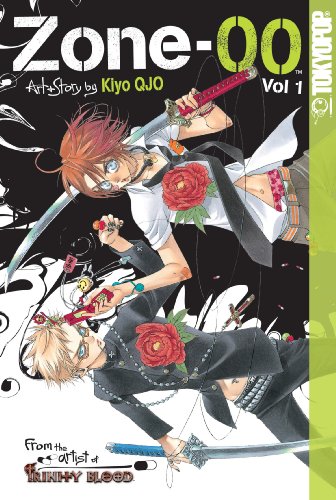
zone00Viz has picked up Zone-00, originally licensed by Tokyopop, as a digital release.

Naruto creator Masashi Kishimoto talks about his plans for the next few months, which include a Naruto spinoff that will launch in April, some other Naruto-related business, and spending some quality time with his wife and child. He will start working on a brand-new series in the summer, but he cautions fans that he is turning 40 and may not be up to the rigors of another monthly series.

Wondering what’s in the pipeline for next year? The Fandom Post shares VIZ’s April 2015 release list.

If you’re a Weekly Shonen Jump reader, you may have noticed that VIZ just added a new title to the mix, Takujo no Ageha: The Table Tennis of Ageha. In the coming weeks, VIZ will launch two more series: Ryohei Yamamoto’s E-ROBOT (11/24) and Nobuaki Enoki and Takeshi Obata’s Gakkyu Hotei: School Judgment (12/1).

The Manga Bookshelf gang strongly recommend the latest volume of Takehiko Inoue’s Real, which arrived in stores this week, and preview next week’s coming attractions.

The Q2 gallery in Los Angeles threw a party to commemorate the 30th anniversary of Dragon Ball‘s publication.

In her latest House of 1000 Manga column, Shaenon Garrity explores the GEN Manga catalog.

Good news: translator Jocelyne Allen is posting reviews again, focusing on offbeat, funny, and weird manga that haven’t yet crossed the Pacific. On her nightstand: Mahoshojo Ore, a series featuring magical girl men, and Yume Kara Sameta, a collection of short stories by Natsujikei Miyazaki.

News from Japan: Ken Akamatsu, Tetsuya Chiba, and Hideaki Anno were among the manga and anime insiders who were guests at the first meeting of the Japanese Parliamentary Association for manga, anime, and games, a.k.a. Manga Giren. The Association, which is mostly made up of councilors from the Liberal Democratic Party, will promote tax breaks for the industry and work toward relaunching the mothballed International Media Art General Center.

Rei Toma, author of Dawn of the Arcana, will be launching a new series in the February issue of Shogakukan’s Monthly Cheese! Also in the works: an anime adaptation of Rumiko Takahashi’s Rin-ne, which will debut in spring 2015.

Reviews: Remember Top Shelf’s AX anthology? One of the stand-out contributions, “Rainy Day Blouse and The Umbrella,” was by Akino Kondoh. Indie publisher Retrofit Comics has just published a new collection of her stories in English, with translations by manga scholar Ryan Holmberg. Alex Hoffman has a review at Sequential Slate.

Sean Gaffney on vol. 1 of Ani-Emo (A Case Suitable for Treatment)
Leroy Douresseaux on vol. 12 of Blue Exorcist (Comic Book Bin)
Lesley Aeschliman on vol. 23 of Full Metal Alchemist (Lesley’s Musings on Anime & Manga)
Sakura Eries on vol. 16 of Goong (The Fandom Post)
Megan R. on Lovers in the Night (Manga Test Drive)
Sean Gaffney on vols. 1-2 of Lucifer and the Biscuit Hammer (A Case Suitable for Treatment)
Lesley Aeschliman on vol. 24 of Naruto (Lesley’s Musings on Anime & Manga)
Nicholas Smith on Naruto (Ka Leo)
Ken H. on vols. 6-7 of No. 6 (Sequential Ink)
Mad Manga on Takujo no Ageha (Cartoon Geek Corner)
MJ on They Were Eleven (Manga Bookshelf)
Matthew Warner on vol. 00 of Ubel Blatt (The Fandom Post)

Filed Under: MANGABLOG Tagged With: GEN Manga, viz media, Weekly Shonen Jump

Miyazaki Talks Manga; Ninja Overload

November 10, 2014 by Katherine Dacey

MiyazakiSamuraiTop

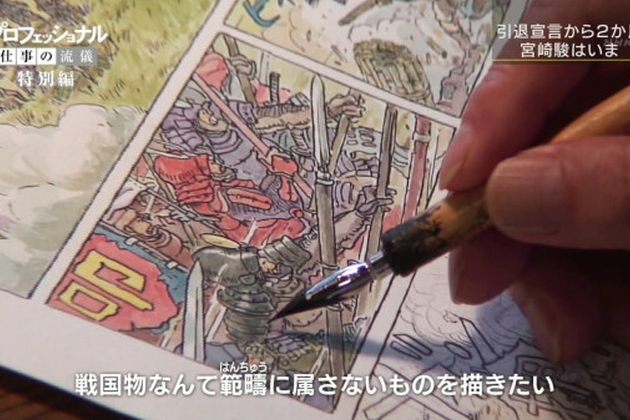
In an interview with the Los Angeles Times, legendary director Hayao Miyazaki discusses his current project: a manga about samurai warriors. Don’t hold your breath, however; Miyazaki told Variety that he doubts he’ll finish it. “I wanted to put a lot of  effort into it, ignoring costs, like a hobby,” he tells the magazine. “I thought I’d have free time, but I keep getting project offers.”

As Naruto draws to a close, Jason Thompson attempts the impossible: he’s reading the entire series in 48 hours, recording his impressions as he goes. The first installment is now live, and covers volumes 1-27.

Speaking of everyone’s favorite spiky-haired ninja, worldwide sales figures for Naruto have topped 200 million volumes. Though the lion’s share of books were sold in Japan, fans in 35 countries around the world have purchased a whopping 75 million volumes during the series’ fifteen-year run.

Masashi Kishimoto chats with The Asahi Shimbun about the phenomenal success of Naruto.

The latest installments of Attack on Titan and Black Butler top this week’s New York Times Manga Bestseller list.

Good news for anyone who missed Ode to Kirihito the first time around: Vertical Comics will be re-issuing ten classic Tezuka titles in ebook form.

In other licensing news, Seven Seas announced two more Alice in the Country of… manga, while VIZ added two new titles to its Shojo Beat line-up: Hiro Fujiwara’s Maid-Sama! (formerly published by Tokyopop) and Maki Minami’s Komomo Confiserie.

News from Japan: Io Sakisaka’s Blue Spring Ride is winding down, as is Yukinori Kitajima and Yuki Kodama’s detective series Hamatora.

Reviews: Alexander Hoffman reviews Monokuro Kinderbook, an oldie but goodie from the Fanfare/Ponet Mon catalog. Over at the Infinite Rainy Day, Jonathan Kaharl shares a list of his favorite horror manga, from xxxHolic to Franken Fran.

Nic Wilcox on vols. 1-4 of Alice in the Country of Jokers (No Flying No Tights)
Leroy Douresseaux on All You Need Is Kill (Comic Book Bin)
Alice Vernon on vol. 1 of Barakamon (Girls Read Comics)
Matthew Warner on vol. 4 of Bloody Cross (The Fandom Post)
Lesley Aeschliman on vol. 12 of Blue Exorcist (Lesley’s Musings on Anime & Manga)
Ken H. on vols. 40-41 of Fairy Tail (Sequential Ink)
Megan R. on Hetalia: Axis Powers (Manga Test Drive)
Kristin on vol. 1 of Kiss of the Rose Princess (Comic Attack)
Lesley Aeschliman on vol. 1 of Kiss of the Rose Princess (Lesley’s Musings on Anime & Manga)
Lesley Aeschliman on vol. 23 of Naruto (Lesley’s Musings on Anime & Manga)
Leroy Douresseaux on vol. 16 of Rin-ne (Comic Book Bin)
Khursten Santos on Sono Otoko Amatou nitsuki (Otaku Champloo)
Kate O’Neil on vol. 7 of Until Death Do Us Part (The Fandom Post)
Lesley Aeschliman on vol. 1 of Voice Over! Seiyu Academy (Lesley’s Musings on Anime & Manga)


Filed Under: MANGABLOG Tagged With: Hayao Miyazaki, naruto, Seven Seas, Vertical Comics, viz media

Kiss of the Rose Princess, Vol. 1

November 5, 2014 by Anna N

Kiss of the Rose Princess Volume 1 by Aya Shouoto

I’m always happy to check out a new reverse harem manga. Kiss of the Rose Princess seems a little bit on the wacky and comedic side like Ouran High School Host Club, except it has random paranormal elements, is less ridiculous, and does not feature twins. So actually, not very like Ouran at all. The heroine of the story is Anise Yamamoto, a girl who is cursed with wearing the same rose necklace to school every day in flagrant violation of the dress code, because her father told her that she would be cursed if she ever took the necklace off.

Of course, only a few pages into the manga, Anise’s necklace falls off and she soon finds herself assigned mystical knights who she can summon to do her bidding by kissing cards imprinted with different colored roses. By day they are Kaede the slightly cranky yet typically handsome shoujo hero, Tenjo the secretly freaky student council president, the gothically morose Mutsuki, and the tiny but cute Asagi. Random events at school cause Anise to need help, and as she mystically summons her knights to her side she begins to learn a bit more about their personalities. There are plenty of amusing scenes in Kiss of the Rose Princess, even though it doesn’t approach the manic humor of a series like Ouran High School Host Club or Oresama Teacher.

The art is attractive, but fairly conventional. It doesn’t have much of a distinct style to it, and I tend to enjoy reading manga a bit more if the artist has some recognizable unique takes on character design, backgrounds, or paneling. I found myself picking up and putting down this volume a bit, which might have been a function of me being crazy busy recently, but the story didn’t really capture all of my attention. That being said, Kiss of the Rose Princess was enjoyable to read, as a good example of super light and fluffy manga. I’m hoping that the humor and the relationships between the characters develops a bit more in the second volume.

Filed Under: REVIEWS Tagged With: kiss of the rose princess, shojo beat, shoujo, viz media

Uzumaki: Spiral into Horror

October 31, 2014 by Ash Brown

Uzumaki: Spiral into HorrorCreator: Junji Ito
U.S. publisher: Viz Media
ISBN: 9781421561325
Released: October 2013
Original run: 1998-1999

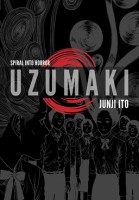
Junji Ito’s Uzumaki, originally released in Japan between 1998 and 1999, is one of the most well-known horror manga series to have been translated into English. Viz Media has actually published three different English-language editions of Uzumaki, not counting its initial serialization in the monthly manga magazine Pulp. The first edition, published as three individual volumes, was released between 2001 and 2002. These volumes were reissued in a second edition between 2007 and 2008. And then, in 2013, Uzumaki was released by Viz in a deluxe, single-volume hardcover omnibus complete with color pages and gorgeous production values and design. (Though I had previously read and enjoyed the series, it was the spectacular omnibus edition that finally convinced me that Uzumaki was a manga that I needed to own.) An emphasis should be placed on the “gore” of gorgeous–Uzumaki, while it has deservedly been called a masterpiece of horror, is most definitely not a work intended for the faint of heart or weak of stomach.

Kurouzu-cho is a small, quiet seaside village under a curse. It’s manifestation starts with the Saito family. First, Mr. Saito begins acting strangely, developing an unhealthy obsession with spirals. This leads to his demise and in turn his wife understandably becomes terrified of spirals as well, her complex becoming just as severe as her husband’s. In the end, their son Shuichi is the only one left in the family and his girlfriend Kirie Goshima is his only ally. Already uncomfortable with Kurouzu-cho, the fate of his parents convinces Shuichi that the town is contaminated with spirals, though most people believe this to be his own form of insanity. But stranger and stranger things begin to happen in Kurouzu-cho. Kirie becomes witness to so many bizarre occurrences and horrifying deaths that she can’t deny that something is very, very wrong with the town. Tragedy after tragedy befalls Kurouzu-cho, its inhabitants, and anyone unfortunate enough to enter the immediate area as events both figuratively and literally spiral out of control.

At first, Uzumaki seems as though it’s a series that is mostly episodic. Each chapter is largely told and seen from Kirie’s perspective and explores an individual incident involving spirals in some way. But as the manga continues, the stories become more and more closely tied to one another, eventually forming a single, coherent narrative. As previously mentioned, Uzumaki is very graphic, the images that Ito creates, while mesmerizing, can be extraordinarily disturbing and gruesome. But there is more going on in the manga than gore and body horror; there is also a very strong, and very dark, psychological element to Uzumaki which makes the entire series especially effective in its terror. Uzumaki is bizarre and surreal but at the same time is completely convincing in its unnatural horror. It’s hard to believe that something so benign as a simple shape–a spiral–could be so terrifying, but Ito accomplishes the seemingly impossible with Uzumaki. It’s an exceptionally disconcerting work.

Although the imagery in Uzumaki is frequently disturbing, grotesque, and even nauseating, almost as frightening are the characters’ reactions–or, in many cases, their non-reactions–to the terrible events surrounding them. Shuichi is one of the very few people who seem to be completely aware of what is happening in Kurouzu-cho, but he is barely able to maintain his own sanity and becomes increasingly haunted and withdrawn. Surprisingly, hidden within the nightmare that is Uzumaki, there is actually a love story of sorts, granted a tragic one considering the nature of the manga. Despite everything, Kirie is always there to support and look out for Shuichi and his well-being. And even when Shuichi is nearly catatonic and barely able to function within society, he repeatedly risks his life to save hers. But in the end, Uzumaki is ultimately an incredible work of horror. There are things that I’ve seen in the manga that I will never be able to unsee. And I will never be able to look at spirals in quite the same way again.

Filed Under: REVIEWS Tagged With: Junji Ito, manga, uzumaki, viz media

Spell of Desire, Vol. 2

October 19, 2014 by Anna N

Spell of Desire Volume 2 by Tomu Ohmi

This series is rapidly becoming my favorite josei masked as shoujo series released on the Shojo Beat imprint. When I picked up the second volume, I was expecting a bit of filler with a few more episodes of Kaoruko’s runaway witch powers manifesting, with the obligatory makeout sessions with Kaname in order to keep her powers under control. While this certainly happened, Ohmi also went full speed ahead with plot development, introducing us to more backstory, evil covens, and Kaname actually admitting he has feelings for the young witch he has sworn to protect.

The sensual nature of Kaoruko’s magic ensures that she’s going to be an object of attraction to men, and Kaname is struggling with this himself. She wants to be able to control her magical abilities, but the fact is that having her mother’s power sealed inside her, in addition to her own magic has made her a bit of a danger to herself. Kaname returns to the coven, leaving one of his mystical animal sidekicks behind for Karuoku’s protection. In his dealings with the coven we see how Kaname is struggling with wanting what is best for his charge as person, in contrast to the way the coven views her as a valuable pawn. He wants to protect her freedom as much as possible, but the powerful witches he reports to might make this difficult.

Kaoruko’s neighbor Yu finds himself irresistibly attracted to her when her magic spirals out of control, but fortunately Unicorn delays things a bit. When some additional witches show up at Kaoruko’s house, she’s almost attacked again, but Kaname returns just in time to save her. Towards the end of the volume, Kaoruko makes a fateful decision to protect Kaname herself. While she’s been a bit passive so far due to reacting to her out of control powers, Kaoruko shows that she has plenty of willpower when someone she cares about is threatened.

I still really enjoy the way Ohmi portrays Kaoruko’s powers as black vines becoming entwined around the panels of the manga, it’s a visual device that is both pretty and ominous at the same time. I was happy that by the second volume, both Kaoruko and Kaname are clear that they love each other, even if they aren’t clear yet that their feelings are reciprocated. I think there will be interesting times ahead if Kaoruko is able to control her own powers and doesn’t need Kaname’s protection as much. I highly recommend this series if you enjoy paranormal romance manga.

Filed Under: REVIEWS Tagged With: Josei, shojo beat, spell of desire, viz media

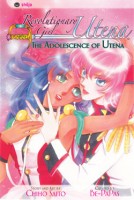
Revolutionary Girl Utena: The Adolescence of Utena

October 15, 2014 by Ash Brown

Revolutionary Girl Utena: The Adolescence of UtenaCreator: Chiho Saito
U.S. publisher: Viz Media
ISBN: 9781591165002
Released: November 2004
Original release: 1999

Revolutionary Girl Utena is one of my absolute favorite anime series. Despite that fact, I’ve never read any of the Revolutionary Girl Utena manga until now. I have no idea why that is. I love manga, and I love Revolutionary Girl Utena, so it would seem obvious that I should want read the Revolutionary Girl Utena manga. Maybe I was simply afraid that I would be disappointed by it. Turns out–at least with Revolutionary Girl Utena: The Adolescence of Utena–I probably shouldn’t have worried. The Adolescence of Utena manga by Chiho Saito is an alternate version of the animated film Adolescence of Utena which in turn is a retelling of sorts of the Revolutionary Girl Utena anime series. Saito’s The Adolescence of Utena was originally released in Japan in 1999, the same year as the film. In English it was first serialized in Animerica Extra, a shoujo-leaning monthly manga magazine published by Viz Media between 1998 and 2004, before the manga was collected and released as a single volume in 2004.

Utena Tenjou is a new student at the prestigious Ohtori Academy, known for its elegance, traditions, and ceremony. What she didn’t realize was that her ex-boyfriend Touga Kiryuu is also enrolled at the school and is president of the student council, no less. Two years ago he left her and, in response, Utena decided to take control of her life and become her own prince instead of waiting around for Touga or some other man to fill that role. But upon her arrival at Ohtori, Utena is quickly swept up in a mysterious series of duels between the members of the student council that will determine the fates of those who fight as well as the fate of a young woman named Anthy Himemiya, the Rose Bride. The winner of the duels earns the right to do whatever he or she desires with the Rose Bride, gaining the power to change and remake the world however is seen fit. All of those involved, even Utena herself, have tragic pasts and dark secrets, but Utena is the only one who is able to look beyond all of those and see Anthy as more than an object to be won.

I have always found it difficult to summarize Revolutionary Girl Utena or to adequately explain just how meaningful the series is to me. Revolutionary Girl Utena has a strange but powerful narrative with many, many layers to it. The same is true of The Adolescence of Utena manga; it just seems impossible for me to truly do the work justice. Although certainly more direct and straightforward than its film counterpart, the manga is still incredibly surreal and rife with symbolism. Almost nothing is exactly what it initially seems and almost everything is open to multiple interpretations and analyses. The imagery itself is very dreamlike–architecture that defies the laws of physics, floating castles, flurries of rose petals, gardens that shouldn’t be able to exist, and so on–but Saito captures it all beautifully. There is an ethereal quality to her artwork that suits The Adolescence of Utena remarkably well, whether the manga is meant to be a dream, purgatory, a metaphor, or something else entirely. Both the story and the art of The Adolescence of Utena are intensely psychological, deeply emotional, and highly sexually charged.

The Adolescence of Utena is in many ways a distillation of Revolutionary Girl Utena, crystallizing many of the original series’ themes into a single volume. I was actually rather impressed by how much Saito was able to retain and how complex the tale remained even in a condensed form. The manga will probably be appreciated most by those who are at least familiar with Revolutionary Girl Utena, but it also carries some significance and effectiveness as a separate work in its own right. The relationship between Utena and Anthy is absolutely key to the story as the manga explores love of different types–romantic, illicit, familial, sexual, and many others–as well the multitude of intersections between those types of love, both good and bad. And just as important as love is to The Adolescence of Utena, so are the feelings and emotions of despair and desperation as each of the characters, all of whom are broken or damaged, struggle in their own way to try to reclaim their lives and who they are. Much like the original Revolutionary Girl Utena, I found The Adolescence of Utena to be an exceptionally compelling work.

Filed Under: REVIEWS Tagged With: Chiho Saito, manga, Revolutionary Girl Utena, viz media, Year of Yuri

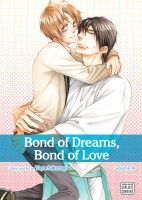
Bond of Dreams, Bond of Love, Vol. 4

October 10, 2014 by Ash Brown

Bond of Dreams, Bond of Love, Volume 4Creator: Yaya Sakuragi
U.S. publisher: Viz Media
ISBN: 9781421552354
Released: May 2013
Original release: 2011

Ever since reading and enjoying Yaya Sakuragi’s Hey, Sensei?, I’ve made a point to follow her work as it’s translated into English. Sakuragi’s boys’ love manga tends to make very heavy use of the genre’s tropes, but generally with a slight twist or unexpected approach that make them just a little bit different. I enjoy that aspect of Sakuragi’s manga, her somewhat quirky sense of humor, and the lanky designs of many of her characters. I also appreciate that she includes important female characters in her stories. Taking all of that into consideration, I was pretty happy when Sublime Manga, the boys’ love imprint associated with Viz Media, licensed one of Sakuragi’s more recent series Bond of Dreams, Bond of Love. The manga is tangentially related to another of Sakuragi’s series–Tea for Two released by Tokyopop’s Blu Manga imprint back in the day–and Sublime has also licensed Hide and Seek, which is a spinoff of Bond of Dreams, Bond of Love. The fourth and final volume of Bond of Dreams, Bond of Love was originally published in Japan in 2011 while the English-language edition was released in 2013.

After strong urging from his brother, mother, and grandmother, Ao has finally made up his mind to bury his own feelings about the matter and live with his mother and twin. He does have some regrets though, especially considering that the move will mean he won’t be able to see his beloved Ryomei very often anymore. But although Ao has made a decision, he is still torn and uncertain. To make the situation even more complicated, Ryomei has started to return Ao’s feelings and has even begun to express them physically. But thanks to some miscommunication on both of their parts, Ao believes that Ryomei is acting out of pity rather than genuine affection. Mostly because he finds it embarrassing, Ryomei has never been particularly forthcoming about his developing feelings for Ao, whereas Ao has never felt the need to hide his love for the older man and doesn’t hesitate to be very vocal about it. Now that Ryomei is showing his interest only after Ao has announced his decision to move, the younger man can’t help but feel confused.

Throughout Bond of Dreams, Bond of Love it has always been obvious that Ryomei cares very deeply for Ao. He looks out for him and his well-being and even goes out of his way to do things to make him happy–granted, more often than not Ryomei does so in secret. However, I was never entirely convinced that those feelings were of a romantic nature; even Ryomei seems to have to work to convince himself that they are. Ultimately he is able to show and declare his love, but it feels less like natural growth and more like a convenient plot development. It is kind of cute to see a grown man so completely flustered and embarrassed, though. And then there’s Ao, who I’m pretty sure is incapable of embarrassment and is completely lacking awareness of socially acceptable behavior and conversation, which can be pretty entertaining. He’s very much a horny teenager, so in the fourth volume of Bond of Dreams Bond, Bond of Love it’s nice to see him start to really become aware of the emotional aspects of his and Ryomei’s relationship in addition to his fixation on the physical ones.

After a fair amount of teasing on Sakuragi’s part, Bond of Dreams, Bond of Love reaches its climax with the fourth volume. Dreams–wet dreams, daydreams, and even the occasional nightmare–have been a part of the series from the beginning, but now those dreams (the better ones) are becoming a reality for Ao. This more or less means that he and Ryomei finally have sex. Actually, there’s quite a bit of sex in Bond of Dreams, Bond of Love, Volume 4. The series has been building up to it and the scenes, like the rest of the manga, have a somewhat ridiculous sense of humor to them. Bond of Dreams, Bond of Love is not at all a serious series. What it lacks in believability and realism it makes up for with its slightly absurd characters, their clashing personalities, and their amusing interactions and relationships. I admit it: the manga managed to make me laugh on a regular basis. Bond of Dreams, Bond of Love can be a bit uneven at times, and the series isn’t my favorite manga by Sakuragi, but for the most part I ended up enjoying its silliness. And I do still look forward to reading Hide and Seek.

Filed Under: REVIEWS Tagged With: Bond of Dreams Bond of Love, manga, Sublime Manga, viz media, Yaya Sakuragi

  • « Go to Previous Page
  • Page 1
  • Interim pages omitted …
  • Page 14
  • Page 15
  • Page 16
  • Page 17
  • Page 18
  • Interim pages omitted …
  • Page 20
  • Go to Next Page »
 | Log in
Copyright © 2010 Manga Bookshelf | Powered by WordPress & the Genesis Framework