• Skip to primary navigation
  • Skip to main content
  • Skip to primary sidebar
  • Home
  • About Us
    • Privacy Policy
    • Comment Policy
    • Disclosures & Disclaimers
  • Resources
    • Links, Essays & Articles
    • Fandomology!
    • CLAMP Directory
    • BlogRoll
  • Features & Columns
    • 3 Things Thursday
    • Adventures in the Key of Shoujo
    • Bit & Blips (game reviews)
    • BL BOOKRACK
    • Bookshelf Briefs
    • Bringing the Drama
    • Comic Conversion
    • Fanservice Friday
    • Going Digital
    • It Came From the Sinosphere
    • License This!
    • Magazine no Mori
    • My Week in Manga
    • OFF THE SHELF
    • Not By Manga Alone
    • PICK OF THE WEEK
    • Subtitles & Sensibility
    • Weekly Shonen Jump Recaps
  • Manga Moveable Feast
    • MMF Full Archive
    • Yun Kouga
    • CLAMP
    • Shojo Beat
    • Osamu Tezuka
    • Sailor Moon
    • Fruits Basket
    • Takehiko Inoue
    • Wild Adapter
    • One Piece
    • After School Nightmare
    • Karakuri Odette
    • Paradise Kiss
    • The Color Trilogy
    • To Terra…
    • Sexy Voice & Robo
  • Browse by Author
    • Sean Gaffney
    • Anna Neatrour
    • Michelle Smith
    • Katherine Dacey
    • MJ
    • Brigid Alverson
    • Travis Anderson
    • Phillip Anthony
    • Derek Bown
    • Jaci Dahlvang
    • Angela Eastman
    • Erica Friedman
    • Sara K.
    • Megan Purdy
    • Emily Snodgrass
    • Nancy Thistlethwaite
    • Eva Volin
    • David Welsh
  • MB Blogs
    • A Case Suitable For Treatment
    • Experiments in Manga
    • MangaBlog
    • The Manga Critic
    • Manga Report
    • Soliloquy in Blue
    • Manga Curmudgeon (archive)

Manga Bookshelf

Discussion, Resources, Roundtables, & Reviews

Tokyopop

Let’s Get Visual: Tricks of the Trade

January 29, 2011 by Michelle Smith

MICHELLE: It’s time for another installment of Let’s Get Visual, a monthly feature in which Manga Bookshelf’s MJ and I work to expand our artistic horizons!

This month’s column is inspired by a recent TOKYOPOP release, How to Draw Shojo Manga. Instead of simply offering tips on drawing faces, poses, or cute little animals, this book surprised and impressed me by its wealth of specific advice on many aspects of the manga-creation process. I covered it in a recent Off the Shelf column, and concluded by saying, “Even a casual manga fan would find this book illuminating. For a reviewer, particularly ones like us who are trying to improve our skills in artistic criticism, I’d go so far as to call it positively indispensable. There’s so much practical advice about what a mangaka should be—and theoretically is—striving for in his/her work that I found it quite a fascinating read.”

I put together a list of some of the techniques suggested by the book, and MJand I kept our eyes out for shoujo manga that puts them into practice. Happily, I stumbled upon a perfect example almost right away in the series Karakuri Odette, recently the topic of the Manga Moveable Feast.

Karakuri Odette, Volume 5, Pages 1-2 (TOKYOPOP)

MICHELLE: These two pages exemplify several elements from How to Draw Shojo Manga. On the first page, for example, we have a variety of different-sized shots of the scene and characters, as recommended on page 60. (“Each page needs a rhythm. If all the panels are the same size, and the characters just sit there talking, that’s no fun to read.”)

In the middle of the second page, when the danger of the falling boards is realized, the use of diagonal lines evokes this piece of advice, from page 68: “By placing a character at a diagonal within the panel, the composition becomes unstable, allowing you to express the character’s anxiety, nervousness, or fear.”

Lastly, you’ve got the cliffhanger page-turn to build up the reader’s anticipation, as advised on page 59. “If you can hook the readers at the bottom of the page and make them ask “What next?!” as they turn the page, then you’ve succeeded.”

I’m starting to wonder if mangaka Julietta Suzuki read this book, too!

MJ: Well, if you think about the fact that the book was written by editors from the publisher that released Karakuri Odette, it seems likely that these are standards to which they hold all their artists!

You know, aside from obvious two-page spreads, I’d never really put a lot of thought into how important it can be for a chapter’s right and left-hand pages to be so precisely displayed. But it’s clear here that the bottom left panel of the left-hand page must immediately precede the page turn in order to have its intended impact. This actually brings up some questions for me about the effectiveness of digital distribution, given that most of the readers I’ve encountered favor (or at least allow) single-page views. How much page-to-page impact are we losing by reading manga on a portable device without even realizing it?

MICHELLE: Yes, I had meant to mention that the book was produced by the editors of Hakusensha’s shoujo manga.

And yes, that’s a great point. I believe the viewer at the NETCOMICS site preserves the two-page view, which is excellent, but others don’t. I suppose this is the argument in favor of shelling out loads of money for an iPad instead of trying to read shrinky-dink manga on one’s Kindle, but eh. I think I’ll stick with paper books!

Moving on to pages three and four…

Here we’ve got the resolution to the cliffhanger, in which Odette swoops in to save the day with her android strength. Suzuki uses a nifty trick to express Odette’s predicament simply through composition: placing her alone in the middle of a wide shot (as advocated on page 68) emphasizes her isolation from her classmates in this moment, bringing into focus how different she is from them, in that she can pull off this feat with ease.

Not that this stops her, as she chivalrously scoops up her classmate—”It’s effective to have a panel that draws the eye to the top of the left page,” notes the book—and carries her off. We know they’ve gone to the nurse’s office because Suzuki has followed the advice about using a sign or placard as an establishing shot when changing scenes (page 76).

I’ve got to say, it feels a little odd to be able to match up practically every panel to a specific piece of advice in the how-to book because when I read this scene, I really didn’t think of any of these things. Suzuki may be employing common practices when drawing her series, but that doesn’t make it feel generic.

MJ: I’ve definitely found it a bit jarring to realize just how much these pages adhere to a fairly strict artistic formula. It all seemed so natural when I was reading them! I suppose what this really demonstrates, though, is how much careful craft goes into creating something that can flow naturally for millions of individual readers. The visual language that Suzuki uses to tell an effective story using just a series of still drawings is key to our understanding.

Also, it’s important to remember that this kind of structure is only the framework for displaying a story to readers, and not the heart of the manga itself. Suzuki puts a soul into her story that would never be possible by way of panel formula only. The structure just makes some of the storytelling easier, by giving us visual cues our brains can process with little effort. It’s clearing the way for the heart of the story, I suppose.

MICHELLE: Oh, that’s a lovely way to put it. I mean, really, when you think about it, if a creator went to a lot of trouble to come up with some wildly innovative new way to do an establishing shot, for example, it could either not quickly make visual sense to the reader or could detract from their enjoyment by yanking them out of the story. You used the phrase “visual language,” and I think that’s exactly what we’re dealing with here.

MJ: Yes, exactly! There’s a reason you weren’t thinking about any of these things when you were first reading the book. The point of this kind of visual language is that you don’t have to. Our brains do that work automatically because we’re already fluent in the language. That’s not to say that there isn’t value in artistic innovation. Of course there is! But with a story like this, you want the focus to be on the characters and their relationships. The craft should be invisible, so as not to distract from the point at hand.

MICHELLE: All I can do is nod, because you’ve said it so well!

How does this visual language manifest itself in the pages you’ve chosen?

MJ: Reading How To Draw Shojo Manga, I was struck by how really modern it feels. All the artwork inside is very consistent with what we’ve seen coming over for the past few years, so I thought it might be fun to look at something a little older, as well as something that falls well outside the romance genre, which is what we mostly see these days. To that end, I dug out a volume of CLAMP’s Tokyo Babylon, which is about fifteen years older than Karakuri Odette (give or take) and, though there’s a sort-of-romance element involved, leans heavily towards dark fantasy.

Tokyo Babylon, Volume 6, Pages 109-109 (TOKYOPOP)

Here in the first set of pages, the story’s protagonist, Subaru, is clearly waking from a nightmare. You can see that, like Suzuki, CLAMP is also using varied panel sizes to establish rhythm, as well as a number of different camera angles for cluing us in to Subaru’s state of mind. The contrast between Subaru’s dramatic awakening and the realization that he’s very much alone is especially effective, I think. At the bottom of the first page, we feel his unsteadiness as he pulls back the curtains to let light into the room, and then our eyes are drawn easily to the top left by the reflection of his hand in the mirror, given emphasis by its position in the foreground of the panel.

As the image of Subaru’s sister enters the scene, the panel frames fall away, leaving her sitting freely on the page, indicating both a change of scene and a sunnier, more open space, in contrast to the darkness of everything that comes before. While this bottom left panel lacks the “cliffhanger” feel we saw in the Karakuri Odette pages, this change of time and place gives us a compelling reason to turn the page.

MICHELLE: I agree that the moment of Subaru’s lonely awakening is striking—even though it’s so much smaller than the panel below it, it still packs more of an emotional wallop, I think.

Are you familiar with the musical concept of an agogic accent? In one type, a note is accented simply by being delayed for a fraction of a beat. In other words, it stands out all the more because it’s been given a little bit of space. The bottom-left image of Hokuto reminds me of the same idea—because we’ve busted out of the panel framework and given her some space, she seems all the more significant. The white background behind her does a nice job of evoking happier days, as well.

MJ: Oh, what a perfect analogy, Michelle! Yes, I think this is exactly the same concept, applied to visual art. I suppose if you think about it, music and comics have something in common, both being sequential in a manner of speaking.

The first page here is drenched in light, with almost no background detail at all, aside from the mirror and one look at the floorboards, both of which help establish that the scene takes place in the same room that Subaru woke up in. It’s a warm scene in every way, from the brightly lit room to Hokuto’s cheerful dialogue. It would really be the sweetest scene in the world, if our eyes were not inevitably drawn to the heavy darkness of the top left panel.

Hokuto’s still there, of course, but it’s obvious that something is horribly wrong, with Subaru reduced to a tiny figure, trapped in the darkness with his own mirror image. I say “trapped,” because that’s what this feels like to me, with the oppressive darkness surrounding Subaru and the mirror. This feels even more dramatic to me than the lonely image on the first page–an impression enhanced by the violent panel that follows.

Again, we’re not seeing a cliffhanger here. This feels more like a period than an ellipsis, if that makes sense, though it’s pretty effective as is.

MICHELLE: In a way, CLAMP is using some of the same techniques mentioned in How to Draw Shojo Manga on these two pages. Using just enough background to establish the scene—”About one or two panels with backgrounds per page is good,” quoth page 86—and placing a striking image on the top left. And wow, there is just really no escaping the gloom of that left-side panel! Even if you’re not looking at it directly, it certainly registers and tinges one’s read of the brighter page with expectation of sorrow.

MJ: Oh, well said! Yes, it makes the bright panels bittersweet simply by being in the peripheral vision of that page.

I expect what we’re seeing here is just how basic and long-standing these visual techniques are, even the background guidelines which seem very specific to shoujo manga. It seems likely that these things became part of the rule due to their effectiveness in practice, rather than the other way around, and I expect we’d see most of these techniques utilized in any country’s long-form comics.

MICHELLE: Oh, definitely. These aren’t arbitrary rules imposed by some official body—they’re effective techniques distilled from what has come before. I could blather on with more comparisons to music here, but perhaps I’ll save that for another day!

Thank you for tuning in to this month’s column. If you have examples of shoujo techniques in practice you’d like to share, or opinions of where we’ve gone right or wrong, please join in the discussion! We’d love to hear from you.

Filed Under: FEATURES Tagged With: Tokyopop

Immortal Rain 3-5 by Kaori Ozaki: A-

January 22, 2011 by Michelle Smith

It’s been a year since I read the first two volumes of Immortal Rain, and though I was initially somewhat lost when I started the third, the heartbreaking nature of Rain’s backstory immediately pulled me back in.
Hints had been sprinkled through the first two volumes, but here we get the whole, terrible story. We learn about Rain’s relationship with Freya—the woman he once loved—and with Yuca, the friend with a dark secret that would ultimately lead to Freya’s death and Rain being cursed with immortality. Yuca is similarly cursed himself, being reborn over and over again while conscious of the memories of all his past lives. He’s ready for this cycle to end—ready for the whole world to end, in fact—and so has chosen Rain to be his perpetual executioner.

It’s Rain’s task to wait for Yuca’s rebirth, which he’s been doing for 600 years so far. If Rain feels like humanity is worth saving, then he must kill Yuca to protect them. If he should weary of humanity and the way they treat him, he can join forces with Yuca and work to end the world. Gentle soul that he is, Rain detests this duty but is resigned to it.

But then Machika comes along to complicate things, saving Rain from his loneliness but promising future sorrow. “Being with you hurts,” he tells her. “It hurts. Because you remind me of sadness.” Later he says, “You’ll disappear so quickly.” It’s one of those doomed immortal-mortal romances all over again, like Buffy and Angel or The Doctor and Rose, and I love it to bits. It’s especially satisfying that they confess their love for each other in the fourth volume, without playing any of those delaying games shoujo series often employ. In this world, loving each other isn’t enough to guarantee a happy ending.

In fact, it’s his love for Machika that weakens Rain’s resolve. He was prepared to kill Yuca—and his own heart—over and over again forever if not for her, but now he has found love. At the same time, if he doesn’t fulfill his duty and Yuca is allowed to run free, what does this mean for the world? When Yuca actually does return and Rain is unable to defeat him, Machika roams the world for a year, refusing to believe all evidence that Rain is dead and determined to find him.

It’s all very dramatic and poignant, and I enjoy it quite a lot, but sometimes it seems a little… surface-y. I can’t really explain it better than that. It’s such a quick read, and while everything seems to make sense while it’s happening, upon reflection one wonders, “Well, why does Rain love Machika?” It just doesn’t feel like we’ve had enough time with these characters when they weren’t running for their lives. This isn’t to say that their romance feels unbelievable, just that I wish this story were unfolding somewhat more slowly. The fact that some of Rain’s foes are kids is also an unwelcome note of silly in a series that otherwise has a serious, almost seinen, kind of feeling to it.

In the year since my first review, there’s been nary a peep from TOKYOPOP regarding the future of this series. The series doesn’t come out too quickly in Japan—the latest is still the tenth volume, which was released in October 2009—so it’s frustrating being so close to having all of what’s currently available. I hope that, even if these volumes never merit a print release, they’ll be available via the publisher’s new print-on-demand feature. We shall see!

Filed Under: UNSHELVED Tagged With: Kaori Ozaki, Tokyopop

LIVES, Vol. 1

January 21, 2011 by Katherine Dacey 7 Comments

Everything you need to know about LIVES is summed up by the following category tags: “big breasts,” “meteor,” “stranded,” “strategically torn clothing,” and “survival.” (Kudos to the Baka-Updates moderator who felt the need to give “strategically torn clothing” its due as a category. But what, no “hungry predators”?)

Plot-wise, LIVES resembles Battle Royale, Gantz, and King of Thorn in using a catastrophic event — in this case, a meteor shower — to deposit normal people into a hostile environment — here, a dense jungle inhabited by carnivorous monsters. It doesn’t take long for the refugees to discover the particularly nasty secret behind these beasties: they were originally human beings as well, and some can still transform back into their bipedal selves, with no memory of terrorizing their fellow survivors.

Art-wise, Taguchi delivers the goods, with scene after scene of expertly staged carnage. His monsters are perhaps a little too neat, lightbox chimaeras that originated in the pages of National Geographic, but they’re agile and vicious enough to be convincing. His humans also offer balm for tired eyes: the hero, Shingo, has abs that would shame The Situation’s, and the harem of doe-eyed, big-bosomed ladies wear just enough clothing to prevent the story from shading into pornography. (In a hilarious touch, all of the women’s shoes are in immaculate condition, even though their tops and skirts have been reduced to scraps. Paging Imelda Marcos!)

What’s missing is subtext. LIVES is the umpteenth manga to suggest when man lives in a “state of nature” — no rulers, no rules of law — that a “war of all against all” prevails, creating an environment where lives are “solitary, poor, nasty, brutish, and short.” While other manga-ka have attempted to explore what happens to the human psyche when all social constraints disappear, Masayuki Taguchi focuses exclusively on those consequences that Thomas Hobbes forget to mention in The Leviathan: costume failures, near-rapes, faintly incestuous relationships, and hyper-violent showdowns between monsters and would-be meals. There’s nothing wrong with carnage and cheesecake; I’m all for brainless fun. But when the narrative falls into an all-too-predictable pattern of grope-chase-chomp-regroup in the very first volume, a little subtext goes a lot farther than a cool monster or a torn shirt in making things interesting.

Review copy provided by Tokyopop. Volume one will be released on February 1, 2011.

LIVES, VOL. 1 • BY MASAYUKI TAGUCHI • TOKYOPOP • 196 pp. • RATING: MATURE (18+)

Filed Under: Manga Critic Tagged With: Seinen, Tokyopop

LIVES, Vol. 1

January 21, 2011 by Katherine Dacey

Everything you need to know about LIVES is summed up by the following category tags: “big breasts,” “meteor,” “stranded,” “strategically torn clothing,” and “survival.” (Kudos to the Baka-Updates moderator who felt the need to give “strategically torn clothing” its due as a category. But what, no “hungry predators”?)

Plot-wise, LIVES resembles Battle Royale, Gantz, and King of Thorn in using a catastrophic event — in this case, a meteor shower — to deposit normal people into a hostile environment — here, a dense jungle inhabited by carnivorous monsters. It doesn’t take long for the refugees to discover the particularly nasty secret behind these beasties: they were originally human beings as well, and some can still transform back into their bipedal selves, with no memory of terrorizing their fellow survivors.

Art-wise, Taguchi delivers the goods, with scene after scene of expertly staged carnage. His monsters are perhaps a little too neat, lightbox chimaeras that originated in the pages of National Geographic, but they’re agile and vicious enough to be convincing. His humans also offer balm for tired eyes: the hero, Shingo, has abs that would shame The Situation’s, and the harem of doe-eyed, big-bosomed ladies wear just enough clothing to prevent the story from shading into pornography. (In a hilarious touch, all of the women’s shoes are in immaculate condition, even though their tops and skirts have been reduced to scraps. Paging Imelda Marcos!)

What’s missing is subtext. LIVES is the umpteenth manga to suggest when man lives in a “state of nature” — no rulers, no rules of law — that a “war of all against all” prevails, creating an environment where lives are “solitary, poor, nasty, brutish, and short.” While other manga-ka have attempted to explore what happens to the human psyche when all social constraints disappear, Masayuki Taguchi focuses exclusively on those consequences that Thomas Hobbes forget to mention in The Leviathan: costume failures, near-rapes, faintly incestuous relationships, and hyper-violent showdowns between monsters and would-be meals. There’s nothing wrong with carnage and cheesecake; I’m all for brainless fun. But when the narrative falls into an all-too-predictable pattern of grope-chase-chomp-regroup in the very first volume, a little subtext goes a lot farther than a cool monster or a torn shirt in making things interesting.

Review copy provided by Tokyopop. Volume one will be released on February 1, 2011.

LIVES, VOL. 1 • BY MASAYUKI TAGUCHI • TOKYOPOP • 196 pp. • RATING: MATURE (18+)

Filed Under: Manga, Manga Critic, REVIEWS Tagged With: Horror/Supernatural, Sci-Fi, Tokyopop

The Best Manga of 2010: The Manga Critic’s Picks

December 6, 2010 by Katherine Dacey 16 Comments

For all the upheaval within the manga industry — the demise of CMX, Del Rey, and Go! Comi, the layoffs at VIZ — 2010 proved an exceptionally good year for storytelling. True, titles like Black Butler, Naruto, and Nabari no Ou dominated sales charts, but publishers made a concerted effort to woo grown-ups with vintage manga — Black Blizzard, A Drunken Dream and Other Stories — edgy sci-fi — Biomega, 7 Billion Needles — underground comix — AX: A Collection of Alternative Manga, The Box Man — and good old-fashioned drama — All My Darling Daughters, Bunny Drop. I had a hard time limiting myself to just ten titles this year, so I’ve borrowed a few categories from my former PCS cohort Erin Finnegan, from Best New Guilty Pleasure to Best Manga You Thought You’d Hate. Please feel free to add your own thoughts: what titles did I unjustly omit? What titles did I like but you didn’t? Inquiring minds want to know!

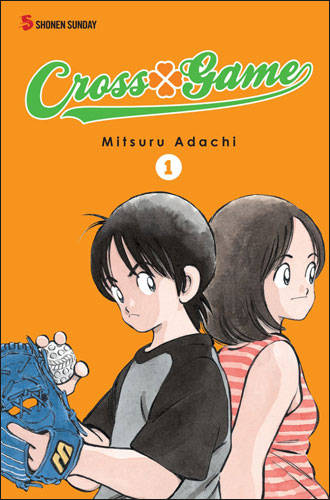
10. CROSS GAME (Mitsuri Adachi; VIZ)

In this sometimes funny, sometimes melancholy coming-of-age story, a family tragedy brings teenager Ko Kitamura closer to neighbor Aoba Tsukishima, with whom he has a fraught relationship. Though the two bicker with the antagonistic gusto of Beatrice and Benedict, their shared love of baseball helps smooth the course of their budding romance. To be sure, Cross Game can’t escape a certain amount of sports-manga cliche, but Mitsuri Adachi is more interested in showing us how the characters relate to each other than in celebrating their amazing baseball skills. (Not that he skimps on the game play; Adachi clearly knows his way around the diamond.) The result is an agreeable dramedy that has the rhythm of a good situation comedy and the emotional depth of a well-crafted YA novel, with just enough shop-talk to win over baseball enthusiasts, too.

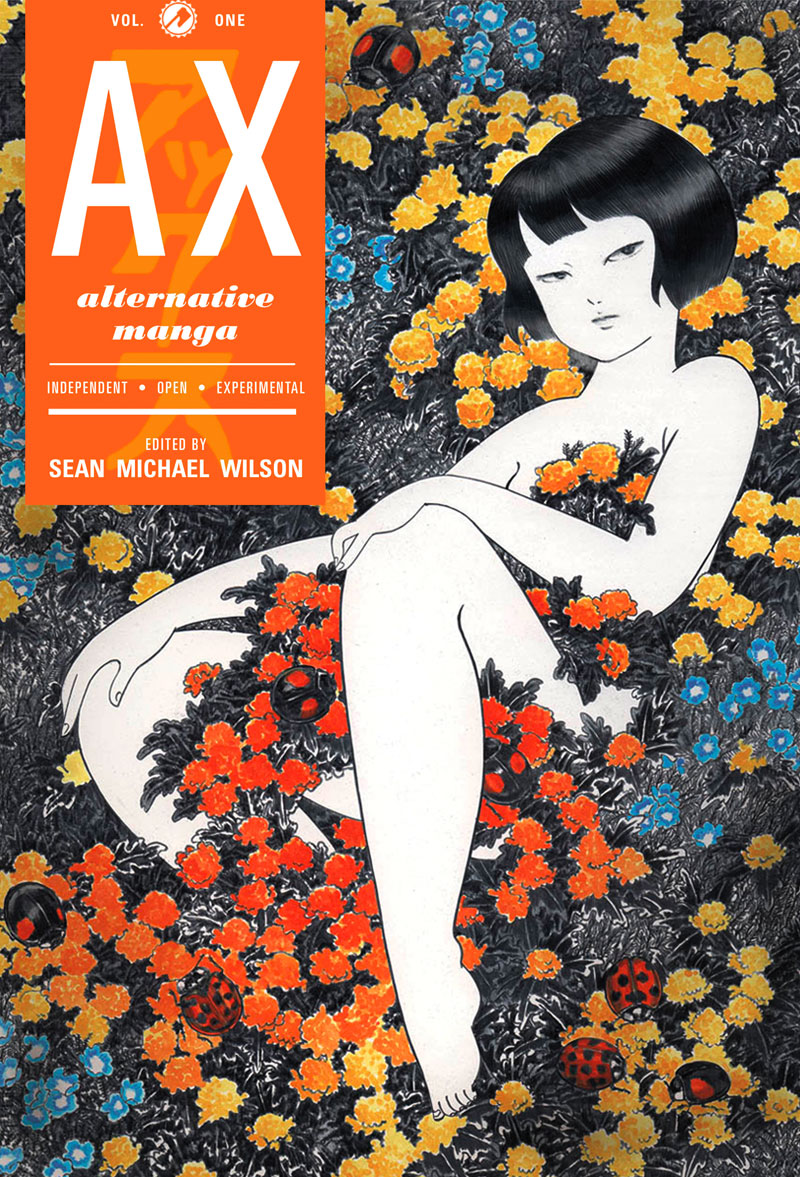
9. AX: A COLLECTION OF ALTERNATIVE MANGA (Various Artists; Top Shelf)

The next time someone dismisses manga as a “style” characterized by youthful-looking, big-eyed characters with button noses, I’m going to hand them a copy of AX, a rude, gleeful, and sometimes disturbing rebuke to the homogenized artwork and storylines found in mainstream manga publications. No one will confuse AX for Young Jump or even Big Comic Spirits; the stories in AX run the gamut from the grotesquely detailed to the playfully abstract, often flaunting their ugliness with the cheerful insistence of a ten-year-old boy waving a dead animal at squeamish classmates. Nor will anyone confuse Yoshihiro Tatsumi or Einosuke’s outlook with the humanism of Osamu Tezuka or Keiji Nakazawa; the stories in AX revel in the darker side of human nature, the part of us that’s fascinated with pain, death, sex, and bodily functions. Like all anthologies, the collection is somewhat uneven, with a few too many scatological tales for its own good, but the very best stories — “The Hare and the Tortoise,” “Push Pin Woman,” “Six Paths of Wealth,” “Puppy Love,” “Inside the Gourd” — attest to the diversity of talent contributing to this seminal manga magazine. –Reviewed at The Manga Critic on 5/21/10

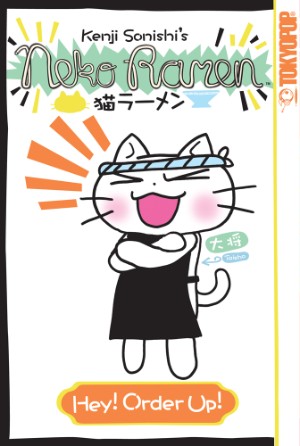
8. NEKO RAMEN (Kenji Sonishi; Tokyopop)

If you’ve ever lived with a cat or dog, you know that no meal is complete without a pet hair garnish. Now imagine that your beloved companion actually prepared your meals instead of watching you eat them: what sort of unimaginable horrors might you encounter beyond the stray hair? That’s the starting point for Neko Ramen, a 4-koma manga about a cat whose big dream is to run a noodle shop, but author Kenji Sonishi quickly moves past hair balls and litter box jokes to mine a richer vein of humor, poking fun at his cat cook’s delusions of entrepreneurial grandeur. Taisho is the Don Quixote of ramen vendors, dreaming up ludicrous giveaways and unappetizing dishes in an effort to promote his business, never realizing that he is the store’s real selling point. The loose, sketchy artwork gives the series an improvisational feel, while the script has the pleasant, absurdist zing of an Abbott and Costello routine. –Reviewed at The Manga Critic on 6/2/10

7. AYAKO (Osamu Tezuka; Vertical, Inc.)

Combining the psychological realism of Dostoevsky with the social consciousness of Tolstoy and Zola, Osamu Tezuka uses conflicts within the once-powerful Tenge clan to dramatize the social, political, and economic upheaval caused by the American occupation of post-war Japan. No subject is off-limits for Tezuka: the Tenge commit murders, spy for the Americans, join the Communist Party, imprison a family member in an underground cell, and engage in incest. It’s one of Tezuka’s most sober and damning stories, at once tremendously powerful and seriously disturbing, with none of the cartoonish excess of Ode to Kirihito or MW. The ending is perhaps too pat and loaded with symbolism for its own good, but like Tezuka’s best work, Ayako forces the reader to confront the darkest, most corruptible corners of the human soul. As with Apollo’s Song, Black Jack, and Buddha, Vertical has done a superb job of making Tezuka accessible to Western readers with flipped artwork and a fluid translation.

6. BUNNY DROP (Yumi Unita; Yen Press)

Stop me if you’ve heard this one before: a thirty-something bachelor unexpectedly becomes a parent to a cute little girl, leading to hijinks, misunderstandings, and heart-tugging moments. That’s a fair summary of what happens in Bunny Drop, but Yumi Unita wisely avoids the pitfalls of the single-dad genre — the cheap sentiment, the unfunny scenes of dad recoiling in horror at diapers, runny noses, and tears — instead focusing on the unique bond between Daikichi and Rin, the six-year-old whom he impetuously adopts after the rest of the family disavows her. (Rin is the product of a liaison between Daikichi’s grandfather and a much younger woman.) Though Daikichi struggles to find day care, buy clothes for Rin, and make sense of her standoffish behavior, he isn’t a buffoon or a straight man for Rin’s antics; Unita portrays him as a smart, sensitive person blessed with good instincts and common sense. Clean, expressive artwork and true-to-life dialogue further inoculate Bunny Drop against a terminal case of sitcom cuteness, making it one of the most thoughtful, moving, and adult manga of the year.

5. BLACK BLIZZARD (Yoshihiro Tatsumi; Drawn & Quarterly)

Written in just twenty days, this feverish pulp thriller plays like a mash-up of The Fugitive, The 39 Steps, and The Defiant Ones as two convicts — one a hardened criminal, the other a down-on-his luck musician — go on the lam during a blinding snowstorm. The heroes are more archetypes than characters, drawn in bold strokes, but the interaction between them crackles with antagonistic energy; they’re as much enemies as partners, roles that they constantly renegotiate during their escape. Evocative artwork — slashing lines, dramatic camera angles, images of speeding trains — infuses Black Blizzard with a raw, nervous energy that nicely mirrors the characters’ internal state. Only in the final, rushed pages does manga-ka Yoshihiro Tatsumi falter, tidily resolving the story through an all-too-convenient plot twist that hinges on coincidence. Still, that’s a minor criticism of a thoroughly entertaining story written during a crucial stage of Tatsumi’s artistic development. –Reviewed at The Manga Critic on 9/9/10

4. HOUSE OF FIVE LEAVES (Natsume Ono; VIZ)

Timid ronin Akitsu Masanosuke can’t hold a steady job, despite his formidable swordsmanship. When a businessman approaches him with work, Masanosuke readily accepts, not realizing that his new employer, Yaichi, runs a crime syndicate that specializes in kidnapping. Masanosuke’s unwitting participation in a blackmailing scheme prevents him from severing his ties to Yaichi; Masanosuke must then decide if he will join the House of Five Leaves or bide his time until he can escape. Though Toshiro Mifune and Hiroyuki Sanada have made entire careers out of playing characters like Masanosuke, Natsume Ono makes a persuasive case that you don’t need a flesh-and-blood actor to tell this kind of story with heartbreaking intensity; she can do the slow-burn on the printed page with the same skill as Masaki Kobayashi (Hara Kiri, Samurai Rebellion) and Yoji Yamada (The Twilight Samurai) did on the big screen. –Reviewed at The Manga Critic on 8/20/10

3. TWIN SPICA (Kou Yaginuma; Vertical, Inc.)

Asumi Kamogawa is a small girl with a big dream: to be an astronaut on Japan’s first manned space flight. Though she passes the entrance exam for Tokyo Space School, she faces several additional hurdles to realizing her goal, from her child-like stature — she’s thirteen going on eight — to a faculty member who blames her father for causing a fiery rocket crash that claimed hundreds of civilian lives. Yet for all the setbacks she’s experienced, Asumi proves resilient, a gentle girl who perseveres in difficult situations, offers friendship in lieu of judgment, and demonstrates a preternatural awareness of life’s fragility. Twin Spica follows Asumi through every stage of training, from physics lectures to zero-G simulations, showing us how she befriends her fellow cadets and gradually learns to rely on herself, rather than her imaginary friend, Mr. Lion. Though Twin Spica was serialized in a seinen magazine, it works surprisingly well for young adults, too, an all-too-rare example of a direct, heartfelt story that’s neither saccharine nor mawkish.  –Reviewed at The Manga Critic on 5/3/10

2. ALL MY DARLING DAUGHTERS (Fumi Yoshinaga; VIZ)

The five vignettes in All My Darling Daughters depict women negotiating difficult personal relationships: a daughter confronts her mother about mom’s new, much younger husband; a college student seduces her professor, only to dump him when he tries to court her properly; a beautiful young woman contemplates an arranged marriage. Like all of Yoshinaga’s work, the characters in All My Darling Daughters love to talk. That chattiness isn’t always an asset to Yoshinaga’s storytelling (see Gerard and Jacques), but here the dialogue is perfectly calibrated to reveal just how complex and ambivalent these relationships really are. Yoshinaga’s artwork is understated but effective, as she uses small details — how a character stands or carries her shoulders — to offer a more complete and nuanced portrait of each woman. Quite possibly my favorite work by Yoshinaga.

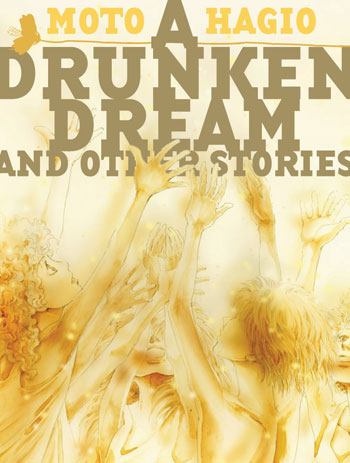
1. A DRUNKEN DREAM AND OTHER STORIES (Moto Hagio; Fantagraphics)

Not coincidentally, A Drunken Dream and Other Stories was my nomination for Best New Graphic Novel of 2010 as well. Here’s what I had to say about the title over at Flashlight Worthy Books:

Moto Hagio is to shojo manga what Will Eisner is to American comics, a seminal creator whose distinctive style and sensibility profoundly changed the medium. Though Hagio has been actively publishing stories since the late 1960s, very little of her work has been translated into English. A Drunken Dream, published by Fantagraphics, is an excellent corrective — a handsomely produced, meticulously edited collection of Hagio’s short stories that span her career from 1970 to 2007. Readers new to Hagio’s work will appreciate the inclusion of two contextual essays by manga scholar Matt Thorn, one an introduction to Hagio and her peers, the other an interview with Hagio. What emerges is a portrait of a gifted artist who draws inspiration from many sources: Osamu Tezuka and Shotaro Ishimonori, Ray Bradbury and Isaac Asimov, Frances Hodgson Burnett and L.M. Montgomery.

For the complete list — including nominations from David “Manga Curmudgeon” Welsh, Brigid “MangaBlog” Alverson, Lorena “i heart manga” Ruggero, and Matthew “Warren Peace Sings the Blues” Brady — click here. To read my full review of A Drunken Dream, click here.

HONORABLE MENTIONS

Done because there are too menny… great manga, that is, to confine myself to a traditional top ten list. With apologies to Thomas Hardy, here are some of the other titles that tickled my fancy in 2010:

  • OTHER AWESOME DEBUTS: Not Love But Delicious Foods Make Me Happy (Yen Press), Saturn Apartments (VIZ), 7 Billion Needles (Vertical, Inc.)
  • BEST CONTINUING SERIES: Itazura na Kiss (DMP), Ooku: The Inner Chambers (VIZ), Suppli (Tokyopop), 20th Century Boys (VIZ)
  • BEST NEW ALL-AGES MANGA: Chi’s Sweet Home (Vertical, Inc.)
  • BEST NEW SERIES THAT’S ALREADY ON HIATUS: Diamond Girl (CMX), Stolen Hearts (CMX)
  • BEST NEW GUILTY PLEASURE: Demon Sacred (Tokyopop), Dragon Girl (Yen Press)
  • BEST REPRINT EDITION: Cardcaptor Sakura (Dark Horse), Little Butterfly Omnibus (DMP)
  • BEST MANGA I THOUGHT I’D HATE: Higurashi When They Cry: Beyond Midnight Arc (Yen Press)
  • BEST FINALE: Pluto: Tezuka x Urasawa (VIZ)

Filed Under: Manga Critic Tagged With: cmx, Dark Horse, DMP, Drawn & Quarterly, fantagraphics, fumi yoshinaga, moto hagio, Naoki Urasawa, Osamu Tezuka, SigIKKI, Tokyopop, Top Shelf, vertical, VIZ, yen press, Yoshihiro Tatsumi

The Best Manga of 2010: The Manga Critic’s Picks

December 6, 2010 by Katherine Dacey

For all the upheaval within the manga industry — the demise of CMX, Del Rey, and Go! Comi, the layoffs at VIZ — 2010 proved an exceptionally good year for storytelling. True, titles like Black Butler, Naruto, and Nabari no Ou dominated sales charts, but publishers made a concerted effort to woo grown-ups with vintage manga — Black Blizzard, A Drunken Dream and Other Stories — edgy sci-fi — Biomega, 7 Billion Needles — underground comix — AX: A Collection of Alternative Manga, The Box Man — and good old-fashioned drama — All My Darling Daughters, Bunny Drop. I had a hard time limiting myself to just ten titles this year, so I’ve borrowed a few categories from my former PCS cohort Erin Finnegan, from Best New Guilty Pleasure to Best Manga You Thought You’d Hate. Please feel free to add your own thoughts: what titles did I unjustly omit? What titles did I like but you didn’t? Inquiring minds want to know!

10. Cross Game
By Mitsuri Adachi • VIZ Media
In this sometimes funny, sometimes melancholy coming-of-age story, a family tragedy brings teenager Ko Kitamura closer to neighbor Aoba Tsukishima, with whom he has a fraught relationship. Though the two bicker with the antagonistic gusto of Beatrice and Benedict, their shared love of baseball helps smooth the course of their budding romance. To be sure, Cross Game can’t escape a certain amount of sports-manga cliche, but Mitsuri Adachi is more interested in showing us how the characters relate to each other than in celebrating their amazing baseball skills. (Not that he skimps on the game play; Adachi clearly knows his way around the diamond.) The result is an agreeable dramedy that has the rhythm of a good situation comedy and the emotional depth of a well-crafted YA novel, with just enough shop-talk to win over baseball enthusiasts, too.

9. AX: A Collection of Alternative Manga
Edited by Sean Michael Wilson • Top Shelf
The next time someone dismisses manga as a “style” characterized by youthful-looking, big-eyed characters with button noses, I’m going to hand them a copy of AX, a rude, gleeful, and sometimes disturbing rebuke to the homogenized artwork and storylines found in mainstream manga publications. No one will confuse AX for Young Jump or even Big Comic Spirits; the stories in AX run the gamut from the grotesquely detailed to the playfully abstract, often flaunting their ugliness with the cheerful insistence of a ten-year-old boy waving a dead animal at squeamish classmates. Nor will anyone confuse Yoshihiro Tatsumi or Einosuke’s outlook with the humanism of Osamu Tezuka or Keiji Nakazawa; the stories in AX revel in the darker side of human nature, the part of us that’s fascinated with pain, death, sex, and bodily functions. Like all anthologies, the collection is somewhat uneven, with a few too many scatological tales for its own good, but the very best stories — “The Hare and the Tortoise,” “Push Pin Woman,” “Six Paths of Wealth,” “Puppy Love,” “Inside the Gourd” — attest to the diversity of talent contributing to this seminal manga magazine. —Reviewed at The Manga Critic on 5/21/10

8. Neko Ramen
By Kenji Sonishi • Tokyopop
If you’ve ever lived with a cat or dog, you know that no meal is complete without a pet hair garnish. Now imagine that your beloved companion actually prepared your meals instead of watching you eat them: what sort of unimaginable horrors might you encounter beyond the stray hair? That’s the starting point for Neko Ramen, a 4-koma manga about a cat whose big dream is to run a noodle shop, but author Kenji Sonishi quickly moves past hair balls and litter box jokes to mine a richer vein of humor, poking fun at his cat cook’s delusions of entrepreneurial grandeur. Taisho is the Don Quixote of ramen vendors, dreaming up ludicrous giveaways and unappetizing dishes in an effort to promote his business, never realizing that he is the store’s real selling point. The loose, sketchy artwork gives the series an improvisational feel, while the script has the pleasant, absurdist zing of an Abbott and Costello routine. —Reviewed at The Manga Critic on 6/2/10

7. Ayako
By Osamu Tezuka; Vertical, Inc.
Combining the psychological realism of Dostoevsky with the social consciousness of Tolstoy and Zola, Osamu Tezuka uses conflicts within the once-powerful Tenge clan to dramatize the social, political, and economic upheaval caused by the American occupation of post-war Japan. No subject is off-limits for Tezuka: the Tenge commit murders, spy for the Americans, join the Communist Party, imprison a family member in an underground cell, and engage in incest. It’s one of Tezuka’s most sober and damning stories, at once tremendously powerful and seriously disturbing, with none of the cartoonish excess of Ode to Kirihito or MW. The ending is perhaps too pat and loaded with symbolism for its own good, but like Tezuka’s best work, Ayako forces the reader to confront the darkest, most corruptible corners of the human soul. As with Apollo’s Song, Black Jack, and Buddha, Vertical has done a superb job of making Tezuka accessible to Western readers with flipped artwork and a fluid translation.

6. Bunny Drop
By Yumi Unita; Yen Press
Stop me if you’ve heard this one before: a thirty-something bachelor unexpectedly becomes a parent to a cute little girl, leading to hijinks, misunderstandings, and heart-tugging moments. That’s a fair summary of what happens in Bunny Drop, but Yumi Unita wisely avoids the pitfalls of the single-dad genre — the cheap sentiment, the unfunny scenes of dad recoiling in horror at diapers, runny noses, and tears — instead focusing on the unique bond between Daikichi and Rin, the six-year-old whom he impetuously adopts after the rest of the family disavows her. (Rin is the product of a liaison between Daikichi’s grandfather and a much younger woman.) Though Daikichi struggles to find day care, buy clothes for Rin, and make sense of her standoffish behavior, he isn’t a buffoon or a straight man for Rin’s antics; Unita portrays him as a smart, sensitive person blessed with good instincts and common sense. Clean, expressive artwork and true-to-life dialogue further inoculate Bunny Drop against a terminal case of sitcom cuteness, making it one of the most thoughtful, moving, and adult manga of the year.

5. Black Blizzard
By Yoshihiro Tatsumi • Drawn & Quarterly
Written in just twenty days, this feverish pulp thriller plays like a mash-up of The Fugitive, The 39 Steps, and The Defiant Ones as two convicts — one a hardened criminal, the other a down-on-his luck musician — go on the lam during a blinding snowstorm. The heroes are more archetypes than characters, drawn in bold strokes, but the interaction between them crackles with antagonistic energy; they’re as much enemies as partners, roles that they constantly renegotiate during their escape. Evocative artwork — slashing lines, dramatic camera angles, images of speeding trains — infuses Black Blizzard with a raw, nervous energy that nicely mirrors the characters’ internal state. Only in the final, rushed pages does manga-ka Yoshihiro Tatsumi falter, tidily resolving the story through an all-too-convenient plot twist that hinges on coincidence. Still, that’s a minor criticism of a thoroughly entertaining story written during a crucial stage of Tatsumi’s artistic development. —Reviewed at The Manga Critic on 9/9/10

4. House of Five Leaves
By Natsume Ono • VIZ Media
Timid ronin Akitsu Masanosuke can’t hold a steady job, despite his formidable swordsmanship. When a businessman approaches him with work, Masanosuke readily accepts, not realizing that his new employer, Yaichi, runs a crime syndicate that specializes in kidnapping. Masanosuke’s unwitting participation in a blackmailing scheme prevents him from severing his ties to Yaichi; Masanosuke must then decide if he will join the House of Five Leaves or bide his time until he can escape. Though Toshiro Mifune and Hiroyuki Sanada have made entire careers out of playing characters like Masanosuke, Natsume Ono makes a persuasive case that you don’t need a flesh-and-blood actor to tell this kind of story with heartbreaking intensity; she can do the slow-burn on the printed page with the same skill as Masaki Kobayashi (Hara Kiri, Samurai Rebellion) and Yoji Yamada (The Twilight Samurai) did on the big screen. —Reviewed at The Manga Critic on 8/20/10

3. Twin Spica
By Kou Yaginuma • Vertical, Inc.
Asumi Kamogawa is a small girl with a big dream: to be an astronaut on Japan’s first manned space flight. Though she passes the entrance exam for Tokyo Space School, she faces several additional hurdles to realizing her goal, from her child-like stature — she’s thirteen going on eight — to a faculty member who blames her father for causing a fiery rocket crash that claimed hundreds of civilian lives. Yet for all the setbacks she’s experienced, Asumi proves resilient, a gentle girl who perseveres in difficult situations, offers friendship in lieu of judgment, and demonstrates a preternatural awareness of life’s fragility. Twin Spica follows Asumi through every stage of training, from physics lectures to zero-G simulations, showing us how she befriends her fellow cadets and gradually learns to rely on herself, rather than her imaginary friend, Mr. Lion. Though Twin Spica was serialized in a seinen magazine, it works surprisingly well for young adults, too, an all-too-rare example of a direct, heartfelt story that’s neither saccharine nor mawkish.  —Reviewed at The Manga Critic on 5/3/10

2. All My Darling Daughters
By Fumi Yoshinaga • VIZ Media
The five vignettes in All My Darling Daughters depict women negotiating difficult personal relationships: a daughter confronts her mother about mom’s new, much younger husband; a college student seduces her professor, only to dump him when he tries to court her properly; a beautiful young woman contemplates an arranged marriage. Like all of Yoshinaga’s work, the characters in All My Darling Daughters love to talk. That chattiness isn’t always an asset to Yoshinaga’s storytelling (see Gerard and Jacques), but here the dialogue is perfectly calibrated to reveal just how complex and ambivalent these relationships really are. Yoshinaga’s artwork is understated but effective, as she uses small details — how a character stands or carries her shoulders — to offer a more complete and nuanced portrait of each woman. Quite possibly my favorite work by Yoshinaga.

1. A Drunken Dream and Other Stories
By Moto Hagio • Fantagraphics
Not coincidentally, A Drunken Dream and Other Stories was my nomination for Best New Graphic Novel of 2010 as well. Here’s what I had to say about the title over at Flashlight Worthy Books:

Moto Hagio is to shojo manga what Will Eisner is to American comics, a seminal creator whose distinctive style and sensibility profoundly changed the medium. Though Hagio has been actively publishing stories since the late 1960s, very little of her work has been translated into English. A Drunken Dream, published by Fantagraphics, is an excellent corrective — a handsomely produced, meticulously edited collection of Hagio’s short stories that span her career from 1970 to 2007. Readers new to Hagio’s work will appreciate the inclusion of two contextual essays by manga scholar Matt Thorn, one an introduction to Hagio and her peers, the other an interview with Hagio. What emerges is a portrait of a gifted artist who draws inspiration from many sources: Osamu Tezuka and Shotaro Ishimonori, Ray Bradbury and Isaac Asimov, Frances Hodgson Burnett and L.M. Montgomery.

For the complete list — including nominations from David “Manga Curmudgeon” Welsh, Brigid “MangaBlog” Alverson, Lorena “i heart manga” Ruggero, and Matthew “Warren Peace Sings the Blues” Brady — click here. To read my full review of A Drunken Dream, click here.

HONORABLE MENTIONS
Done because there are too menny… great manga, that is, to confine myself to a traditional top ten list. With apologies to Thomas Hardy, here are some of the other titles that tickled my fancy in 2010:

  • Other Awesome Debuts: Not Love But Delicious Foods Make Me Happy (Yen Press), Saturn Apartments (VIZ), 7 Billion Needles (Vertical, Inc.)
  • Best Continuing Series: Itazura na Kiss (DMP), Ooku: The Inner Chambers (VIZ), Suppli (Tokyopop), 20th Century Boys (VIZ)
  • Best New All-ages Manga: Chi’s Sweet Home (Vertical, Inc.)
  • Best New Series That’s Already on Hiatus: Diamond Girl (CMX), Stolen Hearts (CMX)
  • Best New Guilty Pleasure: Demon Sacred (Tokyopop), Dragon Girl (Yen Press)
  • Best Reprint Edition: Cardcaptor Sakura (Dark Horse), Little Butterfly Omnibus (DMP)
  • Best Manga I Thought I’d Hate: Higurashi When They Cry: Beyond Midnight Arc (Yen Press)
  • Best Finale: Pluto: Tezuka x Urasawa (VIZ)

Filed Under: Manga, Manga Critic, Recommended Reading Tagged With: cmx, Dark Horse, DMP, Drawn & Quarterly, fantagraphics, fumi yoshinaga, moto hagio, Naoki Urasawa, Osamu Tezuka, SigIKKI, Tokyopop, Top Shelf, Vertical Comics, VIZ, yen press, Yoshihiro Tatsumi

My 10 Favorite Spooky Manga

October 24, 2010 by Katherine Dacey 38 Comments

Whether by accident or design, the very first manga I read and liked were horror titles: “The Laughing Target,” Mermaid Saga, Uzumaki. I’m not sure why I find spooky stories so compelling in manga form; I don’t generally read horror novels, and I don’t have the constitution for gory movies. But manga about zombies? Or vampires? Or angry spirits seeking to avenge their own deaths? Well, there’s always room on my bookshelf for another one, even if the stories sometimes feel overly familiar or — in the case of artists like Kanako Inuki and Kazuo Umezu — make no sense at all. Below is a list of my ten favorite scary manga, which run the gamut from psychological horror to straight-up ick.

10. LAMENT OF THE LAMB

KEI TOUME • TOKYOPOP • 7 VOLUMES

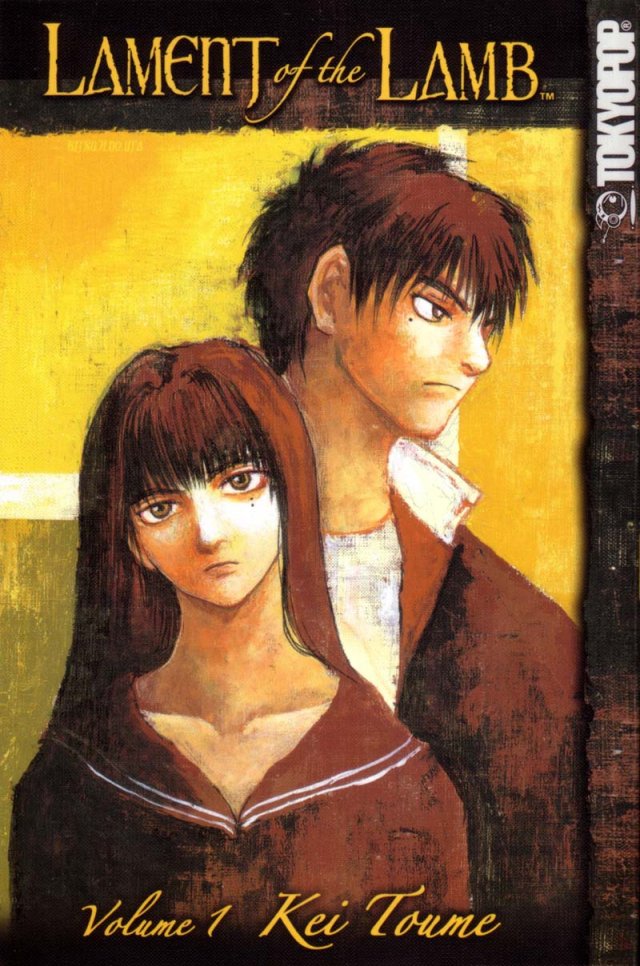
Kei Toume puts a novel spin on vampirism, presenting it not as a supernatural phenomenon, but as a symptom of a rare genetic disorder. His brother-and-sister protagonists, Kazuna and Chizuna, begin exhibiting the same tendencies as their deceased mother, losing control at the sight or suggestion of blood, and enduring cravings so intense they induce temporary insanity. Long on atmosphere and short on plot, Lament of the Lamb won’t be every vampire lover’s idea of a rip-snortin’ read; the manga focuses primarily on the intense, unhealthy relationship between Kazuna and Chizuna, and very little on blood-sucking. What makes Lament of the Lamb so deeply unsettling, however, is the strong current of violence and fear that flows just beneath its surface; Kazuna and Chizuna may not be predators, but we see just how much self-control it takes for them to contain their bloodlust.

9. SCHOOL ZONE

KANAKO INUKI • DARK HORSE • 3 VOLUMES

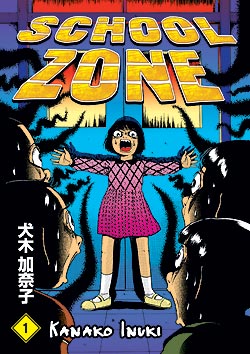
In this odd, hallucinatory, and sometimes very funny series, a group of students summon the ghosts of people who died on school grounds, unleashing the spirits’ wrath on their unsuspecting classmates. School Zone is as much a meditation on childhood fears of being ridiculed or ostracized as it is a traditional ghost story; time and again, the students’ own response to the ghosts is often more horrific than the ghosts’ behavior. Inuki’s artwork isn’t as gory or imaginative as some of her peers’, though she demonstrates a genuine flair for comically gruesome thrills: one girl is dragged into a toilet, for example, while another is attacked by a scaly, long-armed creature that lives in the infirmary. Where Inuki really shines, however, is in her ability to capture the primal terror that a dark, empty building can inspire in the most rational person. Even when the story takes one its many silly detours — and yes, there are many WTF?! moments in School Zone — Inuki makes us feel her characters’ vulnerability as they explore the school grounds after hours. —Reviewed at The Manga Critic on 10/29/09

8. MAIL

HOUSUI YAMAKAZI • DARK HORSE • 3 VOLUMES

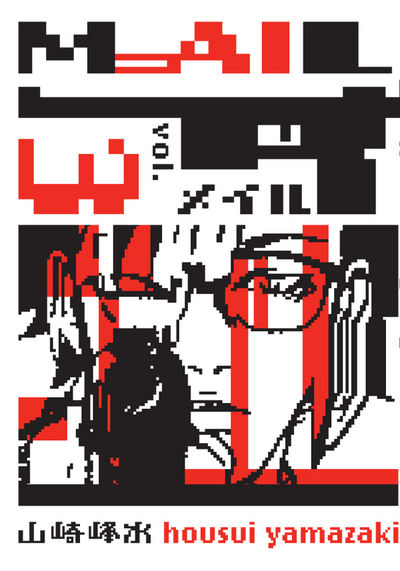
If you like you horror neat with a twist, Mail might be your kind of manga: a meticulously crafted selection of short, spooky tales in which a handsome exorcist goes toe-to-toe with all sort of ghosts. The stories are a mixture of urban legend and folklore: a GPS system which directs a woman to the scene of a crime, an accident victim who haunts the elevator shaft where he died, a possessed doll. Through precise linework and superb command of light, Hosui Yamakazi transforms everyday situations — returning home from work, logging onto a computer — into extraordinary ones in which shadows and corners harbor very nasty surprises. Best of all, Mail never overstays its welcome; it’s the manga equivalent of the Goldberg Variations, offering a number of short, trenchant variations on a single theme and then wrapping things up neatly.

7. AFTER SCHOOL NIGHTMARE

SETONA MITZUSHIRO • GO! COMI • 10 VOLUMES

Masahiro, a charming, popular high school student, harbors a terrible secret: though he appears to be male, the lower half of his body is female. At a nurse’s urging, he agrees to visit the school infirmary for a series of dream workshops in which he interacts with classmates who are also grappling with serious problems, from child abuse to pathological insecurity. The students’ collective dreams are vivid and strange, unfolding with the peculiar, fervid logic of a nightmare; buildings flood, stairwells lead to dead ends, and characters undergo sudden, dramatic transformations. Making the dream sequences extra creepy is the way Setona Mizushiro renders the students, choosing an avatar for each that represents their true selves: a black knight, a faceless body, a long, disembodied arm that grasps and slithers. Attentive readers will be rewarded for their patient observation with an unexpected but brilliant twist in the very final pages.

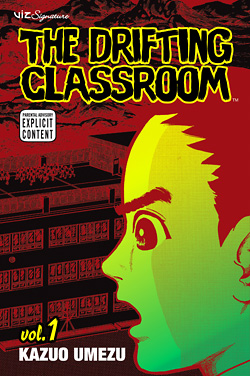
6. THE DRIFTING CLASSROOM

KAZUO UMEZU • VIZ • 11 VOLUMES

It’s sorely tempting to compare The Drifting Classroom to The Lord of the Flies, as both stories depict school children creating their own societies in the absence of adult authority. But Kazuo Umezu’s series is more sinister than Golding’s novel, as Classroom‘s youthful survivors have been forced to band together to defend themselves from their former teachers, many of whom have become unhinged at the realization that they may never return to their own time. (Their entire elementary school has slipped through a rift in the space-time continuum, depositing everyone in the distant future.) The story is as relentless as an episode of 24: characters are maimed or killed in every chapter, and almost every line of dialogue is shouted. (Sho’s petty arguments with his mother are delivered as emphatically as his later attempts to alert classmates to the dangers of their new surroundings.) Yet for all its obvious shortcomings, Umezu creates an atmosphere of almost unbearable tension that conveys both the hopelessness of the children’s situation and their terror at being abandoned by the grown-ups. If that isn’t the ultimate ten-year-old’s nightmare, I don’t know what is. —Reviewed at PopCultureShock on 10/15/06

5. MERMAID SAGA

RUMIKO TAKAHASHI • VIZ • 4 VOLUMES

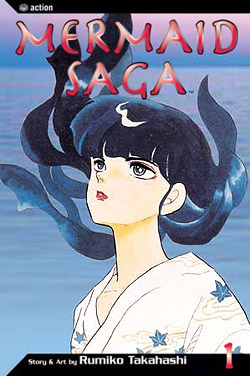
This four-volume series ran on and off in Shonen Sunday for nearly ten years, chronicling the adventures of Yuta, a fisherman who gained immortality by eating mermaid flesh. Desperate to live an ordinary existence, Yuta spends five hundred years wandering Japan in search of a mermaid who can restore his mortality, crossing paths with criminals, immortals, and “lost souls,” people reduced to a monstrous condition by the poison in mermaid flesh. Though the stories follow a somewhat predictable pattern, Takahashi’s writing is brisk and assured, propelled by snappy dialogue and genuinely creepy scenarios. The imagery is tame by horror standards, but Takahashi doesn’t shy away from the occasional grotesque or gory image, using them to underscore the ugly consequences of seeking immortality. –Reviewed at The Manga Critic on 10/29/09.

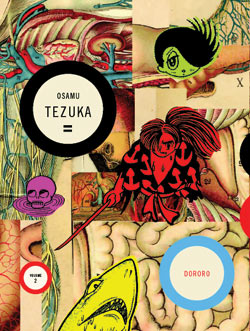
4. DORORO

OSAMU TEZUKA • VERTICAL, INC. • 3 VOLUMES

The next time you feel inclined to criticize your parents, remember Hyakkimaru’s plight: his father pledged Hyakkimaru’s body parts to forty-eight demons in exchange for political power, leaving his son blind, deaf, and limbless at birth. After being rescued and raised by a kindly doctor, Hyakkimaru embarks on a quest to reclaim his eyes and ears, wandering across a war-torn landscape where demons take advantage of the chaos to prey on humans. Some of these demons have obvious antecedents in Japanese folklore (e.g. a nine-tailed fox), while others seem to have sprung full-blown from Tezuka’s imagination (e.g. a shark who paralyzes his victims with sake breath). Though the story ostensibly unfolds during the Warring States period, Dororo wears its allegory lightly, focusing primarily on swordfights, monster lairs, and damsels in distress while using its historical setting to make a few modest points about the corrosive influence of greed, power, and fear. For my money, one of Tezuka’s best series, peroid. —Reviewed at The Manga Critic on 7/27/09

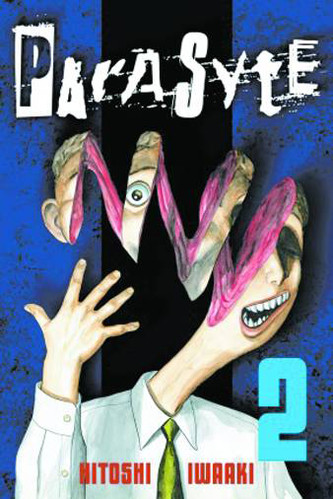
3. PARASYTE

HITOSHI IWAAKI • DEL REY • 8 VOLUMES

Part The Defiant Ones, part Invasion of the Body Snatchers, Parasyte focuses on the symbiotic relationship between Shin, a high school student, and Migi, the alien parasite that takes up residence in his right hand after failing to take control of Shin’s brain. The two go on the lam after another parasite kills Shin’s mother — and makes Shin and Migi look like the culprits. If the human character designs are a little blank and clumsy, the parasites are not; Hitoshi Iwaaki twists the human body into some of the most sinister-looking shapes since Pablo Picasso painted Dora Maar. The violence is graphic but not sadistic, as most of the action takes place between panels, with only the grisly aftermath represented in pictorial form. The best part of Parasyte, however, is the script; Shin and Migi trade barbs with the antagonistic affection of Oscar Madison and Felix Unger, revealing Migi to be smarter and more objective than his human host. Shin and Migi’s banter adds an element of levity to the story, to be sure, but their heated debates about survival are also a sly poke at the idea that human beings’ intellect and emotional attachments place them squarely atop the food chain. –Reviewed at The Manga Critic on 7/2/10

2. THE KUROSAGI CORPSE DELIVERY SERVICE

EIJI OTSUKI AND HOUSUI YAMAKAZI • DARK HORSE • 13+ VOLUMES

The Kurosagi Corpse Delivery Service is comprised of five members: Karatsu, a monk-in-training; Numata, a hipster with an encyclopedic knowledge of pop culture; Yata, an odd duck who communicates primarily through a puppet that he wears on his left hand; Makino, a chatty embalmer; and Sasaki, a hacker with an entrepreneurial streak. Working as a team, the quintet helps the dead cross over, using their myriad talents to locate bodies, speak with ghosts, and resolve the spirits’ unfinished business. The set-up is pure gold, giving the episodic series some structure, while allowing Eiji Otsuka and Housui Yamakazi the flexibility to stage grisly murders and discover corpses in a variety of unexpected places. Think Scooby Doo with less wholesome protagonists and scarier spooks and you have a good idea of what makes this offbeat series tick. And yes, the gang even has their own van. —Reviewed at The Manga Critic on 6/24/09

1. GYO

JUNJI ITO • VIZ • 2 VOLUMES

From the standpoint of craft, Uzumaki is a better manga, but it’s hard to top the sheer creepiness factor of Gyo, which taps into one of the most primordial of fears: being eaten! Here’s how I explained its appeal to David Welsh at The Comics Reporter:

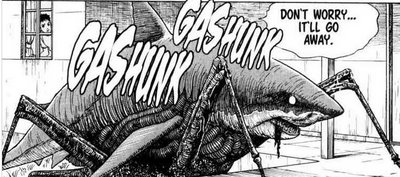
Like many other children of the 1970s, Jaws left an indelible impression on me. I wasn’t just terrified of swimming in the ocean, I was reluctant to immerse myself in any standing body of water — swimming pools, bathtubs, ponds — that might conceivably harbor a shark. That irrational fear of encountering a great white somewhere it’s not supposed to be even led me to wonder what it might be like to bump into one on land — could I outrun it?

I’m guessing Junji Ito also suffers from icthyophobia, because Gyo looks like my worst nightmare, a world in which hideously deformed fish crawl out of the sea on mechanical legs and terrorize humans, spreading a disease that quickly jumps species. As horror stories go, many of Gyo‘s details aren’t terribly well explained — how, exactly, the fish acquired legs remains unclear despite talk of military experiments gone awry — but the imaginative artwork appeals on a visceral level. Gyo‘s highpoint comes midway through volume one, when a great white shark chases the hero and his girlfriend through a house, even scaling the stairs (no pun intended) in pursuit of its next meal. The scene is utterly ridiculous, but it works — for a few terrible, thrilling pages I learned the answer to my long-standing question, What would it be like to be chased by a shark on land? In a word: scary.

In other words, this is my worst nightmare:

So those are ten of my favorite spooky manga! What horror manga are on your top-ten list? Inquiring minds want to know!

Filed Under: Manga Critic Tagged With: Dark Horse, del rey, Eiji Otsuka, Go! Comi, Hitoshi Iwaaki, Horror/Supernatural, Housui Yamakazi, Junji Ito, Kanako Inuki, Kazuo Umezu, Kei Toume, Osamu Tezuka, Rumiko Takahashi, Setona Mizushiro, Tokyopop, vertical, VIZ

My 10 Favorite Spooky Manga

October 24, 2010 by Katherine Dacey

Whether by accident or design, the very first manga I read and liked were horror titles: “The Laughing Target,” Mermaid Saga, Uzumaki. I’m not sure why I find spooky stories so compelling in manga form; I don’t generally read horror novels, and I don’t have the constitution for gory movies. But manga about zombies? Or vampires? Or angry spirits seeking to avenge their own deaths? Well, there’s always room on my bookshelf for another one, even if the stories sometimes feel overly familiar or — in the case of artists like Kanako Inuki and Kazuo Umezu — make no sense at all. Below is a list of my ten favorite scary manga, which run the gamut from psychological horror to straight-up ick.

10. Lament of the Lamb
By Kei Toume • Tokyopop • 7 volumes
Kei Toume puts a novel spin on vampirism, presenting it not as a supernatural phenomenon, but as a symptom of a rare genetic disorder. His brother-and-sister protagonists, Kazuna and Chizuna, begin exhibiting the same tendencies as their deceased mother, losing control at the sight or suggestion of blood, and enduring cravings so intense they induce temporary insanity. Long on atmosphere and short on plot, Lament of the Lamb won’t be every vampire lover’s idea of a rip-snortin’ read; the manga focuses primarily on the intense, unhealthy relationship between Kazuna and Chizuna, and very little on blood-sucking. What makes Lament of the Lamb so deeply unsettling, however, is the strong current of violence and fear that flows just beneath its surface; Kazuna and Chizuna may not be predators, but we see just how much self-control it takes for them to contain their bloodlust.

9. School Zone
By Kanako Inuki • Dark Horse • 3 volumes
In this odd, hallucinatory, and sometimes very funny series, a group of students summon the ghosts of people who died on school grounds, unleashing the spirits’ wrath on their unsuspecting classmates. School Zone is as much a meditation on childhood fears of being ridiculed or ostracized as it is a traditional ghost story; time and again, the students’ own response to the ghosts is often more horrific than the ghosts’ behavior. Inuki’s artwork isn’t as gory or imaginative as some of her peers’, though she demonstrates a genuine flair for comically gruesome thrills: one girl is dragged into a toilet, for example, while another is attacked by a scaly, long-armed creature that lives in the infirmary. Where Inuki really shines, however, is in her ability to capture the primal terror that a dark, empty building can inspire in the most rational person. Even when the story takes one its many silly detours — and yes, there are many WTF?! moments in School Zone — Inuki makes us feel her characters’ vulnerability as they explore the school grounds after hours. —Reviewed at The Manga Critic on 10/29/09

8. Mail
By Housui Yamazaki • Dark Horse • 3 volumes
If you like you horror neat with a twist, Mail might be your kind of manga: a meticulously crafted selection of short, spooky tales in which a handsome exorcist goes toe-to-toe with all sort of ghosts. The stories are a mixture of urban legend and folklore: a GPS system which directs a woman to the scene of a crime, an accident victim who haunts the elevator shaft where he died, a possessed doll. Through precise linework and superb command of light, Hosui Yamakazi transforms everyday situations — returning home from work, logging onto a computer — into extraordinary ones in which shadows and corners harbor very nasty surprises. Best of all, Mail never overstays its welcome; it’s the manga equivalent of the Goldberg Variations, offering a number of short, trenchant variations on a single theme and then wrapping things up neatly.

7. After School Nightmare
By Setona Mizushiro • Go! Comi • 10 volumes
Masahiro, a charming, popular high school student, harbors a terrible secret: though he appears to be male, the lower half of his body is female. At a nurse’s urging, he agrees to visit the school infirmary for a series of dream workshops in which he interacts with classmates who are also grappling with serious problems, from child abuse to pathological insecurity. The students’ collective dreams are vivid and strange, unfolding with the peculiar, fervid logic of a nightmare; buildings flood, stairwells lead to dead ends, and characters undergo sudden, dramatic transformations. Making the dream sequences extra creepy is the way Setona Mizushiro renders the students, choosing an avatar for each that represents their true selves: a black knight, a faceless body, a long, disembodied arm that grasps and slithers. Attentive readers will be rewarded for their patient observation with an unexpected but brilliant twist in the very final pages.

6. The Drifting Classroom
By Kazuo Umezu • VIZ Media • 11 volumes
It’s sorely tempting to compare The Drifting Classroom to The Lord of the Flies, as both stories depict school children creating their own societies in the absence of adult authority. But Kazuo Umezu’s series is more sinister than Golding’s novel, as Classroom‘s youthful survivors have been forced to band together to defend themselves from their former teachers, many of whom have become unhinged at the realization that they may never return to their own time. (Their entire elementary school has slipped through a rift in the space-time continuum, depositing everyone in the distant future.) The story is as relentless as an episode of 24: characters are maimed or killed in every chapter, and almost every line of dialogue is shouted. (Sho’s petty arguments with his mother are delivered as emphatically as his later attempts to alert classmates to the dangers of their new surroundings.) Yet for all its obvious shortcomings, Umezu creates an atmosphere of almost unbearable tension that conveys both the hopelessness of the children’s situation and their terror at being abandoned by the grown-ups. If that isn’t the ultimate ten-year-old’s nightmare, I don’t know what is. —Reviewed at PopCultureShock on 10/15/06

5. Mermaid Saga
By Rumiko Takahashi • VIZ Media • 4 volumes
This four-volume series ran on and off in Shonen Sunday for nearly ten years, chronicling the adventures of Yuta, a fisherman who gained immortality by eating mermaid flesh. Desperate to live an ordinary existence, Yuta spends five hundred years wandering Japan in search of a mermaid who can restore his mortality, crossing paths with criminals, immortals, and “lost souls,” people reduced to a monstrous condition by the poison in mermaid flesh. Though the stories follow a somewhat predictable pattern, Takahashi’s writing is brisk and assured, propelled by snappy dialogue and genuinely creepy scenarios. The imagery is tame by horror standards, but Takahashi doesn’t shy away from the occasional grotesque or gory image, using them to underscore the ugly consequences of seeking immortality. —Reviewed at The Manga Critic on 10/29/09.

4. Dororo
By Osamu Tezuka • Vertical, Inc. • 3 volumes
The next time you feel inclined to criticize your parents, remember Hyakkimaru’s plight: his father pledged Hyakkimaru’s body parts to forty-eight demons in exchange for political power, leaving his son blind, deaf, and limbless at birth. After being rescued and raised by a kindly doctor, Hyakkimaru embarks on a quest to reclaim his eyes and ears, wandering across a war-torn landscape where demons take advantage of the chaos to prey on humans. Some of these demons have obvious antecedents in Japanese folklore (e.g. a nine-tailed fox), while others seem to have sprung full-blown from Tezuka’s imagination (e.g. a shark who paralyzes his victims with sake breath). Though the story ostensibly unfolds during the Warring States period, Dororo wears its allegory lightly, focusing primarily on swordfights, monster lairs, and damsels in distress while using its historical setting to make a few modest points about the corrosive influence of greed, power, and fear. For my money, one of Tezuka’s best series, peroid. —Reviewed at The Manga Critic on 7/27/09

3. Parasyte
By Hitoshi Iwaaki • Del Rey • 8 volumes
Part The Defiant Ones, part Invasion of the Body Snatchers, Parasyte focuses on the symbiotic relationship between Shin, a high school student, and Migi, the alien parasite that takes up residence in his right hand after failing to take control of Shin’s brain. The two go on the lam after another parasite kills Shin’s mother — and makes Shin and Migi look like the culprits. If the human character designs are a little blank and clumsy, the parasites are not; Hitoshi Iwaaki twists the human body into some of the most sinister-looking shapes since Pablo Picasso painted Dora Maar. The violence is graphic but not sadistic, as most of the action takes place between panels, with only the grisly aftermath represented in pictorial form. The best part of Parasyte, however, is the script; Shin and Migi trade barbs with the antagonistic affection of Oscar Madison and Felix Unger, revealing Migi to be smarter and more objective than his human host. Shin and Migi’s banter adds an element of levity to the story, to be sure, but their heated debates about survival are also a sly poke at the idea that human beings’ intellect and emotional attachments place them squarely atop the food chain. —Reviewed at The Manga Critic on 7/2/10

2. The Kurosagi Corpse Delivery Service
By Eiji Otsuki and Housui Yamakazi • Dark Horse • 13+ volumes
The Kurosagi Corpse Delivery Service is comprised of five members: Karatsu, a monk-in-training; Numata, a hipster with an encyclopedic knowledge of pop culture; Yata, an odd duck who communicates primarily through a puppet that he wears on his left hand; Makino, a chatty embalmer; and Sasaki, a hacker with an entrepreneurial streak. Working as a team, the quintet helps the dead cross over, using their myriad talents to locate bodies, speak with ghosts, and resolve the spirits’ unfinished business. The set-up is pure gold, giving the episodic series some structure, while allowing Eiji Otsuka and Housui Yamakazi the flexibility to stage grisly murders and discover corpses in a variety of unexpected places. Think Scooby Doo with less wholesome protagonists and scarier spooks and you have a good idea of what makes this offbeat series tick. And yes, the gang even has their own van. —Reviewed at The Manga Critic on 6/24/09

1. Gyo
By Junji Ito • VIZ Media • 2 volumes
From the standpoint of craft, Uzumaki is a better manga, but it’s hard to top the sheer creepiness factor of Gyo, which taps into one of the most primordial of fears: being eaten! Here’s how I explained its appeal to David Welsh at The Comics Reporter:

Like many other children of the 1970s, Jaws left an indelible impression on me. I wasn’t just terrified of swimming in the ocean, I was reluctant to immerse myself in any standing body of water — swimming pools, bathtubs, ponds — that might conceivably harbor a shark. That irrational fear of encountering a great white somewhere it’s not supposed to be even led me to wonder what it might be like to bump into one on land — could I outrun it?

I’m guessing Junji Ito also suffers from icthyophobia, because Gyo looks like my worst nightmare, a world in which hideously deformed fish crawl out of the sea on mechanical legs and terrorize humans, spreading a disease that quickly jumps species. As horror stories go, many of Gyo‘s details aren’t terribly well explained — how, exactly, the fish acquired legs remains unclear despite talk of military experiments gone awry — but the imaginative artwork appeals on a visceral level. Gyo‘s highpoint comes midway through volume one, when a great white shark chases the hero and his girlfriend through a house, even scaling the stairs (no pun intended) in pursuit of its next meal. The scene is utterly ridiculous, but it works — for a few terrible, thrilling pages I learned the answer to my long-standing question, What would it be like to be chased by a shark on land? In a word: scary.

In other words, this is my worst nightmare:

So those are ten of my favorite spooky manga! What horror manga are on your top-ten list? Inquiring minds want to know!

Filed Under: Manga, Manga Critic, Recommended Reading Tagged With: Dark Horse, del rey, Eiji Otsuka, Go! Comi, Hitoshi Iwaaki, Horror/Supernatural, Junji Ito, Kanako Inuki, Kazuo Umezu, Kei Toume, Osamu Tezuka, Rumiko Takahashi, Setona Mizushiro, Tokyopop, Vertical Comics, VIZ

Demon Sacred, Vols. 1-2

September 28, 2010 by Katherine Dacey

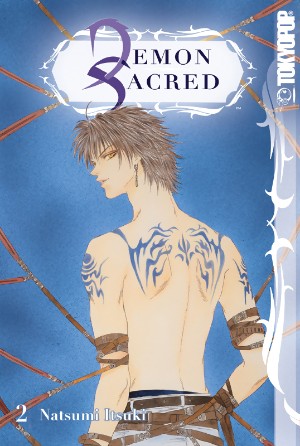
Demon Sacred is shojo manga’s answer to the everything bagel, substituting hot scientists, dragons, pop idols, twins, secret government research facilities, and time-traveling aliens for garlic chips and sesame seeds. That such an unlikely combination of ingredients proves complimentary is nothing sort of miraculous — it’s hard to imagine how rock stars and rifts in the space-time continuum could co-exist in the same manga without the whole enterprise descending into complete silliness, but Natsumi Itsuki walks the fine line between stupid and clever with the grace of a high-wire acrobat.

Consider the first three chapters of the series: in them, we’re introduced to Rena, the sole survivor of an incident involving unicorns; her fourteen-year-old daughters Rina and Mona, one of whom has developed a disease that causes her to age backwards; and the girls’ guardian Shinobu, a handsome, pony-tailed researcher who is toiling away on a cure for Return Syndrome and — natch — earned a PhD from Harvard before his eighteenth birthday. Those three storylines alone provide ample material for a good shojo fantasy, but Itsuki cranks up the narrative nuttiness to eleven in subsequent chapters, tossing in a handsome “demon” — in fact, a shape-shifting alien from another dimension — who knew the twins’ mother, and a second, more powerful demon who assumes the form of the girls’ favorite pop singer.

…

Read More

Filed Under: Manga Critic Tagged With: shojo, Tokyopop

Demon Sacred, Vols. 1-2

September 28, 2010 by Katherine Dacey

Demon Sacred is shojo manga’s answer to the everything bagel, substituting hot scientists, dragons, pop idols, twins, secret government research facilities, and time-traveling aliens for garlic chips and sesame seeds. That such an unlikely combination of ingredients proves complimentary is nothing sort of miraculous — it’s hard to imagine how rock stars and rifts in the space-time continuum could co-exist in the same manga without the whole enterprise descending into complete silliness, but Natsumi Itsuki walks the fine line between stupid and clever with the grace of a high-wire acrobat.

Consider the first three chapters of the series: in them, we’re introduced to Rena, the sole survivor of an incident involving unicorns; her fourteen-year-old daughters Rina and Mona, one of whom has developed a disease that causes her to age backwards; and the girls’ guardian Shinobu, a handsome, pony-tailed researcher who is toiling away on a cure for Return Syndrome and — natch — earned a PhD from Harvard before his eighteenth birthday. Those three storylines alone provide ample material for a good shojo fantasy, but Itsuki cranks up the narrative nuttiness to eleven in subsequent chapters, tossing in a handsome “demon” — in fact, a shape-shifting alien from another dimension — who knew the twins’ mother, and a second, more powerful demon who assumes the form of the girls’ favorite pop singer.

A cynic might dismiss these additional characters as pandering to teen girl taste, but Mika and K2 serve an important role in advancing the plot, shedding light on Rina and Mona’s past (Mom disappeared when they were four) and offering a potential cure for Rina’s condition. Ditto for some of the comic-relief episodes, in which K2 impersonates a real-life idol; if Itsuki always played it straight, the story would seem positively ludicrous instead of charmingly overstuffed. Remember, the opening pages of the series involve a stampede of unicorns emerging from the aurora borealis and trampling a group of tourists in the Finnish countryside. Even Madeline L’Engle didn’t have the guts to try that.

I’d be the first to admit that Demon Sacred isn’t as well constructed as Itsuki’s Jyu-Oh-Sei, a tight, logical exercise in hard science fiction; if anything, Demon Sacred feels freer and messier than her earlier work. That impression of spontaneity stems from the casual way in which Itsuki assembles plot elements, like a chef rummaging through the refrigerator and grabbing whatever looks appetizing. There’s no obvious rationale for inter-dimensional, time-traveling aliens to assume the form of mythical Earth-beasts, other than the fact it tickled Itsuki’s authorial fancy. Yet that kitchen-sink quality is a big part of Demon Sacred‘s appeal; I’d be lying if I denied my pleasure in seeing a character quote from the Book of Revelations, or imagining a universe in which griffins, unicorns, and fire-breathing dragons could assume the form of popular singers.

It’s hard to guess how Itsuki will resolve the myriad subplots introduced in the first two volumes, but the story unfolds in such a feverish, urgent fashion that it’s easy to forgive the occasional narrative shortcuts or capitulations to shojo convention. (See “hot young scientist” and “pop idols,” above.) Demon Sacred may not be the best new manga of 2010, but it’s a strong contender for most addictive.

Review copies provided by Tokyopop.

DEMON SACRED, VOLS. 1-2 • BY NATSUMI ITSUKI • TOKYOPOP • RATING: TEEN (13+)

Filed Under: Manga, Manga Critic, REVIEWS Tagged With: Natsumi Itsuki, Sci-Fi, Tokyopop

TOKYOPOP & comiXology launch digital Hetalia

September 22, 2010 by MJ 1 Comment

Announced today, manga publisher TOKYOPOP and digital comics publisher comiXology have teamed up to present the first simultaneous print/digital release the industry has yet seen (check out Comics Worth Reading for a little clarification on that claim). The title chosen for this collaboration is Hetalia Axis Powers, a popular Japanese webcomic by Hidekaz Himaruya that has since been adapted to print (as well as anime) in Japan.

This will be the first manga to join comiXology’s catalogue of over 3,000 comics. The series’ first six chapters are already available from comiXology for the web, iPad, iPhone and iPod. The first chapter is free, with subsequent chapters selling for $0.99 each.

Also coming soon, according to a recent press release, is a deluxe teaser app that fans can download from the iTunes App Store, which includes a preview of the first chapter, manga trailer, and photos of elaborately dressed fans in Hetalia cosplay.

Quotes from TOKYOPOP’s Stu Levy and comiXology’s David Steinberger suggest that this is the first in an effort to bring all of TP’s manga titles to comiXology’s digital platform. Other manga publishers who currently provide both print and digital releases of many titles include Digital Manga Publishing and NETCOMICS, and of course Yen Press, whose Yen Plus magazine recently launched its first digital issue. Who will be next?

Filed Under: NEWS Tagged With: comixology, Tokyopop

Hetalia: Axis Powers, Vol. 1

September 19, 2010 by Katherine Dacey

To say that Hetalia: Axis Powers has a devoted fanbase is like saying that Cookie Monster is partial to Oreos; it’s the kind of series that inspires fans to write their own Hetalia stories by the truckload (there are over 14,000 posted at FanFiction.net), dress up as their favorite countries, and debate the virtues of various characters with quasi-religious intensity.

Part of Hetalia‘s appeal lies with the artwork: manga-ka Hidekaz Himeyura populates his stories with cute, attractive young men in lavishly detailed military costumes that are tailor-made for cosplay. The other part of Hetalia‘s appeal lies with its cheerfully subversive premise: all the major participants in World War II are represented as petulant bishies whose behavior mimics the way these countries interacted in the 1930s, and whose personalities conform to well-rehearsed national stereotypes. Whether or not you cotton to Hetalia will depend largely on whether you find the underlying concept a stellar example of the Japanese ability to kawaii-ify anything or proof that Japan’s younger generation doesn’t grasp just how terrible World War II really was.

…

Read More

Filed Under: Manga Critic Tagged With: 4-koma, Tokyopop

Hetalia: Axis Powers, Vol. 1

September 19, 2010 by Katherine Dacey

To say that Hetalia: Axis Powers has a devoted fanbase is like saying that Cookie Monster is partial to Oreos; it’s the kind of series that inspires fans to write their own Hetalia stories by the truckload (there are over 14,000 posted at FanFiction.net), dress up as their favorite countries, and debate the virtues of various characters with quasi-religious intensity.

Part of Hetalia‘s appeal lies with the artwork: manga-ka Hidekaz Himeyura populates his stories with cute, attractive young men in lavishly detailed military costumes that are tailor-made for cosplay. The other part of Hetalia‘s appeal lies with its cheerfully subversive premise: all the major participants in World War II are represented as petulant bishies whose behavior mimics the way these countries interacted in the 1930s, and whose personalities conform to well-rehearsed national stereotypes. Whether or not you cotton to Hetalia will depend largely on whether you find the underlying concept a stellar example of the Japanese ability to kawaii-ify anything or proof that Japan’s younger generation doesn’t grasp just how terrible World War II really was.

I fall somewhere in the middle of the continuum: I’m not offended by Hetalia, but I’m not amused, either. Himaruya has certainly done his homework, seeding the dialogue with salacious historical tidbits and inserting flashbacks to major European wars of the eighteenth and nineteenth centuries, yet he never challenges the basic stereotypes that guide all the characterizations: Japan is prissy and horrified by European cuisine, England views America as his ill-behaved offspring, America loves hamburgers and talks with his mouth full, Germany is efficient and belligerent, and Northern Italy adores pasta and shirks responsibility. The endless stream of nationality-as-destiny jokes grows tiresome quickly; imagine spending an afternoon with someone who insists on referring to the French as “cheese-eating surrender monkeys” every time you mention a recent trip to Paris, and you have some idea of how stale the better gags become on their third or tenth repetition.

From time to time, Himaruya inserts the kind of pointed, tasteless joke that suggests at true subversion. In one scene, for example, Germany finds himself at a supermarket check-out, fuming because Korea is holding up the line, demanding reparations and an apology for how he’s been treated. A more skilled writer could have done something with this moment, perhaps using it as a jumping off point for exploring the complicated relationship between Japan and Korea. Instead, Himaruya treats this moment as just another wacky example of a country behaving according to national character, as if Korea’s legitimate protests over Japanese occupation were akin to Italians loving red wine or Russians placing ineffectual curses on their enemies. I’m mildly horrified to contemplate how Himaruya will treat German anti-Semitism — a personal quirk?

Which brings me to my biggest criticism of Hetalia: Axis Powers: there’s a strong whiff of pointlessness about the whole enterprise. Himaruya goes to great pains to get the history right, but it’s never clear what the series’ underlying message really is; why depict one of the ugliest, most brutal periods in human history as a cute, interpersonal drama if you’re not trying to make some greater point about the folly of international alliances, or the dangers of aggressive nationalism? I have no doubt that Trey Parker and Matt Stone could run with the Hetalia premise and turn it into something genuinely funny, rude, and intelligent, but Himaruya just doesn’t have the historical insight or the courage to do much with the material except make all the participants look very pretty.

Review copy provided by Tokyopop. Volume one of Hetalia: Axis Powers will be released on September 21, 2010.

HETALIA: AXIS POWERS, VOL. 1 • BY HIDEKAZ HIMARUYA • TOKYOPOP • 152 pp. • RATING: OLDER TEEN (16+)

Filed Under: Manga, Manga Critic, REVIEWS Tagged With: 4-koma, Comedy, Tokyopop

The Qwaser of Stigmata, Vol. 1

August 11, 2010 by Katherine Dacey

qwaser_coverThough I frequently grouse about fanservice , I have a grudging respect for those artists who make costume failures, panty shots, and general shirtlessness play essential roles in advancing their plots. Consider Pretty Face, the story of a teenage jock who undergoes reconstructive surgery after a bus accident, only to end up looking like the girl he has a crush on (at least from the waist up). You don’t need to be a pervert to imagine how Yasuhiro Kano exploits the set-up for maximum T&A potential — even the hero gets groped and ogled, though Rando isn’t above leering at and lusting after girls himself. I loathe Pretty Face, yet I have to admit that Kano obviates the need for gusts of wind and breast-level collisions by making gender confusion such a fundamental part of his story; the fanservice may be gross and stupid, but it isn’t gratuitous.

Then there’s The Qwaser of Stigmata.

…

Read More

Filed Under: Manga Critic Tagged With: Shonen, Tokyopop

The Manga Hall of Shame: The Qwaser of Stigmata

August 11, 2010 by Katherine Dacey

Though I frequently grouse about fanservice , I have a grudging respect for those artists who make costume failures, panty shots, and general shirtlessness play essential roles in advancing their plots. Consider Pretty Face, the story of a teenage jock who undergoes reconstructive surgery after a bus accident, only to end up looking like the girl he has a crush on (at least from the waist up). You don’t need to be a pervert to imagine how Yasuhiro Kano exploits the set-up for maximum T&A potential — even the hero gets groped and ogled, though Rando isn’t above leering at and lusting after girls himself. I loathe Pretty Face, yet I have to admit that Kano obviates the need for gusts of wind and breast-level collisions by making gender confusion such a fundamental part of his story; the fanservice may be gross and stupid, but it isn’t gratuitous.

Then there’s The Qwaser of Stigmata.

Qwaser raises the panty-shot-as-plot-element stakes, then kicks Pretty Face down the stairs, taunts it, and takes its lunch money with a gimmick so offensive I’m almost embarrassed to type the words: the characters rely on breast milk for their superpowers. Those characters have chosen St. Mihailov Academy as ground zero for an epic showdown involving religious icons, nubile maidens, and weapons derived from the periodic table of the elements. (No doubt Dmitri Mendeleev is tossing in his grave right now.) From the standpoint of an artist writing for a shonen magazine like Monthly Champion Red, the parochial school setting provides the perfect vehicle for celebrating fetishes under the guise of world-building. No stone goes unturned, from busty nuns and busty schoolgirls to moe-bait characters in spectacles and knee socks; there’s even a bit of fan service for the ladies that takes the form of a smoldering priest in an eyepatch and a sullen, silver-haired Russian named Alexander “Sasha” Nikolaevich Hell. (Or “Her,” in the Tokyopop translation.)

As with most manga featuring combatants of the cloth, the religious iconography seems more a pretext for cool outfits than an integral part of the story. The characters occasionally pause to contemplate the Theotokos of Tsarytsin, a religious icon depicting the Virgin Mary nursing the baby Jesus, but why they want the icon remains mysterious; only by consulting the Wikipedia entry on Qwaser did I learn that this particular image is “fabled to alter the homeostasis of the world.” For a manga exploring a religion that’s sure to be a mystery to most of its readers, in- and outside Japan, it’s curious that no one ever discusses what Russian Orthodox Christians believe, how they practice their faith, or what caused doctrinal crises within the Russian Church — a pity, because as this Slavophile will tell you, there is a boffo manga to be written about the Old Believers’ showdown with Peter the Great. (Don’t believe me? Rent a DVD of the Mariinski Theater’s production of Khovanshchina, an opera so badass that several characters immolate themselves rather than submit to Peter’s will.) The few other references to religion are more window-dressing than anything else; Qwasers, those holy warriors of the periodic table, fight alongside “Maria Magdalens,” described by Wikipedia’s anonymous authors as “the alter-ego combat partner of a Qwaser whose primary function is to provide soma [breast milk] not unlike how one may refuel a car or even a warplane while in flight.” (After reading that sentence, I’m not sure which is more egregious: the Wikipedia authors’ attempt to write about Qwaser in a pseudo-scientific voice, or the manga-ka’s decision to call these women “Maria Magdalens.”)

If the fanservice and faux-religious elements weren’t quite enough to land Qwaser a spot in The Manga Hall of Shame, the dreadful artwork and ADD plotting put it over the top. The fight scenes are utterly incomprehensible, a blur of speedlines, explosions, and whirling dervishes punctuated by the occasional pin-up drawing of a character brandishing a weapon or enduring some unpleasant, sexually tinged violence. The plotting isn’t much better, as the story skips between cliche scenes of classroom bullying and tortured, confusing conversations between the series’ two principal female characters. The dialogue takes the cake for sheer awfulness, however; it’s the kind of series in which villains state the atomic weight of the elements they’re manipulating, exclaim nonsense like “My heart that burns will slice through you!”, and utter things so vile that that the publisher substitutes the word “bleep” for references to female genitalia and sexual congress.

The bottom line: The Qwaser of Stigmata is a shonen manga that aspires to the subversiveness of porn, but doesn’t have the imagination or the weirdness to rise to the level of genuine kink.

THE QWASER OF STIGMATA, VOL. 1: HOLY WARS IGNITE • ART BY KENETSU SATO, STORY BY HIROYUKI YOSHINO • TOKYOPOP • 200 pp. • RATING: MATURE (18+)

Filed Under: Manga, Manga Critic, REVIEWS Tagged With: Bad Manga, Fantasy, Tokyopop

  • « Go to Previous Page
  • Page 1
  • Page 2
  • Page 3
  • Page 4
  • Page 5
  • Page 6
  • Page 7
  • Go to Next Page »
 | Log in
Copyright © 2010 Manga Bookshelf | Powered by WordPress & the Genesis Framework